K-CULTURE

Discover Korean culture through authentic food, K-beauty, travel, traditions, and everyday life. Explore the stories behind Korean dishes, skincare trends, cultural experiences, and must-visit destinations. Go beyond the trends to understand what makes Korean culture unique and why it fascinates people around the world.

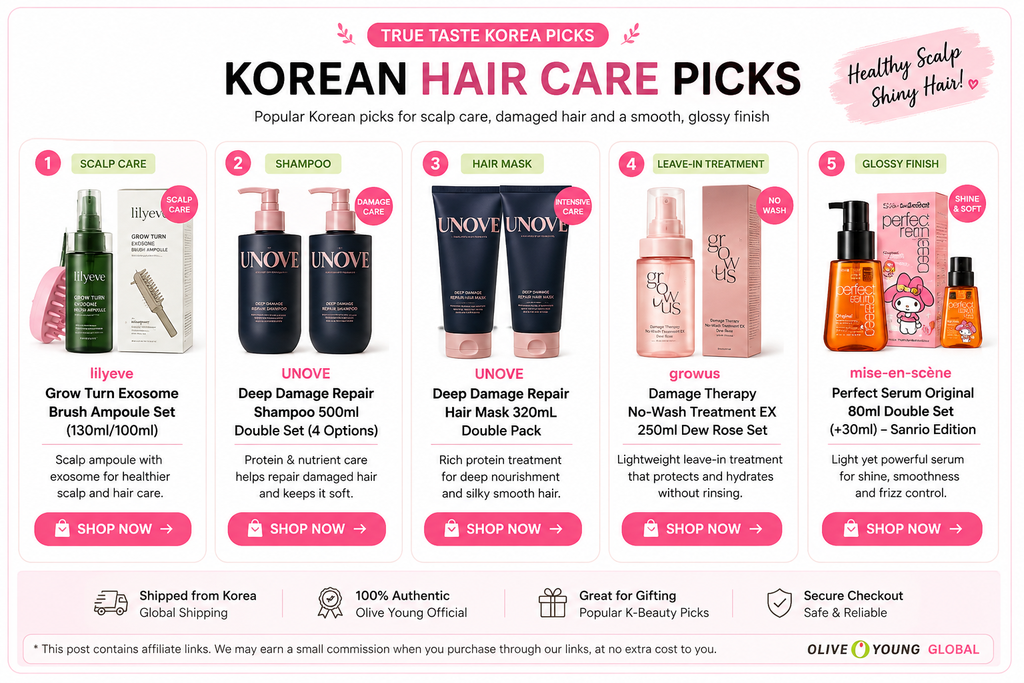
  • Korean Scalp Care: Why Everyone Is Talking About Korean Head Spas

    Korean Scalp Care: Why Everyone Is Talking About Korean Head Spas

    When people think about K-Beauty, glowing skin, sunscreen, sheet masks and serums usually come to mind.

    But in Korea, beauty does not stop at the face.

    The scalp is increasingly being treated like skin.

    For many Koreans, healthy-looking hair is not simply about choosing a stylish haircut. A clean, comfortable scalp and smooth, shiny hair are also important parts of personal appearance.

    This approach is now attracting attention outside Korea.

    Korean head spas, scalp treatments and scalp-focused hair products are becoming increasingly visible among international beauty travelers and K-Beauty fans.

    Recent reporting on a Seoul head-spa business found that foreign customers made up around 80% of its head-spa clientele, while its overall foreign visitors had increased significantly from the previous year. Vogue has also recently explored the Korean scalp-spa approach and its focus on scalp-first hair care.

    So why is Korean scalp care suddenly becoming the next K-Beauty experience?

    Let’s take a closer look.


    1. In Korea, Hair Beauty Starts With the Scalp

    Korean skincare has long emphasized one simple idea:

    Take care of the foundation before trying to hide the problem.

    A similar philosophy is increasingly being applied to hair.

    Instead of focusing only on shampooing the hair itself, Korean scalp care may include cleansing the scalp, removing buildup, maintaining hydration and choosing products according to scalp condition.

    This is sometimes described as the “skinification” of hair care — treating the scalp with the kind of attention traditionally given to facial skin.

    That is one reason scalp scalers, scalp tonics, ampoules and specialized shampoos have become a visible part of Korean hair-care routines.

    Even Olive Young Global currently separates hair products by concerns including hair loss, weakened hair, scalp treatment, thickening, hydration and shine.


    2. Why Hair Loss Is Such an Emotional Issue

    Hair is closely connected with how people perceive their appearance.

    And concerns about thinning hair are certainly not limited to older adults.

    Young adults can worry about shedding, thinning hair, scalp condition and damage caused by coloring, perming or frequent styling.

    Stress is also often mentioned when people talk about hair loss.

    There is some medical basis for this connection, although it is important not to oversimplify it.

    The American Academy of Dermatology explains that significant physical or psychological stress can trigger excessive hair shedding known as telogen effluvium. However, hair loss has many possible causes, including genetics, autoimmune conditions, medications and damaging hair-care practices.

    This distinction matters.

    A scalp spa is not a medical treatment for hair loss.

    If someone is experiencing sudden, severe, patchy or persistent hair loss, a dermatologist or other qualified medical professional should evaluate the cause.

    But concerns about hair and scalp condition help explain why scalp care has become such an important part of the wider Korean beauty conversation.


    3. What Is a Korean Head Spa?

    A Korean head spa is essentially a beauty and wellness experience centered around the scalp.

    The exact procedure varies between salons, but a session may include:

    scalp analysis → cleansing → exfoliation/scaling → shampoo → hydration or scalp treatment → massage → hair treatment → drying and styling

    Some locations use magnifying scalp cameras to examine oil, buildup, dryness and the general condition of the scalp before treatment.

    This creates one of the most interesting parts of the experience:

    the before-and-after scalp check.

    For international visitors, that can make a head spa feel very different from simply visiting a salon for shampoo and styling.

    Recent coverage of Korean scalp spas has highlighted cleansing, exfoliation, scalp hydration, massage and scalp-focused products as central elements of the experience.


    4. Korean Head Spa vs Regular Hair Salon

    They are not quite the same thing.

    A normal hair salon visit usually focuses primarily on the hair:

    cutting, coloring, perming, styling and treatments for damaged strands.

    A head spa focuses much more heavily on the scalp itself.

    That can mean examining scalp condition, removing product buildup, cleansing excess oil, providing hydration and adding a relaxation component through scalp massage.

    This is why Korean head spas sit somewhere between:

    K-Beauty + hair care + wellness.

    And that combination may be one reason they are becoming attractive to travelers.


    5. Why Korean Head Spas Are Becoming Popular With Foreigners

    For years, a typical K-Beauty itinerary in Seoul might have included:

    Olive Young shopping, a dermatology clinic, a facial treatment and perhaps a Korean hair salon.

    Now another experience is being added:

    Korean Head Spa.

    A September 2026 report on Juno Seoul said approximately 80% of its head-spa customers were foreigners, while foreign visitors to the company’s salons had risen 52% year over year.

    That is an interesting signal.

    Korean scalp care is moving beyond something Koreans do locally and becoming part of the K-Beauty travel experience itself.

    There is another reason it works so well internationally:

    It is extremely visual.

    Scalp-camera examinations, cleansing, foaming, water treatments, massage and shiny hair at the end make excellent short-form video content.

    You don’t need to understand Korean to understand the transformation.


    6. The Korean Desire for Smooth, Shiny Hair

    Korean beauty trends often emphasize a healthy-looking finish rather than simply dramatic styling.

    For skin, that idea helped popularize terms such as glass skin.

    Hair has a similar aspiration:

    smooth texture, controlled frizz and visible shine.

    You may increasingly hear this described online as:

    Korean Glass Hair.

    But beautiful-looking hair is not only about adding shine at the final styling stage.

    The Korean scalp-care approach starts one step earlier:

    Take care of the scalp and then take care of the hair growing above it.

    That combination of scalp care and glossy hair may become an important extension of the global K-Beauty movement.


    7. Can Korean Scalp Care Prevent Hair Loss?

    This needs a careful answer.

    Regular scalp cleansing and appropriate hair care can help maintain scalp cleanliness and comfort.

    But a cosmetic scalp treatment should not be confused with medical diagnosis or treatment for hair loss.

    Hair shedding can have many causes.

    According to the American Academy of Dermatology, people normally shed around 50 to 100 hairs per day, while significantly increased shedding may occur after major stress, illness, surgery, childbirth and other physical or emotional stressors.

    Hereditary hair loss, autoimmune disorders and other medical conditions require a different approach.

    So think of Korean scalp care primarily as:

    beauty + scalp maintenance + relaxation

    rather than a guaranteed cure for hair loss.


    8. Korean Scalp Care Products You May See

    You don’t necessarily need to visit a Korean head spa to explore the trend.

    Korean hair-care brands increasingly offer products designed specifically for the scalp.

    Common categories include:

    • scalp shampoo
    • scalp scaler
    • scalp tonic
    • scalp ampoule
    • cooling scalp treatments
    • moisturizing scalp treatments
    • hair masks
    • protein treatments

    The basic concept is very similar to skincare:

    Cleanse → treat → moisturize → protect the hair.

    Olive Young Global already categorizes products for scalp treatment, weakened hair, hair loss concerns, hydration, shine, thickening and other hair needs.

    That makes Korean scalp care another interesting area to explore if you’re already interested in K-Beauty products.


    9. Should You Try a Korean Head Spa When Visiting Korea?

    If you enjoy K-Beauty experiences, it may be worth adding one to your Korea itinerary.

    It can be especially interesting if you:

    have never seen your scalp under a magnifying camera, use a lot of styling products, frequently color or perm your hair, are interested in Korean hair-care routines, or simply want a relaxing beauty experience during your trip.

    However, travelers experiencing significant hair loss or scalp disease should distinguish between a salon head spa and medical dermatology treatment.

    If medical evaluation is what you need, read our guide:

    Dermatology in Korea for Foreigners 2026: Treatments, Costs & How to Book

    This will help you understand how medical skin and scalp care in Korea differs from ordinary beauty services.


    10. Is Scalp Care the Next Big K-Beauty Trend?

    Korean skincare became globally influential by turning everyday skincare into a detailed beauty ritual.

    Something similar may now be happening with hair.

    The scalp is becoming part of the beauty routine.

    Head spas are becoming part of Korean travel.

    And smooth, shiny hair is becoming another visible expression of the Korean beauty aesthetic.

    Perhaps the next chapter of K-Beauty will not begin with another face serum.

    It may begin at the roots.


    Final Thoughts

    Korean beauty has always been about more than following a single product trend.

    It is also about routines.

    Just as Korean skincare encouraged people around the world to think differently about cleansing, hydration and sun protection, Korean scalp care is encouraging people to think about what happens underneath their hair.

    For some people, the attraction is healthier-looking hair.

    For others, it is scalp cleanliness or relaxation.

    And for travelers visiting Seoul, the Korean head spa is quickly becoming another K-Beauty experience worth discovering.

    If glass skin introduced the world to the Korean approach to skincare, perhaps Korean scalp care and glass hair will introduce the next generation of K-Beauty.

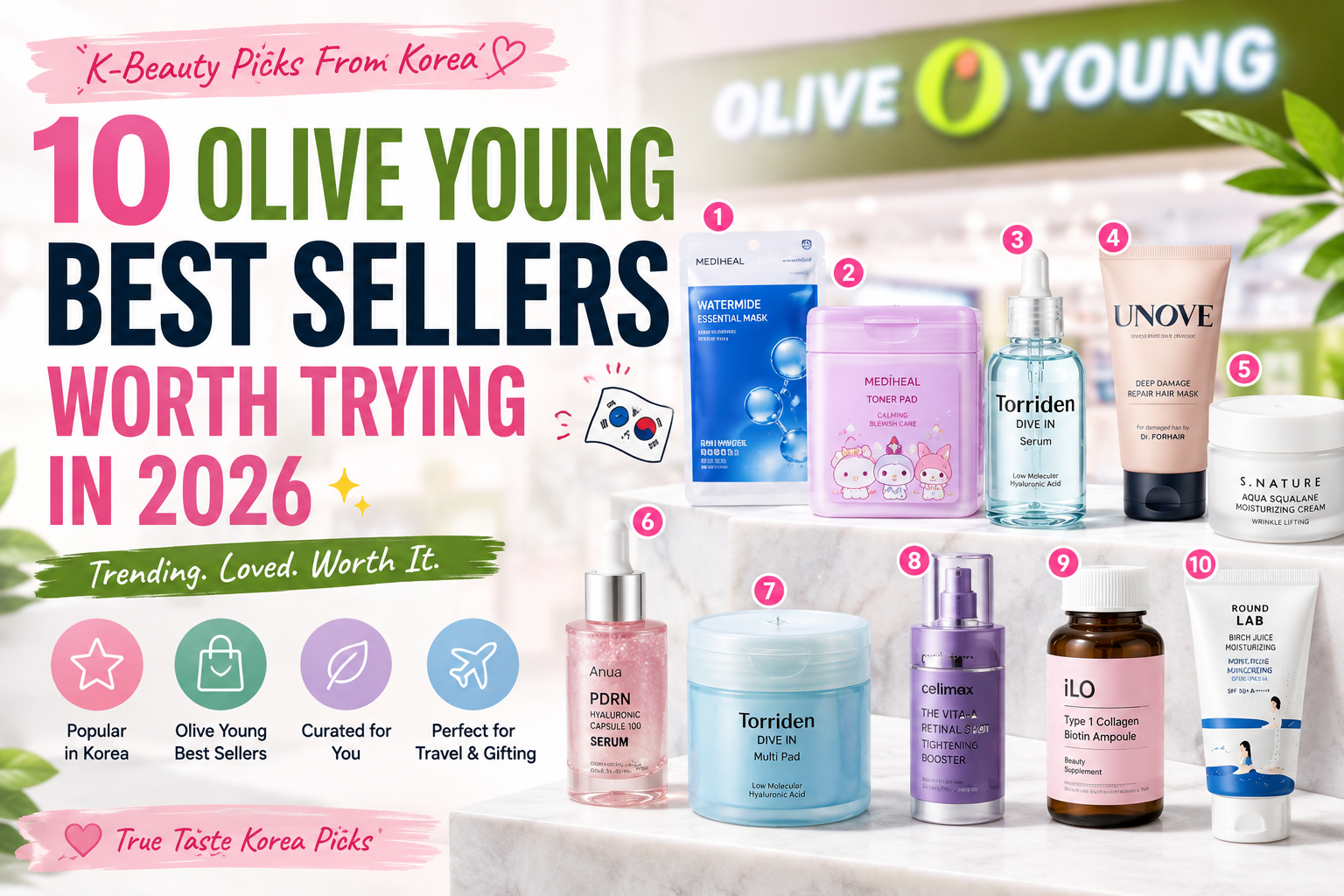
  • 10 Olive Young Best Sellers Worth Trying in 2026: K-Beauty Picks From Korea

    10 Olive Young Best Sellers Worth Trying in 2026: K-Beauty Picks From Korea

    If you’re visiting Korea — or shopping for Korean beauty products online — there’s one name you’ll see everywhere:

    Olive Young.

    For many international K-beauty shoppers, walking into an Olive Young store can be exciting.

    And slightly overwhelming.

    There are masks, serums, toner pads, sunscreens, hair treatments and new products everywhere.

    So what should you actually buy?

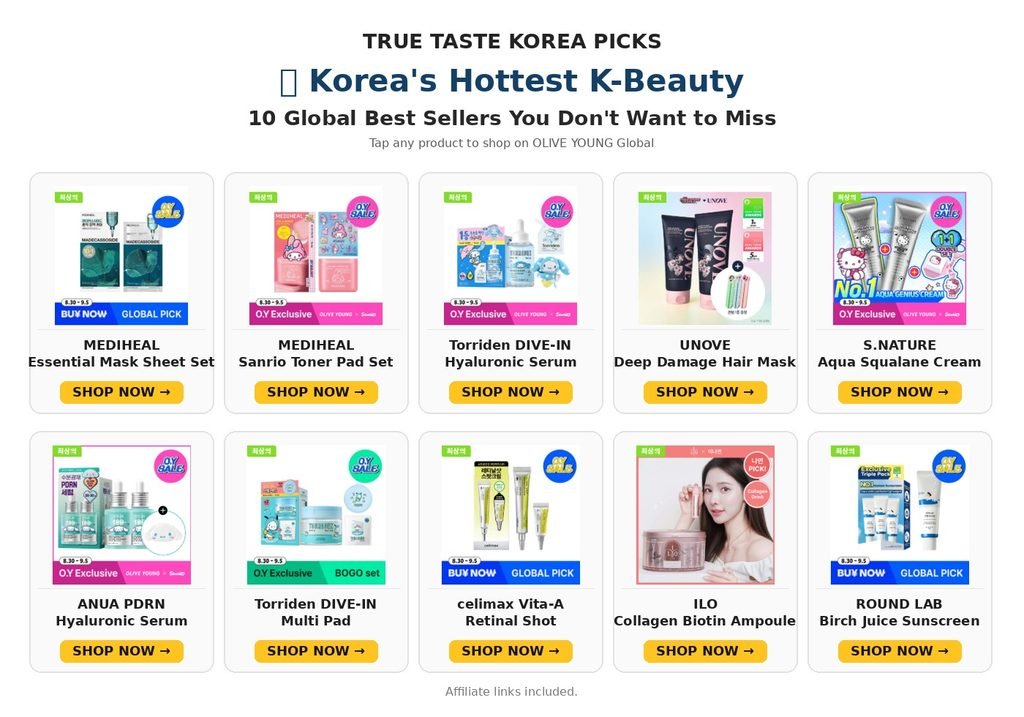
    We’ve selected 10 popular K-beauty products worth knowing in 2026.

    Before we start, there’s something important about the word “best seller.”

    Olive Young says its official Best Sellers page is updated daily based on sales data from its online and offline stores in Korea.

    That means rankings can change.

    Rather than treating this article as a permanent #1-to-#10 ranking, think of it as our True Taste Korea selection of notable Olive Young best sellers and popular products to explore.

    1. MEDIHEAL Essential Mask Sheet Set

    If you’ve ever browsed Korean sheet masks, you’ve probably encountered MEDIHEAL.

    Sheet masks remain one of the easiest ways for K-beauty beginners to experiment with Korean skincare without building an entirely new routine.

    MEDIHEAL’s Essential Mask Sheet set is particularly notable because it continues to appear prominently among Olive Young’s best sellers; recent official listings placed it near the very top.

    Best for: K-beauty beginners and sheet-mask lovers.

    Why we picked it: Easy to understand, easy to use and unmistakably Korean beauty.

    SHOP NOW →
    https://global.oliveyoung.com/if/rd?su=P49N7S1J

    2. MEDIHEAL Sanrio Edition Toner Pads

    Toner pads are one of those products that can initially confuse people new to Korean skincare.

    They’re pre-soaked pads designed to make toner-style skincare extremely convenient.

    Depending on the formula, toner pads may be used for hydration, soothing or other skincare goals.

    And the Sanrio packaging gives this MEDIHEAL edition a particularly strong K-beauty collectible feel.

    Best for: People who like convenient skincare and Korean character collaborations.

    SHOP NOW →
    https://global.oliveyoung.com/if/rd?su=N6POYKL2

    3. Torriden DIVE-IN Low Molecular Hyaluronic Acid Serum

    Hydration is one of the foundations of modern Korean skincare.

    And Torriden’s DIVE-IN line is built around that idea.

    This serum is an easy product to understand even if you’re completely new to K-beauty:

    hydration first.

    That makes it particularly appealing for someone who doesn’t want an aggressive or complicated routine.

    Best for: People looking for hydration-focused skincare.

    SHOP NOW →
    https://global.oliveyoung.com/if/rd?su=G1KG8LYQ

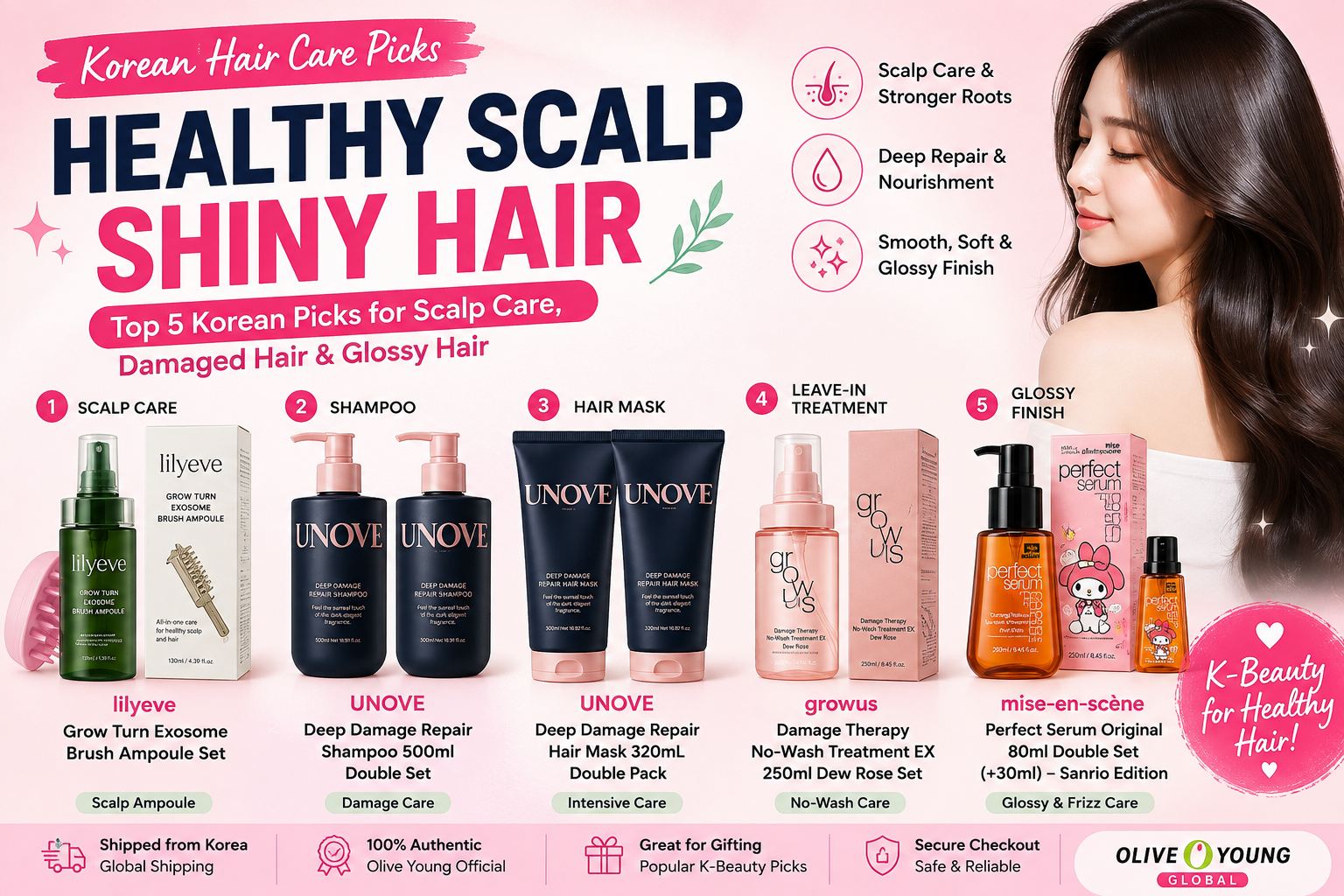
    4. UNOVE Deep Damage Repair Hair Mask

    K-beauty isn’t only about faces.

    Korean hair care is becoming an increasingly interesting part of the beauty market.

    UNOVE’s Deep Damage Repair Hair Mask is especially notable because the product currently appears among Olive Young Global’s official best sellers.

    If your hair feels dry or damaged from coloring, heat styling or everyday stress, a Korean hair treatment can be an interesting addition to your routine.

    Best for: Dry or damaged-feeling hair.

    SHOP NOW →
    https://global.oliveyoung.com/if/rd?su=K84MG69J

    5. S.NATURE Aqua Squalane Moisturizing Cream

    Sometimes the least glamorous part of skincare is the most important.

    Moisturizer.

    S.NATURE’s Aqua Squalane Moisturizing Cream is aimed at hydration and moisture support rather than turning your routine into a complicated science experiment.

    That’s exactly why products like this can be useful.

    Best for: People building a simple hydration-focused Korean skincare routine.

    SHOP NOW →
    https://global.oliveyoung.com/if/rd?su=MRR8M6OL

    6. ANUA PDRN Hyaluronic Capsule 100 Serum

    This is one of the products we’re watching closely.

    Why?

    Because it combines two major skincare interests:

    PDRN + hyaluronic acid.

    PDRN is one of the bio-regenerative ingredients attracting significant attention in K-beauty in 2026, while hyaluronic acid is already familiar to hydration-focused skincare shoppers.

    Olive Young has also featured this ANUA serum in recent promotional selections.

    If you want to understand PDRN before buying anything, read our:

    What Is PDRN? Why Korea’s Hottest Skincare Ingredient Is Everywhere in 2026

    Best for: Shoppers curious about one of 2026’s most talked-about Korean skincare trends.

    SHOP NOW →
    https://global.oliveyoung.com/if/rd?su=C8WIJXSS

    7. Torriden DIVE-IN Hyaluronic Acid Multi Pad

    Think of this as another way to approach hydration.

    Instead of applying a liquid toner manually, pre-soaked pads make skincare quick and convenient.

    It can also be an approachable entry point for people curious about Korea’s toner-pad trend.

    Best for: Convenience and hydration-focused routines.

    SHOP NOW →
    https://global.oliveyoung.com/if/rd?su=J3J4Q2TL

    8. celimax The Vita-A Retinal Shot Tightening Booster

    Now we’re entering more active skincare territory.

    Retinal is related to vitamin A and is different from the simple hydration products elsewhere on this list.

    The celimax Retinal Shot Tightening Booster is particularly interesting because it currently appears very high on Olive Young Global’s official bestseller listings.

    Beginners should resist the temptation to introduce several powerful actives simultaneously.

    Best for: More experienced skincare users interested in a vitamin-A-focused routine.

    SHOP NOW →
    https://global.oliveyoung.com/if/rd?su=NPB7RVWK

    9. ILO Type 1 Collagen Biotin Ampoule

    This one is different from the topical skincare products above.

    It’s part of the growing inner-beauty category.

    That’s important because Korean beauty retail increasingly extends beyond creams and serums into beauty-oriented wellness products.

    Don’t treat a supplement as a substitute for skincare, nutrition or medical care.

    Best for: Shoppers interested in Korea’s inner-beauty category.

    SHOP NOW →
    https://global.oliveyoung.com/if/rd?su=RNO4D8PM

    10. ROUND LAB Birch Juice Moisturizing Sunscreen

    If I had to choose one skincare habit more important than chasing every new beauty trend, sunscreen would be near the top.

    ROUND LAB’s Birch Juice line has become recognizable among international K-beauty shoppers, and Korean sunscreens are particularly popular with people seeking lightweight daily formulas.

    Best for: Everyday sun-protection routines.

    SHOP NOW →
    https://global.oliveyoung.com/if/rd?su=7BO7OI9H

    What Should a K-Beauty Beginner Buy First?

    Don’t buy all ten simply because they’re popular.

    If you’re starting from zero, think about your actual needs.

    Dry/dehydrated skin: start with hydration and moisturizer.

    Interested in Korean masks: try MEDIHEAL.

    Curious about toner pads: consider MEDIHEAL or Torriden pads.

    Interested in 2026 skincare trends: investigate PDRN.

    Looking for daily protection: prioritize sunscreen.

    Damaged-feeling hair: look at UNOVE.

    The goal isn’t to own the most K-beauty products.

    It’s to find products that make sense in your routine.

    Can You Buy Olive Young Products Outside Korea?

    Yes.

    International shoppers can use OLIVE YOUNG Global, although product availability, pricing, promotions and shipping options can vary by destination.

    And if you’re actually traveling to Korea, visiting an Olive Young store can be part of the experience itself.

    How We Choose Our K-Beauty Picks

    At True Taste Korea, we don’t want this section to become a random list of products.

    We look for a combination of:

    Korean popularity + current beauty trends + usefulness + international accessibility.

    Because Olive Young’s official bestseller rankings change daily, we’ll treat them as a signal rather than pretending one product remains permanently ranked #1.

    That also gives us a reason to keep this guide updated.

    Final Thoughts

    Olive Young is a fantastic place to discover Korean beauty.

    But the enormous selection can make it difficult to know where to begin.

    Start with your skin or hair concern.

    Learn what the product actually does.

    Then decide whether it deserves a place in your routine.

    K-beauty should make skincare more enjoyable — not more confusing.

    Korea's hottest K-Beauty 10 global best sellers selected by True Taste Korea
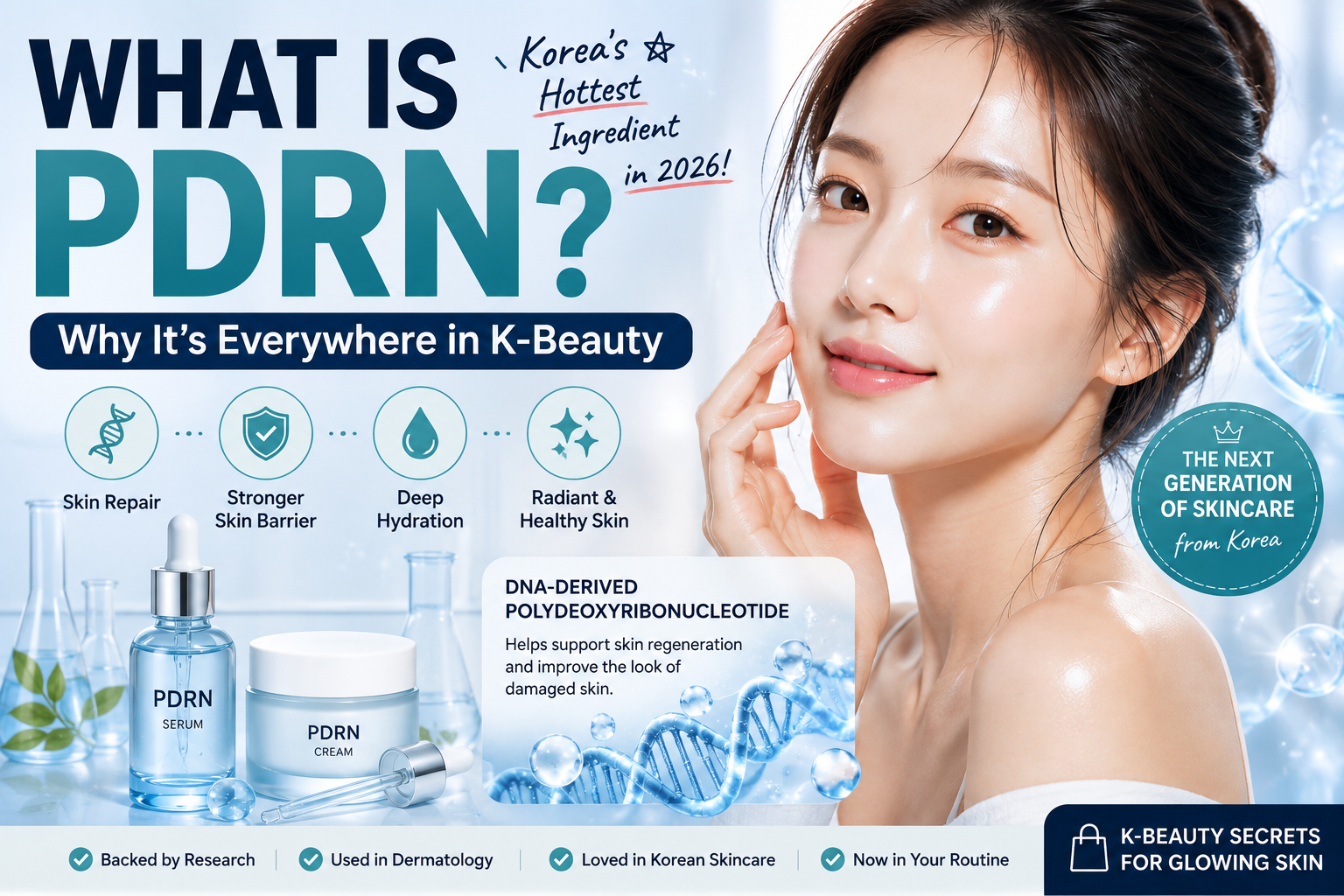
  • What Is PDRN? Why Korea’s Hottest Skincare Ingredient Is Everywhere in 2026

    What Is PDRN? Why Korea’s Hottest Skincare Ingredient Is Everywhere in 2026

    If you’ve been following Korean skincare lately, you may have noticed four letters appearing everywhere:

    PDRN.

    Serums, creams, masks and professional Korean skincare treatments are increasingly using the term.

    So what exactly is PDRN?

    And more importantly:

    Does it actually do anything for your skin — or is it just another K-beauty trend?

    Let’s separate the science from the hype.

    What Is PDRN?

    PDRN stands for polydeoxyribonucleotide.

    In simple terms, PDRN consists of DNA fragments that have been studied for their potential role in tissue repair and regeneration.

    PDRN has a history of medical and regenerative applications, but the ingredient has increasingly crossed into the beauty world.

    That’s one reason PDRN has become one of the ingredients attracting attention in Korea’s rapidly evolving skincare market.

    Vogue included PDRN among the bio-regenerative actives expected to help shape K-beauty in 2026.

    Why Is PDRN Suddenly So Popular in Korean Skincare?

    K-beauty trends have gradually shifted beyond simple hydration.

    Consumers are increasingly interested in products associated with:

    skin barrier support, elasticity, soothing, hydration and healthy-looking aging.

    This has created enormous interest in ingredients inspired by regenerative dermatology.

    PDRN fits directly into that trend.

    And it isn’t confined to Korean clinics anymore.

    The ingredient is increasingly appearing in consumer skincare products that can be incorporated into everyday routines.

    Wait — Is PDRN Really Made From Salmon?

    This is probably one of the first questions many shoppers ask.

    Traditionally, PDRN has commonly been associated with DNA fragments derived from salmon or trout.

    That’s why you may encounter phrases such as:

    “salmon DNA skincare.”

    However, PDRN research isn’t limited to fish-derived sources.

    Researchers are also investigating alternatives. A 2026 study, for example, examined low-molecular-weight PDRN derived from Paeonia lactiflora — peony — as a potential plant-based alternative.

    So don’t automatically assume every PDRN product has exactly the same source or formulation.

    Check the individual product.

    What Can PDRN Potentially Do for Skin?

    This is where things become interesting.

    Research into PDRN and related polynucleotides has examined areas including tissue repair, wound healing, skin rejuvenation and photoaging.

    A 2026 systematic review of randomized trials found encouraging outcomes across skin rejuvenation, scar and wound-healing applications, while also showing that the overall evidence base remains relatively small.

    A separate 2026 study investigated a topical medium-length PDRN formulation on photodamaged skin.

    Researchers reported improvements in several measured skin parameters in their study, while also noting that topical PDRN delivery and mechanisms have historically been insufficiently defined.

    That’s an important distinction.

    Promising research does not mean every PDRN cosmetic will produce the same result.

    Formulation, concentration, molecular characteristics and delivery can all matter.

    PDRN Skincare vs. PDRN Treatments in Korea

    This distinction is extremely important.

    PDRN cosmetics

    These include products such as:

    serums
    creams
    masks
    ampoules

    They’re topical skincare products intended for everyday cosmetic use.

    Professional treatments

    PDRN and related polynucleotide products may also be used in professional aesthetic or dermatological settings.

    These are not the same thing as applying a PDRN serum at home.

    Clinical literature concerning professional or post-procedure applications shouldn’t automatically be interpreted as proof that an over-the-counter cosmetic produces identical effects. Recent reviews also point out limitations including small studies, formulation differences and limited long-term follow-up.

    If you’re considering professional treatment in Korea, see our guide:

    Dermatology in Korea for Foreigners 2026: Treatments, Costs & How to Book

    How Do You Use a PDRN Serum?

    Always follow the directions for the particular product you’ve purchased.

    For a typical serum-style skincare product, the routine may look something like:

    Cleanser → Toner → PDRN Serum → Moisturizer → Sunscreen in the morning

    You don’t need to completely rebuild your skincare routine just because PDRN is trending.

    Start simple.

    Introduce a new product gradually and watch how your skin responds.

    Who Might Be Interested in PDRN Skincare?

    PDRN products may appeal particularly to people interested in:

    hydration
    skin barrier care
    healthy-looking aging
    elasticity-focused routines
    post-stress skin care

    But skincare is highly individual.

    People with sensitive skin should pay attention to the entire ingredient list, not merely the word PDRN printed on the bottle.

    Is PDRN Better Than Retinol?

    Not necessarily.

    They aren’t interchangeable ingredients.

    Retinoids have a much longer history of dermatological research and use.

    PDRN is a newer and rapidly developing area of interest in consumer skincare.

    Interestingly, a recent randomized split-face study compared one specific 0.1% topical PDRN formulation with 0.1% retinol over 28 days and reported favorable results for that PDRN formulation on several measured periocular parameters.

    But that doesn’t establish that every PDRN serum is superior to every retinol product.

    That’s exactly the kind of marketing leap consumers should avoid.

    How to Choose a PDRN Product

    Don’t buy something simply because PDRN appears in giant letters on the package.

    Look at:

    the manufacturer
    the complete ingredient list
    the product’s intended purpose
    directions for use
    your own skin type
    other active ingredients in your routine

    And buy through a retailer or brand you trust.

    PDRN Is Already Reaching Olive Young Shoppers

    This isn’t merely an abstract beauty trend.

    Olive Young Global has recently featured Anua PDRN Hyaluronic Capsule 100 Serum in promotional skincare selections.

    That combination is interesting because it illustrates where consumer K-beauty is heading:

    trending active + hydration-focused ingredients + easy home routine.

    And we already have this exact ANUA product in our True Taste Korea Picks collection.

    Is PDRN Worth Trying?

    PDRN is one of the more interesting K-beauty ingredients to watch in 2026.

    There is emerging scientific research behind PDRN and polynucleotide applications.

    But there’s also plenty of marketing hype.

    The sensible position sits somewhere between:

    “PDRN is a miracle ingredient.”

    and

    “PDRN is meaningless marketing.”

    Research is developing, formulations differ, and consumer skincare should not be confused with professional medical treatment.

    If you decide to try PDRN skincare, choose the product carefully and judge it as part of your overall routine — not as a miracle in a bottle.

    Korea's hottest K-Beauty 10 global best sellers selected by True Taste Korea
  • Want Skin Like Korean Celebrities? Discover the Secrets Behind Korean Glowing Skin

    Want Skin Like Korean Celebrities? Discover the Secrets Behind Korean Glowing Skin

    Have you ever watched a K-drama or K-pop performance and wondered:

    “How does their skin look so clear, smooth and glowing?”

    Korean celebrities often appear on camera with luminous, hydrated-looking skin — the kind of complexion that helped make terms such as “glass skin” famous around the world.

    But there isn’t one magical Korean cream that creates perfect skin overnight.

    The more interesting story behind Korean skincare is a culture of consistent care, hydration, gentle cleansing, sun protection and choosing products according to your skin’s needs.

    And you don’t have to live in Seoul — or be a K-pop star — to learn from those habits.

    Here are seven K-beauty principles worth knowing.


    1. Korean Skincare Is About Consistency, Not Magic

    One misconception about K-beauty is that everyone in Korea follows an elaborate 10-step routine every morning and night.

    That isn’t necessarily true.

    K-beauty experts interviewed by Vogue in 2026 explained that Korean skincare is highly personalized. Depending on the condition of your skin, a routine might contain only a few products or considerably more.

    The important idea is consistency.

    Jessica Jung, for example, previously told Vogue that her Korean skincare approach centered on following her daily and nightly routine consistently.

    Instead of constantly searching for a miracle product, think about what your skin actually needs and build a routine you can maintain.


    2. Clean Skin Comes First

    At the end of the day, your face may contain sunscreen, makeup, sebum, sweat and environmental residue.

    That’s why cleansing has become such an important part of K-beauty.

    One method commonly associated with Korean skincare is double cleansing.

    The basic idea is simple:

    First cleanse: remove oil-based residue such as makeup and sunscreen.

    Second cleanse: use a water-based cleanser to remove remaining sweat and impurities.

    Beauty and skincare experts describe evening double cleansing as a foundation of many Korean-style routines, particularly for people wearing makeup or sunscreen.

    But more cleansing isn’t automatically better.

    If your skin becomes dry, tight or irritated, a gentler routine may be more appropriate.


    3. Hydration Is One of the Foundations of the “Glass Skin” Look

    What makes “glass skin” look different from simply shiny skin?

    Hydration.

    The goal is usually described as skin that appears smooth, plump, even and naturally luminous.

    K-beauty experts emphasize maintaining hydration and supporting the skin barrier rather than simply covering the face with heavy makeup.

    This explains the popularity of Korean products such as:

    toners → essences → serums → moisturizers → masks

    The idea isn’t necessarily to use every product.

    Instead, lightweight hydration can be layered according to what your skin needs.


    4. Don’t Forget Sunscreen

    If there is one habit worth remembering from Korean skincare culture, it is sun protection.

    UV exposure contributes to pigmentation and visible signs of skin aging, which is why sunscreen is repeatedly emphasized by skincare professionals.

    Korean sunscreens have also become internationally popular partly because many modern formulas aim for comfortable textures suitable for everyday use.

    The lesson is simple:

    Expensive skincare means much less if you ignore daily sun protection.

    And sunscreen isn’t just something to use at the beach.

    For many people, it is an everyday skincare step.


    5. Sheet Masks and Toner Pads Are Helpers — Not Magic

    Walk into an Olive Young store in Korea and you’ll quickly notice sheet masks and toner pads.

    They are everywhere.

    Toner pads can serve different purposes depending on their formulation, including hydration, soothing, brightening or exfoliation. Dermatologist Y. Claire Chang explained to Vogue that their function can go well beyond simply being “toner on a pad.”

    Sheet masks are also commonly used as an additional hydration or soothing step.

    But remember:

    A mask cannot compensate for poor everyday skincare habits.

    Think of masks and toner pads as supporting players rather than the entire routine.


    6. Korean Stars Don’t Necessarily Use 20 Products Every Day

    This may surprise you.

    Some Korean celebrities have demonstrated elaborate beauty routines, while others keep things remarkably simple.

    For example, LE SSERAFIM’s Kazuha showed Vogue a relatively streamlined 2026 morning routine beginning with cleansing and toner pads, and said she generally keeps her skincare simple.

    That tells us something useful.

    The secret isn’t:

    “Use as many Korean products as possible.”

    It’s:

    “Find products and habits that work for your skin and use them consistently.”

    More products can also mean more opportunities for irritation, particularly when multiple strong active ingredients are combined.


    7. Skincare and Dermatology Are Not the Same Thing

    This distinction is especially important.

    Korean cosmetics can help support everyday skincare, hydration and appearance.

    But cosmetics are not substitutes for medical diagnosis or treatment.

    Persistent acne, severe irritation, unusual pigmentation, scars or other skin conditions may require evaluation by a qualified medical professional.

    This is also one reason Korea’s dermatology sector attracts so many international visitors.

    If you’re considering professional treatment rather than everyday skincare, read our Dermatology in Korea for Foreigners 2026: Treatments, Costs & How to Book guide.


    A Simple Korean-Inspired Skincare Routine for Beginners

    You don’t need 10 steps to begin.

    A simple routine might look like this:

    Morning

    Gentle cleanse
    → Hydrating serum or toner if needed
    → Moisturizer
    → Sunscreen

    Evening

    Remove sunscreen and makeup
    → Gentle cleanser
    → Hydrating or targeted skincare
    → Moisturizer

    Then adjust according to your skin type and concerns.

    That’s much more realistic than buying ten unfamiliar products at once.


    So, What’s the Real Korean Skin Secret?

    There probably isn’t one.

    It’s the combination of:

    Gentle cleansing + hydration + sun protection + appropriate products + consistency

    that matters more than any single trendy product.

    And perhaps that’s the most useful lesson behind K-beauty.

    Instead of asking:

    “What miracle product gives Korean celebrities perfect skin?”

    try asking:

    “What small skincare habits can I consistently follow every day?”

    Beautiful-looking skin is usually built over time.

    Not overnight.

    Korea's hottest K-Beauty 10 global best sellers selected by True Taste Korea
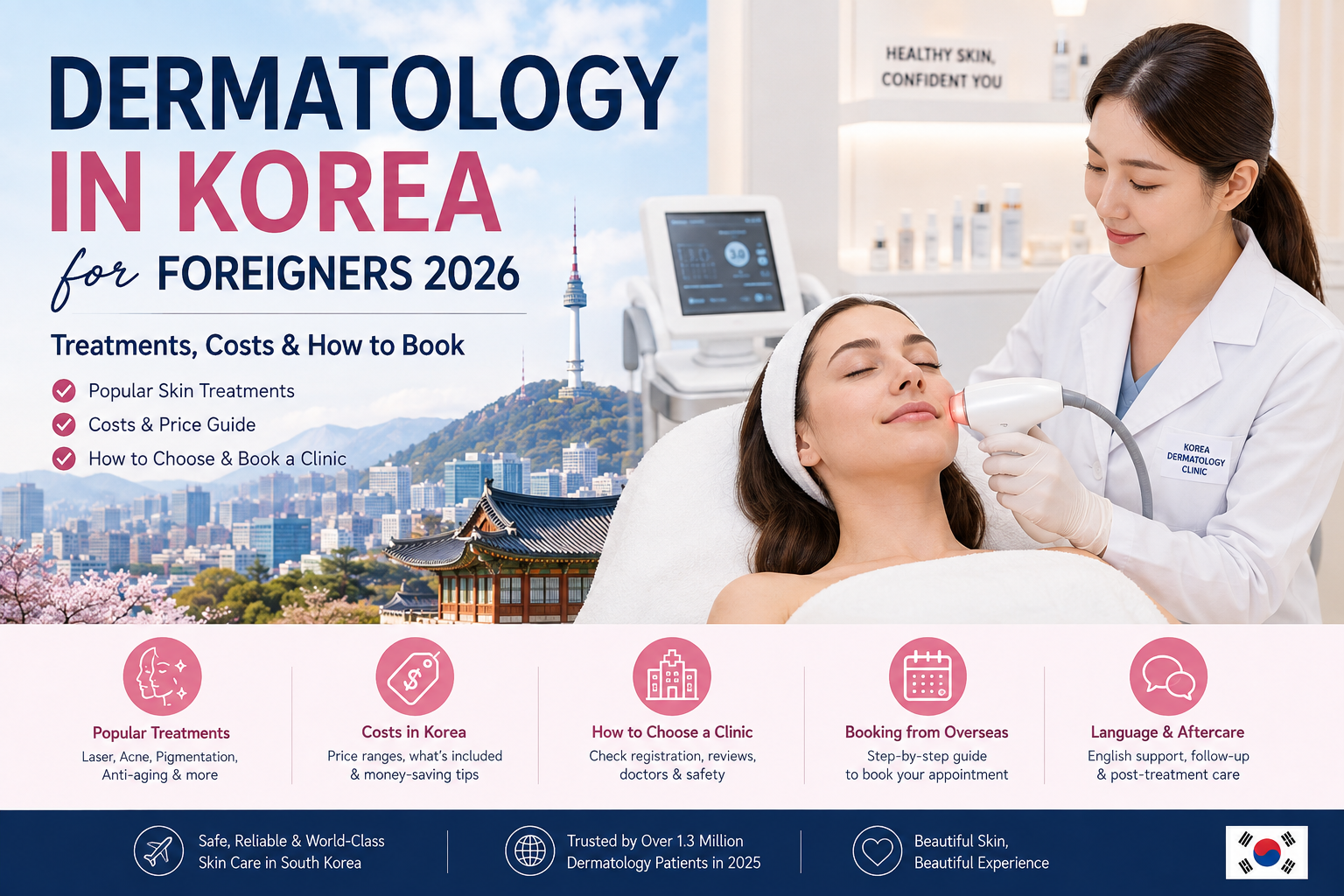
  • Dermatology in Korea for Foreigners 2026: Treatments, Costs & How to Book

    Dermatology in Korea for Foreigners 2026: Treatments, Costs & How to Book

    If you are considering traveling to South Korea for skin treatment, you are far from alone.

    Korea has become one of the world’s most popular destinations for dermatology and aesthetic skin treatments, driven in part by the global popularity of K-beauty and growing international interest in Korean medical services.

    According to official Korean government statistics, approximately 1.31 million foreign patients visited dermatology departments in Korea in 2025.

    Dermatology represented 62.9% of foreign-patient treatment by medical department, making it by far the largest category. The number increased 86.2% from the previous year.

    But traveling to another country for skin treatment raises important questions.

    Which treatment should you choose? How much does Korean dermatology cost? How do you find a clinic? Can you book from overseas? Will the staff speak English?

    This guide explains what foreigners should know before booking dermatology treatment in Korea in 2026.

    Medical notice: This article is for general travel and medical-tourism information only. It does not recommend a particular procedure or clinic. Treatment suitability, risks, results, recovery time and prices vary by individual and provider. Consult a qualified medical professional before undergoing treatment.


    Why Is Korean Dermatology So Popular With Foreigners?

    Korean skincare is already familiar to millions of consumers through K-beauty.

    But skincare products and medical dermatology are very different things.

    Visitors to Korea can find a large market of dermatology clinics and other medical providers offering consultations, medical skin care and aesthetic procedures.

    The scale of international demand is remarkable.

    Korea received 2,011,822 foreign patients from 201 countries in 2025, up 71.9% from 2024. Dermatology alone accounted for approximately 1.31 million patients.

    Many foreign visitors combine a trip to Korea with a dermatology consultation or skin treatment.

    However, popularity does not mean every clinic or procedure is appropriate for every patient.

    The goal should not be to find the clinic with the most viral social-media video.

    The goal should be to find an appropriately registered medical provider and receive a proper consultation for your individual skin condition.


    What Skin Treatments Are Available in Korea?

    The Korean dermatology and aesthetic medicine market offers many different procedures.

    The exact options vary between medical institutions, but international patients commonly research treatments related to:

    Acne and Acne Scars

    Treatment may focus on active acne, inflammation, pigmentation left after acne or different types of acne scarring.

    Because acne scars vary considerably, there is no single procedure that is appropriate for everyone.

    A medical consultation should come before choosing a treatment simply because it is popular online.

    Pigmentation and Dark Spots

    Foreign patients may seek consultations for freckles, sun damage, uneven pigmentation, melasma or other pigmentation concerns.

    Different pigmentation conditions can look similar but may require different approaches.

    This is one reason diagnosis matters before laser treatment.

    Laser Skin Treatments

    Korean clinics use many types of laser and energy-based devices.

    These may be marketed for pigmentation, redness, texture, scars, hair removal and other purposes.

    Don’t choose a treatment solely by the machine’s brand name.

    Ask why that particular device or treatment is appropriate for your skin.

    Skin Texture and Pores

    Treatments marketed for improving skin texture, pores and overall skin appearance are common in Korea.

    These may involve lasers, energy-based devices, injections or combinations of procedures depending on the clinic and the patient’s condition.

    Anti-Aging and Lifting Treatments

    Visitors will also encounter treatments marketed for wrinkles, elasticity, facial contouring or lifting.

    These can range from relatively simple outpatient procedures to more intensive treatments.

    Ask about expected results, side effects and recovery time before deciding.


    Dermatology vs. Beauty Clinic: Know What You Are Booking

    This is especially important for foreign visitors.

    The words “skin clinic,” “beauty clinic,” and “dermatology clinic” may appear similar in English-language marketing, but you should verify what type of medical institution you are actually booking.

    Check who will diagnose your condition and who will perform the procedure.

    You should also verify whether the institution is registered to treat foreign patients.

    Korea operates an official registration system for medical institutions serving international patients. Registered institutions are required to carry medical malpractice liability insurance as part of Korea’s foreign-patient protection system.

    You can search registered medical providers directly through the Korean government’s Medical Korea Registered Hospitals directory.

    This should be one of your first checks before making an appointment.


    Where Should Foreigners Get Skin Treatment in Korea?

    Seoul dominates Korea’s international medical market.

    Of approximately 2.01 million foreign patients in Korea in 2025, about 1.76 million received treatment in Seoul, representing 87.2% of the national total.

    For dermatology travelers, areas of Seoul frequently associated with large numbers of clinics include:

    Gangnam
    One of Seoul’s largest medical and beauty districts.

    Sinsa and Apgujeong
    Known for concentrations of cosmetic, dermatology and aesthetic medical services.

    Cheongdam
    Another area with numerous skin and cosmetic medical institutions.

    Myeongdong
    Convenient for international tourists because of its central location, shopping and accommodation.

    But don’t assume that Gangnam automatically means better treatment.

    The right provider depends on the condition you want treated, the medical professional, communication, aftercare and your individual circumstances.

    Korea’s official Medical Korea directory includes registered dermatology clinics not only in Seoul but also in cities such as Busan, Incheon, Gwangju and elsewhere.


    How Much Does Dermatology Cost in Korea?

    This is probably one of the first questions most international visitors ask.

    Unfortunately, there is no single useful answer such as:

    “A Korean skin treatment costs $100.”

    Prices vary enormously depending on:

    • the procedure
    • number of treatment areas
    • device or technique
    • doctor
    • clinic
    • number of sessions
    • medication
    • anesthesia or numbing
    • additional treatments
    • aftercare

    Promotional prices can also differ from the final amount paid.

    For that reason, request a written quotation from the clinic before traveling whenever possible.

    Ask:

    What exactly is included in this price?

    For example, determine whether the quote includes:

    consultation + procedure + medication + anesthesia/numbing + aftercare + follow-up visit.

    If a clinic advertises an unusually low starting price, ask what a typical patient receiving the treatment you are considering actually pays.


    Don’t Compare Korean Clinics Only by Price

    Suppose Clinic A advertises a procedure at a very low price while Clinic B charges considerably more.

    That doesn’t necessarily mean one is a bargain and the other is expensive.

    The treatment area, number of shots, device settings, doctor’s involvement, medication and aftercare may differ.

    Instead of asking only:

    “How much?”

    ask:

    “What exactly will I receive for that price?”

    For someone flying thousands of kilometers for treatment, this distinction matters much more than saving a small amount on the advertised price.


    How to Book a Korean Dermatology Clinic From Overseas

    You do not necessarily need to arrive in Seoul before arranging treatment.

    Many institutions serving foreign patients provide online inquiries or international-patient contact channels.

    A practical booking process looks like this:

    Step 1: Decide What You Want Evaluated

    Start with your skin concern rather than a trendy procedure.

    For example:

    acne scars → pigmentation → redness → wrinkles → skin texture

    You don’t need to diagnose yourself.

    The purpose is simply to explain clearly what concerns you.

    Step 2: Shortlist Several Clinics

    Don’t immediately book the first clinic you see on TikTok, Instagram or YouTube.

    Create a shortlist and check whether the medical institution appears in the official Medical Korea provider directory.

    Step 3: Contact the Clinic

    Ask whether it accepts international patients and whether consultation is available in English or another language you speak.

    Step 4: Send Relevant Information

    The clinic may ask about:

    • age
    • skin concern
    • previous treatments
    • allergies
    • medications
    • medical conditions
    • photographs

    Provide accurate information.

    Step 5: Request an Estimate

    Ask for an estimated treatment price before booking your flight.

    Step 6: Ask About Recovery

    This is particularly important for tourists.

    Ask:

    Can I fly after treatment?
    Can I exercise?
    Can I wear makeup?
    Should I avoid sunlight?
    How long will redness or swelling last?
    Do I need a follow-up appointment?

    Your travel itinerary should be planned around the treatment — not the other way around.


    Can I Get Dermatology Treatment in Korea Without Speaking Korean?

    Potentially, yes.

    Many medical institutions that actively serve international patients provide coordinators or interpretation in one or more languages.

    But never assume English support is available.

    Confirm it before booking.

    Ask specifically:

    Is an English-speaking coordinator available on the day of my appointment?

    And more importantly:

    Will I be able to communicate clearly with the medical professional about risks, treatment choices and aftercare?

    Translation during payment or reception is not the same as adequate communication during a medical consultation.

    For general information about Korea’s medical-tourism system, international visitors can also use the official Medical Korea portal.


    Questions to Ask Before Paying a Deposit

    Before paying, save the clinic’s answers to several important questions.

    1. Who will perform the procedure?
    2. Why is this treatment suitable for my skin?
    3. What are the common side effects?
    4. How much downtime should I expect?
    5. What is the total estimated cost?
    6. What exactly is included?
    7. Will I need more than one session?
    8. Is English-language support available?
    9. What happens if I have a problem after treatment?
    10. Who can I contact after returning home?

    A reputable medical consultation should allow you to understand what you are agreeing to.


    Be Careful With Before-and-After Photos

    Before-and-after photographs can be useful, but they should never be your only reason for choosing a clinic.

    Lighting, camera angle, makeup, editing and the time between photographs can dramatically affect appearance.

    Also remember that another patient’s result does not guarantee yours.

    Your skin type, condition, age, medical history and response to treatment may be different.

    Use photographs as one piece of information, not as a medical guarantee.


    Should You Get Skin Treatment on the First or Last Day of Your Korea Trip?

    For many procedures, doing treatment immediately before an important event or long flight may not be ideal.

    Some treatments can cause temporary redness, swelling, sensitivity, bruising or peeling.

    On the other hand, undergoing treatment on your first day without allowing time for follow-up can also create problems.

    The best timing depends entirely on the procedure.

    Before finalizing your itinerary, ask the clinic:

    How many days should I remain in Korea after this treatment?

    For a simple procedure, the answer may be short.

    For a treatment requiring follow-up, you may need to stay longer.


    Sun Protection Matters During Your Korea Trip

    If your procedure makes your skin more sensitive to sunlight, sightseeing can become part of your recovery planning.

    Korea involves plenty of outdoor walking.

    Tourists may spend hours exploring palaces, traditional markets, neighborhoods and shopping districts.

    Ask your medical provider about appropriate sun protection and activities after treatment.

    Follow the provider’s instructions rather than assuming your normal skincare routine is suitable immediately after a procedure.


    What Should You Bring to Your Appointment?

    Bring your passport or other identification requested by the medical institution.

    It can also be useful to have:

    • a list of medications
    • allergy information
    • details of previous skin procedures
    • photographs showing changes in your skin
    • questions written in advance
    • the clinic’s booking confirmation
    • emergency contact information

    If you have a diagnosed skin condition or previous medical records relevant to the treatment, ask whether the clinic wants them before your visit.


    What If You Have a Problem After Returning Home?

    This is one of the most overlooked questions in medical tourism.

    Before undergoing treatment, ask:

    Who do I contact if I develop an unexpected reaction after returning to my country?

    Find out whether the clinic provides remote follow-up and what documentation it can provide to your doctor at home.

    Korea’s system for institutions serving foreign patients was designed in part to strengthen protections for international patients, including registration requirements and malpractice liability insurance.

    But that does not remove the inherent risks of medical treatment.

    Planning aftercare before the procedure is much easier than trying to solve a problem from another country afterward.


    Can You Combine Dermatology Treatment With a Korea Vacation?

    Yes — and many visitors do.

    But think of it in this order:

    Medical treatment first. Vacation second.

    Don’t schedule a demanding hiking trip, beach holiday, sauna visit or all-day outdoor itinerary immediately after a procedure without checking whether it is medically appropriate.

    Instead, build your itinerary around your expected recovery.

    A traveler receiving a low-downtime treatment may have a very different schedule from someone receiving a more intensive procedure.

    This is where medical tourism differs from ordinary tourism.

    Your hotel, transportation and sightseeing schedule can all become part of your treatment plan.


    Is Korean Dermatology Worth Traveling For?

    For some international visitors, it may be.

    The extraordinary growth of foreign dermatology patients shows that Korea has become a major destination for this type of medical travel. In 2025, dermatology accounted for 62.9% of foreign-patient treatment by department, and the number of dermatology patients increased 86.2% year over year.

    But popularity alone should never determine a medical decision.

    Before traveling, consider:

    Treatment suitability + provider qualifications + total cost + communication + recovery time + aftercare + travel expenses

    rather than simply asking whether Korea is cheaper.

    The best treatment is not necessarily the newest, most viral or most heavily discounted procedure.

    It is the treatment that is medically appropriate for you.


    Korean Dermatology for Foreigners: Quick Checklist

    Before flying to Korea:

    ✓ Identify the skin concern you want evaluated
    ✓ Research the treatment rather than relying on social media
    ✓ Check the medical institution
    ✓ Confirm foreign-patient registration
    ✓ Confirm language support
    ✓ Request an estimated total price
    ✓ Ask what the price includes
    ✓ Understand risks and expected downtime
    ✓ Leave enough time for recovery
    ✓ Confirm follow-up arrangements
    ✓ Know who to contact after returning home


    Planning a Medical Trip to Korea?

    Dermatology is only one part of Korea’s rapidly growing international healthcare sector.

    Foreign visitors also travel to Korea for health checkups, dentistry, plastic surgery, ophthalmology and treatment at major hospitals.

    If you are still deciding whether Korea is the right destination, start with our Medical Tourism in Korea 2026: Costs, Hospitals, Treatments & Complete Guide.

    From there, you can plan the entire journey — from choosing medical care and estimating costs to booking, accommodation and recovery in Korea.

    True Taste Korea will continue building practical guides designed for international visitors who want to understand Korea before they arrive — not after something goes wrong.

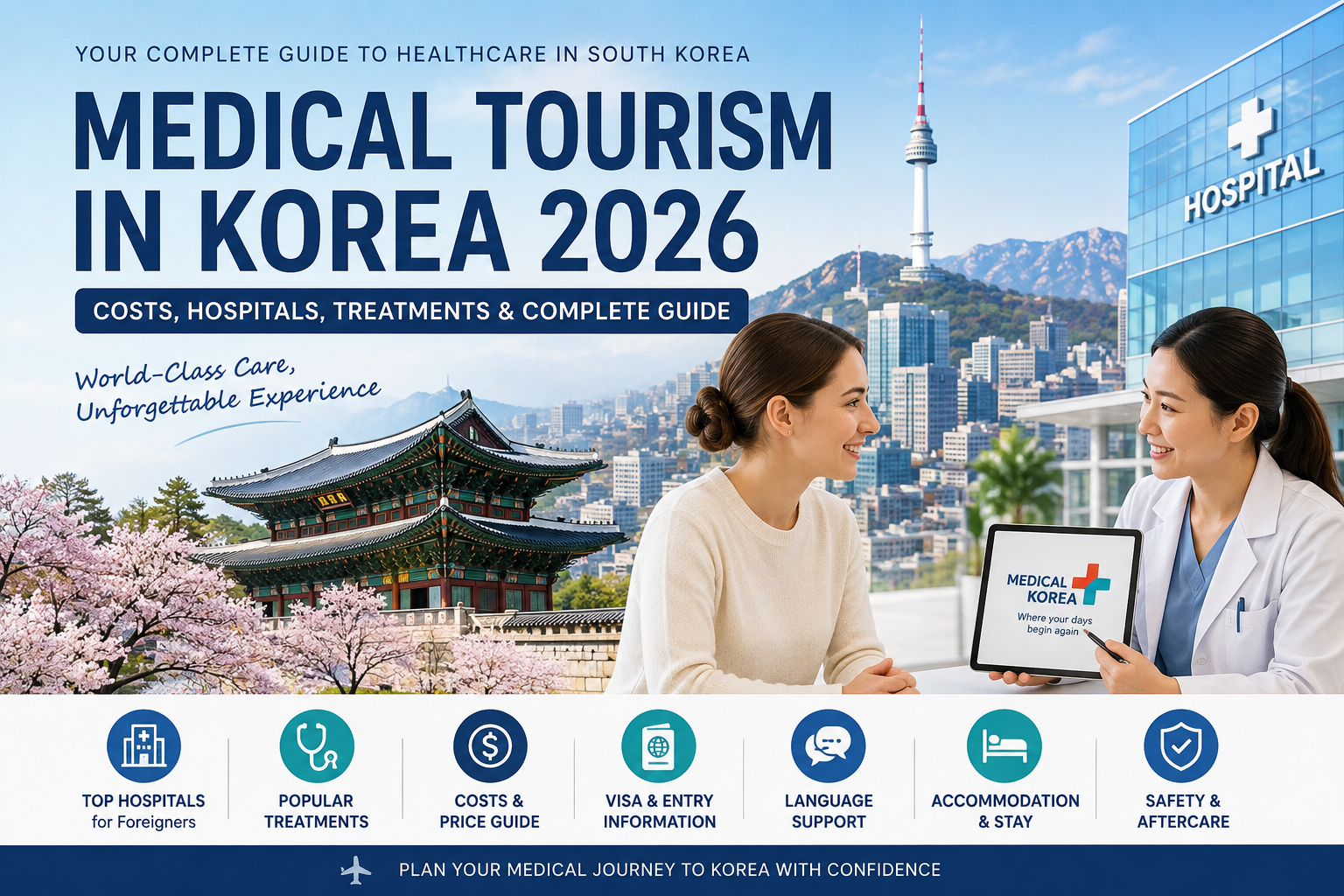
  • Medical Tourism in Korea 2026: Costs, Hospitals, Treatments & Complete Guide

    Medical Tourism in Korea 2026: Costs, Hospitals, Treatments & Complete Guide

    South Korea is famous around the world for K-pop, Korean food and K-beauty. But there is another reason why a rapidly growing number of international visitors are traveling to Korea: medical treatment.

    In 2025, 2,011,822 foreign patients from 201 countries received medical care in Korea, according to Korea’s Ministry of Health and Welfare. That was a 71.9% increase from 2024 and the first time the annual number exceeded two million.

    From dermatology and plastic surgery to comprehensive health checkups, dentistry and advanced hospital care, Korea now has a large medical system serving international patients.

    But planning medical treatment in another country can be confusing.

    How do you find a reliable hospital? How much will treatment cost? Can you communicate in English? Do you need a medical visa? And what should you prepare before flying to Korea?

    This 2026 medical tourism in Korea guide explains the process from planning your treatment abroad to returning home.

    Important: This guide provides general travel and medical-tourism information. Treatment suitability, risks, recovery time and costs vary by patient and medical institution. Always consult a qualified medical professional before making treatment decisions.

    Why Are Foreign Patients Traveling to Korea?

    Medical tourism in Korea has grown rapidly.

    Official government figures show that Korea received approximately 610,000 foreign patients in 2023, 1.17 million in 2024 and 2.01 million in 2025. The cumulative number of foreign patients since statistics began in 2009 has reached approximately 7.06 million.

    In 2025, the largest groups came from:

    • China — 618,973
    • Japan — 600,009
    • Taiwan — 185,715
    • United States — 173,363
    • Thailand — 58,124

    China and Japan alone represented more than 60% of foreign patients.

    One major reason is the international popularity of Korean dermatology, cosmetic procedures and K-beauty.

    But Korea’s medical tourism industry extends beyond cosmetic treatment.

    International patients also visit Korea for health screenings, dentistry, ophthalmology, rehabilitation, fertility treatment and treatment at major hospitals.

    What Medical Treatments Are Popular in Korea?

    The type of treatment you choose will determine almost everything about your trip: where you stay, how long you remain in Korea, whether you need someone to accompany you and how much the trip will cost.

    1. Dermatology and Skin Treatments

    Dermatology is currently one of the biggest drivers of Korean medical tourism.

    Government data show that dermatology accounted for the majority of foreign-patient treatment in 2025.

    Foreign visitors commonly search for Korean clinics offering treatments related to acne, pigmentation, scars, skin texture, lasers and cosmetic skin care.

    Because procedures, devices and medical suitability vary considerably, don’t choose a clinic based only on social-media photos or the lowest advertised price.

    A detailed Dermatology in Korea for Foreigners guide will cover treatment types, costs, booking and clinic-selection tips separately.

    2. Plastic Surgery

    South Korea is internationally known for cosmetic and reconstructive surgery.

    Foreign patients may travel for procedures involving the eyes, nose, face or body, among others.

    Surgery requires substantially more planning than a simple outpatient procedure. Consider consultation, anesthesia, recovery time, follow-up visits and the possibility of complications before booking flights.

    3. Comprehensive Health Checkups

    Another reason foreigners seek medical treatment in Korea is comprehensive health screening.

    Some Korean hospitals and health-screening centers provide packages that combine multiple examinations during a scheduled visit.

    For an international traveler, this can be attractive because several tests may be completed during one trip.

    However, what is included varies considerably between packages, so compare the actual examinations rather than simply comparing package prices.

    4. Dentistry

    Foreign visitors also use Korean dental clinics for checkups and treatments.

    If your treatment requires multiple stages, ask the clinic before traveling how many visits will be required and how much time should be left between appointments.

    This is especially important when planning flights and accommodation.

    5. Major Hospital Treatment

    Korea’s international medical services are not limited to beauty treatment.

    The government’s Medical Korea platform provides information relating to areas including cancer, heart disease, transplantation, spinal treatment, infertility treatment, rehabilitation, dentistry and reconstructive surgery.

    Patients considering treatment for a serious medical condition should contact the hospital’s international patient center well before traveling and provide the requested medical records.

    How to Find a Hospital in Korea for Foreigners

    This may be the most important part of planning your trip.

    Do not choose a hospital simply because it appears frequently on social media.

    Korea operates an official registration system for medical institutions that serve foreign patients.

    Registered institutions are subject to requirements designed to protect international patients, including medical malpractice liability insurance.

    The Korean government also operates the Korean Accreditation Program for Hospitals Serving Foreign Patients (KAHF), which evaluates participating institutions in areas including services for foreign patients and patient safety.

    Before booking, check whether the hospital or clinic is registered to serve foreign patients.

    Search Medical Korea’s official hospital information

    This is a much safer starting point than choosing solely from an advertisement or influencer recommendation.

    Can Foreign Patients Receive Help in English?

    Many institutions serving international patients offer foreign-language assistance, although the languages available vary by hospital.

    International patient centers may help with appointments, medical interpretation and other arrangements.

    The Korea Tourism Organization also provides medical-tourism information and multilingual consultation resources for foreign visitors.

    Before booking, ask the hospital specifically:

    • Is an English-speaking coordinator available?
    • Is medical interpretation included or charged separately?
    • Will an interpreter be present during consultation and treatment?
    • Can follow-up communication be provided in English after returning home?

    Don’t assume that every member of the medical staff speaks English simply because a hospital treats international patients.

    How Much Does Medical Treatment in Korea Cost?

    This is one of the most important questions — and one of the easiest areas to misunderstand.

    There is no single “Korea medical tourism price.”

    The cost depends on the hospital, doctor, diagnosis, procedure, medical device or technique used, anesthesia, medication, tests and follow-up care.

    Therefore, before flying to Korea, request a written estimate directly from the medical institution whenever possible.

    Ask whether the quoted price includes:

    consultation + examinations + procedure + anesthesia + medication + follow-up treatment.

    A cheap headline price can become much more expensive when additional services are added.

    You should also calculate the total cost of your medical trip, not only the treatment price.

    That means:

    Treatment + Flights + Hotel + Local Transportation + Meals + Interpretation + Recovery Expenses + Travel Insurance

    For major treatment, keeping an additional emergency budget is sensible.

    How Do I Book Medical Treatment Before Traveling to Korea?

    For planned treatment, start the process before buying your flight.

    A practical sequence is:

    Step 1 — Decide what treatment you need

    Research the treatment itself before comparing hospitals.

    Step 2 — Find registered medical institutions

    Use official resources such as Medical Korea to create a shortlist.

    Step 3 — Contact international patient centers

    Send inquiries directly to several hospitals or clinics.

    Step 4 — Provide medical information

    Depending on the treatment, the institution may request previous diagnoses, scans, laboratory results, prescriptions or other records.

    Step 5 — Request a treatment plan and estimated cost

    Ask what is included and whether additional examinations may change the final price.

    Step 6 — Confirm recovery time

    Ask how long you should remain in Korea before flying home.

    Step 7 — Only then arrange your trip

    Once the treatment schedule is sufficiently clear, plan flights and accommodation around your medical appointments.

    Do I Need a Medical Visa for Korea?

    Visa requirements depend on your nationality, purpose of visit and expected length of stay.

    Korea has medical-tourism visa categories including C-3-3 for shorter stays and G-1-10 for longer-term treatment, according to Medical Korea.

    Medical Korea states that the application process can require documents such as a passport, medical diagnosis, confirmation of a treatment appointment and evidence of the ability to pay for treatment and living expenses, depending on the circumstances.

    However, entry requirements vary by nationality and can change.

    Always check the requirements that apply to your passport and circumstances with the Korean embassy, consulate or official immigration resources before booking.

    Where Should Medical Tourists Stay?

    For many foreign patients, Seoul will be the main destination.

    In fact, approximately 87% of foreign patients in 2025 received treatment in Seoul, according to government statistics reported in 2026.

    But don’t automatically choose a hotel in a famous tourist neighborhood.

    For medical travel, the best accommodation is often the one that makes treatment and recovery easiest.

    Consider:

    Distance to the hospital

    Repeated taxi or subway journeys can become uncomfortable after treatment.

    Elevator access

    This may matter after surgery or when mobility is limited.

    Kitchen and laundry facilities

    Useful for longer stays.

    Nearby pharmacy and convenience stores

    Small conveniences become important during recovery.

    Easy airport transportation

    Especially useful on your departure day.

    For procedures requiring several follow-up appointments, staying close to the hospital can be more valuable than staying next to a tourist attraction.

    What Should You Prepare Before Leaving Home?

    Create a medical travel folder before departure.

    Include copies of your passport, appointment confirmation, medical records, prescriptions, medication list, allergies, emergency contacts, travel insurance documents and your hospital’s international center contact information.

    If you regularly take medication, ask your doctor whether anything needs to change before treatment.

    Also ask the Korean medical institution whether you need to stop eating, drinking, taking supplements or using particular medications before your procedure.

    Never make those changes on your own without appropriate medical guidance.

    What Happens After Treatment?

    Recovery planning is just as important as booking treatment.

    Before leaving the hospital or clinic, make sure you understand:

    • What medications should I take?
    • What symptoms are normal?
    • What symptoms require urgent medical attention?
    • When is my follow-up appointment?
    • When can I fly?
    • Who should I contact after returning home?

    For significant surgery or treatment, ask whether you will need a companion during the first stage of recovery.

    Most importantly, don’t schedule an aggressive sightseeing itinerary immediately after a procedure simply because you are visiting Korea.

    Treatment comes first. Tourism comes second.

    What If Something Goes Wrong?

    This is something every medical tourist should think about before traveling.

    Ask the institution how complications are handled and what aftercare is available once you return to your country.

    Korea’s Medical Korea system also provides information and support resources for international patients, including information related to medical disputes.

    The Medical Korea Support Center provides services including counseling, interpretation and legal support for foreign patients.

    Knowing where to ask for help before treatment is much better than searching for assistance after a problem occurs.

    Is Medical Tourism in Korea Worth It?

    There isn’t one answer that applies to everyone.

    Korea can be an attractive destination for patients interested in areas where the country has developed substantial international-patient infrastructure, particularly dermatology, cosmetic procedures and health screening.

    But traveling abroad for medical treatment also adds costs and risks that do not exist when receiving treatment close to home.

    The right question isn’t simply:

    “Is treatment cheaper in Korea?”

    A better question is:

    “Does the quality, treatment option, total cost, travel burden and follow-up plan make Korea the right choice for my particular situation?”

    Compare several medical institutions, understand the complete price and recovery requirements, and make your decision based on medical suitability rather than advertising alone.

    Medical Tourism in Korea: Quick Checklist

    Before booking your trip, confirm:

    ✓ The hospital or clinic is appropriately registered
    ✓ You understand the proposed treatment
    ✓ You received an estimated total price
    ✓ You know what the price includes
    ✓ Language support is confirmed
    ✓ Your visa or entry requirements are checked
    ✓ Accommodation is suitable for recovery
    ✓ You know how long to remain in Korea
    ✓ You understand follow-up care
    ✓ You have an emergency plan

    Final Thoughts

    More than two million foreign patients chose Korea for medical care in 2025, showing just how quickly the country’s international medical sector is growing.

    But successful medical travel requires more than finding a famous clinic and buying a plane ticket.

    Research the treatment first, verify the medical institution, compare costs carefully, confirm language support and plan enough time for recovery.

    True Taste Korea will continue building practical guides for international visitors considering medical treatment in Korea — from dermatology and health checkups to hospitals, costs, accommodation and what to do if you need medical help while traveling.

    You can also search for registered medical institutions through the Medical Korea official website.

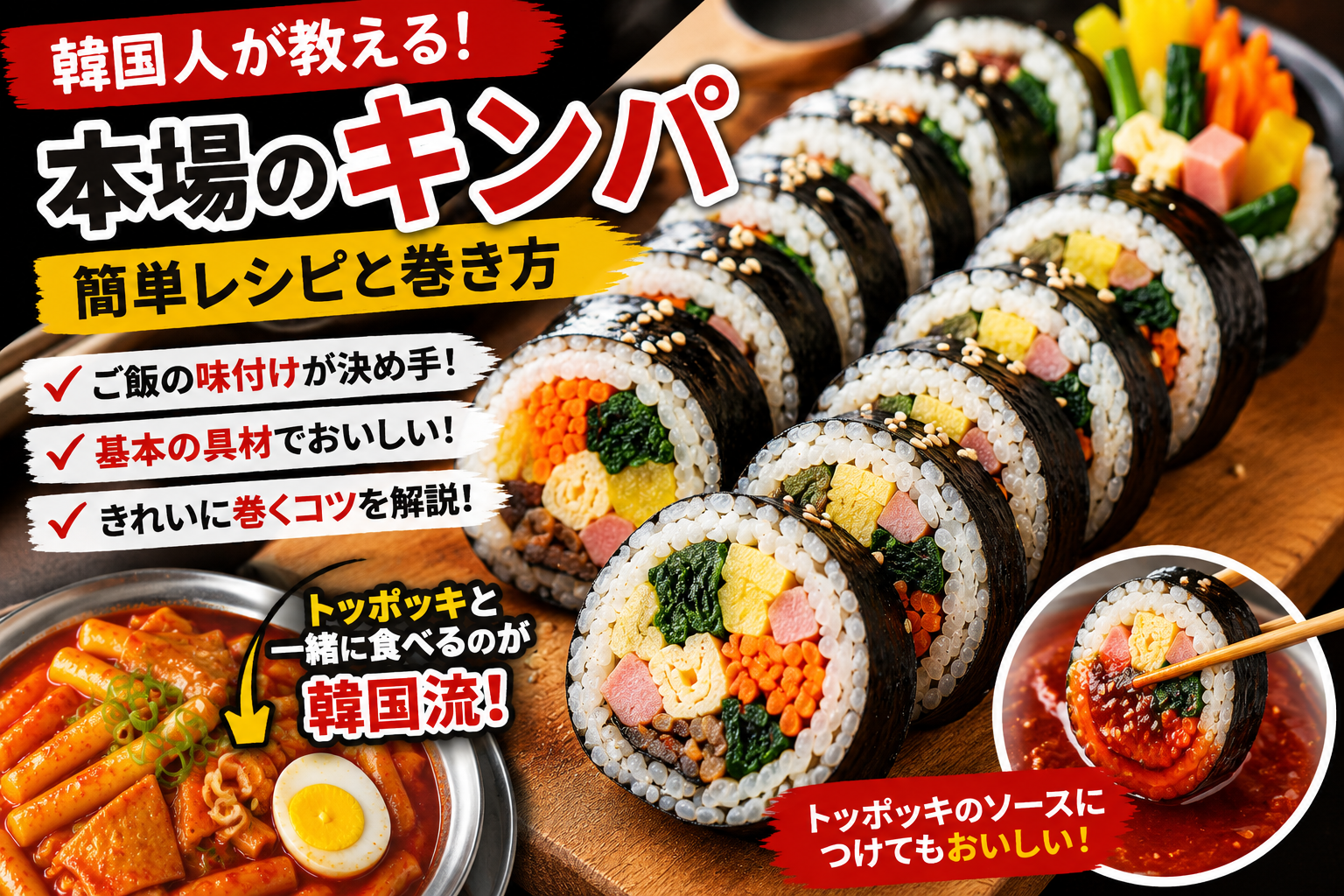
  • 韓国人が教える本場のキンパの作り方|家で失敗しない簡単レシピと巻き方

    韓国人が教える本場のキンパの作り方|家で失敗しない簡単レシピと巻き方

    韓国旅行で一度は食べてみたいキンパ(김밥)。

    色とりどりの具材をご飯と海苔で巻いた、韓国を代表する料理のひとつです。

    見た目は日本の海苔巻きに似ていますが、食べてみると味はかなり違います。

    韓国のキンパは酢飯ではなく、一般的にごま油と塩で味付けしたご飯を使います。

    そして、たくあん、卵、にんじん、ほうれん草など、いろいろな具材を一緒に巻きます。

    でも、家で作ろうとすると、

    「ご飯はどのくらい入れる?」
    「具材をたくさん入れたほうがおいしい?」
    「巻くと崩れてしまう」
    「韓国のキンパの味にならない」

    という失敗もよくあります。

    実は、おいしいキンパを作るために一番大切なのは、豪華な具材ではありません。

    海苔とご飯と具材のバランスです。

    今回は、韓国人が家庭で楽しむ基本的なキンパの作り方を紹介します。


    キンパと日本の海苔巻きは何が違う?

    [ここに画像① 切った韓国キンパ]

    見た目は似ていますが、最もわかりやすい違いのひとつがご飯の味付けです。

    日本の巻き寿司では酢飯を使うことが多いですが、韓国のキンパでは一般的にごま油と塩でご飯に味をつけます。

    海苔にもごま油の香りが加わり、仕上げにごまを振ることもあります。

    そしてキンパは韓国では特別な日の料理だけではありません。

    軽い食事、お弁当、ピクニック、旅行、軽食など、日常のさまざまな場面で食べられています。


    本場の基本キンパ|材料

    [ここに画像② キンパの材料を並べた写真]

    キンパ約3本分

    基本材料

    • キンパ用海苔 3枚
    • 温かいご飯 約500~550g
    • 卵 3個
    • にんじん 1本
    • ほうれん草 約150g
    • キンパ用たくあん 3本
    • ハムまたは韓国ソーセージ 適量
    • ごま油 適量
    • 塩 適量
    • いりごま 適量

    日本で韓国キンパ用の材料が手に入らない場合は、似た食材で代用しても大丈夫です。

    キンパは家庭料理です。

    すべてを完璧に韓国の商品で揃える必要はありません。


    1. キンパは「ご飯」がとても大切

    [ここに画像③ ご飯にごま油と塩を混ぜる]

    炊きたてのご飯に、塩とごま油を加えてやさしく混ぜます。

    3本分なら、まずは

    ごま油 大さじ1程度
    塩 小さじ1/3~1/2程度

    から始めて、味を確認しながら調整してください。

    ここで重要なのは、

    ご飯の味を濃くしすぎないこと。

    キンパにはたくあん、ハムなど味のある具材が入ります。

    ご飯まで濃くすると、完成したときに全体の味が強くなりすぎます。

    「少し薄いかな?」

    くらいでも、具材と一緒に食べるとちょうどよくなることがあります。


    2. ご飯を熱いまま海苔にのせない

    これも失敗しやすいポイントです。

    炊きたての熱々のご飯をすぐ海苔に広げると、蒸気で海苔がやわらかくなりすぎることがあります。

    味付けしたら少し冷まして、温かい程度になってから巻くと扱いやすくなります。

    ただし、完全に冷たくしてしまう必要はありません。


    3. 卵は薄く焼いて細長く切る

    [ここに画像④ 卵焼き]

    卵に少量の塩を入れてよく混ぜます。

    フライパンで薄めに焼き、キンパの長さに合わせて細長く切ります。

    卵はキンパにやさしい味と色を加えてくれます。

    黄色い卵が入るだけでも、切ったときの見た目が一気に華やかになります。


    4. にんじんは軽く炒める

    にんじんは細切りにして、少量の油と塩で軽く炒めます。

    シャキシャキ感を少し残すくらいがおすすめです。

    長く炒めすぎて柔らかくしすぎる必要はありません。


    5. ほうれん草は水分をしっかり切る

    [ここに画像⑤ ほうれん草]

    ほうれん草は短時間ゆでて冷水に取り、水分をしっかり絞ります。

    その後、塩と少量のごま油で軽く味付けします。

    ここで非常に大切なのが水分。

    ほうれん草に水がたくさん残っていると、時間が経ったときにキンパがべちゃっとしやすくなります。

    しっかり絞りましょう。


    6. 具材をたくさん入れればおいしい?

    [ここに画像⑥ キンパの具材]

    最近は、

    チーズキンパ、ツナキンパ、プルコギキンパ、豚カツキンパなど、本当にさまざまなキンパがあります。

    もちろん、それもおいしい。

    でも初めてキンパを作るなら、私は基本のキンパをおすすめします。

    なぜなら、キンパのおいしさは、

    具材の量ではなくバランスだからです。

    具材を入れすぎると巻きにくくなり、海苔が破れたり、ご飯と具材がバラバラになったりします。

    最初は欲張らない。

    これが失敗しないコツです。


    7. いよいよキンパを巻く

    [ここに画像⑦ キンパを巻いている写真]

    巻きすの上に海苔を置きます。

    その上にご飯を薄く広げます。

    ここで重要なのは、

    ご飯を厚くしすぎないこと。

    海苔が見えなくなる程度に薄く広げれば十分です。

    上部には少し余白を残しておくと、最後に巻きやすくなります。

    中央より少し手前に、

    卵、にんじん、ほうれん草、たくあん、ハムなどを横一列に並べます。


    8. 最初の一巻きをしっかり固定する

    巻きすを持ち上げ、手前の海苔をご飯と具材の上にかぶせます。

    ここで一度しっかり押さえます。

    最初の一巻きが重要です。

    ここが緩いと、切ったときに具材が崩れやすくなります。

    ただし力を入れすぎると海苔が破れることもあるので、形を整えるように巻いてください。


    9. 最後にごま油を塗る

    [ここに画像⑧ 完成した一本のキンパ]

    巻き終わったキンパの表面に、ごま油を薄く塗ります。

    そして少量のいりごま。

    この瞬間、香りが一気に韓国のキンパらしくなります。

    ただしごま油も多すぎると重くなるので、薄く塗る程度で十分です。


    10. キンパをきれいに切るコツ

    [ここに画像⑨ キンパを切っている写真]

    よく切れる包丁を使います。

    包丁に少量のごま油や水をつけると、ご飯が付きにくくなることがあります。

    一切れの厚さは好みですが、約1.5~2cm程度を目安にすると食べやすいです。

    そして切るたびに包丁についたご飯を拭くと、最後まできれいに切りやすくなります。


    韓国人おすすめ!キンパをトッポッキのソースにつけてみて

    [ここに画像⑩ キンパをトッポッキソースにつける写真]

    キンパを作ったら、ぜひ一度試してほしい食べ方があります。

    トッポッキの赤いソースにつける。

    キンパのご飯、海苔、野菜に甘辛いトッポッキソースが加わります。

    特に少し辛めのトッポッキと一緒に食べると、ご飯が辛さをやわらげてくれます。

    韓国の軽食店では、キンパとトッポッキを一緒に注文して楽しむこともあります。

    https://truetastekorea.com/tteokbokki-recipe-korean-style/?utm_source=chatgpt.com


    辛いものが好きならブルダックラッポッキも

    もっと刺激が欲しい人なら、普通のトッポッキだけではありません。

    ブルダック炒め麺とトッポッキを組み合わせたブルダックラッポッキもあります。

    もちもちの餅と麺に激辛ソース。

    そこにキンパを合わせると、かなりボリュームのある韓国式軽食になります。


    韓国ではキンパをいつ食べる?

    [ここに画像⑪ キンパ弁当・ピクニック]

    キンパは韓国人にとって、とても身近な料理です。

    旅行。

    遠足。

    ピクニック。

    忙しい日の食事。

    軽いランチ。

    家族で出かける日の食べ物。

    子どもの頃、遠足の日に家でキンパを作ってもらった思い出を持つ韓国人も少なくありません。

    だからキンパを見ると、単なる料理ではなく家族や子どもの頃の記憶を思い出す人もいます。


    キンパは自由な料理

    基本のキンパを作れるようになったら、次は自由です。

    ツナキンパ

    ツナとマヨネーズを加えます。

    チーズキンパ

    チーズを入れて、より濃厚に。

    プルコギキンパ

    味付けした牛肉を加えます。

    キムチキンパ

    キムチの酸味と辛さを加えます。

    豚カツキンパ

    豚カツを丸ごと入れたボリュームのあるキンパ。

    でも、いろいろ試したあとにシンプルな基本キンパへ戻ってくる人もいます。

    それくらい、

    ご飯、海苔、卵、野菜、たくあん

    という基本の組み合わせはよくできています。


    キンパを作るときによくある失敗

    ご飯が多すぎる

    巻けなくなります。

    → 薄く広げる。

    具材を入れすぎる

    海苔が破れたり、中身が飛び出したりします。

    → 最初は少なめ。

    野菜に水分が残っている

    時間が経つとべちゃっとします。

    → ほうれん草などの水分をしっかり切る。

    ご飯が熱すぎる

    海苔がやわらかくなりすぎます。

    → 少し冷ましてから巻く。

    ご飯の味が濃すぎる

    具材と合わせると全体がしょっぱくなります。

    → ご飯は控えめな味付けから。

    この5つを避けるだけでも、かなり作りやすくなります。


    家で韓国のキンパを作ってみよう

    [ここに画像⑫ キンパが並んだ食卓]

    初めて見ると、キンパは少し難しそうに感じるかもしれません。

    でも、一度作ってみれば意外とシンプルです。

    ご飯にごま油と塩。

    野菜と卵を準備する。

    海苔の上に薄くご飯を広げる。

    具材を並べる。

    そして巻く。

    完璧な形にならなくても大丈夫です。

    少しくらい形が崩れても、自分で作ったキンパはおいしい。

    そしてトッポッキも一緒に作ったら、

    キンパを赤いソースに少しつけて食べてみてください。

    家にいながら、韓国の市場や小さな軽食店で食べているような組み合わせを楽しめます。

    キンパは豪華な具材を競う料理ではありません。

    海苔、ご飯、具材のバランスを楽しむ韓国の日常食です。

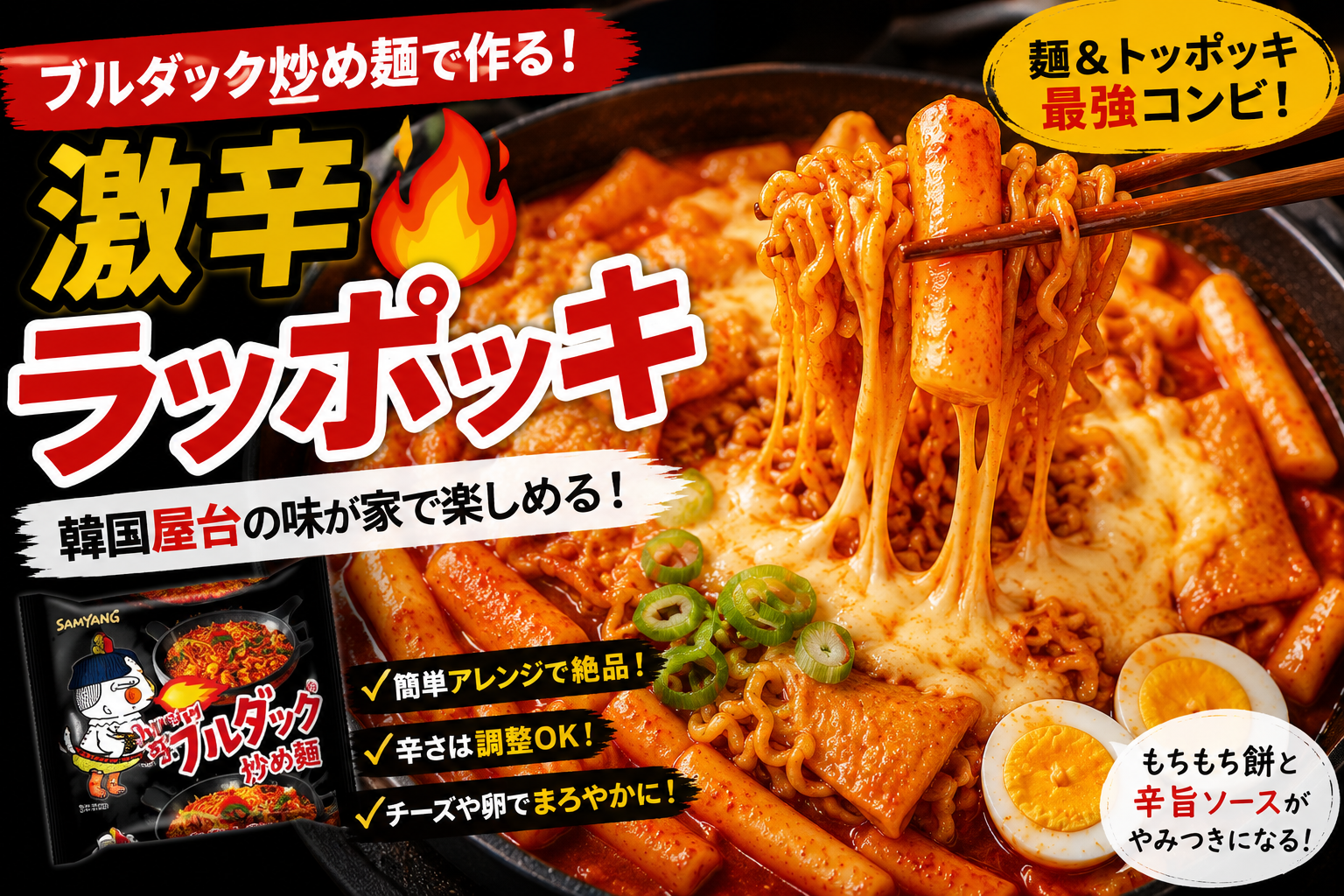
  • ブルダック炒め麺が韓国屋台グルメに!激辛ブルダックラッポッキの作り方

    ブルダック炒め麺が韓国屋台グルメに!激辛ブルダックラッポッキの作り方

    ブルダック炒め麺、そのまま食べるだけではもったいない!

    韓国で人気の激辛インスタント麺**ブルダック炒め麺(불닭볶음면)**に、もちもちのトッポッキを加えると、まったく違う韓国料理に変身します。

    その名も、

    ブルダックラッポッキ!

    ラーメンの「ラ」とトッポッキの「ッポッキ」を合わせた**ラッポッキ(라볶이)**を、ブルダック炒め麺で激辛アレンジした料理です。

    ブルダックソースの強烈な辛さ。

    もちもちの韓国餅。

    ラーメン。

    オムク。

    そして、とろけるチーズ。

    辛いのに、なぜかもう一口食べたくなる。

    今回は日本でも簡単に作れるブルダックラッポッキの作り方を紹介します。


    そもそも「ラッポッキ」とは?

    [ここに画像① 韓国のラッポッキ]

    韓国にはトッポッキにインスタントラーメンを加えた料理があります。

    それが**ラッポッキ(라볶이)**です。

    トッポッキだけでは少し物足りないときにラーメンを追加すると、ボリュームが一気にアップ。

    韓国の軽食店(분식집/プンシクチプ)などでも親しまれている組み合わせです。

    つまり、

    ラーメン+トッポッキ=ラッポッキ

    と覚えれば簡単です。

    普通はコチュジャンベースの甘辛いソースで作ります。

    でも今回はそこにブルダック炒め麺を使います。


    なぜブルダック炒め麺でラッポッキ?

    [ここに画像② ブルダック炒め麺とトッポッキ餅]

    理由は簡単です。

    ブルダック炒め麺には、すでに強烈な辛さと旨みを持つソースが入っています。

    つまり、調味料をたくさん準備しなくてもラッポッキを作りやすい。

    しかもブルダックの辛いソースと韓国餅は相性抜群です。

    麺だけで食べるより、餅やオムク、卵などを加えることで食感も豊かになります。


    ブルダックラッポッキ|簡単レシピ

    [ここに画像③ 材料]

    材料(1~2人分)

    • ブルダック炒め麺 1袋
    • トッポッキ用の餅 150~200g
    • 韓国オムク 約80~100g
    • ゆで卵 1個
    • 長ネギ 適量
    • 水 約400ml

    お好みで、

    • モッツァレラチーズ
    • キャベツ
    • 玉ねぎ
    • ソーセージ
    • 青ねぎ

    などを加えてもOKです。


    ソースは難しく考えなくてOK

    ブルダック炒め麺に付属している液体ソースを使います。

    ただし、ここがポイント。

    最初から全部入れなくても大丈夫です。

    ブルダックソースはかなり辛いので、辛さが苦手なら最初は半分程度から入れてください。

    味を見ながら追加するほうが失敗しにくいです。

    もう少しトッポッキらしい甘辛さが欲しい場合は、

    • コチュジャン 小さじ1
    • 砂糖または水あめ 小さじ1~2

    程度を追加して調整できます。

    つまりブルダックの味を消すのではなく、

    ブルダックの辛さ+トッポッキの甘辛さ

    を合わせるイメージです。


    1. まず餅を煮る

    [ここに画像④ 鍋で餅を煮ている写真]

    鍋に水約400mlを入れて沸かします。

    そこへトッポッキ用の餅を入れます。

    冷蔵・冷凍で餅が硬くなっている場合は、あらかじめ水につけて少しやわらかくしておくと作りやすくなります。

    餅が少しやわらかくなってきたら次へ。


    2. オムクとブルダックソースを投入

    食べやすく切ったオムクを入れます。

    そしてブルダック炒め麺の液体ソースを加えます。

    辛さに自信がない人は半分からスタート。

    辛いものが大好きなら量を増やしてください。

    煮ていくと餅のでんぷんでソースが少しずつ濃くなってきます。


    3. ラーメンを入れる

    [ここに画像⑤ ラーメンを加えたところ]

    次にブルダック炒め麺の麺を入れます。

    ここで重要なのは水分量です。

    普通のブルダック炒め麺のように水分をほとんど飛ばしてしまうと、餅と麺が一緒になったときにかなり重くなります。

    ラッポッキは少しソースが残るくらいがおすすめ。

    麺が水分を吸うので、途中で足りなくなったら少量の水を追加してください。


    4. 長ネギとゆで卵を追加

    麺がほぐれてきたら長ネギとゆで卵を入れます。

    ここまで来たら、もう見た目は韓国のラッポッキ。

    最後に味を確認してください。

    辛すぎれば少量の砂糖やチーズ。

    物足りなければ残しておいたブルダックソース。

    自分の好みに調整します。


    辛すぎる!そんなときはチーズ

    [ここに画像⑥ チーズブルダックラッポッキ]

    ブルダックといえばチーズとの相性も抜群。

    完成直前にモッツァレラチーズをのせて蓋をし、チーズが溶けるまで待ちます。

    すると、

    激辛ブルダック → クリーミーな激辛ブルダック

    へ変化します。

    チーズが辛さを少しまろやかにしてくれるので、ブルダック初心者にもおすすめです。

    見た目もかなり豪華になります。


    卵の黄身をソースに混ぜてみて

    [ここに画像⑦ ゆで卵とブルダックラッポッキ]

    前回のトッポッキの記事でも紹介しましたが、ゆで卵はただのトッピングではありません。

    半分に割って黄身を少しソースに混ぜてみてください。

    濃厚なブルダックソースに黄身が混ざり、味が少しまろやかになります。

    辛い!

    でも黄身を混ぜる。

    また食べる。

    また辛い。

    これを繰り返しているうちに、いつの間にか食べ終わっています。


    ソーセージを入れるとボリュームアップ

    もっと豪華にしたいならソーセージもおすすめ。

    食べやすく切って餅と一緒に煮るだけです。

    ブルダックソースとの相性がよく、

    餅+ラーメン+ソーセージ+チーズ

    まで入れると、かなりボリュームのある一品になります。

    友達と一緒に食べるときにもおすすめです。


    キンパと一緒に食べる

    [ここに画像⑧ キンパ+ブルダックラッポッキ]

    辛いラッポッキを食べて、

    次にキンパ。

    そしてまたラッポッキ。

    この組み合わせもおすすめです。

    キンパのご飯がブルダックの辛さを少し和らげてくれます。

    そして残ったブルダックラッポッキのソースにキンパを少しつけてもおいしい。

    次回は、この韓国キンパの作り方も詳しく紹介します。

    → 韓国人が教える本場のキンパの作り方

    ※キンパ記事公開後、ここに内部リンク。


    辛いものが苦手なら「カルボブルダック」もおすすめ

    ブルダックシリーズにはさまざまな味があります。

    辛さが心配なら、クリーミーなタイプのブルダックを使ってラッポッキを作る方法もあります。

    さらにチーズを加えれば、濃厚でクリーミーなラッポッキになります。

    逆に激辛が好きなら、より辛いタイプに挑戦する方法もあります。

    ただし無理は禁物。

    一番辛いものを食べることが目的ではありません。

    自分がおいしいと感じる辛さで楽しむのが一番です。


    普通のトッポッキとブルダックラッポッキ、どっちがおすすめ?

    初めて韓国のトッポッキを食べるなら、まずは普通のトッポッキをおすすめします。

    コチュジャンをベースにした甘辛い味と、韓国餅の食感を楽しめるからです。

    すでにトッポッキを食べたことがあって、

    「もっと刺激が欲しい!」

    という人なら、

    ブルダックラッポッキ。

    まったく違う楽しみ方ができます。

    → 本場の韓国トッポッキの作り方はこちら

    여기에 방금 만든 정통 떡볶이 글 링크를 반드시 넣자.


    ブルダック炒め麺を「料理」にしてみよう

    ブルダック炒め麺は、そのまま食べても完成された商品です。

    でも餅、オムク、卵、野菜、チーズなどを加えると、

    単なるインスタント麺ではなく一つの韓国料理のように楽しむことができます。

    もちもちの餅。

    辛い麺。

    ソースを吸ったオムク。

    まろやかな卵。

    とろけるチーズ。

    一つの鍋の中で全部を楽しめます。

    次にブルダック炒め麺を買ったら、そのまま食べる前にトッポッキ用の餅も用意してみてください。

    いつものブルダックが、韓国屋台風のラッポッキに変身します。

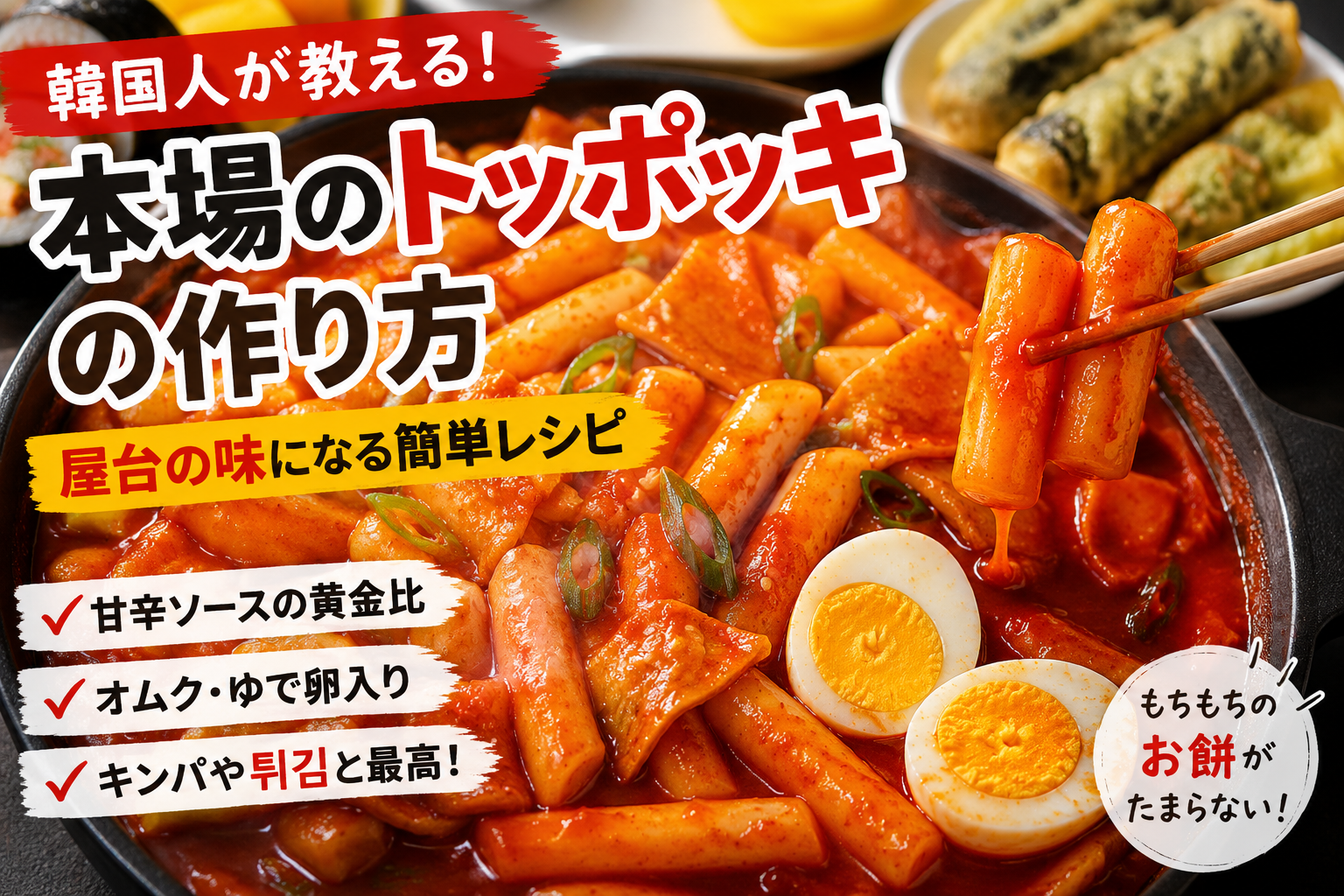
  • 韓国人が教える本場のトッポッキの作り方|屋台の味になる簡単レシピ

    韓国人が教える本場のトッポッキの作り方|屋台の味になる簡単レシピ

    韓国旅行で一度は食べてみたい料理、トッポッキ(떡볶이)。

    真っ赤なソースの中にもちもちのお餅、オムク(韓国おでん)、ゆで卵。

    韓国の市場や屋台を歩いていると、大きな鍋でグツグツ煮込まれているトッポッキをよく見かけます。

    でも実は、トッポッキは韓国人にとって単なる観光グルメではありません。

    学校帰りに友達と食べたり、買い物の途中に市場で食べたり、家で簡単に作ったり。

    特に学生時代の思い出と結びついている人も多い、韓国を代表する庶民的な料理です。

    今回は、日本でも作りやすい本場のトッポッキの作り方と、韓国人ならではの楽しみ方を紹介します。


    トッポッキとは?

    [ここに画像① 韓国のトッポッキ]

    トッポッキは、韓国のお餅「トック」を甘辛いコチュジャンベースのソースで煮込んだ料理です。

    現在よく知られている赤いトッポッキには、一般的にコチュジャン、唐辛子粉、砂糖、醤油などを使います。

    そこにオムク、長ネギ、ゆで卵などを加えるのが定番。

    店によってはキャベツ、ラーメン、チーズ、餃子などが入ることもあります。

    そしてトッポッキで大切なのは、

    ただ辛いだけではないこと。

    甘さ、辛さ、旨み。

    この3つのバランスが大切です。


    本場の韓国トッポッキ|基本レシピ

    [ここに画像② トッポッキの材料]

    材料(約2人分)

    • トッポッキ用の餅 300g
    • 韓国オムク 100~150g
    • 長ネギ 1/2本
    • ゆで卵 2個
    • 水またはだし汁 500ml

    トッポッキソース

    • コチュジャン 大さじ2
    • 韓国唐辛子粉 大さじ1
    • 醤油 大さじ1
    • 砂糖 大さじ1~1.5
    • 水あめまたはオリゴ糖 大さじ1
    • おろしにんにく 小さじ1

    辛いものが苦手なら唐辛子粉を減らしてください。

    逆に韓国屋台のような辛さが好きなら、辛口の唐辛子粉を少し追加してもOKです。


    1. 餅を準備する

    冷蔵・冷凍のトッポッキ用餅が硬くなっている場合は、水につけて少しやわらかくしておきます。

    餅同士がくっついていたら、一本ずつ離してください。

    すでにやわらかい餅なら、そのまま使えます。


    2. ソースを作る

    [ここに画像③ 赤いトッポッキソース]

    鍋に水またはだし汁を入れ、

    コチュジャン、唐辛子粉、醤油、砂糖、水あめ、おろしにんにく

    を加えてよく混ぜます。

    ここで一度味を見てください。

    最初からものすごく辛くする必要はありません。

    煮詰めると味が濃くなるため、最初は少し薄いくらいでも大丈夫です。


    3. 餅とオムクを入れて煮込む

    [ここに画像④ 鍋で煮込んでいるトッポッキ]

    ソースが沸いてきたら餅を入れます。

    少し煮たところで食べやすく切ったオムクを加えます。

    中火程度で煮込みながら、ときどき混ぜてください。

    餅のでんぷんが出てくると、サラサラだったソースが少しずつ濃厚になります。

    トッポッキは「煮詰める」ことでおいしくなります。

    ただし煮込みすぎると餅が柔らかくなりすぎるので注意してください。


    4. 長ネギとゆで卵を入れる

    仕上げに長ネギとゆで卵を加えます。

    長ネギの香りが入ると、一気に韓国の屋台らしい味になります。

    そして、ゆで卵。

    これは単なるトッピングではありません。

    あとで重要な役割があります。


    韓国人はトッポッキの卵をどう食べる?

    [ここに画像⑤ トッポッキの卵]

    もちろん、そのまま食べてもおいしいです。

    でも私がおすすめしたいのは、

    黄身を少し崩してトッポッキソースと混ぜる食べ方。

    辛くて濃厚な赤いソースに卵の黄身が混ざると、味がまろやかになります。

    餅と一緒に食べてもいいし、オムクにソースと黄身を絡めてもおいしい。

    辛い料理が少し苦手な人にもおすすめです。


    オムクは絶対に入れたほうがいい?

    [ここに画像⑥ トッポッキとオムク]

    必須ではありません。

    でも、本場の屋台の雰囲気を出したいならおすすめします。

    韓国のオムクは魚のすり身を使った練り物で、日本のさつま揚げに少し似ています。

    トッポッキのソースを吸ったオムクは、餅とはまったく違う食感。

    そしてオムクからも旨みが出るため、ソースがおいしくなります。


    韓国では天ぷらをトッポッキソースにつける!

    [ここに画像⑦ トッポッキと韓国式揚げ物]

    韓国でトッポッキを食べるなら、ぜひ覚えてほしい食べ方があります。

    튀김(ティギム/韓国式揚げ物)をトッポッキのソースにつける。

    イカ、野菜、餃子、さつまいもなどの揚げ物を、甘辛いトッポッキソースに浸して食べます。

    サクサクした衣に赤いソースが染み込む。

    これが本当においしい。

    お店によっては、揚げ物を切ってトッポッキの皿に一緒に入れてくれることもあります。


    キンパをトッポッキソースにつけてもおいしい

    [ここに画像⑧ キンパとトッポッキ]

    もうひとつおすすめなのがキンパ(김밥)。

    そのまま食べてももちろんおいしいですが、

    キンパをトッポッキソースに少しつけて食べてみてください。

    ご飯と海苔、具材に甘辛いソースが加わります。

    韓国の軽食店では、

    トッポッキ+キンパ+オムク

    のようにいくつかの料理を一緒に注文することも珍しくありません。

    だからトッポッキは、一皿だけで完結する料理というより、いろいろな韓国の軽食と一緒に楽しめる料理でもあります。


    トッポッキが辛すぎたらどうする?

    「韓国のトッポッキを食べてみたいけど辛いものが苦手」

    という人もいるでしょう。

    そんなときは、

    ゆで卵
    チーズ
    キンパ
    牛乳や乳製品

    などと一緒に食べると、辛さを感じにくくなります。

    家で作る場合は唐辛子粉を減らし、砂糖や水あめを少し増やして自分好みに調整してください。

    辛さに「正解」はありません。

    おいしく食べられる辛さが一番です。


    チーズトッポッキも人気

    [ここに画像⑨ チーズトッポッキ]

    辛いソースとチーズは相性抜群。

    完成したトッポッキにモッツァレラチーズをのせ、溶かすだけでもOKです。

    チーズのコクが加わるだけでなく、辛さも少しまろやかになります。

    特に辛いものが苦手な人や子どもと一緒に食べる場合には試してみる価値があります。


    ラーメンを入れれば「ラッポッキ」

    そして、ここからトッポッキはさらに進化します。

    トッポッキに韓国のインスタントラーメンを加えると、

    ラッポッキ(라볶이)

    になります。

    もちもちの餅とラーメン。

    そこに甘辛いソース。

    ボリュームも一気に増えます。

    韓国の学生街や軽食店でも昔から親しまれてきた組み合わせです。

    そして最近なら、さらに刺激的なアレンジもできます。

    ブルダック炒め麺を使った激辛ラッポッキ。

    これは次の記事で詳しく紹介します。

    → ブルダックラッポッキの作り方はこちら

    ※2-1の記事を公開したら、ここに内部リンクを入れます。


    実は赤くないトッポッキもある

    [ここに画像⑩ 宮中トッポッキ]

    トッポッキと聞くと赤くて辛い料理を想像しますが、韓国には辛くないトッポッキもあります。

    代表的なのが궁중떡볶이(宮中トッポッキ)。

    醤油ベースの味付けで、肉や野菜などと一緒に炒めて作ります。

    辛い料理が苦手な人でも楽しめます。

    「トッポッキ=激辛料理」ではないんです。


    韓国でトッポッキを食べるなら市場や軽食店へ

    [ここに画像⑪ 韓国市場のトッポッキ屋台]

    韓国旅行でトッポッキを食べるなら、有名店だけを探す必要はありません。

    伝統市場や街の軽食店(분식집/プンシクチプ)にも、おいしいトッポッキがあります。

    大きな鍋で赤いソースがグツグツ煮えていて、横にはオムクや揚げ物、キンパ。

    そんな店を見つけたら、一度入ってみてください。

    高級な韓国料理とはまったく違います。

    でも、そこには韓国人が子どもの頃から親しんできた味があります。


    トッポッキは「料理」だけではなく韓国人の思い出

    トッポッキには特別な思い出を持つ韓国人がたくさんいます。

    学校が終わったあと友達と食べたトッポッキ。

    少ないお小遣いを集めて一皿を分けて食べた思い出。

    市場で母親と買い物をしたあとに食べたトッポッキ。

    大人になってからも、辛くて甘いあの味を食べると学生時代を思い出す人がいます.

    だからトッポッキは単なる「辛い韓国料理」ではありません。

    韓国人の日常と思い出が詰まった食べ物です。


    家で本場のトッポッキを楽しもう

    難しい料理ではありません。

    餅を用意して、

    甘辛いソースを作って、

    オムクと一緒に煮込む。

    そして卵、キンパ、揚げ物などを一緒に楽しむ。

    それだけで韓国の市場や軽食店の雰囲気を自宅でも味わえます。

    最初の一口は餅。

    次はオムク。

    そして卵の黄身をソースに混ぜてみる。

    最後にキンパや揚げ物を残ったソースにつけて食べてみてください。

    トッポッキのおいしさは、餅だけではありません。

    最後に残った赤いソースまで楽しむのが韓国式です。

  • Sundae: Korean Blood Sausage, Street Food & the Soul of Sundae-guk

    Sundae: Korean Blood Sausage, Street Food & the Soul of Sundae-guk

    For many Koreans, Sundae grows up with them.

    As a student, you might stop at a small bunsik shop after school with friends.

    Someone orders tteokbokki.

    Someone else orders Sundae.

    A plate of warm Korean blood sausage arrives, and before long, pieces of Sundae are being dipped into the spicy red tteokbokki sauce.

    Years later, the scene changes.

    It’s a freezing winter evening.

    You’ve finished a long day at work.

    Instead of an after-school snack, there’s now a steaming stone bowl of Sundae-guk in front of you.

    Add some green onions.

    A little saeujeot.

    Maybe perilla seed powder and spicy seasoning.

    Put some rice into the soup.

    And perhaps pour yourself a glass of soju.

    The food didn’t really change.

    The person eating it did.

    That’s one reason Sundae is much more than Korea’s version of blood sausage.

    It’s a food that follows Koreans through different stages of life.

    What Is Korean Sundae?

    First, let’s clear up one potentially confusing name.

    Search for “sundae” in English and you’ll probably find ice cream.

    That’s not what we’re talking about.

    Sundae (순대) — also sometimes romanized as soondae — is a traditional Korean sausage.

    A common modern version uses pork intestine as a casing filled with ingredients such as glass noodles, vegetables and pork blood.

    But Sundae isn’t one single recipe.

    Traditional and regional versions can contain rice, glutinous rice, barley, vegetables, meat and other ingredients.

    The dish has changed considerably over time.

    Korea.net notes that blood sausage recipes appear in historical Korean cookbooks including the 1809 Gyuhap Chongseo, while modern versions commonly use pork intestine and starch noodles.

    What Does Sundae Taste Like?

    If you’ve never eaten blood sausage, the name may sound intimidating.

    But common Korean street-food Sundae can actually have a relatively mild flavor.

    The glass noodles create a soft, slightly springy texture.

    The casing adds chewiness.

    Depending on the type, you may taste pork, vegetables, sesame oil and the earthy richness associated with blood sausage.

    For many first-time visitors, the texture is more surprising than the flavor.

    And Koreans rarely eat Sundae completely alone.

    What you dip it into — or what you eat beside it — is part of the experience.

    Sundae Is One of Korea’s Classic Bunsik Foods

    To understand everyday Sundae, you need to understand bunsik (분식).

    Bunsik refers today to affordable, casual Korean foods commonly sold at small snack shops and street-food stalls.

    Korea.net identifies tteokbokki, gimbap and Sundae among its representative dishes and explains how modern bunsik culture expanded significantly during the 1960s and 1970s.

    That’s why Sundae carries a different feeling from an expensive restaurant meal.

    For generations of Koreans, it’s accessible food.

    Food you can share.

    Food you can eat standing near a market.

    And especially:

    food students can buy with friends after school.

    The Classic Combination: Sundae and Tteokbokki

    Walk into a Korean bunsik shop and Sundae rarely lives in isolation.

    Nearby you’ll probably find:

    Tteokbokki.

    Eomuk.

    Twigim.

    Gimbap.

    And ramyeon.

    But Sundae and tteokbokki have a particularly satisfying relationship.

    Take a piece of relatively mild Sundae.

    Dip it into the thick, spicy-sweet red sauce left on the tteokbokki plate.

    Suddenly the flavor changes completely.

    The soft, savory sausage absorbs the spicy sauce.

    For many Koreans, this is one of the simplest pleasures of eating at a bunsik shop.

    If you’re trying Korean Sundae for the first time, Sundae + Tteokbokki is an excellent place to start.

    What Do Koreans Dip Sundae In?

    Here’s where Sundae gets even more interesting.

    There isn’t one universal answer.

    Depending on region, restaurant and personal preference, Sundae may be served with different condiments.

    Salt is common in Seoul and many central areas.

    Elsewhere you may encounter ssamjang or other seasoned sauces.

    And at a bunsik shop?

    Sometimes the best “sauce” is simply the tteokbokki sauce already sitting on the table.

    This regional variation is part of the fun.

    Ask Koreans what Sundae should be dipped into and you may get surprisingly strong opinions.

    Don’t Forget the Liver and Offal

    Order Sundae at a traditional market or old-fashioned bunsik shop and you may receive more than sliced sausage.

    Pieces of steamed pork liver and other offal may be served alongside it.

    For someone unfamiliar with Korean food, that can be a surprise.

    You don’t have to eat everything.

    But if you’re adventurous, try them.

    The liver is dense and crumbly compared with the soft, chewy Sundae, creating another texture contrast on the same plate.

    Sundae Bokkeum: When Sundae Gets Spicy

    Now take Sundae away from the simple steamer and put it onto a hot griddle.

    You get another Korean favorite:

    Sundae Bokkeum (순대볶음).

    Sundae is stir-fried with vegetables such as cabbage, onions and green onions.

    Perilla leaves add their distinctive herbal aroma.

    Then comes a spicy seasoning.

    The result combines several textures and flavors at once:

    Chewy Sundae.

    Crunchy vegetables.

    Fragrant perilla leaves.

    Spicy sauce.

    Nutty sesame or perilla seed powder.

    And because everything is cooked together on a hot griddle, the aroma is part of the experience.

    Sillim-dong Sundae Town

    If you’re serious about Sundae Bokkeum, there’s a place in Seoul worth knowing:

    Sillim-dong Sundae Town (신림동 순대타운).

    Seoul’s official tourism guide identifies the area as one of the city’s destinations for Sundae. The area’s Sundae restaurants trace their roots to market restaurants and street vendors, with businesses gathering into the dedicated Sundae Town building in 1992.

    And Sillim has its own famous style.

    What Is Baek Sundae?

    You might expect stir-fried Sundae to be covered in red spicy sauce.

    Not always.

    Sillim-dong is famous for Baek Sundae Bokkeum (백순대볶음).

    Baek means white.

    Instead of coating everything in a red gochujang-based seasoning, Sundae, pork intestines and vegetables are stir-fried with ingredients such as sesame oil and perilla seed powder.

    Then you can dip each bite into sauce.

    Seoul’s official tourism guide specifically identifies Baek Sundae as Sillim-dong’s signature style.

    So if you visit Sillim with friends, there’s an obvious experiment:

    Spicy Sundae Bokkeum vs. Baek Sundae.

    Try both.

    Then choose your side.

    Korea Doesn’t Have Just One Sundae

    Just as Korea has regional kimchi and noodle traditions, Sundae changes from place to place.

    Ingredients, casing, texture and preparation can differ dramatically.

    That means eating Sundae while traveling around Korea can become its own food journey.

    Byeongcheon Sundae

    One of the best-known regional varieties comes from Byeongcheon in Cheonan, Chungcheongnam-do.

    Byeongcheon Sundae uses pork small intestine and a filling that can include vegetables, sticky rice and glass noodles.

    VISITKOREA describes it as having plenty of vegetables and a relatively clean, light flavor.

    Byeongcheon is also famous for its Sundae restaurants and Sundae-gukbap.

    The area’s relationship with markets is important too: Korean tourism material describes Sundae-gukbap as an inexpensive, filling meal long associated with market-goers.

    Abai Sundae

    Travel to Sokcho and you’ll encounter another famous name:

    Abai Sundae (아바이순대).

    This style is associated with Korea’s northern food traditions and the culture carried south by people displaced during the Korean War.

    Compared with the inexpensive glass-noodle Sundae many people encounter at bunsik shops, regional northern-style Sundae can feel much more substantial.

    Sokcho’s Abai Village became particularly associated with food traditions brought by refugees from Hamgyeong Province.

    It’s another reminder that Korean food history is often inseparable from Korean modern history.

    Ojingeo Sundae

    And then there’s a version that doesn’t look like ordinary Sundae at all.

    Ojingeo Sundae (오징어순대).

    Ojingeo means squid.

    Instead of pig intestine, a squid body is stuffed with a seasoned filling, steamed and sliced into rounds.

    This specialty is strongly associated with Gangwon-do and particularly Sokcho.

    So even the word “Sundae” doesn’t always mean pork intestine.

    The underlying idea of a stuffed casing can take very different forms.

    Then There Is Sundae-guk

    Street-food Sundae is only half the story.

    Put Sundae into a steaming pork-based soup and you enter another part of Korean food culture:

    Sundae-guk (순댓국).

    The bowl may contain sliced Sundae together with pork meat and offal in a rich broth.

    Rice is often eaten alongside it or mixed directly into the soup.

    VISITKOREA describes Sundae-guk as a traditional Korean soup built around Sundae, and restaurants specializing in it can be found throughout Korea.

    It’s inexpensive.

    It’s filling.

    It’s hot.

    And on a freezing Korean winter evening, that’s exactly the point.

    A Winter Bowl After a Long Day

    Imagine walking into a small neighborhood Sundae-guk restaurant after work.

    Outside, it’s bitterly cold.

    Inside, steam rises from stone bowls.

    Your soup arrives bubbling.

    You taste the broth first.

    Then add whatever you like:

    Green onion.

    Garlic chives.

    Perilla seed powder.

    Saeujeot.

    Black pepper.

    Maybe some spicy dadaegi.

    There’s rice beside the bowl and kimchi on the table.

    For many people, this is simply dinner.

    But add a bottle of soju and the same bowl becomes anju — food eaten with alcohol.

    A warm bowl of Sundae-guk and a glass of soju after a difficult day represents a very different side of Korean food culture from trendy cafés and luxury Korean barbecue.

    It’s ordinary.

    Affordable.

    Comforting.

    And deeply familiar.

    How Koreans Customize Sundae-guk

    There’s something important to know before eating Sundae-guk.

    Don’t immediately throw every condiment into the bowl.

    Taste the broth first.

    Then customize it.

    Add saeujeot if you need more saltiness and fermented depth.

    Add perilla seed powder for a nuttier character.

    Add chopped chili for heat.

    Add dadaegi if you want the broth spicy.

    Some restaurants provide garlic chives or green onions.

    Everyone’s bowl can end up tasting slightly different.

    That’s part of the experience.

    Is Sundae-guk Always Spicy?

    No.

    This surprises some visitors.

    The broth itself may arrive relatively mild and pale.

    The red color often comes from dadaegi, a spicy seasoning that the diner adds.

    So if you don’t enjoy spicy food, don’t automatically avoid Sundae-guk.

    Taste it first.

    You control much of what happens next.

    Easy Sundae-guk Recipe at Home

    Traditional restaurant Sundae-guk can involve long-cooked pork broth and several cuts of meat and offal.

    But there’s a much easier way to experience the basic idea at home.

    Use packaged Korean sagol-gomtang or a good bone broth.

    Ingredients — 2 Servings

    • 300 g Korean Sundae
    • 150 g thinly sliced pork shoulder
    • 500 ml packaged sagol-gomtang
    • About 200 ml water
    • 1/2 green onion
    • A handful of garlic chives
    • 1 tbsp minced garlic
    • 1–2 tbsp perilla seed powder
    • Saeujeot, to taste
    • Black pepper
    • Green chili, optional

    If you can find cooked pork head meat or Korean-style pork offal, add some.

    But don’t worry if you can’t.

    This is an easy home version, not an attempt to reproduce a specialist Sundae-guk restaurant.

    Easy Dadaegi

    Mix:

    • 1 tbsp gochugaru
    • 1/2 tbsp minced garlic
    • 1/2 tbsp saeujeot
    • 2 tbsp hot broth

    Adjust according to your preferred level of heat and saltiness.

    Step 1: Make the Broth

    Pour the packaged sagol-gomtang and water into a pot.

    Bring it to a simmer.

    Add the thinly sliced pork and cook it completely.

    Add the minced garlic.

    Step 2: Add the Sundae Last

    This is important.

    Most packaged Sundae is already cooked.

    If you boil sliced Sundae aggressively for too long, the casing may split and the filling can fall apart.

    So add the Sundae near the end.

    You’re essentially heating it through in the soup.

    Step 3: Finish the Soup

    Add green onions and garlic chives.

    Transfer everything to bowls.

    Then let each person add:

    Perilla seed powder.

    Saeujeot.

    Black pepper.

    Chili.

    And dadaegi.

    Don’t over-season the whole pot.

    Part of the Sundae-guk experience is adjusting the bowl yourself.

    Step 4: Add Rice

    Now eat the soup with steamed rice.

    Or do what many Koreans do:

    Put some rice directly into the hot broth.

    At this point, your soup becomes an incredibly satisfying one-bowl meal.

    What Should a First-Time Visitor Order?

    If you’re visiting Korea and have never tried Sundae, I wouldn’t necessarily begin with the most intense traditional version.

    Start simple.

    Order a plate of regular Sundae at a bunsik shop.

    Eat one piece with salt.

    Then dip another into tteokbokki sauce.

    If you like it, move to:

    Sundae Bokkeum.

    Then:

    Sundae-guk.

    And finally explore regional varieties such as Byeongcheon Sundae or Abai Sundae.

    Think of it as a Sundae progression.

    Don’t Let the Words “Blood Sausage” Scare You

    There’s no reason to pretend Sundae isn’t blood sausage.

    Traditionally, blood is an important ingredient.

    But translating it only as “blood sausage” can make the dish sound more extreme than the actual eating experience.

    For many Koreans, there’s nothing exotic about it.

    It’s the plate they shared with friends after school.

    It’s something their parents bought at the market.

    It’s what they dip into tteokbokki sauce.

    It’s what sizzles on a griddle in Sillim-dong.

    And it’s what sits inside a steaming bowl of soup on a cold night.

    That’s the difference between knowing what Sundae contains and understanding what Sundae means.

    From After-School Snack to Late-Night Soju

    Maybe that’s the best way to understand Korean Sundae.

    When you’re young, it might cost only enough to share with friends after school.

    You stand around a small bunsik shop eating Sundae and tteokbokki.

    Years pass.

    Now you’re sitting in a neighborhood restaurant after work.

    There’s a hot bowl of Sundae-guk in front of you.

    Maybe there’s a glass of soju beside it.

    Different place.

    Different age.

    Different reason for eating.

    But somehow, Sundae is still there.

    For many Koreans, Sundae grows up with them.


    FAQ

    What is Korean Sundae?

    Korean Sundae (순대) is a traditional sausage commonly made using pork intestine filled with ingredients such as glass noodles, vegetables and pork blood. Recipes and regional varieties differ considerably. Historical Korean cookbooks also contain older forms of blood sausage.

    Is Korean Sundae the same as an ice cream sundae?

    No. They simply share the same English spelling. Korean Sundae is pronounced roughly soon-deh and refers to Korean sausage.

    Is Sundae always made with blood?

    Blood is characteristic of many traditional and common Sundae recipes, but Sundae has numerous regional forms and ingredient combinations. Ojingeo Sundae, for example, uses squid as its casing and represents a substantially different style.

    Is Korean Sundae spicy?

    Regular steamed Sundae isn’t usually spicy. Sundae Bokkeum can be spicy, while Sillim-dong’s Baek Sundae is known for being stir-fried without the typical red chili-paste seasoning.

    What is Sundae-guk?

    Sundae-guk is a hot Korean soup containing Sundae and often pork meat or offal. It is commonly eaten with rice and seasonings such as saeujeot, perilla seed powder and spicy dadaegi.

    Where can I try Sundae in Seoul?

    One famous destination is Sillim-dong Sundae Town, near Sillim Station in Seoul. The area is particularly known for stir-fried Sundae and Baek Sundae.

    What is the best way to try Sundae for the first time?

    Try ordinary Sundae at a Korean bunsik shop alongside tteokbokki. Taste it plain or with salt first, then dip a piece into tteokbokki sauce.