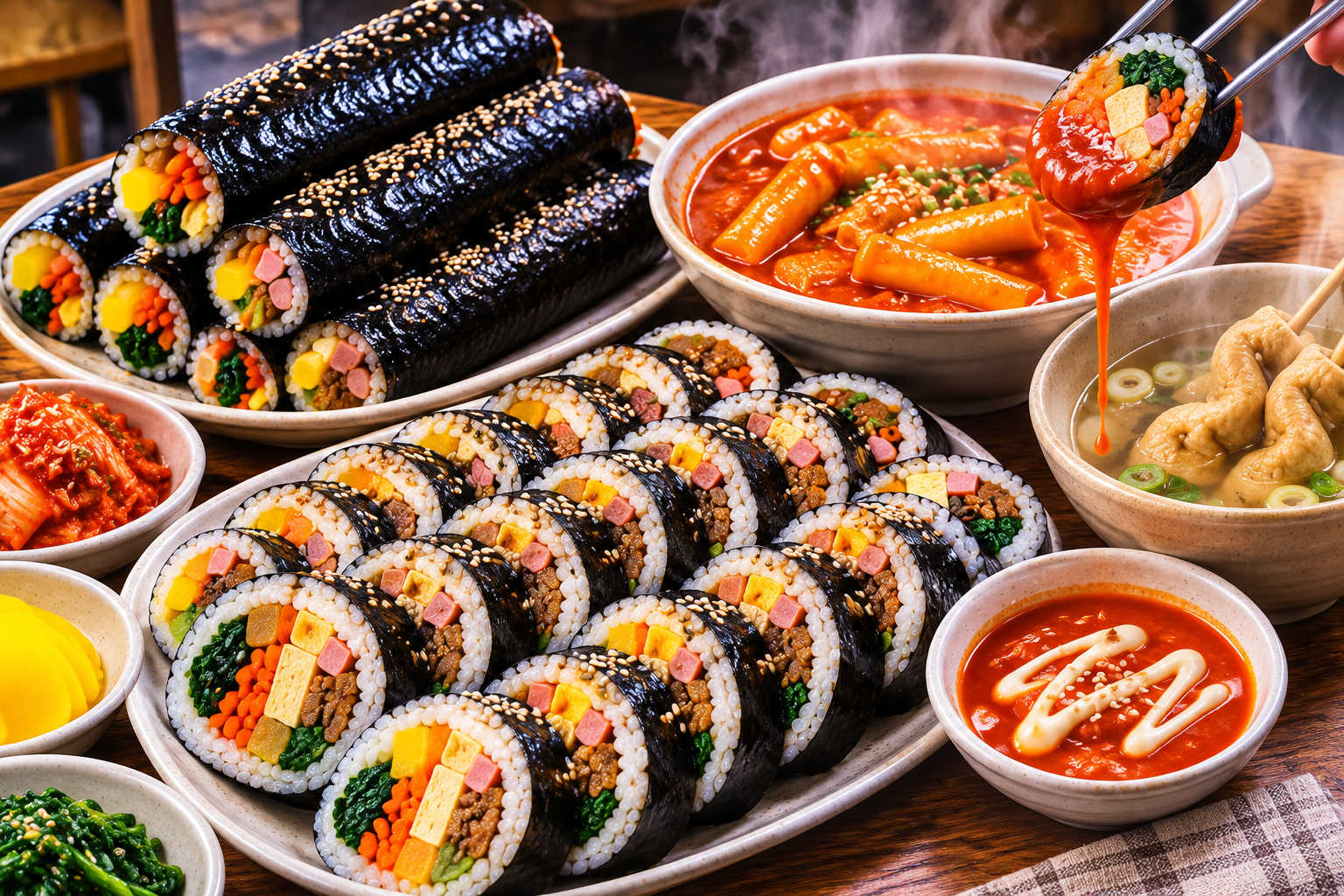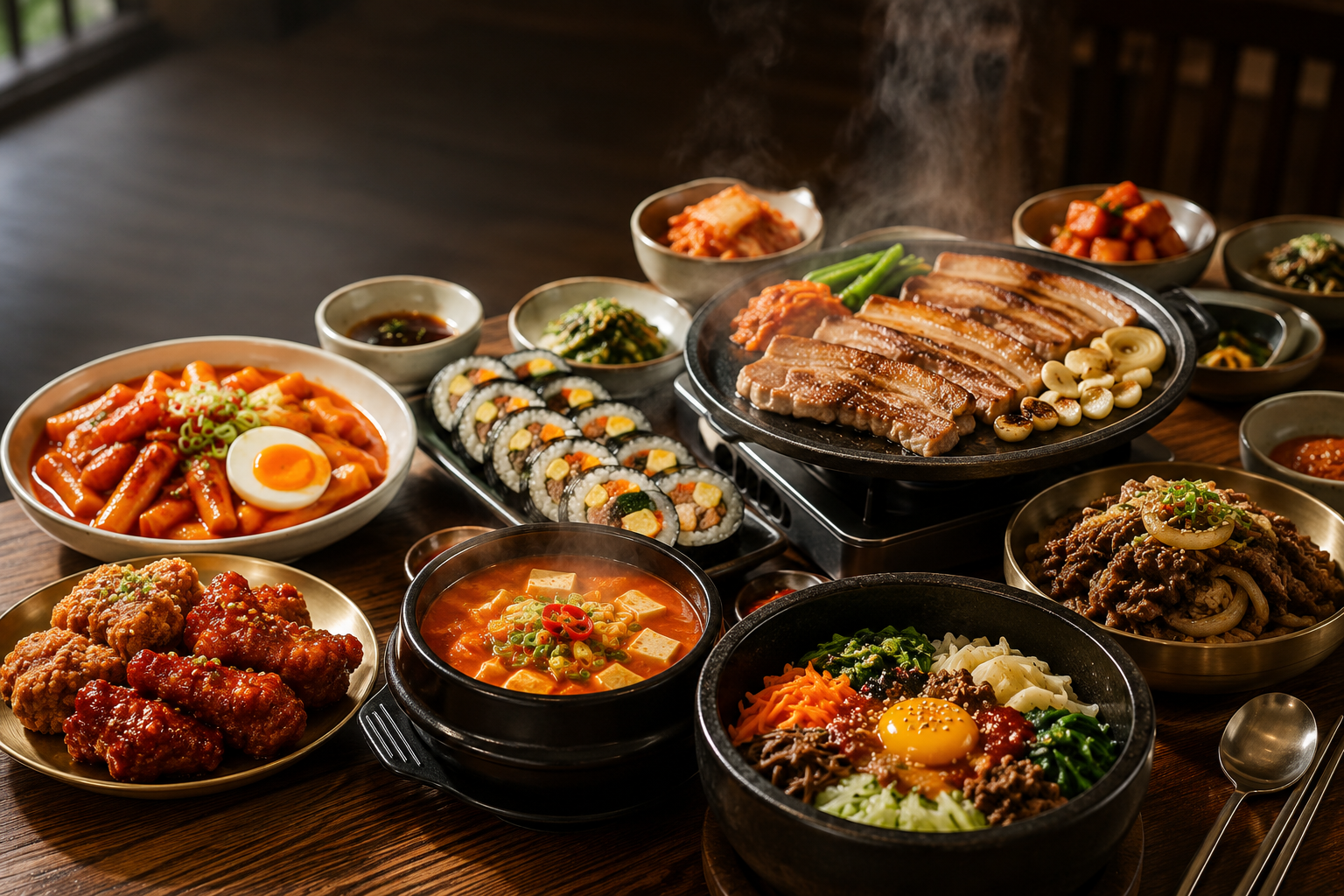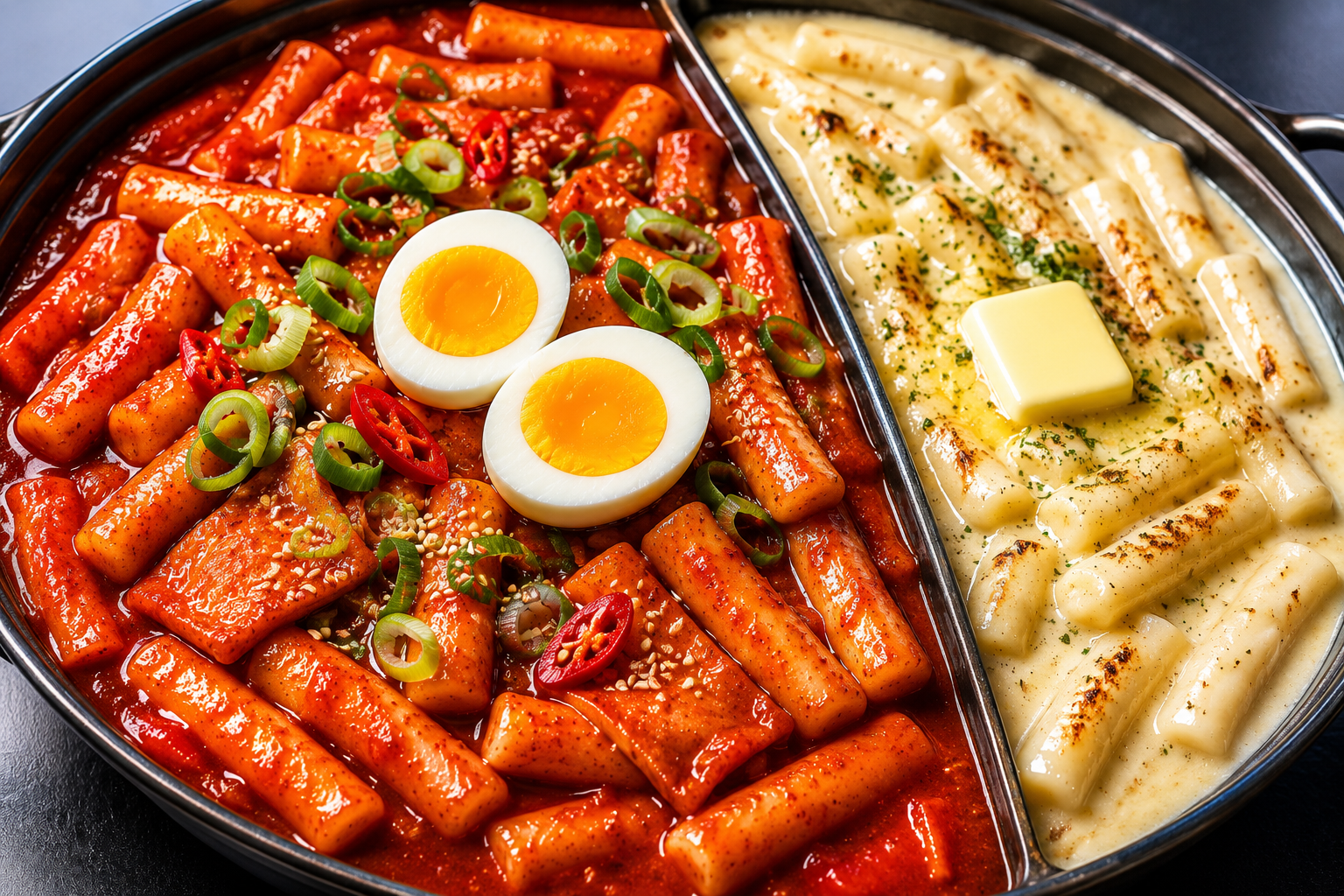
If you walk through a busy street in Korea, there is one dish that is almost impossible to miss: tteokbokki.
Chewy rice cakes simmer in a bright red, spicy-sweet sauce, often surrounded by fish cakes and the comforting aroma of a bubbling pan. For many Koreans, tteokbokki is more than just a popular street food. It is a taste connected to school days, neighborhood snack shops, late-night cravings, and memories shared with friends.
But tteokbokki has not always been the fiery red dish we know today. Its story reaches much further back into Korean food history.
Let’s discover the story behind tteokbokki—and then make an authentic Korean version at home.
What Is Tteokbokki?
Tteokbokki (떡볶이) is one of Korea’s most recognizable street foods. At its heart is tteok, Korean rice cake, cooked until soft and chewy in a flavorful sauce.
The version most people recognize today is made with a spicy-sweet red sauce based on gochujang (Korean red chili paste) and gochugaru (Korean chili flakes). Fish cakes, green onions, boiled eggs, and other ingredients are often added, but there is no single combination that every Korean follows.
That is part of the charm of tteokbokki. It can be a simple snack from a small neighborhood shop, a quick meal shared with friends, or a dish customized with ramen noodles, cheese, dumplings, or whatever sounds good that day.
And just like many beloved foods, tteokbokki has continued to change with each generation.
Tteokbokki Wasn’t Always Red
Here is something that surprises many people: tteokbokki was not originally the fiery red dish we know today.
An older style of tteokbokki is known today as gungjung tteokbokki (궁중떡볶이), or royal court tteokbokki. Instead of gochujang, it is seasoned primarily with soy sauce and commonly prepared with ingredients such as beef and vegetables. The result is savory, slightly sweet, and completely different from modern spicy street-style tteokbokki.
The bright red tteokbokki familiar to Koreans today developed much later and became closely associated with bunsikjip (분식집)—casual Korean snack shops selling inexpensive favorites such as tteokbokki, kimbap, fish cakes, and fried snacks.
Over time, this spicy, affordable dish became deeply woven into everyday Korean life.
Today, both styles tell an interesting story. One reflects an older form of Korean cooking, while the other became one of the country’s most beloved everyday comfort foods.
More Than Street Food: A Taste of Korean Memories
For many Koreans, tteokbokki is not something first discovered at a famous restaurant. It is a food remembered from childhood.
For generations of students, the small bunsikjip near school was an important part of everyday life. After classes ended, friends would gather around a steaming pan of red tteokbokki and share an inexpensive plate together.
And the sauce was never something to waste.
Fried dumplings, seaweed rolls, and other crispy snacks could be dipped into the spicy-sweet tteokbokki sauce. A piece of fish cake might disappear from a friend’s plate, followed by a playful argument over who ate it.
That ordinary scene helps explain why tteokbokki means so much to many Koreans.
It does not need to be expensive or beautifully presented. Sometimes the best tteokbokki is simply a hot plate shared with someone beside you.
That is why tteokbokki is more than Korean street food.
For many Koreans, it tastes like an old memory.
How Koreans Really Enjoy Tteokbokki
Tteokbokki rarely has to be eaten alone.
Walk into a Korean bunsikjip, and you may see people ordering tteokbokki together with fish cake, fried dumplings, seaweed rolls, boiled eggs, or kimbap.
One of the best parts is the sauce left in the bowl.
Try dipping a crispy fried dumpling or seaweed roll into the spicy-sweet sauce. A boiled egg can be broken open and mixed with the sauce, while a piece of kimbap dipped lightly into tteokbokki sauce creates a completely different combination of flavors and textures.
There is no complicated rule for eating it. Dip, mix, share, and find the combination you like.
This casual way of eating is part of the fun of Korean bunsik culture.
If you are new to Korean food, try tteokbokki with kimbap. Spicy, chewy tteokbokki and mild, savory kimbap are one of Korea’s classic snack-shop combinations.
Authentic Korean Tteokbokki Recipe
Now that you know the story behind tteokbokki, it is time to make it.
The goal of this recipe is not to make tteokbokki complicated. It is to recreate the familiar spicy, sweet, and savory flavor of Korean street-style tteokbokki with ingredients you can prepare at home.
Ingredients
Main Ingredients
- Korean rice cakes (tteok) – 400 g
- Korean fish cakes (eomuk) – 150 g
- Green onion – 1
- Boiled eggs – 2
For the Sauce
- Gochujang (Korean red chili paste) – 2 tbsp
- Gochugaru (Korean chili flakes) – 1 tbsp
- Soy sauce – 1 tbsp
- Sugar – 1½ tbsp
- Minced garlic – 1 tsp
For the Broth
- Water – 500 ml
- Dried anchovies – 8–10
- Dried kelp (dashima) – 1 small piece
The anchovy and kelp broth gives tteokbokki a deeper savory flavor, but do not worry if you cannot find these ingredients. Later in this guide, I will show you an easier version using ingredients that are easier to find outside Korea.
Step-by-Step Instructions
1. Make the broth
Add 500 ml of water, dried anchovies, and dried kelp to a pot. Bring it to a gentle boil and simmer for about 10 minutes. Remove the anchovies and kelp.
2. Prepare the rice cakes
If your rice cakes are fresh and soft, you can use them immediately. If they are refrigerated or firm, soak them in cold water for about 10 minutes, then drain.
3. Make the tteokbokki sauce
Add the gochujang, gochugaru, soy sauce, sugar, and minced garlic to the broth. Stir until the gochujang has completely dissolved.
4. Add the rice cakes
Add the rice cakes and bring the sauce to a gentle boil. Cook over medium heat, stirring occasionally so the rice cakes do not stick to the bottom of the pot.
5. Add the fish cakes
When the rice cakes begin to soften, add the fish cakes and boiled eggs. Continue cooking until the sauce becomes thicker and coats the rice cakes.
6. Finish with green onion
Add the sliced green onion during the last minute of cooking.
Turn off the heat when the rice cakes are soft and chewy and the sauce is thick enough to cling to them.
Serve immediately while the tteokbokki is hot.
Tip: Do not reduce the sauce too much. A little extra sauce is one of the best parts of tteokbokki—you will want it for dipping kimbap, fried dumplings, or other Korean snacks.
Easy Tteokbokki for Beginners
Can’t find every traditional Korean ingredient? That should not stop you from making tteokbokki.
For this easy version, keep the two most important things: rice cakes and a flavorful red sauce.
Easy Ingredients
- Korean rice cakes – 400 g
- Water – 500 ml
- Gochujang – 2 tbsp
- Soy sauce – 1 tbsp
- Sugar – 1½ tbsp
- Minced garlic – 1 tsp
- Green onion – optional
- Boiled eggs – optional
If you have gochugaru, add 1 tablespoon for more chili flavor and heat. If you prefer a milder tteokbokki, use less or leave it out.
No anchovies? Skip them.
No dried kelp? Skip it.
No Korean fish cakes? You can still make tteokbokki.
The result will not have exactly the same depth of flavor as the traditional broth version, but it will still give you the spicy, sweet, chewy experience that makes tteokbokki so satisfying.
The Simple Method
Mix the water, gochujang, soy sauce, sugar, and garlic in a pan and bring it to a boil.
Add the rice cakes and cook over medium heat, stirring occasionally.
As the rice cakes cook, starch from their surface will help thicken the sauce.
When the rice cakes are soft and chewy and the sauce has become glossy and slightly thick, taste it.
Want it sweeter? Add a little sugar.
Want it hotter? Add gochugaru.
Want it richer? Add a boiled egg or whatever ingredient you enjoy.
Start with the basics. Then make the tteokbokki yours.
Tteokbokki Never Stopped Changing
One reason tteokbokki has remained so popular is that Koreans never stopped changing it.
Add ramen noodles and it becomes rabokki, a filling combination of ramen and tteokbokki.
Add cheese and the spicy sauce becomes richer and milder.
Creamy rose tteokbokki became another popular variation, combining the familiar spicy sauce with a smooth, creamy flavor.
And today, Korea’s love of intense spicy flavors has created even more possibilities.
One of the most exciting combinations is Buldak Tteokbokki—chewy Korean rice cakes combined with the fiery flavor that made Buldak famous around the world.
We will make that version separately in our next recipe.
But these variations all begin with the same humble rice cake.
That may be the real beauty of tteokbokki: there is tradition, but there is always room to play.
Your First Bite of Tteokbokki
If you try tteokbokki for the first time, do not expect it to taste like any ordinary rice dish.
The rice cakes are soft and chewy. The sauce is spicy, sweet, savory, and slightly sticky. Then comes another bite, perhaps with fish cake or a piece of boiled egg covered in red sauce.
And if it feels a little too spicy, grab a piece of kimbap.
That is part of the experience.
Tteokbokki does not have to be perfect, expensive, or complicated. It can be made in a street stall, a neighborhood snack shop, or your own kitchen.
Start with the traditional version. Learn the basic flavor.
Then change it.
Add ramen. Add cheese. Make it milder. Make it hotter.
Because Korean food is not only about preserving tradition. It is also about enjoying food together and making it fit the people eating it.
That is the true taste of Korea.
Tteokbokki FAQ
Is tteokbokki very spicy?
It can be, but the level of heat varies. If you are making it at home, reduce the gochugaru for a milder version. You can also add a boiled egg or cheese to soften the spicy flavor.
What kind of rice cakes should I use?
Cylinder-shaped Korean rice cakes called tteokbokki-tteok are the most common choice. Fresh rice cakes can usually be cooked immediately, while refrigerated or firm rice cakes benefit from a short soak in cold water before cooking.
Can I make tteokbokki without fish cakes?
Yes. Fish cakes add flavor and texture, but they are not required. Rice cakes and the sauce are the heart of the dish.
What can I eat with tteokbokki?
Koreans commonly enjoy tteokbokki with kimbap, fried dumplings, seaweed rolls, fish cakes, and boiled eggs. Dipping fried foods or kimbap into the remaining tteokbokki sauce is especially delicious.
Can I add ramen noodles?
Absolutely. Tteokbokki with ramen noodles is commonly called rabokki. The noodles absorb the spicy-sweet sauce and turn the snack into a more filling meal.