K-CULTURE

Discover Korean culture through authentic food, K-beauty, travel, traditions, and everyday life. Explore the stories behind Korean dishes, skincare trends, cultural experiences, and must-visit destinations. Go beyond the trends to understand what makes Korean culture unique and why it fascinates people around the world.

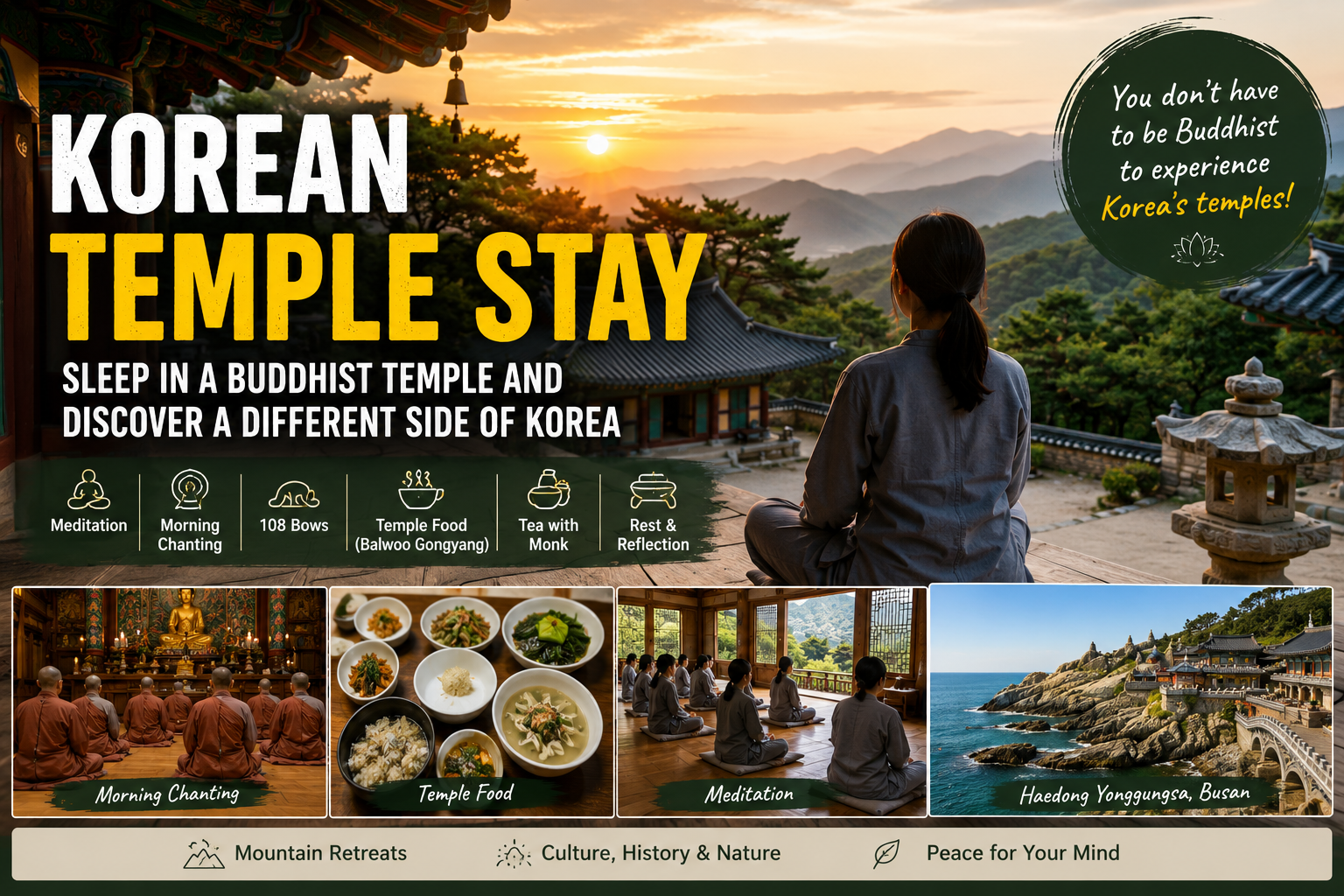
  • Korean Temple Stay Guide: Sleep in a Buddhist Temple and Discover a Different Side of Korea

    Korean Temple Stay Guide: Sleep in a Buddhist Temple and Discover a Different Side of Korea

    Seoul is a city that rarely seems to stop.

    Subways run beneath crowded streets. Cafés stay busy late into the evening. Neon signs glow, delivery motorcycles move through narrow alleys, and people seem to be going somewhere at almost every hour of the day.

    But travel a little outside the city — or sometimes simply toward the mountains surrounding it — and Korea can suddenly feel completely different.

    You may hear wind moving through pine trees.

    A wooden temple bell.

    Birds in the mountains.

    The quiet footsteps of a monk crossing an old courtyard.

    And if you stay overnight, you may wake before sunrise and experience something very different from the Korea of K-pop, skyscrapers and shopping districts.

    This is a Korean Templestay (템플스테이).

    But before explaining how to book one, there is something important foreign travelers should understand.

    To Koreans, a Buddhist temple is not necessarily a place visited only by Buddhists.

    Sometimes it is also a mountain destination, a historic site, a place to rest — or simply somewhere to clear your mind.

    And understanding that may completely change the way you experience a Korean temple.


    You Don’t Have to Be Buddhist to Visit a Korean Temple

    This may surprise some foreign visitors.

    A Korean who visits a Buddhist temple is not necessarily Buddhist.

    A Christian may visit.

    A Catholic may visit.

    Someone with no religion at all may visit.

    Many Koreans go to temples while hiking, to see autumn leaves or spring flowers, to appreciate historic architecture, or simply because they want somewhere peaceful to walk.

    For many people, visiting a temple does not mean changing their religion.

    It means visiting an important part of Korean history and culture.

    And sometimes it means something even simpler:

    They just need somewhere quiet.

    This is an important distinction.

    A Buddhist temple remains a sacred religious space and should always be treated respectfully.

    But culturally, many Korean temples are also deeply connected with mountains, landscapes, architecture, history and ordinary leisure.

    That is why seeing hikers walking through a temple courtyard should not surprise you.

    They may have come for Buddhism.

    They may have come for the mountain.

    Or perhaps for both.


    Why Are So Many Korean Temples in the Mountains?

    If you travel around Korea, you will notice something interesting.

    Many of the country’s most memorable Buddhist temples are surrounded by mountains and forests.

    This isn’t just a travel stereotype.

    Korea’s tradition of mountain monasteries is historically significant enough that seven Sansa, Buddhist Mountain Monasteries in Korea were inscribed on the UNESCO World Heritage List in 2018.

    The seven are Tongdosa, Buseoksa, Bongjeongsa, Beopjusa, Magoksa, Seonamsa and Daeheungsa. They were established between the 7th and 9th centuries and remain living centers of Buddhist faith and practice today.

    But Korean Buddhism was not always exclusively a mountain religion.

    Buddhism flourished in ancient Korean kingdoms, and important Buddhist sites also existed around political and urban centers. UNESCO’s Gyeongju documentation, for example, records extensive Buddhist remains from the Silla period, including temples, pagodas and sculptures.

    Over Korea’s long history, however, mountain monasteries became an especially distinctive part of Korean Buddhist culture.

    During the Joseon Dynasty, Buddhism experienced centuries of suppression, yet mountain monasteries survived and continued their religious traditions. UNESCO specifically identifies this historical continuity as one of the important characteristics of Korea’s Sansa.

    Today, the result is extraordinary.

    In Korea, a trip to a temple can also become a journey into the mountains.

    And sometimes getting there is part of the experience.

    https://images.openai.com/static-rsc-4/dfbgoTgNiDocF4URfGQlZMm719Iy84SYn_j7bVsKlcz-BLCV2b7YznqLmJuQyHXaYe8smUw6elTokxQBj2OsZ-XVNVjseb2jxgcNbZZglbmric9YPgI1UA10A3aSbSCwHq7HterpFBbj40A96kyHt6Y6ZXXFCrbrFN-xT0Tc1G3j0XmR2heez47rseO1jGdo?purpose=fullsize
    https://images.openai.com/static-rsc-4/BaDG97KCd89Cy3WgdmiDxPhqEzu1It4OgZwQMQNgM0FoNX3aD-Vpdx9k0tIzqhnZxNXvXCFYhfDZNMWZDCwxlDRimFxn--lSYybdrsiAMwUM_hipNKFd4Q3d99ohXXgZu6peUNqKCIQupWVd9n2z8oltwo03uxf-SCb7Nhm9Wozm13F0ODy507uHo--KWOCT?purpose=fullsize
    https://images.openai.com/static-rsc-4/mKKoipXMB3-IAVvAklYwgSKxyK1Ajz10gMlh7aTh2mPulX6SpO3L1Zh7hbDX7FCe9R08XUsrIz75n-n2fnPz0TJQWtp8UQPkIo74vPNrStq0nXFFmNgAhTUsw-Atu3swOr58rvGdmjx2BT7Za2LfecIdlMTa7ZhnkYN7T3-Jac04PAadpmm8pj5gnlVmK_YL?purpose=fullsize
    https://images.openai.com/static-rsc-4/FZFEF4U8tAL5rTw-jF6eBZdM1IJGOLystMhK4vZs4jPeru_NIhu9CPpmDfltNM1HA-gD5Nf57x6Zp_MF7mq1teF65gL_Z3tAhE09ki4Sfh-e1YWGgfH_ydvYNCplVHHpyuoIdmt3H5SQzy3XUQVG_7xJuu07U88MIYjnHQVvystAK5aXcD-i3eE0LYBAbhpt?purpose=fullsize
    https://images.openai.com/static-rsc-4/teB-X7gLWb6Oera-8E8tuMOpmeR6dx6VFKD1fl6UgiKRLoPH2Lk-sTg1TucYhghPl8Ov30IbjV5ZlBltDpmcqpcdcOJxq3oHuDhM8mc3jsUC7NARguKS7gVYkPmnit2Qeh9OSVNkrp7NWbyfhlRe1Q4XRwz58kmdc7uRxzgHNAqFdY2YYQ4oY3CCchiz9D16?purpose=fullsize
    https://images.openai.com/static-rsc-4/dynfm75DuFWbw28yVd-VdT9LV7Zt0IxcalLnC2LVu05vPsYVg3gcyGGpmxSqEaaumHtvyxy9zX-_do30gaxi41tfwb6J6yLBHYcDmEt1cCETY7g85ufJZiZ6G6PnVwRYojMRP9A-AZYO7sDMXhSFUAIrUCygFvWbo8RRp5zxmpFH617uiYp-mCJ38katxKNp?purpose=fullsize
    https://images.openai.com/static-rsc-4/e8d17WOuXXaLviyvltymvAbzTpwjXRWi4-xW_48KLQCM_1mgWXpPH6RN4EGVaqIs3hQ9QKeZLZhXEg0arno5m9GpIF38-weJ9USsiAPq4SnyEBwSIlJDpu920Y3oVmrooUOtg0e-kFw59hdSTHN2bRYyEs-9w-crdk4hxbtog_tOuKJP1seSEnQ9x2io0O2W?purpose=fullsize
    https://images.openai.com/static-rsc-4/2geJDn9IKPs2NGc9VdaMguqgvPvdYJPhNxGIfF5P63weO_JgivX8MAHvPgYryzBUsOZOv-0geWzKFdM1r7nzpU6gCmST6JTxL076BxMLE-ig0IfyLdXALDhXAY_A5Sch9hpKlffkwQERhljImR7QFydkDXnM7YqABKGieL8qDxnQXQKnxiHw1cEdUIROxi18?purpose=fullsize

    Sometimes Koreans Go to a Temple While Hiking

    Hiking is extremely popular in Korea.

    On weekends, mountains around major cities fill with people wearing hiking shoes, backpacks and brightly colored outdoor clothing.

    And because temples are often located on or near mountain routes, the two experiences naturally meet.

    You climb.

    You enter the forest.

    The city noise gradually disappears.

    Then somewhere along the trail, you may see the curved roof of a Buddhist temple between the trees.

    People stop.

    Some enter the temple.

    Some bow.

    Others simply look around.

    Someone may drink water and rest before continuing up the mountain.

    This is one reason I don’t think foreign visitors should view Korean temples only through the lens of religion.

    They are also connected to Korea’s relationship with its mountains and natural environment.


    A Temple Can Be a Place to Clear Your Mind

    There is another Korean expression worth understanding:

    마음을 비우다 — maeumeul biuda.

    Literally, it means something like “emptying the mind.”

    People use it when talking about letting go of worries, desires or complicated thoughts.

    You don’t have to be Buddhist to understand the feeling.

    Modern Korean life can be extremely fast.

    Work.

    Study.

    Traffic.

    Competition.

    Phones.

    Messages.

    Deadlines.

    Sometimes people simply want to disappear from that world for a while.

    A mountain and a quiet temple can provide exactly that.

    That leads to one of the ideas I most want foreign travelers to understand:

    In Korea, a temple is not only a place you visit because of what you believe. Sometimes, it is simply a place you visit because you need a mountain, a quiet path, and a little time to think.

    And this is where Templestay becomes especially interesting.

    Instead of visiting for thirty minutes and leaving, you stay.


    What Is a Korean Templestay?

    Templestay is an organized cultural program that allows visitors to experience life inside a Korean Buddhist temple.

    The official Templestay organization describes it as a way to experience Korean traditional culture and Buddhism through activities that can include chanting, meditation, conversations over tea and Buddhist meals.

    The modern Templestay program began in 2002, around the time Korea hosted the FIFA World Cup, as a way to introduce Korean temple culture to international visitors.

    Today, it isn’t limited to Buddhists.

    It attracts Koreans and international travelers looking for cultural experiences, meditation, rest and time away from everyday life.

    And you don’t necessarily have to sleep overnight.

    There are several types of programs.


    Three Types of Templestay

    The official program broadly divides Templestay experiences into different styles.

    1. One-Day Templestay

    Short on time?

    This is probably the easiest introduction.

    A one-day experience can last around two or three hours and may include a temple tour, meditation or tea.

    For someone spending only a few days in Seoul, this can be a practical option.

    2. Experience-Oriented Templestay

    This is the one I would recommend if you want the full cultural experience.

    It typically involves an overnight stay and may include activities such as morning chanting, meditation, 108 prostrations, Buddhist meals and traditional cultural activities.

    Specific programs differ from temple to temple.

    3. Rest-Oriented Templestay

    This is different.

    You are not trying to complete a long checklist of activities.

    The goal is largely to rest.

    Walk.

    Sit.

    Read.

    Meditate.

    Look at the mountains.

    Do very little.

    For a traveler exhausted after several days racing around Seoul and Busan, that may actually be exactly what you need.


    What Does One Night in a Korean Temple Actually Look Like?

    Every temple has a different schedule, so don’t expect every Templestay to follow exactly the same program.

    But here’s a real 2026 example.

    Myogaksa Temple in Seoul currently offers an English-supported 2-day, 1-night program that includes orientation, 108 prostrations and prayer-bead making, bell striking, a Buddhist ceremony, a temple tour, dinner and meditation.

    The following morning begins extremely early — its listed schedule includes waking around 4 a.m. and a Buddhist ceremony beginning at 5 a.m.

    That early morning can be one of the most memorable parts of the experience.

    Imagine waking while the city is still dark.

    No traffic.

    No hotel television.

    No shopping.

    Just the temple and the sound of morning beginning.

    That is an experience a conventional hotel cannot give you.


    What Are the 108 Prostrations?

    You may see 108 bows, or prostrations, included in an experience-oriented Templestay.

    This is not simply exercise.

    Within Buddhist practice, the number 108 carries religious significance, and the repeated bows can become a form of reflection and discipline.

    Physically, however, 108 full bows can be demanding.

    Don’t turn it into a competition.

    If you have physical limitations or feel unwell, speak with the Templestay staff. The official Templestay FAQ says participants who are ill or too tired can inform staff and rest rather than participating in every activity.


    Meditation: Perhaps the Simplest Part — and the Hardest

    Sit still.

    Breathe.

    Don’t check your phone.

    Sounds easy.

    Then try doing it.

    For many people, the difficult part of meditation isn’t sitting.

    It’s discovering just how noisy their own mind is.

    A Templestay gives you an environment in which slowing down feels natural.

    The mountain helps.

    The temple helps.

    The absence of your normal routine helps.

    You may not achieve enlightenment in one night.

    That’s probably asking a bit much.

    But you might discover how rarely you actually sit without doing anything.


    Tea With a Buddhist Monk

    Some programs include conversation over tea.

    This is often one of the more approachable experiences for foreign visitors because it provides an opportunity to ask questions about temple life, Buddhism or simply everyday concerns.

    You don’t need to arrive with a profound philosophical question.

    Sometimes a cup of tea and a conversation in a quiet room can be enough.

    The Templestay Information Center itself also provides information on temple meals and cultural experiences, including tea-related activities.


    Korean Temple Food Is Part of the Experience

    For True Taste Korea readers, this is where the experience becomes particularly interesting.

    Temple food is another doorway into Korean culture.

    Traditional Korean Buddhist food is generally plant-based and emphasizes simplicity, seasonality and respect for ingredients.

    But don’t expect your temple meal to resemble the giant colorful Korean barbecue spread you may have eaten the night before.

    That is precisely the point.

    The meal is part of a different rhythm of life.

    Some Templestay programs may also introduce balwoogongyang (발우공양), the traditional Buddhist monastic meal practice using bowls.

    The official Templestay program lists Buddhist meals with traditional bowls among activities that can appear in experience-oriented stays.

    And temple food deserves an article of its own.

    Because Korean food isn’t only barbecue, fried chicken and spicy stew.

    There is another tradition built around vegetables, fermentation, restraint and Buddhist philosophy.


    Will I Have to Share a Room?

    Possibly.

    This is not necessarily a hotel.

    The official Templestay guidance explains that temple life is traditionally communal and participants may share sleeping spaces. Some temples offer private rooms for small groups for an additional charge, but this depends on the individual program.

    That means you should check the accommodation conditions before booking if privacy is important to you.

    Also don’t expect luxury bedding, room service and a minibar.

    You are going to experience temple life.

    That’s the attraction.


    What Should You Wear?

    Follow the instructions provided by your particular temple.

    Templestay participants are commonly given simple temple clothing to wear during the program.

    Dress modestly and comfortably.

    Remember that you are staying inside an active religious community, not visiting a themed resort.

    Comfortable shoes are particularly useful if the program involves walking around mountainous temple grounds.


    Do I Need to Speak Korean?

    Not necessarily.

    The official reservation system lets travelers search for temples and programs suitable for foreigners, and a number of programs provide English support.

    But don’t assume every rural temple offers full English interpretation.

    Check the language information for the exact program before booking.

    If language accessibility is your priority, Seoul is an easy place to start.

    The official Templestay site lists seven conveniently located Seoul temples including Bongeunsa, Geumsunsa, Hwagyesa, Jinkwansa, Jogyesa, Myogaksa and the International Seon Center.


    You Can Even Do a Templestay in the Middle of Seoul

    This surprises many travelers.

    You don’t always have to travel deep into rural Korea.

    For example, Bongeunsa sits in Gangnam, surrounded by one of the most modern districts in Seoul.

    Its regular 2026 weekend Templestay is currently listed at ₩120,000 per person, although prices and schedules can change.

    Myogaksa’s current English-supported 2-day/1-night program is listed at ₩95,000.

    Those aren’t universal Templestay prices — they simply show that programs, schedules and costs vary.

    Always check the current listing before booking.

    Official Korean Templestay reservations


    But the Mountain Temples Offer Something Seoul Cannot

    Urban temples are convenient.

    Mountain temples are different.

    Imagine waking up and opening the door to mist moving between mountains.

    Or walking through a forest before breakfast.

    Or hearing temple bells echo through a valley.

    Korea’s seven UNESCO-listed Sansa are especially important examples of the country’s mountain-monastery tradition, preserving religious practice, meditation spaces, monastic education and daily community life within natural mountain settings.

    This is where the journey itself matters.

    Getting to some temples can take more effort.

    You may need a bus.

    Then another local bus.

    Then perhaps a walk.

    For travelers accustomed to stepping out of a subway station directly beside an attraction, this can initially feel inconvenient.

    But don’t automatically treat that inconvenience as a disadvantage.

    The road from the city into the mountain is part of the transition.

    The buildings get smaller.

    Traffic disappears.

    Trees replace signs.

    And eventually you reach the temple.


    Korea Also Has a Temple Beside the Sea

    Then there is Busan.

    If your image of a Korean Buddhist temple is always “deep in the mountains,” visit Haedong Yonggungsa (해동용궁사).

    This temple sits dramatically along the northeastern coast of Busan.

    Korea Tourism Organization specifically notes how unusual the location is because most Korean temples are situated in the mountains, while Haedong Yonggungsa stands along the shoreline.

    https://images.openai.com/static-rsc-4/-FJ72NowLdSHZlhkrKy1A8ISjM4NlWR2mQxqD76vtf9RdIFnULhJ906u090qqvU2ZWInqo-r0IDiSPpgN9_SgK2Dc3lrjjswpyLK0b8FqY5YP8EA3Jk1AxxZhfuSTeeLwxnQcpcFwMWQdyYoK5-HGdnjPmifQ_7NWf9WfUqB6s4BsE820Q2TGijNpw4lsUCX?purpose=fullsize
    https://images.openai.com/static-rsc-4/3T4E5pR3JYJ-vzt7yDt4rNP3bZnBbrmpq1dwz-5y8gFPj1KosyjBFtUCLK_JvgtnVI7czVluUk9pX8K7PKz0BMOoZdh4wfGzcdpHvYEMSSXgXkw-DX6B8YMG9D8XIy33t34CXdDHQwG9ajQ79FGw1K5QvdwCbnWF92pl_bxblfuqStkQTHIuMGtBZoxW1dCa?purpose=fullsize
    https://images.openai.com/static-rsc-4/l3djywBrh2-0-QldpqY4m1l1mUycMXBFWJD2V5-c9hDo4rylHU6NHYdLXdohHnjDvGYMsQsiDQRY8WVCS4rfRqEPbHWL7j2_53rtJQGMvY3P2TMP9AeMCMcmhg4IKnAJkTYA7UEDmB5oSI9zhnLTwKdir_g7anFjZznT7v3XUh-iFcHEdpclLeBSEaqY4M_o?purpose=fullsize
    https://images.openai.com/static-rsc-4/Wv9rWAuGwAW7VWPNY9b_IzkCh-IcYiYapf5PPwIY8UciFBmimCsMmyptW6qvt1ADQ1QMWIPoFlAvB1_ShVqBzvw6UyU_jexp0CWeo4hGO9GMrJCjvS0OQURtXPyKzeh3EeJe8PMoGCnyD0GiW2Bzp4QWIVX6rKsCCJIB3zJ2Y-pZlIoA06rGG9gE6ep-r26B?purpose=fullsize
    https://images.openai.com/static-rsc-4/fcu-mtlVz2nYxuNiccjd9x8uSME4ZvBwJEaItl8z0lPFazy6aHIlv3BfzLaDmB3wo1uTXSso_vC6vt7T8XOWgpWG1zErCuJ8EUNMNIWlQ5tYBzXcXs6EmH9xlSju40Y3ID0i9-jif03up6qTfw46wMpYF7i5Dl4ZMX8Kg63AYPbmOws4h9eSV3MuW72YxbWN?purpose=fullsize

    Here, instead of mountain silence, you hear waves.

    Temple roofs appear against the blue sea.

    Rocky coastline surrounds the complex.

    And at sunrise, the combination can be spectacular.

    The official Busan tourism site currently lists the temple at 86 Yonggung-gil, Gijang-gun, with free admission and opening hours of 4:30 a.m.–7:20 p.m., last entry at 6:50 p.m.; travelers should recheck before visiting because operating information can change.

    If you’re visiting Busan, I would seriously consider adding it to your itinerary even if you have no interest in Buddhism.

    It is an excellent example of the point of this entire article:

    A Korean temple can simultaneously be a religious space, a historical place and an extraordinary travel destination.


    Religion in Korea Is More Complicated — and More Flexible — Than a Label

    There is another cultural point worth understanding.

    Korea has Buddhists, Protestants, Catholics, people belonging to other religious traditions and many people who identify with no religion.

    There have certainly been tensions between religions at different points in Korean history and modern society.

    So it would be inaccurate to claim that Korea has never experienced religious conflict.

    But everyday cultural boundaries can be more flexible than foreign visitors might expect.

    A person doesn’t necessarily feel that entering a Buddhist temple means abandoning another faith.

    People may appreciate Buddhist architecture, history and nature without participating in Buddhist belief.

    Korea also has historical examples of religious communities participating in broader national and social causes.

    And Buddhism itself played striking roles during periods of national crisis. At Namhansanseong, for example, UNESCO records that Buddhist soldier-monks participated in the fortress’s defense and construction during the Joseon period.

    So when you see Koreans visiting temples, don’t immediately ask:

    “Are all these people Buddhist?”

    That’s often the wrong question.

    A better question is:

    “What does this place mean to them?”

    The answer may be faith.

    But it may also be history, nature, family memories, hiking, architecture, rest — or simply peace.


    Temple Etiquette for Foreign Visitors

    You do not need to know every Buddhist custom before visiting.

    You do need to remember that this is a living religious space.

    A few basics go a long way:

    • Keep your voice low, particularly around prayer halls.
    • Dress respectfully.
    • Don’t interrupt ceremonies for photographs.
    • Ask before photographing monks or participants closely.
    • Follow instructions about shoes before entering buildings.
    • Don’t touch religious objects unnecessarily.
    • Arrive on time for scheduled Templestay activities.
    • Remember that people around you may genuinely be praying or practicing their faith.

    At Haedong Yonggungsa, for example, Busan’s official visitor guidance specifically asks visitors to lower their voices, organize their shoes and use the appropriate side entrances to the Buddhist sanctuary.

    Respect doesn’t require you to be Buddhist.

    It simply requires remembering where you are.


    Is Templestay Only for Spiritual People?

    Absolutely not.

    You might choose a Templestay because you love Korean history.

    Because you enjoy hiking.

    Because you want to learn about Buddhist architecture.

    Because you’re interested in temple food.

    Because you’re exhausted.

    Because Seoul has overwhelmed you.

    Or simply because sleeping in a mountain monastery sounds more memorable than another night in a hotel.

    You don’t need to arrive looking for enlightenment.

    Sometimes curiosity is enough.


    Who Should Try a Korean Templestay?

    I particularly recommend it to travelers who have already experienced the faster side of Korea.

    If your itinerary has been:

    Myeongdong → Hongdae → shopping → K-pop → café → nightlife → another café…

    Templestay provides the opposite experience.

    And that’s why it works so well.

    A Korea trip doesn’t have to choose between modern and traditional Korea.

    Experience both.

    Watch thousands of people sing together at a KBO baseball game.

    Eat ramen beside the Han River at night.

    Spend hours relaxing in a jjimjilbang.

    Then go into the mountains and spend a night in silence.

    Those experiences may look completely unrelated.

    Together, they tell you much more about Korea than a checklist of landmarks ever could.


    How to Book a Korean Templestay

    The easiest starting point for international visitors is the official English Templestay website.

    Search and book Korean Templestay programs

    You can search by temple, location, dates and program type.

    Check carefully for:

    language support, accommodation arrangements, arrival time, activities, meals, price and transportation.

    If you don’t have time for an overnight stay, search for one-day programs.

    If you want the fullest experience, choose an experience-oriented overnight program.

    If what you really need is rest, look for a rest-oriented stay.

    And if you aren’t sure?

    The Templestay Information Center in Jongno, Seoul provides information for both Korean and international visitors.


    The Korea You Hear When Everything Else Becomes Quiet

    Foreign visitors often come to Korea because they want to see something.

    A palace.

    A skyline.

    A K-pop concert.

    A market.

    A famous restaurant.

    Templestay asks you to do almost the opposite.

    Stop looking for the next attraction.

    Sit.

    Listen.

    Eat quietly.

    Walk through the forest.

    Wake before sunrise.

    And perhaps for one night, allow Korea to become quiet.

    You may leave without becoming Buddhist.

    You may leave without understanding every ceremony.

    That’s perfectly fine.

    Because the most valuable thing you take away might be much simpler.

    A mountain path.

    The smell of the forest.

    A bowl of temple food.

    A bell echoing through the darkness.

    And a few hours when nobody expected you to hurry.

    Sometimes understanding Korea isn’t about seeing more.

    Sometimes it’s about becoming still long enough to notice it.


    K-Beauty Shopping During Your Korea Trip

    If you’re also interested in Korean skincare and beauty products during your trip, you can browse K-Beauty products through OLIVE YOUNG Global.

    Shop K-Beauty at OLIVE YOUNG Global

    If you purchase through the link above, the site operator may receive a commission at no additional cost to you.
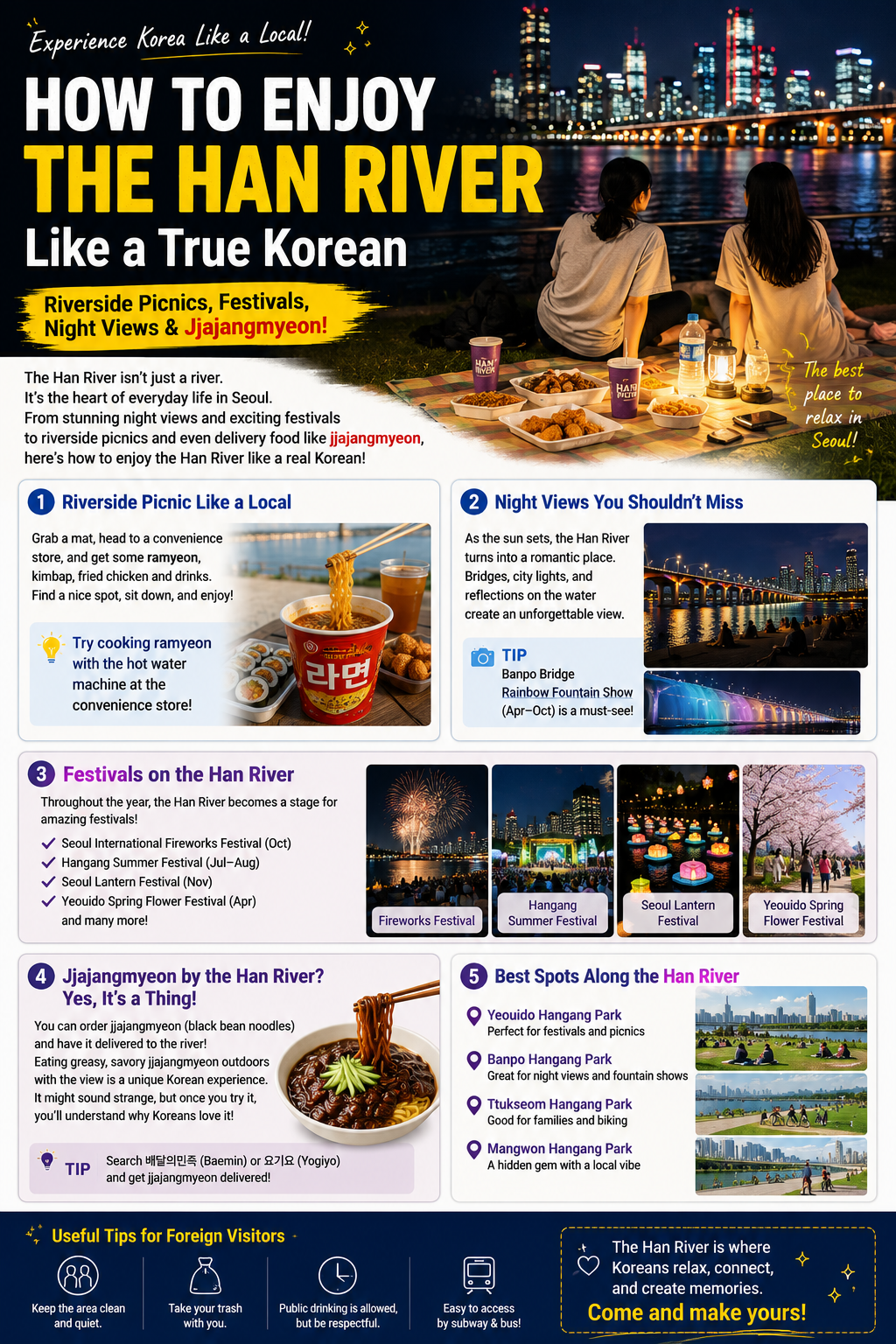
  • How to Enjoy the Han River Like a Local: Ramen, Jjajangmyeon, Night Views & Festivals

    How to Enjoy the Han River Like a Local: Ramen, Jjajangmyeon, Night Views & Festivals

    When tourists visit Seoul, they usually have a familiar list.

    Gyeongbokgung Palace.
    Myeongdong.
    N Seoul Tower.
    Hongdae.

    But if you want to see how people in Seoul actually spend a warm spring evening or a summer night, there is another place you should visit.

    The Han River, or Hangang (한강).

    The Han River is not simply a river running through Seoul.

    For Koreans, it can be a picnic spot, a date location, an outdoor restaurant, a cycling route, a festival venue, a place to watch fireworks — and sometimes simply somewhere to sit quietly after a long day.

    And perhaps the best part?

    You don’t need an expensive tour.

    Buy some food, find a place on the grass and watch Seoul light up around you.

    Here is how to experience the Han River like a local Korean.


    The Han River Is Seoul’s Giant Outdoor Living Room

    One of the first things foreign visitors may notice at a Hangang park on a pleasant evening is how little many Koreans are actually “doing.”

    They are simply sitting.

    Couples spread picnic mats on the grass.

    Friends talk over fried chicken and beer.

    Families bring food.

    People ride bicycles along the river.

    Others sit alone watching the water.

    And when darkness arrives, the skyscrapers, bridges and city lights begin reflecting across the river.

    This is an important part of understanding Seoul.

    The Han River is not just something Koreans look at.

    It is somewhere Koreans spend time.

    That difference is exactly why I recommend experiencing it rather than simply stopping for a photograph.


    1. Start With a Korean-Style Riverside Picnic

    You don’t need complicated equipment.

    A simple picnic can be enough.

    Pick a Hangang park, find a comfortable place and buy some drinks and food.

    Depending on the area, convenience stores and food options are available nearby.

    Popular picnic foods include:

    • Korean fried chicken
    • Gimbap
    • Tteokbokki
    • Snacks
    • Drinks
    • Convenience-store ramen
    • Jjajangmyeon

    But there is one combination that has become almost synonymous with evenings by the Han River.

    Chicken and beer.

    Koreans call this combination chimaek (치맥) — chicken + maekju (beer).

    Sitting beside the river with fried chicken while the Seoul skyline begins to glow is one of the simplest ways to experience modern Korean leisure culture.


    2. Cook Ramen at a Han River Convenience Store

    This is something many foreign visitors recognize from Korean dramas, YouTube videos and social media.

    Han River ramen.

    Some convenience stores around Hangang parks have machines that allow customers to prepare instant ramen in special disposable cooking containers.

    You choose your ramen.

    Add water.

    Cook it.

    And then carry the steaming noodles outside.

    Eating ordinary instant noodles while sitting beside one of Asia’s great urban rivers somehow makes them taste better.

    In fact, Seoul even incorporated “Real Hangang Ramyun” into its official 2026 Seoul Spring Festival programming, showing how strongly this simple food experience has become associated with Hangang culture.

    If it is your first time, adding an egg or another topping can make the experience even better.

    Then find a place on the grass.

    Sit down.

    And eat your ramen while looking across Seoul.

    Sometimes the most memorable travel experiences are surprisingly inexpensive.


    3. Yes, Koreans Really Order Food to the Han River

    This is one of the experiences foreign visitors often find fascinating.

    You can sometimes see people ordering delivery food while relaxing beside the river.

    Fried chicken is the obvious example.

    But there is another food I want foreign visitors to try at least once.

    Jjajangmyeon by the Han River

    Jjajangmyeon (짜장면) is Korean-style noodles covered in a thick black bean sauce.

    It has a long connection with Korean delivery culture.

    For decades, jjajangmyeon has been one of the classic foods Koreans associate with having food brought directly to them.

    And eating it outdoors beside the Han River gives that familiar Korean comfort food a completely different feeling.

    Imagine this:

    You are sitting on a picnic mat.

    The sun is going down.

    The river breeze is getting cooler.

    Seoul’s lights are beginning to appear.

    And in front of you is a container of hot jjajangmyeon.

    It isn’t fine dining.

    It is something much more interesting for a traveler:

    an ordinary Korean experience in an extraordinary location.


    Can Foreign Tourists Order Delivery Food?

    This part can be more difficult than simply buying food from a convenience store.

    Korean delivery apps may require Korean-language navigation, local payment methods, phone verification or a Korean phone number depending on the service and account setup.

    So don’t assume every foreign visitor will be able to download an app and immediately order food.

    If you have trouble, the easiest alternative is to buy food nearby and bring it to the park.

    If delivery works for you, pay close attention to the pickup location.

    Hangang parks can be huge.

    A delivery rider cannot magically find “the foreign tourist sitting somewhere beside the river.”

    Look for designated delivery zones or clear landmarks and follow the instructions for the specific park.


    4. Stay Until Sunset — Don’t Leave Too Early

    This may be my most important recommendation.

    Don’t visit the Han River for only 30 minutes in the afternoon.

    Stay until the sun goes down.

    Seoul changes when viewed from the river at night.

    Bridges light up.

    Office towers and apartment buildings become part of the skyline.

    Their lights reflect across the water.

    Bicycles pass behind you.

    People continue eating and talking on the grass.

    The temperature drops.

    The entire atmosphere becomes different.

    https://images.openai.com/static-rsc-4/hj9X3sKkeJMoEJrOyPlvHNvt_uUwQJPuakXFCSEvojXZfWSABoMDQafoDSGHsqW4cJfSCx-LRTOBsrk6FmkIQU6mQGUOX502WwEc_IIEt54pl4jnUSG-Q8l9-RmifM4ZDsk1r9O4v92CfPuQTzhOs0JS8x0E4h7ANsyj0Dk2wI60sLb612_NM9-FNW3cFYqo?purpose=fullsize
    https://images.openai.com/static-rsc-4/sHAbvookPx_jCmy1G7wAaecySHjp6EmtCV1ufUpgwXiNsLMHeuPjLWogf9mITpq_Hfly8op6vdNqjFhQMFEkEBT1tuzF3Qxec79jdFGQ-hDOwSc5f_InIbprQPtPYLzoCSwmWjt0DfcZFQl_7Jc0DHSj8XKT7nx8E5VMNeqxtAXQRLjewlYp6FQJuCBD2NoI?purpose=fullsize
    https://images.openai.com/static-rsc-4/qiKmPkz7JL7nL7xNtA3bri4obZz4Q1XUPGnJpnT8Nm5eS5rM0sk2SnWh7dhF0r37JiQZNfbPNY9mfyWJ2M0vtjg_ZOs5SHqTbEH-33-pkNG4I4_DV2EsFqZ2ynfhBOdCfCz_dUhk26ElkEWkboPMEqPj2_1dlOvny7i8XBOwNdNspshb2vvi9xmHz4CgfHya?purpose=fullsize
    https://images.openai.com/static-rsc-4/_hIhJj6EKMHkq8Cf-BaoZlMYV0kWhkjeEYRKnejeDZXGa7UBnm3IieVp1Z4rx_DW_0JsnCHMn7jivroIEAzsAgPypnva2AVK-uoT80neMA62TtAlTXGEJuDWkTyMrZUkg8cvSd66e_OWvMZOQ1pJhrNtRGpZubs3NSwRE5qUJXqUciX8IddD4GU-zfM86otq?purpose=fullsize
    https://images.openai.com/static-rsc-4/yIDEsirAQ-sQocIV9caEWMlaIDFgODEMqtbw0IYJ57L6BUxq6B17M8Kz7rTLBbZ4EjjaOlr8CPrOwzyVg_7gU4Zfli4hxYJl8jD8vUwDnwTfLf4z3Ehf9CtxtEkb-2Ol5mcnGFRuC8PFHOlNMWAqTlC0hLLuCEGVfFZtNwTwVIAuPndm1BroFH2tR-KUFRIE?purpose=fullsize
    https://images.openai.com/static-rsc-4/DEL5JfD6nlqziS6aQHYXzOK2c_8NJvzflkdBZOy7ZXqw2-4TiduDVALQKF7QQ7edIQE5Ga_cXB3k7DMq6v-nkBaOwApvGsO9lWZUsbQq_Myh_C4YtJn4NRv6S_I05Jm8IosRIP3eBSVB0afpLNbGaHCMN4cUMZeq2PNQ3feEOi1Po3pCyrJOhOPtfMHJpmtP?purpose=fullsize
    https://images.openai.com/static-rsc-4/RXCbhRcC0C_NZZ7ozol0aV38glHHZm5tYxvDJuTYG1nb8Mlo9TazBIsOSqScQox0qUKMSY2ah4St5C0u5QiTqVikA9k9JlschUAOEiWey-50Dr3YczSEuUMyaOU_lD7BOfWoPlWIpu3DipG7xMqQY7vWtJvlzR9H6TG6u04vb4SEapbGeHE28Fg5HGEzDqfl?purpose=fullsize

    For couples, the Han River is one of Seoul’s classic date locations.

    But you don’t need a partner to enjoy it.

    Traveling alone?

    Buy some ramen or coffee and simply sit beside the river.

    You may discover a quieter side of Seoul that you don’t see in Myeongdong or Hongdae.


    5. Watch the Banpo Bridge Rainbow Fountain

    If night views are your priority, Banpo Hangang Park deserves special attention.

    Banpo Bridge is famous for its Moonlight Rainbow Fountain, where water jets, lights and music transform the bridge area into an evening attraction.

    But schedules can change according to season, weather and operating conditions.

    So don’t plan an entire evening around an old blog post or video.

    Check the current schedule before you go.

    Even without the fountain, the Banpo area offers excellent river views and is a good location for combining a picnic with a nighttime walk.


    6. The Han River Is Also One of Seoul’s Biggest Festival Stages

    This is where the Han River becomes much more than a picnic destination.

    Throughout the year, Seoul uses Hangang parks for festivals, concerts, outdoor movies, drone shows, sporting events and other activities.

    In 2026, Seoul officially organized the Hangang River Festival as a four-season festival, with separate spring, summer, fall and winter editions.

    The summer edition alone included outdoor cinema under bridges, music picnics, a silent disco, an all-night K-drama event, water activities, yacht experiences and performances.

    That means one of the best pieces of advice I can give a foreign traveler is:

    Check what is happening at the Han River during your exact travel dates.

    You might accidentally discover that a normal picnic evening can become one of the biggest experiences of your trip.


    7. See Thousands of Drones Above the Han River

    Seoul’s Hangang Drone Light Show has become another reason to visit the river after dark.

    For the first half of 2026, Seoul scheduled shows across Yeouido, Ttukseom and Jamsil Hangang Parks, including a special Children’s Day performance involving 2,000 drones.

    The city said the event had attracted approximately 280,000 visitors in 2025.

    Imagine sitting beside the Han River after dinner and suddenly seeing hundreds or thousands of illuminated drones forming giant images above Seoul.

    That’s the kind of experience you cannot reproduce inside a shopping mall or hotel.

    Schedules and locations vary, so always check Seoul’s official information before visiting.


    8. If You’re in Seoul in Autumn, Look for the Fireworks Festival

    There is another Hangang event worth planning around:

    The Seoul International Fireworks Festival.

    It is generally held around Yeouido in autumn and transforms the river into an enormous nighttime festival.

    Seoul’s official tourism information describes international fireworks teams performing before the Korean team’s finale, accompanied by media and DJ programs.

    But there is a catch.

    The crowds can be enormous.

    This is not an event where you casually arrive ten minutes before the fireworks and expect a perfect riverside seat.

    If attending a major festival, check transportation restrictions and official announcements beforehand and arrive early.

    For 2026 specifically, Seoul lists the Seoul International Fireworks Festival among its major autumn events.


    9. The Han River Changes With Korea’s Four Seasons

    Another reason I like recommending the Han River is that it isn’t the same experience throughout the year.

    Spring

    Spring brings mild weather, flowers, picnics and festivals.

    Yeouido is particularly famous for spring flowers and cherry blossoms.

    Summer

    Summer evenings can be lively.

    Outdoor movies, music, water activities and night programs are especially attractive after the heat of the afternoon begins to disappear.

    Autumn

    Personally, this may be one of the best seasons for a riverside picnic.

    The air becomes cooler and the evening atmosphere is wonderful.

    Major events such as the fireworks festival can also make autumn special.

    Winter

    Winter beside the river can be extremely cold.

    But Seoul now runs seasonal Hangang programming even in winter, and the city has scheduled a 2026 winter Hangang Festival for December 19–27.

    Just dress properly.

    Korean winter wind beside a river is not something to underestimate.


    10. Which Han River Park Should a First-Time Visitor Choose?

    There isn’t just one “Han River Park.”

    Seoul has multiple Hangang parks, and each offers a slightly different experience.

    Yeouido Hangang Park

    Probably one of the easiest choices for first-time visitors.

    It’s popular for picnics, festivals and major events and has convenient public transportation.

    Best for:
    First-time visitors, picnics and festivals.

    Banpo Hangang Park

    A particularly good choice for evening scenery.

    Banpo Bridge, Sebitseom and riverside views make this area attractive after sunset.

    Best for:
    Night views, dates and photography.

    Ttukseom Hangang Park

    Popular with locals and frequently used for events, including drone shows.

    Best for:
    Activities, families and travelers staying in eastern Seoul.

    Mangwon Hangang Park

    This can be particularly interesting if you want to combine the river with a more local neighborhood experience.

    You can explore the Mangwon area and market before heading toward the river.

    Best for:
    Travelers looking for a less touristy Seoul experience.


    My Perfect Han River Evening for a First-Time Visitor

    If a friend from overseas asked me how to spend their first evening at the Han River, I would keep it simple.

    Arrive in the late afternoon.

    Walk around the park.

    Buy some food and drinks.

    Try convenience-store ramen — or, if you can arrange it, order fried chicken or jjajangmyeon.

    Spread out a picnic mat.

    Eat slowly.

    Don’t rush anywhere.

    Watch the sunset.

    Then stay another hour.

    Because that is when Seoul starts lighting up.

    If there happens to be a festival, drone show, outdoor concert or fireworks event that night?

    Even better.

    You have just turned a cheap evening beside the river into one of the most memorable nights of your Korea trip.


    The Han River Doesn’t Have to Cost Much

    This is another reason I strongly recommend it to foreign visitors.

    Seoul can become expensive surprisingly quickly.

    Hotels, attractions, cafés and restaurants all add up.

    But you can have a great Hangang experience for relatively little money.

    A convenience-store meal, picnic snacks and a subway ride can be enough.

    Many city-run Hangang events are also free, although some activities require reservations or charge admission. For example, numerous programs in the 2026 summer festival were free, while cruises, water activities and certain special experiences charged separate fees.

    For budget travelers, that makes the Han River especially valuable.


    A Few Things Foreign Visitors Should Know

    Hangang parks belong to everyone, so treat them that way.

    Clean up your food and trash.

    Recycle where required.

    Don’t leave delivery containers or picnic waste behind.

    Keep noise reasonable late at night.

    Follow restrictions on tents and shades.

    And don’t assume that because you are outdoors there are no rules.

    Seoul’s official Hangang guidelines specifically ask visitors to clean up and recycle, reduce disposable products, keep dogs leashed and use tents or shades only in permitted areas.

    The goal is simple:

    Leave the river as pleasant for the next person as it was for you.


    Don’t Just See the Han River — Experience It

    You could visit the Han River, take three photographs and leave.

    Technically, you would have “seen” it.

    But I don’t think that’s the best way to experience this part of Seoul.

    Instead:

    Sit on the grass.

    Cook ramen.

    Try jjajangmyeon beside the river.

    Share chicken with friends.

    Watch the sunset.

    Wait for the city lights to appear.

    If there’s a festival, join the crowd.

    If there’s nothing happening, simply watch Seoul from the riverbank.

    Because the interesting thing about the Han River isn’t just the scenery.

    It’s how Koreans use it.

    The Han River is where people eat, date, exercise, celebrate, talk, rest and sometimes do absolutely nothing.

    And for a traveler trying to understand Korea, doing absolutely nothing beside the Han River for an hour might teach you more about Seoul than visiting one more tourist attraction.


    Make This Part of Your “Real Korea” Trip

    If you enjoyed this experience, don’t stop at the Han River.

    Try a Korean jjimjilbang.

    Watch a KBO baseball game and join the cheering.

    Eat your way through a traditional market.

    Sing at a coin karaoke room.

    Spend an evening in a Korean PC bang.

    Those are the moments when a Korea trip begins to feel less like sightseeing and more like living in Korea for a few days.


    K-Beauty Shopping During Your Korea Journey

    If you’re also interested in Korean skincare and beauty products, you can browse K-Beauty products through OLIVE YOUNG Global.

    👉 Shop K-Beauty at OLIVE YOUNG Global

    If you purchase through the link above, the site operator may receive a commission at no additional cost to you.

  • How to Visit a Korean Jjimjilbang: A First-Timer’s Guide to Korea’s Unique Sauna Culture

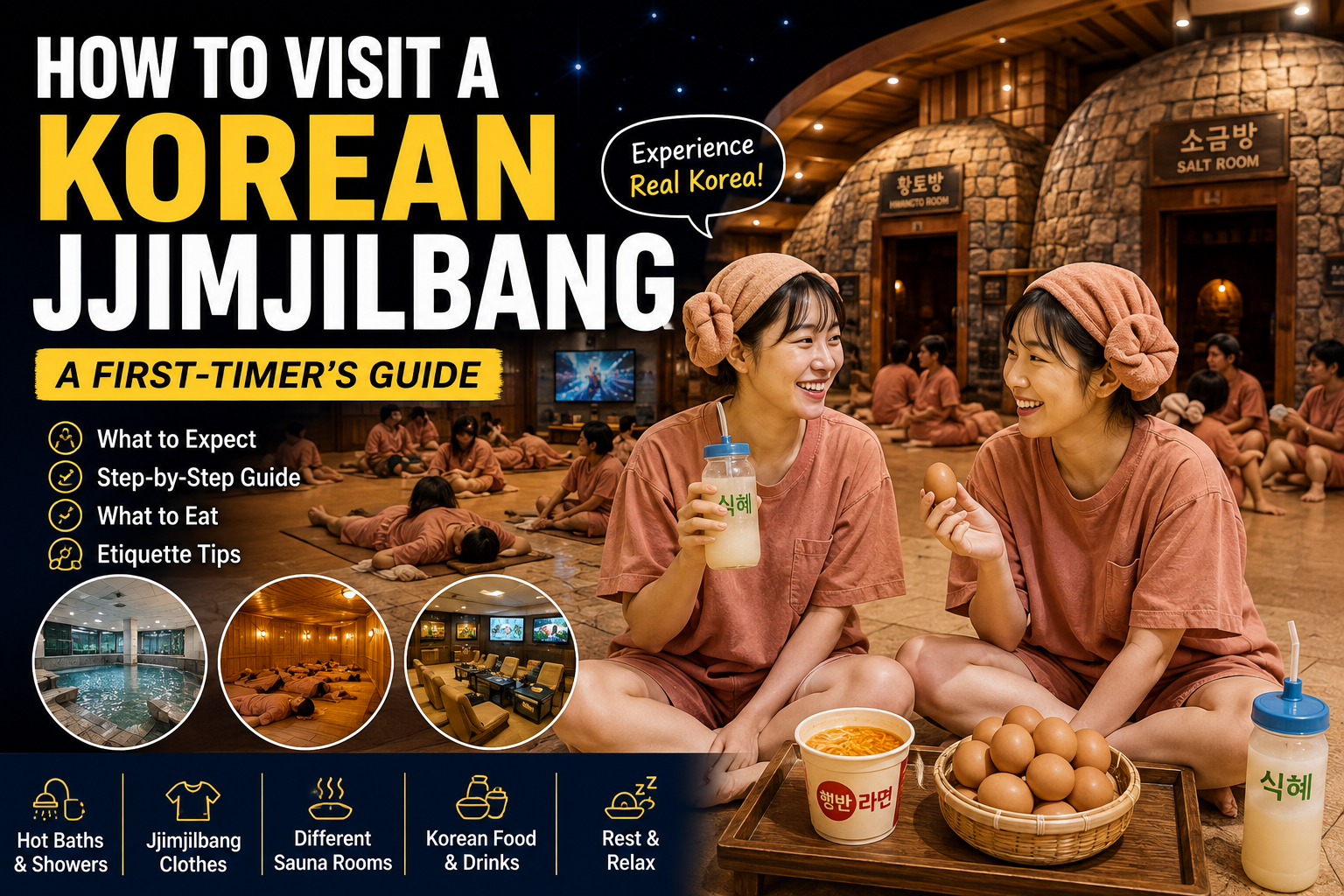
    How to Visit a Korean Jjimjilbang: A First-Timer’s Guide to Korea’s Unique Sauna Culture

    If you are planning a trip to South Korea, there is one experience that can tell you more about everyday Korean culture than another crowded tourist attraction.

    Go to a jjimjilbang (찜질방).

    A jjimjilbang is often translated as a “Korean sauna” or “Korean spa,” but that description does not quite capture it.

    Imagine a place where you can take a hot bath, sweat in heated rooms, lie on the floor watching TV, eat Korean snacks, take a nap, play games, and spend several hours relaxing with friends or family.

    That is much closer to the real jjimjilbang experience.

    Modern Korean jjimjilbangs can include restaurants, game rooms, massage chairs, karaoke, entertainment areas and differently heated sauna rooms. Some facilities operate around the clock, although opening hours and overnight policies vary by location.

    And if you have watched enough Korean dramas or variety shows, there is a good chance you have already seen one without realizing it.

    People wearing matching clothes.

    Towels wrapped around their heads.

    Someone drinking a cold rice beverage.

    Another person cracking an egg.

    Everyone lying comfortably on the heated floor.

    That is jjimjilbang culture.

    So if you want to experience Korea rather than simply photograph it, here is how to do it.


    What Is a Jjimjilbang?

    The word jjimjilbang (찜질방) refers to a Korean-style bathhouse and heated sauna complex.

    However, there are usually two different spaces that first-time visitors need to understand.

    The Bathing Area

    This is normally separated by gender.

    It contains showers and may have hot and cold baths, sauna facilities and other bathing amenities.

    This is the part that surprises some foreign visitors:

    People are normally naked in the bathing area.

    For Koreans, this is simply part of traditional public-bath culture. Seoul’s official tourism guide describes public bathing as an ordinary part of Korean life rather than something unusual.

    The Common Jjimjil Area

    After bathing, visitors put on the clothes provided by the facility.

    This common area can generally be used by men, women, friends, couples and families together.

    Depending on the jjimjilbang, you may find heated rooms, cooling rooms, restaurants, snack bars, massage chairs, arcades, entertainment areas and places to rest.

    That combination is what makes a Korean jjimjilbang quite different from a conventional Western sauna.


    Your First Jjimjilbang Visit: Step by Step

    The first visit can feel confusing because Koreans seem to know exactly what to do.

    Don’t worry.

    Once you understand the basic system, it is surprisingly easy.

    Step 1: Pay at the Entrance

    Go to the reception desk and pay the admission fee.

    The exact price depends on the facility, time of day and services included.

    You will typically receive a locker key or wristband, towels and jjimjilbang clothes.

    The clothes are usually a simple T-shirt and shorts.

    Some modern facilities also use the locker key or wristband for purchases inside. Korea Tourism Organization guidance notes that some facilities let visitors use the key for amenities and then settle additional charges when leaving.

    Keep your key with you.

    Losing it will make your relaxing Korean spa experience considerably less relaxing.


    Step 2: Put Your Shoes in the Shoe Locker

    Korea has a strong shoes-off culture.

    At a jjimjilbang, you will usually encounter a shoe locker near the entrance.

    Take off your shoes and store them where instructed.

    This is not just a jjimjilbang custom. Removing shoes remains common in Korean homes and various traditional indoor spaces.


    Step 3: Enter the Correct Changing and Bathing Area

    Men and women normally enter separate changing and bathing areas.

    Put your belongings in your locker.

    And now comes the moment that makes many first-time foreign visitors nervous.

    You take off your clothes.

    Completely.

    For Koreans around you, this is completely ordinary.

    Nobody is particularly interested in you.

    Once you realize that, the awkwardness usually disappears surprisingly quickly.


    Step 4: Shower Before Entering the Baths

    This is important.

    Wash your body before entering a communal bath.

    Do not treat the bath itself as the place where you wash.

    Shower first and then enter the hot or cold pools.

    The exact facilities vary considerably, so follow the posted rules at the jjimjilbang you visit.


    Step 5: Try the Baths

    Many bathhouses offer pools at different temperatures.

    You may find hot baths, cooler baths and other specialized pools.

    There is no prize for staying in the hottest water.

    Relax.

    This is supposed to be enjoyable.

    And remember that a jjimjilbang is a shared public space, so avoid splashing, swimming or behaving as though you have rented a private swimming pool.


    Step 6: Put on Your Jjimjilbang Clothes

    After bathing, dry yourself and put on the T-shirt and shorts provided by the facility.

    Now you can enter the communal jjimjil area.

    For many travelers, this is where the really interesting Korean cultural experience begins.

    Suddenly you may see children playing, couples talking, friends lying on the floor, people eating noodles and someone sleeping in a corner.

    It can feel less like a spa and more like a giant Korean living room.

    And that is part of its charm.


    Step 7: Try the Heated Rooms

    A large jjimjilbang may have several rooms at different temperatures.

    Some facilities use materials or themes such as charcoal, salt or clay.

    If this is your first time, don’t immediately challenge yourself to the hottest room.

    Korea Tourism Organization recommends that beginners start with cooler rooms around 30–40°C (86–104°F) and gradually move to hotter rooms according to their tolerance. It also advises caution in rooms above 60°C because of the risk of burns and dehydration.

    Drink water and leave immediately if you feel dizzy or unwell.

    This isn’t a competition.


    Step 8: Eat the Classic Jjimjilbang Snacks

    Now we reach one of the best parts.

    Food.

    Two foods are especially associated with jjimjilbang culture.

    Sikhye (식혜)

    Sikhye is a traditional sweet Korean rice drink, usually served cold.

    After sitting in a hot room, a cold cup of sikhye can taste fantastic.

    Korean tourism materials specifically identify sikhye as one of the classic foods associated with jjimjilbang visits.

    Eggs

    Eggs are another iconic jjimjilbang snack.

    You may have seen people eating them in Korean television shows.

    And the menu doesn’t necessarily stop there.

    Depending on the facility, you might find ramen, tteokbokki, fish cake, fried chicken, ice cream and full Korean meals.

    At Seoul’s Supsok Hanbang Land, for example, the official Seoul tourism guide currently lists foods such as sikhye, eggs, roasted rice cakes and sweet potatoes, as well as Korean restaurant options.

    So don’t think of food as something separate from the experience.

    Eating is part of the jjimjilbang experience.


    What Is the Famous Korean “Sheep Head” Towel?

    If you have watched Korean dramas, you may have seen someone wearing a towel twisted into two round shapes on the sides of their head.

    It is commonly called a yangmeori (양머리) — literally, “sheep head.”

    It became a playful visual associated with jjimjilbang scenes in Korean popular culture.

    You don’t have to wear your towel like this.

    But if this is your first trip to Korea?

    Try it once.

    Take the photo.

    You know you want to.


    Can You Sleep in a Korean Jjimjilbang?

    Sometimes — but do not assume every jjimjilbang allows overnight stays.

    Some facilities operate 24 hours and have resting areas, while others have different opening hours or restrictions.

    For example, Korea Tourism Organization currently lists Seoul’s Spa Lei as operating 24 hours, while Taejongdae Spa in Busan lists its jjimjilbang as open 24 hours.

    However, policies can change.

    Always check the current operating hours and overnight rules directly with the facility before planning to use it as overnight accommodation.

    A jjimjilbang can be a memorable late-night Korean experience, but it should not automatically be treated as a substitute for a hotel reservation.


    Jjimjilbang Etiquette Foreign Visitors Should Know

    You don’t need to memorize dozens of Korean rules.

    A few basics will take you a long way:

    Shower before entering communal baths.

    Keep your voice at a reasonable level.

    Do not take photos in changing rooms or bathing areas.

    Respect gender-separated bathing areas.

    Follow each facility’s rules about towels, clothing and food.

    Drink enough water when using heated rooms.

    And perhaps most importantly:

    Don’t panic because you don’t know exactly what everyone else is doing.

    Most people are there to relax, not to evaluate your knowledge of Korean sauna etiquette.


    What Should You Bring?

    One of the advantages of a jjimjilbang is that you usually don’t need much.

    Useful items can include your phone, payment method, basic toiletries and perhaps your preferred skincare products.

    Facilities differ in what toiletries they provide or sell, so check beforehand if you need something specific.

    And after hours of hot baths and dry heated rooms, your skin may feel different from usual.

    A simple moisturizer can be useful afterward.


    Is a Jjimjilbang Worth Visiting During a Korea Trip?

    I think so — especially if your goal is to understand Korea beyond the famous landmarks.

    You can see a palace in photographs.

    You can watch videos of Seoul Tower.

    But a jjimjilbang gives you something different.

    You participate in a piece of everyday Korean culture.

    You change into the same simple clothes as everyone else.

    You sit on a heated floor.

    You drink cold sikhye.

    You eat an egg.

    You watch families and friends spending an ordinary evening together.

    And for a few hours, you aren’t just looking at Korea from the outside.

    You are doing something Koreans themselves have done for generations.

    That is why a jjimjilbang belongs on a Korea itinerary alongside palaces, markets and famous restaurants.


    A Jjimjilbang Can Also Be a Great Bad-Weather Plan

    There is another practical reason travelers should know about jjimjilbangs.

    Korean summers can be hot and humid.

    The monsoon season can bring heavy rain.

    Winters can be bitterly cold.

    If the weather ruins your outdoor itinerary, a jjimjilbang can turn that lost afternoon or evening into a memorable Korean experience.

    Instead of sitting in your hotel room waiting for the rain to stop, you can spend several hours bathing, eating and relaxing.

    That is a pretty good backup plan.


    Where Can I Find a Jjimjilbang in Korea?

    Do not rely entirely on an old travel blog or an old YouTube video.

    Jjimjilbangs can close, change operating hours or change their overnight policies.

    For current information, check the Korea Tourism Organization’s official VISITKOREA website or the Official Seoul Tourism Guide before visiting.

    One currently promoted example is Supsok Hanbang Land, a charcoal-kiln-style jjimjilbang that Seoul’s tourism authority says attracts foreign visitors and offers traditional snacks and additional entertainment facilities.

    Outside Seoul, jjimjilbang culture can also be found in cities such as Busan and elsewhere around Korea.


    One Experience, Many Parts of Korean Culture

    The reason I recommend a jjimjilbang isn’t simply because it is unusual.

    It brings several parts of Korean culture together in one place:

    bathing culture, food, family time, relaxation, entertainment and Korea’s distinctive “bang” culture — spaces built around shared activities.

    That makes it very different from simply visiting another attraction.

    When you return home, you may forget the name of the third palace you visited.

    But you probably won’t forget the night you wore Korean jjimjilbang clothes, drank ice-cold sikhye and ate an egg while sitting on a heated floor.

    And that is exactly the kind of travel memory Korea is good at creating.


    K-Beauty Shopping Before or After Your Korea Trip

    If experiencing Korean spa culture makes you curious about Korean skincare and beauty products, you can also browse Korean beauty products through OLIVE YOUNG Global.

    👉 Shop K-Beauty at OLIVE YOUNG Global

    If you purchase through the link above, the site operator may receive a commission at no additional cost to you.

  • 10 KBO Teams & Korean Baseball Cheering Culture: Which Team Should You Watch in Korea?

    10 KBO Teams & Korean Baseball Cheering Culture: Which Team Should You Watch in Korea?

    If you are visiting Korea and want to experience something that feels genuinely local, spend one evening at a Korean professional baseball game.

    But then comes the next question:

    Which team should you watch?

    Korea’s KBO League has 10 teams spread across cities including Seoul, Busan, Incheon, Suwon, Daejeon, Daegu, Gwangju and Changwon.

    For a foreign traveler, however, choosing a team doesn’t have to be about league standings or baseball statistics.

    There is another way.

    Choose the atmosphere you want to experience.

    Every KBO team has its own colors, history, fan culture and songs.

    And once you enter the cheering section, you quickly realize something:

    Korean baseball isn’t just played on the field.

    A second performance is happening in the stands.


    Why Korean Baseball Cheering Feels Like a Concert

    At many sporting events around the world, fans react to what happens on the field.

    A great hit gets applause.

    A home run gets a roar.

    A victory gets a celebration.

    Korean baseball does all of that too.

    But organized cheering adds another layer.

    During offensive innings, a cheer master and cheerleaders lead supporters through songs, chants, clapping and simple movements.

    And it doesn’t happen only once or twice.

    Different players can have different songs.

    Teams have their own anthems and chants.

    Fans learn them.

    Then thousands of people perform them together.

    VisitKorea describes synchronized singing as a defining characteristic of KBO cheering, with team songs and individual player chants turning sections of the ballpark into something resembling a concert.

    For travelers, that is exactly why Korean baseball is interesting.

    You don’t just watch the atmosphere. You can join it.


    The 10 KBO Teams: Find Your Baseball Destination

    If baseball is going to become part of your Korea itinerary, your first choice may simply depend on where you are traveling.

    LG Twins — Seoul

    Home: Jamsil Baseball Stadium
    City: Seoul

    LG shares Jamsil Baseball Stadium with the Doosan Bears.

    For international travelers staying in Seoul, Jamsil is one of the easiest places to add baseball to an itinerary.

    Spend the day sightseeing, arrive around late afternoon, eat at the stadium and spend the evening surrounded by one of Korea’s biggest baseball crowds.

    LG also has a long-established fan culture, making a game at Jamsil an excellent introduction to Korean cheering.


    Doosan Bears — Seoul

    Home: Jamsil Baseball Stadium
    City: Seoul

    Doosan plays in the same stadium as LG.

    That creates something unusual: two Seoul teams sharing one iconic ballpark while maintaining completely separate fan identities.

    If your travel dates don’t match an LG home game, there may be a Doosan game instead.

    And when LG and Doosan play each other?

    The shared stadium becomes particularly interesting because both sides have strong local support.


    Kiwoom Heroes — Seoul

    Home: Gocheok Sky Dome
    City: Seoul

    Kiwoom offers something no other KBO team can offer in exactly the same way:

    An indoor professional baseball experience.

    Gocheok Sky Dome protects your plans from rain and can therefore be a useful choice for travelers whose schedules are fixed.

    If you only have a few days in Seoul and don’t want bad weather to ruin baseball night, check whether Kiwoom is playing at home.


    SSG Landers — Incheon

    Home: SSG Landers Field
    City: Incheon

    Incheon is easily accessible from Seoul and makes an interesting alternative to the capital’s stadiums.

    SSG Landers Field is also well known for combining baseball with food and leisure experiences.

    VisitKorea has highlighted special BBQ seating where fans can grill food while watching a game—an experience that demonstrates how Korean ballparks have expanded far beyond ordinary stadium snacks.

    For a traveler interested in both Korean food and baseball, Incheon is worth considering.


    KT Wiz — Suwon

    Home: KT Wiz Park
    City: Suwon

    Suwon is another excellent baseball destination within reach of Seoul.

    It also has an advantage that matters to international travelers: VisitKorea has highlighted KT’s Wizzap as offering English support, email verification and overseas payment options for ticket purchases.

    That can remove one of the biggest frustrations foreigners sometimes encounter when trying to book Korean tickets online.

    Suwon also gives you an opportunity to combine baseball with a day trip to the historic city.

    You could visit Hwaseong Fortress during the day and watch a KBO game at night.

    That is a very good Korea travel day.


    Hanwha Eagles — Daejeon

    Home: Daejeon Hanwha Life Ballpark
    City: Daejeon

    Daejeon opened a new professional baseball stadium in 2025, giving the city one of Korea’s newer ballpark experiences. KBO has noted that the newer stadium environment is part of a broader improvement in spectator facilities across the league.

    Hanwha is also known for an intensely loyal fan culture.

    That matters because the atmosphere of a KBO stadium is shaped as much by the people around you as by the stadium itself.

    If your Korea trip passes through central Korea, Daejeon can offer a very different experience from Seoul.


    Samsung Lions — Daegu

    Home: Daegu Samsung Lions Park
    City: Daegu

    Samsung is one of the traditional names of Korean professional baseball.

    Daegu therefore offers both baseball history and modern stadium culture.

    It is a good choice for travelers heading through southeastern Korea who want an evening activity beyond the standard sightseeing route.


    KIA Tigers — Gwangju

    Home: Gwangju-KIA Champions Field
    City: Gwangju

    If Korean baseball has something comparable to deeply rooted regional sporting pride, Gwangju is one of the places where you can feel it.

    KIA has one of the strongest historical identities in Korean baseball.

    Its cheering culture has also reached audiences far beyond traditional baseball fans.

    One striking example was the Pikki Pikki dance, performed by KIA cheerleaders after strikeouts, which became a global social-media phenomenon. VisitKorea reported that the dance accumulated more than 80 million views as it spread online.

    For travelers interested in Korean internet culture as well as sports, that’s an interesting connection.


    NC Dinos — Changwon

    Home: Changwon NC Park
    City: Changwon

    NC is one of the younger organizations in the KBO League, and Changwon NC Park offers a more modern ballpark atmosphere.

    If you’re traveling through Korea’s southeast rather than staying only in Seoul, Changwon gives you another opportunity to see how baseball culture changes outside the capital.


    Lotte Giants — Busan

    Home: Sajik Baseball Stadium
    City: Busan

    And then there is Busan.

    If your trip includes Busan and a Lotte Giants home game happens to fit your schedule, seriously consider going.

    Baseball has a particularly strong emotional connection with the city.

    The famous song “Busan Galmaegi” — “Busan Seagull” — has long been associated with the city’s baseball culture.

    You don’t need to know all the words.

    Stand among the crowd and listen.

    This is where baseball stops feeling like a sporting event and starts feeling like a piece of local identity.

    For a traveler, that is exactly the kind of experience worth seeking.


    Don’t Just Read About the Cheering — Listen to It Before You Go

    Here is something I strongly recommend before choosing your game.

    Go to YouTube.

    Search:

    LG Twins cheer song

    or

    LG 트윈스 응원가

    Then try:

    Lotte Giants cheer song
    롯데 자이언츠 응원가

    Hanwha Eagles cheer song
    한화 이글스 응원가

    KIA Tigers cheer song
    KIA 타이거즈 응원가

    Do this for whichever teams you are considering.

    You don’t need to understand Korean.

    Just listen.

    You will immediately understand far more about Korean baseball culture than I could explain with another thousand words.

    Some chants are rhythmic.

    Some are melodic.

    Some sound almost like pop songs.

    Others feel like traditional sporting chants.

    And individual players have their own songs too.

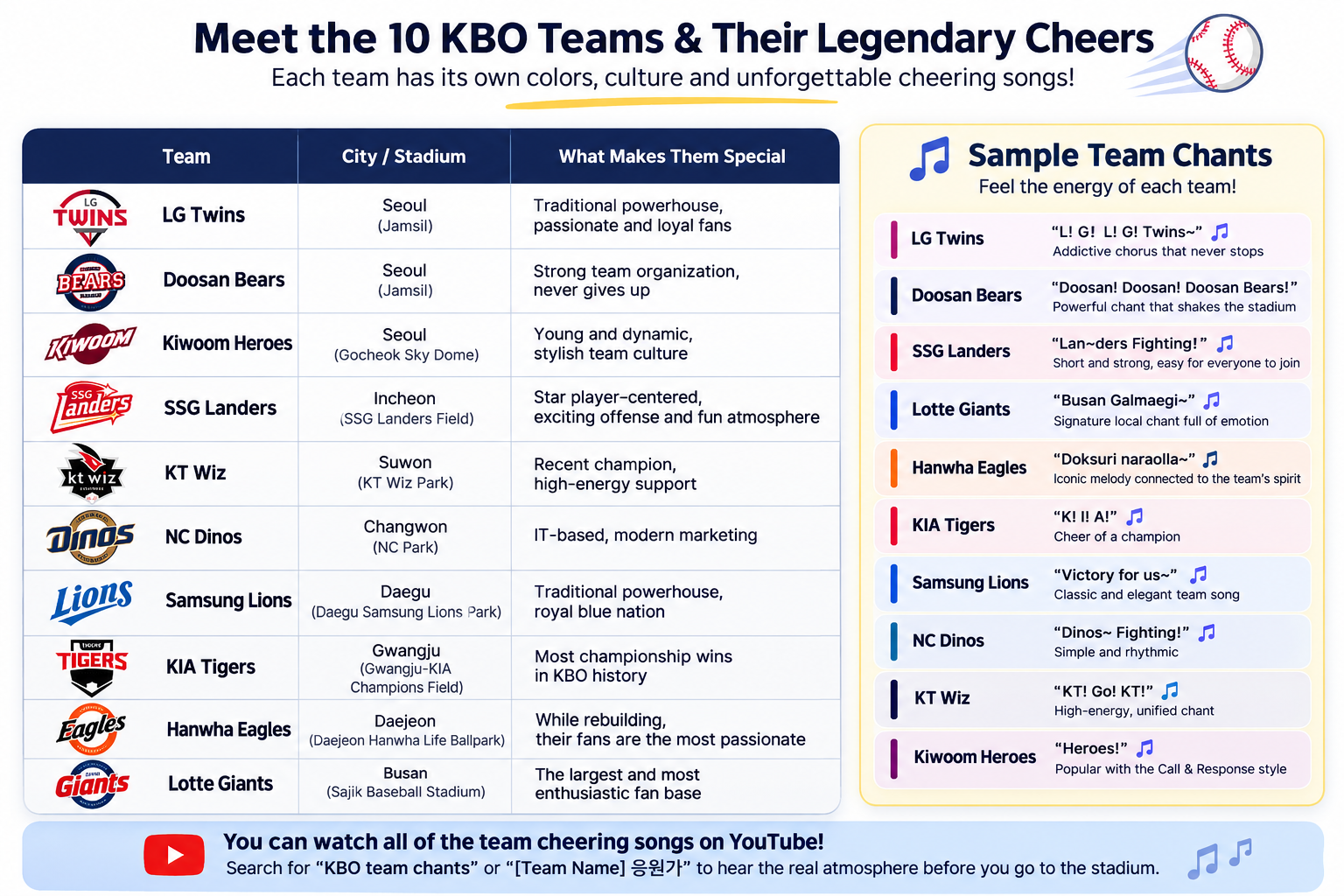
    This is where we insert our KBO infographic.

    IMAGE: “Meet the 10 KBO Teams & Their Legendary Cheers”

    Underneath the image, add this caption:

    KBO teams have their own songs, chants and cheering styles. Before your game, search the team name + “응원가” (cheer song) on YouTube and listen to the crowd. You may find yourself singing along before you even arrive in Korea.


    You Don’t Need to Memorize the Songs

    Don’t worry about studying.

    Nobody expects an international visitor to memorize Korean lyrics before attending a baseball game.

    The easiest strategy is:

    Watch. Listen. Copy.

    The cheerleader makes a movement?

    Follow it.

    Everyone claps three times?

    Clap three times.

    The entire section shouts a player’s name?

    Try it.

    The chorus comes back for the third time?

    Now you probably know part of it.

    That’s how you become involved.

    By the middle of the game, you may realize that you are no longer simply watching Koreans enjoy themselves.

    You’re enjoying it with them.


    What Does a Korean Cheering Section Actually Look Like?

    The most energetic area is usually centered around the organized cheering section.

    You will see a cheer master facing the audience.

    Cheerleaders perform nearby.

    Music plays through the stadium speakers.

    Fans stand, clap, move their arms and sing.

    This is the area I recommend for travelers who want the full experience.

    However, there is an important distinction.

    If you are a serious baseball fan who wants to concentrate on every pitch, a quieter seat with a better view may suit you better.

    If you came because you read about Korea’s famous cheering culture?

    Sit near the cheering section.

    You came for the party.

    Go where the party is.


    The Fans Are One of the Attractions

    There is now actual data supporting this idea.

    In KBO’s fan research, among established spectators who said they were attending more games, 47.7% cited the fun of cheering culture, ahead of their team’s performance at 38.3%.

    Among newer spectators, 67.7% said their first stadium visit was motivated by something other than the baseball game itself. Cheering culture and food experiences such as chimaek were major reasons.

    And when newcomers were asked what they remembered most after their first visit, cheering culture ranked first at 35.8%, ahead of the game itself at 24.9%.

    Think about what that means.

    Even Koreans are increasingly going to baseball stadiums not simply to watch baseball.

    They’re going because the stadium itself has become entertainment.

    That’s exactly why I recommend it to travelers.


    Baseball Has Become Part of Korea’s Youth Culture

    Another outdated image worth abandoning is that baseball stadiums are primarily places for middle-aged male sports fans.

    KBO’s latest published fan research shows increasing league interest particularly among women and people in their twenties.

    Go to a popular game today and you’ll see another side of Korean baseball:

    Young fans wearing customized jerseys.

    Player photo cards.

    Character merchandise.

    Team-themed accessories.

    Cheering videos uploaded to social media.

    Food photos.

    Selfies.

    Pop-culture collaborations.

    In 2026, KBO has continued expanding these lifestyle connections, including collaborations with brands such as Starbucks and Photoism.

    The modern KBO experience sits somewhere between sport, fandom, entertainment and Korean youth culture.


    Food Changes From Stadium to Stadium Too

    Choosing a team can also mean choosing what you want to eat.

    Chicken and beer—chimaek—remain the classic.

    But Korean baseball food culture has become much broader.

    VisitKorea has highlighted everything from tteokbokki to samgyeopsal, stadium-specific specialties and even BBQ seating.

    So before visiting, search the stadium name plus:

    “food”

    or in Korean:

    야구장 먹거리

    For example:

    잠실 야구장 먹거리
    사직 야구장 먹거리
    대전 야구장 먹거리

    Even if you cannot read Korean perfectly, photos and videos will quickly show you what’s popular.

    This turns planning your baseball game into part of the fun.


    Can I Bring My Own Food?

    Generally, yes—within KBO safety rules.

    KBO restricts glass bottles, frozen water bottles and certain beverage containers. For unopened beverages, its current general policy allows one PET bottle and two cans per person, subject to the stated capacity rules.

    It also limits spectators to one bag up to 45 × 45 × 20 cm plus one shopping bag up to 30 × 50 × 12 cm.

    Large boxes, iceboxes, portable chairs and similar items are generally prohibited.

    Individual stadium policies can add further restrictions, so always check before your game.

    But yes:

    Buying fried chicken outside the stadium and bringing it in is part of the Korean baseball experience.


    How to Choose Your KBO Team as a Tourist

    Here is my simple method.

    If you’re staying only in Seoul:

    Check LG, Doosan and Kiwoom home games first.

    If you’re visiting Busan:

    Check Lotte.

    If you’re visiting Suwon:

    Check KT.

    If you’re visiting Incheon:

    Check SSG.

    Daejeon?

    Hanwha.

    Daegu?

    Samsung.

    Gwangju?

    KIA.

    Changwon?

    NC.

    Then go to YouTube and listen to that team’s cheering.

    If two games are available on your dates, choose the atmosphere that appeals to you.

    You don’t need to become a lifelong supporter.

    You’re choosing an experience for one Korean evening.


    A Fun Alternative: Choose Your Team by Its Cheer Song

    This may sound ridiculous to a serious baseball fan.

    But for a tourist?

    I think it’s perfectly reasonable.

    Listen to several KBO cheering videos.

    Which crowd makes you think:

    “I want to be there”?

    That’s your team for the night.

    Maybe it’s the melody.

    Maybe it’s the crowd.

    Maybe it’s the uniforms.

    Maybe it’s a player.

    Maybe it’s the city.

    Travel doesn’t always need a complicated reason.

    Sometimes the best experiences begin with:

    “That looks fun.”


    How to Buy Tickets

    KBO currently uses several ticketing systems rather than one universal booking site.

    According to the official KBO ticket guide:

    Ticketlink: LG, Hanwha, Samsung, KT and KIA
    Interpark: Doosan and Kiwoom
    Team-operated reservation systems: SSG, Lotte and NC.

    This is one area where international travelers should plan ahead.

    Some Korean ticketing systems can require account registration or other steps that are less convenient for foreign visitors.

    If online booking becomes difficult, check the team’s official site for current foreigner options or consider same-day stadium ticket booths when tickets remain.

    Popular weekend, rivalry and late-season games can sell out, so don’t assume tickets will always be available at the gate.

    For the most current information:

    Official KBO Ticket Guide


    When Should You Arrive?

    Don’t arrive exactly at first pitch.

    For a first visit, I would aim for roughly 60–90 minutes early.

    Why?

    Because the experience starts outside the stadium.

    You’ll see merchandise stores.

    Food stalls.

    Fans buying chicken.

    People taking photographs.

    Families and groups of friends arriving in jerseys.

    You need time to find your gate and seat.

    And if you want food before the game, rushing makes the experience much less enjoyable.

    Walk around.

    Look at what people are eating.

    Watch what fans are buying.

    Let the stadium teach you how Koreans enjoy baseball.


    A KBO Game Can Be Surprisingly Affordable Entertainment

    Korean baseball can also be attractive to budget-conscious travelers.

    KBO’s published 2025 fan analysis reported an average admission revenue per spectator of ₩16,715 at the measured point in that season, and 20.5% of fans who increased their attendance said baseball was reasonably priced compared with other leisure activities.

    Actual ticket prices vary by team, seat, day and game, of course.

    But the broader point remains:

    For several hours you get:

    A professional sporting event.

    A concert-like cheering experience.

    Cheerleaders.

    Food.

    Music.

    A local crowd.

    And a cultural experience.

    That can be excellent value for a night out in Korea.


    My Favorite Way to Build a Baseball Travel Day

    If I were planning this for a friend visiting Korea, I wouldn’t make baseball the entire day.

    I would combine it with the city.

    Seoul

    Sightseeing → Korean lunch → Jamsil → baseball + chimaek.

    Suwon

    Hwaseong Fortress → local food → KT Wiz Park → night game.

    Busan

    Beach or market → seafood → Sajik → Lotte Giants game.

    Incheon

    Explore Incheon → stadium food or BBQ experience → SSG game.

    Gwangju

    Local food and city sightseeing → KIA Tigers night game.

    Now baseball isn’t replacing your Korea trip.

    It becomes part of your Korea trip.


    What If You Know Absolutely Nothing About Baseball?

    Go anyway.

    Seriously.

    Learn only these basics:

    One team bats.

    The other team pitches and fields.

    A hit can put a runner on base.

    Four bases complete a run.

    Three outs change sides.

    Home runs are very good.

    That’s enough to survive your first game.

    Everything else can come later.

    Because the part I want international travelers to experience isn’t a complicated baseball rule.

    It’s this:

    A player approaches the plate.

    Music starts.

    The cheerleader raises her arms.

    Thousands of strangers begin singing.

    The person beside you starts clapping.

    You look around.

    And without knowing exactly when it happened…

    you’re clapping too.


    Korean Baseball Is Travel Through Participation

    Many travel experiences position you as an observer.

    You look at a palace.

    You photograph a tower.

    You walk through a museum.

    Those experiences have value.

    But sometimes the strongest memories come from participating.

    A Korean baseball game allows that.

    You eat what locals eat.

    You shout what they shout.

    You learn their songs.

    You celebrate with strangers.

    For three hours, you aren’t standing outside Korean culture looking in.

    You’re sitting inside it.

    And perhaps that’s why the first thing many new fans remember isn’t even the baseball.

    It’s the cheering.


    Before You Choose Your Game

    Use this simple checklist:

    1. Check which city you will be visiting.

    2. Find the local KBO team’s home schedule.

    3. Search the team name + 응원가 on YouTube.

    4. Look at the stadium seating chart and find the cheering section.

    5. Search the stadium’s famous food.

    6. Check current ticket and entry rules.

    7. Arrive early.

    8. Don’t worry about understanding everything.

    And finally:

    Sing.

    Even if your Korean is terrible.

    Nobody cares.

    That’s part of the fun.


    Read First: Complete Korean Baseball Guide

    If this is your first time considering a KBO game, read our main beginner’s guide first. It covers tickets, stadium food, baggage rules, seating, beer, transportation ideas and what to expect on your first Korean baseball night.

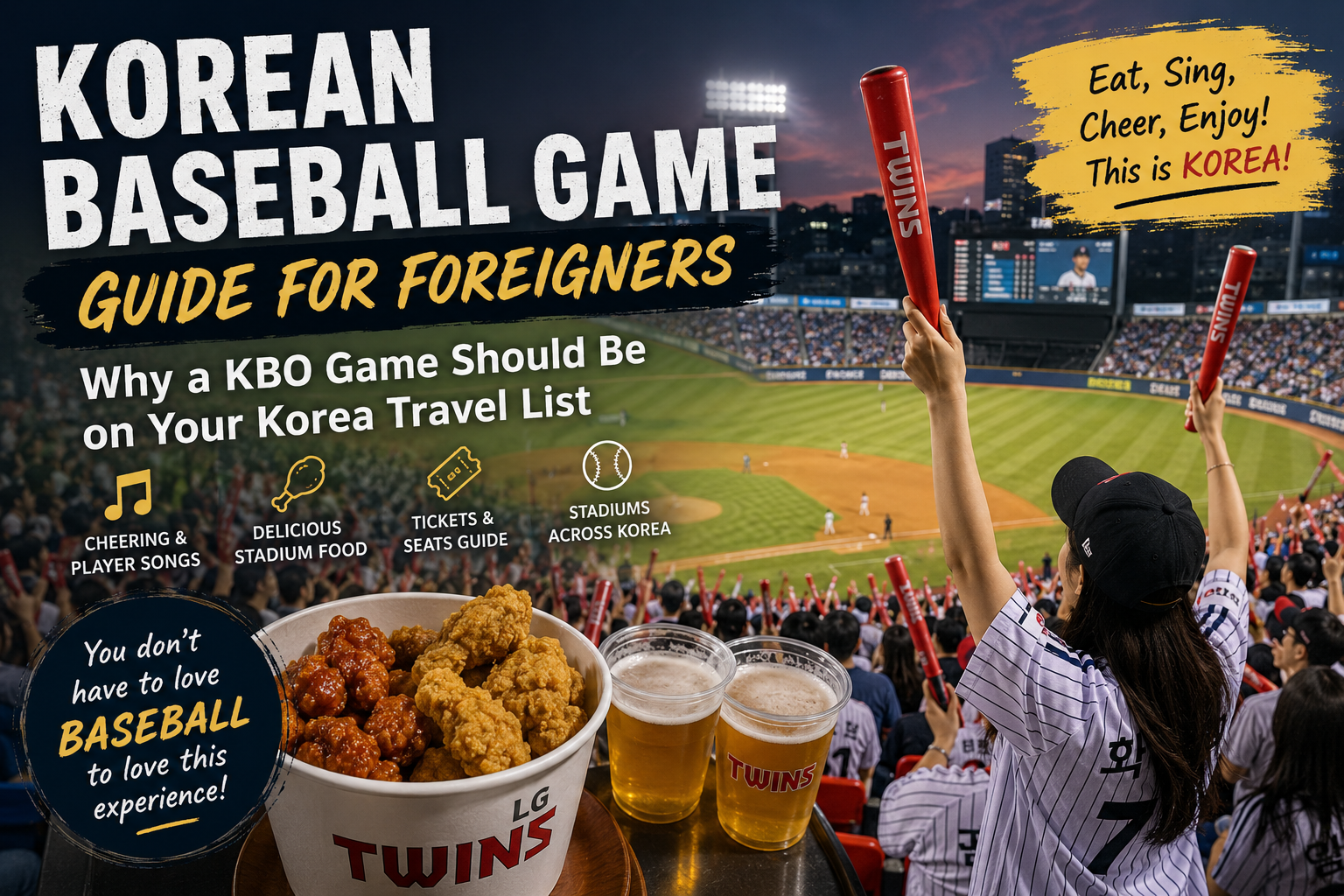
    👉 Korean Baseball Game Guide for Foreigners: Why You Should Watch a KBO Game


    Useful Official Resources

    Before visiting, always check current schedules, ticketing and stadium policies because these can change by season and team.

    KBO League Official Website — schedules, teams, standings and official league information.

    KBO Official Ticket Guide — current ticket providers for all 10 KBO teams.

    VisitKorea: Korean Baseball Cheering Culture — an English guide to KBO cheering, merchandise and stadium culture.


    Love Korean Culture? Discover K-Beauty Favorites 🇰🇷

    A trip to Korea doesn’t have to end at the stadium.

    If Korean culture has also made you curious about K-Beauty, explore Korean skincare, face masks, makeup and other popular beauty products available to international shoppers through OLIVE YOUNG Global.

    👉 Shop K-Beauty at OLIVE YOUNG Global


    True Taste Korea

    Discover Korea beyond the tourist guide — through the food, culture and everyday experiences Koreans actually enjoy.

  • Korean Baseball Game Guide for Foreigners: Why You Should Watch a KBO Game in Korea

    Korean Baseball Game Guide for Foreigners: Why You Should Watch a KBO Game in Korea

    When people plan their first trip to Korea, their itinerary usually includes places such as Gyeongbokgung Palace, Myeongdong, Hongdae, N Seoul Tower, or perhaps a day trip outside Seoul.

    Those are all worth visiting.

    But if you want to experience how Koreans actually have fun, I would add something very different to your itinerary:

    Go to a professional baseball game.

    And here is the surprising part.

    You don’t even need to like baseball.

    A Korean KBO game is not simply a sporting event.

    It is part baseball game, part concert, part street-food festival, and part giant sing-along involving thousands of strangers.

    You eat.

    You drink.

    You sing.

    You clap.

    Cheerleaders dance in front of the crowd.

    A cheer master leads thousands of fans.

    Individual players have their own songs.

    And when a popular player walks toward home plate, an entire section of the stadium may suddenly start singing together.

    For an international traveler, this can become one of those unexpected nights in Korea that you remember much longer than another famous tourist attraction.

    The Korea Tourism Organization itself describes Korean baseball stadiums as places where international visitors can experience a uniquely Korean culture—even if they are not particularly interested in baseball.

    Here is why.


    You Don’t Have to Be a Baseball Fan

    Let me start with the most important point.

    If you know nothing about baseball, you can still have fun at a Korean baseball game.

    Of course, understanding the game helps.

    But Korean baseball spectators do much more than quietly watch pitches, hits and runs.

    The audience participates in the entertainment.

    When the home team attacks, organized cheering can continue from player to player.

    Music starts.

    The cheer master raises his arms.

    Cheerleaders begin dancing.

    Thousands of fans clap in rhythm.

    Then everyone starts singing.

    You may not understand the Korean lyrics.

    It doesn’t matter.

    Watch the people around you for a few minutes and you will soon understand what to do.

    That is one reason Korean baseball is unusually accessible as a travel experience.

    You don’t have to understand everything before you join in.


    Korean Baseball vs. MLB: It Isn’t About Which League Is Better

    If we are talking purely about the level of baseball, Major League Baseball has many of the greatest players in the world.

    But comparing an MLB game and a Korean KBO game only by player ability misses the point.

    They offer different spectator experiences.

    One of the defining features of Korean professional baseball is that the crowd becomes part of the performance.

    A Korean stadium can feel closer to a festival or outdoor concert than many foreigners expect.

    Fans do not simply react when something exciting happens.

    They help create the excitement.

    That distinction is important.

    You aren’t just buying a ticket to watch Korean baseball.

    You’re buying a ticket to participate in Korean baseball culture.


    Every Player Can Have His Own Cheer Song

    This is one of the first things foreign visitors notice.

    Korean baseball teams have team songs and chants, but individual players can also have their own cheering songs.

    When a batter approaches the plate, his song may begin.

    The crowd knows it.

    The cheerleaders know it.

    The cheer master knows it.

    And thousands of people sing it together.

    Sometimes the melody is extremely catchy.

    After hearing the same player’s song several times during the game, even a foreign visitor who speaks little Korean may start joining in.

    That is part of the fun.

    You gradually stop being an observer.

    You become part of the crowd.


    Imagine 20,000 People Singing Together

    This is the part that photographs cannot properly explain.

    Imagine sitting in a stadium at night.

    The lights are on.

    Someone is holding fried chicken in one hand and beer in the other.

    The batter steps toward home plate.

    Music begins.

    Then thousands of people around you stand, clap and sing the same song.

    You may not know the player.

    You may not understand the lyrics.

    You may not even know whether the next pitch is a slider or a fastball.

    But suddenly you are clapping too.

    That moment is Korean baseball.

    It is difficult to recreate anywhere else because the crowd itself creates the atmosphere.

    Editor’s note: This is an ideal place in the article to embed a short official KBO or team cheering video so international readers can hear what Korean baseball sounds like before visiting.


    The Cheerleaders Are Part of the Show

    Korean professional baseball also has organized cheering squads.

    Depending on the team and stadium, you will usually see a cheer master and cheerleaders leading supporters from a designated cheering area.

    They dance.

    They demonstrate the movements.

    They encourage the crowd.

    And they help maintain the energy throughout the game.

    For a first-time foreign visitor, I strongly recommend sitting near the cheering section rather than choosing the quietest possible seat.

    You are visiting Korea.

    You can watch baseball quietly on television.

    If you go to the stadium, experience the part that makes Korean baseball different.


    Eating Is Half the Korean Baseball Experience

    Now we get to one of my favorite parts.

    Food.

    Eating at a Korean baseball game is not just something you do because you are hungry.

    It is part of the culture.

    The classic combination is:

    Chimaek

    Chicken + Maekju (beer) = Chimaek

    Fried chicken and cold beer are one of Korea’s most famous food combinations, and baseball is one of the perfect places to enjoy them.

    But don’t stop there.

    Depending on the stadium, you can find:

    • Fried chicken
    • Tteokbokki
    • Pizza
    • Burgers
    • Sausages
    • Mandu
    • Korean snacks
    • Beer
    • And even barbecue-style foods at some stadiums

    Some ballparks have become famous for particular dishes.

    The Korea Tourism Organization highlights examples including One Shot Chicken at Jamsil, cream shrimp at Incheon SSG Landers Field, Jinmi Tongdak at Suwon KT Wiz Park, tteokbokki in Daejeon and the famous bat-shaped beer cup at Changwon NC Park.

    That means baseball can become a small Korean food tour at the same time.


    Yes, You Can Bring Food Into a Korean Baseball Stadium

    This surprises some international visitors.

    In general, KBO rules allow food to be brought into the stadium as long as it is not a prohibited item and fits within the permitted baggage limits.

    That is one reason you will often see fans buying fried chicken, pizza and snacks around the stadium before entering.

    The Korea Tourism Organization specifically notes that many Korean fans buy food outside and bring it with them.

    There are, however, some important rules.

    KBO states that food may be restricted if it could create safety or comfort problems for other spectators—for example, very hot soup or particularly strong-smelling foods.

    So think:

    Chicken? Great.

    Pizza? Great.

    Snacks? Great.

    A huge container of boiling soup? Maybe don’t.

    And because individual stadiums may have additional rules, check the home team’s current guidelines before visiting.


    What About Beer?

    Beer and Korean baseball are almost inseparable culturally, but there are safety rules.

    KBO’s current stadium safety policy restricts glass bottles and regulates beverage containers. Unopened beverages are subject to size and quantity limits, and alcohol sold inside the stadium is also controlled.

    KBO says alcohol sales inside a stadium are limited to a maximum of 2 liters per person per game, and sales may stop after the bottom of the eighth inning.

    The easiest option for a traveler is simple:

    Buy your drinks inside or follow the stadium’s current entrance rules exactly.


    Don’t Bring a Huge Bag

    This is another practical detail worth knowing.

    KBO’s general safety policy currently allows each spectator:

    One bag up to 45 × 45 × 20 cm

    plus

    one shopping bag up to 30 × 50 × 12 cm.

    Large boxes, iceboxes, portable chairs and tables are generally prohibited, although special seating areas such as designated grass zones can have exceptions.

    For most tourists, this is easy.

    Bring a normal backpack or small bag, your phone, a portable battery and whatever you actually need.

    Travel light.


    Where Should a First-Time Visitor Watch a KBO Game?

    Korea has professional baseball stadiums across the country.

    If you are visiting Seoul, the easiest recommendation for many first-time visitors is:

    Jamsil Baseball Stadium

    Jamsil is one of Korea’s most iconic baseball stadiums.

    It is shared by the LG Twins and Doosan Bears, which means there are many opportunities to catch a game during the season.

    VisitKorea lists its capacity at approximately 25,000 spectators and specifically highlights its famous cheering culture and chimaek experience.

    It is also conveniently located in Seoul.

    So you can spend the daytime sightseeing and make baseball your evening activity.


    Gocheok Sky Dome — Good When Weather Is a Concern

    Another Seoul option is Gocheok Sky Dome, home of the Kiwoom Heroes.

    Its biggest advantage for a traveler is simple:

    It is a dome.

    Rain doesn’t have to destroy your baseball plan.

    VisitKorea identifies it as Korea’s only domed professional baseball stadium.


    Busan: Sajik Baseball Stadium

    If your Korea trip includes Busan, baseball becomes even more interesting.

    Busan has an intense baseball culture, and Sajik Baseball Stadium is home to the Lotte Giants.

    The atmosphere can be extremely passionate.

    If your image of Busan is only beaches and seafood, a night at Sajik can show you a completely different side of the city.


    Incheon: SSG Landers Field

    Incheon is home to the SSG Landers.

    This stadium is particularly interesting for travelers who enjoy food.

    VisitKorea highlights its huge scoreboard, while its special food and BBQ experiences have also become attractions in their own right.

    There are even designated BBQ seats where spectators can grill food while watching baseball. These are popular and can be difficult to book.

    That is a very Korean baseball experience.


    Suwon: KT Wiz Park

    If you’re staying around Seoul but want to travel slightly outside the capital, Suwon KT Wiz Park is another interesting option.

    VisitKorea specifically recommends it for food lovers and notes that the team’s Wizzap app supports English, email verification and overseas payment for ticket purchases.

    There is also a grass seating area where spectators can enjoy the game in a more picnic-like atmosphere.

    For foreign travelers who worry about Korean-only ticketing systems, that English app support makes Suwon particularly interesting.


    How Do Foreigners Buy KBO Tickets?

    This is the part that can be confusing.

    There is not one universal ticket website for every KBO team.

    KBO’s official ticket guide currently divides teams among several reservation systems.

    Ticketlink handles teams including LG, Hanwha, Samsung, KT and KIA; Interpark handles Doosan and Kiwoom; while SSG, Lotte and NC operate their own reservation systems.

    For international visitors, there are several realistic options.

    1. Buy at the Stadium

    For games that are not sold out, same-day tickets may be available at stadium ticket booths.

    VisitKorea notes that credit cards can be used for on-site purchases.

    This can be the simplest method if you don’t want to deal with a Korean reservation website.

    But don’t rely on it for extremely popular games.

    Weekend games, rivalry games and important late-season games can sell quickly.

    2. Use the Team’s Ticket System

    If the team offers a foreigner-friendly reservation method, this is better.

    As mentioned above, KT Wiz’s Wizzap is particularly useful because English and overseas payments are supported according to VisitKorea.

    3. Use a Travel Platform

    VisitKorea also notes that KBO-related packages have been offered through international travel platforms such as Klook, GetYourGuide, Viator and Trazy.

    Availability changes, so check for your particular travel date.


    Which Seat Should You Buy?

    If this is your first Korean baseball game, my recommendation is simple:

    Choose atmosphere over the perfect view.

    A seat directly behind home plate may give you an excellent view of the game.

    But if your purpose is experiencing Korean baseball culture, I would rather sit closer to the active cheering section.

    That’s where you hear the songs.

    That’s where people stand.

    That’s where you see the cheerleaders.

    That’s where you learn the chants.

    You aren’t going only to analyze baseball.

    You’re going to experience Korea.

    When choosing tickets, look at the team’s seating map and identify its main cheering section because the exact location differs by stadium and home team.


    Do I Need to Wear a Team Jersey?

    No.

    Nobody expects a foreign visitor to arrive knowing every team and player.

    You can simply wear normal clothes.

    But if you enjoy the atmosphere, stadium merchandise stores sell things such as:

    Jerseys, caps, headbands and cheering items.

    VisitKorea notes that character collaborations and team merchandise have become especially popular among younger fans.

    A baseball cap can also make a much more interesting Korea souvenir than another generic tourist magnet.


    K-Pop Fans Might Get a Surprise

    There is another fun connection between Korean baseball and Korean pop culture.

    Celebrity first pitches are common.

    Actors, singers and K-pop idols are frequently invited to throw ceremonial first pitches or participate in stadium events.

    VisitKorea has highlighted appearances by idols including members of aespa, TWICE, ASTRO, Red Velvet, TWS and THE BOYZ.

    You should never buy a ticket expecting a celebrity appearance unless one has officially been announced.

    But if you happen to see one?

    That’s a nice bonus.


    Korean Baseball Is Increasingly Young

    Don’t imagine a stadium filled only with older men discussing statistics.

    Korean baseball audiences have become noticeably younger.

    After the KBO League surpassed 10 million spectators for the first time in 2024, the Korea Tourism Organization highlighted the increasing number of fans in their twenties and the resulting younger, more energetic atmosphere.

    That helps explain why today’s Korean baseball culture mixes so naturally with:

    Food.

    Fashion.

    Music.

    Social media.

    Character merchandise.

    Cheerleaders.

    Photo spots.

    And pop culture.

    Baseball remains the reason everyone comes together.

    But the experience around baseball has become much bigger than the sport itself.


    A Simple Korean Baseball Night for Travelers

    Here is how I would plan it.

    Spend the morning and afternoon exploring Seoul.

    Don’t exhaust yourself trying to visit ten attractions.

    Around late afternoon, head toward the stadium.

    Walk around the neighborhood first.

    Watch Korean fans arriving in team jerseys.

    Buy some fried chicken or explore the stadium food.

    Find your seat before the game starts.

    Then forget about trying to understand every rule.

    Watch the cheering section.

    When people clap, clap.

    When they sing, try to sing.

    When your team scores, celebrate with the stranger sitting beside you.

    Eat your chicken.

    Have a beer if you drink.

    Take some photos.

    And enjoy being surrounded by thousands of Koreans spending an ordinary evening doing something they love.

    That is travel too.

    In fact, sometimes that is the best kind of travel.


    Why I Recommend a KBO Game to Foreign Visitors

    There are two ways to experience Korea.

    One is to visit places that exist primarily because travelers want to see them.

    The other is to enter places where Koreans themselves are already living, eating, laughing and having fun.

    A baseball stadium belongs to the second category.

    You don’t need to pretend to be Korean.

    You don’t need to understand every song.

    You don’t even need to love baseball.

    Just participate.

    If you have already seen palaces, shopping districts and famous cafés, spend one evening doing something different.

    Sit among Korean baseball fans.

    Eat chicken.

    Listen to 20,000 people sing.

    Watch the cheerleaders.

    Learn one player’s chant.

    And when everyone around you suddenly jumps up because the ball disappears into the night sky, jump up with them.

    You might arrive as a tourist who knows nothing about the KBO.

    Three hours later, you may leave with a team you suddenly care about.

    And that is exactly why I think a Korean baseball game deserves a place on a Korea travel itinerary.


    Before You Go: Quick Checklist

    Best for first-time Seoul visitors: Jamsil Baseball Stadium
    Weather-proof Seoul option: Gocheok Sky Dome
    Classic food: Fried chicken + beer (chimaek)
    Best seat for the cultural experience: Near the cheering section
    Can you bring food? Generally yes, subject to KBO and stadium safety rules.
    Can you buy tickets at the stadium? Often yes when seats remain.
    Do you need to understand baseball? Absolutely not.

    Always check the team’s current schedule, ticket information and stadium rules before traveling because operating policies can change.


    Official & Useful Links

    For schedules and current league information, use the official KBO League website. For travel-oriented information about Korean baseball culture, stadiums and food, the Korea Tourism Organization’s VisitKorea guides are particularly useful.

    Official KBO League Ticket Guide

    VisitKorea Korean Baseball & Stadium Food Guide

    KBO Stadium Safety & Food Rules


    Love Korean Culture? Discover K-Beauty Favorites 🇰🇷

    If your trip to Korea has made you curious about Korean beauty too, explore Korean skincare, face masks, makeup and other K-Beauty favorites available to international shoppers through OLIVE YOUNG Global.

    👉 Shop K-Beauty at OLIVE YOUNG Global


    True Taste Korea

    Discover Korea beyond the tourist guide — through the food, culture and everyday experiences Koreans actually enjoy.

  • Authentic Japchae Recipe: Korean Glass Noodles with Beef and Vegetables

    Authentic Japchae Recipe: Korean Glass Noodles with Beef and Vegetables

    For many Koreans, japchae is more than a noodle dish.

    It is a food connected to happy memories.

    Growing up in Korea, when there was something to celebrate or good news in the family, mothers would often prepare a large plate of japchae filled with beef and colorful vegetables.

    Birthdays, holidays, family gatherings, and other special occasions often meant one thing: the familiar smell of sesame oil, soy sauce, stir-fried vegetables, and freshly cooked japchae coming from the kitchen.

    That is why japchae can bring back memories of family, celebration, and a mother’s home cooking.

    Today, let’s make an authentic Korean-style japchae with chewy glass noodles, beef, mushrooms, spinach, carrots, and onions.


    What Is Japchae?

    Japchae (잡채) is one of Korea’s best-known noodle dishes.

    Modern japchae is typically made with dangmyeon, Korean glass noodles traditionally made from sweet potato starch.

    The noodles are cooked and seasoned with soy sauce, sesame oil, and a touch of sweetness, then combined with beef and a variety of vegetables.

    The result is a dish that is simultaneously:

    • chewy
    • savory
    • slightly sweet
    • nutty from sesame oil
    • colorful
    • surprisingly filling

    Although japchae is often served as banchan (Korean side dish), it can easily become the centerpiece of a meal.

    Why Is Japchae a Celebration Food in Korea?

    For many Korean families, japchae traditionally appears when there is something worth celebrating.

    You may see a large plate of japchae at a birthday table, holiday gathering, family celebration, or special meal for guests.

    For many Koreans who grew up eating homemade japchae, the memory is particularly associated with mothers preparing it in the kitchen.

    And when it was a special occasion, there would often be beef in the japchae, making an already colorful dish feel even more generous.

    It wasn’t simply something you ate because you were hungry.

    Japchae was something your mother made when something good happened.

    That emotional connection is one reason japchae remains such a familiar celebration food in Korean homes.


    Japchae Wasn’t Originally a Glass Noodle Dish

    Here is something many international fans of Korean food may not know.

    The earliest form of japchae did not contain the glass noodles that define the dish today.

    The dish has a history stretching back to Korea’s Joseon period, while sweet potato starch noodles became part of modern japchae much later.

    Over time, dangmyeon became the defining ingredient, transforming japchae into the dish most Koreans recognize today.

    The name itself is interesting:

    Jap (잡) can refer to mixed or assorted ingredients, while chae (채) refers to vegetables.

    That history makes sense when you look at a plate of japchae. Rather than being about one ingredient, the dish is about bringing many different ingredients together.


    Why Japchae Is So Satisfying

    One of japchae’s greatest strengths is how much goes into a single dish.

    A traditional homemade version may contain:

    sweet potato glass noodles + beef + spinach + carrots + onions + mushrooms

    Each ingredient contributes something different.

    The noodles provide their characteristic chewy texture. Beef adds richness and protein. Mushrooms add umami. Spinach, carrots, and onions add different flavors, textures, and colors.

    Soy sauce, sesame oil, garlic, and sesame seeds bring everything together.

    This is why japchae is one of the more satisfying side dishes on a Korean table.

    Some Koreans will even eat a generous serving of japchae without a separate bowl of rice, particularly when they want a lighter-feeling meal.

    However, don’t mistake that for meaning japchae is automatically a low-calorie diet food.

    Dangmyeon is primarily a source of carbohydrates, and traditional japchae also contains sesame oil and some sugar. Portion size and the balance of noodles, meat, and vegetables still matter.


    Authentic Korean Beef Japchae Recipe

    Servings

    4–5

    Preparation Time

    About 25 minutes

    Cooking Time

    About 25 minutes

    Ingredients

    Main Ingredients

    • 250 g Korean sweet potato glass noodles (dangmyeon)
    • 150 g beef, thinly sliced
    • 150 g spinach
    • 1 medium carrot
    • 1 medium onion
    • 100 g shiitake mushrooms or other mushrooms
    • 2 green onions
    • 1 tablespoon cooking oil
    • Sesame seeds for garnish

    Beef Marinade

    • 1 tablespoon soy sauce
    • 1 teaspoon sugar
    • 1 teaspoon sesame oil
    • 1 teaspoon minced garlic
    • Black pepper to taste

    Japchae Seasoning

    • 4 tablespoons soy sauce
    • 2 tablespoons sugar
    • 2 tablespoons sesame oil
    • 1 tablespoon minced garlic

    You can adjust the sweetness and saltiness slightly according to taste.


    Step 1. Prepare the Beef

    Thinly slice the beef.

    Mix it with soy sauce, sugar, sesame oil, minced garlic, and a little black pepper.

    Let it marinate for about 15–20 minutes while preparing the other ingredients.

    Thinly sliced beef cooks quickly and mixes more naturally with the noodles and vegetables.


    Step 2. Prepare the Vegetables

    Slice the carrot, onion, and mushrooms into thin strips.

    Keeping the vegetables relatively similar in size makes the finished japchae easier to eat and gives it the colorful appearance associated with traditional Korean japchae.

    Wash the spinach thoroughly.

    Blanch it briefly in boiling water, then immediately cool it in cold water.

    Gently squeeze out excess moisture.

    Season lightly with a little salt and sesame oil.


    Step 3. Cook the Vegetables Separately

    This is one of the secrets to really good japchae.

    Instead of throwing every vegetable into the pan at once, cook the ingredients separately or in small groups.

    Lightly stir-fry the onions.

    Remove them.

    Stir-fry the carrots until just tender.

    Remove them.

    Then cook the mushrooms.

    Finally, stir-fry the marinated beef until cooked through.

    Why bother?

    Because every ingredient has a different cooking time.

    Cooking them separately helps preserve their individual texture, color, and flavor.

    This extra step is one of the differences between ordinary japchae and really good homemade japchae.


    Step 4. Cook the Dangmyeon

    Bring a large pot of water to a boil.

    Add the sweet potato glass noodles and cook according to the package directions. Cooking times can vary depending on the brand and thickness of the noodles.

    Drain thoroughly.

    If the noodles are extremely long, cut them a few times with kitchen scissors so the finished japchae is easier to eat.

    Do not overcook the noodles.

    Good japchae should have a pleasantly chewy and springy texture, rather than becoming overly soft or mushy.


    Step 5. Season the Noodles

    While the noodles are still warm, add the japchae seasoning:

    • soy sauce
    • sugar
    • sesame oil
    • minced garlic

    Mix thoroughly so the noodles absorb the seasoning evenly.

    The warm noodles take on the flavor particularly well.


    Step 6. Combine Everything

    Now comes the best part.

    Place the seasoned noodles in a large bowl or pan.

    Add the cooked beef, onions, carrots, mushrooms, spinach, and green onions.

    Gently toss everything together.

    Taste and adjust with a little additional soy sauce or sesame oil if necessary.

    Finish with sesame seeds.

    You should now have a glossy, colorful plate of authentic Korean japchae.


    The Secret to Better Japchae

    There are several small details that make a big difference.

    Don’t use too many noodles.

    A common mistake is making japchae mostly noodles with a few vegetables scattered throughout.

    Good Korean homemade japchae should feel generous.

    There should be plenty of beef, mushrooms, spinach, carrots, and onions mixed throughout the noodles.

    Don’t overcook the dangmyeon.

    The chewy texture of sweet potato noodles is one of the pleasures of japchae.

    Sesame oil goes a long way.

    Sesame oil gives japchae its unmistakable aroma, but adding too much can overpower the other ingredients.

    Cook vegetables according to their needs.

    Cooking everything together may be faster, but separately cooked vegetables generally give japchae better color and texture.


    Can You Make Japchae Without Beef?

    Absolutely.

    Beef is common in celebratory Korean-style japchae, but it isn’t essential.

    You can leave it out and increase the amount of mushrooms and vegetables for a vegetarian version.

    For a fully vegan japchae, make sure all sauces and seasonings you use are vegan-friendly.

    Mushrooms are particularly useful because they provide additional savory flavor.


    Can Japchae Be a Complete Meal?

    It can.

    In Korea, japchae is commonly served as banchan alongside rice and other dishes.

    But because it contains noodles, vegetables, and often meat, a generous plate can be filling enough that some people eat it without rice.

    If you want to make it more meal-like, increase the proportion of vegetables and protein rather than simply adding more noodles.


    How to Store Leftover Japchae

    Japchae can be refrigerated in an airtight container.

    For the best texture, try to eat leftovers within a few days.

    The noodles become firmer when refrigerated, so cold japchae doesn’t have quite the same texture as freshly prepared japchae.

    Fortunately, it reheats well.


    The Best Way to Reheat Japchae

    Put the japchae into a frying pan over medium-low heat.

    Add a very small amount of water if the noodles have become dry and gently stir-fry until they become soft and glossy again.

    You can finish with a tiny amount of sesame oil.

    This usually restores the texture better than eating it straight from the refrigerator.


    Frequently Asked Questions About Japchae

    What are japchae noodles made from?

    Traditional Korean dangmyeon used for japchae are generally made from sweet potato starch.

    This gives them their translucent appearance and characteristic chewy texture.

    Is japchae spicy?

    Usually not.

    Traditional japchae is savory and slightly sweet rather than spicy, making it one of the more approachable Korean dishes for people who aren’t comfortable with spicy food.

    Is japchae gluten-free?

    The noodles themselves are typically made from sweet potato starch, but regular soy sauce commonly contains wheat.

    Anyone who needs a gluten-free dish should check every ingredient carefully and use an appropriate gluten-free soy sauce.

    Can I make japchae ahead of time?

    Yes.

    That’s another reason japchae works well for parties and family gatherings.

    Prepare it ahead, refrigerate it, and gently reheat it before serving.


    More Than Korean Glass Noodles

    Calling japchae simply “Korean glass noodles” doesn’t quite explain what the dish means in Korea.

    For many Koreans, japchae brings back a particular kind of memory.

    A birthday.

    A holiday.

    Relatives gathering around the table.

    Good news in the family.

    And a mother in the kitchen preparing a large plate of japchae with beef and colorful vegetables.

    The combination of chewy dangmyeon, savory beef, colorful vegetables, soy sauce, and fragrant sesame oil makes it delicious.

    But the memories surrounding it are what make japchae special.

    Sometimes food isn’t just about what is on the plate. It is about remembering who prepared it, and why everyone was gathered around the table in the first place.

    That is the story behind Korean japchae.

  • 2026年9月最新|韓国コスメおすすめ10選!肌悩み別に選ぶ人気K-Beauty

    2026年9月最新|韓国コスメおすすめ10選!肌悩み別に選ぶ人気K-Beauty

    韓国コスメが気になるけれど、

    「種類が多すぎて、どれを選べばいいかわからない」

    「SNSで人気の商品が、本当に自分の肌に合うの?」

    そんなふうに迷っていませんか?

    2026年の韓国スキンケアは、単に人気ブランドから選ぶのではなく、毛穴・乾燥・敏感肌・肌荒れ・ハリ・UVケアなど、自分の肌悩みに合わせて選ぶことがポイントです。

    日本でも、PDRN美容液やトナーパッド、CICA、韓国の日焼け止めなどへの関心が高まっています。特にPDRNは、2026年に入って日本の美容メディアでも特集や比較記事が相次いでいる注目成分です。

    今回は、日本からもチェックしやすい人気K-Beautyを中心に、肌悩み別おすすめ韓国コスメ10選を紹介します。


    まずチェック!肌悩み別おすすめ韓国コスメ

    肌悩み注目したいアイテム・成分
    乾燥・うるおい不足PDRN・ヒアルロン酸
    毛穴トナーパッド・角質ケア
    敏感肌・ゆらぎ肌CICA・ドクダミ・バリアケア
    ハリ不足PDRN・ペプチド
    肌荒れが気になるCICA・ツボクサ由来成分
    透明感を意識したいナイアシンアミド・ビタミンC
    紫外線対策韓国サンセラム・UVケア

    日本の@cosmeでも、トナーパッドは乾燥肌ならヒアルロン酸やセラミド、敏感肌なら低刺激処方、毛穴ケアならビタミンCやAHAなど、肌タイプ・目的別に選ぶ方法が紹介されています。

    1.Anua PDRN ヒアルロン酸カプセル100セラム

    おすすめ:乾燥・うるおい・ハリ不足

    2026年に韓国コスメを選ぶなら、まず知っておきたいのがPDRN。

    その中でも注目度が高いのがAnuaのPDRN美容液です。

    PDRNとヒアルロン酸を組み合わせた美容液で、乾燥によるうるおい不足やハリ感を意識したスキンケアを探している人にチェックしてほしいアイテム。

    PDRN配合コスメは現在、日本でも美容液だけでなくクリーム、化粧水、パックなど幅広く紹介されています。

    こんな人におすすめ

    乾燥しやすい人、韓国の最新美容成分を試してみたい人、ツヤのある肌を目指したい人。

    2.MEDIHEAL トナーパッド

    おすすめ:毛穴・肌のキメ・時短ケア

    日本でもかなり定着してきた韓国発アイテムがトナーパッドです。

    化粧水や美容液を含ませたパッドで肌を拭き取ったり、気になる部分に数分置いて部分パックとして使ったりできます。

    2026年上半期の『美的』韓国ベストコスメでは、MEDIHEALのマデカッソシド ブレミッシュパッドがトナーパッド部門1位に選ばれています。

    忙しい朝のスキンケアにも使いやすいカテゴリーです。

    3.AESTURA アトバリア365

    おすすめ:敏感肌・乾燥・バリアケア

    刺激の強いスキンケアよりも、肌をうるおしてコンディションを整えることを重視したい人にはAESTURA。

    アトバリア365シリーズは韓国の代表的なバリアケアシリーズの一つです。

    2026年上半期の『美的』韓国ベストコスメでは、AESTURAのアトバリア365 ハイドロスーディングクリームがクリーム部門1位、ジェントルフォーミングクレンザーも洗顔部門1位となりました。

    こんな人におすすめ

    乾燥しやすい人、季節の変わり目に肌がゆらぎやすい人、シンプルな保湿ケアを重視したい人。

    4.VT リードルショット

    おすすめ:キメ・攻めのスキンケア

    韓国コスメの中でも独特な存在がVTのリードルショット。

    微細な美容針のような使用感を特徴とするスピキュール系スキンケアとして日本でも知られるようになりました。

    ただし、刺激を感じる場合があるので、初めて使う人は使用頻度や濃度に注意しましょう。

    敏感肌の場合は無理に流行を追う必要はありません。

    5.Biodance リアルディープマスク

    おすすめ:乾燥・スペシャルケア

    韓国コスメの楽しさを感じやすいカテゴリーがフェイスマスク。

    中でもBiodanceのハイドロゲル系マスクは、一般的なシートマスクとは違う使用感でSNSでも話題になっています。

    2026年上半期の『美的』韓国ベストコスメでは、BiodanceのキャビアPDRN リアルディープマスクがシートマスク部門1位に選ばれました。

    普段使いというより、週末や大切な日の前のスペシャルケアとして取り入れるのもおすすめです。

    6.SKIN1004 センテラシリーズ

    おすすめ:敏感肌・肌荒れが気になる人

    韓国スキンケアで長く人気なのがCICA(ツボクサ由来成分)。

    SKIN1004はセンテラをブランドの中心に据えた韓国スキンケアブランドです。

    刺激の強い美容成分よりも、毎日のスキンケアで肌を整えたい人に向いています。

    特に季節の変わり目など、肌のコンディションが不安定になりやすい時期にもチェックしたいカテゴリーです。

    7.d’Alba ホワイトトリュフ ファーストスプレーセラム

    おすすめ:乾燥・ツヤ・時短ケア

    ミストタイプの美容液を探しているならd’Alba。

    スプレーするだけで使えるので、朝のスキンケアだけでなく乾燥が気になるときにも取り入れやすいのが魅力です。

    韓国コスメ初心者でも比較的使い方がわかりやすいアイテムです。

    8.numbuzin 5番シリーズ

    おすすめ:くすみ・透明感を意識したケア

    成分を見ながら韓国コスメを選びたい人から支持されているのがnumbuzin。

    特に5番シリーズはグルタチオンやビタミン系成分などを特徴とした商品が展開されています。

    「なんとなく人気だから」ではなく、自分がどんな肌を目指したいかから商品を選びたい人に向いています。

    9.韓国サンセラム・日焼け止め

    おすすめ:UVケア・軽い使用感が好きな人

    韓国旅行でぜひチェックしたいのが日焼け止め。

    韓国では美容液のような使用感を意識した「サンセラム」タイプの商品が多くあります。

    ベタつく日焼け止めが苦手な人や、毎日のメイク前に使いやすいUVケアを探している人はチェックしてみてください。

    SKIN1004やd’Albaなど、人気韓国ブランドからもさまざまなUVアイテムが発売されています。

    10.韓国フェイスマスク

    おすすめ:韓国コスメ初心者・プチプラ・お土産

    「韓国コスメを試したいけれど、いきなり美容液やクリームを買うのは不安」

    そんな人におすすめなのがシートマスクです。

    価格が比較的手頃で、いろいろなブランドを試しやすいのが魅力。

    2026年の日本の美容メディアでも韓国パックは大きなカテゴリーとして扱われ、保湿など肌悩み別の選び方が紹介されています。

    韓国旅行のお土産にも選びやすいアイテムです。

    迷ったら「人気」より肌悩みで選ぼう

    韓国コスメは新商品やトレンドの移り変わりが速いため、SNSで人気の商品を全部試す必要はありません。

    まず、

    乾燥なのか?
    毛穴なのか?
    敏感肌なのか?
    ハリ不足なのか?

    自分が一番気になる肌悩みを一つ決めること。

    そのうえで、PDRN、ヒアルロン酸、CICA、ナイアシンアミドなど、目的に合った成分や商品タイプを選ぶと商品を絞り込みやすくなります。

    日本の2026年韓国コスメ情報でも、肌悩み+配合成分で選ぶ考え方が紹介されています。

    2026年、特に注目したいのはPDRN

    この10商品の中から、次のトレンドを一つ選ぶならPDRNです。

    2026年8月には『LDK the Beauty』によるPDRN美容液13商品の比較記事が公開され、9月にもPDRNコスメの最新ランキングが更新されています。つまり日本でもPDRNは一過性ではなく、独立した商品カテゴリーとして検索・比較され始めています。

    次の記事では、

    Anua・VT・medicubeなど人気ブランドのPDRN美容液を比較して、どれを選べばいいのか

    を詳しく紹介します。

    → 関連記事:韓国PDRN美容液おすすめ5選
    ※次の記事を公開したらここから内部リンク。

    よくある質問

    Q. 韓国コスメ初心者は何から始めればいい?

    最初から何種類も変えるより、化粧水・美容液・クリーム・マスクなど一つの商品から試す方法がおすすめです。肌に合わない場合は使用を中止してください。

    Q. 敏感肌でも韓国コスメを使える?

    韓国コスメにも低刺激を意識した商品があります。ただし「韓国コスメだから敏感肌に向いている」というわけではありません。成分表示や使用方法を確認し、心配ならパッチテストから始めましょう。

    Q. 毛穴ケアなら何を選ぶ?

    トナーパッドや角質ケア系の商品が候補になります。ただし毛穴の原因は一つではないため、強いピーリングを繰り返すより自分の肌状態に合わせて選ぶことが重要です。

    Q. 2026年に注目されている韓国コスメ成分は?

    特にPDRNへの注目が高まっています。日本でも美容液・クリーム・マスクなど多くのPDRN配合商品が紹介されています。

    韓国で今注目のK-Beauty ✨
    韓国で話題のビューティーアイテムをOLIVE YOUNG GLOBALでチェック!

    🛍️ 人気の韓国コスメを見る →

    ※本記事にはアフィリエイトリンクが含まれています。リンク経由で購入された場合、当サイトが報酬を受け取ることがあります。

    PR
    🇰🇷 韓国で今注目のK-Beauty ✨
    Anua PDRN ヒアルロン酸カプセル100セラム

    韓国で話題のPDRNスキンケアをチェック。
    人気K-BeautyをOLIVE YOUNG GLOBALで見てみませんか?

    🛍️ OLIVE YOUNGで商品を見る →

    ※本記事にはアフィリエイトリンクが含まれています。 リンク経由で購入された場合、当サイトが報酬を受け取ることがあります。

  • 2026年最新|日本で人気の韓国コスメTOP10!今注目のK-Beautyを徹底紹介

    2026年最新|日本で人気の韓国コスメTOP10!今注目のK-Beautyを徹底紹介

    韓国コスメは、もう一時的なブームではありません。

    2026年上半期、日本の化粧品輸入額で韓国は821億8,000万円を記録し、国別で1位を維持しました。前年同期比でも13.3%増加しています。特にベースメイク・皮膚用化粧品では、韓国製品のシェアが49.4%まで拡大しました。

    では、2026年の日本ではどんな韓国コスメが注目されているのでしょうか?

    今回は、オリーブヤングの日本向けランキングや2026年上半期の美容トレンドをもとに、今チェックしたい韓国コスメを10アイテム紹介します。

    1.Anua PDRN ヒアルロン酸カプセル100セラム

    2026年の韓国スキンケアで特に注目したいキーワードがPDRNです。

    Anuaの「PDRN ヒアルロン酸カプセル100セラム」は、オリーブヤングの日本向けランキングでも上位に入り、6月末のランキングでは1位を記録しています。

    PDRN配合コスメそのものも日本で注目されており、美容液だけでなく化粧水、クリーム、パックなど商品ラインアップが広がっています。

    こんな人にチェックしてほしい:
    乾燥やハリ不足が気になる人、韓国の最新スキンケア成分を試してみたい人。

    2.d’Alba ホワイトトリュフ ファーストスプレーセラム

    韓国コスメ好きにはおなじみのd’Alba。

    「ホワイトトリュフ ファーストスプレーセラム」は、オリーブヤング日本向けランキングでも上位に登場しています。

    ミストタイプなので、普段のスキンケアだけでなく、乾燥が気になるときにも使いやすいのが特徴です。

    2026年には海外美容メディアでも韓国フェイスミストの代表的なアイテムの一つとして紹介されています。

    3.Centellian24 マデカクリーム タイムリバース

    韓国スキンケアの強みの一つが、保湿・肌コンディションを重視したアイテムです。

    Centellian24の「マデカクリーム タイムリバース」も、日本向けオリーブヤングランキングの上位に入っています。

    2026年のK-Beautyでは、強い刺激で一気に変えるというより、保湿や肌のバリアを意識しながら長期的にケアする**「スローエイジング」**という考え方も注目されています。

    4.SKIN1004 センテラ サンセラム

    韓国旅行で買いたいアイテムとして外せないのが韓国の日焼け止めです。

    韓国のサンケアは、紫外線対策だけでなく、美容液のような軽い使用感や保湿感を重視した商品が豊富。

    SKIN1004のセンテラ系サンセラムも、韓国で人気のサンケア商品として注目されています。2026年のK-Beautyでは「sun serum」のような軽いテクスチャーの商品への関心も高まっています。

    5.d’Alba ウォータフル トーンアップ サンクリーム

    d’Albaでもう一つ注目したいのがトーンアップ系UVケア。

    日焼け止めと肌をきれいに見せるベースメイク的な役割を一つでこなせるため、朝のメイクをシンプルにしたい人にも使いやすいタイプです。

    日本のZ世代を対象とした2026年上半期の美容調査でも、d’Albaのウォータフルトーンアップサンクリームが時短コスメ部門2位に選ばれています。

    6.VT リードルショット

    日本でも知名度が高くなった韓国コスメの一つがVTのリードルショット。

    2026年のK-Beautyでは、スピキュールやマイクロニードル系の技術を応用したスキンケアが引き続き注目されています。

    日本のZ世代調査でも「VT リードルショット300」がランクインしており、日本での関心の高さがうかがえます。

    最近ではVTからPDRN×リードルショットを組み合わせた商品も登場しており、次のトレンドにも注目です。

    7.MEDIHEAL PDRN リフティングパッド

    韓国コスメ独特の人気アイテムとして定着したのがトナーパッドです。

    コットンのように拭き取るだけでなく、気になる部分に数分置いてミニパックのように使えるのも特徴。

    MEDIHEALの「PDRN リフティングパッド」は、日本の美容誌sweetの2026年上半期韓国コスメ企画でトナーパッド部門1位に選ばれました。

    PDRNとトナーパッドという、2026年らしいトレンドを組み合わせたアイテムです。

    8.AESTURA アトバリア365シリーズ

    敏感肌や乾燥肌向けの韓国スキンケアで注目したいブランドが**AESTURA(エストラ)**です。

    韓国のオリーブヤングランキングでもアトバリア365クリームが上位に入り、海外でも肌バリアを意識した韓国スキンケアとして紹介されています。

    2026年は派手な成分だけでなく、毎日続けやすいバリアケア・保湿ケアも重要なK-Beautyトレンドです。

    9.Biodance コラーゲンマスク

    SNSをきっかけに世界的に知られるようになったのが、Biodanceなどのハイドロゲル・コラーゲンマスク。

    2026年のK-Beautyでは、長時間使用するオーバーナイトマスクがさらに進化し、コラーゲンだけでなくPDRNやペプチドなどを組み合わせた商品も注目されています。

    韓国旅行で「ちょっと変わった韓国コスメを買いたい」という人にも面白いカテゴリーです。

    10.numbuzin 5番 グルタチオンC美容液

    日本でもファンが多い韓国ブランドnumbuzin(ナンバーズイン)。

    「5番 グルタチオンC美容液」は、日本向けオリーブヤングランキングでも上位に入っています。

    商品名から目的を理解しやすいのもナンバーズインの特徴。

    PDRNだけでなく、ビタミンC、ナイアシンアミド、グルタチオンなど、成分から韓国コスメを選ぶ人にもチェックしてほしいブランドです。

    2026年の韓国コスメ、注目キーワードは?

    2026年にK-Beautyを選ぶなら、商品名だけでなくトレンド成分やカテゴリーにも注目してみましょう。

    特に今年はPDRN、リードル・スピキュール系、トナーパッド、サンセラム、カプセルクリーム、オーバーナイトマスク、スローエイジングなどが重要なキーワードです。

    なかでもPDRNの勢いは強く、Olive Youngでは2026年初頭のPDRN関連検索が前年同期比で90%以上増加したと報じられています。

    つまり2026年は「ブランドで選ぶ韓国コスメ」から、自分の肌悩みに合わせて成分や機能で選ぶK-Beautyへと変化していると言えそうです。

    今、日本でK-Beautyが面白い理由

    日本で韓国コスメへの関心が高まっていることを象徴するイベントも始まります。

    東京・駐日韓国文化院では、**2026年9月5日から11月7日まで「GLOBAL K-ZONE K-BEAUTY JOURNEY」**を開催。

    9月は韓国の聖水(ソンス)・明洞(ミョンドン)、10月は**江南(カンナム)・北村(プクチョン)**をテーマに、韓国の最新ビューティー商品を紹介します。AI肌診断やコスメ体験なども予定されています。

    特に9月5日~11日にはオープニングイベント「BEAUTY DAY」が開催され、韓国で話題のコスメを先着でプレゼントする企画なども予定されています。

    東京に住んでいるK-Beautyファンなら、チェックしてみても面白そうです。

    よくある質問(FAQ)

    Q. 2026年、日本で人気の韓国コスメは?
    Anua、d’Alba、VT、MEDIHEAL、AESTURA、numbuzinなどのブランドが日本向けランキングや日本の美容ランキングで確認できます。特にPDRN配合スキンケアへの関心が高まっています。

    Q. 2026年に注目のK-Beauty成分は?
    PDRNをはじめ、ナイアシンアミド、ヒアルロン酸、コラーゲン、マデカッソシドなどが注目されています。

    Q. 韓国旅行でコスメを買うならどこ?
    オリーブヤングは代表的な選択肢です。特に明洞や聖水は複数のブランドショップも回りやすく、K-Beautyを目的に韓国を訪れる旅行者にも便利なエリアです。

    PR・アフィリエイトリンクを含みます
    🇰🇷 韓国で人気のK-Beautyを
    OLIVE YOUNG GLOBALでチェック
    PDRN・リードルショット・韓国の日焼け止めなど、
    話題の韓国コスメを日本からオンラインでチェックできます。
    🛍️ OLIVE YOUNGで人気コスメを見る
    ※本ページにはアフィリエイトリンクが含まれています。
    リンク経由で購入された場合、当サイトが報酬を受け取ることがあります。

    ※本記事にはアフィリエイトリンクが含まれています。リンクを通じて商品を購入された場合、当サイトが報酬を受け取ることがあります。購入者の追加負担はありません。

  • 2026 일본에서 인기 있는 한국 화장품 TOP 10|지금 일본인이 찾는 K-뷰티는?

    2026 일본에서 인기 있는 한국 화장품 TOP 10|지금 일본인이 찾는 K-뷰티는?

    K-Beauty는 이제 일본에서 단순한 유행을 넘어 하나의 주요 뷰티 카테고리로 자리 잡고 있습니다.

    2025년 일본의 한국산 화장품 수입액은 약 1,418억 엔으로 전체 수입 화장품의 **30.8%**를 차지했습니다. 한국은 일본 수입 화장품 시장에서 4년 연속 1위를 기록했고, 2026년 상반기에도 한국산 화장품 수입액은 약 822억 엔, 점유율 약 33.4%로 집계됐습니다.

    그렇다면 지금 일본 소비자들이 관심을 갖는 한국 화장품은 무엇일까요?

    1. Anua PDRN 히알루론산 캡슐 100 세럼

    2026년 K-Beauty에서 빼놓기 어려운 키워드가 바로 PDRN입니다.

    올리브영 글로벌의 2026년 상반기 베스트 코스메틱에서도 Anua PDRN 히알루론산 캡슐 100 세럼이 주요 스킨케어 제품 1위로 소개됐습니다.

    PDRN은 올해 글로벌 K-Beauty 시장에서도 주목받는 성분입니다. 세럼뿐 아니라 크림, 토너패드 등 다양한 형태의 제품으로 확대되고 있습니다.

    주목 키워드: PDRN / 韓国美容液 / Anua

    2. d’Alba 화이트 트러플 퍼스트 스프레이 세럼

    달바의 스프레이 세럼도 올리브영 글로벌 2026 상반기 베스트 제품 상위권에 이름을 올렸습니다.

    미스트처럼 간편하게 사용할 수 있는 세럼 형태라 복잡한 스킨케어보다 간편하면서도 기능적인 제품을 원하는 소비자에게 소개하기 좋은 제품입니다.

    주목 키워드: d’Alba / 韓国ミスト / 韓国スキンケア

    3. Centellian24 마데카크림

    Centellian24의 마데카크림 타임리버스 역시 올리브영 글로벌 상반기 베스트 제품으로 선정됐습니다.

    K-Beauty에서 꾸준히 강한 분야 중 하나가 피부 장벽과 진정 관리입니다. 2026년에도 자극적인 관리보다 피부 컨디션과 장벽을 꾸준히 관리하는 Slow Aging 흐름이 주목받고 있습니다.

    4. SKIN1004 센텔라 선세럼

    한국 화장품에서 이제 선크림은 빼놓기 어려운 수출 효자 카테고리입니다.

    올리브영 글로벌 2026 상반기 UV 카테고리에서는 SKIN1004 센텔라 워터핏 선세럼이 1위로 소개됐습니다.

    최근에는 단순히 자외선을 차단하는 것을 넘어 가볍고 촉촉한 사용감, 진정 기능, 쿨링감을 결합한 한국 선케어가 해외에서도 관심을 받고 있습니다.

    5. d’Alba 워터풀 톤업 선크림

    달바는 세럼뿐 아니라 선케어에서도 강세를 보이고 있습니다.

    올리브영 글로벌 상반기 베스트 UV 제품에 워터풀 톤업 선크림과 퍼플 버전이 함께 상위권에 올랐습니다.

    자외선 차단과 피부 표현을 한 제품에서 해결하려는 소비자에게 잘 맞는 K-Beauty 제품군입니다.

    6. VT 리들샷

    2026년 K-Beauty의 또 다른 핵심 키워드는 스피큘(Spicule) 기술입니다.

    미세한 바늘 모양의 성분을 활용하는 제품들이 인기를 얻으면서 VT의 Reedle Shot은 이 분야를 대표하는 제품 중 하나로 해외 뷰티 매체에서도 계속 언급되고 있습니다.

    일본어 콘텐츠에서는 リードルショット, 韓国スキンケア 같은 검색어와 연결할 수 있습니다.

    7. MEDIHEAL 토너패드

    토너패드는 한국에서는 이미 익숙하지만 해외에서는 계속 성장하고 있는 K-Beauty 제품군입니다.

    특히 토너패드를 피부에 잠시 올려 미니 시트마스크처럼 사용하는 방식까지 소개되면서 해외 소비자들의 관심이 커지고 있습니다.

    MEDIHEAL의 PDRN 리프팅 패드 역시 해외 뷰티 에디터 추천 제품으로 소개된 바 있습니다.

    8. AESTURA 진정·쿨링 스킨케어

    2026년에는 Cooling Beauty도 눈여겨볼 필요가 있습니다.

    한국에서는 토너패드, 선크림, 미스트, 마스크팩 등에 쿨링 기술을 결합한 제품들이 확대되고 있습니다.

    AESTURA의 Cooling Relief Toner Pad 같은 제품도 한국의 새로운 쿨링 스킨케어 사례로 해외에서 소개되고 있습니다.

    9. BIODANCE 콜라겐 마스크

    밤새 붙이고 사용하는 오버나이트 콜라겐 마스크도 K-Beauty의 새로운 대표 상품군으로 자리 잡고 있습니다.

    Biodance를 시작으로 비슷한 형태의 제품들이 확산됐고, 2026년에는 PDRN·펩타이드 등의 성분과 결합한 차세대 오버나이트 마스크가 성장할 것으로 전망되고 있습니다.

    10. numbuzin(넘버즈인) 세럼

    넘버즈인도 일본에서 주목할 만한 한국 스킨케어 브랜드입니다.

    최근 일본 측 올리브영 랭킹을 추적한 자료에서도 넘버즈인 5번 글루타치온C 세럼이 일본 랭킹 1위에 오른 사례가 확인됩니다.

    특히 글루타치온·비타민C 등 성분 중심으로 화장품을 선택하는 소비자에게 검색 연결성이 좋은 제품입니다.


    2026년 K-Beauty에서 주목해야 할 5가지

    제품 이름보다 더 중요한 것은 어떤 종류의 제품이 앞으로 검색될 것인가입니다.

    2026년 글로벌 K-Beauty에서는 PDRN·스피큘/리들샷·토너패드·오버나이트 마스크·쿨링 스킨케어 등이 주요 흐름으로 나타나고 있습니다. 여기에 안티에이징보다 피부를 오랫동안 건강하게 관리한다는 Slow Aging / Skin Longevity 개념도 확산되고 있습니다.

    왜 지금 일본 K-Beauty를 주목해야 할까?

    한국은 이미 일본 수입 화장품 시장 1위 국가입니다.

    그리고 2026년 9월 5일부터 도쿄 주일한국문화원에서 GLOBAL K-ZONE이 문을 열며 9~10월의 주제를 K-BEAUTY로 운영합니다.

    9월에는 명동·성수, 10월에는 강남·북촌을 테마로 한국의 최신 뷰티 제품을 소개하고 AI 피부진단과 다양한 체험 프로그램도 진행됩니다.

    게다가 현재 올리브영 글로벌에서도 8월 30일~9월 5일 일본 고객을 대상으로 가을 K-Beauty 트렌드를 소개하는 올리영 세일을 진행하고 있습니다.

    따라서 지금은 단순히 “한국 화장품이 일본에서 인기 있다”는 수준을 넘어 어떤 브랜드·성분·제품이 다음 K-Beauty 검색을 만들 것인지 지켜볼 시점입니다.


    FAQ

    Q. 일본에서 K-Beauty가 정말 인기가 있나요?
    네. 2025년 한국 화장품은 일본 전체 수입 화장품의 약 30.8%를 차지하며 1위를 기록했습니다. 2026년 상반기에도 점유율 약 33.4%로 선두를 유지했습니다.

    Q. 2026년 가장 주목받는 한국 화장품 성분은 무엇인가요?
    현재는 PDRN이 대표적이며 스피큘, EGF, 펩타이드 등 피부관리 시술에서 영향을 받은 성분과 전달기술도 주목받고 있습니다.

    Q. 한국 여행에서 화장품을 어디서 많이 구매하나요?
    올리브영이 대표적인 구매처이며, 최근에는 명동·성수 등 지역별 플래그십 스토어와 브랜드 매장을 찾아가는 뷰티 쇼핑도 하나의 여행 콘텐츠가 되고 있습니다.

    올리브영 글로벌 K-Beauty 인기제품 보기https://global.oliveyoung.com/?utm_source=chatgpt.com

    주일한국문화원 GLOBAL K-ZONE K-Beauty 행사 안내

  • Korean Glass Hair: The Secret Behind Smooth, Shiny Korean Hair

    Korean Glass Hair: The Secret Behind Smooth, Shiny Korean Hair

    Korean beauty is famous around the world for one particular look:

    healthy-looking radiance.

    For years, the focus was on skin.

    The global K-Beauty boom introduced millions of people to concepts such as glass skin, double cleansing, sheet masks and lightweight hydration.

    But increasingly, that same beauty ideal is moving upward — to the hair.

    Smooth strands. Minimal frizz. A soft texture. And most importantly, an almost reflective shine.

    Welcome to the world of:

    Korean Glass Hair.

    But getting glossy-looking hair is not simply about applying oil before leaving the house.

    In Korea, hair beauty is increasingly connected to an entire routine involving the scalp, cleansing, damage care, conditioning and finishing products.

    Here’s how it works.


    What Is Korean Glass Hair?

    Glass hair describes hair that looks exceptionally:

    smooth, soft, sleek and glossy.

    The name comes from the reflective appearance of the hair under light.

    Think of it as the hair equivalent of Korean glass skin.

    But there is an important difference between simply having shiny hair and achieving the glass-hair aesthetic.

    Glass hair should not look excessively greasy or weighed down.

    Instead, the ideal is:

    healthy-looking shine + smooth texture + controlled frizz + movement.

    That’s why the products used throughout the routine matter just as much as the final hair serum.


    Why Is Shiny Hair So Important in Korean Beauty?

    Hair plays an enormous role in how a person’s overall appearance is perceived.

    Beautiful skin paired with extremely damaged hair can completely change an otherwise polished look.

    In Korea, frequent coloring, bleaching, heat styling and perms can also leave hair dry or damaged.

    That has helped create strong demand for products designed around:

    • damaged hair
    • moisture
    • protein care
    • hair masks
    • leave-in treatments
    • hair oils
    • hair serums
    • scalp care

    The result is a hair-care market that increasingly resembles skincare.

    Instead of relying on one miracle product, people combine several steps depending on the condition of their hair.


    Glass Skin vs Glass Hair

    The philosophies are surprisingly similar.

    Glass skin does not normally come from applying one product.

    It comes from layers of care:

    Cleanse → Hydrate → Treat → Moisturize → Protect

    Glass hair can follow a similar logic:

    Scalp Care → Shampoo → Treatment → Leave-In Care → Serum/Oil

    That is one of the reasons Korean hair care fits so naturally into the wider K-Beauty movement.

    The goal is not simply to cover up damage.

    The routine attempts to improve how the hair feels and looks at each stage.


    Step 1: Start With the Scalp

    This is the step many people outside Korea overlook.

    Hair care does not necessarily begin with the ends of your hair.

    It begins at the scalp.

    Korean beauty consumers increasingly use products such as scalp shampoos, scalp scalers, tonics and scalp ampoules as part of their routines.

    Some Korean head spas even examine the scalp with magnifying cameras before treatment.

    If you’re interested in this side of Korean beauty, read our full guide:

    Korean Scalp Care: Why Everyone Is Talking About Korean Head Spas

    Scalp care should not be confused with medical treatment for hair loss, but it has become an increasingly visible part of Korean hair and beauty culture.


    Step 2: Choose Shampoo Based on Your Hair

    Not everyone needs the same shampoo.

    Someone with heavily damaged, bleached hair may want something different from a person primarily concerned about an oily scalp.

    Korean hair-care products are commonly marketed around concerns such as:

    damage, moisture, scalp condition, volume and softness.

    For damaged hair, products emphasizing protein or conditioning ingredients are particularly common.

    One popular example available through Olive Young Global is:

    UNOVE Deep Damage Repair Shampoo

    UNOVE has become particularly visible in Korea’s damaged-hair category.

    The Deep Damage Repair line is designed around intensive care for hair affected by styling and damage.

    Shop UNOVE Deep Damage Repair Shampoo:
    Olive Young Global – UNOVE Shampoo

    Affiliate link included.


    Step 3: Don’t Skip the Hair Mask

    If there’s one step that can dramatically change how damaged hair feels immediately after washing, it’s a good conditioning treatment.

    Hair masks are generally richer than everyday conditioners.

    They are particularly popular among people whose hair has been exposed to:

    coloring, bleaching, perms or frequent heat styling.

    UNOVE Deep Damage Repair Hair Mask

    This is another popular product in the UNOVE line and works naturally as the intensive-care step after shampoo.

    Shop UNOVE Deep Damage Repair Hair Mask:
    Olive Young Global – UNOVE Hair Mask

    Again, the goal here isn’t magically repairing every form of hair damage.

    Think of hair masks primarily as a way to improve conditioning, manageability and appearance.


    Step 4: Leave-In Treatment

    Here’s where the Korean routine becomes particularly interesting.

    Hair care doesn’t necessarily stop when you leave the shower.

    Leave-in products add another conditioning layer without requiring rinsing.

    They can be especially useful for dry lengths and ends.

    One product we’ve selected from Olive Young is:

    growus Damage Therapy No-Wash Treatment EX

    As the name suggests, this is designed to remain on the hair rather than being rinsed away.

    Shop growus No-Wash Treatment:
    Olive Young Global – growus Treatment

    For people chasing the glass-hair appearance, this middle step can help prepare the hair before the final finishing product.


    Step 5: The Glossy Finish

    Now we reach the part everyone notices.

    Shine.

    Hair serum or oil is often applied primarily through the mid-lengths and ends rather than heavily at the roots.

    The purpose is to help create a smoother-looking finish and reduce the appearance of dry, frizzy ends.

    And one Korean product has been around for years:

    mise-en-scène Perfect Serum

    Perfect Serum is one of the recognizable names in Korean hair care and is widely associated with finishing and damaged-hair routines.

    Shop mise-en-scène Perfect Serum:
    Olive Young Global – mise-en-scène Perfect Serum

    Use only as much as your hair needs.

    Too much oil or serum can turn:

    glass hair → greasy hair.

    The goal is reflection, not heaviness.


    The Simple Korean Glass Hair Routine

    You don’t need a complicated ten-step routine.

    A practical version can be:

    1. Scalp care when needed
    ↓
    2. Shampoo
    ↓
    3. Conditioner or hair mask
    ↓
    4. Leave-in treatment
    ↓
    5. Hair serum or oil

    People with fine hair may need much less product.

    Thick, curly, bleached or extremely dry hair may need more conditioning.

    The routine should always be adjusted to your own hair.


    What About Heat Styling?

    Products are only part of the equation.

    Excessive heat can work against the smooth, healthy-looking appearance you’re trying to create.

    If you regularly use a dryer, curling iron or straightener, reducing unnecessary heat exposure and using an appropriate heat-protection product can be useful.

    Another small detail matters:

    How you dry your hair.

    Aggressively rubbing wet hair with a towel can create tangling and friction.

    Gentler drying and careful detangling can help preserve a smoother appearance.


    Can Damaged Hair Really Be “Repaired”?

    This is where beauty marketing can become confusing.

    Hair outside the scalp is made primarily of dead keratinized cells.

    Cosmetic products can make damaged hair look and feel dramatically better by coating, conditioning and temporarily improving smoothness and manageability.

    But that isn’t the same thing as biologically healing a hair fiber like living skin heals a wound.

    That’s why preventing unnecessary damage remains important.

    Good hair care can improve appearance.

    It cannot make every form of structural damage disappear permanently.


    Korean Glass Hair Doesn’t Require Straight Hair

    Another misconception:

    Glass hair does not have to mean pin-straight hair.

    Curly and wavy hair can also look glossy and healthy.

    The underlying idea is:

    smoothness + definition + shine appropriate to your natural texture.

    Trying to force every hair type into exactly the same straight style can actually require more heat and potentially create additional damage.

    Glass hair should work with your hair, not against it.


    Korean Hair Care Products at Olive Young

    If you visit Korea, one of the easiest places to explore Korean hair care is Olive Young.

    You’ll find products for different concerns including:

    shampoo, scalp care, damaged hair, hair masks, leave-in treatments, serums and oils.

    International shoppers can also find many Korean hair products through Olive Young Global.

    Product availability and prices can change, so check the current product page before purchasing.


    Is Korean Glass Hair the Next Glass Skin?

    Possibly.

    Glass skin became powerful because the phrase communicated an entire beauty ideal with just two words.

    Glass Hair may do something similar.

    And it fits perfectly with where K-Beauty is moving.

    Beauty is expanding beyond facial skincare into:

    scalp care → hair care → body care → beauty wellness.

    The Korean beauty routine is becoming less about one part of the body and more about the overall appearance of health and care.


    Final Thoughts

    The secret behind Korean glass hair isn’t really a secret.

    It’s a routine.

    Start with the scalp.

    Cleanse according to your hair type.

    Condition damaged areas.

    Use leave-in care when necessary.

    Then add just enough serum or oil to create that final glossy finish.

    The result you’re chasing isn’t simply shiny hair.

    It’s hair that looks:

    smooth, soft, healthy and beautifully reflective.

    And just as glass skin became one of Korea’s most recognizable beauty exports, Korean glass hair could be the next K-Beauty phrase the rest of the world starts searching for.

    Korean glass hair products for scalp care, damaged hair and smooth glossy hair

    Affiliate links included. Product availability and prices may change.