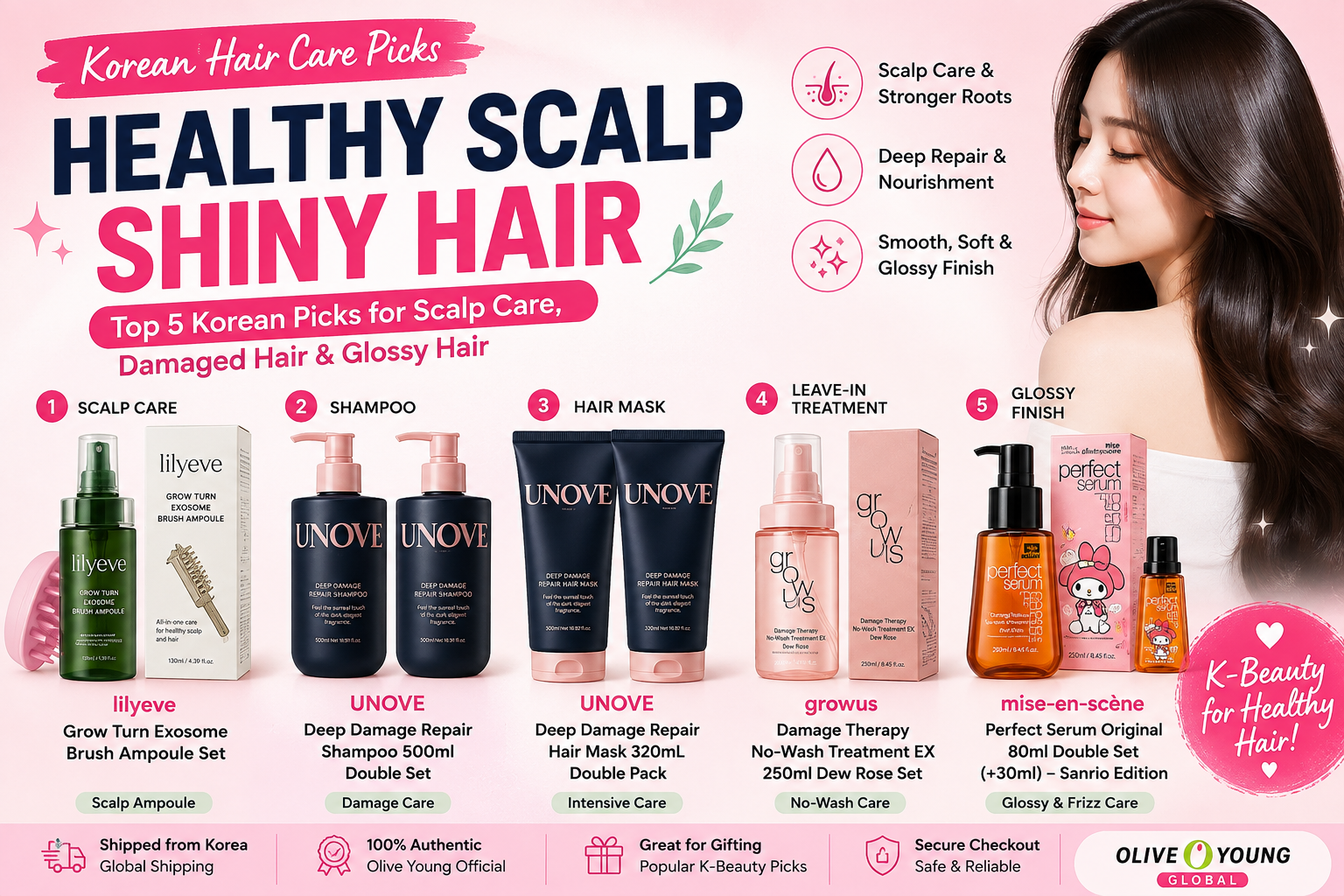
When people think about K-Beauty, glowing skin, sunscreen, sheet masks and serums usually come to mind.
But South Korea’s beauty philosophy is gradually moving beyond the face.
The scalp is becoming the next focus of Korean beauty care.
In Korea, healthy-looking hair is increasingly associated with more than a good haircut or an expensive styling product. Scalp cleanliness, hydration, comfort and hair texture are becoming important parts of a complete beauty routine.
This shift is attracting international attention.
Korean head spas, scalp treatments and specialized hair-care products are appearing more frequently in beauty travel itineraries, social media videos and international K-Beauty discussions.
One September 2026 report on Juno Seoul highlighted how international visitors had become a major part of its head-spa business. Foreign customers reportedly accounted for approximately 80% of its head-spa clientele, while foreign visitors across its salons had increased by 52% year over year.
These figures describe one company’s experience, rather than the entire Korean beauty industry. Nevertheless, they illustrate an interesting development: scalp care is becoming an experience that international visitors actively seek out in Korea.
So why is Korean scalp care attracting so much attention?
And what makes a Korean head spa different from an ordinary hair salon?
The answer reveals how K-Beauty is expanding into an entirely new area.
1. The Korean Beauty Philosophy: Why Scalp Care Starts at the Roots
For years, Korean skincare has promoted a foundation-first approach.
Rather than relying entirely on makeup to improve appearance, skincare routines emphasize cleansing, hydration, sun protection and maintaining the skin barrier.
A similar philosophy is increasingly appearing in Korean hair care.
Instead of concentrating exclusively on the visible hair strands, scalp-focused routines pay attention to the skin underneath.
This approach is often associated with the term skinification of hair care.
The idea is straightforward: the scalp is skin, so it deserves appropriate cleansing, hydration and care.
That does not mean the scalp should be treated exactly like facial skin. It has different characteristics, including a high concentration of hair follicles and sebaceous glands.
However, the underlying philosophy is similar.
A healthy-looking appearance begins with understanding the condition of the underlying surface rather than simply covering up visible problems.
This is why Korean hair-care routines increasingly include products such as:
- Scalp-specific shampoos
- Exfoliating scalp scalers
- Hydrating scalp tonics
- Scalp ampoules
- Cooling scalp treatments
- Hair masks and protein treatments
The result is a broader approach to beauty in which the scalp is no longer overlooked.
2. Why Korean Consumers Pay Attention to Scalp Health
Hair has a strong relationship with personal appearance and confidence.
Thinning hair, excessive oiliness, dryness, dandruff and scalp irritation can all influence how someone feels about their appearance.
These concerns are not limited to older adults.
Younger consumers also pay attention to hair condition, particularly when they frequently color, bleach, perm or heat-style their hair.
Environmental factors and individual scalp characteristics can also affect comfort and appearance.
There is another important issue: stress-related hair shedding.
The American Academy of Dermatology explains that significant physical or emotional stress can trigger a condition called telogen effluvium, in which more hairs than usual enter the shedding phase.
However, hair loss has many possible causes.
Genetics, hormonal changes, autoimmune conditions, medications and nutritional problems can all contribute.
This is why Korean scalp care should not be understood as a universal solution to hair loss.
Instead, its growing popularity reflects a broader consumer interest in maintaining scalp comfort, improving hair appearance and understanding individual hair-care needs.
3. What Exactly Happens During a Korean Head Spa?
A Korean head spa is a beauty and wellness service centered on scalp care.
The exact procedure differs between businesses, but many services follow a sequence designed to examine, cleanse and condition the scalp.
A typical experience may include:
Step 1: Scalp analysis
Some salons use a magnifying camera to examine the scalp.
Customers may be shown areas with visible oiliness, flakes, buildup or dryness.
This visual examination helps the stylist select appropriate cosmetic treatments.
Step 2: Scalp cleansing
A specialized cleansing product or shampoo is used to remove excess oil, sweat and styling-product residue.
Step 3: Exfoliation or scalp scaling
Some services include a scalp scaler designed to loosen accumulated dead skin cells and product residue.
The intensity depends on the product and the salon’s procedure.
Step 4: Shampoo and rinsing
The scalp and hair are washed, often with particular attention to comfortable cleansing and thorough rinsing.
Step 5: Hydration and treatment
A scalp tonic, ampoule or conditioning product may be applied depending on the service.
Step 6: Scalp massage
Massage is often an important part of the experience, helping customers relax while the treatment is performed.
Step 7: Hair conditioning and finishing
The service may finish with a hair mask, drying and styling.
Not every Korean head spa offers every step. Some specialize in relaxation, while others emphasize scalp analysis and cosmetic scalp treatments.
The combination of personalized care and a structured treatment experience is what makes the service attractive to many visitors.
4. Korean Head Spa vs. Ordinary Hair Salon: What Is the Difference?
Although both services involve hair washing, they have different priorities.
An ordinary hair salon generally focuses on the appearance and styling of the hair.
A head spa places more emphasis on the scalp.
| Service | Main focus |
|---|---|
| Regular hair salon | Cutting, coloring, perming and styling |
| Hair treatment | Conditioning and improving hair texture |
| Korean head spa | Scalp cleansing, cosmetic scalp care and relaxation |
| Medical dermatology | Diagnosis and treatment of scalp and hair disorders |
This distinction matters because the services are not interchangeable.
A hair salon can help improve the appearance of damaged hair. A head spa can provide a more specialized cosmetic cleansing and relaxation experience.
But neither should be confused with medical treatment for conditions such as alopecia, severe dermatitis or persistent scalp inflammation.
For international visitors, understanding this difference makes it easier to choose the right service.
5. Why Are Foreign Tourists Adding Korean Head Spas to Their Seoul Itineraries?
K-Beauty tourism has traditionally focused on shopping and skincare experiences.
Visitors often plan trips around Olive Young, Korean cosmetics brands, dermatology clinics, facial treatments and beauty salons.
Head spas are introducing another option.
Instead of purchasing a product to take home, visitors can experience an entire Korean beauty ritual during their trip.
The reported Juno Seoul figures provide an interesting example.
According to a September 2026 report, foreign customers represented approximately 80% of the company’s head-spa clientele. Its foreign salon visitors also reportedly increased by 52% compared with the previous year.
There are several possible reasons behind this interest.
First, the experience is easy to understand.
Visitors do not need extensive knowledge of Korean beauty terminology to appreciate scalp cleansing, massage and hair conditioning.
Second, the service is highly visual.
Scalp-camera examinations, cleansing procedures, foam treatments and the final hair finish create an experience that translates naturally into photographs and short-form videos.
Third, it combines beauty with relaxation.
Travelers often spend long days walking through Seoul. A head spa offers a different kind of beauty experience from shopping or sightseeing.
Finally, it feels distinctly connected to Korea’s broader beauty culture.
For visitors already interested in Korean skincare, discovering scalp-focused treatments feels like a natural extension of K-Beauty.
6. The Rise of Korean Glass Hair: From Glass Skin to Hair Shine
Korean beauty has become internationally associated with the idea of glass skin.
The term describes a smooth, hydrated and luminous-looking complexion.
A similar aesthetic is increasingly visible in hair trends.
Online beauty discussions often use expressions such as glass hair to describe smooth, shiny hair with a healthy-looking finish.
The concept is not simply about making hair look wet or glossy.
It emphasizes several visual qualities:
- Smooth hair texture
- Reduced appearance of frizz
- Light-reflecting shine
- Well-conditioned lengths
- A polished overall appearance
Scalp care and hair conditioning contribute to different parts of this process.
Scalp treatments focus on the skin beneath the hair, while conditioners and hair masks primarily improve the appearance and manageability of the hair strands.
This distinction is important.
A clean scalp does not automatically produce shiny hair, and a glossy hair treatment does not necessarily improve scalp health.
However, combining appropriate scalp care with conditioning and careful styling creates a more complete hair-care routine.
This is where the Korean beauty approach becomes particularly interesting.
It connects the condition of the scalp with the final appearance of the hair without treating them as exactly the same thing.
7. Can a Korean Head Spa Actually Prevent Hair Loss?
This is probably the most important question for anyone considering a scalp treatment.
The honest answer is that a cosmetic head spa is not a proven treatment for hereditary hair loss or other medical causes of hair loss.
A head spa may help remove excess oil and product buildup, improve scalp cleanliness and provide a relaxing experience.
However, these benefits should not be confused with stimulating new hair growth or reversing hair loss.
The American Academy of Dermatology identifies several possible causes of excessive shedding.
For example, telogen effluvium can occur following significant stress, illness, surgery or childbirth.
Hereditary hair loss and autoimmune conditions require different approaches.
People experiencing sudden hair loss, bald patches, persistent itching, pain or severe scalp inflammation should seek professional medical evaluation.
There is also a practical consideration.
Aggressive exfoliation, excessive scratching or unsuitable cosmetic products can irritate the scalp.
A good scalp-care routine should be gentle and appropriate for the individual’s condition.
The most useful way to understand Korean head spas is therefore:
Cosmetic maintenance, scalp comfort and relaxation — not a guaranteed medical solution.
8. Which Korean Scalp-Care Products Are Worth Understanding?
You do not need to visit a Korean head spa to explore the scalp-care trend.
Many Korean beauty retailers already organize hair products according to specific concerns.
Olive Young Global, for example, offers categories covering scalp treatments, weakened hair, hydration, shine, thickening and hair-loss-related concerns.
Here are some common product types.
Scalp shampoo
Designed to cleanse the scalp while removing excess oil, sweat and everyday buildup.
The best choice depends on whether the scalp is oily, dry, sensitive or prone to irritation.
Scalp scaler
An exfoliating product designed to loosen accumulated residue and dead skin cells.
It should be used according to the product instructions rather than excessively.
Scalp tonic
A lightweight leave-on product intended to provide scalp-focused cosmetic care.
Some formulations include cooling or moisturizing ingredients.
Scalp ampoule
A concentrated cosmetic treatment designed for targeted scalp application.
Its ingredients and intended use vary between brands.
Hair masks and protein treatments
These primarily target the hair strands rather than the scalp.
They can improve softness, manageability and the appearance of damaged hair.
The important lesson is that these products are not interchangeable.
Choosing a shampoo for an oily scalp is different from choosing a moisturizing treatment for dry hair.
Understanding the specific purpose of each product is more useful than simply buying everything labeled Korean scalp care.
9. Why Korean Scalp Care Is Different From Simply Washing Your Hair
The most interesting development is not the introduction of another shampoo.
It is the growing attention to personalized routines.
Traditional hair washing is often treated as a basic daily activity.
A scalp-care routine takes a more detailed approach.
Instead of asking only whether the hair looks clean, consumers are increasingly asking:
- Is my scalp excessively oily?
- Do I have visible buildup?
- Does my scalp feel dry or irritated?
- Am I using products that suit my scalp condition?
- Is my hair damaged by frequent coloring or heat styling?
This shift reflects the wider development of Korean beauty culture.
Skincare introduced consumers to the idea that different skin conditions require different routines.
Scalp care applies a similar consumer mindset to hair.
The goal is not necessarily to use more products.
It is to understand what the scalp and hair actually need.
10. Should You Try a Korean Head Spa During Your Trip to Seoul?
If you enjoy K-Beauty, a head spa can be an interesting addition to a Korean travel itinerary.
It may be particularly appealing if you:
- Have never experienced a magnified scalp examination.
- Want to explore Korean hair-care routines.
- Frequently use styling products.
- Color, bleach or perm your hair.
- Enjoy beauty treatments that combine grooming and relaxation.
- Want to experience something different from a conventional Korean hair salon.
Before booking, check what the service actually includes.
Some salons offer a short cleansing and massage session, while others provide longer treatments with scalp analysis and multiple cosmetic steps.
It is also worth checking:
- Whether English-speaking staff are available.
- Whether the consultation is included.
- How long the treatment takes.
- Whether the price includes drying and styling.
- Whether additional products or treatments cost extra.
Do not assume that every service advertised as a Korean head spa includes the same procedure.
For travelers with medical scalp concerns, a dermatology consultation is more appropriate than relying on a beauty salon.
If you are interested in medical beauty services in Korea, see our related guide:
Dermatology in Korea for Foreigners 2026: Treatments, Costs & How to Book
11. Is Scalp Care the Next Chapter of K-Beauty?
The international success of Korean skincare did not happen because of one miracle product.
It developed through a combination of product innovation, beauty routines, accessible retail experiences and a growing global interest in Korean approaches to personal care.
Scalp care may be following a similar path.
There are several developments happening at once.
Korean beauty brands are expanding scalp-focused product categories.
Head spas are creating experiences that international visitors can enjoy during their trips.
Social media is making scalp examinations, cleansing rituals and glossy hair transformations more visible.
And consumers are becoming increasingly interested in the relationship between scalp condition and hair appearance.
None of this means that traditional hair salons or skincare products will become less important.
Instead, K-Beauty is expanding into another part of everyday personal care.
The face is no longer the only focus of a beauty routine.
The scalp is becoming part of the conversation.
Final Thoughts: The Next K-Beauty Experience May Begin at the Roots
Korean beauty has always been about more than following a particular product trend.
It is also about creating routines and experiences around personal care.
Glass skin helped introduce international audiences to Korean skincare philosophy.
Korean head spas are now offering another way to experience that philosophy.
For some visitors, the attraction is scalp cleansing.
For others, it is relaxation, personalized hair care or simply discovering a new Korean beauty experience.
And for international K-Beauty fans, the growing interest in scalp care offers another reason to explore Seoul beyond the usual cosmetics shopping destinations.
Perhaps the next chapter of K-Beauty will not begin with another facial serum.
It may begin at the roots — with a closer look at the scalp beneath the hair.
코멘트
One response to “Korean Head Spa: Why Scalp Care Is Becoming the Next Big K-Beauty Trend”
[…] For another look at this growing category, read our guide to Korean Scalp Care and the Popularity of Korean Head Spas. […]