When people talk about Korean beauty, one phrase immediately comes to mind:
Glass Skin.
For years, K-Beauty introduced the world to a beauty ideal built around hydration, smooth texture and a healthy-looking glow.
Now, a similar idea is attracting attention in hair care.
Smooth strands. Less visible frizz. Soft movement. And a glossy finish that reflects light.
It is called Glass Hair.
The idea is simple: hair that looks so smooth and polished that it almost resembles glass.
But achieving this appearance is not simply a matter of applying hair oil before going out.
The Korean hair-care approach increasingly connects scalp care, cleansing, conditioning, damage management and finishing products into one routine.
And that is where the growing interest in K-Haircare becomes particularly interesting.
1. What Is Korean Glass Hair?
Glass hair describes hair with an exceptionally smooth, sleek and glossy appearance.
The name comes from the way light reflects off a smooth hair surface.
Think of it as the hair equivalent of glass skin.
However, glass hair does not simply mean making your hair as shiny as possible.
The ideal appearance combines:
- Smooth-looking hair strands
- Reduced visible frizz
- Softness and movement
- A reflective, glossy finish
- Hair that does not look excessively oily or weighed down
The trend is not limited to one haircut or hair length.
Straight, wavy and curly hair can all have a glossy, well-conditioned appearance.
The important point is the condition and finish of the hair, not forcing every hair type into the same style.
2. Why Is Glass Hair Becoming Part of the K-Beauty Conversation?
K-Beauty has traditionally been associated with facial skincare.
Cleansing, hydration, serums, moisturizers and sun protection became familiar concepts to consumers around the world.
Now, a similar approach is becoming increasingly visible in Korean hair care.
Instead of relying on one shampoo or one styling product, consumers can choose different products for different concerns:
- Scalp oiliness and buildup
- Dry or damaged lengths
- Frizz and tangles
- Hair affected by coloring or bleaching
- Heat styling
- Lack of shine and softness
This reflects a broader shift in beauty.
The focus is expanding from facial skincare to the scalp, hair and overall appearance.
Korean hair-care brands are also gaining international attention, while products such as hair masks, leave-in treatments and finishing serums are becoming more visible in overseas markets.
Glass hair fits naturally into this movement because it turns a familiar beauty goal—smooth, glossy hair—into a recognizable look.
3. Glass Skin vs. Glass Hair: What Is the Connection?
The two concepts share a similar beauty philosophy.
Glass skin is not usually achieved through one product. It involves a routine that supports hydration, smooth texture and a healthy-looking complexion.
Glass hair follows a comparable idea.
| Glass Skin | Glass Hair |
|---|---|
| Gentle cleansing | Scalp-focused cleansing |
| Hydration | Conditioning |
| Targeted treatment | Hair masks and treatments |
| Moisturizing | Leave-in care |
| Healthy-looking glow | Glossy finishing serum |
The comparison is useful, but there is one important difference.
Hair fibers are not living skin. Products can condition the hair, reduce friction, improve manageability and make the surface look smoother.
They cannot permanently restore every form of structural damage.
That is why a realistic glass-hair routine focuses on both appearance and preventing further damage.
4. Step One: Start With the Scalp
One of the most interesting parts of Korean hair care is the attention given to the scalp.
Many people concentrate only on the visible lengths of their hair.
But the scalp is where hair grows, and keeping it clean and comfortable is an important part of ordinary hair care.
Korean beauty retailers offer a wide range of scalp-focused products, including:
- Scalp shampoos
- Scalp scrubs and scalers
- Scalp tonics
- Scalp ampoules
- Cooling scalp treatments
Some Korean head spas also use magnifying cameras to examine the scalp before a treatment.
However, scalp care should be chosen according to individual needs.
An oily scalp, a dry scalp and a sensitive scalp may require different products. Strong exfoliation or frequent use of harsh cleansing products can cause irritation rather than improve the condition.
Scalp cosmetics should also not be confused with medical treatment for hair loss.
If you are interested in this part of Korean beauty culture, read our related guide:
Korean Scalp Care: Why Everyone Is Talking About Korean Head Spas
5. Step Two: Choose a Shampoo for Your Hair and Scalp
Not everyone needs the same shampoo.
Someone with bleached, damaged hair may have very different needs from someone whose main concern is an oily scalp.
A useful starting point is to distinguish between the scalp and the hair lengths.
The scalp needs appropriate cleansing.
The lengths and ends often need more conditioning, especially when they have been exposed to coloring, bleaching or heat styling.
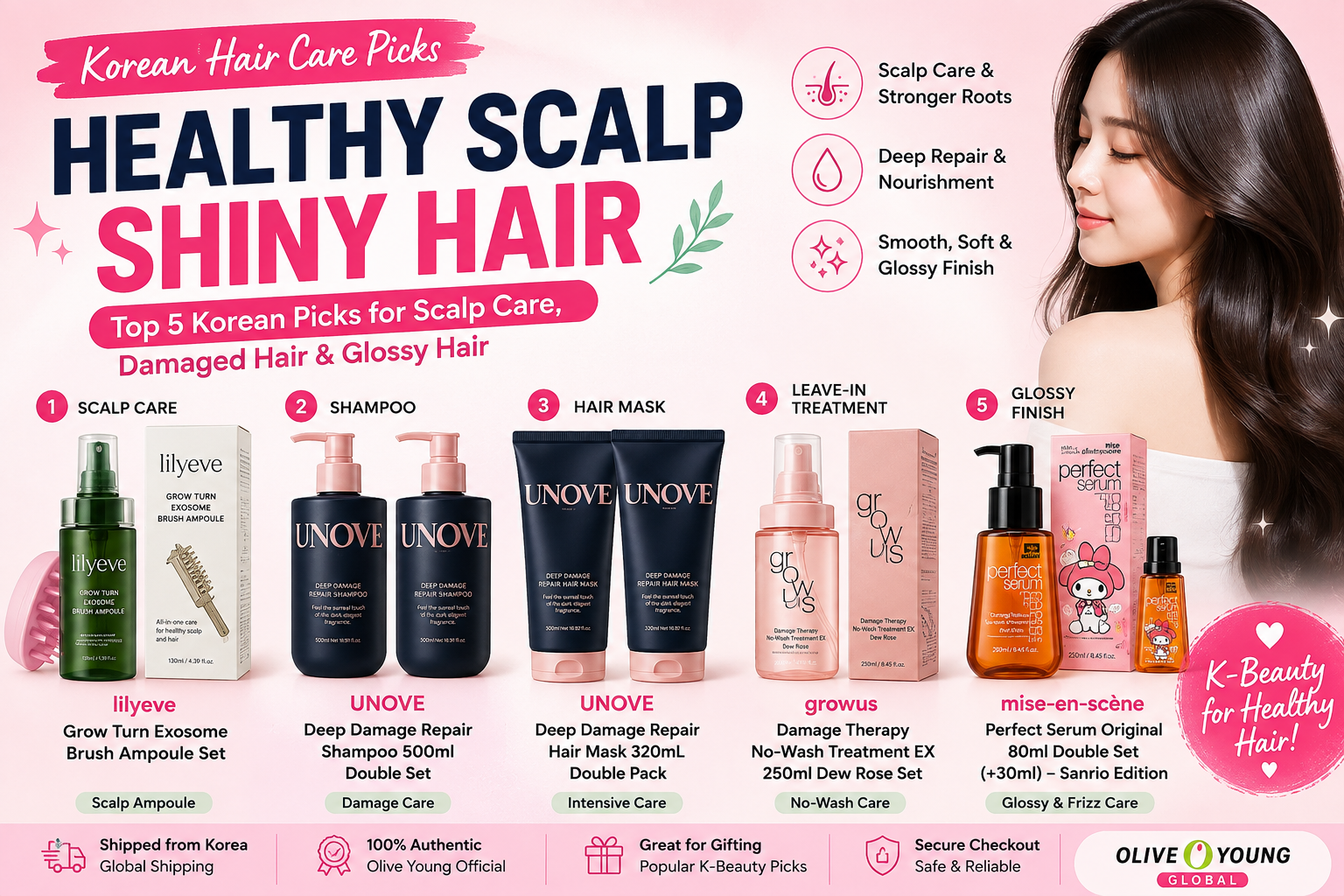
One recognizable Korean hair-care brand is UNOVE.
UNOVE Deep Damage Repair Shampoo
UNOVE’s Deep Damage Repair line is positioned around damaged-hair care.
Its shampoo is one option to consider if your hair feels rough or difficult to manage after repeated styling or chemical treatments.
The important thing is to choose a shampoo that cleanses your scalp without leaving your hair feeling unnecessarily dry.
Product to explore: UNOVE Deep Damage Repair Shampoo
6. Step Three: Use a Hair Mask for Damaged Lengths
A hair mask is often a useful addition when ordinary conditioner is not enough to make dry lengths feel manageable.
Hair masks are generally formulated as richer conditioning treatments.
They can help improve:
- Softness
- Detangling
- Manageability
- The appearance of dry or rough hair
- Smoothness after washing
One product in this category is:
UNOVE Deep Damage Repair Hair Mask
The UNOVE Deep Damage Repair Hair Mask is designed for intensive conditioning of damaged-looking hair.
Apply it mainly to the lengths and ends, following the product instructions.
It is especially worth considering if your hair has been exposed to frequent coloring, bleaching or heat styling.
However, using more product does not automatically produce better results.
Fine hair may become weighed down by rich treatments, while thick or very dry hair may benefit from more conditioning.
Shop UNOVE Deep Damage Repair Hair Mask:
Olive Young Global – UNOVE Hair Mask
7. Step Four: Add Leave-In Treatment
A Korean hair-care routine does not necessarily end when you leave the shower.
Leave-in treatments remain on the hair instead of being rinsed away.
Depending on the formula, they can help with conditioning, detangling, frizz management and protection during styling.
This step can be particularly useful for dry lengths and ends.
GROWUS Damage Therapy No-Wash Treatment EX
GROWUS offers a Damage Therapy No-Wash Treatment EX designed as a leave-in product.
It is positioned around conditioning and heat-styling care.
This type of product can be useful when you regularly use a hair dryer or styling tools.
Apply it according to the product directions, paying attention to how much your hair can comfortably absorb.
If your hair is fine, start with a small amount. If it is thick or very dry, you may need a little more.
Product to explore: GROWUS Damage Therapy No-Wash Treatment EX
8. Step Five: Finish With a Hair Serum or Oil
Now comes the part most people notice first:
The shine.
Hair serums and oils can help smooth the appearance of dry lengths and make the surface look more polished.
They are generally applied to the middle lengths and ends rather than directly to the scalp.
One of the most recognizable names in Korean hair care is:
mise-en-scène Perfect Serum
mise-en-scène Perfect Serum is a well-known Korean hair essence associated with smoothing and glossy finishing care.
The brand describes the product as a leave-in serum for improving the appearance of damaged hair and creating a smoother, radiant finish.
It is a natural option to consider if you want to add a finishing step to your routine.
But remember:
More serum does not necessarily mean more shine.
Applying too much can leave hair looking oily or heavy.
Start with a small amount, distribute it through the lengths and ends, and add more only if needed.
Product to explore: mise-en-scène Perfect Serum
9. The Simple Korean Glass Hair Routine
You do not need ten different products to create a smoother-looking finish.
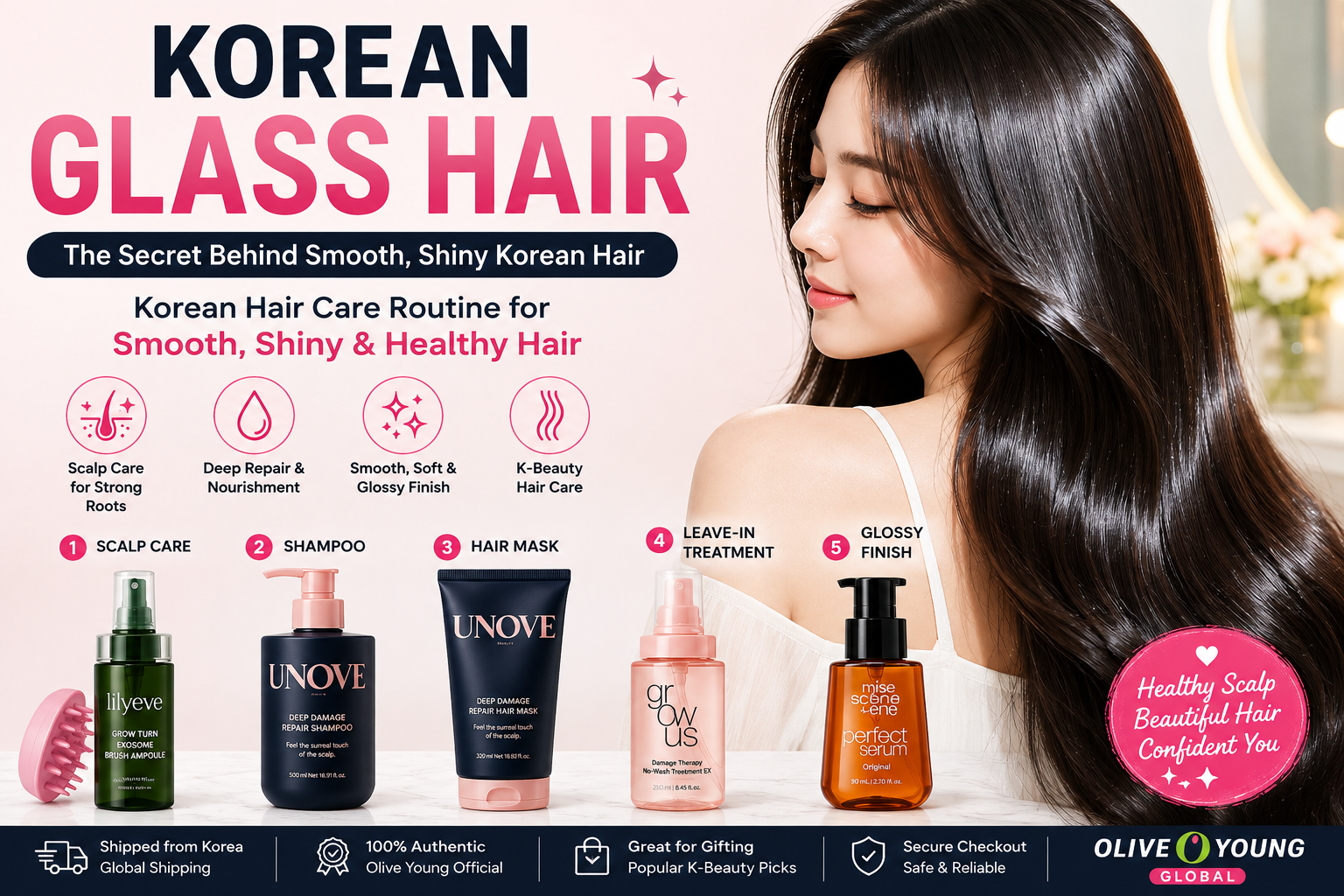
A practical routine can be built around five basic steps.
1. Scalp cleansing
Choose a shampoo that suits your scalp.
↓
2. Conditioning
Use conditioner after shampooing to improve softness and manageability.
↓
3. Hair mask
Add a richer treatment when your hair is particularly dry or damaged.
↓
4. Leave-in treatment
Use a leave-in product when your lengths need additional conditioning or styling support.
↓
5. Serum or oil
Finish with a small amount to create a smoother, glossier appearance.
Not everyone needs every step every time.
Fine hair may need a lighter routine. Thick, curly, bleached or very dry hair may benefit from richer conditioning.
The best routine is the one that works with your hair rather than weighing it down.
10. Heat Styling: The Detail That Can Make or Break the Look
Products alone cannot guarantee smooth-looking hair.
Repeated exposure to high heat can make hair brittle, rough and more prone to breakage.
If you regularly use a hair dryer, curling iron or straightener, a few habits can help reduce unnecessary damage:
- Allow hair to partially air-dry when practical.
- Use a lower or medium heat setting.
- Avoid repeatedly applying high heat to the same section.
- Use a suitable heat-protection product.
- Handle wet hair gently.
- Avoid aggressively rubbing hair with a towel.
The American Academy of Dermatology also recommends limiting excessive heat and treating wet hair carefully because it is more vulnerable to breakage.
These habits may sound simple, but they matter just as much as choosing an expensive finishing serum.
11. Can Damaged Hair Really Be Repaired?
This is where beauty marketing needs a little explanation.
Hair that has grown beyond the scalp consists of non-living keratinized fibers.
That means cosmetic products cannot heal damaged hair in the same way that living skin repairs a wound.
However, conditioning products can make a noticeable difference to how hair looks and feels.
They can:
- Smooth rough areas temporarily
- Reduce friction between strands
- Improve detangling
- Reduce the appearance of frizz
- Make hair feel softer
- Improve shine
Some specialized treatments are also designed to improve the feel and strength of damaged hair.
But no shampoo, mask or serum can permanently reverse every form of damage.
The most realistic strategy is to improve the appearance of existing hair while reducing the damage caused by excessive heat, chemical treatments and rough handling.
12. Does Glass Hair Have to Be Straight?
Not at all.
This is one of the most important things to understand about the trend.
Glass hair is often shown in photographs as sleek, straight hair with a mirror-like finish.
But the underlying idea is not limited to straight hairstyles.
Wavy and curly hair can also look glossy, smooth and well-conditioned.
For naturally textured hair, the goal may be:
- Defined curls
- Reduced frizz
- Soft movement
- A healthy-looking shine
Trying to force every hair type into a perfectly straight style can require excessive heat and create additional damage.
Glass hair should complement your natural texture, not fight against it.
13. Where Can You Explore Korean Hair-Care Products?
If you visit Korea, OLIVE YOUNG is one of the easiest places to explore Korean hair-care products.
Its hair-care selection includes products for different needs, such as:
- Shampoo and conditioner
- Scalp care
- Hair masks
- Leave-in treatments
- Hair oils and serums
- Styling and finishing products
International shoppers can also browse products through:
Product availability, prices and promotional sets can change, so check the current product page before purchasing.
14. Is Glass Hair the Next Big K-Beauty Trend?
Glass skin helped make Korean beauty recognizable around the world.
It communicated a particular ideal through two simple words: clear, smooth and luminous-looking skin.
Glass hair uses a similar visual language.
But the growing interest in glossy hair is also part of a wider development in K-Beauty.
The conversation is expanding beyond facial skincare into:
Scalp care → Hair care → Body care → Beauty wellness
This does not mean that glass hair was invented in Korea. The sleek, glossy hair aesthetic has appeared in international beauty and styling trends for years.
What makes the current conversation interesting is how Korean brands, beauty retailers and hair-care routines are helping connect this look with the broader K-Beauty market.
The result is a new opportunity for Korean hair-care products to reach consumers who are already familiar with Korean skincare.
Final Thoughts: The Secret Is Not One Miracle Product
The secret behind Korean glass hair is not a single shampoo, hair mask or expensive serum.
It is the combination of appropriate cleansing, conditioning, damage prevention and careful finishing.
Start with the scalp.
Choose products according to your hair type.
Condition the lengths that need it.
Use leave-in care when appropriate.
And finish with just enough serum or oil to create a glossy appearance.
The goal is not simply to make hair shine under a bright light.
It is to create hair that looks:
Smooth. Soft. Manageable. Healthy-looking. Beautifully reflective.
Just as glass skin became one of the most recognizable expressions of K-Beauty, glass hair is becoming another way to talk about the appeal of Korean beauty routines.
And perhaps the most useful lesson is this:
You do not need a complicated routine to achieve a polished look. You need to understand what your hair actually needs.