kkneoqkr@gmail.com

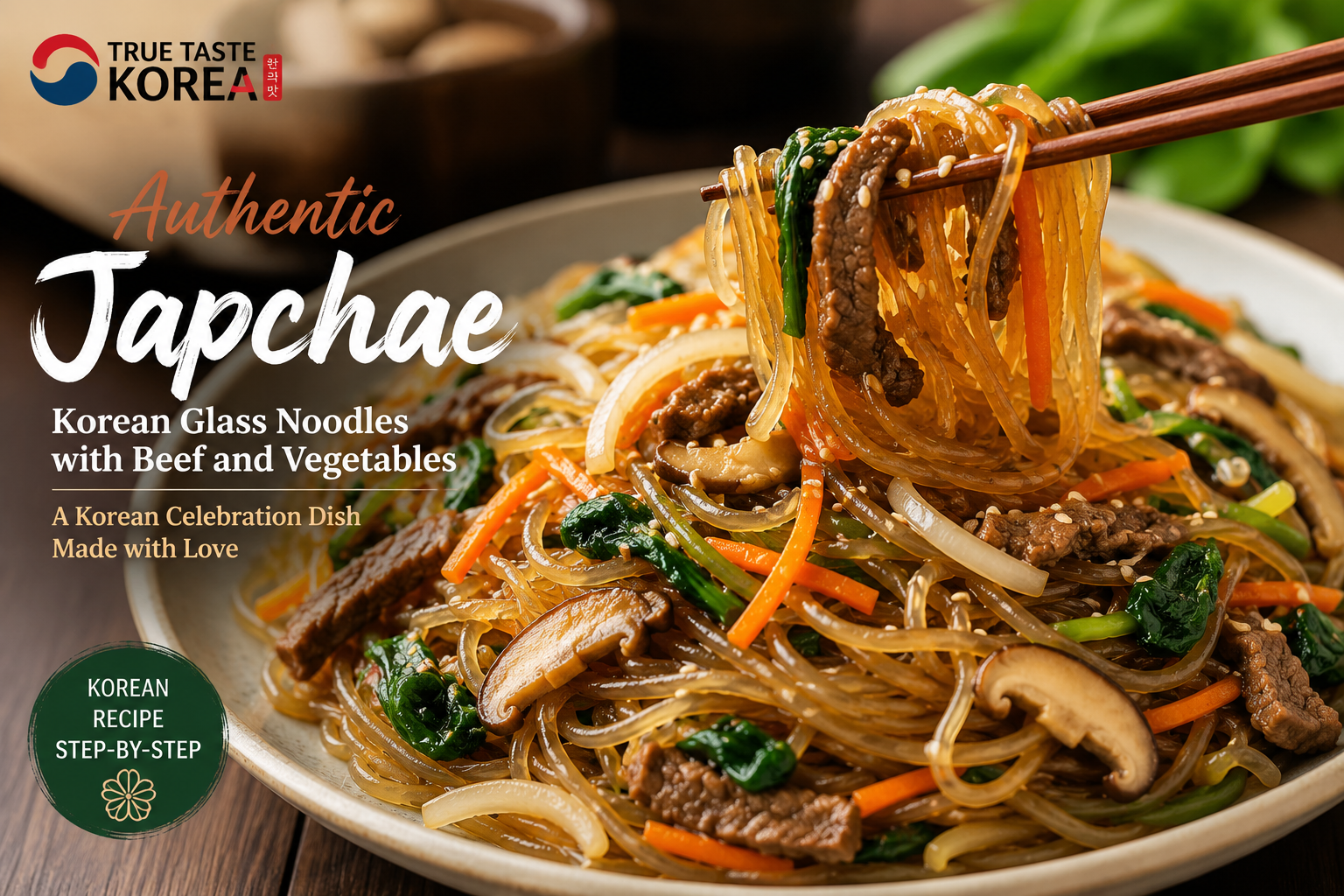
  • Authentic Japchae Recipe: Korean Glass Noodles with Beef and Vegetables

    Authentic Japchae Recipe: Korean Glass Noodles with Beef and Vegetables

    For many Koreans, japchae is more than a noodle dish.

    It is a food connected to happy memories.

    Growing up in Korea, when there was something to celebrate or good news in the family, mothers would often prepare a large plate of japchae filled with beef and colorful vegetables.

    Birthdays, holidays, family gatherings, and other special occasions often meant one thing: the familiar smell of sesame oil, soy sauce, stir-fried vegetables, and freshly cooked japchae coming from the kitchen.

    That is why japchae can bring back memories of family, celebration, and a mother’s home cooking.

    Today, let’s make an authentic Korean-style japchae with chewy glass noodles, beef, mushrooms, spinach, carrots, and onions.


    What Is Japchae?

    Japchae (잡채) is one of Korea’s best-known noodle dishes.

    Modern japchae is typically made with dangmyeon, Korean glass noodles traditionally made from sweet potato starch.

    The noodles are cooked and seasoned with soy sauce, sesame oil, and a touch of sweetness, then combined with beef and a variety of vegetables.

    The result is a dish that is simultaneously:

    • chewy
    • savory
    • slightly sweet
    • nutty from sesame oil
    • colorful
    • surprisingly filling

    Although japchae is often served as banchan (Korean side dish), it can easily become the centerpiece of a meal.

    Why Is Japchae a Celebration Food in Korea?

    For many Korean families, japchae traditionally appears when there is something worth celebrating.

    You may see a large plate of japchae at a birthday table, holiday gathering, family celebration, or special meal for guests.

    For many Koreans who grew up eating homemade japchae, the memory is particularly associated with mothers preparing it in the kitchen.

    And when it was a special occasion, there would often be beef in the japchae, making an already colorful dish feel even more generous.

    It wasn’t simply something you ate because you were hungry.

    Japchae was something your mother made when something good happened.

    That emotional connection is one reason japchae remains such a familiar celebration food in Korean homes.


    Japchae Wasn’t Originally a Glass Noodle Dish

    Here is something many international fans of Korean food may not know.

    The earliest form of japchae did not contain the glass noodles that define the dish today.

    The dish has a history stretching back to Korea’s Joseon period, while sweet potato starch noodles became part of modern japchae much later.

    Over time, dangmyeon became the defining ingredient, transforming japchae into the dish most Koreans recognize today.

    The name itself is interesting:

    Jap (잡) can refer to mixed or assorted ingredients, while chae (채) refers to vegetables.

    That history makes sense when you look at a plate of japchae. Rather than being about one ingredient, the dish is about bringing many different ingredients together.


    Why Japchae Is So Satisfying

    One of japchae’s greatest strengths is how much goes into a single dish.

    A traditional homemade version may contain:

    sweet potato glass noodles + beef + spinach + carrots + onions + mushrooms

    Each ingredient contributes something different.

    The noodles provide their characteristic chewy texture. Beef adds richness and protein. Mushrooms add umami. Spinach, carrots, and onions add different flavors, textures, and colors.

    Soy sauce, sesame oil, garlic, and sesame seeds bring everything together.

    This is why japchae is one of the more satisfying side dishes on a Korean table.

    Some Koreans will even eat a generous serving of japchae without a separate bowl of rice, particularly when they want a lighter-feeling meal.

    However, don’t mistake that for meaning japchae is automatically a low-calorie diet food.

    Dangmyeon is primarily a source of carbohydrates, and traditional japchae also contains sesame oil and some sugar. Portion size and the balance of noodles, meat, and vegetables still matter.


    Authentic Korean Beef Japchae Recipe

    Servings

    4–5

    Preparation Time

    About 25 minutes

    Cooking Time

    About 25 minutes

    Ingredients

    Main Ingredients

    • 250 g Korean sweet potato glass noodles (dangmyeon)
    • 150 g beef, thinly sliced
    • 150 g spinach
    • 1 medium carrot
    • 1 medium onion
    • 100 g shiitake mushrooms or other mushrooms
    • 2 green onions
    • 1 tablespoon cooking oil
    • Sesame seeds for garnish

    Beef Marinade

    • 1 tablespoon soy sauce
    • 1 teaspoon sugar
    • 1 teaspoon sesame oil
    • 1 teaspoon minced garlic
    • Black pepper to taste

    Japchae Seasoning

    • 4 tablespoons soy sauce
    • 2 tablespoons sugar
    • 2 tablespoons sesame oil
    • 1 tablespoon minced garlic

    You can adjust the sweetness and saltiness slightly according to taste.


    Step 1. Prepare the Beef

    Thinly slice the beef.

    Mix it with soy sauce, sugar, sesame oil, minced garlic, and a little black pepper.

    Let it marinate for about 15–20 minutes while preparing the other ingredients.

    Thinly sliced beef cooks quickly and mixes more naturally with the noodles and vegetables.


    Step 2. Prepare the Vegetables

    Slice the carrot, onion, and mushrooms into thin strips.

    Keeping the vegetables relatively similar in size makes the finished japchae easier to eat and gives it the colorful appearance associated with traditional Korean japchae.

    Wash the spinach thoroughly.

    Blanch it briefly in boiling water, then immediately cool it in cold water.

    Gently squeeze out excess moisture.

    Season lightly with a little salt and sesame oil.


    Step 3. Cook the Vegetables Separately

    This is one of the secrets to really good japchae.

    Instead of throwing every vegetable into the pan at once, cook the ingredients separately or in small groups.

    Lightly stir-fry the onions.

    Remove them.

    Stir-fry the carrots until just tender.

    Remove them.

    Then cook the mushrooms.

    Finally, stir-fry the marinated beef until cooked through.

    Why bother?

    Because every ingredient has a different cooking time.

    Cooking them separately helps preserve their individual texture, color, and flavor.

    This extra step is one of the differences between ordinary japchae and really good homemade japchae.


    Step 4. Cook the Dangmyeon

    Bring a large pot of water to a boil.

    Add the sweet potato glass noodles and cook according to the package directions. Cooking times can vary depending on the brand and thickness of the noodles.

    Drain thoroughly.

    If the noodles are extremely long, cut them a few times with kitchen scissors so the finished japchae is easier to eat.

    Do not overcook the noodles.

    Good japchae should have a pleasantly chewy and springy texture, rather than becoming overly soft or mushy.


    Step 5. Season the Noodles

    While the noodles are still warm, add the japchae seasoning:

    • soy sauce
    • sugar
    • sesame oil
    • minced garlic

    Mix thoroughly so the noodles absorb the seasoning evenly.

    The warm noodles take on the flavor particularly well.


    Step 6. Combine Everything

    Now comes the best part.

    Place the seasoned noodles in a large bowl or pan.

    Add the cooked beef, onions, carrots, mushrooms, spinach, and green onions.

    Gently toss everything together.

    Taste and adjust with a little additional soy sauce or sesame oil if necessary.

    Finish with sesame seeds.

    You should now have a glossy, colorful plate of authentic Korean japchae.


    The Secret to Better Japchae

    There are several small details that make a big difference.

    Don’t use too many noodles.

    A common mistake is making japchae mostly noodles with a few vegetables scattered throughout.

    Good Korean homemade japchae should feel generous.

    There should be plenty of beef, mushrooms, spinach, carrots, and onions mixed throughout the noodles.

    Don’t overcook the dangmyeon.

    The chewy texture of sweet potato noodles is one of the pleasures of japchae.

    Sesame oil goes a long way.

    Sesame oil gives japchae its unmistakable aroma, but adding too much can overpower the other ingredients.

    Cook vegetables according to their needs.

    Cooking everything together may be faster, but separately cooked vegetables generally give japchae better color and texture.


    Can You Make Japchae Without Beef?

    Absolutely.

    Beef is common in celebratory Korean-style japchae, but it isn’t essential.

    You can leave it out and increase the amount of mushrooms and vegetables for a vegetarian version.

    For a fully vegan japchae, make sure all sauces and seasonings you use are vegan-friendly.

    Mushrooms are particularly useful because they provide additional savory flavor.


    Can Japchae Be a Complete Meal?

    It can.

    In Korea, japchae is commonly served as banchan alongside rice and other dishes.

    But because it contains noodles, vegetables, and often meat, a generous plate can be filling enough that some people eat it without rice.

    If you want to make it more meal-like, increase the proportion of vegetables and protein rather than simply adding more noodles.


    How to Store Leftover Japchae

    Japchae can be refrigerated in an airtight container.

    For the best texture, try to eat leftovers within a few days.

    The noodles become firmer when refrigerated, so cold japchae doesn’t have quite the same texture as freshly prepared japchae.

    Fortunately, it reheats well.


    The Best Way to Reheat Japchae

    Put the japchae into a frying pan over medium-low heat.

    Add a very small amount of water if the noodles have become dry and gently stir-fry until they become soft and glossy again.

    You can finish with a tiny amount of sesame oil.

    This usually restores the texture better than eating it straight from the refrigerator.


    Frequently Asked Questions About Japchae

    What are japchae noodles made from?

    Traditional Korean dangmyeon used for japchae are generally made from sweet potato starch.

    This gives them their translucent appearance and characteristic chewy texture.

    Is japchae spicy?

    Usually not.

    Traditional japchae is savory and slightly sweet rather than spicy, making it one of the more approachable Korean dishes for people who aren’t comfortable with spicy food.

    Is japchae gluten-free?

    The noodles themselves are typically made from sweet potato starch, but regular soy sauce commonly contains wheat.

    Anyone who needs a gluten-free dish should check every ingredient carefully and use an appropriate gluten-free soy sauce.

    Can I make japchae ahead of time?

    Yes.

    That’s another reason japchae works well for parties and family gatherings.

    Prepare it ahead, refrigerate it, and gently reheat it before serving.


    More Than Korean Glass Noodles

    Calling japchae simply “Korean glass noodles” doesn’t quite explain what the dish means in Korea.

    For many Koreans, japchae brings back a particular kind of memory.

    A birthday.

    A holiday.

    Relatives gathering around the table.

    Good news in the family.

    And a mother in the kitchen preparing a large plate of japchae with beef and colorful vegetables.

    The combination of chewy dangmyeon, savory beef, colorful vegetables, soy sauce, and fragrant sesame oil makes it delicious.

    But the memories surrounding it are what make japchae special.

    Sometimes food isn’t just about what is on the plate. It is about remembering who prepared it, and why everyone was gathered around the table in the first place.

    That is the story behind Korean japchae.
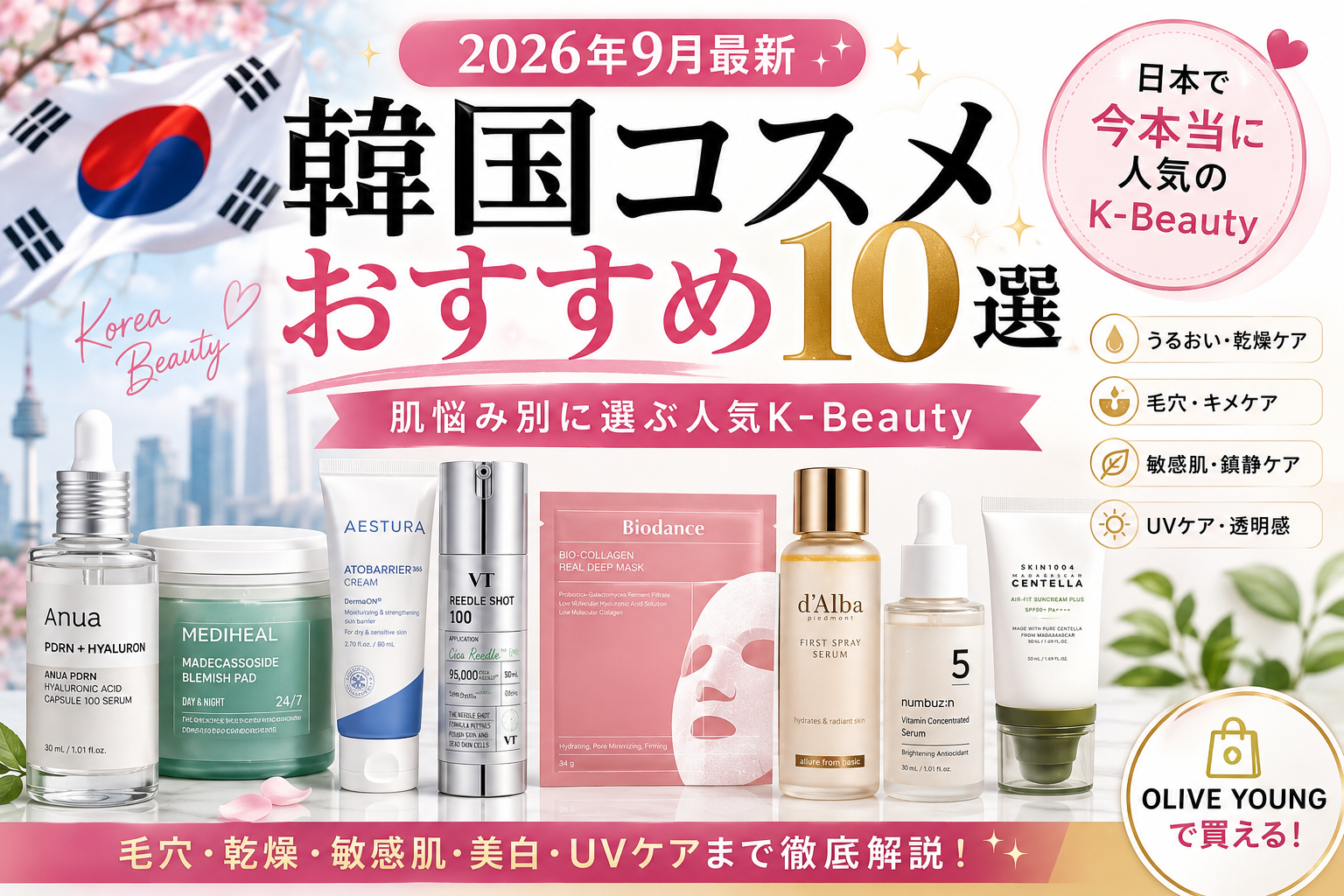
  • 2026年9月最新|韓国コスメおすすめ10選!肌悩み別に選ぶ人気K-Beauty

    2026年9月最新|韓国コスメおすすめ10選!肌悩み別に選ぶ人気K-Beauty

    韓国コスメが気になるけれど、

    「種類が多すぎて、どれを選べばいいかわからない」

    「SNSで人気の商品が、本当に自分の肌に合うの?」

    そんなふうに迷っていませんか?

    2026年の韓国スキンケアは、単に人気ブランドから選ぶのではなく、毛穴・乾燥・敏感肌・肌荒れ・ハリ・UVケアなど、自分の肌悩みに合わせて選ぶことがポイントです。

    日本でも、PDRN美容液やトナーパッド、CICA、韓国の日焼け止めなどへの関心が高まっています。特にPDRNは、2026年に入って日本の美容メディアでも特集や比較記事が相次いでいる注目成分です。

    今回は、日本からもチェックしやすい人気K-Beautyを中心に、肌悩み別おすすめ韓国コスメ10選を紹介します。


    まずチェック!肌悩み別おすすめ韓国コスメ

    肌悩み注目したいアイテム・成分
    乾燥・うるおい不足PDRN・ヒアルロン酸
    毛穴トナーパッド・角質ケア
    敏感肌・ゆらぎ肌CICA・ドクダミ・バリアケア
    ハリ不足PDRN・ペプチド
    肌荒れが気になるCICA・ツボクサ由来成分
    透明感を意識したいナイアシンアミド・ビタミンC
    紫外線対策韓国サンセラム・UVケア

    日本の@cosmeでも、トナーパッドは乾燥肌ならヒアルロン酸やセラミド、敏感肌なら低刺激処方、毛穴ケアならビタミンCやAHAなど、肌タイプ・目的別に選ぶ方法が紹介されています。

    1.Anua PDRN ヒアルロン酸カプセル100セラム

    おすすめ:乾燥・うるおい・ハリ不足

    2026年に韓国コスメを選ぶなら、まず知っておきたいのがPDRN。

    その中でも注目度が高いのがAnuaのPDRN美容液です。

    PDRNとヒアルロン酸を組み合わせた美容液で、乾燥によるうるおい不足やハリ感を意識したスキンケアを探している人にチェックしてほしいアイテム。

    PDRN配合コスメは現在、日本でも美容液だけでなくクリーム、化粧水、パックなど幅広く紹介されています。

    こんな人におすすめ

    乾燥しやすい人、韓国の最新美容成分を試してみたい人、ツヤのある肌を目指したい人。

    2.MEDIHEAL トナーパッド

    おすすめ:毛穴・肌のキメ・時短ケア

    日本でもかなり定着してきた韓国発アイテムがトナーパッドです。

    化粧水や美容液を含ませたパッドで肌を拭き取ったり、気になる部分に数分置いて部分パックとして使ったりできます。

    2026年上半期の『美的』韓国ベストコスメでは、MEDIHEALのマデカッソシド ブレミッシュパッドがトナーパッド部門1位に選ばれています。

    忙しい朝のスキンケアにも使いやすいカテゴリーです。

    3.AESTURA アトバリア365

    おすすめ:敏感肌・乾燥・バリアケア

    刺激の強いスキンケアよりも、肌をうるおしてコンディションを整えることを重視したい人にはAESTURA。

    アトバリア365シリーズは韓国の代表的なバリアケアシリーズの一つです。

    2026年上半期の『美的』韓国ベストコスメでは、AESTURAのアトバリア365 ハイドロスーディングクリームがクリーム部門1位、ジェントルフォーミングクレンザーも洗顔部門1位となりました。

    こんな人におすすめ

    乾燥しやすい人、季節の変わり目に肌がゆらぎやすい人、シンプルな保湿ケアを重視したい人。

    4.VT リードルショット

    おすすめ:キメ・攻めのスキンケア

    韓国コスメの中でも独特な存在がVTのリードルショット。

    微細な美容針のような使用感を特徴とするスピキュール系スキンケアとして日本でも知られるようになりました。

    ただし、刺激を感じる場合があるので、初めて使う人は使用頻度や濃度に注意しましょう。

    敏感肌の場合は無理に流行を追う必要はありません。

    5.Biodance リアルディープマスク

    おすすめ:乾燥・スペシャルケア

    韓国コスメの楽しさを感じやすいカテゴリーがフェイスマスク。

    中でもBiodanceのハイドロゲル系マスクは、一般的なシートマスクとは違う使用感でSNSでも話題になっています。

    2026年上半期の『美的』韓国ベストコスメでは、BiodanceのキャビアPDRN リアルディープマスクがシートマスク部門1位に選ばれました。

    普段使いというより、週末や大切な日の前のスペシャルケアとして取り入れるのもおすすめです。

    6.SKIN1004 センテラシリーズ

    おすすめ:敏感肌・肌荒れが気になる人

    韓国スキンケアで長く人気なのがCICA(ツボクサ由来成分)。

    SKIN1004はセンテラをブランドの中心に据えた韓国スキンケアブランドです。

    刺激の強い美容成分よりも、毎日のスキンケアで肌を整えたい人に向いています。

    特に季節の変わり目など、肌のコンディションが不安定になりやすい時期にもチェックしたいカテゴリーです。

    7.d’Alba ホワイトトリュフ ファーストスプレーセラム

    おすすめ:乾燥・ツヤ・時短ケア

    ミストタイプの美容液を探しているならd’Alba。

    スプレーするだけで使えるので、朝のスキンケアだけでなく乾燥が気になるときにも取り入れやすいのが魅力です。

    韓国コスメ初心者でも比較的使い方がわかりやすいアイテムです。

    8.numbuzin 5番シリーズ

    おすすめ:くすみ・透明感を意識したケア

    成分を見ながら韓国コスメを選びたい人から支持されているのがnumbuzin。

    特に5番シリーズはグルタチオンやビタミン系成分などを特徴とした商品が展開されています。

    「なんとなく人気だから」ではなく、自分がどんな肌を目指したいかから商品を選びたい人に向いています。

    9.韓国サンセラム・日焼け止め

    おすすめ:UVケア・軽い使用感が好きな人

    韓国旅行でぜひチェックしたいのが日焼け止め。

    韓国では美容液のような使用感を意識した「サンセラム」タイプの商品が多くあります。

    ベタつく日焼け止めが苦手な人や、毎日のメイク前に使いやすいUVケアを探している人はチェックしてみてください。

    SKIN1004やd’Albaなど、人気韓国ブランドからもさまざまなUVアイテムが発売されています。

    10.韓国フェイスマスク

    おすすめ:韓国コスメ初心者・プチプラ・お土産

    「韓国コスメを試したいけれど、いきなり美容液やクリームを買うのは不安」

    そんな人におすすめなのがシートマスクです。

    価格が比較的手頃で、いろいろなブランドを試しやすいのが魅力。

    2026年の日本の美容メディアでも韓国パックは大きなカテゴリーとして扱われ、保湿など肌悩み別の選び方が紹介されています。

    韓国旅行のお土産にも選びやすいアイテムです。

    迷ったら「人気」より肌悩みで選ぼう

    韓国コスメは新商品やトレンドの移り変わりが速いため、SNSで人気の商品を全部試す必要はありません。

    まず、

    乾燥なのか?
    毛穴なのか?
    敏感肌なのか?
    ハリ不足なのか?

    自分が一番気になる肌悩みを一つ決めること。

    そのうえで、PDRN、ヒアルロン酸、CICA、ナイアシンアミドなど、目的に合った成分や商品タイプを選ぶと商品を絞り込みやすくなります。

    日本の2026年韓国コスメ情報でも、肌悩み+配合成分で選ぶ考え方が紹介されています。

    2026年、特に注目したいのはPDRN

    この10商品の中から、次のトレンドを一つ選ぶならPDRNです。

    2026年8月には『LDK the Beauty』によるPDRN美容液13商品の比較記事が公開され、9月にもPDRNコスメの最新ランキングが更新されています。つまり日本でもPDRNは一過性ではなく、独立した商品カテゴリーとして検索・比較され始めています。

    次の記事では、

    Anua・VT・medicubeなど人気ブランドのPDRN美容液を比較して、どれを選べばいいのか

    を詳しく紹介します。

    → 関連記事:韓国PDRN美容液おすすめ5選
    ※次の記事を公開したらここから内部リンク。

    よくある質問

    Q. 韓国コスメ初心者は何から始めればいい?

    最初から何種類も変えるより、化粧水・美容液・クリーム・マスクなど一つの商品から試す方法がおすすめです。肌に合わない場合は使用を中止してください。

    Q. 敏感肌でも韓国コスメを使える?

    韓国コスメにも低刺激を意識した商品があります。ただし「韓国コスメだから敏感肌に向いている」というわけではありません。成分表示や使用方法を確認し、心配ならパッチテストから始めましょう。

    Q. 毛穴ケアなら何を選ぶ?

    トナーパッドや角質ケア系の商品が候補になります。ただし毛穴の原因は一つではないため、強いピーリングを繰り返すより自分の肌状態に合わせて選ぶことが重要です。

    Q. 2026年に注目されている韓国コスメ成分は?

    特にPDRNへの注目が高まっています。日本でも美容液・クリーム・マスクなど多くのPDRN配合商品が紹介されています。

    韓国で今注目のK-Beauty ✨
    韓国で話題のビューティーアイテムをOLIVE YOUNG GLOBALでチェック!

    🛍️ 人気の韓国コスメを見る →

    ※本記事にはアフィリエイトリンクが含まれています。リンク経由で購入された場合、当サイトが報酬を受け取ることがあります。

    PR
    🇰🇷 韓国で今注目のK-Beauty ✨
    Anua PDRN ヒアルロン酸カプセル100セラム

    韓国で話題のPDRNスキンケアをチェック。
    人気K-BeautyをOLIVE YOUNG GLOBALで見てみませんか?

    🛍️ OLIVE YOUNGで商品を見る →

    ※本記事にはアフィリエイトリンクが含まれています。 リンク経由で購入された場合、当サイトが報酬を受け取ることがあります。

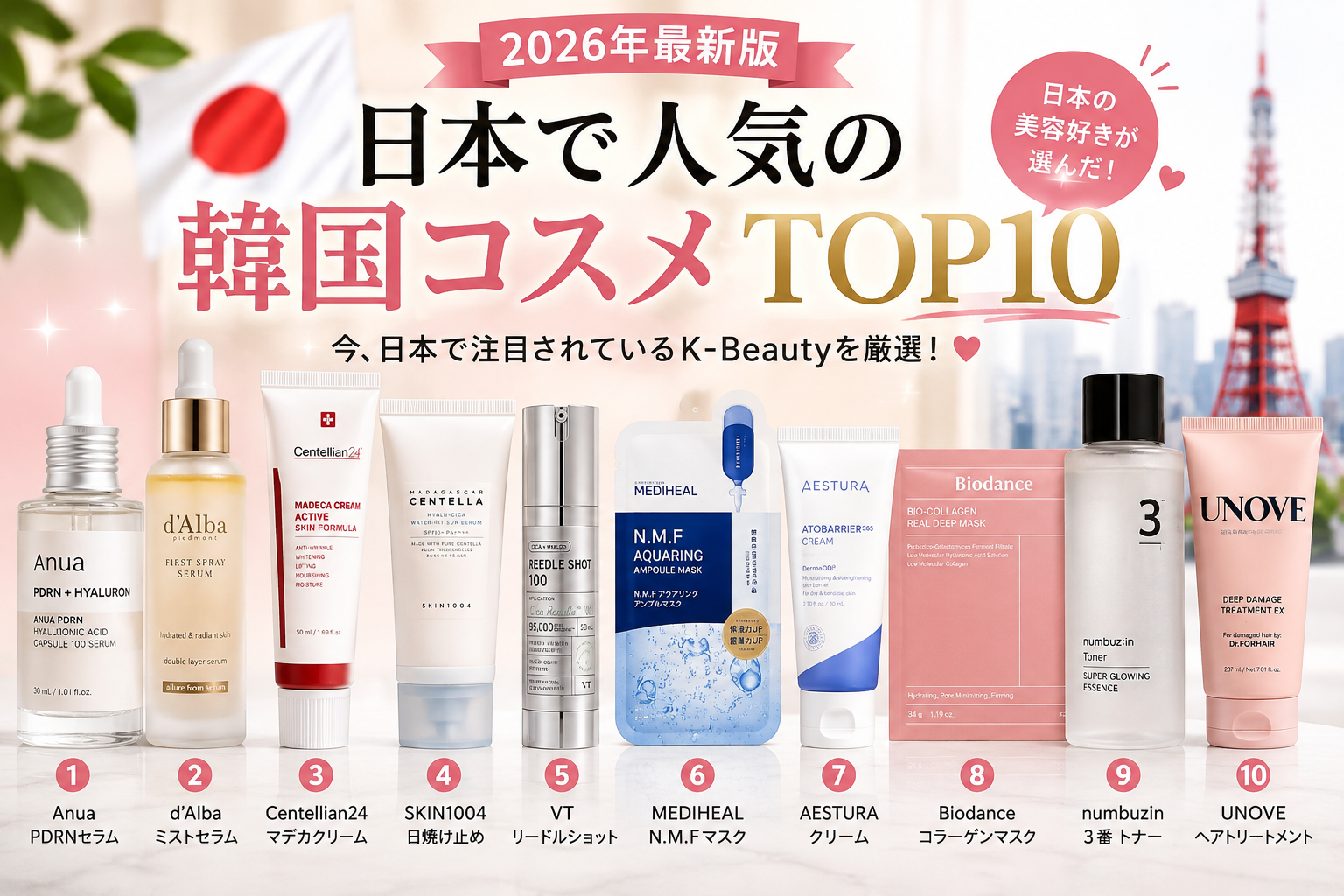
  • 2026年最新|日本で人気の韓国コスメTOP10!今注目のK-Beautyを徹底紹介

    2026年最新|日本で人気の韓国コスメTOP10!今注目のK-Beautyを徹底紹介

    韓国コスメは、もう一時的なブームではありません。

    2026年上半期、日本の化粧品輸入額で韓国は821億8,000万円を記録し、国別で1位を維持しました。前年同期比でも13.3%増加しています。特にベースメイク・皮膚用化粧品では、韓国製品のシェアが49.4%まで拡大しました。

    では、2026年の日本ではどんな韓国コスメが注目されているのでしょうか?

    今回は、オリーブヤングの日本向けランキングや2026年上半期の美容トレンドをもとに、今チェックしたい韓国コスメを10アイテム紹介します。

    1.Anua PDRN ヒアルロン酸カプセル100セラム

    2026年の韓国スキンケアで特に注目したいキーワードがPDRNです。

    Anuaの「PDRN ヒアルロン酸カプセル100セラム」は、オリーブヤングの日本向けランキングでも上位に入り、6月末のランキングでは1位を記録しています。

    PDRN配合コスメそのものも日本で注目されており、美容液だけでなく化粧水、クリーム、パックなど商品ラインアップが広がっています。

    こんな人にチェックしてほしい:
    乾燥やハリ不足が気になる人、韓国の最新スキンケア成分を試してみたい人。

    2.d’Alba ホワイトトリュフ ファーストスプレーセラム

    韓国コスメ好きにはおなじみのd’Alba。

    「ホワイトトリュフ ファーストスプレーセラム」は、オリーブヤング日本向けランキングでも上位に登場しています。

    ミストタイプなので、普段のスキンケアだけでなく、乾燥が気になるときにも使いやすいのが特徴です。

    2026年には海外美容メディアでも韓国フェイスミストの代表的なアイテムの一つとして紹介されています。

    3.Centellian24 マデカクリーム タイムリバース

    韓国スキンケアの強みの一つが、保湿・肌コンディションを重視したアイテムです。

    Centellian24の「マデカクリーム タイムリバース」も、日本向けオリーブヤングランキングの上位に入っています。

    2026年のK-Beautyでは、強い刺激で一気に変えるというより、保湿や肌のバリアを意識しながら長期的にケアする**「スローエイジング」**という考え方も注目されています。

    4.SKIN1004 センテラ サンセラム

    韓国旅行で買いたいアイテムとして外せないのが韓国の日焼け止めです。

    韓国のサンケアは、紫外線対策だけでなく、美容液のような軽い使用感や保湿感を重視した商品が豊富。

    SKIN1004のセンテラ系サンセラムも、韓国で人気のサンケア商品として注目されています。2026年のK-Beautyでは「sun serum」のような軽いテクスチャーの商品への関心も高まっています。

    5.d’Alba ウォータフル トーンアップ サンクリーム

    d’Albaでもう一つ注目したいのがトーンアップ系UVケア。

    日焼け止めと肌をきれいに見せるベースメイク的な役割を一つでこなせるため、朝のメイクをシンプルにしたい人にも使いやすいタイプです。

    日本のZ世代を対象とした2026年上半期の美容調査でも、d’Albaのウォータフルトーンアップサンクリームが時短コスメ部門2位に選ばれています。

    6.VT リードルショット

    日本でも知名度が高くなった韓国コスメの一つがVTのリードルショット。

    2026年のK-Beautyでは、スピキュールやマイクロニードル系の技術を応用したスキンケアが引き続き注目されています。

    日本のZ世代調査でも「VT リードルショット300」がランクインしており、日本での関心の高さがうかがえます。

    最近ではVTからPDRN×リードルショットを組み合わせた商品も登場しており、次のトレンドにも注目です。

    7.MEDIHEAL PDRN リフティングパッド

    韓国コスメ独特の人気アイテムとして定着したのがトナーパッドです。

    コットンのように拭き取るだけでなく、気になる部分に数分置いてミニパックのように使えるのも特徴。

    MEDIHEALの「PDRN リフティングパッド」は、日本の美容誌sweetの2026年上半期韓国コスメ企画でトナーパッド部門1位に選ばれました。

    PDRNとトナーパッドという、2026年らしいトレンドを組み合わせたアイテムです。

    8.AESTURA アトバリア365シリーズ

    敏感肌や乾燥肌向けの韓国スキンケアで注目したいブランドが**AESTURA(エストラ)**です。

    韓国のオリーブヤングランキングでもアトバリア365クリームが上位に入り、海外でも肌バリアを意識した韓国スキンケアとして紹介されています。

    2026年は派手な成分だけでなく、毎日続けやすいバリアケア・保湿ケアも重要なK-Beautyトレンドです。

    9.Biodance コラーゲンマスク

    SNSをきっかけに世界的に知られるようになったのが、Biodanceなどのハイドロゲル・コラーゲンマスク。

    2026年のK-Beautyでは、長時間使用するオーバーナイトマスクがさらに進化し、コラーゲンだけでなくPDRNやペプチドなどを組み合わせた商品も注目されています。

    韓国旅行で「ちょっと変わった韓国コスメを買いたい」という人にも面白いカテゴリーです。

    10.numbuzin 5番 グルタチオンC美容液

    日本でもファンが多い韓国ブランドnumbuzin(ナンバーズイン)。

    「5番 グルタチオンC美容液」は、日本向けオリーブヤングランキングでも上位に入っています。

    商品名から目的を理解しやすいのもナンバーズインの特徴。

    PDRNだけでなく、ビタミンC、ナイアシンアミド、グルタチオンなど、成分から韓国コスメを選ぶ人にもチェックしてほしいブランドです。

    2026年の韓国コスメ、注目キーワードは?

    2026年にK-Beautyを選ぶなら、商品名だけでなくトレンド成分やカテゴリーにも注目してみましょう。

    特に今年はPDRN、リードル・スピキュール系、トナーパッド、サンセラム、カプセルクリーム、オーバーナイトマスク、スローエイジングなどが重要なキーワードです。

    なかでもPDRNの勢いは強く、Olive Youngでは2026年初頭のPDRN関連検索が前年同期比で90%以上増加したと報じられています。

    つまり2026年は「ブランドで選ぶ韓国コスメ」から、自分の肌悩みに合わせて成分や機能で選ぶK-Beautyへと変化していると言えそうです。

    今、日本でK-Beautyが面白い理由

    日本で韓国コスメへの関心が高まっていることを象徴するイベントも始まります。

    東京・駐日韓国文化院では、**2026年9月5日から11月7日まで「GLOBAL K-ZONE K-BEAUTY JOURNEY」**を開催。

    9月は韓国の聖水(ソンス)・明洞(ミョンドン)、10月は**江南(カンナム)・北村(プクチョン)**をテーマに、韓国の最新ビューティー商品を紹介します。AI肌診断やコスメ体験なども予定されています。

    特に9月5日~11日にはオープニングイベント「BEAUTY DAY」が開催され、韓国で話題のコスメを先着でプレゼントする企画なども予定されています。

    東京に住んでいるK-Beautyファンなら、チェックしてみても面白そうです。

    よくある質問(FAQ)

    Q. 2026年、日本で人気の韓国コスメは?
    Anua、d’Alba、VT、MEDIHEAL、AESTURA、numbuzinなどのブランドが日本向けランキングや日本の美容ランキングで確認できます。特にPDRN配合スキンケアへの関心が高まっています。

    Q. 2026年に注目のK-Beauty成分は?
    PDRNをはじめ、ナイアシンアミド、ヒアルロン酸、コラーゲン、マデカッソシドなどが注目されています。

    Q. 韓国旅行でコスメを買うならどこ?
    オリーブヤングは代表的な選択肢です。特に明洞や聖水は複数のブランドショップも回りやすく、K-Beautyを目的に韓国を訪れる旅行者にも便利なエリアです。

    PR・アフィリエイトリンクを含みます
    🇰🇷 韓国で人気のK-Beautyを
    OLIVE YOUNG GLOBALでチェック
    PDRN・リードルショット・韓国の日焼け止めなど、
    話題の韓国コスメを日本からオンラインでチェックできます。
    🛍️ OLIVE YOUNGで人気コスメを見る
    ※本ページにはアフィリエイトリンクが含まれています。
    リンク経由で購入された場合、当サイトが報酬を受け取ることがあります。

    ※本記事にはアフィリエイトリンクが含まれています。リンクを通じて商品を購入された場合、当サイトが報酬を受け取ることがあります。購入者の追加負担はありません。

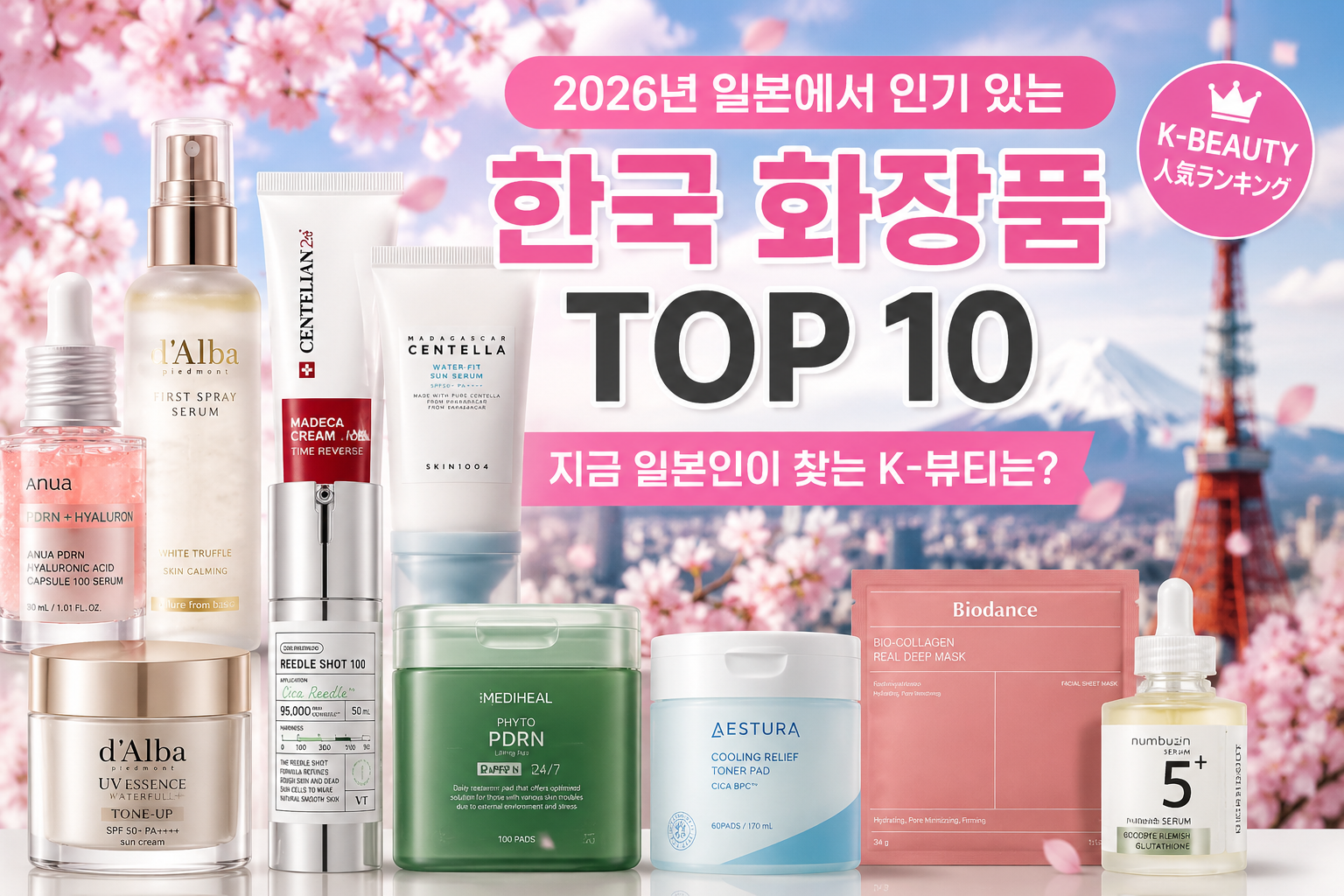
  • 2026 일본에서 인기 있는 한국 화장품 TOP 10|지금 일본인이 찾는 K-뷰티는?

    2026 일본에서 인기 있는 한국 화장품 TOP 10|지금 일본인이 찾는 K-뷰티는?

    K-Beauty는 이제 일본에서 단순한 유행을 넘어 하나의 주요 뷰티 카테고리로 자리 잡고 있습니다.

    2025년 일본의 한국산 화장품 수입액은 약 1,418억 엔으로 전체 수입 화장품의 **30.8%**를 차지했습니다. 한국은 일본 수입 화장품 시장에서 4년 연속 1위를 기록했고, 2026년 상반기에도 한국산 화장품 수입액은 약 822억 엔, 점유율 약 33.4%로 집계됐습니다.

    그렇다면 지금 일본 소비자들이 관심을 갖는 한국 화장품은 무엇일까요?

    1. Anua PDRN 히알루론산 캡슐 100 세럼

    2026년 K-Beauty에서 빼놓기 어려운 키워드가 바로 PDRN입니다.

    올리브영 글로벌의 2026년 상반기 베스트 코스메틱에서도 Anua PDRN 히알루론산 캡슐 100 세럼이 주요 스킨케어 제품 1위로 소개됐습니다.

    PDRN은 올해 글로벌 K-Beauty 시장에서도 주목받는 성분입니다. 세럼뿐 아니라 크림, 토너패드 등 다양한 형태의 제품으로 확대되고 있습니다.

    주목 키워드: PDRN / 韓国美容液 / Anua

    2. d’Alba 화이트 트러플 퍼스트 스프레이 세럼

    달바의 스프레이 세럼도 올리브영 글로벌 2026 상반기 베스트 제품 상위권에 이름을 올렸습니다.

    미스트처럼 간편하게 사용할 수 있는 세럼 형태라 복잡한 스킨케어보다 간편하면서도 기능적인 제품을 원하는 소비자에게 소개하기 좋은 제품입니다.

    주목 키워드: d’Alba / 韓国ミスト / 韓国スキンケア

    3. Centellian24 마데카크림

    Centellian24의 마데카크림 타임리버스 역시 올리브영 글로벌 상반기 베스트 제품으로 선정됐습니다.

    K-Beauty에서 꾸준히 강한 분야 중 하나가 피부 장벽과 진정 관리입니다. 2026년에도 자극적인 관리보다 피부 컨디션과 장벽을 꾸준히 관리하는 Slow Aging 흐름이 주목받고 있습니다.

    4. SKIN1004 센텔라 선세럼

    한국 화장품에서 이제 선크림은 빼놓기 어려운 수출 효자 카테고리입니다.

    올리브영 글로벌 2026 상반기 UV 카테고리에서는 SKIN1004 센텔라 워터핏 선세럼이 1위로 소개됐습니다.

    최근에는 단순히 자외선을 차단하는 것을 넘어 가볍고 촉촉한 사용감, 진정 기능, 쿨링감을 결합한 한국 선케어가 해외에서도 관심을 받고 있습니다.

    5. d’Alba 워터풀 톤업 선크림

    달바는 세럼뿐 아니라 선케어에서도 강세를 보이고 있습니다.

    올리브영 글로벌 상반기 베스트 UV 제품에 워터풀 톤업 선크림과 퍼플 버전이 함께 상위권에 올랐습니다.

    자외선 차단과 피부 표현을 한 제품에서 해결하려는 소비자에게 잘 맞는 K-Beauty 제품군입니다.

    6. VT 리들샷

    2026년 K-Beauty의 또 다른 핵심 키워드는 스피큘(Spicule) 기술입니다.

    미세한 바늘 모양의 성분을 활용하는 제품들이 인기를 얻으면서 VT의 Reedle Shot은 이 분야를 대표하는 제품 중 하나로 해외 뷰티 매체에서도 계속 언급되고 있습니다.

    일본어 콘텐츠에서는 リードルショット, 韓国スキンケア 같은 검색어와 연결할 수 있습니다.

    7. MEDIHEAL 토너패드

    토너패드는 한국에서는 이미 익숙하지만 해외에서는 계속 성장하고 있는 K-Beauty 제품군입니다.

    특히 토너패드를 피부에 잠시 올려 미니 시트마스크처럼 사용하는 방식까지 소개되면서 해외 소비자들의 관심이 커지고 있습니다.

    MEDIHEAL의 PDRN 리프팅 패드 역시 해외 뷰티 에디터 추천 제품으로 소개된 바 있습니다.

    8. AESTURA 진정·쿨링 스킨케어

    2026년에는 Cooling Beauty도 눈여겨볼 필요가 있습니다.

    한국에서는 토너패드, 선크림, 미스트, 마스크팩 등에 쿨링 기술을 결합한 제품들이 확대되고 있습니다.

    AESTURA의 Cooling Relief Toner Pad 같은 제품도 한국의 새로운 쿨링 스킨케어 사례로 해외에서 소개되고 있습니다.

    9. BIODANCE 콜라겐 마스크

    밤새 붙이고 사용하는 오버나이트 콜라겐 마스크도 K-Beauty의 새로운 대표 상품군으로 자리 잡고 있습니다.

    Biodance를 시작으로 비슷한 형태의 제품들이 확산됐고, 2026년에는 PDRN·펩타이드 등의 성분과 결합한 차세대 오버나이트 마스크가 성장할 것으로 전망되고 있습니다.

    10. numbuzin(넘버즈인) 세럼

    넘버즈인도 일본에서 주목할 만한 한국 스킨케어 브랜드입니다.

    최근 일본 측 올리브영 랭킹을 추적한 자료에서도 넘버즈인 5번 글루타치온C 세럼이 일본 랭킹 1위에 오른 사례가 확인됩니다.

    특히 글루타치온·비타민C 등 성분 중심으로 화장품을 선택하는 소비자에게 검색 연결성이 좋은 제품입니다.


    2026년 K-Beauty에서 주목해야 할 5가지

    제품 이름보다 더 중요한 것은 어떤 종류의 제품이 앞으로 검색될 것인가입니다.

    2026년 글로벌 K-Beauty에서는 PDRN·스피큘/리들샷·토너패드·오버나이트 마스크·쿨링 스킨케어 등이 주요 흐름으로 나타나고 있습니다. 여기에 안티에이징보다 피부를 오랫동안 건강하게 관리한다는 Slow Aging / Skin Longevity 개념도 확산되고 있습니다.

    왜 지금 일본 K-Beauty를 주목해야 할까?

    한국은 이미 일본 수입 화장품 시장 1위 국가입니다.

    그리고 2026년 9월 5일부터 도쿄 주일한국문화원에서 GLOBAL K-ZONE이 문을 열며 9~10월의 주제를 K-BEAUTY로 운영합니다.

    9월에는 명동·성수, 10월에는 강남·북촌을 테마로 한국의 최신 뷰티 제품을 소개하고 AI 피부진단과 다양한 체험 프로그램도 진행됩니다.

    게다가 현재 올리브영 글로벌에서도 8월 30일~9월 5일 일본 고객을 대상으로 가을 K-Beauty 트렌드를 소개하는 올리영 세일을 진행하고 있습니다.

    따라서 지금은 단순히 “한국 화장품이 일본에서 인기 있다”는 수준을 넘어 어떤 브랜드·성분·제품이 다음 K-Beauty 검색을 만들 것인지 지켜볼 시점입니다.


    FAQ

    Q. 일본에서 K-Beauty가 정말 인기가 있나요?
    네. 2025년 한국 화장품은 일본 전체 수입 화장품의 약 30.8%를 차지하며 1위를 기록했습니다. 2026년 상반기에도 점유율 약 33.4%로 선두를 유지했습니다.

    Q. 2026년 가장 주목받는 한국 화장품 성분은 무엇인가요?
    현재는 PDRN이 대표적이며 스피큘, EGF, 펩타이드 등 피부관리 시술에서 영향을 받은 성분과 전달기술도 주목받고 있습니다.

    Q. 한국 여행에서 화장품을 어디서 많이 구매하나요?
    올리브영이 대표적인 구매처이며, 최근에는 명동·성수 등 지역별 플래그십 스토어와 브랜드 매장을 찾아가는 뷰티 쇼핑도 하나의 여행 콘텐츠가 되고 있습니다.

    올리브영 글로벌 K-Beauty 인기제품 보기https://global.oliveyoung.com/?utm_source=chatgpt.com

    주일한국문화원 GLOBAL K-ZONE K-Beauty 행사 안내

  • Korean Glass Hair: The Secret Behind Smooth, Shiny Korean Hair

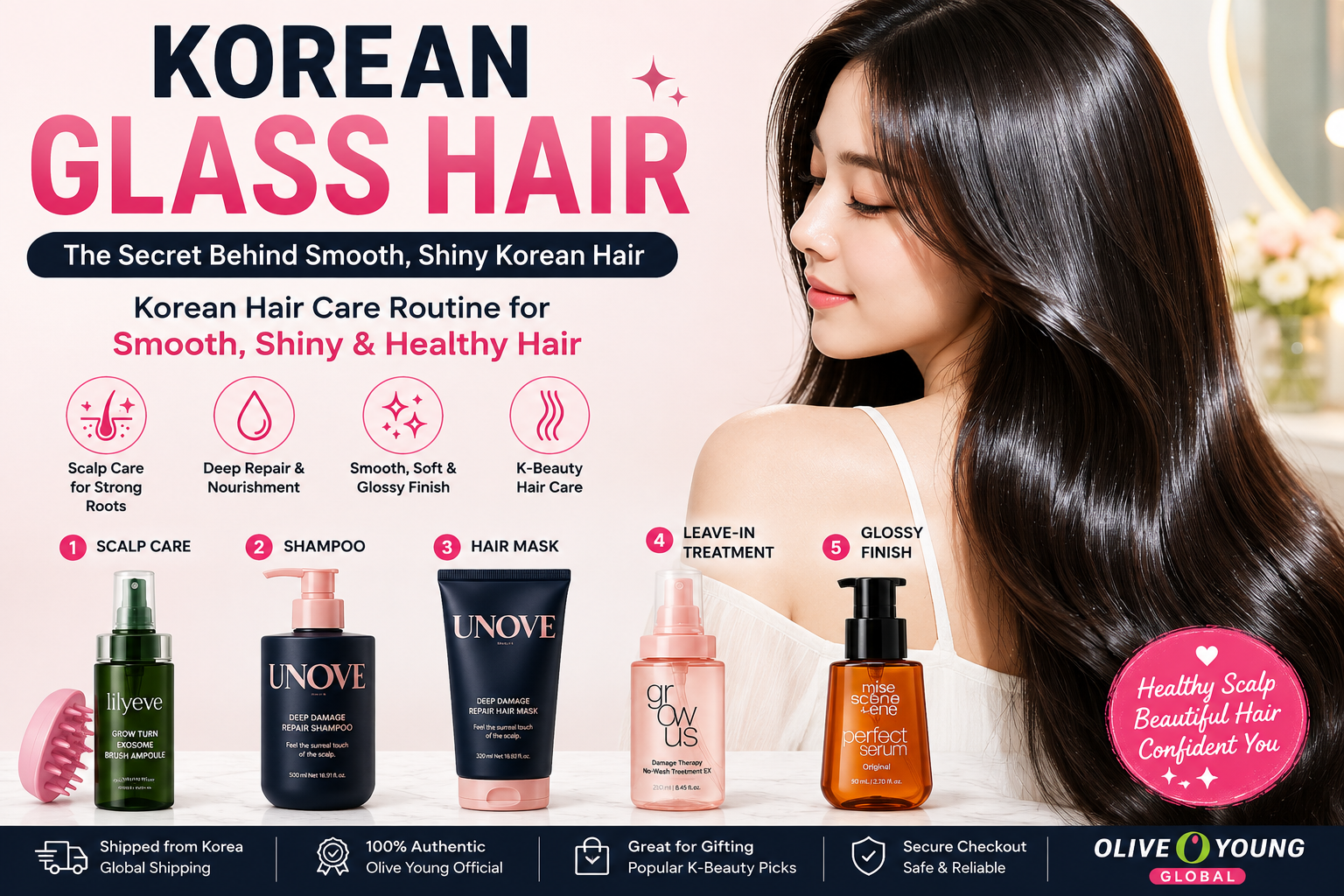
    Korean Glass Hair: The Secret Behind Smooth, Shiny Korean Hair

    Korean beauty is famous around the world for one particular look:

    healthy-looking radiance.

    For years, the focus was on skin.

    The global K-Beauty boom introduced millions of people to concepts such as glass skin, double cleansing, sheet masks and lightweight hydration.

    But increasingly, that same beauty ideal is moving upward — to the hair.

    Smooth strands. Minimal frizz. A soft texture. And most importantly, an almost reflective shine.

    Welcome to the world of:

    Korean Glass Hair.

    But getting glossy-looking hair is not simply about applying oil before leaving the house.

    In Korea, hair beauty is increasingly connected to an entire routine involving the scalp, cleansing, damage care, conditioning and finishing products.

    Here’s how it works.


    What Is Korean Glass Hair?

    Glass hair describes hair that looks exceptionally:

    smooth, soft, sleek and glossy.

    The name comes from the reflective appearance of the hair under light.

    Think of it as the hair equivalent of Korean glass skin.

    But there is an important difference between simply having shiny hair and achieving the glass-hair aesthetic.

    Glass hair should not look excessively greasy or weighed down.

    Instead, the ideal is:

    healthy-looking shine + smooth texture + controlled frizz + movement.

    That’s why the products used throughout the routine matter just as much as the final hair serum.


    Why Is Shiny Hair So Important in Korean Beauty?

    Hair plays an enormous role in how a person’s overall appearance is perceived.

    Beautiful skin paired with extremely damaged hair can completely change an otherwise polished look.

    In Korea, frequent coloring, bleaching, heat styling and perms can also leave hair dry or damaged.

    That has helped create strong demand for products designed around:

    • damaged hair
    • moisture
    • protein care
    • hair masks
    • leave-in treatments
    • hair oils
    • hair serums
    • scalp care

    The result is a hair-care market that increasingly resembles skincare.

    Instead of relying on one miracle product, people combine several steps depending on the condition of their hair.


    Glass Skin vs Glass Hair

    The philosophies are surprisingly similar.

    Glass skin does not normally come from applying one product.

    It comes from layers of care:

    Cleanse → Hydrate → Treat → Moisturize → Protect

    Glass hair can follow a similar logic:

    Scalp Care → Shampoo → Treatment → Leave-In Care → Serum/Oil

    That is one of the reasons Korean hair care fits so naturally into the wider K-Beauty movement.

    The goal is not simply to cover up damage.

    The routine attempts to improve how the hair feels and looks at each stage.


    Step 1: Start With the Scalp

    This is the step many people outside Korea overlook.

    Hair care does not necessarily begin with the ends of your hair.

    It begins at the scalp.

    Korean beauty consumers increasingly use products such as scalp shampoos, scalp scalers, tonics and scalp ampoules as part of their routines.

    Some Korean head spas even examine the scalp with magnifying cameras before treatment.

    If you’re interested in this side of Korean beauty, read our full guide:

    Korean Scalp Care: Why Everyone Is Talking About Korean Head Spas

    Scalp care should not be confused with medical treatment for hair loss, but it has become an increasingly visible part of Korean hair and beauty culture.


    Step 2: Choose Shampoo Based on Your Hair

    Not everyone needs the same shampoo.

    Someone with heavily damaged, bleached hair may want something different from a person primarily concerned about an oily scalp.

    Korean hair-care products are commonly marketed around concerns such as:

    damage, moisture, scalp condition, volume and softness.

    For damaged hair, products emphasizing protein or conditioning ingredients are particularly common.

    One popular example available through Olive Young Global is:

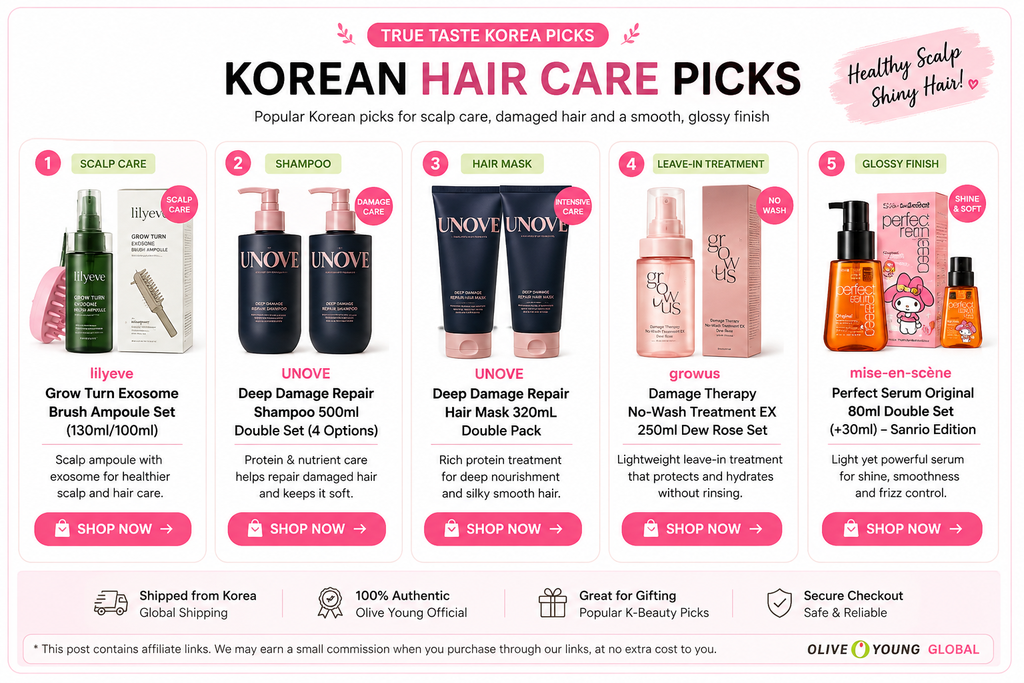
    UNOVE Deep Damage Repair Shampoo

    UNOVE has become particularly visible in Korea’s damaged-hair category.

    The Deep Damage Repair line is designed around intensive care for hair affected by styling and damage.

    Shop UNOVE Deep Damage Repair Shampoo:
    Olive Young Global – UNOVE Shampoo

    Affiliate link included.


    Step 3: Don’t Skip the Hair Mask

    If there’s one step that can dramatically change how damaged hair feels immediately after washing, it’s a good conditioning treatment.

    Hair masks are generally richer than everyday conditioners.

    They are particularly popular among people whose hair has been exposed to:

    coloring, bleaching, perms or frequent heat styling.

    UNOVE Deep Damage Repair Hair Mask

    This is another popular product in the UNOVE line and works naturally as the intensive-care step after shampoo.

    Shop UNOVE Deep Damage Repair Hair Mask:
    Olive Young Global – UNOVE Hair Mask

    Again, the goal here isn’t magically repairing every form of hair damage.

    Think of hair masks primarily as a way to improve conditioning, manageability and appearance.


    Step 4: Leave-In Treatment

    Here’s where the Korean routine becomes particularly interesting.

    Hair care doesn’t necessarily stop when you leave the shower.

    Leave-in products add another conditioning layer without requiring rinsing.

    They can be especially useful for dry lengths and ends.

    One product we’ve selected from Olive Young is:

    growus Damage Therapy No-Wash Treatment EX

    As the name suggests, this is designed to remain on the hair rather than being rinsed away.

    Shop growus No-Wash Treatment:
    Olive Young Global – growus Treatment

    For people chasing the glass-hair appearance, this middle step can help prepare the hair before the final finishing product.


    Step 5: The Glossy Finish

    Now we reach the part everyone notices.

    Shine.

    Hair serum or oil is often applied primarily through the mid-lengths and ends rather than heavily at the roots.

    The purpose is to help create a smoother-looking finish and reduce the appearance of dry, frizzy ends.

    And one Korean product has been around for years:

    mise-en-scène Perfect Serum

    Perfect Serum is one of the recognizable names in Korean hair care and is widely associated with finishing and damaged-hair routines.

    Shop mise-en-scène Perfect Serum:
    Olive Young Global – mise-en-scène Perfect Serum

    Use only as much as your hair needs.

    Too much oil or serum can turn:

    glass hair → greasy hair.

    The goal is reflection, not heaviness.


    The Simple Korean Glass Hair Routine

    You don’t need a complicated ten-step routine.

    A practical version can be:

    1. Scalp care when needed
    ↓
    2. Shampoo
    ↓
    3. Conditioner or hair mask
    ↓
    4. Leave-in treatment
    ↓
    5. Hair serum or oil

    People with fine hair may need much less product.

    Thick, curly, bleached or extremely dry hair may need more conditioning.

    The routine should always be adjusted to your own hair.


    What About Heat Styling?

    Products are only part of the equation.

    Excessive heat can work against the smooth, healthy-looking appearance you’re trying to create.

    If you regularly use a dryer, curling iron or straightener, reducing unnecessary heat exposure and using an appropriate heat-protection product can be useful.

    Another small detail matters:

    How you dry your hair.

    Aggressively rubbing wet hair with a towel can create tangling and friction.

    Gentler drying and careful detangling can help preserve a smoother appearance.


    Can Damaged Hair Really Be “Repaired”?

    This is where beauty marketing can become confusing.

    Hair outside the scalp is made primarily of dead keratinized cells.

    Cosmetic products can make damaged hair look and feel dramatically better by coating, conditioning and temporarily improving smoothness and manageability.

    But that isn’t the same thing as biologically healing a hair fiber like living skin heals a wound.

    That’s why preventing unnecessary damage remains important.

    Good hair care can improve appearance.

    It cannot make every form of structural damage disappear permanently.


    Korean Glass Hair Doesn’t Require Straight Hair

    Another misconception:

    Glass hair does not have to mean pin-straight hair.

    Curly and wavy hair can also look glossy and healthy.

    The underlying idea is:

    smoothness + definition + shine appropriate to your natural texture.

    Trying to force every hair type into exactly the same straight style can actually require more heat and potentially create additional damage.

    Glass hair should work with your hair, not against it.


    Korean Hair Care Products at Olive Young

    If you visit Korea, one of the easiest places to explore Korean hair care is Olive Young.

    You’ll find products for different concerns including:

    shampoo, scalp care, damaged hair, hair masks, leave-in treatments, serums and oils.

    International shoppers can also find many Korean hair products through Olive Young Global.

    Product availability and prices can change, so check the current product page before purchasing.


    Is Korean Glass Hair the Next Glass Skin?

    Possibly.

    Glass skin became powerful because the phrase communicated an entire beauty ideal with just two words.

    Glass Hair may do something similar.

    And it fits perfectly with where K-Beauty is moving.

    Beauty is expanding beyond facial skincare into:

    scalp care → hair care → body care → beauty wellness.

    The Korean beauty routine is becoming less about one part of the body and more about the overall appearance of health and care.


    Final Thoughts

    The secret behind Korean glass hair isn’t really a secret.

    It’s a routine.

    Start with the scalp.

    Cleanse according to your hair type.

    Condition damaged areas.

    Use leave-in care when necessary.

    Then add just enough serum or oil to create that final glossy finish.

    The result you’re chasing isn’t simply shiny hair.

    It’s hair that looks:

    smooth, soft, healthy and beautifully reflective.

    And just as glass skin became one of Korea’s most recognizable beauty exports, Korean glass hair could be the next K-Beauty phrase the rest of the world starts searching for.

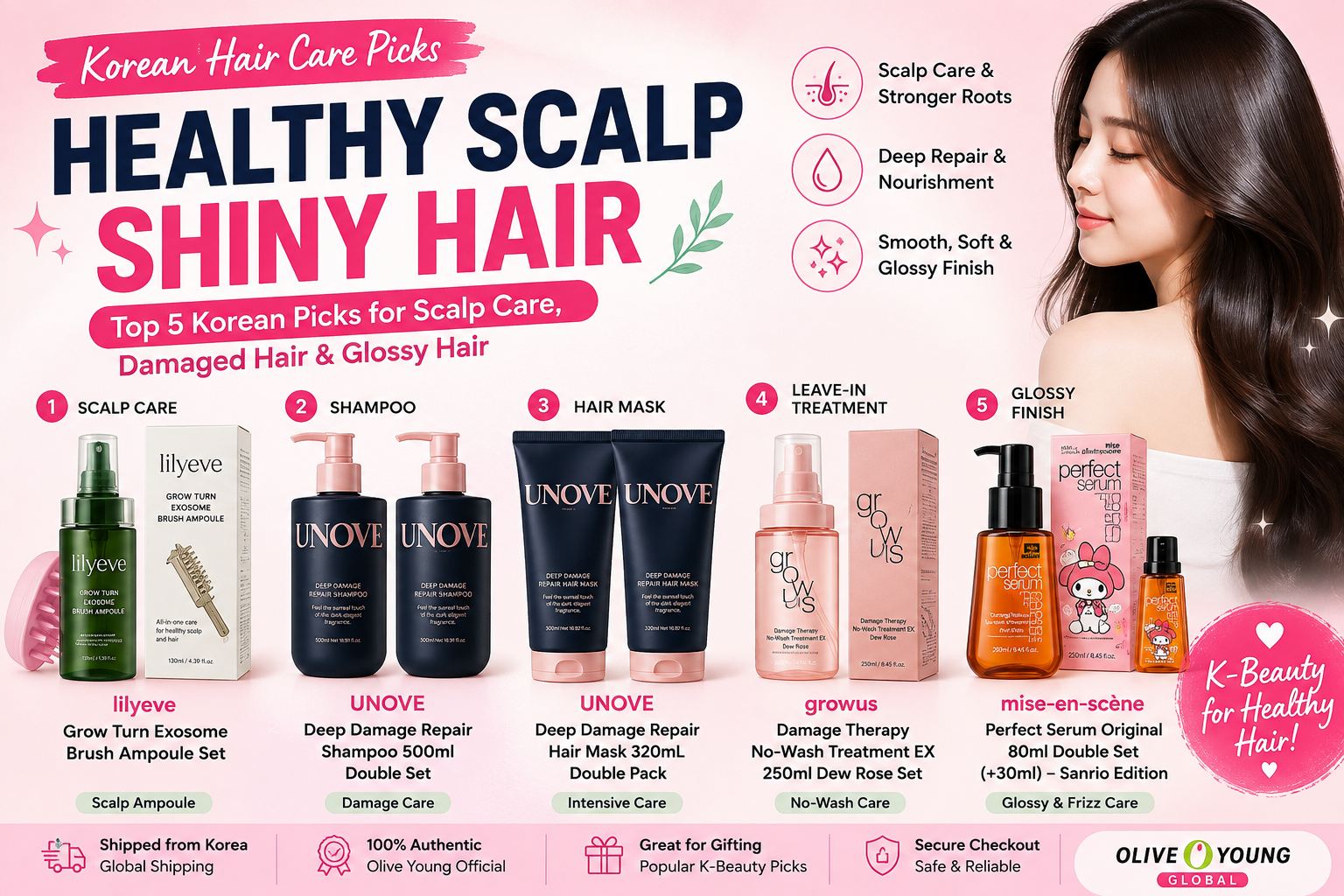
    Korean glass hair products for scalp care, damaged hair and smooth glossy hair

    Affiliate links included. Product availability and prices may change.

  • Korean Scalp Care: Why Everyone Is Talking About Korean Head Spas

    Korean Scalp Care: Why Everyone Is Talking About Korean Head Spas

    When people think about K-Beauty, glowing skin, sunscreen, sheet masks and serums usually come to mind.

    But in Korea, beauty does not stop at the face.

    The scalp is increasingly being treated like skin.

    For many Koreans, healthy-looking hair is not simply about choosing a stylish haircut. A clean, comfortable scalp and smooth, shiny hair are also important parts of personal appearance.

    This approach is now attracting attention outside Korea.

    Korean head spas, scalp treatments and scalp-focused hair products are becoming increasingly visible among international beauty travelers and K-Beauty fans.

    Recent reporting on a Seoul head-spa business found that foreign customers made up around 80% of its head-spa clientele, while its overall foreign visitors had increased significantly from the previous year. Vogue has also recently explored the Korean scalp-spa approach and its focus on scalp-first hair care.

    So why is Korean scalp care suddenly becoming the next K-Beauty experience?

    Let’s take a closer look.


    1. In Korea, Hair Beauty Starts With the Scalp

    Korean skincare has long emphasized one simple idea:

    Take care of the foundation before trying to hide the problem.

    A similar philosophy is increasingly being applied to hair.

    Instead of focusing only on shampooing the hair itself, Korean scalp care may include cleansing the scalp, removing buildup, maintaining hydration and choosing products according to scalp condition.

    This is sometimes described as the “skinification” of hair care — treating the scalp with the kind of attention traditionally given to facial skin.

    That is one reason scalp scalers, scalp tonics, ampoules and specialized shampoos have become a visible part of Korean hair-care routines.

    Even Olive Young Global currently separates hair products by concerns including hair loss, weakened hair, scalp treatment, thickening, hydration and shine.


    2. Why Hair Loss Is Such an Emotional Issue

    Hair is closely connected with how people perceive their appearance.

    And concerns about thinning hair are certainly not limited to older adults.

    Young adults can worry about shedding, thinning hair, scalp condition and damage caused by coloring, perming or frequent styling.

    Stress is also often mentioned when people talk about hair loss.

    There is some medical basis for this connection, although it is important not to oversimplify it.

    The American Academy of Dermatology explains that significant physical or psychological stress can trigger excessive hair shedding known as telogen effluvium. However, hair loss has many possible causes, including genetics, autoimmune conditions, medications and damaging hair-care practices.

    This distinction matters.

    A scalp spa is not a medical treatment for hair loss.

    If someone is experiencing sudden, severe, patchy or persistent hair loss, a dermatologist or other qualified medical professional should evaluate the cause.

    But concerns about hair and scalp condition help explain why scalp care has become such an important part of the wider Korean beauty conversation.


    3. What Is a Korean Head Spa?

    A Korean head spa is essentially a beauty and wellness experience centered around the scalp.

    The exact procedure varies between salons, but a session may include:

    scalp analysis → cleansing → exfoliation/scaling → shampoo → hydration or scalp treatment → massage → hair treatment → drying and styling

    Some locations use magnifying scalp cameras to examine oil, buildup, dryness and the general condition of the scalp before treatment.

    This creates one of the most interesting parts of the experience:

    the before-and-after scalp check.

    For international visitors, that can make a head spa feel very different from simply visiting a salon for shampoo and styling.

    Recent coverage of Korean scalp spas has highlighted cleansing, exfoliation, scalp hydration, massage and scalp-focused products as central elements of the experience.


    4. Korean Head Spa vs Regular Hair Salon

    They are not quite the same thing.

    A normal hair salon visit usually focuses primarily on the hair:

    cutting, coloring, perming, styling and treatments for damaged strands.

    A head spa focuses much more heavily on the scalp itself.

    That can mean examining scalp condition, removing product buildup, cleansing excess oil, providing hydration and adding a relaxation component through scalp massage.

    This is why Korean head spas sit somewhere between:

    K-Beauty + hair care + wellness.

    And that combination may be one reason they are becoming attractive to travelers.


    5. Why Korean Head Spas Are Becoming Popular With Foreigners

    For years, a typical K-Beauty itinerary in Seoul might have included:

    Olive Young shopping, a dermatology clinic, a facial treatment and perhaps a Korean hair salon.

    Now another experience is being added:

    Korean Head Spa.

    A September 2026 report on Juno Seoul said approximately 80% of its head-spa customers were foreigners, while foreign visitors to the company’s salons had risen 52% year over year.

    That is an interesting signal.

    Korean scalp care is moving beyond something Koreans do locally and becoming part of the K-Beauty travel experience itself.

    There is another reason it works so well internationally:

    It is extremely visual.

    Scalp-camera examinations, cleansing, foaming, water treatments, massage and shiny hair at the end make excellent short-form video content.

    You don’t need to understand Korean to understand the transformation.


    6. The Korean Desire for Smooth, Shiny Hair

    Korean beauty trends often emphasize a healthy-looking finish rather than simply dramatic styling.

    For skin, that idea helped popularize terms such as glass skin.

    Hair has a similar aspiration:

    smooth texture, controlled frizz and visible shine.

    You may increasingly hear this described online as:

    Korean Glass Hair.

    But beautiful-looking hair is not only about adding shine at the final styling stage.

    The Korean scalp-care approach starts one step earlier:

    Take care of the scalp and then take care of the hair growing above it.

    That combination of scalp care and glossy hair may become an important extension of the global K-Beauty movement.


    7. Can Korean Scalp Care Prevent Hair Loss?

    This needs a careful answer.

    Regular scalp cleansing and appropriate hair care can help maintain scalp cleanliness and comfort.

    But a cosmetic scalp treatment should not be confused with medical diagnosis or treatment for hair loss.

    Hair shedding can have many causes.

    According to the American Academy of Dermatology, people normally shed around 50 to 100 hairs per day, while significantly increased shedding may occur after major stress, illness, surgery, childbirth and other physical or emotional stressors.

    Hereditary hair loss, autoimmune disorders and other medical conditions require a different approach.

    So think of Korean scalp care primarily as:

    beauty + scalp maintenance + relaxation

    rather than a guaranteed cure for hair loss.


    8. Korean Scalp Care Products You May See

    You don’t necessarily need to visit a Korean head spa to explore the trend.

    Korean hair-care brands increasingly offer products designed specifically for the scalp.

    Common categories include:

    • scalp shampoo
    • scalp scaler
    • scalp tonic
    • scalp ampoule
    • cooling scalp treatments
    • moisturizing scalp treatments
    • hair masks
    • protein treatments

    The basic concept is very similar to skincare:

    Cleanse → treat → moisturize → protect the hair.

    Olive Young Global already categorizes products for scalp treatment, weakened hair, hair loss concerns, hydration, shine, thickening and other hair needs.

    That makes Korean scalp care another interesting area to explore if you’re already interested in K-Beauty products.


    9. Should You Try a Korean Head Spa When Visiting Korea?

    If you enjoy K-Beauty experiences, it may be worth adding one to your Korea itinerary.

    It can be especially interesting if you:

    have never seen your scalp under a magnifying camera, use a lot of styling products, frequently color or perm your hair, are interested in Korean hair-care routines, or simply want a relaxing beauty experience during your trip.

    However, travelers experiencing significant hair loss or scalp disease should distinguish between a salon head spa and medical dermatology treatment.

    If medical evaluation is what you need, read our guide:

    Dermatology in Korea for Foreigners 2026: Treatments, Costs & How to Book

    This will help you understand how medical skin and scalp care in Korea differs from ordinary beauty services.


    10. Is Scalp Care the Next Big K-Beauty Trend?

    Korean skincare became globally influential by turning everyday skincare into a detailed beauty ritual.

    Something similar may now be happening with hair.

    The scalp is becoming part of the beauty routine.

    Head spas are becoming part of Korean travel.

    And smooth, shiny hair is becoming another visible expression of the Korean beauty aesthetic.

    Perhaps the next chapter of K-Beauty will not begin with another face serum.

    It may begin at the roots.


    Final Thoughts

    Korean beauty has always been about more than following a single product trend.

    It is also about routines.

    Just as Korean skincare encouraged people around the world to think differently about cleansing, hydration and sun protection, Korean scalp care is encouraging people to think about what happens underneath their hair.

    For some people, the attraction is healthier-looking hair.

    For others, it is scalp cleanliness or relaxation.

    And for travelers visiting Seoul, the Korean head spa is quickly becoming another K-Beauty experience worth discovering.

    If glass skin introduced the world to the Korean approach to skincare, perhaps Korean scalp care and glass hair will introduce the next generation of K-Beauty.

  • 10 Olive Young Best Sellers Worth Trying in 2026: K-Beauty Picks From Korea

    10 Olive Young Best Sellers Worth Trying in 2026: K-Beauty Picks From Korea

    If you’re visiting Korea — or shopping for Korean beauty products online — there’s one name you’ll see everywhere:

    Olive Young.

    For many international K-beauty shoppers, walking into an Olive Young store can be exciting.

    And slightly overwhelming.

    There are masks, serums, toner pads, sunscreens, hair treatments and new products everywhere.

    So what should you actually buy?

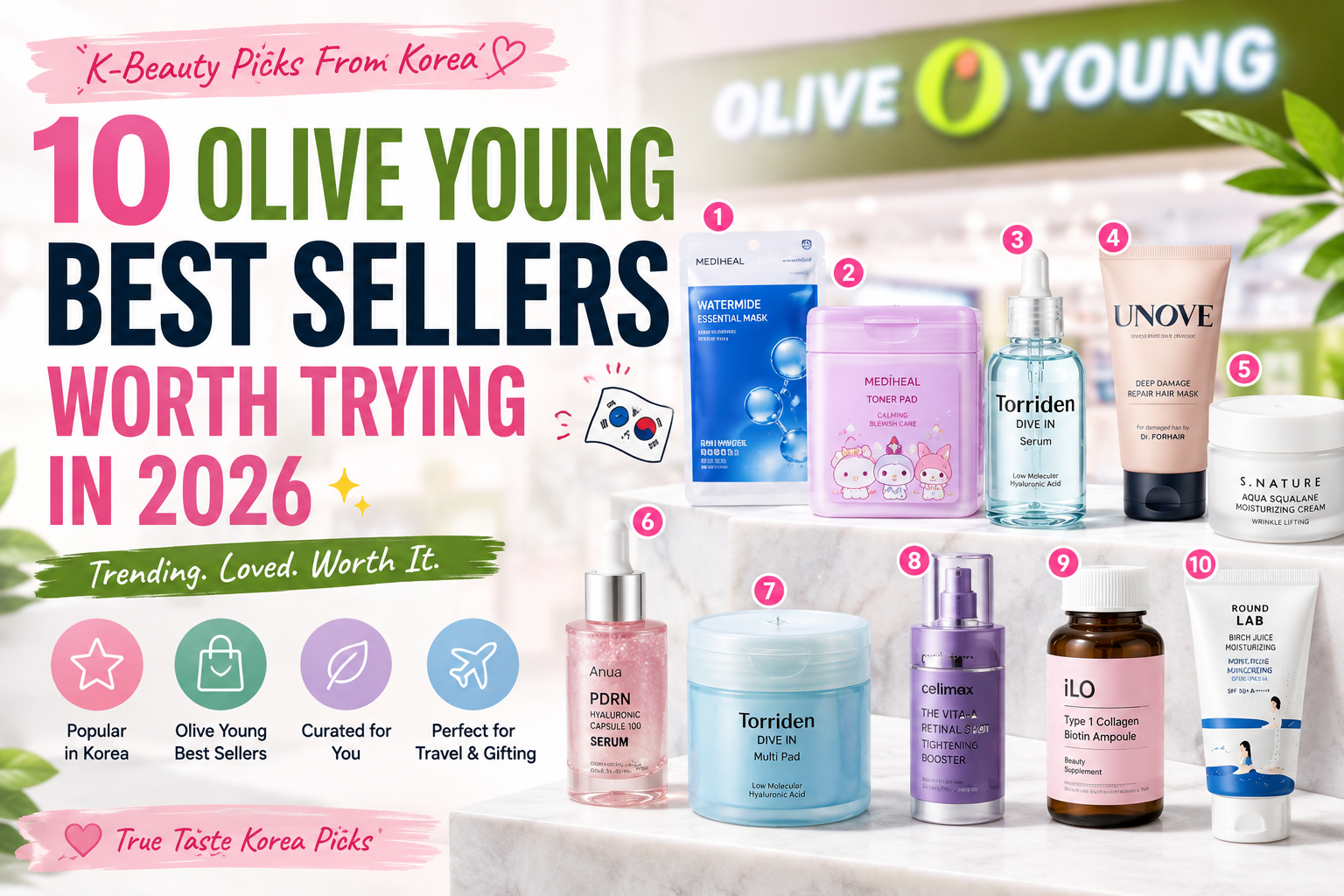
    We’ve selected 10 popular K-beauty products worth knowing in 2026.

    Before we start, there’s something important about the word “best seller.”

    Olive Young says its official Best Sellers page is updated daily based on sales data from its online and offline stores in Korea.

    That means rankings can change.

    Rather than treating this article as a permanent #1-to-#10 ranking, think of it as our True Taste Korea selection of notable Olive Young best sellers and popular products to explore.

    1. MEDIHEAL Essential Mask Sheet Set

    If you’ve ever browsed Korean sheet masks, you’ve probably encountered MEDIHEAL.

    Sheet masks remain one of the easiest ways for K-beauty beginners to experiment with Korean skincare without building an entirely new routine.

    MEDIHEAL’s Essential Mask Sheet set is particularly notable because it continues to appear prominently among Olive Young’s best sellers; recent official listings placed it near the very top.

    Best for: K-beauty beginners and sheet-mask lovers.

    Why we picked it: Easy to understand, easy to use and unmistakably Korean beauty.

    SHOP NOW →
    https://global.oliveyoung.com/if/rd?su=P49N7S1J

    2. MEDIHEAL Sanrio Edition Toner Pads

    Toner pads are one of those products that can initially confuse people new to Korean skincare.

    They’re pre-soaked pads designed to make toner-style skincare extremely convenient.

    Depending on the formula, toner pads may be used for hydration, soothing or other skincare goals.

    And the Sanrio packaging gives this MEDIHEAL edition a particularly strong K-beauty collectible feel.

    Best for: People who like convenient skincare and Korean character collaborations.

    SHOP NOW →
    https://global.oliveyoung.com/if/rd?su=N6POYKL2

    3. Torriden DIVE-IN Low Molecular Hyaluronic Acid Serum

    Hydration is one of the foundations of modern Korean skincare.

    And Torriden’s DIVE-IN line is built around that idea.

    This serum is an easy product to understand even if you’re completely new to K-beauty:

    hydration first.

    That makes it particularly appealing for someone who doesn’t want an aggressive or complicated routine.

    Best for: People looking for hydration-focused skincare.

    SHOP NOW →
    https://global.oliveyoung.com/if/rd?su=G1KG8LYQ

    4. UNOVE Deep Damage Repair Hair Mask

    K-beauty isn’t only about faces.

    Korean hair care is becoming an increasingly interesting part of the beauty market.

    UNOVE’s Deep Damage Repair Hair Mask is especially notable because the product currently appears among Olive Young Global’s official best sellers.

    If your hair feels dry or damaged from coloring, heat styling or everyday stress, a Korean hair treatment can be an interesting addition to your routine.

    Best for: Dry or damaged-feeling hair.

    SHOP NOW →
    https://global.oliveyoung.com/if/rd?su=K84MG69J

    5. S.NATURE Aqua Squalane Moisturizing Cream

    Sometimes the least glamorous part of skincare is the most important.

    Moisturizer.

    S.NATURE’s Aqua Squalane Moisturizing Cream is aimed at hydration and moisture support rather than turning your routine into a complicated science experiment.

    That’s exactly why products like this can be useful.

    Best for: People building a simple hydration-focused Korean skincare routine.

    SHOP NOW →
    https://global.oliveyoung.com/if/rd?su=MRR8M6OL

    6. ANUA PDRN Hyaluronic Capsule 100 Serum

    This is one of the products we’re watching closely.

    Why?

    Because it combines two major skincare interests:

    PDRN + hyaluronic acid.

    PDRN is one of the bio-regenerative ingredients attracting significant attention in K-beauty in 2026, while hyaluronic acid is already familiar to hydration-focused skincare shoppers.

    Olive Young has also featured this ANUA serum in recent promotional selections.

    If you want to understand PDRN before buying anything, read our:

    What Is PDRN? Why Korea’s Hottest Skincare Ingredient Is Everywhere in 2026

    Best for: Shoppers curious about one of 2026’s most talked-about Korean skincare trends.

    SHOP NOW →
    https://global.oliveyoung.com/if/rd?su=C8WIJXSS

    7. Torriden DIVE-IN Hyaluronic Acid Multi Pad

    Think of this as another way to approach hydration.

    Instead of applying a liquid toner manually, pre-soaked pads make skincare quick and convenient.

    It can also be an approachable entry point for people curious about Korea’s toner-pad trend.

    Best for: Convenience and hydration-focused routines.

    SHOP NOW →
    https://global.oliveyoung.com/if/rd?su=J3J4Q2TL

    8. celimax The Vita-A Retinal Shot Tightening Booster

    Now we’re entering more active skincare territory.

    Retinal is related to vitamin A and is different from the simple hydration products elsewhere on this list.

    The celimax Retinal Shot Tightening Booster is particularly interesting because it currently appears very high on Olive Young Global’s official bestseller listings.

    Beginners should resist the temptation to introduce several powerful actives simultaneously.

    Best for: More experienced skincare users interested in a vitamin-A-focused routine.

    SHOP NOW →
    https://global.oliveyoung.com/if/rd?su=NPB7RVWK

    9. ILO Type 1 Collagen Biotin Ampoule

    This one is different from the topical skincare products above.

    It’s part of the growing inner-beauty category.

    That’s important because Korean beauty retail increasingly extends beyond creams and serums into beauty-oriented wellness products.

    Don’t treat a supplement as a substitute for skincare, nutrition or medical care.

    Best for: Shoppers interested in Korea’s inner-beauty category.

    SHOP NOW →
    https://global.oliveyoung.com/if/rd?su=RNO4D8PM

    10. ROUND LAB Birch Juice Moisturizing Sunscreen

    If I had to choose one skincare habit more important than chasing every new beauty trend, sunscreen would be near the top.

    ROUND LAB’s Birch Juice line has become recognizable among international K-beauty shoppers, and Korean sunscreens are particularly popular with people seeking lightweight daily formulas.

    Best for: Everyday sun-protection routines.

    SHOP NOW →
    https://global.oliveyoung.com/if/rd?su=7BO7OI9H

    What Should a K-Beauty Beginner Buy First?

    Don’t buy all ten simply because they’re popular.

    If you’re starting from zero, think about your actual needs.

    Dry/dehydrated skin: start with hydration and moisturizer.

    Interested in Korean masks: try MEDIHEAL.

    Curious about toner pads: consider MEDIHEAL or Torriden pads.

    Interested in 2026 skincare trends: investigate PDRN.

    Looking for daily protection: prioritize sunscreen.

    Damaged-feeling hair: look at UNOVE.

    The goal isn’t to own the most K-beauty products.

    It’s to find products that make sense in your routine.

    Can You Buy Olive Young Products Outside Korea?

    Yes.

    International shoppers can use OLIVE YOUNG Global, although product availability, pricing, promotions and shipping options can vary by destination.

    And if you’re actually traveling to Korea, visiting an Olive Young store can be part of the experience itself.

    How We Choose Our K-Beauty Picks

    At True Taste Korea, we don’t want this section to become a random list of products.

    We look for a combination of:

    Korean popularity + current beauty trends + usefulness + international accessibility.

    Because Olive Young’s official bestseller rankings change daily, we’ll treat them as a signal rather than pretending one product remains permanently ranked #1.

    That also gives us a reason to keep this guide updated.

    Final Thoughts

    Olive Young is a fantastic place to discover Korean beauty.

    But the enormous selection can make it difficult to know where to begin.

    Start with your skin or hair concern.

    Learn what the product actually does.

    Then decide whether it deserves a place in your routine.

    K-beauty should make skincare more enjoyable — not more confusing.

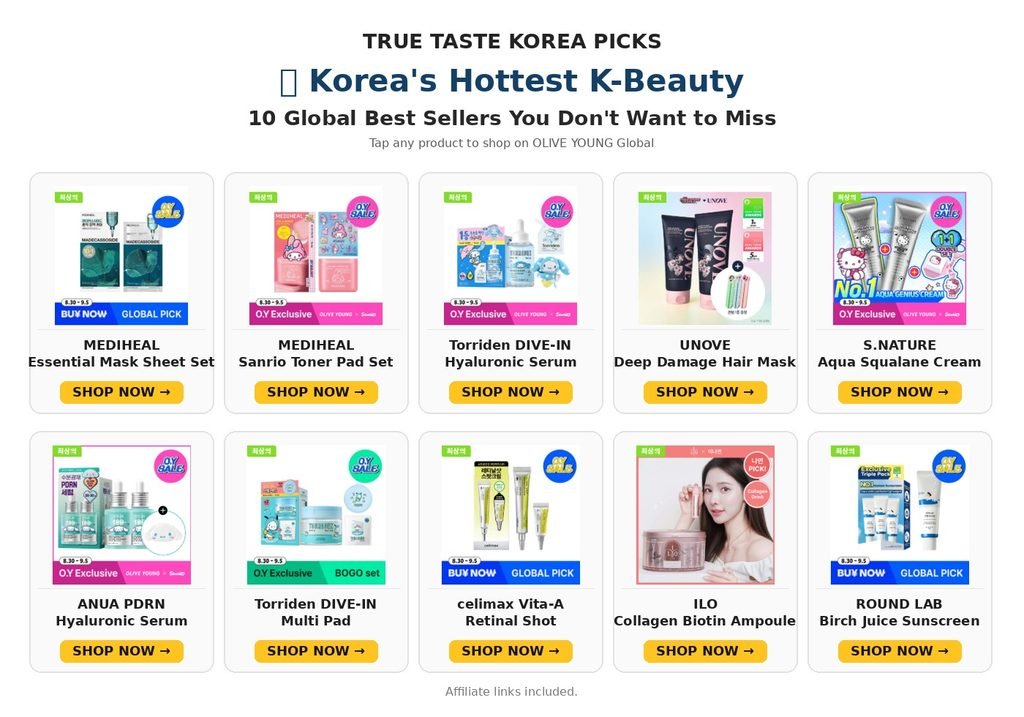
    Korea's hottest K-Beauty 10 global best sellers selected by True Taste Korea
  • What Is PDRN? Why Korea’s Hottest Skincare Ingredient Is Everywhere in 2026

    What Is PDRN? Why Korea’s Hottest Skincare Ingredient Is Everywhere in 2026

    If you’ve been following Korean skincare lately, you may have noticed four letters appearing everywhere:

    PDRN.

    Serums, creams, masks and professional Korean skincare treatments are increasingly using the term.

    So what exactly is PDRN?

    And more importantly:

    Does it actually do anything for your skin — or is it just another K-beauty trend?

    Let’s separate the science from the hype.

    What Is PDRN?

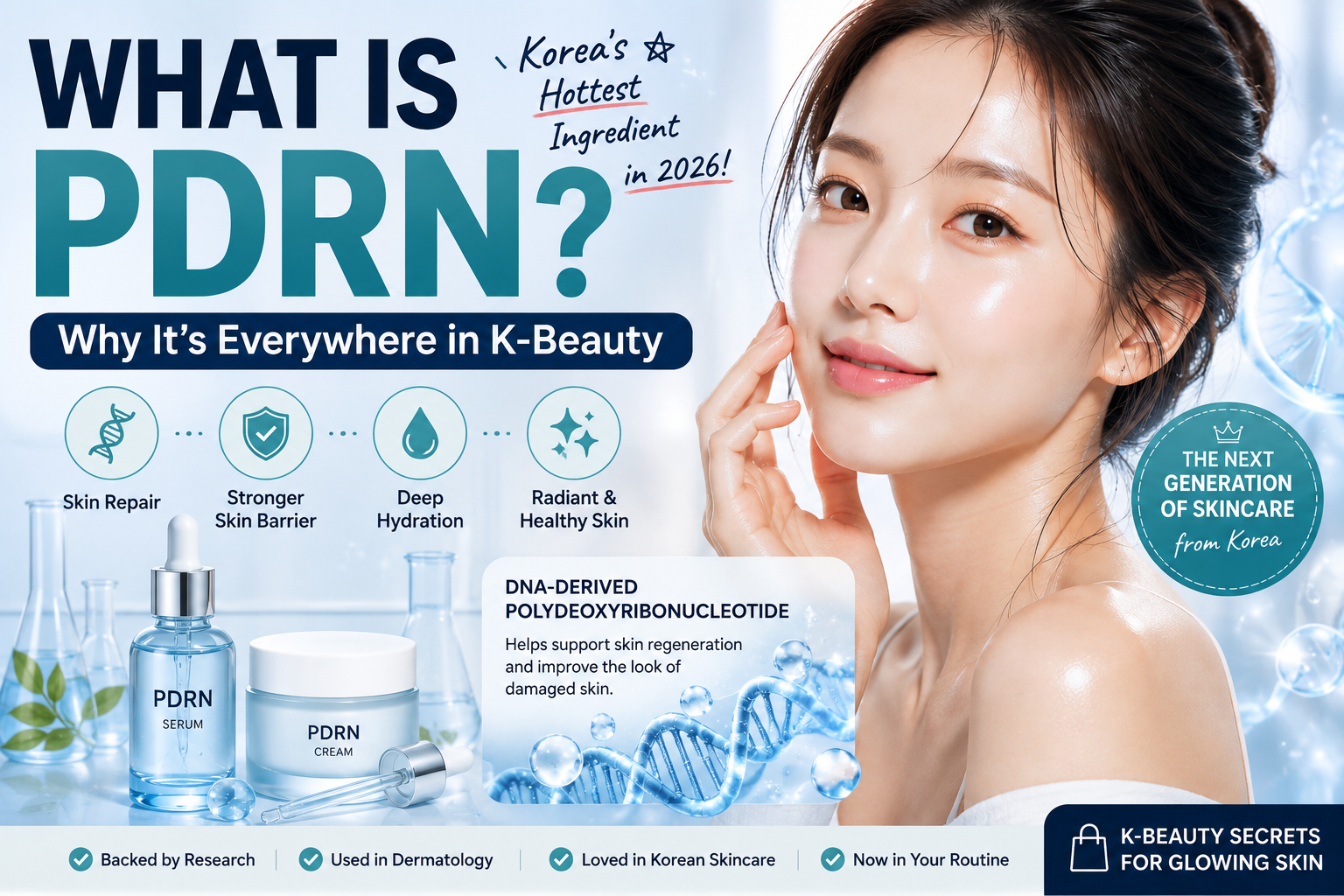
    PDRN stands for polydeoxyribonucleotide.

    In simple terms, PDRN consists of DNA fragments that have been studied for their potential role in tissue repair and regeneration.

    PDRN has a history of medical and regenerative applications, but the ingredient has increasingly crossed into the beauty world.

    That’s one reason PDRN has become one of the ingredients attracting attention in Korea’s rapidly evolving skincare market.

    Vogue included PDRN among the bio-regenerative actives expected to help shape K-beauty in 2026.

    Why Is PDRN Suddenly So Popular in Korean Skincare?

    K-beauty trends have gradually shifted beyond simple hydration.

    Consumers are increasingly interested in products associated with:

    skin barrier support, elasticity, soothing, hydration and healthy-looking aging.

    This has created enormous interest in ingredients inspired by regenerative dermatology.

    PDRN fits directly into that trend.

    And it isn’t confined to Korean clinics anymore.

    The ingredient is increasingly appearing in consumer skincare products that can be incorporated into everyday routines.

    Wait — Is PDRN Really Made From Salmon?

    This is probably one of the first questions many shoppers ask.

    Traditionally, PDRN has commonly been associated with DNA fragments derived from salmon or trout.

    That’s why you may encounter phrases such as:

    “salmon DNA skincare.”

    However, PDRN research isn’t limited to fish-derived sources.

    Researchers are also investigating alternatives. A 2026 study, for example, examined low-molecular-weight PDRN derived from Paeonia lactiflora — peony — as a potential plant-based alternative.

    So don’t automatically assume every PDRN product has exactly the same source or formulation.

    Check the individual product.

    What Can PDRN Potentially Do for Skin?

    This is where things become interesting.

    Research into PDRN and related polynucleotides has examined areas including tissue repair, wound healing, skin rejuvenation and photoaging.

    A 2026 systematic review of randomized trials found encouraging outcomes across skin rejuvenation, scar and wound-healing applications, while also showing that the overall evidence base remains relatively small.

    A separate 2026 study investigated a topical medium-length PDRN formulation on photodamaged skin.

    Researchers reported improvements in several measured skin parameters in their study, while also noting that topical PDRN delivery and mechanisms have historically been insufficiently defined.

    That’s an important distinction.

    Promising research does not mean every PDRN cosmetic will produce the same result.

    Formulation, concentration, molecular characteristics and delivery can all matter.

    PDRN Skincare vs. PDRN Treatments in Korea

    This distinction is extremely important.

    PDRN cosmetics

    These include products such as:

    serums
    creams
    masks
    ampoules

    They’re topical skincare products intended for everyday cosmetic use.

    Professional treatments

    PDRN and related polynucleotide products may also be used in professional aesthetic or dermatological settings.

    These are not the same thing as applying a PDRN serum at home.

    Clinical literature concerning professional or post-procedure applications shouldn’t automatically be interpreted as proof that an over-the-counter cosmetic produces identical effects. Recent reviews also point out limitations including small studies, formulation differences and limited long-term follow-up.

    If you’re considering professional treatment in Korea, see our guide:

    Dermatology in Korea for Foreigners 2026: Treatments, Costs & How to Book

    How Do You Use a PDRN Serum?

    Always follow the directions for the particular product you’ve purchased.

    For a typical serum-style skincare product, the routine may look something like:

    Cleanser → Toner → PDRN Serum → Moisturizer → Sunscreen in the morning

    You don’t need to completely rebuild your skincare routine just because PDRN is trending.

    Start simple.

    Introduce a new product gradually and watch how your skin responds.

    Who Might Be Interested in PDRN Skincare?

    PDRN products may appeal particularly to people interested in:

    hydration
    skin barrier care
    healthy-looking aging
    elasticity-focused routines
    post-stress skin care

    But skincare is highly individual.

    People with sensitive skin should pay attention to the entire ingredient list, not merely the word PDRN printed on the bottle.

    Is PDRN Better Than Retinol?

    Not necessarily.

    They aren’t interchangeable ingredients.

    Retinoids have a much longer history of dermatological research and use.

    PDRN is a newer and rapidly developing area of interest in consumer skincare.

    Interestingly, a recent randomized split-face study compared one specific 0.1% topical PDRN formulation with 0.1% retinol over 28 days and reported favorable results for that PDRN formulation on several measured periocular parameters.

    But that doesn’t establish that every PDRN serum is superior to every retinol product.

    That’s exactly the kind of marketing leap consumers should avoid.

    How to Choose a PDRN Product

    Don’t buy something simply because PDRN appears in giant letters on the package.

    Look at:

    the manufacturer
    the complete ingredient list
    the product’s intended purpose
    directions for use
    your own skin type
    other active ingredients in your routine

    And buy through a retailer or brand you trust.

    PDRN Is Already Reaching Olive Young Shoppers

    This isn’t merely an abstract beauty trend.

    Olive Young Global has recently featured Anua PDRN Hyaluronic Capsule 100 Serum in promotional skincare selections.

    That combination is interesting because it illustrates where consumer K-beauty is heading:

    trending active + hydration-focused ingredients + easy home routine.

    And we already have this exact ANUA product in our True Taste Korea Picks collection.

    Is PDRN Worth Trying?

    PDRN is one of the more interesting K-beauty ingredients to watch in 2026.

    There is emerging scientific research behind PDRN and polynucleotide applications.

    But there’s also plenty of marketing hype.

    The sensible position sits somewhere between:

    “PDRN is a miracle ingredient.”

    and

    “PDRN is meaningless marketing.”

    Research is developing, formulations differ, and consumer skincare should not be confused with professional medical treatment.

    If you decide to try PDRN skincare, choose the product carefully and judge it as part of your overall routine — not as a miracle in a bottle.

    Korea's hottest K-Beauty 10 global best sellers selected by True Taste Korea
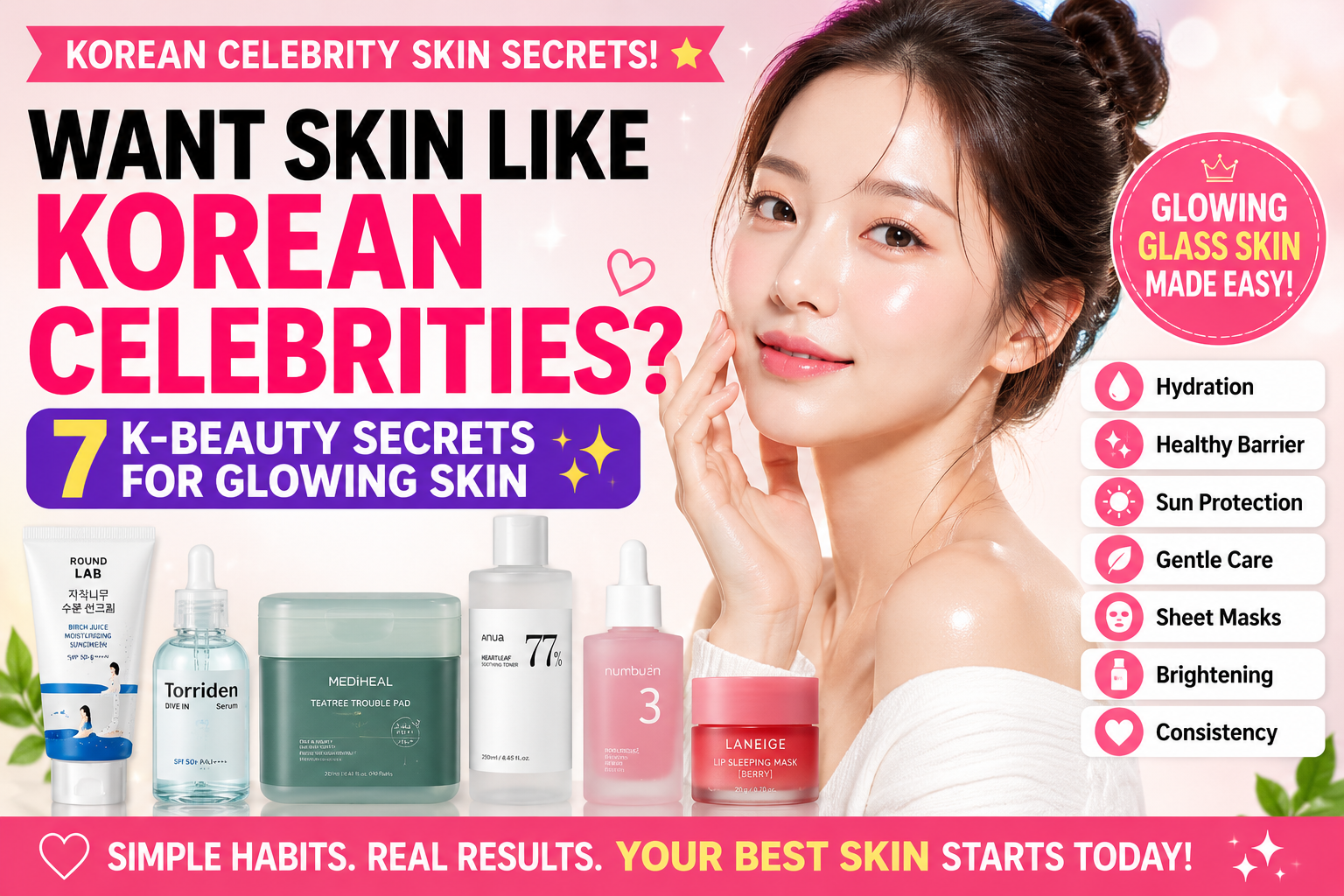
  • Want Skin Like Korean Celebrities? Discover the Secrets Behind Korean Glowing Skin

    Want Skin Like Korean Celebrities? Discover the Secrets Behind Korean Glowing Skin

    Have you ever watched a K-drama or K-pop performance and wondered:

    “How does their skin look so clear, smooth and glowing?”

    Korean celebrities often appear on camera with luminous, hydrated-looking skin — the kind of complexion that helped make terms such as “glass skin” famous around the world.

    But there isn’t one magical Korean cream that creates perfect skin overnight.

    The more interesting story behind Korean skincare is a culture of consistent care, hydration, gentle cleansing, sun protection and choosing products according to your skin’s needs.

    And you don’t have to live in Seoul — or be a K-pop star — to learn from those habits.

    Here are seven K-beauty principles worth knowing.


    1. Korean Skincare Is About Consistency, Not Magic

    One misconception about K-beauty is that everyone in Korea follows an elaborate 10-step routine every morning and night.

    That isn’t necessarily true.

    K-beauty experts interviewed by Vogue in 2026 explained that Korean skincare is highly personalized. Depending on the condition of your skin, a routine might contain only a few products or considerably more.

    The important idea is consistency.

    Jessica Jung, for example, previously told Vogue that her Korean skincare approach centered on following her daily and nightly routine consistently.

    Instead of constantly searching for a miracle product, think about what your skin actually needs and build a routine you can maintain.


    2. Clean Skin Comes First

    At the end of the day, your face may contain sunscreen, makeup, sebum, sweat and environmental residue.

    That’s why cleansing has become such an important part of K-beauty.

    One method commonly associated with Korean skincare is double cleansing.

    The basic idea is simple:

    First cleanse: remove oil-based residue such as makeup and sunscreen.

    Second cleanse: use a water-based cleanser to remove remaining sweat and impurities.

    Beauty and skincare experts describe evening double cleansing as a foundation of many Korean-style routines, particularly for people wearing makeup or sunscreen.

    But more cleansing isn’t automatically better.

    If your skin becomes dry, tight or irritated, a gentler routine may be more appropriate.


    3. Hydration Is One of the Foundations of the “Glass Skin” Look

    What makes “glass skin” look different from simply shiny skin?

    Hydration.

    The goal is usually described as skin that appears smooth, plump, even and naturally luminous.

    K-beauty experts emphasize maintaining hydration and supporting the skin barrier rather than simply covering the face with heavy makeup.

    This explains the popularity of Korean products such as:

    toners → essences → serums → moisturizers → masks

    The idea isn’t necessarily to use every product.

    Instead, lightweight hydration can be layered according to what your skin needs.


    4. Don’t Forget Sunscreen

    If there is one habit worth remembering from Korean skincare culture, it is sun protection.

    UV exposure contributes to pigmentation and visible signs of skin aging, which is why sunscreen is repeatedly emphasized by skincare professionals.

    Korean sunscreens have also become internationally popular partly because many modern formulas aim for comfortable textures suitable for everyday use.

    The lesson is simple:

    Expensive skincare means much less if you ignore daily sun protection.

    And sunscreen isn’t just something to use at the beach.

    For many people, it is an everyday skincare step.


    5. Sheet Masks and Toner Pads Are Helpers — Not Magic

    Walk into an Olive Young store in Korea and you’ll quickly notice sheet masks and toner pads.

    They are everywhere.

    Toner pads can serve different purposes depending on their formulation, including hydration, soothing, brightening or exfoliation. Dermatologist Y. Claire Chang explained to Vogue that their function can go well beyond simply being “toner on a pad.”

    Sheet masks are also commonly used as an additional hydration or soothing step.

    But remember:

    A mask cannot compensate for poor everyday skincare habits.

    Think of masks and toner pads as supporting players rather than the entire routine.


    6. Korean Stars Don’t Necessarily Use 20 Products Every Day

    This may surprise you.

    Some Korean celebrities have demonstrated elaborate beauty routines, while others keep things remarkably simple.

    For example, LE SSERAFIM’s Kazuha showed Vogue a relatively streamlined 2026 morning routine beginning with cleansing and toner pads, and said she generally keeps her skincare simple.

    That tells us something useful.

    The secret isn’t:

    “Use as many Korean products as possible.”

    It’s:

    “Find products and habits that work for your skin and use them consistently.”

    More products can also mean more opportunities for irritation, particularly when multiple strong active ingredients are combined.


    7. Skincare and Dermatology Are Not the Same Thing

    This distinction is especially important.

    Korean cosmetics can help support everyday skincare, hydration and appearance.

    But cosmetics are not substitutes for medical diagnosis or treatment.

    Persistent acne, severe irritation, unusual pigmentation, scars or other skin conditions may require evaluation by a qualified medical professional.

    This is also one reason Korea’s dermatology sector attracts so many international visitors.

    If you’re considering professional treatment rather than everyday skincare, read our Dermatology in Korea for Foreigners 2026: Treatments, Costs & How to Book guide.


    A Simple Korean-Inspired Skincare Routine for Beginners

    You don’t need 10 steps to begin.

    A simple routine might look like this:

    Morning

    Gentle cleanse
    → Hydrating serum or toner if needed
    → Moisturizer
    → Sunscreen

    Evening

    Remove sunscreen and makeup
    → Gentle cleanser
    → Hydrating or targeted skincare
    → Moisturizer

    Then adjust according to your skin type and concerns.

    That’s much more realistic than buying ten unfamiliar products at once.


    So, What’s the Real Korean Skin Secret?

    There probably isn’t one.

    It’s the combination of:

    Gentle cleansing + hydration + sun protection + appropriate products + consistency

    that matters more than any single trendy product.

    And perhaps that’s the most useful lesson behind K-beauty.

    Instead of asking:

    “What miracle product gives Korean celebrities perfect skin?”

    try asking:

    “What small skincare habits can I consistently follow every day?”

    Beautiful-looking skin is usually built over time.

    Not overnight.

    Korea's hottest K-Beauty 10 global best sellers selected by True Taste Korea
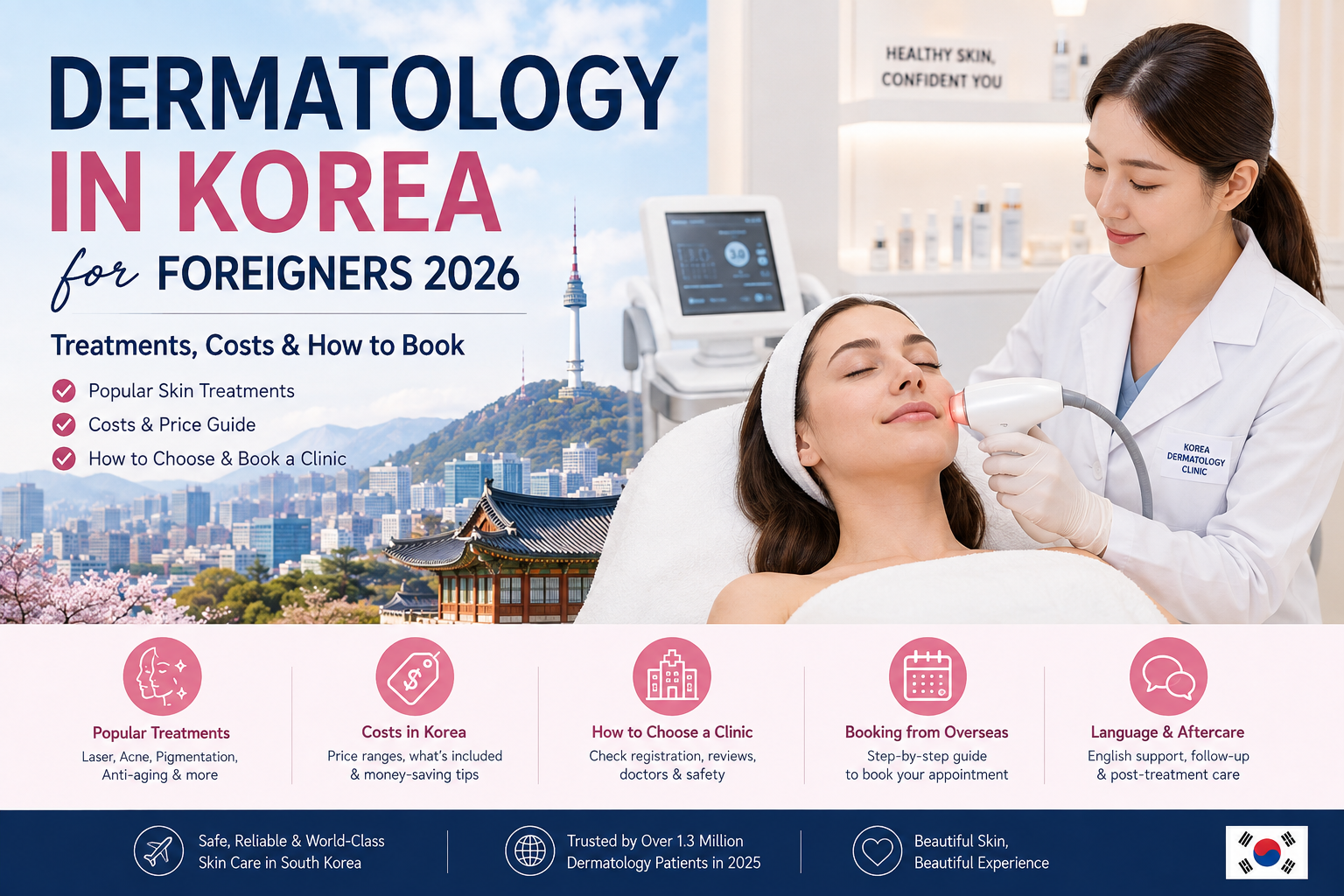
  • Dermatology in Korea for Foreigners 2026: Treatments, Costs & How to Book

    Dermatology in Korea for Foreigners 2026: Treatments, Costs & How to Book

    If you are considering traveling to South Korea for skin treatment, you are far from alone.

    Korea has become one of the world’s most popular destinations for dermatology and aesthetic skin treatments, driven in part by the global popularity of K-beauty and growing international interest in Korean medical services.

    According to official Korean government statistics, approximately 1.31 million foreign patients visited dermatology departments in Korea in 2025.

    Dermatology represented 62.9% of foreign-patient treatment by medical department, making it by far the largest category. The number increased 86.2% from the previous year.

    But traveling to another country for skin treatment raises important questions.

    Which treatment should you choose? How much does Korean dermatology cost? How do you find a clinic? Can you book from overseas? Will the staff speak English?

    This guide explains what foreigners should know before booking dermatology treatment in Korea in 2026.

    Medical notice: This article is for general travel and medical-tourism information only. It does not recommend a particular procedure or clinic. Treatment suitability, risks, results, recovery time and prices vary by individual and provider. Consult a qualified medical professional before undergoing treatment.


    Why Is Korean Dermatology So Popular With Foreigners?

    Korean skincare is already familiar to millions of consumers through K-beauty.

    But skincare products and medical dermatology are very different things.

    Visitors to Korea can find a large market of dermatology clinics and other medical providers offering consultations, medical skin care and aesthetic procedures.

    The scale of international demand is remarkable.

    Korea received 2,011,822 foreign patients from 201 countries in 2025, up 71.9% from 2024. Dermatology alone accounted for approximately 1.31 million patients.

    Many foreign visitors combine a trip to Korea with a dermatology consultation or skin treatment.

    However, popularity does not mean every clinic or procedure is appropriate for every patient.

    The goal should not be to find the clinic with the most viral social-media video.

    The goal should be to find an appropriately registered medical provider and receive a proper consultation for your individual skin condition.


    What Skin Treatments Are Available in Korea?

    The Korean dermatology and aesthetic medicine market offers many different procedures.

    The exact options vary between medical institutions, but international patients commonly research treatments related to:

    Acne and Acne Scars

    Treatment may focus on active acne, inflammation, pigmentation left after acne or different types of acne scarring.

    Because acne scars vary considerably, there is no single procedure that is appropriate for everyone.

    A medical consultation should come before choosing a treatment simply because it is popular online.

    Pigmentation and Dark Spots

    Foreign patients may seek consultations for freckles, sun damage, uneven pigmentation, melasma or other pigmentation concerns.

    Different pigmentation conditions can look similar but may require different approaches.

    This is one reason diagnosis matters before laser treatment.

    Laser Skin Treatments

    Korean clinics use many types of laser and energy-based devices.

    These may be marketed for pigmentation, redness, texture, scars, hair removal and other purposes.

    Don’t choose a treatment solely by the machine’s brand name.

    Ask why that particular device or treatment is appropriate for your skin.

    Skin Texture and Pores

    Treatments marketed for improving skin texture, pores and overall skin appearance are common in Korea.

    These may involve lasers, energy-based devices, injections or combinations of procedures depending on the clinic and the patient’s condition.

    Anti-Aging and Lifting Treatments

    Visitors will also encounter treatments marketed for wrinkles, elasticity, facial contouring or lifting.

    These can range from relatively simple outpatient procedures to more intensive treatments.

    Ask about expected results, side effects and recovery time before deciding.


    Dermatology vs. Beauty Clinic: Know What You Are Booking

    This is especially important for foreign visitors.

    The words “skin clinic,” “beauty clinic,” and “dermatology clinic” may appear similar in English-language marketing, but you should verify what type of medical institution you are actually booking.

    Check who will diagnose your condition and who will perform the procedure.

    You should also verify whether the institution is registered to treat foreign patients.

    Korea operates an official registration system for medical institutions serving international patients. Registered institutions are required to carry medical malpractice liability insurance as part of Korea’s foreign-patient protection system.

    You can search registered medical providers directly through the Korean government’s Medical Korea Registered Hospitals directory.

    This should be one of your first checks before making an appointment.


    Where Should Foreigners Get Skin Treatment in Korea?

    Seoul dominates Korea’s international medical market.

    Of approximately 2.01 million foreign patients in Korea in 2025, about 1.76 million received treatment in Seoul, representing 87.2% of the national total.

    For dermatology travelers, areas of Seoul frequently associated with large numbers of clinics include:

    Gangnam
    One of Seoul’s largest medical and beauty districts.

    Sinsa and Apgujeong
    Known for concentrations of cosmetic, dermatology and aesthetic medical services.

    Cheongdam
    Another area with numerous skin and cosmetic medical institutions.

    Myeongdong
    Convenient for international tourists because of its central location, shopping and accommodation.

    But don’t assume that Gangnam automatically means better treatment.

    The right provider depends on the condition you want treated, the medical professional, communication, aftercare and your individual circumstances.

    Korea’s official Medical Korea directory includes registered dermatology clinics not only in Seoul but also in cities such as Busan, Incheon, Gwangju and elsewhere.


    How Much Does Dermatology Cost in Korea?

    This is probably one of the first questions most international visitors ask.

    Unfortunately, there is no single useful answer such as:

    “A Korean skin treatment costs $100.”

    Prices vary enormously depending on:

    • the procedure
    • number of treatment areas
    • device or technique
    • doctor
    • clinic
    • number of sessions
    • medication
    • anesthesia or numbing
    • additional treatments
    • aftercare

    Promotional prices can also differ from the final amount paid.

    For that reason, request a written quotation from the clinic before traveling whenever possible.

    Ask:

    What exactly is included in this price?

    For example, determine whether the quote includes:

    consultation + procedure + medication + anesthesia/numbing + aftercare + follow-up visit.

    If a clinic advertises an unusually low starting price, ask what a typical patient receiving the treatment you are considering actually pays.


    Don’t Compare Korean Clinics Only by Price

    Suppose Clinic A advertises a procedure at a very low price while Clinic B charges considerably more.

    That doesn’t necessarily mean one is a bargain and the other is expensive.

    The treatment area, number of shots, device settings, doctor’s involvement, medication and aftercare may differ.

    Instead of asking only:

    “How much?”

    ask:

    “What exactly will I receive for that price?”

    For someone flying thousands of kilometers for treatment, this distinction matters much more than saving a small amount on the advertised price.


    How to Book a Korean Dermatology Clinic From Overseas

    You do not necessarily need to arrive in Seoul before arranging treatment.

    Many institutions serving foreign patients provide online inquiries or international-patient contact channels.

    A practical booking process looks like this:

    Step 1: Decide What You Want Evaluated

    Start with your skin concern rather than a trendy procedure.

    For example:

    acne scars → pigmentation → redness → wrinkles → skin texture

    You don’t need to diagnose yourself.

    The purpose is simply to explain clearly what concerns you.

    Step 2: Shortlist Several Clinics

    Don’t immediately book the first clinic you see on TikTok, Instagram or YouTube.

    Create a shortlist and check whether the medical institution appears in the official Medical Korea provider directory.

    Step 3: Contact the Clinic

    Ask whether it accepts international patients and whether consultation is available in English or another language you speak.

    Step 4: Send Relevant Information

    The clinic may ask about:

    • age
    • skin concern
    • previous treatments
    • allergies
    • medications
    • medical conditions
    • photographs

    Provide accurate information.

    Step 5: Request an Estimate

    Ask for an estimated treatment price before booking your flight.

    Step 6: Ask About Recovery

    This is particularly important for tourists.

    Ask:

    Can I fly after treatment?
    Can I exercise?
    Can I wear makeup?
    Should I avoid sunlight?
    How long will redness or swelling last?
    Do I need a follow-up appointment?

    Your travel itinerary should be planned around the treatment — not the other way around.


    Can I Get Dermatology Treatment in Korea Without Speaking Korean?

    Potentially, yes.

    Many medical institutions that actively serve international patients provide coordinators or interpretation in one or more languages.

    But never assume English support is available.

    Confirm it before booking.

    Ask specifically:

    Is an English-speaking coordinator available on the day of my appointment?

    And more importantly:

    Will I be able to communicate clearly with the medical professional about risks, treatment choices and aftercare?

    Translation during payment or reception is not the same as adequate communication during a medical consultation.

    For general information about Korea’s medical-tourism system, international visitors can also use the official Medical Korea portal.


    Questions to Ask Before Paying a Deposit

    Before paying, save the clinic’s answers to several important questions.

    1. Who will perform the procedure?
    2. Why is this treatment suitable for my skin?
    3. What are the common side effects?
    4. How much downtime should I expect?
    5. What is the total estimated cost?
    6. What exactly is included?
    7. Will I need more than one session?
    8. Is English-language support available?
    9. What happens if I have a problem after treatment?
    10. Who can I contact after returning home?

    A reputable medical consultation should allow you to understand what you are agreeing to.


    Be Careful With Before-and-After Photos

    Before-and-after photographs can be useful, but they should never be your only reason for choosing a clinic.

    Lighting, camera angle, makeup, editing and the time between photographs can dramatically affect appearance.

    Also remember that another patient’s result does not guarantee yours.

    Your skin type, condition, age, medical history and response to treatment may be different.

    Use photographs as one piece of information, not as a medical guarantee.


    Should You Get Skin Treatment on the First or Last Day of Your Korea Trip?

    For many procedures, doing treatment immediately before an important event or long flight may not be ideal.

    Some treatments can cause temporary redness, swelling, sensitivity, bruising or peeling.

    On the other hand, undergoing treatment on your first day without allowing time for follow-up can also create problems.

    The best timing depends entirely on the procedure.

    Before finalizing your itinerary, ask the clinic:

    How many days should I remain in Korea after this treatment?

    For a simple procedure, the answer may be short.

    For a treatment requiring follow-up, you may need to stay longer.


    Sun Protection Matters During Your Korea Trip

    If your procedure makes your skin more sensitive to sunlight, sightseeing can become part of your recovery planning.

    Korea involves plenty of outdoor walking.

    Tourists may spend hours exploring palaces, traditional markets, neighborhoods and shopping districts.

    Ask your medical provider about appropriate sun protection and activities after treatment.

    Follow the provider’s instructions rather than assuming your normal skincare routine is suitable immediately after a procedure.


    What Should You Bring to Your Appointment?

    Bring your passport or other identification requested by the medical institution.

    It can also be useful to have:

    • a list of medications
    • allergy information
    • details of previous skin procedures
    • photographs showing changes in your skin
    • questions written in advance
    • the clinic’s booking confirmation
    • emergency contact information

    If you have a diagnosed skin condition or previous medical records relevant to the treatment, ask whether the clinic wants them before your visit.


    What If You Have a Problem After Returning Home?

    This is one of the most overlooked questions in medical tourism.

    Before undergoing treatment, ask:

    Who do I contact if I develop an unexpected reaction after returning to my country?

    Find out whether the clinic provides remote follow-up and what documentation it can provide to your doctor at home.

    Korea’s system for institutions serving foreign patients was designed in part to strengthen protections for international patients, including registration requirements and malpractice liability insurance.

    But that does not remove the inherent risks of medical treatment.

    Planning aftercare before the procedure is much easier than trying to solve a problem from another country afterward.


    Can You Combine Dermatology Treatment With a Korea Vacation?

    Yes — and many visitors do.

    But think of it in this order:

    Medical treatment first. Vacation second.

    Don’t schedule a demanding hiking trip, beach holiday, sauna visit or all-day outdoor itinerary immediately after a procedure without checking whether it is medically appropriate.

    Instead, build your itinerary around your expected recovery.

    A traveler receiving a low-downtime treatment may have a very different schedule from someone receiving a more intensive procedure.

    This is where medical tourism differs from ordinary tourism.

    Your hotel, transportation and sightseeing schedule can all become part of your treatment plan.


    Is Korean Dermatology Worth Traveling For?

    For some international visitors, it may be.

    The extraordinary growth of foreign dermatology patients shows that Korea has become a major destination for this type of medical travel. In 2025, dermatology accounted for 62.9% of foreign-patient treatment by department, and the number of dermatology patients increased 86.2% year over year.

    But popularity alone should never determine a medical decision.

    Before traveling, consider:

    Treatment suitability + provider qualifications + total cost + communication + recovery time + aftercare + travel expenses

    rather than simply asking whether Korea is cheaper.

    The best treatment is not necessarily the newest, most viral or most heavily discounted procedure.

    It is the treatment that is medically appropriate for you.


    Korean Dermatology for Foreigners: Quick Checklist

    Before flying to Korea:

    ✓ Identify the skin concern you want evaluated
    ✓ Research the treatment rather than relying on social media
    ✓ Check the medical institution
    ✓ Confirm foreign-patient registration
    ✓ Confirm language support
    ✓ Request an estimated total price
    ✓ Ask what the price includes
    ✓ Understand risks and expected downtime
    ✓ Leave enough time for recovery
    ✓ Confirm follow-up arrangements
    ✓ Know who to contact after returning home


    Planning a Medical Trip to Korea?

    Dermatology is only one part of Korea’s rapidly growing international healthcare sector.

    Foreign visitors also travel to Korea for health checkups, dentistry, plastic surgery, ophthalmology and treatment at major hospitals.

    If you are still deciding whether Korea is the right destination, start with our Medical Tourism in Korea 2026: Costs, Hospitals, Treatments & Complete Guide.

    From there, you can plan the entire journey — from choosing medical care and estimating costs to booking, accommodation and recovery in Korea.

    True Taste Korea will continue building practical guides designed for international visitors who want to understand Korea before they arrive — not after something goes wrong.