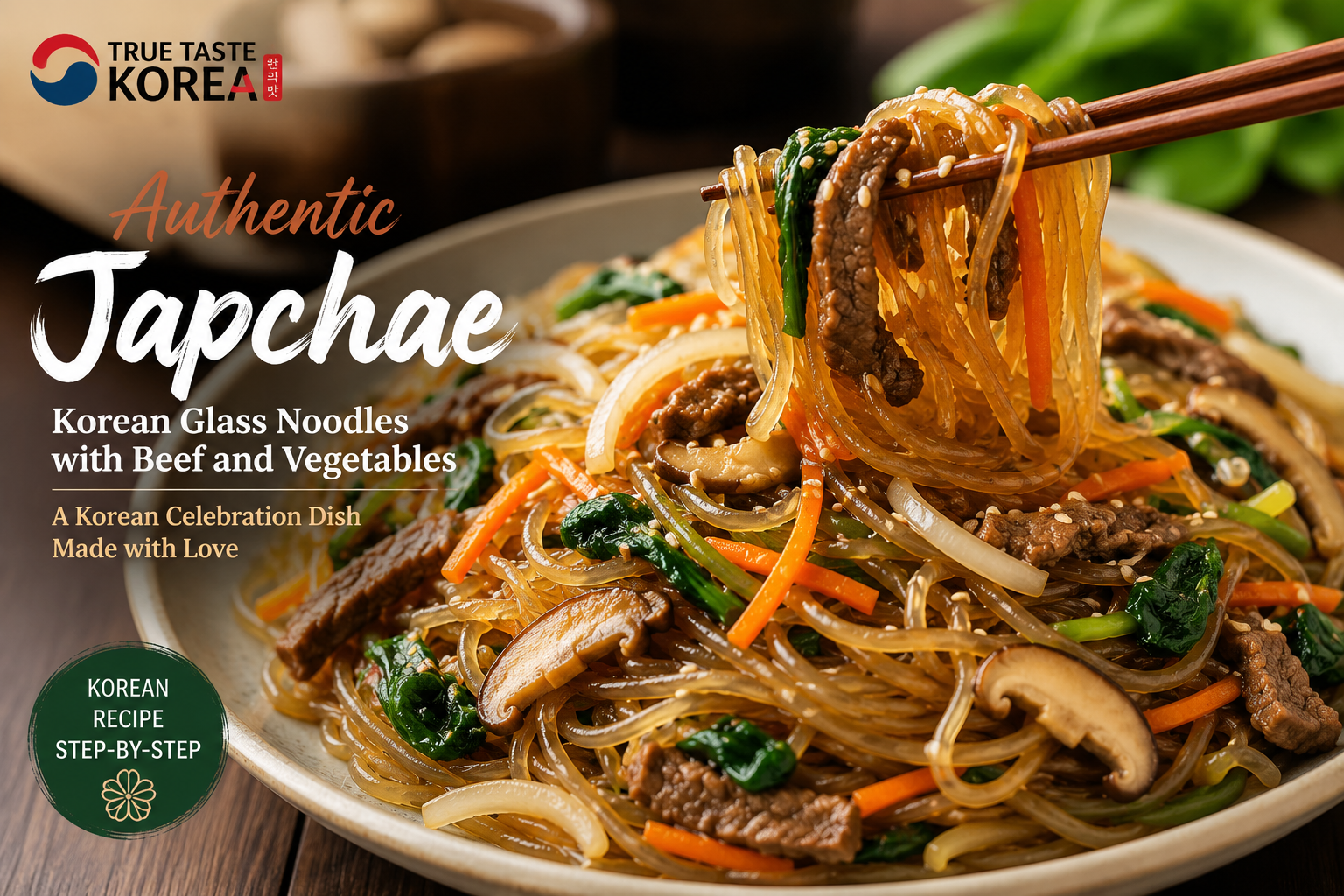
For many Koreans, japchae is more than a noodle dish. It is a taste of celebration and home.
Growing up in Korea, many people remember seeing a large plate of japchae on the family table when something special happened.
Birthdays, holidays, family gatherings, and celebrations often meant the same familiar combination: chewy glass noodles, tender beef, colorful vegetables, soy sauce, and the unmistakable aroma of sesame oil.
Sometimes, the strongest memory isn’t even the food itself. It’s watching a mother prepare a big batch in the kitchen, carefully cooking each ingredient before bringing everything together.
That is part of what makes japchae special.
Today, we’ll make a traditional Korean-style beef japchae with sweet potato glass noodles, spinach, carrots, onions, and mushrooms. This recipe serves four to five people and includes practical tips for getting the noodles chewy, the vegetables colorful, and the seasoning balanced.
1. What Is Japchae?
Japchae (잡채) is a popular Korean dish made by combining glass noodles with vegetables, seasonings, and often meat.
The noodles are called dangmyeon (당면). Modern Korean dangmyeon is generally made from sweet potato starch, which gives it a translucent appearance and a pleasantly chewy texture.
A typical homemade version includes:
- Sweet potato glass noodles
- Thinly sliced beef
- Spinach
- Carrots
- Onions
- Mushrooms
- Soy sauce
- Sesame oil
- Garlic
- Sesame seeds
The flavor is savory, slightly sweet, and nutty, with a satisfying contrast between the springy noodles and tender vegetables.
Japchae is often served as banchan, or a side dish, alongside rice and other Korean dishes. However, a generous serving can easily become a meal on its own.
2. Why Is Japchae a Celebration Food in Korea?
Japchae has long been associated with special occasions in Korea.
It is commonly served at birthdays, weddings, holidays, family gatherings, and other celebrations. The colorful ingredients and generous presentation make it particularly suitable for a table shared with family and guests.
For many people who grew up in Korean households, homemade japchae also brings back memories of their mothers preparing it for important family occasions.
Beef was often included to make the dish feel more generous and festive.
The emotional connection is simple:
Japchae was often something you ate when the family had a reason to celebrate.
That is why a plate of japchae can mean more than its ingredients. It can remind someone of a birthday, a holiday meal, or a familiar kitchen filled with the smell of sesame oil.
3. Japchae Wasn’t Originally Made with Glass Noodles
Here is an interesting part of japchae’s history.
The dish dates back to the Joseon Dynasty. Historical records connect early japchae with royal dining during the reign of King Gwanghaegun in the 17th century.
But the original version was quite different from the dish most people recognize today.
Early japchae did not use the sweet potato glass noodles that are now its defining ingredient. Historical recipes used a variety of vegetables and other ingredients, with different seasonings and preparation methods.
Research examining Korean cookbooks from the 1600s to the 1960s indicates that glass-noodle japchae appeared in the early 20th century and became increasingly popular around the 1950s.
In other words, the japchae served at modern Korean family gatherings is the result of a long culinary evolution.
The name also reflects the dish’s mixed ingredients: jap refers to a mixture or assortment, while chae is associated with vegetables.
So the dish’s identity has always been closely connected to bringing different ingredients together.
4. Authentic Korean Beef Japchae Recipe
<text>Servings: 4–5 people
Preparation time: About 25 minutes
Cooking time: About 20–25 minutes
Total time: Approximately 45–50 minutes</text>
Ingredients
Main ingredients
- 250 g Korean sweet potato glass noodles (dangmyeon)
- 150 g thinly sliced beef
- 150 g spinach
- 1 medium carrot
- 1 medium onion
- 100 g shiitake mushrooms or other mushrooms
- 2 green onions
- 1 tablespoon cooking oil
- Sesame seeds for garnish
Beef marinade
- 1 tablespoon soy sauce
- 1 teaspoon sugar
- 1 teaspoon sesame oil
- 1 teaspoon minced garlic
- A little black pepper
Japchae seasoning
- 4 tablespoons soy sauce
- 2 tablespoons sugar
- 2 tablespoons sesame oil
- 1 tablespoon minced garlic
You can reduce the sugar if you prefer a less sweet japchae. The final balance also depends on the saltiness of your soy sauce and the brand of noodles you use.
5. Step-by-Step Cooking Instructions
Step 1. Marinate the Beef
Slice the beef into thin strips if it isn’t already prepared.
Combine it with the soy sauce, sugar, sesame oil, minced garlic, and black pepper.
Mix well and leave it to marinate for approximately 15–20 minutes while you prepare the vegetables.
Thinly sliced beef is ideal because it cooks quickly and mixes easily with the noodles.
Step 2. Prepare the Vegetables
Cut the carrot, onion, and mushrooms into thin strips.
Try to keep the pieces a similar size. This makes the finished japchae easier to mix and gives it a more balanced appearance.
Wash the spinach thoroughly.
Bring a small pot of water to a boil and blanch the spinach briefly, just until it wilts. Transfer it to cold water to stop the cooking.
Drain and gently squeeze out excess water.
Season the spinach lightly with a pinch of salt and a little sesame oil.
Don’t squeeze it so hard that it becomes crushed. You want the leaves to remain tender and retain some texture.
Step 3. Stir-Fry the Vegetables and Beef Separately
Heat a little cooking oil in a frying pan.
Cook the onion until it becomes slightly translucent, then transfer it to a large mixing bowl.
Stir-fry the carrots until they are just tender but still have a little bite. Remove them.
Cook the mushrooms until softened and fragrant.
Finally, stir-fry the marinated beef until fully cooked.
Why cook the ingredients separately?
Because each ingredient has a different cooking time. Onions soften quickly, carrots need a little more time, and mushrooms release moisture as they cook.
Cooking them separately gives you better control over their texture and helps preserve the different colors.
This extra step takes a little longer, but it makes a noticeable difference in homemade japchae.
Step 4. Cook the Sweet Potato Glass Noodles
Bring a large pot of water to a boil.
Add the dangmyeon and cook according to the package instructions. Different brands and noodle thicknesses can require different cooking times, so the package directions are the best starting point.
The noodles should be soft enough to eat but still pleasantly chewy.
Drain them thoroughly.
If the noodles are very long, use clean kitchen scissors to cut them into shorter lengths.
The most important point is not to overcook the noodles. Overcooked dangmyeon can become too soft and lose the springy texture that makes japchae enjoyable.
Step 5. Season the Noodles
In a small bowl, mix the soy sauce, sugar, sesame oil, and minced garlic for the japchae seasoning.
Place the warm, drained noodles in a large pan or mixing bowl.
Add most of the seasoning and toss until the noodles are evenly coated.
Taste a small amount before adding the remaining seasoning. You may not need every drop, depending on the noodles and your preferred level of saltiness.
If the noodles begin sticking together, a small additional drizzle of sesame oil can help loosen them.
Step 6. Combine All the Ingredients
Add the cooked beef, onion, carrots, mushrooms, spinach, and green onions to the noodles.
Use tongs or clean hands to gently mix everything together.
Try to distribute the vegetables and beef evenly rather than leaving all the toppings on top.
Taste and adjust the seasoning with a little more soy sauce, sugar, or sesame oil if necessary.
Finish with sesame seeds.
Your homemade Korean beef japchae is ready to serve.
6. The Secrets to Making Better Japchae
A few small details can make the difference between ordinary japchae and a really satisfying homemade version.
Use Plenty of Vegetables
One common mistake is adding too many noodles and too few vegetables.
A good homemade japchae should have a generous mixture of beef, mushrooms, spinach, carrots, and onions throughout the noodles.
The vegetables contribute flavor, color, and texture. They should not feel like a small garnish.
Keep the Noodles Chewy
Dangmyeon should be springy, not mushy.
Follow the cooking time on the package and check the texture before draining.
Remember that the noodles will continue to soften slightly when mixed with the warm ingredients.
Don’t Overdo the Sesame Oil
Sesame oil gives japchae its familiar Korean aroma.
However, too much can make the dish heavy and overpower the other ingredients.
Start with the recommended amount and add a little more only if needed.
Control the Moisture
Spinach and mushrooms can release water.
Drain the spinach well after blanching, and cook the mushrooms until excess moisture has evaporated.
Too much liquid can dilute the seasoning and make the finished noodles less glossy.
Taste Before Serving
Japchae should be savory, slightly sweet, and fragrant.
There is no single sweetness level that suits everyone. Adjust the seasoning according to your taste, especially if you are using a particularly salty soy sauce.
7. Can You Make Japchae Without Beef?
Absolutely.
Although beef is common in celebratory Korean-style japchae, it is not essential.
For a vegetarian version, simply leave out the beef and increase the amount of mushrooms and vegetables.
Shiitake mushrooms are particularly useful because they add a rich, savory flavor.
For a vegan version, check that your soy sauce and other seasonings are suitable for a vegan diet.
You can also experiment with tofu or other plant-based ingredients if you want additional protein.
8. Can Japchae Be a Complete Meal?
Yes.
Japchae is often served as a side dish with rice, soup, and other Korean foods. However, it already contains noodles, vegetables, and often meat.
A generous portion can therefore be satisfying enough to eat without a separate bowl of rice.
If you want to serve it as a main meal, increase the amount of vegetables and protein rather than simply adding more noodles.
It is also a convenient dish for sharing because it can be prepared in a large batch.
One thing to remember: dangmyeon is primarily a source of carbohydrates, and traditional japchae also contains sesame oil and sugar. It should not automatically be considered a low-calorie diet food.
9. How to Store Leftover Japchae
Japchae tastes best freshly prepared, but leftovers can be stored.
Transfer the cooked japchae to a clean, airtight container and refrigerate it promptly.
For food safety, don’t leave cooked japchae at room temperature for more than two hours. Keep it refrigerated at 5°C or below, and avoid storing it for longer than necessary.
For the best quality, try to eat it within two to three days.
The noodles may become firmer in the refrigerator, and the vegetables may lose some of their original texture. This is normal.
If the dish has been left out for an extended period or shows unusual changes in smell or appearance, discard it rather than tasting it to check.
10. The Best Way to Reheat Japchae
The easiest way to restore the texture of refrigerated japchae is to warm it in a frying pan.
- Place the japchae in a pan over medium-low heat.
- Add a small splash of water.
- Gently stir until the noodles loosen and become warm.
- If needed, add a few drops of sesame oil before serving.
Avoid adding too much water. You only need enough to help soften the chilled noodles.
Reheating gently helps prevent the vegetables from becoming overly soft.
11. Frequently Asked Questions About Japchae
What Are Japchae Noodles Made From?
Modern Korean dangmyeon is generally made from sweet potato starch.
This gives the noodles their translucent appearance and characteristic chewy texture.
Is Japchae Spicy?
Usually, no.
Traditional japchae is savory and slightly sweet rather than spicy. It generally does not rely on chili paste or chili powder.
That makes it a good introduction to Korean food for people who prefer milder flavors.
Is Japchae Gluten-Free?
Sweet potato starch noodles are generally gluten-free, but that does not automatically make the entire dish gluten-free.
Regular soy sauce commonly contains wheat.
If you need a gluten-free dish, check the labels of every ingredient and use certified gluten-free soy sauce and other suitable seasonings.
Can I Make Japchae Ahead of Time?
Yes.
Japchae is often prepared for family gatherings and celebrations, so making it ahead can be convenient.
You can cook the ingredients, combine them, and refrigerate the finished dish. Reheat it gently before serving.
For the best texture, avoid leaving it at room temperature for extended periods.
Can I Eat Japchae Cold?
You can eat properly refrigerated japchae cold, although the noodles will usually be firmer than when freshly prepared.
Many people prefer it warm because the sesame oil aroma becomes more noticeable and the noodles feel softer.
12. More Than Korean Glass Noodles
Calling japchae simply “Korean glass noodles” doesn’t fully explain why the dish is so familiar to many Koreans.
For some, it brings back memories of a birthday table.
For others, it means a holiday gathering, relatives visiting, or a special meal prepared for someone they love.
And for many people, the memory begins in the kitchen: a mother preparing beef and vegetables, cooking each ingredient carefully, and mixing everything into one large bowl of glossy noodles.
The combination of chewy dangmyeon, savory beef, colorful vegetables, soy sauce, and sesame oil makes japchae delicious.
But the memories surrounding it are what make it special.
Sometimes food isn’t just about what is on the plate. It’s about remembering who prepared it, and why everyone was gathered around the table in the first place.
That is the story behind Korean japchae.