kkneoqkr@gmail.com

  • Medical Tourism in Korea 2026: Costs, Hospitals, Treatments & Complete Guide

    Medical Tourism in Korea 2026: Costs, Hospitals, Treatments & Complete Guide

    South Korea is famous around the world for K-pop, Korean food and K-beauty. But there is another reason why a rapidly growing number of international visitors are traveling to Korea: medical treatment.

    In 2025, 2,011,822 foreign patients from 201 countries received medical care in Korea, according to Korea’s Ministry of Health and Welfare. That was a 71.9% increase from 2024 and the first time the annual number exceeded two million.

    From dermatology and plastic surgery to comprehensive health checkups, dentistry and advanced hospital care, Korea now has a large medical system serving international patients.

    But planning medical treatment in another country can be confusing.

    How do you find a reliable hospital? How much will treatment cost? Can you communicate in English? Do you need a medical visa? And what should you prepare before flying to Korea?

    This 2026 medical tourism in Korea guide explains the process from planning your treatment abroad to returning home.

    Important: This guide provides general travel and medical-tourism information. Treatment suitability, risks, recovery time and costs vary by patient and medical institution. Always consult a qualified medical professional before making treatment decisions.

    Why Are Foreign Patients Traveling to Korea?

    Medical tourism in Korea has grown rapidly.

    Official government figures show that Korea received approximately 610,000 foreign patients in 2023, 1.17 million in 2024 and 2.01 million in 2025. The cumulative number of foreign patients since statistics began in 2009 has reached approximately 7.06 million.

    In 2025, the largest groups came from:

    • China — 618,973
    • Japan — 600,009
    • Taiwan — 185,715
    • United States — 173,363
    • Thailand — 58,124

    China and Japan alone represented more than 60% of foreign patients.

    One major reason is the international popularity of Korean dermatology, cosmetic procedures and K-beauty.

    But Korea’s medical tourism industry extends beyond cosmetic treatment.

    International patients also visit Korea for health screenings, dentistry, ophthalmology, rehabilitation, fertility treatment and treatment at major hospitals.

    What Medical Treatments Are Popular in Korea?

    The type of treatment you choose will determine almost everything about your trip: where you stay, how long you remain in Korea, whether you need someone to accompany you and how much the trip will cost.

    1. Dermatology and Skin Treatments

    Dermatology is currently one of the biggest drivers of Korean medical tourism.

    Government data show that dermatology accounted for the majority of foreign-patient treatment in 2025.

    Foreign visitors commonly search for Korean clinics offering treatments related to acne, pigmentation, scars, skin texture, lasers and cosmetic skin care.

    Because procedures, devices and medical suitability vary considerably, don’t choose a clinic based only on social-media photos or the lowest advertised price.

    A detailed Dermatology in Korea for Foreigners guide will cover treatment types, costs, booking and clinic-selection tips separately.

    2. Plastic Surgery

    South Korea is internationally known for cosmetic and reconstructive surgery.

    Foreign patients may travel for procedures involving the eyes, nose, face or body, among others.

    Surgery requires substantially more planning than a simple outpatient procedure. Consider consultation, anesthesia, recovery time, follow-up visits and the possibility of complications before booking flights.

    3. Comprehensive Health Checkups

    Another reason foreigners seek medical treatment in Korea is comprehensive health screening.

    Some Korean hospitals and health-screening centers provide packages that combine multiple examinations during a scheduled visit.

    For an international traveler, this can be attractive because several tests may be completed during one trip.

    However, what is included varies considerably between packages, so compare the actual examinations rather than simply comparing package prices.

    4. Dentistry

    Foreign visitors also use Korean dental clinics for checkups and treatments.

    If your treatment requires multiple stages, ask the clinic before traveling how many visits will be required and how much time should be left between appointments.

    This is especially important when planning flights and accommodation.

    5. Major Hospital Treatment

    Korea’s international medical services are not limited to beauty treatment.

    The government’s Medical Korea platform provides information relating to areas including cancer, heart disease, transplantation, spinal treatment, infertility treatment, rehabilitation, dentistry and reconstructive surgery.

    Patients considering treatment for a serious medical condition should contact the hospital’s international patient center well before traveling and provide the requested medical records.

    How to Find a Hospital in Korea for Foreigners

    This may be the most important part of planning your trip.

    Do not choose a hospital simply because it appears frequently on social media.

    Korea operates an official registration system for medical institutions that serve foreign patients.

    Registered institutions are subject to requirements designed to protect international patients, including medical malpractice liability insurance.

    The Korean government also operates the Korean Accreditation Program for Hospitals Serving Foreign Patients (KAHF), which evaluates participating institutions in areas including services for foreign patients and patient safety.

    Before booking, check whether the hospital or clinic is registered to serve foreign patients.

    Search Medical Korea’s official hospital information

    This is a much safer starting point than choosing solely from an advertisement or influencer recommendation.

    Can Foreign Patients Receive Help in English?

    Many institutions serving international patients offer foreign-language assistance, although the languages available vary by hospital.

    International patient centers may help with appointments, medical interpretation and other arrangements.

    The Korea Tourism Organization also provides medical-tourism information and multilingual consultation resources for foreign visitors.

    Before booking, ask the hospital specifically:

    • Is an English-speaking coordinator available?
    • Is medical interpretation included or charged separately?
    • Will an interpreter be present during consultation and treatment?
    • Can follow-up communication be provided in English after returning home?

    Don’t assume that every member of the medical staff speaks English simply because a hospital treats international patients.

    How Much Does Medical Treatment in Korea Cost?

    This is one of the most important questions — and one of the easiest areas to misunderstand.

    There is no single “Korea medical tourism price.”

    The cost depends on the hospital, doctor, diagnosis, procedure, medical device or technique used, anesthesia, medication, tests and follow-up care.

    Therefore, before flying to Korea, request a written estimate directly from the medical institution whenever possible.

    Ask whether the quoted price includes:

    consultation + examinations + procedure + anesthesia + medication + follow-up treatment.

    A cheap headline price can become much more expensive when additional services are added.

    You should also calculate the total cost of your medical trip, not only the treatment price.

    That means:

    Treatment + Flights + Hotel + Local Transportation + Meals + Interpretation + Recovery Expenses + Travel Insurance

    For major treatment, keeping an additional emergency budget is sensible.

    How Do I Book Medical Treatment Before Traveling to Korea?

    For planned treatment, start the process before buying your flight.

    A practical sequence is:

    Step 1 — Decide what treatment you need

    Research the treatment itself before comparing hospitals.

    Step 2 — Find registered medical institutions

    Use official resources such as Medical Korea to create a shortlist.

    Step 3 — Contact international patient centers

    Send inquiries directly to several hospitals or clinics.

    Step 4 — Provide medical information

    Depending on the treatment, the institution may request previous diagnoses, scans, laboratory results, prescriptions or other records.

    Step 5 — Request a treatment plan and estimated cost

    Ask what is included and whether additional examinations may change the final price.

    Step 6 — Confirm recovery time

    Ask how long you should remain in Korea before flying home.

    Step 7 — Only then arrange your trip

    Once the treatment schedule is sufficiently clear, plan flights and accommodation around your medical appointments.

    Do I Need a Medical Visa for Korea?

    Visa requirements depend on your nationality, purpose of visit and expected length of stay.

    Korea has medical-tourism visa categories including C-3-3 for shorter stays and G-1-10 for longer-term treatment, according to Medical Korea.

    Medical Korea states that the application process can require documents such as a passport, medical diagnosis, confirmation of a treatment appointment and evidence of the ability to pay for treatment and living expenses, depending on the circumstances.

    However, entry requirements vary by nationality and can change.

    Always check the requirements that apply to your passport and circumstances with the Korean embassy, consulate or official immigration resources before booking.

    Where Should Medical Tourists Stay?

    For many foreign patients, Seoul will be the main destination.

    In fact, approximately 87% of foreign patients in 2025 received treatment in Seoul, according to government statistics reported in 2026.

    But don’t automatically choose a hotel in a famous tourist neighborhood.

    For medical travel, the best accommodation is often the one that makes treatment and recovery easiest.

    Consider:

    Distance to the hospital

    Repeated taxi or subway journeys can become uncomfortable after treatment.

    Elevator access

    This may matter after surgery or when mobility is limited.

    Kitchen and laundry facilities

    Useful for longer stays.

    Nearby pharmacy and convenience stores

    Small conveniences become important during recovery.

    Easy airport transportation

    Especially useful on your departure day.

    For procedures requiring several follow-up appointments, staying close to the hospital can be more valuable than staying next to a tourist attraction.

    What Should You Prepare Before Leaving Home?

    Create a medical travel folder before departure.

    Include copies of your passport, appointment confirmation, medical records, prescriptions, medication list, allergies, emergency contacts, travel insurance documents and your hospital’s international center contact information.

    If you regularly take medication, ask your doctor whether anything needs to change before treatment.

    Also ask the Korean medical institution whether you need to stop eating, drinking, taking supplements or using particular medications before your procedure.

    Never make those changes on your own without appropriate medical guidance.

    What Happens After Treatment?

    Recovery planning is just as important as booking treatment.

    Before leaving the hospital or clinic, make sure you understand:

    • What medications should I take?
    • What symptoms are normal?
    • What symptoms require urgent medical attention?
    • When is my follow-up appointment?
    • When can I fly?
    • Who should I contact after returning home?

    For significant surgery or treatment, ask whether you will need a companion during the first stage of recovery.

    Most importantly, don’t schedule an aggressive sightseeing itinerary immediately after a procedure simply because you are visiting Korea.

    Treatment comes first. Tourism comes second.

    What If Something Goes Wrong?

    This is something every medical tourist should think about before traveling.

    Ask the institution how complications are handled and what aftercare is available once you return to your country.

    Korea’s Medical Korea system also provides information and support resources for international patients, including information related to medical disputes.

    The Medical Korea Support Center provides services including counseling, interpretation and legal support for foreign patients.

    Knowing where to ask for help before treatment is much better than searching for assistance after a problem occurs.

    Is Medical Tourism in Korea Worth It?

    There isn’t one answer that applies to everyone.

    Korea can be an attractive destination for patients interested in areas where the country has developed substantial international-patient infrastructure, particularly dermatology, cosmetic procedures and health screening.

    But traveling abroad for medical treatment also adds costs and risks that do not exist when receiving treatment close to home.

    The right question isn’t simply:

    “Is treatment cheaper in Korea?”

    A better question is:

    “Does the quality, treatment option, total cost, travel burden and follow-up plan make Korea the right choice for my particular situation?”

    Compare several medical institutions, understand the complete price and recovery requirements, and make your decision based on medical suitability rather than advertising alone.

    Medical Tourism in Korea: Quick Checklist

    Before booking your trip, confirm:

    ✓ The hospital or clinic is appropriately registered
    ✓ You understand the proposed treatment
    ✓ You received an estimated total price
    ✓ You know what the price includes
    ✓ Language support is confirmed
    ✓ Your visa or entry requirements are checked
    ✓ Accommodation is suitable for recovery
    ✓ You know how long to remain in Korea
    ✓ You understand follow-up care
    ✓ You have an emergency plan

    Final Thoughts

    More than two million foreign patients chose Korea for medical care in 2025, showing just how quickly the country’s international medical sector is growing.

    But successful medical travel requires more than finding a famous clinic and buying a plane ticket.

    Research the treatment first, verify the medical institution, compare costs carefully, confirm language support and plan enough time for recovery.

    True Taste Korea will continue building practical guides for international visitors considering medical treatment in Korea — from dermatology and health checkups to hospitals, costs, accommodation and what to do if you need medical help while traveling.

    You can also search for registered medical institutions through the Medical Korea official website.
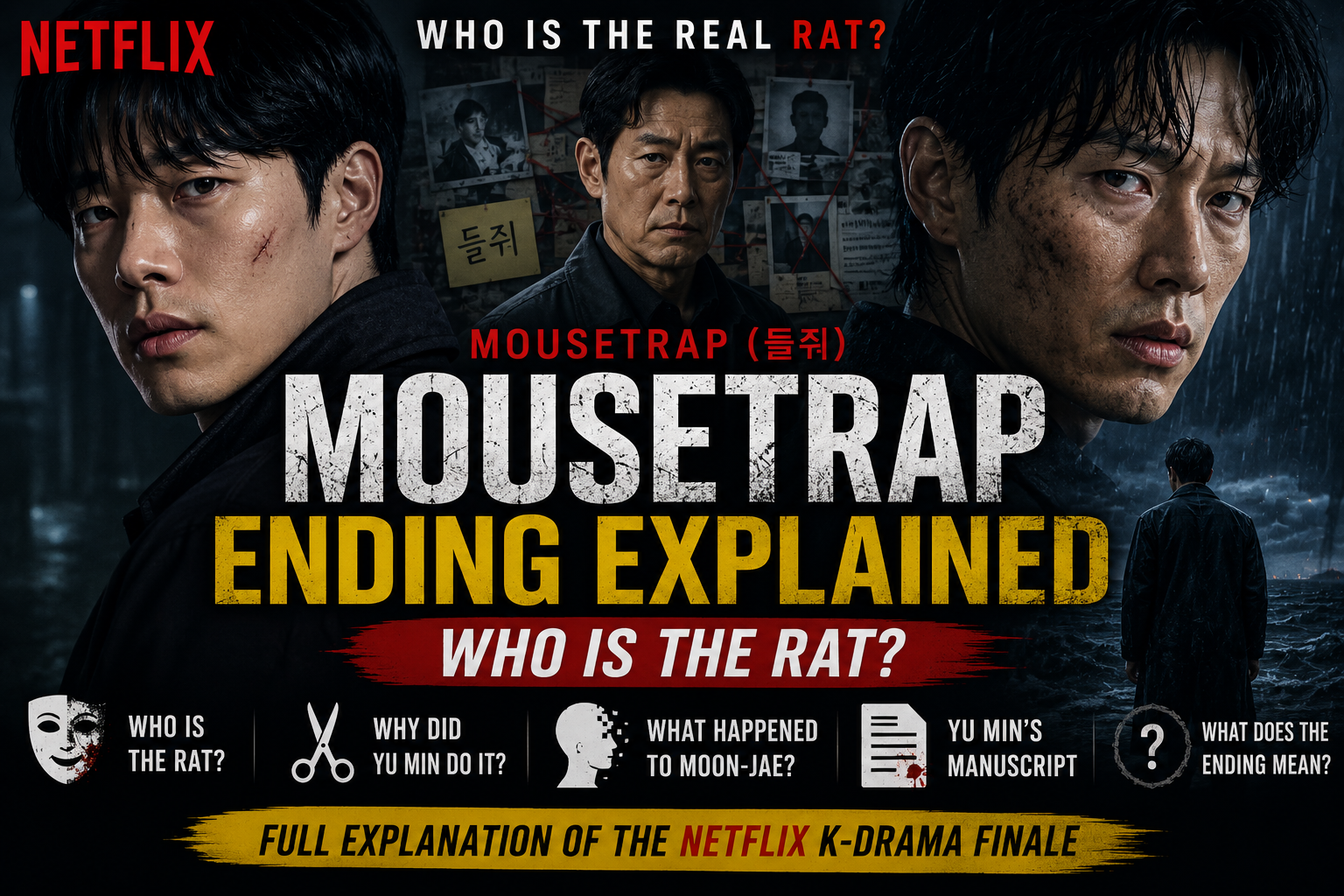

  • Mousetrap K-Drama Ending Explained: Who Is The Rat?

    Mousetrap K-Drama Ending Explained: Who Is The Rat?

    Warning: Major spoilers for all 10 episodes of Netflix’s Mousetrap (들쥐) follow.

    Netflix’s Korean thriller Mousetrap spends most of its 10 episodes making us believe Je Moon-jae is the victim of a terrifying identity theft.

    Someone has taken his name, his face, his money and seemingly his entire life.

    But the finale turns that premise upside down.

    The man chasing an impostor has spent much of his own life taking things that belonged to other people.

    And that is the key to understanding the ending of Mousetrap.


    Who Is The Rat in Mousetrap?

    The person behind the present-day theft of Moon-jae’s identity is Yu Min.

    But calling Yu Min simply “the villain” misses the biggest twist.

    Yu Min and Moon-jae knew each other years earlier.

    Moon-jae became jealous of Yu Min and ultimately took his writing and used it to build his own career as a successful novelist.

    In other words:

    Yu Min steals Moon-jae’s identity in the present — but Moon-jae had already stolen Yu Min’s work, experiences and future.

    The series therefore deliberately reverses our understanding of victim and perpetrator.

    Who Is the Real Villain in Mousetrap?

    If you’re wondering who the real villain is in Mousetrap, the answer is more complicated than it first appears.

    Yu Min is the antagonist behind the present-day identity theft, but Moon-jae may be the story’s real villain.

    For most of the series, Yu Min appears to be the obvious villain. He steals Moon-jae’s identity, takes control of his money and turns his life into a nightmare.

    But the finale changes how we understand their relationship.

    Years earlier, Moon-jae stole Yu Min’s writing and used it to help build his own successful career as a novelist.

    That means Yu Min’s actions are not random.

    They are revenge.

    This does not make everything Yu Min does morally justified. But it does blur the line between victim and villain.

    Yu Min is the person attacking Moon-jae in the present.

    Moon-jae, however, is the person whose earlier betrayal helped create the entire conflict.

    So who is the villain in Mousetrap?

    Yu Min is the immediate antagonist, but Moon-jae is arguably the deeper villain of the story.

    That reversal is one of the central ideas of Mousetrap: the man we initially believe is the victim gradually becomes someone whose own actions are impossible to ignore.


    Why Did Yu Min Steal Moon-jae’s Identity?

    This is where the revenge becomes much more meaningful.

    Yu Min isn’t simply trying to steal money.

    He wants Moon-jae to experience what it feels like to have his own existence taken away.

    Years earlier, Moon-jae stole Yu Min’s notebooks and writing and published the work under his own name.

    That helped Moon-jae become an acclaimed novelist.

    But the success was built partly on something that wasn’t truly his.

    Yu Min’s revenge therefore mirrors Moon-jae’s original wrongdoing:

    You stole my life. Now I will steal yours.

    This is why the drama’s identity-theft premise works on two levels.

    There is the literal theft of an identity.

    And there is the deeper theft of another person’s talent, story and future.


    What Happens Between Moon-jae and Yu Min?

    Their conflict finally reaches its climax aboard a ship heading toward Jeju.

    Yu Min intends to expose Moon-jae and disappear.

    Moon-jae, however, cannot allow the life and identity he has constructed to collapse.

    The confrontation becomes violent.

    Yu Min ultimately falls into the sea.

    His body is not recovered.

    This creates one of the finale’s most important ambiguities.

    Legally, Moon-jae has room to protect himself because there is no body providing definitive evidence of what happened.

    But morally, the situation is completely different.

    By this point, the audience knows enough about Moon-jae’s past to understand that the supposed victim we’ve followed throughout the series is far more complicated than he appeared.


    Does Yu Min Die in Mousetrap?

    The series leaves a small amount of ambiguity around Yu Min.

    He falls into the sea during the final confrontation and his body is not recovered.

    The most straightforward interpretation is that Yu Min is presumed dead.

    However, the final scene deliberately brings Yu Min back into Moon-jae’s psychological world.

    That doesn’t necessarily mean he physically survived.

    And this distinction becomes important at the very end.


    What Happens to Moon-jae?

    On paper, Moon-jae appears to win.

    He survives.

    He gets his identity back.

    He returns home.

    And he avoids an immediate legal reckoning for what happened aboard the ship.

    But this is not a happy ending.

    Moon-jae discovers that reclaiming his legal identity doesn’t solve his real problem.

    Because the central question was never simply:

    “Who legally owns the name Je Moon-jae?”

    The deeper question is:

    “Who is Je Moon-jae without the things he took from other people?”

    That’s much harder for him to answer.


    Why Can’t Moon-jae Write?

    This may be one of the most important details in the ending.

    Moon-jae’s successful career as an author was built in significant part on Yu Min’s writing.

    After everything that happens, Moon-jae is left facing something terrifying:

    He has to write as himself.

    And he struggles to do it.

    Yu Min’s final manuscript becomes especially cruel because it forces Moon-jae to confront how much of the successful writer “Je Moon-jae” was constructed from somebody else’s talent and story.

    The man who was terrified of having his identity stolen discovers that he may never have possessed a completely authentic identity in the first place.


    What Does Yu Min’s Manuscript Mean?

    Yu Min’s manuscript is more than another plot device.

    It functions almost like a final trap.

    The manuscript contains a story that reflects Moon-jae’s own past, including the plagiarism and deception behind his success.

    If the truth comes out, the identity Moon-jae fought so desperately to recover could collapse anyway.

    Moon-jae therefore faces an impossible situation.

    He has recovered the name.

    He has recovered the house.

    He has recovered the public identity.

    But he cannot recover the truth behind that identity.

    And he cannot easily create a new story to escape it.


    What Does the Final Scene Mean?

    This is where Mousetrap becomes psychological horror.

    Back in his apartment, Moon-jae hears violent pounding at the door.

    When he looks through the peephole, he sees Yu Min’s face.

    One interpretation supported by recent ending analyses is that this is not confirmation that Yu Min survived.

    Instead, Yu Min has become a manifestation of Moon-jae’s guilt, fear and paranoia.

    Moon-jae may have defeated Yu Min physically.

    But he cannot eliminate what Yu Min represents.

    His stolen writing.

    His stolen success.

    His lies.

    And the knowledge that his identity can collapse at any moment.

    That’s the real punishment.


    So Who Is the Real “Rat”?

    This is where the title becomes clever.

    For most of the drama, Yu Min appears to be The Rat because he steals Moon-jae’s identity.

    But by the ending, the meaning becomes less simple.

    Moon-jae has also spent his life taking pieces of other people’s identities and making them his own.

    So the question changes from:

    Who is The Rat?

    to:

    Who has really been stealing from whom?

    Some interpretations of the finale therefore see the title as ultimately pointing back toward Moon-jae himself rather than describing only Yu Min.


    The Korean Folktale Makes the Ending Even Better

    International viewers may miss one of the most interesting cultural layers.

    The Korean title 들쥐 means “field mouse.”

    The story draws inspiration from a Korean folktale about a mouse that eats a person’s discarded fingernail clippings and takes on that person’s appearance.

    The series modernizes that idea.

    Instead of asking whether a magical mouse can physically become a human being, Mousetrap asks:

    What actually makes you “you”?

    Your face?

    Your fingerprints?

    Your legal documents?

    Your memories?

    Your talent?

    Or the story other people believe about you?

    Yu Min can take Moon-jae’s external identity.

    But Moon-jae had already taken parts of Yu Min’s internal identity.

    That’s why the folktale fits the drama so well.


    Does Mousetrap Have a Happy Ending?

    No — at least not for Moon-jae.

    Technically, he survives and gets much of his life back.

    But psychologically he ends the story trapped.

    His career rests on stolen work.

    His past threatens his public identity.

    Yu Min continues to haunt him psychologically.

    And Moon-jae is left confronting the possibility that the successful person he spent years becoming was never entirely his own creation.

    So Moon-jae wins the battle over his identity…

    but loses the certainty of who he actually is.


    Mousetrap Ending Explained in 30 Seconds

    QuestionAnswer
    Who is The Rat?Yu Min is behind the present-day identity theft
    Why does he do it?Revenge for what Moon-jae took from him
    Did Moon-jae steal from Yu Min?Yes — including his writing
    What happens to Yu Min?He falls into the sea and is presumed dead
    Does Moon-jae survive?Yes
    Does Moon-jae get his identity back?Yes, legally
    Is it a happy ending?No
    What does the ending mean?Moon-jae regains his name but remains trapped by the identity he built through deception

    FAQ

    Who is the real Rat in Mousetrap?

    Yu Min is responsible for stealing Moon-jae’s identity in the present-day storyline. However, the finale complicates the label because Moon-jae himself previously stole Yu Min’s writing and built part of his life around what he took.

    Does Yu Min die?

    Yu Min falls into the sea during the final confrontation and his body isn’t recovered. He is therefore presumed dead, although the drama intentionally leaves some psychological ambiguity around his presence in the final scene.

    Does Moon-jae die?

    No. Moon-jae survives the finale and returns home.

    Why does Moon-jae see Yu Min at the end?

    A strong interpretation is that Yu Min’s appearance represents Moon-jae’s guilt and paranoia rather than proving Yu Min physically survived.

    What is the meaning of the Mousetrap ending?

    Moon-jae succeeds in reclaiming his legal identity but cannot escape the lies and stolen work on which that identity was built. The ending suggests that proving who you are legally is very different from knowing who you truly are.

  • Mousetrap K-Drama Cast, Characters, Episodes & Ending Explained

    Mousetrap K-Drama Cast, Characters, Episodes & Ending Explained

    Netflix’s Mousetrap (들쥐) is one of the most intriguing Korean mystery thrillers of 2026.

    Released globally on Netflix on August 28, 2026, the 10-episode limited series stars Ryu Jun-yeol, Sul Kyung-gu and Lee Kyoo-hyung in a dark story about identity theft, memory, deception and a mysterious figure known as “The Rat.”

    But Mousetrap has something that makes it particularly interesting to Korean viewers.

    The story is inspired by an old Korean folktale about a field mouse that eats a person’s clipped fingernails and transforms into that person. Netflix confirms that this Korean folktale is the starting point for the series.

    That cultural background makes Mousetrap much more than a conventional identity-theft thriller.

    Mousetrap K-Drama Cast and Characters

    Ryu Jun-yeol as Je Moon-jae

    Ryu Jun-yeol plays Je Moon-jae, a genius novelist who lives almost completely isolated from society.

    His carefully controlled life begins to collapse when his fingerprint suddenly stops unlocking his phone, his passwords no longer work and he gradually discovers that his identity, money and even his name are being taken away from him.

    Eventually, another person appears claiming his identity.

    Moon-jae now faces an almost impossible question:

    How do you prove that you are really you?

    Ryu Jun-yeol previously appeared in Netflix titles including Revelations and The 8 Show.

    Sul Kyung-gu as Noja

    Sul Kyung-gu plays Noja, a ruthless loan shark who initially pursues Moon-jae because of money.

    But the two eventually form an unlikely alliance.

    Noja becomes one of the central figures in Moon-jae’s attempt to discover who stole his identity and uncover the truth behind “The Rat.”

    The relationship between the frightened, isolated writer and the intimidating loan shark is one of the most unusual dynamics in the series.

    Lee Kyoo-hyung as Park Sun-yong

    Lee Kyoo-hyung plays detective Park Sun-yong.

    While Moon-jae and Noja pursue The Rat from one direction, Sun-yong investigates the strange case from the perspective of law enforcement.

    As the investigation progresses, however, Sun-yong discovers disturbing connections involving his own past.


    What Is Mousetrap K-Drama About?

    The basic premise sounds simple.

    Someone steals Moon-jae’s identity.

    But this isn’t ordinary online identity theft.

    The mysterious person known as The Rat takes virtually everything that defines Moon-jae’s existence—his identity, property and place in society.

    Even worse, Moon-jae has spent years living as a recluse.

    That means relatively few people can personally confirm who he really is.

    The person pretending to be Moon-jae can therefore appear more convincing to the outside world than the real Moon-jae himself.

    Netflix describes the story as a chase thriller in which Moon-jae, Noja and detective Sun-yong pursue the true identity of The Rat.


    The Korean Folktale Behind Mousetrap

    This is something international viewers may easily miss.

    The Korean title of the drama is 들쥐, meaning “field mouse.”

    There is an old Korean folktale in which a mouse eats a person’s discarded fingernail clippings and takes on that person’s appearance.

    The Netflix series transforms that disturbing old idea into a modern question about identity:

    What happens if another person can become a more convincing version of you than you are?

    Netflix itself highlighted this folktale when introducing the series before its premiere.

    For international viewers, knowing this background makes the title and the central mystery much easier to understand.


    How Many Episodes Does Mousetrap Have?

    Mousetrap has 10 episodes.

    It is officially listed by Netflix as a Limited Series, rather than a conventional multi-season drama.

    Approximate episode lengths are:

    EpisodeRuntime
    Episode 156 min
    Episode 256 min
    Episode 350 min
    Episode 458 min
    Episode 555 min
    Episode 660 min
    Episode 763 min
    Episode 855 min
    Episode 949 min
    Episode 1064 min

    All 10 episodes are currently listed on Netflix.


    Is Mousetrap on Netflix?

    Yes.

    Mousetrap premiered globally on Netflix on August 28, 2026.

    Netflix currently lists the series with Korean original audio as well as English audio and English subtitles, making it particularly accessible to international viewers.

    Watch Mousetrap on Netflix


    Is Mousetrap Based on a Webtoon?

    Yes.

    Netflix categorizes Mousetrap as a K-drama based on a webtoon, and Netflix’s official announcement identifies the source as the webtoon Field Mouse.

    That source material itself draws on the unsettling Korean field-mouse folktale, giving the drama multiple layers: Korean folklore → webtoon → Netflix thriller.


    Is Mousetrap K-Drama Worth Watching?

    If you enjoy psychological thrillers, identity mysteries, dark Korean dramas and stories filled with twists, Mousetrap is certainly worth considering.

    The strongest element is its premise.

    Instead of simply asking:

    “Who is the criminal?”

    Mousetrap asks something more disturbing:

    “What if you could no longer prove who you are?”

    Early critical reaction has been mixed but interesting. Decider recommended streaming the series and highlighted its gripping premise and performances, while another review praised the ending and psychological-horror elements but criticized the middle section for having too many twists.

    So viewers who like straightforward thrillers may find parts of the story complicated.

    But viewers who enjoyed darker Korean mystery dramas built around unreliable identities and repeated revelations may find plenty to enjoy.


    Mousetrap Ending Explained

    ⚠️ Major spoilers for Episode 10 begin below.

    This is the section I would not fully write yet unless we deliberately make the article spoiler-heavy.

    There’s an SEO reason.

    People searching:

    mousetrap kdrama cast

    should be able to enter this article without immediately encountering the ending.

    At the same time, Search Console is already showing interest in:

    mousetrap kdrama explained

    So we should retain an ending section but clearly separate it with a spoiler warning.

    For now I’d place this teaser:

    The final episode brings Moon-jae to the center of a trap that has been built over many years, forcing the series to confront its central question of who is genuine, who is an impostor and who has really been manipulating the game. Netflix’s official Episode 10 description deliberately frames the conclusion around whether Moon-jae is the predator or the prey.

    Then we can create a separate deep-dive article:

    Mousetrap K-Drama Ending Explained: Who Is The Rat?

    and internally link the two.

    That is better SEO than stuffing the entire ending explanation into this article because we already have two different search intents showing up: cast and explained.


    Mousetrap K-Drama Quick Facts

    Korean Title들쥐
    English TitleMousetrap
    Release DateAugust 28, 2026
    StreamingNetflix
    Episodes10
    FormatLimited Series
    GenreMystery, Crime, Psychological Thriller
    Lead CastRyu Jun-yeol, Sul Kyung-gu, Lee Kyoo-hyung
    DirectorKim Hong-sun
    WriterLee Jae-gon
    Based OnField Mouse webtoon / Korean field-mouse folktale

    FAQ

    Who is in the Mousetrap K-drama cast?

    The main Mousetrap cast includes Ryu Jun-yeol as Je Moon-jae, Sul Kyung-gu as Noja and Lee Kyoo-hyung as detective Park Sun-yong.

    How many episodes are in Mousetrap?

    There are 10 episodes in the Netflix limited series.

    Is Mousetrap available on Netflix?

    Yes. All 10 episodes are listed on Netflix, following its August 28, 2026 premiere.

    What is Mousetrap called in Korean?

    The Korean title is 들쥐 (Deuljwi), literally meaning “field mouse.”

    Is Mousetrap based on a true story?

    No. It is based on the webtoon Field Mouse, with its central idea drawing inspiration from a Korean folktale about a mouse taking human form after eating a person’s clipped fingernails.

    Is Mousetrap worth watching?

    It is most likely to appeal to viewers who enjoy dark psychological mysteries, Korean thrillers and identity-based stories with multiple twists. Critical reaction so far has praised the premise and performances while being more divided about the amount of plot twists.


    Tags

  • 韓国人が教える本場のキンパの作り方|家で失敗しない簡単レシピと巻き方

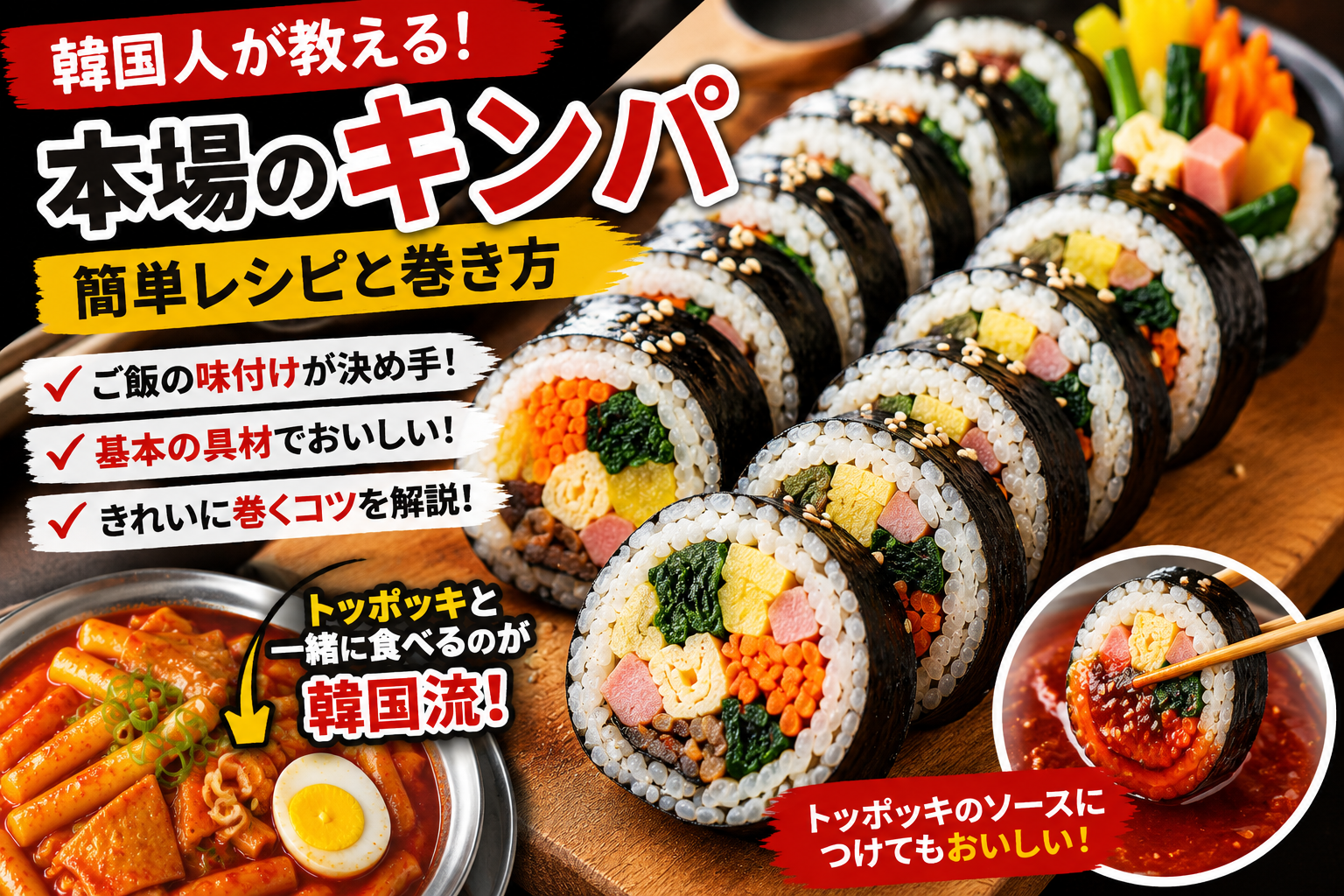
    韓国人が教える本場のキンパの作り方|家で失敗しない簡単レシピと巻き方

    韓国旅行で一度は食べてみたいキンパ(김밥)。

    色とりどりの具材をご飯と海苔で巻いた、韓国を代表する料理のひとつです。

    見た目は日本の海苔巻きに似ていますが、食べてみると味はかなり違います。

    韓国のキンパは酢飯ではなく、一般的にごま油と塩で味付けしたご飯を使います。

    そして、たくあん、卵、にんじん、ほうれん草など、いろいろな具材を一緒に巻きます。

    でも、家で作ろうとすると、

    「ご飯はどのくらい入れる?」
    「具材をたくさん入れたほうがおいしい?」
    「巻くと崩れてしまう」
    「韓国のキンパの味にならない」

    という失敗もよくあります。

    実は、おいしいキンパを作るために一番大切なのは、豪華な具材ではありません。

    海苔とご飯と具材のバランスです。

    今回は、韓国人が家庭で楽しむ基本的なキンパの作り方を紹介します。


    キンパと日本の海苔巻きは何が違う?

    [ここに画像① 切った韓国キンパ]

    見た目は似ていますが、最もわかりやすい違いのひとつがご飯の味付けです。

    日本の巻き寿司では酢飯を使うことが多いですが、韓国のキンパでは一般的にごま油と塩でご飯に味をつけます。

    海苔にもごま油の香りが加わり、仕上げにごまを振ることもあります。

    そしてキンパは韓国では特別な日の料理だけではありません。

    軽い食事、お弁当、ピクニック、旅行、軽食など、日常のさまざまな場面で食べられています。


    本場の基本キンパ|材料

    [ここに画像② キンパの材料を並べた写真]

    キンパ約3本分

    基本材料

    • キンパ用海苔 3枚
    • 温かいご飯 約500~550g
    • 卵 3個
    • にんじん 1本
    • ほうれん草 約150g
    • キンパ用たくあん 3本
    • ハムまたは韓国ソーセージ 適量
    • ごま油 適量
    • 塩 適量
    • いりごま 適量

    日本で韓国キンパ用の材料が手に入らない場合は、似た食材で代用しても大丈夫です。

    キンパは家庭料理です。

    すべてを完璧に韓国の商品で揃える必要はありません。


    1. キンパは「ご飯」がとても大切

    [ここに画像③ ご飯にごま油と塩を混ぜる]

    炊きたてのご飯に、塩とごま油を加えてやさしく混ぜます。

    3本分なら、まずは

    ごま油 大さじ1程度
    塩 小さじ1/3~1/2程度

    から始めて、味を確認しながら調整してください。

    ここで重要なのは、

    ご飯の味を濃くしすぎないこと。

    キンパにはたくあん、ハムなど味のある具材が入ります。

    ご飯まで濃くすると、完成したときに全体の味が強くなりすぎます。

    「少し薄いかな?」

    くらいでも、具材と一緒に食べるとちょうどよくなることがあります。


    2. ご飯を熱いまま海苔にのせない

    これも失敗しやすいポイントです。

    炊きたての熱々のご飯をすぐ海苔に広げると、蒸気で海苔がやわらかくなりすぎることがあります。

    味付けしたら少し冷まして、温かい程度になってから巻くと扱いやすくなります。

    ただし、完全に冷たくしてしまう必要はありません。


    3. 卵は薄く焼いて細長く切る

    [ここに画像④ 卵焼き]

    卵に少量の塩を入れてよく混ぜます。

    フライパンで薄めに焼き、キンパの長さに合わせて細長く切ります。

    卵はキンパにやさしい味と色を加えてくれます。

    黄色い卵が入るだけでも、切ったときの見た目が一気に華やかになります。


    4. にんじんは軽く炒める

    にんじんは細切りにして、少量の油と塩で軽く炒めます。

    シャキシャキ感を少し残すくらいがおすすめです。

    長く炒めすぎて柔らかくしすぎる必要はありません。


    5. ほうれん草は水分をしっかり切る

    [ここに画像⑤ ほうれん草]

    ほうれん草は短時間ゆでて冷水に取り、水分をしっかり絞ります。

    その後、塩と少量のごま油で軽く味付けします。

    ここで非常に大切なのが水分。

    ほうれん草に水がたくさん残っていると、時間が経ったときにキンパがべちゃっとしやすくなります。

    しっかり絞りましょう。


    6. 具材をたくさん入れればおいしい?

    [ここに画像⑥ キンパの具材]

    最近は、

    チーズキンパ、ツナキンパ、プルコギキンパ、豚カツキンパなど、本当にさまざまなキンパがあります。

    もちろん、それもおいしい。

    でも初めてキンパを作るなら、私は基本のキンパをおすすめします。

    なぜなら、キンパのおいしさは、

    具材の量ではなくバランスだからです。

    具材を入れすぎると巻きにくくなり、海苔が破れたり、ご飯と具材がバラバラになったりします。

    最初は欲張らない。

    これが失敗しないコツです。


    7. いよいよキンパを巻く

    [ここに画像⑦ キンパを巻いている写真]

    巻きすの上に海苔を置きます。

    その上にご飯を薄く広げます。

    ここで重要なのは、

    ご飯を厚くしすぎないこと。

    海苔が見えなくなる程度に薄く広げれば十分です。

    上部には少し余白を残しておくと、最後に巻きやすくなります。

    中央より少し手前に、

    卵、にんじん、ほうれん草、たくあん、ハムなどを横一列に並べます。


    8. 最初の一巻きをしっかり固定する

    巻きすを持ち上げ、手前の海苔をご飯と具材の上にかぶせます。

    ここで一度しっかり押さえます。

    最初の一巻きが重要です。

    ここが緩いと、切ったときに具材が崩れやすくなります。

    ただし力を入れすぎると海苔が破れることもあるので、形を整えるように巻いてください。


    9. 最後にごま油を塗る

    [ここに画像⑧ 完成した一本のキンパ]

    巻き終わったキンパの表面に、ごま油を薄く塗ります。

    そして少量のいりごま。

    この瞬間、香りが一気に韓国のキンパらしくなります。

    ただしごま油も多すぎると重くなるので、薄く塗る程度で十分です。


    10. キンパをきれいに切るコツ

    [ここに画像⑨ キンパを切っている写真]

    よく切れる包丁を使います。

    包丁に少量のごま油や水をつけると、ご飯が付きにくくなることがあります。

    一切れの厚さは好みですが、約1.5~2cm程度を目安にすると食べやすいです。

    そして切るたびに包丁についたご飯を拭くと、最後まできれいに切りやすくなります。


    韓国人おすすめ!キンパをトッポッキのソースにつけてみて

    [ここに画像⑩ キンパをトッポッキソースにつける写真]

    キンパを作ったら、ぜひ一度試してほしい食べ方があります。

    トッポッキの赤いソースにつける。

    キンパのご飯、海苔、野菜に甘辛いトッポッキソースが加わります。

    特に少し辛めのトッポッキと一緒に食べると、ご飯が辛さをやわらげてくれます。

    韓国の軽食店では、キンパとトッポッキを一緒に注文して楽しむこともあります。

    https://truetastekorea.com/tteokbokki-recipe-korean-style/?utm_source=chatgpt.com


    辛いものが好きならブルダックラッポッキも

    もっと刺激が欲しい人なら、普通のトッポッキだけではありません。

    ブルダック炒め麺とトッポッキを組み合わせたブルダックラッポッキもあります。

    もちもちの餅と麺に激辛ソース。

    そこにキンパを合わせると、かなりボリュームのある韓国式軽食になります。


    韓国ではキンパをいつ食べる?

    [ここに画像⑪ キンパ弁当・ピクニック]

    キンパは韓国人にとって、とても身近な料理です。

    旅行。

    遠足。

    ピクニック。

    忙しい日の食事。

    軽いランチ。

    家族で出かける日の食べ物。

    子どもの頃、遠足の日に家でキンパを作ってもらった思い出を持つ韓国人も少なくありません。

    だからキンパを見ると、単なる料理ではなく家族や子どもの頃の記憶を思い出す人もいます。


    キンパは自由な料理

    基本のキンパを作れるようになったら、次は自由です。

    ツナキンパ

    ツナとマヨネーズを加えます。

    チーズキンパ

    チーズを入れて、より濃厚に。

    プルコギキンパ

    味付けした牛肉を加えます。

    キムチキンパ

    キムチの酸味と辛さを加えます。

    豚カツキンパ

    豚カツを丸ごと入れたボリュームのあるキンパ。

    でも、いろいろ試したあとにシンプルな基本キンパへ戻ってくる人もいます。

    それくらい、

    ご飯、海苔、卵、野菜、たくあん

    という基本の組み合わせはよくできています。


    キンパを作るときによくある失敗

    ご飯が多すぎる

    巻けなくなります。

    → 薄く広げる。

    具材を入れすぎる

    海苔が破れたり、中身が飛び出したりします。

    → 最初は少なめ。

    野菜に水分が残っている

    時間が経つとべちゃっとします。

    → ほうれん草などの水分をしっかり切る。

    ご飯が熱すぎる

    海苔がやわらかくなりすぎます。

    → 少し冷ましてから巻く。

    ご飯の味が濃すぎる

    具材と合わせると全体がしょっぱくなります。

    → ご飯は控えめな味付けから。

    この5つを避けるだけでも、かなり作りやすくなります。


    家で韓国のキンパを作ってみよう

    [ここに画像⑫ キンパが並んだ食卓]

    初めて見ると、キンパは少し難しそうに感じるかもしれません。

    でも、一度作ってみれば意外とシンプルです。

    ご飯にごま油と塩。

    野菜と卵を準備する。

    海苔の上に薄くご飯を広げる。

    具材を並べる。

    そして巻く。

    完璧な形にならなくても大丈夫です。

    少しくらい形が崩れても、自分で作ったキンパはおいしい。

    そしてトッポッキも一緒に作ったら、

    キンパを赤いソースに少しつけて食べてみてください。

    家にいながら、韓国の市場や小さな軽食店で食べているような組み合わせを楽しめます。

    キンパは豪華な具材を競う料理ではありません。

    海苔、ご飯、具材のバランスを楽しむ韓国の日常食です。

  • ブルダック炒め麺が韓国屋台グルメに!激辛ブルダックラッポッキの作り方

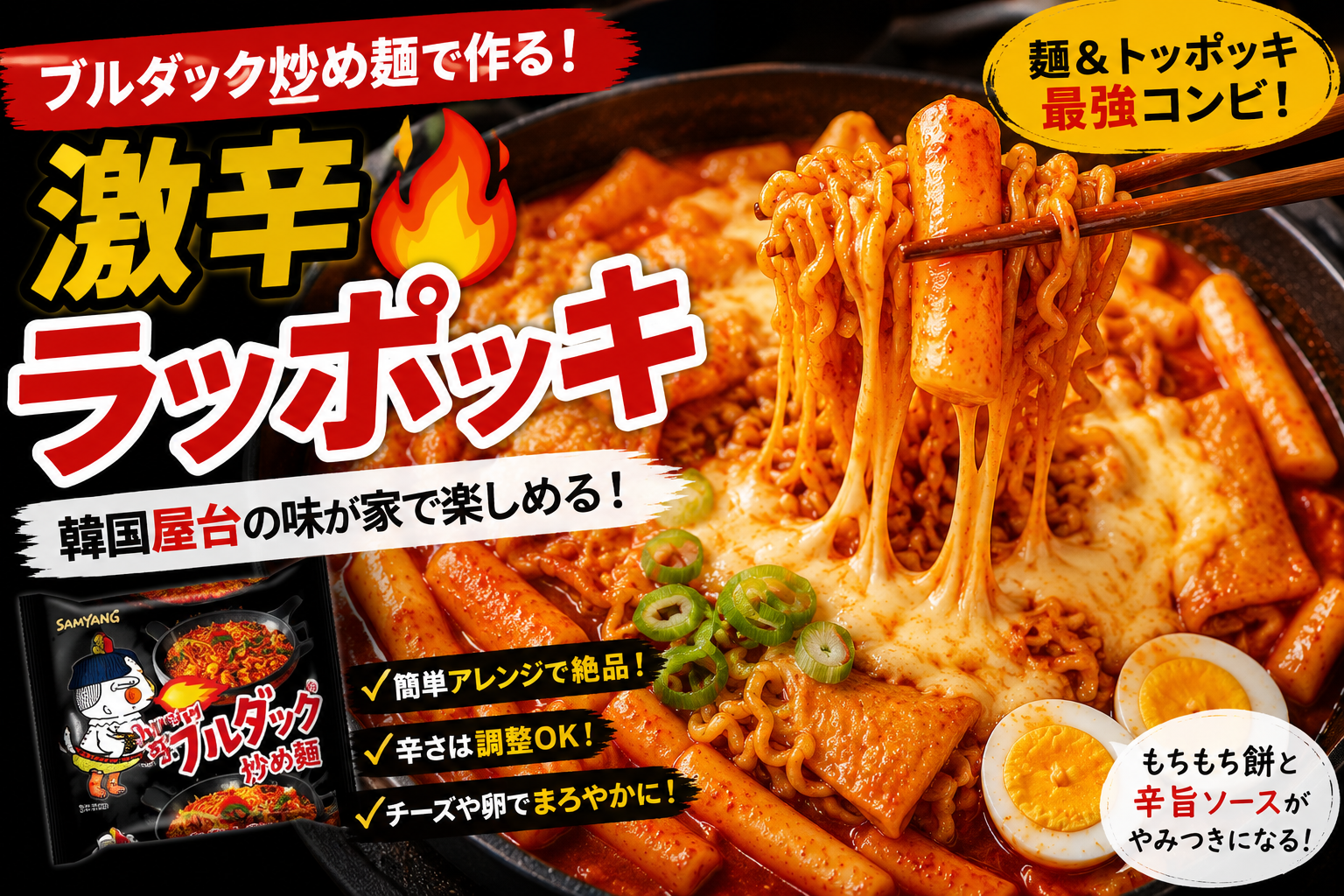
    ブルダック炒め麺が韓国屋台グルメに!激辛ブルダックラッポッキの作り方

    ブルダック炒め麺、そのまま食べるだけではもったいない!

    韓国で人気の激辛インスタント麺**ブルダック炒め麺(불닭볶음면)**に、もちもちのトッポッキを加えると、まったく違う韓国料理に変身します。

    その名も、

    ブルダックラッポッキ!

    ラーメンの「ラ」とトッポッキの「ッポッキ」を合わせた**ラッポッキ(라볶이)**を、ブルダック炒め麺で激辛アレンジした料理です。

    ブルダックソースの強烈な辛さ。

    もちもちの韓国餅。

    ラーメン。

    オムク。

    そして、とろけるチーズ。

    辛いのに、なぜかもう一口食べたくなる。

    今回は日本でも簡単に作れるブルダックラッポッキの作り方を紹介します。


    そもそも「ラッポッキ」とは?

    [ここに画像① 韓国のラッポッキ]

    韓国にはトッポッキにインスタントラーメンを加えた料理があります。

    それが**ラッポッキ(라볶이)**です。

    トッポッキだけでは少し物足りないときにラーメンを追加すると、ボリュームが一気にアップ。

    韓国の軽食店(분식집/プンシクチプ)などでも親しまれている組み合わせです。

    つまり、

    ラーメン+トッポッキ=ラッポッキ

    と覚えれば簡単です。

    普通はコチュジャンベースの甘辛いソースで作ります。

    でも今回はそこにブルダック炒め麺を使います。


    なぜブルダック炒め麺でラッポッキ?

    [ここに画像② ブルダック炒め麺とトッポッキ餅]

    理由は簡単です。

    ブルダック炒め麺には、すでに強烈な辛さと旨みを持つソースが入っています。

    つまり、調味料をたくさん準備しなくてもラッポッキを作りやすい。

    しかもブルダックの辛いソースと韓国餅は相性抜群です。

    麺だけで食べるより、餅やオムク、卵などを加えることで食感も豊かになります。


    ブルダックラッポッキ|簡単レシピ

    [ここに画像③ 材料]

    材料(1~2人分)

    • ブルダック炒め麺 1袋
    • トッポッキ用の餅 150~200g
    • 韓国オムク 約80~100g
    • ゆで卵 1個
    • 長ネギ 適量
    • 水 約400ml

    お好みで、

    • モッツァレラチーズ
    • キャベツ
    • 玉ねぎ
    • ソーセージ
    • 青ねぎ

    などを加えてもOKです。


    ソースは難しく考えなくてOK

    ブルダック炒め麺に付属している液体ソースを使います。

    ただし、ここがポイント。

    最初から全部入れなくても大丈夫です。

    ブルダックソースはかなり辛いので、辛さが苦手なら最初は半分程度から入れてください。

    味を見ながら追加するほうが失敗しにくいです。

    もう少しトッポッキらしい甘辛さが欲しい場合は、

    • コチュジャン 小さじ1
    • 砂糖または水あめ 小さじ1~2

    程度を追加して調整できます。

    つまりブルダックの味を消すのではなく、

    ブルダックの辛さ+トッポッキの甘辛さ

    を合わせるイメージです。


    1. まず餅を煮る

    [ここに画像④ 鍋で餅を煮ている写真]

    鍋に水約400mlを入れて沸かします。

    そこへトッポッキ用の餅を入れます。

    冷蔵・冷凍で餅が硬くなっている場合は、あらかじめ水につけて少しやわらかくしておくと作りやすくなります。

    餅が少しやわらかくなってきたら次へ。


    2. オムクとブルダックソースを投入

    食べやすく切ったオムクを入れます。

    そしてブルダック炒め麺の液体ソースを加えます。

    辛さに自信がない人は半分からスタート。

    辛いものが大好きなら量を増やしてください。

    煮ていくと餅のでんぷんでソースが少しずつ濃くなってきます。


    3. ラーメンを入れる

    [ここに画像⑤ ラーメンを加えたところ]

    次にブルダック炒め麺の麺を入れます。

    ここで重要なのは水分量です。

    普通のブルダック炒め麺のように水分をほとんど飛ばしてしまうと、餅と麺が一緒になったときにかなり重くなります。

    ラッポッキは少しソースが残るくらいがおすすめ。

    麺が水分を吸うので、途中で足りなくなったら少量の水を追加してください。


    4. 長ネギとゆで卵を追加

    麺がほぐれてきたら長ネギとゆで卵を入れます。

    ここまで来たら、もう見た目は韓国のラッポッキ。

    最後に味を確認してください。

    辛すぎれば少量の砂糖やチーズ。

    物足りなければ残しておいたブルダックソース。

    自分の好みに調整します。


    辛すぎる!そんなときはチーズ

    [ここに画像⑥ チーズブルダックラッポッキ]

    ブルダックといえばチーズとの相性も抜群。

    完成直前にモッツァレラチーズをのせて蓋をし、チーズが溶けるまで待ちます。

    すると、

    激辛ブルダック → クリーミーな激辛ブルダック

    へ変化します。

    チーズが辛さを少しまろやかにしてくれるので、ブルダック初心者にもおすすめです。

    見た目もかなり豪華になります。


    卵の黄身をソースに混ぜてみて

    [ここに画像⑦ ゆで卵とブルダックラッポッキ]

    前回のトッポッキの記事でも紹介しましたが、ゆで卵はただのトッピングではありません。

    半分に割って黄身を少しソースに混ぜてみてください。

    濃厚なブルダックソースに黄身が混ざり、味が少しまろやかになります。

    辛い!

    でも黄身を混ぜる。

    また食べる。

    また辛い。

    これを繰り返しているうちに、いつの間にか食べ終わっています。


    ソーセージを入れるとボリュームアップ

    もっと豪華にしたいならソーセージもおすすめ。

    食べやすく切って餅と一緒に煮るだけです。

    ブルダックソースとの相性がよく、

    餅+ラーメン+ソーセージ+チーズ

    まで入れると、かなりボリュームのある一品になります。

    友達と一緒に食べるときにもおすすめです。


    キンパと一緒に食べる

    [ここに画像⑧ キンパ+ブルダックラッポッキ]

    辛いラッポッキを食べて、

    次にキンパ。

    そしてまたラッポッキ。

    この組み合わせもおすすめです。

    キンパのご飯がブルダックの辛さを少し和らげてくれます。

    そして残ったブルダックラッポッキのソースにキンパを少しつけてもおいしい。

    次回は、この韓国キンパの作り方も詳しく紹介します。

    → 韓国人が教える本場のキンパの作り方

    ※キンパ記事公開後、ここに内部リンク。


    辛いものが苦手なら「カルボブルダック」もおすすめ

    ブルダックシリーズにはさまざまな味があります。

    辛さが心配なら、クリーミーなタイプのブルダックを使ってラッポッキを作る方法もあります。

    さらにチーズを加えれば、濃厚でクリーミーなラッポッキになります。

    逆に激辛が好きなら、より辛いタイプに挑戦する方法もあります。

    ただし無理は禁物。

    一番辛いものを食べることが目的ではありません。

    自分がおいしいと感じる辛さで楽しむのが一番です。


    普通のトッポッキとブルダックラッポッキ、どっちがおすすめ?

    初めて韓国のトッポッキを食べるなら、まずは普通のトッポッキをおすすめします。

    コチュジャンをベースにした甘辛い味と、韓国餅の食感を楽しめるからです。

    すでにトッポッキを食べたことがあって、

    「もっと刺激が欲しい!」

    という人なら、

    ブルダックラッポッキ。

    まったく違う楽しみ方ができます。

    → 本場の韓国トッポッキの作り方はこちら

    여기에 방금 만든 정통 떡볶이 글 링크를 반드시 넣자.


    ブルダック炒め麺を「料理」にしてみよう

    ブルダック炒め麺は、そのまま食べても完成された商品です。

    でも餅、オムク、卵、野菜、チーズなどを加えると、

    単なるインスタント麺ではなく一つの韓国料理のように楽しむことができます。

    もちもちの餅。

    辛い麺。

    ソースを吸ったオムク。

    まろやかな卵。

    とろけるチーズ。

    一つの鍋の中で全部を楽しめます。

    次にブルダック炒め麺を買ったら、そのまま食べる前にトッポッキ用の餅も用意してみてください。

    いつものブルダックが、韓国屋台風のラッポッキに変身します。

  • 韓国人が教える本場のトッポッキの作り方|屋台の味になる簡単レシピ

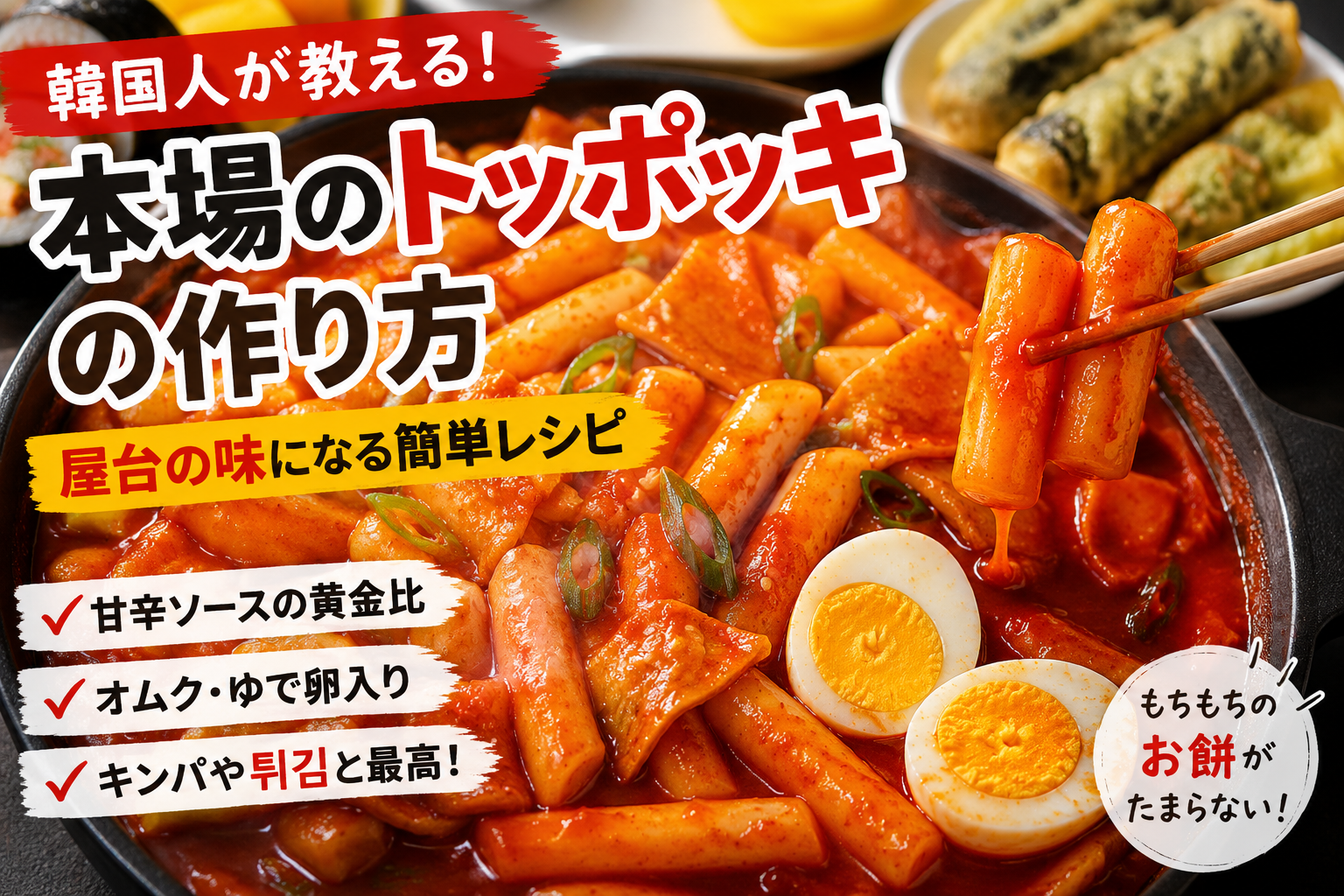
    韓国人が教える本場のトッポッキの作り方|屋台の味になる簡単レシピ

    韓国旅行で一度は食べてみたい料理、トッポッキ(떡볶이)。

    真っ赤なソースの中にもちもちのお餅、オムク(韓国おでん)、ゆで卵。

    韓国の市場や屋台を歩いていると、大きな鍋でグツグツ煮込まれているトッポッキをよく見かけます。

    でも実は、トッポッキは韓国人にとって単なる観光グルメではありません。

    学校帰りに友達と食べたり、買い物の途中に市場で食べたり、家で簡単に作ったり。

    特に学生時代の思い出と結びついている人も多い、韓国を代表する庶民的な料理です。

    今回は、日本でも作りやすい本場のトッポッキの作り方と、韓国人ならではの楽しみ方を紹介します。


    トッポッキとは?

    [ここに画像① 韓国のトッポッキ]

    トッポッキは、韓国のお餅「トック」を甘辛いコチュジャンベースのソースで煮込んだ料理です。

    現在よく知られている赤いトッポッキには、一般的にコチュジャン、唐辛子粉、砂糖、醤油などを使います。

    そこにオムク、長ネギ、ゆで卵などを加えるのが定番。

    店によってはキャベツ、ラーメン、チーズ、餃子などが入ることもあります。

    そしてトッポッキで大切なのは、

    ただ辛いだけではないこと。

    甘さ、辛さ、旨み。

    この3つのバランスが大切です。


    本場の韓国トッポッキ|基本レシピ

    [ここに画像② トッポッキの材料]

    材料(約2人分)

    • トッポッキ用の餅 300g
    • 韓国オムク 100~150g
    • 長ネギ 1/2本
    • ゆで卵 2個
    • 水またはだし汁 500ml

    トッポッキソース

    • コチュジャン 大さじ2
    • 韓国唐辛子粉 大さじ1
    • 醤油 大さじ1
    • 砂糖 大さじ1~1.5
    • 水あめまたはオリゴ糖 大さじ1
    • おろしにんにく 小さじ1

    辛いものが苦手なら唐辛子粉を減らしてください。

    逆に韓国屋台のような辛さが好きなら、辛口の唐辛子粉を少し追加してもOKです。


    1. 餅を準備する

    冷蔵・冷凍のトッポッキ用餅が硬くなっている場合は、水につけて少しやわらかくしておきます。

    餅同士がくっついていたら、一本ずつ離してください。

    すでにやわらかい餅なら、そのまま使えます。


    2. ソースを作る

    [ここに画像③ 赤いトッポッキソース]

    鍋に水またはだし汁を入れ、

    コチュジャン、唐辛子粉、醤油、砂糖、水あめ、おろしにんにく

    を加えてよく混ぜます。

    ここで一度味を見てください。

    最初からものすごく辛くする必要はありません。

    煮詰めると味が濃くなるため、最初は少し薄いくらいでも大丈夫です。


    3. 餅とオムクを入れて煮込む

    [ここに画像④ 鍋で煮込んでいるトッポッキ]

    ソースが沸いてきたら餅を入れます。

    少し煮たところで食べやすく切ったオムクを加えます。

    中火程度で煮込みながら、ときどき混ぜてください。

    餅のでんぷんが出てくると、サラサラだったソースが少しずつ濃厚になります。

    トッポッキは「煮詰める」ことでおいしくなります。

    ただし煮込みすぎると餅が柔らかくなりすぎるので注意してください。


    4. 長ネギとゆで卵を入れる

    仕上げに長ネギとゆで卵を加えます。

    長ネギの香りが入ると、一気に韓国の屋台らしい味になります。

    そして、ゆで卵。

    これは単なるトッピングではありません。

    あとで重要な役割があります。


    韓国人はトッポッキの卵をどう食べる?

    [ここに画像⑤ トッポッキの卵]

    もちろん、そのまま食べてもおいしいです。

    でも私がおすすめしたいのは、

    黄身を少し崩してトッポッキソースと混ぜる食べ方。

    辛くて濃厚な赤いソースに卵の黄身が混ざると、味がまろやかになります。

    餅と一緒に食べてもいいし、オムクにソースと黄身を絡めてもおいしい。

    辛い料理が少し苦手な人にもおすすめです。


    オムクは絶対に入れたほうがいい?

    [ここに画像⑥ トッポッキとオムク]

    必須ではありません。

    でも、本場の屋台の雰囲気を出したいならおすすめします。

    韓国のオムクは魚のすり身を使った練り物で、日本のさつま揚げに少し似ています。

    トッポッキのソースを吸ったオムクは、餅とはまったく違う食感。

    そしてオムクからも旨みが出るため、ソースがおいしくなります。


    韓国では天ぷらをトッポッキソースにつける!

    [ここに画像⑦ トッポッキと韓国式揚げ物]

    韓国でトッポッキを食べるなら、ぜひ覚えてほしい食べ方があります。

    튀김(ティギム/韓国式揚げ物)をトッポッキのソースにつける。

    イカ、野菜、餃子、さつまいもなどの揚げ物を、甘辛いトッポッキソースに浸して食べます。

    サクサクした衣に赤いソースが染み込む。

    これが本当においしい。

    お店によっては、揚げ物を切ってトッポッキの皿に一緒に入れてくれることもあります。


    キンパをトッポッキソースにつけてもおいしい

    [ここに画像⑧ キンパとトッポッキ]

    もうひとつおすすめなのがキンパ(김밥)。

    そのまま食べてももちろんおいしいですが、

    キンパをトッポッキソースに少しつけて食べてみてください。

    ご飯と海苔、具材に甘辛いソースが加わります。

    韓国の軽食店では、

    トッポッキ+キンパ+オムク

    のようにいくつかの料理を一緒に注文することも珍しくありません。

    だからトッポッキは、一皿だけで完結する料理というより、いろいろな韓国の軽食と一緒に楽しめる料理でもあります。


    トッポッキが辛すぎたらどうする?

    「韓国のトッポッキを食べてみたいけど辛いものが苦手」

    という人もいるでしょう。

    そんなときは、

    ゆで卵
    チーズ
    キンパ
    牛乳や乳製品

    などと一緒に食べると、辛さを感じにくくなります。

    家で作る場合は唐辛子粉を減らし、砂糖や水あめを少し増やして自分好みに調整してください。

    辛さに「正解」はありません。

    おいしく食べられる辛さが一番です。


    チーズトッポッキも人気

    [ここに画像⑨ チーズトッポッキ]

    辛いソースとチーズは相性抜群。

    完成したトッポッキにモッツァレラチーズをのせ、溶かすだけでもOKです。

    チーズのコクが加わるだけでなく、辛さも少しまろやかになります。

    特に辛いものが苦手な人や子どもと一緒に食べる場合には試してみる価値があります。


    ラーメンを入れれば「ラッポッキ」

    そして、ここからトッポッキはさらに進化します。

    トッポッキに韓国のインスタントラーメンを加えると、

    ラッポッキ(라볶이)

    になります。

    もちもちの餅とラーメン。

    そこに甘辛いソース。

    ボリュームも一気に増えます。

    韓国の学生街や軽食店でも昔から親しまれてきた組み合わせです。

    そして最近なら、さらに刺激的なアレンジもできます。

    ブルダック炒め麺を使った激辛ラッポッキ。

    これは次の記事で詳しく紹介します。

    → ブルダックラッポッキの作り方はこちら

    ※2-1の記事を公開したら、ここに内部リンクを入れます。


    実は赤くないトッポッキもある

    [ここに画像⑩ 宮中トッポッキ]

    トッポッキと聞くと赤くて辛い料理を想像しますが、韓国には辛くないトッポッキもあります。

    代表的なのが궁중떡볶이(宮中トッポッキ)。

    醤油ベースの味付けで、肉や野菜などと一緒に炒めて作ります。

    辛い料理が苦手な人でも楽しめます。

    「トッポッキ=激辛料理」ではないんです。


    韓国でトッポッキを食べるなら市場や軽食店へ

    [ここに画像⑪ 韓国市場のトッポッキ屋台]

    韓国旅行でトッポッキを食べるなら、有名店だけを探す必要はありません。

    伝統市場や街の軽食店(분식집/プンシクチプ)にも、おいしいトッポッキがあります。

    大きな鍋で赤いソースがグツグツ煮えていて、横にはオムクや揚げ物、キンパ。

    そんな店を見つけたら、一度入ってみてください。

    高級な韓国料理とはまったく違います。

    でも、そこには韓国人が子どもの頃から親しんできた味があります。


    トッポッキは「料理」だけではなく韓国人の思い出

    トッポッキには特別な思い出を持つ韓国人がたくさんいます。

    学校が終わったあと友達と食べたトッポッキ。

    少ないお小遣いを集めて一皿を分けて食べた思い出。

    市場で母親と買い物をしたあとに食べたトッポッキ。

    大人になってからも、辛くて甘いあの味を食べると学生時代を思い出す人がいます.

    だからトッポッキは単なる「辛い韓国料理」ではありません。

    韓国人の日常と思い出が詰まった食べ物です。


    家で本場のトッポッキを楽しもう

    難しい料理ではありません。

    餅を用意して、

    甘辛いソースを作って、

    オムクと一緒に煮込む。

    そして卵、キンパ、揚げ物などを一緒に楽しむ。

    それだけで韓国の市場や軽食店の雰囲気を自宅でも味わえます。

    最初の一口は餅。

    次はオムク。

    そして卵の黄身をソースに混ぜてみる。

    最後にキンパや揚げ物を残ったソースにつけて食べてみてください。

    トッポッキのおいしさは、餅だけではありません。

    最後に残った赤いソースまで楽しむのが韓国式です。

  • 日本人が意外と知らない?韓国人の本当のサムギョプサルの食べ方|焼き方から〆まで

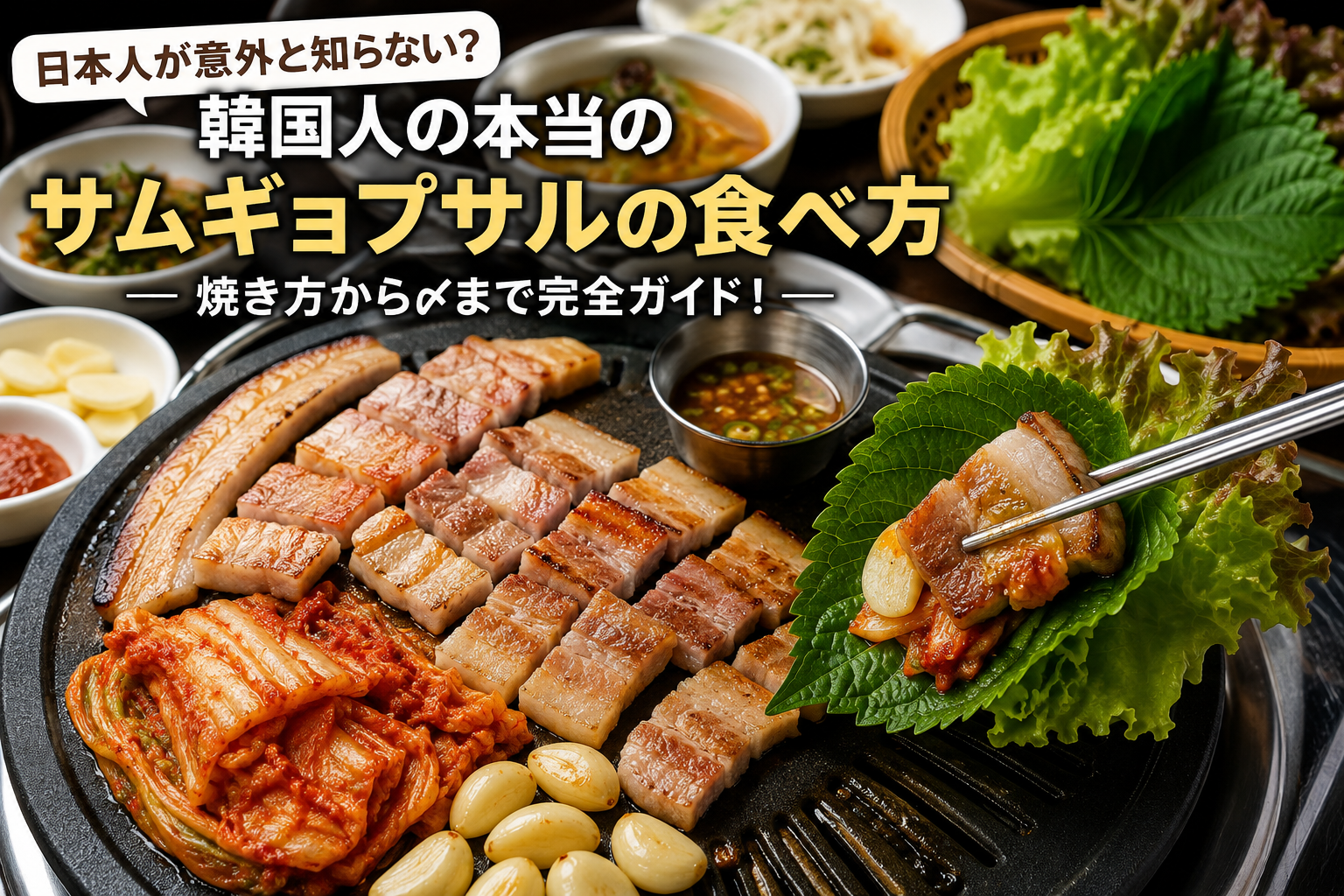
    日本人が意外と知らない?韓国人の本当のサムギョプサルの食べ方|焼き方から〆まで

    韓国旅行で一度は食べてみたい料理、サムギョプサル(삼겹살)。

    日本でも人気の韓国料理ですが、韓国で実際に食べてみると、

    「この葉っぱはどう使うの?」
    「肉は何につける?」
    「キムチも焼くの?」
    「サムジャンとごま油、どっちを使う?」

    と迷う人も多いのではないでしょうか。

    でも、難しく考える必要はありません。

    サムギョプサルの魅力は、ただ豚肉を焼いて食べることではありません。

    肉、野菜、キムチ、にんにく、サムジャンなどを自分好みに組み合わせ、一口ごとに違う味を楽しむ。

    これが韓国式サムギョプサルの面白さです。

    今回は、韓国でサムギョプサルを食べるときに知っておきたい焼き方、タレ、包み方、そして最後の〆まで紹介します。


    サムギョプサルとは?

    [ここに画像① サムギョプサル全体写真]

    サムギョプサル(삼겹살)は、韓国を代表する豚肉料理のひとつです。

    名前の「삼(サム)」は3、「겹(ギョプ)」は層、「살(サル)」は肉を意味し、脂身と赤身が層になった豚バラ肉を指します。

    韓国では熱した鉄板などで焼き、サムジャンやごま油につけたり、サンチュに包んでにんにくなどと一緒に食べるのが一般的です。

    韓国観光公社も、サムギョプサルを韓国人が大好きな肉料理で、飲み会の定番メニューとして紹介しています。

    でも、本当に楽しいのはここからです。


    1. 最初の一口は肉だけで食べてみる

    [ここに画像② 焼いているサムギョプサル]

    最初からサンチュにたくさんの具材を入れる必要はありません。

    まずは、こんがり焼けたサムギョプサルを一切れ。

    塩を少しつけたり、ごま油と塩を合わせたタレにつけて食べてみてください。

    豚肉の香ばしさと脂の甘みを一番シンプルに感じられます。

    その後でサムジャン、キムチ、にんにくなどを加えていけば、味の変化をもっと楽しめます。


    2. サムギョプサルは表面を香ばしく焼く

    厚めのサムギョプサルなら、肉の表面にしっかり焼き色をつけるのがおすすめです。

    韓国のお店では大きな肉を鉄板で焼き、ある程度火が通ってからハサミで一口サイズに切るスタイルもよく見られます。

    肉から出た脂が鉄板に広がっていきます。

    そして、この脂も無駄にはしません。

    なぜなら――

    ここにキムチやにんにくを置くと、とてもおいしいからです。


    3. キムチを焼いてみよう

    [ここに画像③ サムギョプサルと焼きキムチ]

    日本ではキムチをそのまま食べることが多いかもしれません。

    でもサムギョプサルを食べるなら、ぜひ一度焼きキムチを試してみてください。

    豚肉から出た脂でキムチを焼くと、酸味がやわらぎ、香ばしさとコクが加わります。

    特に少し酸味のある熟成キムチは、脂の多い豚バラ肉との相性が抜群です。

    焼いた肉+焼きキムチ。

    これだけでも立派な一口です。


    4. にんにくも一緒に焼く

    [ここに画像④ にんにくを焼いている写真]

    韓国式焼肉では、にんにくも重要です。

    生のにんにくを食べる人もいますが、初めてなら鉄板で焼くのがおすすめ。

    焼くことで辛さがやわらぎ、香ばしさと甘みが出てきます。

    サムギョプサル、焼きキムチ、焼きにんにく。

    この3つだけでもかなり韓国らしい組み合わせになります。


    5. サムジャンとごま油、どっちを使う?

    [ここに画像⑤ サムジャン・ごま油などのタレ]

    答えは簡単です。

    どちらも使ってみてください。

    ごま油+塩

    肉そのものの味を楽しみたいときにおすすめ。

    サムジャン(쌈장)

    韓国の合わせ味噌で、野菜に包んで食べるときの定番です。

    甘辛く濃厚なので、たくさんつける必要はありません。

    最初はごま油と塩。

    次はサムジャン。

    こうやって味を変えながら食べると、最後まで飽きにくくなります。韓国観光公社もサムギョプサルの代表的な食べ方として合わせ味噌やごま油を挙げています。


    6. これが韓国式「サム」の食べ方

    [ここに画像⑥ サンチュで肉を包む写真]

    いよいよサムギョプサルの醍醐味です。

    サンチュを手のひらに広げます。

    そこに、

    サムギョプサル
    +サムジャン少々
    +焼きにんにく
    +キムチ
    +ネギ

    など、好きなものをのせます。

    そして葉を折りたたむように包みます。

    ポイントは、

    欲張りすぎないこと。

    全部を山盛りにすると、大きすぎて食べにくくなります。

    一口で食べられるくらいがちょうどいい。

    韓国式の「サム(쌈)」は、決まった正解がある料理ではありません。

    自分の好きな組み合わせを見つけるのも楽しみのひとつです。


    7. サンチュだけじゃない!エゴマの葉も試してみて

    [ここに画像⑦ サンチュとエゴマの葉]

    韓国の焼肉店では、サンチュと一緒に**エゴマの葉(깻잎/ケンニプ)**が出てくることがあります。

    独特の香りがあるので、初めて食べる日本人には好き嫌いが分かれるかもしれません。

    でも脂の多いサムギョプサルとは相性抜群。

    おすすめは、

    サンチュ+エゴマの葉+肉+サムジャン+にんにく。

    サンチュとエゴマの葉を重ねると香りが少し穏やかになり、初めてでも食べやすくなります。

    一度は試してみてください。


    8. 韓国人は毎回同じ食べ方をしない

    これが実は大切です。

    一口目:

    肉+ごま油+塩

    二口目:

    肉+焼きキムチ

    三口目:

    サンチュ+肉+サムジャン+にんにく

    四口目:

    エゴマの葉+肉+キムチ

    五口目:

    肉+ネギ+青唐辛子

    このように組み合わせを変えると、同じサムギョプサルでも味がまったく違って感じられます。

    だから脂の多い豚バラ肉でも意外と食べ続けられるのです。


    9. 青唐辛子は少し注意!

    [ここに画像⑧ 青唐辛子とにんにく]

    韓国の焼肉店では、生の青唐辛子が出てくることがあります。

    サムジャンにつけてそのまま食べたり、薄く切ってサムに入れたりします。

    ただし注意してください。

    見た目では辛いかどうか分からないことがあります。

    辛いものが苦手なら、最初は少量から試すのがおすすめです。


    10. サムギョプサルと韓国のお酒

    [ここに画像⑨ サムギョプサルと韓国のお酒]

    韓国でサムギョプサルといえば、お酒と一緒に楽しむ人も多い料理です。

    代表的なのは焼酎(소주/ソジュ)。

    豚肉を焼きながら話をして、一杯飲み、また肉を食べる。

    サムギョプサルは単なる料理ではなく、家族や友人、同僚と一緒に時間を過ごす食文化でもあります。

    だから韓国ドラマで会社員が焼肉店に集まるシーンをよく見るのも不思議ではありません。


    11. 肉を食べ終わっても帰らないで!

    ここで終わりではありません。

    韓国の焼肉で楽しみにしている人が多いのが**〆(シメ)**です。

    お店によってメニューは違いますが、

    볶음밥(ポックンパ/炒めご飯)
    냉면(ネンミョン/冷麺)
    된장찌개(テンジャンチゲ)

    などを楽しめます。

    特に鉄板で作るポックンパは人気です。

    肉の旨みが残ったところにご飯、キムチ、海苔などを合わせて炒めます。

    お腹いっぱいなのに、

    なぜか食べられてしまいます。


    韓国人おすすめのサムギョプサル5パターン

    初めてなら、この順番で試してみてください。

    ① シンプル

    サムギョプサル + ごま油 + 塩

    ② 王道

    サンチュ + サムギョプサル + サムジャン

    ③ 香ばしい

    サムギョプサル + 焼きキムチ + 焼きにんにく

    ④ 韓国らしい一口

    サンチュ + エゴマの葉 + サムギョプサル + サムジャン + にんにく

    ⑤ 辛いもの好き

    サンチュ + サムギョプサル + サムジャン + 青唐辛子 + キムチ

    どれが一番おいしいか?

    それに正解はありません。

    自分だけの最高の一口を作るのがサムギョプサルです。


    韓国旅行でサムギョプサルを食べるなら

    韓国旅行で初めてサムギョプサルを食べるとき、

    「韓国人と同じように食べなければ」

    と緊張する必要はありません。

    まず肉だけ。

    次はごま油。

    次はサムジャン。

    そしてサンチュに包んでみる。

    キムチも焼いてみる。

    エゴマの葉にも挑戦してみる。

    そうやって一口ずつ違う味を作ることこそ、サムギョプサルの楽しさです。

    そして最後にポックンパや冷麺まで食べたら、韓国式サムギョプサルをかなり満喫できたと言えるでしょう。

    韓国に来たら、ぜひ一度試してみてください。

    サムギョプサルは「焼いた豚肉」ではありません。

    みんなで焼いて、包んで、話して、最後の一口まで楽しむ韓国の食文化です。

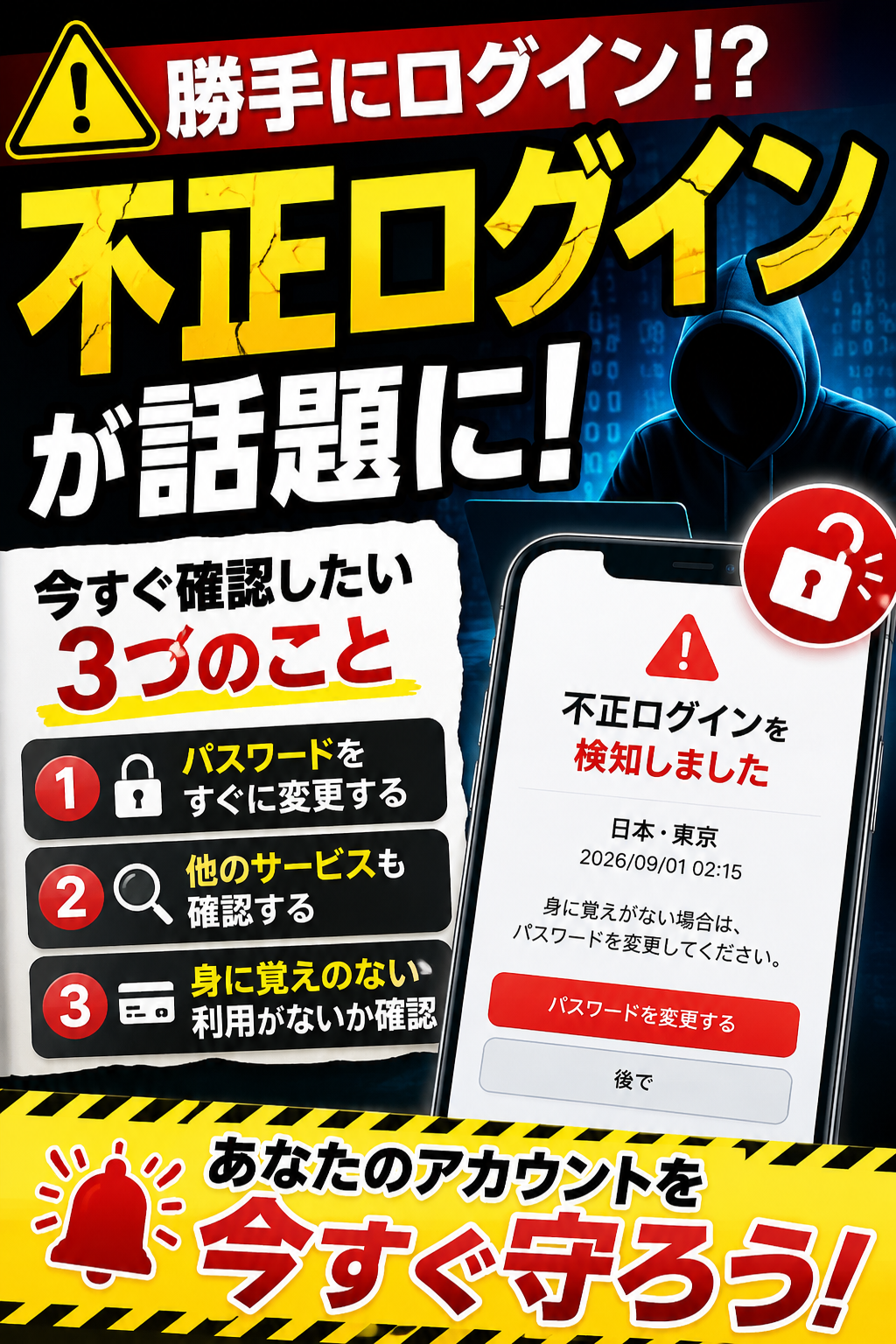
  • 不正ログインが話題に|知らない購入履歴があったら?今すぐ確認したい5つのこと

    不正ログインが話題に|知らない購入履歴があったら?今すぐ確認したい5つのこと

    「自分のアカウントは大丈夫」

    そう思っている人ほど、一度確認したほうがいいかもしれません。

    SNSやショッピングサイト、ネットバンキングなど、さまざまなインターネットサービスで問題になる不正ログイン。

    第三者にIDやパスワードを不正利用されると、アカウントを乗っ取られるだけでなく、個人情報の流出や金銭的な被害につながる可能性もあります。

    IPA(情報処理推進機構)によると、不正ログインの原因として、単純なパスワードの推測、他サービスから流出したパスワードの悪用、フィッシングサイトなどが挙げられています。

    では、もし自分のアカウントに身に覚えのないログインや購入履歴を見つけたら、何をすればいいのでしょうか。

    1.まずパスワードを変更する

    まだ自分でアカウントにログインできる場合は、できるだけ早くパスワードを変更しましょう。

    警察庁も、不正アクセスされたサービスにログインできる場合には、早急にパスワードを変更するよう案内しています。

    新しいパスワードは、簡単に推測できるものを避けることが重要です。

    また、以前とほとんど同じパスワードに変更するだけでは十分とは言えません。

    2.同じパスワードを使っているサービスも確認

    ここは非常に重要です。

    メール、SNS、ショッピングサイトなどで同じパスワードを使い回している場合、一つのサービスから漏れた情報が別のサービスへの不正ログインに利用される可能性があります。

    IPAはパスワードをできるだけ長く、複雑にし、サービスごとに使い回さないことを推奨しています。

    一つのアカウントで異常を発見したら、同じパスワードを使用している他のサービスも確認しましょう。

    3.知らない購入・カード利用がないか確認

    ショッピングサイトの場合は、

    注文履歴、配送先、登録メールアドレス、電話番号、クレジットカード利用履歴

    などを確認します。

    身に覚えのないカード利用が確認された場合は、利用しているカード会社へ速やかに連絡することが重要です。

    ネットバンキングの場合も、不審な送金がないか確認し、異常があれば金融機関へ連絡してください。警察庁もこの対応を案内しています。

    4.ログイン履歴を消さずに保存する

    不審なログインを発見しても、慌ててすべて消してしまわないようにしましょう。

    日時、アクセス元、ログイン履歴などが表示されている場合は、スクリーンショットなどで保存しておくと役立つ可能性があります。

    警察庁もログイン履歴やサービス提供会社とのメールなどを保存・記録しておくよう案内しています。被害が発生している場合は、保存した情報を持って警察署やサイバー犯罪相談窓口へ相談できます。

    5.二段階認証・多要素認証を設定する

    パスワードを変更したら終わりではありません。

    利用しているサービスが対応している場合は、**二段階認証・多要素認証(MFA)**を設定しておきましょう。

    IPAによると、多要素認証を設定していれば、仮にIDとパスワードを不正利用されても、それだけではログインできないため、不正ログイン防止に効果があります。

    対応しているサービスなら、パスキーを利用する方法もあります。

    「不正ログイン通知」が届いてもリンクをすぐ押さない

    ここにも注意が必要です。

    「あなたのアカウントに不正ログインがありました」

    というメール自体が、IDやパスワードを盗むためのフィッシングメールである可能性もあります。

    警察庁も、アカウント情報流出などを知らせる連絡を装ったフィッシングに注意し、正規の事業者からの連絡か慎重に確認するよう呼びかけています。

    メールのリンクから慌ててログインするのではなく、公式アプリや公式サイトを自分で開いて確認するほうが安全です。

    不正ログインされたらどうする?まとめ

    身に覚えのないログインを見つけたら、

    ① パスワード変更
    ② 同じパスワードを使っているサービスを確認
    ③ 購入・カード・銀行履歴を確認
    ④ ログイン履歴を保存
    ⑤ 二段階認証・多要素認証を設定

    この順番で確認してみてください。

    そして、すでに金銭被害が発生している場合や、自分でアカウントを取り戻せない場合は、一人で解決しようとせず、サービス提供会社、カード会社・金融機関、必要に応じて警察のサイバー犯罪相談窓口へ連絡してください。

    不正ログインは、被害が起きてからではなく、起きる前の対策が重要です。

    今日一度、自分がよく使っているアカウントのログイン履歴とセキュリティ設定を確認してみてください。

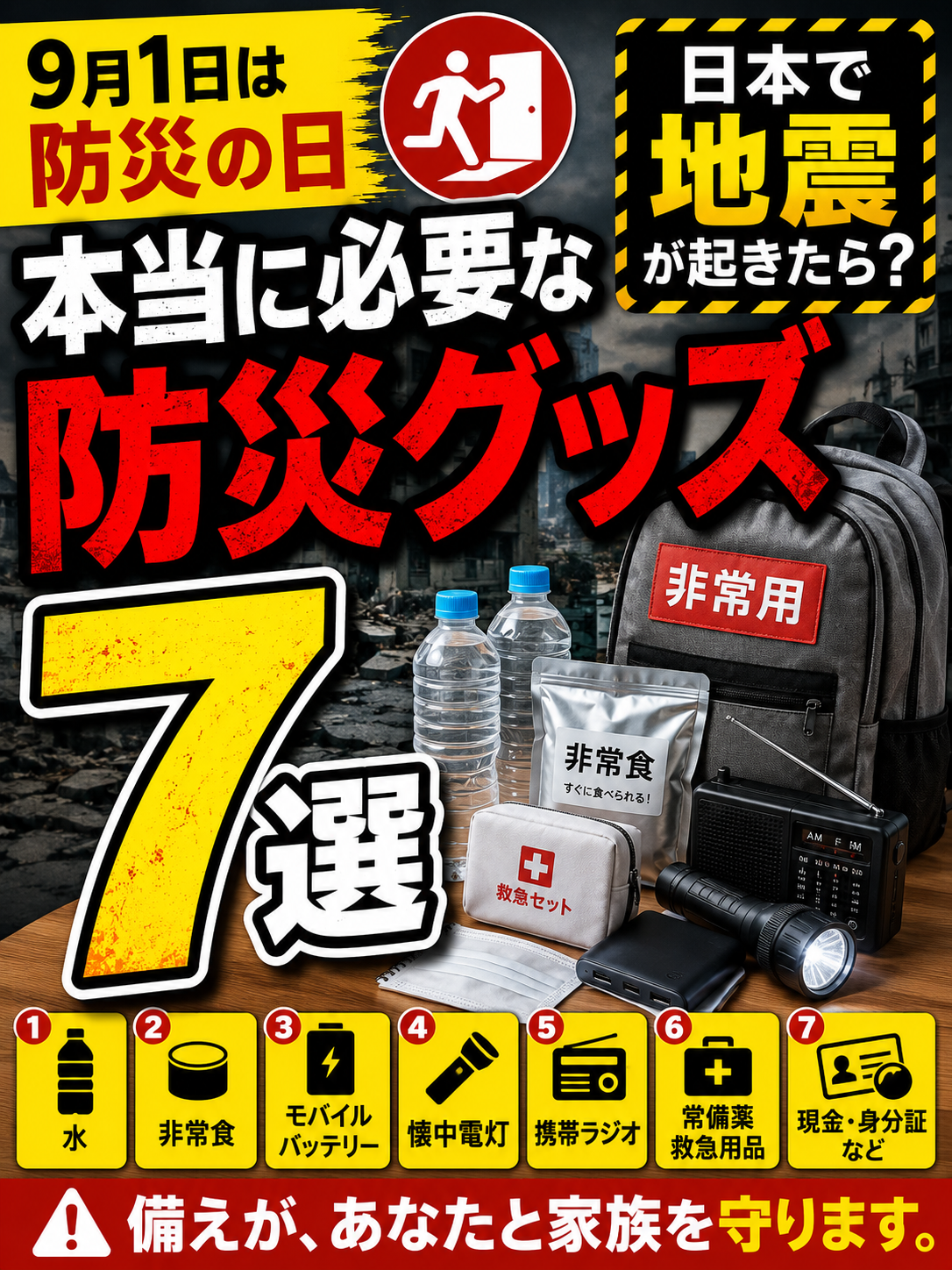
  • 9月1日は防災の日|地震が起きたら本当に必要な防災グッズ7選・避難前に確認すること

    9月1日は防災の日|地震が起きたら本当に必要な防災グッズ7選・避難前に確認すること

    9月1日は**「防災の日」**です。

    日本では地震、台風、大雨、津波など、いつ大きな災害が発生するか分かりません。

    しかし、実際に大きな地震が起きてから、

    「水がない」

    「スマートフォンを充電できない」

    「避難するときに何を持っていけばいいのか分からない」

    となってからでは遅い場合があります。

    そこで今回は、地震や災害に備えて自宅に準備しておきたい本当に必要な防災グッズ7選と、避難前に確認しておきたいポイントをまとめます。

    なぜ9月1日は「防災の日」なの?

    9月1日は日本の防災の日として、防災について考え、災害への備えを確認する重要な日です。

    ただし、防災グッズを9月1日だけ確認して終わりでは意味がありません。

    地震や台風などは季節を問わず発生する可能性があります。

    防災の日をきっかけに、

    「もし今日、大地震が起きたら自分はどうするか?」

    を家族で一度考えておくことが大切です。

    地震に備える「本当に必要な防災グッズ7選」

    ① 水

    まず絶対に欠かせないのが飲料水です。

    日本政府の防災情報では、飲料水は1人1日3リットルを目安として備えるよう案内されています。家庭では最低3日分、できれば1週間程度を意識して備蓄しておくことが推奨されています。

    例えば1人なら、

    3日分:約9リットル

    7日分:約21リットル

    が一つの目安になります。

    家族4人なら必要量はさらに大きくなります。

    飲むための水だけでなく、災害時には調理や生活用水が必要になることも忘れてはいけません。

    ② 非常食

    次に必要なのが非常食です。

    政府広報では、最低3日から1週間程度の食品を人数分備えることが望ましいとされています。

    例えば、

    レトルトご飯、缶詰、乾パン、ビスケット、チョコレートなど、火を使わなくても食べられる食品が便利です。

    特別な非常食だけを大量に購入する必要はありません。

    普段食べている食品を少し多めに購入し、古いものから食べて、食べた分を買い足す**「ローリングストック」**も政府が紹介しています。

    ③ モバイルバッテリー

    災害時には停電する可能性があります。

    スマートフォンは家族との連絡だけではなく、

    災害情報、避難情報、地図、ニュースなどを確認する重要な道具になります。

    そのため、モバイルバッテリーを充電した状態で準備しておくことも大切です。

    台風や大雨など事前に災害が予想される場合には、政府広報もスマートフォンやパソコンをフル充電しておくよう案内しています。

    ④ 懐中電灯

    停電が夜に発生すると、家の中でも周囲が見えなくなる可能性があります。

    懐中電灯はすぐに取り出せる場所に置いておきましょう。

    電池式の場合は予備電池も一緒に準備しておくと安心です。

    政府の非常持ち出し品の例にも、懐中電灯が含まれています。

    ⑤ 携帯ラジオ

    スマートフォンが使えない場合に備えて、携帯ラジオも有効です。

    政府が紹介する非常持ち出し品にも、携帯ラジオと予備電池が含まれています。

    電池式だけでなく、手回し充電など複数の方法で使用できるタイプもあります。

    ⑥ 常備薬・救急用品

    普段薬を服用している人は、常備薬を忘れないことが非常に重要です。

    さらに、

    ばんそうこう、包帯、ガーゼ、消毒用品、マスクなども準備しておくと安心です。

    乳幼児がいる家庭ならミルクや紙おむつ、高齢者がいる家庭なら必要な介護用品など、家族構成に合わせた防災バッグを作ることが重要です。

    ⑦ 現金・身分証明書など

    災害時には普段と同じようにキャッシュレス決済が利用できるとは限りません。

    そのため非常用の現金や必要な身分証明書なども確認しておきましょう。

    政府の非常持ち出し品の例でも、現金や健康保険証などの貴重品が挙げられています。

    南海トラフ地震への備えでも、現金やマイナンバーカード、身分証明書などを非常持ち出し品として準備する例が示されています。

    防災バッグだけでは足りない

    ここが重要です。

    防災グッズを買っただけで地震対策が終わるわけではありません。

    自宅周辺の避難場所と避難ルートを確認しておきましょう。

    家族が学校や会社など別々の場所にいるときに災害が発生する可能性もあります。

    政府広報でも、家族で待ち合わせ場所を確認し、複数の連絡手段を持つことなどを勧めています。

    家族で決めておきたい3つのこと

    ① どこへ避難するか

    自宅周辺の指定緊急避難場所や避難所を確認します。

    ② どの道で避難するか

    普段使っている道路が災害時にも安全とは限りません。複数の避難ルートを考えておくことが重要です。

    ③ 連絡できない場合どこで会うか

    電話やインターネットが使えない場合を想定して、家族の集合場所を事前に決めておきましょう。

    南海トラフ地震に備えるなら「1週間」も意識

    特に日本で今後も注意したいのが南海トラフ地震です。

    政府広報では、大規模な南海トラフ地震などでは1週間分以上の備蓄が望ましいとの指摘も紹介しています。

    つまり、

    「防災バッグ1個を作ったから安心」

    ではありません。

    避難するときに持ち出す防災バッグと、自宅で生活するための備蓄は分けて考える必要があります。

    今日できる防災チェックリスト

    まず今日、次の項目を確認してみてください。

    • 飲料水は最低3日分あるか
    • 非常食はあるか
    • モバイルバッテリーは充電されているか
    • 懐中電灯はすぐ使えるか
    • 携帯ラジオや予備電池はあるか
    • 常備薬・救急用品は入っているか
    • 現金・身分証明書などを確認したか
    • 避難場所を家族全員が知っているか
    • 家族の集合場所を決めているか

    災害は、準備ができるまで待ってくれません。

    9月1日の防災の日をきっかけに、一度自宅の防災バッグと備蓄品を確認してみてください。

    日本政府の防災対策については、政府広報オンライン「災害時に命を守る一人ひとりの防災対策」でも確認できます。

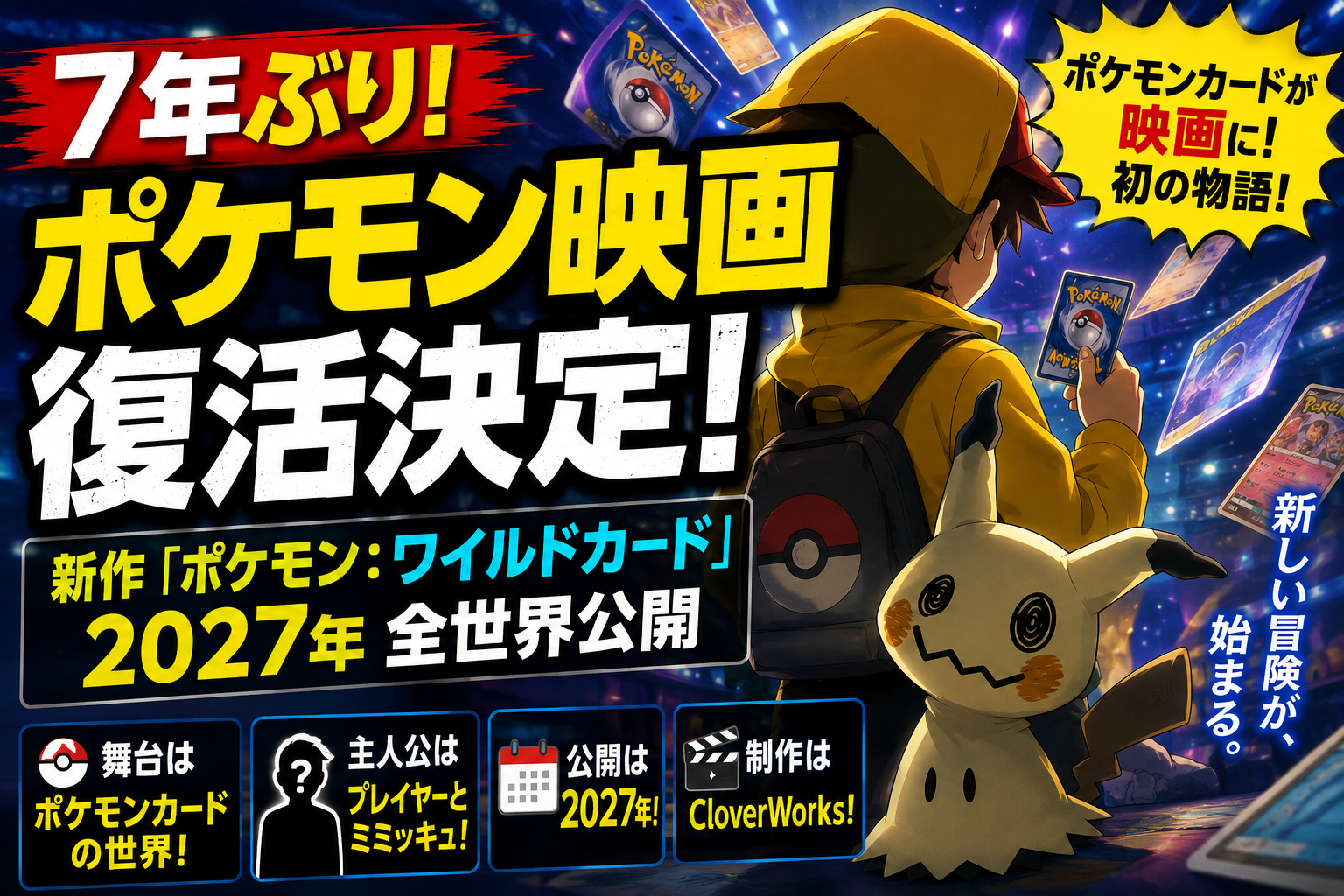
  • ポケモン映画が7年ぶり復活!「ポケモン:ワイルドカード」2027年公開|ミミッキュが主役に

    ポケモン映画が7年ぶり復活!「ポケモン:ワイルドカード」2027年公開|ミミッキュが主役に

    約7年ぶりに、ポケモンが映画館へ帰ってきます。

    完全新作の長編アニメーション映画**『ポケモン:ワイルドカード』**が、2027年に全世界で公開されることが正式に発表されました。

    前作『劇場版ポケットモンスター ココ』が公開されたのは2020年。そこから約7年ぶりとなる新作長編アニメーション映画です。

    しかも今回のポケモン映画は、これまでとは大きく違います。

    テーマとなるのは、世界中で人気を集める**ポケモンカードゲーム、通称「ポケカ」**です。

    『ポケモン:ワイルドカード』とは?

    『ポケモン:ワイルドカード』は、ポケモンカードゲームを題材にした完全新作の長編アニメーション映画です。

    2026年8月にアメリカ・サンフランシスコで開催された「ポケモンワールドチャンピオンシップス2026」で発表されました。

    公式サイトでは、

    2027年劇場公開

    が正式に告知されています。

    現時点で具体的な公開日は発表されていません。

    そのため、「2027年○月公開」といった情報が出回った場合でも、公式発表があるまでは注意が必要です。

    今回の主役は「プレイヤー」とミミッキュ

    今回、特に大きな注目を集めているのが主人公です。

    物語の中心となるのは、ポケモンカードのチャンピオンを目指すプレイヤーとミミッキュ。

    公開された特報には、黄色いフードをかぶったポケモンカードプレイヤーとミミッキュが登場しています。

    これまでの劇場版ポケモンとはかなり違った物語になりそうです。

    なぜ「ポケモンカード」が映画になる?

    今回の映画で非常に重要なのが、ポケモンカードゲームそのものが物語の題材になっていることです。

    ポケモンカードゲームを題材にした映画作品は、ポケモン史上初となります。

    ゲームやアニメのポケモンではなく、

    「ポケモンカードをプレイする人間とポケモン」

    がどのような物語を作るのか。

    ここが『ポケモン:ワイルドカード』最大の注目ポイントになりそうです。

    制作はCloverWorks

    制作スタッフも発表されています。

    監督:北田勝彦

    キャラクターデザイン:林明美

    アニメーション制作:CloverWorks

    企画・プロデュース:STORY inc.

    CloverWorksは日本の人気アニメ作品を多数手掛けてきたアニメーションスタジオです。

    今回、世界的IPであるポケモンをどのような映像で描くのかにも注目が集まります。

    サトシやピカチュウは登場する?

    ここは多くのポケモンファンが気になるところでしょう。

    現時点で公式に発表されている物語の中心はプレイヤーとミミッキュです。

    一方、サトシやピカチュウなど歴代キャラクターの登場について、公式サイトでは詳細が発表されていません。

    したがって、

    「ピカチュウが登場する」

    「サトシが復活する」

    と現段階で断定することはできません。

    今後のキャラクター発表を待つ必要があります。

    公開日はいつ?

    『ポケモン:ワイルドカード』は2027年に全世界公開予定です。

    しかし、2026年9月1日現在、具体的な劇場公開日は発表されていません。

    今後、

    • 正式な公開日
    • 声優・キャスト
    • 新キャラクター
    • 登場するポケモン
    • ストーリー
    • 本予告
    • 主題歌

    などが順次発表されると考えられます。

    このページでも公式情報が発表され次第、最新情報を更新していきます。

    7年ぶりのポケモン映画は大きく変わる

    2020年の『劇場版ポケットモンスター ココ』以来、約7年ぶりとなるポケモンの長編アニメーション映画。

    しかし『ポケモン:ワイルドカード』は、単純な過去シリーズの復活ではありません。

    ポケモンカードゲームを初めて映画の題材にし、プレイヤーとミミッキュを物語の中心に据える。

    これまでとは違ったポケモン映画になりそうです。

    2027年の公開まで、今後発表される新情報に注目です。

    公式最新情報は 『ポケモン:ワイルドカード』公式サイト で確認できます。