For many international visitors, Korean sundae (순대) is an unfamiliar food with an intimidating English translation: blood sausage.
But that translation tells only part of the story.
In Korea, sundae can be an inexpensive snack shared by students after school, a regional specialty shaped by migration and local ingredients, a sizzling dish eaten with friends, or the centerpiece of a steaming bowl of soup after a long working day.
The same word describes foods that can look and taste remarkably different.
A plate of ordinary street-stall sundae is not the same experience as the large, rice-filled Abai sundae of Sokcho. Sillim-dong’s famous baek sundae is not covered in the familiar red chili seasoning. And ojingeo sundae replaces the usual animal-intestine casing with squid.
These differences reveal something important about Korean food culture: traditional dishes are not always fixed recipes. They evolve as people move, ingredients change, markets develop, and local communities create their own identities.
To understand Korean sundae, it helps to look beyond what goes into the sausage. The more interesting question is how one humble food became part of so many different Korean experiences.
1. What Exactly Is Korean Sundae?
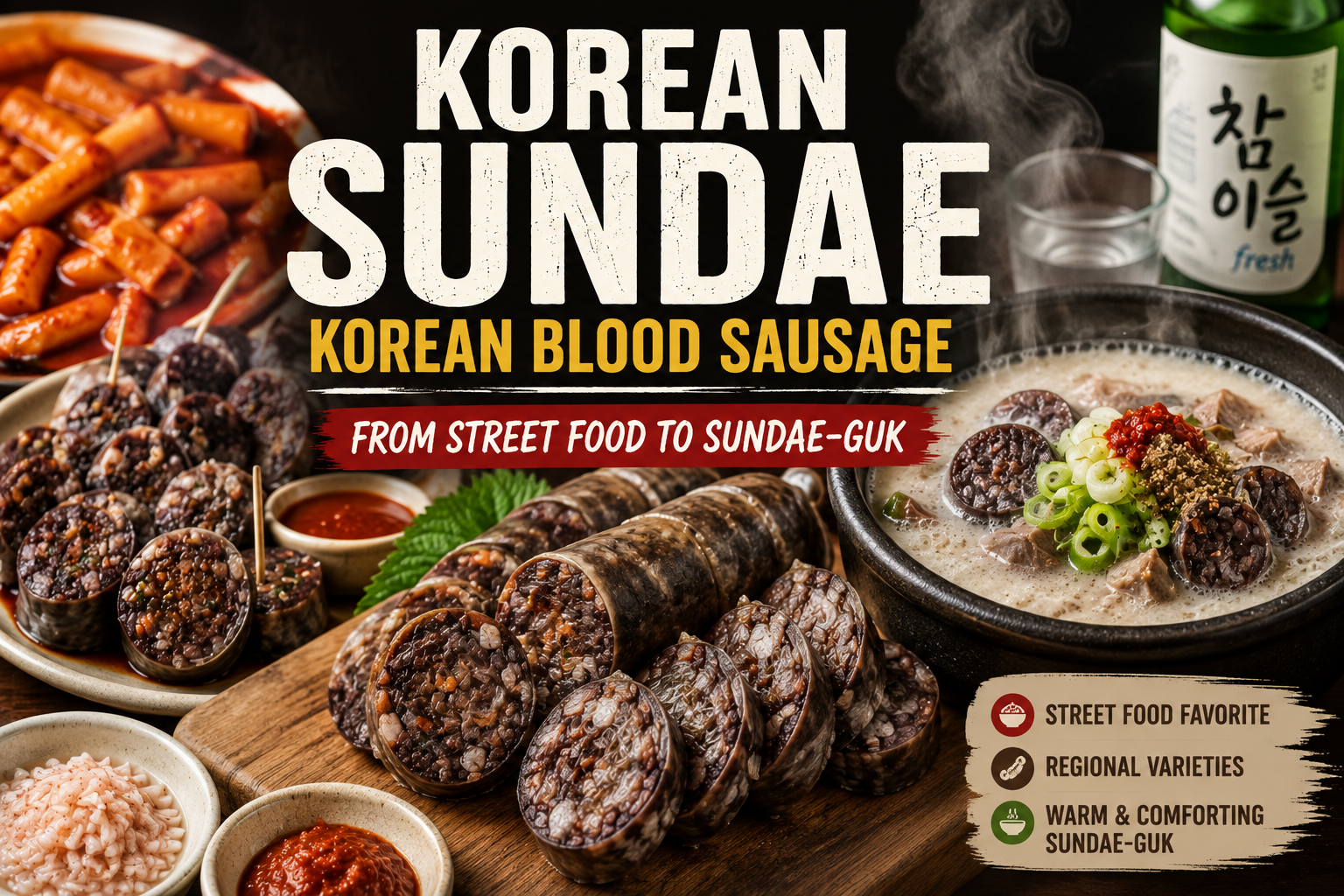
Korean sundae is a traditional stuffed sausage. A common modern version uses pork intestine as its casing, filled with ingredients such as glass noodles, vegetables, seasonings, and pork blood.
The filling varies considerably.
Some versions contain more noodles, while others emphasize rice, vegetables, meat, or other ingredients. The casing, proportions, seasoning, and cooking method can also differ by region and producer.
This is why describing every Korean sundae as simply a glass-noodle sausage is misleading.
The familiar street-food version is usually steamed and sliced into bite-sized rounds. Its dark filling and soft, slightly springy texture make it visually distinctive.
The flavor is often milder than first-time visitors expect. Rather than being intensely spicy or strongly flavored, ordinary steamed sundae is generally savory, with its character depending on the filling and accompanying condiments.
There is also a pronunciation issue worth knowing. Korean sundae is pronounced approximately soon-deh. It has nothing to do with the frozen dessert called a sundae in English.
2. How Old Is Sundae? What Historical Records Actually Tell Us
Sundae is often described as an ancient Korean food, but its history needs careful explanation.
Korea.net reports that blood-sausage traditions are believed to date back to the Goryeo period (918–1392). It also identifies recipes in historical Korean cookbooks, including the 1809 text Gyuhap Chongseo and the late nineteenth-century Siuijeonseo.
These records are valuable because they show that stuffed preparations involving animal intestines and blood were known in Korean culinary traditions long before modern street-food culture.
However, they do not prove that today’s familiar glass-noodle sundae was already being eaten in exactly the same form centuries ago.
Recipes change. Ingredients become more accessible or less expensive, cooking techniques develop, and household preferences shift.
The modern version commonly encountered at Korean snack shops is therefore better understood as part of a changing food tradition rather than a recipe that has remained identical for hundreds of years.
Historical records establish an older culinary background. They do not establish one unchanging national recipe.
That distinction matters when discussing traditional food. A dish can have a long history without every modern ingredient or preparation method being equally old.
3. Why Did Sundae Become an Everyday Korean Food?
One reason sundae became familiar across Korea is its ability to fit different eating situations.
It can be sold in small portions, served as a side dish, combined with other street foods, or turned into a filling meal.
Its ingredients also reflect a practical approach to cooking.
Traditional sausage-making uses parts of an animal that are not always the centerpiece of more expensive meat dishes. Intestines provide a natural casing, while blood, vegetables, grains, and other ingredients contribute to the filling.
This is part of a broader culinary principle: making use of different ingredients rather than treating only premium cuts as valuable.
It would be too simplistic to claim that this alone explains sundae’s popularity. Taste, price, local food habits, and the development of markets all matter.
But the dish illustrates how practical cooking can become a lasting cultural tradition.
A food that begins with accessible ingredients can eventually become something people actively seek out, defend, and associate with home.
4. Sundae and Bunsik: The After-School Food Culture
For many Koreans, the most familiar setting for sundae is a bunsikjip (분식집), a casual snack shop.
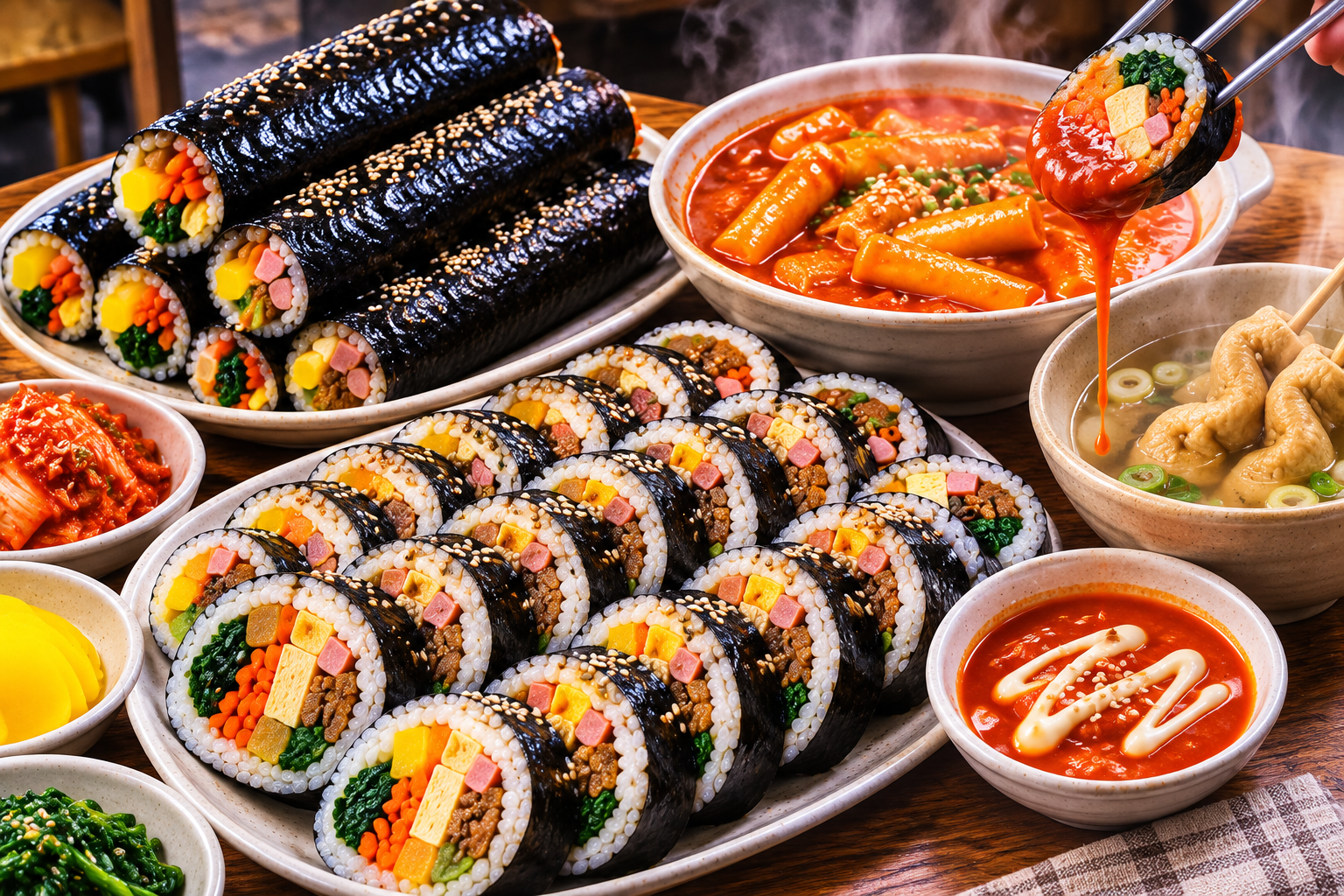
Bunsik culture includes foods such as tteokbokki, gimbap, ramyeon, fried snacks, and sundae. These are generally informal meals and snacks rather than elaborate restaurant dishes.
The relationship between sundae and bunsik is especially important because it connects the food with everyday social life.
Imagine a group of students stopping at a small shop after school. One orders tteokbokki, another wants gimbap, and someone asks for a plate of sundae to share.
Nobody needs a special occasion.
The food is affordable, arrives quickly, and can be divided among friends.
This casual setting helped make sundae familiar to generations of Koreans. Its cultural importance does not come only from its ingredients or history. It also comes from the repeated experience of eating it with other people.
For international visitors, this is a useful distinction: Korean street food is often as much about the social setting as the recipe itself.
5. Why Sundae and Tteokbokki Work So Well Together
The combination of sundae and tteokbokki is one of Korea’s most recognizable snack-shop pairings.
The two foods balance each other.
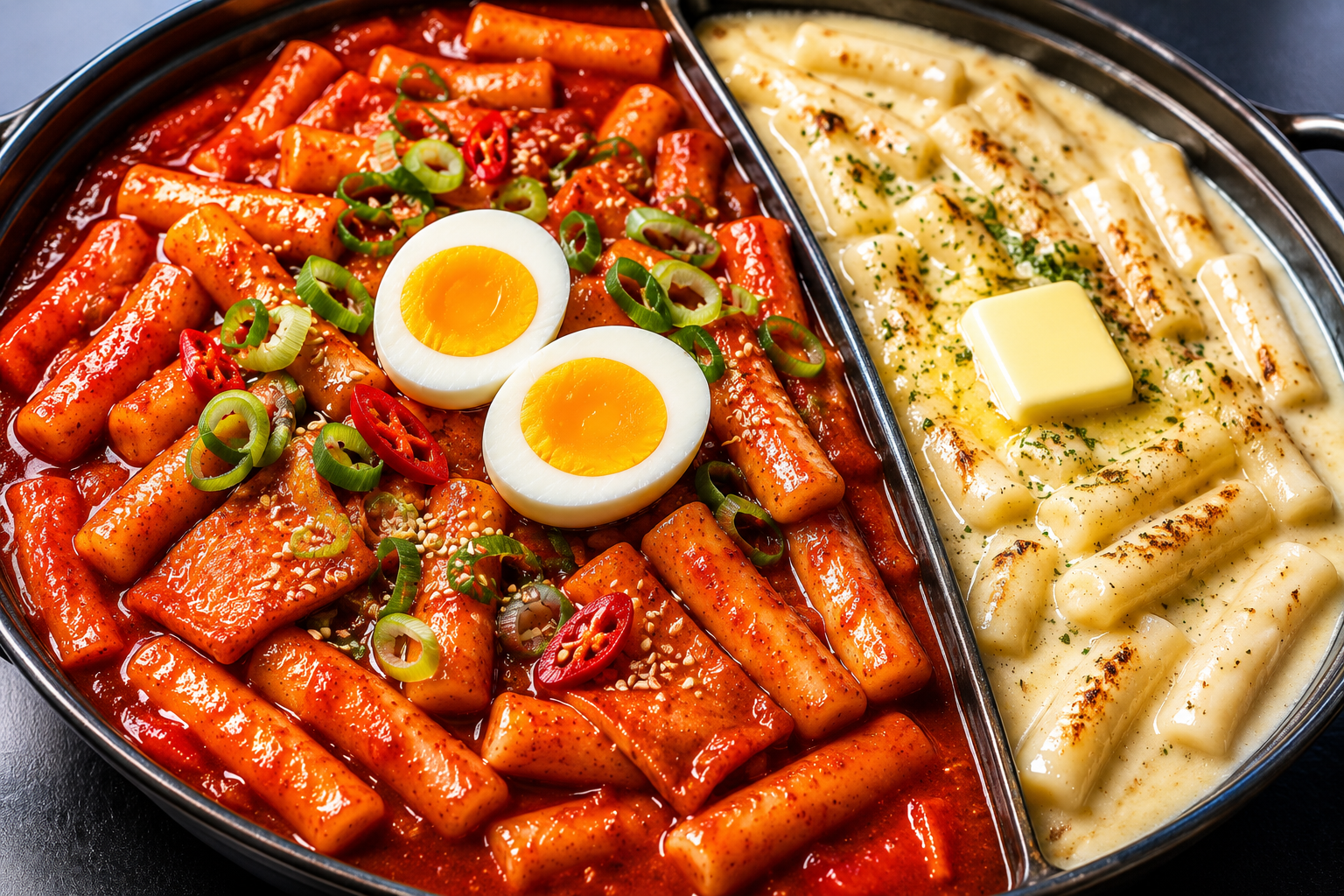
Tteokbokki brings a strong, sweet-spicy sauce and a chewy rice-cake texture. Steamed sundae is usually milder and more savory.
Dip a piece of sundae into the red sauce and the flavor changes immediately. The sauce adds sweetness, chili heat, and seasoning to a food that might otherwise taste relatively gentle.
The contrast is more interesting than simply eating two popular dishes together.
It combines different textures and levels of seasoning in one meal.
Other common companions include:
- Eomuk: Korean fish cakes, often served in a warm broth.
- Twigim: Deep-fried vegetables or other ingredients.
- Gimbap: Rice and fillings wrapped in seaweed.
- Ramyeon: Korean-style instant noodles, often served with a spicy broth.
For a first-time visitor, ordering sundae with tteokbokki is an approachable introduction. The familiar spicy sauce can make the first taste less intimidating.
6. The Regional Sundae Debate: What Should You Dip It In?
There is no single nationwide answer to the question of how sundae should be seasoned.
In Seoul and many central areas, salt is a common accompaniment. Other regions and restaurants may offer different sauces or seasonings.
Some people prefer the straightforward taste of salt. Others enjoy ssamjang or another seasoned dipping sauce.
At a bunsik shop, tteokbokki sauce may be the favorite option.
This variation is a small example of how Korean food habits differ across regions.
It is also a reminder not to treat one restaurant’s serving style as the only authentic way to eat a dish.
If you visit Korea, try the condiment supplied by the restaurant first. Then experiment with the alternatives.
The disagreement itself can become part of the experience.
7. Beyond the Sausage: Liver and Other Accompaniments
A traditional plate of sundae may include more than the sliced sausage.
Some markets and snack shops serve steamed pork liver and other offal alongside it.
These ingredients have very different textures.
Sundae is generally soft and slightly chewy. Cooked liver is denser and can have a dry, crumbly texture.
For visitors unfamiliar with organ meats, this can be surprising. There is no requirement to eat every item on the plate, but trying a small piece can help explain the broader role of offal in Korean food traditions.
Sundae is not an isolated example. Korean cuisine includes many dishes that use different parts of an animal, from soups and stews to grilled or steamed preparations.
The important point is that Korean food culture often treats ingredients beyond premium muscle meat as meaningful parts of a meal.
8. Sundae Bokkeum: When a Snack Becomes a Shared Griddle Meal
Steamed sundae is only one expression of the dish.
Another popular preparation is sundae bokkeum (순대볶음), or stir-fried sundae.
Sliced sundae is cooked on a hot griddle with vegetables and seasoning. Depending on the style, ingredients can include cabbage, onions, carrots, green onions, perilla leaves, and other components.
Red versions commonly use chili-based seasoning.
The result is a much stronger dish than ordinary steamed sundae.
The vegetables contribute freshness and crunch, while the sausage provides a soft, chewy center. Perilla leaves add a distinctive herbal aroma, and sesame or perilla seed powder can bring a nutty finish.
Sundae bokkeum is often ordered for sharing.
That changes the way the food is experienced. Instead of buying a small plate as a quick snack, people gather around a large serving and eat together.
It is a good example of how one ingredient can move from street snack to restaurant-style shared meal without losing its everyday character.
9. Sillim-dong Sundae Town: How a Local Food Became a Neighborhood Identity
One of Seoul’s best-known destinations for sundae bokkeum is Sillim-dong Sundae Town in Gwanak-gu.
Its development offers a useful example of how food businesses can shape the identity of a neighborhood.
According to the official Seoul tourism guide, sundae restaurants and street vendors operated in and around Sillim-dong from the late 1960s. In 1992, many of these businesses gathered in the Minsok Sundae Town building.
The area gradually became associated with a concentration of restaurants specializing in sundae dishes.
This is more than a collection of places selling the same food.
When similar businesses gather in one area, customers gain a reason to visit the neighborhood specifically for that experience. Competition also encourages restaurants to distinguish themselves through recipes, sauces, ingredients, and serving styles.
Sillim-dong became known for a particular style of sundae bokkeum, especially baek sundae.
For visitors interested in Korean food beyond the most famous tourist dishes, the area offers a look at a local restaurant culture built around one humble ingredient.
10. Baek Sundae: Why Is This Stir-Fried Sundae White?
The word baek (백) means white.
Unlike the familiar red version of sundae bokkeum, baek sundae (백순대) is stir-fried without the usual red chili-paste seasoning.
Sundae, vegetables, and other ingredients are cooked with seasonings such as salt and soy sauce. Sesame oil and perilla seed powder contribute aroma and richness.
The finished dish is often served with a separate spicy dipping sauce.
This creates an interesting contrast: the main dish is relatively mild, while each bite can be made more intense with the sauce.
The cooking method also changes the experience. Instead of being dominated by a thick red seasoning, the individual ingredients remain more noticeable.
Sillim-dong is particularly associated with this preparation. The Korea Tourism Organization also identifies baek sundae as a signature dish of the neighborhood.
For visitors, comparing red sundae bokkeum with baek sundae is a worthwhile way to understand how different seasoning methods can transform the same central ingredient.
11. Byeongcheon Sundae: A Regional Style Known for Its Lighter Filling
Travel south to Byeongcheon in Cheonan, Chungcheongnam-do, and another regional identity comes into view.
Byeongcheon sundae (병천순대) is known for a filling that can include vegetables, sticky rice, and glass noodles.
The Korea Tourism Organization describes the use of pork small intestine and notes that the combination of vegetables and other ingredients gives the dish a relatively clean, light flavor.
That description helps explain why Byeongcheon sundae has a distinct reputation.
Rather than relying only on a strong seasoning, the filling itself contributes to the character of the sausage.
The area is also associated with sundae-gukbap and restaurants specializing in regional sundae dishes.
For travelers, this is a reminder that a regional food name can refer to more than a place where a dish happens to be sold. It can represent a recognizable combination of ingredients, preparation, and local reputation.
12. Abai Sundae: A Food Connected to the Korean War and Displacement
Some regional foods are especially meaningful because they preserve the memory of people who moved under difficult circumstances.
Abai sundae (아바이순대), associated with Sokcho’s Abai Village, is one such example.
Abai Village was established by refugees from North Korea, particularly people from Hamgyeong Province who could not return home after the Korean War.
The word abai comes from a regional dialect and is used as a familiar term for an older man, similar to addressing someone as grandfather.
The food is associated with the culinary traditions carried by displaced people from the north.
The Korea Tourism Organization describes Abai sundae as a Hamgyeong-style dish made by filling pork large intestine with ingredients including blood and sweet rice before steaming.
Compared with many small street-food pieces, Abai sundae is often larger and has a different filling and texture.
Its significance, however, goes beyond size.
The dish represents how displaced communities carried food memories into new places. Ingredients and cooking methods became part of maintaining a connection with a home that many people could no longer visit.
This makes Abai sundae different from a regional specialty known only for its flavor.
It is also a reminder of modern Korean history.
Visitors to Abai Village can therefore understand the dish in two ways: as a local food worth tasting and as part of a community’s story of migration, survival, and cultural continuity.
13. Ojingeo Sundae: When Squid Replaces the Traditional Casing
Not every Korean dish called sundae uses pork intestine.
Ojingeo sundae (오징어순대) is made by stuffing a squid body with a seasoned filling, cooking it, and slicing it into pieces.
The squid serves as the casing.
This creates a completely different eating experience. The outside has the characteristic texture of squid, while the inside contains a mixture of filling ingredients.
Ojingeo sundae is strongly associated with Gangwon Province, particularly Sokcho.
It is frequently encountered alongside other regional specialties in Abai Village.
The existence of ojingeo sundae also shows why the English translation “blood sausage” is useful but incomplete.
It describes an important and familiar category of sundae, but it cannot explain every dish that carries the same Korean name.
The broader idea of stuffing a casing with a seasoned mixture has produced different regional interpretations.
14. Other Regional Varieties: Sundae Is Not Just a Seoul or Sokcho Story
The regional diversity does not end with Sillim-dong, Byeongcheon, and Abai Village.
For example, Yonggung sundae (용궁순대) is associated with Yonggung-myeon in Yecheon, Gyeongsangbuk-do.
The Korea Tourism Organization identifies tripe as a distinguishing feature of this variety, in contrast with the pork intestines commonly used in many other forms of sundae.
Its filling includes ingredients such as glutinous rice, glass noodles, and vegetables.
This example reinforces an important point: regional sundae traditions can differ in the casing itself, not merely in seasoning.
For a food traveler, the most interesting approach is not to search for one universally “best” sundae.
It is to compare how different communities have developed their own versions.
15. Sundae-guk: How a Sausage Becomes a Comforting Korean Meal
If street-food sundae represents the casual side of Korean food culture, sundae-guk (순댓국) represents its more substantial, everyday meal tradition.
Sundae-guk is a hot soup containing sliced sundae, often accompanied by pork meat and offal.
The broth varies by restaurant. Some versions are pale and relatively mild, while others have a richer or more pronounced pork flavor.
Rice is served alongside the soup or added directly to the bowl.
The appeal is straightforward.
It is warm, filling, and suitable for a quick meal. Restaurants specializing in sundae-guk can be found throughout Korea, from traditional markets to ordinary neighborhood streets.
It is not exclusively a winter food, although a steaming bowl can feel especially comforting on a cold evening.
The dish also illustrates how Korean food culture often turns individual ingredients into complete meals through broth, rice, vegetables, and condiments.
Sundae is no longer simply something to dip into sauce. It becomes part of a bowl designed to satisfy hunger.
16. The Art of Seasoning Sundae-guk
A bowl of sundae-guk may arrive with several condiments on the table.
Common options include:
- Saeujeot: Salted and fermented small shrimp, used to add saltiness and fermented depth.
- Perilla seed powder: Adds a nutty aroma and a thicker, more rounded impression.
- Dadaegi: A spicy seasoning mixture, often based on chili powder and other ingredients.
- Green onions: Add freshness and a mild onion flavor.
- Black pepper: Provides a familiar finishing seasoning.
One useful tip for first-time visitors is to taste the broth before adding everything.
The soup may already be seasoned.
Add a little saeujeot if it needs more saltiness. Try perilla seed powder for a nuttier flavor. Add dadaegi gradually if you want heat.
There is no need to empty every condiment dish into the bowl.
Customizing the soup is part of the experience, and different diners often prefer different combinations.
17. Is Sundae-guk Always Spicy?
No.
This is a common misunderstanding among visitors who associate Korean food with red chili seasoning.
Some sundae-guk arrives with a relatively mild broth. The red color and stronger heat may come from dadaegi, which can be added at the table.
The spice level therefore depends on the restaurant and the diner’s choices.
If you prefer mild food, ask for the seasoning separately or simply avoid adding the spicy mixture.
Sundae itself is not automatically spicy, and neither is every bowl of sundae-guk.
18. How to Make an Easy Sundae-guk at Home
A traditional restaurant-style broth may require considerable preparation and a variety of pork ingredients.
For a simpler home version, packaged Korean beef-bone broth can provide a convenient base.
This recipe is an approximation of the everyday flavor profile, not a replacement for a restaurant that prepares its broth from scratch.
Ingredients for Two Servings
- 300 g cooked Korean sundae
- 150 g thinly sliced pork
- 500 ml packaged Korean beef-bone broth (sagol-gomtang)
- Approximately 200 ml water
- 1/2 green onion
- A handful of garlic chives
- 1 tablespoon minced garlic
- 1–2 tablespoons perilla seed powder
- Saeujeot, to taste
- Black pepper
- Green chili, optional
- Steamed rice, for serving
Simple Dadaegi Seasoning
Mix the following ingredients:
- 1 tablespoon Korean chili powder (gochugaru)
- 1/2 tablespoon minced garlic
- A small amount of saeujeot
- 1–2 tablespoons hot broth
Adjust the seasoning gradually according to your preference.
Step 1: Prepare the Broth
Pour the packaged beef-bone broth and water into a pot.
Bring it to a simmer. Add the thinly sliced pork and cook thoroughly.
Add the minced garlic and allow the broth to simmer until the pork is fully cooked.
Step 2: Add the Sundae Near the End
Most packaged Korean sundae is already cooked.
Add it near the end of the cooking process and heat it through according to the package instructions.
Avoid vigorous boiling for an extended period, which can cause the casing to split and the filling to fall apart.
Step 3: Add Vegetables and Finish
Add the green onion and garlic chives.
Transfer the soup to serving bowls.
Serve the condiments separately so each person can adjust the flavor.
Step 4: Serve with Rice
Enjoy the soup with steamed rice.
Alternatively, add some rice directly to the broth.
The result is a simple, filling meal inspired by one of Korea’s familiar neighborhood dishes.
19. How Should a First-Time Visitor Try Korean Sundae?
If you have never eaten sundae, there is no need to begin with the most unusual regional variety.
A gradual introduction makes the experience easier.
First: Try ordinary steamed sundae.
Order a small plate at a bunsik shop. Taste one piece with salt to understand its natural flavor.
Second: Try it with tteokbokki sauce.
The spicy-sweet sauce provides a familiar and flavorful contrast.
Third: Explore sundae bokkeum.
Try the stir-fried version to experience the combination of sausage, vegetables, and seasoning.
Fourth: Compare regional varieties.
If you travel to Sokcho, look for Abai sundae or ojingeo sundae. In Cheonan, try Byeongcheon sundae.
Finally: Order sundae-guk.
This is a different experience altogether. The broth, rice, and condiments turn sundae into a complete meal.
One practical note: traditional sundae often contains pork blood and may include other animal-derived ingredients. Travelers with dietary restrictions should ask about the filling and broth before ordering.
20. What Sundae Reveals About Korean Food Culture
Sundae is an interesting case study because it connects several parts of Korean everyday life.
Its historical recipes show that stuffed preparations involving blood and intestines existed in Korean culinary traditions long before modern snack shops.
Its presence in bunsik restaurants shows how a traditional food became part of affordable, informal eating.
Its regional varieties reveal the influence of local ingredients, migration, and community identity.
Its transformation into sundae-guk shows how a relatively simple sausage can become a filling meal through broth, rice, and seasoning.
And its continued popularity demonstrates that traditional food does not need to remain unchanged to remain meaningful.
In fact, its ability to adapt may be one reason it has survived.
For international visitors, this is a more useful way to approach Korean food than simply asking whether a dish is unusual or familiar.
The better question is what the food tells us about the people who made it part of their lives.
Conclusion: More Than a Plate of Blood Sausage
A plate of sundae at a small snack shop and a bowl of sundae-guk at a neighborhood restaurant may look like two different meals.
But they share a culinary tradition that has adapted to different places, generations, and eating habits.
In Seoul, sundae may be associated with tteokbokki and the busy atmosphere of a bunsik shop.
In Sillim-dong, it becomes the center of a distinctive restaurant district and the famous baek sundae experience.
In Byeongcheon, it reflects a regional food identity.
In Sokcho, Abai sundae carries memories of displacement and the Korean War.
And in a bowl of sundae-guk, it becomes the kind of ordinary comfort food that people return to without needing a special reason.
That is what makes Korean sundae worth understanding.
It is not simply a sausage that Koreans happen to eat. It is a food that has found a place in Korea’s markets, neighborhoods, regional histories, and everyday memories.
Frequently Asked Questions
1. What is Korean sundae made of?
A common version uses pork intestine as a casing, filled with ingredients such as glass noodles, vegetables, seasonings, and pork blood. Recipes vary by region and style.
2. Is Korean sundae the same as Western blood sausage?
They belong to the broader family of blood sausages, but Korean sundae has its own ingredients, preparation methods, and regional varieties. It should not be assumed to taste exactly like European blood sausages.
3. Is sundae spicy?
Ordinary steamed sundae is generally not spicy. Sundae bokkeum can be spicy, while baek sundae is a milder stir-fried version commonly served with a separate spicy dipping sauce.
4. What is the difference between sundae and sundae-guk?
Sundae is the stuffed sausage itself. Sundae-guk is a Korean soup that contains sliced sundae and often pork meat or offal in a broth.
5. What is Abai sundae?
Abai sundae is a regional style associated with Sokcho’s Abai Village. It is connected to the food traditions of refugees from Hamgyeong Province who settled there after the Korean War.
6. What is baek sundae?
Baek sundae is a stir-fried sundae dish associated with Sillim-dong in Seoul. It is cooked without the usual red chili-paste seasoning and is often served with a separate spicy sauce.
7. Where can I try famous Korean sundae?
Sillim-dong Sundae Town in Seoul is known for sundae bokkeum and baek sundae. Byeongcheon in Cheonan is known for Byeongcheon sundae, while Sokcho’s Abai Village is associated with Abai sundae and ojingeo sundae.
Sources and Further Reading
- Korea.net — Eat Your Way Across Korea: North Korean Blood Sausage
- Seoul Official Tourism Guide — Legendary Restaurant Alleys, Including Sillim-dong
- Korea Tourism Organization — Sillim-dong Minsok Sundae Town
- Korea Tourism Organization — Byeongcheon Sundae
- Korea Tourism Organization — Abai Sundae at Dancheon Sikdang
- Korea Tourism Organization — Abai Village
- Korea Tourism Organization — Yonggung Sundae