There are foods people remember because they were expensive, beautifully presented, or served on a special occasion.
And then there are foods people remember because they were simply there when life happened.
In Korea, jajangmyeon belongs to the second category.
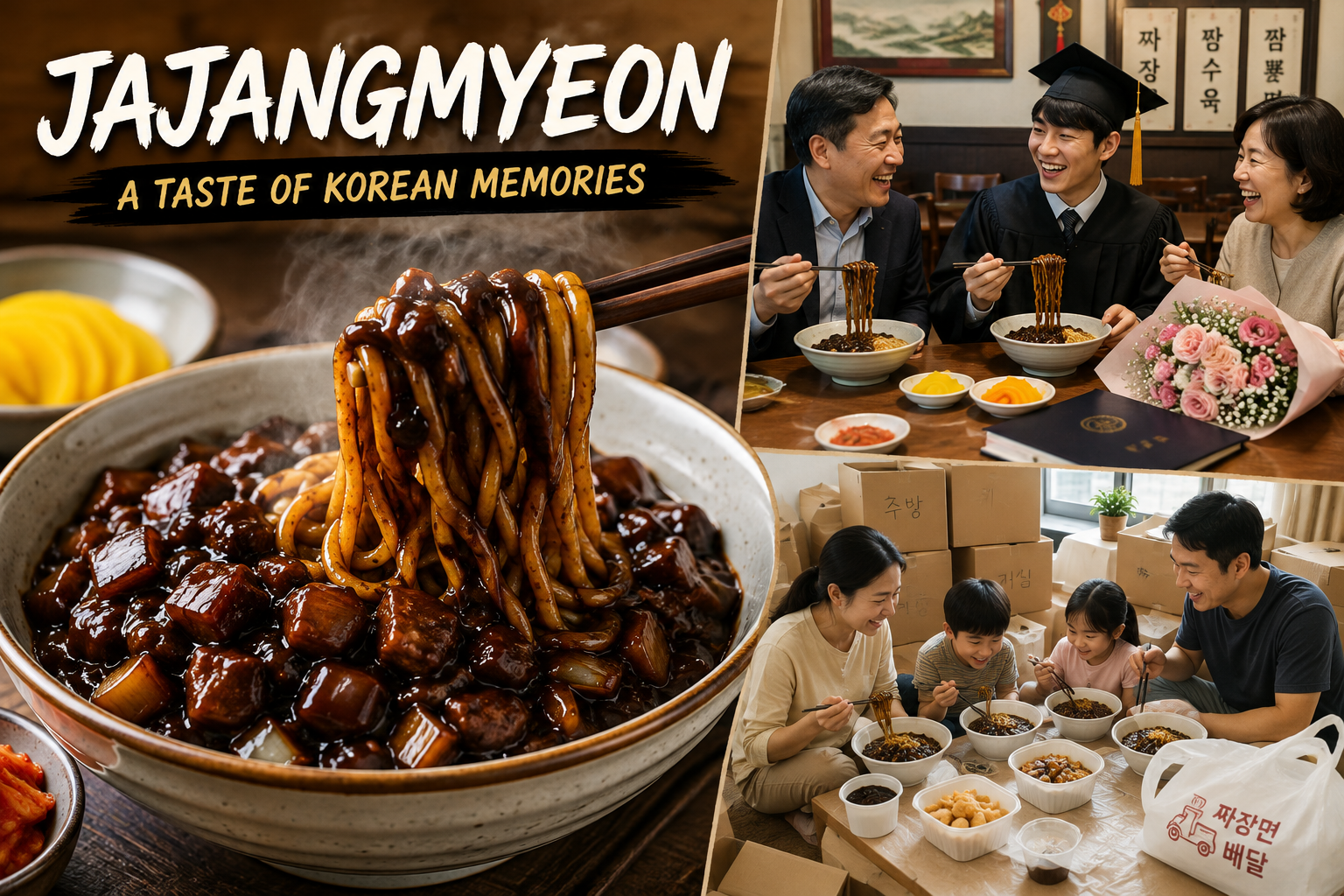
A graduation ceremony followed by lunch with the family. A moving day when the kitchen is still packed in boxes. A late evening when everyone is too tired to cook. A delivery meal shared around a small table.
For many Koreans, these moments have one familiar flavor: dark, glossy black bean sauce mixed into a bowl of chewy noodles.
Jajangmyeon is not just a popular Korean noodle dish. It is a food connected to ordinary celebrations, family routines, neighborhood restaurants, and memories that can return with a single smell.
But how did a dish with Chinese roots become such a familiar part of Korean life?
1. What Is Jajangmyeon?
Jajangmyeon is a Korean-style noodle dish topped with a thick sauce made primarily from chunjang, a fermented black bean paste used in Korean Chinese cooking.
The sauce usually includes pork, onions, and other vegetables. It is cooked with the bean paste until the ingredients develop a deep, savory flavor with a noticeable sweetness.
The noodles are typically thick wheat noodles with a pleasantly chewy texture.
To eat jajangmyeon, you mix the sauce thoroughly through the noodles. The pale noodles gradually disappear beneath the dark sauce, leaving every bite coated with its rich flavor.
Although the dish has roots in Chinese zhajiangmian, Korean jajangmyeon developed its own ingredients, cooking methods, flavor, and cultural identity.
Today, it is one of the most recognizable dishes served at Korean Chinese restaurants.
2. Jajangmyeon Began Its Korean Story in Incheon
The history of Korean jajangmyeon is closely connected to Incheon.
After Incheon Port opened in 1883, Chinese immigrants, particularly people from Shandong, settled in the port area. They brought their food traditions with them, including zhajiangmian, a noodle dish served with fermented bean sauce.
The early version was quite different from the glossy black jajangmyeon people know today.
Its sauce was closer to the original Chinese preparation, with a lighter brown or yellowish appearance. Over time, cooks adapted the dish to local ingredients and Korean tastes.
The area around Incheon’s Chinatown became an important center for this development.
The restaurant associated with the early history of Korean jajangmyeon was originally opened as Sandong Hoegwan in 1905 and later became known as Gonghwachun in 1912.
During the 1950s, darker chunjang became increasingly associated with the dish. After the Korean War, the wider availability of wheat flour also helped jajangmyeon become a more accessible everyday meal.
What began as a dish connected to Chinese immigrant communities and port workers gradually became part of Korean popular food culture.
That transformation is what makes jajangmyeon interesting: it is neither simply an imported Chinese dish nor a dish without outside influences. It is a Korean food shaped by cultural exchange.
3. Why Did Jajangmyeon Become a Korean Comfort Food?
A major reason is that jajangmyeon fits into everyday life.
It is filling, relatively convenient, and easy to order for a family or group. Korean Chinese restaurants became familiar neighborhood businesses, and delivery made the dish even more accessible.
There is also something important about the way jajangmyeon is shared.
A family can order several bowls without planning an elaborate meal. Friends can meet at a local restaurant and choose between noodles, dumplings, fried dishes, and soup. At home, a delivery order can solve dinner without anyone needing to prepare ingredients or wash cooking equipment.
Over time, the dish became associated with ordinary moments that people remember.
Its cultural importance did not come from being luxurious. It came from being available when people wanted something satisfying and familiar.
4. Graduation Day and the Taste of a New Beginning
For many Koreans, jajangmyeon brings back memories of school graduation.
After the ceremony, students and their families might take photographs, congratulate one another, and go out for a meal.
For generations, a Korean Chinese restaurant was a familiar choice.
A bowl of jajangmyeon was not an extravagant celebration. That was part of its appeal.
It was a meal that families could enjoy together without making the occasion complicated.
Not everyone has the same graduation memory, of course. But the association between graduation and jajangmyeon is familiar enough that the dish can remind people of childhood, school friends, family photographs, and the feeling of moving into a new stage of life.
Sometimes a food becomes memorable because of what happened around the table.
5. Why Jajangmyeon Is So Closely Connected to Moving Day
There is another everyday Korean scene that many people recognize.
A family moves into a new home. Boxes cover the floor. The refrigerator may not be fully stocked. Plates, chopsticks, and cooking equipment are still packed away.
Nobody wants to unpack the kitchen just to prepare lunch.
So someone orders jajangmyeon.
The delivery arrives, and everyone finds a place to sit among the boxes. The family eats together before returning to the work of arranging the new home.
It is a simple scene, but it says something about how food becomes part of daily culture.
Jajangmyeon does not require a special occasion. It can turn an inconvenient day into a small shared break.
That is one reason it has remained so closely connected to Korean family life.
6. The Smell of Chunjang Is Part of the Experience
A memorable bowl of jajangmyeon is not only about its appearance.
The aroma is important, too.
When chunjang is cooked with oil, pork, and onions, it develops a deep, savory smell. The onions add sweetness, while the pork contributes richness.
When the bowl arrives, the sauce is usually still warm and glossy.
Then comes the familiar routine: mix the noodles thoroughly, pick up a large portion with chopsticks, and enjoy the combination of chewy noodles and rich sauce.
The dish is not particularly complicated to look at. But the balance between the sauce and noodles makes a big difference.
A sauce that is too watery may fail to coat the noodles properly. One that is too thick or too salty can overwhelm the other ingredients.
That is why a good restaurant’s version can be surprisingly memorable.
7. Why Koreans Have Their Favorite Jajangmyeon Restaurant
Jajangmyeon may look similar from one restaurant to another, but the flavor can vary considerably.
Some restaurants make their sauce sweeter. Others emphasize the savory taste of chunjang. Some use more onions, while others add generous portions of pork or vegetables.
The noodles matter just as much.
They should have enough elasticity to hold their texture after being mixed with the sauce.
These differences explain why many Koreans have a favorite jajangmyeon restaurant.
Sometimes the craving is not simply for black bean noodles. It is for the exact flavor of a particular restaurant.
Someone may remember a shop near an old school, a restaurant they visited with their parents, or a small neighborhood place that has been serving the same style for years.
That personal connection is difficult to reproduce with an instant noodle packet.
8. Jajangmyeon or Jjamppong? The Classic Korean Chinese Restaurant Dilemma
One of the most familiar decisions at a Korean Chinese restaurant is choosing between jajangmyeon and jjamppong.
Jajangmyeon offers a rich, savory-sweet black bean sauce.
Jjamppong is a spicy noodle soup, commonly prepared with vegetables and seafood in a flavorful broth.
The two dishes satisfy very different cravings.
Jajangmyeon is thick, rich, and comforting. Jjamppong is hot, spicy, and full of broth.
But what if you want both?
That is where jjamjjamyeon comes in.
It combines a portion of jajangmyeon and a portion of jjamppong, often served in a divided bowl.
You can enjoy the black bean sauce noodles and then switch to spicy soup without ordering two full meals.
It is a practical solution to a dilemma familiar to many Korean diners.
9. Different Styles of Jajangmyeon You Should Know
Jajangmyeon is not limited to one preparation. Korean Chinese restaurants offer several variations.
Regular Jajangmyeon
The familiar version with noodles topped with a thick black bean sauce containing pork and vegetables. Restaurants often prepare the sauce in advance and finish it when an order comes in.
Gan-jajang
Gan-jajang is generally cooked to order. The chunjang, pork, onions, and other ingredients are stir-fried together, and the sauce is often served separately from the noodles.
Because it is prepared fresh, the ingredients can retain more of their individual texture. The onions, in particular, may remain noticeably crisp.
Yuni-jajang
Yuni-jajang uses finely minced or ground meat and vegetables rather than larger chunks.
The result is a smoother sauce that spreads easily across the noodles.
Samseon-jajang
This variation includes seafood ingredients such as shrimp or squid, depending on the restaurant.
These styles show how a familiar dish can develop different personalities without losing its basic identity.
10. Jjapagetti: When the Craving Comes at Home
Restaurant-style jajangmyeon requires more preparation than many people want to undertake on an ordinary evening.
You need chunjang, vegetables, meat, noodles, and enough time to cook the sauce properly.
For a quick meal at home, many Koreans turn to Jjapagetti.
Jjapagetti is an instant noodle product inspired by Korean black bean noodles. It is not identical to restaurant jajangmyeon, but it offers a familiar dark sauce flavor in a much more convenient form.
That difference is part of its appeal.
Restaurant jajangmyeon is often associated with delivery, family meals, and neighborhood restaurants.
Jjapagetti is associated with home cooking, late-night snacks, dorm rooms, and quick meals when nobody wants to go out.
The two foods share a flavor inspiration, but they occupy different places in everyday life.
11. How to Make Jjapagetti Taste More Like a Rich Noodle Dish
If you want to make Jjapagetti a little more satisfying, a few simple additions can help.
First, follow the water amount and cooking instructions on the package. If you prefer a thicker sauce, avoid leaving excess cooking water when the seasoning is added.
Once the noodles are cooked, mix the seasoning thoroughly so it coats them evenly.
You can also add:
- A fried egg
- Thin cucumber strips
- Chopped green onions
- A little cheese
- Stir-fried pork or beef
- Kimchi or green onion kimchi on the side
The contrast is what makes these additions work.
The rich black bean flavor pairs well with fresh cucumber, while kimchi adds acidity and spice that can cut through the heaviness.
There is no single correct way to customize instant noodles. The fun is in making a quick meal suit your own taste.
12. Jjapaguri: The Instant Noodle Combination That Became Internationally Famous
Jjapaguri is another example of how Koreans enjoy combining familiar foods.
It is made by mixing Jjapagetti with Neoguri, a spicy seafood-flavored instant noodle.
The combination became internationally recognizable through Bong Joon-ho’s film Parasite.
In the movie, the dish is served with expensive Korean beef, creating a striking contrast between a simple instant noodle combination and a luxury ingredient.
The English-language film uses the name “ram-don” to help international viewers understand the dish.
The appeal of jjapaguri comes from the contrast of flavors and textures.
Jjapagetti contributes its savory black bean seasoning, while Neoguri adds a spicy seafood note and a different noodle texture.
Adding beef makes the dish more substantial, but the original instant noodle combination is already distinctive.
It is a good example of a Korean food habit: taking familiar ingredients and combining them in a new way.
13. How to Make Korean Jajangmyeon at Home
If you want something closer to restaurant-style jajangmyeon, you can make the sauce from scratch.
The key ingredient is chunjang, the fermented black bean paste used in Korean-style jajang sauce.
One important step is to cook the paste in oil before combining it with the other ingredients. This helps develop its flavor and soften some of its harsher notes.
Ingredients — About 3 Servings
For the noodles and sauce
- 3 servings of fresh Korean or Chinese-style wheat noodles
- 250 g pork, diced
- 100–120 g chunjang, adjusted to taste and brand
- 1 large onion, diced
- About 200 g cabbage, chopped
- 1 green onion, finely chopped
- 1 small zucchini, optional
- 1 small potato, optional
- Cooking oil
Seasoning
- 2–3 tablespoons sugar, adjusted to taste
- 1 tablespoon soy sauce
- 1 tablespoon oyster sauce, optional
- About 400–500 ml water or light stock
- Black pepper, optional
For thickening
- 2 tablespoons potato starch or cornstarch
- 2 tablespoons cold water
Optional garnish
- Thin cucumber strips
- Fried egg
- Green peas
Step 1: Fry the Chunjang
Heat a generous amount of cooking oil in a pan over low to medium-low heat.
Add the chunjang and stir gently for several minutes. Keep the heat moderate because the paste can burn if left unattended.
Once it becomes fragrant and glossy, remove the paste and set it aside.
If there is a large amount of excess oil, remove some before continuing.
Step 2: Brown the Pork
Add a little fresh oil if needed.
Cook the green onion briefly until fragrant, then add the diced pork.
Stir-fry until the outside of the pork is lightly browned.
This step gives the sauce a deeper flavor than simply boiling the meat with the vegetables.
Step 3: Add the Vegetables
Add the onion, cabbage, zucchini, and potato if using.
Stir-fry over medium-high heat.
The onions are especially important because their natural sweetness helps balance the fermented bean paste.
Cook until the vegetables begin to soften but still retain some texture.
Step 4: Combine the Chunjang and Seasonings
Return the fried chunjang to the pan.
Mix it thoroughly with the pork and vegetables.
Add the sugar and soy sauce. Oyster sauce is optional, so use it only if you want additional savory depth.
Pour in the water or light stock and bring the mixture to a gentle simmer.
Let the sauce cook until the vegetables are tender and the flavors come together.
Step 5: Thicken the Sauce
Mix the starch with cold water until smooth.
Add the mixture gradually while stirring the sauce.
Stop when the sauce becomes glossy and thick enough to coat the noodles.
You may not need all the starch mixture, depending on how much liquid remains.
Taste the sauce and adjust the sweetness or seasoning if necessary.
Step 6: Cook the Noodles
Boil the fresh noodles according to the package instructions.
Drain thoroughly. If the noodles have excess surface starch, rinse them briefly with water and drain again.
Place the noodles in serving bowls.
Step 7: Finish and Serve
Spoon the hot sauce over the noodles.
Add cucumber strips or another garnish if desired.
Mix everything thoroughly before eating.
The goal is to coat the noodles evenly, so each bite has both the chewy texture of the wheat noodles and the rich flavor of the sauce.
Serve immediately while hot.
14. What Should You Eat With Jajangmyeon?
One of the most familiar side dishes is danmuji, Korean yellow pickled radish.
Its sweet and tangy flavor provides a refreshing contrast to the rich black bean sauce.
Another popular combination is jajangmyeon with tangsuyuk, Korean-style sweet-and-sour pork.
The crisp fried pork and sweet-and-sour sauce create a different texture and flavor alongside the noodles.
At a Korean Chinese restaurant, you may also see dumplings or other fried dishes on the table.
For many diners, these combinations are just as familiar as the jajangmyeon itself.
15. Why Jajangmyeon Still Matters in Korean Food Culture
Jajangmyeon has survived changes in Korean lifestyles, restaurant trends, and delivery habits because it continues to serve a simple purpose.
It is a convenient meal, but it is also connected to shared experiences.
A child eating after graduation. A family taking a break during a move. Friends ordering different dishes and sharing side plates. Someone returning to a neighborhood restaurant because the taste reminds them of an earlier time.
The dish has also changed along the way.
Its Chinese roots, development in Incheon, changing ingredients, different restaurant styles, and modern instant noodle variations all tell part of the story.
That is why jajangmyeon is more than a bowl of noodles with black sauce.
It is an example of how food travels between cultures, adapts to local tastes, and eventually becomes part of a country’s everyday identity.
FAQ
Is jajangmyeon originally Chinese or Korean?
Jajangmyeon has roots in the Chinese noodle dish zhajiangmian. The Korean version developed in Incheon as Chinese immigrant cooking adapted to local ingredients and Korean tastes.
Where did Korean jajangmyeon originate?
Incheon, particularly the area around today’s Chinatown, is closely associated with the development of Korean-style jajangmyeon.
What is chunjang?
Chunjang is a fermented black bean paste used to make Korean jajang sauce. It gives the dish its characteristic dark color and deep savory flavor.
Is jajangmyeon spicy?
Traditional jajangmyeon is generally not spicy. Its flavor is savory and slightly sweet rather than hot.
What is the difference between jajangmyeon and gan-jajang?
Regular jajangmyeon is usually served with a prepared, thickened sauce. Gan-jajang is generally stir-fried to order, with the sauce and noodles often served separately.
Is Jjapagetti the same as jajangmyeon?
No. Jjapagetti is an instant noodle product inspired by Korean black bean noodles. It is convenient and familiar, but its flavor and texture differ from freshly made restaurant jajangmyeon.
What is jjapaguri?
Jjapaguri combines Jjapagetti and Neoguri instant noodles. It became internationally famous after appearing in Bong Joon-ho’s film Parasite.
What is the best side dish for jajangmyeon?
Danmuji, or Korean yellow pickled radish, is a classic choice. Tangsuyuk, Korean-style sweet-and-sour pork, is another popular pairing.
More Than a Bowl of Black Noodles
To someone trying jajangmyeon for the first time, it may look like a simple bowl of noodles covered in dark sauce.
But for many Koreans, it can bring back much more than a flavor.
A graduation day. A new home. A family meal among moving boxes. A neighborhood restaurant that has been there for years.
That is the special place jajangmyeon holds in Korean food culture.
It does not need to be expensive or complicated. It only needs to be familiar, satisfying, and there when people want it.
Sometimes the foods that stay with us longest are not the ones we eat on the most special days.
They are the ones that quietly become part of our lives.
For many Koreans, jajangmyeon is exactly that kind of food.