Spoiler Warning: This article discusses major character revelations and story developments from the anime.
1. What If Momotaro Was the Villain?
Almost everyone knows the Japanese folktale of Momotaro.
A heroic boy is born from a peach, gathers animal companions, travels to an island, and defeats the Oni who threaten ordinary people.
The story gives us a familiar division: Momotaro represents justice, while the Oni represent evil.
But what if the story was written from the other side?
What if the so-called demons were not simply monsters? What if the people celebrated as heroes were descendants of those who started the violence?
That is the central idea behind Tougen Anki.
Rather than repeating the traditional folktale, the series turns its moral structure upside down and asks whether the history people inherit is necessarily the truth.
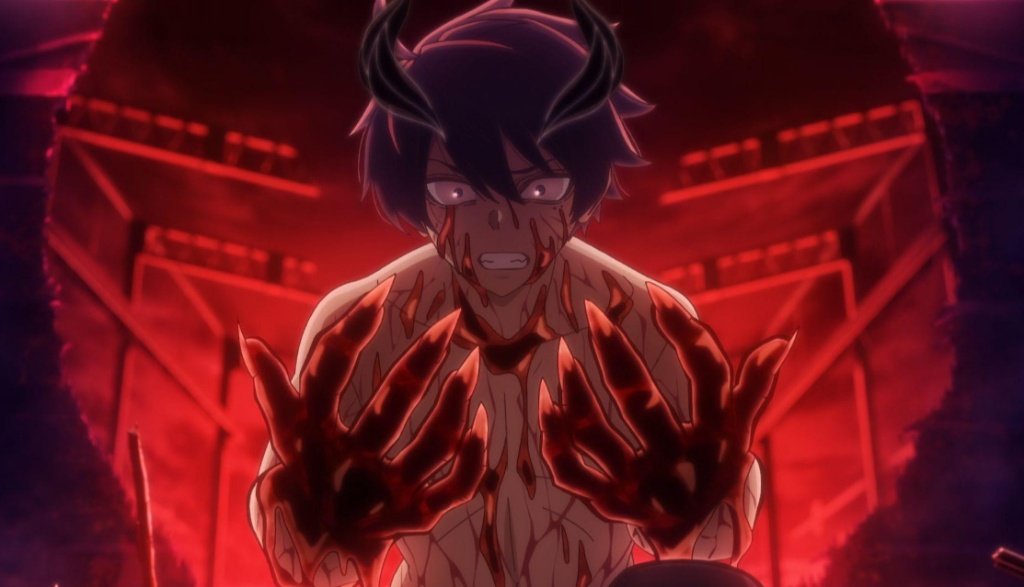
2. Shiki Ichinose Never Asked to Become an Oni
Shiki Ichinose begins as an ordinary young man who does not understand the hidden conflict surrounding his life.
His world changes when an attack reveals that he carries Oni blood.
The discovery is not simply about gaining supernatural powers. It destroys the identity he believed he had.
His blood suddenly becomes a reason for other people to fear him, hunt him, and decide what kind of person he must be.
This is one of the most interesting elements of the premise.
Shiki does not choose his ancestry. Yet he is forced to live with the consequences of a conflict that existed long before his birth.
The question is no longer just whether he can control his powers.
It is whether someone should be judged for something they inherited rather than something they chose.
3. The Oni Are Not Automatically Innocent
It would be easy to interpret Tougen Anki as a simple reversal of the original Momotaro story.
The traditional villains become the victims, and the traditional hero becomes the aggressor.
But that interpretation would be too easy.
The Oni possess dangerous abilities. Their blood can produce destructive power, and some individuals struggle to control the violence within themselves.
The possibility of losing control is important because it prevents the conflict from being purely symbolic.
Fear of the Oni is not necessarily invented from nothing.
However, a genuine danger does not justify treating every member of a bloodline as guilty.
This distinction is where the story has the potential to become much more than a conventional supernatural battle anime.
4. The Momotaro Agency Controls More Than a Fighting Force
The Momotaro descendants are organized through an institution that has spent generations fighting the Oni.
This changes the nature of the conflict.
It is no longer an argument between two individuals who happen to hate each other. It is a system that teaches people how to understand an entire group.
When an organization defines one bloodline as dangerous, its members can begin to see violence against that group as a responsibility rather than a choice.
That is a more disturbing idea than simply having powerful enemies.
The real danger is not only the people who enjoy violence.
It is also the system that gives violence a respectable name.
5. When Justice Becomes an Excuse for Prejudice
One of the most interesting questions in Tougen Anki concerns the relationship between justice and prejudice.
A person can believe that they are protecting society while refusing to recognize the individuality of the people they are fighting.
Once an entire bloodline is treated as an enemy, individual behavior becomes less important than ancestry.
An Oni can save someone and still be treated as a monster.
A Momotaro can commit cruelty and still claim to represent justice.
This creates an uncomfortable contradiction.
If the same action is judged differently depending on the blood of the person committing it, is the conflict really about morality?
Or is morality being used to defend an existing division?
6. Shiki’s Anger Is Understandable, but It Is Also Dangerous
Shiki’s transformation is driven by loss, anger, and the desire to fight back.
His emotional response gives the series its intensity.
He is not a detached hero who calmly studies the political structure of the world. He is someone whose personal life has been violently disrupted.
That makes his anger understandable.
But anger alone cannot establish moral superiority.
If Shiki eventually believes that every Momotaro deserves punishment simply because of their ancestry, he risks adopting the same logic used against the Oni.
The most compelling version of his journey would not simply be about becoming stronger.
It would be about learning how to fight an oppressive system without becoming another version of it.
7. Naito Mudano Represents a Different Kind of Strength
Naito Mudano is an important contrast to Shiki.
As an instructor at Rasetsu Academy, Mudano approaches the Oni world with a more rational and controlled attitude.
He values efficiency and discipline rather than allowing every emotional impulse to determine his actions.
His role matters because Shiki’s power alone cannot solve the problems surrounding him.
Strength without judgment can become another form of danger.
Mudano’s presence introduces a different possibility: the Oni do not have to define themselves through uncontrolled rage.
They can develop discipline, relationships, and their own standards of responsibility.
8. Blood Is an Inheritance, Not a Moral Verdict
The idea of inherited blood is the foundation of Tougen Anki.
The characters are born into a conflict that they did not create.
This is more than a supernatural ability system.
It is a metaphor for inherited identity.
People often receive labels before they have the opportunity to define themselves. Family, history, nationality, and social background can influence how others treat them.
The problem begins when an inherited characteristic becomes a substitute for personal judgment.
A person’s ancestry may explain where they come from.
It cannot automatically explain what kind of person they are.
That is the distinction the series needs to keep exploring.
9. The Most Interesting Conflict Is Between Individuals and Their Institutions
The Oni Agency and the Momotaro Agency are not merely competing teams.
They represent different systems of identity and belonging.
Each side has its own history, rules, enemies, and expectations.
An individual who questions those expectations may become a problem for their own group.
This opens the door to a more complicated conflict than simply defeating the strongest opponent.
What happens when someone discovers that their own organization is hiding information?
What happens when protecting one’s community requires questioning its leadership?
And what happens when an enemy behaves more honorably than an ally?
These questions could give Tougen Anki a deeper political and psychological dimension.
10. The Series’ Biggest Risk: Making One Side Too Evil
This is where the anime’s execution becomes more complicated.
The premise suggests a morally ambiguous conflict in which both sides should contain good and bad individuals.
However, some viewers on Reddit have argued that the Momotaro characters are portrayed as excessively cruel, while the Oni are presented as comparatively sympathetic.
One discussion questioned whether the series really succeeds at creating a morally gray conflict when so many Momotaro characters appear openly hateful.
Another viewer argued that the story’s attempts to make certain antagonists sympathetic can feel unconvincing when their previous actions are so extreme.
These criticisms matter.
If one side is consistently portrayed as cruel and the other as sympathetic, the original question becomes easier to answer.
The story risks replacing one simplistic folktale with another.
11. Is Tougen Anki Just Another Battle Shonen?
The series has many familiar elements of modern battle shonen.
There is a young protagonist discovering hidden power, a specialized organization, training, rivalries, supernatural abilities, and increasingly dangerous opponents.
These elements make the series accessible.
But familiarity also creates a challenge.
Viewers have already seen many stories about hidden bloodlines and young heroes entering secret organizations.
The real difference must come from what the story does with those ideas.
If the conflict between Oni and Momotaro becomes only an excuse for increasingly spectacular fights, the most original part of the premise will gradually lose its importance.
The series is at its best when the battles force viewers to reconsider the identities of the people involved.
12. What Reddit Viewers Actually Disagree About
Reddit discussions reveal a divided response rather than one universal opinion.
Some viewers enjoy the characters, action sequences, music, and supernatural premise. Others believe the writing does not fully deliver on the promise of a morally complicated conflict.
Several recurring criticisms include rushed developments, familiar battle-shonen storytelling, and antagonists whose cruelty makes the moral conflict feel less balanced.
At the same time, some fans remain interested in the larger mythology, the secrets behind the two bloodlines, and the possibility that future revelations will complicate what viewers currently understand.
This disagreement is useful for understanding the series.
The central question is not whether Tougen Anki has an interesting premise. It clearly does.
The question is whether the story can develop that premise into something more complex than a conventional fight between opposing factions.
13. The Real Test Is Whether the Story Can Challenge Its Own Heroes
A story about prejudice becomes powerful when it challenges not only its villains but also its protagonists.
It is easy to condemn an organization that treats an entire group as monsters.
It is harder to examine the same behavior when it appears among people we sympathize with.
Shiki’s journey will become more meaningful if he is forced to confront the possibility that his own side can commit injustice.
The Oni do not become morally perfect simply because they have suffered.
Likewise, the Momotaro do not become individually evil simply because their organization has committed terrible acts.
A genuinely complicated story must allow both statements to be true.
That is the standard by which Tougen Anki should ultimately be judged.
14. Who Really Deserves to Be Called a Monster?
The most important question in Tougen Anki is not whether the Oni or the Momotaro are stronger.
It is who has the authority to decide what a monster is.
The original Momotaro folktale gives us a clear answer because it is told from the perspective of the hero.
Tougen Anki challenges that perspective by showing what the conflict might look like from the other side.
But reversing the roles is only the beginning.
The series becomes truly interesting when it questions the idea that either bloodline has an automatic claim to justice.
An Oni can become cruel. A Momotaro can act with compassion. Neither bloodline should determine a person’s moral worth.
Perhaps the real monster is not a person born with dangerous blood.
Perhaps it is the belief that someone else’s blood gives us the right to decide whether they deserve to live.
That is the question Tougen Anki must answer if it wants to become more than another supernatural battle story.