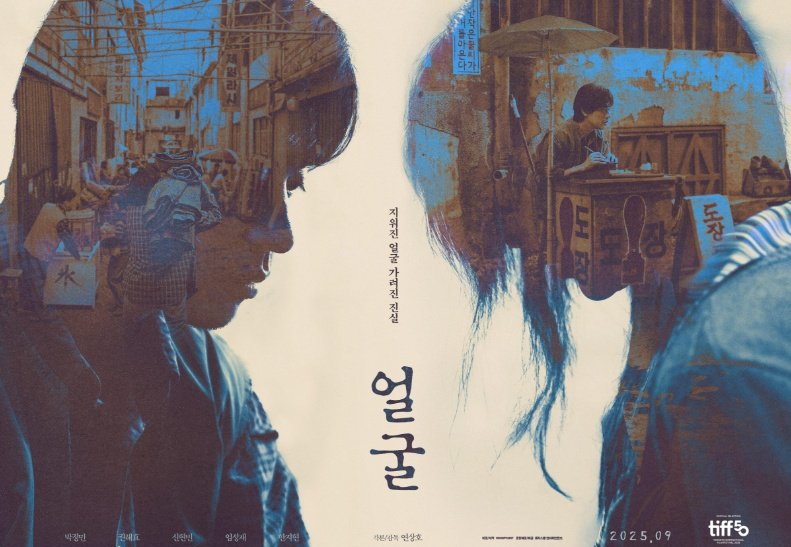
What if a person could be remembered by an entire community without anyone truly remembering who they were?
In Yeon Sang-ho’s The Ugly (2025), a woman named Jung Young-hee disappears from her family’s life and remains absent for approximately four decades. When her remains are eventually discovered, her son Dong-hwan begins investigating the circumstances of her death. What initially appears to be a family mystery gradually becomes an examination of prejudice, humiliation, social power, and the cruelty hidden inside ordinary relationships.
The film’s central mystery seems straightforward: What happened to Young-hee, and why did she disappear?
But another question becomes increasingly disturbing: Why did so many people describe a woman they knew as extraordinarily ugly? And why did their descriptions become more powerful than her actual identity?
Through a carefully constructed narrative involving interviews, memories, and an unusually controlled visual presentation, Yeon challenges the audience to examine the relationship between appearance and moral judgment.
The film also explores a darker contradiction. A society can celebrate a blind craftsman for creating beautiful objects while failing to recognize the cruelty he inflicts on the people closest to him.
With Park Jung-min performing both the son and the younger version of his father, Kwon Hae-hyo portraying the older father, and Shin Hyun-been playing the largely unseen mother, The Ugly creates a mystery in which the most important person is also the person the audience is least permitted to see.
Its most unsettling possibility is that the real ugliness was never located in the woman’s face.
1. A Mystery About a Woman Nobody Truly Knew
The discovery of Young-hee’s remains changes the life of her son, Dong-hwan.
He has grown up knowing almost nothing about his mother. Her disappearance has left an empty space in his family history, but that absence has become so familiar that he has not necessarily treated it as an unresolved tragedy.
The discovery of her remains transforms that absence into a criminal mystery.
A documentary project about his father, Im Young-gyu, unexpectedly becomes an investigation into the woman who disappeared from their lives decades earlier.
The transition is important because the film does not begin with a conventional detective investigating a stranger. It begins with a son discovering that his own family story may have been constructed around a lie.
Dong-hwan must reconstruct a person he never had the opportunity to know.
He has no childhood memories of his mother, no meaningful relationship with her, and no personal experience against which he can compare the stories told by others.
Instead, he must depend on interviews, recollections, and the contradictions between different witnesses.
This creates a particular kind of mystery. The question is not simply what happened to Young-hee, but whether the people describing her can be trusted to tell the truth.
The film’s investigation therefore becomes an examination of memory itself.
2. The Meaning of the Title: Who Has the Authority to Define Ugliness?
The English title, The Ugly, appears to identify the woman at the center of the story.
But this is precisely where the film begins to challenge its audience.
Young-hee is repeatedly described through an insulting nickname and through the recollections of people who regard her appearance as something extraordinary and unpleasant.
The audience is encouraged to imagine a face before ever seeing it.
This creates an unusual psychological experiment.
When several people repeat the same judgment, the listener may begin to accept it as objective truth. The description becomes more powerful through repetition, even when the people repeating it have their own prejudices and motivations.
The film asks whether ugliness is an observable physical characteristic or a social label that can be imposed on another human being.
More importantly, it asks who benefits from imposing that label.
A person considered unattractive may be denied sympathy, respect, and social acceptance. Once that judgment becomes established, even ordinary behavior can be interpreted negatively.
Young-hee’s story demonstrates how a social label can gradually replace an individual’s actual identity.
The title is therefore deliberately uncomfortable. It initially appears to describe one woman, but eventually invites the audience to question the moral character of everyone who participated in defining her.
3. Im Dong-hwan: A Son Investigating a Stranger
Park Jung-min plays Im Dong-hwan, a son who must investigate the life of a mother he barely knew.
His position is more complicated than that of a traditional detective.
A professional investigator approaches a case through evidence, procedure, and established investigative methods. Dong-hwan approaches it through a personal identity crisis.
Every new interview changes the way he understands his family.
The mother he had imagined as someone who abandoned him gradually becomes a more complicated human being. The stories he hears challenge the comfortable version of the past that he inherited from his father.
This creates a conflict between emotional loyalty and the pursuit of truth.
Dong-hwan wants to understand his mother, but discovering her real history also means questioning the father who raised him.
The investigation is therefore not emotionally neutral.
He is not simply trying to identify a criminal. He is trying to discover whether the person who shaped his entire life concealed something unforgivable.
Park Jung-min’s performance is effective because Dong-hwan’s anger develops through accumulated discoveries rather than a single dramatic revelation.
His frustration becomes the emotional bridge between the audience and the disturbing history of Young-hee.
4. Park Jung-min’s Dual Role: A Son and His Father’s Younger Self
One of the film’s most interesting casting decisions is Park Jung-min’s performance in two roles.
He plays Dong-hwan in the present and the younger version of his father, Young-gyu, in the past.
This is not merely a technical acting challenge.
The decision creates a visual and psychological connection between two generations of the same family.
The audience watches the son investigate his father’s history while seeing the younger father portrayed by the same actor.
That creates an uncomfortable relationship between resemblance and identity.
Dong-hwan is trying to discover what his father did, but the film visually places him inside the father’s past.
The casting invites questions about inherited behavior.
Can a son understand his father without becoming emotionally entangled in the same patterns? Can he condemn his father’s actions while still recognizing the human weaknesses that produced them?
Park explained that playing both characters created a new emotional experience because the two roles influenced one another.
This is one of the film’s strongest artistic decisions.
Rather than relying only on dialogue to connect past and present, the director uses the actor’s physical presence to create an immediate relationship between them.
The audience is constantly reminded that the family history Dong-hwan investigates is also the history from which he himself emerged.
5. Im Young-gyu: The Blind Craftsman Who Creates Beautiful Things
Kwon Hae-hyo plays the older Im Young-gyu, a blind seal engraver celebrated for his extraordinary craftsmanship.
His public reputation is built around a remarkable contradiction.
Although he cannot see, he produces objects that other people consider beautiful.
His work has earned admiration, respect, and recognition. He is presented as someone who has overcome a physical limitation through discipline and artistic ability.
At first glance, Young-gyu appears to represent resilience.
But the film gradually reveals that physical blindness and moral blindness are entirely different conditions.
A person can be unable to see the world visually while understanding it through other senses. Conversely, someone with ordinary eyesight can fail to recognize the suffering directly in front of them.
Young-gyu’s craftsmanship creates a powerful metaphor.
He can produce beautiful objects with extraordinary precision, yet his relationship with his wife reveals a failure to recognize another human being’s dignity.
This contradiction is central to the film’s moral structure.
The audience is forced to reconsider the difference between creating beauty and possessing moral goodness.
Young-gyu’s artistic achievements cannot automatically excuse his private actions.
6. The Blind Man and the Woman Nobody Can See
One of the most carefully constructed ideas in The Ugly is the relationship between Young-gyu’s blindness and the film’s decision to conceal Young-hee’s face.
Young-gyu cannot see his wife in the conventional physical sense.
The audience, meanwhile, is also denied the opportunity to see her.
This creates a connection between the character’s limited perception and the viewer’s limited information.
The director explained that he wanted the audience to experience something close to Young-gyu’s distorted psychological perspective.
If viewers could see Young-hee clearly throughout the flashbacks, they might immediately begin forming their own judgment about her appearance.
By withholding her face, the film forces the audience to confront the descriptions provided by other characters.
This is more than a visual trick.
The audience becomes involved in the same process of imagining a person based on secondhand information.
The film therefore makes viewers examine their own assumptions.
Why do we want to see her face so badly?
Are we trying to understand her as a human being, or are we simply waiting to discover whether the descriptions were accurate?
The answer reveals something about the audience as well as the characters.
7. Jung Young-hee: A Woman Reduced to Other People’s Opinions
Shin Hyun-been plays Jung Young-hee, the woman whose life becomes the center of the investigation.
Her role is particularly demanding because the camera deliberately avoids showing her face.
Most actors communicate through facial expressions. A slight change in the eyes or mouth can transform the meaning of an entire scene.
Shin must instead rely on movement, posture, voice, rhythm, and the physical relationship between her character and the surrounding environment.
She explained that performing without revealing her face initially felt unfamiliar, but eventually created a different kind of freedom as an actor.
This approach changes how the audience experiences Young-hee.
Rather than being introduced through a conventional portrait, she becomes visible through her actions.
We see how she moves through the factory, how she reacts to other people’s behavior, and how she responds to humiliation.
Her identity is constructed through what she does rather than through what other people say she looks like.
This is a crucial distinction.
The people around her define her through appearance. The audience gradually discovers her through behavior.
The film’s strongest emotional effect comes from the distance between these two representations.
8. The Factory: Where Economic Power Becomes Personal Violence
Young-hee’s past is closely connected to the garment factory where she worked during South Korea’s period of rapid industrialization.
The factory is more than a historical setting.
It represents a system in which workers have limited power and employers can exercise enormous influence over their daily lives.
In this environment, employment is not simply a source of income. It can determine whether someone can survive.
Young-hee’s relationship with her employer, Baek Ju-sang, exposes the vulnerability created by this imbalance.
The factory’s hierarchy makes it difficult for workers to challenge someone with economic authority.
Even when wrongdoing becomes visible, speaking out can create consequences for the person who exposes it.
This is one of the film’s most disturbing social observations.
A workplace can become a system in which silence is rewarded and honesty is punished.
The people who benefit from the existing structure have little incentive to change it.
Young-hee’s resistance therefore carries a cost that extends beyond her individual employment.
Her story becomes connected to the wider history of workers whose dignity was sacrificed in the name of economic growth.
9. Young-hee’s Moral Choice: Why Speaking the Truth Can Make Someone an Enemy
Young-hee’s confrontation with wrongdoing at the factory is one of the most important parts of her character.
She refuses to remain silent when she encounters the abuse of another worker.
Her decision reveals something fundamentally different from the image created by the people who later describe her.
The woman they remember as unpleasant or difficult is also the woman who refuses to accept an unjust situation.
But the consequences of her decision expose the limitations of individual courage.
Speaking the truth does not automatically produce justice.
The person responsible for wrongdoing may possess greater economic power, stronger relationships, and more influence over the surrounding community.
Even the person who has been harmed may not support the individual who tries to expose the abuse.
Fear, shame, economic dependence, and social pressure can divide people who should otherwise stand together.
This is particularly painful in Young-hee’s story.
Her attempt to do something morally right does not create a supportive community around her.
Instead, she becomes increasingly isolated.
The film asks an uncomfortable question: What happens when a person is punished not for committing wrongdoing, but for refusing to remain silent about it?
10. The Husband’s Resentment: When Social Humiliation Turns Into Domestic Cruelty
Spoiler warning: This section discusses major revelations about Young-hee’s marriage and death.
Young-gyu’s relationship with Young-hee is central to the film’s moral argument.
In the earlier stages of their relationship, he experiences a form of happiness connected to the attention and approval of other people.
However, the social environment gradually transforms his understanding of his wife.
He becomes aware that the compliments and remarks surrounding Young-hee may not have been sincere.
What he had interpreted as social approval becomes, in his mind, evidence that other people were laughing at him.
This is a revealing psychological development.
Young-gyu does not simply become disappointed in his marriage. He begins to experience his wife’s existence as a reminder of his own humiliation.
Instead of questioning the people who mocked him, he redirects his resentment toward the woman who becomes associated with that humiliation.
This is the dangerous mechanism at the center of his character.
He allows the opinions of outsiders to determine how he treats the person closest to him.
The film does not suggest that his insecurity excuses his actions.
Rather, it shows how wounded pride can become destructive when a person refuses to take responsibility for their own emotions.
The tragedy is not that Young-gyu was mocked.
It is that he chose to make Young-hee pay for it.
11. Baek Ju-sang: The Power of a Man Who Controls the Rules
Im Seong-jae’s Baek Ju-sang represents another form of ugliness.
Unlike Young-gyu, whose violence grows out of insecurity and resentment, Baek operates from a position of institutional and economic authority.
He understands how to use his influence.
His position allows him to create an environment in which other people become dependent on his decisions.
This is important because the film does not portray evil as a single personality type.
Some people cause harm through insecurity. Others exploit their position because they believe they can do so without consequences.
Baek’s power is especially dangerous because it can influence how other people understand an event.
If someone with authority describes a worker as troublesome, that description may become more influential than the worker’s actual experience.
The person who controls the narrative can sometimes control the social judgment that follows.
Baek therefore represents something larger than an individual antagonist.
He embodies the relationship between economic power and the ability to define another person’s reputation.
The film’s critique of the factory environment becomes much clearer through him.
12. The Interviews: Can a Collection of Memories Produce the Truth?
The investigation develops through interviews with people who knew Young-hee.
This structure is effective because each witness contributes a different version of the same person.
But it also creates a fundamental problem.
Human memory is not a neutral recording device.
People remember events through their own interests, emotional experiences, fears, and later justifications.
A witness may remember a humiliating incident because it was entertaining to them. Another may remember the same event as something deeply painful.
Someone who participated in wrongdoing may later describe the event in a way that reduces personal responsibility.
This means that the investigation is not simply collecting facts.
It is examining the motives behind the stories people tell.
The structure also places the audience in the position of a documentary viewer.
We are listening to interviews and gradually assembling a picture of someone who is absent.
Yet the film deliberately reminds us that every interview is incomplete.
This approach is one of the movie’s most interesting narrative devices.
However, it also has limitations.
As some critics have noted, the repeated interview structure can become predictable, and the film occasionally relies too heavily on new testimony to advance the mystery.
The format is intellectually appropriate, but it does not always create the dramatic momentum needed for a thriller.
13. The Ending: The Face That Destroys the Audience’s Expectations
Major spoiler: This section reveals the final image and its meaning.
The film’s final revelation is built around the photograph of Young-hee.
After spending much of the story listening to people describe her appearance, the audience finally receives an image of the woman herself.
The photograph does not confirm the extraordinary ugliness that the witnesses have repeatedly suggested.
Instead, it exposes the distance between the social image created around her and the person who actually existed.
This is the moment when the title changes meaning.
The audience has spent the entire film wondering what Young-hee looked like.
But the final image suggests that this question was never the most important one.
Her face does not explain why she was humiliated, why her marriage became violent, or why people were willing to repeat cruel descriptions of her.
The photograph reveals the absurdity of allowing appearance to become the central measure of a person’s worth.
It also forces viewers to confront their own curiosity.
We wanted to see the face because the film had made it mysterious.
But in doing so, we risked participating in the same process that reduced Young-hee to her appearance.
The final image is therefore not merely an answer to the mystery.
It is an accusation directed toward the entire system of judgment that created the mystery in the first place.
14. What Reddit Viewers Debated: A Powerful Idea With Imperfect Execution
The discussions surrounding The Ugly on Reddit reveal that viewers were particularly interested in the relationship between the film’s ending and its moral message.
One discussion in r/Koreanfilm focused on how the ending should be interpreted.
Some viewers emphasized that Young-hee was not inherently ugly. The ugliness existed in the attitudes of the people who judged and mistreated her.
Another discussion highlighted Park Jung-min’s performance and the emotional impact of the film’s treatment of social prejudice.
These reactions are important because they show that the film’s central question continued to provoke interpretation after the viewing experience.
However, not every response was positive.
Some viewers questioned whether the film gave Young-hee enough independent character development.
Others found the repeated interviews and delayed revelation of her appearance somewhat repetitive.
This criticism deserves serious consideration.
Young-hee is the emotional center of the story, yet she remains largely inaccessible as an individual because the narrative is filtered through other people’s memories.
The film’s visual concept is powerful, but it also creates a paradox: a movie criticizing the reduction of a woman to other people’s opinions sometimes gives her limited opportunities to speak for herself.
That tension does not destroy the film’s message.
It does, however, create an important question about whether the film fully achieves the human-centered perspective it is attempting to defend.
The strongest analysis of The Ugly should acknowledge both sides: its provocative examination of prejudice and its limitations in developing the woman at the center of the story.
15. Yeon Sang-ho’s Larger Question: What Did Economic Progress Cost Human Beings?
Yeon Sang-ho is widely associated with genre films that examine collective fear, institutional failure, and the darker side of human behavior.
The Ugly approaches these concerns through a smaller and more intimate story.
Instead of zombies, large-scale disasters, or supernatural threats, the film examines an ordinary community and the relationships inside it.
Its historical setting is significant.
The story looks back at a period when South Korea was experiencing rapid industrial development.
Economic growth created opportunities and transformed society, but it also involved forms of exploitation that were often ignored or justified in the name of progress.
Young-hee’s experience becomes part of this larger question.
Her suffering is not isolated from the economic environment around her.
The factory hierarchy, workplace abuse, social humiliation, and dependence on powerful people all contribute to the conditions in which she becomes vulnerable.
Yeon has explained that the film was motivated by questions about what was exploited and lost during the country’s rapid development.
This gives the story a broader historical dimension.
The film is not simply asking whether one husband was cruel or one employer was abusive.
It is asking what happens when a society becomes so focused on achievement and external success that it stops recognizing the human cost of getting there.
The most disturbing answer is that cruelty can become ordinary when enough people agree to look away.
The Final Question: If Everyone Calls Someone Ugly, Does That Make It True?
The Ugly begins with the mystery of a missing woman and ends with a question about the people who claimed to know her.
The film’s most important revelation is not simply the discovery of a face.
It is the discovery of how easily a community can construct an identity for someone who has little power to defend herself.
Young-hee is judged by her appearance, punished for speaking out, humiliated by people with greater social and economic power, and ultimately destroyed by the resentment of someone who should have protected her.
Her story exposes several different forms of ugliness.
There is the ugliness of workplace exploitation, the ugliness of domestic violence, the ugliness of social conformity, and the ugliness of people who protect their reputations by sacrificing someone else’s dignity.
Park Jung-min’s dual performance strengthens the connection between past and present. Kwon Hae-hyo gives Young-gyu the unsettling presence of a man whose public achievements conceal private moral failure. Shin Hyun-been creates a memorable character without allowing the camera to reveal her face for most of the film.
The result is an unusual mystery that asks viewers to reconsider the difference between appearance and character.
Its narrative structure is not perfect, and its central woman could have been given more independent space.
But the question it leaves behind is difficult to dismiss.
Perhaps the most frightening kind of ugliness is not something we can see on another person’s face. It is something we learn to accept in ourselves when society tells us that cruelty is normal.
TTK Original — Beyond the Headlines