
• Sunset in My Hometown (2018): Why Is Going Home So Difficult for Someone Who Has Failed?

    Sunset in My Hometown (2018): Why Is Going Home So Difficult for Someone Who Has Failed?

    1. Returning Home Is Not Always the Same as Finding Comfort

    In Sunset in My Hometown (2018), directed by Lee Joon-ik, returning home is not presented as an uncomplicated experience of nostalgia.

    Hak-soo, played by Park Jung-min, has spent years trying to establish himself as a rapper in Seoul. He has entered the television competition Show Me the Money repeatedly, hoping that one successful performance will finally change his life.

    But success remains out of reach.

    After another unsuccessful audition, he receives news that his estranged father has been hospitalized. The news forces him to return to Byeonsan, the hometown he left behind.

    For many people, returning to the place where they grew up suggests safety, familiarity, and emotional restoration.

    For Hak-soo, it means facing everything he has spent years trying to escape.

    His hometown contains memories of humiliation, unresolved family conflict, lost relationships, and an earlier version of himself that he would rather forget.

    This creates the film’s central contradiction.

    Hak-soo wants to become somebody new, but the place he must return to remembers exactly who he used to be.

    The film begins with a question that is more complicated than whether someone can succeed in the city:

    Can a person move forward without confronting the past that continues to define them?

    2. Seoul Represents His Ambition, but It Does Not Guarantee His Freedom

    Hak-soo’s decision to pursue a rap career in Seoul reflects a familiar aspiration among young people.

    The capital represents opportunity, recognition, cultural energy, and the possibility of escaping the limitations of one’s hometown.

    He has built his identity around the belief that success is waiting somewhere beyond Byeonsan.

    However, his life in Seoul is far from glamorous.

    He struggles financially, works ordinary jobs, and repeatedly fails to reach the level of recognition he desires.

    The distance between his ambition and his actual circumstances becomes increasingly difficult to ignore.

    This is an important distinction.

    Hak-soo has escaped the geographical limitations of his hometown, but he has not escaped the insecurity that shaped his earlier life.

    Seoul gives him a larger stage, yet it also provides a larger audience before whom he can fail.

    The film does not simply criticize urban ambition.

    Instead, it examines the emotional cost of making public recognition the measure of personal worth.

    Hak-soo believes that becoming successful will prove that leaving Byeonsan was the right decision.

    That belief makes every rejection feel like more than a professional disappointment.

    Each failure threatens the entire identity he has constructed around his escape.

    3. The Seventh Failure Is More Painful Than the Previous Six

    The repeated auditions are not merely a running joke about an unsuccessful rapper.

    They reveal how deeply Hak-soo has tied his self-esteem to the possibility of being recognized.

    He has continued trying for years.

    Giving up would mean acknowledging that the dream he has invested so much time in may not become reality.

    But continuing also means exposing himself to repeated disappointment.

    The seventh unsuccessful attempt therefore carries emotional weight beyond the result of a competition.

    Hak-soo is caught between two fears.

    He is afraid that he will never become successful, but he is equally afraid of discovering who he might be without the dream of becoming successful.

    This is why the audition matters so much.

    The competition is not simply a place where rappers demonstrate their skills.

    For Hak-soo, it has become a public judgment on whether his life choices have been worthwhile.

    The film uses this situation to explore a recognizable psychological trap.

    When someone has spent years pursuing a particular identity, abandoning that identity can feel more frightening than continuing to fail.

    Hak-soo does not merely want a successful career.

    He wants proof that the sacrifices he has made were not meaningless.

    4. Byeonsan Is the Place Where His Past Refuses to Stay Buried

    Hak-soo’s hometown is populated by people who remember him before he became the struggling rapper from Seoul.

    They remember his behavior, his relationships, his arrogance, and his mistakes.

    This creates an uncomfortable situation.

    In the city, Hak-soo can introduce himself according to the identity he wants to project.

    Back home, other people already possess information about the person he used to be.

    He cannot completely control the story they tell about him.

    This is one of the film’s most interesting observations about hometowns.

    A familiar place can preserve memories that a person has tried to erase.

    The people who knew us when we were young may continue to see us through the same old descriptions, even when we believe we have changed.

    Hak-soo wants to be judged according to his present ambitions.

    But Byeonsan keeps bringing him back to the consequences of his earlier behavior.

    His problem is not simply that people misunderstand him.

    It is that some of their memories are justified.

    The hometown becomes a mirror that reflects the parts of his identity he has refused to examine.

    5. Sun-mi Knows the Person Behind the Image

    Sun-mi, played by Kim Go-eun, is one of the most important figures in Hak-soo’s return.

    She knew him when they were younger and remembers a version of him that is different from the image he tries to present in Seoul.

    Their relationship carries the emotional history of adolescence.

    Sun-mi’s presence is significant because she does not encounter Hak-soo as an aspiring artist who needs recognition.

    She encounters him as someone she already knows.

    This creates a different kind of relationship from the ones Hak-soo seeks through his musical ambitions.

    His public identity depends on convincing strangers that he is worth noticing.

    His connection with Sun-mi is shaped by shared memories that existed long before he began chasing fame.

    The difference matters.

    A person may spend years trying to impress an audience while overlooking the people who have already seen their weaknesses and strengths.

    Sun-mi’s role is not simply to become a romantic reward for Hak-soo.

    She helps expose the distance between the identity he wants others to admire and the person he actually is.

    Her presence also challenges the idea that returning home necessarily means returning to an unchanged past.

    The people who remained in Byeonsan have their own lives, ambitions, and transformations.

    6. The Father Is the Wound Hak-soo Cannot Turn Into a Joke

    Hak-soo’s relationship with his father is the emotional center of the film.

    His father was estranged from the family and did not provide the kind of emotional presence that Hak-soo needed while growing up.

    The father’s hospitalization brings them into the same physical space again, but it does not erase the history between them.

    Hak-soo is angry.

    His resentment is not simply the result of one argument or one unpleasant memory.

    It comes from a longer experience of disappointment and emotional absence.

    The film does not present reconciliation as an automatic consequence of family ties.

    Being related to someone does not mean that emotional damage disappears when that person becomes ill.

    This is one reason Hak-soo’s return is so uncomfortable.

    He must face a person who has influenced his life without necessarily giving him the care he needed.

    The father represents a part of Hak-soo’s past that cannot be solved through professional success.

    No audition result can compensate for an absent parent.

    No public recognition can automatically repair a private emotional wound.

    The film suggests that growing up sometimes means acknowledging that the people who hurt us may never provide the explanation or apology we have waited for.

    7. The People Who Stayed Behind Have Changed Too

    One of the film’s more interesting decisions is that Byeonsan is not frozen in time.

    The people Hak-soo remembers have continued living.

    Sun-mi has developed her own identity and career.

    Yong-dae, who was once connected to Hak-soo’s school memories, has become involved in the local criminal world.

    Won-joon has built a literary identity through a poem connected to Hak-soo’s past.

    Mi-kyung also carries a different version of the history Hak-soo remembers.

    These characters complicate his understanding of the hometown.

    He may believe that he is the person who escaped and that everyone else remained behind.

    But the people who stayed have also experienced change.

    Some have achieved things he has not.

    Some have made choices he does not understand.

    Some have become the people they once seemed unlikely to become.

    This is important because Hak-soo’s view of Byeonsan is partly based on an outdated image.

    He left the town physically, but he continued carrying a fixed idea of what it represented.

    Returning forces him to discover that the place has continued moving without him.

    8. Yong-dae and the Uncomfortable Memory of Bullying

    Yong-dae’s transformation into a gangster is one of the film’s more revealing character contrasts.

    When they were younger, Yong-dae was bullied by Hak-soo.

    Now the balance of power has changed.

    The person who once occupied the stronger position is no longer able to assume that his old status will protect him.

    This reversal exposes the instability of social hierarchies.

    In school, popularity and physical dominance can determine who feels powerful.

    In adulthood, money, influence, and connections may determine the balance.

    But the underlying desire for control can remain.

    The film uses Yong-dae to confront Hak-soo with a past he might prefer to remember differently.

    Hak-soo may consider himself an unsuccessful young man who deserves sympathy.

    Yet from Yong-dae’s perspective, he may also be someone who contributed to another person’s suffering.

    This makes the story morally more interesting.

    The protagonist is not automatically innocent simply because he is struggling.

    His pain does not cancel the pain he may have caused others.

    A meaningful return home requires him to recognize both sides of his history.

    9. The Stolen Poem Raises a Question About Who Owns a Person’s Voice

    Won-joon’s connection to Hak-soo introduces another form of unresolved injustice.

    The history surrounding the poem Hak-soo wrote during his school years becomes a reminder that personal expression can be taken, misrepresented, or used by someone else.

    This detail is particularly relevant to a film centered on a struggling rapper.

    Hak-soo wants to establish himself through his own words.

    But his earlier experience suggests that having a voice does not guarantee that others will recognize its ownership.

    The issue goes beyond literary plagiarism.

    It touches on the question of who receives recognition for creative work.

    A person may produce something meaningful but lack the confidence, social position, or opportunity to claim it.

    Another person may become publicly associated with the work instead.

    For Hak-soo, this memory reinforces his sense that the world has repeatedly treated him unfairly.

    However, the film also invites a more difficult question.

    Can someone build a new identity while remaining trapped in the belief that the past has stolen everything from them?

    Acknowledging injustice is important.

    But allowing resentment to become the entire foundation of one’s identity can prevent any further growth.

    10. Rap Is Hak-soo’s Language for Feelings He Cannot Easily Express

    Music is not simply a decorative element in Sunset in My Hometown.

    Rap provides Hak-soo with a language through which he can express anger, insecurity, pride, and unresolved memories.

    His ordinary conversations often become defensive.

    He struggles to admit vulnerability directly.

    But the rhythm and structure of rap allow him to turn emotional conflict into performance.

    This is especially meaningful because rap traditionally places considerable importance on personal voice, experience, and authenticity.

    Hak-soo’s artistic ambition is therefore connected to his need to tell his own story.

    He wants to be heard.

    Yet the film gradually reveals that being heard by an audience and understanding oneself are not the same achievement.

    A successful performance may generate attention, but it cannot automatically resolve the emotional experiences behind the lyrics.

    The film’s most important use of rap is not simply to demonstrate Hak-soo’s musical ability.

    It shows how creative expression can become a way of confronting feelings that remain difficult to discuss in ordinary language.

    Park Jung-min also prepared the rap performances with considerable effort, including writing lyrics and practicing the delivery. His preparation was closely connected to the character’s emotional situation.

    Rap becomes both an artistic ambition and a form of emotional self-examination.

    11. The Film Questions the Difference Between Being Successful and Being Worthwhile

    Hak-soo’s pursuit of fame creates an obvious question: What does success actually mean?

    He wants recognition from a television competition because it appears to offer a clear measure of achievement.

    There are auditions, judges, rankings, and winners.

    The rules may be harsh, but at least the results seem visible.

    Personal relationships are much harder to measure.

    There is no competition that determines whether someone has become a good son, a reliable friend, or a decent person.

    There is no ranking for emotional maturity.

    This contrast is important.

    Hak-soo has spent years trying to prove his value through an external system.

    But the problems he encounters in Byeonsan cannot be solved by winning a television audition.

    His relationship with his father requires emotional honesty.

    His history with Yong-dae requires moral reflection.

    His connection with Sun-mi requires him to recognize another person’s feelings rather than treating the past as something that exists only for him.

    The film does not argue that artistic ambition is meaningless.

    It asks whether ambition becomes destructive when it is expected to provide every answer about a person’s worth.

    12. Why the Film Uses Comedy to Approach Painful Memories

    The film combines humor with emotional conflict.

    Its characters argue, misunderstand one another, and become involved in exaggerated situations.

    Some of the humor comes from Hak-soo’s frustration at being unable to control events.

    This tone is important because the story could easily become excessively sentimental.

    A film about family resentment, bullying, creative frustration, and failed ambition might become emotionally heavy if every scene demanded sympathy.

    Comedy creates distance.

    It allows viewers to recognize the absurdity of certain situations without denying the pain beneath them.

    It also reveals the limitations of Hak-soo’s self-image.

    He sometimes behaves as though he is the only person who has suffered disappointment.

    The comic situations expose how self-absorbed that attitude can become.

    The humor is therefore not separate from the character development.

    It helps the audience see the difference between the way Hak-soo interprets his circumstances and the way those circumstances may look to other people.

    13. The Sunset Is Not a Symbol of Defeat Alone

    The title Sunset in My Hometown suggests an image of beauty approaching its end.

    A sunset can represent the closing of a day, the passage of time, and the realization that something cannot be preserved forever.

    But a sunset is not necessarily a symbol of destruction.

    It also marks the transition between one period and another.

    This ambiguity fits Hak-soo’s emotional journey.

    He has treated his hometown as a place associated with failure.

    He believes that leaving it was necessary to become someone else.

    But the return forces him to reconsider what he has rejected.

    The sunset can therefore be read as an image of an earlier version of himself reaching its conclusion.

    The person who left Byeonsan and the person who returns are not exactly the same.

    The film does not require Hak-soo to abandon his ambitions or declare that life in the countryside is automatically better.

    Instead, it suggests that moving forward requires a more honest relationship with the past.

    The sunset is beautiful partly because it cannot be held in place.

    The same is true of youth.

    It cannot be recovered exactly as it was, but it can be remembered without allowing its wounds to control the future.

    14. Returning Home Does Not Mean That Every Wound Will Disappear

    A conventional homecoming story might suggest that family, friendship, and childhood memories can solve the protagonist’s problems.

    Sunset in My Hometown is more complicated.

    Hak-soo does not return to a perfect community.

    His father remains a difficult person.

    His old friends have their own problems.

    Some relationships carry painful histories that cannot be erased through a single emotional conversation.

    The hometown is not a magical place where every problem is repaired.

    This is essential to the film’s message.

    Personal growth does not necessarily mean receiving the apology one deserves.

    It does not always mean recovering a lost relationship or achieving the career one originally wanted.

    Sometimes growth begins when a person stops demanding that the past become different before allowing the future to begin.

    Hak-soo’s return is valuable not because Byeonsan provides a perfect solution, but because it confronts him with experiences he has avoided.

    The film’s emotional movement is therefore not simply from city to countryside.

    It is from denial toward recognition.

    He must begin to see himself as more than the unsuccessful rapper, the resentful son, or the former schoolboy who wants to escape his memories.

    15. Sunset in My Hometown Is About Making Peace With the Person You Used to Be

    At first glance, Sunset in My Hometown appears to be a warm comedy about an unsuccessful rapper returning to his rural hometown.

    But beneath its humor is a more personal story.

    Hak-soo has spent years trying to become someone who no longer resembles the boy he remembers.

    He believes that success in Seoul will prove that leaving Byeonsan was the right decision.

    Yet the more he tries to escape his past, the more power that past has over him.

    His father represents unresolved family pain.

    His old classmates represent memories of humiliation and unfairness.

    Sun-mi represents a connection to a version of himself that existed before his ambitions became so important.

    Rap represents his desire to turn private feelings into a public voice.

    Together, these elements create a story about the difficulty of accepting one’s own history.

    The film does not suggest that everyone should return to their hometown or abandon their ambitions.

    Its message is more subtle.

    A person cannot build a stable future simply by pretending that the past never happened.

    Sometimes the place we most want to avoid is the place where we must finally recognize the person we have become.

    Perhaps the most meaningful question in Sunset in My Hometown is not whether Hak-soo will become a famous rapper. It is whether he can stop treating his former self as someone he must defeat before he is allowed to move forward.

    A person does not have to become famous to prove that their life mattered.

    And going home does not have to mean admitting defeat.

    Sometimes it is the first honest step toward becoming someone who no longer needs to run away.
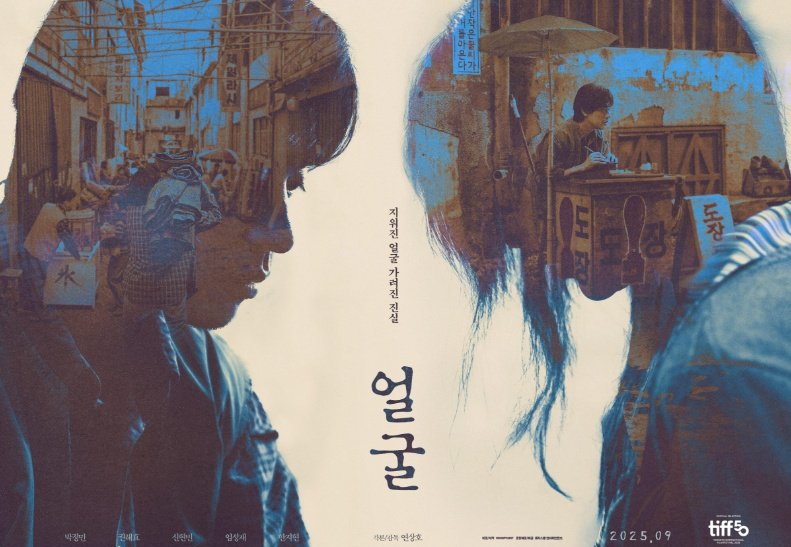
  • The Ugly (2025): Who Is Truly Ugly — A Woman or the Society That Destroyed Her?

    The Ugly (2025): Who Is Truly Ugly — A Woman or the Society That Destroyed Her?

    What if a person could be remembered by an entire community without anyone truly remembering who they were?

    In Yeon Sang-ho’s The Ugly (2025), a woman named Jung Young-hee disappears from her family’s life and remains absent for approximately four decades. When her remains are eventually discovered, her son Dong-hwan begins investigating the circumstances of her death. What initially appears to be a family mystery gradually becomes an examination of prejudice, humiliation, social power, and the cruelty hidden inside ordinary relationships.

    The film’s central mystery seems straightforward: What happened to Young-hee, and why did she disappear?

    But another question becomes increasingly disturbing: Why did so many people describe a woman they knew as extraordinarily ugly? And why did their descriptions become more powerful than her actual identity?

    Through a carefully constructed narrative involving interviews, memories, and an unusually controlled visual presentation, Yeon challenges the audience to examine the relationship between appearance and moral judgment.

    The film also explores a darker contradiction. A society can celebrate a blind craftsman for creating beautiful objects while failing to recognize the cruelty he inflicts on the people closest to him.

    With Park Jung-min performing both the son and the younger version of his father, Kwon Hae-hyo portraying the older father, and Shin Hyun-been playing the largely unseen mother, The Ugly creates a mystery in which the most important person is also the person the audience is least permitted to see.

    Its most unsettling possibility is that the real ugliness was never located in the woman’s face.

    1. A Mystery About a Woman Nobody Truly Knew

    The discovery of Young-hee’s remains changes the life of her son, Dong-hwan.

    He has grown up knowing almost nothing about his mother. Her disappearance has left an empty space in his family history, but that absence has become so familiar that he has not necessarily treated it as an unresolved tragedy.

    The discovery of her remains transforms that absence into a criminal mystery.

    A documentary project about his father, Im Young-gyu, unexpectedly becomes an investigation into the woman who disappeared from their lives decades earlier.

    The transition is important because the film does not begin with a conventional detective investigating a stranger. It begins with a son discovering that his own family story may have been constructed around a lie.

    Dong-hwan must reconstruct a person he never had the opportunity to know.

    He has no childhood memories of his mother, no meaningful relationship with her, and no personal experience against which he can compare the stories told by others.

    Instead, he must depend on interviews, recollections, and the contradictions between different witnesses.

    This creates a particular kind of mystery. The question is not simply what happened to Young-hee, but whether the people describing her can be trusted to tell the truth.

    The film’s investigation therefore becomes an examination of memory itself.

    2. The Meaning of the Title: Who Has the Authority to Define Ugliness?

    The English title, The Ugly, appears to identify the woman at the center of the story.

    But this is precisely where the film begins to challenge its audience.

    Young-hee is repeatedly described through an insulting nickname and through the recollections of people who regard her appearance as something extraordinary and unpleasant.

    The audience is encouraged to imagine a face before ever seeing it.

    This creates an unusual psychological experiment.

    When several people repeat the same judgment, the listener may begin to accept it as objective truth. The description becomes more powerful through repetition, even when the people repeating it have their own prejudices and motivations.

    The film asks whether ugliness is an observable physical characteristic or a social label that can be imposed on another human being.

    More importantly, it asks who benefits from imposing that label.

    A person considered unattractive may be denied sympathy, respect, and social acceptance. Once that judgment becomes established, even ordinary behavior can be interpreted negatively.

    Young-hee’s story demonstrates how a social label can gradually replace an individual’s actual identity.

    The title is therefore deliberately uncomfortable. It initially appears to describe one woman, but eventually invites the audience to question the moral character of everyone who participated in defining her.

    3. Im Dong-hwan: A Son Investigating a Stranger

    Park Jung-min plays Im Dong-hwan, a son who must investigate the life of a mother he barely knew.

    His position is more complicated than that of a traditional detective.

    A professional investigator approaches a case through evidence, procedure, and established investigative methods. Dong-hwan approaches it through a personal identity crisis.

    Every new interview changes the way he understands his family.

    The mother he had imagined as someone who abandoned him gradually becomes a more complicated human being. The stories he hears challenge the comfortable version of the past that he inherited from his father.

    This creates a conflict between emotional loyalty and the pursuit of truth.

    Dong-hwan wants to understand his mother, but discovering her real history also means questioning the father who raised him.

    The investigation is therefore not emotionally neutral.

    He is not simply trying to identify a criminal. He is trying to discover whether the person who shaped his entire life concealed something unforgivable.

    Park Jung-min’s performance is effective because Dong-hwan’s anger develops through accumulated discoveries rather than a single dramatic revelation.

    His frustration becomes the emotional bridge between the audience and the disturbing history of Young-hee.

    4. Park Jung-min’s Dual Role: A Son and His Father’s Younger Self

    One of the film’s most interesting casting decisions is Park Jung-min’s performance in two roles.

    He plays Dong-hwan in the present and the younger version of his father, Young-gyu, in the past.

    This is not merely a technical acting challenge.

    The decision creates a visual and psychological connection between two generations of the same family.

    The audience watches the son investigate his father’s history while seeing the younger father portrayed by the same actor.

    That creates an uncomfortable relationship between resemblance and identity.

    Dong-hwan is trying to discover what his father did, but the film visually places him inside the father’s past.

    The casting invites questions about inherited behavior.

    Can a son understand his father without becoming emotionally entangled in the same patterns? Can he condemn his father’s actions while still recognizing the human weaknesses that produced them?

    Park explained that playing both characters created a new emotional experience because the two roles influenced one another.

    This is one of the film’s strongest artistic decisions.

    Rather than relying only on dialogue to connect past and present, the director uses the actor’s physical presence to create an immediate relationship between them.

    The audience is constantly reminded that the family history Dong-hwan investigates is also the history from which he himself emerged.

    5. Im Young-gyu: The Blind Craftsman Who Creates Beautiful Things

    Kwon Hae-hyo plays the older Im Young-gyu, a blind seal engraver celebrated for his extraordinary craftsmanship.

    His public reputation is built around a remarkable contradiction.

    Although he cannot see, he produces objects that other people consider beautiful.

    His work has earned admiration, respect, and recognition. He is presented as someone who has overcome a physical limitation through discipline and artistic ability.

    At first glance, Young-gyu appears to represent resilience.

    But the film gradually reveals that physical blindness and moral blindness are entirely different conditions.

    A person can be unable to see the world visually while understanding it through other senses. Conversely, someone with ordinary eyesight can fail to recognize the suffering directly in front of them.

    Young-gyu’s craftsmanship creates a powerful metaphor.

    He can produce beautiful objects with extraordinary precision, yet his relationship with his wife reveals a failure to recognize another human being’s dignity.

    This contradiction is central to the film’s moral structure.

    The audience is forced to reconsider the difference between creating beauty and possessing moral goodness.

    Young-gyu’s artistic achievements cannot automatically excuse his private actions.

    6. The Blind Man and the Woman Nobody Can See

    One of the most carefully constructed ideas in The Ugly is the relationship between Young-gyu’s blindness and the film’s decision to conceal Young-hee’s face.

    Young-gyu cannot see his wife in the conventional physical sense.

    The audience, meanwhile, is also denied the opportunity to see her.

    This creates a connection between the character’s limited perception and the viewer’s limited information.

    The director explained that he wanted the audience to experience something close to Young-gyu’s distorted psychological perspective.

    If viewers could see Young-hee clearly throughout the flashbacks, they might immediately begin forming their own judgment about her appearance.

    By withholding her face, the film forces the audience to confront the descriptions provided by other characters.

    This is more than a visual trick.

    The audience becomes involved in the same process of imagining a person based on secondhand information.

    The film therefore makes viewers examine their own assumptions.

    Why do we want to see her face so badly?

    Are we trying to understand her as a human being, or are we simply waiting to discover whether the descriptions were accurate?

    The answer reveals something about the audience as well as the characters.

    7. Jung Young-hee: A Woman Reduced to Other People’s Opinions

    Shin Hyun-been plays Jung Young-hee, the woman whose life becomes the center of the investigation.

    Her role is particularly demanding because the camera deliberately avoids showing her face.

    Most actors communicate through facial expressions. A slight change in the eyes or mouth can transform the meaning of an entire scene.

    Shin must instead rely on movement, posture, voice, rhythm, and the physical relationship between her character and the surrounding environment.

    She explained that performing without revealing her face initially felt unfamiliar, but eventually created a different kind of freedom as an actor.

    This approach changes how the audience experiences Young-hee.

    Rather than being introduced through a conventional portrait, she becomes visible through her actions.

    We see how she moves through the factory, how she reacts to other people’s behavior, and how she responds to humiliation.

    Her identity is constructed through what she does rather than through what other people say she looks like.

    This is a crucial distinction.

    The people around her define her through appearance. The audience gradually discovers her through behavior.

    The film’s strongest emotional effect comes from the distance between these two representations.

    8. The Factory: Where Economic Power Becomes Personal Violence

    Young-hee’s past is closely connected to the garment factory where she worked during South Korea’s period of rapid industrialization.

    The factory is more than a historical setting.

    It represents a system in which workers have limited power and employers can exercise enormous influence over their daily lives.

    In this environment, employment is not simply a source of income. It can determine whether someone can survive.

    Young-hee’s relationship with her employer, Baek Ju-sang, exposes the vulnerability created by this imbalance.

    The factory’s hierarchy makes it difficult for workers to challenge someone with economic authority.

    Even when wrongdoing becomes visible, speaking out can create consequences for the person who exposes it.

    This is one of the film’s most disturbing social observations.

    A workplace can become a system in which silence is rewarded and honesty is punished.

    The people who benefit from the existing structure have little incentive to change it.

    Young-hee’s resistance therefore carries a cost that extends beyond her individual employment.

    Her story becomes connected to the wider history of workers whose dignity was sacrificed in the name of economic growth.

    9. Young-hee’s Moral Choice: Why Speaking the Truth Can Make Someone an Enemy

    Young-hee’s confrontation with wrongdoing at the factory is one of the most important parts of her character.

    She refuses to remain silent when she encounters the abuse of another worker.

    Her decision reveals something fundamentally different from the image created by the people who later describe her.

    The woman they remember as unpleasant or difficult is also the woman who refuses to accept an unjust situation.

    But the consequences of her decision expose the limitations of individual courage.

    Speaking the truth does not automatically produce justice.

    The person responsible for wrongdoing may possess greater economic power, stronger relationships, and more influence over the surrounding community.

    Even the person who has been harmed may not support the individual who tries to expose the abuse.

    Fear, shame, economic dependence, and social pressure can divide people who should otherwise stand together.

    This is particularly painful in Young-hee’s story.

    Her attempt to do something morally right does not create a supportive community around her.

    Instead, she becomes increasingly isolated.

    The film asks an uncomfortable question: What happens when a person is punished not for committing wrongdoing, but for refusing to remain silent about it?

    10. The Husband’s Resentment: When Social Humiliation Turns Into Domestic Cruelty

    Spoiler warning: This section discusses major revelations about Young-hee’s marriage and death.

    Young-gyu’s relationship with Young-hee is central to the film’s moral argument.

    In the earlier stages of their relationship, he experiences a form of happiness connected to the attention and approval of other people.

    However, the social environment gradually transforms his understanding of his wife.

    He becomes aware that the compliments and remarks surrounding Young-hee may not have been sincere.

    What he had interpreted as social approval becomes, in his mind, evidence that other people were laughing at him.

    This is a revealing psychological development.

    Young-gyu does not simply become disappointed in his marriage. He begins to experience his wife’s existence as a reminder of his own humiliation.

    Instead of questioning the people who mocked him, he redirects his resentment toward the woman who becomes associated with that humiliation.

    This is the dangerous mechanism at the center of his character.

    He allows the opinions of outsiders to determine how he treats the person closest to him.

    The film does not suggest that his insecurity excuses his actions.

    Rather, it shows how wounded pride can become destructive when a person refuses to take responsibility for their own emotions.

    The tragedy is not that Young-gyu was mocked.

    It is that he chose to make Young-hee pay for it.

    11. Baek Ju-sang: The Power of a Man Who Controls the Rules

    Im Seong-jae’s Baek Ju-sang represents another form of ugliness.

    Unlike Young-gyu, whose violence grows out of insecurity and resentment, Baek operates from a position of institutional and economic authority.

    He understands how to use his influence.

    His position allows him to create an environment in which other people become dependent on his decisions.

    This is important because the film does not portray evil as a single personality type.

    Some people cause harm through insecurity. Others exploit their position because they believe they can do so without consequences.

    Baek’s power is especially dangerous because it can influence how other people understand an event.

    If someone with authority describes a worker as troublesome, that description may become more influential than the worker’s actual experience.

    The person who controls the narrative can sometimes control the social judgment that follows.

    Baek therefore represents something larger than an individual antagonist.

    He embodies the relationship between economic power and the ability to define another person’s reputation.

    The film’s critique of the factory environment becomes much clearer through him.

    12. The Interviews: Can a Collection of Memories Produce the Truth?

    The investigation develops through interviews with people who knew Young-hee.

    This structure is effective because each witness contributes a different version of the same person.

    But it also creates a fundamental problem.

    Human memory is not a neutral recording device.

    People remember events through their own interests, emotional experiences, fears, and later justifications.

    A witness may remember a humiliating incident because it was entertaining to them. Another may remember the same event as something deeply painful.

    Someone who participated in wrongdoing may later describe the event in a way that reduces personal responsibility.

    This means that the investigation is not simply collecting facts.

    It is examining the motives behind the stories people tell.

    The structure also places the audience in the position of a documentary viewer.

    We are listening to interviews and gradually assembling a picture of someone who is absent.

    Yet the film deliberately reminds us that every interview is incomplete.

    This approach is one of the movie’s most interesting narrative devices.

    However, it also has limitations.

    As some critics have noted, the repeated interview structure can become predictable, and the film occasionally relies too heavily on new testimony to advance the mystery.

    The format is intellectually appropriate, but it does not always create the dramatic momentum needed for a thriller.

    13. The Ending: The Face That Destroys the Audience’s Expectations

    Major spoiler: This section reveals the final image and its meaning.

    The film’s final revelation is built around the photograph of Young-hee.

    After spending much of the story listening to people describe her appearance, the audience finally receives an image of the woman herself.

    The photograph does not confirm the extraordinary ugliness that the witnesses have repeatedly suggested.

    Instead, it exposes the distance between the social image created around her and the person who actually existed.

    This is the moment when the title changes meaning.

    The audience has spent the entire film wondering what Young-hee looked like.

    But the final image suggests that this question was never the most important one.

    Her face does not explain why she was humiliated, why her marriage became violent, or why people were willing to repeat cruel descriptions of her.

    The photograph reveals the absurdity of allowing appearance to become the central measure of a person’s worth.

    It also forces viewers to confront their own curiosity.

    We wanted to see the face because the film had made it mysterious.

    But in doing so, we risked participating in the same process that reduced Young-hee to her appearance.

    The final image is therefore not merely an answer to the mystery.

    It is an accusation directed toward the entire system of judgment that created the mystery in the first place.

    14. What Reddit Viewers Debated: A Powerful Idea With Imperfect Execution

    The discussions surrounding The Ugly on Reddit reveal that viewers were particularly interested in the relationship between the film’s ending and its moral message.

    One discussion in r/Koreanfilm focused on how the ending should be interpreted.

    Some viewers emphasized that Young-hee was not inherently ugly. The ugliness existed in the attitudes of the people who judged and mistreated her.

    Another discussion highlighted Park Jung-min’s performance and the emotional impact of the film’s treatment of social prejudice.

    These reactions are important because they show that the film’s central question continued to provoke interpretation after the viewing experience.

    However, not every response was positive.

    Some viewers questioned whether the film gave Young-hee enough independent character development.

    Others found the repeated interviews and delayed revelation of her appearance somewhat repetitive.

    This criticism deserves serious consideration.

    Young-hee is the emotional center of the story, yet she remains largely inaccessible as an individual because the narrative is filtered through other people’s memories.

    The film’s visual concept is powerful, but it also creates a paradox: a movie criticizing the reduction of a woman to other people’s opinions sometimes gives her limited opportunities to speak for herself.

    That tension does not destroy the film’s message.

    It does, however, create an important question about whether the film fully achieves the human-centered perspective it is attempting to defend.

    The strongest analysis of The Ugly should acknowledge both sides: its provocative examination of prejudice and its limitations in developing the woman at the center of the story.

    15. Yeon Sang-ho’s Larger Question: What Did Economic Progress Cost Human Beings?

    Yeon Sang-ho is widely associated with genre films that examine collective fear, institutional failure, and the darker side of human behavior.

    The Ugly approaches these concerns through a smaller and more intimate story.

    Instead of zombies, large-scale disasters, or supernatural threats, the film examines an ordinary community and the relationships inside it.

    Its historical setting is significant.

    The story looks back at a period when South Korea was experiencing rapid industrial development.

    Economic growth created opportunities and transformed society, but it also involved forms of exploitation that were often ignored or justified in the name of progress.

    Young-hee’s experience becomes part of this larger question.

    Her suffering is not isolated from the economic environment around her.

    The factory hierarchy, workplace abuse, social humiliation, and dependence on powerful people all contribute to the conditions in which she becomes vulnerable.

    Yeon has explained that the film was motivated by questions about what was exploited and lost during the country’s rapid development.

    This gives the story a broader historical dimension.

    The film is not simply asking whether one husband was cruel or one employer was abusive.

    It is asking what happens when a society becomes so focused on achievement and external success that it stops recognizing the human cost of getting there.

    The most disturbing answer is that cruelty can become ordinary when enough people agree to look away.

    The Final Question: If Everyone Calls Someone Ugly, Does That Make It True?

    The Ugly begins with the mystery of a missing woman and ends with a question about the people who claimed to know her.

    The film’s most important revelation is not simply the discovery of a face.

    It is the discovery of how easily a community can construct an identity for someone who has little power to defend herself.

    Young-hee is judged by her appearance, punished for speaking out, humiliated by people with greater social and economic power, and ultimately destroyed by the resentment of someone who should have protected her.

    Her story exposes several different forms of ugliness.

    There is the ugliness of workplace exploitation, the ugliness of domestic violence, the ugliness of social conformity, and the ugliness of people who protect their reputations by sacrificing someone else’s dignity.

    Park Jung-min’s dual performance strengthens the connection between past and present. Kwon Hae-hyo gives Young-gyu the unsettling presence of a man whose public achievements conceal private moral failure. Shin Hyun-been creates a memorable character without allowing the camera to reveal her face for most of the film.

    The result is an unusual mystery that asks viewers to reconsider the difference between appearance and character.

    Its narrative structure is not perfect, and its central woman could have been given more independent space.

    But the question it leaves behind is difficult to dismiss.

    Perhaps the most frightening kind of ugliness is not something we can see on another person’s face. It is something we learn to accept in ourselves when society tells us that cruelty is normal.

    TTK Original — Beyond the Headlines