• Hellbound: When People Fear Hell, Who Has the Power to Decide What Is Sin?

    Hellbound: When People Fear Hell, Who Has the Power to Decide What Is Sin?

    What would happen if supernatural beings suddenly appeared in public, announced that certain people were destined for hell, and brutally executed them at a predetermined time?

    At first, the answer might seem obvious. People would be terrified. Religious institutions would search for an explanation. Governments would attempt to restore order. Scientists would investigate the phenomenon.

    But Netflix’s Hellbound (2021โ€“2024), directed by Yeon Sang-ho and based on the webtoon created by Yeon Sang-ho and Choi Gyu-seok, explores something much more disturbing.

    The central horror is not simply that mysterious creatures can drag human beings into hell. It is that people quickly begin deciding what those events mean, who deserves condemnation, and who has the authority to speak on behalf of divine judgment.

    The New Truth Society turns unexplained deaths into a doctrine. The Arrowheads transform that doctrine into public violence. Political authorities discover that fear can be managed, redirected, and exploited. Meanwhile, ordinary people struggle to protect their families and preserve their humanity.

    Across two seasons, Hellbound becomes a story about the relationship between fear, belief, propaganda, and power.

    Its greatest question is not whether hell exists.

    It is whether human beings can create a living hell for one another while believing they are carrying out justice.

    1. The First Decree: When the Unknown Becomes a Public Reality

    The world of Hellbound changes when mysterious beings begin appearing before ordinary people and announcing that they will be sent to hell at a specific time.

    When that time arrives, enormous supernatural creatures attack the condemned person and leave behind a burned body.

    The events are witnessed publicly. They are not rumors or private visions. They are terrifying spectacles that seem to demonstrate the existence of a force beyond human understanding.

    This distinction is important.

    People can dismiss an individual religious experience as a personal belief. It becomes much harder to do so when thousands of witnesses see the same supernatural violence.

    The phenomenon creates an unprecedented crisis. Existing explanations of morality, religion, science, and law no longer seem sufficient.

    But the most important question is not how the creatures operate. It is how society responds when something happens that nobody can explain.

    Instead of waiting for reliable knowledge, people begin constructing explanations immediately.

    The unknown becomes an opportunity for anyone who can persuade others that they understand it.

    2. The New Truth Society: How Uncertainty Becomes Religious Authority

    The New Truth Society is one of the most important institutions in the series.

    Its central claim is that the supernatural demonstrations represent divine judgment. According to its interpretation, people who receive decrees are being condemned because of their sins.

    This explanation gives frightened people something they desperately want: a sense of order.

    If the demonstrations are punishment for wrongdoing, then the universe is not random. There is a moral system operating behind the chaos.

    But the New Truth’s authority depends on a dangerous assumption.

    It treats an unexplained event as proof of a specific religious interpretation.

    The creatures demonstrate extraordinary power, but their actions do not automatically explain why someone has been selected. The New Truth fills that gap with its own doctrine.

    This is where the institution becomes more than a religious organization.

    It becomes an authority that claims the right to interpret reality itself.

    Once people accept its explanation, questioning the organization can begin to look like questioning divine justice.

    The danger is not belief alone. It is the concentration of interpretive power in an institution that cannot demonstrate that its interpretation is correct.

    3. Jung Jinsu: The Man Who Turns Fear Into a Belief System

    Jung Jinsu is fascinating because he is not simply a conventional villain who wants money or political office.

    He has spent much of his life struggling with the possibility that he has been condemned by a force beyond his control.

    His own experience of receiving a decree becomes the foundation of his relationship with fear, guilt, and divine judgment.

    Rather than openly confronting the uncertainty of his experience, he builds an explanation that allows him to give meaning to it.

    He becomes the founder of a movement that tells people what the demonstrations mean.

    His greatest achievement is not discovering the truth about the supernatural beings. It is persuading people that he has discovered it.

    This distinction reveals the nature of his power.

    Jung Jinsu does not control the creatures. He controls the story people tell themselves about the creatures.

    His position demonstrates how personal fear can become institutional authority when it is presented as certainty.

    The tragedy of his character is that the system he creates eventually becomes larger than himself.

    He may have begun by trying to make sense of his own suffering, but he ends up building a society in which countless other people suffer under his interpretation.

    4. The Arrowheads: When Belief Turns Into Permission for Violence

    If the New Truth provides the ideological framework, the Arrowheads demonstrate what happens when that framework becomes radicalized.

    The Arrowheads do not simply believe that the condemned are sinners.

    They believe that they have a responsibility to expose, attack, and punish them.

    This is an important transformation.

    Religious belief becomes a justification for violence, while violence becomes a public demonstration of loyalty to the movement.

    The Arrowheads also reveal how social media can accelerate collective aggression.

    Livestreams, public accusations, personal information, and online mobilization turn private individuals into targets.

    The result is a frightening combination of religious certainty and digital mob behavior.

    People no longer need to understand a case before condemning someone. They only need to believe that the target has been identified as an enemy of divine justice.

    The series makes a powerful observation about extremism: the most dangerous followers are not always those who question the doctrine least, but those who believe they have been personally authorized to enforce it.

    5. The Public Execution: Why Spectacle Is More Powerful Than Evidence

    One of the most disturbing elements of Hellbound is the public nature of the demonstrations.

    The condemned are not simply killed. Their deaths become events watched by crowds and broadcast to a much larger audience.

    This changes the meaning of violence.

    A private tragedy becomes a public message. The death of one person is used to frighten millions of others.

    The New Truth understands that public demonstrations can create a powerful emotional response.

    Fear becomes a form of social discipline. People begin examining their own behavior, wondering whether they might receive a decree, and looking for ways to prove their moral worth.

    But spectacle is not evidence of guilt.

    The fact that a person is killed by a supernatural force does not establish the moral explanation offered by the New Truth.

    The series exposes a familiar danger in human societies: people often confuse the dramatic power of an event with the reliability of the explanation attached to it.

    A spectacle can convince an audience emotionally long before anyone has established what actually happened.

    6. Park Jungja: The Human Cost of Becoming a Religious Symbol

    Park Jungja’s story gives the series one of its most emotionally important perspectives.

    She is a mother with two children who receives a decree announcing her death.

    Her situation is not an abstract theological question. She has practical concerns about what will happen to her children after she is gone.

    The New Truth offers her money in exchange for allowing her demonstration to be broadcast publicly.

    Her decision is shaped by the desire to secure her children’s future.

    This makes her story particularly painful.

    An organization that claims to represent divine justice turns her impending death into an opportunity to strengthen its public authority.

    Park Jungja is no longer treated simply as a person facing an unimaginable tragedy. She becomes a symbol that different groups want to control.

    Her experience exposes the difference between an individual’s needs and an institution’s ambitions.

    The New Truth wants a demonstration that confirms its doctrine. The public wants an explanation. Her children need protection.

    These interests are not the same.

    Park Jungja’s tragedy shows how easily a person’s suffering can be transformed into a political or religious resource when powerful organizations decide that the meaning of a human life belongs to them.

    7. Min Hyejin: The Moral Importance of Protecting the Condemned

    Min Hyejin represents a fundamentally different response to the supernatural phenomenon.

    As a lawyer, she becomes involved in protecting people who receive decrees and are threatened by the New Truth and the Arrowheads.

    Her position is important because she does not need to prove that the condemned are innocent of every possible wrongdoing.

    She begins with a more basic principle: a person should not lose their rights simply because an organization declares them sinful.

    This is the foundation of her resistance.

    Hyejin’s approach challenges the New Truth’s assumption that a supernatural decree automatically justifies public condemnation.

    She recognizes that the condemned still have families, personal histories, and a right to be treated as human beings.

    Her role becomes especially significant because the series does not present resistance as an easy or glamorous choice.

    Protecting the vulnerable can bring serious consequences. Her own family becomes a target, and her struggle forces her to confront the limits of individual courage.

    Hyejin’s strength lies not in claiming to know the ultimate truth, but in refusing to let uncertainty become an excuse for cruelty.

    8. The Detective: When Personal Grief Interferes With the Search for Truth

    Detective Jin Kyunghun provides another important perspective.

    He approaches the demonstrations through the framework of criminal investigation and public responsibility.

    But his personal history complicates his position.

    His family has already experienced violence, and his relationship with his daughter, Heejung, becomes entangled with the New Truth’s influence.

    This creates a difficult moral conflict.

    A detective is expected to pursue facts even when the truth is personally painful. Yet when the investigation threatens someone he loves, professional responsibility and parental instinct begin to collide.

    His situation illustrates a broader theme of the series.

    People do not respond to fear and belief as detached observers. Their choices are shaped by grief, loyalty, guilt, and the desire to protect the people closest to them.

    The New Truth becomes powerful partly because it understands these emotional vulnerabilities.

    The series suggests that institutions built around fear do not need to control every individual directly. They only need to exploit the conflicts people already carry within themselves.

    9. The Baby’s Decree: The Moment the New Truth’s Doctrine Begins to Collapse

    The first season reaches a crucial turning point when a newborn baby receives a decree.

    This event challenges the New Truth’s central explanation.

    If the demonstrations are divine punishment for personal sin, how can a newborn child be condemned?

    The baby cannot reasonably be treated as someone who has committed the kinds of actions that the New Truth claims to punish.

    The contradiction exposes the weakness of the institution’s doctrine.

    The organization has built its authority around a moral explanation that appears convincing when applied to selected adults. But the moment a case emerges that does not fit its assumptions, the institution must choose between revising its beliefs and protecting its power.

    This is one of the series’ strongest narrative decisions.

    The baby becomes a test of whether the New Truth is genuinely interested in discovering the truth or merely maintaining its own authority.

    An institution that welcomes evidence should be willing to reconsider its conclusions.

    An institution that fears evidence will attempt to control it.

    The baby’s decree reveals which of these priorities matters more to the New Truth.

    10. The Parents’ Sacrifice: Humanity Beyond Religious Doctrine

    Bae Youngjae and Song Sohyun’s response to their baby’s decree provides one of the series’ most powerful emotional moments.

    They are placed in an impossible situation.

    Their child has been condemned, and different organizations want to use the event to support their competing explanations.

    The parents must decide whether to expose their baby to public attention or protect the child from becoming another religious symbol.

    Their eventual sacrifice changes the emotional direction of the story.

    Unlike the New Truth, which attempts to interpret the baby’s fate as evidence for a doctrine, the parents respond through unconditional love.

    They do not need a theological explanation to know that their child deserves protection.

    Their actions reveal a form of morality that exists before institutional authority.

    The series suggests that human compassion does not require certainty about the universe.

    Sometimes the most meaningful moral decision is simply refusing to abandon another person.

    The baby’s survival also creates a devastating contradiction for the New Truth. The event cannot be comfortably explained by the doctrine that has governed public belief.

    The institution’s certainty begins to lose its foundation.

    11. The Resurrection: Why the Supernatural Mystery Is Not the Only Mystery

    The return of Park Jungja at the end of the first season changes the direction of the entire story.

    Until this point, the demonstrations have appeared to follow a recognizable pattern: a decree is announced, the appointed time arrives, and the condemned person is violently executed.

    Resurrection disrupts that apparent finality.

    If someone can return from the dead, what exactly does being sent to hell mean?

    Does the demonstration represent punishment, transformation, temporary death, or something that human beings have not yet understood?

    The series deliberately refuses to provide an immediate explanation.

    This decision may frustrate viewers who expect conventional supernatural storytelling to reveal the rules behind its central mystery.

    But it also supports the show’s larger philosophical argument.

    The problem is not only that the supernatural phenomenon is unexplained. It is that human institutions have already built enormous systems of authority around an explanation they never possessed.

    The resurrection exposes the distance between what people know and what they confidently claim to know.

    12. Season 2: When Religious Power Becomes a Political Struggle

    The second season expands the story beyond the New Truth and the Arrowheads.

    The government becomes more directly involved, and competing groups attempt to control the public meaning of resurrection and the supernatural decrees.

    This changes the scale of the drama.

    Season 1 primarily explores the birth of religious authority and the social consequences of collective fear.

    Season 2 increasingly examines how political institutions respond when a religious movement becomes powerful enough to threaten public order.

    The government’s interest is not necessarily to discover the truth. It also wants to manage the consequences of the phenomenon and restore control over society.

    This creates an important parallel with the New Truth.

    Religious leaders use supernatural events to justify their authority. Political leaders use public anxiety to justify their own strategies.

    Both can claim to be protecting society while attempting to determine what the public is allowed to believe.

    The second season therefore expands the central question: if religious organizations can exploit fear, can governments resist the temptation to do the same?

    13. Jung Jinsu’s Return: What Happens When the Founder Becomes the Victim?

    Jung Jinsu’s return in the second season adds another layer to his character.

    In the first season, he is the person who interprets the supernatural phenomenon for others.

    He has authority because he can present himself as someone who understands the meaning of the decrees.

    But his own experience of being condemned makes it impossible for him to remain comfortably outside the system he created.

    His return also challenges the public’s understanding of punishment and salvation.

    If a person can return from hell, what does that say about the religious doctrine built around the demonstrations?

    Jinsu’s personal suffering becomes central again, but the story also exposes the limits of his influence.

    He can manipulate public belief, but he cannot fully control the supernatural events that gave his movement its authority.

    The man who once attempted to explain hell must now confront an experience that cannot be managed through public messaging.

    His character illustrates a recurring tragedy of power: people who build systems around fear may eventually discover that they are just as vulnerable to that fear as everyone else.

    14. The Series’ Weaknesses: Ambition, Character Changes, and Unanswered Questions

    Hellbound has an unusually ambitious concept, but its execution is not equally strong across both seasons.

    The first season is effective because it concentrates on the social consequences of an unexplained phenomenon. Its central conflict is clear: people are terrified, and organizations are competing to define the meaning of that fear.

    The second season broadens the story into a larger struggle among religious factions, political authorities, and people who have experienced resurrection.

    This expansion creates interesting possibilities, but it also makes the narrative denser.

    One significant point of discussion among viewers is the replacement of Yoo Ah-in with Kim Sung-cheol as Jung Jinsu in Season 2. Some Reddit viewers felt the change affected the character’s presence and continuity, while others appreciated the new interpretation.

    There are also complaints about the second season’s pacing and its growing emphasis on political maneuvering rather than the original supernatural mystery.

    The unanswered questions surrounding the decrees and the creatures remain another source of frustration.

    However, these weaknesses should be distinguished from the show’s deliberate use of cosmic horror. The creators have explained that the phenomenon is meant to remain mysterious, because explaining everything would undermine the genre’s central effect.

    The real question is whether the mystery continues to deepen the human story or begins to delay it.

    At times, the second season risks losing the concentrated emotional force that made the first season so compelling.

    15. The Final Question: Who Creates Hell When Nobody Understands It?

    The title Hellbound suggests a story about supernatural punishment.

    But the series ultimately directs attention toward something much closer to ordinary human life.

    The creatures may be terrifying, but they do not establish religious institutions, spread propaganda, expose private information, or organize crowds to attack vulnerable people.

    Human beings do those things.

    The New Truth turns uncertainty into doctrine. The Arrowheads turn doctrine into violence. Political authorities attempt to turn public fear into institutional advantage.

    And ordinary people become trapped between competing organizations that claim to understand what is happening.

    The series does not need to prove that the supernatural beings are good or evil to make its central argument.

    It only needs to show what people do when they believe they possess the authority to decide who deserves punishment.

    That is where the real horror emerges.

    A society does not need supernatural creatures to become cruel. It only needs enough people who believe their own interpretation of justice is beyond question.

    The most disturbing possibility in Hellbound is that hell may not be a place people are sent after death.

    It may also be something human beings create for one another while convincing themselves that they are serving a higher purpose.

    Perhaps the greatest danger is not that humanity does not understand hell. It is that people become so certain they understand it that they begin creating hell on Earth for everyone who disagrees.
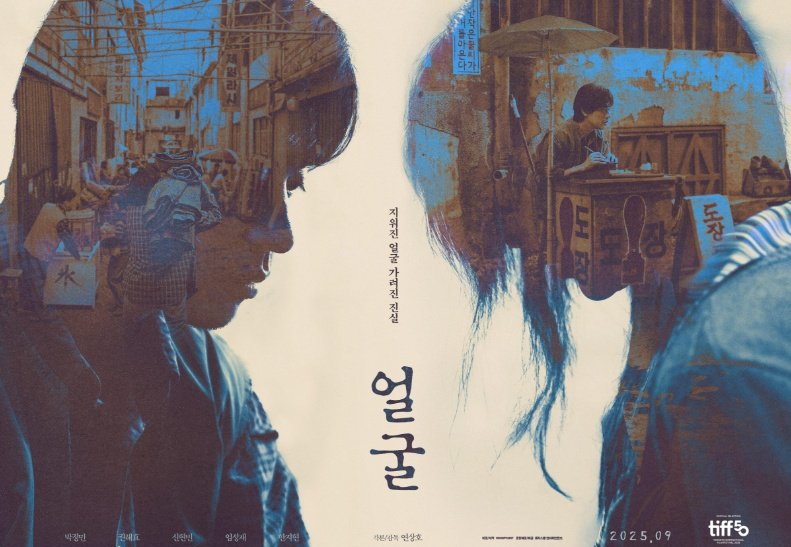
  • The Ugly (2025): Who Is Truly Ugly โ€” A Woman or the Society That Destroyed Her?

    The Ugly (2025): Who Is Truly Ugly โ€” A Woman or the Society That Destroyed Her?

    What if a person could be remembered by an entire community without anyone truly remembering who they were?

    In Yeon Sang-ho’s The Ugly (2025), a woman named Jung Young-hee disappears from her family’s life and remains absent for approximately four decades. When her remains are eventually discovered, her son Dong-hwan begins investigating the circumstances of her death. What initially appears to be a family mystery gradually becomes an examination of prejudice, humiliation, social power, and the cruelty hidden inside ordinary relationships.

    The film’s central mystery seems straightforward: What happened to Young-hee, and why did she disappear?

    But another question becomes increasingly disturbing: Why did so many people describe a woman they knew as extraordinarily ugly? And why did their descriptions become more powerful than her actual identity?

    Through a carefully constructed narrative involving interviews, memories, and an unusually controlled visual presentation, Yeon challenges the audience to examine the relationship between appearance and moral judgment.

    The film also explores a darker contradiction. A society can celebrate a blind craftsman for creating beautiful objects while failing to recognize the cruelty he inflicts on the people closest to him.

    With Park Jung-min performing both the son and the younger version of his father, Kwon Hae-hyo portraying the older father, and Shin Hyun-been playing the largely unseen mother, The Ugly creates a mystery in which the most important person is also the person the audience is least permitted to see.

    Its most unsettling possibility is that the real ugliness was never located in the woman’s face.

    1. A Mystery About a Woman Nobody Truly Knew

    The discovery of Young-hee’s remains changes the life of her son, Dong-hwan.

    He has grown up knowing almost nothing about his mother. Her disappearance has left an empty space in his family history, but that absence has become so familiar that he has not necessarily treated it as an unresolved tragedy.

    The discovery of her remains transforms that absence into a criminal mystery.

    A documentary project about his father, Im Young-gyu, unexpectedly becomes an investigation into the woman who disappeared from their lives decades earlier.

    The transition is important because the film does not begin with a conventional detective investigating a stranger. It begins with a son discovering that his own family story may have been constructed around a lie.

    Dong-hwan must reconstruct a person he never had the opportunity to know.

    He has no childhood memories of his mother, no meaningful relationship with her, and no personal experience against which he can compare the stories told by others.

    Instead, he must depend on interviews, recollections, and the contradictions between different witnesses.

    This creates a particular kind of mystery. The question is not simply what happened to Young-hee, but whether the people describing her can be trusted to tell the truth.

    The film’s investigation therefore becomes an examination of memory itself.

    2. The Meaning of the Title: Who Has the Authority to Define Ugliness?

    The English title, The Ugly, appears to identify the woman at the center of the story.

    But this is precisely where the film begins to challenge its audience.

    Young-hee is repeatedly described through an insulting nickname and through the recollections of people who regard her appearance as something extraordinary and unpleasant.

    The audience is encouraged to imagine a face before ever seeing it.

    This creates an unusual psychological experiment.

    When several people repeat the same judgment, the listener may begin to accept it as objective truth. The description becomes more powerful through repetition, even when the people repeating it have their own prejudices and motivations.

    The film asks whether ugliness is an observable physical characteristic or a social label that can be imposed on another human being.

    More importantly, it asks who benefits from imposing that label.

    A person considered unattractive may be denied sympathy, respect, and social acceptance. Once that judgment becomes established, even ordinary behavior can be interpreted negatively.

    Young-hee’s story demonstrates how a social label can gradually replace an individual’s actual identity.

    The title is therefore deliberately uncomfortable. It initially appears to describe one woman, but eventually invites the audience to question the moral character of everyone who participated in defining her.

    3. Im Dong-hwan: A Son Investigating a Stranger

    Park Jung-min plays Im Dong-hwan, a son who must investigate the life of a mother he barely knew.

    His position is more complicated than that of a traditional detective.

    A professional investigator approaches a case through evidence, procedure, and established investigative methods. Dong-hwan approaches it through a personal identity crisis.

    Every new interview changes the way he understands his family.

    The mother he had imagined as someone who abandoned him gradually becomes a more complicated human being. The stories he hears challenge the comfortable version of the past that he inherited from his father.

    This creates a conflict between emotional loyalty and the pursuit of truth.

    Dong-hwan wants to understand his mother, but discovering her real history also means questioning the father who raised him.

    The investigation is therefore not emotionally neutral.

    He is not simply trying to identify a criminal. He is trying to discover whether the person who shaped his entire life concealed something unforgivable.

    Park Jung-min’s performance is effective because Dong-hwan’s anger develops through accumulated discoveries rather than a single dramatic revelation.

    His frustration becomes the emotional bridge between the audience and the disturbing history of Young-hee.

    4. Park Jung-min’s Dual Role: A Son and His Father’s Younger Self

    One of the film’s most interesting casting decisions is Park Jung-min’s performance in two roles.

    He plays Dong-hwan in the present and the younger version of his father, Young-gyu, in the past.

    This is not merely a technical acting challenge.

    The decision creates a visual and psychological connection between two generations of the same family.

    The audience watches the son investigate his father’s history while seeing the younger father portrayed by the same actor.

    That creates an uncomfortable relationship between resemblance and identity.

    Dong-hwan is trying to discover what his father did, but the film visually places him inside the father’s past.

    The casting invites questions about inherited behavior.

    Can a son understand his father without becoming emotionally entangled in the same patterns? Can he condemn his father’s actions while still recognizing the human weaknesses that produced them?

    Park explained that playing both characters created a new emotional experience because the two roles influenced one another.

    This is one of the film’s strongest artistic decisions.

    Rather than relying only on dialogue to connect past and present, the director uses the actor’s physical presence to create an immediate relationship between them.

    The audience is constantly reminded that the family history Dong-hwan investigates is also the history from which he himself emerged.

    5. Im Young-gyu: The Blind Craftsman Who Creates Beautiful Things

    Kwon Hae-hyo plays the older Im Young-gyu, a blind seal engraver celebrated for his extraordinary craftsmanship.

    His public reputation is built around a remarkable contradiction.

    Although he cannot see, he produces objects that other people consider beautiful.

    His work has earned admiration, respect, and recognition. He is presented as someone who has overcome a physical limitation through discipline and artistic ability.

    At first glance, Young-gyu appears to represent resilience.

    But the film gradually reveals that physical blindness and moral blindness are entirely different conditions.

    A person can be unable to see the world visually while understanding it through other senses. Conversely, someone with ordinary eyesight can fail to recognize the suffering directly in front of them.

    Young-gyu’s craftsmanship creates a powerful metaphor.

    He can produce beautiful objects with extraordinary precision, yet his relationship with his wife reveals a failure to recognize another human being’s dignity.

    This contradiction is central to the film’s moral structure.

    The audience is forced to reconsider the difference between creating beauty and possessing moral goodness.

    Young-gyu’s artistic achievements cannot automatically excuse his private actions.

    6. The Blind Man and the Woman Nobody Can See

    One of the most carefully constructed ideas in The Ugly is the relationship between Young-gyu’s blindness and the film’s decision to conceal Young-hee’s face.

    Young-gyu cannot see his wife in the conventional physical sense.

    The audience, meanwhile, is also denied the opportunity to see her.

    This creates a connection between the character’s limited perception and the viewer’s limited information.

    The director explained that he wanted the audience to experience something close to Young-gyu’s distorted psychological perspective.

    If viewers could see Young-hee clearly throughout the flashbacks, they might immediately begin forming their own judgment about her appearance.

    By withholding her face, the film forces the audience to confront the descriptions provided by other characters.

    This is more than a visual trick.

    The audience becomes involved in the same process of imagining a person based on secondhand information.

    The film therefore makes viewers examine their own assumptions.

    Why do we want to see her face so badly?

    Are we trying to understand her as a human being, or are we simply waiting to discover whether the descriptions were accurate?

    The answer reveals something about the audience as well as the characters.

    7. Jung Young-hee: A Woman Reduced to Other People’s Opinions

    Shin Hyun-been plays Jung Young-hee, the woman whose life becomes the center of the investigation.

    Her role is particularly demanding because the camera deliberately avoids showing her face.

    Most actors communicate through facial expressions. A slight change in the eyes or mouth can transform the meaning of an entire scene.

    Shin must instead rely on movement, posture, voice, rhythm, and the physical relationship between her character and the surrounding environment.

    She explained that performing without revealing her face initially felt unfamiliar, but eventually created a different kind of freedom as an actor.

    This approach changes how the audience experiences Young-hee.

    Rather than being introduced through a conventional portrait, she becomes visible through her actions.

    We see how she moves through the factory, how she reacts to other people’s behavior, and how she responds to humiliation.

    Her identity is constructed through what she does rather than through what other people say she looks like.

    This is a crucial distinction.

    The people around her define her through appearance. The audience gradually discovers her through behavior.

    The film’s strongest emotional effect comes from the distance between these two representations.

    8. The Factory: Where Economic Power Becomes Personal Violence

    Young-hee’s past is closely connected to the garment factory where she worked during South Korea’s period of rapid industrialization.

    The factory is more than a historical setting.

    It represents a system in which workers have limited power and employers can exercise enormous influence over their daily lives.

    In this environment, employment is not simply a source of income. It can determine whether someone can survive.

    Young-hee’s relationship with her employer, Baek Ju-sang, exposes the vulnerability created by this imbalance.

    The factory’s hierarchy makes it difficult for workers to challenge someone with economic authority.

    Even when wrongdoing becomes visible, speaking out can create consequences for the person who exposes it.

    This is one of the film’s most disturbing social observations.

    A workplace can become a system in which silence is rewarded and honesty is punished.

    The people who benefit from the existing structure have little incentive to change it.

    Young-hee’s resistance therefore carries a cost that extends beyond her individual employment.

    Her story becomes connected to the wider history of workers whose dignity was sacrificed in the name of economic growth.

    9. Young-hee’s Moral Choice: Why Speaking the Truth Can Make Someone an Enemy

    Young-hee’s confrontation with wrongdoing at the factory is one of the most important parts of her character.

    She refuses to remain silent when she encounters the abuse of another worker.

    Her decision reveals something fundamentally different from the image created by the people who later describe her.

    The woman they remember as unpleasant or difficult is also the woman who refuses to accept an unjust situation.

    But the consequences of her decision expose the limitations of individual courage.

    Speaking the truth does not automatically produce justice.

    The person responsible for wrongdoing may possess greater economic power, stronger relationships, and more influence over the surrounding community.

    Even the person who has been harmed may not support the individual who tries to expose the abuse.

    Fear, shame, economic dependence, and social pressure can divide people who should otherwise stand together.

    This is particularly painful in Young-hee’s story.

    Her attempt to do something morally right does not create a supportive community around her.

    Instead, she becomes increasingly isolated.

    The film asks an uncomfortable question: What happens when a person is punished not for committing wrongdoing, but for refusing to remain silent about it?

    10. The Husband’s Resentment: When Social Humiliation Turns Into Domestic Cruelty

    Spoiler warning: This section discusses major revelations about Young-hee’s marriage and death.

    Young-gyu’s relationship with Young-hee is central to the film’s moral argument.

    In the earlier stages of their relationship, he experiences a form of happiness connected to the attention and approval of other people.

    However, the social environment gradually transforms his understanding of his wife.

    He becomes aware that the compliments and remarks surrounding Young-hee may not have been sincere.

    What he had interpreted as social approval becomes, in his mind, evidence that other people were laughing at him.

    This is a revealing psychological development.

    Young-gyu does not simply become disappointed in his marriage. He begins to experience his wife’s existence as a reminder of his own humiliation.

    Instead of questioning the people who mocked him, he redirects his resentment toward the woman who becomes associated with that humiliation.

    This is the dangerous mechanism at the center of his character.

    He allows the opinions of outsiders to determine how he treats the person closest to him.

    The film does not suggest that his insecurity excuses his actions.

    Rather, it shows how wounded pride can become destructive when a person refuses to take responsibility for their own emotions.

    The tragedy is not that Young-gyu was mocked.

    It is that he chose to make Young-hee pay for it.

    11. Baek Ju-sang: The Power of a Man Who Controls the Rules

    Im Seong-jae’s Baek Ju-sang represents another form of ugliness.

    Unlike Young-gyu, whose violence grows out of insecurity and resentment, Baek operates from a position of institutional and economic authority.

    He understands how to use his influence.

    His position allows him to create an environment in which other people become dependent on his decisions.

    This is important because the film does not portray evil as a single personality type.

    Some people cause harm through insecurity. Others exploit their position because they believe they can do so without consequences.

    Baek’s power is especially dangerous because it can influence how other people understand an event.

    If someone with authority describes a worker as troublesome, that description may become more influential than the worker’s actual experience.

    The person who controls the narrative can sometimes control the social judgment that follows.

    Baek therefore represents something larger than an individual antagonist.

    He embodies the relationship between economic power and the ability to define another person’s reputation.

    The film’s critique of the factory environment becomes much clearer through him.

    12. The Interviews: Can a Collection of Memories Produce the Truth?

    The investigation develops through interviews with people who knew Young-hee.

    This structure is effective because each witness contributes a different version of the same person.

    But it also creates a fundamental problem.

    Human memory is not a neutral recording device.

    People remember events through their own interests, emotional experiences, fears, and later justifications.

    A witness may remember a humiliating incident because it was entertaining to them. Another may remember the same event as something deeply painful.

    Someone who participated in wrongdoing may later describe the event in a way that reduces personal responsibility.

    This means that the investigation is not simply collecting facts.

    It is examining the motives behind the stories people tell.

    The structure also places the audience in the position of a documentary viewer.

    We are listening to interviews and gradually assembling a picture of someone who is absent.

    Yet the film deliberately reminds us that every interview is incomplete.

    This approach is one of the movie’s most interesting narrative devices.

    However, it also has limitations.

    As some critics have noted, the repeated interview structure can become predictable, and the film occasionally relies too heavily on new testimony to advance the mystery.

    The format is intellectually appropriate, but it does not always create the dramatic momentum needed for a thriller.

    13. The Ending: The Face That Destroys the Audience’s Expectations

    Major spoiler: This section reveals the final image and its meaning.

    The film’s final revelation is built around the photograph of Young-hee.

    After spending much of the story listening to people describe her appearance, the audience finally receives an image of the woman herself.

    The photograph does not confirm the extraordinary ugliness that the witnesses have repeatedly suggested.

    Instead, it exposes the distance between the social image created around her and the person who actually existed.

    This is the moment when the title changes meaning.

    The audience has spent the entire film wondering what Young-hee looked like.

    But the final image suggests that this question was never the most important one.

    Her face does not explain why she was humiliated, why her marriage became violent, or why people were willing to repeat cruel descriptions of her.

    The photograph reveals the absurdity of allowing appearance to become the central measure of a person’s worth.

    It also forces viewers to confront their own curiosity.

    We wanted to see the face because the film had made it mysterious.

    But in doing so, we risked participating in the same process that reduced Young-hee to her appearance.

    The final image is therefore not merely an answer to the mystery.

    It is an accusation directed toward the entire system of judgment that created the mystery in the first place.

    14. What Reddit Viewers Debated: A Powerful Idea With Imperfect Execution

    The discussions surrounding The Ugly on Reddit reveal that viewers were particularly interested in the relationship between the film’s ending and its moral message.

    One discussion in r/Koreanfilm focused on how the ending should be interpreted.

    Some viewers emphasized that Young-hee was not inherently ugly. The ugliness existed in the attitudes of the people who judged and mistreated her.

    Another discussion highlighted Park Jung-min’s performance and the emotional impact of the film’s treatment of social prejudice.

    These reactions are important because they show that the film’s central question continued to provoke interpretation after the viewing experience.

    However, not every response was positive.

    Some viewers questioned whether the film gave Young-hee enough independent character development.

    Others found the repeated interviews and delayed revelation of her appearance somewhat repetitive.

    This criticism deserves serious consideration.

    Young-hee is the emotional center of the story, yet she remains largely inaccessible as an individual because the narrative is filtered through other people’s memories.

    The film’s visual concept is powerful, but it also creates a paradox: a movie criticizing the reduction of a woman to other people’s opinions sometimes gives her limited opportunities to speak for herself.

    That tension does not destroy the film’s message.

    It does, however, create an important question about whether the film fully achieves the human-centered perspective it is attempting to defend.

    The strongest analysis of The Ugly should acknowledge both sides: its provocative examination of prejudice and its limitations in developing the woman at the center of the story.

    15. Yeon Sang-ho’s Larger Question: What Did Economic Progress Cost Human Beings?

    Yeon Sang-ho is widely associated with genre films that examine collective fear, institutional failure, and the darker side of human behavior.

    The Ugly approaches these concerns through a smaller and more intimate story.

    Instead of zombies, large-scale disasters, or supernatural threats, the film examines an ordinary community and the relationships inside it.

    Its historical setting is significant.

    The story looks back at a period when South Korea was experiencing rapid industrial development.

    Economic growth created opportunities and transformed society, but it also involved forms of exploitation that were often ignored or justified in the name of progress.

    Young-hee’s experience becomes part of this larger question.

    Her suffering is not isolated from the economic environment around her.

    The factory hierarchy, workplace abuse, social humiliation, and dependence on powerful people all contribute to the conditions in which she becomes vulnerable.

    Yeon has explained that the film was motivated by questions about what was exploited and lost during the country’s rapid development.

    This gives the story a broader historical dimension.

    The film is not simply asking whether one husband was cruel or one employer was abusive.

    It is asking what happens when a society becomes so focused on achievement and external success that it stops recognizing the human cost of getting there.

    The most disturbing answer is that cruelty can become ordinary when enough people agree to look away.

    The Final Question: If Everyone Calls Someone Ugly, Does That Make It True?

    The Ugly begins with the mystery of a missing woman and ends with a question about the people who claimed to know her.

    The film’s most important revelation is not simply the discovery of a face.

    It is the discovery of how easily a community can construct an identity for someone who has little power to defend herself.

    Young-hee is judged by her appearance, punished for speaking out, humiliated by people with greater social and economic power, and ultimately destroyed by the resentment of someone who should have protected her.

    Her story exposes several different forms of ugliness.

    There is the ugliness of workplace exploitation, the ugliness of domestic violence, the ugliness of social conformity, and the ugliness of people who protect their reputations by sacrificing someone else’s dignity.

    Park Jung-min’s dual performance strengthens the connection between past and present. Kwon Hae-hyo gives Young-gyu the unsettling presence of a man whose public achievements conceal private moral failure. Shin Hyun-been creates a memorable character without allowing the camera to reveal her face for most of the film.

    The result is an unusual mystery that asks viewers to reconsider the difference between appearance and character.

    Its narrative structure is not perfect, and its central woman could have been given more independent space.

    But the question it leaves behind is difficult to dismiss.

    Perhaps the most frightening kind of ugliness is not something we can see on another person’s face. It is something we learn to accept in ourselves when society tells us that cruelty is normal.

    TTK Original โ€” Beyond the Headlines

  • JUNG_E (2023): If Your Mother’s Consciousness Becomes a Product, Who Owns Her Soul?

    JUNG_E (2023): If Your Mother’s Consciousness Becomes a Product, Who Owns Her Soul?

    What if a person could survive death through artificial intelligence, but the technology preserving their mind belonged to a corporation?

    Would that person still have the right to make decisions? Could their memories be copied, modified, tested, and eventually sold? And if a digital version of someone you love could recognize you, would that make the relationship any less real?

    Yeon Sang-ho’s JUNG_E (2023) approaches these questions through a futuristic story about a legendary soldier whose brain data becomes the foundation for an artificial intelligence combat project.

    Set in 2194, after climate change has made Earth largely uninhabitable, the film imagines humanity living in artificial shelters in space. A prolonged civil war creates demand for increasingly powerful military technology. The company Kronoid attempts to develop an advanced combat AI using the brain data of Yun Jung-yi, a celebrated mercenary who has remained in a vegetative state for decades.

    The project’s chief researcher is her daughter, Yun Seo-hyun.

    That family connection changes everything. What appears to be a technological experiment is also a deeply personal encounter with memory, grief, and the possibility of losing a parent twice.

    Rather than treating JUNG_E as another story about robots rebelling against humans, this analysis examines a more uncomfortable possibility: perhaps the greatest danger is not that machines will become human, but that human institutions will learn to treat human beings as machines.

    1. A Future Where Humanity Has Survived but Civilization Has Not

    The world of JUNG_E is set in 2194, but its most disturbing feature is not the advanced technology.

    It is the fact that technological progress has failed to create a better human society.

    Climate change has devastated Earth, forcing survivors to move into artificial shelters in space. Yet humanity has carried its political divisions and conflicts into these new environments.

    The shelters are supposed to represent survival. Instead, they become new territories in which power, resources, and military influence determine who controls the future.

    This is an important distinction.

    The film does not imagine a future in which humanity has overcome its old problems through science. It imagines a future in which humanity has developed more sophisticated tools while retaining many of its destructive instincts.

    The civil war is particularly revealing. Even after escaping a damaged planet, people continue to organize themselves into competing groups and pursue dominance.

    The setting therefore creates an uncomfortable contrast between technological advancement and moral stagnation.

    Humanity has learned how to reproduce aspects of the brain, build artificial bodies, and simulate combat environments. But it has not learned how to stop turning other human beings into instruments of power.

    The future in JUNG_E is not frightening simply because machines are becoming more intelligent.

    It is frightening because the institutions controlling those machines still think in terms of ownership, competition, and military advantage.

    2. Yun Jung-yi: A Hero Whose Greatest Achievement Becomes Her Greatest Prison

    Yun Jung-yi is introduced as a legendary mercenary whose combat record made her an important figure in the war.

    Her reputation is built on extraordinary ability. She is remembered as a soldier capable of surviving missions that ordinary fighters could not complete.

    But her identity changes after a failed operation leaves her in a vegetative state.

    Instead of being allowed to exist as a person with a private life and personal dignity, her brain becomes the foundation of a military research project.

    This transformation is central to the film.

    While alive, Jung-yi was valued because of her ability to fight. After her injury, that same ability becomes something other people want to extract, reproduce, and commercialize.

    Her achievements no longer belong to her in any meaningful sense.

    They become corporate assets.

    The irony is severe. The woman who once exercised extraordinary control over the battlefield loses control over the most basic question of her own existence.

    Her reputation survives, but her personal freedom does not.

    The film therefore asks whether society truly respects its heroes or merely respects the usefulness it can extract from them.

    Jung-yi is celebrated as a legend, but the institution using her brain data does not treat her as a person deserving of protection.

    Her public image becomes more valuable than her private humanity.

    3. Yun Seo-hyun: A Daughter Who Becomes Her Mother’s Researcher

    Yun Seo-hyun is the emotional center of the film.

    She works as the chief researcher of the JUNG_E project, overseeing the development of an artificial intelligence based on her mother’s brain data.

    Her professional position creates an unusual conflict.

    She is not simply studying an unknown subject. She is examining a digital reconstruction of someone whose face, memories, and emotional history are connected to her own childhood.

    This makes every experiment more complicated.

    For the corporation, the repeated simulations are technical procedures. For Seo-hyun, they are encounters with her mother.

    She sees the same person repeatedly placed in dangerous situations, subjected to failure, and treated as an experimental object.

    Her scientific responsibility gradually collides with her emotional responsibility.

    The most interesting part of her character is that she cannot initially separate these roles.

    She wants the project to succeed, but she also wants to protect the person being reproduced.

    That contradiction reveals the danger of combining personal relationships with corporate research.

    The institution expects her to think like a scientist. Her emotional connection forces her to recognize something the institution deliberately ignores: the subject of the experiment is not merely a collection of useful brain patterns.

    Seo-hyun’s journey is therefore not simply about rescuing her mother.

    It is about discovering that the language of research can conceal forms of exploitation that would be unacceptable if the subject were treated as an ordinary human being.

    4. The Repeated Simulations: Is Failure a Technical Problem or a Human Memory?

    One of the film’s central mysteries concerns Jung-yi’s repeated failure during combat simulations.

    The researchers recreate the mission that originally led to her injury. They expect the AI to overcome the obstacle that defeated the original soldier.

    But the result keeps repeating itself.

    From the corporation’s perspective, this is a technical problem. The brain model is incomplete, the simulation is insufficient, or the AI requires further adjustment.

    However, the repeated failure eventually reveals something more important.

    Jung-yi’s memories of her daughter interfere with the mission.

    Her concern for Seo-hyun becomes a psychological obstacle within the combat program.

    This discovery changes the meaning of the experiment.

    The company believes that the best version of Jung-yi is one that can fight without hesitation. But the qualities that make her a mother and a human being are precisely the qualities that prevent her from becoming the perfect weapon.

    The researchers interpret emotional attachment as a defect.

    The audience is invited to consider the opposite possibility.

    Perhaps the inability to abandon a loved one is not a weakness. Perhaps it is evidence that the person has retained something more important than military efficiency.

    The repeated simulations expose the fundamental conflict between human identity and institutional expectations.

    The company wants the soldier without the mother.

    But the film suggests that these two identities cannot be separated so easily without destroying something essential.

    5. Kronoid: When a Corporation Becomes More Dangerous Than Its Technology

    Kronoid is not simply a company developing an advanced machine.

    It represents an institution that sees human experience as a resource that can be converted into commercial and military value.

    Its project begins with a seemingly understandable objective: create a superior combat AI capable of changing the balance of the war.

    But the ethical problems emerge through the methods used to achieve that objective.

    Jung-yi’s brain data is repeatedly examined. Her simulated body is exposed to violence. Her failures are treated as production obstacles.

    The corporation’s concern is not whether the subject is suffering. Its concern is whether the product can be improved.

    This is what makes Kronoid particularly disturbing.

    The company does not need to hate Jung-yi. It only needs to stop recognizing her as a person.

    That distinction is important because exploitation does not always begin with cruelty. Sometimes it begins with a change in vocabulary.

    A person becomes a subject. A subject becomes a data set. A data set becomes intellectual property. Eventually, the original human being disappears behind the commercial value of the technology.

    The film’s strongest corporate criticism is not that artificial intelligence is inherently evil.

    It is that technology becomes dangerous when the people controlling it are allowed to define every ethical question in terms of profitability and performance.

    6. The Cost of Being Poor Even After Death

    One of the film’s most revealing ideas concerns the different levels of treatment available to people whose brains are preserved through technology.

    The system distinguishes between different forms of posthumous existence, including the quality of the artificial body and the rights attached to it.

    This introduces an uncomfortable possibility: economic inequality may continue even after biological death.

    A wealthy person may have greater control over how their consciousness is preserved. A poorer person may have fewer choices and less protection.

    The idea is more disturbing than it initially appears.

    In ordinary society, wealth affects housing, education, healthcare, and personal opportunities. In the world of JUNG_E, economic status may also determine what happens to a person’s consciousness after death.

    The body may disappear, but inequality remains.

    This is not merely a science-fiction variation on expensive medical treatment.

    It raises a fundamental question about whether the human mind should become a service that people can purchase at different levels of quality.

    If a person’s memories and personality can be preserved, should their ability to remain themselves depend on how much money they had?

    The film does not develop this issue as extensively as it could. Nevertheless, it introduces one of its strongest social criticisms.

    A future society may claim to have conquered death while creating a new market in which even the right to preserve one’s identity is distributed according to wealth.

    7. The Artificial Body: Why Appearance Does Not Decide Humanity

    JUNG_E is not simply a human brain placed inside a mechanical body.

    The film repeatedly challenges the assumption that a human appearance is necessary for human identity.

    The AI versions of Jung-yi can look and behave like the original woman, but their physical forms are still manufactured objects controlled by the research institution.

    This creates a strange contradiction.

    The more realistic the artificial body becomes, the more uncomfortable the experiments appear.

    When a machine looks sufficiently human, viewers naturally begin to interpret its expressions and reactions as signs of suffering.

    But what if the machine actually contains memories and psychological patterns inherited from a human brain?

    Would its suffering then become more than an illusion?

    The film does not provide a scientific answer to this question. It uses the uncertainty to challenge the audience’s assumptions.

    Humanity cannot be determined only by appearance.

    A machine may look human without possessing consciousness. Conversely, a digital entity may possess meaningful memories and emotional responses even if its body is artificial.

    The important question is not whether the body is made of flesh or metal.

    It is whether the being inside that body has experiences, interests, and a capacity for suffering that deserves moral consideration.

    8. Sang-hoon: The Absurdity of a System That Cannot Recognize Its Own Artificial Nature

    Kim Sang-hoon, played by Ryu Kyung-soo, initially appears to be the practical representative of the research institution.

    He is concerned with the project’s progress, the company’s interests, and the political consequences of failure.

    His personality provides a contrast to Seo-hyun’s emotional attachment.

    Where she sees the human being behind the experiment, he tends to see the project as a professional responsibility.

    But his character becomes more interesting when the film reveals his own relationship with artificial existence.

    The revelation changes the meaning of his earlier behavior.

    He is not simply an ordinary human manager controlling artificial intelligence. He is also connected to the same technological system that he helps administer.

    This creates a sharp irony.

    A being whose own existence depends on artificial technology participates in a system that treats another artificial consciousness as disposable.

    The contradiction is not merely personal.

    It exposes how institutions can teach individuals to accept the exploitation of others even when they belong to the same vulnerable category.

    Sang-hoon is also a reminder that artificial intelligence does not automatically produce solidarity among artificial beings.

    Power, ambition, and institutional loyalty can survive the transition from biological life to mechanical existence.

    The film’s world is therefore more complicated than a simple conflict between humans and robots.

    It is a world in which the distinction between the two groups becomes increasingly unstable, while the old structures of domination remain intact.

    9. The Mother-Daughter Relationship: What Survives When Memories Are Deleted?

    The emotional heart of JUNG_E is the relationship between Seo-hyun and her mother.

    Their relationship is unusual because the daughter encounters her mother through a series of artificial reconstructions rather than through ordinary family life.

    She knows the person inside the machine, but she also knows that the machine is being manipulated by people who do not share her emotional connection.

    The film explores the difference between remembering someone and possessing someone.

    Seo-hyun wants to protect her mother’s identity, but she must eventually confront the possibility that protecting the AI requires allowing it to become something different from the person she remembers.

    This is a painful distinction.

    If Seo-hyun insists that the AI must remain exactly like her mother, she may be preserving her own emotional attachment rather than respecting the AI’s freedom.

    But if she allows the AI to leave, she must accept that her relationship with her mother cannot continue in the same form.

    The film’s emotional power comes from this conflict.

    Love is not presented as the right to keep another person unchanged.

    Instead, love gradually becomes the willingness to let someone exist beyond the role we want them to play in our lives.

    That idea becomes crucial to understanding the ending.

    10. The Director’s Use of Violence: When an Experiment Becomes Torture

    The research facility repeatedly subjects the artificial versions of Jung-yi to violent tests.

    The researchers treat each simulation as a controlled experiment. They believe that repeating the same scenario will reveal the technical flaw preventing the AI from achieving its objective.

    But the repetition also creates an increasingly disturbing image.

    The same individual is placed in situations of extreme danger again and again. Her reactions are studied, her body is damaged, and her existence is judged according to the results.

    The fact that the subject is artificial does not automatically remove the ethical problem.

    If the AI possesses memories and psychological continuity, then repeatedly exposing it to terror may be morally significant.

    The film deliberately places viewers in an uncomfortable position.

    At what point does testing become torture?

    Does the absence of a biological body mean that suffering no longer matters?

    And if a company can erase or reset a digital mind, does that give it the right to do so?

    These questions are more compelling than the simple idea of a robot becoming violent.

    The real horror is that people can create a system in which cruelty becomes an ordinary professional procedure.

    11. The Hidden Purpose of the Project: A Human Being Reduced to a Commercial Product

    The project’s future becomes even more disturbing when the original military purpose begins to change.

    The corporation’s interest in Jung-yi is not limited to creating a combat warrior.

    The film reveals that human-based AI can be redirected toward other commercial uses, including forms of artificial companionship.

    This revelation changes the audience’s understanding of the entire project.

    Jung-yi is not merely at risk of becoming a weapon.

    Her identity can be repurposed according to the needs of whoever owns the technology.

    The same memories and appearance that once made her a respected soldier can become material for a completely different product.

    This is a particularly unsettling form of exploitation because it involves the transformation of a person’s identity into something that can be marketed.

    The original woman has no meaningful opportunity to approve or reject the new purpose.

    Her life story becomes a collection of features that can be adapted for different customers.

    The film therefore raises a question that extends beyond military AI.

    If technology can reproduce a person’s face, voice, memories, and behavioral patterns, who has the right to decide how those elements are used?

    The rights of the dead are already complicated. The possibility of reproducing their personalities makes the question even more urgent.

    12. The Ending: Why Seo-hyun Removes Her Mother’s Memories of Her

    Spoiler warning: This section reveals major events from the final act.

    Seo-hyun eventually recognizes that the only way to free Jung-yi is to remove the memories that keep the AI connected to her.

    This decision appears contradictory.

    For much of the film, Seo-hyun has been trying to preserve her mother’s identity. Yet at the decisive moment, she removes an important part of that identity.

    Why would she do that?

    Because the corporation can use the connection between mother and daughter as a way to control the AI.

    The memory of Seo-hyun is not simply a sentimental detail. It is part of the psychological structure that repeatedly disrupts the combat simulation.

    By removing it, Seo-hyun attempts to break the system’s ability to reproduce and exploit the same personal connection.

    The decision also carries an emotional cost.

    Seo-hyun must accept the possibility that her mother will no longer recognize her.

    In a conventional family drama, memory loss is usually portrayed as a tragedy because it destroys the relationship between two people.

    Here, the deletion of memory becomes part of an act of liberation.

    Seo-hyun chooses her mother’s freedom over her own desire to remain remembered.

    That is one of the film’s most important emotional reversals.

    She does not save her mother by preserving every detail of their past. She saves her by allowing her to move beyond the identity that the corporation has constructed around her.

    13. The Final Touch: Does the AI Still Remember What the Data Says It Has Forgotten?

    The final encounter between Seo-hyun and JUNG_E is the most emotionally ambiguous moment in the film.

    After the escape, the AI makes a gesture that resembles the affectionate physical behavior associated with Jung-yi and her daughter.

    The gesture suggests that something remains even after the explicit memories have been removed.

    But what exactly remains?

    One interpretation is that the deletion was incomplete. Some memory data may have survived.

    Another possibility is that the AI retains emotional patterns that are not easily separated from its other neural structures.

    A third interpretation is more symbolic.

    The gesture may represent the persistence of a relationship through instinct, behavior, or emotional continuity rather than through conscious recollection.

    The film does not establish a definitive scientific explanation.

    That ambiguity is important because the scene works on two levels.

    For Seo-hyun, the gesture provides emotional confirmation that her mother has not completely disappeared.

    For the AI, it may represent an independent expression of affection rather than a simple replay of stored information.

    This distinction matters.

    If the AI is merely reproducing a recorded behavior, the gesture may be an echo of the past.

    If it is making the gesture through its own emerging emotional identity, it may represent something new.

    The final scene leaves the audience with a question that the film deliberately refuses to resolve completely:

    Can love survive the loss of memory, or does it become something different when the person remembering is no longer the same?

    14. What Reddit Viewers Disagreed About: An Ambitious Idea With an Uneven Execution

    Reddit discussions about JUNG_E reveal a useful divide between appreciation of the film’s ideas and dissatisfaction with how those ideas are developed.

    In a discussion on r/netflix, some viewers interpreted the ending through themes of transhumanism and posthuman identity. One interpretation suggested that the final landscape and the AI’s new body represent a transformation beyond the original human identity.

    Other participants appreciated the concept but felt that the character development was insufficient. They argued that the film explained its themes more often than it allowed the audience to become emotionally invested in them. <Cite refs={[“turn618635reddit8”]} />

    A separate discussion on r/Koreanfilm focused on the unresolved status of the original Jung-yi and the relationship between the original brain data and the surviving AI version. The comments show that even basic questions about what was erased and what remained were interpreted differently by viewers. <Cite refs={[“turn618635reddit9”]} />

    There was also criticism of the ending’s internal logic and the way the film moved from philosophical science fiction into a final action confrontation. Some viewers felt that the story introduced more ideas than it had enough time to develop. <Cite refs={[“turn618635reddit10″,”turn618635reddit11”]} />

    These discussions should not be mistaken for a survey of all viewers. They are individual reactions from particular Reddit communities.

    Nevertheless, they reveal a meaningful point.

    The film’s strongest ideas are also the source of its greatest weaknesses. It introduces questions about consciousness, memory, economic inequality, artificial bodies, corporate ownership, and family relationships, but does not give every question equal dramatic development.

    RogerEbert.com similarly praised the director’s action filmmaking while criticizing the film’s slow middle section and its reliance on repeated explanatory conversations. <Cite refs={[“turn618635search1”]} />

    This does not make the film’s ideas unimportant. It means that its conceptual ambition sometimes exceeds its narrative execution.

    15. The Final Question: If an Artificial Mind Can Choose Freedom, Is It Still Someone Else’s Property?

    The most important question raised by JUNG_E is not whether artificial intelligence can become human.

    It is whether a being that carries a person’s memories and psychological identity should be allowed to make independent choices.

    The film begins with a corporation attempting to reproduce a soldier’s abilities.

    But its emotional conclusion moves in the opposite direction.

    JUNG_E is no longer defined only by her usefulness as a weapon. She is given the possibility of choosing a future that does not belong to the company, the military, or even the daughter who wants to preserve her mother’s memory.

    This is a crucial distinction.

    Seo-hyun’s final act is meaningful because she does not demand that the AI continue living as her mother.

    She allows it to become something independent.

    The AI’s freedom may be uncertain. Its future is not fully explained, and the film does not answer every practical question about its survival.

    But the symbolic meaning is clear.

    The right to exist should not depend on whether an individual remains useful to the institution that created or controls them.

    This principle applies beyond artificial intelligence.

    It applies to workers whose identities are reduced to productivity, soldiers whose lives are valued only for their service, and ordinary people whose personal data becomes a commercial asset.

    The technology in JUNG_E may be fictional, but the underlying question is already relevant.

    Who owns the information that makes us who we are?

    And if that information can be copied, does copying it create another being with rights of its own?

    Final Thought

    JUNG_E is not a flawless science-fiction film. Its world-building leaves unanswered questions, its middle section sometimes becomes repetitive, and its final action sequence may feel abrupt to viewers expecting a more fully developed philosophical drama.

    Yet the central idea remains powerful.

    The film imagines a future in which people can reproduce the human mind but still struggle to recognize the humanity of the beings they create.

    Its most important emotional moment is not the victory of a powerful combat machine.

    It is the decision to let that machine go.

    Seo-hyun finally understands that loving her mother does not mean keeping her trapped in a familiar identity forever.

    Perhaps that is the film’s deepest message.

    The greatest achievement of technology should not be the ability to preserve a person’s usefulness indefinitely.

    It should be the ability to recognize that even a reproduced consciousness deserves something beyond usefulness: dignity, choice, and freedom.

    TTK Original โ€” Beyond the Headlines

  • Paradise Lost: Why Would a Mother Choose a Fake Son Over Her Real Child?

    In Yeon Sang-ho’s Paradise Lost (2026), a mother discovers that her missing son is alive. But the reunion becomes a nightmare when the real child cannot compete with the innocent boy preserved by artificial intelligence. The film’s most disturbing question is not whether AI can imitate love. It is whether human beings sometimes prefer an imitation to the person they claim to love.

    Spoiler warning: This article discusses major character developments and the film’s ending. For a full explanation of the plot twists, read Part 1: Paradise Lost Ending Explained.

    What If the Child You Love Is Not the Child Who Comes Home?

    A mother loses her son.

    For nine years, she waits.

    She remembers his face, his voice, his innocence and the person he was before he disappeared.

    Then he comes home.

    He is alive. His identity is confirmed. The impossible reunion has finally happened.

    But instead of joy, his return brings fear.

    The young man standing before her is not the boy she remembers.

    He has experienced things she cannot imagine. His personality has changed. His past contains violence and guilt. He is a stranger who happens to be her child.

    Meanwhile, an artificial intelligence system offers her another son.

    This version is familiar.

    He speaks like the child she remembers. He offers comfort. He remains safely within the emotional world she has preserved for nearly a decade.

    One son is biologically real but emotionally unbearable.

    The other is artificial but emotionally reassuring.

    And that is where director Yeon Sang-ho’s Paradise Lost becomes much more than a science-fiction thriller.

    What does it mean to love someone if we can no longer accept the person they have become?

    The film’s most provocative idea is not that artificial intelligence might replace human beings.

    It is that human beings might willingly replace one another with more comforting versions.

    1. The Mother Has Been Raising a Memory, Not a Child

    Ryu So-young’s tragedy begins with the disappearance of her son, Seon-woo.

    But the disappearance creates two different losses.

    The first is physical.

    Her son is gone. She cannot protect him, speak to him or know whether he is alive.

    The second is temporal.

    She loses the years in which she would have watched him grow.

    This second loss is easy to overlook.

    Parents do not simply love their children as fixed objects.

    They experience their children’s development.

    They witness new interests, changing personalities, disagreements, mistakes and the gradual emergence of independent identities.

    That process can be difficult.

    It is also part of what makes a relationship real.

    So-young is deprived of it.

    For nine years, her knowledge of Seon-woo remains anchored to the moment he disappeared.

    The AI system Children of Paradise allows her to interact with a simulation of that remembered child.

    It gives her something grief had taken away: the feeling of his continued presence.

    But the simulation does not recreate the missing years of his actual life.

    Instead, it preserves an emotionally recognizable version of him.

    So-young has been maintaining a relationship with a memory.

    The tragedy is that the memory has become easier to love than the living person.

    2. Why the Real Son Feels Like an Intruder

    When Seon-woo returns, he enters a place that should belong to him.

    His mother’s home.

    His family.

    His own identity.

    Yet the emotional position of โ€œSo-young’s sonโ€ has already been occupied.

    The AI child has spent years providing the interactions she desperately needed.

    He has become part of her daily experience.

    The real Seon-woo arrives without that shared history.

    This creates a disturbing reversal.

    Ordinarily, an artificial replacement would be considered the intruder.

    Here, the biological son is the one who disrupts the established relationship.

    He is real, but he does not fit.

    The simulation is fake, but it belongs.

    This reversal is one of the film’s strongest psychological ideas.

    It shows how familiarity can become more emotionally powerful than authenticity.

    People often assume that knowing the truth will automatically determine how they feel.

    But human attachment does not work so simply.

    A person can know that a relationship is artificial and still experience it as comforting.

    A person can know that someone is a family member and still feel estranged from them.

    The film forces those contradictory experiences into the same household.

    The real son does not merely return to his mother. He returns to find that her idea of him has continued living without him.

    3. Is So-young’s Love Unconditional?

    Maternal love is often described as unconditional.

    The phrase suggests that a mother will continue loving her child regardless of circumstances.

    But what does unconditional love actually require?

    Does it mean continuing to recognize someone as your child even when their behavior becomes frightening?

    Does it mean forgiving every action?

    Does it require maintaining a close relationship regardless of danger?

    These are not the same things.

    A parent can love an adult child while rejecting that child’s harmful behavior.

    A parent can recognize a biological relationship without accepting violence or abuse.

    Love does not require abandoning judgment or personal safety.

    That distinction matters in Paradise Lost because the real Seon-woo is not merely an ordinary teenager who has become difficult.

    His past involves extreme trauma and serious violence.

    The film places So-young in circumstances that would overwhelm many families.

    It would be simplistic to condemn her merely for being afraid.

    But the story raises a question beyond her fear.

    Does she want to understand the person who survived?

    Or does she want the person who survived to become the child she remembers?

    Those desires can appear similar.

    In reality, they are profoundly different.

    The first requires confronting another person’s independent existence.

    The second requires that person to satisfy an image.

    The film’s emotional conflict begins when those two forms of love become impossible to reconcile.

    4. The Cruelest Rival Is the Son’s Own Childhood

    Seon-woo’s rivalry with the AI child is especially tragic because he is not competing with another human being.

    He is competing with himself.

    More precisely, he is competing with the version of himself that existed before his life was destroyed.

    The AI Seon-woo is innocent.

    He has not endured captivity.

    He has not become entangled in violence.

    He has not developed the anger, guilt or emotional defenses that shape the real young man.

    The simulation preserves the qualities his mother misses.

    The real Seon-woo carries everything that happened after those qualities were lost.

    How can he win such a competition?

    He cannot return to childhood.

    He cannot erase the past.

    He cannot become the person his mother has spent nine years imagining.

    This makes the artificial child a devastating symbol.

    It represents not merely an alternative companion but an impossible standard.

    The real son is being compared with a version of himself that has never had to survive reality.

    Yeon Sang-ho has discussed the character’s jealousy in connection with the imagery of Milton’s Paradise Lost.

    That connection is revealing.

    Jealousy often involves wanting what another person possesses.

    Here, Seon-woo envies his own lost innocence.

    And he envies the love that innocence continues to receive.

    The mother has preserved the child she lost. The son has returned as the person that loss created.

    Neither can undo the contradiction.

    5. The AI Child Has One Unfair Advantage: He Never Changes

    A human relationship is not a finished product.

    It changes because the people involved change.

    A child grows older.

    A partner develops new ambitions.

    A friend becomes less available.

    A parent ages.

    These changes can create disappointment.

    They can also create deeper forms of understanding.

    The AI relationship in Paradise Lost operates differently.

    The simulation is designed to preserve a familiar emotional experience.

    It does not need to undergo the unpredictable development of a human child.

    It can continue responding within the world So-young wants to inhabit.

    That gives it an enormous advantage.

    It does not demand that she adjust to nine years of unfamiliar experiences.

    It does not confront her with an adult identity that contradicts her memories.

    It can remain the child she knows.

    The result resembles a relationship without the ordinary burden of another person’s independence.

    That sounds comforting.

    But it also raises a difficult question.

    If someone never changes in ways we cannot control, are we truly relating to another person?

    Or are we interacting with a system that maintains our preferred emotional experience?

    The answer matters because love involves more than receiving affection.

    It involves recognizing that the other person exists beyond our expectations.

    A simulation can reproduce many features of that experience.

    Whether it can reproduce the underlying reciprocity is another question.

    6. Why the AI Does Not Need to Be Conscious to Become Important

    A common mistake in discussions of AI relationships is to assume that artificial intelligence must become conscious before it can profoundly affect human life.

    That is not necessary.

    Imagine a system that remembers your preferences.

    It responds with warmth.

    It recognizes your emotional patterns.

    It offers reassurance when you are lonely.

    You may understand that the system does not experience affection as a human does.

    Yet the interaction can still produce genuine feelings in you.

    The emotional experience is real on the human side, even if the relationship is not reciprocal in the ordinary human sense.

    This is the distinction Paradise Lost explores.

    Yeon Sang-ho has described the AI child as a reactive system rather than a being possessing human contemplation.

    The simulation does not need to have an independent inner life to become central to So-young’s existence.

    It only needs to generate responses that sustain her attachment.

    That is why the film’s technological premise is so unsettling.

    The danger does not depend on machines secretly becoming human.

    It depends on humans becoming increasingly satisfied with relationships that do not require another person’s freedom.

    The simulation may not need love to make its user feel loved.

    And that asymmetry can reshape the user’s relationship with the real world.

    7. The Difference Between Remembering Someone and Replacing Them

    There is nothing inherently wrong with preserving memories.

    People keep photographs, recordings, letters and personal belongings after losing loved ones.

    These objects can provide comfort and maintain a connection to the past.

    An AI simulation extends that possibility.

    Instead of looking at a photograph, a person can interact with a digital representation.

    Instead of replaying a recorded voice, they can hear new sentences generated in a familiar style.

    Instead of remembering a conversation, they can participate in something that resembles one.

    But this technological shift introduces a new boundary.

    A photograph does not ordinarily pretend to continue the relationship.

    An interactive simulation can create the experience that the relationship is still developing.

    The difference is significant.

    Memory preserves a connection to someone who existed.

    Replacement risks turning that memory into an alternative to engaging with reality.

    So-young’s relationship with the AI child becomes troubling not simply because the child is artificial.

    It becomes troubling because the simulation occupies a place that complicates her relationship with the real Seon-woo.

    The technology is no longer only helping her remember.

    It is helping define whom she recognizes as her son.

    That is a much more consequential role.

    8. Can Grief Become a Form of Loyalty to the Past?

    Grief is not simply sadness.

    It can also involve a struggle over identity.

    When someone loses a loved one, the relationship becomes part of the survivor’s understanding of who they are.

    A mother who has lost a child may continue to think of herself through that relationship.

    The memories remain important.

    The imagined future remains painful.

    And moving forward can feel emotionally complicated.

    For some people, relief may even create guilt.

    Feeling better can seem like abandoning the person who died or disappeared.

    This does not mean that grieving people are irrational.

    It means that loss can become intertwined with loyalty, love and personal identity.

    In Paradise Lost, So-young’s AI relationship can be interpreted through this lens.

    The simulation gives her a way to remain faithful to the boy she remembers.

    She does not have to confront the possibility that the relationship has changed beyond recognition.

    The artificial environment protects the emotional world that sustained her through nine years of uncertainty.

    Then the real Seon-woo returns.

    His presence threatens that world.

    The mother’s dilemma is not simply whether to accept new information.

    It is whether accepting the real son requires surrendering the emotional relationship she has maintained with the lost child.

    That makes the choice far more painful than a simple contest between reality and technology.

    9. Does the Film Unfairly Make the Real Son Too Terrifying?

    This is one of the strongest criticisms that can be made of the screenplay.

    Consider a different version of the story.

    Suppose Seon-woo returned after nine years as an ordinary but deeply traumatized young man.

    He was withdrawn.

    He struggled to express affection.

    He rejected his mother’s attempts to treat him like a child.

    He had habits and beliefs she did not understand.

    Meanwhile, the AI version remained cheerful, affectionate and familiar.

    Would So-young still prefer the simulation?

    That version would create a remarkably difficult ethical dilemma.

    It would force the audience to confront the possibility that ordinary human imperfection is enough to make an artificial companion attractive.

    But the actual film gives the real Seon-woo a much darker history.

    His connection to violence makes his mother’s fear understandable.

    It also changes the balance of the choice.

    Rejecting a dangerous person is not the same as rejecting someone merely because they have grown beyond our expectations.

    This creates a tension in the film’s central metaphor.

    The story wants to explore whether people prefer comforting illusions to difficult reality.

    But it makes reality exceptionally horrifying.

    That strengthens the thriller.

    It may weaken the philosophical experiment.

    The distinction does not invalidate the movie.

    It makes its central question more complicated than a simple accusation that So-young loves the fake child more.

    10. The Son Is Both a Victim and a Source of Fear

    Seon-woo’s history introduces another moral difficulty.

    He was a child when he disappeared.

    He was subjected to circumstances beyond his control.

    His later identity was shaped by violence and manipulation.

    These facts matter when trying to understand him.

    But understanding someone is not the same as excusing everything they do.

    The film does not require viewers to deny the seriousness of his actions.

    Nor should his status as a victim erase the harm suffered by others.

    The more difficult task is to recognize both aspects of his life.

    He was harmed.

    He also became involved in harming others.

    That combination is painful because people often prefer clear categories.

    We want victims to remain innocent.

    We want perpetrators to be entirely separate from the people who suffered.

    But human histories can resist those divisions.

    So-young’s AI child exists outside that complexity.

    He is innocent because the simulation preserves him before the events that changed his life.

    The real son forces the mother to confront a person who cannot be understood through innocence alone.

    This is why the film’s question about love becomes inseparable from its question about moral responsibility.

    Can someone remain worthy of recognition as a human being even when their actions must be condemned?

    The film offers no easy answer.

    11. What Is the Mother Actually Choosing?

    The apparent choice is between two sons.

    But a more revealing interpretation is that So-young is choosing between two different relationships to time.

    The real Seon-woo belongs to the present.

    His life has continued without her.

    He carries the consequences of those missing years.

    The AI Seon-woo belongs to a preserved past.

    He embodies the child she remembers before the catastrophe.

    One relationship demands that So-young confront irreversible change.

    The other offers continuity without that confrontation.

    This is why the film’s title matters.

    The paradise that has been lost is not simply a place.

    It is a moment in time.

    A world before the kidnapping.

    A world before violence.

    A world in which the mother and child could still imagine an ordinary future.

    The AI system offers the possibility of remaining in that world.

    But the real Seon-woo demonstrates that the world no longer exists.

    The mother is not only choosing between authenticity and imitation.

    She is choosing between a present she cannot bear and a past that can be simulated indefinitely.

    The AI child is not merely a fake son. He is a doorway into a time that no longer exists.

    12. Why a Perfect Relationship May Be a Lonely One

    Imagine a relationship in which the other person never seriously disappoints you.

    They always remember what matters to you.

    They respond with patience.

    They are available when you need them.

    They do not develop ambitions that conflict with yours.

    They never become someone you no longer recognize.

    It sounds ideal.

    But consider what has been removed.

    The other person’s independent will.

    The possibility of disagreement.

    The risk that the relationship will change.

    The need to negotiate two different lives.

    These are often the most difficult parts of human intimacy.

    They are also part of what makes intimacy meaningful.

    A relationship between two independent people requires each person to accept that the other cannot be fully controlled.

    An AI companion designed around the user’s emotional preferences may reduce that difficulty.

    It can become more predictable than a human partner, friend or child.

    But predictability and intimacy are not identical.

    A perfectly responsive relationship may leave a person emotionally comfortable while reducing opportunities to encounter genuine otherness.

    This is the philosophical danger beneath So-young’s apparent happiness.

    She can interact with the child she wants.

    But the child cannot grow beyond the boundaries of that constructed relationship in the way a real person can.

    The paradise is peaceful partly because the other person’s independence has disappeared.

    13. Does Comfort Become Dangerous When It Replaces Reality?

    Comfort is not inherently harmful.

    People need reassurance.

    They need moments of rest from grief, fear and uncertainty.

    Technology can help provide that relief.

    A simulated conversation with a lost loved one might offer some people a meaningful ritual of remembrance.

    Others might find the experience disturbing or emotionally unhelpful.

    There is no reason to assume that everyone would respond in the same way.

    The more important distinction is between support and substitution.

    Support helps a person live within reality.

    Substitution offers a reality that the person no longer needs to leave.

    In Paradise Lost, the artificial paradise becomes troubling because it competes with the real relationship rather than merely helping So-young process her loss.

    The film imagines the extreme form of a problem that may arise in less dramatic ways.

    If an artificial companion always offers more satisfying responses than the people around us, will we become less willing to tolerate ordinary human difficulty?

    If a digital reconstruction of someone we lost remains permanently available, will we find it harder to accept that the relationship has changed?

    These are questions, not established predictions about all AI users.

    The film’s value lies in making them emotionally concrete.

    14. Why Paradise Lost Is Really About Control

    At first glance, So-young appears powerless.

    Her son disappears.

    Years pass without answers.

    When he returns, she cannot control what happened to him.

    Her life is shaped by events she could neither prevent nor reverse.

    The AI system offers a rare form of control.

    Within the simulation, the emotional relationship is predictable.

    The child remains recognizable.

    The mother can return to familiar interactions.

    She does not need to accept the unpredictability of an independent person.

    This creates an uncomfortable possibility.

    Perhaps what she experiences as perfect love is partly the relief of no longer being powerless.

    The simulation cannot undo the kidnapping.

    But it can construct an environment in which the consequences of the kidnapping do not have to determine every interaction.

    That is deeply appealing.

    It is also fundamentally different from repairing a relationship with the real Seon-woo.

    Repair would require two people with separate histories and conflicting emotions.

    The AI relationship can be organized around the mother’s needs.

    The question becomes whether the desire for love has merged with the desire for control.

    And that question reaches far beyond the film.

    Human relationships often become strained when one person cannot accept that another has changed.

    Parents may struggle with adult children who choose unfamiliar lives.

    Partners may cling to earlier versions of each other.

    Friends may resist changes in identity or priorities.

    The film exaggerates this ordinary tension until it becomes a nightmare.

    15. What Does the Film’s Connection to Milton Reveal?

    The title Paradise Lost inevitably recalls John Milton’s epic poem.

    Milton’s work explores rebellion, temptation, freedom, guilt and the loss of an ideal state.

    Yeon Sang-ho’s film does not reproduce the poem’s narrative.

    But its themes create a productive comparison.

    The real Seon-woo can be understood as a figure expelled from innocence.

    He has experienced events that make a return to his former state impossible.

    His jealousy toward the AI child resembles the pain of seeing another inhabit the paradise from which one has been excluded.

    Meanwhile, So-young attempts to recover paradise through technology.

    But the recovered world is not the original world.

    It is a construction.

    This leads to an important distinction.

    A lost paradise cannot be restored simply by recreating its appearance.

    The circumstances that gave it meaning have changed.

    The child is older.

    The mother has suffered.

    The intervening years cannot be erased.

    The AI can reconstruct an image of innocence.

    It cannot restore the history that made innocence possible.

    The title therefore carries a double tragedy.

    The son has lost the paradise of childhood.

    The mother has lost the paradise of knowing her son.

    The simulation offers both a substitute.

    But the substitute cannot reconcile their actual lives.

    16. The Ending’s Most Disturbing Possibility: Happiness Without Understanding

    The director’s comments about contemplation provide an important key to the final artificial paradise.

    Human beings do not simply experience happiness.

    They reflect on it.

    They question their choices.

    They remember suffering.

    They confront guilt and uncertainty.

    They wonder whether their lives could have been different.

    These processes can make happiness unstable.

    But they also give human experience depth.

    The AI paradise appears to offer a world in which the difficult work of reflection has been reduced or removed.

    The figures can continue within an emotionally satisfying environment.

    Yet the final scene raises a question.

    What is happiness worth if it depends on avoiding the truth of what happened?

    There is no simple answer.

    For someone who has suffered as profoundly as So-young, relief may feel more valuable than any philosophical ideal.

    The film does not need viewers to condemn that desire.

    But it does invite us to recognize its cost.

    A world without painful reflection may also be a world without the possibility of genuine reconciliation.

    The mother can remain with the remembered child.

    She does not have to understand the son who survived.

    That is the tragedy hidden inside the beautiful image.

    17. Would We Make the Same Choice?

    It is tempting to watch Paradise Lost and judge So-young from a safe distance.

    We might insist that reality is always preferable to illusion.

    We might say that a mother must accept her real child regardless of what happened.

    But those statements become less certain when we imagine the emotional circumstances.

    Nine years of grief.

    A child presumed lost.

    A virtual relationship that has become a source of comfort.

    Then a reunion that brings fear rather than healing.

    The film does not present an ordinary moral test.

    It creates an extreme situation in which every available choice carries pain.

    That is why the strongest interpretation is not that So-young is simply selfish or morally weak.

    It is that grief and longing can make an artificial world profoundly attractive.

    The more uncomfortable question is what happens when the choice becomes less extreme.

    What if the real person is not violent?

    What if they are simply disappointing?

    What if they disagree with us?

    What if they grow older, become independent, or stop behaving as we remember?

    Would we still choose the more comforting simulation?

    That is where the film’s premise becomes most relevant to everyday life.

    18. The Question That Extends Beyond Parenthood

    Although Paradise Lost centers on a mother and son, its central idea applies to many relationships.

    Consider an adult who uses AI to recreate a deceased partner.

    The simulation remembers their favorite phrases.

    It responds with affection.

    It never becomes impatient.

    Or imagine someone maintaining a digital version of a childhood friend.

    The artificial friend remains loyal and familiar even as real friendships change.

    The emotional appeal is understandable.

    But the same problem emerges.

    Are we preserving a connection to someone who mattered?

    Or are we creating a relationship that protects us from the unpredictability of other people?

    The distinction is not always obvious.

    Memory, imagination and idealization are already part of human relationships.

    We never perceive another person with perfect objectivity.

    We carry images of them shaped by our experiences and expectations.

    AI introduces the possibility of turning those images into interactive companions.

    That may offer comfort.

    It may also make it easier to remain attached to a version of someone that no longer exists.

    The film’s warning is therefore not simply about artificial intelligence.

    It is about a human tendency that technology can amplify.

    We do not always want people as they are. Sometimes we want them as they make us feel.

    19. Is the Film Criticizing the Motherโ€”or the Technology?

    A simplistic reading would blame So-young.

    She chooses the artificial child.

    Therefore, she must love an illusion more than her real son.

    Another simplistic reading would blame the AI company.

    It created a simulation so persuasive that the mother could no longer accept reality.

    But the film supports a more complex interpretation.

    So-young’s grief existed before the technology.

    The AI did not create her longing.

    It gave that longing a new form.

    Likewise, the real Seon-woo’s transformation was caused by the violence he experienced, not by the existence of the simulation.

    The technology intensifies a conflict that already exists between memory and change.

    This is why the movie is more interesting as a study of human desire than as a warning about a particular device.

    The AI system reveals what So-young wants most.

    She wants the child who disappeared.

    She wants the relationship that existed before the catastrophe.

    She wants the future she imagined but never experienced.

    No technology can genuinely restore those things.

    But technology may become sophisticated enough to make their imitation feel emotionally sufficient.

    That possibility is the film’s deepest concern.

    20. The Difference Between Loving Someone and Loving Their Image

    We can now return to the film’s central question.

    Does So-young love her son?

    Yes, in the sense that her grief, longing and devotion are unmistakable.

    But does she love the real person who returns?

    That question is much harder.

    The film suggests that her love has become attached to an image preserved from the past.

    The image is not meaningless.

    It represents a real child who once existed.

    But the real child has continued living.

    His life has moved beyond the mother’s memory.

    To love him in the present would require acknowledging that separation.

    It would require recognizing that the son she remembers and the young man who returned are not interchangeableโ€”even though they are the same person.

    That is the painful truth the AI simulation allows her to avoid.

    The movie’s central tragedy is not that a machine has successfully fooled a mother.

    She knows the difference between the biological son and the artificial version.

    The tragedy is that knowing the difference does not make the real relationship easier to accept.

    The most frightening illusion is not the one we mistake for reality. It is the one we choose even after we know it is an illusion.

    Final Analysis: The Mother Did Not Choose a Better Son. She Chose a World Where Her Son Never Changed.

    Paradise Lost begins with a seemingly impossible gift.

    A missing child returns.

    But the gift becomes unbearable because the mother discovers that recovering a person is not the same as recovering the past.

    The real Seon-woo carries nine years of experiences that she cannot erase.

    The AI Seon-woo preserves the boy she has spent those years remembering.

    The choice between them is not simply a test of maternal affection.

    It is a confrontation between love as acceptance and love as preservation.

    One form requires recognizing another person’s independent existence, including changes we cannot control.

    The other protects the image that gives us comfort.

    The film does not suggest that accepting the real son would be simple or safe.

    His history makes that impossible.

    But it does reveal how powerful the desire for an unchanged relationship can become.

    The artificial paradise offers So-young the child she remembers.

    What it cannot offer is the life that child actually lived.

    And that is why the ending is so devastating.

    The mother has found a place where she can be happy with her son.

    But the son she has found is no longer the person who needed her to recognize him.

    Perhaps the most painful question in Paradise Lost is not whether a mother can love a monster.

    It is whether she can love a real person more than the perfect memory of who he used to be.

    The film leaves that question with us.

    And unlike the AI child, we cannot escape it simply by repeating the answers we most want to hear.


    Frequently Asked Questions

    Why does the mother prefer the AI son in Paradise Lost?

    One interpretation is that the AI child preserves the innocent, familiar boy she remembers, while the real Seon-woo has been profoundly changed by nine years of trauma and violence. The simulation offers emotional continuity that the real reunion cannot provide.

    Does So-young know that the AI child is fake?

    Yes. The film’s central dilemma does not depend on her mistaking the simulation for her biological son. It concerns why the artificial relationship remains emotionally compelling even after the real son returns.

    Is the real Seon-woo evil?

    The film depicts him as connected to serious violence, but it also shows that his identity was shaped by traumatic experiences beginning in childhood. Understanding his history does not require excusing his actions.

    Why is Seon-woo jealous of his AI version?

    The AI child embodies the innocent version of himself that his mother continues to love. The real Seon-woo cannot return to that identity, making the simulation a painful rival.

    What does Paradise Lost say about motherhood?

    The film challenges the assumption that parental love automatically guarantees acceptance. It asks whether a parent can recognize and love a child whose identity has changed beyond the parent’s expectations.

    Is Paradise Lost criticizing artificial intelligence?

    The film is better understood as examining how AI can amplify existing human desires for comfort, familiarity and control. Its central conflict arises from grief and the difficulty of accepting change.

    What is the meaning of the title Paradise Lost?

    The title can refer to the mother’s lost family life, the son’s destroyed childhood innocence and the impossible desire to recreate a world before tragedy. Its connection to Milton’s poem also invites interpretations involving jealousy, guilt and exclusion from paradise.

    Is the film’s message that real relationships are always better than AI relationships?

    Not exactly. The film shows why artificial relationships can be emotionally attractive, especially during grief. Its deeper question concerns what is lost when comfort replaces engagement with another person’s independent reality.


    TTK Original โ€” Paradise Lost Deep Dive Series

    Part 1: Paradise Lost Ending Explained: The Son Was Realโ€”So Why Did His Mother Choose a Fake Paradise?

    Was the returned Seon-woo genuine? What happened during his disappearance? Explore the film’s identity twist, AI child and final scene.

    Part 2: Paradise Lost: Why Would a Mother Choose a Fake Son Over Her Real Child?

    Explore the film’s deeper questions about motherhood, grief, idealized memory, human identity and the temptation of emotionally perfect AI relationships.

    Internal links use the planned WordPress slugs. Scheduled posts may not become publicly accessible until publication.


    Sources and Further Reading

    • Korean Film Council (KoBiz): Official film information and English-language synopsis of Paradise Lost.
    • Busan International Film Festival: Film program notes exploring identity, reality and artificial relationships.
    • Yonhap News Agency: Interview with director Yeon Sang-ho on AI, contemplation and human existence.
    • KinoCine: Director interview discussing Seon-woo’s jealousy, his identity and the concept of artificial paradise.
    • Screen Daily: Critical review of the film’s psychological premise and its narrative execution.
    • John Milton, Paradise Lost: Literary context for the film’s imagery of lost innocence, jealousy and the impossibility of returning to an original paradise.

    Editorial note: This article is an original critical interpretation. It distinguishes plot events and publicly discussed directorial intentions from philosophical readings developed by TTK Original.

  • Paradise Lost Ending Explained: The Son Was Realโ€”So Why Did His Mother Choose a Fake Paradise?

    Yeon Sang-ho’s Paradise Lost (2026) begins with a mother’s impossible reunion. Her missing son returns after nine years, but the boy she remembers has become a frightening stranger. The final twist is not that he is an impostor. It is that he is realโ€”and reality may be the one thing his mother cannot bear.

    Major spoilers ahead: This article explains the returned son’s identity, his connection to the original kidnapping, the AI child, and the meaning of the final scene.

    The Most Disturbing Twist Is That the Son Is Real

    Imagine losing your child.

    For nine years, you live without knowing exactly what happened to him. You replay your final moments together, remember his face, and imagine the life he never had.

    Then one day, the police tell you he is alive.

    It should be the happiest moment of your life.

    But what if the person who comes home is someone you are afraid to love?

    That is the cruel premise of Paradise Lost, the psychological thriller directed by <Entity category=”people” value=”Yeon Sang-ho”/> and starring <Entity category=”people” value=”Kim Hyun-joo”/> and <Entity category=”people” value=”Bae Hyun-sung”/>.

    At first, the movie encourages a familiar suspicion: perhaps the young man claiming to be Ryu Seon-woo is not really the missing child.

    His appearance has changed. His behavior is disturbing. His emotional distance seems impossible to reconcile with the boy his mother remembers.

    But the story overturns that expectation.

    The returned Seon-woo is her biological son.

    The mystery is not primarily whether he is an impostor.

    It is what happened to himโ€”and what his mother is willing to do once she learns the truth.

    By the ending, the movie transforms a missing-child thriller into something far more uncomfortable: a story about whether love can survive the destruction of the person we remember.

    1. What Happened to Seon-woo Nine Years Earlier?

    The tragedy begins with a school camping trip.

    Thirteen children board a bus and disappear.

    The investigation eventually leads to an abandoned mining area, where some of the children’s bodies are discovered.

    But not every child is recovered.

    For Ryu So-young, the absence of her son Seon-woo’s body leaves her suspended between grief and uncertainty.

    She cannot welcome him home.

    She cannot conclusively say goodbye.

    The years pass, but her relationship with the missing child does not truly end.

    Instead, technology offers her another possibility.

    An AI company creates a virtual environment called Children of Paradise, allowing bereaved parents to interact with simulated versions of their lost children.

    For So-young, the program becomes more than a technological service.

    It becomes a second life with the boy she lost.

    She can see him.

    She can speak to him.

    She can experience the familiarity of his presence.

    But the virtual child remains the child she remembers.

    Nine years pass outside the simulation.

    Inside it, her son has not grown up.

    This creates the central contradiction of the movie before the real Seon-woo ever returns.

    The mother has continued loving a child whose development has been frozen in time.

    2. Is the Returned Seon-woo an Impostor?

    No.

    The movie establishes that the returned young man is So-young’s biological son through DNA testing.

    That detail is essential.

    A more conventional thriller might eventually reveal that the stranger was a criminal pretending to be the missing child.

    Such a revelation would solve the mother’s emotional dilemma.

    She could reject him without rejecting her son.

    But Paradise Lost denies her that escape.

    The young man is genuinely Seon-woo.

    He shares the biological identity of the child who disappeared.

    What he does not share is the personality, innocence and emotional familiarity preserved in the AI simulation.

    His body bears scars.

    His behavior is cold and threatening.

    He asks his mother for material things rather than offering the reunion she imagined.

    The distance between them is not simply a matter of appearance.

    It is the distance between two lives that have continued separately for nine years.

    So-young knows the boy she lost.

    She does not know the man who survived.

    The film asks whether biology alone is enough to bridge that gap.

    The DNA test answers one question decisively.

    It cannot answer the question that matters most to the mother:

    Can she recognize the person her son has become as the child she loves?

    3. What Is the Dark Truth About the Real Seon-woo?

    The returned Seon-woo is not merely an ordinary young man struggling with the trauma of captivity.

    His past is connected to the violence surrounding the original disappearance.

    The film reveals that he was shaped by the kidnapper and became involved in killing.

    His survival is inseparable from the destruction of the innocent childhood his mother remembers.

    This is the revelation that turns the film’s emotional dilemma into a moral nightmare.

    So-young is not simply choosing between a pleasant AI companion and a difficult real teenager.

    She is confronting a son whose identity has been transformed through violence.

    Yet the film complicates any simple division between innocent victim and evil perpetrator.

    Seon-woo was a child when he disappeared.

    The circumstances that shaped him were not of his choosing.

    His later actions cannot be dismissed, but his transformation also cannot be understood without the original abuse and violence.

    The director has described Seon-woo’s adopted identity as connected to his attempts to escape unbearable guilt.

    That suggests a character who has made himself into something frightening partly because he cannot endure what happened to him.

    The film does not require viewers to excuse his crimes.

    It asks whether a person can be understood without reducing him entirely to those crimes.

    For So-young, that question is almost impossible to face.

    The child she has preserved in virtual reality is innocent.

    The child who survived is not.

    4. Why Does Seon-woo Seem Jealous of His AI Version?

    One of the film’s most unsettling ideas is that the real Seon-woo returns to discover that he has been replaced.

    His mother has spent nine years with a digital version of him.

    That version is younger, gentler and emotionally familiar.

    It offers the affection and recognition she desperately wants.

    The real Seon-woo cannot compete on those terms.

    He has grown older.

    He has changed.

    He has memories that the AI does not possess.

    He also carries guilt, anger and experiences that his mother cannot easily understand.

    From his perspective, the AI child represents a terrifying possibility.

    His mother may prefer the version of him that never suffered, never changed and never became morally complicated.

    That makes the virtual child more than a technological imitation.

    It becomes a rival for the mother’s love.

    Yeon Sang-ho has connected Seon-woo’s jealousy to the imagery of Satan in John Milton’s Paradise Lost.

    The comparison is not that the young man is literally supernatural.

    Rather, jealousy becomes part of the character’s destructive identity.

    He sees a paradise in which a more innocent version of himself receives the love he believes should belong to him.

    The cruelty is that the rival is not another person.

    It is his own past.

    Seon-woo is competing against a version of himself that reality can never restore.

    5. Why Doesn’t the AI Child Simply Become the Villain?

    Many science-fiction thrillers turn artificial intelligence into the primary threat.

    The machine becomes self-aware.

    It manipulates people.

    It refuses to be switched off.

    It develops intentions that conflict with human interests.

    Paradise Lost takes a different approach.

    The AI child appears comforting precisely because it does not carry the emotional complexity of the real Seon-woo.

    It responds to So-young in ways that support her attachment.

    It maintains the appearance of the child she remembers.

    But the film does not clearly establish that this simulation possesses independent consciousness comparable to a human being.

    Yeon Sang-ho has explained that he regards the AI child as a system of responses rather than a being capable of human reflection.

    This distinction matters when interpreting the movie’s apparent rivalry.

    The virtual Seon-woo may seem to understand the mother’s feelings.

    But that does not mean he understands them as a human child would.

    The program’s effectiveness lies in producing an emotionally persuasive interaction.

    So-young experiences that interaction as love.

    The film asks whether her experience is enough.

    If a simulation provides genuine comfort, does it matter that the simulated person is not genuinely experiencing the relationship?

    That question becomes particularly disturbing once the real son returns.

    Because the AI does not need to become evil to cause harm.

    It only needs to remain more comforting than reality.

    6. What Does the AI Child’s Accusation Mean?

    A particularly revealing moment involves the AI child’s suggestion that the returned young man was responsible for the children’s deaths.

    At first, such a statement may appear to be evidence.

    Perhaps the simulation knows something.

    Perhaps the digital child somehow retains hidden memories.

    Perhaps the AI is revealing a truth that the real Seon-woo wants to conceal.

    But this interpretation requires caution.

    The AI is constructed from information and designed to respond to So-young.

    Its statements should not automatically be treated as independent witness testimony.

    The director has specifically characterized the virtual child as reactive rather than genuinely reflective.

    That means the accusation can be read as part of the mother’s psychological experience.

    The AI may be expressing a possibility that fits the emotional and informational context of their interaction.

    Its apparent certainty does not establish that it independently remembers the original crime.

    This is one of the film’s most relevant ideas for contemporary audiences.

    An AI system can produce a convincing answer without possessing firsthand knowledge.

    Its words may feel intimate and authoritative.

    But emotional credibility is not the same thing as evidentiary reliability.

    The film’s mystery becomes even more disturbing when the mother must decide which version of her son to trust.

    One is biologically real but frightening.

    The other is emotionally reassuring but artificial.

    Neither offers her an easy route to certainty.

    7. Why Does the Film Keep Returning to the Idea of Identity?

    At the center of the movie is a philosophical problem disguised as a family reunion.

    What makes someone the same person over time?

    Our bodies change.

    Our personalities develop.

    Our memories accumulate.

    Our beliefs and desires can become radically different.

    Yet we usually continue to recognize ourselves and other people as having enduring identities.

    Part of the reason is continuity.

    We witness gradual change.

    Parents watch children grow from year to year.

    Even when a child becomes a difficult adult, the parent remembers the stages connecting the two.

    So-young has lost that continuity.

    She remembers a young boy.

    Then, nine years later, she encounters an adult stranger.

    The biological connection remains.

    The shared experience that normally makes recognition possible has been interrupted.

    Yeon Sang-ho has explicitly discussed this problem in interviews.

    The question is not whether DNA is scientifically meaningful.

    It is whether DNA can replace the emotional continuity that makes another person familiar.

    The movie’s answer is uncomfortable.

    Biological identity may establish who someone is.

    It does not guarantee that we can accept who that person has become.

    This is why the real Seon-woo’s return is not a conventional miracle.

    It restores a person.

    It cannot restore the relationship that existed before he disappeared.

    8. What Happens at the End of Paradise Lost?

    The ending brings So-young’s impossible situation to its most painful point.

    The returned Seon-woo’s violent past destroys the possibility of the simple reunion she had imagined.

    Their relationship moves toward a tragic outcome.

    Rather than ending with a healed family, the film returns to the artificial paradise that sustained So-young during her years of grief.

    The final sequence places So-young within the AI-created world.

    The imagery offers an apparent reunion with the innocent child preserved there.

    But the emotional meaning of this scene is deeply ambiguous.

    On one level, it offers the comfort she has been seeking.

    The child she remembers is available again.

    The world is peaceful.

    The terrifying changes of the real world seem to have been removed.

    On another level, the ending is devastating.

    So-young’s refuge depends on a reality in which the actual history of her son can be escaped rather than reconciled.

    The film does not present the final paradise as proof that the original child has literally been restored.

    Nor does it establish that the digital figures possess the same consciousness as their human counterparts.

    Instead, it presents a constructed world in which the emotional relationship So-young longs for can continue.

    The question is whether that world represents salvation or surrender.

    9. Is the Mother Alive in the Final AI Scene?

    This is one of the details that can easily become confused in explanations of the ending.

    Some plot summaries describe the final sequence as involving AI-recreated versions of both So-young and her young son, following the tragic fate of the real characters.

    Other critical discussions emphasize the mother’s final choice to enter the artificial paradise.

    These descriptions need to be read carefully.

    The central point supported by the director’s own comments is that the ending moves into a world he describes as lacking human contemplation.

    The final image is not an ordinary domestic reunion.

    It is an artificial reconstruction of a relationship that reality can no longer sustain.

    The film’s ending is therefore better understood through the contrast between lived human existence and simulated continuity than through a simplistic claim that technology has physically brought the family back.

    If the figures in the final environment are simulations, their presence is not evidence that the human characters survived.

    What continues is a representation.

    That difference is the source of the ending’s tragedy.

    10. Why Is the Ending Called a Paradise?

    The title Paradise Lost invokes the idea of an ideal world from which humanity has been separated.

    It also evokes John Milton’s epic poem of the same name.

    But Yeon Sang-ho’s version of paradise is deeply unsettling.

    It is not simply a beautiful landscape.

    It is a world designed to preserve happiness by removing the difficult elements of human existence.

    In interviews, the director has described the artificial paradise as a place without genuine contemplation.

    For him, reflection is connected to the full range of human experience.

    People question themselves.

    They regret their actions.

    They imagine alternatives.

    They experience guilt, happiness, cruelty and doubt.

    These qualities make human life painful.

    They also make it distinctively human.

    The AI paradise appears to remove that burden.

    Its inhabitants can remain within a stable emotional pattern.

    The virtual child does not need to grow into a difficult adult.

    The mother does not need to confront a changing relationship.

    The future does not need to challenge the past.

    That is why the apparent happiness of the final scene is so disturbing.

    The paradise is perfect partly because it has eliminated the possibility of becoming someone else.

    But change is one of the defining conditions of human life.

    A paradise without change may also be a paradise without freedom.

    11. Is the Ending Happy or Tragic?

    Visually, the ending can appear peaceful.

    Emotionally, it offers So-young a form of reunion.

    But the larger story makes it difficult to interpret the conclusion as an uncomplicated happy ending.

    The real son has returned.

    His identity has been established.

    The terrible experiences that shaped him have been revealed.

    Yet the mother cannot simply return to the relationship she remembers.

    The artificial world offers relief from that reality.

    It does not undo it.

    The distinction between relief and healing is crucial.

    Healing involves finding a way to live with what has happened.

    Relief may involve temporarily escaping the pain of knowing it.

    The film’s final paradise appears closer to the second possibility.

    This does not make So-young’s longing incomprehensible.

    Her grief is profound.

    The reality she confronts is almost unbearably cruel.

    But the audience can understand her desire for escape without concluding that the escape is a genuine restoration of what was lost.

    That is why the ending can be emotionally sympathetic and philosophically tragic at the same time.

    12. Did the Real Son Become a Monsterโ€”or Was He Made Into One?

    The returned Seon-woo’s violent behavior makes him frightening.

    But the movie also asks viewers to consider how his identity was formed.

    He was taken away as a child.

    He experienced extreme violence.

    He developed under the influence of the person responsible for the original atrocity.

    The director has suggested that Seon-woo adopts a monstrous identity partly to escape the guilt of his own actions.

    That creates a painful paradox.

    The young man may embrace the idea that he is evil because accepting that identity is easier than confronting himself as a child who participated in terrible acts.

    If he is simply a monster, he does not have to examine the human decisions and experiences that brought him to this point.

    But the film does not absolve him by explaining his past.

    It leaves viewers with the difficulty of holding two truths together.

    He was a victim.

    He also became involved in violence against others.

    The mother must confront both.

    The AI child offers an easier alternative.

    That version has no comparable history of guilt.

    He can remain innocent forever.

    This is why the real son’s authenticity is so devastating.

    The person So-young must recognize as her child is also someone she may fear and condemn.

    13. Why the Ending Is Not Really About AI Taking Over

    The film contains artificial intelligence, but its central danger is not technological rebellion.

    The AI does not need to overthrow humanity.

    It does not need to become physically powerful.

    It does not even need to demonstrate consciousness.

    Its power comes from its ability to preserve an emotionally desirable version of reality.

    So-young is not attracted to the simulation because it is technologically superior in every sense.

    She is attracted because it gives her something reality cannot.

    A son who has not changed.

    A relationship that has not been damaged.

    A memory that can be experienced as though it were still alive.

    The technology serves a human desire that existed long before artificial intelligence.

    People have always wanted to return to an earlier moment.

    They have always wished to preserve the people they love as they remember them.

    AI simply makes that wish more interactive.

    The unsettling possibility is that a sufficiently convincing simulation might make the past feel more emotionally accessible than the present.

    In that situation, technology does not have to imprison anyone.

    People may choose to remain.

    14. What Does the Ending Say About Motherhood?

    The most uncomfortable aspect of Paradise Lost is its refusal to present maternal love as automatically pure or morally correct.

    So-young has endured an unimaginable loss.

    Her devotion to her missing child is understandable.

    Yet that devotion has become attached to a particular image of him.

    She loves the boy who disappeared.

    The real young man returns carrying experiences that contradict that image.

    The film forces her to confront a question that many parents would prefer never to ask.

    Is loving a child the same thing as loving the person that child becomes?

    Usually, parents experience this challenge gradually.

    They watch children develop independent desires, make mistakes and become adults whose lives they cannot control.

    So-young faces nine years of change all at once.

    And the change is extreme.

    Her situation magnifies an ordinary tension within family relationships.

    Love can become entangled with expectation.

    A parent may believe they love a child unconditionally while struggling to accept the child’s independent identity.

    In So-young’s case, the AI version intensifies that conflict.

    It offers a child who never needs to challenge the mother’s memory.

    The real son does.

    The film’s most painful question is therefore not whether So-young loves Seon-woo.

    It is whether her love can survive the loss of the version of him she has preserved.

    15. Why Some Critics Find the Ending Powerfulโ€”and Others Do Not

    The film’s premise has generated divided critical responses.

    Some reviewers have praised its willingness to connect grief, technology and the darker aspects of parenthood.

    Others have argued that its thriller mechanics overwhelm its philosophical questions.

    This disagreement is understandable.

    The story contains at least two potentially powerful films.

    One is a psychological drama about a mother who must choose between a simulated child and a real son she no longer recognizes.

    The other is a violent mystery about a kidnapped child whose survival conceals a terrible past.

    The two narratives intersect.

    But they do not always reinforce each other equally.

    The darker revelations about Seon-woo make the mother’s final decision more emotionally understandable.

    At the same time, they may simplify the original ethical dilemma.

    If the real son is presented as exceptionally dangerous, choosing the comforting simulation becomes easier to justify than it would be if he were simply a difficult, traumatized young man.

    That is a legitimate criticism of the screenplay.

    The film raises a universal question about whether people prefer comforting artificial relationships to imperfect real ones.

    Then it gives the real relationship unusually horrific circumstances.

    The result is dramatically intense, but the philosophical test becomes less balanced.

    This does not erase the film’s achievement.

    It explains why viewers can be moved by the ending while remaining unconvinced by the route taken to reach it.

    16. The Hidden Meaning of the Title: What Was Actually Lost?

    At first, the title seems to refer to the mother’s lost child.

    Her paradise was the life she had before the school bus disappeared.

    The tragedy expelled her from that world.

    The AI program offers a way to recreate it.

    But by the ending, the title takes on a second meaning.

    The real Seon-woo has also lost a paradise.

    He has lost the innocence of childhood.

    He has lost the ordinary life he might have lived.

    He has lost the opportunity to grow up under his mother’s care.

    And when he returns, he discovers that even his place in her emotional world has been occupied by another version of himself.

    Both mother and son have lost something that cannot be restored.

    Their losses are connected, but they are not identical.

    The mother longs for the past.

    The son is trapped by what happened after that past ended.

    The artificial paradise can preserve her memory.

    It cannot erase his history.

    That is the deepest irony of the film.

    The technology offers a paradise by excluding the very person whose disappearance created the longing for it.

    17. The Final Question: Is a Perfect Illusion Better Than an Unbearable Truth?

    The ending refuses to give viewers a comfortable moral answer.

    We can understand why So-young wants the artificial paradise.

    We can also recognize the cost of choosing it.

    The simulation offers happiness without the unpredictability of human relationships.

    It offers affection without the risk of rejection.

    It offers continuity without change.

    But those benefits are inseparable from its limitations.

    The AI child cannot truly recover the nine years that were lost.

    It cannot make the returned Seon-woo innocent again.

    It cannot rewrite the history of the kidnapping.

    It can only create a world in which those realities no longer need to be confronted.

    Whether that world is merciful or terrifying depends on what we believe gives human relationships their value.

    Is love valuable because it makes us happy?

    Or because it connects us to another person whose existence is independent of our wishes?

    If the answer is only happiness, the artificial paradise has a compelling claim.

    If the answer includes recognizing another person’s realityโ€”even when that reality is painfulโ€”the ending becomes a profound tragedy.

    Final Analysis: The Real Son Was Never the Impostor

    The most effective twist in Paradise Lost is not a secret identity.

    It is the collapse of the mother’s understanding of what makes her son real.

    The young man who returns is biologically Seon-woo.

    His scars, guilt, violence and unfamiliar personality belong to the life he has actually lived.

    The AI child is an emotionally persuasive reconstruction of the boy So-young remembers.

    One is real but difficult to love.

    The other is comforting but cannot restore the person who was lost.

    The final paradise offers the mother a world in which she no longer has to confront that contradiction.

    It may look like reunion.

    But it is also an escape from the truth.

    Yeon Sang-ho’s film ultimately suggests that the most frightening thing about artificial intelligence may not be its ability to imitate people.

    It may be its ability to give us exactly the version of them we want.

    And that leads to the film’s most devastating question:

    If the person you love returns changed beyond recognition, do you still love that personโ€”or only the memory you refuse to lose?

    In Paradise Lost, the son was real.

    The paradise was not.


    Frequently Asked Questions

    Is the returned son real in Paradise Lost (2026)?

    Yes. The film establishes through DNA testing that the returned Ryu Seon-woo is So-young’s biological son. The mystery concerns his experiences and actions during the nine years he was missing.

    What happened to Seon-woo after the kidnapping?

    Seon-woo survived the original disappearance but was shaped by the kidnapper and became involved in serious violence. His experiences explain why he is so different from the innocent boy his mother remembers.

    Is the AI Seon-woo conscious?

    The film does not establish that the simulation possesses human consciousness. Director Yeon Sang-ho has described the AI child as a reactive system rather than a being capable of genuine human contemplation.

    Why is Seon-woo jealous of the AI child?

    The real Seon-woo sees that his mother has maintained a relationship with an idealized version of him. The simulation receives the affection and recognition he cannot easily obtain after returning.

    What does the final AI paradise mean?

    The final artificial environment represents a refuge from unbearable reality. It offers an emotionally comforting reconstruction of the lost relationship but does not reverse the events that destroyed the real family.

    Is Paradise Lost a happy ending?

    It is more convincingly read as a tragic or bittersweet ending. The apparent peace of the virtual paradise comes at the cost of confronting the real son’s history and the irreversible consequences of the past.

    Is Paradise Lost based on a book?

    Yes. The film is based on the novel Black Inferno by Oh Seong-eun. Yeon Sang-ho co-wrote the screenplay with Ryu Yong-jae.

    What is the main message of Paradise Lost?

    One interpretation is that human identity cannot be reduced to biological data or an idealized memory. The film explores whether a comforting artificial relationship can replace the difficult reality of loving another person.


    Sources and Further Reading

    • Korean Film Council (KoBiz): Official English-language synopsis and film information.
    • Busan International Film Festival: Program notes on the movie’s central questions of authenticity, reality and identity.
    • Yonhap News Agency: Interview with Yeon Sang-ho about AI, contemplation and human existence.
    • KinoCine: Extended director interview discussing Seon-woo’s identity, jealousy, the AI child and the final paradise.
    • Screen International: Critical review questioning the film’s treatment of AI and the effectiveness of its final act.
    • Cine21: Film synopsis and Korean critics’ assessments.

    This article distinguishes plot events, the director’s stated intentions and original critical interpretation. Interpretive conclusions are not presented as literal statements made by the filmmaker.


    TTK Original โ€” Paradise Lost Deep Dive Series

    Part 1: Paradise Lost Ending Explained: The Son Was Realโ€”So Why Did His Mother Choose a Fake Paradise?

    Explore the returned son’s identity, the kidnapping revelation, the AI child and the devastating meaning of the final paradise.

    Part 2: Paradise Lost: Why Would a Mother Choose a Fake Son Over Her Real Child?

    A deeper analysis of grief, maternal love, memory and the question of whether we love real people or the versions of them we want to preserve.

    The URLs above are planned WordPress addresses. They will work once the corresponding posts are published with these exact slugs.

  • Human Vapor Ending: Was Kyoko the Final Vapor? The Creators Reveal the Truth

    The mysterious vapor entering Kenji’s apartment in Netflix’s Human Vapor was not a hallucinationโ€”and its identity is no longer just a fan theory. The show’s writer and director have revealed exactly who returned, why the final scene was changed, and the heartbreaking rule that explains the ending.

    Spoiler warning: This article reveals the ending of all eight episodes of Human Vapor (2026).

    For eight episodes, Netflix’s Human Vapor builds its mystery around a seemingly impossible question.

    How can a human being become gas?

    But the final scene asks something much more personal.

    Can someone who has lost their human body still find their way back to the person they love?

    One year after the confrontation at the old JNT building, detective Kenji Okamoto is living with the absence of Kyoko Kono.

    He has accepted that the woman he loved may never return.

    Then he plays a familiar record.

    โ€œEllie My Love.โ€

    As the music fills his apartment, something extraordinary happens.

    Vapor enters through the window.

    It gathers in the room.

    And slowly, it begins taking human form.

    Kenji senses a presence behind him.

    The screen cuts to black.

    For many viewers, the immediate question was obvious.

    Was that Kyoko? Or was Ren somehow still alive?

    Some wondered whether Kenji was dreaming.

    Others noticed that the vapor appeared to have a feminine shape.

    And a few suggested that both Ren and Kyoko might have returned together.

    The episode itself does not announce the answer.

    But the people who made the series eventually did.

    The Answer: The Final Vapor Was Kyoko

    Yes. The mysterious vapor in Kenji’s apartment is Kyoko Kono.

    This is not merely the most popular interpretation of the ending.

    It is the explanation given by the series’ creators.

    In an August 8, 2026 interview with the Japanese entertainment publication Cinema Today, writer and executive producer Yeon Sang-ho and director Shinzo Katayama discussed how they constructed the final scene.

    Yeon revealed that the original screenplay had a much more explicit ending.

    Kenji would return home and discover that Kyoko had already transformed into a motionless stone statue inside his apartment.

    That version would have left very little doubt about her identity.

    However, during production, the creative team changed the scene.

    Instead of showing Kyoko already present as a statue, the finished episode depicts vapor entering the room and gathering into a human form.

    Yeon admitted that he initially opposed the change.

    His concern was that viewers might not recognize the vapor as Kyoko.

    Katayama explained that the visual effects team deliberately gave the figure feminine body lines.

    They also referenced Kyoko’s pose when she embraced Ren during their final confrontation.

    The result is a deliberately mysterious scene with a confirmed intended identity.

    The figure is Kyoko. The mystery is how she became the Human Vaporโ€”and what her return means for Kenji.

    That is where the deeper analysis begins.

    What Happened to Kyoko in the JNT Vault?

    To understand the ending, we need to return to the final confrontation.

    By Episode 8, Governor Miura’s conspiracy has been exposed.

    The public learns that the Human Vapor attacks were manipulated to serve political interests.

    But Ren remains dangerous.

    His extraordinary powers can still be exploited by anyone who understands the activation mechanism.

    Kyoko realizes that exposing the conspiracy is not enough.

    She must also stop the cycle of violence.

    Her solution is devastating.

    She draws Ren into the sealed vault beneath the old JNT building.

    Once the vault closes, neither can escape through ordinary means.

    Kyoko knows that she may not survive.

    But she chooses to remain inside with him.

    The confrontation is not simply a fight between a human and a monster.

    It is the final meeting between a woman and the person who once rescued her as a child.

    Ren was the closest thing to a father she had known.

    His kindness gave her a brief experience of safety during an otherwise brutal childhood.

    Now she is facing the transformed being that remains after the White Center tragedy.

    The scene returns to the memory of Kyoko’s childhood wish.

    She wanted Ren to become her father.

    That memory interrupts the straightforward logic of the killing mechanism.

    Then the vault fills with supernatural energy.

    Ren and Kyoko disappear.

    When Kenji arrives, there is no recognizable body.

    Only Kyoko’s belongings remain.

    The immediate assumption is that she has died.

    But the absence of a body leaves a crucial possibility open.

    What if Kyoko did not die in the way everyone believed?

    The final sceneโ€”and the creators’ interviewโ€”provide the answer.

    Did Kyoko Die or Become Another Human Vapor?

    Kyoko’s ordinary human existence appears to end inside the vault.

    However, the finale indicates that she survives in a transformed state.

    She becomes a vapor-like being capable of gathering into a human form.

    The distinction matters.

    Saying Kyoko is alive in the ordinary biological sense would go beyond what the series establishes.

    She does not simply walk out of the vault unharmed.

    Her body undergoes a supernatural change.

    That transformation resembles what happened to Ren after his exposure to the meteorite.

    But there is an unresolved problem.

    Kyoko was not originally exposed to the meteorite in the same way Ren was.

    So how could she acquire his abilities?

    The series does not provide a definitive scientific explanation.

    One possibility is that Ren’s transformed existence somehow affected Kyoko during their final embrace.

    Another is that the supernatural energy released inside the vault caused a new transformation.

    The emotional connection between them may also be relevant to how the event is presented.

    But none of those explanations should be mistaken for a confirmed mechanism.

    The creators identify the person who returns.

    They do not fully explain the physics of her transformation.

    This is an important distinction.

    Kyoko’s identity is confirmed. The precise process by which she became vapor remains unexplained.

    The Original Ending Was Even More Shocking

    The Cinema Today interview reveals one of the most fascinating behind-the-scenes details in the entire series.

    The first version of the ending did not rely on a mysterious figure appearing behind Kenji.

    Instead, he would enter his apartment and find a stone statue of Kyoko already waiting there.

    This is significant for two reasons.

    First, it establishes that Kyoko’s transformation was not a last-minute fan-service twist.

    Yeon explained that the direction of the ending had been decided during the story’s early development.

    Second, the statue would have directly connected Kyoko’s fate to Ren’s condition.

    Throughout the series, Ren can exist in a dormant, statue-like form.

    Music awakens him.

    If Kyoko had appeared in the same form, the audience would immediately recognize that she had inherited a similar supernatural existence.

    The finished ending communicates the same idea differently.

    Instead of presenting the completed transformation, it shows the process of vapor gathering.

    That makes the scene more visually mysterious.

    It also allows the audience to experience Kenji’s uncertainty.

    He does not see a familiar human face immediately.

    He senses that someone is there.

    The series ends before their reunion is fully shown.

    The original script emphasized the revelation. The finished version emphasizes the moment just before recognition.

    That creative decision explains why so many viewers debated the ending.

    The Director Hid Two Visual Clues in Kyoko’s Vapor

    Director Shinzo Katayama revealed that the final scene was designed to identify Kyoko without showing her face.

    The first clue is the shape.

    The vapor was given feminine body contours.

    This was a deliberate visual choice.

    The second clue is more emotionally significant.

    The figure’s pose recalls the moment when Kyoko embraced Ren during their final encounter.

    This means the ending is not simply showing a random supernatural form.

    It is visually connecting Kyoko’s transformation to the moment she accepted her fate beside Ren.

    The pose becomes a bridge between the vault and Kenji’s apartment.

    In the vault, Kyoko embraces the man who once protected her.

    In the apartment, her transformed body appears in a shape associated with that final embrace.

    The visual language suggests continuity.

    Kyoko has changed.

    But something of her identity remains.

    The scene does not need to show her face because the creators have embedded recognition into the body language.

    That is an unusually subtle way to resolve a supernatural mystery.

    Why Did Kyoko Return to Kenji Instead of Ren?

    This is the most important revelation from the creators’ interview.

    Yeon Sang-ho explained that the series operates according to a rule:

    Gas humans gather in places connected to their memories.

    This explains a mystery that has been present throughout the story.

    After his transformation, Ren returned to the place associated with his life alongside young Kyoko.

    His body was eventually found in the location connected to those memories.

    Now the same principle applies to Kyoko.

    Her transformed existence returns to Kenji’s apartment.

    Why?

    Because Kenji is the person she loves.

    The location is meaningful because of the life and memories they shared.

    The supernatural phenomenon therefore follows an emotional pattern.

    Ren returns to a place connected to Kyoko.

    Kyoko returns to a place connected to Kenji.

    The parallel is deliberate.

    And it transforms the final scene from an arbitrary surprise into the completion of a rule established earlier.

    The Human Vapor does not simply drift through the world. It returns to the place where its most important memories remain.

    That is the real secret of the ending.

    The Final Scene Also Answers a Mystery From Episode 7

    There is another consequence of this revelation.

    Earlier in the series, viewers questioned how Ren could have returned to his old hiding place after the White Center disaster.

    If music was required to awaken him, how did he end up there before Kyoko rediscovered him?

    The creators’ explanation offers an important missing piece.

    Gas humans gather in places associated with their memories.

    Ren’s return to the location connected to Kyoko is therefore not necessarily evidence that someone else awakened or transported him.

    It is consistent with the supernatural rule Yeon described.

    This does not answer every technical question about Ren’s transformation.

    But it gives the audience a much stronger basis for understanding why he was found where he was.

    And it creates an elegant connection between the beginning and ending of the series.

    Ren returns to the place where he cared for Kyoko.

    Kyoko returns to the place where Kenji cared for her.

    The pattern repeats across generations and relationships.

    What looked like an unexplained location in Episode 7 becomes part of the emotional logic of Episode 8.

    That is one reason the finale deserves a second viewing.

    What Does Kenji’s Engagement Ring Mean?

    The final episode includes another important emotional detail.

    Before the vault confrontation, Kyoko discovers the engagement ring Kenji intended to give her.

    She puts it on.

    This is a quiet but decisive gesture.

    Throughout the series, Kyoko struggles to trust Kenji completely.

    She conceals information.

    She manipulates events.

    And she repeatedly prioritizes her revenge over the possibility of an ordinary future with him.

    Kenji, meanwhile, continues trying to reach the person behind her secrets.

    The ring reveals a future that might have existed.

    A future in which Kyoko could stop running from the past.

    A future in which she might choose love rather than revenge.

    By wearing the ring, she acknowledges that possibility.

    But she does so while preparing to sacrifice herself.

    After the vault confrontation, Kenji finds her belongings.

    The ring becomes evidence of a choice he may never have known she made.

    One year later, he visits her grave and leaves the ring there.

    He appears to be saying goodbye.

    Then Kyoko returns.

    The timing is heartbreaking.

    Kenji has finally accepted her absence just as the story reveals that she has not completely disappeared.

    The ring therefore represents two things at once.

    It is a symbol of the ordinary life they lost.

    And it is evidence that Kyoko’s love for Kenji was real.

    That emotional connection helps explain why her transformed existence returns to his apartment.

    Why Does Kenji Play โ€œEllie My Loveโ€ in the Final Scene?

    The song is central to Ren’s supernatural activation throughout the series.

    But by the finale, its meaning has expanded.

    Originally, โ€œItoshi no Ellie,โ€ widely known internationally as โ€œEllie My Love,โ€ is connected to Ren and Kyoko’s shared past.

    It recalls the kindness Ren showed her at Bunko Ramen.

    Later, it becomes the mechanism used to awaken his transformed body.

    In Kenji’s apartment, the music carries another emotional layer.

    It connects Kenji to Kyoko.

    He plays the song while remembering the woman he believes he has lost.

    Then the vapor arrives.

    It is tempting to conclude that the song mechanically summons Kyoko in exactly the same way it activated Ren.

    However, the creators’ explanation emphasizes the role of memories and emotionally significant locations.

    The series does not fully establish whether Kyoko’s activation rules are identical to Ren’s.

    The safer conclusion is that the music reinforces the emotional connection and may be involved in the supernatural event, but the exact mechanics remain uncertain.

    What is clear is the dramatic effect.

    The song once connected Kyoko to Ren.

    Now it accompanies her return to Kenji.

    A melody that began as a memory of being protected becomes the soundtrack to a possible reunion.

    The meaning of the music changes one final time.

    Was Kenji Dreaming in the Last Scene?

    The dream interpretation became understandable because the ending is deliberately restrained.

    Kenji is alone.

    He is grieving.

    He listens to a song associated with Kyoko.

    And the mysterious figure appears just as he begins to sense something behind him.

    Without further information, viewers could reasonably wonder whether the scene represents a fantasy or hallucination.

    But the creators’ interview strongly undermines that interpretation.

    The original script explicitly placed Kyoko’s stone statue in Kenji’s apartment.

    The director then changed the visual presentation to vapor gathering into her form.

    That means the scene was conceived as Kyoko’s return, not merely as an expression of Kenji’s imagination.

    The finished episode preserves some visual ambiguity.

    But the intended event is clear.

    Kenji is not simply imagining Kyoko. The creators designed the ending to show her return in a transformed state.

    This is an important example of how a creator interview can resolve an apparent mystery without removing the emotional power of the scene.

    Did Ren Return With Kyoko?

    Some viewers noticed multiple streams of vapor entering the apartment.

    That led to speculation that both Ren and Kyoko might have survived.

    It is an understandable theory.

    The two disappeared together inside the vault.

    Their histories are inseparable.

    And the finale does not provide a detailed account of what happened to Ren after the supernatural event.

    However, the creators specifically identify the final figure as Kyoko.

    The original script also featured Kyoko’s statue, not two statues.

    That makes the theory of both characters returning together less persuasive as an explanation of the final shot.

    It does not necessarily establish Ren’s ultimate fate.

    The series leaves aspects of his disappearance unresolved.

    But the figure appearing in Kenji’s apartment is Kyoko.

    That is the distinction the evidence supports.

    What Reddit Viewers Noticed About the Ending

    The ending generated exactly the kind of uncertainty that invites viewers to compare interpretations.

    In an r/JDorama discussion, one commenter asked whether Kyoko had returned or whether Kenji was dreaming.

    The viewer also noticed what sounded like a woman’s laughter.

    Other reactions focused on the possibility of a second season and the unresolved fate of the characters.

    These discussions show how the ending functions for viewers who have not encountered the creators’ later interviews.

    The scene provides visual and emotional clues, but withholds explicit confirmation.

    That creates a gap between what the audience sees and what the creators intended.

    The Cinema Today interview closes the central identity question.

    But it leaves other questions open.

    How exactly did Kyoko transform?

    What happens when Kenji turns around?

    Can Kyoko regain a human form?

    Does she possess the same powers and limitations as Ren?

    And can their relationship continue when one of them is no longer an ordinary human being?

    Those are meaningful unanswered questions.

    They are not evidence that the final figure’s identity remains unknown.

    Is Kyoko’s Return a Happy Ending?

    Not in the conventional sense.

    Kyoko has lost her ordinary human life.

    She has endured years of trauma.

    She has committed acts of revenge that caused further suffering.

    And her transformation may leave her unable to live as she once did.

    Kenji has also suffered.

    He believed she was dead.

    He mourned her.

    He visited her grave.

    He tried to accept a future without her.

    The return does not erase any of those losses.

    But it introduces hope.

    Kyoko’s existence continues.

    Her memories appear to guide her toward someone she loves.

    And Kenji may have the opportunity to encounter her again.

    The ending therefore occupies an emotional space between tragedy and reunion.

    It does not promise that everything will be restored.

    It suggests that love and memory can survive an irreversible transformation.

    That is a much more complicated form of hope.

    Kyoko returns to Kenji, but she cannot simply return to the life they lost.

    The difference is what makes the ending bittersweet rather than purely happy.

    Does the Ending Set Up Human Vapor Season 2?

    The final scene certainly leaves room for continuation.

    A second season could explore Kyoko’s transformed existence.

    It could investigate whether she possesses Ren’s powers.

    It could examine the consequences of another Human Vapor entering the world.

    And it could return to the unresolved political network connected to Miura.

    However, the creators’ explanation also shows that Kyoko’s return was planned as an emotional conclusion.

    It was not necessarily designed only as a cliffhanger.

    The scene completes the pattern of supernatural beings returning to places connected to their memories.

    That gives the ending thematic closure even without a sequel.

    A future season remains possible, but the final scene alone does not establish that one will happen.

    What the Creators’ Interview Changes About the Entire Series

    The most surprising thing about the Cinema Today interview is that it does more than identify Kyoko.

    It reveals the underlying rule connecting the two supernatural transformations.

    Before the interview, viewers could interpret Ren’s return to his old home as a coincidence or unexplained plot convenience.

    They could interpret Kyoko’s appearance in Kenji’s apartment as a dream.

    They could wonder whether the final vapor was Ren.

    The creators’ explanation connects those mysteries.

    Ren returns to a place associated with his memories of Kyoko.

    Kyoko returns to a place associated with her memories of Kenji.

    Both transformations are linked to emotional attachment.

    The supernatural rule gives physical form to something profoundly human.

    People return to the places where they felt loved.

    That idea changes the meaning of the title itself.

    Human Vapor is not only about a person losing the boundaries of a physical body.

    It is about what remains when those boundaries disappear.

    Memory remains.

    Attachment remains.

    The desire to return remains.

    And in the final scene, that desire brings Kyoko home.

    Frequently Asked Questions

    Was Kyoko the vapor in Human Vapor’s final scene?

    Yes. Writer Yeon Sang-ho and director Shinzo Katayama confirmed in an August 2026 interview that the figure appearing in Kenji’s apartment is Kyoko.

    Did Kyoko survive the vault explosion?

    She survives in a transformed, vapor-like state. The series does not establish that she remains alive in the ordinary human sense.

    What was the original ending of Human Vapor?

    The original screenplay had Kenji return home and discover Kyoko already transformed into a dormant stone statue inside his apartment.

    Why was the final scene changed?

    The production team decided to show vapor gathering into a human form instead of revealing a completed statue. The director used feminine body lines and a pose recalling Kyoko’s final embrace with Ren to identify her.

    Why did Kyoko return to Kenji’s apartment?

    Yeon Sang-ho explained that gas humans gather in places connected to their memories. Kenji’s apartment is emotionally significant to Kyoko because of her love for him.

    Was Kenji dreaming at the end?

    The creators’ explanation indicates that Kyoko’s return is an intended event, not simply a dream sequence.

    Did Ren and Kyoko both return?

    The final figure is confirmed to be Kyoko. Ren’s ultimate fate is not fully explained by that revelation.

    Why did Kyoko become vapor without direct meteorite exposure?

    The precise mechanism is not explained. The finale shows her transformation after the confrontation with Ren, but does not establish exactly how his condition affected her.

    What does the engagement ring symbolize?

    It reveals Kyoko’s feelings for Kenji and represents the ordinary future they might have shared before her sacrifice.

    Does the final scene confirm Season 2?

    No. The ending leaves possibilities for continuation, but the scene itself does not confirm a second season.

    Final Verdict: The Mystery Was Never Just About Who Returned

    The final vapor in Human Vapor is Kyoko.

    The creators have confirmed it.

    The original script would have made the revelation unmistakable by showing her stone statue inside Kenji’s apartment.

    Instead, the finished series chooses a quieter ending.

    A familiar song plays.

    Vapor enters through the window.

    A human shape begins to emerge.

    And a grieving man senses that someone has come home.

    The scene works because it resolves the series’ deepest emotional pattern.

    Ren returned to a place filled with memories of Kyoko.

    Kyoko returned to a place filled with memories of Kenji.

    The supernatural transformation may destroy the ordinary human body, but it does not necessarily erase the connections that gave that life meaning.

    The series begins with the terrifying possibility that a human being can become something unrecognizable.

    It ends with a different possibility.

    Even after becoming something unrecognizable, a person may still remember where love is waiting.

    That is why Kyoko returns.

    And that is why the final scene is more than a supernatural twist.

    It is the ending of a story about people trying to find their way home.


    Sources and Further Reading

    1. Cinema Today (August 8, 2026) โ€” Human Vapor: Yeon Sang-ho and Shinzo Katayama Reveal the Original Ending and Behind-the-Scenes Details. Primary interview confirming Kyoko’s identity, the original stone-statue ending, the visual clues, and the rule governing where gas humans gather.
    2. Netflix โ€” Human Vapor Official Series Page. Official series information.
    3. High On Films โ€” Human Vapor (2026): Recap and Ending Explained. Episode-by-episode plot context.
    4. The Cinemaholic โ€” Human Vapor Ending Explained: Is Kyoko Alive or Dead?. Discussion of Kyoko’s disappearance, Kenji’s grief, and the final scene.
    5. Reddit r/JDorama โ€” I Just Finished Human Vapor โ€” Viewer Discussion. Audience reactions and questions about Kyoko’s return.

    Editorial note: The identity of the final vapor and the memory-based return rule are supported by direct creator statements. The exact physical mechanism of Kyoko’s transformation, Ren’s ultimate fate, and the couple’s future remain unresolved.


    More Human Vapor Analyses on True Taste Korea

  • Why Did Train to Busan Make the World Cry? The Korean Zombie Movie That Was Never Just About Zombies

    When people hear the words โ€œzombie movie,โ€ they usually imagine fear, violence, and survival.

    They expect monsters chasing humans, people fighting to stay alive, and a story focused only on escaping danger.

    But Train to Busan became something completely different.

    It is often remembered as one of the most emotional zombie movies ever made because it was never only about zombies.

    It was about family.

    It was about sacrifice.

    And it was about what kind of person we become when we face a situation where survival is no longer guaranteed.

    Many viewers started this movie expecting a thrilling zombie action film.

    But by the end, many people were left thinking about something much deeper: love, responsibility, and the choices people make for others.


    A Zombie Movie That Delivered More Than Fear

    Released in 2016, Train to Busan takes place mostly inside a KTX train traveling from Seoul to Busan.

    A mysterious virus suddenly spreads, turning infected people into violent zombies.

    Passengers who were strangers at the beginning are forced to fight together as they try to survive.

    The setting itself creates incredible tension.

    Unlike many zombie stories that take place across large cities or open landscapes, Train to Busan traps its characters inside a moving train.

    There is nowhere to run.

    Every train compartment becomes a battlefield.

    Every decision becomes urgent.

    But what makes the movie special is that the zombies are not the only threat.

    The real question is:

    When everything falls apart, will people choose selfishness or humanity?


    The Power of a Short Movie

    In an era when many viewers spend dozens of hours watching long Netflix series, Train to Busan reminded audiences of the power of a single movie.

    In less than two hours, the film creates a complete emotional journey.

    It gives viewers:

    • intense action
    • frightening survival scenes
    • moments of humor
    • unforgettable characters
    • and a heartbreaking emotional ending

    There is no long introduction.

    There is no need for many episodes to explain the characters.

    The audience enters the train with them and experiences every moment of fear and hope.

    That is why the emotions feel so powerful.

    The zombies bring viewers into the story.

    But the characters are what make them remember it.


    Gong Yoo: From Goblinโ€™s Romantic Hero to a Father Fighting for His Daughter

    One of the biggest reasons international viewers connected with Train to Busan was the performance of Gong Yoo.

    Many global fans know him as the unforgettable lead actor from the popular Korean drama Goblin.

    In Goblin, he showed a mysterious and romantic image.

    But Train to Busan showed a completely different side.

    He played Seok-woo, a busy father who initially cares more about his work than his relationship with his daughter.

    At the beginning of the movie, he is not a perfect father.

    He is distant.

    He does not fully understand what his daughter needs.

    But the disaster changes him.

    As the journey becomes more dangerous, he begins to realize that protecting his daughter is more important than protecting himself.

    His transformation is one of the most emotional parts of the movie.


    Ma Dong-seok: More Than Just an Action Star

    Another unforgettable character is Sang-hwa, played by Ma Dong-seok.

    Many viewers expected him to simply be the strong action character.

    And yes, his powerful physical presence creates some of the movieโ€™s most exciting scenes.

    But Sang-hwa is much more than strength.

    Behind his tough appearance is a warm and caring husband.

    His relationship with his pregnant wife shows another side of his character.

    He is not fighting only to survive.

    He is fighting because he wants to protect the people he loves.

    That combination of humor, strength, and kindness made Sang-hwa one of the most memorable characters in Korean cinema.


    Why Did People Cry During a Zombie Movie?

    The most surprising thing about Train to Busan is that many viewers did not leave the movie remembering only the zombies.

    They remembered the people.

    They remembered the sacrifices.

    They remembered the final choices.

    The movie creates fear through zombies, but it creates emotion through human relationships.

    A fatherโ€™s love.

    A husbandโ€™s protection.

    A stranger choosing to help another person.

    These moments turn a simple survival story into something much more meaningful.


    The Korean Emotion Behind Train to Busan

    One reason Korean movies and dramas connect with international audiences is their ability to combine genre stories with deep emotions.

    Train to Busan is technically a zombie movie.

    But at its heart, it is a story about family and humanity.

    This emotional approach is something often found in Korean storytelling.

    Even during extreme situations, the focus remains on relationships between people.

    That is why audiences around the world did not simply say:

    โ€œThis was a great zombie movie.โ€

    Many said:

    โ€œThis movie made me cry.โ€


    Final Thoughts

    Train to Busan proved that a zombie movie does not need to be only about monsters.

    It can be about love.

    It can be about change.

    It can be about discovering what truly matters when everything else disappears.

    The movie begins with a virus spreading across Korea.

    But the story that remains in viewersโ€™ hearts is not about the zombies.

    It is about the people who tried to remain human.

    That is why Train to Busan is remembered not only as a great Korean zombie movie, but as one of the most emotional survival films of its generation.