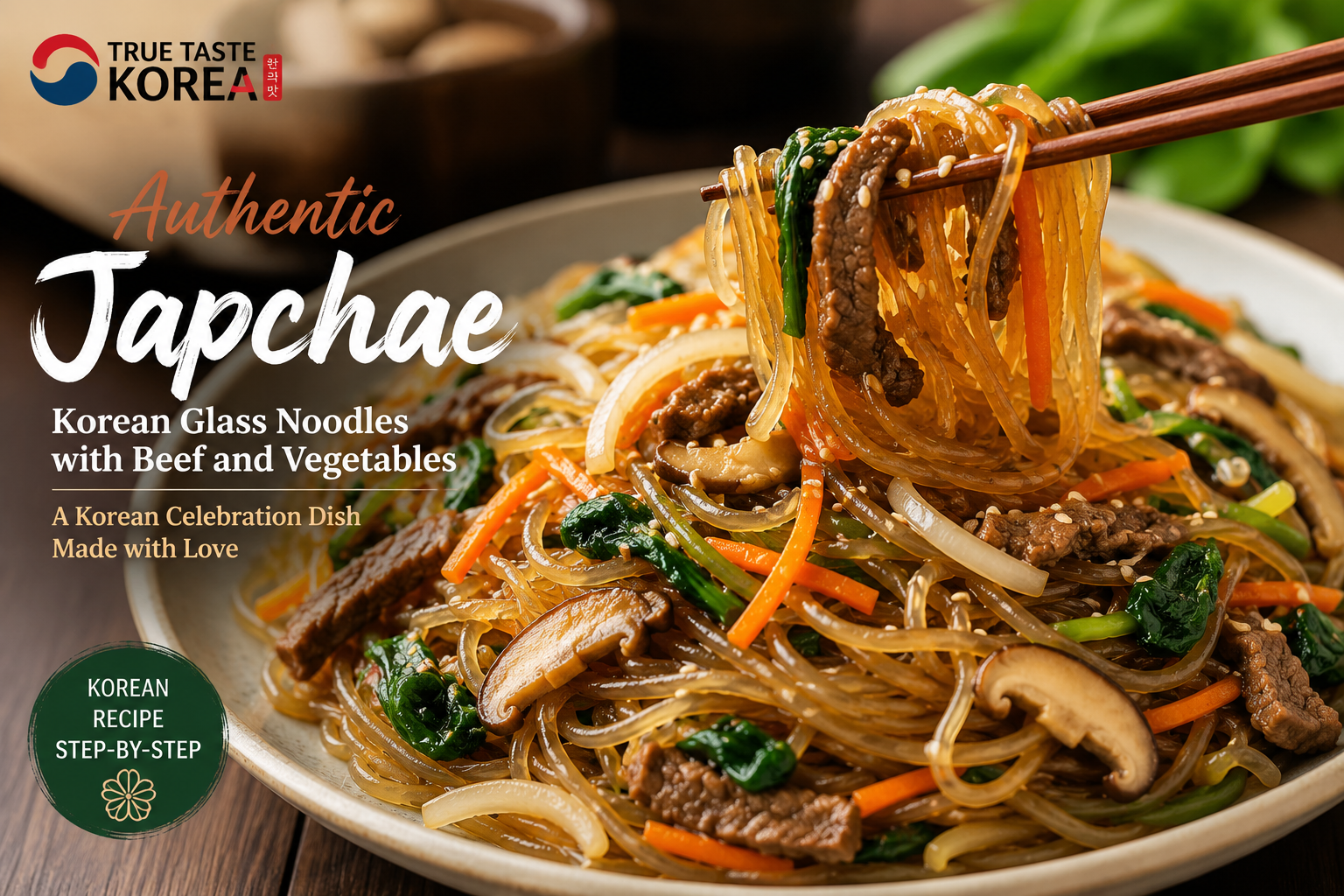
For many Koreans, japchae is more than a noodle dish.
It is a food connected to happy memories.
Growing up in Korea, when there was something to celebrate or good news in the family, mothers would often prepare a large plate of japchae filled with beef and colorful vegetables.
Birthdays, holidays, family gatherings, and other special occasions often meant one thing: the familiar smell of sesame oil, soy sauce, stir-fried vegetables, and freshly cooked japchae coming from the kitchen.
That is why japchae can bring back memories of family, celebration, and a mother’s home cooking.
Today, let’s make an authentic Korean-style japchae with chewy glass noodles, beef, mushrooms, spinach, carrots, and onions.
What Is Japchae?
Japchae (잡채) is one of Korea’s best-known noodle dishes.
Modern japchae is typically made with dangmyeon, Korean glass noodles traditionally made from sweet potato starch.
The noodles are cooked and seasoned with soy sauce, sesame oil, and a touch of sweetness, then combined with beef and a variety of vegetables.
The result is a dish that is simultaneously:
- chewy
- savory
- slightly sweet
- nutty from sesame oil
- colorful
- surprisingly filling
Although japchae is often served as banchan (Korean side dish), it can easily become the centerpiece of a meal.
Why Is Japchae a Celebration Food in Korea?
For many Korean families, japchae traditionally appears when there is something worth celebrating.
You may see a large plate of japchae at a birthday table, holiday gathering, family celebration, or special meal for guests.
For many Koreans who grew up eating homemade japchae, the memory is particularly associated with mothers preparing it in the kitchen.
And when it was a special occasion, there would often be beef in the japchae, making an already colorful dish feel even more generous.
It wasn’t simply something you ate because you were hungry.
Japchae was something your mother made when something good happened.
That emotional connection is one reason japchae remains such a familiar celebration food in Korean homes.
Japchae Wasn’t Originally a Glass Noodle Dish
Here is something many international fans of Korean food may not know.
The earliest form of japchae did not contain the glass noodles that define the dish today.
The dish has a history stretching back to Korea’s Joseon period, while sweet potato starch noodles became part of modern japchae much later.
Over time, dangmyeon became the defining ingredient, transforming japchae into the dish most Koreans recognize today.
The name itself is interesting:
Jap (잡) can refer to mixed or assorted ingredients, while chae (채) refers to vegetables.
That history makes sense when you look at a plate of japchae. Rather than being about one ingredient, the dish is about bringing many different ingredients together.
Why Japchae Is So Satisfying
One of japchae’s greatest strengths is how much goes into a single dish.
A traditional homemade version may contain:
sweet potato glass noodles + beef + spinach + carrots + onions + mushrooms
Each ingredient contributes something different.
The noodles provide their characteristic chewy texture. Beef adds richness and protein. Mushrooms add umami. Spinach, carrots, and onions add different flavors, textures, and colors.
Soy sauce, sesame oil, garlic, and sesame seeds bring everything together.
This is why japchae is one of the more satisfying side dishes on a Korean table.
Some Koreans will even eat a generous serving of japchae without a separate bowl of rice, particularly when they want a lighter-feeling meal.
However, don’t mistake that for meaning japchae is automatically a low-calorie diet food.
Dangmyeon is primarily a source of carbohydrates, and traditional japchae also contains sesame oil and some sugar. Portion size and the balance of noodles, meat, and vegetables still matter.
Authentic Korean Beef Japchae Recipe
Servings
4–5
Preparation Time
About 25 minutes
Cooking Time
About 25 minutes
Ingredients
Main Ingredients
- 250 g Korean sweet potato glass noodles (dangmyeon)
- 150 g beef, thinly sliced
- 150 g spinach
- 1 medium carrot
- 1 medium onion
- 100 g shiitake mushrooms or other mushrooms
- 2 green onions
- 1 tablespoon cooking oil
- Sesame seeds for garnish
Beef Marinade
- 1 tablespoon soy sauce
- 1 teaspoon sugar
- 1 teaspoon sesame oil
- 1 teaspoon minced garlic
- Black pepper to taste
Japchae Seasoning
- 4 tablespoons soy sauce
- 2 tablespoons sugar
- 2 tablespoons sesame oil
- 1 tablespoon minced garlic
You can adjust the sweetness and saltiness slightly according to taste.
Step 1. Prepare the Beef
Thinly slice the beef.
Mix it with soy sauce, sugar, sesame oil, minced garlic, and a little black pepper.
Let it marinate for about 15–20 minutes while preparing the other ingredients.
Thinly sliced beef cooks quickly and mixes more naturally with the noodles and vegetables.
Step 2. Prepare the Vegetables
Slice the carrot, onion, and mushrooms into thin strips.
Keeping the vegetables relatively similar in size makes the finished japchae easier to eat and gives it the colorful appearance associated with traditional Korean japchae.
Wash the spinach thoroughly.
Blanch it briefly in boiling water, then immediately cool it in cold water.
Gently squeeze out excess moisture.
Season lightly with a little salt and sesame oil.
Step 3. Cook the Vegetables Separately
This is one of the secrets to really good japchae.
Instead of throwing every vegetable into the pan at once, cook the ingredients separately or in small groups.
Lightly stir-fry the onions.
Remove them.
Stir-fry the carrots until just tender.
Remove them.
Then cook the mushrooms.
Finally, stir-fry the marinated beef until cooked through.
Why bother?
Because every ingredient has a different cooking time.
Cooking them separately helps preserve their individual texture, color, and flavor.
This extra step is one of the differences between ordinary japchae and really good homemade japchae.
Step 4. Cook the Dangmyeon
Bring a large pot of water to a boil.
Add the sweet potato glass noodles and cook according to the package directions. Cooking times can vary depending on the brand and thickness of the noodles.
Drain thoroughly.
If the noodles are extremely long, cut them a few times with kitchen scissors so the finished japchae is easier to eat.
Do not overcook the noodles.
Good japchae should have a pleasantly chewy and springy texture, rather than becoming overly soft or mushy.
Step 5. Season the Noodles
While the noodles are still warm, add the japchae seasoning:
- soy sauce
- sugar
- sesame oil
- minced garlic
Mix thoroughly so the noodles absorb the seasoning evenly.
The warm noodles take on the flavor particularly well.
Step 6. Combine Everything
Now comes the best part.
Place the seasoned noodles in a large bowl or pan.
Add the cooked beef, onions, carrots, mushrooms, spinach, and green onions.
Gently toss everything together.
Taste and adjust with a little additional soy sauce or sesame oil if necessary.
Finish with sesame seeds.
You should now have a glossy, colorful plate of authentic Korean japchae.
The Secret to Better Japchae
There are several small details that make a big difference.
Don’t use too many noodles.
A common mistake is making japchae mostly noodles with a few vegetables scattered throughout.
Good Korean homemade japchae should feel generous.
There should be plenty of beef, mushrooms, spinach, carrots, and onions mixed throughout the noodles.
Don’t overcook the dangmyeon.
The chewy texture of sweet potato noodles is one of the pleasures of japchae.
Sesame oil goes a long way.
Sesame oil gives japchae its unmistakable aroma, but adding too much can overpower the other ingredients.
Cook vegetables according to their needs.
Cooking everything together may be faster, but separately cooked vegetables generally give japchae better color and texture.
Can You Make Japchae Without Beef?
Absolutely.
Beef is common in celebratory Korean-style japchae, but it isn’t essential.
You can leave it out and increase the amount of mushrooms and vegetables for a vegetarian version.
For a fully vegan japchae, make sure all sauces and seasonings you use are vegan-friendly.
Mushrooms are particularly useful because they provide additional savory flavor.
Can Japchae Be a Complete Meal?
It can.
In Korea, japchae is commonly served as banchan alongside rice and other dishes.
But because it contains noodles, vegetables, and often meat, a generous plate can be filling enough that some people eat it without rice.
If you want to make it more meal-like, increase the proportion of vegetables and protein rather than simply adding more noodles.
How to Store Leftover Japchae
Japchae can be refrigerated in an airtight container.
For the best texture, try to eat leftovers within a few days.
The noodles become firmer when refrigerated, so cold japchae doesn’t have quite the same texture as freshly prepared japchae.
Fortunately, it reheats well.
The Best Way to Reheat Japchae
Put the japchae into a frying pan over medium-low heat.
Add a very small amount of water if the noodles have become dry and gently stir-fry until they become soft and glossy again.
You can finish with a tiny amount of sesame oil.
This usually restores the texture better than eating it straight from the refrigerator.
Frequently Asked Questions About Japchae
What are japchae noodles made from?
Traditional Korean dangmyeon used for japchae are generally made from sweet potato starch.
This gives them their translucent appearance and characteristic chewy texture.
Is japchae spicy?
Usually not.
Traditional japchae is savory and slightly sweet rather than spicy, making it one of the more approachable Korean dishes for people who aren’t comfortable with spicy food.
Is japchae gluten-free?
The noodles themselves are typically made from sweet potato starch, but regular soy sauce commonly contains wheat.
Anyone who needs a gluten-free dish should check every ingredient carefully and use an appropriate gluten-free soy sauce.
Can I make japchae ahead of time?
Yes.
That’s another reason japchae works well for parties and family gatherings.
Prepare it ahead, refrigerate it, and gently reheat it before serving.
More Than Korean Glass Noodles
Calling japchae simply “Korean glass noodles” doesn’t quite explain what the dish means in Korea.
For many Koreans, japchae brings back a particular kind of memory.
A birthday.
A holiday.
Relatives gathering around the table.
Good news in the family.
And a mother in the kitchen preparing a large plate of japchae with beef and colorful vegetables.
The combination of chewy dangmyeon, savory beef, colorful vegetables, soy sauce, and fragrant sesame oil makes it delicious.
But the memories surrounding it are what make japchae special.
Sometimes food isn’t just about what is on the plate. It is about remembering who prepared it, and why everyone was gathered around the table in the first place.
That is the story behind Korean japchae.