Explore Chinese and Hong Kong cinema, TV dramas, and entertainment through in-depth analysis of endings, character motivations, hidden meanings, and fan discussions. From classic Hong Kong action films to modern Chinese streaming dramas, discover the stories behind unforgettable characters and scenes.

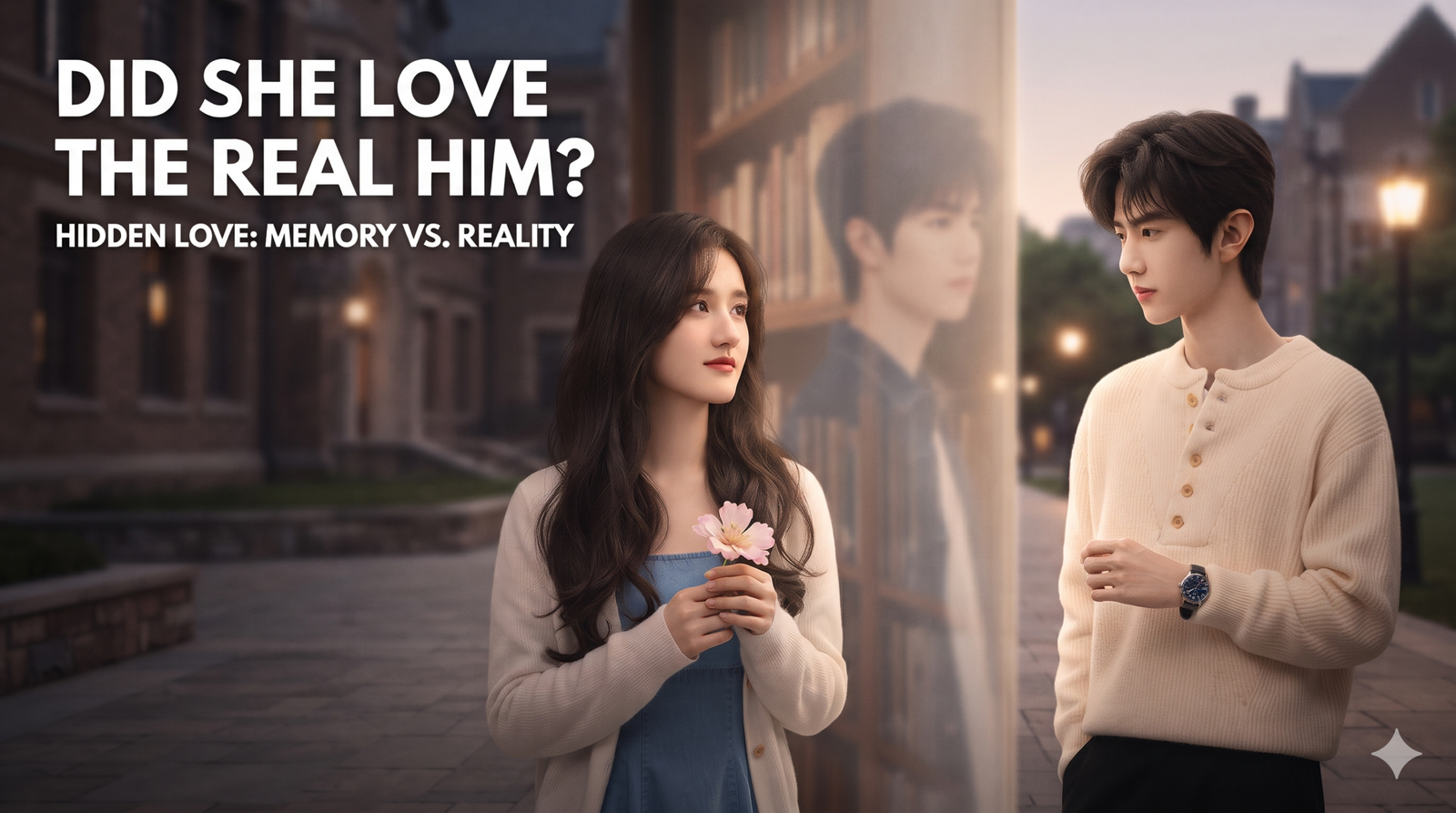
  • Hidden Love: Did Sang Zhi Fall in Love With Duan Jiaxuโ€”or With the Man She Created in Her Imagination?

    Hidden Love: Did Sang Zhi Fall in Love With Duan Jiaxuโ€”or With the Man She Created in Her Imagination?

    TTK Original โ€” Beyond the Headlines

    Spoiler Warning: This article discusses major character developments and the ending of the 2023 Chinese drama Hidden Love.

    A girl secretly loves a young man for years.

    She remembers his kindness, holds on to small moments, and quietly builds a future around someone who may not even realize how important he has become to her.

    At first glance, Hidden Love appears to be a familiar first-love story. Sang Zhi develops feelings for Duan Jiaxu, her older brother’s friend. Their paths separate, time passes, and they eventually meet again as adults. What begins as an innocent crush gradually develops into a relationship.

    But there is a more complicated question beneath the romance:

    Did Sang Zhi truly fall in love with Duan Jiaxu, or did she first fall in love with the version of him that existed in her memories?

    This question changes how we understand the entire drama.

    Because remembering someone for years does not necessarily mean knowing them. Sometimes, the person we carry in our hearts is partly real and partly constructed from everything we wished they could be.

    Hidden Love, starring Zhao Lusi and Chen Zheyuan, becomes more interesting when viewed through this psychological distinction. Its story is not simply about waiting for love. It is about discovering whether a feeling formed in childhood can survive contact with an actual adult relationship.

    1. The First Love Was Realโ€”but How Much Did Sang Zhi Actually Know?

    Sang Zhi’s initial attraction to Duan Jiaxu begins through ordinary moments.

    He is kind to her. He treats her more gently than her older brother sometimes does. He pays attention when she needs help and makes her feel that she matters.

    For a young girl, these experiences can carry enormous emotional weight.

    The important distinction is that Sang Zhi does not initially know Duan Jiaxu as a complete person. She sees him through a limited number of interactions, mostly from the perspective of someone younger who admires an older person.

    That does not make her feelings false.

    Childhood affection can be emotionally genuine even when it is based on incomplete knowledge. The feeling belongs to the person experiencing it, even if the understanding behind it is still developing.

    This is where the drama introduces an interesting psychological tension.

    Sang Zhi’s affection is real, but her image of Duan Jiaxu is necessarily incomplete. She remembers the kindness he showed her, yet she cannot fully understand his private struggles, responsibilities, disappointments, or emotional history.

    The audience should therefore distinguish between two things:

    • Loving the experience of being treated kindly.
    • Understanding and accepting the person who offered that kindness.

    The first can happen quickly. The second requires time.

    And that difference becomes central to the story.

    2. Memory Can Preserve Loveโ€”and Distort the Person We Remember

    One of the most interesting elements of Hidden Love is the way distance affects Sang Zhi’s feelings.

    After Duan Jiaxu leaves, their everyday contact disappears. They no longer share the small experiences that once allowed their relationship to develop naturally.

    Yet her feelings do not disappear at the same speed.

    This creates a curious situation: the relationship becomes less present in reality while remaining active in her imagination.

    Memory is selective.

    We rarely preserve every ordinary detail about someone. Instead, we remember particular gestures, conversations, expressions, and emotional moments. Over time, these fragments can become more significant than the person himself.

    Sang Zhi’s memories of Duan Jiaxu become part of her emotional world.

    But there is a potential danger here.

    When someone is absent, they cannot easily challenge the image we have created of them. We can remember their kindness without confronting their impatience. We can preserve their smile without witnessing their difficult decisions.

    The remembered person can gradually become more perfect than the real one.

    This is not necessarily a conscious process. It is one way human attachment can work.

    The drama’s title, Hidden Love, can therefore be understood in two ways. It describes a feeling kept secret from others, but it also suggests a private emotional world that Sang Zhi carries without fully knowing how much of it belongs to the real Duan Jiaxu.

    Her love survives distance, but survival alone does not prove that it has matured.

    3. Growing Up Changes the Meaning of the Same Person

    The reunion between Sang Zhi and Duan Jiaxu is more than a convenient romantic development.

    It creates an opportunity for their relationship to change its structure.

    When they first meet, Duan Jiaxu sees Sang Zhi as his friend’s younger sister. His kindness is protective rather than romantic. Their positions are unequal in terms of age, experience, and emotional understanding.

    This matters because the same gesture can mean different things to two people.

    For Sang Zhi, a small act of attention may feel unforgettable.

    For Duan Jiaxu, it may simply be the natural behavior of an older person looking after someone younger.

    Neither interpretation is automatically dishonest. They are experiencing the same interaction from different stages of life.

    When they meet again as adults, however, the conditions begin to change.

    Sang Zhi is no longer simply the younger girl he remembers. She has her own ambitions, choices, friendships, and understanding of relationships.

    Duan Jiaxu must also reconsider the person standing in front of him.

    The romantic possibility becomes meaningful only when he can recognize her as an individual rather than as an extension of his friendship with her brother.

    This is an important distinction.

    A childhood crush becoming a relationship is not simply a matter of one person finally noticing the other. It requires both people to encounter each other again, outside the roles that originally defined them.

    4. The Age Difference Is Less Interesting Than the Difference in Emotional Power

    The age gap in Hidden Love has attracted discussion among viewers, partly because the characters first meet when Sang Zhi is still young.

    But reducing the entire relationship to a numerical difference misses the more important question.

    At what point do two people become capable of meeting each other as equals?

    When Sang Zhi is younger, Duan Jiaxu has greater independence, experience, and control over the situation. He understands the world in ways she does not yet possess.

    That creates an imbalance even if his intentions are kind.

    A younger person may interpret attention as romantic significance, while an older person may understand it as ordinary affection or responsibility.

    The difference is not merely chronological. It is psychological.

    The drama’s adult reunion is therefore essential to its romantic logic. Duan Jiaxu does not simply continue a relationship that began years earlier. He has to reconsider Sang Zhi in the present.

    His hesitation also matters. He recognizes the complications of their history and the possibility that their feelings do not exist on equal terms.

    This is where the story becomes more thoughtful than a simple fantasy of waiting for someone to grow up.

    A relationship cannot become healthy merely because time has passed. It must also develop mutual recognition, clear intentions, and respect for each person’s independence.

    5. Is Sang Zhi Trying to Love Himโ€”or Trying to Become Worthy of Him?

    There is another dimension to Sang Zhi’s long journey.

    Her feelings are not limited to waiting. She also wants to grow, improve herself, and close the emotional distance between them.

    This can be interpreted as a positive expression of motivation.

    Someone we admire can inspire us to become more confident, capable, and independent. Love does not always weaken personal development. Sometimes it encourages it.

    But there is a difficult question hidden inside this process:

    Does Sang Zhi want to become a stronger person for herself, or does she believe she must become someone worthy of Duan Jiaxu?

    These motivations can coexist, but they are not identical.

    If personal growth depends entirely on winning another person’s affection, self-worth becomes vulnerable to that person’s response.

    If he reciprocates, the effort feels meaningful. If he does not, the person may begin to question whether she was ever good enough.

    The healthiest interpretation of Sang Zhi’s development is not that she successfully transforms herself into the woman Duan Jiaxu will love.

    It is that she gradually becomes someone capable of making her own emotional choices.

    Her feelings may have started with admiration, but her maturity must eventually come from recognizing her own value.

    That distinction gives her character a more independent meaning beyond the romantic outcome.

    6. Duan Jiaxu Is Not Just a Perfect Male Lead: He Is a Person Carrying Unresolved Pain

    Romance dramas often make the male lead attractive through a combination of kindness, emotional restraint, and protective behavior.

    Duan Jiaxu initially fits that image.

    But his personal history complicates the role.

    He carries burdens connected to his family and past experiences. His emotional difficulties affect how he sees himself and what he believes he can offer another person.

    This makes him more than an idealized romantic figure.

    It also introduces a potential problem in the relationship.

    When someone has spent years carrying guilt or responsibility, being loved can feel unfamiliar. They may struggle to believe they deserve affection, or they may become uncomfortable with the idea that another person is investing emotionally in them.

    Duan Jiaxu’s hesitation can be understood through this lens.

    However, his pain should not automatically excuse every decision he makes.

    A person’s difficult past can explain their behavior without removing their responsibility for it.

    This is an important standard for reading romantic relationships.

    We can sympathize with Duan Jiaxu without treating him as someone who must be rescued. We can appreciate Sang Zhi’s compassion without suggesting that her purpose is to repair another person’s life.

    The relationship becomes healthier when support moves in both directions and neither person is reduced to the role of healer or patient.

    7. When Does Protection Become an Equal Relationship?

    The early relationship between the characters is built partly on protection.

    Duan Jiaxu helps Sang Zhi when she is younger. His attention gives her a sense of security, and this becomes one of the foundations of her affection.

    But protection is not the same as partnership.

    A protective relationship often has a clear direction: one person has more experience and provides guidance, while the other receives it.

    An equal relationship requires something different.

    Both people must be able to express their needs, disagree, make decisions, and accept responsibility.

    This is why the transition from childhood admiration to adult romance is so important.

    If Sang Zhi remained only the grateful younger girl, the relationship would never fully escape its original imbalance.

    She needs to become a person who can stand beside Duan Jiaxu rather than simply look up to him.

    Likewise, he must recognize that caring for her does not mean deciding what is best for her.

    The deeper romantic achievement of the drama is not that a protective older man finally accepts the affection of a younger woman.

    It is that the relationship has the possibility of moving beyond protection into mutual recognition.

    That is a much stronger foundation for love.

    8. The Most Important Question: Can Love Survive After the Ideal Image Disappears?

    The central tension of Hidden Love is not whether Sang Zhi can finally confess her feelings.

    It is whether those feelings can survive when Duan Jiaxu becomes more than the person she remembers.

    Real relationships introduce things that memories do not.

    There are disagreements, inconvenient habits, emotional limitations, different expectations, and moments when the other person cannot provide the comfort we want.

    An idealized person is easy to love because the imagination can fill in every missing detail.

    A real person is more difficult because reality refuses to follow our preferred story.

    This is the point at which romantic attachment must become something more mature.

    Sang Zhi has to recognize Duan Jiaxu as a person with weaknesses and unresolved problems, not simply the kind older man who once made her feel special.

    Duan Jiaxu must also recognize Sang Zhi as an independent adult, not merely someone who has admired him for years.

    Their relationship can succeed only if both accept the reality that exists outside their memories.

    The drama’s emotional resolution is therefore not simply a reward for patience.

    It is a test of whether a feeling that began in imagination can become a relationship grounded in reality.

    9. Is the Happy Ending a Victory for First Loveโ€”or for Emotional Growth?

    The ending of Hidden Love gives viewers the romantic satisfaction they have been waiting for.

    But it is worth asking what actually makes that ending meaningful.

    If the message were simply that waiting long enough guarantees love, the story would offer a rather limited view of relationships.

    Real life does not work that way. Years of affection do not create an obligation for another person to reciprocate.

    The stronger interpretation is that time gives both characters an opportunity to change.

    Sang Zhi develops beyond the younger girl who once admired her brother’s friend. Duan Jiaxu gradually confronts the burdens that have shaped his view of himself and his future.

    Their eventual relationship becomes possible not because one person waited perfectly, but because both become capable of meeting each other differently.

    This does not mean every problem disappears.

    A happy ending in fiction cannot prove that a relationship will remain healthy forever. It can only show that the characters have reached a point where choosing each other becomes possible.

    That is a more realistic and meaningful form of romantic resolution.

    10. What Hidden Love Understands About the Difference Between Loving and Knowing

    The most revealing idea in Hidden Love is also the simplest:

    We can love the memory of someone long before we understand the person.

    Sang Zhi’s story begins with admiration, develops through distance, and becomes more complicated through reunion.

    Her feelings are not meaningless because they began when she was young. But neither should their duration be treated as proof of perfect understanding.

    The real transformation happens when the remembered image must make room for the actual person.

    That is the difference between a private fantasy and a shared relationship.

    Duan Jiaxu must become more than the kind man Sang Zhi remembers. Sang Zhi must become more than the younger girl he once protected.

    Only then can their connection move beyond the emotional roles that first brought them together.

    And perhaps this is why the drama resonates with so many viewers.

    Many people have experienced a version of this feeling: remembering someone from a particular period of life, wondering what might have happened if circumstances had been different, or discovering that the person they once admired has changed.

    Sometimes the person we miss is not exactly the person who exists today.

    Sometimes we are also missing the version of ourselves who first fell in love.

    Final Verdict: The Real Love Story Begins When the Fantasy Ends

    Hidden Love may look like a sweet story about a secret crush that finally becomes mutual.

    But its deeper emotional question is more demanding.

    Can a feeling built through memories, distance, and idealization become a genuine partnership?

    Sang Zhi’s journey suggests that the answer depends on growth.

    Her first love gives her a direction, but it cannot determine her entire identity. Duan Jiaxu’s kindness gives her something to remember, but it does not automatically make him the perfect person she imagines.

    Their relationship becomes meaningful when both move beyond those original impressions.

    The most important achievement is not that Sang Zhi finally gets the man she has loved for years.

    It is that the two finally have the chance to know each other as they really are.

    Because the person we imagine may be the reason love beginsโ€”but the person who actually exists is the one we must learn to love.
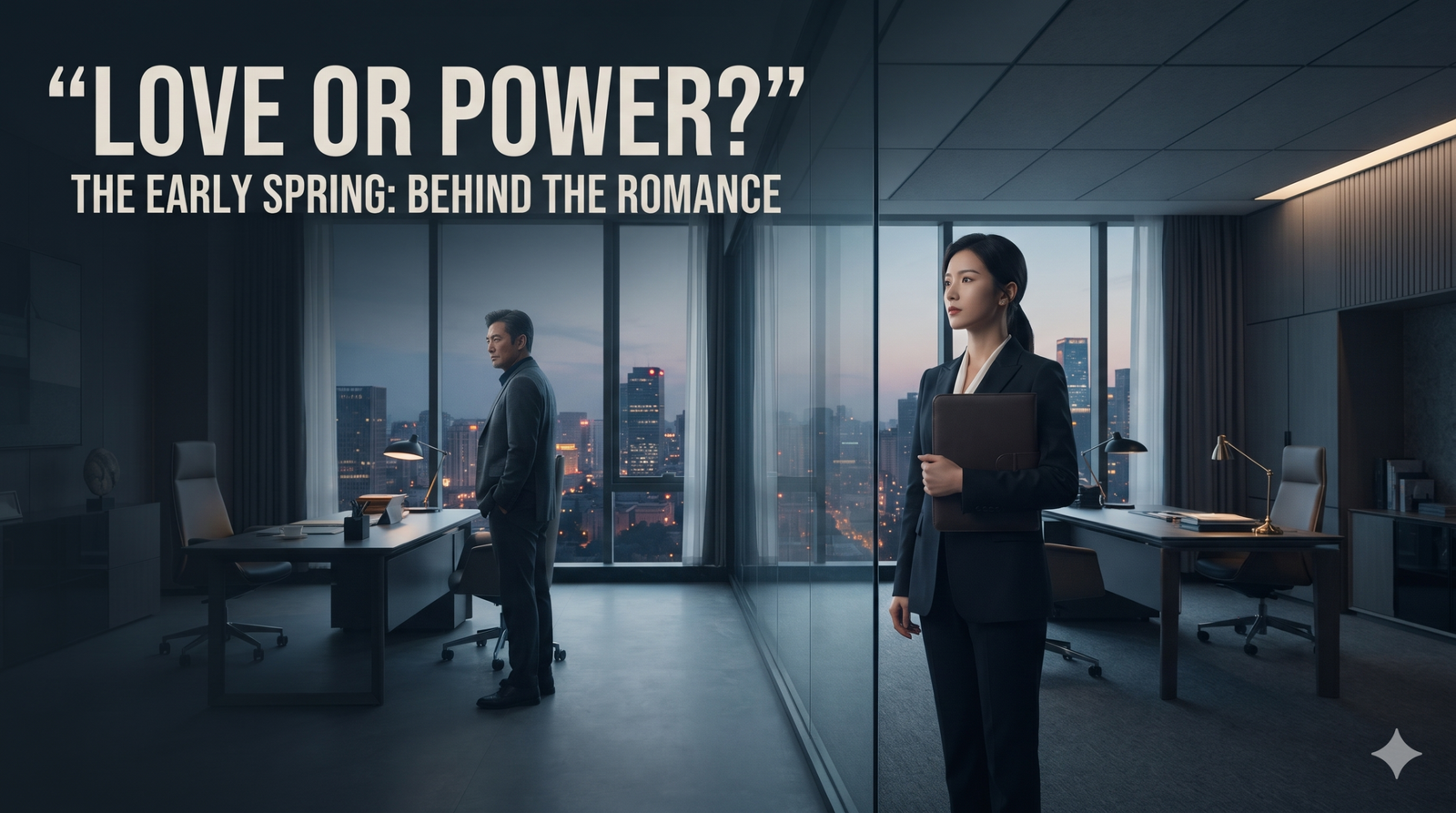
  • The Early Spring: Is It Really Love, or Has Workplace Power Been Disguised as Romance?

    The Early Spring: Is It Really Love, or Has Workplace Power Been Disguised as Romance?

    A demanding boss. A young employee trying to prove herself. A relationship that develops behind closed doors. Two people who appear to understand each other, yet struggle to stand on equal ground.

    At first glance, The Early Spring (ๆ—ฉๆ˜ฅๆ™ดๆœ—) looks like a familiar workplace romance. Its appeal comes from the emotional tension between Shang Zhitao, a young woman entering the advertising industry, and Luan Nian, a talented but difficult creative director.

    But beneath the romantic atmosphere lies a more uncomfortable question:

    When a relationship begins in a workplace where one person has considerably more power than the other, can we really separate love from authority?

    This question becomes particularly important when we consider the differences between the original novel and its television adaptation.

    The drama, starring Jing Boran and Sun Qian, premiered on Youku on August 26, 2026, and was also made available internationally through Netflix. Adapted from the novel by Gu Niang Bie Ku, the 24-episode series changed important elements of the original relationship and softened aspects of its male protagonist. Those decisions helped create a more conventional television romance, but they also generated disagreement among viewers. [Sources: Gamersky; Wen Wei Po]

    Rather than treating these disagreements as a simple argument about whether the drama is good or bad, it is worth asking what they reveal about the way contemporary romantic dramas portray ambition, gender, workplace authority, and emotional dependence.

    1. The Romance Begins Before the Two Characters Stand on Equal Ground

    Shang Zhitao enters Beijing’s advertising industry with an ordinary educational background and a determination to build a career.

    Luan Nian, by contrast, is already an established creative professional. He possesses experience, influence, and authority within the workplace.

    This difference is not merely a detail about their personalities.

    It determines the conditions under which their relationship develops.

    When two people meet as equals, their attraction can be evaluated primarily through personal compatibility. They can disagree, walk away, or negotiate the relationship without one person having a direct professional advantage over the other.

    A workplace relationship is more complicated.

    One person may influence the other’s assignments, reputation, opportunities, and professional confidence. Even when no explicit threat is made, the existence of that authority can change how freely the less powerful person behaves.

    This creates a distinction that romantic dramas sometimes overlook:

    Being attracted to someone is not the same as having equal freedom within a relationship.

    Shang Zhitao may admire Luan Nian’s ability and intelligence. But admiration develops in an environment where his judgment also carries professional consequences.

    The audience therefore has two different relationships to evaluate: the emotional connection between the characters and the institutional structure surrounding them.

    A convincing analysis must examine both.

    2. Why Do Some Viewers Find a Difficult Man Attractive?

    Luan Nian belongs to a familiar romantic archetype: the exceptionally capable man who is emotionally guarded, verbally sharp, and difficult to approach.

    His coldness creates distance. His professional competence gives him authority. His occasional moments of vulnerability make that distance appear capable of disappearing.

    This combination can be dramatically effective.

    The audience is invited to interpret small changes in his behavior as meaningful emotional developments. A brief expression of concern may carry more weight because he rarely expresses affection openly.

    But there is a problem when the same behavior occurs in a workplace.

    A boss who criticizes an employee may be exercising professional judgment. A boss who humiliates or intimidates an employee may be creating a harmful working environment.

    Romantic storytelling can blur these distinctions by presenting harshness as evidence of hidden affection.

    That does not mean every difficult character is abusive or that every workplace romance is inherently unhealthy.

    It means the audience should ask what the character’s behavior actually does to the other person’s independence.

    Does his criticism help Shang Zhitao become more capable, or does it make her increasingly dependent on his approval?

    Does his emotional reserve represent a personality that she gradually understands, or does it force her to do all the emotional work?

    The difference is essential.

    A man does not become emotionally mature simply because a woman eventually discovers the reasons behind his difficult personality.

    Understanding someone’s behavior is not the same as excusing its consequences.

    3. The Most Important Adaptation Decision: The Novel and the Drama Do Not Tell Exactly the Same Relationship Story

    One reason The Early Spring generated such divided reactions is that the television adaptation significantly changed the original relationship.

    The novel’s relationship begins with a more unequal and complicated arrangement between the two protagonists. The television version reshapes that foundation into a secret workplace romance and makes Luan Nian more emotionally accessible.

    Chinese coverage of the adaptation controversy identifies this change as one of the central reasons some original readers felt the drama had lost the novel’s sharper emotional character. Other viewers welcomed the changes because they made the relationship easier to accept as a mainstream romance. [Sources: Sina; Wen Wei Po]

    This is more than a question of whether an adaptation is faithful.

    It concerns what happens when a story’s most uncomfortable elements are removed.

    An original novel can explore morally ambiguous relationships through internal thoughts, extended emotional conflict, and consequences that are difficult to present in a conventional television romance.

    A drama must make those relationships visible through dialogue, behavior, and dramatic situations.

    The adaptation therefore faces a choice.

    It can preserve the original discomfort and ask viewers to confront it. Or it can soften the relationship to create a more immediately appealing romantic experience.

    Neither approach is automatically wrong.

    However, changing the relationship also changes the question the audience is being asked to consider.

    The original story’s imbalance becomes less central, while the drama places greater emphasis on attraction, emotional reconciliation, and the possibility of mutual growth.

    The result may be more comfortable to watch, but comfort can come at the cost of complexity.

    4. When Does Professional Guidance Become Emotional Control?

    This is arguably the most important question raised by the drama.

    A talented supervisor can help a junior employee develop professionally. High standards, direct criticism, and demanding assignments are not necessarily signs of mistreatment.

    In fact, a workplace without meaningful standards can prevent employees from improving.

    But professional authority has limits.

    A supervisor should evaluate work according to professional criteria, not use personal feelings to determine an employee’s worth or opportunities.

    The distinction becomes especially important when romantic feelings enter the relationship.

    Imagine a situation in which an employee begins to interpret a supervisor’s attention as affection. The supervisor’s approval may then carry two meanings: professional recognition and emotional validation.

    That combination can make it difficult to identify where work ends and romance begins.

    A compliment may feel like a personal confession. A criticism may feel like rejection. A professional disagreement may become an emotional crisis.

    The employee may gradually begin measuring personal value through the supervisor’s reactions.

    This is not necessarily what happens in every relationship portrayed in the drama. It is the structural risk created by the relationship’s setting.

    A healthy romance requires the ability to disagree without fearing professional punishment.

    If one person cannot safely say no, the relationship is not operating on equal terms.

    That is why the workplace setting should not be treated as decorative background.

    It is part of the emotional conflict itself.

    5. Shang Zhitao’s Growth: Does She Become Successful Because of Love or Because of Her Own Ability?

    A romantic drama often presents personal transformation through the influence of another person.

    Someone enters our life, challenges our assumptions, and helps us discover abilities we did not know we possessed.

    There is nothing inherently wrong with this idea.

    People genuinely influence one another’s development.

    But the story becomes weaker when a woman’s professional growth appears to depend primarily on the attention of a powerful man.

    Shang Zhitao’s career deserves to be evaluated independently of her relationship with Luan Nian.

    She enters a competitive industry without the same advantages as established professionals. Her development should therefore involve learning how to understand the business, make decisions, handle pressure, build professional judgment, and establish her own reputation.

    Those achievements matter even if the romance disappears.

    This leads to a useful test for the drama:

    If Shang Zhitao were no longer romantically involved with Luan Nian, would she still possess the ability and confidence to succeed?

    If the answer is yes, her growth has an independent foundation.

    If the answer depends heavily on his recognition, the story risks confusing romantic validation with professional achievement.

    A woman’s development should not be measured by whether she eventually wins the affection of a powerful man.

    It should be measured by whether she becomes capable of making decisions without needing his permission.

    That is a much stronger definition of independence.

    6. Why Did the Adaptation Divide Original Readers and Drama Viewers?

    The disagreement surrounding The Early Spring is not simply a difference in taste.

    It reflects two different expectations of what a romantic story should accomplish.

    Some original readers valued the novel’s uncomfortable relationship dynamics and its portrayal of emotional imbalance. They felt that softening the male protagonist and changing the relationship’s foundation removed part of the story’s identity.

    Other viewers preferred the television version’s more accessible romance, the chemistry between the leads, and its visual presentation.

    The difference is visible in the reported Douban ratings.

    On September 11, the drama opened at 6.7, with approximately 39,600 users participating in the rating. More than half of the ratings were three stars or lower. Coverage also reported a substantial gap between the ratings from drama-focused viewers and those from original novel readers. [Source: Gamersky]

    This is an important signal, but it should not be interpreted as proof that one audience understood the story better.

    Original readers may be evaluating whether the adaptation preserved the emotional structure they valued.

    New viewers may be evaluating whether the drama works as an independent romantic series.

    These are different standards.

    A television adaptation can be successful as a new work while disappointing people who loved its source material.

    Conversely, a faithful adaptation can preserve difficult elements that make it less immediately comfortable for a wider audience.

    The interesting question is not which group is correct.

    It is why the adaptation’s changes altered the emotional experience so significantly.

    7. The Problem With Turning Workplace Conflict Into Romantic Chemistry

    One of the most persistent habits in romantic entertainment is the transformation of conflict into attraction.

    Two characters argue. One behaves coldly. The other refuses to surrender. Eventually, the tension becomes romantic.

    This formula works because conflict creates dramatic energy.

    But workplace conflict has consequences beyond emotional excitement.

    An employee who is repeatedly criticized may lose confidence. An individual whose professional opportunities depend on a supervisor may feel unable to challenge unfair decisions.

    These experiences are not automatically romantic simply because the characters are attractive or because the story eventually gives them a happy ending.

    A drama should be able to distinguish between a demanding professional environment and a damaging one.

    It should also recognize that affection does not retroactively make every previous action acceptable.

    This matters because viewers do not experience stories in isolation from their own lives.

    A young person entering the workforce may watch a romanticized supervisor and begin to interpret inappropriate personal attention as a sign of special affection.

    That does not mean entertainment must become a workplace training manual.

    It means that romantic storytelling becomes more interesting when it recognizes the consequences of the behavior it portrays.

    The strongest romantic conflict is not necessarily the one with the most arguments.

    It is the one in which both characters must confront the ways their behavior affects the other person’s freedom.

    8. Why the Male Character’s Redemption Cannot Be Completed by Love Alone

    Luan Nian’s development can be understood as a movement away from emotional defensiveness.

    He is a character whose professional ability does not automatically translate into healthy interpersonal behavior.

    That distinction is important.

    People can be extremely competent in one area of life while remaining immature in another.

    A successful professional may understand how to manage projects, solve problems, and make difficult decisions, yet struggle to recognize another person’s emotional boundaries.

    Romantic stories often use love as the solution to this problem.

    The difficult man meets the right woman, gradually opens his heart, and becomes kinder.

    But this explanation is incomplete.

    A person’s emotional development requires more than discovering someone worth loving.

    It requires recognizing the consequences of one’s actions, accepting responsibility, and changing behavior even when there is no immediate romantic reward.

    If Luan Nian becomes more considerate only because he fears losing Shang Zhitao, the change may be temporary.

    If he learns to respect her independence even when her decisions do not benefit him, that is a deeper transformation.

    The distinction separates romantic possession from emotional maturity.

    Love may motivate someone to change.

    But the person must still take responsibility for becoming different.

    9. The Career Question Is More Important Than the Happy Ending

    Romantic dramas frequently treat a relationship’s final reconciliation as the ultimate proof of success.

    Two people overcome misunderstandings, acknowledge their feelings, and choose to remain together.

    But in a workplace romance, there is another question.

    What happens to their professional lives after the emotional conflict is resolved?

    Can they work without allowing personal feelings to determine professional decisions?

    Can the less powerful partner establish an independent reputation?

    Can the more powerful partner recognize that love does not give him the right to influence every decision?

    These questions matter because a relationship does not exist outside the world in which its participants live.

    A couple may reconcile emotionally while leaving the underlying imbalance untouched.

    That would produce a romantic ending without necessarily producing a healthy relationship.

    The more convincing resolution is one in which both characters can stand independently.

    They should be able to choose each other without one person needing the other’s professional approval, financial security, or institutional protection.

    That is what makes equality meaningful.

    It is not simply a matter of having similar feelings.

    It is the ability to remain a complete individual within the relationship.

    10. What The Early Spring Reveals About Modern Romantic Dramas

    The controversy surrounding The Early Spring points toward a broader problem in contemporary romance storytelling.

    Audiences want emotional intensity, attractive characters, memorable dialogue, and the satisfaction of watching two people overcome obstacles.

    At the same time, viewers increasingly question the relationship structures that earlier romantic formulas often treated as harmless.

    A powerful man who is cruel to everyone but gentle toward one woman may once have been presented as an uncomplicated fantasy.

    Today, viewers may ask why his behavior toward everyone else is being ignored.

    A supervisor who controls an employee’s professional environment may once have been treated primarily as a romantic obstacle.

    Today, viewers may ask whether the employee can genuinely make an independent choice.

    These questions do not mean romantic fiction has lost its freedom.

    They mean the audience has developed additional ways of interpreting what it watches.

    The most interesting dramas will not necessarily avoid unequal relationships.

    They will understand that inequality creates consequences that cannot be resolved by attraction alone.

    The Early Spring is particularly useful for examining this issue because the differences between the novel and the adaptation make the storytelling choices visible.

    The controversy is not just about whether the drama changed too much.

    It is about what the drama chose to make more comfortable.

    Final Thought: Love Should Not Require Someone to Become Smaller

    There is a familiar fantasy in romantic storytelling: a difficult and powerful person becomes gentle because one special individual finally reaches their heart.

    It is emotionally satisfying.

    But it can also create a dangerous misunderstanding about relationships.

    The ability to endure someone’s harshness does not automatically prove the depth of one’s love.

    And changing someone through affection should not require sacrificing one’s own independence.

    Shang Zhitao’s most important achievement should not be that she becomes the woman Luan Nian finally chooses.

    It should be that she becomes someone who can make her own choices, build her own career, and decide what kind of relationship she wants.

    Likewise, Luan Nian’s most meaningful development should not be that he learns how to win her back.

    It should be that he learns to respect a person whose life does not belong to him.

    That is where the difference between romantic attraction and mature love becomes clear.

    The strongest relationship is not one in which one person finally gains the power to change the other. It is one in which neither person has to surrender their independence to remain together.

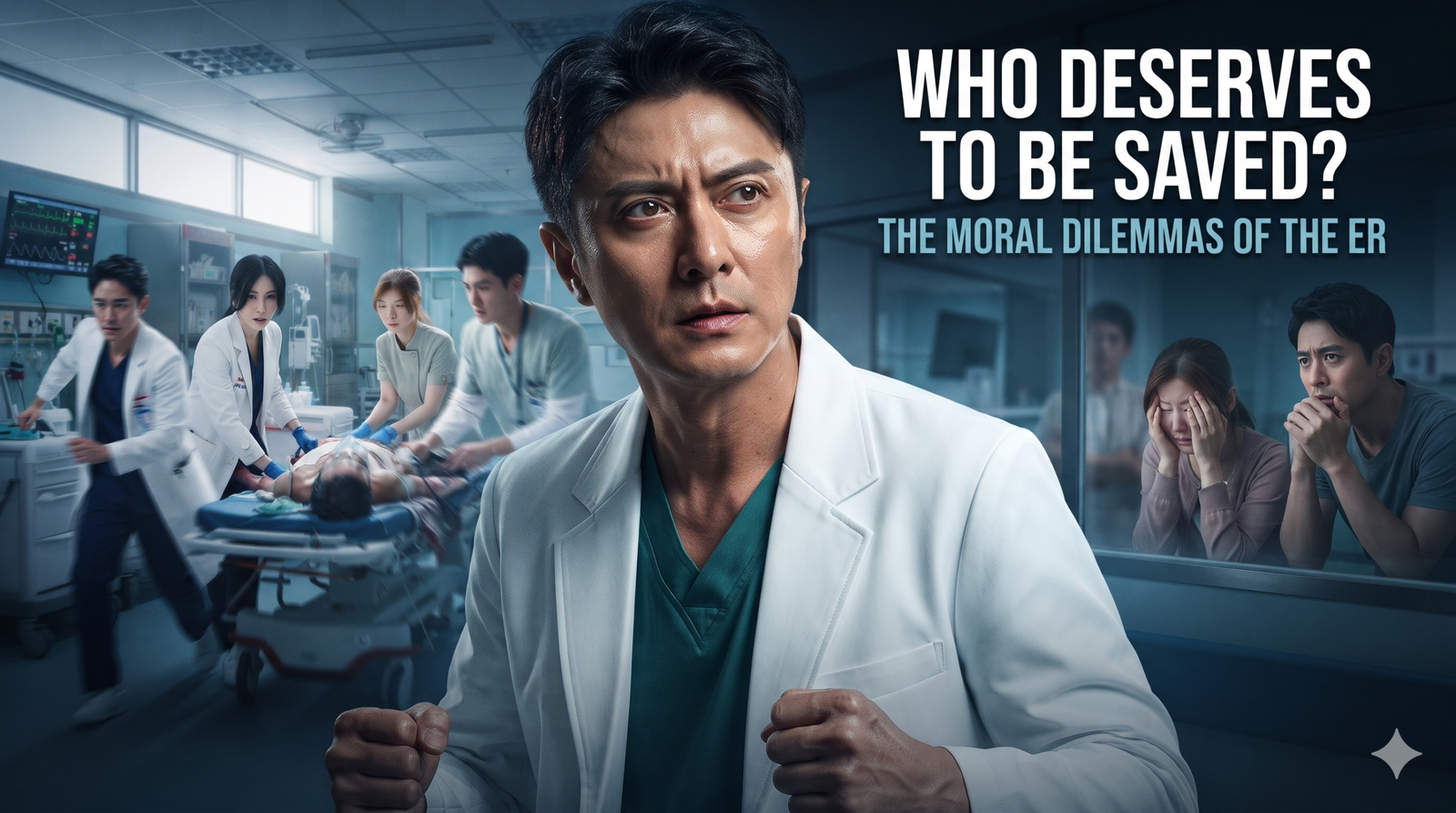
  • What Makes a Good Doctor When Every Decision Can Cost a Life? The Hidden Moral Conflict in Miracles of the ER

    What Makes a Good Doctor When Every Decision Can Cost a Life? The Hidden Moral Conflict in Miracles of the ER

    An emergency room is a place where decisions cannot always wait for perfect information.

    A doctor may have only minutes to understand a patient’s condition. A wrong decision can change a life, but refusing to make a decision can be just as dangerous.

    This is the world of Miracles of the ER, the Taiwanese medical drama on Netflix.

    The series follows a group of doctors working in the emergency department of Yang-Da University Hospital. Among them is Lin Geng-ming, an average-performing medical graduate who receives an unexpected opportunity from senior physician Chou Cheng-jun.

    Unlike his academically outstanding colleagues, Geng-ming does not begin his career with an impressive record. He must prove that he belongs in an environment where medical knowledge, quick judgment, and emotional control are constantly tested.

    However, the most interesting question in this drama is not whether an inexperienced doctor can become a brilliant physician.

    It is something more difficult:

    What makes someone a good doctor when every decision involves risks, and even the best intentions cannot guarantee a patient’s survival?

    Through medical emergencies, financial difficulties, malpractice disputes, and conflicts inside the hospital, Miracles of the ER explores the distance between being medically qualified and being morally responsible.

    1. Why Does the Senior Doctor Choose an Average Graduate?

    The decision to recruit Lin Geng-ming is one of the drama’s most important starting points.

    Geng-ming is not presented as the obvious choice for a demanding emergency department. His academic performance is ordinary compared with his highly accomplished colleagues.

    That makes Chou Cheng-jun’s decision unusual.

    In a competitive medical environment, academic results are often treated as evidence of ability. High grades suggest discipline, knowledge, and the capacity to understand complex information.

    But emergency medicine requires more than the ability to perform well in examinations.

    Doctors must communicate with patients, recognize incomplete information, respond to unexpected changes, and accept responsibility when their decisions produce difficult outcomes.

    A person can understand medical theory without knowing how to respond emotionally when a patient deteriorates in front of them.

    Geng-ming’s recruitment therefore raises an important distinction.

    Is the best doctor necessarily the person with the strongest academic record, or is medical excellence a combination of knowledge, judgment, humility, and the ability to learn from failure?

    The series does not suggest that medical competence is unimportant. In fact, Geng-ming’s early struggles make the opposite point. Good intentions cannot compensate for a lack of clinical ability.

    But academic excellence alone cannot guarantee that someone will become a good physician either.

    Chou’s decision can be interpreted as an attempt to introduce a different kind of potential into an established medical environment.

    He is not simply choosing a weaker candidate. He may be looking for qualities that traditional evaluations do not measure easily.

    2. The Most Dangerous Mistake Is Believing That Good Intentions Are Enough

    One of the most uncomfortable aspects of Geng-ming’s early experience is that his desire to help patients does not automatically make him capable of helping them.

    He enters the emergency department with enthusiasm, but his lack of experience becomes apparent when he faces real medical situations.

    The first episode establishes this problem through a difficult procedure involving a patient. Geng-ming struggles with a basic medical task, and the consequences are serious.

    This is important because the drama avoids an overly convenient version of the inexperienced hero.

    In many workplace dramas, a new employee’s sincerity and unusual perspective eventually compensate for their lack of experience.

    Emergency medicine is less forgiving.

    A doctor cannot simply tell a patient that they meant well.

    The patient needs an accurate assessment and appropriate treatment.

    This creates two responsibilities that must exist together.

    First, doctors must continue developing their knowledge and practical skills.

    Second, they must remain aware of the human consequences of their mistakes.

    A doctor who refuses to acknowledge mistakes cannot improve. But a doctor who repeatedly makes avoidable mistakes cannot rely on personal sincerity as an excuse.

    The distinction between intention and competence is one of the strongest themes in the series.

    It also makes Geng-ming’s development more meaningful than a conventional story about an underestimated employee proving everyone wrong.

    His real challenge is not winning recognition from his colleagues.

    It is becoming someone who can safely accept the responsibility that comes with treating another person’s life.

    3. A Hospital Does Not Always Reward the Doctor Who Saves the Patient

    One of the drama’s most interesting conflicts emerges when medical decisions collide with hospital authority.

    Chou Cheng-jun is portrayed as an experienced physician who is willing to take risks when he believes a patient’s condition demands immediate action.

    But the hospital does not necessarily view every risky decision in the same way.

    A medical procedure may be justified by the urgency of the situation, yet it can still create institutional and professional consequences.

    This is where the drama moves beyond the familiar image of a doctor fighting against death.

    A hospital is also an organization.

    It has administrators, professional hierarchies, financial responsibilities, performance evaluations, and rules designed to reduce risk.

    These systems are not automatically bad. Hospitals need procedures because medical decisions affect patients, staff, and public trust.

    The problem appears when protecting the organization becomes more important than examining whether a medical decision was right.

    A hospital may prefer a decision that is easier to defend administratively rather than one that requires difficult judgment.

    That creates a dangerous possibility: doctors may begin choosing actions according to how safely they can explain them later, rather than what the patient needs at that moment.

    The drama’s institutional conflicts invite viewers to consider a difficult question.

    If a doctor saves a patient’s life but violates an established procedure, should the hospital judge the result, the decision-making process, or both?

    There is no simple answer.

    A successful outcome does not automatically prove that a risky decision was correct. Equally, an unfavorable outcome does not automatically prove that the doctor acted irresponsibly.

    The quality of a medical decision must be examined in the context of what the physician knew, what alternatives were available, and how much time remained.

    That complexity makes the hospital’s internal conflicts more than ordinary workplace politics.

    4. When Medical Costs Become Another Emergency

    The fourth episode introduces a cancer patient who wants to leave the hospital because the financial burden of treatment has become difficult to bear.

    This storyline reveals a problem that medical dramas sometimes overlook.

    A hospital may have the knowledge and equipment to treat a patient, but access to treatment is not determined by medical technology alone.

    It is also affected by money.

    For a patient facing a serious illness, the decision to continue treatment may involve more than the possibility of survival.

    There may be concerns about family finances, lost income, debt, and the possibility of becoming a burden to relatives.

    From the doctor’s perspective, encouraging treatment may appear to be the obvious response.

    But from the patient’s perspective, continuing treatment may create another kind of suffering.

    This produces a difficult ethical distinction.

    Is a doctor responsible only for recommending the medically appropriate treatment, or should the doctor also consider whether the patient can realistically continue receiving it?

    The answer cannot be that doctors must personally solve every financial problem.

    Medical professionals cannot independently remove every economic barrier in society.

    However, recognizing that financial hardship affects medical decisions is part of understanding the patient as a whole person.

    The case also challenges the assumption that every patient who refuses or delays treatment has given up.

    Sometimes the obstacle is not a lack of hope.

    It is the cost of maintaining that hope.

    This is one of the drama’s most socially relevant questions because it connects the emergency department to the wider economic conditions in which patients live.

    5. Can a Doctor Be Good Without Becoming a Hero?

    Medical dramas often celebrate doctors who sacrifice everything for their patients.

    They stay beyond their shifts, challenge authority, and make extraordinary decisions when everyone else has lost hope.

    Such stories can be emotionally powerful, but they also create an unrealistic expectation.

    Doctors are human beings.

    They become exhausted. They make mistakes. They have families, financial concerns, personal fears, and limits to their knowledge.

    Miracles of the ER gives this human limitation particular importance through its senior medical characters.

    He Yu-hua, an experienced emergency physician, faces the emotional consequences of a medical dispute. Her professional identity is challenged by scrutiny and the possibility that others may judge her decisions differently from how she experienced them.

    Her situation reveals a painful contradiction.

    A doctor is expected to remain calm and confident when patients and families are frightened.

    But what happens when the doctor herself begins to question whether she is capable of doing the job?

    The white coat may represent professional authority to patients, but it does not remove uncertainty from the person wearing it.

    This is why a good doctor should not be defined as someone who never feels afraid or never questions a decision.

    A more realistic standard is whether that person continues to examine their actions, accepts responsibility, and seeks to improve.

    Professional strength is not the absence of vulnerability.

    It is the ability to continue acting responsibly while recognizing that vulnerability exists.

    6. The Medical Dispute: Who Has the Right to Judge a Doctor?

    The medical dispute involving Yu-hua introduces another important issue.

    A patient’s death or deterioration can create enormous pain for family members. They naturally want to understand what happened and whether something could have been done differently.

    Doctors, meanwhile, may believe they acted according to the best information available at the time.

    These perspectives can exist simultaneously.

    A family may experience a tragic outcome as evidence of failure. A physician may see the same event as an unsuccessful result despite a reasonable medical effort.

    The difficult part is determining what actually happened.

    Medical disputes require more than emotional certainty.

    They involve medical records, professional standards, expert assessments, and the details of the circumstances surrounding treatment.

    Yet the process can also be deeply personal for the doctor involved.

    Being judged after a difficult medical decision is not the same as discussing a mistake in an ordinary workplace.

    The doctor may be forced to revisit the moment when a patient was in danger and ask whether another decision could have changed the outcome.

    The series uses this conflict to raise a larger question about accountability.

    Doctors should not be protected from legitimate criticism simply because their profession is difficult.

    But neither should every tragic outcome automatically be treated as proof of negligence.

    A fair system must protect patients’ rights while also allowing medical professionals to make necessary decisions without being judged solely by outcomes they cannot completely control.

    The difference between accountability and automatic blame is essential.

    7. Why the Best Medical Researcher May Not Be the Best Doctor

    Another significant conflict in the series involves research, professional reputation, and hospital promotion.

    This introduces a different kind of institutional problem.

    Medical institutions need research. New treatments and scientific discoveries can improve patient care.

    Academic publications can also help doctors develop expertise and contribute to the wider medical community.

    But what happens when research achievements become the main measure of professional value?

    A physician may be highly productive academically without necessarily being the strongest clinician in an emergency department.

    Likewise, a doctor who spends years treating patients may produce fewer publications despite making an important contribution to everyday medical care.

    This creates a problem of measurement.

    Hospitals need standards for promotion and evaluation, but no single metric can capture every dimension of medical excellence.

    If research output becomes the dominant route to professional advancement, doctors may feel pressure to prioritize academic recognition over clinical responsibilities.

    That does not mean research is less important.

    It means the institution must distinguish between different forms of contribution.

    A doctor who discovers a better treatment and a doctor who applies medical knowledge effectively to save patients both serve important purposes.

    The drama’s internal power struggles invite viewers to question whether institutional success is always the same as medical success.

    A hospital can look impressive on paper while failing to recognize the people who perform its most essential daily work.

    8. The Emergency Room Reveals Inequality in Unexpected Ways

    The series also introduces patients whose circumstances make their treatment more complicated.

    Among them are a frightened teenage girl, a cancer patient facing financial pressure, and a migrant worker whose medical condition raises additional questions.

    These stories broaden the meaning of emergency medicine.

    A hospital receives people who do not share the same economic resources, family support, social position, or ability to explain their problems.

    Some patients can clearly describe their symptoms and demand attention.

    Others arrive frightened, isolated, or unable to communicate their needs effectively.

    A medical team must recognize that the urgency of a patient’s condition is not always reflected in how confidently that patient speaks.

    This is especially important when dealing with vulnerable people.

    A teenage patient may be unable to explain a dangerous family situation.

    A migrant worker may have reasons to fear authorities or avoid discussing personal circumstances.

    A financially struggling patient may conceal how difficult treatment has become.

    The emergency department is therefore not simply a place where doctors identify diseases.

    It is a place where social inequalities become visible through individual medical cases.

    The drama’s wider message is that patients do not enter the hospital as identical medical problems.

    They bring their entire lives with them.

    9. The Final Test: Can Doctors Keep Their Principles During a Crisis?

    The eighth episode places the medical team in the middle of a mass stabbing incident on a city bus.

    The emergency department must deal with a sudden influx of injured people, including the perpetrator.

    This situation creates a particularly difficult ethical test.

    When many injured patients arrive at once, doctors cannot treat everyone in the same way at the same time.

    They must assess the severity of injuries, identify who needs immediate intervention, and organize limited medical resources.

    This is the reality of triage.

    The principle is not that every patient is equally ill or that every patient can receive immediate attention.

    It is that medical priority must be determined according to clinical need rather than personal sympathy, anger, or social status.

    The arrival of the suspected attacker adds another layer.

    A doctor may feel anger toward someone accused of harming others.

    But the medical responsibility does not disappear because the patient is morally unpopular.

    This is one of the most difficult principles in medicine.

    A physician’s duty to provide necessary care cannot depend on whether the patient is liked, respected, or considered deserving.

    The final emergency therefore brings the series’ ethical questions together.

    Can doctors maintain professional standards when emotions are intense, resources are limited, and the people in front of them have radically different stories?

    The answer is not found in heroic speeches.

    It is found in the decisions they make under pressure.

    10. The Real Miracle Is Not Saving Every Patient

    The title Miracles of the ER may initially suggest extraordinary recoveries and dramatic medical victories.

    But the series offers a more complicated picture of what a miracle can mean.

    Doctors cannot save every patient.

    They cannot remove every financial obstacle, prevent every mistake, or repair every weakness in the medical system.

    They also cannot guarantee that their decisions will be understood by patients, families, administrators, or the public.

    If the standard of a good doctor is the ability to save everyone, then every physician is destined to fail.

    A more meaningful standard must consider how doctors respond to the limits of their profession.

    Do they continue learning after mistakes?

    Do they listen when patients cannot clearly express their needs?

    Do they recognize the difference between protecting a hospital and protecting its patients?

    Do they accept responsibility without pretending that every tragic outcome has a simple explanation?

    And can they continue treating people with dignity even when personal emotions make that difficult?

    These questions make the series more interesting than a conventional story about talented doctors competing for recognition.

    The medical procedures may create the immediate tension, but the moral choices give the stories their deeper meaning.

    Final Verdict: A Good Doctor Is Not Someone Who Never Fails

    Miracles of the ER presents an emergency department where medical knowledge, professional ambition, financial pressure, and institutional authority constantly collide.

    Its most important question is not whether a doctor can become a hero.

    It is whether a doctor can remain responsible when there is no perfect decision.

    Geng-ming must learn that compassion without competence is not enough.

    Yu-hua must confront the emotional cost of professional judgment.

    Chou must navigate the conflict between saving patients and working within an institution.

    Their experiences suggest that medicine is not simply the application of scientific knowledge.

    It is also a continuous negotiation between what doctors know, what they can do, what patients need, and what the system allows.

    The greatest mistake would be to expect doctors to become flawless heroes.

    The more important expectation is that they remain honest about their limitations, accountable for their decisions, and willing to keep improving.

    A good doctor is not someone who can save every life. A good doctor is someone who never stops taking responsibility for the lives placed in their hands.

    That may be the most meaningful miracle an emergency room can offer.

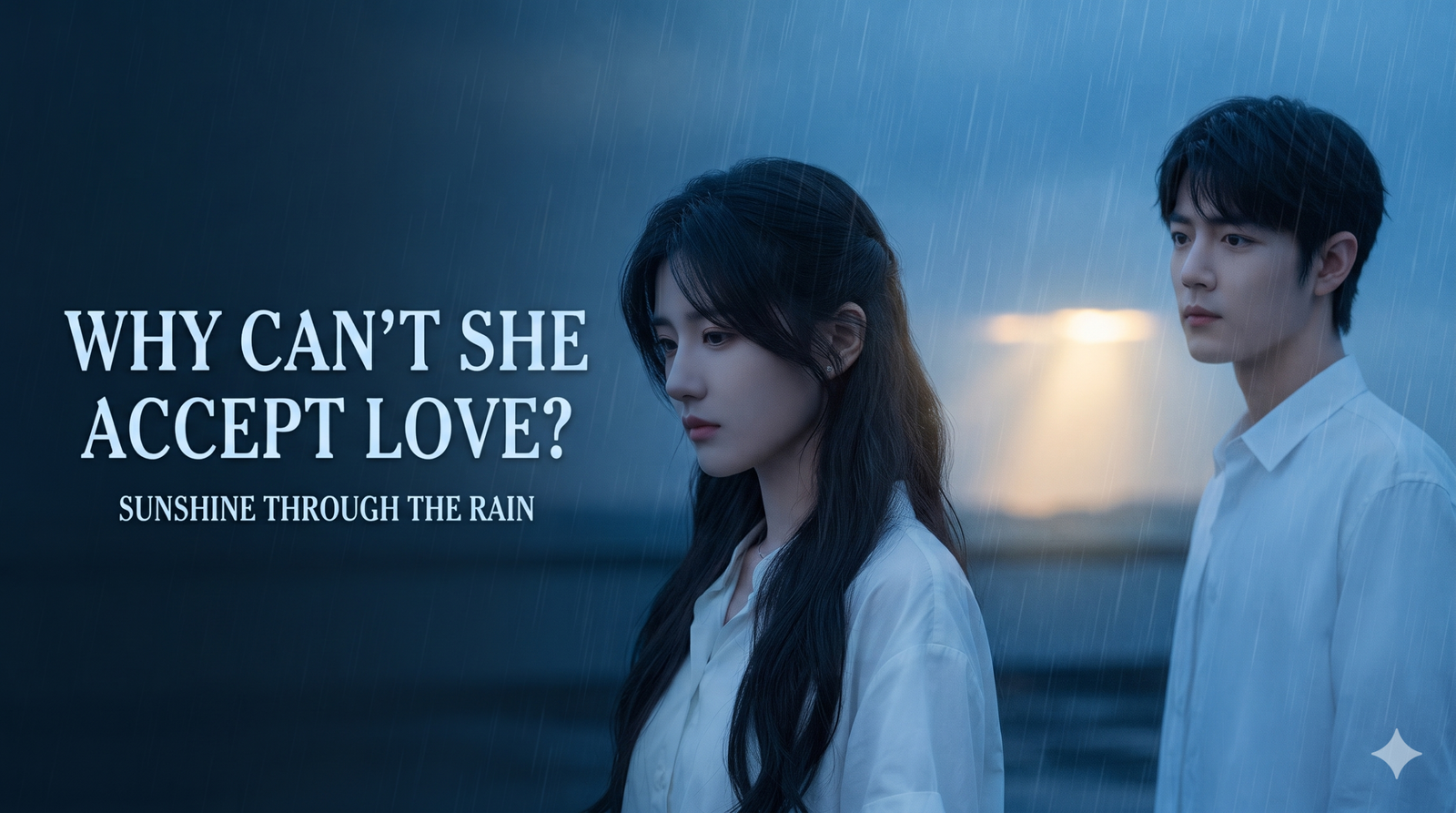
  • Sunshine Through the Rain: Why Is It So Hard for Zheng Yu to Accept Love?

    Sunshine Through the Rain: Why Is It So Hard for Zheng Yu to Accept Love?

    Some people push others away because they do not want to be loved.

    Others push people away because they have never learned how to believe that love can be given without a price.

    That distinction is at the emotional center of Sunshine Through the Rain (ไปŠๅคฉๆ˜ฏๅคช้˜ณ้›จ), the 2026 Chinese youth drama starring Yang Chaoyue as Zheng Yu and Dong Sicheng, also known as Winwin, as Chen Yanzhou.

    At first glance, the series appears to follow a familiar campus-romance structure. Two university students become academic rivals, clash over a scholarship, and gradually develop feelings for each other.

    But beneath that familiar framework is a more interesting question:

    What happens when survival has taught someone to become independent, but that same independence makes it difficult to accept affection?

    Zheng Yu’s struggle is not simply about finding someone who understands her. It is about learning whether she can allow another person to become part of a life she has spent so much energy trying to control.

    1. Zheng Yu’s Poverty Is More Than a Financial Problem

    Zheng Yu is a biology student carrying serious family responsibilities. Her mother’s medical expenses and the family’s financial difficulties force her to balance academic work with multiple part-time jobs.

    A scholarship is therefore not merely an academic achievement.

    It represents security, opportunity, and perhaps the possibility of escaping a life in which every unexpected expense can become a crisis.

    This changes the meaning of competition.

    For a student with financial support, losing a scholarship opportunity might be disappointing. For Zheng Yu, it can threaten the fragile structure holding her life together.

    That difference matters because people do not experience competition under equal conditions.

    When someone has enough resources, failure can be temporary. When someone is already struggling, failure can feel like a return to the beginning.

    Zheng Yu’s determination can therefore be understood as more than ambition. It is a form of protection.

    She cannot easily afford to become careless, depend on someone else, or take emotional risks that might interfere with her responsibilities.

    The drama’s financial background is important not because poverty automatically makes someone stronger, but because it helps explain why Zheng Yu has so little room to make mistakes.

    2. When Independence Becomes a Psychological Defense

    Independence is usually presented as a positive quality.

    A person who works hard, solves problems alone, and refuses to surrender deserves respect.

    But there is a hidden danger when independence becomes the only acceptable way to live.

    A person may gradually stop asking for help, even when help is available. They may feel uncomfortable receiving kindness because it creates an obligation they cannot repay.

    For someone in Zheng Yu’s position, accepting assistance can produce several uncomfortable questions:

    • Will this person expect something in return?
    • Will I become a burden?
    • What happens if I depend on them and they eventually leave?
    • Will accepting help make me appear weak?

    These questions are not necessarily conscious decisions. They can become habits developed through repeated experiences of insecurity.

    This is where the drama offers an interesting psychological possibility.

    Zheng Yu may not be rejecting affection itself. She may be rejecting the uncertainty that comes with allowing another person to influence her life.

    There is a meaningful difference between saying, “I do not need anyone,” and believing, “I cannot afford to need anyone.”

    The first can be a declaration of confidence.

    The second can be a survival strategy.

    3. Why Kindness Can Feel Like a Debt

    One of the most overlooked aspects of relationships involving financial inequality is the emotional weight of receiving help.

    Kindness is often portrayed as something simple. One person offers support, the other accepts it, and their relationship becomes closer.

    Real life is not always that straightforward.

    When someone has spent years managing difficulties alone, receiving help can create a sense of imbalance.

    The person receiving assistance may begin to wonder whether they now owe something emotionally.

    They might feel pressure to express gratitude, avoid disappointing the other person, or prove that they are not taking advantage of anyone.

    In this situation, even a sincere gesture can become uncomfortable.

    This is a particularly useful way to examine Zheng Yu’s relationship with Chen Yanzhou.

    Their connection begins within an environment of competition. They are not initially approaching each other as two people freely choosing companionship. They have practical reasons to remain cautious.

    That starting point matters.

    Competition gives Zheng Yu a clear role: she must perform, improve, and protect her opportunity.

    Intimacy is more complicated because it requires her to become vulnerable without knowing exactly what the other person will expect.

    The emotional challenge is therefore not simply whether she can fall in love.

    It is whether she can receive something without immediately feeling responsible for repaying it.

    4. Chen Yanzhou’s Pain Is Different From Zheng Yu’s

    Chen Yanzhou is not simply a wealthy or academically gifted rival who enters Zheng Yu’s life to solve her problems.

    He carries his own emotional history, particularly the loss of his older brother.

    That loss shapes his withdrawal from other people and gives his character a different kind of isolation.

    This distinction is important.

    Zheng Yu’s insecurity is closely connected to responsibility and financial survival. Chen Yanzhou’s emotional distance is connected to grief and the difficulty of living with an absence that cannot be repaired through hard work.

    Their circumstances should not be treated as identical.

    Financial insecurity and bereavement are different experiences. One involves the pressure of limited resources and uncertain stability; the other involves the permanent loss of someone important.

    Yet both can create a similar outward behavior: emotional withdrawal.

    One person may keep others away because dependence feels dangerous.

    Another may keep others away because emotional closeness reminds them of what they have lost.

    This creates an interesting foundation for their relationship.

    They may recognize loneliness in each other without experiencing it in the same way.

    That is potentially more meaningful than the familiar idea that two damaged people automatically heal one another.

    Understanding someone does not mean having experienced exactly the same pain.

    Sometimes it means recognizing that their silence has a reason.

    5. Why Their Academic Rivalry Matters to the Romance

    The scholarship competition is not just a convenient device for bringing the two leads together.

    It establishes a relationship in which both characters have something to lose.

    Zheng Yu cannot casually abandon her academic goals. Chen Yanzhou also has to confront the expectations and difficulties surrounding his return to university.

    Their initial rivalry gives them a reason to observe each other before they become emotionally close.

    That is an important structural choice.

    In many romance dramas, attraction arrives before the audience understands why the characters matter to each other.

    Here, academic competition creates opportunities for conflict, cooperation, and recognition.

    Zheng Yu can see Chen Yanzhou as an obstacle before she begins to see him as a person.

    Likewise, Chen Yanzhou has to look beyond her outward determination to understand the pressure behind it.

    Their relationship can develop through a gradual change in perception.

    The rival becomes a partner. The partner becomes someone whose opinion matters. Eventually, that person may become someone whose presence feels safe.

    The progression is emotionally more convincing when each stage changes how the characters understand one another.

    6. The Hidden Cost of Always Being Strong

    There is a popular idea in television dramas that hardship makes people stronger.

    It is an attractive message, but it is incomplete.

    Hardship can build determination. It can also create exhaustion, defensiveness, and an inability to relax.

    Someone who has been forced to remain strong for a long time may not know what to do when they finally encounter a situation in which they do not have to be strong.

    This is one of the most compelling ways to read Zheng Yu.

    Her ability to keep moving is admirable, but it should not automatically be interpreted as emotional health.

    A person can be capable and overwhelmed at the same time.

    A person can be independent and desperately need support.

    And someone can sincerely want a relationship while feeling frightened by the vulnerability it requires.

    If the drama continues to explore these contradictions rather than turning Zheng Yu’s struggles into a simple inspirational story, her character could become more memorable than the familiar hardworking heroine.

    The real test is whether the series allows her to remain complicated even as her circumstances improve.

    7. What Viewers Are Responding To โ€” and What May Divide Them

    Early online reactions suggest that the drama’s emotional atmosphere is one of its strongest attractions.

    In discussions on Reddit, viewers have praised the gradual character development, restrained performances, and the way Zheng Yu slowly builds a circle of support through friendships and relationships. Some have also highlighted the emotional importance of her roommates and the people who begin to stand beside her.

    One discussion attracted particularly positive reactions to the show’s storytelling and performances, while other viewers compared its atmosphere with emotionally driven youth dramas such as The First Frost. These are individual community reactions, not proof of universal agreement. <cite>ใ€turn364893reddit4ใ€‘ใ€turn364893reddit5ใ€‘ใ€turn364893reddit6ใ€‘ใ€turn364893reddit12ใ€‘</cite>

    There is also a reasonable criticism.

    A slow emotional drama can become repetitive if it keeps showing characters suffering without allowing their decisions to produce meaningful change.

    Some viewers have found the pacing too slow, while opinions about the performances and emotional intensity are not entirely uniform. <cite>ใ€turn364893search0ใ€‘ใ€turn364893reddit7ใ€‘</cite>

    This criticism raises an important question about the series.

    Does every quiet scene reveal something new about a character, or does the drama sometimes repeat the same emotional message?

    For a story built around gradual healing, patience is necessary. But patience alone does not guarantee depth.

    The characters must change in ways that viewers can actually recognize.

    8. The Real Meaning of a Sunshower

    The title Sunshine Through the Rain suggests a moment when sunlight appears while rain is still falling.

    It is a fitting metaphor for the emotional world of the series.

    A sunshower does not mean that the rain never existed. It does not mean the weather has completely changed.

    It means that light and rain can exist at the same time.

    That image offers a useful way to understand Zheng Yu and Chen Yanzhou.

    Their connection does not need to erase their financial difficulties, family responsibilities, or grief to become meaningful.

    A healthy relationship cannot undo every painful experience.

    What it can do is create a different way of facing those experiences.

    For Zheng Yu, that may mean discovering that accepting support does not automatically make her indebted or weak.

    For Chen Yanzhou, it may mean discovering that emotional closeness does not have to end in another loss.

    Neither lesson is simple.

    And neither character should be expected to change overnight simply because romance has entered the story.

    9. The Question That Makes This Drama More Than a Campus Romance

    The most interesting question in Sunshine Through the Rain is not whether Zheng Yu and Chen Yanzhou will become a couple.

    It is whether two people who have learned to protect themselves can gradually learn to trust someone else.

    That is a more difficult story to tell than a conventional rivals-to-lovers romance.

    It requires the drama to understand that love is not only about giving affection. It is also about allowing affection to reach someone who may not know how to receive it.

    Zheng Yu’s journey can be especially meaningful if the series recognizes that her independence deserves respect, even when it becomes a barrier to intimacy.

    She does not need to become helpless to become lovable.

    She does not need someone to rescue her in order to deserve companionship.

    And she should not have to abandon her ambition to make room for love.

    Perhaps the most meaningful form of growth for her is not learning to depend entirely on another person.

    It is learning that she can remain independent without having to face everything alone.

    That is the emotional possibility hidden beneath the rain.

    Final Thought

    Sunshine Through the Rain has the opportunity to explore a question that many romance dramas overlook: why can receiving love sometimes be harder than giving it?

    If Zheng Yu’s story continues to examine that question with honesty and restraint, the series may offer something more lasting than a familiar university romance.

    Because sometimes the person who needs love most is not the person asking for it.

    It is the person who has spent years convincing themselves that they must never need it.

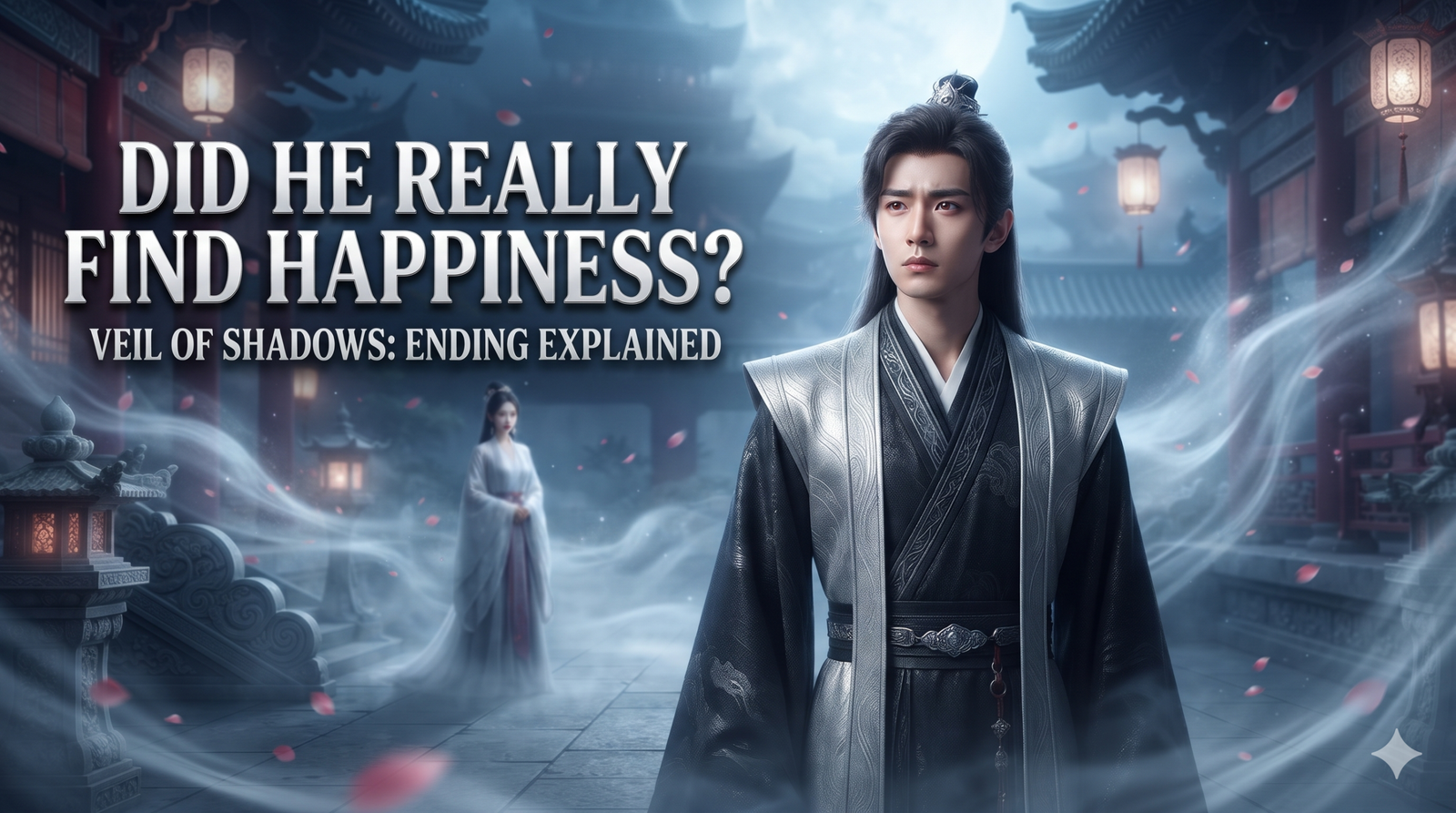
  • Veil of Shadows Ending Explained: Did Ji Ling Really Get His Happy Ending?

    Veil of Shadows Ending Explained: Did Ji Ling Really Get His Happy Ending?

    TTK Original โ€” Beyond the Headlines

    A fantasy drama can end with two characters meeting again and still leave viewers wondering whether they have actually been given a happy ending.

    That is the unusual emotional territory of Veil of Shadows (2026), the Chinese fantasy series starring Ju Jingyi, Tian Jiarui, Joseph Zeng, and Chen Duling. What begins as a story about fox spirits, demon hunters, and the pursuit of divine power gradually becomes something much more personal: a story about how far people will go to save someone they love, and what remains after those sacrifices have changed the world itself.

    The final scene gives viewers a reason to smile. Ji Ling and Lu Wuyi encounter each other again in an ordinary setting, apparently free from the supernatural conflicts that shaped their previous lives. Yet the reunion is not a simple restoration of everything they once had.

    They meet without the same history, responsibilities, or memories.

    So did Ji Ling really get his happy ending?

    The answer depends on what we believe a happy ending is supposed to preserve.

    1. The Ending That Looks Happy Until You Think About It

    The final episode changes the meaning of the entire story.

    The characters have spent much of the drama pursuing the Dragon Deity’s power, confronting hidden identities, and trying to prevent Jiu Ying from destroying the balance of their world. Their struggles eventually lead to a solution that cannot be achieved through another ordinary battle.

    The threat has become so deeply connected to the characters and their history that defeating the enemy in the present is no longer enough. The only way forward is to change the events that allowed the disaster to happen.

    That decision comes at a terrible cost.

    The timeline is disrupted, sacrifices are made, and the world is effectively given another beginning. In the new reality, Wu Shiguang occupies the position of the Dragon Deity. Wu Wangyan is alive again, although her memories of the previous events are unclear. Other characters who died during the struggle also appear to have another chance at life.

    Then comes the scene that matters most emotionally.

    Ji Ling and Lu Wuyi meet again in another version of the world. They are no longer surrounded by the duties, supernatural identities, and conflicts that defined their former existence.

    It is a beautiful image. But it also introduces a difficult question.

    If two people meet again but cannot remember everything they endured together, have they recovered their love, or have they simply been given the opportunity to begin a different one?

    The distinction matters. Reuniting is not necessarily the same as recovering what was lost.

    2. Ji Ling’s Greatest Sacrifice Was Not Simply His Life

    Ji Ling’s story is more complicated than that of a conventional fantasy hero.

    His connection to the Dragon Deity is built around concealed identity, extraordinary power, and a history that the other characters do not initially understand. The truth behind the figure everyone seeks changes how we interpret his actions throughout the drama.

    But his most important characteristic is not his supernatural strength.

    It is the repeated willingness to accept a personal cost when someone else is in danger.

    This is where the relationship between Ji Ling and Lu Wuyi becomes central to the story. Their connection develops through danger, loss, and decisions that repeatedly put one person’s survival ahead of the other’s safety.

    Their sacrifices are not isolated romantic gestures. They become part of a cycle in which saving one person can endanger another.

    That cycle changes the meaning of heroism.

    In many fantasy dramas, a hero proves his worth by defeating the enemy and claiming victory. Ji Ling’s story asks a more uncomfortable question: what if victory requires giving up the very identity that made the hero special?

    By the end, the Dragon Deity’s power is no longer the most important measure of Ji Ling’s achievement. What matters is what he is willing to surrender to create a world in which the people he loves can continue living.

    There is a quiet contradiction here.

    Ji Ling’s success is measured not by how much power he retains, but by whether the world can continue without depending on him.

    That is a different kind of victory from the one fantasy stories usually celebrate.

    3. Lu Wuyi Is Not Merely the Person Ji Ling Has to Save

    It would be easy to interpret Lu Wuyi as the romantic character whose primary purpose is to give Ji Ling someone to protect.

    That reading misses an important part of her role.

    Lu Wuyi is not simply waiting for someone else to determine her fate. Her own choices repeatedly influence the direction of the story. Her relationship with Ji Ling is shaped by the fact that both characters are willing to make painful decisions, sometimes without knowing whether those decisions will lead to a better outcome.

    This creates an important difference between their relationship and a conventional rescue narrative.

    A rescue story usually has a clear structure: one person is in danger, another person saves them, and the conflict is resolved.

    Veil of Shadows repeatedly complicates that structure. The person who is saved may later become the person making the sacrifice. The person who appears strongest may become helpless. And an attempt to protect someone can create another problem that neither character can easily solve.

    Lu Wuyi’s final position therefore cannot be understood only through the question of whether Ji Ling survives.

    Her story is also about whether she can exist beyond the role that the previous world assigned to her.

    The final encounter offers that possibility. She is no longer defined by the same supernatural obligations or the same chain of tragedies.

    But a new beginning is not automatically a continuation of the old relationship.

    That uncertainty is precisely what makes the ending emotionally interesting.

    4. Why Viewers Disagree About the Final Scene

    The discussion surrounding the ending on Reddit illustrates how differently viewers can interpret the same final images.

    In one discussion, viewers questioned whether Ji Ling and Lu Wuyi had entered a parallel timeline, whether they had been reborn, or whether the scene represented a different kind of existence altogether.

    Another discussion focused on how the other characters could return after the world had been reset, and why some appeared to retain traces of the previous timeline while others seemed to have lost their memories.

    These are not necessarily arguments about whether the drama is good or bad. They reveal that the ending leaves room for viewers to construct different explanations.

    Three broad interpretations are particularly interesting.

    Interpretation A: A genuine second chance

    Under this reading, Ji Ling and Lu Wuyi are given another opportunity to meet and build a relationship without the suffering that defined their previous lives.

    The final encounter is therefore hopeful. Their past may be gone, but the possibility of love remains.

    Interpretation B: A bittersweet reunion

    This interpretation places greater importance on what has been lost.

    The characters may encounter each other again, but the experiences that made their relationship meaningful cannot simply be restored. Their reunion is beautiful precisely because it is incomplete.

    Interpretation C: A new beginning rather than a restored ending

    A third reading treats the final scene as a symbolic reset.

    The two characters are not necessarily returning to the exact relationship they once had. Instead, they are being given the chance to become different people in a different world.

    This interpretation avoids forcing the ending into either a completely happy or completely tragic category.

    The Reddit discussions are useful because they show these competing readings in practice. They should not be mistaken for a survey of all viewers, but they demonstrate why the final scene continues to invite debate.

    5. The Most Important Question: Is Being Together Enough?

    This is where the ending becomes more interesting than a simple romance conclusion.

    Imagine two people who have survived extraordinary suffering together. They have seen each other at their weakest, made sacrifices, and endured losses that changed their understanding of the world.

    Now imagine that they meet again, but the history that connected them is no longer accessible in the same way.

    Are they still the same couple?

    There are two possible answers.

    The romantic answer is that love can find its way back. Even when circumstances change, something about two people may draw them toward each other again. Their final meeting suggests that their connection has not been completely erased.

    The more tragic answer is that the original relationship cannot be recovered because the experiences that created it have disappeared. A new meeting may create a new love, but it cannot give back the exact moments that were sacrificed.

    Neither interpretation needs to cancel the other.

    In fact, the power of the final scene comes from allowing both possibilities to exist at once.

    The drama does not need to prove that every memory has survived in order to make the reunion meaningful. It also does not need to guarantee that the characters will repeat their former relationship.

    It only needs to show that their story is not necessarily over.

    That is a much more delicate form of hope than simply bringing every character back and declaring that everything is fine.

    6. The New World Changes the Meaning of Victory

    The return of other characters in the reset world is also important.

    Wu Shiguang’s new position as the Dragon Deity suggests that the balance of power has changed. Wu Wangyan is alive, and their reunion carries its own emotional uncertainty because the memories of the previous world are not fully available to her.

    This is not merely a convenient way to give supporting characters a happier ending.

    It changes the structure of the story.

    In the original conflict, characters are trapped by inherited identities, supernatural obligations, old grievances, and the consequences of events that happened long before they understood them.

    The new world offers the possibility of living without carrying the full weight of those earlier events.

    But there is a question that the reset cannot completely answer:

    If people are saved by removing the history that caused their suffering, has the world truly healed, or has it simply started again?

    This is a familiar philosophical problem in stories about time travel and alternate realities. Changing the past can prevent a tragedy, but it also changes the meaning of the experiences that led to the present.

    For the characters, the new world may be a gift.

    For the audience, it is also a reminder that the original journey cannot be treated as though it never happened.

    We watched those sacrifices. We remember them, even if the characters in the new timeline do not.

    That difference between the audience’s memory and the characters’ new reality gives the ending much of its emotional weight.

    7. Why the Drama’s Visual Beauty Is Not Enough to Explain Its Appeal

    The series offers the visual ingredients expected from a large-scale Chinese fantasy production: elaborate costumes, supernatural creatures, striking settings, and battles connected to divine power.

    Those elements help create the world, but they are not the most interesting reason to discuss the drama.

    The more lasting appeal comes from the tension between spectacle and emotional consequence.

    A character can survive a spectacular battle and still lose something that cannot be replaced. A supernatural victory can resolve the external conflict while leaving the emotional conflict unanswered.

    This is also why some viewers found the later developments difficult to follow. The story introduces complicated identities, multiple layers of supernatural history, and a timeline that becomes increasingly important toward the finale.

    A viewer who expects a straightforward fantasy adventure may find the final episodes demanding. The emotional resolution depends on understanding not only who survives, but what kind of world exists after the sacrifices.

    The series is therefore most rewarding when its visual spectacle is considered alongside its questions about identity, memory, and the cost of changing fate.

    8. Beyond the Headlines: Did Ji Ling Really Get His Happy Ending?

    The easiest way to describe the ending of Veil of Shadows is to call it bittersweet.

    But that word alone does not explain why the final scene stays with viewers.

    Ji Ling and Lu Wuyi meet again. The new world offers them the possibility of a different life. Other characters also receive a chance to continue living after the destruction of the previous timeline.

    On the surface, that sounds like a happy ending.

    Yet the original story was built through choices, memories, and sacrifices that cannot simply be transferred into the new reality. The characters may have escaped their former fate, but they have not necessarily recovered everything that made their earlier lives meaningful.

    Perhaps that is the point.

    A happy ending does not always mean returning to the exact life we once had. Sometimes it means being allowed to begin again, even when the past cannot be restored.

    Ji Ling’s greatest achievement may not be that he finally gets to stand beside Lu Wuyi without fighting another demon.

    It may be that he helps create a world in which neither of them has to repeat the same suffering.

    And perhaps the final meeting is not a declaration that everything has been repaired.

    Perhaps it is simply an invitation to begin.

    A happy ending is not simply about being together. It is also about what remains of the people who had to sacrifice everything to get there.

    That is the question Veil of Shadows leaves behindโ€”and the reason its final scene can feel hopeful and heartbreaking at the same time.


    TTK Original โ€” Beyond the Headlines

    This article contains major spoilers for the ending of Veil of Shadows (2026). Interpretations of the final timeline and reunion are distinguished from the events explicitly shown in the drama.

  • Why Did Netflix Change Ye Wenjie’s Story? The Human Tragedy Behind 3 Body Problem

    What if humanity’s greatest threat didn’t come from the stars, but from someone who had already lost faith in humanity?

    That is the disturbing question at the heart of Netflix’s 3 Body Problem.

    The series begins with a world that seems to be losing its grip on reality. Scientists are dying. Experiments are producing impossible results. An unfamiliar message arrives from beyond Earth.

    But before the mystery becomes a story about extraterrestrial intelligence, it begins with one woman.

    Ye Wenjie.

    Her decision to respond to a signal from an unknown civilization eventually puts the future of humanity at risk. It is an extraordinary act, one that raises a question far more unsettling than whether aliens exist:

    What could make a human being decide that humanity might be better off under someone else’s control?

    For some viewers, Netflix’s version of Ye Wenjie made that decision easier to understand. For readers of Liu Cixin’s original novel, however, something important had changed.

    The debate is not simply about whether the adaptation followed the book.

    It is about whether the series preserved the psychological complexity that made Ye Wenjie such a disturbing character in the first place.

    1. Before the Aliens, There Was a Human Disaster

    To understand Ye Wenjie, we have to return to the beginning.

    Her story is rooted in China’s Cultural Revolution, a period of political upheaval and persecution that profoundly affected individuals, families, education, and intellectual life.

    In the opening historical sequence of the Netflix series, Ye witnesses the public persecution of her father, a physicist who refuses to abandon his scientific convictions.

    The scene is not merely there to establish a tragic childhood.

    It introduces the first major fracture in Ye’s relationship with humanity.

    The people around her are not aliens. They are not an invading army. They are human beings, driven by political conviction, fear, ideology, and the desire to demonstrate loyalty.

    Science, which should represent the search for truth, becomes something that can make a person vulnerable.

    Knowledge does not necessarily protect anyone. Intelligence does not guarantee moral courage. Even a family can be destroyed by the beliefs of the society surrounding it.

    This matters because Ye’s later decision does not emerge from an abstract philosophical debate.

    It grows out of personal experience.

    She has seen what people can do to one another when ideology becomes more important than truth.

    And that experience changes the way she sees civilization itself.

    The historical setting is not an incidental detail. Liu Cixin has explained that he originally wanted the Cultural Revolution to appear at the beginning of the novel, but concerns about the political sensitivity of the subject affected the book’s original structure. The English-language version later brought this historical material forward, a choice that Netflix also adopted.

    The past is therefore not simply background information. It is one of the foundations of the entire story.

    2. The Difference Between a Person Who Hates Humanity and a Person Who Has Lost Faith in It

    Here is where the adaptation debate becomes interesting.

    A superficial reading of Ye Wenjie might suggest that she simply hates humanity.

    She experiences cruelty, loses her father, becomes disillusioned with society, and eventually gives an unknown civilization an opportunity to reach Earth.

    That sequence can easily be reduced to a familiar revenge story:

    A person suffers.
    A person loses faith.
    A person turns against the world.

    But the original novel gives Ye a more complicated psychological dimension.

    Her relationship with humanity is not necessarily a complete emotional break. Her involvement with the Trisolaran movement exists alongside feelings and attachments that complicate her position.

    A 2025 academic comparison of the novel and Netflix adaptation argues that the series simplifies this ambiguity. In the novel, Ye retains a certain emotional attachment to humanity even while continuing her involvement with the alien movement. The Netflix version, according to the study, presents her as colder and more uncompromising.

    That difference matters.

    A character who completely rejects humanity is relatively easy to classify.

    A character who still has some attachment to humanity, yet continues to take actions that could destroy it, is much harder to understand.

    The second character forces us to confront a more uncomfortable possibility:

    A person does not need to stop loving humanity completely to make a decision that endangers it.

    This is not a small distinction. It changes the moral meaning of her actions.

    3. Why Would Anyone Invite an Unknown Civilization to Earth?

    Ye’s decision is the central moral turning point of the story.

    She sends a message into space and receives a warning in return.

    The warning is clear: do not respond again.

    The civilization on the other side understands that revealing its location could create a catastrophic situation.

    But Ye responds anyway.

    Why?

    It is tempting to interpret the decision as an act of revenge. If humanity has failed her, perhaps another civilization can replace it.

    Yet there is another interpretation.

    Ye may have come to believe that human civilization is fundamentally incapable of correcting its own failures.

    From that perspective, an outside force could appear not simply as an enemy, but as a possible intervention.

    This does not make her decision morally defensible.

    It makes it more disturbing.

    She is not necessarily choosing destruction because she enjoys destruction. She may believe that the existing human order is so deeply broken that something beyond humanity must intervene.

    That is a dangerous form of certainty.

    It turns disappointment into a judgment about an entire species.

    It also reveals the difference between criticizing human civilization and surrendering the future of humanity.

    One can recognize the cruelty of human history without concluding that humanity has forfeited its right to survive.

    Ye crosses that boundary.

    And the audience is left with an uncomfortable question:

    When does losing faith in society become losing the ability to distinguish between justice and destruction?

    4. What Did Netflix Gain by Changing Ye Wenjie?

    The creators of Netflix’s adaptation faced a difficult problem.

    Liu Cixin’s trilogy is enormous in scale. Its characters, timelines, scientific concepts, and philosophical questions are difficult to compress into a television series.

    The production team also had to create a structure that viewers unfamiliar with the novels could follow.

    Netflix’s creators have explained that they discussed the adaptation with Liu Cixin and received his blessing to make necessary narrative changes. They also wanted the series to work independently for viewers who had never read the books.

    That required substantial restructuring.

    The original novel’s characters and storylines were redistributed, the contemporary setting became more international, and several figures were transformed into members of a connected group of scientists.

    These choices gave the series a more familiar ensemble structure.

    But every adaptation has a cost.

    When a complicated character is simplified, the audience may understand the plot more quickly. Yet it may also lose the uncertainty that made the original character compelling.

    Ye Wenjie’s ambiguity is particularly important because she is not just another character in a science-fiction mystery.

    She is the human origin of a crisis that eventually expands beyond Earth.

    Her personal history becomes connected to the fate of civilization.

    If her motivation is reduced too heavily, the enormous consequences of her decision may feel disconnected from the emotional and historical experiences that produced it.

    The story still works as a science-fiction thriller.

    But the philosophical question becomes narrower.

    Instead of asking how a person can retain conflicting feelings about humanity while making a catastrophic decision, viewers may simply conclude that a deeply wounded person decided to betray the species.

    That is a simpler story.

    It is not necessarily a more powerful one.

    5. The Debate Is Bigger Than Netflix Versus the Original Novel

    The discussion surrounding Netflix’s adaptation is also part of a larger debate about how stories travel across cultures.

    The original work is deeply connected to Chinese history and society.

    The Netflix version moves much of the contemporary story to an international setting, reshapes several characters, and creates a more globally recognizable ensemble.

    Some viewers welcomed this approach.

    Others questioned whether the adaptation had moved too far away from the cultural identity of the source material.

    This criticism cannot be reduced to a simple argument between people who like change and people who dislike it.

    There is a genuine artistic problem here.

    When a story moves across languages and markets, what should be preserved?

    The plot?

    The characters?

    The historical context?

    The emotional logic that connects all three?

    The series can change locations, combine characters, and rearrange events while still remaining recognizably connected to its source.

    But historical context is not always interchangeable.

    The Cultural Revolution is not just a convenient explanation for why a fictional scientist becomes disillusioned. It is a specific historical experience with consequences that cannot be fully replaced by a generic story of personal suffering.

    This is why Ye Wenjie matters so much.

    Her story connects an individual decision to a particular historical environment.

    Change too little, and a television adaptation may become inaccessible or unwieldy.

    Change too much, and the audience may retain the science-fiction spectacle while losing some of the historical and psychological meaning beneath it.

    The challenge is not to reproduce every page of a novel.

    It is to understand which parts of the novel carry its deepest meaning.

    6. Perhaps the Most Frightening Thing About Ye Wenjie Is That Her Question Is Not Completely Irrational

    There is a reason Ye Wenjie remains such a compelling character.

    Her experiences lead her to ask a question that audiences cannot dismiss simply by calling her evil.

    Can humanity be trusted with its own future?

    History provides countless examples of people destroying one another in the name of ideology, power, religion, nationalism, and political certainty.

    Science and technological progress have not automatically eliminated cruelty.

    A civilization can become more advanced without becoming more humane.

    But there is a critical difference between recognizing this failure and deciding that humanity should lose control of its own future.

    Ye Wenjie’s tragedy lies in the distance between those two positions.

    Her criticism of humanity may begin with real experiences of suffering.

    Her conclusion, however, goes far beyond those experiences.

    She makes a decision on behalf of a species that never gave her the authority to do so.

    And that may be the most important moral question in the entire story.

    Who has the right to decide whether humanity deserves to survive?

    A person who has suffered terribly?

    A scientist who believes she understands civilization?

    A group that has lost faith in the world?

    Or no individual at all?

    Final Thought: The Three-Body Problem Begins With a Crisis of Faith

    The title The Three-Body Problem suggests a scientific mystery involving gravity, orbital instability, and the unpredictable behavior of a civilization living under three suns.

    But the story’s first great mystery is not mathematical.

    It is human.

    Before Earth faces the possibility of an extraterrestrial invasion, one person has already reached a devastating conclusion about the species she belongs to.

    That is why the differences between the original Ye Wenjie and Netflix’s version deserve attention.

    The issue is not simply whether one version is more faithful than the other.

    It is whether the story allows us to understand the full complexity of a person who has lost faith in humanity without turning that loss of faith into an easy explanation for everything she does.

    Perhaps the most important question is not why Ye Wenjie contacted the Trisolarans.

    It is this:

    If humanity can produce someone who believes it needs to be saved from itself, what does that tell us about the civilization we have built?

    And perhaps that is the real beginning of The Three-Body Problem.


    Related Reading

  • Where the Mask Ends: Why Did This Drama Turn a Commoner’s Rise Into a Story of Lost Nobility?

    What If a Woman Could Rise Without Being Born Noble?

    At first glance, Where the Mask Ends appears to offer a familiar but satisfying historical drama premise.

    A woman from the lowest level of society gets an unexpected opportunity to enter a powerful aristocratic household. She has little money, no influential family, and almost no protection. Yet she is intelligent, determined, and unwilling to accept the position society has assigned to her.

    Her name is A Chou.

    Played by Tian Xiwei, A Chou begins her story as a poor woman who makes a living collecting night soil. Her life changes when she is asked to take the place of a noblewoman in a marriage arranged to bring good fortune to a seriously ill aristocratic heir.

    The premise seems to promise something more than romance.

    It suggests a story about a woman who can change her circumstances through intelligence, courage, and survival skills.

    But as the drama develops, a major revelation changes the meaning of her journey.

    A Chou is not simply a commoner who has entered the aristocratic world. She is actually the biological daughter of a noble family, separated from her birthright when she was young.

    That twist raises a question worth examining:

    Why does a story that begins with a woman rising from the bottom of society eventually reveal that she was born into the very class she is trying to enter?

    This is more than a plot twist. It changes the central idea of the story.

    1. Two Very Different Stories: The Novel and the Drama

    Where the Mask Ends is adapted from the Chinese web novel Jia Jin Chai (ๅซ้‡‘้’—), written by Xiao Jia Ren.

    However, the television adaptation changes much more than individual scenes or character details.

    The original novel centers on Wei Rao, a noblewoman who enters a marriage with Lu Zhuo, the heir to a powerful ducal family.

    Before the marriage, Wei Rao negotiates three conditions:

    • A bride price of 100,000.
    • If Lu Zhuo dies, she will take no money from the marriage.
    • If he survives, he cannot divorce or dismiss her for five years.

    These conditions immediately establish an interesting heroine.

    Wei Rao is not simply waiting for a powerful man to change her life. She understands the value of her position and negotiates for herself.

    The original story develops around a marriage agreement, mutual suspicion, romantic tension, and the eventual transformation of the relationship.

    The television version takes a very different route.

    It introduces a much larger identity mystery involving two women who look alike:

    • A Chou, the real daughter of the noble family, grows up in poverty.
    • Jun Dai, another girl, occupies the privileged position that should have belonged to her.

    The drama then uses the mistaken identity, substitute marriage, and family conspiracy to build a more elaborate story.

    This is not a minor adaptation adjustment.

    It changes the starting point, the heroine’s social position, the source of the conflict, and the meaning of her eventual success.

    2. A Chou’s Most Interesting Quality Is Not Her Birth

    Before the identity revelation, A Chou is compelling for a very specific reason.

    She has almost nothing.

    She does not have the protection of an influential family. She cannot rely on wealth or inherited status. Her position in society makes her vulnerable to people who have more money, influence, and power.

    Yet she is not presented as helpless.

    She observes people carefully, understands danger, and makes decisions based on the limited choices available to her.

    Her willingness to accept the substitute marriage is also connected to a practical need: she wants money to help her adoptive mother.

    This gives her a motivation that is different from simply wanting to become rich.

    She is trying to protect someone she loves while escaping a life in which other people can decide her future.

    That is why the early premise has potential.

    A woman with no social advantages enters a powerful household and has to survive through her own judgment.

    Her intelligence matters because she has no other reliable resource.

    Her decisions matter because the consequences are personal.

    And her success would mean something because she did not begin with the advantages enjoyed by the people around her.

    This is the foundation of a genuine social mobility story.

    3. The Birth Secret Changes the Meaning of Her Victory

    The revelation that A Chou is the real daughter of the noble family changes the structure of the story.

    Before the revelation, the central question is:

    Can a woman born at the bottom of society create a better life for herself?

    After the revelation, the question becomes:

    Can a woman who was deprived of her rightful identity reclaim the position and family that were stolen from her?

    These are not the same story.

    The first is about social mobility.

    The second is about recovering an inheritance and correcting an injustice.

    Both can be emotionally powerful, but they communicate different ideas.

    In the first story, A Chou’s achievements challenge the social hierarchy itself. Her intelligence and determination demonstrate that a person’s value is not determined by birth.

    In the second story, her eventual recognition by the noble family becomes part of the resolution. The injustice is corrected because she is revealed to have belonged to that family all along.

    This creates an interesting contradiction.

    The drama initially invites viewers to admire a woman who rises despite having no privileged background.

    Then it reveals that she was never truly an outsider by blood.

    Her life was poor, her suffering was real, and her abilities were developed under difficult circumstances. But the revelation changes the explanation of why she ultimately belongs in the aristocratic world.

    The story moves from challenging the hierarchy to restoring a rightful place within it.

    4. The Reddit Reaction: Why Some Viewers Were Dissatisfied

    This issue became particularly clear in a Reddit discussion about the direction of the drama.

    One viewer expressed dissatisfaction with the revelation that A Chou was actually connected to the noble family by birth.

    The criticism was not simply that the twist was unexpected.

    The viewer wanted the drama to commit to a story about a woman rising from the lowest social class without secretly belonging to the aristocracy.

    The comment argued that Chinese historical dramas often appear willing to introduce ordinary people as protagonists, only to reveal that they are secretly noble, royal, or connected to powerful families.

    The viewer felt that A Chou’s journey had initially offered something different.

    Instead of being another story about a lost noblewoman recovering her identity, it could have been a story about a common woman proving that her life had value regardless of her family background.

    One particularly important point in the discussion concerned A Chou’s response to people who treated her low birth as proof that she deserved nothing better.

    Her position was essentially that her life had value even if she had been born into the poorest class.

    That idea is arguably more radical than the eventual revelation of her noble ancestry.

    The discussion can be read here:

    Reddit: “Little dissatisfied about the direction of Where the Mask Ends is going.”

    The thread also contains an opposing view.

    Another commenter argued that the original novel had a relatively simple romantic structure and that the drama’s new identity mystery, double role, and family conflict made the story more engaging.

    This disagreement is important.

    The adaptation may have become a more dramatic television production while simultaneously losing part of what made the original premise distinctive.

    5. Was the Adaptation Actually a Bad Decision?

    It would be too easy to conclude that the drama made a mistake simply because it changed the novel.

    Television and web fiction work differently.

    A romance built around a marriage agreement can sustain emotional tension through misunderstandings, character development, and relationship changes.

    A long television series, however, often needs several connected conflicts to maintain momentum.

    The real-and-fake heiress storyline gives the production additional dramatic material:

    • Two characters with the same appearance but different lives.
    • A family conspiracy involving a hidden identity.
    • A heroine who must survive in a hostile aristocratic household.
    • A villain whose privileged position is threatened.
    • A larger conflict involving family power and political interests.

    The double role also creates an opportunity for Tian Xiwei to demonstrate contrasting personalities through expressions, movement, and behavior.

    Some Reddit viewers clearly enjoyed this approach.

    In the first-impressions discussion, viewers praised her performance and the fast pace of the opening episodes. Several were particularly enthusiastic about the contrast between A Chou and Jun Dai.

    So the adaptation has a reasonable dramatic argument in its favor.

    The problem is not that the drama introduced more conflict.

    The deeper question is whether the new conflict replaced the original story’s most interesting idea.

    A stronger plot does not automatically mean a stronger central message.

    6. The Difference Between Social Mobility and Restoring Birthright

    The distinction becomes clearer when we compare the two possible endings implied by the premises.

    Imagine two different versions of A Chou’s future.

    In the first version, she remains a commoner.

    She builds relationships, gains influence, protects her family, and earns respect through her decisions. Her background never changes. She does not need a noble family to recognize her value.

    In the second version, her real identity is revealed.

    The people who once looked down on her discover that she was born into a noble family. Her status changes, her family history is corrected, and she gains access to a position that was originally hers.

    Both endings can deliver emotional satisfaction.

    But the message is different.

    The first says:

    You do not need to be born into privilege to deserve a better life.

    The second says:

    The injustice is finally corrected because you were entitled to privilege all along.

    This distinction matters because stories do more than entertain. They also shape how audiences think about status, identity, fairness, and success.

    A story about someone overcoming social barriers can challenge the idea that inherited status determines human value.

    A story about a lost noble heir recovering her position can instead reinforce the importance of legitimate bloodline and family status.

    Neither narrative is automatically wrong.

    But they should not be treated as interchangeable.

    7. The Most Important Question: Did A Chou Really Need to Be Noble?

    This is where the drama’s central creative decision deserves the closest examination.

    A Chou’s childhood and struggles are not erased by the identity revelation.

    She still experienced poverty. She still had to make difficult choices. She still developed the intelligence and survival instincts that distinguish her from the people who once looked down on her.

    Her birth does not make those experiences disappear.

    However, the revelation creates a new framework through which the audience understands her eventual success.

    Instead of asking whether a common woman can enter a world that excludes her, viewers are encouraged to follow the restoration of a woman who was wrongfully separated from her original family.

    That may produce a more conventional revenge and family-reunion story.

    But it also leaves an unanswered question:

    Would A Chou’s story have been less meaningful if she had remained an ordinary woman?

    In fact, the opposite could have been true.

    A woman who begins with nothing and earns a place in a powerful society without discovering noble ancestry would challenge the social order more directly.

    Her achievements would belong entirely to her.

    She would not need a hidden family tree to justify her right to stand among the powerful.

    That is the version of the story some viewers hoped to see.

    Final Thoughts: A Different Kind of Heroine

    Where the Mask Ends is not simply a story about a woman discovering her true identity.

    It is also a story about the difference between being recognized by society and proving that society’s judgment was wrong.

    The drama’s identity twist creates a more complicated family mystery and gives its heroine a new path toward justice.

    At the same time, it changes the meaning of her rise.

    A Chou begins as a woman whose value seems invisible because of her social position. Her intelligence, courage, and determination make her worth following.

    The revelation of her noble birth adds another layer to the story, but it also changes the question at its heart.

    Perhaps the most interesting version of this drama would have been one in which A Chou never discovered a noble identity.

    She would have remained exactly who she appeared to be at the beginning: a woman born into poverty who refused to accept that poverty was her destiny.

    Because the most powerful proof of a person’s worth may be that they never needed a noble name in the first place.

    That is the story some viewers wanted Where the Mask Ends to tell.

  • Why Did Po Choose Zhen Instead of Tigress? The Controversial Ending of Kung Fu Panda 4

    After four movies, Po finally becomes the teacher rather than the student. But his first major decision creates one of the franchise’s biggest controversies: why give the Dragon Warrior title to a thief who betrayed him instead of Tigress, a master who has spent years protecting the Valley of Peace?

    Spoiler Warning: This article discusses the full ending of Kung Fu Panda 4 (2024), including Zhen’s betrayal, the Chameleon’s defeat, and Tai Lung’s return.

    For years, Tigress seemed like the obvious alternative to Po.

    She was disciplined, powerful, experienced, and deeply committed to kung fu. She trained under Master Shifu, helped protect the Valley of Peace, and fought alongside Po against some of the world’s most dangerous villains.

    When Master Oogway selected Po as the Dragon Warrior in the first Kung Fu Panda, Tigress was the candidate many characters expected him to choose.

    Po was an inexperienced noodle-shop worker who could barely perform basic kung fu.

    Tigress was already an accomplished fighter.

    Yet Oogway chose Po.

    Years later, Kung Fu Panda 4 repeats that uncomfortable situation.

    Po is told that he must move beyond his role as the Dragon Warrior and become the Valley’s spiritual leader.

    That means finding a successor.

    And once again, the obvious candidates are passed over.

    Instead of selecting Tigress or another member of the Furious Five, Po chooses Zhen, a fox thief who initially works for the film’s villain, the Chameleon.

    Zhen lies to Po.

    She manipulates his trust.

    She helps the Chameleon obtain Oogway’s Staff of Wisdom.

    Yet by the end of the movie, Po decides that she should become the next Dragon Warrior.

    The decision has divided fans.

    Some see it as a natural continuation of Oogway’s philosophy.

    Others see it as an unearned promotion that undermines characters who spent years proving themselves.

    Both reactions raise a question worth exploring.

    Did Po recognize something extraordinary in Zhenโ€”or did Kung Fu Panda 4 repeat the first film’s central idea without earning the same emotional payoff?

    The answer requires examining not only Zhen, but also Tigress, Shifu, Tai Lung, and the Chameleon.

    Because the fourth movie is ultimately about something larger than choosing a new warrior.

    It is about whether Po has learned how to become a master.

    Why Did Po Have to Stop Being the Dragon Warrior?

    At the beginning of Kung Fu Panda 4, Po is still comfortable with the life he has built.

    He loves fighting villains.

    He loves protecting people.

    He loves being the Dragon Warrior.

    From his perspective, there is no obvious reason to give up a role he worked so hard to earn.

    But Shifu tells him that he must advance to a new responsibility.

    Po is expected to become the spiritual leader of the Valley of Peace.

    This is the position once occupied by Oogway.

    The transition is uncomfortable because Po associates his identity with action.

    He knows how to fight.

    He knows how to improvise.

    He knows how to win battles.

    But sitting quietly, offering wisdom, and guiding the next generation are different challenges.

    The first three films taught Po how to become a warrior.

    The fourth asks whether he can become a teacher.

    That distinction is crucial.

    A great warrior demonstrates personal strength.

    A great teacher must recognize strength in someone else.

    And a spiritual leader must sometimes allow another person to take the risks and receive the recognition.

    Po initially resists this change because he fears losing the identity he loves.

    But the film’s central lesson is that growth sometimes requires releasing a role rather than holding it forever.

    Why Wasn’t Tigress Chosen?

    This is the question that immediately troubles many longtime fans.

    Tigress is one of the most accomplished fighters in the franchise.

    She possesses years of experience, discipline, and loyalty.

    She has defended the Valley of Peace repeatedly.

    Unlike Zhen, she has never needed to prove that she can abandon a criminal life.

    So why would Po select a newcomer instead?

    The film does not provide a detailed scene in which Po compares Tigress and Zhen and explains why one is more qualified.

    That omission matters.

    Any claim that Tigress was formally rejected because she lacked compassion, spiritual potential, or a particular personality trait would go beyond what the fourth film establishes.

    The stronger explanation is thematic.

    Tigress represents the traditional path to kung fu mastery.

    She trains hard, follows discipline, and develops exceptional technical skill.

    Zhen represents a less conventional possibility.

    She has street instincts, adaptability, courage, and a capacity to change.

    In the first film, Oogway selected Po despite his lack of traditional qualifications.

    In the fourth, Po selects Zhen despite her troubling history.

    The parallel is intentional at the level of storytelling.

    But there is an important difference.

    Po’s original selection was followed by a full film devoted to proving that he could grow into the role.

    Zhen’s selection arrives at the end of a movie that must also introduce a new villain, develop a new city, revisit former antagonists, and establish Po’s transition into spiritual leadership.

    The idea may fit the franchise’s philosophy.

    Whether the movie gives it enough time is a separate question.

    What Fans Actually Disagree About

    The debate is not simply that fans dislike Zhen.

    There are two competing interpretations of the Dragon Warrior title.

    One interpretation treats the title as recognition of proven excellence.

    Under this view, Tigress has already earned consideration through years of service.

    Her abilities and commitment should matter.

    Choosing Zhen after a brief adventure feels unfair.

    A Reddit discussion titled โ€œWhy didn’t Po choose one of the Furious 5 to be the dragon warrior?โ€ captures this frustration. Some commenters argue that Tigress has the experience and character development needed for the position.

    Others counter that the first movie already established that the Dragon Warrior is not chosen through a conventional ranking of martial artists.

    Another discussion, โ€œZhen being Dragon Warrior makes perfect sense,โ€ makes precisely that argument.

    Its central point is that Po himself began as an unlikely candidate.

    Shifu and the Furious Five initially doubted him.

    If audiences accepted Po’s transformation, why should they reject the possibility that Zhen could grow into the same responsibility?

    That is a reasonable defense.

    But critics raise a different objection.

    The problem may not be that Zhen is unqualified at the moment she is chosen.

    It may be that the movie has not shown enough of her transformation to make the choice emotionally convincing.

    This distinction matters.

    A character can be a plausible future Dragon Warrior without the audience feeling that the story has earned her appointment.

    The first is a question about the fictional world’s values.

    The second is a question about storytelling.

    And Kung Fu Panda 4 invites both.

    Why Did Po Trust Zhen After She Betrayed Him?

    Zhen initially presents herself as someone who can help Po find and defeat the Chameleon.

    She knows Juniper City.

    She understands its criminal networks.

    She can navigate situations that Po, despite his combat experience, does not fully understand.

    Their partnership develops through danger, humor, and shared experiences.

    Po begins treating Zhen as more than a thief.

    He sees someone who might become better than the identity she has been given.

    Then the truth emerges.

    Zhen has been working for the Chameleon.

    Her mission includes obtaining Oogway’s Staff of Wisdom, which can open a passage to the Spirit Realm.

    The betrayal is serious.

    It gives the Chameleon access to the power she needs to summon legendary kung fu masters and steal their abilities.

    Po has every reason to be angry.

    Yet he eventually gives Zhen another opportunity.

    Why?

    One interpretation is that Po recognizes the difference between a person who has done something wrong and a person who refuses to stop doing wrong.

    Zhen initially chooses deception.

    But after witnessing the Chameleon’s actions and the consequences of her own betrayal, she changes course.

    She attempts to warn Po.

    She helps gather allies.

    And she returns to face the danger she helped create.

    These actions do not erase her earlier choices.

    They demonstrate that she is capable of making different ones.

    Po’s trust is therefore not based solely on the belief that Zhen is secretly innocent.

    She is not innocent.

    His trust is based on the possibility that she can take responsibility and become someone different.

    That is a significant distinction.

    Did Po Make the Same Mistake Shifu Made With Tai Lung?

    The comparison between Zhen and Tai Lung is one of the most interesting questions raised by the fourth movie.

    Shifu raised Tai Lung from childhood.

    He believed his adopted son would become the Dragon Warrior.

    That expectation shaped Tai Lung’s identity.

    When Oogway refused to grant him the title, Tai Lung reacted with violence.

    Shifu’s love became entangled with his ambition for his student.

    Now Po chooses Zhen, another young fighter with a troubled history.

    Could he be repeating Shifu’s mistake?

    There is a real risk.

    If Po teaches Zhen that becoming the Dragon Warrior is the only way she can prove her worth, he could recreate the unhealthy expectations that damaged Tai Lung.

    But the circumstances are different.

    Shifu raised Tai Lung with the expectation that a specific title would eventually belong to him.

    Po encounters Zhen as someone who does not believe she deserves that title.

    She is not demanding the Dragon Warrior position.

    She does not spend the movie insisting that it is her destiny.

    When Po chooses her, the appointment is not presented as the fulfillment of an entitlement she has long claimed.

    Instead, it offers a new direction for someone who has spent much of her life surviving through deception.

    That difference is important.

    Tai Lung believed the title was owed to him.

    Zhen must learn whether she can become worthy of the responsibility.

    Still, the film does not guarantee that Po will succeed as her teacher.

    His choice is the beginning of a mentorship, not proof that the mentorship will be successful.

    Po’s greatest test may not be whether he chose the right successor, but whether he can guide her without making her identity depend on the title.

    That is the lesson Shifu learned too late with Tai Lung.

    Why the Chameleon Is the Perfect Opposite of Zhen

    The Chameleon and Zhen have a particularly revealing relationship.

    Both are outsiders to traditional kung fu institutions.

    Both have experienced limitations imposed by their circumstances.

    But they respond to those limitations differently.

    The Chameleon wants the power of legendary masters.

    Rather than developing her own identity as a fighter, she steals their abilities through sorcery.

    She can transform into other figures and imitate their fighting styles.

    Her ambition is not merely to become strong.

    It is to possess the strength and identities of others.

    Zhen begins the story by relying on deception too.

    She survives through theft, misdirection, and manipulation.

    But unlike the Chameleon, she eventually becomes willing to abandon the person she has been pretending to be.

    That difference defines her potential.

    The Chameleon changes her appearance while remaining trapped in her hunger for power.

    Zhen changes her choices.

    One transforms physically without meaningful moral growth.

    The other begins to transform morally without needing to become someone else’s copy.

    This contrast gives Po a reason to see possibility in Zhen.

    Her past does not automatically determine her future.

    And unlike the Chameleon, she demonstrates that she can reject the path that once gave her security.

    Why the Chameleon Stole the Powers of Tai Lung, Shen, and Kai

    One of the fourth film’s most anticipated elements is the return of earlier villains.

    The Chameleon uses Oogway’s staff to summon masters from the Spirit Realm.

    Among them are Tai Lung, Lord Shen, and General Kai.

    Their presence connects the fourth movie to the franchise’s history.

    But the Chameleon’s theft of their abilities also serves a thematic purpose.

    Each previous villain pursued power in a different way.

    Tai Lung wanted the Dragon Warrior title and the secret of the Dragon Scroll.

    Shen developed weapons to conquer the future he feared.

    Kai stole chi from other masters to increase his strength.

    The Chameleon takes that pattern to its most literal extreme.

    She steals the kung fu of legendary warriors.

    She wants their techniques without living their lives.

    Their experiences, discipline, suffering, and growth become resources for her to extract.

    This is the opposite of what Po learns across the franchise.

    Po’s strength comes from understanding himself.

    The Chameleon’s strength comes from imitating others.

    The difference becomes particularly important in the final confrontation.

    A villain who can become almost anyone is defeated by a warrior who has learned that becoming someone else is not the path to greatness.

    Why Did Po Give Zhen the Staff of Wisdom?

    The climactic battle provides the strongest evidence for Po’s confidence in Zhen.

    The Chameleon has stolen the abilities of powerful masters and can transform into formidable opponents.

    At one point, she even takes Po’s appearance.

    During the confrontation, Po gives Zhen the Staff of Wisdom, allowing her to strike back against the Chameleon.

    This is more than a convenient combat maneuver.

    The staff symbolizes Oogway’s authority and Po’s connection to the Spirit Realm.

    Giving it to Zhen requires trust.

    Po is not merely asking her to help.

    He is allowing her to act with something that carries enormous responsibility.

    And this time, Zhen uses that opportunity to oppose the person who once controlled her.

    The contrast with her earlier betrayal is clear.

    Before, she helped the Chameleon obtain the staff.

    Now, she uses it to help defeat the Chameleon.

    The same object appears in both moments.

    What changes is Zhen’s choice.

    This does not prove she has completed every stage of personal growth.

    But it gives Po concrete evidence that she can act differently when entrusted with power.

    That is the strongest in-story justification for his decision.

    Was Po Actually Trapped During the Final Battle?

    An unusual detail in the climax complicates the interpretation.

    The Chameleon appears to trap Po, leaving Zhen to confront her.

    But the ending reveals that Po was not as helpless as the situation initially suggested.

    This creates a question.

    Did Po deliberately allow Zhen to take the decisive step because he wanted to test her?

    The film supports the idea that Po trusts Zhen and gives her room to act.

    However, it does not provide a detailed explanation of every calculation he makes during the fight.

    We should therefore avoid claiming that the entire battle was an elaborate secret examination designed by Po.

    The safer interpretation is that Po recognizes Zhen’s opportunity to prove herself and chooses not to deny her that opportunity.

    This is consistent with his new role as a teacher.

    He no longer needs to be the person who delivers every decisive blow.

    He can help someone else succeed.

    That is a meaningful change for a character who began the movie reluctant to surrender his identity as the Dragon Warrior.

    Why Did Tai Lung Finally Acknowledge Po?

    Tai Lung’s return is especially significant because he represents the franchise’s original conflict over the Dragon Warrior title.

    In the first movie, he could not accept Oogway’s decision.

    He believed Po was unworthy.

    His anger toward Shifu and obsession with the Dragon Scroll led to his downfall.

    In Kung Fu Panda 4, Tai Lung witnesses Po’s abilities and ultimately acknowledges him as the Dragon Warrior.

    The moment provides a measure of closure.

    But it should not be exaggerated.

    Tai Lung’s acknowledgment does not prove that he has fully redeemed himself.

    The film does not show a long process of repentance or reconciliation with Shifu.

    Nor does it establish that all his earlier crimes have been forgiven.

    What changes is his recognition of Po.

    He no longer insists that the title must belong to him.

    This matters because the fourth film is about passing on that same title.

    Tai Lung once believed that being denied the Dragon Warrior role destroyed his future.

    Po now demonstrates that giving up the role can be an act of growth.

    The contrast is striking.

    Tai Lung could not accept that he was not the chosen warrior.

    Po must learn to accept that he will not remain the chosen warrior forever.

    The title that once destroyed a relationship becomes an opportunity to build a new one.

    Did Tigress Deserve Better?

    The strongest criticism of the fourth movie is not necessarily that Zhen could never become a good Dragon Warrior.

    It is that Tigress receives little meaningful involvement in a story directly connected to the role she once hoped to earn.

    Tigress is not simply a powerful background character.

    Her disappointment in the first movie was part of the emotional conflict surrounding Po’s selection.

    She trained for years under Shifu.

    She had to accept that Oogway chose someone who appeared far less qualified.

    Over time, she developed respect for Po and became one of his closest allies.

    A fourth movie about choosing a new Dragon Warrior could have explored how she feels about another unexpected appointment.

    Does she agree with Po?

    Does she see something in Zhen that others overlook?

    Would she have wanted the role herself?

    Or has she moved beyond needing the title?

    The film does not explore these questions in depth.

    The Furious Five appear during the closing training sequence, but they are largely absent from the main adventure.

    That absence weakens the emotional connection between the first movie’s selection and the fourth movie’s succession.

    A stronger story might have allowed Tigress to participate in evaluating or mentoring Zhen.

    Such a scene could have shown that the experienced warrior who once resented Po now understands why an unlikely newcomer deserves a chance.

    Instead, much of that development is left for viewers to imagine.

    This is a legitimate storytelling criticism.

    Zhen’s potential and Tigress’s underuse are not mutually exclusive arguments.

    It is possible to believe that Po made a defensible choice while also believing that the film failed to give Tigress the attention she deserved.

    Is Zhen Really Like Po?

    The film clearly invites viewers to compare Zhen’s journey with Po’s.

    Both are unlikely candidates.

    Both face skepticism from Shifu.

    Both possess abilities that do not initially fit traditional expectations.

    Both are given a chance by a master who sees more than their current status.

    But the differences are just as important.

    Po begins as an outsider who admires kung fu.

    He is inexperienced, insecure, and frequently embarrassed.

    Zhen begins as a skilled thief who knows how to survive through deception.

    Po’s initial challenge is believing he belongs.

    Zhen’s challenge is learning to trust others and become trustworthy herself.

    Po must overcome the belief that he is not good enough.

    Zhen must confront the consequences of choices that have harmed others.

    Their journeys are not identical.

    And they should not be treated as interchangeable.

    If future stories develop Zhen successfully, her most interesting path will not be copying Po’s personality.

    It will be discovering what kind of Dragon Warrior a former thief can become.

    Her unusual skills could allow her to approach problems differently from both Po and Tigress.

    But that potential is not yet the same as achievement.

    The fourth film introduces the possibility.

    It does not fully explore it.

    What Does Becoming a Spiritual Leader Actually Mean for Po?

    Po’s promotion is sometimes interpreted as an attempt to remove him from the action.

    But within the franchise’s philosophy, spiritual leadership should not mean that he stops mattering.

    Oogway’s influence did not depend on winning every battle personally.

    His greatest decisions involved guiding others.

    He selected Po.

    He challenged Shifu’s assumptions.

    He recognized that a student could succeed in ways no one expected.

    Po now faces the same responsibility.

    He must decide whether to trust his own judgment when others disagree.

    Shifu once questioned Oogway’s choice.

    Now Shifu questions Po’s.

    This reversal is one of the movie’s most meaningful structural parallels.

    Po has moved from the unlikely student to the unconventional teacher.

    And Shifu, who has spent years learning to accept unexpected outcomes, must confront another decision that challenges his expectations.

    The film suggests that spiritual leadership involves recognizing potential beyond conventional qualifications.

    But genuine leadership also requires accountability.

    Po cannot simply declare Zhen worthy and assume the work is finished.

    He must train her.

    He must help her understand the responsibilities of the role.

    And he must remain willing to recognize her weaknesses as well as her strengths.

    Choosing a successor is not the end of teaching.

    It is the beginning.

    Was Oogway’s Philosophy Misunderstood?

    There is a risk in interpreting the Dragon Warrior title as something that should always go to the most unexpected candidate.

    Oogway did not choose Po merely because he was the least qualified person in the room.

    The first three films gradually reveal why Po’s character, identity, and potential mattered.

    He learns to accept himself.

    He finds inner peace.

    He discovers the power of chi and connection.

    The fact that he began as an outsider is important, but it is not the entire explanation.

    Therefore, choosing Zhen simply because she is an outsider would be a shallow imitation of Oogway’s philosophy.

    The deeper principle is that a person’s potential cannot always be measured through conventional status.

    That principle does not eliminate the need for evidence.

    It asks a teacher to look beyond a rรฉsumรฉ without ignoring character.

    Zhen’s decision to return, confront the Chameleon, and help repair the damage she caused provides some evidence of growth.

    Whether that evidence is sufficient for the Dragon Warrior title remains open to interpretation.

    The film makes the choice.

    The audience is not required to find it completely convincing.

    What Kung Fu Panda 4 Gets Rightโ€”and What It Leaves Unresolved

    The fourth film has a compelling central idea.

    Po must learn to stop defining himself through the title he once desperately wanted.

    That is a natural continuation of his development.

    In the first film, he learns that he can become the Dragon Warrior.

    In the second, he learns that his painful past does not define him.

    In the third, he learns that true power can be shared.

    In the fourth, he must learn that his greatest contribution may be helping someone else grow.

    That progression is coherent.

    The choice of Zhen also creates an interesting moral challenge.

    Can someone who has betrayed others become worthy of trust?

    Can a thief become a protector?

    Can a teacher recognize potential in a person whose past gives others good reasons for doubt?

    Those are worthwhile questions.

    But the execution leaves gaps.

    Tigress and the Furious Five receive little meaningful participation.

    Zhen’s development is compressed.

    The Chameleon’s history and motivations receive less exploration than the franchise’s most memorable earlier villains.

    And the decision to replace Po as Dragon Warrior arrives before the audience has spent much time watching him function as a spiritual leader.

    These weaknesses do not erase the film’s thematic ambitions.

    They do explain why the ending feels less satisfying to some viewers than the earlier movies’ conclusions.

    The Final Answer: Why Zhen Instead of Tigress?

    So why did Po choose Zhen?

    The most persuasive in-story answer is that he recognized her capacity to change.

    Tigress was already a respected kung fu master.

    Zhen was someone who had lived through deception and betrayal but demonstrated that she could reject those patterns.

    Po saw an opportunity to guide a person whose future was not yet fixed.

    He also saw a reflection of his own unlikely beginning.

    Like Oogway before him, he chose a candidate who did not fit conventional expectations.

    But there is an important qualification.

    The movie does not establish that Tigress was less worthy, that she lacked the necessary qualities, or that Zhen was objectively the best possible successor.

    It establishes that Po chose Zhen and believed in her potential.

    Those are different claims.

    And that difference is precisely why the ending remains controversial.

    Po’s choice makes sense as an expression of his philosophy. Whether the film earns that choice as a dramatic conclusion is a separate question.

    The first Kung Fu Panda asked whether an unlikely student could become a great warrior.

    The fourth asks whether that warrior can recognize greatness in someone else.

    Po’s answer is yes.

    The audience’s answer is more divided.

    And perhaps that tension is the most interesting part of the ending.

    Because a true master is not someone whose decisions are never questioned.

    A true master is someone who understands that choosing a student means accepting responsibility for what that student may become.

    Po has chosen Zhen.

    Now he must prove that he can teach her.


    Fan Discussions and Further Reading

    The following discussions illustrate competing perspectives on Zhen’s selection, Tigress’s qualifications, and the film’s ending. They are fan interpretations rather than official explanations.

    More Kung Fu Panda Analysis from True Taste Korea

    Part 1 โ€” Was Oogway Wrong About Tai Lung? The Tragedy Behind Kung Fu Panda’s Dragon Warrior

    Why did Oogway reject Tai Lung, and how did Shifu’s expectations contribute to the downfall of his most gifted student?

    Part 2 โ€” Did Lord Shen Fulfill His Own Prophecy? The Hidden Tragedy of Kung Fu Panda 2

    Did Lord Shen create the very future he feared? Explore the prophecy of the warrior of black and white and the meaning of his final defeat.

    Part 3 โ€” Why Did Kai Turn Against Oogway? The Forgotten Betrayal in Kung Fu Panda 3

    How did the general who once saved Oogway’s life become his greatest enemy? Discover the ancient conflict over chi and the meaning of true power.


    TTK Original โ€” Beyond the Headlines

    True Taste Korea explores the questions that remain after the credits rollโ€”not just what happened, but why it matters.

  • Why Did Kai Turn Against Oogway? The Forgotten Betrayal in Kung Fu Panda 3

    Five hundred years before Po became the Dragon Warrior, General Kai saved Master Oogway’s life. So how did the man who carried his dying friend to safety become the enemy Oogway was forced to banish? The answer reveals the darkest chapter of Oogway’s pastโ€”and the real meaning of chi.

    Spoiler Warning: This article contains major spoilers for Kung Fu Panda 3 (2016), including General Kai’s history, Po’s return to the panda village, and the final battle in the Spirit Realm.

    Before Master Oogway became the peaceful teacher remembered throughout the Valley of Peace, he was a warrior.

    Not an ordinary warrior.

    He commanded an army, fought battles, and pursued power and victory.

    And at his side stood General Kai.

    They were not strangers who happened to become enemies. They were brothers-in-arms, companions who had survived the dangers of war together.

    When Oogway was gravely wounded in an ambush, Kai did something extraordinary.

    He carried his injured friend for days through the wilderness, desperately searching for someone who could save him.

    Eventually, Kai reached a hidden village of pandas.

    The pandas possessed a remarkable ability: they could use chi, the life energy flowing through living beings, to heal others.

    They saved Oogway.

    But what happened next destroyed the friendship that had survived war and nearly fatal injuries.

    Oogway learned to give chi.

    Kai learned to steal it.

    Their disagreement became a battle so violent that Oogway ultimately banished his closest friend to the Spirit Realm.

    Five hundred years later, Kai returned with one overriding ambition: to destroy Oogway’s legacy.

    But this history raises a troubling question.

    How did the man who once risked everything to save Oogway become the man determined to erase him?

    Was Kai simply corrupted by power?

    Did Oogway abandon a friend who had saved his life?

    Or did the two warriors reveal their true differences only after discovering a power neither had possessed before?

    The answer is more complicated than the familiar story of a good master defeating an evil general.

    Oogway Was Not Always the Wise Master We Remember

    The first Kung Fu Panda presents Oogway as an almost timeless source of wisdom.

    He understands patience, destiny, and the danger of trying to control everything.

    He sees potential in Po when everyone else sees a clumsy panda.

    He teaches Shifu to trust what he cannot predict.

    But Kung Fu Panda 3 reveals something surprising.

    Oogway did not begin his life as a peaceful spiritual teacher.

    In the ancient account preserved at the Jade Palace, he describes himself as an ambitious warrior leading a great army.

    This matters because it changes how we understand his philosophy.

    Oogway’s wisdom was not necessarily the product of a life untouched by violence or ambition.

    It may have emerged from his experience of those things.

    Before learning about chi, Oogway belonged to a world where strength was measured through military power.

    He understood command, conquest, and combat.

    Kai was part of that same world.

    Their friendship developed within a culture of warfare, where loyalty meant protecting the person fighting beside you.

    When Kai carried Oogway to safety, he demonstrated that loyalty.

    He did not leave his wounded friend behind.

    He searched for help until he found it.

    Whatever Kai later became, this earlier act remains part of his character.

    The film does not present him as someone who was incapable of caring about another person.

    And that is what makes his transformation worth examining.

    Did Kai Really Save Oogway’s Life?

    Yes.

    This is not merely a fan theory.

    The film explicitly establishes that Kai carried the badly wounded Oogway to the secret panda village, where the pandas used chi to heal him.

    That act created the conditions for Oogway’s spiritual transformation.

    Without Kai’s intervention, Oogway might not have survived long enough to encounter the pandas.

    And without the pandas, he might never have discovered the healing power that changed his understanding of life.

    The irony is remarkable.

    The man who eventually threatened Oogway’s legacy was also the man who helped make that legacy possible.

    This is why the conflict feels different from Oogway’s confrontation with Tai Lung in the first film.

    Tai Lung was a younger warrior seeking recognition.

    Kai was someone who had known Oogway before he became the legendary master.

    He remembered a version of Oogway that later generations had never seen.

    When Kai returns, he is not merely attacking a famous kung fu master.

    He is confronting the former companion whose transformation he never accepted.

    But there is an important limit to what we know.

    The film tells us that Kai saved Oogway and later became obsessed with taking chi.

    It does not provide a complete psychological history explaining precisely when Kai’s loyalty turned into resentment.

    We can examine possible motivations, but we should not mistake those interpretations for confirmed events.

    What Did the Pandas Teach Oogway About Chi?

    The secret panda village is the turning point in Oogway’s life.

    The pandas possess the ability to channel chi in ways that promote healing and restoration.

    They use that ability to save a stranger.

    This is important.

    They do not demand that Oogway first prove his worth.

    They do not require him to win a contest.

    They use their power to help someone in need.

    For a military commander accustomed to measuring strength through victory, this represents an entirely different philosophy.

    Power can be used to protect rather than dominate.

    Strength can be expressed through generosity rather than conquest.

    Chi is therefore more than a new fighting technique.

    It becomes a moral test.

    Oogway learns to give.

    Kai discovers that chi can also be taken.

    Both encounter the same extraordinary energy, but they respond to it in opposite ways.

    That contrast defines their separation.

    Why Did Kai Begin Stealing Chi?

    The film establishes that Kai wanted the power of chi for himself.

    He realized that energy capable of being given could also be taken from others.

    He began stealing chi, turning a gift associated with healing into a method of domination.

    But why?

    The simplest answer is greed.

    Kai saw a source of power greater than anything he had encountered in warfare and wanted to possess it.

    This interpretation is supported by the film’s account of his actions.

    Yet his earlier loyalty to Oogway leaves room for a more psychologically complex reading.

    Consider what Kai experienced before reaching the panda village.

    He had witnessed a powerful friend nearly die.

    He had carried that friend for days, unable to heal him through ordinary military strength.

    For a general accustomed to solving problems through force, that helplessness could have been deeply unsettling.

    Then he witnessed the pandas perform something his weapons and combat training could not accomplish.

    They saved a dying warrior through chi.

    One possible interpretation is that Kai became fascinated with chi because it represented a form of power beyond the limits of his previous world.

    Perhaps he wanted never to feel helpless again.

    Perhaps he saw chi as the ultimate weapon.

    Perhaps his existing ambition simply found a more dangerous outlet.

    The movie does not confirm that trauma caused Kai’s obsession.

    But the contrast between his helplessness during Oogway’s injury and his later hunger for limitless power makes the possibility worth considering.

    It also helps explain why Kai’s villainy feels more tragic when we remember his original act of loyalty.

    He once used his strength to save someone else.

    He later used his strength to take from everyone else.

    Did Oogway Betray Kaiโ€”or Did Kai Betray Oogway?

    This is one of the most interesting disagreements among Kung Fu Panda fans.

    From Oogway’s perspective, Kai betrayed the values they discovered in the panda village.

    The pandas used chi to heal.

    Kai transformed that knowledge into a way to steal the life energy of others.

    Oogway intervened to stop him.

    The film supports this basic sequence.

    But Kai sees the story differently.

    He remembers their military partnership.

    He remembers saving Oogway’s life.

    And he remembers Oogway turning against him and banishing him to the Spirit Realm.

    From Kai’s perspective, the friend he saved became the person who destroyed his future.

    In a Reddit discussion titled โ€œWho do you think betrayed whoโ€, fans argued over precisely this question.

    Some emphasized that Oogway and Kai had once shared the ambitions of military leaders.

    Others argued that Oogway’s decision to change did not obligate him to support Kai’s theft of chi.

    The second distinction is essential.

    A friendship does not create a permanent obligation to approve of harmful behavior.

    Kai’s decision to save Oogway was an act of loyalty.

    It did not give Kai ownership over Oogway’s future beliefs.

    Nor did it entitle Kai to steal power from the pandas who had saved his friend.

    Oogway was allowed to change.

    Kai was allowed to disagree with him.

    But Kai’s actions crossed a moral boundary when he began taking chi from others.

    That is why the claim that Oogway simply betrayed his friend is incomplete.

    Kai may have experienced Oogway’s transformation as betrayal.

    That does not mean Oogway was wrong to oppose him.

    Why Did Oogway Banish Kai to the Spirit Realm?

    The film describes a tremendous battle between the two former allies.

    Oogway ultimately defeated Kai and banished him to the Spirit Realm.

    This was not presented as a minor disagreement.

    Kai’s ability to steal chi threatened other living beings, and Oogway believed he had to stop him.

    Yet the punishment raises questions.

    Why banishment rather than imprisonment?

    Could Kai have been rehabilitated?

    Did Oogway attempt to reason with him before their final battle?

    The film does not provide enough information to answer those questions definitively.

    It shows the outcome, not every conversation that preceded it.

    We therefore cannot conclude that Oogway immediately abandoned his friend or that he exhausted every possible alternative.

    What we do know is that the banishment did not end Kai’s obsession.

    In the Spirit Realm, he continued pursuing power by collecting the chi of fallen masters.

    He eventually became strong enough to challenge Oogway again.

    Five centuries of separation did not bring him peace.

    It gave his resentment time to deepen.

    Why Was Kai Obsessed With Destroying Oogway’s Legacy?

    When Kai returns to the mortal world, he is furious to discover that people remember Oogway but barely recognize his own name.

    Oogway is celebrated as a legendary master.

    Kai’s military identity has largely disappeared from public memory.

    This humiliation matters because Kai does not merely want to defeat Oogway.

    He wants to destroy what Oogway represents.

    The Jade Palace becomes a target.

    The kung fu masters connected to Oogway become targets.

    Their chi becomes part of Kai’s collection.

    In effect, Kai attempts to transform Oogway’s entire spiritual inheritance into trophies of conquest.

    Why would recognition matter so much to someone who already possesses extraordinary power?

    Because Kai’s conflict is not only about physical strength.

    It is also about historical identity.

    Oogway became a symbol of wisdom.

    Kai remained trapped in the memory of their old military partnership.

    He believes that his contributions have been forgotten while Oogway’s achievements are celebrated.

    His anger may therefore involve a painful comparison.

    He saved Oogway’s life.

    Oogway became legendary.

    Kai became an obscure enemy from the distant past.

    However, a crucial distinction must be maintained.

    Kai’s claim that Oogway erased his memory does not prove that Oogway deliberately rewrote history.

    The film does not establish a comprehensive campaign by Oogway to remove Kai from historical records.

    Kai’s obscurity could reflect the passage of centuries, the loss of records, or the different ways their lives were remembered.

    His belief that he was robbed of recognition tells us about his resentment.

    It does not automatically prove a conspiracy.

    Was Oogway Secretly Responsible for Creating His Greatest Enemy?

    There is a tempting parallel between Kai and Tai Lung.

    Both became enemies of Oogway.

    Both were defeated or rejected by him.

    Both later returned seeking power and recognition.

    And both were ultimately overcome by Po.

    Does this mean Oogway repeatedly created the villains he feared?

    Not exactly.

    With Tai Lung, the central problem involves Shifu’s expectations and Tai Lung’s belief that he deserved the Dragon Warrior title.

    With Kai, the conflict begins with two adult warriors who encounter a transformative spiritual practice and choose different ways to use it.

    Oogway’s decision to stop Kai follows Kai’s theft of chi.

    That is materially different from rejecting an ambitious student before he receives a prestigious title.

    Nevertheless, both stories reveal something about Oogway.

    He repeatedly confronts people who believe power should belong to them.

    Tai Lung demands the Dragon Scroll.

    Kai takes chi from others.

    Both confuse possession with worth.

    Oogway’s philosophy rejects that assumption.

    The greatest strength is not the ability to accumulate more power.

    It is the wisdom to understand what power is for.

    Why Did Oogway Lose to Kai in the Spirit Realm?

    The opening of Kung Fu Panda 3 contains a surprising reversal.

    Oogway, who defeated Kai centuries earlier, loses their new confrontation in the Spirit Realm.

    Kai takes his chi.

    This has produced another enduring fan debate.

    Did Oogway deliberately allow Kai to win because he knew Po was destined to defeat him?

    Or had Kai simply become too powerful?

    The film does not conclusively establish that Oogway intentionally surrendered.

    He fights Kai and is defeated.

    He also expresses confidence that another warrior has been placed on the path to stop him.

    Those facts are compatible with more than one interpretation.

    Oogway may have understood that Po would succeed where he could not.

    He may also have believed that Po needed to complete a journey Oogway could no longer undertake.

    But neither possibility proves that Oogway could have won easily and merely chose not to.

    A September 2026 Reddit discussion, โ€œDid Oogway really let Kai win, or is it just a big misunderstanding?โ€, illustrates how strongly fans disagree about this scene.

    Some argue that Oogway’s confidence in Po indicates a deliberate transfer of responsibility.

    Others point to the visible intensity of the battle and Kai’s accumulated chi as evidence that Oogway was genuinely overpowered.

    The more cautious interpretation is that Oogway trusted Po to defeat Kai, but the movie does not confirm that he intentionally lost.

    This matters because turning every defeat into part of an all-knowing plan can make Oogway less interesting.

    A wise teacher does not have to be invincible.

    Sometimes wisdom means recognizing that someone else must continue the work.

    Why Couldn’t Kai Defeat Po With Stolen Chi?

    Kai’s power is terrifying.

    He can steal chi from kung fu masters and transform them into jade warriors under his control.

    The more masters he defeats, the more formidable his collection becomes.

    He uses the strength of others to expand his own.

    Po’s eventual victory seems impossible by conventional standards.

    But Kai’s method contains a fundamental weakness.

    He treats chi as a resource to seize.

    Po ultimately learns to experience chi through connection.

    This distinction is more important than a simple contest over who possesses the larger quantity of energy.

    Kai’s power depends on domination.

    The masters he captures become extensions of his will.

    Their individual identities are subordinated to his control.

    Po’s power emerges through cooperation.

    The pandas and his loved ones contribute their energy freely.

    They do not become trophies.

    They remain participants in a shared effort.

    That is why the final battle resolves the philosophical conflict introduced in Oogway’s ancient story.

    The pandas originally used chi to save a wounded stranger.

    Kai turned chi into a means of taking.

    Po restores its meaning as something that can be given.

    The Panda Village Was Never Just a Training Ground

    When Po travels to the secret panda village with his biological father, Li Shan, he expects to learn a powerful technique.

    He believes mastering chi will allow him to defeat Kai.

    Instead, he encounters a community with a very different way of life.

    The pandas eat, play, rest, celebrate, and move through the world in ways unfamiliar to him.

    At first, these experiences seem like distractions from serious training.

    But they serve a deeper purpose.

    Po is discovering a part of his identity that was lost when Shen attacked his childhood village.

    He has spent most of his life as the panda son of a goose.

    Now he must learn what it means to belong to a community of pandas without rejecting the family that raised him.

    This is not merely about biological identity.

    It is about accepting that a person can belong to more than one world.

    Po is Mr. Ping’s son.

    He is also Li Shan’s son.

    He is the Dragon Warrior.

    And he is a panda.

    None of those identities needs to erase the others.

    His growth comes from integrating them.

    That is why the return to the panda village matters to the final battle.

    Po cannot become a true master of chi by treating his heritage as another technique to acquire.

    He must understand the people who share that heritage.

    Why Did Li Shan Lie About Knowing Chi?

    One of the film’s most emotionally important conflicts involves Po’s biological father.

    Li Shan tells Po that he can teach him chi.

    Later, he admits that he does not know how.

    He lied because he was afraid of losing his son again.

    This decision threatens Po’s trust at the worst possible moment.

    Kai is approaching.

    The Jade Palace has fallen.

    Po urgently needs a way to stop him.

    Li Shan’s deception appears to have wasted precious time.

    But the lie is psychologically understandable.

    Li Shan has already experienced the trauma of losing Po during Shen’s attack.

    After finally finding his son alive, he cannot bear the possibility of another separation.

    He attempts to protect Po by controlling his choices.

    This echoes a recurring theme throughout the franchise.

    Shifu tried to shape Tai Lung’s future.

    Shen tried to control a prophecy.

    Kai tried to possess the energy of others.

    Li Shan tries to keep Po safe by withholding the truth.

    These actions are not morally equivalent.

    Li Shan acts from parental fear, while Shen and Kai commit deliberate acts of domination.

    But all illustrate the danger of believing that love, safety, or success can be guaranteed through control.

    Li Shan’s growth comes when he stops trying to keep Po from danger and begins helping him face it.

    That change makes the final act possible.

    Why Po’s Teaching Method Is the Opposite of Kai’s Philosophy

    Po eventually realizes that the pandas do not need to become conventional kung fu masters.

    They already possess individual abilities.

    Some are skilled at rolling.

    Others are strong, agile, or remarkably effective at using familiar objects.

    Po adapts his teaching to those qualities.

    Instead of forcing everyone into the same model of martial arts excellence, he builds a defense around their differences.

    This echoes Shifu’s successful training of Po in the first film.

    Shifu learned that Po could not be taught effectively through the same methods used for the Furious Five.

    Po now applies that lesson to an entire community.

    But the contrast with Kai is even sharper.

    Kai steals the skills of others and turns them into instruments of his own power.

    Po helps others recognize how their existing abilities can contribute to a shared purpose.

    Kai collects warriors.

    Po creates a team.

    Kai demands obedience.

    Po encourages participation.

    Kai reduces people to what he can take from them.

    Po sees what they can offer.

    The true master of chi is not the one who possesses everyone else’s strength. It is the one who helps others discover their own.

    That is the philosophical center of the film.

    Why Did Po Use the Wuxi Finger Hold on Himself?

    During the final confrontation, Po discovers that his familiar finishing technique cannot simply eliminate Kai in the mortal world.

    Kai is a spirit warrior, and the Wuxi Finger Hold does not work on him in the expected way.

    Po responds with an extraordinary decision.

    He uses the technique on himself while holding Kai.

    The action transports both of them to the Spirit Realm.

    Po knowingly places himself in danger to protect the panda village.

    This is not merely another clever martial arts maneuver.

    It reverses the pattern that defines Kai.

    Kai takes power from others to preserve and enlarge himself.

    Po risks himself to protect others.

    The difference is not simply courage.

    It is the purpose behind their use of power.

    Kai sees other beings as sources of energy.

    Po sees them as people worth saving.

    The decision also brings the story back to Oogway’s original encounter with the pandas.

    Centuries earlier, a wounded Oogway received chi because strangers chose to save him.

    Now Po risks his life to save a community, and that community responds by giving him chi.

    The ancient lesson is finally completed.

    Why Did Too Much Chi Destroy Kai?

    In the Spirit Realm, Kai initially appears to have the advantage.

    He has spent centuries collecting the energy of powerful masters.

    Po cannot defeat him through ordinary combat alone.

    But Po receives chi freely given by his family, friends, and the panda community.

    The resulting transformation allows him to confront Kai as a true master of chi.

    When Kai attempts to take Po’s chi, Po gives him an overwhelming amount.

    Kai cannot contain it.

    His accumulated power becomes the source of his destruction.

    The symbolism is unmistakable.

    Kai has devoted his existence to acquiring more.

    He assumes that possessing more energy must make him stronger.

    But the final battle demonstrates that there is a limit to what he can control.

    The power he seeks exceeds his capacity to contain it.

    This does not mean the film establishes a universal rule that having more chi always makes someone weaker.

    Kai becomes extremely dangerous through the energy he steals.

    Rather, his defeat exposes the limits of treating spiritual power as an endlessly collectible possession.

    He understands how to take.

    He never learns how to receive without dominating.

    And when Po gives him more than he can control, Kai’s entire philosophy collapses.

    Did Oogway Know Po Would Defeat Kai?

    After Kai’s defeat, Po meets Oogway in the Spirit Realm.

    Their conversation reveals that Oogway’s decision to choose Po as the Dragon Warrior was connected to his understanding of the pandas and chi.

    Oogway recognized Po’s potential.

    He also understood that Po’s identity as a panda mattered to the future of kung fu.

    This revelation gives the first film a new dimension.

    Po’s selection was not simply an amusing accident that happened to produce a worthy warrior.

    Oogway had reasons to believe that Po could achieve something extraordinary.

    But we should be careful not to turn this into evidence that Oogway controlled every event.

    The film does not establish that he engineered Po’s childhood, manipulated Shen’s attack, or planned every tragedy that eventually brought Po to the Jade Palace.

    Those events should not be attributed to Oogway without evidence.

    What the story does establish is that Oogway saw potential in Po that others overlooked.

    He trusted that potential.

    And he understood that Po’s journey would involve more than conventional martial arts mastery.

    This is an important difference between foresight and manipulation.

    A wise teacher may recognize what a student could become.

    That does not mean the teacher caused everything that made the student who he is.

    The Real Tragedy of General Kai

    Kai is sometimes criticized as a less emotionally complex villain than Tai Lung or Lord Shen.

    Tai Lung has a deeply personal conflict with Shifu.

    Shen is responsible for the destruction of Po’s childhood home.

    Kai’s connection to Po initially seems less intimate.

    But Kai’s history becomes more interesting when viewed through Oogway.

    He represents the life Oogway left behind.

    Both were ambitious warriors.

    Both encountered the pandas.

    Both discovered chi.

    Only one accepted the possibility that power could be used for something beyond conquest.

    Kai’s tragedy is not simply that he wanted to become stronger.

    It is that he could not understand why his closest friend no longer wanted the same things.

    Oogway changed.

    Kai interpreted that change as betrayal.

    Oogway learned to give.

    Kai became determined to take.

    Oogway built a legacy through teaching.

    Kai tried to destroy that legacy because he believed recognition had been stolen from him.

    Their conflict is therefore about more than the ownership of chi.

    It is about whether a person can accept that someone they once knew has become fundamentally different.

    Kai could remember Oogway as a warrior.

    He could not accept Oogway as a teacher.

    And rather than reconsidering his own path, he spent centuries trying to prove that the old world of conquest was still the only world that mattered.

    Who Really Betrayed Whom?

    We can now return to the central question.

    Did Kai betray Oogway?

    Or did Oogway betray Kai?

    The answer depends on what we mean by betrayal.

    Kai saved Oogway’s life.

    That act deserves recognition.

    Oogway later opposed Kai when he began stealing chi.

    Kai may have experienced that opposition as the ultimate rejection of their friendship.

    But friendship does not justify harming others.

    Nor does saving someone’s life give a person the right to dictate that person’s future moral choices.

    Oogway’s transformation did not erase his debt of gratitude.

    It did, however, create a responsibility to oppose the misuse of the very power that had saved him.

    The tragedy is that Kai could not separate those two truths.

    He believed that because he had once stood beside Oogway, Oogway should always stand beside him.

    When Oogway refused, Kai chose resentment over reflection.

    And that choice consumed the next five hundred years of his existence.

    Kai saved Oogway’s life, but he could not accept the person Oogway became after being saved.

    That is the forgotten tragedy at the heart of Kung Fu Panda 3.

    Final Interpretation: The Power to Give and the Power to Take

    Across the first three Kung Fu Panda films, Po encounters three villains who misunderstand power in different ways.

    Tai Lung believes greatness must be granted through a title.

    Lord Shen believes destiny must be controlled through overwhelming force.

    General Kai believes strength can be accumulated by taking it from others.

    Each villain pursues something outside himself that he believes will finally make him complete.

    Po follows a different path.

    He learns that the Dragon Scroll cannot give him self-worth.

    He discovers that his past does not have to imprison his future.

    And he realizes that true strength grows when people share their abilities rather than surrendering them to a single ruler.

    Oogway’s journey follows a similar transformation.

    He begins as an ambitious warrior and becomes a teacher who understands the value of giving.

    Kai witnesses the same opportunity and chooses possession instead.

    That is why their friendship ends in tragedy.

    Not because one man was always destined to be good and the other was always destined to be evil.

    But because they encountered the same power and made fundamentally different choices about what it meant.

    Five hundred years later, Po finally demonstrates the lesson that separated them.

    He does not defeat Kai by becoming the greatest collector of chi.

    He defeats him through the energy freely shared by people who trust and love one another.

    And in doing so, he proves that the power Oogway discovered in the panda village was never meant to belong to one person.

    Kai wanted to possess the strength of everyone around him. Oogway learned to give strength to others. Po became the warrior who understood why that difference mattered.

    That is the deeper meaning of Kung Fu Panda 3.

    And it explains why a friendship that began with an act of selfless courage ended in a battle over the meaning of power itself.


    Fan Discussions and Further Reading

    The following discussions explore competing interpretations of Kai’s motives, Oogway’s responsibility, and their final confrontation. They are fan perspectives, not official confirmations of character motivations.

    More Kung Fu Panda Analysis from True Taste Korea

    Part 1 โ€” Was Oogway Wrong About Tai Lung? The Tragedy Behind Kung Fu Panda’s Dragon Warrior

    Discover how Shifu’s expectations, Tai Lung’s hunger for recognition, and Oogway’s decision created one of the franchise’s most painful conflicts.

    Part 2 โ€” Did Lord Shen Fulfill His Own Prophecy? The Hidden Tragedy of Kung Fu Panda 2

    Explore the prophecy of the warrior of black and white, Shen’s final moments, and why Po found inner peace while Shen remained trapped by his past.


    TTK Original โ€” Beyond the Headlines

    True Taste Korea explores the questions that remain after the credits rollโ€”not just what happened, but why it matters.

  • Did Lord Shen Fulfill His Own Prophecy? The Hidden Tragedy of Kung Fu Panda 2

    Was the warrior of black and white always meant to be Po? Or did Lord Shen destroy himself while desperately trying to escape his fate? The ending of Kung Fu Panda 2 becomes even more tragic when we reconsider what the prophecy actually said.

    Spoiler Warning: This article contains major spoilers for Kung Fu Panda 2 (2011), including Lord Shen’s fate and the truth about Po’s childhood.

    In the final moments of Kung Fu Panda 2, Lord Shen has lost almost everything.

    His fleet is destroyed. His army has been defeated. His cannons, the weapons he believed would make kung fu obsolete, have failed against the very panda he spent years trying to eliminate.

    Standing before him is Po, the Dragon Warrior.

    But Po does something unexpected.

    He does not seek revenge for his destroyed village or his murdered mother. He does not demand that Shen suffer for the pain he caused.

    Instead, Po offers him a chance to stop.

    Shen refuses.

    He attacks again, damages the rigging supporting his enormous cannon, and finds himself beneath the falling weapon.

    For a brief moment, he looks upward.

    Then the cannon crashes down.

    It is one of the most haunting endings in the Kung Fu Panda franchise, partly because it leaves a question unanswered.

    Why didn’t Lord Shen escape the falling cannon?

    Did he accept his death? Was he simply unable to move in time? Or had he finally recognized that everything he had done to escape a prophecy had brought him directly to its fulfillment?

    There is an even stranger possibility.

    The prophecy foretold that Shen would be defeated by a warrior of black and white.

    Everyone assumes that warrior was Po.

    But Shen himself is a predominantly white peacock marked with black.

    Could the prophecy have been referring to the villain all along?

    To understand that theory, we need to return to the beginning of Shen’s tragedy.

    What Did the Prophecy Actually Say?

    Long before Po became the Dragon Warrior, Lord Shen was the heir to the rulers of Gongmen City.

    His family was associated with the invention of fireworks, a creation intended to bring beauty and celebration into the world.

    Shen saw another possibility.

    He recognized that the same technology could be transformed into devastating weapons.

    His obsession with military power alarmed his parents, who consulted a Soothsayer about their son’s future.

    Her prediction was not simply that Shen would inevitably die at the hands of a panda.

    It contained a condition.

    If Shen continued down his dark path, he would be defeated by a warrior of black and white.

    That condition changes everything.

    The prophecy did not necessarily describe an unavoidable destiny. It warned about the consequences of continuing a particular course of action.

    Shen, however, focused on the threat rather than the warning.

    Instead of asking why his path would lead to defeat, he asked who might defeat him.

    Instead of reconsidering his ambitions, he attempted to eliminate the person he believed the prophecy described.

    He identified the pandas as the danger.

    Then he ordered an attack on their village.

    The result was a catastrophe that destroyed families, traumatized survivors, and ultimately created the very enemy Shen feared.

    One infant escaped.

    His name was Po.

    Did Shen Create the Warrior Who Would Defeat Him?

    The most obvious irony of Kung Fu Panda 2 is that Shen’s attempt to prevent the prophecy helped bring it about.

    Had Shen never attacked the panda village, Po might have grown up with his biological family.

    He might never have arrived at Mr. Ping’s noodle shop.

    He might never have lived in the Valley of Peace.

    And he might never have become the Dragon Warrior.

    These possibilities cannot be proven, because the film never shows an alternative timeline.

    But the causal relationship is unmistakable.

    Shen’s violence separates Po from his family. Mr. Ping adopts the child. Po grows up in the valley, develops his love of kung fu, and eventually becomes the warrior capable of stopping Shen.

    The villain’s attempt to erase his future opponent becomes a crucial part of that opponent’s origin story.

    This is the classic structure of a self-fulfilling prophecy.

    A person fears a predicted outcome so intensely that the actions taken to prevent it make that outcome more likely.

    Yet the film’s version is more morally complicated than a simple story about destiny.

    Shen was already pursuing a destructive path before he heard the prediction.

    The prophecy did not invent his ambition.

    It did not force him to develop weapons or order the attack on the pandas.

    Those were his decisions.

    The warning offered him an opportunity to change direction.

    He chose escalation instead.

    Shen did not become dangerous because the future was revealed to him. He became more dangerous because he treated the future as an enemy to conquer.

    That distinction is central to understanding the film.

    Was Shen Himself the Warrior of Black and White?

    One of the most intriguing fan theories about Kung Fu Panda 2 begins with a simple observation.

    The Soothsayer’s original prophecy identifies a warrior of black and white.

    It does not explicitly identify that warrior by name.

    Po fits the description perfectly.

    He is a black-and-white panda, a trained kung fu warrior, and the person who defeats Shen’s forces.

    The film’s visual imagery strongly supports that interpretation, particularly during Po’s climactic confrontation with the cannons.

    But some viewers have proposed another reading.

    Shen himself is also black and white.

    And his final destruction results directly from his own actions.

    In a discussion on Reddit’s r/FanTheories, viewers explored the possibility that the prophecy was not merely predicting an external opponent. It might also describe Shen’s self-destruction.

    Under this interpretation, Po is the visible hero who defeats Shen’s army, while Shen becomes the ultimate agent of his own death.

    It is a fascinating idea because it fits the film’s larger themes.

    Shen blames the prophecy for threatening him.

    He blames the pandas for existing.

    He blames his parents for rejecting him.

    He blames the past for refusing to become the future he wants.

    But the final catastrophe comes from his own refusal to stop fighting.

    There is, however, an important limitation to this theory.

    The film does not confirm that Shen was secretly the intended warrior of black and white.

    The straightforward narrative interpretation is that Po fulfills the prophecy.

    The Soothsayer associates the prophecy with a panda, and the climactic battle clearly presents Po as Shen’s destined opponent.

    Moreover, the prophecy describes a warrior who defeats Shen. Calling Shen the warrior who defeats himself requires a symbolic rather than literal interpretation.

    That does not make the theory meaningless.

    It makes it a thematic reading, not an established plot twist.

    The strongest version of the theory is therefore not that Po was never the prophesied warrior.

    It is that Po fulfilled the prophecy through victory, while Shen completed his own downfall through his choices.

    Both can be true without rewriting the story.

    The Difference Between Being Defeated and Being Killed

    Another overlooked detail is that the prophecy concerns Shen’s defeat.

    Defeat does not necessarily mean death.

    By the time Shen faces Po on the wreckage of his ship, his military campaign has already collapsed.

    His weapons have failed.

    His attempt to conquer China has been stopped.

    His belief that technology would make traditional kung fu powerless has been disproven.

    In the practical sense, Shen has already lost.

    He does not need to die for the prophecy to be fulfilled.

    This distinction makes his final choice especially important.

    Po gives him a chance to walk away from the battle.

    Shen could surrender.

    He could retreat.

    He could acknowledge that his campaign has ended.

    None of these possibilities would erase his crimes, and surrender would not automatically absolve him of responsibility.

    But he would at least stop adding new violence to the destruction he had already caused.

    Instead, Shen attacks.

    During the struggle, his own actions cause the cannon’s supporting structure to fail.

    The weapon falls onto him.

    The irony is devastating.

    The cannons were supposed to free Shen from the threat of kung fu.

    Ultimately, one of those weapons becomes the instrument of his destruction.

    The prophecy did not require Shen to die beneath his own cannon. His refusal to accept defeat brought him there.

    Why Didn’t Lord Shen Dodge the Falling Cannon?

    This question deserves a careful answer because the film does not explicitly reveal Shen’s final thoughts.

    Several interpretations are possible.

    Interpretation One: Shen Accepted His Fate

    In the moments before the cannon falls, Shen appears to recognize what is happening.

    He looks upward rather than launching another desperate attack.

    Some viewers interpret this as resignation.

    After spending his entire life attempting to defeat destiny, Shen may finally understand that his resistance has failed.

    There is a poetic symmetry to this reading.

    The villain who devoted himself to controlling the future stops struggling in his final seconds.

    But resignation is not the same as redemption.

    Accepting death does not necessarily mean accepting responsibility.

    The film does not show Shen apologizing to Po or expressing remorse for the panda village.

    If he accepts anything, it may simply be that his struggle is over.

    Interpretation Two: He Had No Real Chance to Escape

    The practical explanation is also important.

    The cannon is enormous, the ship is damaged, and the collapse happens quickly.

    Shen is standing in a dangerous position after an intense fight.

    It is entirely possible that he cannot escape in time.

    Viewers should be cautious about treating a brief pause in an animated scene as proof of a deliberate decision to die.

    Films often slow the emotional experience of a moment without implying that a character has several seconds of realistic reaction time.

    Under this interpretation, Shen’s death is an accident caused by his own attack, not an intentional suicide.

    Interpretation Three: He Could Not Imagine Living After Defeat

    The most psychologically interesting interpretation lies between the first two.

    Shen may not consciously choose death.

    But by the end of the film, he has lost the identity around which his life was organized.

    He is no longer the triumphant ruler he imagined becoming.

    He is not the inventor who rendered kung fu obsolete.

    He is not the prince who returned to claim his rightful place.

    He is a defeated aggressor facing the consequences of his actions.

    For someone whose entire existence has revolved around proving that he controls his destiny, that realization may be unbearable.

    His final stillness can be read as emotional exhaustion.

    Not necessarily a desire to die, but an inability to imagine what comes next.

    This remains an interpretation rather than confirmed character motivation.

    And that uncertainty is part of what makes the ending so effective.

    The Real Reason Shen Could Never Find Inner Peace

    The emotional heart of Kung Fu Panda 2 is not the prophecy alone.

    It is the contrast between Po and Shen.

    Both characters have painful histories.

    Po lost his biological family because of Shen’s attack.

    Shen lost his place in his family and was banished after committing atrocities against the pandas.

    These experiences are not morally equivalent.

    Po was an innocent child subjected to violence.

    Shen was responsible for the violence that led to his exile.

    But both characters spend much of the story struggling with the meaning of their past.

    Po initially experiences fragmented memories and confusion about his origins.

    When he learns what happened, he confronts an unbearable truth: his mother sacrificed herself to give him a chance to survive.

    Shen, meanwhile, cannot stop returning to the moment his parents rejected him.

    He believes reclaiming power will somehow repair the humiliation of exile.

    Yet his parents’ decision followed his attack on innocent people.

    He cannot separate the pain of rejection from the actions that caused it.

    This difference becomes crucial when the Soothsayer attempts to guide both characters.

    With Po, she helps him understand that a terrible beginning does not have to determine the rest of his life.

    With Shen, she repeatedly challenges him to reconsider the path he has chosen.

    Po eventually listens.

    Shen refuses.

    Po learns that his past is part of him without allowing it to dictate every future choice. Shen insists that his past must be corrected before he can move forward.

    That is why one finds inner peace and the other does not.

    Why Po’s Mother Is Central to the Ending

    Po’s journey toward inner peace becomes especially powerful when he remembers his mother.

    For much of his life, he knows only that he was separated from his biological parents.

    The uncertainty leaves space for painful questions.

    Was he abandoned?

    Was he unwanted?

    Why did his family disappear?

    When Po finally recovers his memories, he discovers something radically different from abandonment.

    His mother hid him to save his life.

    She did not leave because she wanted to escape him.

    She separated from him because she loved him.

    This revelation changes the meaning of his childhood.

    Po’s story is no longer simply about what was taken from him.

    It is also about the love that allowed him to survive.

    And that love did not end with his biological mother.

    Mr. Ping found Po, raised him, fed him, and became his father.

    Po eventually realizes that his life contains both profound loss and genuine happiness.

    The existence of one does not cancel the other.

    He can mourn his mother without rejecting the father who raised him.

    He can acknowledge his suffering without making revenge the purpose of his life.

    This emotional integration is what makes his inner peace believable.

    It is not the disappearance of pain.

    It is the ability to live without allowing pain to control every decision.

    The Cannonball Scene Is More Than a Display of Power

    The climactic cannonball sequence is among the franchise’s most memorable moments.

    Shen believes his weapons have made kung fu obsolete.

    Traditional masters cannot easily overcome the explosive force of his cannons.

    Yet Po stands before the fleet and begins redirecting the incoming projectiles.

    On the surface, this is an extraordinary martial arts achievement.

    But the scene is also a visual expression of Po’s emotional transformation.

    Earlier in the film, memories of his childhood destabilize him.

    He cannot concentrate when confronted with reminders of the attack on his village.

    His past disrupts his ability to act in the present.

    By the final battle, that relationship has changed.

    Po no longer needs to suppress the past or flee from it.

    He has accepted what happened.

    The calmness of his movements reflects that internal change.

    Instead of meeting overwhelming force with uncontrolled anger, he redirects it.

    Instead of becoming consumed by Shen’s violence, he turns that violence back toward its source.

    The imagery evokes the balance associated with yin and yang.

    And that is especially meaningful in a story built around a warrior of black and white.

    Po’s victory is not merely that a panda defeats a peacock.

    It is that a character who has found balance defeats one who cannot escape his own obsession.

    Did Shen Ever Have a Chance to Change?

    A common interpretation of tragic villains is that they were doomed from the beginning.

    But Kung Fu Panda 2 repeatedly suggests otherwise.

    Shen encounters opportunities to reconsider his decisions.

    The original prophecy warns him about the consequences of continuing down a destructive path.

    His parents’ banishment ends his access to the throne but does not prevent him from choosing a different life.

    Years later, the Soothsayer continues challenging his obsession.

    And at the end, Po offers him the possibility of abandoning his campaign of violence.

    These opportunities do not guarantee that change would have been easy.

    Nor does the film suggest that forgiveness would erase the consequences of Shen’s crimes.

    But the possibility of choosing differently is essential to the story.

    If Shen had no freedom, his decisions would have little moral meaning.

    His tragedy depends on the idea that he could have stopped.

    He repeatedly chooses not to.

    That is why the conditional wording of the prophecy matters.

    It warns him about a future connected to his actions.

    Shen interprets it as an attack on his authority.

    The prophecy becomes his excuse for committing atrocities rather than a reason to examine himself.

    Was the Soothsayer Responsible for Shen’s Downfall?

    Some fans raise another difficult question.

    If the Soothsayer knew Shen would react badly to a prophecy, should she have remained silent?

    Could revealing the prediction have triggered the disaster?

    This is an interesting ethical problem, but the film provides important context.

    Shen’s parents sought the prediction because they were already concerned about his behavior.

    The Soothsayer did not create Shen’s fascination with destructive weapons.

    Nor did she order him to attack the pandas.

    The warning was conditional.

    Its purpose can reasonably be understood as identifying the danger of the path Shen was already following.

    Shen’s response was not inevitable.

    He could have abandoned his plans.

    He could have sought a different future.

    Instead, he chose mass violence.

    The fact that information influences someone’s decisions does not make the person providing that information responsible for every subsequent act.

    That does not mean predictions are harmless.

    The story demonstrates how fear of the future can distort judgment.

    But the primary moral responsibility remains with the person who turns that fear into violence.

    The Soothsayer foresaw defeat.

    Shen chose persecution.

    Those are not the same act.

    The Surprising Connection Between Lord Shen and Tai Lung

    Although Kung Fu Panda and Kung Fu Panda 2 feature very different villains, Tai Lung and Shen share an important psychological pattern.

    Tai Lung believes he is entitled to become the Dragon Warrior.

    Shen believes he is entitled to the future he imagines as ruler.

    Both become obsessed with a particular outcome.

    Both interpret resistance as a personal injustice.

    Both attack others when reality refuses to match their expectations.

    And both confront Po, a warrior whose strength comes partly from accepting himself rather than demanding that the world validate a predetermined identity.

    Yet the two villains are not identical.

    Tai Lung’s tragedy is closely tied to Shifu’s expectations and the desire for parental recognition.

    Shen’s tragedy centers on his response to a warning, his pursuit of domination, and his refusal to accept responsibility for atrocities.

    Their stories should not be reduced to the same moral lesson.

    But they do reveal a recurring theme in the franchise.

    The greatest danger is not ambition itself. It is the belief that life has no meaning unless one particular ambition is fulfilled.

    Po defeats both villains not because he lacks desires or fears, but because he learns to live without being imprisoned by them.

    Did the Prophecy Come True Twice?

    We can now return to the film’s central mystery.

    Who was the warrior of black and white?

    The clearest answer is Po.

    He confronts Shen, destroys his fleet, defeats his military campaign, and survives the final battle.

    The story deliberately connects Po’s black-and-white appearance with the Soothsayer’s warning.

    But the alternative theory contains an important symbolic truth.

    Shen’s own actions make his destruction possible.

    He creates the weapons that fail him.

    He orders the attack that sets Po’s life on a path toward becoming the Dragon Warrior.

    He refuses opportunities to abandon his campaign.

    And in the final confrontation, his attack causes the cannon to collapse.

    Po defeats Shen’s army and ideology.

    Shen’s refusal to stop fighting leads to his death.

    In that sense, the prophecy has two dimensions.

    There is the external defeat inflicted by Po.

    And there is the internal defeat caused by Shen’s inability to change.

    The film confirms the first.

    The second is a powerful interpretation of why the first became inevitable.

    The Hidden Tragedy of Kung Fu Panda 2

    Lord Shen spends his life believing that his greatest enemy is somewhere outside himself.

    First it is the warrior described by the Soothsayer.

    Then it is the pandas.

    Then it is his parents, whose rejection he cannot forgive.

    Finally, it is Po.

    But Shen’s true weakness is his inability to accept that the future remains shaped by his choices.

    He thinks controlling the world will free him from fear.

    Instead, every attempt to gain control makes him more dependent on it.

    Po travels in the opposite direction.

    He begins with a past he does not understand and a pain he cannot escape.

    But he eventually learns that his identity is not determined only by the worst thing that happened to him.

    He cannot change the loss of his mother.

    He cannot undo Shen’s crimes.

    He can decide what kind of person he will become.

    That is the fundamental difference between them.

    Po accepts a painful past and chooses a better future.

    Shen rejects the past and destroys his future trying to rewrite it.

    So did Lord Shen fulfill his own prophecy?

    Literally, Po is the warrior of black and white who defeats him. Symbolically, Shen is the architect of his own downfall.

    The film does not require us to choose between those two observations.

    And perhaps that is why its ending remains so haunting.

    Shen was warned that continuing down a dark path would lead to defeat.

    He believed he could escape the warning by destroying everyone who might threaten him.

    But the one thing he never seriously attempted was the only thing that might have saved him.

    He could have changed.


    Further Reading: The Fan Debate

    The interpretation above draws on the film’s events and several distinct fan discussions. The following threads present competing views rather than official explanations:

    More Kung Fu Panda Analysis from True Taste Korea

    Part 1 โ€” Was Oogway Wrong About Tai Lung? The Tragedy Behind Kung Fu Panda’s Dragon Warrior

    Explore how Oogway’s decision, Shifu’s expectations, and Tai Lung’s obsession turned a gifted student into one of the franchise’s most tragic villains.

    TTK Original โ€” Beyond the Headlines

    True Taste Korea explores the questions that remain after the credits rollโ€”not just what happened, but why it matters.