1. What If the Monster Was Not the Only Monster?
At first, Bulgasal: Immortal Souls looks like a familiar fantasy revenge story.
An immortal man has spent centuries searching for the woman he believes destroyed his life. He wants his soul back, and he wants revenge for the deaths of the people he loved.
But as the story unfolds, the distinction between victim and villain becomes increasingly difficult to maintain.
The man seeking revenge has committed terrible acts himself. The woman he blames carries a history he does not fully understand. And another immortal, Ok Eul-tae, appears to be the enemy behind much of the suffering.
The central question is therefore more complicated than identifying the strongest monster.
What makes someone a monster: their nature, their actions, or the pain that shaped them?
That question gives Bulgasal its most interesting emotional and philosophical dimension.
2. Dan Hwal: A Victim Who Becomes Dangerous
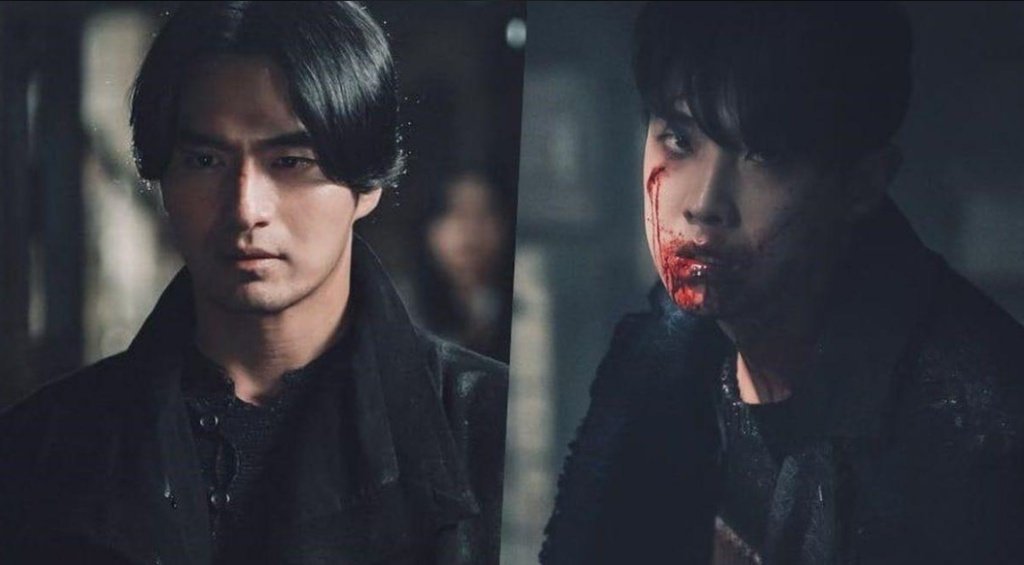
Dan Hwal, played by Lee Jin-wook, is born under a curse and treated as an ominous presence by the people around him.
He is eventually rescued and raised by General Dan Geuk. As an adult, he becomes a military officer and hunts monsters.
His life changes after tragedy strikes his family. He believes a woman connected to the Bulgasal curse is responsible for their deaths.
His pursuit of revenge transforms him into the very creature he once feared.
Hwal’s transformation is important because it complicates the audience’s sympathy for him.
He is undeniably a victim of suffering. But suffering does not automatically make every action justified.
As his memories return, the audience discovers that his own past contains violence and cruelty that he had not fully understood.
The question is no longer whether Hwal has been wronged.
It is whether he can accept responsibility for the wrongs he has committed.
3. Min Sang-un: The Woman Forced to Carry the Past
Min Sang-un, played by Kwon Na-ra, is introduced as a woman living in hiding.
She has a connection to the Bulgasal, but her present identity is not the same as the person Hwal remembers from the past.
This difference becomes essential to the story.
Hwal approaches her with the certainty of someone who believes he knows exactly what happened centuries ago.
But Sang-un does not simply accept his version of history.
Her existence raises a difficult question about reincarnation and responsibility.
If a person is reborn without remembering their previous life, should they be punished for actions committed by an earlier version of themselves?
Sang-un’s suffering exposes the danger of treating past-life identity as permanent moral guilt.
She is not merely a person who must answer for history. She is also someone who deserves the freedom to live a life of her own.
4. Ok Eul-tae: The Villain Who Wants More Than Power
Ok Eul-tae, played by Lee Joon, is one of the most fascinating characters in the series.
He is wealthy, influential, intelligent, and frighteningly capable of manipulating people.
Unlike Hwal, who spends much of his existence searching for a way to end his immortality, Eul-tae wants to preserve his position.
His immortality is not simply a curse to him. It is a source of power and a way to escape the limitations that govern ordinary human life.
Yet his character also contains a history of rejection, insecurity, and emotional deprivation.
That background helps explain some of his behavior, but it does not excuse his cruelty.
Eul-tae is especially interesting because he does not want to be alone in eternity. He wants a connection with someone who can understand his existence.
But his desire for connection repeatedly becomes possessiveness and control.
He wants companionship without accepting another person’s freedom.
5. Are Monsters Born, or Are They Created?
The title Bulgasal refers to a mythical immortal creature.
The series uses this supernatural idea to examine something more familiar: how people become cruel.
Hwal experiences rejection and loss. Eul-tae experiences a different form of suffering. Sang-un inherits a history that she did not choose.
Their circumstances are different, but each character is shaped by events that precede their present identity.
This does not mean that suffering inevitably creates evil.
Many people experience terrible things without becoming cruel.
The more useful question is what someone chooses to do with their pain.
Hwal repeatedly allows revenge to guide his decisions. Eul-tae turns fear and insecurity into domination. Sang-un, despite her own suffering, continues to search for a way to protect the people around her.
The supernatural creatures may be immortal, but their moral choices remain painfully human.
6. Revenge: The Story Hwal Believes About Himself
For much of the series, Hwal believes that revenge is the only way to correct the injustice done to him.
He has lost his family, his humanity, and the life he might have lived.
His anger gives his existence a purpose.
But revenge depends on a particular understanding of the past. It requires a clear victim, a clear offender, and a punishment that can somehow restore balance.
Bulgasal gradually destroys that simple structure.
Hwal discovers that his memories are incomplete and that the history connecting him to Sang-un and Eul-tae is far more complicated than he believed.
The person he has pursued is not the only source of his suffering.
More importantly, Hwal himself has contributed to the cycle of violence.
The revelation changes the meaning of his revenge.
He is no longer simply trying to punish someone who destroyed his life. He must confront the possibility that his own actions helped create the tragedy he has been trying to escape.
7. The Past Is Not Always a Reliable Guide to Justice
One of the series’ most important ideas is the relationship between memory and responsibility.
Characters repeatedly encounter people connected to their previous lives.
Some remember. Others do not.
This creates an unusual moral problem.
If someone remembers committing a terrible act in a previous life, should they be held responsible for it in the present?
And if someone does not remember, can they fairly be expected to accept punishment for something they cannot recall?
The series does not provide a simple legal or philosophical answer.
Instead, it shows how the past can become a weapon.
Hwal’s memories influence how he sees Sang-un. Eul-tae uses his knowledge of history to manipulate others. The people around them are drawn into conflicts that began long before their current lives.
The danger is that history becomes more important than the living person standing in front of you.
8. Hwal and Sang-un: Can Love Survive a Cycle of Violence?
The relationship between Hwal and Sang-un is not a conventional romance.
Their connection stretches across centuries, but it is repeatedly interrupted by fear, resentment, death, and misunderstanding.
Hwal initially sees Sang-un through the lens of his revenge.
Sang-un, meanwhile, has reasons to fear him.
Their relationship changes as Hwal begins to understand the truth about their shared history.
The emotional challenge is not simply whether they still love each other.
It is whether love can survive when the people involved have become responsible for each other’s suffering.
The series suggests that love cannot erase the past.
But it may create a reason to stop repeating it.
That is a much more difficult form of reconciliation than simply forgiving someone and moving on.
9. The Family Curse: When the Innocent Pay for Someone Else’s Anger
The history of Hwal’s relationships with his family is central to the story.
His connection with Dan Sol and A-chan gives his suffering a personal dimension. He is not only an immortal creature looking for revenge. He is also someone who has experienced the loss of a family.
But the series reveals that the past contains more than the tragedy Hwal remembers.
His own violence helped create consequences that followed other people into later lives.
This is where the idea of a curse becomes more than a supernatural device.
A curse can represent the way one person’s anger affects people who were never responsible for the original conflict.
The innocent become trapped in a history they did not create.
In that sense, the most disturbing part of Bulgasal is not immortality.
It is the possibility that suffering can be inherited.
10. Why Ok Eul-tae Is More Than a Conventional Villain
Eul-tae is responsible for terrible actions, including the deaths of people important to Hwal.
There should be no confusion about that.
Understanding a villain’s emotional history is not the same as excusing the harm they cause.
But Eul-tae’s character is compelling because his greatest fear is not simply defeat.
He fears losing the identity and power that immortality has given him.
His relationship with Hwal reveals an uncomfortable contradiction.
He wants Hwal close to him, but he cannot accept Hwal’s independence. He wants companionship, but his behavior destroys the possibility of genuine trust.
He is powerful enough to control many people, yet emotionally unable to build the relationship he appears to desire.
This makes him a tragic antagonist without making him an innocent one.
The distinction is essential.
A character can be psychologically understandable and morally responsible at the same time.
11. Korean Mythology and the World of Monsters
One of the series’ distinctive strengths is its use of Korean supernatural imagery.
Rather than relying entirely on familiar Western fantasy creatures, Bulgasal builds a world around monsters connected to Korean folklore and mythological imagination.
The creatures are not merely obstacles for the protagonist to defeat.
They help establish an atmosphere in which human fear, memory, and supernatural history overlap.
The monster-hunting structure also gives the story a broader mystery.
Each encounter can reveal something about the world, the characters’ previous lives, or the nature of the curse.
For international viewers, this cultural foundation is part of the show’s appeal.
It offers a fantasy world that feels different from many familiar vampire, zombie, and demon narratives.
However, the series’ strongest mythology is not necessarily the number of monsters it introduces.
It is the idea that the boundary between a human being and a monster is never as stable as it first appears.
12. Why the Final Episodes Divide Viewers
The ending of Bulgasal attempts to resolve a story built around centuries of violence.
Hwal finally understands the truth about his past and recognizes his responsibility in the cycle of suffering.
He chooses to end the conflict through sacrifice rather than continue the revenge.
Sang-un also dies after the final confrontation, while Si-ho and Do-yoon survive and build lives of their own.
The story then moves forward by fifty years.
The final meeting between the reincarnated Hwal and Sang-un suggests that their connection may begin again, even though they do not appear to recognize each other fully.
For some viewers, this is a moving conclusion.
It suggests that love and connection can survive even when memory disappears.
For others, the reunion weakens the finality of Hwal’s sacrifice. If the characters can meet again, what exactly has ended?
This is one of the most interesting questions raised by the finale.
The ending can be read as a new beginning, but it also leaves the meaning of sacrifice open to interpretation.
13. What Reddit Discussions Reveal About Bulgasal
Reddit discussions about Bulgasal: Immortal Souls reveal interest in its mythology, complicated character relationships, and final episodes.
Some viewers appreciate the dark fantasy atmosphere and the way the series connects several lifetimes into one story.
Others criticize the pacing, the amount of information revealed through flashbacks, and the complexity of the mythology.
The finale also invites different interpretations.
Some viewers find the final reunion emotionally satisfying, while others question whether it gives sufficient meaning to the sacrifices made in the final confrontation.
These reactions should not be treated as a universal audience consensus. Reddit discussions represent a relatively small and self-selecting group of viewers.
Nevertheless, they point toward a useful distinction.
The series’ appeal comes from its ambitious mythology and emotional relationships. Its weaknesses, for some viewers, come from the difficulty of keeping those elements coherent across so many timelines.
The most productive discussion is therefore not simply whether the story is confusing or beautiful.
It is whether the complexity of its mythology makes the characters’ moral choices more meaningful.
14. Bulgasal: Was the Monster Really the Villain?
By the end of Bulgasal, the original question has become much more complicated.
Hwal begins as a man seeking revenge against a monster.
But he discovers that his own past contains cruelty and responsibility. Sang-un is connected to a history she did not choose. Eul-tae is both a product of suffering and an individual responsible for terrible decisions.
There is no simple division between the innocent and the guilty.
Yet the series does not suggest that everyone is equally responsible.
Hwal must acknowledge his past actions. Eul-tae cannot use his suffering to excuse his violence. Sang-un deserves the freedom to exist beyond the guilt assigned to her previous lives.
Perhaps that is the most important distinction between being human and being a monster.
It is not whether someone has suffered, whether they possess supernatural powers, or whether they have lived for centuries.
It is whether they recognize the pain they cause and whether they are willing to stop repeating it.
If a monster can love and a human can become cruel, what truly separates them?