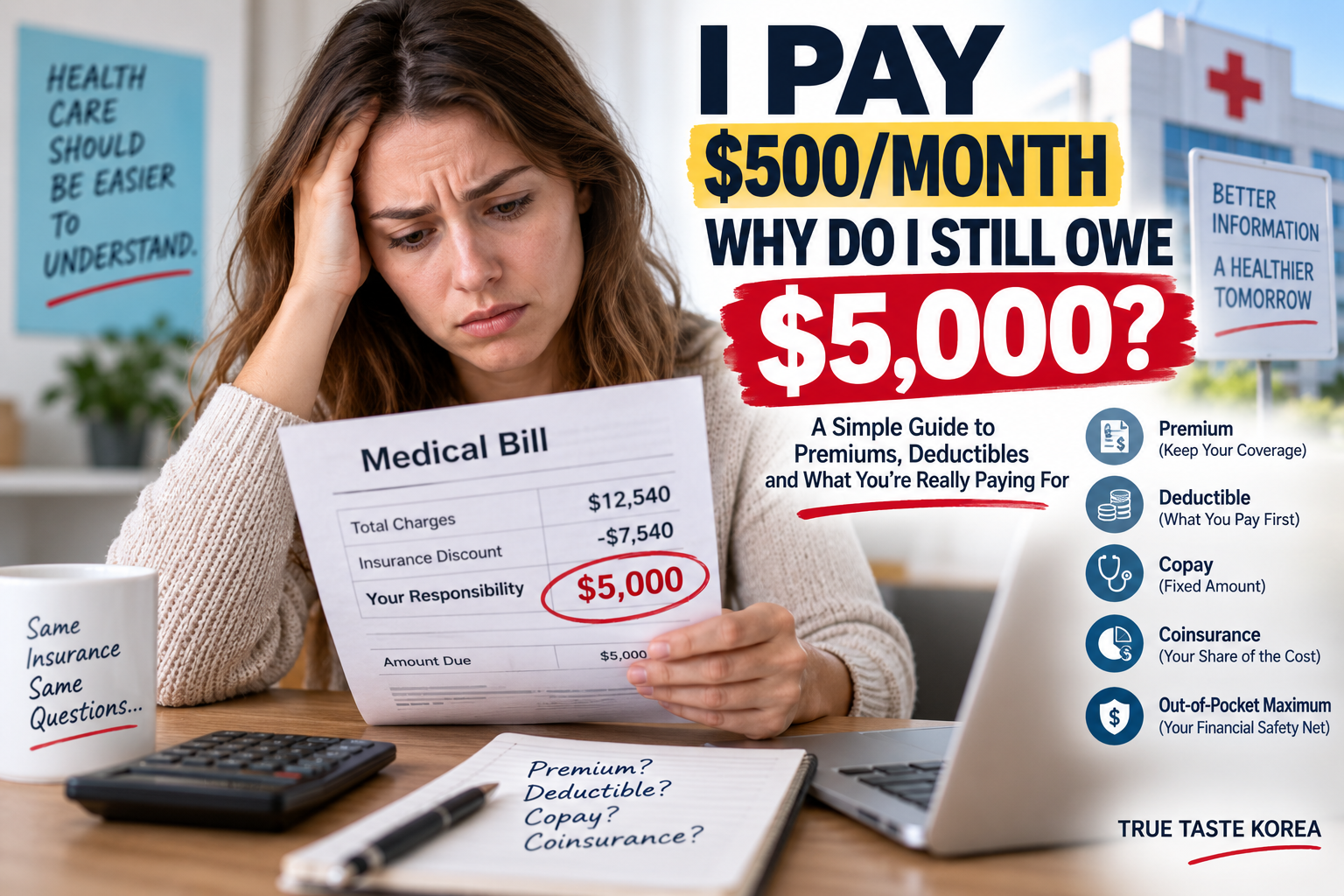
That is $6,000 a year before you even walk into a doctor’s office.
Then you actually need medical care.
And suddenly you discover something called a:
$5,000 deductible.
Wait.
You already paid thousands of dollars for insurance.
Now you’re being told you may have to pay thousands more before your insurance starts paying for many services?
So what exactly were those monthly premiums paying for?
If you’ve ever looked at your health insurance plan and thought:
“This makes absolutely no sense.”
You’re asking one of the most important questions in American health care.
And the answer starts with understanding that your premium and deductible are two completely different costs.
First: Your Premium Does NOT Pay Your Deductible
This is the part that surprises many people.
Your premium is what you pay to keep your health insurance active.
Think of it like the membership fee.
If your premium is $500 per month:
$500 × 12 = $6,000 per year
You may pay that amount even if you never visit a doctor.
Your deductible, on the other hand, is an amount you may have to pay toward covered medical services before your insurance begins paying its share for many types of care.
So yes:
You can pay thousands of dollars in premiums…
and still have a deductible of several thousand dollars.
The premium generally does not count toward your deductible.
And it generally does not count toward your out-of-pocket maximum either. CMS specifically explains that monthly premiums are excluded from the Marketplace out-of-pocket limit.
That’s the first key to understanding the system.
Then What Am I Paying $500 a Month For?
This is the natural next question.
If insurance doesn’t immediately pay every medical bill, why pay the premium at all?
Because you’re not buying unlimited free health care.
You’re buying financial protection against covered medical costs under the rules of your plan.
Your insurance may provide:
negotiated in-network prices
preventive services covered without cost sharing when applicable
prescription drug benefits
copays for certain services
partial payment after the deductible
protection against very large covered medical expenses
an annual out-of-pocket maximum for covered in-network care, subject to plan rules
That last item is especially important.
Health insurance is partly designed to protect you from a catastrophic medical bill—not necessarily to make every doctor’s visit free.
Depending on the service and your plan, you may pay costs until you’ve met the deductible.
Suppose you eventually accumulate:
$5,000 toward your deductible.
Now you’ve met it.
That doesn’t necessarily mean everything becomes free.
Stage 3: Coinsurance May Begin
Your plan might now pay, for example:
80%
while you pay:
20%.
That’s coinsurance.
Stage 4: You Reach the Out-of-Pocket Maximum
Once your eligible spending reaches your plan’s annual out-of-pocket maximum, the plan generally pays 100% of covered in-network benefits for the rest of the plan year, subject to the policy’s terms.
For 2026 Marketplace plans, the federal maximum out-of-pocket limit can be as high as $10,600 for an individual and $21,200 for a family, although many plans have lower limits. Premiums do not count toward those limits.
That’s why the out-of-pocket maximum may actually be one of the most important numbers on your insurance plan.
Premium vs. Deductible vs. Copay vs. Coinsurance
American health insurance becomes much easier to understand once you separate these four words.
Premium
The amount you pay to maintain your insurance coverage.
Think:
“My insurance membership fee.”
Deductible
The amount you generally pay toward certain covered services before your plan begins sharing those costs.
Think:
“The amount I may have to cover first.”
Copay
A fixed amount for a service.
For example:
$30 for a doctor visit.
Depending on the plan, some copays may apply even before you’ve met your deductible.
Coinsurance
Instead of a fixed dollar amount, you pay a percentage.
For example:
Insurance pays 80%.
You pay 20%.
Out-of-Pocket Maximum
This is the annual ceiling on what you pay for covered in-network services that count toward the limit.
Think:
“My financial safety net.”
But remember:
your premiums generally sit outside that ceiling.
So Can I Really Pay $6,000 in Premiums AND Thousands More for Medical Care?
Yes.
That’s exactly why many Americans become frustrated with health insurance.
Using our hypothetical example:
Annual premiums:
$6,000
Potential covered medical cost sharing:
up to the plan’s applicable out-of-pocket maximum
Those are separate buckets.
So a household can spend substantial money maintaining insurance and still face significant costs when someone actually becomes sick.
And this isn’t just a theoretical concern.
The latest comprehensive KFF employer survey available found that the average annual premium for employer-sponsored health insurance in 2025 reached:
$9,325 for single coverage
and:
$26,993 for family coverage.
Workers didn’t personally pay all of that—the employer typically paid a substantial share—but workers contributed an average of $6,850 toward family coverage.
That’s roughly:
$571 per month from the worker’s paycheck for family coverage.
And that’s before considering many forms of cost sharing when health care is actually used.
“My Employer Pays Part of My Insurance. Why Is It Still So Expensive?”
Because the number deducted from your paycheck isn’t necessarily the full cost of your health insurance.
This is one of the hidden features of employer-sponsored insurance.
Suppose your paycheck shows:
Health insurance: $500
You might naturally think your insurance costs $500.
But your employer may be paying another substantial amount behind the scenes.
KFF found that the average total employer-sponsored family premium was nearly $27,000 in 2025.
The employee contribution is only one portion of that total.
This is why changing jobs—or losing employer coverage—can produce such a shocking realization about the full price of health insurance.
Why Are Deductibles So High?
There isn’t one universal reason.
But there is an important tradeoff in insurance design:
Lower premium → often higher deductible
and
Higher premium → often lower deductible
Not always, but commonly.
A high-deductible plan shifts more routine or initial medical spending to the patient while providing insurance protection against larger covered expenses.
That can make the monthly premium cheaper than a more generous plan.
For someone who rarely uses medical care, that tradeoff may look attractive.
For someone who needs frequent treatment, prescriptions, specialists or planned surgery, it may look very different.
High Deductibles Are Not Rare
This isn’t an unusual corner of the American insurance market.
KFF found that 88% of covered workers with single coverage in 2025 were enrolled in a plan with a general annual deductible.
Among workers whose plans had a deductible, the average was:
$1,886.
And 34% of covered workers were enrolled in a plan with a general annual deductible of $2,000 or more for single coverage.
Workers at smaller companies faced particularly high deductibles.
For covered workers at firms with 10–199 employees, the average single deductible among plans with a deductible was:
$2,631
compared with:
$1,670
at larger employers.
That’s a major difference.
Deductibles Have Also Increased Over Time
Here’s another reason people feel squeezed.
Among covered workers with a general annual deductible, KFF reports that the average single deductible increased from:
$1,320 in 2015
to:
$1,886 in 2025.
That’s an increase of about 43% over ten years.
So when Americans say:
“I have insurance, but I still can’t afford to use it,”
there is a real economic tension behind that complaint.
Having insurance and having inexpensive access to medical care are not necessarily the same thing.
“But I Thought Insurance Pays for Doctor Visits”
It can.
This is where things get complicated because plans differ.
Some services may be covered before you meet your deductible.
Certain preventive services can be covered without cost sharing under applicable rules.
Your plan might also offer a doctor’s visit for a fixed copay even before you’ve met the full deductible.
Prescription drugs may have separate rules.
Emergency care may work differently.
Specialists may work differently.
That’s why saying:
“I have a $5,000 deductible, so insurance pays absolutely nothing until I’ve spent $5,000”
isn’t always accurate.
You need to read your actual plan.
The $10,000 Medical Bill That Doesn’t Necessarily Cost You $10,000
Here’s another important benefit people overlook.
Suppose a hospital’s sticker price for a service is:
$10,000.
Your insurer may have negotiated an allowed in-network price of:
$6,000.
Depending on your plan, your cost sharing is generally calculated using that negotiated structure rather than simply paying whatever sticker price appears on the original bill.
This is one reason insurance can have value even before the insurer itself appears to be paying most of the bill.
But there is an enormous warning attached:
network status matters.
Out-of-network care can operate under different rules and potentially expose patients to greater costs, depending on the circumstances and applicable protections.
Why Doesn’t My Premium Count Toward My Out-of-Pocket Maximum?
This is probably the part consumers dislike most.
Because these are fundamentally different categories in the insurance contract.
Plan A looks cheaper when you look only at the paycheck deduction.
But suppose you know you’ll need:
regular specialist appointments,
expensive medication,
imaging,
physical therapy,
or surgery.
Suddenly Plan B might produce lower total annual spending.
The right question isn’t:
“Which plan has the lowest premium?”
It’s:
“What could this plan cost me in total under the medical care I’m likely to use?”
A Better Way to Compare Health Insurance
Before choosing a plan, write down these numbers:
Monthly premium
Annual premium
Deductible
Copays
Coinsurance
Out-of-pocket maximum
Prescription drug costs
Network
Employer HSA/HRA contribution, if any
Then run three scenarios.
Scenario A: Healthy Year
Almost no medical care.
How much do you spend?
Scenario B: Normal Year
Several doctor visits, prescriptions and maybe testing.
How much do you spend?
Scenario C: Very Bad Year
Hospitalization, surgery or another major medical event.
What’s the maximum financial damage?
That third scenario is especially important.
Insurance exists partly because nobody knows which year will become the bad year.
Don’t Ignore an Employer HSA Contribution
If you’re comparing high-deductible plans, check whether your employer contributes money to an HSA or HRA.
This can materially change the calculation.
KFF found that employer account contributions can offset a meaningful part of high deductibles for some workers. After accounting for employer HRA/HSA contributions, the share of covered workers effectively facing deductibles of $2,000 or more fell from 34% to 26% in its analysis.
So don’t compare deductibles alone.
A $3,000 deductible accompanied by a substantial employer contribution isn’t economically identical to a $3,000 deductible with no employer contribution.
“So What Is My Health Insurance Actually Protecting Me From?”
This may be the most useful way to think about it.
Health insurance isn’t necessarily designed to eliminate every medical expense.
It is designed to share covered costs and limit your exposure to potentially catastrophic covered medical expenses, subject to the terms of your plan.
A $150 doctor’s visit is unpleasant.
A $1,000 test is painful.
But a serious illness or major accident can generate bills vastly larger than either.
That’s when the difference between:
uninsured
and
insured with an out-of-pocket limit
can become financially enormous.
The frustrating part is that Americans can still face substantial costs before reaching that protection.
Both things can be true.
Why Does Health Insurance Feel More Expensive Even When Your Employer Helps?
Because households experience health-care costs in several different places.
You see:
money disappearing from every paycheck
Then:
the deductible
Then:
copays
Then:
coinsurance
Then:
prescription costs
Because these charges arrive separately, it can feel like you’re paying for the same thing again and again.
In reality, they’re different pieces of the same insurance cost-sharing system.
That doesn’t make them cheap.
But it explains why they exist simultaneously.
Before Choosing Your 2027 Health Plan, Don’t Look Only at the Premium
This is where understanding the system can save real money.
During open enrollment, many people naturally look at one number:
“How much comes out of my paycheck?”
Don’t stop there.
A plan that’s $100 cheaper per month saves:
$1,200 per year in premiums.
Great.
But if it increases your deductible by $3,000 and your out-of-pocket maximum by $4,000, the cheaper premium may not be the cheaper choice for someone expecting significant medical care.
Conversely, a healthy person with adequate savings might reasonably prefer a different cost structure.
There is no universally cheapest plan.
There is only a plan whose combination of premium + expected medical spending + financial risk fits you better.
The Five Numbers You Should Find on Your Health Plan Today
If you have health insurance but don’t really understand it, don’t try to read every page of the policy tonight.
Start with five numbers:
1. Monthly premium
How much are you actually paying?
2. Deductible
How much could you need to pay before major cost sharing kicks in?
3. Coinsurance
After the deductible, what percentage might still be yours?
4. Out-of-pocket maximum
What’s your ceiling for eligible covered in-network expenses?
5. Employer HSA/HRA contribution
Is your employer giving you money that offsets some of that risk?
Once you know those five numbers, your insurance becomes much easier to understand.
Bottom Line
So:
If I pay $500 a month for health insurance, why do I still have a $5,000 deductible?
Because the two payments serve different purposes.
Your premium buys and maintains the insurance coverage.
Your deductible determines how much you may need to spend on certain covered medical care before the plan begins sharing many of those costs.
Then copays and coinsurance may apply.
Finally, the out-of-pocket maximum limits eligible annual cost sharing for covered in-network services—but your monthly premiums generally don’t count toward that limit.
And this isn’t a small issue.
The latest comprehensive KFF employer survey found average family premiums approaching $27,000 per year, while millions of covered workers also face substantial deductibles.
That’s why the question:
“If I’m already paying so much for insurance, why am I paying again when I get sick?”
isn’t foolish at all.
It’s actually the question that unlocks how American health insurance works.
The next time you compare plans, don’t ask only:
“What’s the monthly premium?”
Ask:
“What could this insurance cost me in a good year—and what could it cost me in a terrible year?”
That is the number that matters.
This article is for general informational purposes only and is not medical, legal, insurance or financial advice. Health insurance benefits and rules vary by plan, employer and state.
Maybe you’ve even been with the same insurance company for years.
Then your renewal notice arrives.
And somehow, your car insurance costs more.
So you ask the obvious question:
Why did my car insurance go up in 2026 when I did nothing wrong?
You’re not asking the wrong question.
But here’s where things get strange.
According to the latest available U.S. Bureau of Labor Statistics data, the national motor vehicle insurance index was actually 4.5% lower in July 2026 than a year earlier.
So if car insurance prices are falling nationally…
why did YOUR premium go up?
That’s the real question.
And the answer reveals something most drivers don’t realize about how auto insurance actually works.
Your Driving Record Is Only One Part of Your Insurance Price
Many drivers think car insurance works like this:
Good driver = lower price.
Bad driver = higher price.
That’s partly true.
Accidents, tickets and claims can absolutely affect what you pay.
But your driving history is only one piece of a much larger calculation.
Insurers may also consider factors such as:
where you live
the vehicle you drive
how expensive that vehicle is to repair
local accident and theft patterns
your annual mileage
other drivers on the policy
coverage levels and deductibles
state insurance rules
your age and driving experience
insurance history
credit-based insurance information where permitted
the insurer’s own claims experience and pricing model
That’s why two people with perfectly clean driving records can receive dramatically different quotes.
And it’s why your premium can rise even when you personally did nothing wrong.
Reason No. 1: Cars Are Becoming More Expensive to Repair
This may be one of the biggest pieces of the puzzle.
Modern cars are essentially computers on wheels.
A bumper isn’t always just a piece of plastic anymore.
It may contain:
cameras,
radar,
parking sensors,
driver-assistance technology,
and other electronics.
A relatively minor collision can require not only replacing damaged parts but recalibrating sophisticated safety systems.
And the latest BLS numbers show that these costs are still rising.
In July 2026, motor vehicle maintenance and repair prices were 6.6% higher than a year earlier.
Maintenance and servicing were up 7.3%, while motor vehicle repair was up 6.2%.
That matters to your insurer.
Because insurance isn’t only pricing the probability that you’ll crash.
It’s also pricing:
how expensive the crash could be.
“But I Didn’t Crash My Car. Why Should I Pay More?”
This is where insurance becomes frustrating.
You aren’t buying a personal savings account.
You’re participating in a risk pool.
Imagine thousands of drivers insured by the same company in your area.
Even if you don’t crash, the insurer may experience:
more expensive repairs,
more severe claims,
higher medical costs,
more theft,
more weather-related damage,
or higher liability payouts.
Those costs can influence future rates.
So the question insurance companies are trying to answer isn’t simply:
“Did this driver have an accident last year?”
It’s closer to:
“How much risk does this policy represent going forward?”
Those are very different questions.
Reason No. 2: Your ZIP Code Can Matter More Than You Think
You can be an excellent driver and still live in an expensive place to insure.
Why?
Because location affects risk.
Your area may have:
higher accident frequency,
more vehicle theft,
more vandalism,
more uninsured drivers,
more expensive repair shops,
severe hail,
flooding,
or other weather risks.
Move only a relatively short distance and insurance quotes can sometimes change.
Your driving ability didn’t suddenly become worse.
The risk surrounding the vehicle changed.
Reason No. 3: The Car You Drive Matters Even If It’s Getting Older
Here’s another question drivers often ask:
“My car is older and worth less. Why isn’t my insurance getting cheaper?”
Because the value of your own car is only part of the policy.
Auto insurance can include several different types of protection, including collision, comprehensive, bodily injury liability, property damage liability, medical-related coverage and uninsured-motorist coverage, depending on the policy and state. BLS includes these major coverage categories when measuring motor vehicle insurance prices.
Suppose you’re driving an old $5,000 car.
You hit a $70,000 SUV.
Or someone is seriously injured.
The fact that your own vehicle is cheap doesn’t make those potential liability costs cheap.
That’s why:
“My car isn’t worth much anymore”
doesn’t necessarily mean:
“My insurance should be cheap.”
Reason No. 4: Insurance Is About Other People’s Cars Too
Look around an American parking lot today.
Pickup trucks can cost tens of thousands of dollars.
SUVs can be extremely expensive.
Luxury vehicles can cost $80,000, $100,000 or much more.
And even ordinary vehicles increasingly contain expensive electronics.
Your liability insurance isn’t simply protecting your car.
It’s protecting you financially if you’re responsible for damaging someone else’s property or injuring someone else.
That means rising vehicle and repair costs across the entire road system can matter.
You don’t have to own an expensive vehicle to be exposed to expensive vehicles.
Reason No. 5: Medical Costs Can Make Accidents More Expensive
The expensive part of a serious crash isn’t always the car.
It can be the people.
An accident may involve:
ambulance services,
emergency treatment,
hospitalization,
surgery,
rehabilitation,
lost income,
and liability claims.
BLS reported hospital service prices were 5.2% higher year over year in July 2026.
That doesn’t translate directly into the same percentage increase in your car insurance.
But it illustrates a broader problem:
the financial consequences of serious accidents can be extremely expensive.
Reason No. 6: Weather Can Raise Auto Insurance Risk Too
Homeowners aren’t the only people affected by extreme weather.
Cars get damaged by:
hail,
floods,
falling trees,
wildfires,
hurricanes,
and severe storms.
One hailstorm can damage thousands of vehicles in a single metropolitan area.
One flood can destroy entire parking lots full of cars.
That’s why comprehensive insurance risk can change even for someone with a spotless driving record.
You didn’t cause the storm.
But your vehicle was still exposed to the risk.
Then Why Does the Government Say Car Insurance Prices Are Falling?
Now we get to the most interesting part.
The latest BLS data show U.S. motor vehicle insurance prices down 4.5% year over year in July 2026.
That sounds contradictory.
But it isn’t.
The BLS Consumer Price Index measures changes across a large national sample.
It does not mean every driver’s individual premium fell 4.5%.
Your insurance renewal is personal.
It depends on your insurer, state, location, vehicle, coverage, household and risk profile.
Think about home prices.
If the national median home price falls, that doesn’t mean every house in every city became cheaper.
Insurance works the same way.
A national trend and your individual bill can move in opposite directions.
And there’s another important piece of context.
One year earlier, in August 2025, motor vehicle insurance prices were still 4.7% higher than the previous year, according to BLS.
So 2026’s national decline comes after years in which many drivers experienced substantial increases.
A decline in the rate index doesn’t magically erase the higher price level many households reached during previous increases.
This Is the Difference Between “Prices Falling” and “Prices Returning to Normal”
Imagine your insurance premium looked like this:
2022: $1,200
2023: $1,350
2024: $1,550
2025: $1,800
Then prices stabilize or even decline somewhat.
That doesn’t necessarily mean you’re going back to $1,200.
This distinction matters throughout the economy.
Inflation slowing doesn’t mean prices return to where they started.
And an insurance index falling doesn’t guarantee your renewal notice will suddenly look cheap.
Reason No. 7: Your Insurer May Simply Price You Differently Now
Insurance companies don’t all calculate risk the same way.
One insurer may desperately want customers like you.
Another may be trying to reduce its exposure in your state, ZIP code or vehicle category.
One company’s quote might be $1,500.
Another might be $2,300.
A third might be $3,000.
Same driver.
Same car.
Same address.
Different insurer.
This is one reason staying loyal to the same insurance company indefinitely doesn’t automatically guarantee the best price.
“I’ve Been With My Insurance Company for 15 Years. Shouldn’t That Make It Cheaper?”
Maybe.
But don’t assume loyalty always produces the lowest rate.
Insurance pricing changes continuously.
Your company may offer discounts for tenure or multiple policies.
But competitors may use completely different pricing models.
That’s why one of the most important things you can do after a large renewal increase is simple:
Get competing quotes.
You’re not required to accept your renewal price without checking the market.
Reason No. 8: Adding a Teen Driver Can Be Extremely Expensive
Parents often experience one of the biggest insurance shocks when a teenager starts driving.
Why?
Because insurers price risk partly based on driving experience and historical claims patterns.
A newly licensed driver has very little driving history.
That uncertainty can be expensive.
So when parents say:
“I added my teenager and my insurance exploded.”
the increase isn’t necessarily about the family’s previous claims.
It’s about the new risk being added to the policy.
This is another example of why:
“I haven’t had an accident”
doesn’t tell the whole insurance story.
Reason No. 9: Credit Can Affect Insurance Prices in Some States
This surprises many drivers.
Depending on the state, insurers may use credit-based insurance scores or related information when determining premiums.
These aren’t necessarily identical to the credit score a lender uses to approve a mortgage or credit card.
And state rules vary.
Some states restrict or prohibit the practice.
But where it is permitted, changes in credit-related information can potentially affect insurance pricing even when your driving record hasn’t changed.
If your premium jumps unexpectedly, it’s worth asking your insurer exactly which factors contributed to the change.
Reason No. 10: Coverage Changes Can Hide Inside the Renewal
Don’t assume this year’s policy is identical to last year’s policy.
Check it.
Look at:
liability limits,
collision coverage,
comprehensive coverage,
deductibles,
uninsured motorist coverage,
rental coverage,
roadside assistance,
and other optional protections.
A change in coverage can change the price.
So when comparing your old bill with your new one, compare the policy, not just the premium.
Why Does My Friend Pay Less Than Me?
This question drives people crazy.
Your friend:
drives a newer car,
lives nearby,
and maybe even has a worse driving record.
Yet somehow pays less.
There may be dozens of differences.
Different insurer.
Different ZIP code.
Different mileage.
Different deductibles.
Different liability limits.
Different discounts.
Different household drivers.
Different insurance history.
Different credit-related factors where allowed.
Different vehicle safety and repair characteristics.
Without comparing the complete policies, the two premiums aren’t necessarily comparable.
Should You Drop Full Coverage on an Older Car?
Sometimes this question is worth asking.
If your vehicle has relatively little market value, paying a large amount for collision and comprehensive coverage may eventually stop making financial sense.
But don’t confuse dropping optional physical-damage coverage with dropping legally required or financially important liability protection.
Before changing coverage, ask:
How much is the car worth?
How much am I paying for collision and comprehensive?
What is my deductible?
Could I afford to replace the car myself tomorrow?
If losing the car would create a financial crisis, dropping coverage purely to save a small amount could backfire.
Should You Raise Your Deductible?
A higher deductible can sometimes lower your premium.
For example, moving from a $500 deductible to $1,000 means you’re accepting more of the initial loss yourself.
The insurer takes less risk.
The premium may fall.
But don’t choose a deductible you couldn’t afford tomorrow.
The purpose of insurance is to prevent a financial disaster.
Saving a few dollars each month isn’t useful if a claim suddenly requires cash you don’t have.
What Should You Do If Your Car Insurance Suddenly Goes Up?
Don’t immediately cancel the policy.
First, investigate.
1. Compare the old and new policy
Make sure the coverage hasn’t changed.
2. Ask the insurer why
Call and ask:
“What factors caused my renewal premium to increase?”
Don’t settle for “rates went up.”
Ask specifically.
3. Check for discounts
Ask about:
safe-driver discounts,
low-mileage programs,
multi-car discounts,
home-and-auto bundling,
automatic payment,
defensive-driving programs,
and other available discounts.
4. Get several quotes
This may be the most important step.
Don’t assume your existing insurer remains the cheapest.
5. Compare identical coverage
A cheaper quote with much lower liability limits isn’t necessarily a better deal.
6. Review your deductible
If you have enough emergency savings, a higher deductible may reduce premiums.
7. Check your annual mileage
If you drive much less than you used to, tell your insurer.
8. Review optional coverage on older vehicles
Some coverage may no longer make economic sense.
Don’t Make This Mistake When Shopping for Insurance
Suppose your current policy costs $2,000.
Another company offers $1,450.
Fantastic?
Maybe.
Then you discover the cheaper policy has:
lower liability limits,
a much higher deductible,
no rental coverage,
and weaker protection.
That’s not necessarily a $550 savings.
You may simply be buying less insurance.
When shopping, compare equivalent coverage as closely as possible.
Could Car Insurance Become Cheaper Again?
Possibly.
And the July 2026 BLS data suggest that national insurance price pressure has already eased substantially compared with earlier periods.
Competition among insurers can help.
Safer vehicles can reduce some kinds of accidents.
Improved anti-theft technology can reduce certain losses.
Claims trends can improve.
And insurers can adjust prices as conditions change.
But there’s a competing force.
Cars continue becoming technologically sophisticated and expensive to repair.
The latest BLS data show vehicle maintenance and repair costs still rising significantly even while the motor vehicle insurance index is falling.
That’s why the future probably won’t be as simple as:
“Insurance inflation is over, so everyone’s bill goes down.”
The Most Important Question Isn’t “Did I Have an Accident?”
This is the mistake many drivers make.
They open their renewal notice and think:
I didn’t crash.
I didn’t get a ticket.
I didn’t file a claim.
So why did my price change?
Because insurers aren’t only looking backward.
They’re estimating future risk.
Your driving history matters.
But so do the cost of cars around you, repair bills, medical expenses, your location, weather exposure, your vehicle, other drivers on the policy and the insurer’s own pricing strategy.
That’s why a perfect driving record doesn’t freeze your premium forever.
Bottom Line
So why did your car insurance go up in 2026 even though you had no accidents or tickets?
Because your driving record isn’t the only thing your insurance company is pricing.
Your premium reflects a much larger risk environment.
Vehicle repairs are expensive.
Modern cars contain costly technology.
Medical treatment can be expensive.
Your ZIP code matters.
Weather matters.
Your vehicle matters.
Other drivers on your policy matter.
And your insurance company can change how it evaluates all of those risks.
Here’s the strange part:
The latest national data show motor vehicle insurance prices 4.5% lower year over year in July 2026, while vehicle maintenance and repair costs were 6.6% higher.
So both of these statements can be true at the same time:
Car insurance prices can be falling nationally.
And:
Your personal car insurance bill can still be going up.
That’s the answer many frustrated drivers are looking for.
And if your renewal suddenly jumped, perhaps the most useful question isn’t:
“What did I do wrong?”
It’s:
“What changed in the risk my insurer is charging me for—and can another insurer price that risk differently?”
This article is for general informational purposes only and is not insurance, legal or financial advice. Insurance rules, rating factors and available coverage vary by state and insurer.
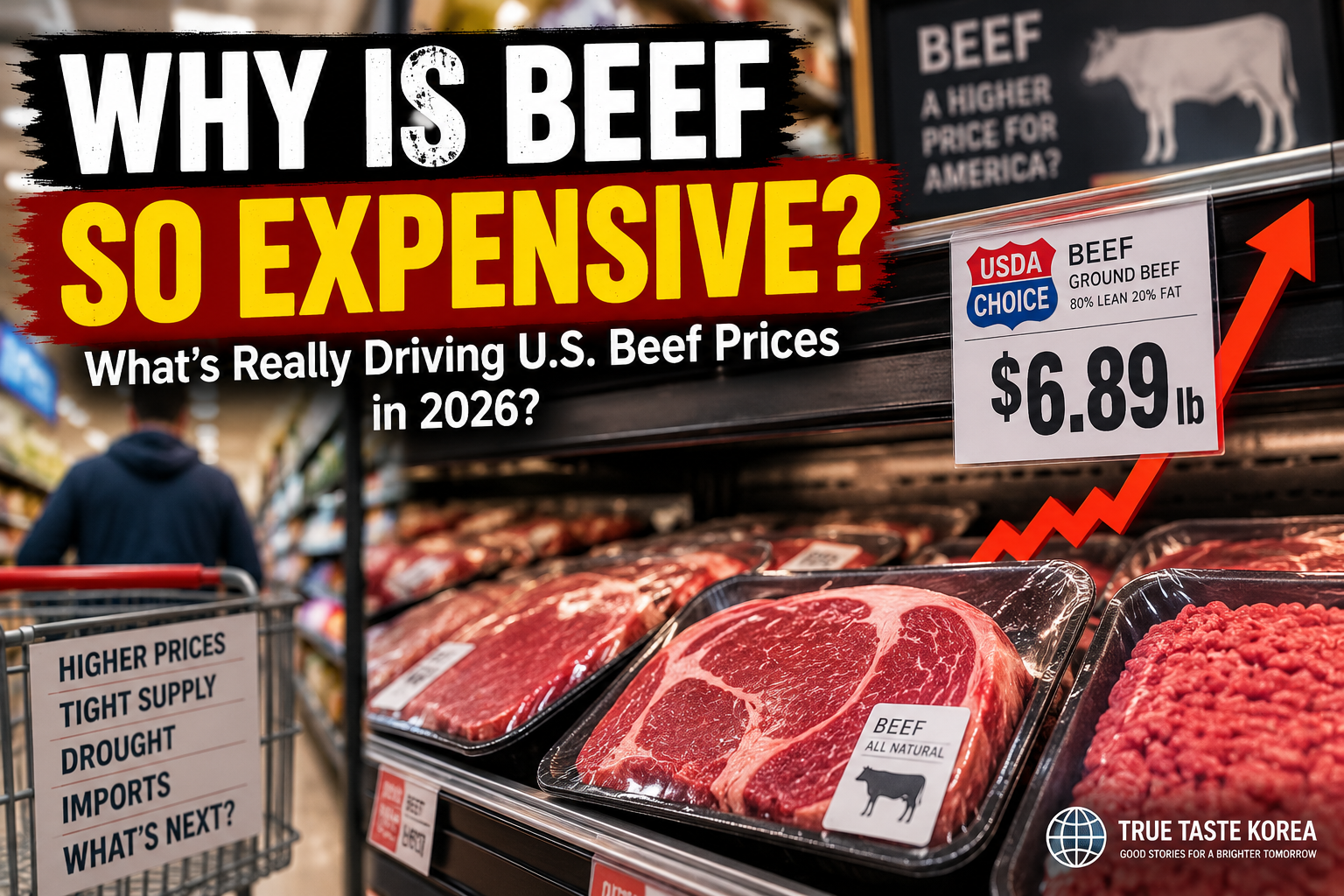
If you’ve recently stood in the meat aisle wondering when beef became a luxury item, you’re not alone.
Ground beef that once felt like an affordable weeknight staple is becoming noticeably more expensive. Steaks, roasts and popular cuts are putting even more pressure on grocery budgets.
And many Americans are asking the same question:
Why is beef so expensive in 2026?
The simple answer is that America doesn’t have enough cattle.
But the full story is more complicated.
A historically small U.S. cattle herd, years of drought, expensive feed and operating costs, restrictions on Mexican cattle, strong consumer demand and questions about competition in the meat industry have all collided at the same time.
The federal government is now taking action, including expanding beef imports and investigating pricing practices.
Here’s what’s really happening to America’s beef supply—and why prices may not return to the levels consumers remember anytime soon.
Beef Prices Have Become a Major Grocery-Bill Problem
Americans aren’t imagining the increase.
Beef prices have remained near record levels in 2026, turning one of America’s most familiar foods into an increasingly expensive purchase.
Earlier this year, average ground beef prices were already well above $6 per pound nationally, while many steak cuts were considerably more expensive.
By late summer, ground beef prices were approaching $7 per pound on average, with consumers in some cities paying substantially more.
The price shock is beginning to change shopping behavior.
Some consumers are buying less beef, waiting for sales or replacing it with chicken, turkey or pork.
That matters because Americans tolerated rising beef prices surprisingly well for a long time.
Now there are signs that consumers may finally be reaching their limit.
The Biggest Reason: America Has Far Fewer Cattle
The most important number in the entire beef-price story isn’t the price of steak.
It’s the number of cattle in America.
The U.S. cattle herd has fallen to its lowest level in roughly 75 years.
That is an extraordinary supply problem for a country with enormous demand for beef.
Several difficult years pushed ranchers to reduce their herds.
When drought damages pasture, ranchers have less grass available for cattle.
They then have two choices:
Buy increasingly expensive feed
or
sell some of their cattle.
Many ranchers chose—or were forced—to reduce their herds.
The problem is that once breeding cows are sold, America’s cattle supply cannot simply be switched back on.
Why Can’t Ranchers Just Produce More Cattle?
This is one of the biggest differences between beef and many manufactured products.
If demand for smartphones suddenly increases, a manufacturer may be able to increase production relatively quickly.
Cattle don’t work that way.
A rancher must retain breeding females rather than sending them to market.
Those cows must become pregnant.
A calf must be born.
Then the animal must grow for many months before entering the beef supply chain.
Rebuilding a national cattle herd therefore takes years, not months.
And there’s an uncomfortable short-term effect.
When ranchers begin rebuilding, they keep more female cattle for breeding instead of sending them to slaughter.
That can actually reduce the amount of beef available to consumers before supply eventually improves.
In other words:
Rebuilding the herd can initially make the beef shortage worse.
Drought Started a Chain Reaction
Drought has played a major role in shrinking America’s cattle herd.
Cattle production depends heavily on pasture.
When rainfall is inadequate:
grass production falls → hay becomes scarcer → feed costs increase → ranchers reduce herds.
This isn’t simply a weather story.
It becomes an economics story.
If it costs too much to maintain a cow relative to what the rancher expects to earn, keeping that animal no longer makes financial sense.
Years of difficult conditions across important cattle-producing regions accelerated herd liquidation.
And once those animals disappear from the breeding population, rebuilding takes time.
Ranchers Are Paying More Too
Consumers may see expensive beef and assume ranchers must be making enormous profits.
The reality is more complicated.
Cattle producers face their own rising costs, including:
feed
hay
fuel
labor
equipment
land
veterinary care
transportation
insurance
financing
Higher interest rates are particularly important.
Ranching is capital intensive.
Farmers and ranchers often finance land, equipment, cattle and operating expenses.
Higher borrowing costs make expanding a herd more expensive precisely when America needs ranchers to expand production.
That’s one reason high supermarket prices don’t automatically translate into easy profits for producers.
There’s Another Problem: Mexican Cattle
The U.S. cattle market normally doesn’t operate in isolation.
Mexico is an important supplier of live cattle to the United States.
But the spread of the New World screwworm, a dangerous livestock parasite, has forced the U.S. to restrict cattle movements from Mexico as authorities work to prevent the pest from spreading.
That matters because imported Mexican cattle normally supplement domestic supply.
When those animals don’t enter the U.S. market, an already tight cattle supply becomes even tighter.
The government has been working toward phased reopening of southern cattle ports, but animal-health concerns complicate the process.
Protecting the domestic herd from disease is essential.
But economically, restrictions can reduce available supply.
Why Doesn’t America Just Import More Beef?
That’s exactly what the government is trying to do.
The United States is simultaneously one of the world’s biggest beef producers, consumers and importers.
Imports are particularly important for ground beef.
American consumers eat enormous quantities of hamburgers, but the U.S. beef system produces large amounts of fatty beef trimmings.
Processors blend those with imported lean beef to produce the ground-beef mixtures consumers expect.
With domestic supplies tight, policymakers have moved to expand access to imported lean beef.
In August 2026, the administration announced additional measures intended to increase beef imports and lower consumer prices.
Up to 300,000 metric tons of additional lean beef imports have been targeted for lower-tariff access.
The goal is simple:
More supply → more competition → lower prices.
But ranchers are pushing back.
Why American Ranchers Don’t Like the Import Solution
From the consumer’s perspective, cheaper imported beef sounds straightforward.
From a rancher’s perspective, it isn’t.
American cattle producers have endured years of drought, high costs and difficult market conditions.
Now that cattle prices are finally strong enough to encourage herd rebuilding, a large influx of cheaper foreign beef could push cattle prices lower.
That creates a potential contradiction.
The government wants to lower beef prices today.
But America also needs ranchers to invest money in producing more cattle for tomorrow.
If cattle prices fall too far, ranchers may have less incentive to expand their herds.
That could prolong the underlying supply problem.
This is why beef policy has become surprisingly complicated.
Consumers want lower prices.
Ranchers need profitable prices.
And policymakers need both.
Why Is the Justice Department Investigating Beef Prices?
The supply shortage isn’t the only issue attracting attention.
In September 2026, the U.S. Department of Justice expanded an investigation into beef pricing to include major retailers.
The investigation reportedly includes companies such as Walmart, Costco and Amazon.
The government is examining whether pricing practices and competition in the beef supply chain are contributing to unusually high consumer prices.
This does not mean investigators have established that retailers illegally caused high beef prices.
An investigation is not proof of wrongdoing.
But it highlights a long-running concern in America’s meat industry:
market concentration.
A relatively small number of large companies process a significant share of American beef.
Critics argue that greater competition could improve prices for both ranchers and consumers.
The industry has disputed claims that concentration is primarily responsible for high retail beef prices.
The current investigation could therefore become important in determining how much of today’s price problem comes from cattle shortages—and how much may involve the structure of the supply chain.
If Beef Is So Expensive, Why Aren’t Farmers Getting Rich?
This may be the most interesting question in the entire story.
The price consumers pay at a supermarket is not the same as the price a rancher receives for cattle.
So a $7 package of ground beef doesn’t mean $7 goes back to the rancher.
That’s why consumers can simultaneously complain:
“Beef is unbelievably expensive.”
while ranchers complain:
“We’re not receiving enough of the retail price.”
Both statements can be true.
Why Is Chicken Still Cheaper?
This explains something many shoppers are noticing.
Beef prices have risen much faster than many chicken products.
The biological production cycles are completely different.
A chicken can reach market weight in a matter of weeks.
A cow requires dramatically more time, land, feed and capital.
If chicken demand rises, producers can respond relatively quickly.
If beef demand rises while America’s cattle herd is historically small, producers cannot create millions of additional cattle within a few months.
This makes beef supply much less flexible.
It also explains why shoppers trying to reduce grocery bills are increasingly switching proteins.
Americans May Finally Be Buying Less Beef
For much of the recent price surge, American consumers kept buying beef.
That’s one reason prices could continue climbing.
But that may be changing.
Recent retail data indicate beef sales volumes have begun weakening while chicken consumption continues to grow.
That’s economically significant.
Economists call this demand destruction.
There is eventually a price at which consumers say:
“That’s too expensive. I’ll buy something else.”
For one shopper that might mean switching from ribeye to ground beef.
For another it means replacing beef with chicken.
Another family may simply eat meat less frequently.
If enough consumers change their behavior, retailers and suppliers eventually face pressure to stop raising prices.
Will Beef Prices Go Down in 2026?
Consumers shouldn’t expect a quick return to the beef prices of several years ago.
The fundamental supply problem hasn’t disappeared.
The cattle herd remains historically small, and rebuilding it takes years.
The U.S. Department of Agriculture expects domestic beef production to decline in 2026 compared with 2025.
Additional imports could provide some relief.
Weaker consumer demand could also limit further price increases.
Improved weather could help ranchers rebuild their herds.
But none of those factors instantly creates millions of additional U.S. cattle.
That means the more realistic near-term outcome may be slower price growth or stabilization, rather than a dramatic collapse in beef prices.
Could Beef Stay Expensive Until 2028?
Possibly.
The biological timeline of cattle production is why some agricultural analysts believe meaningful supply relief may take several years.
Consider the sequence:
2026: Ranchers begin retaining breeding animals.
2027: More calves are born and the herd gradually expands.
2027–2028: Those animals move through the production cycle.
2028 and beyond: Larger supplies can begin reaching consumers more meaningfully.
This isn’t a precise forecast.
Weather, feed costs, imports, consumer demand and government policy can all change the timeline.
But it illustrates why solving America’s beef shortage isn’t a one-season problem.
What Could Make Beef Prices Fall Faster?
Several developments could help.
1. More beef imports
Additional lean beef imports could increase supply, particularly for ground beef.
2. Better weather
Improved pasture conditions would reduce pressure on ranchers and make herd rebuilding easier.
3. Lower feed costs
Cheaper feed improves the economics of raising cattle.
4. Lower interest rates
Reduced financing costs could make herd expansion more affordable.
5. Lower consumer demand
If enough Americans switch to chicken, pork or other proteins, beef sellers may lose pricing power.
6. More processing competition
If government investigations lead to structural changes that increase competition, some costs or margins in the supply chain could change.
But none of these guarantees dramatically cheaper beef.
What Can Consumers Do Right Now?
Until supply improves, shoppers may need to become more strategic.
Instead of abandoning beef entirely, consumers can compare price per pound and substitute cuts.
For example:
Expensive steak → chuck steak or roast
Premium ground beef → larger value packs
Beef several nights a week → alternate with chicken, pork, turkey, eggs or beans
Consumers can also buy larger packages during promotions and freeze portions for later use.
And one simple rule matters more than ever:
Compare price per pound, not package price.
A smaller package can look cheaper while actually costing considerably more per pound.
Is Beef Becoming a Luxury Food?
Probably not in the literal sense.
America still produces and consumes enormous quantities of beef.
But consumer behavior is clearly changing.
A ribeye dinner that once felt routine may become an occasional purchase.
Ground beef may remain a staple but appear less frequently on some household menus.
That’s an important distinction.
Beef isn’t disappearing.
But Americans may be moving from:
“What beef should we buy?”
to:
“Should we buy beef this week?”
For the industry, that’s a major change.
The Bigger Story Behind America’s Beef Prices
The beef-price crisis is a useful reminder that food inflation isn’t just a number reported in the Consumer Price Index.
Behind a supermarket price are years of decisions involving:
weather, cattle breeding, feed, financing, disease, international trade, meat processing, transportation and consumer demand.
The hamburger sitting in a grocery-store cooler today began its economic journey years ago.
That’s why beef prices can rise quickly but take much longer to come back down.
Bottom Line
So why is beef so expensive in 2026?
There isn’t one culprit.
America is dealing with a historically small cattle herd after years of drought and herd reductions. Ranchers face high production and financing costs. Restrictions on Mexican cattle have tightened supply further, while American demand for beef has remained remarkably strong.
The federal government is responding with increased imports, support for ranchers and greater scrutiny of pricing and competition in the meat industry.
But the central problem remains biological:
America needs more cattle—and cattle take years to produce.
That means consumers hoping for dramatically cheaper steaks and ground beef may need patience.
Prices could stabilize.
Imports could provide relief.
Consumers may shift toward cheaper proteins.
But rebuilding America’s beef supply will take much longer than changing the price tag at the grocery store.
This article is for informational purposes only. Prices, trade policies and agricultural forecasts can change.
The NFL is about to do something it has never done before.
On September 11, the Los Angeles Rams and San Francisco 49ers will walk onto one of the world’s most famous sporting grounds.
But they won’t be in Los Angeles.
They won’t be in San Francisco.
They won’t even be in the United States.
They’ll be nearly 8,000 miles away in:
Melbourne, Australia.
The Rams and 49ers will play at the iconic Melbourne Cricket Ground (MCG) in the first NFL regular-season game ever held in Australia.
Kickoff is scheduled for 10:35 a.m. Australian Eastern Standard Time on Friday, September 11, which is 8:35 p.m. ET on Thursday, September 10 in the United States.
And this isn’t an exhibition.
It counts.
Two NFC West rivals will begin their season thousands of miles from home, playing a real regular-season game with playoff implications.
Which raises an obvious question:
Why is the NFL playing a game in Australia?
The answer is much bigger than one game.
Australia is part of the NFL’s increasingly aggressive plan to transform American football into a genuinely global sport.
And Melbourne may be only the beginning.
Rams vs. 49ers Melbourne Game: The Basics
First, here is what has been officially confirmed.
Game: Los Angeles Rams vs. San Francisco 49ers Date: Friday, September 11, 2026 in Australia Kickoff: 10:35 a.m. AEST U.S. time: Thursday, September 10 at 8:35 p.m. ET Venue: Melbourne Cricket Ground City: Melbourne, Victoria, Australia Status: NFL regular-season game U.S. broadcast: Netflix
The NFL describes it as its first-ever regular-season game in Australia.
That alone makes the game historic.
But it is also part of something much larger happening to the NFL in 2026.
Why Australia?
The simplest answer is:
The NFL wants more fans outside the United States.
The league has already spent years expanding internationally.
London has hosted NFL games for years.
Games have also been played in markets including Germany, Mexico, Brazil, Spain and Ireland.
But 2026 represents a major acceleration.
The NFL will stage a record:
9 international games
across:
7 countries
and:
4 continents.
The international schedule includes games in Australia, Brazil, England, France, Germany, Mexico and Spain.
Melbourne isn’t a random experiment.
It’s part of a deliberate global expansion strategy.
The NFL Wants Its Next 50 Million Fans
Here’s where the story becomes much more interesting.
The NFL’s international ambitions are not small.
The league is targeting approximately:
50 million additional fans outside the United States.
Reuters recently reported that the NFL sees international markets as one of the major opportunities for future growth.
Australia is considered one of those strategic markets.
Why?
Because Australians already love sports.
Australia has enormous audiences for:
Australian rules football,
rugby league,
rugby union,
cricket,
soccer,
tennis,
Formula One
and other major competitions.
The NFL isn’t trying to introduce sports culture to Australia.
It’s trying to convince one of the world’s most passionate sporting populations to add American football to the list.
Australia Already Has Millions of NFL Fans
The NFL isn’t arriving in a country where nobody knows what a touchdown is.
The league says Australia already has millions of NFL fans.
Earlier NFL figures put the Australian fan base at more than 7.5 million, while more recent industry estimates cited by Reuters put the potential self-identified NFL audience even higher.
The league has also been building infrastructure in Australia for years.
It opened an Australia and New Zealand office in 2022.
It expanded flag football programs.
And in 2024, the NFL launched its Academy APAC, designed to help develop young American-football talent from the Asia-Pacific region.
So the Melbourne game isn’t the beginning of the NFL’s Australian strategy.
It’s the most visible result of a strategy that has already been developing for years.
Why the Rams?
The Los Angeles Rams are particularly important to this story.
NFL teams can receive international marketing rights through the league’s Global Markets Program.
The Rams have held marketing rights in Australia since 2021 and have been actively building their presence in the country.
That has included partnerships, promotional events and player appearances.
The Rams therefore make sense as one of the teams chosen to headline Australia’s first regular-season game.
But the opponent makes the matchup even better.
Why the 49ers?
The San Francisco 49ers are one of the NFL’s most recognizable franchises.
They also bring something extremely valuable to an international event:
an established rivalry.
Rams vs. 49ers isn’t a manufactured international exhibition.
Both teams play in the NFC West.
They meet regularly.
They compete directly for divisional position.
And both entered the 2026 season with serious expectations.
NFL.com described the Australian game as one of the highest-profile international matchups of the season, featuring two 2025 playoff teams.
That matters.
If the NFL wants Australians to care about American football, sending two recognizable rivals is far more compelling than sending a meaningless preseason matchup.
This Is a Real Game — Not an Exhibition
This is probably one of the biggest questions casual fans will have.
Does the Melbourne game actually count?
Yes.
It is a regular-season NFL game.
The result goes into the Rams’ and 49ers’ official records just like a game played in Los Angeles or San Francisco.
Division standings matter.
Playoff positioning matters.
Tiebreakers can matter.
Every win matters.
That gives the Australian event something previous overseas promotional tours in many sports often lacked:
consequences.
The players aren’t traveling across the Pacific simply to entertain a foreign audience.
They’re trying to win an NFL game.
Why Play at the Melbourne Cricket Ground?
Then there is the stadium.
The Melbourne Cricket Ground — better known simply as the MCG — is one of the world’s great sporting venues.
It is famous for cricket and Australian rules football.
Now it is being transformed for American football.
The contrast is part of what makes the event visually fascinating.
Imagine an NFL field, goalposts, sidelines, massive video production, team facilities and American-football operations installed inside one of Australia’s most iconic sporting venues.
Reuters reported that staging the event has required a huge logistical operation developed over nearly two years.
This isn’t simply:
Fly two teams to Australia and play football.
An entire NFL game-day ecosystem has to travel with them.
The Logistics Are Wild
NFL teams normally operate inside a highly controlled environment.
Equipment managers know the stadium.
Players know the travel schedule.
Teams move equipment using familiar domestic logistics.
Australia changes everything.
The Pacific Ocean is suddenly part of the road trip.
Reuters reported that the operation involves moving roughly 59 metric tons of equipment into Australia as the NFL transforms the MCG for the event.
Think about what an NFL team requires:
helmets,
shoulder pads,
uniforms,
medical equipment,
training equipment,
communications systems,
technology,
sideline equipment,
footballs,
coaching equipment
and countless smaller items.
Then add the broadcast infrastructure and stadium conversion.
This is closer to moving a temporary sporting industry across the Pacific than simply organizing a football game.
What About the 15-Hour Flight?
And then there are the players.
The 49ers have already arrived in Melbourne following a flight of roughly 15 hours, giving the team several days to adjust before kickoff.
That’s important because crossing the Pacific introduces one of the most unusual variables in an NFL game:
jet lag.
Players have to adapt to:
a different time zone,
different sleeping hours,
a different daily routine,
long-distance travel,
and an unfamiliar stadium environment.
Teams already spend enormous amounts of time optimizing sleep, nutrition and recovery.
An intercontinental flight adds another layer.
That’s why teams aren’t simply arriving the night before the game.
They need time to acclimate.
Why Is the Game on Friday Morning in Australia?
Another strange detail for Australian fans is the kickoff time.
The game starts at:
10:35 a.m. Friday in Melbourne.
Why would the NFL play professional football on a weekday morning?
Because television changes everything.
At 10:35 a.m. Friday in Melbourne, it is Thursday evening in the United States.
That allows the game to fit into a prime U.S. viewing window while still taking place during the day in Australia.
For American audiences, the game begins at:
8:35 p.m. Eastern Time Thursday
and approximately:
5:35 p.m. Pacific Time Thursday.
The unusual schedule is a perfect example of the challenge facing global sports leagues.
The NFL isn’t scheduling for one country anymore.
It has to serve audiences on opposite sides of the planet simultaneously.
And Netflix Is Broadcasting It
Another reason this game deserves attention:
Netflix will carry the game in the United States.
That fits another major change happening in sports.
Live sports are increasingly moving beyond traditional television networks.
Streaming platforms want the kind of programming people feel they must watch live.
Sports provides exactly that.
The Melbourne game combines two experiments at once:
geographic expansion
and
streaming expansion.
The NFL is testing how far its product can travel — both physically and digitally.
The Jonas Brothers Are Playing Halftime
The NFL is also treating Melbourne like a major entertainment event rather than simply dropping a football game into Australia.
The league announced that the Jonas Brothers will headline the halftime show at the MCG.
That tells us something about the NFL’s strategy.
The league understands that many Australians attending the game may not be lifelong American-football fans.
So the event needs to be bigger than football.
It becomes:
football,
music,
fan festivals,
American sports culture,
merchandise,
food,
and entertainment.
In other words:
The NFL is selling the experience before it sells the sport.
Melbourne Is Getting an NFL Festival Too
The game itself isn’t the only event.
The NFL is also staging a multi-day Kickoff Festival in Melbourne around the historic matchup.
The league has promoted several days of football-themed fan experiences surrounding Australia’s first regular-season game.
Again, this shows the long-term strategy.
If the NFL simply wanted television viewers, it could broadcast games into Australia from the United States.
Instead, it is creating a physical NFL experience inside Melbourne.
That’s how a television viewer becomes a fan.
And eventually, perhaps, a customer.
Why the NFL Doesn’t Want This to Be a One-Off
This might be the most important part of the story.
The NFL doesn’t appear to view Melbourne as a one-time publicity stunt.
League executives have said Australia is a strategic market and that they would like games there to become a regular fixture.
NFL Commissioner Roger Goodell has also said the league could return as early as 2027.
So September 11 may eventually be remembered not simply as:
the NFL’s Australian game
but as:
the first NFL Australian game.
That’s a much bigger distinction.
Could Australia Get an NFL Team?
This is where fans inevitably go next.
If the NFL keeps playing games in Australia, could Melbourne or Sydney eventually get a permanent franchise?
Realistically, that would be extraordinarily difficult.
The distance from the United States is enormous.
A permanent Australian NFL team would create major challenges involving:
player travel,
scheduling,
recovery,
free agency,
families,
taxation,
broadcasting
and competitive fairness.
Even London — much closer to the United States and a long-established NFL international market — still does not have a permanent franchise.
So an Australian NFL team should not be confused with what the league is currently doing.
Regular Australian games are plausible.
A permanent Australian NFL franchise is a completely different question.
For now, the NFL appears focused on building the audience rather than relocating or creating a team.
The NFL’s Global Strategy Is Accelerating
Australia is only one piece of a remarkable 2026 international schedule.
The league’s nine international games span seven countries.
New markets include:
Melbourne
Paris
and
Rio de Janeiro
alongside established or returning destinations such as London, Munich, Madrid and Mexico City.
The 49ers themselves will play internationally again later in the season when they face the Minnesota Vikings in Mexico City.
The NFL is no longer asking:
Should we play internationally?
The question has become:
How many international markets can we develop simultaneously?
Why Does the NFL Need International Growth?
The NFL already dominates American sports financially.
So why bother?
Because the United States has a finite population.
International growth creates new potential:
viewers,
streaming subscribers,
merchandise buyers,
sponsors,
media-rights deals,
fantasy-football players,
youth participants
and future generations of fans.
Reuters reported that the league’s owners are prepared to support the international strategy over the long term rather than expecting immediate returns from every market.
That’s important.
Building a sports culture takes time.
You can’t create generations of fandom with one game.
But you can start.
Flag Football Could Make the NFL Even More Global
Another development may help enormously.
Flag football will make its Olympic debut at Los Angeles 2028.
That gives the NFL an international growth tool traditional tackle football has never had.
Flag football is:
cheaper,
safer,
easier to organize,
and requires less specialized equipment.
The NFL says almost 100,000 participants across more than 500 Australian schools are already involved in flag football programs.
A child in Australia doesn’t need to become a 300-pound offensive lineman to participate in American football culture.
They can play flag football.
Watch the NFL.
Choose a team.
Buy a jersey.
Follow players.
And potentially become a fan for decades.
That is the long game.
Why Australia Could Be Especially Valuable
Australia also occupies a strategically interesting position geographically.
Success there could strengthen the NFL’s presence throughout the Asia-Pacific region.
And the league is already looking farther north.
NFL international executives recently identified Japan as another market of interest as the league evaluates future expansion opportunities.
Imagine the longer-term possibilities:
Australia.
Japan.
Perhaps additional Asian markets.
The NFL’s center of gravity would still remain overwhelmingly American.
But its audience would become increasingly global.
Is This Good for Rams and 49ers Fans?
Not everyone will love it.
If you’re a season-ticket holder, losing a domestic home game to another continent can be frustrating.
Players also have to deal with enormous travel.
And because Rams vs. 49ers is a divisional rivalry, fans may reasonably argue that such an important game belongs in California.
Those concerns are legitimate.
International expansion creates winners and trade-offs.
The NFL gains global exposure.
Australian fans get a historic event.
But some American fans lose the opportunity to attend a regular-season matchup at home.
As international games increase, that tension may become more important.
Could International Games Eventually Become Normal?
Probably.
The NFL already has approval to schedule up to 10 international games per season beginning in 2027, according to Reuters.
That doesn’t mean it will immediately use every available slot.
But the direction is obvious.
For an earlier generation of NFL fans, a regular-season game in Europe seemed strange.
Now London games are routine.
Germany followed.
Brazil followed.
Spain followed.
Australia is next.
Paris and Rio are joining the map.
At some point, the unusual thing may no longer be an NFL game played overseas.
It may be a season without one.
Why Rams vs. 49ers in Melbourne Matters
It’s tempting to see this simply as another Week 1 game.
It isn’t.
On the field, it is:
Rams vs. 49ers.
Off the field, it is:
NFL vs. geography.
Can America’s most powerful sports league export an experience deeply rooted in American culture to the opposite side of the planet?
Can Australian sports fans develop the same emotional attachment Americans have to NFL teams?
Can a 15-hour flight become a normal part of an NFL season?
Can a cricket ground become an American-football stadium?
Can international games create lifelong fans rather than temporary curiosity?
The NFL is about to find out.
What to Watch on September 11
Of course, the football matters.
The Rams and 49ers are division rivals, and both have major ambitions.
But if you’re interested in the future of American sports, watch something else too.
Watch the crowd.
Listen to how Australians react.
Look at the jerseys.
Watch the fan events.
See whether the atmosphere feels like an imported American spectacle — or the beginning of an Australian NFL tradition.
Because that may tell us more about the importance of this game than the final score.
Final Thoughts: This Game Is About Much More Than Football
On September 11, the ball will be kicked off at the Melbourne Cricket Ground.
For approximately three hours, the Rams and 49ers will play football.
One team will probably win.
One will lose.
Then the NFL standings will move on.
But the more important result may take years to measure.
The NFL wants tens of millions of new fans outside the United States.
Australia is one of its biggest new experiments.
The league has already built local programs, invested in the market and transported an enormous event across the Pacific.
Now comes the real test.
Will Australians simply watch an NFL game?
Or will they start becoming NFL fans?
If Melbourne works, don’t expect the NFL to stop there.
The next frontier of America’s biggest sport may increasingly be found outside America.
And on September 11, one of the most important steps in that journey will happen at a cricket ground in Australia.
Official Game Information
The official NFL Melbourne page confirms the Rams vs. 49ers game at the MCG on Friday, September 11 at 10:35 a.m. AEST.
Maybe BLACKPINK, Stray Kids, SEVENTEEN, aespa, IVE or another artist you’ve followed from thousands of miles away.
The concert may last only a few hours.
But if you are flying all the way to South Korea, don’t make the concert your entire trip.
Make it the beginning.
K-pop fans are increasingly traveling to Korea not only to see their favorite artists, but to experience the country behind the music.
And for a first visit, there is one itinerary I recommend more than almost any other:
5 Days in Seoul + 2 Days in Busan
Seven days is long enough to experience modern Seoul, traditional Korea, K-pop culture, Korean food, K-beauty and the country’s most famous coastal city — without turning your vacation into an exhausting race between tourist attractions.
This itinerary is designed especially for a first-time international visitor to South Korea who loves K-pop.
You don’t need to spend seven days visiting idol-related locations.
Instead, we’ll use K-pop as the doorway and experience the Korea that exists beyond the concert.
Why 7 Days Is a Great First Korea Trip
You can technically visit Seoul in three or four days.
But if you are flying from North America, Europe or another long-distance destination, that can feel painfully short.
Seven days gives you time for:
K-pop
Korean food
K-beauty
traditional Korea
modern Seoul
shopping
the Han River
and
Busan
without changing hotels every night.
There is another advantage.
If your main reason for visiting Korea is a concert, arriving several days early gives you protection against flight delays.
Never schedule an international arrival only hours before a concert you spent months trying to attend.
For this itinerary, I would ideally place the concert around Day 4 or Day 5.
Before You Arrive: The Three Things You Need
Before discussing the itinerary, prepare three things.
1. A Transportation Card
Seoul’s subway and bus network makes traveling around the city relatively easy.
A rechargeable transportation card can be used across much of Korea’s public transit system.
You’ll use public transportation constantly, so this should be one of the first things you organize after arriving.
2. Korean Map Apps
One surprise for many international travelers is that Google Maps is not always the best navigation option in South Korea.
Install at least one Korean navigation app before your trip.
Naver Map and KakaoMap are widely used for navigating Korean cities.
Save your hotel and important destinations in advance.
This will make your first day considerably easier.
3. Comfortable Shoes
This sounds trivial.
It isn’t.
You are going to walk.
A lot.
Subway stations can be large, neighborhoods are best explored on foot, and several attractions involve hills or long walking routes.
Your fashionable concert shoes and your sightseeing shoes do not necessarily need to be the same pair.
Your feet will thank you by Day 5.
DAY 1 — Arrive in Seoul, Hongdae and Your First Korean Night
Don’t plan too much for your first day.
After immigration, baggage collection and transportation from the airport, you may already be tired.
Check into your hotel, take a short break and begin with one of Seoul’s easiest neighborhoods for younger international visitors.
Hongdae
Hongdae is an excellent introduction to modern Seoul.
The neighborhood is filled with:
cafés,
restaurants,
fashion shops,
street performers,
music,
beauty stores
and nightlife.
If K-pop was your introduction to Korea, Hongdae will probably feel surprisingly familiar and completely new at the same time.
Don’t spend your first evening checking boxes on a sightseeing list.
Walk.
Explore.
Eat.
Watch the city.
What Should You Eat on Your First Night?
For your first Korean meal, keep it fun.
Try:
samgyeopsal — Korean grilled pork belly
or
Korean fried chicken
If you are traveling with friends, Korean barbecue is particularly good because eating together around the grill is part of the experience.
And if you still have energy afterward?
Find a Korean convenience store.
Buy a drink and some snacks.
Congratulations.
Your Korea trip has officially started.
DAY 2 — Traditional Korea: Gyeongbokgung, Bukchon and Insadong
Yesterday was modern Korea.
Today, go backwards in time.
Start at:
Gyeongbokgung Palace
Built during the Joseon Dynasty, Gyeongbokgung is one of Seoul’s most important historical landmarks.
If this is your first visit to Korea, don’t skip it simply because it appears on every tourist itinerary.
There is a reason it does.
The contrast between the palace architecture and modern Seoul surrounding it is one of the city’s defining experiences.
Many visitors also rent hanbok, traditional Korean clothing, near the palace.
If that interests you, allow extra time.
Walk Toward Bukchon
After the palace, explore the traditional streets around Bukchon Hanok Village.
But remember something important:
Bukchon is not a theme park.
People actually live there.
Keep your voice down, respect restricted areas and avoid blocking residential entrances while taking photographs.
That small amount of consideration makes tourism better for everyone.
Lunch: Try a Traditional Korean Meal
This is a good day to move beyond the most internationally famous Korean foods.
Consider:
bibimbap
bulgogi
mandu
samgyetang
or a Korean set meal with multiple side dishes.
One of the best parts of traveling in Korea is discovering that Korean food is much larger than barbecue and kimchi.
Finish the Day in Insadong
Insadong is an easy continuation from the palace area.
You’ll find:
traditional crafts,
tea houses,
souvenirs,
galleries
and smaller streets worth exploring.
If Day 1 showed you the Korea of K-pop, Day 2 shows you part of the cultural foundation underneath modern Korea.
DAY 3 — Seongsu, K-Beauty and Contemporary Seoul
Today is about the Korea that is changing right now.
Head to:
Seongsu
Seongsu has become one of Seoul’s most interesting neighborhoods for fashion, beauty, cafés and pop-up culture.
This is particularly relevant for K-pop fans.
K-pop does not exist separately from Korean:
fashion,
beauty,
design,
brands
and youth culture.
They constantly influence one another.
And Seongsu is one of the easiest places to see those worlds overlap.
Don’t Overplan Seongsu
This is important because pop-ups change constantly.
A store that everyone was posting about three months ago may already be gone.
Instead of building your entire itinerary around one old viral TikTok, check what events and pop-ups are operating shortly before your trip.
Then spend time simply exploring the neighborhood.
Sometimes the most interesting place will be something that did not exist when you booked your flight.
K-Beauty Shopping
If you’ve wanted to try Korean skincare or makeup, today is a good day.
But don’t feel that you need to buy everything immediately.
Korean beauty stores are everywhere in Seoul.
Compare products.
Check what actually suits your skin.
And remember that a giant shopping bag becomes much less exciting after carrying it around for six hours.
DAY 4 — Myeongdong, Namsan and the Han River
Start with one of Korea’s most famous shopping districts.
Myeongdong
Myeongdong is touristy.
And that’s perfectly fine.
For a first-time visitor, it is convenient.
You can find:
K-beauty,
fashion,
restaurants,
cafés,
street food,
currency exchange
and easy transportation.
It is also a good place to buy gifts for people back home.
Try Korean Street Food
Depending on what is available, look for foods such as:
tteokbokki
hotteok
eomuk
dakgangjeong
and various grilled snacks.
Don’t worry about eating every famous Korean dish in one afternoon.
You have seven days.
N Seoul Tower and Namsan
From Myeongdong, you can continue toward Namsan.
Whether you actually go to the top of N Seoul Tower is up to you.
The more important experience is seeing Seoul from above and understanding just how enormous the city really is.
Evening: Do Something Very Korean — Nothing
After several busy days, slow down.
Go to the:
Han River
Buy food.
Get a drink.
Sit.
Talk.
Watch bicycles pass.
Look at Seoul’s skyline.
If you’ve watched Korean dramas, variety shows or idol content, you’ve probably seen people spending time beside the Han River.
It may not sound as exciting as a palace or concert.
But ordinary experiences are often what travelers remember most.
DAY 5 — K-Pop Day and Concert Night
This is the day you came for.
But don’t ruin it by exhausting yourself beforehand.
Keep the daytime schedule light.
Sleep a little longer.
Eat properly.
Charge your phone.
Check your ticket.
Check the venue’s official rules.
Check transportation.
Check prohibited items.
And most importantly:
Follow the organizer’s official instructions rather than random social-media posts.
Concert procedures can change.
What to Do Before a K-Pop Concert
If official merchandise is being sold, queues can be long.
There may also be:
fan events,
pop-up stores,
photo zones,
special cafés,
album events
or citywide promotions.
Plan those around your concert rather than trying to squeeze them into the final hour.
If the venue is outside central Seoul — for example, Goyang or Incheon — allow significantly more transportation time than the map initially seems to suggest.
Thousands of other people may be traveling to the same place.
The Most Important Concert Tip: Plan the Trip Home
Everyone plans how to reach the concert.
Fewer people think carefully about what happens when tens of thousands of fans leave simultaneously.
Before entering the venue, know:
your subway route,
the last train time,
alternative routes,
taxi possibilities,
and where you will meet friends if your phones stop working.
Your concert ends when you are safely back at your hotel.
Not when the encore ends.
DAY 6 — Take the KTX to Busan
Now we change cities.
And this is where your first Korea trip becomes much more interesting.
Take the KTX high-speed train from Seoul to Busan.
The journey is roughly 2.5 to 3 hours depending on the service.
For many international visitors, the train ride itself becomes part of the experience.
You leave the enormous capital behind and begin seeing a different side of Korea.
First Stop in Busan: The Sea
Seoul is one of the world’s great metropolitan cities.
Busan feels different almost immediately.
It is Korea’s largest port city, surrounded by mountains and the sea.
For a short first visit, I would focus on a few major areas rather than trying to see everything.
Haeundae Beach
Haeundae is one of Korea’s most famous beaches.
Walk along the coast, explore nearby restaurants and enjoy the slower atmosphere.
If your Seoul days have been packed with subway transfers and shopping streets, the contrast feels wonderful.
Gwangalli at Night
If you can choose only one Busan night view, Gwangalli is hard to beat.
The illuminated Gwangan Bridge stretches across the water in front of you.
Find somewhere to eat nearby or simply walk along the beach.
This is one of those moments when you’ll realize:
Korea is much more than Seoul.
What to Eat in Busan
Busan has its own strong food identity.
Depending on your preferences, consider trying:
dwaeji gukbap — pork soup with rice
milmyeon — wheat noodles
eomuk — Busan-style fish cake
and, if you enjoy seafood, visit one of the city’s seafood districts.
This is exactly why adding Busan to a K-pop trip is worthwhile.
The music may be the same.
But the Korea around you has changed.
DAY 7 — Gamcheon, Jagalchi and Goodbye to Korea
Your final day should combine one more memorable neighborhood with food and a little shopping.
Start with:
Gamcheon Culture Village
Gamcheon is famous for its colorful hillside houses and narrow streets.
It has become one of Busan’s most recognizable destinations.
Take your time.
The neighborhood is hilly.
Again: comfortable shoes.
Jagalchi Market
Then experience another side of Busan at Jagalchi Market, one of Korea’s best-known seafood markets.
Even if you don’t eat seafood, the area around the market offers an interesting look at Busan’s identity as a port city.
Nearby streets are also good for exploring traditional markets and local food.
One Last Korean Meal
Your final meal does not need to be expensive.
In fact, one of the joys of Korea is that memorable meals can come from very ordinary places.
A small gukbap restaurant.
A noodle shop.
A gimbap restaurant.
A market stall.
A neighborhood barbecue restaurant.
By Day 7, you’ll probably already have your own opinion about which Korean food deserves one final meal.
That’s when you know you’ve actually traveled.
The Complete 7-Day Korea Itinerary
Here is the entire route in one place:
Day
Destination
Main Experience
Day 1
Hongdae
Arrival, modern Seoul, Korean food
Day 2
Gyeongbokgung–Bukchon–Insadong
Traditional Korean culture
Day 3
Seongsu
K-pop culture, cafés, K-beauty, pop-ups
Day 4
Myeongdong–Namsan–Han River
Shopping, street food, Seoul lifestyle
Day 5
Concert Day
K-pop concert and fan experiences
Day 6
Seoul → Busan
KTX, Haeundae, Gwangalli
Day 7
Busan
Gamcheon, Jagalchi, local food
Where Should a First-Time Visitor Stay in Seoul?
For this particular itinerary, three areas stand out.
Hongdae
Best if you want:
youthful atmosphere,
nightlife,
cafés,
easy airport access
and lots of restaurants.
Excellent for younger travelers and K-pop fans.
Myeongdong
Best if you want:
central location,
shopping,
K-beauty,
tourist convenience
and relatively easy access to major attractions.
For a first visit to Korea, Myeongdong is difficult to beat for convenience.
Seoul Station Area
Best if you plan to take the KTX to Busan and value transportation convenience.
It is not necessarily the neighborhood I would choose purely for atmosphere, but it makes moving around Korea easier.
How Much Money Should You Budget?
There is no single answer because Korea can accommodate very different travel styles.
Your biggest expenses are likely to be:
international airfare,
hotel,
concert ticket,
and shopping.
Public transportation and everyday Korean food can be relatively affordable compared with many major global cities.
A budget traveler can use:
guesthouses,
subways,
local restaurants
and convenience stores.
A higher-budget traveler can easily spend much more on:
hotels,
fine dining,
beauty treatments,
taxis,
shopping
and premium concert experiences.
The important thing is to separate your concert budget from your daily travel budget.
K-pop merchandise has a mysterious ability to make carefully planned budgets disappear.
Should You Visit Only K-Pop Locations?
I wouldn’t.
And I’m saying that in a guide specifically written for K-pop fans.
If BTS, BLACKPINK, Stray Kids or another artist made you curious about Korea, that’s wonderful.
Visit the places connected to them.
Go to the concert.
Buy the album.
Take the photos.
But don’t leave Korea having experienced only your fandom.
Spend one day learning about Korean history.
Eat food you’ve never seen your favorite idol eat.
Visit a neighborhood you discovered by accident.
Talk to people.
Take the train to another city.
Sit beside the Han River without doing anything.
Let K-pop bring you to Korea.
Then let Korea surprise you.
Why This Trip Is Bigger Than K-Pop
Recent tourism data shows that K-pop concerts can have a remarkable effect on international travel to Korea.
Foreign accommodation bookings during selected major K-pop concert weeks rose dramatically compared with non-concert periods, while government research around BTS performances found international concertgoers staying longer and spending more than the average foreign visitor.
That’s the phenomenon I explored in our previous article:
The BTS Effect: Why K-Pop Concerts Are Transforming Tourism in South Korea
But statistics only tell half the story.
The other half begins when the fan walks out of the stadium.
What happens next?
They eat tteokbokki.
They discover Seongsu.
They walk beside the Han River.
They shop in Myeongdong.
They ride the KTX.
They see Busan.
And suddenly the concert they flew across the world to attend becomes only one chapter of a much bigger memory.
A Few Mistakes First-Time Korea Travelers Should Avoid
Don’t schedule your flight too close to the concert.
Don’t rely entirely on one navigation app without preparing alternatives.
Don’t carry your passport, wallet and every valuable item carelessly in one place.
Don’t try to visit ten Seoul neighborhoods in one day.
Don’t assume every viral restaurant is worth waiting two hours for.
Don’t forget that residential areas such as parts of Bukchon require respectful behavior.
And don’t spend your entire vacation looking through your phone camera.
You traveled a long way.
Look at Korea with your own eyes too.
What If You Have More Than 7 Days?
Excellent.
Then I would not add more Seoul.
I would add more Korea.
With 9–10 days, consider:
Seoul → Gyeongju → Busan
Gyeongju offers a completely different experience from both Seoul and Busan.
It was the capital of the ancient Silla kingdom and is filled with archaeological and historical sites.
With 10–12 days, you could consider adding Jeju Island.
That gives you four dramatically different versions of Korea:
Seoul — modern metropolis
Gyeongju — history
Busan — coastal city
Jeju — nature
That’s a far richer introduction to Korea than spending the entire trip in one city.
Final Thoughts: Come for the Concert, Stay for Korea
Maybe your journey starts with a notification.
“World Tour Announced.”
Then comes the ticket battle.
The flight search.
The hotel reservation.
The countdown.
Finally, you arrive in Korea.
And for one night, thousands of people inside a stadium sing the same songs together.
That may be the reason you came.
But years later, you might remember something else just as clearly.
The smell of Korean barbecue on your first night.
The rooflines of Gyeongbokgung.
A random café in Seongsu.
Convenience-store ramyeon beside the Han River.
The KTX pulling out of Seoul Station.
The lights of Gwangan Bridge reflecting on the sea.
That is the wonderful thing about traveling because of music.
K-pop may give you the ticket to Korea.
But Korea gives you the journey.
So if you’re traveling thousands of miles for a concert, don’t simply attend the show and fly home.
For rail schedules and KTX reservations, use KORAIL. Because schedules, fares, concert rules, pop-ups and opening hours can change, verify these details shortly before traveling.
K-Beauty Shopping
If you want to explore Korean skincare, cosmetics and beauty products before or after your trip, you can browse OLIVE YOUNG Global.
For millions of international travelers, a trip to South Korea once began with a familiar checklist:
Seoul.
Gyeongbokgung Palace.
Myeongdong.
Korean barbecue.
Maybe Jeju Island or Busan.
But a new kind of traveler is changing Korean tourism.
Their trip may begin with something completely different:
A concert ticket.
A BTS performance. A BLACKPINK concert. A Stray Kids show.
Fans fly thousands of miles to Korea for a few hours of music — but they rarely leave after the concert.
They stay in hotels.
They eat Korean food.
They shop.
They visit neighborhoods connected to their favorite artists.
They travel to other cities.
And increasingly, K-pop is becoming not simply something tourists enjoy while visiting Korea.
K-pop is becoming the reason they visit Korea in the first place.
New tourism data shows just how powerful this phenomenon has become.
According to an analysis by the Korea Tourism Organization, accommodation bookings by foreign visitors surged 619.2% during weeks featuring concerts by three major K-pop acts compared with non-concert weeks in the dataset.
And BTS provides perhaps the clearest example yet of what happens when global fandom turns into actual travel.
Welcome to the new era of K-pop tourism in South Korea.
The BTS Effect Is Bigger Than a Concert
When BTS returned to the stage in South Korea in 2026, thousands of international ARMYs traveled to the country.
But Korea’s Ministry of Culture, Sports and Tourism wanted to know something beyond concert attendance:
What did those fans do after they arrived?
Together with the Korea Culture & Tourism Institute and Korea Tourism Organization, the ministry surveyed concertgoers and analyzed mobile-network and credit-card data surrounding BTS performances in Seoul and Goyang.
The results were remarkable.
Foreign visitors who attended BTS’s March 21 Gwanghwamun performance stayed in South Korea for an average of:
8.7 days
and spent approximately:
KRW 3.53 million per person.
By comparison, the average international visitor during the first quarter of 2026 stayed 6.1 days and spent approximately KRW 2.45 million.
In other words, BTS concert visitors stayed about 2.6 days longer and spent roughly KRW 1.08 million more per person than the average international tourist.
That changes the way we should think about a K-pop concert.
It is not simply a three-hour entertainment event.
For international fans, it can become the anchor around which an entire Korean vacation is built.
73.6% Came to Korea Primarily Because of BTS
There is an even more important number.
Among foreign visitors surveyed around BTS’s Gwanghwamun performance:
73.6% said the BTS event was their primary reason for visiting South Korea.
Another 17.4% were already visiting Korea for another purpose and added the event to their trip.
Think about what that means.
Without the concert, many of those international visitors might not have booked:
a flight to Korea,
a hotel room,
airport transportation,
restaurant meals,
shopping trips,
or visits to Korean attractions.
The concert created the trip.
This is why the phrase “BTS Effect” is more than fan language.
It increasingly describes a measurable tourism phenomenon.
BTS Fans Didn’t Just Attend the Concert and Go Home
The Goyang concerts provide an even clearer picture.
International fans attending BTS’s Goyang shows stayed in Korea for an average of 7.4 days and spent approximately KRW 2.91 million per person.
And they traveled well beyond the stadium.
Visitors connected their concert trips with places such as:
Yongsan
Myeongdong
Dongdaemun Design Plaza (DDP)
and the National Museum of Modern and Contemporary Art.
These destinations were linked to the broader “BTS THE CITY Seoul” experience surrounding the performances.
This is exactly why K-pop matters so much to tourism.
A concert may last several hours.
But the trip surrounding it can last more than a week.
One BTS Concert Area Saw Foreign Spending Jump 38-Fold
Perhaps the most dramatic evidence comes from the neighborhood surrounding the Goyang concert venue.
The Korea Tourism Organization compared mobile and card data around Daehwa-dong, where the concerts took place, with the same period a year earlier.
During the three BTS concert days, foreign visitors increased from 1,397 to 48,581.
That’s approximately:
35 times more foreign visitors.
Foreign card spending in the area increased from approximately KRW 8.9 million to KRW 337.8 million.
That’s roughly:
38 times more spending.
These numbers show why cities around the world compete aggressively to host major concerts.
The economic impact does not stop at the ticket booth.
It reaches:
hotels,
restaurants,
cafés,
convenience stores,
taxis,
subways,
shopping centers,
tourist attractions
and local businesses.
Then Came an Even Bigger Number: 619%
BTS is not an isolated case.
A newer Korea Tourism Organization analysis examined accommodation behavior surrounding major events.
The results suggest that the concert-tourism effect extends across K-pop.
During weeks featuring concerts by BTS, BLACKPINK and Stray Kids in the analyzed data, accommodation bookings increased dramatically.
Domestic bookings rose around 99.4%.
But bookings by foreign visitors increased by approximately:
619%
compared with non-concert periods in the analysis.
That number deserves attention.
Fans are not merely streaming Korean music from Los Angeles, Tokyo, Paris, Bangkok or London.
Increasingly, they are getting on airplanes.
K-Pop Has Changed the Meaning of a “Tourist Attraction”
Traditionally, tourism promotion centered around physical landmarks.
For Korea, that meant places such as:
Gyeongbokgung Palace,
Bukchon Hanok Village,
N Seoul Tower,
Jeju Island,
or Haeundae Beach.
Those places remain important.
But younger international travelers increasingly build trips around something less traditional.
They want to visit places connected to Korean culture they already love.
A café visited by an idol.
A music-video filming location.
A neighborhood featured in Korean entertainment.
A pop-up store.
A concert venue.
A K-pop agency district.
A restaurant associated with an artist.
A beauty store selling products used by Korean celebrities.
The tourist attraction is no longer always a monument.
Sometimes the attraction is a connection to a story, artist or fandom.
Why K-Pop Fans Often Stay Longer
Traditional sightseeing trips can be surprisingly short.
A visitor might spend three or four days checking off famous attractions and then leave.
Fandom tourism works differently.
Imagine flying to Seoul for a Saturday concert.
You may arrive several days early because international travel is expensive and you don’t want to risk missing the event.
Then you discover that your favorite group has:
a pop-up event,
a merchandise store,
a themed café,
a photo exhibition,
or related attractions elsewhere in the city.
After the concert, you might add another few days for Korean food, shopping and sightseeing.
Suddenly, a concert weekend becomes:
a seven- or eight-day Korea vacation.
The BTS data shows exactly this pattern.
Where Do K-Pop Fans Go in Korea Beyond the Concert?
This is where K-pop tourism becomes particularly interesting for first-time visitors.
You don’t have to spend your entire vacation searching for idol-related locations.
The best K-pop trip combines fandom with Korea itself.
Here are several places that fit naturally into that itinerary.
1. Hongdae
Hongdae is one of Seoul’s most energetic neighborhoods.
Street performances, cafés, fashion, nightlife and music culture make it especially popular with younger travelers.
For a K-pop fan visiting Korea for the first time, Hongdae is one of the easiest places to experience contemporary Seoul.
2. Myeongdong
Myeongdong remains one of the most convenient areas for international visitors.
You can combine:
K-beauty shopping,
Korean street food,
restaurants,
fashion
and easy transportation.
BTS concert visitors were also observed traveling to Myeongdong during their wider Korea itinerary.
3. Yongsan
Yongsan has become increasingly relevant to K-pop travelers.
The area combines major transportation connections, shopping and proximity to entertainment-related destinations.
It also appeared among locations visited by international BTS concertgoers.
4. Dongdaemun Design Plaza
DDP is one of Seoul’s most recognizable modern landmarks.
It frequently hosts exhibitions, pop-ups, fashion events and cultural programs.
Its late-night surroundings also make it easy to combine sightseeing with shopping and food.
5. Seongsu
If you want to understand modern Korean pop culture beyond music, visit Seongsu.
The neighborhood has become known for:
brand pop-ups,
fashion,
cafés,
beauty launches
and collaborations involving celebrities and entertainment brands.
It represents another important part of contemporary Korean youth culture.
6. The Han River
Not everything needs to be a paid attraction.
One of the simplest Seoul experiences is spending an evening along the Han River.
Buy convenience-store food, order Korean fried chicken, sit by the river and watch Seoul slow down after sunset.
For international visitors who first discovered Korea through highly produced music videos and dramas, ordinary experiences like this often become some of the most memorable moments of the trip.
And K-Pop Tourism Is Moving Beyond Seoul
This may ultimately be the most important change.
Historically, international tourism to Korea has been heavily concentrated in Seoul.
But recent tourism data shows foreign travelers are increasingly exploring other regions.
The share of international visitors staying outside the greater Seoul region rose from 39.5% to 43%, according to the recent tourism analysis.
Growth was particularly notable in destinations including:
Busan
Jeju
Andong
and Gyeongju.
K-pop can accelerate that trend.
If a major concert takes place outside central Seoul, thousands of international fans suddenly need:
accommodation,
transportation,
food,
shopping
and things to do nearby.
A concert can therefore become a gateway to regional Korea.
Busan May Be the Perfect Example
For many international visitors, Busan is already Korea’s obvious second destination after Seoul.
It offers something completely different:
beaches,
seafood,
traditional markets,
mountains,
coastal temples,
night views
and a more relaxed atmosphere.
K-pop events can give travelers the initial reason to visit.
But once they arrive, places such as:
Haeundae,
Gwangalli,
Jagalchi Market,
Gamcheon Culture Village
and Haedong Yonggungsa Temple
turn a concert trip into a broader Korean travel experience.
This is the real tourism value of K-pop.
Music gets people onto the plane.
Korea gives them reasons to stay.
K-Pop Is Also Selling Korean Food
There is another powerful effect that tourism statistics alone don’t fully capture.
Fans often arrive in Korea already familiar with Korean food.
They have seen idols eating:
tteokbokki,
ramyeon,
samgyeopsal,
fried chicken,
gimbap,
kimchi jjigae
and Korean convenience-store food.
So when they finally visit Korea, eating those foods can feel like participating in the culture they have followed from abroad.
This is one reason K-pop tourism connects naturally with food tourism.
A fan who travels to Korea for BTS may return home remembering the concert.
But they may also remember:
their first Korean barbecue dinner,
late-night fried chicken,
tteokbokki from a street stall,
or convenience-store ramyeon eaten beside the Han River.
That emotional connection is extremely powerful.
K-Pop Also Leads Travelers Into K-Beauty
The same phenomenon occurs with Korean beauty.
K-pop fans are constantly exposed to:
Korean skincare,
makeup,
fashion,
hairstyles
and beauty trends.
Once they arrive in Korea, stores in Myeongdong, Hongdae, Gangnam and Seongsu become part of the tourism experience.
This is why the economic value of Korean popular culture extends far beyond music sales.
One song can eventually influence spending on:
travel,
hotels,
restaurants,
beauty,
fashion,
transportation
and entertainment.
That is the larger K-Culture economy.
K-Pop Tourism Is Different From Ordinary Celebrity Tourism
Celebrity tourism is not new.
People have always traveled to see musicians.
But K-pop has several characteristics that make the effect unusually powerful.
First, K-pop fandoms are highly organized internationally.
Fans communicate through social media and online communities across national borders.
When a concert is announced, information about:
tickets,
flights,
hotels,
transportation,
restaurants
and fan events
can spread globally within hours.
Second, K-pop provides a constant stream of content between concerts.
Music videos, livestreams, variety shows, social media, documentaries and fan platforms create continuous engagement.
For many international fans, Korea does not feel like a completely unfamiliar country by the time they arrive.
They have already been experiencing parts of Korean culture digitally for years.
The physical trip becomes the final step of a relationship that began online.
From “Korean Wave” to “Travel to Korea”
For years, people talked about the Korean Wave — Hallyu — primarily in terms of exports.
Korean music was exported.
Korean dramas were exported.
Korean movies were exported.
Korean beauty products were exported.
But something more interesting is now happening.
Instead of Korean culture only traveling overseas, overseas consumers are traveling to Korea.
That represents a major change.
A Spotify stream generates one type of economic value.
A tourist who flies to Korea and stays for eight days generates something completely different.
They may buy:
airfare,
accommodation,
concert tickets,
food,
transportation,
cosmetics,
fashion,
souvenirs
and additional travel experiences.
The BTS tourism data makes this difference visible.
What This Means for Someone Planning a Korea Trip
If you are considering traveling to Korea for a K-pop concert, there is one piece of advice worth remembering:
Don’t make the concert your entire trip.
Make it the beginning.
If your concert is in Seoul or Goyang, consider spending several days exploring Seoul before or after the event.
Then add another destination.
For example:
Days 1–4: Seoul Day 5: K-pop concert Days 6–7: Seoul neighborhoods and shopping Days 8–9: Busan or Gyeongju
Even a shorter trip can combine K-pop with Korean food, history and everyday culture.
And that is often where the best memories happen.
The BTS Effect May Be Showing Us the Future of Korean Tourism
The most interesting thing about the BTS tourism data isn’t simply that BTS is popular.
We already knew that.
What matters is what fans do because of that popularity.
They cross borders.
They stay longer.
They spend more.
They explore neighborhoods.
They eat Korean food.
They shop for Korean products.
And increasingly, they travel beyond Seoul.
Government data showed foreign visitors around BTS’s Goyang concert increased about 35-fold, while their card spending increased about 38-fold compared with the same period a year earlier.
More recent tourism data found foreign accommodation bookings surging roughly 619% during selected major K-pop concert weeks.
Those aren’t streaming numbers.
They represent people physically moving around Korea.
Final Thoughts: They Come for BTS — But They Discover Korea
Perhaps the simplest way to understand K-pop tourism is this:
Fans may buy the plane ticket because of BTS.
But BTS isn’t necessarily what they remember most about every day of the trip.
They may remember eating grilled pork with friends in Seoul.
Getting lost on the subway.
Walking along the Han River at night.
Buying skincare in Myeongdong.
Discovering a tiny restaurant they had never seen on TikTok.
Taking the KTX to Busan.
Seeing the Korean coastline for the first time.
That is where K-pop’s tourism power becomes much larger than music.
K-pop gives millions of people a reason to become curious about Korea.
And once they arrive, Korea itself becomes the experience.
That may be the real BTS Effect — not simply selling more concert tickets, but turning global music fans into travelers who want to experience the country behind the music.