TTK Original — Beyond the Headlines
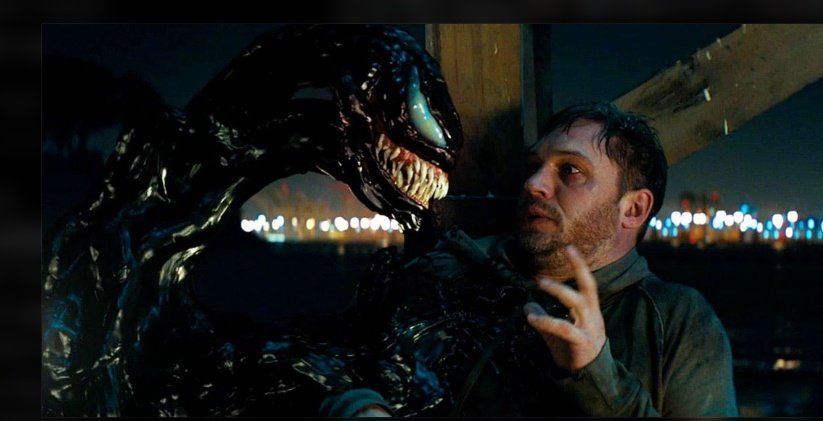
At first glance, the relationship between Eddie Brock and Venom seems straightforward. One is a human being; the other is an alien organism that needs a host to survive. Their connection begins as a biological arrangement, driven by hunger, survival, and mutual convenience.
But that explanation becomes increasingly inadequate as the Venom trilogy progresses.
Eddie and Venom argue like incompatible roommates, behave like an exhausted couple, and repeatedly risk their lives to protect each other. Their relationship is often more emotionally engaging than the battles surrounding them.
That raises a more interesting question than whether Venom is a hero or a monster: How does a creature that initially treats a human as a host become the person who understands him most deeply?
The answer lies in the uncomfortable space between dependence and affection.
1. Venom’s First Connection with Eddie Is About Survival, Not Friendship
When Venom first bonds with Eddie in Venom (2018), neither character is looking for companionship.
Eddie is a disgraced journalist whose career and personal life have collapsed. Venom is an alien symbiote separated from the environment in which it was supposed to operate. Their meeting is essentially an accident that becomes mutually useful.
Venom needs a body. Eddie needs a way to survive the extraordinary situation he has entered.
This distinction matters because their relationship does not begin with trust. It begins with necessity.
Venom initially sees Eddie as a suitable host, while Eddie experiences the alien presence as an invasion of his body. Their partnership is therefore built on an imbalance: one character possesses extraordinary power, while the other is struggling to maintain control over his own life.
The emotional development of the trilogy begins with this uncomfortable arrangement.
2. Eddie Is Already a Man Who Has Lost Control of His Life
Eddie’s vulnerability is not simply physical.
Before meeting Venom, he has already lost his professional credibility, his relationship with Anne Weying, and much of the stability that once defined him. His investigative instincts and stubborn personality remain, but they have not protected him from the consequences of his decisions.
Venom enters a life that is already disorganized.
This makes Eddie an interesting choice of host. He is not a conventional superhero waiting to discover his powers. He is an ordinary, damaged person who has to negotiate with an extraordinary presence while dealing with problems he created himself.
Venom gives Eddie abilities he never possessed, but those abilities do not automatically make him emotionally stronger.
In a sense, the symbiote amplifies the contradiction already inside Eddie: he wants control, but his life repeatedly escapes it.
3. Venom Does Not Just Give Eddie Power — He Takes Away His Privacy
One of the most unusual elements of their bond is that Eddie can no longer experience himself as an entirely separate individual.
Venom can speak to him, influence his actions, and react to situations from inside his body. Their connection is not comparable to wearing armor or carrying a weapon. It is an ongoing invasion of personal space.
That creates a distinctive kind of comedy.
Eddie cannot simply walk away from an argument with Venom. He cannot close a door and expect the conversation to end. Even when he wants silence, the other personality is still there.
But this arrangement also creates the foundation for intimacy.
Venom knows Eddie’s fears, weaknesses, impulses, and embarrassing moments in a way that no ordinary friend could. Eddie, in turn, becomes increasingly familiar with Venom’s appetite, temper, preferences, and insecurities.
Their relationship becomes unusually close because separation is not an easy option.
4. Their Arguments Are the Real Center of the Franchise
The action sequences make Venom visually spectacular, but the conversations between Eddie and Venom give the character pairing its identity.
They disagree about food, violence, responsibility, and even how to behave around other people. Their arguments frequently interrupt the larger action instead of simply supporting it.
This is an important storytelling choice.
A conventional superhero film might use the alien creature primarily as a source of power. The Venom films repeatedly turn that power into a personality conflict.
Eddie wants to maintain some resemblance to an ordinary human life. Venom has very different priorities.
Neither character is consistently reasonable, and neither is entirely willing to surrender control.
The result is a partnership that feels unstable but recognizable. Their conflicts are not just obstacles to overcome; they are the main way the audience learns who these characters are.
5. Why Do Some Fans See Eddie and Venom as a Couple?
A recurring interpretation in online fan discussions is that Eddie and Venom behave less like a traditional hero and sidekick and more like a couple trying to live together.
The comparison is understandable.
They share a body, negotiate boundaries, experience jealousy and frustration, separate after arguments, and eventually discover that their lives are difficult without each other.
Some fans interpret this dynamic as romantic or queer-coded, while others simply enjoy it as an exaggerated friendship or chaotic partnership. These are audience interpretations, not a confirmation that the films establish a conventional romantic relationship.
What makes the discussion interesting is that the films provide enough emotional material for viewers to interpret the bond in different ways.
Their relationship does not fit comfortably into familiar categories.
They are not simply friends, because their connection is far more invasive. They are not simply enemies, because they repeatedly choose to protect each other. And they are not conventional partners, because their competing needs never completely disappear.
The ambiguity is part of the appeal.
6. The First Film Makes Venom’s Choice More Important Than His Power
The first film’s central conflict is not merely whether Eddie can defeat Carlton Drake and Riot.
It is whether Venom will remain loyal to the larger symbiote mission or choose a different future with Eddie.
Venom eventually turns against Riot and helps Eddie protect Earth. That decision gives their relationship a meaning beyond biological survival.
For the first time, Venom’s actions suggest that he is capable of choosing a relationship over the interests of his own kind.
This does not mean that Venom suddenly becomes morally perfect. He remains violent, selfish, and frequently unpredictable.
But his priorities have changed.
The important development is not that Eddie has learned to control Venom. It is that Venom has found a reason to act against his original interests.
That is the beginning of genuine partnership.
7. Let There Be Carnage Reveals the Problem with Living as One
Venom: Let There Be Carnage (2021) changes the nature of the relationship.
The first film is about two incompatible beings learning to coexist. The second asks what happens after coexistence becomes routine.
Eddie and Venom have become familiar with each other, but familiarity creates new problems. Venom wants greater freedom and recognition. Eddie wants to regain control of his personal life.
Their conflict resembles a relationship that has moved beyond the excitement of its beginning.
The problem is no longer whether they can survive together. It is whether they can tolerate each other’s needs.
This is a more interesting direction than simply introducing a stronger villain. Carnage provides the physical threat, but Eddie and Venom’s domestic conflict supplies the emotional structure.
8. Carnage Is More Than a Stronger Version of Venom
Carnage offers an important contrast to Eddie and Venom.
Both relationships involve a human and a symbiote, but they develop in radically different directions.
Cletus Kasady and Carnage share a destructive connection. Their partnership intensifies existing violence rather than creating a meaningful balance between two different personalities.
Eddie and Venom, by comparison, constantly struggle over their differences.
The contrast suggests that sharing a body does not automatically create a healthy partnership. The nature of the relationship depends on what each individual brings into it.
A symbiote can amplify destructive impulses, but it can also become part of a relationship in which two very different beings learn to compromise.
Carnage demonstrates what happens when that process fails.
9. Eddie and Venom’s Separation Is Not Simply a Breakup Joke
When Eddie and Venom separate during the second film, the story uses comedy to explore a genuine problem.
Venom wants to experience the world independently. Eddie wants a degree of normality that their shared existence makes difficult.
Their separation is therefore not just an opportunity for humorous scenes. It exposes how dependent they have become on one another.
Venom discovers that independence is not necessarily satisfying. Eddie discovers that the absence of the alien does not automatically restore the life he once wanted.
Their reunion becomes possible when both recognize that the relationship is worth preserving.
This is a meaningful shift from the first film.
Initially, they remain together because they need each other to survive. Now they have reasons to return to each other even after experiencing separation.
10. The Trilogy’s Humor Makes Venom Less Frightening — But More Personal
One of the recurring criticisms of the film series is that Venom sometimes feels more like a comic character than the terrifying creature familiar to some comic-book readers.
That criticism has a legitimate foundation.
Venom’s monstrous appearance and appetite create expectations of horror and brutality. The films frequently interrupt those expectations with jokes, awkward conversations, and exaggerated reactions.
For some viewers, this weakens the character’s threatening presence.
But the lighter tone also serves another purpose.
If Venom were consistently presented as an unstoppable monster, the emotional relationship with Eddie would be much harder to develop. Humor allows the audience to see the creature as a personality rather than merely a source of danger.
The trade-off is clear: the films sacrifice some of Venom’s horror potential to make his partnership with Eddie more accessible.
Whether that is a good decision depends on which version of Venom an audience member prefers.
11. Eddie Does Not Fully Control Venom — And That Is the Point
A common expectation in stories about extraordinary powers is that the human character eventually learns to master them.
The Venom films take a different approach.
Eddie never becomes a completely authoritative commander of the symbiote. Venom has his own desires, opinions, and capacity for independent action.
Their relationship works precisely because neither character has complete control.
This is also why their arguments remain important throughout the trilogy. If Eddie could simply command Venom, their relationship would lose much of its tension.
The partnership requires negotiation.
Eddie has to accept that Venom is not a tool. Venom has to recognize that Eddie is not merely a body to occupy.
Their development is therefore less about domination and more about recognizing the other as an independent individual.
12. The Last Dance Turns Their Relationship into a Story About Sacrifice
Venom: The Last Dance (2024) gives the trilogy its emotional conclusion.
Eddie and Venom are hunted by forces from both their worlds, and their shared existence becomes connected to a threat that could endanger humanity.
The official Sony synopsis describes them as being forced into a devastating decision that brings their final adventure to a close.
The central emotional question is no longer whether they can stay together.
It is whether they can protect one another by accepting separation.
This reverses the original situation.
At the beginning, Venom needs Eddie because he requires a host. By the end, the relationship has become important enough that Venom is willing to give up his continued existence to protect Eddie and others.
The creature that once entered Eddie’s body for survival ultimately makes a decision that places someone else’s survival first.
That is the emotional distance the trilogy has traveled.
13. Is Venom’s Final Sacrifice the Ultimate Proof of Their Bond?
The ending presents Venom’s sacrifice as a genuine loss.
He separates from Eddie and gives himself up to destroy the threat posed by the Xenophages. Eddie survives, but the person who has shared his body and his daily life is apparently gone.
The emotional weight of the scene comes from the memories that follow.
Eddie remembers the experiences they shared, including moments that once seemed ridiculous or insignificant. Those memories now become evidence of a life that cannot simply be repeated.
This is why the ending works better as a relationship conclusion than as a conventional superhero victory.
Eddie does not celebrate a final triumph. He has survived, but survival comes with the absence of someone who became central to his identity.
The sacrifice gives their earlier arguments and reconciliations a different meaning.
What once looked like comic conflict becomes part of a shared history.
14. Does the Post-Credits Scene Mean Venom Is Still Alive?
The ending leaves room for speculation.
The film includes a post-credits sequence involving a surviving trace of symbiote material, creating an opening for viewers to wonder whether Venom’s story could continue.
However, there is an important distinction between suggesting that symbiote material survives and confirming that the original Venom has returned.
The main story presents Venom’s sacrifice as the conclusion of his relationship with Eddie. The post-credits image introduces uncertainty, but it does not show a confirmed reunion.
This distinction matters because the emotional meaning of the ending depends on taking the separation seriously.
If every sacrifice is immediately reversed, the characters’ choices lose much of their weight.
The possibility of a future story can remain open without erasing what the trilogy’s ending means.
15. The Real Difference Between Eddie and Venom Is What They Learn from Each Other
Across the three films, Eddie and Venom do not simply become more powerful together.
They gradually change the way they understand themselves.
Eddie learns that he cannot always solve problems by controlling everything around him. He must accept that another being can have independent needs and still deserve consideration.
Venom learns that survival is not the only meaningful goal. Loyalty, affection, and sacrifice can become reasons to act beyond immediate self-interest.
Neither character becomes a perfect version of himself.
Eddie remains impulsive. Venom remains dangerous. Their arguments never disappear completely.
But their relationship changes the meaning of those flaws.
They become two imperfect individuals who have learned to make room for each other.
That is a more compelling development than a simple story about a human mastering an alien power.
16. Venom Is More Than a Parasite Because He Eventually Learns to Let Go
The word parasite describes the biological starting point of Eddie and Venom’s relationship.
Venom needs a host to survive, and Eddie initially experiences the bond as something imposed on him. Their early interactions are defined by hunger, fear, and conflicting interests.
But the trilogy gradually moves beyond that arrangement.
They learn to communicate, fight, separate, reconcile, and ultimately make sacrifices for one another. Their connection becomes meaningful not because they are physically inseparable, but because they repeatedly choose to remain connected.
That is the central irony of Venom.
A creature that begins by occupying another person’s body eventually becomes someone Eddie cannot imagine losing.
And when the time comes, Venom demonstrates the deepest form of attachment by doing something he once would never have considered: letting go.
Venom’s most important transformation is not from monster to hero. It is from a creature that needs a host to a being that understands why someone else matters.
That is why Eddie Brock and Venom remain the emotional center of the trilogy — even when the films are at their most chaotic.