Kimchi jjigae looks simple.
Put kimchi in a pot, add some meat or tuna, pour in water or broth, and let everything simmer.
Almost anyone can make it.
But making a really delicious kimchi jjigae is another story.
In Korea, kimchi jjigae is such a familiar home-cooked dish that a good bowl can sometimes say a lot about the person who made it.
The ingredients are inexpensive. The cooking method looks easy. Yet getting the balance of sourness, saltiness, richness, and savory flavor just right can be surprisingly difficult.
Why?
Because the most important ingredient is alive and constantly changing.
Kimchi.
Fresh kimchi, slightly fermented kimchi, and deeply sour kimchi can produce completely different stews.
That is why great kimchi jjigae is not simply about following a recipe.
It begins with understanding your kimchi.
What Is Kimchi Jjigae?
Kimchi jjigae (김치찌개) is a Korean stew made primarily with fermented kimchi.
It is commonly cooked with ingredients such as pork, tofu, green onion, and onion, although there are countless variations.
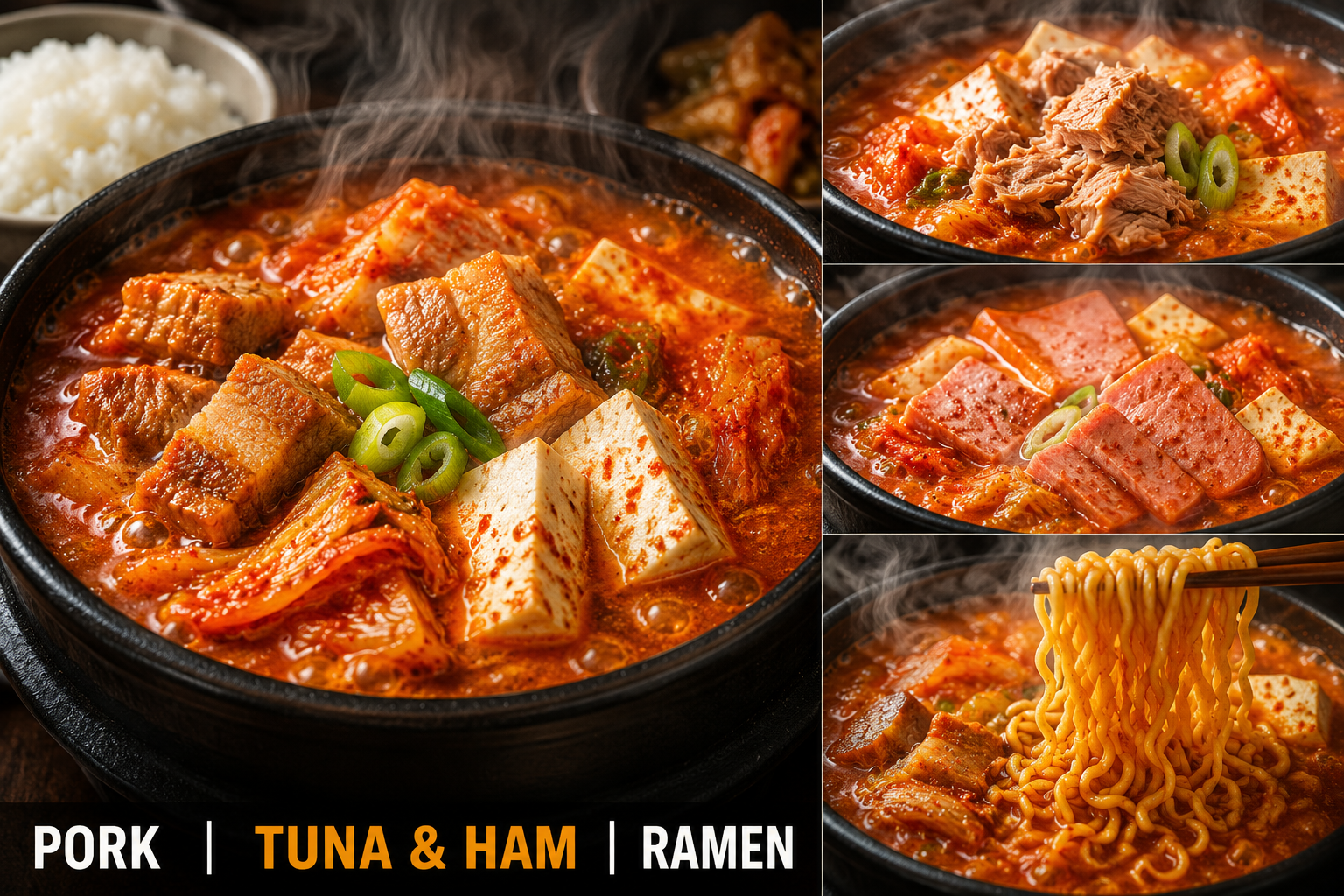
Tuna is popular.
Ham works beautifully.
Some Koreans cook it with mackerel or saury.
And when there is delicious broth left in the pot, ramen or udon noodles can sometimes find their way in too.
That flexibility is part of the beauty of kimchi jjigae.
The kimchi remains at the center, but the personality of the stew changes depending on what you cook with it.
Simple to Make, Difficult to Master
There is a reason kimchi jjigae can be frustrating even for Korean home cooks.
Every kimchi tastes different.
One batch may already be quite salty.
Another may be strongly sour.
One may have a pronounced garlic flavor, while another may carry more sweetness or the savory character of fermented seafood seasonings.
So imagine following exactly the same kimchi jjigae recipe with two completely different batches of kimchi.
The result may not be the same.
That is why one of the most important lessons in making kimchi jjigae is surprisingly simple:
Taste your kimchi first.
Then decide what your stew needs.
A recipe gives you a starting point.
Your tongue finishes the recipe.
The First Secret: Don’t Use Kimchi That Is Too Fresh
Freshly made kimchi can be wonderful with hot rice.
But for kimchi jjigae, kimchi that has had some time to ferment is usually a better choice.
It does not have to be extremely sour.
Even slightly fermented kimchi can develop more character in a stew than freshly made kimchi.
As fermentation progresses, kimchi develops the tangy acidity and deeper flavors that give kimchi jjigae its distinctive personality.
This is why Koreans often reach for older kimchi when it is time to make a pot of stew.
Kimchi that may have become a little too sour to eat exactly as it is can suddenly become an excellent cooking ingredient.
Yesterday’s aging kimchi can become today’s great jjigae.
The Science Behind Great Kimchi Jjigae: Acidity Matters
One of the keys to understanding kimchi jjigae is acidity.
As kimchi ferments, lactic acid bacteria transform its flavor and produce the characteristic tang associated with fermented kimchi.
That acidity becomes especially interesting when kimchi is cooked with fatty pork.
The pork gives the broth richness and savory depth, while the tanginess of the fermented kimchi helps balance that richness.
This creates one of the classic flavor combinations of Korean cooking:
sour fermented kimchi + rich pork + hot savory broth.
But more sour is not automatically better.
The goal is balance.
If your kimchi is already very salty, be careful with additional soy sauce or salt.
If it is intensely sour, you may want a little sweetness or richness to round out the flavor.
If it is only lightly fermented, the stew may need more help developing depth.
This is where cooking experience begins to matter.
Pork or Tuna? Koreans Have Their Favorite
Ask people in Korea about kimchi jjigae and you will quickly discover that everyone has preferences.
One of the classic choices is:
Pork or tuna?
Pork Kimchi Jjigae
Pork makes kimchi jjigae rich and hearty.
Pork belly is particularly delicious because some of its fat renders into the broth as it cooks.
That richness combines with the acidity of fermented kimchi and creates a deep, satisfying flavor.
Pork shoulder can also work well if you prefer something a little leaner.
For many people, this is the classic kimchi jjigae.
Tuna Kimchi Jjigae
Then there are the tuna lovers.
Canned tuna makes kimchi jjigae incredibly convenient.
Open a can, add it to the pot, and you can quickly create a savory stew without preparing raw meat.
Tuna has its own distinctive flavor, so the result is quite different from pork kimchi jjigae.
Neither version is the “correct” one.
Often, the best kimchi jjigae is simply the version you grew up loving.
Don’t Forget Ham
There is another easy ingredient that tastes surprisingly good with kimchi:
ham.
The salty, savory flavor of ham works naturally with fermented kimchi.
It is especially useful when you want something quick and comforting without preparing fresh meat.
And if you begin adding sausages, ham, noodles, and other ingredients, you may notice the meal starting to move toward another famous Korean dish:
budae jjigae, often called Korean army stew.
That is another example of how flexible Korean stew culture can be.
Kimchi Jjigae Can Even Become a Fish Dish
Kimchi jjigae is not limited to meat.
Koreans also cook fermented kimchi with fish such as mackerel or saury.
These strongly flavored, oily fish have enough personality to stand up to fermented kimchi.
As the fish simmers, its richness enters the broth while the spicy, tangy kimchi provides contrast.
It is a very different experience from pork or tuna kimchi jjigae.
Instead of serving grilled fish and kimchi separately, you can let them cook together in one bubbling pot.
The same kimchi can therefore become the foundation for pork, tuna, ham, or fish.
Change one main ingredient, and the personality of the entire pot changes.
A Humble Stew That Filled Korean Tables
Kimchi jjigae has never needed expensive ingredients to feel satisfying.
That is an important part of its place in Korean food culture.
For generations, it has been familiar everyday food: affordable, practical, hearty, and full of flavor.
A little fermented kimchi, some pork or another protein, tofu, green onion, and rice can make a complete and comforting meal.
Kimchi jjigae can be eaten as part of an everyday meal.
A bubbling pot can also become anju (안주)—food enjoyed alongside a drink.
That versatility has helped kimchi jjigae remain at home on ordinary Korean tables.
It is inexpensive food that never has to feel like a poor meal.
One Pot Can Fill the Whole Table
A Korean meal traditionally often includes rice, soup or stew, and several side dishes.
But kimchi jjigae has an unusual strength.
One good pot can do several jobs at once.
There is hot broth.
There is kimchi.
If you make the pork version, there is meat.
There may also be tofu, onions, green onions, mushrooms, or other vegetables.
Put the pot in the middle of the table and add bowls of steaming rice.
Suddenly, you do not need many other side dishes.
This is one of the quiet strengths of kimchi jjigae:
One humble pot can make a simple table feel abundant.
How to Make Pork Kimchi Jjigae
Here is a practical home version.
The measurements are a starting point.
Remember the most important rule:
Taste your kimchi before you season the broth.
Ingredients — 2 to 3 Servings
- Fermented kimchi — 300 g
- Pork belly or pork shoulder — 200 g
- Tofu — 150 g
- Onion — 1/2
- Green onion — 1
- Water or light broth — 500 ml
- Kimchi juice — 3 to 4 tbsp, if available
- Gochugaru — 1 tbsp
- Minced garlic — 1 tsp
- Soup soy sauce or regular soy sauce — about 1 tsp, as needed
- Sugar — 1/2 tsp, optional
If your kimchi is already strongly seasoned, you may need less additional seasoning.
Step 1: Taste the Kimchi
Before doing anything else, taste it.
Is it salty?
Is it sour?
Is it only slightly fermented?
This small step will help you decide how much seasoning the stew actually needs.
Step 2: Cook the Pork and Kimchi
Cut the pork and kimchi into comfortable bite-sized pieces.
Place the pork in a pot and cook it briefly over medium heat.
Add the kimchi and cook them together for a few minutes.
This begins building the rich base of the stew.
Step 3: Add the Broth
Add about 500 ml of water or light broth.
If you have kimchi juice from the container, add a few tablespoons.
Bring everything to a boil, then lower the heat and allow it to simmer.
Kimchi jjigae benefits from enough cooking time for the flavors of the kimchi, pork, and broth to come together.
Step 4: Season Carefully
Add the garlic and gochugaru.
Taste the broth before adding soy sauce.
If it already tastes salty enough, you may not need much additional seasoning.
If the kimchi is extremely sour, a very small amount of sugar can soften the sharp edge.
But do not try to remove all the acidity.
That tang is part of what makes kimchi jjigae taste like kimchi jjigae.
Step 5: Add Tofu and Green Onion
Add sliced tofu toward the later part of cooking so it keeps its shape.
Finish with green onion.
Taste once more.
This final tasting is more important than blindly following another spoonful from the recipe.
Serve the stew bubbling hot with steamed rice.
Easy Tuna Kimchi Jjigae
For an easier version, replace the pork with canned tuna.
Use:
- Fermented kimchi — 300 g
- Canned tuna — 1 can
- Tofu — 150 g
- Onion — 1/2
- Water or broth — about 500 ml
- Kimchi juice — 3 to 4 tbsp
- Gochugaru — 1 tbsp
- Garlic — 1 tsp
- Green onion — 1
Cook the kimchi first with a little of the tuna oil if you enjoy a richer flavor.
Add the broth and seasonings and simmer.
Add the tuna, tofu, and green onion and cook until everything is hot and the flavors have come together.
This is one of the easiest ways to turn kimchi and a can of tuna into a satisfying Korean meal.
Don’t Waste the Broth: Add Noodles
Now imagine that dinner is almost finished.
The pork is mostly gone.
There are only a few pieces of kimchi left.
But there is still delicious red broth bubbling in the pot.
Do not throw it away.
Add ramen noodles.
The noodles absorb the spicy, sour, savory broth and transform the end of the meal into something new.
You can also add udon noodles if you prefer something thicker and chewier.
If the remaining broth has become too salty or concentrated, add a small splash of water before cooking the noodles.
The first half of dinner was kimchi jjigae.
The ending can become a bowl of delicious noodles.
True Taste Korea Tip: Learn the Flavor, Not Just the Recipe
If you make kimchi jjigae only by measuring ingredients, you can make a good stew.
But if you want to become good at making kimchi jjigae, learn to taste.
Taste the kimchi.
Taste the broth halfway through cooking.
Taste it again before serving.
Ask yourself:
Is it too salty?
Does it need more savory depth?
Is the sourness pleasant or overpowering?
Does it need more richness?
This is why kimchi jjigae is simultaneously one of Korea’s easiest and most difficult dishes.
The recipe is simple. The balance takes practice.
Kimchi Jjigae FAQ
Can I use fresh kimchi for kimchi jjigae?
You can, but slightly fermented or sour kimchi generally gives the stew more of the tangy depth associated with kimchi jjigae.
Which pork is best?
Pork belly gives the broth plenty of richness, while pork shoulder is another good choice if you prefer less fat.
Can I make kimchi jjigae without pork?
Absolutely. Tuna, ham, mackerel, saury, or tofu can all lead to different versions.
Is kimchi jjigae very spicy?
It can be spicy, but the intensity depends on the kimchi and the amount of gochugaru you add.
Can I add ramen noodles?
Yes. Ramen noodles are particularly delicious cooked in the remaining broth. Udon noodles are another option.
Why does my kimchi jjigae taste too salty?
Your kimchi may already contain plenty of salt. Avoid automatically adding the full amount of soy sauce or other salty seasonings before tasting.
Do I need many side dishes with kimchi jjigae?
No. One of its attractions is that a hearty pot with kimchi, broth, protein, and tofu can make a simple bowl of rice feel like a complete meal.
Simple Ingredients, Abundant Flavor
Kimchi jjigae does not need to be luxurious.
That has never been its purpose.
It takes something already found in countless Korean homes—fermented kimchi—and turns it into a hot, generous meal.
Add pork and it becomes rich and hearty.
Add tuna and it becomes quick and savory.
Add ham and it becomes another kind of comfort food.
Cook it with mackerel or saury and it takes on the character of a fish dish.
Add ramen to the remaining broth and the meal changes once again.
Yet underneath all those variations is the same humble pot of kimchi.
That may be the real beauty of kimchi jjigae.
Simple ingredients can create abundant flavor.
And one bubbling pot can make even a simple table feel full.