1. A Sixteen-Year-Old Against the World’s Expectations
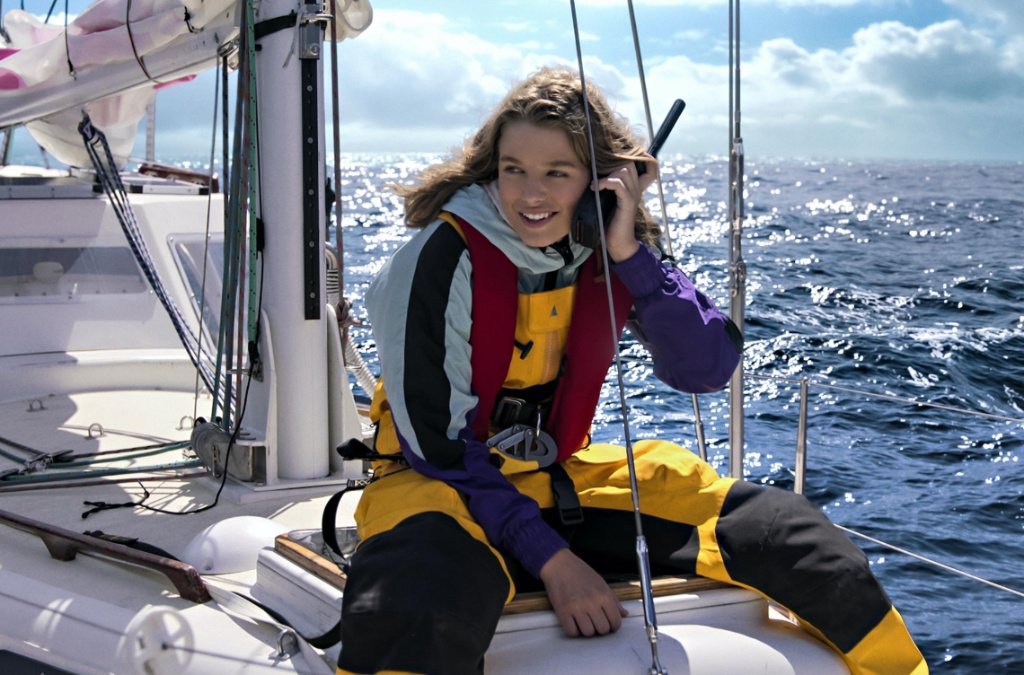
At the center of True Spirit is an extraordinary ambition: a sixteen-year-old girl wants to sail alone around the world.
Jessica Watson is not trying to win a conventional sporting competition. There is no opponent waiting at a finish line, no team to carry her through a difficult moment, and no guarantee that she will return safely.
Her journey is a test of preparation, endurance, judgment, and psychological strength. The ocean does not care about her age or her dreams.
The Netflix film turns this real-life voyage into an adventure about a young person determined to prove that other people’s doubts do not have to define her future.
But the more interesting question is whether the film captures the complexity of what actually happened.
2. What Was Jessica Watson Really Trying to Achieve?
In October 2009, Jessica Watson departed Sydney aboard her yacht, Ella’s Pink Lady. Her objective was to complete a solo, nonstop, and unassisted circumnavigation of the world.
She returned to Sydney on May 15, 2010, after 210 days at sea. She was still sixteen and would turn seventeen three days later.
The achievement required far more than courage. Watson had spent years preparing, building offshore sailing experience and learning practical skills that would become essential when she was alone in the ocean.
This distinction matters. The film sometimes makes determination appear to be the central ingredient of success. In reality, determination was only one part of a much larger combination of preparation, technical knowledge, equipment, and difficult decisions.
A person cannot simply believe strongly enough to survive the ocean.
3. The Real Journey Was Already Dramatic Enough
Before the voyage even began, Watson’s attempt attracted criticism and public concern.
Her age was a major issue. Many people questioned whether a teenager could safely complete such a dangerous journey without a crew.
There was also a frightening incident during a trial voyage: her yacht collided with a cargo ship and lost its mast. The boat had to be repaired before she could begin the planned journey.
That episode alone reveals how much uncertainty surrounded the project.
The film uses these events to establish Jessica as an underdog. However, the real story is not simply about a young girl ignoring criticism. It is also about a teenager undertaking a dangerous project while adults, experts, and the public debated whether it should happen at all.
That tension deserves more attention than a conventional inspirational narrative usually allows.
4. The Ocean Is Not a Villain That Can Be Defeated
One of the film’s strongest ideas is that the ocean cannot be treated like an ordinary enemy.
Jessica can prepare, study weather conditions, maintain her boat, and make careful decisions. But she cannot control the wind or prevent every storm.
The sea is not deliberately testing her. It is indifferent.
This makes the journey psychologically different from a competition. An athlete can measure progress against an opponent. A solo sailor must live with uncertainty for months, often without anyone nearby who can immediately help.
The film’s storm sequences give this danger a visual form. Yet the deeper challenge is not just surviving one enormous wave. It is continuing to make decisions correctly when exhaustion, fear, and isolation have become part of everyday life.
5. The Capsizing Scene: Hollywood Drama or Real Danger?
The dramatic capsizing sequence is one of the film’s most memorable moments.
It also became a point of discussion among sailing enthusiasts on Reddit.
In a discussion on r/sailing, viewers questioned whether the yacht could really be pushed so far underwater and then right itself as the film depicts. Some commenters explained that ocean-going monohull sailboats are designed to recover from certain knockdowns. Others questioned the specific depth and duration shown on screen.
There is an important distinction here.
Watson experienced seven knockdowns during the voyage. She also confirmed that her emergency beacon activated during the worst incident because the yacht went deep enough underwater. However, she explained that the actual time spent underwater was much shorter than the film suggests.
The scene is therefore not simply invented, but it is dramatized.
The real danger was substantial. The cinematic version stretches the experience to make the audience feel the terror of those moments.
6. The Controversy Behind the World-Record Claim
Here is the detail that makes True Spirit more interesting than a standard inspirational movie.
Watson completed a solo, nonstop, and unassisted voyage around the world. However, the World Sailing Speed Record Council did not recognize it as a qualifying circumnavigation record.
The reason was technical: the route was estimated at approximately 18,582 nautical miles, below the council’s 21,600-nautical-mile minimum requirement for the relevant record category.
This does not mean she did not complete her remarkable voyage. It means that the achievement did not satisfy that organization’s specific distance standard for an official record.
The distinction is important because the phrase “youngest person to sail around the world” can sound like an uncomplicated, universally recognized title.
It was not.
The controversy reveals a conflict between two different ways of measuring achievement: the human significance of completing an extraordinary journey and the formal rules used to certify a sporting record.
7. Does Recognition Determine the Value of an Achievement?
The record controversy raises a question that reaches beyond sailing.
If someone completes an extraordinarily difficult challenge but does not meet an organization’s technical definition of a record, does that make the achievement less meaningful?
There are two separate issues.
A record-keeping organization must apply its rules consistently. If the distance requirement is part of the definition, it cannot simply ignore that requirement because a story is inspiring.
But human accomplishment cannot always be reduced to a certificate.
Watson spent 210 days alone at sea and completed a voyage that demanded exceptional preparation and resilience. That fact remains true regardless of whether a particular record category recognized it.
The film becomes more interesting when viewers understand this distinction rather than accepting a simplified story about a teenager becoming the undisputed youngest record-holder.
8. Ben Bryant: The Mentor Who Was Not Quite Real
Cliff Curtis plays Ben Bryant, Jessica’s sailing mentor in the film.
His character provides guidance, conflict, and emotional tension. He also gives the story someone who can challenge Jessica when her confidence becomes dangerous.
However, Ben is a fictionalized character rather than a direct portrait of one real person.
Director Sarah Spillane explained that the character combined elements of several people who advised Watson, along with influences from the filmmakers’ own experiences.
This is a familiar technique in biographical cinema. A film often combines several real people into one character to make the story easier to follow.
The trade-off is that the audience may mistake a dramatic character relationship for a historically exact one.
Ben works as a storytelling device. He should not be treated as a complete record of the real people who helped Jessica prepare.
9. The Family Behind the Voyage
A solo voyage may involve only one person on the boat, but it is never completely separate from the people waiting on land.
Jessica’s parents and family are part of the emotional structure of True Spirit. Their support gives her a reason to continue, while their fear reflects the risk they cannot control.
The film presents the family as an important source of encouragement.
Yet the real-world debate was more complicated. Critics questioned whether adults should support such a dangerous undertaking by someone so young.
This is not an easy question to dismiss.
Supporting a child’s ambition is not automatically the same as approving every risk involved in pursuing it. At the same time, protecting a young person does not necessarily mean preventing them from attempting something difficult.
The film leans toward the inspirational side of that conflict. A more complicated version might have spent longer examining the responsibilities of the adults around Jessica.
10. What the Film Leaves Out
A 109-minute feature cannot reproduce 210 days at sea in full.
The film compresses events, rearranges certain moments, and creates dramatic incidents to make the journey work as a continuous story.
Some details are grounded in Watson’s experience, while others are altered or invented for dramatic purposes. The fictionalized mentor is one example. The extended presentation of the worst knockdown is another.
These choices do not automatically make the film dishonest. Biographical films are adaptations, not documentaries.
But viewers should understand what kind of story they are watching.
True Spirit is a dramatization of a real voyage. It is not a complete historical record of every decision, conversation, or event aboard Ella’s Pink Lady.
The distinction becomes especially important when the film is used as a source for understanding the actual achievement.
11. Why Some Sailing Enthusiasts Were Critical
Reddit discussions reveal a reaction that ordinary inspirational-film reviews might overlook.
Some viewers enjoyed the story but questioned the technical details of the sailing scenes.
A later r/sailing discussion, for example, criticized details such as open hatches during severe weather, sail handling, and the apparent decisions made aboard the yacht during dangerous conditions.
Other commenters defended parts of the portrayal, pointing out that the film depicts a sixteen-year-old who was still learning and who made mistakes.
This disagreement is useful because it exposes two different expectations.
General viewers may focus on the emotional journey and the determination required to finish it. Experienced sailors may pay closer attention to whether the boat, equipment, and decisions look credible.
Neither reaction represents every viewer. Reddit is a small and self-selecting sample, not a survey of the entire audience.
Still, the discussion shows that the film can be watched in two very different ways: as an inspirational adventure or as a dramatization that invites technical scrutiny.
12. Is Jessica Watson a Hero Because She Succeeded?
The film naturally builds toward a triumphant return.
But the deeper question is whether Jessica’s courage should be judged only by the final result.
Imagine the voyage had ended differently. Would the preparation, discipline, and determination suddenly have become meaningless?
Of course, survival and completion matter enormously. A dangerous attempt should never be romanticized as if failure has no consequences.
But the value of the journey also lies in the work that came before the finish line: years of preparation, the willingness to learn, and the ability to continue making decisions under pressure.
Success made the story famous. It did not create every quality that made the attempt extraordinary.
That is a more meaningful definition of courage than simply reaching a destination.
13. What Reddit’s Reactions Reveal About True Spirit
The Reddit conversations around True Spirit are not large enough to establish a universal audience consensus. However, they reveal several recurring points of interest.
First, viewers are fascinated by the reality behind the storm and capsizing scenes. They want to know how much of the danger actually happened.
Second, sailing enthusiasts are more likely to challenge the technical accuracy of the movie. They notice details that may pass unnoticed by viewers unfamiliar with offshore sailing.
Third, some viewers appreciate the inspirational story while still criticizing the film’s dramatic liberties.
This combination is important. The film can be emotionally effective without being a perfect technical recreation.
The most productive discussion is not simply whether True Spirit is good or bad. It is whether its cinematic choices help viewers understand Jessica’s real achievement or make that achievement harder to distinguish from Hollywood storytelling.
14. True Spirit: The Difference Between a Record and a Human Achievement
True Spirit tells the story of a teenager who attempted something extraordinary and returned after 210 days alone at sea.
But its most interesting lesson is not that Jessica Watson proved everyone wrong.
It is that achievement and recognition are not always the same thing.
The formal record controversy does not erase her voyage. The film’s dramatic liberties do not erase the real danger she faced. And the inspirational ending should not prevent viewers from asking difficult questions about risk, preparation, responsibility, and the way real lives are transformed into entertainment.
Perhaps the most important part of Jessica’s story is not the title she did or did not receive.
It is the fact that she prepared for an immense challenge, faced the uncertainty of the ocean, and completed the journey she had set out to make.
Did True Spirit accurately honor Jessica Watson’s real achievement, or did its Hollywood-style storytelling make an already extraordinary story seem less truthful?