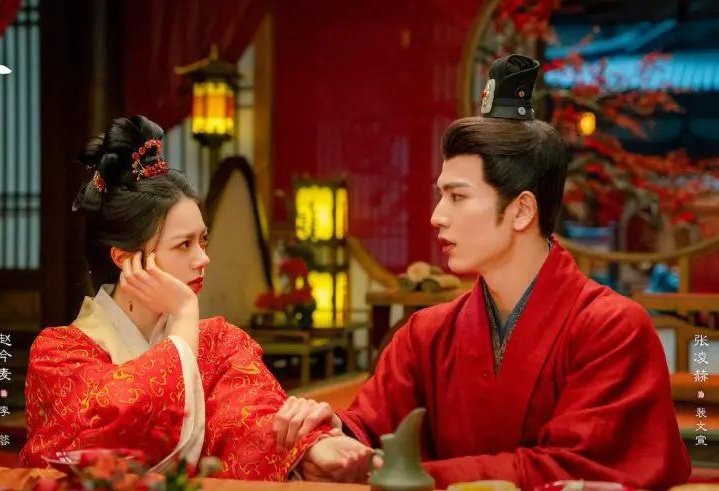
• The Princess Royal (2024): Can a Second Life Really Repair a Broken Marriage?

    The Princess Royal (2024): Can a Second Life Really Repair a Broken Marriage?

    What if you could return to the beginning of a marriage that had already destroyed your life? In The Princess Royal (2024), Li Rong and Pei Wenxuan receive another chance after twenty years of resentment, political manipulation, and mutual betrayal. But knowing how a relationship failed does not necessarily mean knowing how to repair it.

    1. They Already Know How Their Marriage Ends

    Most romantic dramas begin with two people who do not know what the future holds.

    The Princess Royal begins somewhere very different.

    Li Rong and Pei Wenxuan have already spent approximately twenty years together. Their marriage, originally arranged for political reasons, has gradually become a relationship filled with resentment, misunderstanding, and emotional distance.

    Eventually, political conspiracies push them toward a fatal confrontation. Each believes the other has become an enemy, and both die without resolving the truth behind their relationship.

    Then something extraordinary happens.

    They awaken as their younger selves, returning to the period before their marriage.

    The premise immediately changes the usual rules of romantic storytelling.

    These are not strangers meeting for the first time. They are two people who remember what it feels like to love, disappoint, distrust, and ultimately lose each other.

    Their second chance is therefore not simply an opportunity to fall in love again.

    It is an opportunity to discover whether two people who already know how badly they can hurt each other are capable of choosing differently.

    2. The Past Is Not Just a Memory. It Is an Emotional Burden.

    The most interesting part of the second-life premise is that neither character returns emotionally untouched.

    They remember the consequences of their previous decisions.

    Li Rong remembers a marriage in which affection gradually disappeared. Pei Wenxuan remembers the pain of loving a woman who eventually became suspicious enough to order his death.

    Those memories influence every interaction.

    A casual remark can carry the weight of an old argument. A moment of kindness can feel suspicious because the characters know how easily affection once turned into resentment.

    This creates a different kind of romantic tension.

    In an ordinary romance, the characters must discover whether they can trust each other.

    Here, they must decide whether their memories are reliable enough to guide their new relationship.

    The past gives them information, but it also creates emotional prejudice.

    They know what happened before, yet they do not necessarily understand every reason it happened.

    That distinction becomes central to the story.

    3. Li Rong: A Powerful Princess Who Could Not Protect Her Marriage

    Li Rong is not an ordinary heroine.

    As the Grand Princess of the Xia kingdom, she possesses political influence, authority, and access to the imperial court.

    She can command people, investigate powerful families, and intervene in political disputes.

    Yet her first life reveals a contradiction.

    A woman who possesses enormous political power cannot necessarily control what happens inside her own marriage.

    Her relationship with Pei Wenxuan deteriorates despite the authority she holds.

    This is one of the most interesting aspects of her character.

    Political power and emotional understanding are two different abilities.

    Li Rong knows how to negotiate with powerful families, but she struggles to recognize the emotional consequences of her own decisions.

    Her second life gives her an opportunity to reconsider the difference between controlling circumstances and understanding another person.

    The question is whether she can become a better partner, not merely a more successful political strategist.

    4. Pei Wenxuan: The Husband Who Remembers Being Betrayed

    Pei Wenxuan’s second chance is equally complicated.

    In the previous life, he spends years living beside Li Rong while their relationship gradually loses its foundation.

    His eventual death is not simply a political defeat.

    It is the final consequence of a marriage in which trust has collapsed.

    When he returns to the past, he carries the knowledge of how much he once suffered.

    This gives him a different perspective from Li Rong.

    He is not simply trying to win her affection again. He must decide whether he is willing to enter a relationship that once ended in betrayal.

    His character becomes particularly appealing when he demonstrates emotional restraint and practical intelligence.

    He does not always agree with Li Rong, but he often understands the motivations of people around them.

    Some Reddit viewers praised his judgment, emotional awareness, and loyalty, particularly when he is willing to challenge Li Rong rather than blindly follow her decisions.

    One viewer argued that Pei Wenxuan understood people and their motivations better than the princess herself, and criticized the later episodes for giving him less narrative attention.

    That reaction reveals an important point: Pei Wenxuan is not simply the man who loves Li Rong.

    He is also one of the few people capable of recognizing when her judgment is incomplete.

    5. Why Their Second Marriage Is Different From the First

    The second marriage is not built on the same assumptions as the first.

    In their previous life, political necessity determines their relationship.

    They marry because the arrangement serves the interests of the royal family and the surrounding political structure.

    In the new timeline, both characters understand the risks of repeating that arrangement.

    Their early interactions therefore contain a strange combination of familiarity and uncertainty.

    They know each other’s habits, but they must rediscover what those habits mean.

    They know each other’s weaknesses, but they cannot assume that the same weaknesses will produce the same outcomes.

    This creates an interesting romantic dynamic.

    Their relationship gradually moves from suspicion toward cooperation.

    Instead of treating marriage as a finished political arrangement, they begin to treat it as something that must be actively maintained.

    That is one of the drama’s strongest ideas.

    A successful relationship cannot depend entirely on the fact that two people once loved each other.

    It requires new decisions in the present.

    6. The Broken Guqin: A Marriage That Cannot Be Repaired by One Person Alone

    One of the most memorable emotional moments discussed by viewers involves Pei Wenxuan’s guqin.

    In a Reddit discussion, a viewer interpreted his comments about the broken instrument as a metaphor for their damaged relationship.

    The strings had already broken, and repeated attempts to repair them had not restored the original sound.

    The image carries a deeper meaning.

    A relationship can survive years of shared experiences while becoming emotionally exhausted.

    Two people may remain married, continue performing their social roles, and even protect each other in public, yet no longer know how to communicate privately.

    The broken instrument also reveals something about Pei Wenxuan.

    He has tried to repair the relationship before.

    His willingness to try again does not mean he has forgotten how painful the previous attempts were.

    This is why reconciliation requires more than a romantic confession.

    It requires both people to recognize the damage they contributed to.

    7. The Real Challenge: Can Li Rong Admit That She Was Wrong?

    Li Rong’s political intelligence is one of her defining qualities.

    But intelligence can become a weakness when a person assumes that their interpretation of events must be correct.

    In her first life, she makes decisions based on incomplete information and personal assumptions.

    The consequences are severe.

    Her second life gives her access to knowledge that could prevent many disasters. However, knowing the outcome of previous events does not automatically make her judgment flawless.

    She must also reconsider how she interprets people.

    This becomes especially important in her relationship with Pei Wenxuan.

    If she continues to assume that she understands his motives without listening to him, the marriage can deteriorate again even under different circumstances.

    A second chance is meaningful only when it changes the way a person thinks.

    Otherwise, it merely gives someone another opportunity to repeat an old mistake.

    8. Su Rongqing: The Past That Refuses to Disappear

    Su Rongqing is one of the most controversial characters in the drama.

    His connection with Li Rong is shaped by the first timeline, in which he becomes an important presence in her life.

    In the second timeline, he remains emotionally connected to her while pursuing his own political interests.

    This creates a complicated triangle.

    Li Rong must reconsider what she believed about Su Rongqing, while Pei Wenxuan has to confront the possibility that their relationship could be damaged by the same person again.

    Su Rongqing is not merely a romantic rival.

    He represents the danger of allowing old emotional assumptions to determine present decisions.

    His continued influence also creates a problem for the drama’s narrative balance.

    The more attention the story gives him, the more difficult it becomes to preserve the central relationship between Li Rong and Pei Wenxuan.

    This tension became especially visible in the audience reaction to the later episodes.

    9. Why Su Rongqing Became a Source of Viewer Frustration

    The Reddit finale discussion revealed a particularly strong disagreement about Su Rongqing’s role.

    Some viewers complained that he received too much screen time at the expense of Pei Wenxuan.

    Others argued that several schemes and important developments that should have strengthened the male lead’s story were instead given to Su Rongqing.

    One viewer even complained that Pei Wenxuan had effectively become a secondary character in his own story during the later episodes.

    A separate Reddit discussion attempting to defend Su Rongqing acknowledged that many viewers were frustrated by the amount of attention given to him and the time required to resolve Li Rong’s feelings toward him.

    This criticism is more significant than a simple complaint about a disliked character.

    It concerns the structure of the drama itself.

    A secondary character can be important without becoming the center of a story that was originally built around another relationship.

    When the narrative repeatedly redirects attention toward a rival, viewers may begin to question whose emotional journey they are actually watching.

    The problem is not that Su Rongqing exists.

    It is that his importance sometimes appears to compete with the central story rather than strengthen it.

    10. The Political Conflict: Can a Princess Change the System That Created Her Power?

    The political dimension of The Princess Royal gives Li Rong a purpose beyond her marriage.

    She is not merely trying to secure a happy romantic future.

    She is also confronting the aristocratic families whose influence shapes the kingdom.

    The concentration of wealth and political authority among powerful noble houses creates structural problems.

    These families possess advantages that ordinary people cannot easily challenge.

    Li Rong’s position gives her the ability to confront this imbalance, but the drama does not always explore the institutional consequences as deeply as its premise suggests.

    This is an important limitation.

    Removing one corrupt official does not necessarily reform a political system.

    Defeating a powerful family does not automatically change the rules that allowed that family to dominate.

    A genuine reform requires institutions, incentives, and a redistribution of power.

    The drama raises these questions through Li Rong’s political ambitions, but its romantic structure sometimes takes priority over the harder work of explaining how the system could actually change.

    11. Why the Original Novel Matters to the Ending

    The difference between the drama and its source novel became part of the Reddit discussion.

    One viewer who had read the novel argued that the series did not resolve the aristocratic-family problem as satisfactorily as the original story.

    The discussion specifically referred to a reform involving the status of illegitimate children within noble families.

    In the novel, this change gradually weakens the concentration of wealth and influence within a small number of powerful houses by allowing resources and status to become more widely distributed.

    Whether viewers agree with every detail of that interpretation or not, the comparison identifies a meaningful adaptation issue.

    The novel’s political solution addresses the structure that produces inequality.

    A drama adaptation may simplify or shorten such developments because it must allocate time to romance, action, and character relationships.

    But when a story establishes political reform as one of its major themes, removing the mechanism of reform can weaken the ending.

    The audience may see the old political order defeated without fully understanding what replaces it.

    That is a different kind of unfinished resolution from a romantic subplot.

    12. The Final Episodes: When the Supporting Character Takes Over

    The later episodes attempt to resolve several major conflicts simultaneously.

    Li Rong and Pei Wenxuan must confront the political forces surrounding the throne.

    Su Rongqing’s position becomes increasingly dangerous.

    The imperial family faces its own internal crisis.

    And the story must finally establish what kind of future the kingdom will have.

    The result is an ending with considerable dramatic activity.

    However, the Reddit finale discussion shows that not all viewers felt the narrative balance was successful.

    Some praised the performances and emotional moments but felt the last episodes left a disappointing impression because of the way the central characters were handled.

    Others specifically criticized the amount of attention given to Su Rongqing.

    This suggests that the problem was not a lack of events.

    It was the distribution of emotional attention.

    A finale can contain many important developments and still leave the audience feeling that the central relationship has not received enough space.

    13. Li Rong’s Final Political Achievement Is Bigger Than Her Marriage

    The ending gives Li Rong an extraordinary political position.

    After the imperial crisis, she eventually becomes the ruler of the kingdom, with Pei Wenxuan serving as her right chancellor.

    This is a significant conclusion because the heroine does not simply leave the political world to enjoy a private romantic life.

    She assumes responsibility for governing.

    Her relationship with Pei Wenxuan also changes in meaning.

    He is no longer merely the husband whose affection she once failed to preserve.

    He becomes a political partner who can support her decisions while maintaining his own judgment.

    This is a stronger ending for Li Rong than simply becoming a princess who finally receives the love she wants.

    She gains the opportunity to exercise authority in her own right.

    Yet the ending also invites a question.

    Does becoming ruler mean that she has solved the political problems that shaped her first life, or has she merely inherited the responsibility of confronting them?

    The distinction matters because political power is not the same as political reform.

    14. The Unresolved Questions That the Finale Leaves Behind

    The final episode delivers a reunion and a marriage, but some viewers continued to question details that were not clearly explained.

    One Reddit discussion specifically raised the issue of Li Rong’s pregnancy and the apparent three-year time jump.

    Viewers wondered why the child was not mentioned in the final moments after the pregnancy had become important in the preceding episodes.

    Others questioned the resolution of Su Rongqing’s story and the consequences of his final actions.

    These questions demonstrate how a time jump can create narrative problems.

    A time jump can efficiently show that the characters have reached a new stage of life.

    But it can also skip the very consequences that viewers want to understand.

    The audience is not simply asking whether the couple is happy.

    It wants to know what their new life actually looks like.

    The series offers a symbolic conclusion, but some practical and emotional details remain open to interpretation.

    15. The Happy Ending: Did the Couple Actually Repair Their Marriage?

    The final reunion between Li Rong and Pei Wenxuan provides the romantic closure the story has been building toward.

    They survive the political crisis, reunite, and eventually marry again.

    But the significance of the ending goes beyond the wedding.

    The couple’s second relationship is different because they have learned to communicate more honestly and recognize the damage caused by their earlier decisions.

    Their first marriage was shaped by political arrangements and emotional assumptions.

    Their second marriage has a greater possibility of becoming a conscious partnership.

    Still, the ending should not be interpreted as proof that every problem has disappeared.

    A marriage does not become healthy simply because two people have survived a crisis.

    It becomes healthier when both recognize their responsibilities and change the way they treat each other.

    That is the emotional achievement the story wants viewers to recognize.

    The wedding is the visible conclusion.

    The real resolution is the possibility that they will no longer repeat the same mistakes.

    16. A Second Chance Cannot Heal People Who Refuse to Change

    The central idea of The Princess Royal is not simply that love can survive two lifetimes.

    It is that a second chance only becomes meaningful when people reconsider the choices that destroyed their first opportunity.

    Li Rong must learn that political intelligence does not guarantee emotional understanding.

    Pei Wenxuan must decide whether he can trust someone who once betrayed him.

    Su Rongqing demonstrates how unresolved attachment and political ambition can distort the present.

    And the kingdom itself reveals that changing individual rulers does not automatically change the structures of power.

    The drama is most compelling when these personal and political questions are connected.

    Its weaker moments emerge when the narrative gives too much attention to secondary conflicts and too little time to the central relationship and the political reforms it promises.

    Ultimately, The Princess Royal offers a valuable distinction between returning to the past and genuinely changing the future.

    A second life can give people another opportunity.

    It cannot make them wiser automatically.

    It cannot erase the consequences of old decisions.

    And it cannot repair a broken marriage unless the people inside that marriage are willing to understand why it broke in the first place.

    A second chance is not the same as a new beginning. It becomes a new beginning only when people stop repeating the choices that destroyed the first one.

  • My Journey to You: Why Did a Beautiful Story Leave So Many Questions Unanswered?

    My Journey to You: Why Did a Beautiful Story Leave So Many Questions Unanswered?

    Spoiler Warning: This analysis discusses major character revelations and the ending of the series.

    1. A Beautiful World That Refuses to Explain Itself

    At first glance, My Journey to You appears to offer everything that makes a historical Chinese drama visually irresistible: elaborate costumes, mysterious mountain fortresses, elegant swordsmanship, carefully composed cinematography, and characters whose expressions often reveal more than their words.

    But its most memorable quality is also its greatest source of frustration.

    The drama creates a world filled with secrets, hidden identities, competing loyalties, and dangerous political calculations. It encourages viewers to pay attention to small gestures and seemingly insignificant details. Every conversation might conceal a second meaning. Every character might be hiding an entirely different identity.

    Then the story ends, leaving several of its most important questions unanswered.

    This is not simply a case of viewers wanting more episodes. The deeper issue is that the drama spends so much time teaching its audience to investigate its mysteries that the incomplete conclusion feels like a broken promise.

    Why create such an elaborate puzzle if the final episode is not going to reveal how all its important pieces fit together?

    That question lies at the heart of My Journey to You.

    2. The Gong Family Is Not Just a Clan but a System of Power

    The Gong family residence is one of the most important elements of the series.

    It is not merely a beautiful location where sword fighters live. It operates as a closed political system with its own rules, hierarchy, traditions, and methods of controlling information.

    The family has an established structure of authority. Different branches possess specialized responsibilities, and succession is treated as a matter of survival rather than a simple inheritance.

    This environment makes every relationship politically significant.

    A family member can be a relative, a rival, a potential successor, or a threat. Personal affection rarely exists independently of power.

    The younger characters grow up inside a structure that teaches them to distrust outsiders and carefully measure the intentions of those around them.

    This is why the Gong residence feels more like a miniature state than an ordinary household.

    The family protects its secrets because its power depends on them. Yet the same secrecy gradually becomes a weakness. When nobody can fully trust anyone else, even the people responsible for defending the family become potential sources of danger.

    The drama’s central conflict therefore begins before the romantic relationships develop. It begins with a political structure that has made trust almost impossible.

    3. Yun Weishan: A Spy Who Begins to Question Her Own Identity

    Yun Weishan enters the Gong family residence under a false identity.

    She is connected to Wufeng, an organization that trains and deploys assassins to infiltrate powerful groups. Her mission requires her to conceal her background, manipulate the people around her, and collect information.

    At first, her behavior is understandable within the logic of espionage.

    She has been trained to survive by following orders. Emotional attachment is dangerous because it can compromise an operation. Trust is a weakness that an experienced spy cannot afford.

    But her relationship with Gong Ziyu gradually challenges that conditioning.

    The important question is not simply whether she falls in love with him. It is whether she can develop a personal identity independent of the organization that shaped her.

    Yun Weishan’s dilemma is particularly interesting because her deception is not entirely voluntary in the ordinary sense. Her past has restricted her choices long before she meets Gong Ziyu.

    She must decide whether loyalty means continuing to obey the people who created her circumstances or accepting the possibility of becoming someone different.

    Her emotional development is therefore also a struggle for personal freedom.

    However, the series leaves important aspects of her mission and ultimate position within Wufeng insufficiently resolved. That uncertainty weakens the sense of completion that her character arc deserves.

    4. Gong Ziyu: Why Kindness Can Be a Political Disadvantage

    Gong Ziyu is an unusual central character for a story built around power and martial ability.

    He does not initially possess the ruthless confidence expected of someone who must inherit leadership of the Gong family.

    His personality is comparatively gentle, emotional, and inexperienced. He is frequently judged against people who appear more capable of surviving the family’s brutal political environment.

    This creates an interesting conflict.

    The drama asks whether leadership must necessarily be associated with aggression and suspicion.

    Gong Ziyu’s kindness is sometimes treated as evidence of weakness. Yet his ability to understand other people becomes an important part of his development.

    He does not simply become a stronger fighter. He begins to understand that leadership requires making decisions under conditions where complete certainty is impossible.

    His relationship with Yun Weishan also tests his judgment. He must decide whether to trust someone whose identity and motives are deliberately concealed.

    The most interesting aspect of Gong Ziyu is not whether he becomes powerful enough to defeat his enemies.

    It is whether he can preserve his humanity while learning to exercise power.

    Nevertheless, the story sometimes moves too quickly from his personal insecurity to his eventual authority. The transition could have been more convincing if the drama had spent additional time showing how his leadership changed the institution around him.

    5. Shangguan Qian: The Character Who Understands the Game Best

    If Yun Weishan represents the emotional conflict of espionage, Shangguan Qian represents its strategic dimension.

    Her relationship with Gong Shangjue is built on suspicion, attraction, and competing objectives.

    She understands that survival depends on controlling what other people believe. Rather than openly confronting the power structure around her, she operates through observation, calculated vulnerability, and carefully chosen words.

    Her behavior makes her one of the most compelling figures in the series.

    Shangguan Qian does not simply wait for events to happen. She constantly evaluates the people around her and adjusts her strategy.

    Her interactions with Gong Shangjue are especially effective because neither character can fully surrender control.

    They are attracted to each other, but attraction does not automatically eliminate their conflicting interests.

    This creates a relationship in which intimacy itself becomes a strategic risk.

    Reddit discussions have repeatedly highlighted Shangguan Qian as a standout character, particularly because of her subtle expressions, complicated motivations, and chemistry with Gong Shangjue. Some viewers, however, were disappointed that her larger personal ambitions and revenge-related storyline were not developed more fully.

    Her character demonstrates one of the drama’s biggest strengths and weaknesses: it knows how to create fascinating people, but it does not always give their stories enough room to reach a satisfying conclusion.

    6. Gong Shangjue: When Discipline Becomes a Form of Loneliness

    Gong Shangjue is one of the strongest contrasts to Gong Ziyu.

    He is controlled, intelligent, experienced, and highly conscious of the dangers surrounding the family.

    His actions are often guided by calculation rather than emotion. He understands that the Gong family cannot survive if its members allow personal feelings to interfere with political responsibilities.

    Yet his relationship with Shangguan Qian exposes the limits of this philosophy.

    He may be skilled at identifying deception, but he is not immune to emotional attachment.

    The conflict between them is compelling because both understand the danger of trusting the other. Neither can completely abandon the strategic mindset that has kept them alive.

    Gong Shangjue’s restraint also creates an interesting emotional contradiction.

    He appears powerful because he controls his reactions. But the more carefully he controls himself, the more difficult it becomes for him to communicate what he actually feels.

    His relationship with Shangguan Qian suggests that emotional independence can become another kind of imprisonment.

    He wants to protect the family, maintain authority, and control the situation. Yet he cannot entirely control the person who has become important to him.

    This makes him more than a conventional cold and powerful male character.

    He represents the emotional cost of living in a world where trust is treated as a liability.

    7. Wufeng: An Organization That Turns Human Beings Into Weapons

    Wufeng is more than a group of villains opposing the Gong family.

    Its influence is built on the systematic manipulation of human lives.

    The organization trains people to become assassins and infiltrators, creating individuals whose identities and relationships are subordinated to its objectives.

    This raises an important moral question.

    Can someone be held fully responsible for actions committed under a system that has controlled their choices since childhood?

    The drama does not provide a simple answer.

    Yun Weishan and Shangguan Qian are dangerous people, but they are also products of an environment that has taught them to survive through deception.

    Their abilities are inseparable from the violence that shaped them.

    Wufeng’s structure also creates a disturbing contrast with the Gong family. Both organizations depend on secrecy, hierarchy, and obedience. Both expect their members to accept personal sacrifices for a larger institution.

    The difference is not necessarily that one system is entirely good and the other entirely evil.

    The deeper conflict concerns what each organization demands from the people under its control.

    By presenting Wufeng as a system rather than merely a collection of individual villains, the series creates an opportunity to explore how institutions manufacture loyalty and normalize violence.

    That is one of its most promising ideas.

    8. The Romance Works Because Neither Woman Can Afford to Be Completely Honest

    The romantic relationships in My Journey to You are inseparable from its political conflicts.

    Yun Weishan cannot reveal everything about herself to Gong Ziyu without risking her mission and potentially her life.

    Shangguan Qian faces a similar problem with Gong Shangjue.

    This gives the romance a different emotional structure from stories in which the main obstacle is simply family opposition or social status.

    Here, the characters are not only afraid of rejection.

    They are afraid that telling the truth could destroy the relationship before it has a chance to become real.

    That creates an unusual tension.

    A loving gesture might be sincere, but it might also be part of a larger plan. A confession might reveal genuine feelings, but it could also be a calculated attempt to influence another person.

    The audience is forced to question the meaning of every interaction.

    This is particularly effective in scenes where the characters communicate through silence, eye contact, and physical distance.

    However, there is a limit to how long a relationship can remain emotionally compelling without meaningful disclosure.

    Mystery can create attraction, but it cannot replace character development indefinitely.

    The drama is at its strongest when deception gradually reveals emotional vulnerability. It is weaker when the audience is left uncertain about whether a character’s actions have any clearly established motivation at all.

    9. The Visual Language Is Part of the Storytelling

    One reason My Journey to You generated such strong reactions is its distinctive visual presentation.

    The architecture, costumes, lighting, framing, and movement of the characters create an atmosphere that separates the series from many conventional historical dramas.

    The Gong family residence often feels like a world designed around surveillance and restricted movement.

    Doors, corridors, courtyards, and enclosed spaces are not merely decorative backgrounds. They help establish who has authority, who is permitted to enter, and who remains excluded.

    The camera frequently emphasizes distance between characters.

    A person standing across a room may be physically close but emotionally inaccessible. A character positioned behind a doorway may appear to be observing rather than participating.

    These visual choices reinforce the central theme of hidden intentions.

    The costumes also contribute to the distinction between characters and their positions within the story. Their appearance helps establish personality, status, and emotional atmosphere without relying entirely on dialogue.

    This is why viewers who praise the drama’s cinematography are not necessarily responding only to beautiful images.

    The visual style supports the storytelling.

    The problem is that strong visual storytelling can create expectations that the narrative must eventually fulfill. When the mystery remains unresolved, the beauty of the presentation can make the missing explanations even more noticeable.

    10. The Mystery Structure: A Brilliant Invitation That Becomes a Risk

    The drama constantly encourages the audience to investigate.

    Who is secretly working for Wufeng? Which family member is telling the truth? What is the real purpose of the Gong family’s hidden weapon? Can a character’s apparent death be trusted?

    These questions turn watching into an active experience.

    Viewers are not simply waiting for the next romantic development. They are trying to understand the rules of the world and anticipate the next betrayal.

    This structure can be extremely effective.

    A mystery becomes engaging when each new revelation changes the meaning of earlier events. The audience feels rewarded for paying attention.

    But mystery storytelling has an important responsibility.

    Every major question creates an expectation that the narrative will eventually provide either an answer or a meaningful explanation for why the answer must remain unknown.

    If too many questions are introduced without sufficient resolution, curiosity can turn into frustration.

    Some Reddit viewers specifically complained that important information was withheld for dramatic effect. One discussion described the repeated use of misleading scenes and questioned why Yun Weishan’s mission was never fully explained.

    This criticism points to a distinction between productive ambiguity and incomplete storytelling.

    A mystery should make the audience reconsider what it knows. It should not make the audience wonder whether essential information was simply left out.

    11. The Final Conflict Resolves One Threat but Opens Several Others

    The final episodes bring the Gong family’s conflict with Wufeng to a major confrontation.

    Gong Ziyu and Yun Weishan work together against Gong Huanyu, whose hidden role in the family’s internal crisis is finally exposed.

    The conflict reveals how deeply deception has penetrated the Gong family.

    The victory is important because Gong Ziyu establishes his authority and the immediate threat to the family is defeated.

    Yet the resolution is incomplete.

    The fate of Yun Weishan remains uncertain. Shangguan Qian and Gong Shangjue separate under circumstances that preserve significant questions. Wufeng’s larger leadership and future plans are not fully brought to a satisfying conclusion.

    The story therefore resolves the immediate conflict while keeping the larger world unstable.

    This could have been an effective transition into another season.

    But when viewers are asked to judge the first season as a complete work, the distinction matters.

    A season finale can deliberately open new possibilities. A series finale is expected to provide a stronger sense of closure.

    The problem is not that every character must receive a happy ending.

    It is that the audience needs to understand what the journey has ultimately achieved.

    12. The Last Scene: Who Walks Through the Gate?

    The final scene is the most discussed part of the drama.

    Yun Weishan leaves the Gong residence to investigate her real family background. She discovers information connecting her identity to a twin sister and returns to the place associated with her origins.

    But Wufeng is waiting.

    Meanwhile, Gong Ziyu remains at the Gong residence, waiting for her promised return.

    The final image leaves the audience with the sound of the gate opening and Gong Ziyu’s reaction.

    Who has arrived?

    Is Yun Weishan finally returning? Has something happened to her? Could the person approaching be someone else entirely?

    The drama refuses to answer.

    This ending creates two competing interpretations.

    The first is that the uncertainty is deliberate. Gong Ziyu’s expression captures the emotional tension between hope and fear. The audience is placed in the same position as the character, unable to know whether the future will bring reunion or another loss.

    The second interpretation is less generous: the series has simply stopped before completing the story.

    Reddit discussions illustrate how strongly this scene divided viewers. Some described it as a powerful cliffhanger that demanded a second season. Others felt that the ending was so abrupt that they initially wondered whether their streaming service had failed to play the final portion.

    The disagreement is understandable.

    An ambiguous ending can be memorable, but ambiguity alone does not guarantee emotional satisfaction.

    13. Shangguan Qian and Gong Shangjue: A Second Story Left Behind

    The final scene involving Shangguan Qian and Gong Shangjue creates another unresolved emotional conflict.

    Shangguan Qian leaves the Gong residence after taking the opportunity to pursue her own objectives. When Gong Shangjue confronts her, she reveals that she is pregnant.

    He allows her to leave, while secretly ensuring that the important blueprint does not remain in her possession.

    The scene is effective because it refuses to turn their relationship into a simple victory for either character.

    Shangguan Qian has not completely abandoned her ambitions. Gong Shangjue has not completely surrendered his responsibilities. Yet their emotional connection remains visible beneath their competing interests.

    The pregnancy revelation adds another layer of uncertainty.

    Is it a sincere confession? A strategic decision? Does it change the relationship between them, or merely delay another confrontation?

    The series does not provide enough information to settle these questions.

    This is particularly frustrating because their relationship is not an unimportant secondary detail.

    For many viewers, Shangguan Qian and Gong Shangjue became one of the strongest reasons to continue watching.

    Their unresolved future therefore represents a significant narrative cost.

    The drama successfully creates emotional investment in its secondary characters, but it does not provide enough closure for that investment.

    14. Why the Audience Still Loves a Drama That Frustrates It

    The most interesting part of the audience response is that criticism of the ending has not erased admiration for the series.

    On Reddit, viewers have praised the cinematography, costumes, fight choreography, atmosphere, acting, and character chemistry.

    Other discussions focus almost entirely on unanswered questions.

    This combination is revealing.

    People are not necessarily dissatisfied because they believe the entire drama is bad. Many are dissatisfied precisely because they believe the drama had the potential to become something exceptional.

    The visual world was distinctive. The characters were memorable. The relationships had enough tension to sustain further development.

    The ending therefore feels like an opportunity left unfinished.

    There is also a difference between disappointment and rejection.

    A viewer who dislikes a series may simply move on. A viewer who continues discussing an unresolved finale is often still emotionally attached to the story.

    That is what makes My Journey to You particularly suitable for deeper analysis.

    Its audience response is not one-dimensional. Admiration and frustration exist together.

    The drama succeeds in making viewers care about its fictional world, but it also leaves them debating whether the creators fulfilled the responsibilities that came with building that world.

    15. Was the Ending a Creative Choice or an Unfinished Promise?

    Ultimately, My Journey to You raises a question that goes beyond its final scene.

    How much uncertainty can a story leave behind before its ambiguity stops feeling artistic?

    The series is built around hidden identities, unreliable appearances, and the difficulty of knowing whom to trust.

    In that sense, an unresolved ending is thematically appropriate. The characters live in a world where certainty is dangerous and the truth is rarely available in its entirety.

    Yet thematic consistency is not enough.

    A story can deliberately withhold an answer, but it must still give the audience a meaningful emotional or intellectual conclusion.

    The strongest interpretation of My Journey to You is that its characters have begun to escape the identities imposed on them. Yun Weishan is no longer simply an instrument of Wufeng. Gong Ziyu is no longer merely an inexperienced heir. Shangguan Qian and Gong Shangjue have discovered that their emotions cannot be completely controlled by political calculation.

    Their journeys are meaningful even without perfect resolution.

    But the series also leaves too many important narrative mechanisms unexplained. The final uncertainty does not merely invite interpretation; it leaves several character destinies suspended.

    That is why the drama remains both beautiful and frustrating.

    Its greatest achievement is creating a world that viewers do not want to leave.

    Its greatest weakness is failing to show them what happens after the gate opens.

    Perhaps that is the most accurate way to remember My Journey to You: a drama that made its audience fall in love with a mystery, then left them arguing about whether the mystery was ever truly solved.

    TTK Original — Beyond the Headlines