• My Country: The New Age (2019): When Friendship Becomes the Price of Building a Nation

    My Country: The New Age (2019): When Friendship Becomes the Price of Building a Nation

    1. What Happens When Two Friends Are Forced to Choose Different Worlds?

    What would you do if the person who understood you better than anyone else became the person standing in your way?

    Would you protect your friendship, even if it meant losing everything? Or would you sacrifice that relationship to pursue a future you believe is worth fighting for?

    These questions lie at the heart of My Country: The New Age, a South Korean historical drama released in 2019.

    Set during the final years of the Goryeo Dynasty and the birth of Joseon, the series follows two young men whose friendship is gradually destroyed by political ambition, social inequality, and the struggle for power.

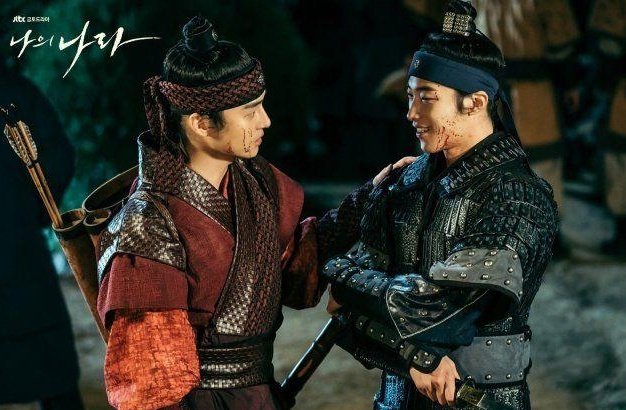
    Seo Hwi and Nam Seon-ho begin with a shared past, but they grow into men with very different understandings of justice, loyalty, and survival.

    Their conflict is not simply a personal rivalry.

    It reflects a period in Korean history when an entire political order was collapsing and a new nation was being built through violence and betrayal.

    2. A Nation Is Being Born, but Not Everyone Gets to Choose Its Future

    The historical background is essential to understanding this drama.

    At the end of the fourteenth century, Goryeo was approaching its final days. Political instability, military conflict, and disputes over authority created an environment in which powerful figures competed to determine the future of the Korean Peninsula.

    General Yi Seong-gye eventually established the Joseon Dynasty in 1392.

    But the transition was not a peaceful change of government.

    The founding of a new dynasty involved political purges, military confrontation, and the elimination of rivals.

    For powerful families, the changing political landscape offered opportunities to gain influence.

    For ordinary people, it could mean losing their homes, status, or lives.

    My Country: The New Age uses this historical transformation as the setting for a deeply personal story.

    Rather than focusing exclusively on kings and generals, it asks what happens to people who are caught between competing political forces.

    The title itself becomes meaningful: whose country is being created, and who actually gets to call it their own?

    3. Seo Hwi: A Man Who Refuses to Abandon His Principles

    Yang Se-jong plays Seo Hwi, one of the central characters.

    Hwi is the son of a respected military commander, but his family’s position has been damaged by political circumstances.

    He is an exceptionally capable swordsman, yet his life is shaped less by ambition than by responsibility and loyalty.

    His greatest strength is also his greatest weakness.

    He finds it difficult to abandon people he cares about, even when protecting them puts his own life at risk.

    Hwi does not begin with a grand political vision.

    He wants to survive, protect his loved ones, and maintain the dignity that his family has lost.

    But history does not allow him to remain outside politics.

    As the struggle for a new dynasty intensifies, his personal choices become connected to events far greater than himself.

    Hwi represents people who do not necessarily want power but are forced to confront those who possess it.

    4. Nam Seon-ho: The Pain of Being Born on the Wrong Side of Society

    Woo Do-hwan plays Nam Seon-ho, a character whose motivations are very different from Hwi’s.

    Seon-ho is highly intelligent, ambitious, and determined to escape the social limitations imposed on him by his birth.

    His mother was a servant, and his position within society makes it difficult for him to receive the recognition he believes he deserves.

    His father is a powerful official, but that connection does not give Seon-ho the security or acceptance he wants.

    He grows up understanding that talent alone does not determine a person’s future.

    Family background, social hierarchy, and political connections can matter more than ability.

    This creates a deep sense of resentment.

    Unlike Hwi, who tries to preserve what remains of his family’s dignity, Seon-ho wants to break through the system that has denied him equality.

    His ambition is not simply greed.

    It is also the result of humiliation and a desire to prove that his birth should not determine his worth.

    That makes him one of the drama’s most complicated characters.

    5. Why Their Friendship Was Always in Danger

    The relationship between Hwi and Seon-ho is the emotional foundation of the entire series.

    They share a history, understand each other’s strengths, and initially believe that they can face the world together.

    But their different social positions gradually shape their expectations.

    Hwi is trying to protect the people he loves.

    Seon-ho is trying to escape a world that has repeatedly reminded him that he is considered inferior.

    Their friendship is tested by political decisions, family interests, and the ambitions of powerful men.

    The tragedy is that neither character begins as a simple villain.

    Both have understandable reasons for the decisions they make.

    But understanding someone’s reasons does not necessarily mean accepting their actions.

    As the story develops, their relationship becomes a painful example of how political systems can turn personal grievances into lasting hatred.

    The question is not whether they once cared about each other.

    It is whether that bond can survive when the future they want is no longer the same.

    6. Yi Bang-won: Was He a Villain or a Necessary Architect of Joseon?

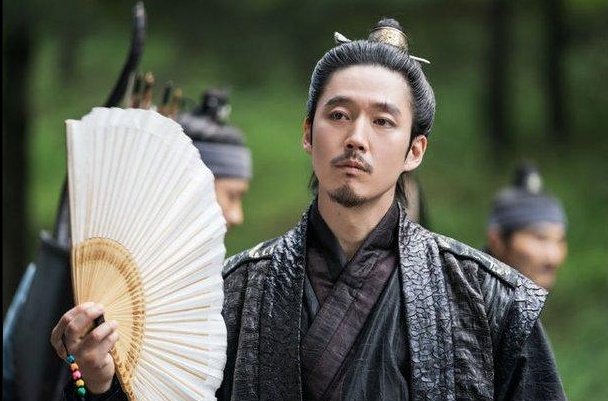
    Jang Hyuk’s portrayal of Yi Bang-won is one of the drama’s most memorable elements.

    Historically, Yi Bang-won was the fifth son of Yi Seong-gye, the founder of Joseon.

    He played a decisive role in the establishment of the dynasty and later became King Taejong.

    His rise to power involved ruthless political maneuvering and the violent removal of rivals, including members of his own family.

    The historical Yi Bang-won is therefore difficult to describe in simple moral terms.

    He helped establish a new political order, but he also used extreme violence to secure his position within it.

    The drama captures this contradiction through Jang Hyuk’s performance.

    His Yi Bang-won is intelligent, controlled, and dangerous.

    He does not need to shout to make other people understand his authority.

    His calmness often makes him more intimidating than characters who rely on open aggression.

    But the most interesting question is not whether he is frightening.

    It is whether the new state could have been created without the kind of political violence he represents.

    The series does not provide an easy answer.

    7. Jang Hyuk’s Performance Changes the Balance of the Drama

    Yi Bang-won is not the only important character, but his presence changes the atmosphere whenever he appears.

    Jang Hyuk gives the character a distinctive combination of intelligence, restraint, and explosive violence.

    His facial expressions and controlled delivery communicate that he is constantly evaluating the people around him.

    This is particularly effective because Yi Bang-won rarely appears to be acting without a purpose.

    Even when he seems calm, the audience senses that he is calculating the consequences of every interaction.

    His performance also creates an interesting contrast with the younger characters.

    Hwi and Seon-ho are still struggling to understand what kind of men they want to become.

    Bang-won already knows what he wants from the world.

    The difference is that he is willing to pay a price that the younger characters may not fully understand.

    Jang Hyuk’s portrayal gives the drama a powerful political dimension beyond its central friendship.

    8. Han Hee-jae: A Woman Trying to Find Her Own Position in a Man’s World

    Seolhyun plays Han Hee-jae, a woman who operates within the political and social conflicts of the period.

    She is intelligent, independent, and determined to pursue her own goals.

    Her character offers a different perspective on the changing world.

    While the male characters frequently express their conflicts through military strength and political ambition, Hee-jae must navigate a society in which women have fewer opportunities to exercise formal power.

    Her relationships with Hwi and the wider political world create another emotional layer in the drama.

    However, the character also illustrates one of the series’ weaknesses.

    Some viewers felt that her independence and potential were not fully developed as the story progressed.

    Her role sometimes becomes secondary to the conflict between the two male leads.

    This is an important limitation to acknowledge when evaluating the series.

    9. The Historical Events Behind the Fiction

    One reason My Country: The New Age is interesting is the way it places fictional characters inside real historical events.

    The story draws on the political transformation from Goryeo to Joseon.

    Several major historical developments form the background:

    • The Wihwado Retreat in 1388, which helped change the balance of power in Goryeo.
    • The rise of Yi Seong-gye and the establishment of Joseon in 1392.
    • The growing political influence of Yi Bang-won.
    • The First Strife of Princes in 1398, when the struggle over succession and political authority turned violently against members of the royal family.

    These events were not merely changes in royal leadership.

    They represented a fundamental transformation of the state.

    The drama uses this historical framework to show how individual lives can become trapped inside decisions made by powerful people.

    It is important, however, to distinguish the real historical figures and events from the fictional characters and dramatic relationships created for the series.

    The friendship between Hwi and Seon-ho is part of the drama’s fictional narrative, not a documented historical relationship.

    10. Why the Action Scenes Feel Personal

    The sword fights in My Country: The New Age are not simply decorative action sequences.

    They often represent emotional conflicts that the characters cannot resolve through conversation.

    A fight between two people who once trusted each other carries a different meaning from a battle between strangers.

    Every movement reflects a history of loyalty, disappointment, anger, and regret.

    The series combines large-scale military confrontations with smaller personal duels.

    This allows the action to function on two levels.

    It shows the physical danger of the period while also expressing the emotional distance between the characters.

    The result is a historical drama in which violence is closely connected to the relationships driving the story.

    11. Why Reddit Viewers Remember the Drama

    Discussions among international viewers on Reddit show that My Country: The New Age has left a particularly strong impression on fans of Korean historical dramas.

    Several elements repeatedly attract attention.

    The relationship between Seo Hwi and Nam Seon-ho

    Many viewers are drawn to the emotional complexity of their friendship and rivalry.

    Their story is not built around a simple misunderstanding that can be resolved through one conversation.

    It develops through repeated choices that gradually make reconciliation more difficult.

    Jang Hyuk as Yi Bang-won

    His performance is frequently singled out as one of the strongest parts of the series.

    Viewers appreciate the character’s commanding presence and the way Jang Hyuk creates tension without relying on exaggerated expressions.

    The emotional impact of the ending

    The conclusion is another major topic of discussion.

    For viewers who become invested in the two main characters, the final episodes can be particularly devastating.

    The series does not offer an uncomplicated happy ending in which friendship and love overcome every political conflict.

    That emotional commitment is part of why viewers continue discussing the drama after finishing it.

    12. The Ending: When the Past Cannot Be Recovered

    Spoiler warning: This section discusses the ending of the drama.

    The ending of My Country: The New Age is important because it completes the emotional journey of Hwi and Seon-ho.

    Their conflict is not resolved by one person simply defeating the other.

    Instead, the series brings their relationship back to the choices that shaped it.

    The two men have spent years being pushed apart by social inequality, political ambition, and the struggle to survive.

    By the time the story reaches its conclusion, the friendship they once shared has become inseparable from the pain they have caused each other.

    The tragedy is that they understand each other more deeply than many of the people around them.

    Yet understanding is not enough to undo the consequences of their decisions.

    The ending leaves viewers with the feeling that something precious has been lost long before the final moments arrive.

    It is not simply a story about two friends who become enemies.

    It is a story about two people who could not find a way to remain friends in the world they were forced to inhabit.

    13. Why the Drama’s Tragedy Works

    A tragic ending is not automatically meaningful.

    For tragedy to work, the audience must understand what the characters wanted, why they made their choices, and what those choices eventually cost them.

    My Country: The New Age builds its emotional impact through the contrast between the characters’ original hopes and their eventual positions.

    Hwi wants to protect the people he loves.

    Seon-ho wants to escape the social identity imposed on him.

    Bang-won wants to secure the future of a new dynasty.

    Each character pursues something that makes sense from his own perspective.

    But their goals cannot peacefully coexist.

    This is what gives the drama its tragic dimension.

    The characters are not simply destroyed by bad luck.

    They are shaped by the choices they make within a political system that rewards power and punishes weakness.

    The result is a story in which personal loyalty and national ambition repeatedly collide.

    14. Is My Country: The New Age Worth Watching?

    For viewers who enjoy Korean historical dramas, My Country: The New Age is a strong recommendation.

    Its greatest strengths include:

    • Yang Se-jong’s emotional portrayal of Seo Hwi.
    • Woo Do-hwan’s complex performance as Nam Seon-ho.
    • Jang Hyuk’s commanding interpretation of Yi Bang-won.
    • The historical setting surrounding the fall of Goryeo and the birth of Joseon.
    • Sword fights and large-scale action sequences.
    • A central friendship that develops into a deeply painful conflict.

    The series is especially suitable for viewers who prefer character-driven historical stories rather than dramas focused exclusively on palace politics.

    However, it is not without weaknesses.

    Some viewers may find the historical timeline complicated, the romantic storyline less convincing, or certain character arcs insufficiently developed.

    But the central relationship between Hwi and Seon-ho gives the drama a strong emotional reason to keep watching.

    Conclusion: A New Nation Was Built, but What Happened to the People Who Lost Each Other Along the Way?

    My Country: The New Age tells a story about the birth of a dynasty, but its most powerful moments are often far removed from the royal throne.

    They belong to two young men who once believed they could face the world together.

    Seo Hwi and Nam Seon-ho represent different responses to an unequal society.

    One tries to protect the people he loves.

    The other tries to escape the limitations of his birth.

    Their paths eventually become part of a much larger political struggle, one in which Yi Bang-won represents the ruthless logic of building and securing a new state.

    The historical transformation from Goryeo to Joseon created a new chapter in Korean history.

    But for the characters at the center of this drama, the new age came at an extraordinary personal cost.

    Perhaps the saddest question is not which of the two friends was right. It is whether they ever had a real chance to choose a future in which they could remain friends.

    That is why My Country: The New Age remains more than a historical action drama.

    It is a story about friendship, social inequality, political ambition, and the human cost of creating a new world.

    TTK Original โ€” Beyond the Headlines
    Looking beyond the historical conflict to explore the friendship, ambition, and sacrifices behind the birth of a nation.
  • My Country: The New Age โ€“ When Friendship Becomes the Price of Building a Nation

    My Country: The New Age โ€“ When Friendship Becomes the Price of Building a Nation

    Why Did Two Friends Who Dreamed of a Better World Become Enemies in the Struggle for Power?

    Historical dramas often portray the founding of a nation as a heroic achievement. Kings establish new political systems, generals win decisive battles, and ambitious leaders reshape the destiny of an entire population.

    But behind these grand historical events are people whose lives are destroyed by the decisions of those who seek power.

    JTBC’s My Country: The New Age (2019), starring Yang Se-jong as Seo Hwi, Woo Do-hwan as Nam Seon-ho, and Jang Hyuk as Yi Bang-won, explores this uncomfortable side of political transformation.

    Set during the turbulent transition from Goryeo to Joseon, the drama follows two friends who initially share a vision of a better world but gradually become trapped on opposite sides of a violent struggle for power.

    Seo Hwi dreams of protecting the people he loves. Nam Seon-ho wants to escape the social limitations imposed by his birth. Yi Bang-won seeks to establish a political order strong enough to survive the instability surrounding the foundation of a new dynasty.

    Their ambitions are understandable, but they are not compatible.

    This is the central tragedy of the series: three men speak about the future of their country, yet each understands the meaning of that country differently.

    Reddit discussions frequently highlight the emotional intensity of Seo Hwi and Nam Seon-ho’s relationship, the performances of the leading actors, and the dramatic presence of Yi Bang-won. Other viewers have criticized the treatment of female characters, historical liberties, and certain aspects of the later narrative.

    These divided reactions reveal an opportunity for a deeper interpretation.

    My Country: The New Age is not simply a story about who deserves to rule. It is about what happens when personal dignity, friendship, and political ambition collide during the creation of a new state.

    1. Three Men, Three Different Countries

    The title My Country appears straightforward, but the drama gives it a much more complicated meaning.

    For Seo Hwi, a country should be a place where ordinary people can live without constantly suffering under the decisions of powerful men.

    For Nam Seon-ho, a country represents the possibility of escaping a social identity that has already determined his position in life.

    For Yi Bang-won, a country must be a political structure capable of concentrating authority and preventing competing powers from destroying the new order.

    All three men want something that could be described as a better future.

    But their definitions of a better future are fundamentally different.

    Seo Hwi prioritizes the people closest to him. Seon-ho wants recognition and freedom from the limitations of his birth. Yi Bang-won believes that political stability requires decisive authority.

    The conflict is not simply between good and evil.

    It is between competing ideas about what a nation should protect.

    This distinction gives the drama its strongest philosophical foundation. The title does not refer to one shared national vision. It refers to the personal expectations that different people attach to the idea of a country.

    2. Seo Hwi: A Man Who Wants to Protect People Rather Than Rule Them

    Seo Hwi is not driven by the desire to become a powerful political leader.

    His motivations are much more personal.

    He wants to protect his family, maintain his dignity, and prevent the people he cares about from becoming victims of a violent political environment.

    This makes him different from the ambitious figures surrounding him.

    He does not initially imagine that building a new country requires controlling the state. His understanding of a better world begins with the lives of ordinary people.

    However, this apparently simple desire becomes increasingly difficult to maintain.

    Every political conflict creates another situation in which Hwi must choose between his personal values and the demands of survival.

    His loyalty becomes both his greatest strength and his greatest vulnerability.

    People who care deeply about others can be manipulated through that attachment. If someone threatens the people they love, they may accept decisions they would otherwise reject.

    Hwi’s tragedy is that his desire to protect others repeatedly pulls him deeper into the very violence he wants to escape.

    He does not seek power for its own sake, but he cannot remain outside the struggle for power.

    3. Nam Seon-ho: The Man Who Wants to Escape His Birth

    Nam Seon-ho’s story is arguably the most psychologically complicated in the drama.

    His social position determines how other people see him before he has the opportunity to define himself.

    He possesses talent, intelligence, and ambition, but his birth places limits on the recognition he can receive.

    This creates a particularly destructive psychological conflict.

    Seon-ho does not simply want wealth or political influence. He wants proof that his identity does not have to be determined by the circumstances of his birth.

    For someone in his position, power can become more than a practical instrument.

    It can become a form of revenge against a society that has repeatedly reminded him that he is inferior.

    But this desire contains a dangerous contradiction.

    If a person seeks recognition from the same system that has humiliated them, they may gradually begin accepting the system’s values.

    Seon-ho wants to overcome the hierarchy, yet his ambition increasingly draws him toward the political structures that preserve it.

    He does not necessarily reject the system itself. At times, he appears to want a position within that system powerful enough to make its previous judgments irrelevant.

    That is what makes him tragic.

    His desire for dignity is understandable, but the methods through which he pursues it threaten to destroy the relationships that once gave his life meaning.

    4. The Friendship Between Hwi and Seon-ho: Why Their Relationship Matters More Than Their Rivalry

    The emotional center of My Country is the relationship between Seo Hwi and Nam Seon-ho.

    Their friendship is important because it begins before their political identities become fully defined.

    They are not initially enemies representing opposing ideological camps. They are two young men who share experiences, hopes, and an understanding of each other’s personal struggles.

    This shared history creates an emotional bond that survives even when their circumstances become increasingly hostile.

    The audience knows something that the characters cannot easily escape: they once trusted each other.

    That knowledge changes the meaning of every confrontation.

    When two strangers fight, the conflict can be understood through their opposing interests.

    When former friends fight, every act of violence also becomes a reminder of what has been lost.

    This explains why many viewers found their relationship more compelling than the conventional romantic elements of the series.

    Their connection contains affection, resentment, betrayal, guilt, and the possibility of reconciliation.

    The strongest emotional scenes do not simply ask whether they will become friends again.

    They ask whether people can recover a relationship after making choices that fundamentally change how they see each other.

    5. Betrayal Is Sometimes the Result of Different Definitions of Survival

    It is easy to describe Seon-ho as a betrayer.

    From Hwi’s perspective, Seon-ho’s political choices repeatedly threaten their friendship and shared ideals.

    But understanding the character requires examining the conditions under which he makes those decisions.

    For Hwi, survival is closely connected to protecting people.

    For Seon-ho, survival also means escaping a social identity that has made him feel powerless.

    This difference is crucial.

    Two people can face the same political crisis and reach completely different conclusions because they are protecting different things.

    Hwi may regard loyalty as a moral obligation. Seon-ho may see loyalty as a luxury that someone in his position cannot afford.

    Neither perspective completely explains every action, but the conflict reveals how unequal social conditions can reshape personal morality.

    This does not mean Seon-ho should be excused for everything he does.

    Understanding why someone betrays another person is not the same as declaring that betrayal acceptable.

    The drama becomes more powerful when viewers can recognize both the emotional reasons behind Seon-ho’s choices and the damage those choices cause.

    6. Yi Bang-won: The Man Who Understands That Power Cannot Remain Divided

    Yi Bang-won occupies a different position from Hwi and Seon-ho.

    He is not simply another ambitious individual trying to improve his circumstances.

    He understands that political authority is unstable when several powerful figures claim competing rights to determine the future.

    His approach to power is shaped by the belief that a new dynasty cannot survive indefinitely through unclear authority.

    From this perspective, decisive action becomes a political necessity.

    But the same logic creates the danger that makes him such a compelling character.

    If stability requires the elimination of competing centers of power, how many people must be sacrificed before the state becomes secure?

    Yi Bang-won understands political competition as a struggle that cannot always be resolved through compromise.

    He sees hesitation as a potential weakness.

    This gives him a strategic advantage, but it also makes him dangerous to anyone whose personal values conflict with his political objectives.

    Jang Hyuk’s performance emphasizes this combination of intelligence, intensity, and unpredictability.

    The character is frightening not simply because he possesses power, but because he appears to understand how much human suffering he is willing to accept in order to obtain it.

    7. The Difference Between Building a Country and Building a Throne

    One of the most important questions raised by the drama concerns the relationship between political institutions and personal ambition.

    A new dynasty may be presented as a national achievement, but the process of creating it can also become a struggle among individuals who want to control the state.

    These are not necessarily identical goals.

    Building a country should involve creating institutions that allow people to live under predictable rules.

    Building a throne involves securing the authority of a particular ruler.

    Sometimes these objectives overlap. A powerful ruler may be able to establish order during a period of instability.

    But they can also conflict.

    When the survival of a political leader becomes more important than the principles the new state is supposed to represent, the nation risks becoming an extension of personal ambition.

    This is one of the central tensions surrounding Yi Bang-won.

    He understands that a new political order requires strength. Yet the methods used to secure that strength raise questions about the human cost of state formation.

    The drama does not offer a simple answer because political stability and individual freedom do not always move in the same direction.

    8. The Father and Son Conflict: Nam Jeon and the Inheritance of Power

    Seon-ho’s relationship with his father, Nam Jeon, adds another dimension to the story.

    His personal ambitions cannot be separated from the influence of the man whose position and authority shape his circumstances.

    The father-son relationship becomes a struggle over recognition, control, and the possibility of escaping an inherited identity.

    This is more than a conventional family conflict.

    Nam Jeon represents a political world in which social hierarchy and personal power determine whose ambitions are considered legitimate.

    Seon-ho wants to become more than the identity assigned to him, but he remains deeply affected by the expectations and judgments of his father.

    This creates a psychological trap.

    He wants to prove that he is independent, yet the desire for recognition can keep him emotionally tied to the very person whose judgment he resents.

    The struggle becomes especially painful when personal dignity is pursued through the same political values that created the original humiliation.

    The drama suggests that escaping an oppressive hierarchy is not always as simple as defeating the person who controls it.

    Sometimes the more difficult task is refusing to reproduce the hierarchy after gaining power.

    9. Social Status: Why Talent Alone Cannot Overcome an Unequal System

    Seon-ho’s position reveals one of the drama’s most important social criticisms.

    A society may claim to reward ability, but its institutions can still determine whose abilities are recognized.

    Talent does not operate independently of social circumstances.

    A person with powerful family connections may receive opportunities that remain unavailable to someone with equal or greater ability.

    This is why Seon-ho’s ambition has emotional force.

    He does not merely want to become successful. He wants to challenge the assumption that his birth has already determined what he can become.

    However, the drama also presents a difficult question.

    If the goal is to escape an unfair system, is gaining a powerful position within that system enough?

    Seon-ho’s journey suggests that recognition and liberation are not necessarily the same thing.

    A person may overcome personal exclusion while leaving the underlying structure untouched.

    They may even become part of the system that excludes others.

    This is a broader political lesson that extends beyond the historical setting of the series.

    The person who once suffered under an unfair hierarchy does not automatically become committed to dismantling it after gaining influence.

    Sometimes the desire to occupy the top position becomes stronger than the desire to change the structure itself.

    10. Han Hee-jae: The Female Character Who Deserved More Narrative Space

    Han Hee-jae provides another perspective on the struggle for a new country.

    She is introduced as an intelligent and independent woman whose political awareness and personal convictions give her a role beyond conventional romantic support.

    Her character suggests that women can also participate in the political and social transformation surrounding the foundation of a new dynasty.

    However, some viewers criticized the way her role developed later in the series.

    The concern was that a character introduced with considerable potential did not always receive enough narrative attention to sustain that initial promise.

    This criticism matters because the drama’s political world is overwhelmingly shaped by men.

    If Hee-jae’s role becomes increasingly secondary, the story loses an opportunity to explore how women experience political instability and social transformation.

    The question is not whether she should have become as powerful as the male political figures.

    It is whether the series could have developed her independent perspective more fully.

    A drama about the creation of a country becomes richer when it asks how different groups experience the new order, rather than treating the political decisions of powerful men as the only events worth exploring.

    Hee-jae represents an important opportunity that the narrative could have used more effectively.

    11. Romance Versus Friendship: Why the Emotional Hierarchy Feels Different

    Many historical dramas use romance as the primary emotional engine.

    Characters fall in love, face separation, overcome obstacles, and eventually discover whether their feelings can survive political conflict.

    My Country uses romance, but its strongest emotional relationship is arguably the friendship between Hwi and Seon-ho.

    This creates an unusual emotional hierarchy.

    The audience is not simply waiting to discover which romantic partner will remain with the protagonist.

    Instead, viewers are watching whether two people who once understood each other can survive the consequences of their political choices.

    Their relationship has a different kind of emotional weight.

    Romantic separation can be painful because two people lose the possibility of a shared future.

    The destruction of a deep friendship can be equally painful because it also destroys the memory of a shared past.

    For Hwi and Seon-ho, the past cannot simply be erased.

    Even when they oppose each other, they remain connected through the knowledge of who they once were.

    This is one reason the drama’s friendship storyline became such a prominent subject in audience discussions.

    It gives the political conflict a deeply personal cost.

    12. Historical Fiction and the Difference Between Accuracy and Emotional Truth

    My Country: The New Age uses the transition from Goryeo to Joseon as the background for a fictionalized story.

    Its characters and relationships should therefore be understood through two different standards.

    Historical accuracy concerns whether events, institutions, chronology, and political figures correspond to the historical record.

    Emotional truth concerns whether the characters’ motivations and conflicts feel psychologically convincing.

    A historical drama can take creative liberties and still communicate meaningful ideas about power, ambition, and social inequality.

    But creative freedom does not remove the need for internal consistency.

    When a series changes historical circumstances to create a dramatic confrontation, the audience still expects those changes to serve a coherent narrative.

    The presence of Yi Bang-won makes this particularly important.

    He was a real historical figure whose political actions were central to the establishment of Joseon and the later consolidation of royal authority.

    The drama uses his historical identity to create a character who represents the difficult relationship between state formation and personal ambition.

    Viewers should distinguish between the historical Yi Bang-won and the dramatic interpretation presented by the series.

    The latter is not a documentary account. It is a fictional narrative using historical events to explore political and emotional questions.

    13. The Violence of State Formation: Who Pays for a New Political Order?

    The founding of a new dynasty is often remembered through the achievements of rulers and military leaders.

    But political transformation rarely occurs without people paying a price.

    Soldiers die, families lose their livelihoods, communities become divided, and individuals are forced to choose sides in conflicts they did not create.

    The drama repeatedly returns to this human cost.

    Hwi and Seon-ho are not simply fighting over personal disagreements. Their lives become entangled in a historical transformation that is larger than either of them.

    This creates an important moral distinction.

    A political leader may describe violence as necessary for the establishment of order.

    But the people who experience that violence do not necessarily benefit from the resulting political stability.

    The question is therefore not only whether a new state succeeds.

    It is who has the power to define success and whose suffering becomes an acceptable cost.

    This is one of the strongest political questions in My Country.

    The creation of a nation may be celebrated by later generations, but the people who lived through its violent beginnings may remember it very differently.

    14. Why the Later Episodes Divided Viewers

    Reddit discussions reveal that viewers responded differently to the drama’s later development.

    Some remained strongly invested in the relationship between Hwi and Seon-ho and found the emotional conclusion meaningful.

    Others expressed reservations about the pacing, historical liberties, character development, and the treatment of certain supporting roles.

    The criticisms of Hee-jae’s reduced narrative importance are particularly relevant because they point toward a wider structural problem.

    The series establishes several promising conflicts: social hierarchy, political ambition, friendship, family control, romance, and the founding of a new dynasty.

    But a drama must allocate time carefully among these elements.

    When one storyline becomes dominant, other promising conflicts can lose their development.

    The same applies to action sequences and dramatic confrontations.

    Spectacle can increase excitement, but it cannot replace the emotional consequences of the decisions that lead to those confrontations.

    The series is most effective when political events change the relationships between characters.

    It is less effective when the scale of the historical conflict becomes more important than the development of the people experiencing it.

    15. The Ending: Can Friendship Survive the Country They Tried to Build?

    The emotional meaning of the ending cannot be separated from the relationship established at the beginning.

    Hwi and Seon-ho begin as friends who share a vision of a different future.

    Their paths diverge because their circumstances, ambitions, and understandings of survival become increasingly incompatible.

    By the time their story reaches its conclusion, the question is no longer whether they can return to the innocent friendship of their youth.

    That possibility has already been changed by everything they have experienced.

    The ending carries the weight of a relationship that has been damaged by political choices but never entirely erased from memory.

    For some viewers, this makes the conclusion tragic but emotionally appropriate.

    For others, the journey may feel unnecessarily painful or dependent on dramatic escalation.

    Both reactions are understandable.

    The central relationship is powerful precisely because the characters cannot simply forget their shared past.

    But emotional connection does not guarantee reconciliation.

    Sometimes the people who understand each other most deeply are also the people who have become capable of hurting each other most profoundly.

    That is the tragedy at the heart of Hwi and Seon-ho’s story.

    16. The Real Meaning of My Country: Who Owns the Future?

    The most important question raised by My Country: The New Age is not which character has the strongest political argument.

    It is who has the right to decide what a country should become.

    Seo Hwi wants a world in which ordinary people can protect the lives they value.

    Nam Seon-ho wants to escape a social order that has defined his worth through his birth.

    Yi Bang-won wants a political structure strong enough to survive the instability of a new dynasty.

    Each man understands a different part of the problem.

    A country needs stability. It also needs fairness. And its people need more than the opportunity to survive under the authority of someone powerful.

    The tragedy is that the struggle to create a better country can reproduce the very inequalities and violence that its founders claim to oppose.

    Seon-ho’s ambition shows how the desire to escape an unfair hierarchy can become a desire to occupy its highest position.

    Yi Bang-won’s political strategy shows how the pursuit of stability can justify increasingly severe forms of control.

    Hwi’s loyalty shows how personal values can become vulnerable when political forces turn relationships into instruments of survival.

    The title My Country therefore becomes a question rather than a declaration.

    Whose country is it?

    The ruler’s? The ambitious person’s? The people who fought for it? Or the ordinary people who must live with the consequences of its creation?

    The drama never offers an entirely comfortable answer.

    That uncertainty is what makes its political and emotional conflicts worth revisiting.


    Final Verdict: A Political Drama About the Cost of Betraying the People Closest to You

    My Country: The New Age stands out because it connects the founding of a dynasty with the destruction of a personal relationship.

    Its strongest achievement is the emotional conflict between Seo Hwi and Nam Seon-ho. Their friendship gives the political story a human center that is more powerful than a conventional struggle for the throne.

    Jang Hyuk’s portrayal of Yi Bang-won adds another dimension, presenting power as something that can create order while demanding an enormous human price.

    The drama is not without weaknesses. Some supporting characters, particularly Han Hee-jae, could have received more sustained development. Certain narrative choices and historical liberties may also frustrate viewers who expect a more balanced treatment of the political and personal storylines.

    Nevertheless, its central question remains compelling.

    A country may be founded through political victories, but its moral value cannot be measured only by the strength of its ruler.

    It must also be measured by the lives of the people who were sacrificed along the way.

    Hwi and Seon-ho began by dreaming of a better country. Their tragedy was discovering that the struggle to create it could destroy the very friendship that once gave that dream meaning.

  • Still 17: Can You Get Back the 13 Years That Life Took Away?

    Still 17: Can You Get Back the 13 Years That Life Took Away?

    Still 17, also known as Thirty But Seventeen, is often remembered as a warm romantic comedy about two people who help each other heal. Its premise sounds almost like a fantasy: a seventeen-year-old girl wakes up after thirteen years in a coma, only to discover that her body has become thirty years old. Meanwhile, a young man who witnessed the accident that changed her life has spent those same thirteen years trapped in guilt.

    But the most interesting question in this drama is not whether these two people will fall in love.

    It is whether a person can recover a life that has already passed.

    Woo Seo-ri lost thirteen years without choosing to lose them. Gong Woo-jin spent thirteen years punishing himself for something he believed he had caused. Jennifer experienced another form of loss through the same accident. Their circumstances are different, but each character reveals a different way of becoming separated from one’s own life.

    The drama’s deeper message is that healing does not mean recovering the past. It means learning how to live when the past cannot be recovered.

    1. Thirteen Years: The Time That Cannot Be Returned

    The central tragedy of Still 17 is unusually simple and unusually cruel.

    Woo Seo-ri does not gradually grow older. She does not experience the ordinary transitions between adolescence and adulthood. One moment, she is a seventeen-year-old girl with dreams, friendships, and plans for the future. The next, she wakes up to discover that thirteen years have disappeared.

    For Seo-ri, those years are not memories. They are an absence.

    Other people have continued living. They have changed their jobs, relationships, appearances, and priorities. The world has developed without waiting for her.

    This creates a distinction between chronological age and lived experience. Seo-ri is thirty according to the calendar, but the last life she remembers belongs to a seventeen-year-old.

    The tragedy is not simply that she has become older. It is that everyone expects her to understand a world she never had the opportunity to experience.

    The drama asks an uncomfortable question: if time passes without our participation, does that mean we have actually lived those years?

    2. Woo Seo-ri: A Thirty-Year-Old Woman Who Never Received Her Twenties

    Seo-ri’s situation is often presented through comedy, especially when she encounters unfamiliar technology, social expectations, or changes in everyday life.

    Yet beneath those humorous situations lies a serious problem.

    Her twenties were not ordinary years that she forgot to enjoy. They were years during which she had no meaningful opportunity to make choices for herself.

    She cannot return to the school life she remembers. She cannot simply resume the future she had imagined as a young violinist. Even the people and places she expected to remain familiar have changed.

    Her identity is therefore caught between two competing realities.

    Her body belongs to the present, but her memories belong to the past.

    This is why telling Seo-ri to behave like an ordinary thirty-year-old would be deeply unfair. Age is not merely a number. It is also the accumulation of experiences, decisions, failures, and relationships.

    Seo-ri has reached thirty without receiving the ordinary opportunities through which people become thirty.

    Her struggle is not immaturity. It is the difficult process of rebuilding an identity after an interrupted life.

    3. The Violin: A Dream That Survived Even When Time Did Not

    The violin is more than a personal talent or a convenient element of Seo-ri’s backstory.

    It represents the future she once believed was waiting for her.

    Before the accident, Seo-ri was a gifted young musician. Her ambition was connected to a world of discipline, competition, and artistic achievement. She had a direction.

    After waking up, she discovers that the world she wanted to enter has continued without her.

    This makes the violin emotionally complicated.

    It reminds her of the person she used to be, but it also confronts her with the possibility that she may never recover the exact future she imagined.

    The important distinction is between recovering a dream and recovering the person who once had that dream.

    Seo-ri may still love music, but she cannot simply return to the seventeen-year-old version of herself. Her experiences have changed, even if thirteen years of consciousness are missing.

    The drama’s treatment of her musical ambition suggests that a dream does not necessarily disappear when its original path becomes impossible.

    Sometimes the relationship with the dream must change before the person can move forward.

    4. Gong Woo-jin: A Man Who Turned Guilt Into a Life Sentence

    Woo-jin’s tragedy is almost the opposite of Seo-ri’s.

    He did not lose thirteen years because he was unconscious. He was physically present, but emotionally he stopped living.

    As a teenager, he believed that his actions had contributed to the accident that killed the girl he liked. A misunderstanding surrounding the girl’s identity intensified his guilt. He came to believe that he had played a role in a death that he could never undo.

    That belief shaped his adult personality.

    He avoided emotional connections, kept people at a distance, and developed habits that made ordinary social interaction difficult. His profession as a set designer allowed him to work with objects, measurements, and carefully controlled spaces rather than unpredictable human relationships.

    His guilt became more than a memory. It became a rule governing his life.

    This is an important psychological distinction.

    Regret is an emotional response to something that happened. Guilt can become destructive when a person begins to treat self-punishment as the only acceptable response.

    Woo-jin does not merely remember the past. He organizes his entire present around it.

    The drama suggests that refusing happiness does not reverse a tragedy. It only creates another life that cannot be recovered.

    5. The Accident: One Event, Several Different Lives

    The bus accident is the narrative center of Still 17.

    At first, the audience may understand it primarily through Seo-ri’s suffering and Woo-jin’s guilt. But as the story expands, the accident becomes a shared point of trauma connecting several characters.

    Seo-ri loses thirteen years.

    No Soo-mi loses her life.

    Woo-jin carries a mistaken understanding of his responsibility.

    Jennifer loses her husband and experiences the devastating consequences of that loss.

    These are not interchangeable tragedies. Each person experiences a different form of damage.

    The strongest aspect of this structure is that the accident does not end when the vehicle stops. Its consequences continue through the relationships, choices, and emotional defenses of the survivors.

    This is where the drama becomes more interesting than a conventional romantic comedy.

    The accident is not simply a device to bring two romantic leads together. It is an event that demonstrates how one moment can produce different histories for people who may not even know one another.

    A tragedy can end in physical time while continuing in the emotional lives of those left behind.

    6. No Soo-mi: The Person Whose Absence Shapes the Living

    No Soo-mi is not present for most of the drama, yet her absence has an enormous influence on its central conflict.

    She was Seo-ri’s friend, and the confusion surrounding the borrowed school uniform contributes to Woo-jin’s misunderstanding.

    This detail matters because it shows how fragile the connection between memory and identity can be.

    Woo-jin believes he remembers the girl he liked, but the name attached to that memory is not the identity he thinks it is.

    The misunderstanding does not merely create a romantic twist. It reveals how a person can build an entire emotional history around incomplete information.

    Soo-mi also represents a difficult question that the drama cannot completely escape.

    When a story focuses on the recovery of its surviving characters, how much attention does it give to the person who never received a second chance?

    Seo-ri’s recovery is moving, but Soo-mi’s absence should not become merely a mechanism for someone else’s emotional development.

    Her death remains the irreversible cost of the accident.

    Remembering that cost gives the story greater emotional weight.

    7. Jennifer: The Most Controlled Person May Be Carrying the Deepest Pain

    Jennifer initially appears to be an eccentric housekeeper whose unusual behavior provides comic relief.

    She is precise, disciplined, emotionally restrained, and often difficult to read. Her manner can make her seem almost mechanical.

    But this appearance becomes more meaningful when the drama reveals her past.

    Jennifer, whose real name is Hwang Mi-jung, lost her husband in the same accident. She also suffered the loss of the child she was expecting.

    Her grief did not disappear. It became embedded in the way she lived.

    This revelation changes the meaning of her earlier behavior.

    Her emotional restraint is no longer simply a comic personality trait. It can be understood as a defense developed after an experience that overwhelmed her.

    Jennifer is especially important because she complicates the drama’s central idea of healing.

    Seo-ri expresses her pain openly. Woo-jin hides behind distance and guilt. Jennifer manages her life through control and routine.

    Three people experience trauma, but they develop three different survival strategies.

    Jennifer also prevents the story from becoming too narrowly focused on the romantic leads. She reminds viewers that the same tragedy can affect people whose lives are not connected through romance.

    8. Yoo Chan: The Importance of Someone Who Keeps Showing Up

    Yoo Chan provides a different kind of emotional support.

    Unlike Woo-jin, he does not approach life through withdrawal. He is energetic, expressive, and willing to help the people around him.

    His relationship with Seo-ri develops through everyday kindness rather than a dramatic declaration of destiny.

    He helps her navigate an unfamiliar world and offers the warmth that Woo-jin initially struggles to provide.

    But Yoo Chan’s importance extends beyond being a supportive younger character or a romantic rival.

    He also represents the possibility of continuing to grow even when someone close to you has become emotionally stuck.

    His relationship with Woo-jin is particularly significant. He does not simply wait for his uncle to become happy again. He repeatedly reaches out to him.

    This is a quiet but meaningful portrayal of care.

    People dealing with trauma may not respond immediately to affection. They may reject help, withdraw, or behave in ways that frustrate those around them.

    Yoo Chan demonstrates that support is sometimes less about finding the perfect words and more about remaining present.

    His own emotional maturity becomes part of the drama’s wider argument that growing up is not determined by age alone.

    9. Is Love Enough to Heal Trauma?

    The romance between Seo-ri and Woo-jin gives the drama its emotional direction.

    They are drawn to each other through circumstances that gradually reveal their shared past. Their relationship develops as Woo-jin begins to confront the memories he has avoided and Seo-ri starts rebuilding her present.

    It would be easy to interpret their romance as a simple healing formula: two wounded people meet, understand each other, and become whole through love.

    But that interpretation is too convenient.

    Love can provide emotional safety. It can make someone feel less alone. It can encourage a person to face memories that were previously unbearable.

    However, love cannot restore thirteen missing years. It cannot bring Soo-mi back. It cannot erase Jennifer’s loss or automatically resolve Woo-jin’s guilt.

    The more convincing interpretation is that love creates conditions in which healing becomes possible.

    It does not perform the healing on someone’s behalf.

    Seo-ri and Woo-jin still have to confront their own histories. Their relationship matters because they begin to imagine a future that is not controlled entirely by the past.

    That is a more meaningful form of romance than the idea that love solves everything.

    10. The Problem With Forgiving Yourself

    Woo-jin’s emotional journey raises a difficult question: when a person believes they have caused a tragedy, what gives them the right to move on?

    His guilt is understandable. He believes that a different decision might have changed what happened.

    But there is a difference between acknowledging responsibility and assuming unlimited responsibility.

    The accident involved circumstances far beyond the control of one teenage boy. Woo-jin’s belief that he could have prevented everything becomes a burden he carries as if he had possessed complete knowledge and control.

    This is a familiar psychological trap.

    People often judge their past decisions using information they only acquired afterward. They imagine that they should have predicted outcomes that were impossible to know at the time.

    The drama does not suggest that the past should be dismissed or that grief should be forgotten.

    Instead, it asks whether endless self-punishment is a meaningful form of accountability.

    If Woo-jin spends the rest of his life refusing happiness, does that help the people who died?

    No.

    His suffering cannot compensate for their absence.

    Forgiving himself does not mean declaring that the tragedy did not matter. It means accepting that he cannot change the event and refusing to create additional suffering as a substitute for justice.

    11. The World Did Not Wait for Seo-ri

    One of the most painful aspects of Seo-ri’s awakening is not her changed appearance. It is the discovery that the world has continued without her.

    Places have changed. Familiar surroundings are gone. Relationships that once seemed permanent have disappeared or transformed.

    She is not returning to the same world after a long absence.

    She is entering a new world that happens to contain fragments of her old one.

    This is a subtle but powerful distinction.

    People often imagine that returning home means recovering a place exactly as they remember it. But time changes both the person who leaves and the place that remains.

    For Seo-ri, the experience is especially severe because she did not participate in those changes.

    Her memories have remained fixed while everyone else’s lives have moved forward.

    The drama therefore treats home as something more complicated than a physical address.

    A home is also made of relationships, shared memories, and the feeling that someone has been waiting for you.

    When those connections disappear, returning to a familiar location may not be enough to restore belonging.

    Seo-ri must build a new sense of home rather than simply recover the old one.

    12. The Drama’s Uncomfortable Question About Age

    The title Thirty But Seventeen creates an immediate contradiction.

    Seo-ri is thirty, but she remembers being seventeen. This makes other characters and viewers confront assumptions about age, maturity, and social expectations.

    Society often treats age as a reliable measure of experience.

    A thirty-year-old is expected to have a certain level of independence, emotional maturity, professional direction, and social knowledge.

    But Seo-ri’s story exposes the limits of that assumption.

    She has the physical age of an adult without having experienced the ordinary stages that most people associate with adulthood.

    At the same time, she cannot simply be treated as a teenager. She has an adult body, legal identity, and responsibilities in the present.

    This creates an unusual gap between how she feels and how the world sees her.

    The drama’s most interesting point is not that Seo-ri behaves younger than her age. It is that the people around her must reconsider what it actually means to be an adult.

    Maturity is not produced automatically by birthdays.

    It develops through experience, responsibility, mistakes, and the ability to make choices.

    Seo-ri’s situation makes that distinction impossible to ignore.

    13. A Healing Drama That Sometimes Avoids Reality

    The emotional warmth of Still 17 is one of its greatest strengths, but it is also the source of its most obvious limitations.

    The premise requires a considerable suspension of disbelief.

    A thirteen-year coma followed by a relatively rapid return to ordinary activity is not a realistic representation of what most people would experience after such a long period of unconsciousness.

    The drama also compresses complicated psychological and medical processes into a narrative that can move toward romance and emotional resolution.

    Some viewers may find this comforting. Others may find it difficult to accept.

    Reddit discussions reflect this contrast. One viewer described the drama as a favorite and praised its message about starting again, while also questioning the realism of Seo-ri’s recovery. Another viewer praised the cast, the warmth of the story, and Jennifer’s character. Other comments describe the series as comforting while acknowledging its unusually idealistic world.

    These reactions reveal an important distinction between emotional truth and factual realism.

    A story can express a recognizable emotional experience without accurately depicting every medical or psychological detail.

    The problem arises only when viewers mistake a fictional healing process for a realistic model of recovery.

    Still 17 works best when understood as an emotional fable rather than a medical drama.

    14. Why the Supporting Characters Make the Story Bigger

    The drama could have focused almost entirely on Seo-ri and Woo-jin.

    But its supporting characters expand the meaning of the central accident.

    Yoo Chan represents the warmth of someone who continues reaching out.

    Jennifer represents grief that has become controlled and almost invisible.

    No Soo-mi represents the life that cannot be recovered.

    Kim Hyung-tae represents the pain of someone who remembers the past and must face the changes that time has brought.

    Together, these characters prevent the story from becoming a simple tale of two people falling in love after a tragedy.

    They show that the consequences of one event do not belong to a single protagonist.

    Every person carries a different version of what happened.

    This is also why Jennifer’s story is so important. Her loss does not exist merely to create another emotional revelation. It shows that people who appear functional, composed, and capable may be living with grief that others cannot see.

    The drama’s emotional world becomes richer when healing is understood as a shared process rather than a private romantic achievement.

    15. The Ending: Moving Forward Does Not Mean Getting the Past Back

    The ultimate question of Still 17 is whether the characters can return to the lives they once expected to have.

    The answer is no.

    Seo-ri cannot recover the thirteen years she lost. Woo-jin cannot undo the decisions that shaped his guilt. Jennifer cannot restore the family she lost.

    The past remains unchanged.

    What changes is their relationship with it.

    Seo-ri begins to imagine a future that is not limited to the dream she had at seventeen. Woo-jin gradually accepts that he is allowed to participate in life again. The people around them become part of a new network of care and belonging.

    This is not the same as a complete recovery.

    It is a decision to stop allowing an irreversible event to determine every future choice.

    The title itself becomes more meaningful when viewed this way.

    Thirty but seventeen is not simply a description of Seo-ri’s unusual condition. It is a metaphor for the gap between the age a person has reached and the life they have actually been able to experience.

    Some people reach adulthood while carrying an unresolved childhood. Others spend years avoiding the future because they cannot accept the past.

    The drama’s answer is not that time heals everything.

    Time passes. Some wounds remain. Some losses cannot be repaired.

    But a person can still choose to live beyond them.

    Final Reflection: You Cannot Recover Lost Time, but You Can Refuse to Lose More

    Still 17 begins with an impossible situation: a woman wakes up thirteen years older, while the people connected to her past have continued living in a world she does not recognize.

    Its emotional power comes from the fact that the other characters are also trapped in different ways.

    Seo-ri loses time without choosing to. Woo-jin gives up his future because of guilt. Jennifer survives by controlling the emotions that once overwhelmed her.

    Their stories reveal that being alive and truly living are not always the same thing.

    The drama is not ultimately about returning to seventeen or becoming thirty. It is about recognizing that the past cannot be recovered, even when it continues to shape the present.

    Perhaps the most important lesson is not that love can heal every wound.

    It is that people do not need to become completely free of pain before they are allowed to begin again.

    You cannot get back the thirteen years that life took away. But you can decide not to surrender the years that are still ahead of you.

  • Spooky in Love Ending Explained: Do Yeo-ri and Gang-uk End Up Together?

    Spooky in Love Ending Explained: Do Yeo-ri and Gang-uk End Up Together?

    TTK Original โ€” Beyond the Headlines

    Warning: Major spoilers for Spooky in Love Episodes 11โ€“12.

    After 12 episodes of supernatural encounters, a mysterious yacht accident, a heart transplant, family betrayal, and an emotionally complicated love triangle, Spooky in Love finally reaches its conclusion.

    The central romantic question has a clear answer:

    Yes. Do Cheon Yeo-ri and Ma Gang-uk end up together.

    Yeo-ri survives the truck accident, Ji-hwan finally crosses into the afterlife, and her ability to see ghosts disappears. One year later, she and Gang-uk are shown walking together, holding hands.

    But the ending is about much more than whether the couple gets a happy ending.

    Three seemingly separate elements turn out to be connected: the death of Kang Ji-hwan 12 years earlier, Gang-uk’s heart transplant, and Yeo-ri’s supernatural ability.

    Their connection changes the meaning of the entire love triangle.

    Gang-uk is not simply the man who replaces Yeo-ri’s first love. Ji-hwan is not simply a ghost who refuses to leave his past behind. And Yeo-ri’s ability is not merely a supernatural inconvenience.

    The finale brings these stories together to explore a deeper question:

    Can someone finally move forward without betraying the person they lost?

    1. Do Yeo-ri and Gang-uk End Up Together?

    Yes. The drama gives Yeo-ri and Gang-uk a happy romantic ending.

    However, their relationship has never been an ordinary romance.

    Yeo-ri’s ability to see ghosts has affected almost every part of her life. Physical contact can transfer her supernatural ability to another person, making even a simple gesture such as holding someone’s hand potentially frightening.

    This explains why she wears gloves and maintains distance from people.

    Gang-uk gradually becomes someone who understands her unusual circumstances.

    Rather than treating her ability as something that makes her strange, he learns to accept the world she lives in.

    But Yeo-ri eventually tries to separate from him.

    Her decision is not caused by a lack of love. It comes from fear.

    She has already experienced the devastating consequences of the yacht accident 12 years earlier. Now she discovers that Gang-uk’s heart is connected to Ji-hwan, the person she lost.

    The shaman’s warning and the revelations surrounding the heart transplant make her increasingly afraid that history could repeat itself.

    From Yeo-ri’s perspective, leaving Gang-uk may be the only way to protect him.

    But the finale challenges that belief.

    Her survival allows her to understand that loving someone does not mean accepting that another tragedy is inevitable.

    By the one-year epilogue, she and Gang-uk are together.

    The important difference is that their relationship is no longer defined by fear of the past.

    2. Why Did Yeo-ri Try to Leave Gang-uk?

    Yeo-ri’s decision to end the relationship is one of the most important emotional developments in the final episodes.

    At first glance, it may look like another misunderstanding between two romantic leads.

    But her decision comes from a much deeper psychological conflict.

    For 12 years, Yeo-ri has carried the emotional consequences of Ji-hwan’s death.

    She survived the yacht accident, but he did not.

    That experience left her with unresolved guilt and a fear of becoming emotionally responsible for another person’s death.

    Gang-uk makes this fear even more complicated.

    He is not simply someone she has fallen in love with. He is also connected to the tragedy that shaped her life because he received Ji-hwan’s heart.

    The connection creates an uncomfortable possibility in Yeo-ri’s mind.

    What if loving Gang-uk means losing him too?

    Her response is to create distance before something terrible happens.

    But there is a contradiction in this decision.

    Yeo-ri believes she is protecting Gang-uk by choosing to be alone. In reality, she is allowing an unresolved tragedy to control a relationship that belongs to the present.

    The finale eventually gives her the opportunity to make a different choice.

    She can remember Ji-hwan without remaining trapped in the moment she lost him.

    And she can love Gang-uk without treating their relationship as a repetition of the past.

    3. The Biggest Revelation: Does Gang-uk Have Ji-hwan’s Heart?

    Yes. Gang-uk received Ji-hwan’s heart through a transplant approximately 12 years earlier.

    This revelation is one of the most important pieces of information in Episode 12 because it connects the two central romantic relationships.

    For much of the drama, Ji-hwan’s death and Gang-uk’s medical history appear to be separate parts of the story.

    The finale reveals that they are directly connected.

    Gang-uk’s grandmother confirms that his heart donor was Ji-hwan, the younger son of the CL Group family.

    The revelation changes how viewers understand the relationship between the characters.

    • Ji-hwan was Yeo-ri’s first love.
    • Gang-uk became the person she loved in the present.
    • Ji-hwan’s heart gave Gang-uk another chance at life.

    The heart transplant is therefore more than a medical detail.

    It creates a physical connection between two men whose lives intersect through the same woman.

    There is also an emotional irony.

    The person whose death caused Yeo-ri years of suffering unknowingly became part of the reason she could eventually find happiness again.

    When Gang-uk visits Ji-hwan’s grave, he returns the necklace associated with the accident and expresses his gratitude.

    He acknowledges that the life he has been able to live, including the opportunity to meet Yeo-ri, is connected to Ji-hwan’s sacrifice.

    It is one of the finale’s most meaningful moments because it transforms a shocking revelation into an act of recognition.

    4. Does Gang-uk Become Ji-hwan Because of the Heart Transplant?

    No. The drama does not establish that Gang-uk inherited Ji-hwan’s personality, memories, or romantic feelings through the transplant.

    This distinction is essential to understanding the ending.

    If Gang-uk were simply a continuation of Ji-hwan, Yeo-ri’s final romantic choice would become much less meaningful.

    She would effectively be choosing the same person in a different body.

    But that is not what the story presents.

    Gang-uk has his own personality, experiences, decisions, and relationship with Yeo-ri.

    He does not need to become Ji-hwan to deserve her love.

    The heart transplant creates a symbolic and physical connection between the two men, but it does not erase their individual identities.

    This is why Gang-uk’s visit to Ji-hwan’s grave matters.

    He does not claim Ji-hwan’s place.

    Instead, he recognizes the person whose heart helped him survive.

    The difference is subtle but important.

    Ji-hwan gave Gang-uk another chance at life. Gang-uk uses that life to build his own future with Yeo-ri.

    The ending therefore avoids reducing the romantic story to a supernatural replacement.

    Yeo-ri can remember the person she lost while choosing the person she loves now.

    5. Who Really Killed Ji-hwan in the Yacht Accident?

    The mystery surrounding Ji-hwan’s death is finally resolved.

    Kang Min-hwan deliberately allowed his younger brother to die.

    Twelve years earlier, the yacht collided with a rock, and Ji-hwan fell into the water.

    Min-hwan managed to grab his brother’s hand.

    For a brief moment, Ji-hwan could have been saved.

    But Min-hwan deliberately released his grip.

    This distinction is crucial.

    The collision caused the accident, but Min-hwan’s decision turned a potentially survivable situation into a fatal betrayal.

    For years, the incident was understood as a tragic accident.

    The recovered camcorder footage eventually reveals what actually happened.

    It shows that Ji-hwan was not simply lost because of an unfortunate accident. Someone who had the opportunity to save him chose not to.

    The revelation changes the meaning of everything that followed.

    Yeo-ri’s guilt, the family’s silence, Gang-uk’s heart transplant, and Min-hwan’s carefully maintained public image all become connected to the same moment.

    The yacht accident was not just the beginning of the supernatural mystery.

    It was the event that allowed resentment and deception to shape the lives of everyone involved.

    6. Why Did Min-hwan Let His Own Brother Die?

    Min-hwan’s decision came from years of jealousy and resentment.

    As the adopted son of the family, he believed that Ji-hwan received the affection, recognition, and position that should have belonged to him.

    He felt that he was never fully accepted.

    His resentment also became more complicated because of his feelings for Yeo-ri.

    When Ji-hwan became romantically connected to her, Min-hwan’s jealousy intensified.

    The yacht accident became the moment when those emotions turned into an irreversible action.

    But the drama’s treatment of Min-hwan is more interesting when we distinguish between understanding his motivation and excusing his behavior.

    His feelings of rejection may explain why he developed resentment.

    They do not justify allowing his brother to die.

    The same distinction applies to his later crimes.

    Min-hwan repeatedly chooses to protect his own position rather than confront the consequences of his actions.

    His tragedy is not simply that he was treated unfairly or felt unloved.

    It is that he allowed those feelings to become an excuse for destroying other people’s lives.

    For a deeper examination of his motives and the yacht accident, read our related article:

    Why Did Min-hwan Let Ji-hwan Die in Spooky in Love? The Truth Explained

    7. How Is Min-hwan Finally Exposed?

    The truth comes to light through the old camcorder recording.

    Park Seung-jae discovers footage of the yacht accident and realizes that it could expose Min-hwan.

    He attempts to use the evidence to pressure him.

    But Min-hwan cannot allow the recording to become public.

    He kills Seung-jae and attempts to protect himself by hiding the evidence and directing suspicion elsewhere.

    Eventually, Yeo-ri and Gang-uk find another copy of the recording.

    The footage becomes the decisive evidence that exposes Min-hwan’s actions during the memorial event for Ji-hwan.

    The recording shows Min-hwan releasing his brother’s hand.

    His public image collapses.

    Gang-uk arrives with the police, and Min-hwan is arrested.

    The investigation also exposes his responsibility for Seung-jae’s murder.

    The camcorder is important because it represents the difference between a story people have accepted for years and the truth that actually happened.

    For 12 years, Min-hwan has benefited from the assumption that Ji-hwan’s death was an accident.

    The recording removes that protection.

    It does not simply reveal a hidden detail. It forces the entire family to confront the truth they have avoided.

    8. What Happens to Min-hwan After His Crimes Are Revealed?

    Min-hwan ends up in prison.

    However, the drama does not treat his imprisonment as the end of his emotional story.

    The one-year epilogue shows his mother visiting him.

    Min-hwan remembers that she continued to defend him even when he believed that nobody truly loved or accepted him.

    He becomes emotional and apologizes.

    This scene adds another dimension to his character.

    Throughout the drama, Min-hwan has interpreted his circumstances through resentment.

    He believed that his position in the family meant he was permanently inferior to Ji-hwan.

    But the final scene suggests that he is beginning to recognize something he failed to understand before: his mother’s love was still present.

    That does not erase his crimes.

    It does not restore Ji-hwan’s life or undo the damage caused to Seung-jae and the other characters.

    Nor does an apology automatically mean that he has been forgiven.

    Instead, the scene represents the beginning of accountability.

    Min-hwan must finally face the difference between feeling unloved and choosing to hurt other people.

    His ending is not a complete redemption.

    It is a moment of recognition that arrives after the consequences of his actions have become unavoidable.

    9. Does Yeo-ri Die in the Truck Accident?

    No. Yeo-ri survives, although she is critically injured.

    As Min-hwan’s crimes approach exposure, Gang-uk becomes a target.

    A truck heads toward him, and Yeo-ri pushes him out of danger.

    She takes the impact herself.

    The accident leaves her in a coma.

    For a moment, the drama appears to be repeating the tragedy from 12 years earlier.

    In the original accident, Ji-hwan died while Yeo-ri survived.

    Now Yeo-ri is close to death after trying to save the person she loves.

    But the story takes a different direction.

    While her body remains in the hospital, Yeo-ri’s spirit enters the space between life and death.

    There, she encounters the ghosts she has helped throughout the series.

    This sequence is important because it brings her supernatural story back to the center of the finale.

    Her ability to see ghosts has often made her life difficult.

    Now, the relationships she developed through that ability become part of the reason she can return.

    10. Why Do the Ghosts Return to Help Yeo-ri?

    Throughout the drama, Yeo-ri’s ability has often been presented as a burden.

    She sees people who have died.

    She encounters their unresolved problems.

    She is forced to confront situations that ordinary people cannot see.

    Even her relationships are affected because physical contact can transfer her supernatural ability to another person.

    This creates a life in which she is constantly separated from the people around her.

    But there is another side to her gift.

    Yeo-ri has spent years helping spirits who cannot move on.

    She has listened to their stories, understood their regrets, and helped them resolve unfinished matters.

    When she approaches the boundary between life and death, those spirits return.

    One by one, the souls she helped come forward and take her hand.

    The scene gives her supernatural ability a different meaning.

    What once isolated her has also allowed her to build connections that extend beyond ordinary life.

    The ghosts are no longer simply figures who appear unexpectedly and disrupt her daily routine.

    They become evidence that her kindness has mattered.

    The people she helped are now able to help her.

    This is one of the most satisfying emotional reversals in the finale.

    11. What Happens Between Yeo-ri and Ji-hwan at the River?

    The final encounter between Yeo-ri and Ji-hwan is arguably the emotional center of Episode 12.

    Yeo-ri reaches the river where the dead cross over.

    As she approaches the boat, Ji-hwan appears.

    He tells her that she still has a life to live and that the spirits she helped are waiting for her to return.

    Most importantly, he does not ask her to remain with him.

    Instead, he encourages her to go back to the living world.

    Ji-hwan finally crosses over himself.

    This is more than a supernatural farewell.

    For 12 years, Yeo-ri has lived with the emotional weight of surviving an accident that took Ji-hwan’s life.

    Her feelings have remained tied to the past, even as she has tried to build a new relationship.

    At the river, Ji-hwan gives her something she has struggled to give herself: permission to move forward.

    He does not ask her to forget him.

    He simply tells her that she should not sacrifice the rest of her life because he is gone.

    That is why his final departure matters so much.

    The ending does not suggest that the past was meaningless.

    It suggests that remembering someone and remaining trapped in their death are two very different things.

    Yeo-ri can finally return to life without feeling that she is abandoning Ji-hwan.

    12. Why Does Yeo-ri Stop Seeing Ghosts?

    After Ji-hwan crosses into the afterlife, Yeo-ri loses her ability to see ghosts.

    The drama connects her supernatural condition to the unresolved bond surrounding Ji-hwan’s death, the yacht accident, and the pendant.

    For years, that connection has remained part of her life.

    The final farewell marks the end of the relationship between the living and the dead that has shaped her existence.

    Once Ji-hwan crosses over, the supernatural connection is finally resolved.

    Yeo-ri wakes up in the hospital and discovers that she can no longer see ghosts.

    This change is significant for two reasons.

    First, she is no longer constantly confronted by the dead.

    Second, she can begin living without the supernatural condition that has complicated her relationships.

    The important point is that the loss of her ability is not presented simply as losing something special.

    It represents the end of an unresolved chapter.

    Her life can now be defined by what she chooses to do rather than by the tragedy that happened 12 years earlier.

    13. Why Is the Final Hand-Holding Scene So Important?

    One of the most meaningful details in the ending is something extremely ordinary.

    Yeo-ri no longer needs to wear gloves.

    Throughout the series, the gloves have represented the distance between her and other people.

    Because physical contact can transfer her supernatural ability, she has had to be careful even when expressing affection.

    This has made ordinary gestures difficult.

    Holding someone’s hand is normally a simple expression of love.

    For Yeo-ri, it has carried an additional risk.

    After losing her ability to see ghosts, that barrier disappears.

    She can touch another person without worrying about transferring her supernatural condition.

    She can finally hold Gang-uk’s hand.

    This small gesture carries the emotional weight of the entire series.

    It represents:

    • The end of her supernatural isolation.
    • Her freedom from the fear associated with physical contact.
    • Her acceptance that she can love again.
    • Her willingness to live in the present rather than remain controlled by the past.

    The final image is effective precisely because it does not require another dramatic explanation.

    The audience can understand what has changed simply by looking at the two characters walking together.

    14. What Happens One Year Later?

    The one-year time jump shows how the surviving characters have moved forward.

    Min-hwan is in prison, facing the consequences of his actions.

    His mother visits him, and their conversation reveals that he is beginning to recognize the love he previously failed to appreciate.

    Yeo-ri has taken over leadership at Reina Hotel.

    Chairwoman Baek passes the position to her before retiring.

    Gang-uk receives a promotion and returns to Seoul.

    The final scene brings the romantic storyline to a quiet conclusion.

    Yeo-ri and Gang-uk walk together outside Siena Hall, holding hands.

    There is no need for another supernatural encounter or a dramatic rescue.

    They are simply together.

    This is important because the series began by presenting Yeo-ri’s life as something fundamentally different from ordinary relationships.

    She could see ghosts, struggled with physical contact, and carried the emotional consequences of a tragedy that happened years earlier.

    The epilogue shows that those limitations no longer define her.

    She has a career, a future, and a relationship she can finally enjoy without the same fears.

    The ending is not about returning to the life she had before Ji-hwan died.

    It is about building a different life after accepting what happened.

    15. Do Yeo-ri and Gang-uk Get Married?

    The drama confirms that Yeo-ri and Gang-uk remain together, but it does not show a wedding ceremony.

    The earlier engagement storyline may lead viewers to wonder whether the couple eventually gets married.

    However, the one-year epilogue establishes their relationship through the final scene of them walking hand in hand.

    There is no explicit confirmation of a completed marriage.

    Therefore, the accurate answer is:

    Yes, they end up together as a couple. No, the finale does not explicitly confirm that they are married.

    This distinction matters because the emotional conclusion is already complete without requiring a wedding.

    Their reunion is not dependent on a formal ceremony.

    The more important development is that Yeo-ri can finally reach for Gang-uk without fear.

    16. Is Spooky in Love a Happy Ending or a Sad Ending?

    It is a happy ending with a bittersweet emotional cost.

    Yeo-ri survives.

    Gang-uk survives.

    Min-hwan’s crimes are exposed.

    Ji-hwan finally crosses into the afterlife.

    And Yeo-ri is free from the supernatural condition that has prevented her from living normally.

    But happiness does not mean that the tragedy has been erased.

    Ji-hwan is still gone.

    His death shaped the lives of the main characters, and Gang-uk’s survival is physically connected to the heart he received.

    The finale does not pretend that everyone can simply return to the way things were.

    Instead, it gives each character a different outcome.

    Ji-hwan finds peace by letting go.

    Yeo-ri finds freedom by accepting that she can live beyond her guilt.

    Gang-uk finds a future with the person he loves.

    Min-hwan is forced to confront the consequences of the choices he made.

    This is why the conclusion feels more meaningful than a simple romantic reunion.

    The story allows its characters to move forward, but it does not erase the cost of getting there.

    What Does the Spooky in Love Ending Really Mean?

    The central theme of the finale is the difference between remembering the past and allowing it to control the future.

    Ji-hwan’s death shaped Yeo-ri’s life for 12 years.

    She carried guilt, fear, and an emotional attachment that made it difficult to accept a new relationship.

    Gang-uk’s heart transplant made the connection even more complicated.

    He was living with the heart of the person she had lost.

    But the finale ultimately separates the two relationships.

    Gang-uk is not Ji-hwan’s replacement.

    Ji-hwan’s sacrifice does not mean that Yeo-ri owes him the rest of her life.

    And choosing Gang-uk does not mean that she must forget her first love.

    The contrast with Min-hwan is equally important.

    Min-hwan allows resentment to become destructive.

    Yeo-ri allows guilt to isolate her.

    Gang-uk chooses to build a future rather than remain defined by the tragedy.

    The final hand-holding scene brings these ideas together.

    For most of the series, Yeo-ri has been unable to experience physical affection without fear.

    Now she can reach for someone naturally.

    No gloves.

    No ghosts.

    No supernatural barrier.

    Just Gang-uk, and a future she is finally ready to live.

    That is why the ending works.

    Yeo-ri does not have to forget Ji-hwan to love Gang-uk. She only has to stop living as though the past has already decided her future.


    Quick Answers

    1. Do Yeo-ri and Gang-uk end up together?

    Yes. The one-year epilogue shows them walking together hand in hand.

    2. Does Yeo-ri survive the truck accident?

    Yes. She is critically injured and enters a coma, but eventually returns to life.

    3. Whose heart does Gang-uk have?

    Gang-uk received Ji-hwan’s heart through a transplant approximately 12 years earlier.

    4. Who killed Ji-hwan?

    Min-hwan deliberately released Ji-hwan’s hand after he fell into the water during the yacht accident.

    5. Does Min-hwan get arrested?

    Yes. Evidence exposes his involvement in Ji-hwan’s death and Seung-jae’s murder.

    6. Does Yeo-ri stop seeing ghosts?

    Yes. After Ji-hwan finally crosses into the afterlife, her supernatural ability disappears.

    7. Does Yeo-ri need to wear gloves anymore?

    No. Once her supernatural ability disappears, she can touch other people normally.

    8. Do Yeo-ri and Gang-uk get married?

    The drama does not show a wedding. It confirms that they remain together one year later.

    9. Is Spooky in Love a happy ending?

    Yes. It is a bittersweet happy ending in which Yeo-ri and Gang-uk get a future together while Ji-hwan finally finds peace.


    TTK Editorial Note

    At True Taste Korea, we look beyond the final scene to understand how a drama connects its characters, mysteries, and emotional themes. The ending of Spooky in Love is not simply about choosing a new love. It is about learning that moving forward does not mean forgetting someone who mattered.

  • Why Did Yeo-ri Stop Seeing Ghosts in Spooky in Love? Her Curse Explained

    Warning: Major spoilers for all 12 episodes of Spooky in Love.

    For most of Spooky in Love, Cheon Yeo-ri lives with a supernatural ability that has made an ordinary life almost impossible.

    She can see ghosts.

    She avoids physical contact, wears gloves, and knows that holding someone’s hand can temporarily allow that person to see spirits too.

    For 12 years, she has lived with this strange connection to the dead.

    Then the finale changes everything.

    After falling into a coma, Yeo-ri reaches the boundary between life and death. She encounters the spirits she has helped, meets Kang Ji-hwan again, and eventually returns to the living world.

    But when she wakes up, something is different.

    Yeo-ri can no longer see ghosts.

    Why did her ability disappear?

    The answer goes back to the yacht accident 12 years earlier, a protective pendant given to her by Ji-hwan, and a supernatural debt that had never been settled.

    The finale reveals that Yeo-ri’s ghost-seeing ability was connected to an unnatural change in the fates of two people.

    And when Ji-hwan finally crosses into the afterlife, that connection comes to an end.

    1. Why Could Yeo-ri See Ghosts in the First Place?

    Yeo-ri’s ability did not simply appear without a reason.

    Its origin lies in the yacht accident that happened 12 years before the main story.

    That night, Kang Ji-hwan and Yeo-ri were on a yacht with their friends when the vessel hit a rock. Ji-hwan fell into the water, and Yeo-ri was also thrown overboard.

    Ji-hwan died.

    Yeo-ri survived.

    But the circumstances surrounding her survival were not ordinary.

    Before the accident, Ji-hwan had given Yeo-ri a protective pendant that belonged to his grandmother. He asked her to wear it while they were on the yacht, even joking that if something happened, she should live while he would die.

    The pendant later turned out to have supernatural power.

    When Yeo-ri and Gang-uk investigated its history, they learned that the pendant had changed the fates of Ji-hwan and Yeo-ri.

    That change became the starting point of her connection to the spirit world.

    2. What Was the Secret Behind Ji-hwan’s Pendant?

    The pendant was not simply a romantic keepsake.

    It had been made by a shaman and possessed protective supernatural power.

    After the accident, Yeo-ri and Gang-uk sought out the family connected to its creation. The original shaman had died, but her daughter explained what the pendant had done.

    Its power had altered the destinies of the two people involved.

    Ji-hwan died, while Yeo-ri survived.

    The pendant had effectively changed the natural outcome of their fates.

    This is an important detail because the drama does not present Yeo-ri’s survival as an ordinary coincidence.

    Something supernatural had intervened.

    The pendant therefore connects three major parts of the story:

    • Ji-hwan’s death in the yacht accident
    • Yeo-ri’s survival
    • The beginning of Yeo-ri’s ability to see ghosts

    The necklace becomes more than a reminder of their relationship. It is the physical link to the supernatural event that shaped the next 12 years.

    3. Did Yeo-ri and Ji-hwan’s Fates Get Switched?

    The drama’s explanation strongly suggests that their fates were altered.

    Ji-hwan had given Yeo-ri the protective pendant, and its power changed what happened during the accident.

    The result was that Yeo-ri survived while Ji-hwan died.

    But this change came with a consequence.

    The shaman’s daughter explains that the pendant’s power, combined with Yeo-ri’s inability to let Ji-hwan go after his death, led to Yeo-ri’s ability to see spirits.

    In other words, her supernatural condition was not simply a random gift.

    It was connected to a disrupted relationship between life and death.

    This also explains why the series repeatedly returns to the pendant whenever Yeo-ri’s curse is discussed.

    The object is connected to the original accident, the altered fates, and the supernatural burden that followed.

    4. Why Did Ji-hwan’s Spirit Remain Connected to Yeo-ri?

    The pendant explains the supernatural change, but Yeo-ri’s emotions also matter.

    After Ji-hwan died, Yeo-ri struggled to accept his death.

    She carried guilt and found it difficult to let him go.

    That emotional attachment became part of the reason their connection remained unresolved.

    The shaman’s explanation links the pendant’s power with Yeo-ri’s refusal to release Ji-hwan.

    Together, these circumstances led to her ability to see ghosts.

    This is why the story is more complicated than simply saying that the pendant gave Yeo-ri supernatural vision.

    The pendant changed their fates, while Yeo-ri’s attachment to Ji-hwan helped keep the connection between the living and the dead open.

    For 12 years, she continued to live with the consequences.

    5. Was Seeing Ghosts a Gift or a Curse?

    For Yeo-ri, it was largely a curse.

    She could see spirits that other people could not.

    Ghosts approached her with unfinished business, unresolved emotions and problems they could not settle on their own.

    She could not simply switch off her ability.

    Even worse, physical contact created another problem.

    When someone held her hand, that person could temporarily gain the ability to see ghosts too.

    This made ordinary relationships difficult.

    A simple handshake could become a supernatural experience.

    A romantic gesture could expose someone else to the world Yeo-ri had spent years trying to avoid.

    The ability isolated her from other people, even though it also allowed her to help spirits who needed someone to listen.

    That contradiction is central to her character.

    What looked like a supernatural gift from the outside was a daily burden for the person living with it.

    6. Why Did Yeo-ri Wear Gloves?

    The gloves were a practical response to her unusual condition.

    Because physical contact could temporarily transfer her ghost-seeing ability, Yeo-ri tried to avoid touching people directly.

    Her gloves became part of her everyday life.

    But they also represented something deeper.

    For 12 years, Yeo-ri had been separated from ordinary physical intimacy.

    She could not casually hold someone’s hand without worrying about the consequences.

    The gloves symbolized the distance between her and the rest of the world.

    This is why their disappearance in the finale matters so much.

    When Yeo-ri finally returns to ordinary life, she no longer needs to protect herself or other people from her supernatural ability.

    She can touch someone without bringing ghosts into their world.

    7. Why Were Yeo-ri’s Hands So Cold?

    Yeo-ri’s cold hands reinforce the drama’s recurring connection between her body and the spirit world.

    Her condition is not portrayed as an ordinary visual ability.

    It affects how she interacts with other people and how she experiences physical contact.

    The coldness becomes another reminder that, although Yeo-ri is alive, her fate has remained connected to death.

    It also gives the romance an additional emotional meaning.

    For Yeo-ri, warmth is not just a metaphor.

    It is something she has been physically separated from for years.

    The finale eventually reverses that separation.

    8. Why Did the Shaman Say Yeo-ri Owed the Afterlife a Life?

    This is one of the most important details in the explanation of the curse.

    When Yeo-ri and Gang-uk learn about the pendant, the shaman’s daughter explains that Yeo-ri’s ability cannot simply disappear through an ordinary decision.

    The supernatural change had created a debt.

    To stop seeing ghosts, Yeo-ri would have to repay the afterlife with a life.

    This statement gives the curse a much clearer structure.

    Yeo-ri had survived an event in which the natural order of their fates had been altered.

    Her continued connection to the dead was not presented as something that could be removed without consequence.

    The afterlife was still owed something.

    That warning becomes especially important when Yeo-ri is involved in another life-threatening accident near the end of the series.

    The finale brings her directly to the boundary where that supernatural debt can finally be resolved.

    9. Why Does Yeo-ri Fall Into a Coma in Episode 11?

    The danger comes from Min-hwan’s actions.

    As the truth about the yacht accident and his other crimes begins to emerge, the conflict escalates.

    A truck heads toward Gang-uk.

    Yeo-ri sees the danger and pushes him out of the way.

    She saves him, but the truck hits her instead.

    The accident leaves her critically injured and eventually in a coma.

    This is more than another dramatic obstacle for the central couple.

    For the first time since Ji-hwan’s death, Yeo-ri herself is approaching the boundary between life and death.

    The supernatural debt that had followed her for 12 years now becomes part of her own immediate fate.

    10. Why Do the Ghosts Yeo-ri Helped Appear in the Spirit World?

    While Yeo-ri is unconscious, she enters a space between the living world and the afterlife.

    There, she encounters spirits she helped during the previous 12 years.

    One by one, they gather around her.

    This is one of the most meaningful reversals in the finale.

    For years, Yeo-ri believed that seeing ghosts was a punishment that separated her from ordinary people.

    But those years also allowed her to help spirits who could not move on by themselves.

    Now, when she is the one in danger of crossing over, those spirits return.

    They offer her warmth and support.

    The ability that once isolated her has also created relationships that matter at the most important moment of her life.

    The ghosts are no longer simply people asking Yeo-ri for help.

    They are there to help her.

    11. Why Does Ji-hwan Appear at the River?

    Eventually, Yeo-ri reaches a river that marks the boundary between life and death.

    A boat is waiting to take a soul across.

    Just as she approaches the crossing, Ji-hwan appears.

    This is the emotional center of the finale.

    For 12 years, Yeo-ri has carried guilt over surviving the yacht accident.

    She has struggled to move forward because she believed that her life came at the cost of Ji-hwan’s.

    But Ji-hwan tells her that she still has a life to live.

    The spirits she helped are waiting for her.

    Gang-uk is waiting for her.

    She does not need to remain in the world of the dead.

    Ji-hwan’s final message is not a request for her to stay with him.

    It is a request for her to return.

    12. Why Does Ji-hwan Board the Boat Instead of Yeo-ri?

    Ji-hwan finally accepts the journey he was unable to complete 12 years earlier.

    He was the one who died in the yacht accident, but his connection to Yeo-ri remained unresolved.

    Now, at the river, he makes a different choice.

    He allows Yeo-ri to return to life and boards the boat himself.

    This is not simply a romantic sacrifice in which Ji-hwan dies for her again.

    He is already dead.

    What changes is that his spirit finally moves on.

    The supernatural connection that had kept him tied to Yeo-ri is released.

    The afterlife receives the life it was owed, and Yeo-ri is allowed to return to the living world.

    The scene completes the emotional and supernatural story that began with the pendant.

    13. Why Does Yeo-ri Stop Seeing Ghosts After Ji-hwan Leaves?

    This is the direct answer to the title question.

    Yeo-ri stops seeing ghosts because the supernatural bond created around the yacht accident is finally resolved when Ji-hwan crosses into the afterlife.

    The curse had developed through several connected events:

    1. Ji-hwan gave Yeo-ri the protective pendant.
    2. The pendant’s power altered their fates during the yacht accident.
    3. Ji-hwan died while Yeo-ri survived.
    4. Yeo-ri could not let Ji-hwan go, and their connection to the spirit world remained unresolved.
    5. The supernatural consequence was that Yeo-ri could see ghosts.
    6. Ji-hwan finally crossed over in the finale, resolving the connection.

    When Yeo-ri wakes from her coma, the supernatural ability is gone.

    The spirits are no longer visible.

    Her life is no longer tied to the unfinished tragedy of 12 years earlier.

    The curse has finally been lifted.

    14. Did Ji-hwan Take Yeo-ri’s Place?

    In the supernatural structure of the finale, yes.

    The shaman had explained that a life was owed to the afterlife.

    When Yeo-ri approaches the crossing, Ji-hwan steps in and takes the boat instead.

    The important distinction is that Ji-hwan is not being killed for a second time.

    His spirit is finally completing the journey that began with his death.

    Yeo-ri returns to life, while Ji-hwan moves on.

    The two characters are no longer trapped in the same unresolved event.

    This is why the ending feels like a restoration of balance rather than a simple exchange of lives.

    15. Did Gang-uk Also Have a Connection to Ji-hwan?

    Yes. Gang-uk’s connection is one of the drama’s most important revelations.

    Gang-uk had received a heart transplant, and the heart came from Ji-hwan.

    That means Ji-hwan’s life continued in an unexpected way through Gang-uk.

    The revelation connects the two men and gives Gang-uk’s relationship with Yeo-ri an additional emotional dimension.

    He is not simply the person who falls in love with Yeo-ri after Ji-hwan’s death.

    He is also living with the heart that once belonged to the man she lost.

    This makes the final goodbye especially significant.

    Ji-hwan can finally move on, while the person who received his heart continues living beside Yeo-ri.

    The drama does not suggest that Gang-uk becomes Ji-hwan. Instead, the heart creates a connection between their lives without erasing their separate identities.

    16. Why Are the Gloves No Longer Necessary?

    After Yeo-ri wakes up, her supernatural condition has disappeared.

    She no longer sees ghosts.

    And physical contact no longer transfers that ability to other people.

    That means she can finally hold Gang-uk’s hand without worrying that he will suddenly see spirits.

    The final scenes use this simple change to show how much her life has transformed.

    For most of the series, touch was something she had to control.

    Now she can experience it naturally.

    The gloves are no longer necessary because the supernatural barrier between Yeo-ri and the living world has disappeared.

    17. Does Yeo-ri Lose Her Ghost Powers Forever?

    The ending presents the change as a complete resolution of her curse.

    Ji-hwan has crossed over.

    The supernatural debt has been settled.

    Yeo-ri can no longer see ghosts, and touching other people no longer gives them that ability.

    The drama does not introduce a final twist suggesting that her powers remain hidden or will return.

    Instead, it gives her something she has not had for 12 years:

    the chance to live an ordinary life.

    For someone who has spent so long surrounded by the dead, that ordinary future is the real happy ending.

    18. What Does Yeo-ri Losing Her Ability Really Mean?

    On the surface, the answer is supernatural.

    The pendant changed the fates of Yeo-ri and Ji-hwan. Their connection remained unresolved, and Yeo-ri developed the ability to see ghosts.

    When Ji-hwan finally crosses over, the curse ends.

    But emotionally, the meaning is even more important.

    For 12 years, Yeo-ri has been living in the shadow of the yacht accident.

    She carried guilt.

    She avoided physical contact.

    She helped the dead while struggling to feel fully connected to the living.

    Ji-hwan’s final goodbye changes that.

    He tells her that surviving was not something she needed to apologize for.

    He gives her permission to continue living.

    The ghosts she helped return that kindness.

    And Gang-uk becomes part of the future she can finally embrace.

    The finale is not simply about losing a supernatural ability.

    It is about letting go of the past without forgetting the people who shaped it.

    So, Why Did Yeo-ri Stop Seeing Ghosts in Spooky in Love?

    Yeo-ri stopped seeing ghosts because the supernatural connection created by the yacht accident was finally resolved.

    The protective pendant had altered the fates of Ji-hwan and Yeo-ri. Ji-hwan died, Yeo-ri survived, and her attachment to him helped keep her connected to the spirit world.

    For 12 years, she lived with the consequences.

    Then, after the truck accident, she reached the boundary between life and death.

    The spirits she had helped supported her.

    Ji-hwan appeared and told her to return to the living world.

    He boarded the boat himself.

    Yeo-ri woke up, and her ghost-seeing ability was gone.

    But the most important part of the ending is not the disappearance of her powers.

    It is what Ji-hwan finally tells her through his actions:

    You do not have to keep living as if surviving was a mistake.

    He finally lets her go.

    And she finally gets to live.