• My Country: The New Age (2019): When Friendship Becomes the Price of Building a Nation

    My Country: The New Age (2019): When Friendship Becomes the Price of Building a Nation

    1. What Happens When Two Friends Are Forced to Choose Different Worlds?

    What would you do if the person who understood you better than anyone else became the person standing in your way?

    Would you protect your friendship, even if it meant losing everything? Or would you sacrifice that relationship to pursue a future you believe is worth fighting for?

    These questions lie at the heart of My Country: The New Age, a South Korean historical drama released in 2019.

    Set during the final years of the Goryeo Dynasty and the birth of Joseon, the series follows two young men whose friendship is gradually destroyed by political ambition, social inequality, and the struggle for power.

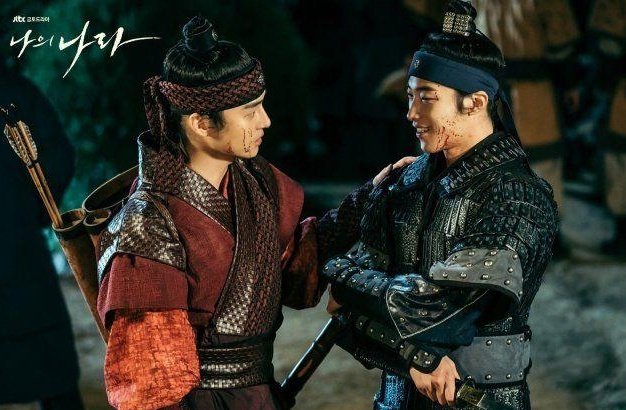
    Seo Hwi and Nam Seon-ho begin with a shared past, but they grow into men with very different understandings of justice, loyalty, and survival.

    Their conflict is not simply a personal rivalry.

    It reflects a period in Korean history when an entire political order was collapsing and a new nation was being built through violence and betrayal.

    2. A Nation Is Being Born, but Not Everyone Gets to Choose Its Future

    The historical background is essential to understanding this drama.

    At the end of the fourteenth century, Goryeo was approaching its final days. Political instability, military conflict, and disputes over authority created an environment in which powerful figures competed to determine the future of the Korean Peninsula.

    General Yi Seong-gye eventually established the Joseon Dynasty in 1392.

    But the transition was not a peaceful change of government.

    The founding of a new dynasty involved political purges, military confrontation, and the elimination of rivals.

    For powerful families, the changing political landscape offered opportunities to gain influence.

    For ordinary people, it could mean losing their homes, status, or lives.

    My Country: The New Age uses this historical transformation as the setting for a deeply personal story.

    Rather than focusing exclusively on kings and generals, it asks what happens to people who are caught between competing political forces.

    The title itself becomes meaningful: whose country is being created, and who actually gets to call it their own?

    3. Seo Hwi: A Man Who Refuses to Abandon His Principles

    Yang Se-jong plays Seo Hwi, one of the central characters.

    Hwi is the son of a respected military commander, but his family’s position has been damaged by political circumstances.

    He is an exceptionally capable swordsman, yet his life is shaped less by ambition than by responsibility and loyalty.

    His greatest strength is also his greatest weakness.

    He finds it difficult to abandon people he cares about, even when protecting them puts his own life at risk.

    Hwi does not begin with a grand political vision.

    He wants to survive, protect his loved ones, and maintain the dignity that his family has lost.

    But history does not allow him to remain outside politics.

    As the struggle for a new dynasty intensifies, his personal choices become connected to events far greater than himself.

    Hwi represents people who do not necessarily want power but are forced to confront those who possess it.

    4. Nam Seon-ho: The Pain of Being Born on the Wrong Side of Society

    Woo Do-hwan plays Nam Seon-ho, a character whose motivations are very different from Hwi’s.

    Seon-ho is highly intelligent, ambitious, and determined to escape the social limitations imposed on him by his birth.

    His mother was a servant, and his position within society makes it difficult for him to receive the recognition he believes he deserves.

    His father is a powerful official, but that connection does not give Seon-ho the security or acceptance he wants.

    He grows up understanding that talent alone does not determine a person’s future.

    Family background, social hierarchy, and political connections can matter more than ability.

    This creates a deep sense of resentment.

    Unlike Hwi, who tries to preserve what remains of his family’s dignity, Seon-ho wants to break through the system that has denied him equality.

    His ambition is not simply greed.

    It is also the result of humiliation and a desire to prove that his birth should not determine his worth.

    That makes him one of the drama’s most complicated characters.

    5. Why Their Friendship Was Always in Danger

    The relationship between Hwi and Seon-ho is the emotional foundation of the entire series.

    They share a history, understand each other’s strengths, and initially believe that they can face the world together.

    But their different social positions gradually shape their expectations.

    Hwi is trying to protect the people he loves.

    Seon-ho is trying to escape a world that has repeatedly reminded him that he is considered inferior.

    Their friendship is tested by political decisions, family interests, and the ambitions of powerful men.

    The tragedy is that neither character begins as a simple villain.

    Both have understandable reasons for the decisions they make.

    But understanding someone’s reasons does not necessarily mean accepting their actions.

    As the story develops, their relationship becomes a painful example of how political systems can turn personal grievances into lasting hatred.

    The question is not whether they once cared about each other.

    It is whether that bond can survive when the future they want is no longer the same.

    6. Yi Bang-won: Was He a Villain or a Necessary Architect of Joseon?

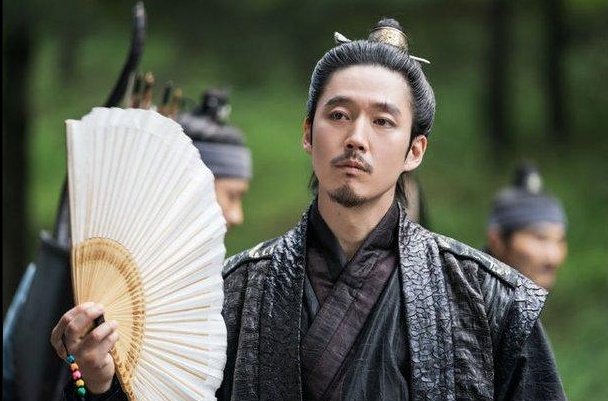
    Jang Hyuk’s portrayal of Yi Bang-won is one of the drama’s most memorable elements.

    Historically, Yi Bang-won was the fifth son of Yi Seong-gye, the founder of Joseon.

    He played a decisive role in the establishment of the dynasty and later became King Taejong.

    His rise to power involved ruthless political maneuvering and the violent removal of rivals, including members of his own family.

    The historical Yi Bang-won is therefore difficult to describe in simple moral terms.

    He helped establish a new political order, but he also used extreme violence to secure his position within it.

    The drama captures this contradiction through Jang Hyuk’s performance.

    His Yi Bang-won is intelligent, controlled, and dangerous.

    He does not need to shout to make other people understand his authority.

    His calmness often makes him more intimidating than characters who rely on open aggression.

    But the most interesting question is not whether he is frightening.

    It is whether the new state could have been created without the kind of political violence he represents.

    The series does not provide an easy answer.

    7. Jang Hyuk’s Performance Changes the Balance of the Drama

    Yi Bang-won is not the only important character, but his presence changes the atmosphere whenever he appears.

    Jang Hyuk gives the character a distinctive combination of intelligence, restraint, and explosive violence.

    His facial expressions and controlled delivery communicate that he is constantly evaluating the people around him.

    This is particularly effective because Yi Bang-won rarely appears to be acting without a purpose.

    Even when he seems calm, the audience senses that he is calculating the consequences of every interaction.

    His performance also creates an interesting contrast with the younger characters.

    Hwi and Seon-ho are still struggling to understand what kind of men they want to become.

    Bang-won already knows what he wants from the world.

    The difference is that he is willing to pay a price that the younger characters may not fully understand.

    Jang Hyuk’s portrayal gives the drama a powerful political dimension beyond its central friendship.

    8. Han Hee-jae: A Woman Trying to Find Her Own Position in a Man’s World

    Seolhyun plays Han Hee-jae, a woman who operates within the political and social conflicts of the period.

    She is intelligent, independent, and determined to pursue her own goals.

    Her character offers a different perspective on the changing world.

    While the male characters frequently express their conflicts through military strength and political ambition, Hee-jae must navigate a society in which women have fewer opportunities to exercise formal power.

    Her relationships with Hwi and the wider political world create another emotional layer in the drama.

    However, the character also illustrates one of the series’ weaknesses.

    Some viewers felt that her independence and potential were not fully developed as the story progressed.

    Her role sometimes becomes secondary to the conflict between the two male leads.

    This is an important limitation to acknowledge when evaluating the series.

    9. The Historical Events Behind the Fiction

    One reason My Country: The New Age is interesting is the way it places fictional characters inside real historical events.

    The story draws on the political transformation from Goryeo to Joseon.

    Several major historical developments form the background:

    • The Wihwado Retreat in 1388, which helped change the balance of power in Goryeo.
    • The rise of Yi Seong-gye and the establishment of Joseon in 1392.
    • The growing political influence of Yi Bang-won.
    • The First Strife of Princes in 1398, when the struggle over succession and political authority turned violently against members of the royal family.

    These events were not merely changes in royal leadership.

    They represented a fundamental transformation of the state.

    The drama uses this historical framework to show how individual lives can become trapped inside decisions made by powerful people.

    It is important, however, to distinguish the real historical figures and events from the fictional characters and dramatic relationships created for the series.

    The friendship between Hwi and Seon-ho is part of the drama’s fictional narrative, not a documented historical relationship.

    10. Why the Action Scenes Feel Personal

    The sword fights in My Country: The New Age are not simply decorative action sequences.

    They often represent emotional conflicts that the characters cannot resolve through conversation.

    A fight between two people who once trusted each other carries a different meaning from a battle between strangers.

    Every movement reflects a history of loyalty, disappointment, anger, and regret.

    The series combines large-scale military confrontations with smaller personal duels.

    This allows the action to function on two levels.

    It shows the physical danger of the period while also expressing the emotional distance between the characters.

    The result is a historical drama in which violence is closely connected to the relationships driving the story.

    11. Why Reddit Viewers Remember the Drama

    Discussions among international viewers on Reddit show that My Country: The New Age has left a particularly strong impression on fans of Korean historical dramas.

    Several elements repeatedly attract attention.

    The relationship between Seo Hwi and Nam Seon-ho

    Many viewers are drawn to the emotional complexity of their friendship and rivalry.

    Their story is not built around a simple misunderstanding that can be resolved through one conversation.

    It develops through repeated choices that gradually make reconciliation more difficult.

    Jang Hyuk as Yi Bang-won

    His performance is frequently singled out as one of the strongest parts of the series.

    Viewers appreciate the character’s commanding presence and the way Jang Hyuk creates tension without relying on exaggerated expressions.

    The emotional impact of the ending

    The conclusion is another major topic of discussion.

    For viewers who become invested in the two main characters, the final episodes can be particularly devastating.

    The series does not offer an uncomplicated happy ending in which friendship and love overcome every political conflict.

    That emotional commitment is part of why viewers continue discussing the drama after finishing it.

    12. The Ending: When the Past Cannot Be Recovered

    Spoiler warning: This section discusses the ending of the drama.

    The ending of My Country: The New Age is important because it completes the emotional journey of Hwi and Seon-ho.

    Their conflict is not resolved by one person simply defeating the other.

    Instead, the series brings their relationship back to the choices that shaped it.

    The two men have spent years being pushed apart by social inequality, political ambition, and the struggle to survive.

    By the time the story reaches its conclusion, the friendship they once shared has become inseparable from the pain they have caused each other.

    The tragedy is that they understand each other more deeply than many of the people around them.

    Yet understanding is not enough to undo the consequences of their decisions.

    The ending leaves viewers with the feeling that something precious has been lost long before the final moments arrive.

    It is not simply a story about two friends who become enemies.

    It is a story about two people who could not find a way to remain friends in the world they were forced to inhabit.

    13. Why the Drama’s Tragedy Works

    A tragic ending is not automatically meaningful.

    For tragedy to work, the audience must understand what the characters wanted, why they made their choices, and what those choices eventually cost them.

    My Country: The New Age builds its emotional impact through the contrast between the characters’ original hopes and their eventual positions.

    Hwi wants to protect the people he loves.

    Seon-ho wants to escape the social identity imposed on him.

    Bang-won wants to secure the future of a new dynasty.

    Each character pursues something that makes sense from his own perspective.

    But their goals cannot peacefully coexist.

    This is what gives the drama its tragic dimension.

    The characters are not simply destroyed by bad luck.

    They are shaped by the choices they make within a political system that rewards power and punishes weakness.

    The result is a story in which personal loyalty and national ambition repeatedly collide.

    14. Is My Country: The New Age Worth Watching?

    For viewers who enjoy Korean historical dramas, My Country: The New Age is a strong recommendation.

    Its greatest strengths include:

    • Yang Se-jong’s emotional portrayal of Seo Hwi.
    • Woo Do-hwan’s complex performance as Nam Seon-ho.
    • Jang Hyuk’s commanding interpretation of Yi Bang-won.
    • The historical setting surrounding the fall of Goryeo and the birth of Joseon.
    • Sword fights and large-scale action sequences.
    • A central friendship that develops into a deeply painful conflict.

    The series is especially suitable for viewers who prefer character-driven historical stories rather than dramas focused exclusively on palace politics.

    However, it is not without weaknesses.

    Some viewers may find the historical timeline complicated, the romantic storyline less convincing, or certain character arcs insufficiently developed.

    But the central relationship between Hwi and Seon-ho gives the drama a strong emotional reason to keep watching.

    Conclusion: A New Nation Was Built, but What Happened to the People Who Lost Each Other Along the Way?

    My Country: The New Age tells a story about the birth of a dynasty, but its most powerful moments are often far removed from the royal throne.

    They belong to two young men who once believed they could face the world together.

    Seo Hwi and Nam Seon-ho represent different responses to an unequal society.

    One tries to protect the people he loves.

    The other tries to escape the limitations of his birth.

    Their paths eventually become part of a much larger political struggle, one in which Yi Bang-won represents the ruthless logic of building and securing a new state.

    The historical transformation from Goryeo to Joseon created a new chapter in Korean history.

    But for the characters at the center of this drama, the new age came at an extraordinary personal cost.

    Perhaps the saddest question is not which of the two friends was right. It is whether they ever had a real chance to choose a future in which they could remain friends.

    That is why My Country: The New Age remains more than a historical action drama.

    It is a story about friendship, social inequality, political ambition, and the human cost of creating a new world.

    TTK Original โ€” Beyond the Headlines
    Looking beyond the historical conflict to explore the friendship, ambition, and sacrifices behind the birth of a nation.
  • My Country: The New Age โ€“ When Friendship Becomes the Price of Building a Nation

    My Country: The New Age โ€“ When Friendship Becomes the Price of Building a Nation

    Why Did Two Friends Who Dreamed of a Better World Become Enemies in the Struggle for Power?

    Historical dramas often portray the founding of a nation as a heroic achievement. Kings establish new political systems, generals win decisive battles, and ambitious leaders reshape the destiny of an entire population.

    But behind these grand historical events are people whose lives are destroyed by the decisions of those who seek power.

    JTBC’s My Country: The New Age (2019), starring Yang Se-jong as Seo Hwi, Woo Do-hwan as Nam Seon-ho, and Jang Hyuk as Yi Bang-won, explores this uncomfortable side of political transformation.

    Set during the turbulent transition from Goryeo to Joseon, the drama follows two friends who initially share a vision of a better world but gradually become trapped on opposite sides of a violent struggle for power.

    Seo Hwi dreams of protecting the people he loves. Nam Seon-ho wants to escape the social limitations imposed by his birth. Yi Bang-won seeks to establish a political order strong enough to survive the instability surrounding the foundation of a new dynasty.

    Their ambitions are understandable, but they are not compatible.

    This is the central tragedy of the series: three men speak about the future of their country, yet each understands the meaning of that country differently.

    Reddit discussions frequently highlight the emotional intensity of Seo Hwi and Nam Seon-ho’s relationship, the performances of the leading actors, and the dramatic presence of Yi Bang-won. Other viewers have criticized the treatment of female characters, historical liberties, and certain aspects of the later narrative.

    These divided reactions reveal an opportunity for a deeper interpretation.

    My Country: The New Age is not simply a story about who deserves to rule. It is about what happens when personal dignity, friendship, and political ambition collide during the creation of a new state.

    1. Three Men, Three Different Countries

    The title My Country appears straightforward, but the drama gives it a much more complicated meaning.

    For Seo Hwi, a country should be a place where ordinary people can live without constantly suffering under the decisions of powerful men.

    For Nam Seon-ho, a country represents the possibility of escaping a social identity that has already determined his position in life.

    For Yi Bang-won, a country must be a political structure capable of concentrating authority and preventing competing powers from destroying the new order.

    All three men want something that could be described as a better future.

    But their definitions of a better future are fundamentally different.

    Seo Hwi prioritizes the people closest to him. Seon-ho wants recognition and freedom from the limitations of his birth. Yi Bang-won believes that political stability requires decisive authority.

    The conflict is not simply between good and evil.

    It is between competing ideas about what a nation should protect.

    This distinction gives the drama its strongest philosophical foundation. The title does not refer to one shared national vision. It refers to the personal expectations that different people attach to the idea of a country.

    2. Seo Hwi: A Man Who Wants to Protect People Rather Than Rule Them

    Seo Hwi is not driven by the desire to become a powerful political leader.

    His motivations are much more personal.

    He wants to protect his family, maintain his dignity, and prevent the people he cares about from becoming victims of a violent political environment.

    This makes him different from the ambitious figures surrounding him.

    He does not initially imagine that building a new country requires controlling the state. His understanding of a better world begins with the lives of ordinary people.

    However, this apparently simple desire becomes increasingly difficult to maintain.

    Every political conflict creates another situation in which Hwi must choose between his personal values and the demands of survival.

    His loyalty becomes both his greatest strength and his greatest vulnerability.

    People who care deeply about others can be manipulated through that attachment. If someone threatens the people they love, they may accept decisions they would otherwise reject.

    Hwi’s tragedy is that his desire to protect others repeatedly pulls him deeper into the very violence he wants to escape.

    He does not seek power for its own sake, but he cannot remain outside the struggle for power.

    3. Nam Seon-ho: The Man Who Wants to Escape His Birth

    Nam Seon-ho’s story is arguably the most psychologically complicated in the drama.

    His social position determines how other people see him before he has the opportunity to define himself.

    He possesses talent, intelligence, and ambition, but his birth places limits on the recognition he can receive.

    This creates a particularly destructive psychological conflict.

    Seon-ho does not simply want wealth or political influence. He wants proof that his identity does not have to be determined by the circumstances of his birth.

    For someone in his position, power can become more than a practical instrument.

    It can become a form of revenge against a society that has repeatedly reminded him that he is inferior.

    But this desire contains a dangerous contradiction.

    If a person seeks recognition from the same system that has humiliated them, they may gradually begin accepting the system’s values.

    Seon-ho wants to overcome the hierarchy, yet his ambition increasingly draws him toward the political structures that preserve it.

    He does not necessarily reject the system itself. At times, he appears to want a position within that system powerful enough to make its previous judgments irrelevant.

    That is what makes him tragic.

    His desire for dignity is understandable, but the methods through which he pursues it threaten to destroy the relationships that once gave his life meaning.

    4. The Friendship Between Hwi and Seon-ho: Why Their Relationship Matters More Than Their Rivalry

    The emotional center of My Country is the relationship between Seo Hwi and Nam Seon-ho.

    Their friendship is important because it begins before their political identities become fully defined.

    They are not initially enemies representing opposing ideological camps. They are two young men who share experiences, hopes, and an understanding of each other’s personal struggles.

    This shared history creates an emotional bond that survives even when their circumstances become increasingly hostile.

    The audience knows something that the characters cannot easily escape: they once trusted each other.

    That knowledge changes the meaning of every confrontation.

    When two strangers fight, the conflict can be understood through their opposing interests.

    When former friends fight, every act of violence also becomes a reminder of what has been lost.

    This explains why many viewers found their relationship more compelling than the conventional romantic elements of the series.

    Their connection contains affection, resentment, betrayal, guilt, and the possibility of reconciliation.

    The strongest emotional scenes do not simply ask whether they will become friends again.

    They ask whether people can recover a relationship after making choices that fundamentally change how they see each other.

    5. Betrayal Is Sometimes the Result of Different Definitions of Survival

    It is easy to describe Seon-ho as a betrayer.

    From Hwi’s perspective, Seon-ho’s political choices repeatedly threaten their friendship and shared ideals.

    But understanding the character requires examining the conditions under which he makes those decisions.

    For Hwi, survival is closely connected to protecting people.

    For Seon-ho, survival also means escaping a social identity that has made him feel powerless.

    This difference is crucial.

    Two people can face the same political crisis and reach completely different conclusions because they are protecting different things.

    Hwi may regard loyalty as a moral obligation. Seon-ho may see loyalty as a luxury that someone in his position cannot afford.

    Neither perspective completely explains every action, but the conflict reveals how unequal social conditions can reshape personal morality.

    This does not mean Seon-ho should be excused for everything he does.

    Understanding why someone betrays another person is not the same as declaring that betrayal acceptable.

    The drama becomes more powerful when viewers can recognize both the emotional reasons behind Seon-ho’s choices and the damage those choices cause.

    6. Yi Bang-won: The Man Who Understands That Power Cannot Remain Divided

    Yi Bang-won occupies a different position from Hwi and Seon-ho.

    He is not simply another ambitious individual trying to improve his circumstances.

    He understands that political authority is unstable when several powerful figures claim competing rights to determine the future.

    His approach to power is shaped by the belief that a new dynasty cannot survive indefinitely through unclear authority.

    From this perspective, decisive action becomes a political necessity.

    But the same logic creates the danger that makes him such a compelling character.

    If stability requires the elimination of competing centers of power, how many people must be sacrificed before the state becomes secure?

    Yi Bang-won understands political competition as a struggle that cannot always be resolved through compromise.

    He sees hesitation as a potential weakness.

    This gives him a strategic advantage, but it also makes him dangerous to anyone whose personal values conflict with his political objectives.

    Jang Hyuk’s performance emphasizes this combination of intelligence, intensity, and unpredictability.

    The character is frightening not simply because he possesses power, but because he appears to understand how much human suffering he is willing to accept in order to obtain it.

    7. The Difference Between Building a Country and Building a Throne

    One of the most important questions raised by the drama concerns the relationship between political institutions and personal ambition.

    A new dynasty may be presented as a national achievement, but the process of creating it can also become a struggle among individuals who want to control the state.

    These are not necessarily identical goals.

    Building a country should involve creating institutions that allow people to live under predictable rules.

    Building a throne involves securing the authority of a particular ruler.

    Sometimes these objectives overlap. A powerful ruler may be able to establish order during a period of instability.

    But they can also conflict.

    When the survival of a political leader becomes more important than the principles the new state is supposed to represent, the nation risks becoming an extension of personal ambition.

    This is one of the central tensions surrounding Yi Bang-won.

    He understands that a new political order requires strength. Yet the methods used to secure that strength raise questions about the human cost of state formation.

    The drama does not offer a simple answer because political stability and individual freedom do not always move in the same direction.

    8. The Father and Son Conflict: Nam Jeon and the Inheritance of Power

    Seon-ho’s relationship with his father, Nam Jeon, adds another dimension to the story.

    His personal ambitions cannot be separated from the influence of the man whose position and authority shape his circumstances.

    The father-son relationship becomes a struggle over recognition, control, and the possibility of escaping an inherited identity.

    This is more than a conventional family conflict.

    Nam Jeon represents a political world in which social hierarchy and personal power determine whose ambitions are considered legitimate.

    Seon-ho wants to become more than the identity assigned to him, but he remains deeply affected by the expectations and judgments of his father.

    This creates a psychological trap.

    He wants to prove that he is independent, yet the desire for recognition can keep him emotionally tied to the very person whose judgment he resents.

    The struggle becomes especially painful when personal dignity is pursued through the same political values that created the original humiliation.

    The drama suggests that escaping an oppressive hierarchy is not always as simple as defeating the person who controls it.

    Sometimes the more difficult task is refusing to reproduce the hierarchy after gaining power.

    9. Social Status: Why Talent Alone Cannot Overcome an Unequal System

    Seon-ho’s position reveals one of the drama’s most important social criticisms.

    A society may claim to reward ability, but its institutions can still determine whose abilities are recognized.

    Talent does not operate independently of social circumstances.

    A person with powerful family connections may receive opportunities that remain unavailable to someone with equal or greater ability.

    This is why Seon-ho’s ambition has emotional force.

    He does not merely want to become successful. He wants to challenge the assumption that his birth has already determined what he can become.

    However, the drama also presents a difficult question.

    If the goal is to escape an unfair system, is gaining a powerful position within that system enough?

    Seon-ho’s journey suggests that recognition and liberation are not necessarily the same thing.

    A person may overcome personal exclusion while leaving the underlying structure untouched.

    They may even become part of the system that excludes others.

    This is a broader political lesson that extends beyond the historical setting of the series.

    The person who once suffered under an unfair hierarchy does not automatically become committed to dismantling it after gaining influence.

    Sometimes the desire to occupy the top position becomes stronger than the desire to change the structure itself.

    10. Han Hee-jae: The Female Character Who Deserved More Narrative Space

    Han Hee-jae provides another perspective on the struggle for a new country.

    She is introduced as an intelligent and independent woman whose political awareness and personal convictions give her a role beyond conventional romantic support.

    Her character suggests that women can also participate in the political and social transformation surrounding the foundation of a new dynasty.

    However, some viewers criticized the way her role developed later in the series.

    The concern was that a character introduced with considerable potential did not always receive enough narrative attention to sustain that initial promise.

    This criticism matters because the drama’s political world is overwhelmingly shaped by men.

    If Hee-jae’s role becomes increasingly secondary, the story loses an opportunity to explore how women experience political instability and social transformation.

    The question is not whether she should have become as powerful as the male political figures.

    It is whether the series could have developed her independent perspective more fully.

    A drama about the creation of a country becomes richer when it asks how different groups experience the new order, rather than treating the political decisions of powerful men as the only events worth exploring.

    Hee-jae represents an important opportunity that the narrative could have used more effectively.

    11. Romance Versus Friendship: Why the Emotional Hierarchy Feels Different

    Many historical dramas use romance as the primary emotional engine.

    Characters fall in love, face separation, overcome obstacles, and eventually discover whether their feelings can survive political conflict.

    My Country uses romance, but its strongest emotional relationship is arguably the friendship between Hwi and Seon-ho.

    This creates an unusual emotional hierarchy.

    The audience is not simply waiting to discover which romantic partner will remain with the protagonist.

    Instead, viewers are watching whether two people who once understood each other can survive the consequences of their political choices.

    Their relationship has a different kind of emotional weight.

    Romantic separation can be painful because two people lose the possibility of a shared future.

    The destruction of a deep friendship can be equally painful because it also destroys the memory of a shared past.

    For Hwi and Seon-ho, the past cannot simply be erased.

    Even when they oppose each other, they remain connected through the knowledge of who they once were.

    This is one reason the drama’s friendship storyline became such a prominent subject in audience discussions.

    It gives the political conflict a deeply personal cost.

    12. Historical Fiction and the Difference Between Accuracy and Emotional Truth

    My Country: The New Age uses the transition from Goryeo to Joseon as the background for a fictionalized story.

    Its characters and relationships should therefore be understood through two different standards.

    Historical accuracy concerns whether events, institutions, chronology, and political figures correspond to the historical record.

    Emotional truth concerns whether the characters’ motivations and conflicts feel psychologically convincing.

    A historical drama can take creative liberties and still communicate meaningful ideas about power, ambition, and social inequality.

    But creative freedom does not remove the need for internal consistency.

    When a series changes historical circumstances to create a dramatic confrontation, the audience still expects those changes to serve a coherent narrative.

    The presence of Yi Bang-won makes this particularly important.

    He was a real historical figure whose political actions were central to the establishment of Joseon and the later consolidation of royal authority.

    The drama uses his historical identity to create a character who represents the difficult relationship between state formation and personal ambition.

    Viewers should distinguish between the historical Yi Bang-won and the dramatic interpretation presented by the series.

    The latter is not a documentary account. It is a fictional narrative using historical events to explore political and emotional questions.

    13. The Violence of State Formation: Who Pays for a New Political Order?

    The founding of a new dynasty is often remembered through the achievements of rulers and military leaders.

    But political transformation rarely occurs without people paying a price.

    Soldiers die, families lose their livelihoods, communities become divided, and individuals are forced to choose sides in conflicts they did not create.

    The drama repeatedly returns to this human cost.

    Hwi and Seon-ho are not simply fighting over personal disagreements. Their lives become entangled in a historical transformation that is larger than either of them.

    This creates an important moral distinction.

    A political leader may describe violence as necessary for the establishment of order.

    But the people who experience that violence do not necessarily benefit from the resulting political stability.

    The question is therefore not only whether a new state succeeds.

    It is who has the power to define success and whose suffering becomes an acceptable cost.

    This is one of the strongest political questions in My Country.

    The creation of a nation may be celebrated by later generations, but the people who lived through its violent beginnings may remember it very differently.

    14. Why the Later Episodes Divided Viewers

    Reddit discussions reveal that viewers responded differently to the drama’s later development.

    Some remained strongly invested in the relationship between Hwi and Seon-ho and found the emotional conclusion meaningful.

    Others expressed reservations about the pacing, historical liberties, character development, and the treatment of certain supporting roles.

    The criticisms of Hee-jae’s reduced narrative importance are particularly relevant because they point toward a wider structural problem.

    The series establishes several promising conflicts: social hierarchy, political ambition, friendship, family control, romance, and the founding of a new dynasty.

    But a drama must allocate time carefully among these elements.

    When one storyline becomes dominant, other promising conflicts can lose their development.

    The same applies to action sequences and dramatic confrontations.

    Spectacle can increase excitement, but it cannot replace the emotional consequences of the decisions that lead to those confrontations.

    The series is most effective when political events change the relationships between characters.

    It is less effective when the scale of the historical conflict becomes more important than the development of the people experiencing it.

    15. The Ending: Can Friendship Survive the Country They Tried to Build?

    The emotional meaning of the ending cannot be separated from the relationship established at the beginning.

    Hwi and Seon-ho begin as friends who share a vision of a different future.

    Their paths diverge because their circumstances, ambitions, and understandings of survival become increasingly incompatible.

    By the time their story reaches its conclusion, the question is no longer whether they can return to the innocent friendship of their youth.

    That possibility has already been changed by everything they have experienced.

    The ending carries the weight of a relationship that has been damaged by political choices but never entirely erased from memory.

    For some viewers, this makes the conclusion tragic but emotionally appropriate.

    For others, the journey may feel unnecessarily painful or dependent on dramatic escalation.

    Both reactions are understandable.

    The central relationship is powerful precisely because the characters cannot simply forget their shared past.

    But emotional connection does not guarantee reconciliation.

    Sometimes the people who understand each other most deeply are also the people who have become capable of hurting each other most profoundly.

    That is the tragedy at the heart of Hwi and Seon-ho’s story.

    16. The Real Meaning of My Country: Who Owns the Future?

    The most important question raised by My Country: The New Age is not which character has the strongest political argument.

    It is who has the right to decide what a country should become.

    Seo Hwi wants a world in which ordinary people can protect the lives they value.

    Nam Seon-ho wants to escape a social order that has defined his worth through his birth.

    Yi Bang-won wants a political structure strong enough to survive the instability of a new dynasty.

    Each man understands a different part of the problem.

    A country needs stability. It also needs fairness. And its people need more than the opportunity to survive under the authority of someone powerful.

    The tragedy is that the struggle to create a better country can reproduce the very inequalities and violence that its founders claim to oppose.

    Seon-ho’s ambition shows how the desire to escape an unfair hierarchy can become a desire to occupy its highest position.

    Yi Bang-won’s political strategy shows how the pursuit of stability can justify increasingly severe forms of control.

    Hwi’s loyalty shows how personal values can become vulnerable when political forces turn relationships into instruments of survival.

    The title My Country therefore becomes a question rather than a declaration.

    Whose country is it?

    The ruler’s? The ambitious person’s? The people who fought for it? Or the ordinary people who must live with the consequences of its creation?

    The drama never offers an entirely comfortable answer.

    That uncertainty is what makes its political and emotional conflicts worth revisiting.


    Final Verdict: A Political Drama About the Cost of Betraying the People Closest to You

    My Country: The New Age stands out because it connects the founding of a dynasty with the destruction of a personal relationship.

    Its strongest achievement is the emotional conflict between Seo Hwi and Nam Seon-ho. Their friendship gives the political story a human center that is more powerful than a conventional struggle for the throne.

    Jang Hyuk’s portrayal of Yi Bang-won adds another dimension, presenting power as something that can create order while demanding an enormous human price.

    The drama is not without weaknesses. Some supporting characters, particularly Han Hee-jae, could have received more sustained development. Certain narrative choices and historical liberties may also frustrate viewers who expect a more balanced treatment of the political and personal storylines.

    Nevertheless, its central question remains compelling.

    A country may be founded through political victories, but its moral value cannot be measured only by the strength of its ruler.

    It must also be measured by the lives of the people who were sacrificed along the way.

    Hwi and Seon-ho began by dreaming of a better country. Their tragedy was discovering that the struggle to create it could destroy the very friendship that once gave that dream meaning.

  • Bloodhounds: Why Was Kim Myeong-gil Scarier Than Baek-jeong? The Two Villains Explained

    Bloodhounds: Why Was Kim Myeong-gil Scarier Than Baek-jeong? The Two Villains Explained

    One Villain Turned Debt Into a Weapon. The Other Turned Human Violence Into Entertainment. But Which Was Truly More Dangerous?

    Spoiler Warning: This article contains major spoilers for Netflix’s Bloodhounds Seasons 1 and 2, including the villains’ methods, the deaths and injuries they cause, and the second season’s ending.

    In the first season of Bloodhounds, Kim Gun-woo faces a man who can destroy a family without ever stepping into a boxing ring.

    His name is Kim Myeong-gil.

    He runs Smile Capital, a predatory lending operation that targets people in financial distress.

    He offers money to those who desperately need it.

    Then he uses their desperation against them.

    In the second season, Gun-woo faces an entirely different enemy.

    Im Baek-jeong is a terrifying fighter who dominates an international underground boxing organization.

    He can overwhelm experienced opponents.

    He treats physical violence as a commercial product.

    And when Gun-woo refuses to participate in his world, Baek-jeong threatens the people closest to him.

    Both men are brutal.

    Both are driven by money and power.

    Both force Gun-woo and Hong Woo-jin into life-threatening confrontations.

    Yet there is a striking difference between them.

    Baek-jeong wants to control what people do with their bodies. Myeong-gil wants to control the circumstances under which they make decisions.

    That difference may explain why some viewers find the first season’s villain more disturbing, even though the second season presents a more formidable physical opponent.

    But is Myeong-gil really the more dangerous villain?

    To answer that question, we need to look beyond fighting ability.

    We need to examine how each man builds power, chooses victims, maintains control, and responds when someone refuses to obey.

    Who Are Kim Myeong-gil and Baek-jeong?

    Kim Myeong-gil, played by Park Sung-woong, is the principal antagonist of Bloodhounds Season 1.

    He operates Smile Capital, a predatory lending business that profits from vulnerable borrowers.

    His ambitions extend beyond individual loans.

    He seeks greater wealth and influence, using threats, violence, and compromising information to pressure people who stand in his way.

    Im Baek-jeong, played by Jung Ji-hoon, also known as Rain, is the principal antagonist of Season 2.

    He controls an international underground boxing operation associated with the Iron Knuckle Fighting Championship, or IKFC.

    The organization profits from violent contests and illegal betting.

    Baek-jeong is not simply the financier behind the fights.

    He is also an exceptionally dangerous fighter himself.

    The distinction is immediately visible.

    Myeong-gil’s power is primarily organizational.

    Baek-jeong’s power is both organizational and physical.

    Myeong-gil can destroy someone through debt, blackmail, or the actions of his enforcers.

    Baek-jeong can personally deliver the violence he threatens.

    Neither method is harmless.

    But they produce different kinds of fear.

    Myeong-gil makes people afraid of losing their lives as they know them. Baek-jeong makes people afraid of losing their lives altogether.

    The first fear can develop gradually.

    The second can become immediate.

    And both are central to the world of Bloodhounds.

    1. Myeong-gil’s Greatest Weapon Is Not Violence. It Is Desperation.

    The first season begins with an ordinary financial problem.

    Gun-woo’s mother is struggling to keep her cafรฉ operating.

    Her situation is recognizable.

    A small business faces economic pressure.

    The owner needs money.

    A lender appears to offer a solution.

    But Smile Capital is not interested in helping people recover.

    Its business model depends on exploiting vulnerability.

    The borrower believes that obtaining a loan will provide relief.

    Instead, the loan becomes a means of control.

    This is what makes Myeong-gil so unsettling.

    He does not need to begin with a physical attack.

    He can begin with a contract.

    A signature.

    A promise of financial assistance.

    The victim may even feel grateful at first.

    That is the psychological advantage of predatory lending.

    The trap can appear to be an opportunity.

    By the time the victim understands the danger, the lender may already possess leverage.

    Myeong-gil’s operation turns economic insecurity into a weapon.

    He targets people whose ability to refuse is already weakened.

    The cruelest part of Myeong-gil’s business is that his victims often approach him voluntarily, believing he may be their last chance.

    That does not make them responsible for his exploitation.

    It reveals the imbalance of power.

    He possesses information, money, and enforcers.

    They possess urgent needs.

    He uses that difference to control the encounter.

    2. Baek-jeong Turns Violence Into a Product

    Baek-jeong’s business operates according to a different logic.

    He controls an underground fighting organization where extreme violence attracts money.

    The fighters’ bodies become the central commodity.

    Their suffering creates spectacle.

    Their victories and defeats generate betting interest.

    The more dangerous the confrontation, the more valuable it can become to the people profiting from it.

    This is not ordinary professional boxing.

    Legitimate boxing operates within a regulated sporting framework, with rules and medical protections intended to reduce risk.

    Baek-jeong’s organization exploits the spectacle of fighting while disregarding the ethical purpose of those protections.

    It treats combatants as disposable sources of entertainment.

    The opening of Season 2 establishes the threat through the fate of a defeated boxer.

    Baek-jeong’s violence demonstrates that the organization is willing to sacrifice human life for its own interests.

    His ambition then turns toward Gun-woo.

    Gun-woo is a talented champion.

    He possesses the athletic ability and public recognition that could make him an attractive target.

    Baek-jeong offers him an enormous sum of money to fight.

    But when Gun-woo refuses, the apparent business proposition becomes coercion.

    The offer was never simply an offer between equals.

    Baek-jeong’s world begins with the promise of money, just as Myeong-gil’s does. But its final currency is the human body.

    The fighter must obey.

    The audience must be entertained.

    And the organization must profit.

    3. Why Is Myeong-gil More Frightening to Ordinary People?

    Imagine encountering the two villains in real life.

    Baek-jeong is terrifying because he is extraordinarily violent.

    But most ordinary people are unlikely to enter an underground fighting championship.

    They would have to be drawn into his specific criminal world.

    Myeong-gil’s operation is different.

    Its victims can be cafรฉ owners, small-business operators, or families struggling to pay their bills.

    They do not need to be fighters.

    They do not need to have committed a crime.

    They do not even need to understand the criminal organization they are dealing with.

    They only need to be financially vulnerable.

    That makes Myeong-gil’s threat feel more familiar.

    A financial emergency is not an unusual event.

    A failed business, an unexpected expense, or a period without income can place almost anyone under pressure.

    The first season uses that reality to create fear.

    Gun-woo’s mother is not targeted because she is powerful.

    She is targeted because she needs help.

    This reverses the usual logic of an action thriller.

    The villain does not initially attack the hero because the hero has challenged him.

    The villain’s organization creates the crisis that forces the hero into action.

    Myeong-gil is frightening because his victims do not have to enter a dangerous world voluntarily. That world can arrive at their door disguised as financial assistance.

    This is the strongest argument for considering him the more disturbing antagonist.

    His methods are rooted in vulnerabilities that extend far beyond the fictional setting.

    4. Why Is Baek-jeong the More Dangerous Fighter?

    If the comparison concerns direct physical combat, the answer changes.

    Baek-jeong is presented as an overwhelming fighting threat.

    He possesses the experience, power, and adaptability needed to defeat formidable opponents.

    Unlike Myeong-gil, he does not rely primarily on other people to carry out violence.

    He can step into the fighting space himself.

    This makes him particularly dangerous to Gun-woo.

    Gun-woo is an exceptional boxer.

    In Season 1, his boxing ability gives him an advantage against many of Myeong-gil’s enforcers.

    But Season 2 forces him to confront a villain whose own fighting skills are central to his power.

    The threat is no longer simply an organization protected by violent men.

    The person running the organization is also one of its most dangerous weapons.

    That creates a different dramatic challenge.

    Gun-woo cannot defeat Baek-jeong merely by reaching him.

    He must develop the skill and strategy needed to overcome him.

    Woo-jin’s support becomes essential.

    The heroes must prepare for a fight that tests the limits of their abilities.

    Baek-jeong is the more formidable physical opponent because the violence he commands is also violence he can personally deliver.

    But physical superiority does not automatically make someone the more effective criminal.

    A dangerous fighter can injure the person standing in front of him.

    A sophisticated criminal organization can harm people who never encounter its leader.

    That is the distinction between combat power and systemic power.

    5. Myeong-gil Understands That Fear Works Better When It Is Personal

    Myeong-gil’s methods are not limited to collecting debts.

    He uses intimidation and compromising information to expand his influence.

    His relationship with Hong Min-beom illustrates the point.

    Min-beom is wealthy.

    He is not a desperate cafรฉ owner.

    He possesses resources and social connections.

    Yet Myeong-gil finds ways to pressure him.

    This demonstrates that Myeong-gil’s criminal model can operate across different social classes.

    For vulnerable borrowers, the point of leverage is financial survival.

    For wealthy individuals, it may be reputation, ambition, or exposure.

    The method changes according to the target.

    The underlying principle remains the same.

    Identify what the person fears losing.

    Then use that fear to demand obedience.

    This is why Myeong-gil feels calculating.

    He understands that people do not all have the same weaknesses.

    One person fears bankruptcy.

    Another fears humiliation.

    Another fears harm to their family.

    Myeong-gil attempts to convert those fears into bargaining power.

    His violence is especially effective because it reinforces threats that have already been established through other means.

    Myeong-gil does not need every victim to fear the same thing. He only needs to discover what each victim cannot afford to lose.

    That is a more adaptable form of control than physical intimidation alone.

    6. Baek-jeong’s Greatest Weakness Is His Ego

    Baek-jeong also uses money and intimidation.

    But his behavior reveals a strong personal obsession with dominance.

    Gun-woo becomes more than a valuable fighter.

    He becomes a challenge to Baek-jeong’s sense of superiority.

    This is significant because a criminal leader who treats every refusal as a personal insult can become strategically reckless.

    Baek-jeong does not merely want Gun-woo to participate.

    He wants to establish that Gun-woo cannot defy him.

    His anger makes the conflict increasingly personal.

    That helps explain why the second season develops into a direct confrontation between the two men.

    In an interview with Yonhap News Agency, actor Jung Ji-hoon described the character as a narcissistic figure who feels inferior to Gun-woo and repeatedly finds reasons to target him.

    The actor also discussed the character’s difficulty controlling his anger.

    These comments provide useful insight into the performance.

    Baek-jeong’s violence is not always the product of detached calculation.

    His need to dominate can overwhelm his judgment.

    He wants money.

    But he also wants submission.

    And the refusal of a talented fighter threatens his identity as the strongest person in the room.

    Myeong-gil usually treats people as assets to exploit. Baek-jeong increasingly treats Gun-woo as an insult that must be punished.

    That is an important difference between their motivations.

    7. Why Does President Choi Represent the Opposite of Myeong-gil?

    Season 1 introduces a character who makes its moral argument especially clear.

    Choi Tae-ho is also a moneylender.

    But he operates according to a different philosophy.

    He provides loans without charging interest.

    He attempts to help people rather than exploit their desperation.

    His relationship with Hyeon-ju and the two young boxers demonstrates that financial power can be used to protect others.

    This is crucial.

    The series does not argue that money itself is evil.

    It argues that the moral meaning of money depends on how people use it.

    Myeong-gil uses lending to create dependency.

    President Choi uses lending to offer relief.

    Both possess financial resources.

    Both understand how money influences people’s lives.

    But they make radically different choices.

    The contrast reveals something deeper about Myeong-gil.

    He is not dangerous merely because he is rich.

    He is dangerous because he deliberately turns another person’s weakness into his own advantage.

    President Choi demonstrates that the same general activityโ€”providing money to people in needโ€”can be organized around a very different purpose.

    Season 1’s real moral confrontation is not between wealth and poverty. It is between two ways of exercising power over people who need help.

    That gives Myeong-gil’s villainy a dimension that goes beyond his personal cruelty.

    8. Why Does Baek-jeong Need Gun-woo to Fight Him?

    Gun-woo represents something Baek-jeong cannot easily control.

    He is talented.

    He has public recognition.

    He is physically capable.

    But he does not share Baek-jeong’s values.

    For Baek-jeong, fighting is a means of domination and profit.

    For Gun-woo, boxing is a discipline shaped by effort, loyalty, and personal integrity.

    The contrast is fundamental.

    Both men possess extraordinary fighting ability.

    But they assign different meanings to that ability.

    Baek-jeong sees another powerful fighter as an opportunity.

    Gun-woo sees boxing as a path toward personal achievement.

    Baek-jeong wants to convert Gun-woo’s talent into an asset for his organization.

    Gun-woo refuses because accepting would mean surrendering control over the purpose of his own ability.

    That refusal makes him dangerous to Baek-jeong.

    It demonstrates that not every person can be purchased.

    And it exposes the limits of an organization that assumes money and fear can secure obedience.

    Baek-jeong wants Gun-woo’s strength, but what he cannot tolerate is Gun-woo’s freedom to decide how that strength will be used.

    The conflict is therefore about more than a boxing match.

    It is about ownership of the fighter’s body, talent, and choices.

    9. What Do the Two Villains Have in Common?

    Despite their differences, Myeong-gil and Baek-jeong share several important characteristics.

    Both build organizations around exploitation.

    Both use money to attract or pressure people.

    Both rely on violence when their authority is challenged.

    Both target Gun-woo’s family and allies.

    And both assume that other people can be forced to obey.

    The most important similarity is their attitude toward human beings.

    Neither villain treats others as fully independent individuals.

    Myeong-gil sees borrowers as sources of profit and leverage.

    Baek-jeong sees fighters as sources of revenue and spectacle.

    People become instruments.

    Their needs, fears, and abilities are converted into assets controlled by someone else.

    That is why the two seasons feel connected despite their different criminal settings.

    The first season is about debt.

    The second is about fighting.

    But both explore what happens when powerful people turn human vulnerability into a business model.

    Myeong-gil monetizes desperation. Baek-jeong monetizes violence.

    Their industries are different.

    Their moral logic is remarkably similar.

    10. Why Are Gun-woo and Woo-jin the Perfect Opponents for Both Villains?

    Gun-woo and Woo-jin challenge the central assumption shared by both criminals.

    Myeong-gil and Baek-jeong believe people can be controlled through self-interest.

    Offer enough money.

    Create enough fear.

    Threaten something important.

    Eventually, the person will obey.

    But Gun-woo and Woo-jin repeatedly act for reasons that do not fit that calculation.

    They protect each other.

    They risk their safety for people who cannot repay them.

    They remain loyal even when loyalty becomes dangerous.

    Their friendship creates obligations that are not based on contracts or financial profit.

    This is why the relationship between the two boxers is so important to the series.

    They are not merely stronger than the villains’ subordinates.

    They represent a different way of relating to other people.

    Myeong-gil uses relationships as leverage.

    Baek-jeong uses relationships as vulnerabilities.

    Gun-woo and Woo-jin treat relationships as commitments.

    The villains see loyalty as something to purchase or enforce.

    The heroes see loyalty as something freely given.

    The most important difference between the heroes and the villains is not who can throw the harder punch. It is whether they believe another human being has value beyond usefulness.

    That moral contrast gives the action its emotional force.

    11. Which Villain Causes More Lasting Damage?

    There is no simple numerical answer.

    A fair comparison requires different standards.

    Baek-jeong creates an immediate and terrifying physical threat.

    His underground fighting operation exposes people to extreme violence.

    He is capable of personally defeating formidable opponents.

    His methods can cause devastating injuries and deaths.

    Myeong-gil’s damage often begins before the victim recognizes that a crime is being committed.

    His operation can destroy financial stability.

    It can threaten businesses.

    It can undermine relationships.

    It can force people into decisions they would never make under ordinary circumstances.

    Both kinds of harm can have lasting consequences.

    The difference lies in how they spread.

    Baek-jeong’s criminal enterprise is centered on a violent spectacle and the network supporting it.

    Myeong-gil’s enterprise reaches into ordinary economic life.

    A person can become entangled in his operation simply by seeking financial assistance.

    That makes the first season’s threat especially unsettling.

    Baek-jeong’s victims may fear what will happen in the next fight. Myeong-gil’s victims may fear what will happen to every part of their lives.

    This is not proof that one villain has caused more suffering in absolute terms.

    It is an explanation of why their forms of cruelty feel different.

    12. Why Does Baek-jeong’s Ending Reveal the Limits of Physical Power?

    Season 2 contains a revealing final reversal.

    Gun-woo defeats Baek-jeong.

    But Baek-jeong survives.

    Intelligence operatives stage his apparent death and preserve him as a source of information about a larger criminal network.

    The man who dominated fighters through physical strength becomes dependent on an organization with greater institutional power.

    He cannot punch his way out of the situation.

    His survival depends on cooperation.

    This is the ultimate limitation of Baek-jeong’s philosophy.

    He believes strength creates authority.

    He treats weaker people as disposable.

    He assumes that the ability to inflict violence gives him the right to control others.

    But physical dominance is not the same as control over every system.

    Once a more powerful institution intervenes, his fighting ability is no longer decisive.

    Baek-jeong’s ending exposes the weakness of a man who confuses being the strongest fighter with being the most powerful person.

    He loses the fight.

    Then he loses control of his future.

    That is a more complete defeat than the final boxing match alone suggests.

    13. Was Myeong-gil Actually Smarter Than Baek-jeong?

    In some respects, yes.

    Myeong-gil demonstrates a more systematic understanding of how to exploit different forms of vulnerability.

    He knows how to use debt.

    He understands intimidation.

    He can pressure people with resources and influence.

    He uses other people’s ambitions and fears against them.

    Baek-jeong also runs a sophisticated criminal operation.

    His underground fighting organization is not a small or disorganized enterprise.

    It operates across borders and generates enormous financial interest.

    Calling Baek-jeong unintelligent would therefore be inaccurate.

    The difference is that Baek-jeong’s personal behavior can undermine the logic of his business.

    His obsession with Gun-woo becomes increasingly important.

    His need to assert dominance turns a potentially profitable relationship into a destructive personal conflict.

    Myeong-gil’s cruelty is more closely integrated into his business model.

    Baek-jeong’s cruelty is both a business model and an expression of his personal ego.

    That is why Myeong-gil can appear more calculating.

    Myeong-gil is often frightening because his violence serves a larger strategy. Baek-jeong is frightening because his strategy can become subordinate to his appetite for violence.

    Both are dangerous.

    But one appears more patient in the way he constructs power.

    14. Why Might Viewers Prefer Myeong-gil as a Villain?

    A memorable villain does not have to be the strongest character.

    A villain becomes compelling when the threat feels credible, personal, and difficult to escape.

    Myeong-gil benefits from all three qualities.

    His victims are ordinary people.

    His methods are rooted in recognizable financial pressures.

    His organization operates through multiple forms of influence.

    And his cruelty creates consequences that cannot be solved by winning a single fight.

    Baek-jeong offers a different attraction.

    He is physically intimidating.

    His confrontations with Gun-woo raise the intensity of the action.

    He gives Season 2 a villain who can challenge the protagonist in the very skill that defines him.

    That makes him effective for a boxing-centered action story.

    But it also narrows the central conflict toward the question of who will win the fight.

    Myeong-gil raises a broader question.

    How do you defeat someone whose power extends beyond the people he can physically attack?

    This is why viewers can reasonably prefer either villain.

    Someone who values direct action may find Baek-jeong more exciting.

    Someone who values psychological menace and criminal strategy may find Myeong-gil more disturbing.

    Baek-jeong is designed to make viewers fear the next confrontation. Myeong-gil makes viewers fear the system that produces the confrontation.

    That distinction explains much of their different appeal.

    15. The Deeper Meaning: Both Seasons Are About the Business of Human Suffering

    The two seasons of Bloodhounds can be read as variations on the same moral problem.

    In Season 1, a person needs money.

    The villain turns that need into dependency.

    In Season 2, a person possesses fighting talent.

    The villain tries to turn that talent into a commodity.

    The first business extracts value from financial desperation.

    The second extracts value from physical danger.

    Both depend on treating people as resources rather than individuals.

    And both become especially brutal when someone refuses to cooperate.

    This is where the series develops a coherent identity.

    It is not merely about two boxers defeating increasingly powerful enemies.

    It is about the conflict between human dignity and systems that profit from stripping people of control over their lives.

    Gun-woo’s physical strength matters.

    But his moral refusal matters more.

    He refuses to accept that desperation justifies exploitation.

    He refuses to accept that talent belongs to whoever can pay the most.

    He refuses to accept that people he loves are bargaining chips.

    Woo-jin reinforces those convictions through loyalty and action.

    Together, they oppose a world in which everything has a price.

    Myeong-gil believes he can buy people’s choices. Baek-jeong believes he can buy people’s bodies. Gun-woo and Woo-jin insist that some things should never be for sale.

    That is the moral thread connecting the two seasons.

    Final Verdict: Who Is the More Dangerous Villain?

    The answer depends on the meaning of danger.

    If danger means the ability to defeat Gun-woo in direct combat, Baek-jeong is the more formidable opponent.

    His fighting ability creates the central physical challenge of Season 2.

    If danger means the ability to build a criminal organization that exploits ordinary people through multiple forms of pressure, Myeong-gil is arguably more disturbing.

    His victims do not have to be fighters.

    They do not have to seek confrontation.

    They can become trapped simply because they need help.

    And if danger means the capacity to cause suffering through an organized business, both villains qualify.

    They profit from different forms of vulnerability.

    They rely on different methods of control.

    But they share the same willingness to sacrifice other people’s dignity for personal gain.

    The comparison therefore leads to a conclusion more interesting than declaring a winner.

    Baek-jeong is the villain Gun-woo must become strong enough to defeat.

    Myeong-gil is the villain who reveals why physical strength alone can never be enough.

    One can be defeated in a ring.

    The other represents a form of exploitation that can reappear wherever desperation meets unchecked power.

    That is why Myeong-gil may remain the more frightening villain long after the action scenes are over.

    He does not need to be the strongest man in the room.

    He only needs someone in that room to be desperate.

    And that is a much more familiar kind of fear.


    Frequently Asked Questions

    Who is the main villain in Bloodhounds Season 1?

    Kim Myeong-gil, played by Park Sung-woong, runs Smile Capital, a predatory lending operation that targets financially vulnerable people.

    Who is the main villain in Bloodhounds Season 2?

    Im Baek-jeong, played by Jung Ji-hoon (Rain), controls an international underground boxing organization that profits from illegal fighting and betting.

    Is Baek-jeong stronger than Kim Myeong-gil?

    Baek-jeong is portrayed as a much more formidable direct fighting opponent. Myeong-gil’s primary strength lies in criminal organization, financial manipulation, and intimidation.

    Why is Kim Myeong-gil so scary?

    His methods exploit ordinary financial vulnerability. He can trap people through debt, threats, and pressure before they fully understand the danger.

    Why does Baek-jeong target Gun-woo?

    Gun-woo’s boxing talent makes him valuable to Baek-jeong’s underground fighting business. Gun-woo’s refusal also becomes a challenge to Baek-jeong’s ego and authority.

    Is Baek-jeong more evil than Myeong-gil?

    Both villains exploit and harm other people. Baek-jeong emphasizes direct violence and coercive fighting, while Myeong-gil uses financial and organizational control. A moral ranking is necessarily interpretive.

    What is the difference between Smile Capital and IKFC?

    Smile Capital exploits people through predatory lending and financial pressure. IKFC profits from underground fighting, illegal betting, and coercion.

    Does Baek-jeong die at the end of Season 2?

    No. His apparent death is staged, and he is kept alive for a secret intelligence operation.

    Why are Gun-woo and Woo-jin important to the story?

    Their loyalty and willingness to protect others contrast with the villains’ tendency to treat people as disposable instruments.

    What is the deeper message of Bloodhounds?

    One important interpretation is that the series contrasts human solidarity with criminal systems that profit from desperation, fear, and violence.


    Sources and Further Reading

    Official Netflix sources

    Cast interview and reporting

    Editorial note: Character backgrounds and major plot premises are based on the series and the cited reporting. Comparisons of the villains’ psychology, power structures, and moral significance are critical interpretations, not statements attributed to the creators.


    Related Reading on True Taste Korea

    Bloodhounds โ€” Complete Three-Part Deep Dive

    Part 1 โ€” Bloodhounds: Why Did Hyeon-ju Disappearโ€”and Was the Original Ending Different?

    Discover how major production changes reshaped the first season’s final episodes and altered Hyeon-ju’s role in the story.

    Part 2 โ€” Bloodhounds Season 2 Ending Explained: Why Is Baek-jeong Alive?

    Explore Baek-jeong’s apparent death, the secret intelligence operation, and the larger criminal network introduced by the finale.

    More Korean Drama Analysis

    Again My Life: Why Was Knowing the Future Not Enough to Defeat Political Power?

    Why personal courage and strategic knowledge may still be insufficient to dismantle entrenched systems of power.

    Again My Life Ending Explained: Why Kim Hee-woo’s Revenge Was Never Really Finished

    An analysis of the difference between defeating an individual villain and changing the institutions that protected him.

  • Bloodhounds Season 2 Ending Explained: Why Is Baek-jeong Aliveโ€”and Who Really Controls Him?

    Gun-woo Wins the Final Fight. But the Post-Credits Scene Reveals That the Most Dangerous Game Has Only Changed Hands.

    Spoiler Warning: This article contains major spoilers for all seven episodes of Netflix’s Bloodhounds Season 2, including the final fight, Baek-jeong’s fate, and the post-credits scene.

    What happens when the villain loses the fight but survives the ending?

    For most of Bloodhounds Season 2, Im Baek-jeong appears to be the ultimate enemy.

    He controls a brutal underground fighting organization. He exploits violence for profit. He targets Kim Gun-woo and threatens the people Gun-woo loves.

    By the finale, Gun-woo has every reason to defeat him.

    And he does.

    The final confrontation delivers the physical victory that the season has been building toward.

    Gun-woo overcomes Baek-jeong. His mother is rescued. The criminal organization suffers a devastating defeat.

    For a moment, it seems that the nightmare is finally over.

    Then the series reveals its most important twist.

    Baek-jeong is not dead.

    His apparent execution was staged.

    And the man who once controlled a network of violent criminals has become an informant for South Korea’s National Intelligence Service.

    The ending raises a question far more interesting than whether Gun-woo can defeat another powerful boxer.

    If Baek-jeong is still alive, and the people who captured him are secretly using him, who has actually won?

    The answer reveals why Season 2 ends with a victory that feels both satisfying and disturbingly incomplete.

    What Happens at the End of Bloodhounds Season 2?

    The final episode brings Gun-woo and Baek-jeong into another confrontation.

    Earlier in the season, Baek-jeong demonstrated that he was not merely a criminal businessman using other people to commit violence.

    He was also an exceptionally dangerous fighter.

    His experience, physical strength, and ability to switch his fighting approach made him a formidable opponent.

    Gun-woo could not defeat him through courage alone.

    He needed to understand how Baek-jeong fought.

    He needed to identify weaknesses.

    And he needed to learn from his earlier defeat.

    Woo-jin plays an essential role in that preparation.

    Their partnership becomes the foundation of Gun-woo’s eventual victory.

    Meanwhile, Hong Min-beom and the other allies work to rescue Gun-woo’s kidnapped mother, Yoon So-yeon.

    The final confrontation therefore serves two purposes.

    It gives Gun-woo a chance to defeat Baek-jeong.

    And it creates an opportunity for the rescue operation to succeed.

    Gun-woo wins the fight.

    So-yeon is saved.

    The heroes are reunited.

    But the conclusion is not as simple as the defeat of one villain.

    Baek-jeong is subsequently taken from police custody by intelligence operatives.

    An image is circulated to suggest that he has been killed.

    The post-credits sequence reveals that the execution was fake.

    Baek-jeong is alive.

    And the intelligence officers have a new use for him.

    Is Baek-jeong Really Dead?

    No.

    Baek-jeong survives the Season 2 finale.

    The apparent evidence of his death is part of a deception.

    After the final fight, intelligence operatives led by Choi Shin-hyeong intercept him.

    The photograph suggesting that Baek-jeong has been executed is staged.

    The purpose is to create the appearance that he is no longer alive while keeping him under secret control.

    The post-credits scene confirms the truth.

    Baek-jeong is being pressured to cooperate with an intelligence operation.

    He is no longer in a position to negotiate as the powerful criminal who dominated the underground fighting world.

    His captors possess the power to determine what happens to him.

    To survive, he must become useful.

    This is the first major reversal of the ending.

    Throughout the season, Baek-jeong forces other people to obey him through threats and violence.

    Now he is the one being coerced.

    The man who made other people fight for their lives is forced to cooperate in order to preserve his own.

    That reversal is central to the meaning of the finale.

    Why Does the National Intelligence Service Keep Baek-jeong Alive?

    Because Baek-jeong knows something more valuable than his immediate punishment.

    His criminal organization is connected to a larger international network.

    The intelligence officers want information about his contacts in Thailand.

    In particular, they are interested in Paichit Chaichana, a figure associated with a major drug-trafficking operation.

    Baek-jeong can provide access to information that may help expose that network.

    Killing him would eliminate a dangerous criminal.

    But it would also eliminate a potentially valuable source of intelligence.

    Keeping him alive creates an opportunity to pursue people operating beyond the underground boxing organization.

    This is the practical logic behind the decision.

    But the decision is morally uncomfortable.

    Baek-jeong has committed terrible acts.

    He has caused enormous suffering.

    The people he targeted have every reason to want him held accountable.

    Instead, he is secretly preserved because he may be useful to a government operation.

    The series does not establish that Baek-jeong has been legally pardoned or permanently escaped accountability.

    It shows that intelligence operatives have chosen to exploit his knowledge rather than treat his apparent defeat as the end of the matter.

    Baek-jeong survives not because he deserves mercy, but because someone more powerful believes he is useful.

    That distinction changes the entire meaning of the ending.

    Who Is Choi Shin-hyeong, Played by Park Seo-joon?

    Choi Shin-hyeong enters the story as an intelligence operative.

    He is played by Park Seo-joon in a notable appearance near the end of the season.

    His role introduces a different kind of power into Bloodhounds.

    Until this point, the series has largely focused on physical confrontation and criminal organizations.

    Baek-jeong possesses influence because he controls money, fighters, and an underground network.

    Gun-woo possesses extraordinary physical ability.

    Woo-jin contributes strategy, loyalty, and combat experience.

    Hong Min-beom provides financial resources and connections.

    But Shin-hyeong operates through the authority and capabilities of a state intelligence organization.

    His power is not demonstrated primarily through boxing.

    He does not need to defeat Baek-jeong in the ring.

    Instead, he controls information, detention, and the appearance of what has happened.

    He can make Baek-jeong seem dead.

    He can conceal the truth from people outside the operation.

    And he can turn a defeated criminal into an asset.

    This makes Shin-hyeong an intriguing figure.

    He helps neutralize Baek-jeong’s immediate threat.

    But his methods raise questions about secrecy and accountability.

    The ending does not establish that Shin-hyeong is secretly a villain.

    That would be speculation.

    What it does establish is that he is willing to operate in a morally ambiguous space.

    Shin-hyeong represents a form of power that does not need to win a public fight because it can control what the public believes happened afterward.

    That makes him potentially more consequential than his limited screen time initially suggests.

    Who Is Paichit Chaichana?

    Paichit Chaichana is the international contact identified in the final revelation.

    He is connected to a major drug-trafficking operation involving Thailand and South Korea.

    His importance lies less in his immediate screen presence than in what he reveals about the scale of the criminal world.

    Baek-jeong initially appears to be the central villain.

    He runs the underground fighting organization known as IKFC.

    He exploits fighters.

    He profits from illegal violence.

    And he directs threats against Gun-woo and his family.

    But the post-credits scene reveals that Baek-jeong’s activities exist within a wider international environment.

    His connections extend beyond Korea.

    The intelligence officers are interested in using him to reach people operating at a larger scale.

    Paichit therefore represents an expansion of the story’s criminal network.

    However, the finale does not establish every detail of his organization or his future role.

    It would be premature to describe him as the confirmed principal villain of Season 3.

    His introduction creates that possibility.

    It does not guarantee it.

    Paichit matters because he reveals that Baek-jeong may have been a powerful criminal without being the most powerful person in the network surrounding him.

    The hierarchy of danger has changed.

    What Does the Title Bloodhounds Mean in the Final Scene?

    This may be the cleverest part of the ending.

    Throughout the series, the word bloodhounds evokes people who pursue others relentlessly.

    Criminal organizations use enforcers to track, intimidate, and attack their targets.

    Money creates dependency.

    Violence enforces obedience.

    The powerful send others to do their dirty work.

    In Season 2, Baek-jeong controls a network of fighters and criminals who act on his orders.

    He treats people as instruments.

    Their bodies and abilities become resources for his profit.

    But the finale reverses his position.

    Baek-jeong becomes an instrument himself.

    He must provide information.

    He must cooperate with people who now possess greater power over him.

    He has become another kind of bloodhound.

    The irony is deliberate and powerful.

    The man who held the leash is now the one wearing it.

    This does not make the intelligence officers morally equivalent to Baek-jeong’s criminal organization.

    Their stated objective is to investigate a dangerous international network.

    But the parallel is still meaningful.

    The finale asks viewers to consider how power operates through control.

    The identity of the person holding the leash has changed.

    The structure of coercion has not entirely disappeared.

    Why Does Gun-woo Defeat Baek-jeong in the Final Fight?

    Gun-woo’s victory is not simply the result of becoming physically stronger.

    The season emphasizes adaptation.

    Baek-jeong is dangerous because of his fighting ability, experience, and versatility.

    Gun-woo initially struggles against those advantages.

    His eventual success depends on understanding his opponent rather than relying only on determination.

    Woo-jin helps him prepare for Baek-jeong’s style.

    Together, they study the weaknesses that can be exploited.

    Gun-woo learns to respond to Baek-jeong’s attacks more effectively.

    In the final fight, that preparation changes the outcome.

    The victory also reflects Gun-woo’s development across the series.

    He begins as a gifted boxer whose moral instincts are stronger than his understanding of the criminal world.

    He believes in protecting others.

    He trusts people.

    He wants to use his strength responsibly.

    But the violence he encounters forces him to become more strategic.

    He cannot simply enter every fight expecting courage and talent to carry him through.

    He must think.

    He must prepare.

    He must recognize that a stronger opponent can be defeated through understanding.

    Gun-woo wins because he learns that protecting people requires more than a powerful punch. It requires the judgment to know when and how to use it.

    That is the personal victory at the center of the finale.

    Why Is Woo-jin Still Essential to Gun-woo’s Victory?

    Woo-jin’s role is sometimes overshadowed by Gun-woo’s spectacular fighting ability.

    Gun-woo is the boxer who must face Baek-jeong directly.

    He delivers the decisive victory.

    But Woo-jin remains essential to the process.

    He understands Gun-woo.

    He knows his strengths and weaknesses.

    He helps him prepare.

    And he provides emotional stability when fear and anger threaten to overwhelm him.

    Their relationship is one of the defining features of Bloodhounds.

    The series is not simply about a lone hero becoming stronger.

    It is about two men who repeatedly protect one another.

    Woo-jin’s contribution also challenges a familiar action-drama assumption.

    The most important person in a fight is not always the person who lands the final blow.

    Preparation matters.

    Trust matters.

    Strategy matters.

    The person standing beside the fighter can be as important as the fighter himself.

    This is particularly significant in Season 2.

    Baek-jeong wants to isolate Gun-woo through fear.

    He threatens the people Gun-woo loves.

    He attempts to make Gun-woo fight on his terms.

    Woo-jin helps prevent that isolation from becoming complete.

    Baek-jeong uses relationships as weaknesses to exploit. Woo-jin turns his relationship with Gun-woo into a source of strength.

    That is one of the clearest moral contrasts in the season.

    What Happens to Gun-woo’s Mother?

    Yoon So-yeon survives.

    Her kidnapping is central to Baek-jeong’s attempt to force Gun-woo into the final confrontation.

    Baek-jeong understands that Gun-woo’s greatest vulnerability is not his boxing technique.

    It is his attachment to the people he loves.

    Threatening So-yeon gives Baek-jeong leverage.

    Gun-woo cannot simply walk away.

    He must confront the danger because his mother’s life is at stake.

    The final operation is therefore designed to accomplish two objectives simultaneously.

    Gun-woo faces Baek-jeong.

    His allies work to rescue So-yeon.

    The rescue succeeds.

    The family is reunited.

    This provides the finale with genuine emotional closure.

    But the danger leaves a psychological consequence.

    Gun-woo has seen how easily a powerful criminal can turn his loved ones into targets.

    Defeating Baek-jeong does not erase that experience.

    The ending suggests that Gun-woo remains affected by the possibility of future attacks.

    This is why his victory does not feel entirely carefree.

    His mother is safe, but Gun-woo has learned that winning a fight does not automatically make the world safe for the people he loves.

    That fear helps explain his final determination to keep training.

    What Happened to Detective Min Gang-yong?

    Detective Min Gang-yong is seriously injured during the operation against Baek-jeong.

    The attack on the police transport has devastating consequences.

    His condition becomes a major source of concern.

    The finale does not provide the same degree of emotional closure for him that it provides for Gun-woo and his mother.

    Reports of the ending describe him receiving urgent medical treatment for a severe head injury.

    But the series does not clearly establish a complete recovery.

    This is an important distinction.

    A character receiving treatment is not the same as a character being shown fully recovered.

    Viewers should therefore avoid treating his eventual condition as confirmed beyond what the episode actually establishes.

    The unresolved nature of his recovery also reflects the broader costs of the operation.

    Gun-woo’s victory is visible.

    The injuries suffered by his allies remain part of the aftermath.

    The villain’s defeat does not undo the damage inflicted on the people who helped bring him down.

    That is one reason the ending feels less final than a conventional action victory.

    What Happened to the Traitor Inside Baek-jeong’s Organization?

    Yun Tae-geom’s betrayal plays an important role in Baek-jeong’s temporary capture.

    His decision to turn against Baek-jeong exposes weakness within the criminal organization.

    Baek-jeong controls his subordinates through fear.

    But fear does not guarantee loyalty.

    When a subordinate believes survival depends on betrayal, the organization begins to fracture.

    Baek-jeong responds with extreme violence.

    Tae-geom is killed after Baek-jeong escapes custody.

    His fate reveals the danger of working within a system where loyalty is enforced through intimidation.

    A subordinate may be punished for disobedience.

    But obedience does not necessarily guarantee protection.

    The organization is built around Baek-jeong’s interests.

    Everyone else is expendable.

    This is a recurring theme across both seasons of Bloodhounds.

    Criminal power depends on people who can be used and discarded.

    Baek-jeong demands loyalty from his followers, but he offers them no security beyond his own convenience.

    Tae-geom’s fate exposes the instability hidden beneath that apparent authority.

    Does the Finale Resolve the Corrupt Police Connections?

    Not completely.

    Season 2 portrays criminal influence extending into situations where the heroes should be able to rely on institutional protection.

    The police transport ambush is especially important.

    Baek-jeong is captured.

    But the operation fails to keep him securely detained.

    His network is able to intervene violently.

    The incident demonstrates that arresting a powerful criminal is not necessarily enough to dismantle the system protecting him.

    The ending focuses primarily on the defeat of Baek-jeong and the secret intelligence operation that follows.

    It does not provide a complete accounting of every compromised individual or every possible connection within law enforcement.

    That leaves an important distinction between the central plot and the larger criminal network.

    The central villain is defeated.

    But the broader question of institutional vulnerability is not exhaustively resolved.

    It would be inaccurate to claim that every corrupt official is confirmed to have escaped punishment.

    The series simply does not document a complete resolution for all such connections.

    The failure of the police operation reveals a problem that cannot be solved by defeating one criminal in a boxing ring.

    That problem belongs to the larger world the series has created.

    Who Returns From Season 1 in the Finale?

    One of the most emotional surprises involves Du-yeong.

    The character, previously believed dead after the events of Season 1, returns during the final operation.

    His survival creates a moment of relief for viewers who remember the losses suffered in the earlier story.

    He also contributes to the effort to rescue So-yeon.

    His return is more than a cameo.

    It reconnects the second season to the first season’s emotional history.

    The earlier fight against Myeong-gil had left lasting wounds.

    Some relationships were broken.

    Some people disappeared.

    Some losses seemed permanent.

    Du-yeong’s return reminds viewers that the consequences of Season 1 have not been forgotten.

    It also introduces a contrast with Baek-jeong’s survival.

    Both characters survive circumstances that might have ended their stories.

    But their returns serve different purposes.

    Du-yeong’s return offers emotional restoration.

    Baek-jeong’s survival introduces further uncertainty.

    One survivor returns to help the heroes. The other survives because a more powerful organization still has a use for him.

    That contrast is one of the finale’s most effective structural choices.

    Why Does Hong Min-beom’s Plan Work?

    Hong Min-beom helps organize the final confrontation.

    His resources and connections allow the heroes to construct a plan that combines a public-facing fight with a rescue operation.

    This matters because Baek-jeong’s power is not limited to physical violence.

    He possesses money, personnel, and organizational reach.

    Gun-woo cannot defeat that entire structure with boxing ability alone.

    Min-beom helps provide the resources needed to confront the organization on more than one front.

    But his role also introduces a complicated element.

    The heroes increasingly rely on people who possess considerable financial and institutional influence.

    They are fighting a criminal organization that uses money and connections to dominate others.

    Yet defeating that organization also requires access to money and connections.

    The distinction lies in how those resources are used.

    Min-beom supports the rescue of innocent people.

    Baek-jeong exploits and threatens them.

    Their moral purposes are different.

    Still, the ending makes clear that individual courage is not sufficient to overcome every form of organized power.

    Gun-woo can defeat Baek-jeong as a fighter. Defeating Baek-jeong’s organization requires allies who can challenge the resources behind him.

    This is one of the season’s most important lessons.

    Why Does the Ending Feel Unfinished?

    Because it resolves the personal conflict while expanding the institutional conflict.

    Gun-woo defeats Baek-jeong.

    His mother survives.

    The immediate threat to his family is removed.

    These are meaningful victories.

    But the post-credits scene reveals that Baek-jeong’s story continues.

    The intelligence service has taken control of him.

    A larger international criminal network is now in focus.

    And Gun-woo’s experience has left him aware that danger can return.

    The finale therefore contains two different endings.

    The first is an action ending.

    The hero wins.

    The villain falls.

    The family is saved.

    The second is a political and criminal-network ending.

    The villain survives.

    A secret organization takes control.

    A new target is identified.

    The struggle continues beyond the visible victory.

    These endings are not necessarily contradictory.

    They operate at different levels.

    Gun-woo has completed the fight that matters most to him.

    But the world that produced Baek-jeong remains more complicated than one fight.

    The ending feels unfinished because the hero defeats the man who threatened him without dismantling every structure that made the threat possible.

    That is the deeper meaning of the final twist.

    Is Bloodhounds Season 3 Confirmed?

    The Season 2 finale clearly creates possibilities for another story.

    Baek-jeong remains alive.

    The intelligence service is pursuing an international criminal connection.

    Paichit Chaichana is introduced as a significant target.

    And Gun-woo and Woo-jin remain committed to protecting the people they love.

    These elements could support a third season.

    But narrative setup is not the same as an official renewal announcement.

    The ending alone cannot confirm that Netflix has commissioned Season 3.

    It also cannot establish that Paichit will be the next principal villain or that Baek-jeong will return to fight Gun-woo.

    Those are possibilities, not confirmed future plot developments.

    For now, the most defensible conclusion is that the writers have left the story open to expansion.

    Season 2 provides a complete victory over Baek-jeong’s immediate operation while preserving a larger criminal world for potential future storytelling.

    Whether that possibility becomes another season is a separate production decision.

    The Hidden Meaning of the Final Scene: Power Changes Hands

    The most revealing aspect of the ending is not simply that Baek-jeong survives.

    It is the way he survives.

    He does not escape because he is stronger than Gun-woo.

    He does not defeat the intelligence officers.

    He does not rebuild his criminal organization.

    He survives by accepting a new position of dependence.

    The man who controlled others becomes controlled.

    This creates an important thematic connection between the two seasons.

    Season 1 explores a predatory lending organization that uses debt and fear to dominate vulnerable people.

    Season 2 explores an underground fighting organization that turns physical violence into profit.

    Both villains use other human beings as instruments.

    But the second season ends by showing Baek-jeong himself becoming an instrument.

    The reversal suggests that criminal power is rarely absolute.

    Someone who appears untouchable may still depend on larger networks.

    And those networks may have their own interests.

    This is not proof that the intelligence officers are corrupt.

    Nor does it mean that pursuing international drug traffickers is morally equivalent to operating an illegal fight club.

    The point is more subtle.

    The finale shifts the audience’s attention from the person exercising power to the structure that determines who possesses it.

    Baek-jeong’s defeat does not eliminate the logic of control. It reveals that he was never the final authority in the world he inhabited.

    That is what makes the ending more interesting than a conventional villain death.

    Final Analysis: Gun-woo Wins the Fight, but the Game Continues

    Bloodhounds Season 2 gives its audience the victory it has been waiting for.

    Gun-woo defeats Baek-jeong.

    Woo-jin remains beside him.

    So-yeon is rescued.

    The immediate criminal threat is broken.

    The heroes have earned their relief.

    But the series refuses to end with a simple declaration that evil has been eliminated.

    Baek-jeong is alive.

    His death has been staged.

    The intelligence service is using him to investigate a larger international network.

    And the consequences of the violence remain with the people who survived it.

    This creates a powerful contrast between personal justice and institutional power.

    Gun-woo’s victory is direct and visible.

    He faces his enemy.

    He fights.

    He wins.

    The intelligence operation is secretive and morally complicated.

    It conceals the truth.

    It preserves a dangerous criminal.

    And it turns him into a tool for another objective.

    Neither storyline completely cancels the other.

    Gun-woo’s victory is real.

    But it is not the end of every danger.

    That is why the final scene matters.

    It changes the meaning of the title itself.

    For most of the season, Baek-jeong behaves like the master of the hunt.

    He sends others after his enemies.

    He decides who will fight.

    He uses fear to control people.

    But in the end, someone else is holding the leash.

    Gun-woo defeated Baek-jeong in the ring.

    The intelligence service defeated him by taking control of his future.

    And the man who once commanded the bloodhounds has become one himself.

    The fight is over.

    The hunt is not.


    Frequently Asked Questions

    Does Baek-jeong die in Bloodhounds Season 2?

    No. His death is staged by intelligence operatives. The post-credits scene confirms that he is alive.

    Why did the intelligence service save Baek-jeong?

    The intelligence officers want to use Baek-jeong as an informant to investigate a larger international criminal network connected to Thailand.

    Who is Choi Shin-hyeong?

    Choi Shin-hyeong, played by Park Seo-joon, is an intelligence operative involved in the secret operation that keeps Baek-jeong alive.

    Who is Paichit Chaichana?

    Paichit Chaichana is a Thailand-connected figure linked to a major drug-trafficking operation. He becomes an important target in the finale’s intelligence storyline.

    Does Gun-woo defeat Baek-jeong?

    Yes. Gun-woo defeats Baek-jeong in their final confrontation after preparing to counter his fighting style.

    Does Gun-woo’s mother survive?

    Yes. Yoon So-yeon is successfully rescued during the final operation.

    Does Detective Min Gang-yong die?

    The finale depicts him seriously injured and receiving medical treatment. It does not clearly establish a complete recovery.

    What happens to Yun Tae-geom?

    Tae-geom betrays Baek-jeong and is subsequently killed after Baek-jeong escapes police custody.

    Is Du-yeong alive?

    Yes. Du-yeong returns in Season 2 after having been presumed dead following the earlier events of the series.

    What does the post-credits scene mean?

    It reveals that Baek-jeong is alive and has been forced to cooperate with intelligence officers. The scene also introduces a larger international criminal threat.

    Will there be Bloodhounds Season 3?

    Season 2 leaves several possibilities for continuation, but the ending itself does not constitute confirmation of a third season.


    Sources and Further Reading


    Related Reading on True Taste Korea

    Bloodhounds โ€” Three-Part Deep Dive

    Part 1 โ€” Bloodhounds: Why Did Hyeon-ju Disappearโ€”and Was the Original Ending Different?

    Discover how a major production rewrite changed the final episodes of Season 1 and removed Hyeon-ju from the original ending plan.

    Part 3 โ€” Bloodhounds: Why Was Kim Myeong-gil Scarier Than Baek-jeong?

    A deeper comparison of the villains from both seasons, examining the difference between financial exploitation, criminal organizations, and physical violence.

    Part 3 is forthcoming. Its link will be added once the publication URL is confirmed.

    More Korean Drama Analysis

    Again My Life: Why Was Knowing the Future Not Enough to Defeat Political Power?

    A political revenge drama about why defeating a powerful individual is not always enough to dismantle the system behind him.

    Again My Life Ending Explained: Why Kim Hee-woo’s Revenge Was Never Really Finished

    Explore the difference between personal revenge and institutional accountability.

  • Bloodhounds: Why Did Hyeon-ju Disappearโ€”and Was the Original Ending Different?

    Netflix’s Korean Action Drama Had a Different Plan for Its Final Two Episodes. The Director’s Own Words Reveal How the Story Changed.

    Spoiler Warning: This article contains major spoilers for Bloodhounds Season 1, including Episodes 6โ€“8, and discusses confirmed changes to the production.

    For six episodes, Bloodhounds builds an unlikely but compelling team.

    Kim Geon-woo is a young boxer whose kindness makes him vulnerable in a world ruled by money.

    Hong Woo-jin is his fiercely loyal friend, a man whose humor and fighting ability make him an indispensable partner.

    And Cha Hyeon-ju is the sharp, resourceful young woman who connects them to President Choi’s campaign against the predatory lender Kim Myeong-gil.

    Together, they form the emotional center of Netflix’s 2023 Korean action series.

    Then something strange happens.

    After the devastating events of Episode 6, Hyeon-ju leaves.

    The final two episodes move forward without her as an active member of the team.

    The story becomes more heavily focused on Geon-woo and Woo-jin.

    New allies enter the picture.

    The confrontation with Myeong-gil continues, but the balance of the drama has changed.

    For some viewers, this feels like a natural consequence of trauma.

    For others, it feels as though an important part of the series has suddenly been removed.

    That second reaction is not entirely mistaken.

    The final two episodes of Bloodhounds were substantially rewritten during production, and Hyeon-ju was originally supposed to play a much larger role in the ending.

    But what exactly changed?

    Was there a completely different ending?

    And why does Hyeon-ju’s disappearance affect the story so strongly?

    The answers reveal one of the most unusual production challenges behind a popular Korean Netflix drama.

    Why Did Cha Hyeon-ju Disappear From Bloodhounds?

    The immediate answer lies outside the fictional story.

    Cha Hyeon-ju was played by actress Kim Sae-ron.

    In May 2022, while Bloodhounds was still in production, Kim was involved in a drunk-driving incident.

    The incident led to legal consequences and changes to her professional commitments.

    Netflix subsequently confirmed that she would no longer participate in the remaining scheduled filming.

    However, much of her material had already been filmed.

    Removing the character entirely would have created enormous problems for the story.

    Hyeon-ju was not a minor supporting character.

    She was deeply connected to President Choi, the central figure opposing Myeong-gil’s criminal lending operation.

    She helped bring Geon-woo and Woo-jin into the conflict.

    She participated in the team’s investigations and dangerous operations.

    Her relationship with President Choi also gave the story an emotional dimension beyond the two boxers’ friendship.

    The production therefore faced a difficult choice.

    It could not simply erase her from the earlier episodes without damaging the narrative.

    But continuing with the original plan for the final episodes was no longer feasible.

    The solution was a combination of editing and rewriting.

    Hyeon-ju remained in the story through the events already filmed, but her role was sharply reduced, and the ending was reconstructed around other characters.

    This explains why her departure can feel abrupt.

    Hyeon-ju did not disappear because the writers had originally completed her character arc that way. Her reduced role was the result of a major production change.

    That distinction is essential to understanding the finished series.

    What Happened to Hyeon-ju in Episode 6?

    Within the story, Hyeon-ju’s departure follows a devastating attack by Myeong-gil’s organization.

    President Choi, who has been protecting vulnerable borrowers and opposing Smile Capital, becomes a target.

    The attack destroys the sense of security that Geon-woo, Woo-jin, and Hyeon-ju had gradually developed.

    For Hyeon-ju, the consequences are especially personal.

    President Choi is not merely an employer or an ally.

    He is her family.

    His loss destroys the emotional foundation of her life.

    Hyeon-ju’s decision to leave Korea can therefore be understood as a response to trauma.

    She has lost someone central to her identity.

    She has witnessed the destructive power of Myeong-gil’s organization.

    And the fight that once gave her purpose has become inseparable from unbearable grief.

    As a character explanation, this is plausible.

    People do sometimes leave familiar places after traumatic experiences.

    They may withdraw from relationships.

    They may need distance from the circumstances surrounding a loved one’s death.

    But plausibility is not the same as narrative satisfaction.

    Hyeon-ju had been established as an active participant in the struggle against Myeong-gil.

    Her intelligence and determination were central to the team’s success.

    Her departure removes one of the characters with the strongest personal reasons to seek justice.

    That creates a dramatic contradiction.

    The moment when Hyeon-ju has the greatest emotional reason to confront Myeong-gil is also the moment when the series removes her from the confrontation.

    This is why her exit feels incomplete to some viewers.

    Was Hyeon-ju Originally Supposed to Stay Until the Ending?

    Yes.

    And this is the most important confirmed detail.

    Director Kim Joo-hwan explained in interviews that the original plan for Episodes 7 and 8 was different from the version released on Netflix.

    According to the director, Geon-woo and Hyeon-ju were supposed to carry the story forward together in Episode 7.

    Woo-jin would then rejoin them in Episode 8.

    This is not merely a fan theory.

    It comes from the filmmaker responsible for the series.

    The detail changes how we interpret Hyeon-ju’s disappearance.

    In the original structure, she was not intended to vanish from the final phase of the conflict.

    She would have remained one of the principal characters driving the story toward its conclusion.

    And that makes sense when we consider the emotional events of Episode 6.

    Hyeon-ju has lost President Choi.

    Geon-woo has also suffered a devastating personal and moral blow.

    Their shared grief could have become the emotional foundation of the next stage of the story.

    Instead, the released version shifts its attention back toward the partnership between Geon-woo and Woo-jin.

    That partnership is one of the drama’s greatest strengths.

    But it creates a different narrative structure.

    The original plan appears to have placed Hyeon-ju at the center of the immediate aftermath of President Choi’s death. The released version largely transfers the final struggle to Geon-woo and Woo-jin.

    We know this broad structural difference from the director’s statements.

    We do not know every scene or plot development that the original version would have contained.

    That distinction matters.

    What Did the Director Actually Reveal About the Original Ending?

    Kim Joo-hwan described an exceptionally difficult production situation.

    By the time the controversy occurred, the team had already filmed a substantial portion of the series.

    Some sets used for earlier scenes had been dismantled.

    Returning to previously filmed material and recreating entire sequences was not straightforward.

    The director said production was paused for approximately one month.

    During that period, he rewrote roughly 80 pages of material.

    The final two episodes were extensively restructured.

    He also explained that the original ending had involved Geon-woo and Hyeon-ju carrying the story together before Woo-jin returned.

    In another interview, he said that the final two episodes were redesigned to have a more cinematic structure.

    The director and cast had to adapt quickly.

    Action sequences were changed.

    Some planned material was abandoned.

    Previously filmed footage was edited to reduce Hyeon-ju’s presence.

    The production did not merely remove a few scenes.

    It changed the shape of the ending.

    This is the critical fact behind the fan discussion.

    A different narrative plan existed. But there is no verified public evidence of a complete, finished alternative ending that viewers can reconstruct scene by scene.

    The distinction between an original plan and a completed alternative cut is important.

    The director has confirmed the former.

    That does not establish the existence of the latter.

    How Much of Hyeon-ju’s Original Footage Was Removed?

    The scale of the editing was greater than many viewers may realize.

    In a Korean media interview, Kim Joo-hwan explained that Hyeon-ju’s material had been reduced substantially.

    He described reducing the originally planned or filmed amount of her appearance by approximately 65 percent.

    The editing affected more than her final departure.

    It also changed the earlier episodes.

    The director said that additional solo scenes had existed.

    There had been more conversations among the three principal characters.

    Some driving and action-related material was also removed.

    Even individual moments were carefully edited.

    This means that the released version of Bloodhounds does not simply follow the original story until Episode 6 and then change direction.

    The character’s presence was reduced throughout the series.

    That is a much more significant alteration.

    It helps explain why some viewers feel that the relationships among Geon-woo, Woo-jin, and Hyeon-ju could have been developed further.

    The original production appears to have invested more time in that three-person dynamic.

    The released version retains enough material for viewers to understand their bond.

    But it may not preserve the full emotional development originally intended.

    Hyeon-ju’s disappearance was not confined to the final episodes. The audience also lost portions of the earlier character development that would have made her later story more meaningful.

    This is one reason the structural change is noticeable even before she leaves.

    Why Did the Last Two Episodes Feel Like a Different Drama?

    Many action dramas change pace near their conclusions.

    The story becomes more urgent.

    The heroes prepare for a final confrontation.

    The villain’s organization begins to collapse.

    Bloodhounds follows some of those familiar patterns.

    But its final episodes also contain a noticeable shift in emphasis.

    The earlier episodes rely on the interaction among three characters with different strengths.

    Geon-woo provides physical courage and moral conviction.

    Woo-jin brings experience, adaptability, and emotional loyalty.

    Hyeon-ju contributes resourcefulness, strategic thinking, and connections to President Choi’s world.

    The team works because its members complement one another.

    After Hyeon-ju’s departure, the drama becomes more concentrated on the two boxers.

    Their physical preparation and coordinated fighting become increasingly important.

    The final confrontation takes on a more direct action-oriented structure.

    The change is not necessarily bad.

    Geon-woo and Woo-jin have exceptional chemistry.

    Their friendship gives the ending considerable emotional energy.

    But the series loses part of the strategic balance established earlier.

    Hyeon-ju’s presence helped connect the boxers to the wider investigation.

    She also made the team feel less like a conventional action duo.

    Without her, the story becomes more straightforward.

    The heroes train, gather support, and move toward their confrontation with Myeong-gil.

    The ending remains exciting, but the drama changes from a three-person struggle involving investigation, strategy, and emotional bonds into a more concentrated revenge-driven action story.

    This is an interpretation of the finished series, not a confirmed statement of the director’s artistic intention.

    The documented rewrite, however, provides a strong explanation for why the change occurred.

    Why Does President Choi’s Death Make Hyeon-ju’s Exit More Frustrating?

    President Choi, played by Heo Joon-ho, represents a moral alternative to Myeong-gil.

    Both men operate in a world shaped by money and lending.

    But they use their resources differently.

    Myeong-gil exploits desperation.

    President Choi attempts to help people escape it.

    This contrast gives the series a moral structure.

    The story is not simply about good fighters defeating bad fighters.

    It is about two radically different ways of using financial power.

    For Hyeon-ju, President Choi is also a personal anchor.

    Her loyalty to him gives her actions emotional meaning.

    When he dies, she loses both a loved one and the person whose mission she has helped carry forward.

    From a storytelling perspective, this should be a defining moment.

    She could have struggled with guilt.

    She could have questioned whether she was responsible for what happened.

    She could have reconsidered the meaning of revenge.

    She could have become even more determined to expose Myeong-gil’s organization.

    These are possibilities suggested by her established characterization, not verified descriptions of deleted scenes.

    What matters is that the story had created enormous dramatic potential for her.

    Then it moved away from her perspective.

    That is why her departure can feel like more than the loss of a supporting character.

    The series removes the person whose relationship with President Choi could have given the final confrontation its most intimate emotional meaning.

    Geon-woo and Woo-jin also care about President Choi.

    Their grief is genuine.

    But Hyeon-ju’s connection to him is different.

    Her absence changes how the audience experiences his death.

    Was Hyeon-ju Supposed to Become the Main Character?

    Not exactly.

    The confirmed production information does not establish that Bloodhounds was originally intended to replace Geon-woo as its central protagonist.

    Geon-woo and Woo-jin were always essential to the series.

    Their friendship is fundamental to its identity.

    However, the director’s description of the original final episodes does establish that Hyeon-ju was supposed to remain a major participant in the climax.

    She was not merely a character whose role had naturally ended.

    The original plan involved Geon-woo and Hyeon-ju leading the next stage of the story, followed by Woo-jin’s return.

    That is a significant narrative responsibility.

    It suggests that Hyeon-ju’s importance was intended to grow after the events of Episode 6 rather than disappear.

    This also changes how we understand the first six episodes.

    They were building relationships that the original ending would have continued using.

    The released version had to redirect those relationships toward a different conclusion.

    Hyeon-ju was not necessarily intended to replace the two male leads. She was intended to remain part of the story’s central engine.

    That is the most accurate conclusion supported by the director’s interviews.

    Did the Production Changes Affect Other Characters?

    Yes.

    The director’s comments indicate that the rewrite affected more than Hyeon-ju.

    Some planned scenes were abandoned.

    Certain supporting roles were reduced or removed.

    Action sequences had to be redesigned.

    The production also introduced new material to make the revised final episodes function.

    This is significant because television drama is a system of interconnected narrative decisions.

    Removing one major character affects the roles of other characters.

    A scene originally written for one relationship may no longer work.

    An investigation may require a new person to deliver information.

    A planned action sequence may need a different participant.

    An emotional payoff may disappear if the scenes establishing it have been removed.

    The writers must then solve multiple problems simultaneously.

    They cannot simply delete one character and expect the remaining story to function unchanged.

    This is particularly difficult when filming is already advanced.

    The director must work around completed scenes, unavailable sets, cast schedules, and production costs.

    The final version of Bloodhounds therefore represents a substantial act of reconstruction.

    The audience sees one character disappear. The production team had to rebuild an entire network of scenes and relationships around that absence.

    That is the larger story behind the ending.

    Did the Rewrite Ruin Bloodhounds?

    That depends on what viewers value most about the series.

    If the main attraction is the friendship between Geon-woo and Woo-jin, the final episodes still deliver many of the elements that made the show popular.

    The two characters remain emotionally connected.

    Their fighting partnership becomes stronger.

    Their confrontation with Myeong-gil provides a clear climax.

    The series retains its energetic action style.

    But if viewers were especially invested in Hyeon-ju, the conclusion can feel less satisfying.

    Her departure interrupts an important character arc.

    Her relationship with President Choi does not receive the same degree of development it might have had under the original plan.

    The three-person team established earlier is no longer the team that completes the final mission.

    Both reactions are understandable.

    The rewrite did not eliminate everything that made Bloodhounds compelling.

    But it changed the emotional structure of the story.

    A useful distinction is between an ending that succeeds as action entertainment and an ending that fully resolves the character relationships established earlier.

    The released ending may succeed at the first while leaving some viewers dissatisfied with the second.

    Bloodhounds did not lose its central friendship. It lost part of the broader emotional balance that made its early episodes distinctive.

    That is a more precise criticism than simply declaring the ending good or bad.

    What Would the Original Bloodhounds Ending Have Looked Like?

    This is the question fans most want answered.

    Unfortunately, the complete original ending has not been publicly documented in enough detail to reconstruct it reliably.

    We know several important facts.

    The director intended Hyeon-ju to remain involved.

    Geon-woo and Hyeon-ju were supposed to carry Episode 7.

    Woo-jin would return in Episode 8.

    The final two episodes were rewritten after the production interruption.

    Additional footage and planned scenes involving Hyeon-ju were removed.

    But these facts do not tell us every major plot event.

    We do not know whether the original version would have ended with the same confrontation against Myeong-gil.

    We do not know exactly how Hyeon-ju would have participated in the final operation.

    We do not know whether her emotional resolution would have been hopeful, tragic, or deliberately ambiguous.

    And we should not invent those answers.

    However, the confirmed structure supports a reasonable interpretation.

    The original ending would probably have given more weight to Hyeon-ju’s response to President Choi’s death.

    It would also have allowed the series to continue developing her partnership with Geon-woo.

    Woo-jin’s return in Episode 8 might then have served as a reunion of the central team.

    That is a narrative possibility, not a confirmed description of the original script.

    The lost ending was not necessarily a completely different story. But it was clearly designed around a different distribution of emotional and dramatic responsibility.

    That is the most meaningful difference we can establish.

    Why Is Hyeon-ju’s Absence Still Important?

    The disappearance of a character can sometimes reveal how much that character contributed to a story.

    While Hyeon-ju is present, her role may seem straightforward.

    She is capable.

    She is determined.

    She helps the team.

    She has a close relationship with President Choi.

    But once she leaves, the structure of the drama changes.

    Her absence exposes the importance of what she had been providing.

    She connected the two boxers to the larger world of the criminal lending operation.

    She contributed practical intelligence and planning.

    She created a different emotional relationship within the team.

    And she gave President Choi’s struggle a personal dimension that extended beyond his opposition to Myeong-gil.

    The final episodes continue without her.

    But they do not fully replace all of those functions.

    This is why the change can remain noticeable even when the action is entertaining.

    Hyeon-ju’s absence becomes evidence of her importance. The story can continue without her, but it cannot remain exactly the same story.

    That is perhaps the most revealing aspect of the production change.

    What Does the Bloodhounds Rewrite Tell Us About Television Production?

    Television dramas often appear seamless to audiences.

    Characters enter and leave.

    Plots develop.

    Episodes build toward a planned conclusion.

    But the finished series is the product of countless decisions made under practical constraints.

    Actors have schedules.

    Sets are built and dismantled.

    Locations become unavailable.

    Budgets impose limits.

    Unexpected events can force major changes.

    The production of Bloodhounds offers an unusually visible example of these realities.

    Director Kim Joo-hwan had to rewrite a substantial portion of the series under intense time pressure.

    The cast had to adapt.

    The editing team had to restructure already filmed material.

    The production had to preserve the work of many people while responding to circumstances that could not simply be ignored.

    The result was imperfect but functional.

    The series still delivered a complete confrontation between its heroes and its principal villain.

    It retained the friendship between Geon-woo and Woo-jin.

    And it found a way to finish the story despite major disruption.

    This does not mean every narrative weakness should be excused.

    Viewers are entitled to judge the work they actually watched.

    But understanding the production history helps explain why the final episodes feel different.

    The finished version of Bloodhounds is both a drama and a record of how its creators adapted to an unexpected crisis.

    That context makes the ending more interesting, even where it remains imperfect.

    Final Analysis: Bloodhounds Lost More Than a Character

    The question that begins this investigation is simple.

    Why did Hyeon-ju disappear?

    The factual answer is now clear.

    Kim Sae-ron’s drunk-driving incident led to changes in the production.

    The director rewrote the final two episodes.

    Hyeon-ju’s screen time was reduced substantially.

    And the ending was reconstructed around Geon-woo and Woo-jin.

    But the deeper question is what the series lost in the process.

    Hyeon-ju was not simply another member of the supporting cast.

    She connected the heroes to President Choi.

    She brought intelligence and practical ability to the team.

    She helped transform the story from a conventional boxing action drama into a broader confrontation with organized financial exploitation.

    And her relationship with President Choi gave the conflict emotional stakes that were uniquely her own.

    When she disappears, the story becomes narrower.

    Not necessarily weaker in every respect.

    The final episodes still offer action, friendship, and a satisfying confrontation with Myeong-gil.

    But the balance changes.

    The three-person team becomes a two-person partnership.

    A potentially powerful grief-driven character arc is left largely unexplored.

    And the ending moves toward a more direct revenge narrative.

    The director’s interviews confirm that this was not the original dramatic structure.

    We cannot know whether the abandoned version would have been better.

    A different ending is not automatically a superior ending.

    But we can identify what changed.

    The original plan would have allowed Hyeon-ju to remain part of the final struggle. The released version turns her absence into one of the story’s most noticeable unresolved emotional threads.

    That is why viewers continue asking about her.

    Not simply because a character left.

    But because the series had already shown us how important she could become.

    And just as the story reached the moment when her choices mattered most, she was gone.


    Frequently Asked Questions

    Why did Hyeon-ju leave Bloodhounds?

    Within the story, Hyeon-ju leaves after the traumatic death of President Choi. Behind the scenes, her reduced role resulted from major production changes following actress Kim Sae-ron’s drunk-driving incident.

    Was Hyeon-ju supposed to appear in Episodes 7 and 8?

    Yes. Director Kim Joo-hwan said that the original plan involved Geon-woo and Hyeon-ju leading Episode 7, with Woo-jin returning in Episode 8.

    Did Bloodhounds have a different original ending?

    The final two episodes had a different original plan and were extensively rewritten. However, the full details of the abandoned ending have not been publicly established.

    Was Kim Sae-ron completely removed from Bloodhounds?

    No. Much of her material had already been filmed, and Hyeon-ju remained an important character in the earlier episodes. Her screen time was significantly reduced, and the final episodes were restructured.

    How much of Kim Sae-ron’s footage was cut?

    Director Kim Joo-hwan said that Hyeon-ju’s originally planned or filmed material was reduced by approximately 65 percent.

    Why does Bloodhounds change so much after Episode 6?

    The last two episodes were substantially rewritten during production. The story shifted away from the original plan involving Hyeon-ju and Geon-woo and became more focused on the two boxers.

    Did the director confirm what would have happened to Hyeon-ju?

    He confirmed that she would have played a major role in the final episodes. He did not publicly provide a complete scene-by-scene account of the original ending.

    Does Hyeon-ju die in Bloodhounds Season 1?

    No. Hyeon-ju survives the events of the season and leaves Korea. Her departure is not presented as a death.

    Is Bloodhounds still worth watching despite the rewrite?

    Yes, particularly for viewers interested in action choreography, the friendship between Geon-woo and Woo-jin, and stories about resisting financial exploitation. The production changes affect the narrative, but they do not erase the series’ strengths.


    Sources and Further Reading

    Confirmed production information

    Note: The original Episode 7โ€“8 structure is documented in director interviews. Interpretations of the emotional consequences are critical analysis, not claims about unpublished scripts.


    Related Reading on True Taste Korea

    Bloodhounds โ€” Three-Part Deep Dive

    Part 2 โ€” Bloodhounds Season 2 Ending Explained: Is Baek-jeong Alive, and What Happened to the Missing Characters?

    An investigation into the second season’s unresolved questions, including Baek-jeong’s fate, the corrupt police connections, and the final twists.

    Part 3 โ€” Bloodhounds: Why Was Kim Myeong-gil Scarier Than Baek-jeong?

    A comparison of the two seasons’ villains, exploring the difference between financial exploitation, organized criminal power, and physical violence.

    Parts 2 and 3 are forthcoming. Links will be added after their publication URLs are confirmed.

    More Korean Drama Analysis

    Again My Life: Why Was Knowing the Future Not Enough to Defeat Political Power?

    Another Korean drama about the difficulty of defeating powerful networks that combine money, influence, and institutional protection.

    Again My Life Ending Explained: Why Kim Hee-woo’s Revenge Was Never Really Finished

    Explore why defeating a powerful individual does not necessarily dismantle the system that made him powerful.

  • Is Baek Ki-tae a Real Person? The True History Behind Made in Korea Season 2

    Spoiler Warning: This article discusses real historical events and major background details from Made in Korea Season 2.

    If you are watching Made in Korea Season 2, you may find yourself asking a surprisingly important question:

    Was Baek Ki-tae a real person?

    Hyun Bin’s character is not operating in an imaginary political world. He moves through one of the most turbulent periods in modern Korean history, when the president was assassinated, the intelligence agency was thrown into crisis, and military officers began competing for control of the country.

    The dates are real. The institutions are real. The political struggle that followed was real.

    But Baek Ki-tae himself?

    He is a fictional character created to occupy a very real historical moment.

    That distinction is more than a minor detail. Director Woo Min-ho has explained that Season 2 grew out of a question about what might have happened inside the Korean Central Intelligence Agency after President Park Chung-hee was assassinated.

    Understanding that creative decision reveals what the series is really trying to explore.

    1. Is Baek Ki-tae Based on a Real Historical Figure?

    There is no confirmed historical biography of a KCIA officer named Baek Ki-tae who carried out the actions depicted in the series.

    Baek Ki-tae, played by Hyun Bin, is a fictional protagonist. His story is inserted into real political events rather than reconstructed from the life of one documented historical individual.

    This is an important distinction because the drama places him close to actual institutions and historical turning points.

    The Korean Central Intelligence Agency (KCIA) existed. Its officials exercised enormous political influence during the authoritarian period. The assassination of President Park Chung-hee happened on October 26, 1979. The military takeover attempt of December 12 also happened.

    But the series does not claim that Baek Ki-tae secretly directed those events.

    Instead, it imagines how a fictional intelligence officer might have tried to exploit the political vacuum.

    The historical setting is authentic. His personal struggle for power belongs to the drama.

    2. Why October 26, 1979 Changed Everything

    To understand Season 2, international viewers need to understand October 26, 1979.

    President Park Chung-hee had ruled South Korea for nearly two decades. His government presided over rapid industrialization and economic growth, but his rule was also marked by authoritarian control, political repression, and the expansion of powerful security institutions.

    Then the political order was suddenly shattered.

    On October 26, 1979, KCIA Director Kim Jae-gyu shot and killed President Park during a gathering at a KCIA facility in Seoul. Presidential security chief Cha Ji-cheol was also killed.

    The assassination was particularly shocking because the person who killed the president was the head of the country’s own intelligence agency.

    Kim Jae-gyu was arrested, and the investigation quickly became a struggle over who would control the explanation of the assassination and the future direction of the government.

    The old political structure had lost its central figure. But that did not mean a new democratic order would immediately emerge.

    Instead, competing institutions and individuals began positioning themselves for power.

    This is the historical uncertainty that gives Made in Korea Season 2 its setting. <Cite refs={[“turn636588search3″,”turn636588search35″,”turn236835search7”]}/>

    3. The Real Historical Gap Between October 26 and December 12

    Season 2 takes place during a relatively short but enormously consequential period.

    On one side is October 26, when Park Chung-hee was assassinated.

    On the other is December 12, 1979, when Chun Doo-hwan and allied military officers launched the event known as the December 12 military insurrection.

    The two events are connected, but they are not the same incident.

    After the assassination, Chun Doo-hwan, then a major general and head of the Defense Security Command, became a central figure in the investigation. The Joint Investigation Headquarters gained influence, while the military’s internal power struggle intensified.

    On December 12, Chun and officers aligned with him mobilized military forces and forcibly detained Army Chief of Staff Jeong Seung-hwa. The operation marked a decisive step in the rise of the new military leadership. <Cite refs={[“turn636588search6″,”turn636588search34”]}/>

    For viewers, the significance is straightforward:

    The president was gone, the intelligence agency had been shaken, and the military was moving toward a new concentration of power.

    Between those dates, the future was not yet settled.

    That unstable interval is where the fictional Baek Ki-tae enters the story.

    4. The Question That Inspired Season 2

    The most revealing explanation of the drama’s concept came from director Woo Min-ho himself.

    He described how, in actual history, power became concentrated in the Joint Investigation Headquarters after the KCIA director assassinated the president.

    But Woo wondered whether the KCIA would really have accepted that loss of influence without resistance.

    Would everyone inside the agency simply have stood aside?

    Or might some officials have attempted to fight back and recover the power they had lost?

    The director imagined a possible counterattack by people within the KCIA. Then he took the idea one step further:

    What if Baek Ki-tae became the leader of that fictional counterattack?

    That question became one of the foundations of Season 2. <Cite refs={[“turn236835search1″,”turn236835search10”]}/>

    This explanation is essential to understanding the series.

    Woo is not suggesting that historical records secretly omitted a real Baek Ki-tae who controlled the KCIA’s response.

    He is using an imagined character to explore a possibility that history itself does not establish.

    The distinction between documented events and fictional intervention is precisely what makes the drama historical fiction rather than a documentary.

    5. Is Baek Ki-tae Actually Park Seon-ho?

    One comparison that may attract viewers is between Baek Ki-tae and Park Seon-ho, a real KCIA official connected to the October 26 assassination.

    Park Seon-ho was among the KCIA personnel involved in the plot led by Kim Jae-gyu. His name appears in historical accounts of the assassination and the subsequent investigation. <Cite refs={[“turn636588search3”]}/>

    It is understandable that viewers might look for similarities between real KCIA figures and the fictional characters in the series.

    However, a resemblance does not establish a direct identity.

    There is no sufficient basis to state that Baek Ki-tae is simply Park Seon-ho under a different name. Nor should every fictional action performed by Baek be attributed to Park or another historical official.

    The more responsible interpretation is that Baek Ki-tae is a fictional character operating within a real institutional environment.

    If the filmmakers identify a specific historical model for him, that would provide stronger grounds for a direct comparison. Without such confirmation, the comparison should remain a possibility rather than a historical conclusion.

    6. Why Baek Ki-tae Is So Dangerous in This Setting

    Baek Ki-tae’s ambition becomes especially threatening because he understands how power works.

    In a stable political system, even a capable official faces institutional limits. There are established chains of command, powerful rivals, and rules that determine who can make decisions.

    But a political crisis changes the value of those relationships.

    An official who once had to follow orders may suddenly see an opportunity to influence the people giving them. A weakened institution may become desperate to protect its position. Personal loyalty can become more important than formal authority.

    Baek is written as someone who recognizes these opportunities.

    He does not simply want to survive the collapse of the old order. He wants to use the uncertainty to move closer to the center of power.

    This is why the historical setting matters so much.

    His ambition is personal, but the consequences of his decisions extend into institutions that affect the entire country.

    The drama’s tension comes from watching a fictional individual attempt to turn a national crisis into his own opportunity.

    7. What About Chun Doo-hwan?

    Chun Doo-hwan is not merely another political character in the background.

    He was a real military officer whose role in the aftermath of Park’s assassination helped shape the direction of South Korean history.

    As head of the Defense Security Command, Chun became deeply involved in the investigation of the assassination. His position gave him access to information and influence at a moment when the military was becoming increasingly important.

    On December 12, Chun and his allies moved against the existing military command structure.

    The military insurrection strengthened the group that would become known as the new military leadership. Chun later consolidated power and became president in 1980. <Cite refs={[“turn636588search6″,”turn636588search34”]}/>

    This creates a special kind of dramatic tension in Made in Korea.

    Viewers familiar with Korean history know that Chun’s rise was not simply one possible outcome among many. The broad historical direction is already known.

    Baek Ki-tae, however, is a fictional figure whose personal ambitions can collide with that historical direction.

    The audience is therefore watching two forces at once: one created by the writers, and one established by history.

    8. Why 12.12: The Day Is a Useful Companion

    International viewers may recognize this period from the Korean film 12.12: The Day.

    The film dramatizes the December 12 military insurrection and the confrontation among military figures that helped determine the country’s future.

    Director Woo Min-ho has also discussed the relationship between his series and other works dealing with the same historical period.

    The two productions approach the events from different narrative positions.

    Made in Korea Season 2 focuses on fictional characters and the political uncertainty surrounding the KCIA after Park’s assassination.

    12.12: The Day concentrates on the military confrontation itself.

    Watching both can help international viewers understand the wider historical setting, although neither should be treated as a complete substitute for historical research.

    The key is to recognize that the same historical event can be presented through very different characters and dramatic perspectives. <Cite refs={[“turn236835search1″,”turn636588search6”]}/>

    9. Woo Min-ho Has Explored October 26 Before

    There is another important connection behind Season 2.

    Woo Min-ho previously directed The Man Standing Next, a film centered on the political environment surrounding Park Chung-hee and the events leading to his assassination.

    That film examines the world of political power before October 26.

    Made in Korea Season 2 moves into the uncertainty that followed it.

    The difference is significant.

    Rather than simply retelling the assassination, the series asks what might happen when the institutions that once appeared powerful suddenly find themselves fighting for survival.

    The historical event becomes the starting point for a new fictional conflict.

    This also explains why Woo’s approach is different from a conventional historical biography. He is interested not only in the people who occupied the highest positions, but also in the individuals and organizations struggling around them.

    10. Jang Geon-young and Baek Ki-tae Are Also Fictional

    The same distinction applies to Jang Geon-young, played by Jung Woo-sung.

    He should not be mistaken for a historical prosecutor whose exact biography is being reproduced.

    His conflict with Baek Ki-tae belongs to the fictional structure of the series.

    That conflict becomes more complicated in Season 2 because the political environment around both men has changed.

    In Season 1, their confrontation could be understood largely as a struggle between a prosecutor pursuing corruption and an intelligence operative using power for personal gain.

    In Season 2, the institutions surrounding them are themselves caught in a much larger crisis.

    The question is no longer simply whether one man can defeat the other.

    It is whether either man can control his fate when the entire political structure is shifting.

    That is what gives their rivalry a broader historical dimension.

    11. The Most Important Rule: Do Not Confuse Historical Fiction With Secret History

    When a drama places fictional characters beside real historical figures, it can create the impression that the story is revealing events that were hidden from the public.

    That is not the safest way to interpret Made in Korea Season 2.

    A useful distinction is:

    • Historical fact: Park Chung-hee was assassinated on October 26, 1979.
    • Historical fact: Kim Jae-gyu, then director of the KCIA, was responsible for the assassination.
    • Historical fact: The December 12 military insurrection took place in 1979 and strengthened Chun Doo-hwan’s position.
    • Fiction: Baek Ki-tae’s personal struggle to seize greater power within the KCIA.
    • Fiction: The specific counterattack and political maneuvers imagined for Baek in the drama.

    The real events provide the boundaries. The fictional characters fill the spaces between them.

    That is the basic structure of historical fiction, and it is especially important in a series dealing with such sensitive and consequential events in Korean history.

    12. Why Baek Ki-tae’s Fictional Status Makes the Story More Interesting

    If Baek Ki-tae were a real historical figure, viewers would naturally compare every decision he made with the documented record of his life.

    But because he is fictional, the writers can explore a different question:

    What might an ambitious intelligence officer have attempted when the political system around him was falling apart?

    Would he defend the KCIA?

    Would he cooperate with the military?

    Would he try to undermine the emerging leadership?

    Or would he attempt to create a source of power independent of both?

    These are dramatic possibilities, not claims about what actually happened.

    And that is where the series finds its central tension.

    The audience knows the broad historical outcome. Baek Ki-tae is free to struggle against it.

    He can try to control history, but he cannot rewrite the historical record.

    Final Answer: Was Baek Ki-tae a Real Person?

    No. Baek Ki-tae is a fictional character, not a confirmed historical KCIA official.

    But the world around him is built from real events.

    Park Chung-hee’s assassination, the crisis inside the KCIA, the growing influence of the military, and the December 12 military insurrection all belong to Korean history.

    Director Woo Min-ho used that turbulent period to imagine a fictional KCIA counterattack led by a man like Baek Ki-tae.

    That is why the most interesting question is not whether Baek Ki-tae existed.

    It is this:

    How far could a fictional man go when the real country around him was fighting over who would control its future?

    In Made in Korea Season 2, Baek Ki-tae is not the man who made Korean history.

    He is the fictional character who shows us how dangerous ambition can become when history loses its balance.

  • Made in Korea Season 2: Do You Need to Watch Season 1 First?

    Made in Korea Season 2: Do You Need to Watch Season 1 First?

    Hyun Bin returns as Baek Ki-tae in Made in Korea Season 2, but the story does not begin with a clean slate.

    The second season picks up nine years after the events of the first, bringing back the central conflict between Baek Ki-tae and prosecutor Jang Geon-young while introducing a new power struggle involving Ki-taeโ€™s younger brother, Baek Ki-hyun.

    Season 2 premiered on Disney+ on September 9, 2026. All six episodes are now available.

    That leaves a practical question for viewers who are discovering the series late:

    Do you need to watch Made in Korea Season 1 before starting Season 2?

    The short answer is yes.

    You can follow the basic storyline without watching the first season, but you will miss the history that makes the charactersโ€™ decisions meaningful. The rivalry between Ki-tae and Geon-young is built on years of ambition, betrayal, and personal sacrifice.

    Fortunately, catching up is manageable. Season 1 also consists of just six episodes.

    Here is what you should know before deciding where to begin.

    1. Made in Korea Season 2: Release Date and Basic Information

    Made in Korea Season 2 premiered on Disney+ on September 9, 2026. The six-episode season was released in three batches, with two episodes arriving each week.

    DetailInformation
    TitleMade in Korea Season 2
    Korean Title๋ฉ”์ด๋“œ ์ธ ์ฝ”๋ฆฌ์•„ ์‹œ์ฆŒ 2
    Premiere DateSeptember 9, 2026
    Final EpisodesSeptember 23, 2026
    PlatformDisney+
    Episodes6
    DirectorWoo Min-ho
    Hyun BinBaek Ki-tae
    Jung Woo-sungJang Geon-young
    Woo Do-hwanBaek Ki-hyun
    Main SettingSouth Korea, 1979
    GenrePolitical Thriller / Crime / Drama

    The release schedule was:

    • Episodes 1โ€“2: September 9
    • Episodes 3โ€“4: September 16
    • Episodes 5โ€“6: September 23

    The second season is therefore available in full, rather than being an upcoming release.

    2. What Is Made in Korea About?

    Before discussing the second season, it helps to understand the central idea behind the series.

    Made in Korea is a fictional political crime thriller set against the turbulent background of 1970s South Korea.

    Its central character is Baek Ki-tae, played by Hyun Bin.

    Ki-tae is an intelligence operative who sees the country not simply as a place to serve, but as an opportunity to accumulate wealth and influence. He becomes involved in illegal business while using his position and connections inside the government system to pursue greater power.

    His most determined opponent is Jang Geon-young, played by Jung Woo-sung.

    Geon-young is a prosecutor who refuses to let Ki-tae’s growing influence go unchallenged. Their conflict becomes more than a conventional investigation between a criminal and a law enforcement officer.

    It develops into a personal and political struggle involving ambition, institutional power, and competing ideas of justice.

    That conflict is the foundation of Season 1โ€”and the reason watching it first makes Season 2 more rewarding.

    3. What Changes in Made in Korea Season 2?

    The second season moves forward nine years, bringing the story to 1979.

    The most important change is the position of Baek Ki-tae.

    In Season 1, viewers watch him pursue the power he believes will make him untouchable. By the beginning of Season 2, he has already climbed much higher within the political system.

    He is now the deputy director of the Korean Central Intelligence Agency.

    But achieving a powerful position does not mean his ambition has disappeared.

    Instead, his influence gives him new opportunitiesโ€”and creates new dangers.

    The second season also changes the position of Jang Geon-young. The prosecutor who once pursued Ki-tae is no longer simply continuing the same investigation in the same circumstances. The years between the two seasons have transformed his position and his approach to the conflict.

    Then there is Baek Ki-hyun, played by Woo Do-hwan.

    As Ki-tae’s younger brother, Ki-hyun brings a different kind of tension to the story. He is not simply a supporting character following his older brother’s decisions. His own ambitions introduce another direction into the struggle for power.

    The result is a more complicated relationship between the three men.

    4. Do You Need to Watch Season 1 First? Three Reasons Why You Should

    Reason 1: The Conflict Between Ki-tae and Geon-young Has a History

    The most important relationship in Made in Korea is not new when Season 2 begins.

    Ki-tae and Geon-young have already spent Season 1 building a complicated relationship through their opposing goals.

    One man wants to expand his power. The other is determined to stop him.

    That history explains why their encounters carry so much tension.

    Without Season 1, viewers can understand that the two men are enemies. But they may not fully understand how the rivalry developed, what each man has sacrificed, or why their conflict has become so personal.

    A sequel can explain the present situation through dialogue and flashbacks. It cannot always recreate the experience of watching the relationship develop.

    Reason 2: The Nine-Year Time Jump Matters

    Season 2 takes place nine years after Season 1.

    That is a substantial change in the characters’ lives.

    Baek Ki-tae has moved closer to the center of political power. Jang Geon-young has also been changed by the years that have passed.

    The contrast between their earlier and later positions is one of the central attractions of the second season.

    If you start with Season 2, you meet Ki-tae after much of his rise has already happened.

    Watching Season 1 first gives that transformation context. You see the ambition before the achievement, and the struggle before the new balance of power.

    The time jump becomes more meaningful when you know what came before it.

    Reason 3: Season 1 Is Only Six Episodes

    There is also a simple practical reason.

    Season 1 consists of six episodes.

    That makes the series relatively easy to catch up on compared with a traditional 16-episode Korean drama.

    If you plan to watch both seasons, the combined total is 12 episodes.

    For viewers interested in the political story and the characters’ relationships, watching the first season is a reasonable investment of time.

    5. Who Is Baek Ki-tae, and Why Is His Transformation Important?

    If you remember only one character before starting Season 2, make it Baek Ki-tae.

    Hyun Bin plays a man whose ambition is closely connected to wealth, influence, and political power.

    He does not simply want to succeed within the system. He wants to use the system to reach a position where he can shape events around him.

    Season 1 follows the process of his rise.

    Season 2 begins from a very different position: Ki-tae has already gained considerable power.

    That changes the central question.

    Instead of asking how far he can climb, the story can now explore what he intends to do with the influence he has acquiredโ€”and whether his ambition has any natural limit.

    This is one reason the two seasons work better as a continuous story.

    6. What Happened to Jang Geon-young?

    Jung Woo-sung returns as prosecutor Jang Geon-young.

    In the first season, Geon-young’s pursuit of Ki-tae is driven by his determination to expose wrongdoing and challenge a man who appears increasingly difficult to stop.

    By Season 2, the passage of nine years has changed the circumstances surrounding him.

    He is no longer simply the prosecutor viewers first met.

    The second season places him in a new position, with a different set of pressures and a more complicated relationship with the power structure.

    That change is important because the conflict is no longer just about whether a prosecutor can catch a powerful intelligence operative.

    It becomes a struggle between men whose lives have been shaped by the same turbulent political environment.

    7. Why Baek Ki-hyun Could Change the Story

    Woo Do-hwan plays Baek Ki-hyun, Ki-tae’s younger brother.

    His presence adds a new dimension to the second season.

    A story built around two opposing characters can develop into a different kind of conflict when a third person enters the struggle with independent ambitions.

    Ki-hyun is not simply there to support his brother.

    His pursuit of a different kind of power creates the possibility of tension within the Baek family itself.

    This makes the central question more complicated:

    Will Ki-tae and Ki-hyun remain connected by family loyalty, or will their ambitions eventually place them on opposing sides?

    That question is easier to appreciate when viewers already understand Ki-tae’s character and the world he has built around himself.

    8. Why Is Season 2 Set in 1979?

    The year 1979 is not an incidental setting.

    It was a turning point in modern South Korean history.

    The assassination of President Park Chung-hee on October 26, 1979, created a major political vacuum. The country then entered another period of intense political uncertainty, culminating in the military coup of December 12.

    Made in Korea uses this historical background to frame its fictional story about intelligence agencies, political influence, crime, and ambition.

    International viewers should keep one distinction in mind:

    The series is fictional, even though it is set against real historical events.

    Baek Ki-tae and Jang Geon-young should not automatically be treated as direct representations of specific historical individuals. The drama uses its period setting to explore how fictional characters operate within a recognizable political environment.

    Understanding the historical background can make the story more interesting, but viewers do not need to study Korean history in advance to follow the drama.

    9. Is Made in Korea Based on a True Story?

    No. Made in Korea is a fictional drama rather than a direct retelling of one specific true story.

    However, its historical setting is important.

    The series draws on the atmosphere of 1970s South Korea, when political institutions, intelligence organizations, economic development, and the struggle for power were closely connected.

    Its central themes include:

    • Political power and government institutions
    • Wealth and corruption
    • Crime and influence
    • Personal ambition
    • Loyalty and betrayal
    • The relationship between individuals and the state

    For international viewers, this distinction helps separate the fictional plot from the real historical events surrounding it.

    10. Who Is in the Cast of Made in Korea Season 2?

    The second season brings back several major cast members.

    Hyun Bin as Baek Ki-tae

    The central figure whose pursuit of wealth and power has brought him to a much more influential position.

    Jung Woo-sung as Jang Geon-young

    The prosecutor whose history with Ki-tae remains central to the story.

    Woo Do-hwan as Baek Ki-hyun

    Ki-tae’s younger brother, whose own ambitions add another layer to the power struggle.

    Other returning cast members include:

    • Seo Eun-soo as Oh Ye-jin
    • Won Ji-an as Choi Yu-ji
    • Jung Sung-il as Cheon Seok-jung
    • Roh Jae-won as Pyo Hak-su

    Director Woo Min-ho also returns.

    The continuity of the creative team and central cast helps maintain the connection between the two seasons.

    11. Was Season 1 Successful?

    There is a clear reason Disney+ continued the story.

    According to Disney+’s official viewing figures reported in February 2026, Made in Korea became the most-watched Korean original title worldwide among Korean originals released on Disney+ in 2025, based on viewing during its first 48 days.

    The series had also recorded strong domestic and Asia-Pacific performance.

    That does not automatically mean every viewer will enjoy the drama. But it does show that the first season reached a substantial international audience.

    It also helps explain why the return of Hyun Bin and Jung Woo-sung attracted attention.

    12. Can You Skip Season 1 and Still Understand Season 2?

    Technically, yes.

    Season 2 introduces the characters’ current positions and gives viewers enough information to understand the basic situation.

    You can identify:

    • Baek Ki-tae as a powerful intelligence official
    • Jang Geon-young as his long-standing opponent
    • Baek Ki-hyun as Ki-tae’s younger brother
    • The political environment of 1979

    But following the plot is not the same as understanding the story.

    The emotional significance of the rivalry depends on what happened before the nine-year time jump.

    If you skip Season 1, you may understand what the characters are doing without fully appreciating why their choices matter.

    For a character-driven political thriller, that is a meaningful difference.

    13. Seven Things to Remember Before Watching Season 2

    If you have already watched Season 1 but need a quick refresher, keep these points in mind:

    1. Baek Ki-tae is driven by wealth and power. His ambition is central to the entire story.
    2. Jang Geon-young is his determined opponent. Their conflict is both personal and political.
    3. Season 1 establishes how their rivalry developed. Their history is essential context.
    4. Season 2 jumps forward nine years. The story moves into 1979.
    5. Ki-tae has risen within the KCIA. He begins the second season from a much more powerful position.
    6. Geon-young’s circumstances have changed. He returns to the conflict after years of upheaval.
    7. Baek Ki-hyun introduces another power struggle. His ambitions complicate the relationship between the brothers.

    These points provide a useful starting framework without revealing the major developments of Season 2.

    14. Where Can You Watch Made in Korea?

    Both seasons of Made in Korea are available on Disney+.

    Season 1 has six episodes, and Season 2 also has six episodes.

    The second season’s six episodes were released between September 9 and September 23, 2026.

    Availability can vary by country, so check the Disney+ service in your region.

    Watch Made in Korea on Disney+

    Final Verdict: Watch Season 1 Before Season 2

    So, do you need to watch Made in Korea Season 1 before Season 2?

    Yes. It is strongly recommended.

    You can start with Season 2 and understand the basic political conflict. But the first season gives you the context needed to appreciate the transformation of its central characters.

    Season 1 shows Baek Ki-tae pursuing power.

    Season 2 shows him after he has gained it.

    Season 1 establishes Jang Geon-young’s determination to stop him.

    Season 2 reveals how their conflict has changed after nine years.

    And Baek Ki-hyun adds a new dimension to the struggle.

    With only six episodes in each season, there is little practical reason to skip the beginning.

    If you are new to Made in Korea, start with Season 1. If you have already seen it, a short refresher may be enough before continuing.

    The real attraction of Season 2 is not simply seeing these characters again.

    It is seeing what nine years of ambition, power, and conflict have turned them into.