• Kimchi Jjigae: Korea’s Humble Stew That’s Hard to Master

    Kimchi Jjigae: Korea’s Humble Stew That’s Hard to Master

    Kimchi jjigae looks simple.

    Put kimchi in a pot, add pork or tuna, pour in water or broth, and let everything simmer. It is the kind of dish that seems almost impossible to get wrong.

    But making a truly delicious kimchi jjigae is another story.

    In Korea, this familiar stew is more than a convenient way to use fermented kimchi. It is a dish that reveals how well someone understands ingredients, seasoning, and balance.

    The ingredients are ordinary. The cooking method is straightforward. Yet a small difference in the kimchi can completely change the result.

    One batch may be pleasantly sour. Another may be too salty. Some kimchi has a strong garlic flavor, while other batches have a deeper fermented taste.

    That is the central challenge of kimchi jjigae:

    The recipe may stay the same, but the kimchi never does.

    To make a great pot, you need to understand the kimchi before you start cooking.

    1. What Is Kimchi Jjigae?

    Kimchi jjigae (김치찌개) is a Korean stew made primarily with fermented napa cabbage kimchi.

    It is commonly prepared with pork, tofu, onion, and green onion, but there is no single version that every Korean household follows.

    Popular variations include:

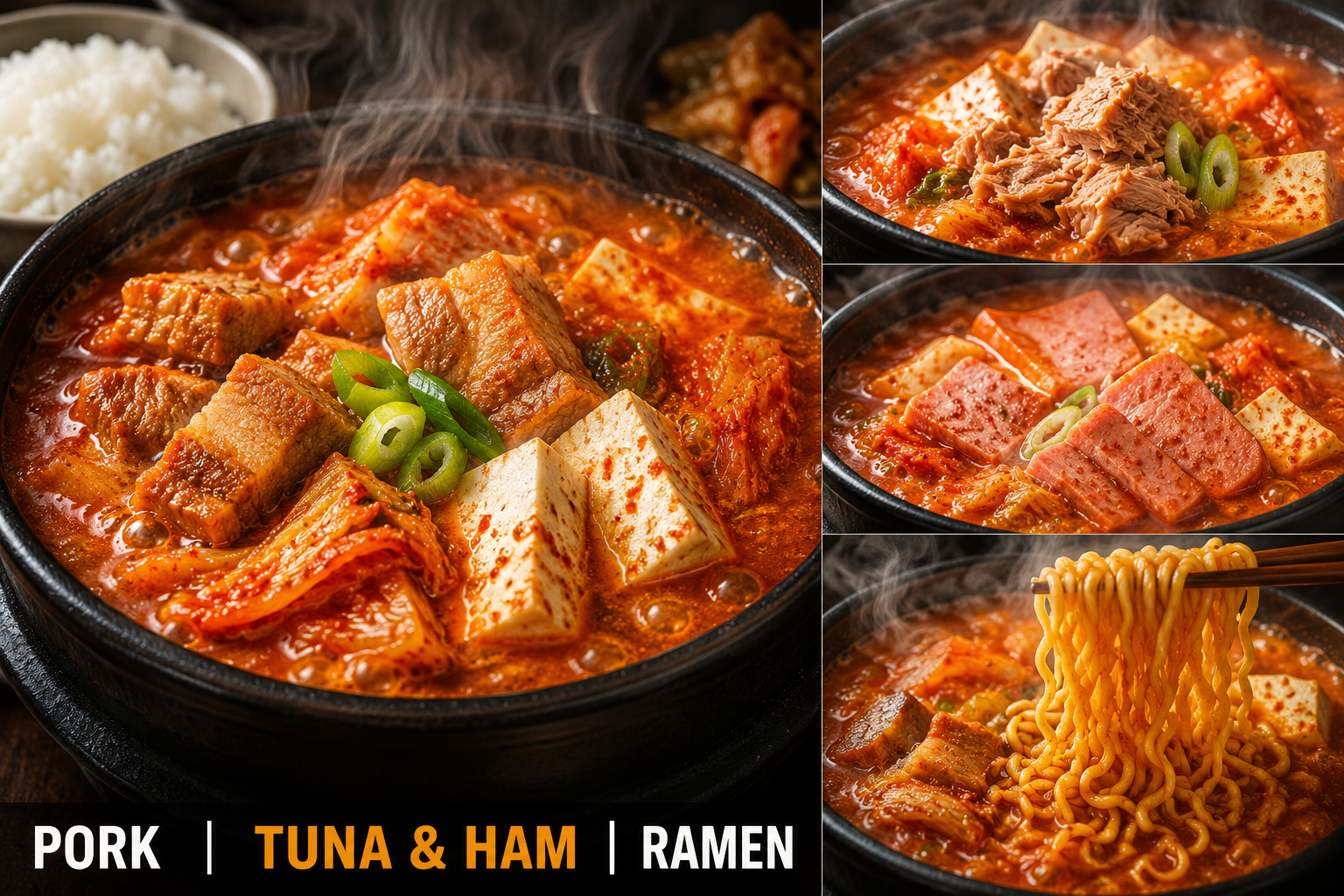
    • Pork kimchi jjigae: Rich and hearty, often made with pork belly or pork shoulder.
    • Tuna kimchi jjigae: Convenient and savory, using canned tuna.
    • Ham kimchi jjigae: A salty, comforting variation that is easy to prepare.
    • Fish kimchi jjigae: Made with fish such as mackerel or saury for a stronger, richer flavor.
    • Tofu kimchi jjigae: A lighter option in which tofu provides substance.

    The kimchi remains the defining ingredient, but the choice of protein changes the character of the entire stew.

    That flexibility is one reason kimchi jjigae has remained such a familiar part of Korean home cooking.

    2. Why Is Kimchi Jjigae So Difficult to Master?

    The biggest challenge is that kimchi is not a standardized ingredient.

    Its flavor changes according to how it was made, how long it has fermented, how it was stored, and how much seasoning went into it.

    Two containers of homemade kimchi can taste noticeably different even if they were prepared using similar ingredients.

    One may be:

    • Mild and only slightly sour
    • Salty with a strong garlic flavor
    • Deeply fermented and sharply acidic
    • Well-balanced, with both acidity and savory depth

    Now imagine using exactly the same recipe with each batch.

    The results will not be identical.

    This is why experienced Korean cooks often adjust the seasoning while the stew is cooking rather than following every measurement mechanically.

    A recipe provides the starting point. The cook has to judge what the ingredients need.

    The first rule of kimchi jjigae is simple: taste the kimchi before you season the pot.

    3. The First Secret: Choose Kimchi With Some Fermentation

    Freshly made kimchi is delicious, especially when served with rice.

    However, kimchi jjigae generally benefits from kimchi that has fermented for some time.

    As fermentation progresses, lactic acid bacteria produce organic acids and transform the kimchi’s flavor. The result is the familiar tanginess that gives the stew much of its identity.

    This does not mean that the oldest or sourest kimchi is always the best choice.

    Slightly fermented kimchi can produce a balanced, fresh-tasting stew. More deeply fermented kimchi creates a sharper, stronger flavor.

    Very sour kimchi can still work beautifully, but it may require adjustments to the broth and seasoning.

    In Korean homes, older kimchi is often saved for cooking precisely because its stronger flavor can become an advantage in dishes such as kimchi jjigae, kimchi fried rice, and kimchi pancakes.

    Kimchi that has become too sour for some people to enjoy on its own can become an excellent cooking ingredient.

    4. The Science of Flavor: Why Acidity Works With Pork

    One of the most satisfying combinations in Korean cooking is fermented kimchi and fatty pork.

    The reason is partly about balance.

    Pork belly releases fat as it cooks. That fat gives the broth a richer mouthfeel and carries savory flavors throughout the stew.

    Fermented kimchi contributes acidity, spice, and its own complex fermented character.

    Together, they create a contrast:

    The pork brings richness. The kimchi brings sharpness and depth.

    Neither element has to overpower the other.

    If the kimchi is very sour, the stew may taste too sharp. If the pork is particularly fatty, the broth may feel heavy. The goal is to bring those flavors into balance.

    A small amount of sugar can sometimes soften excessive sharpness, but it should not turn the stew sweet. Likewise, adding more gochugaru does not necessarily make the broth better.

    A good kimchi jjigae should taste like fermented kimchi, not like a generic spicy soup.

    5. Pork or Tuna? Two Classic Ways to Make It

    Ask different people in Korea how they prefer their kimchi jjigae, and you will quickly discover that personal preference matters.

    Two of the most familiar versions are pork and tuna.

    Pork Kimchi Jjigae

    Pork creates a hearty stew with a rich, savory broth.

    Pork belly is especially popular because its fat gradually renders into the soup. This works particularly well with the acidity of fermented kimchi.

    Pork shoulder is another good choice. It has less fat than pork belly but still provides plenty of flavor.

    For a deeper result, cook the pork briefly before adding the kimchi and liquid. This gives the meat a chance to develop flavor and helps build the base of the stew.

    Tuna Kimchi Jjigae

    Canned tuna makes a quick and convenient alternative.

    It has a distinctive savory flavor and requires much less preparation than fresh meat.

    Some cooks add a little of the tuna oil when cooking the kimchi. Others prefer to drain it for a lighter broth.

    Tuna should not be treated as a direct substitute for pork in terms of flavor. It creates a different stew, with a more pronounced seafood character.

    Neither version is the only correct one.

    Sometimes the best kimchi jjigae is simply the version you grew up eating.

    6. Ham, Sausage, and the Connection to Budae Jjigae

    Ham is another popular ingredient to cook with kimchi.

    Its salty, savory flavor pairs naturally with the acidity of fermented kimchi. It is also convenient when you want a quick meal without preparing fresh meat.

    Add more ingredients such as sausage, baked beans, instant noodles, and processed meat, however, and the dish begins to resemble another well-known Korean stew: budae jjigae (부대찌개), often translated as Korean army stew.

    The two dishes are related in the way Korean home cooking makes use of available ingredients, but they are not the same dish.

    Kimchi jjigae keeps fermented kimchi at the center of the flavor. Budae jjigae is generally built around a broader combination of processed meats, vegetables, noodles, and a seasoned broth.

    The distinction is useful for anyone exploring Korean stew culture: similar ingredients do not necessarily mean the same dish.

    7. Kimchi Jjigae Can Be Made With Fish, Too

    Kimchi jjigae is not limited to meat.

    Some Korean households cook fermented kimchi with fish such as mackerel or saury.

    These fish have a naturally rich flavor, and their oily texture can stand up to the strong taste of fermented kimchi.

    As the fish simmers, its flavor enters the broth. The kimchi provides acidity and spice, creating a stew that tastes quite different from the pork or tuna versions.

    This combination is particularly appealing to people who enjoy stronger seafood flavors.

    The important point is to handle the fish carefully and avoid breaking it apart unnecessarily while simmering.

    One ingredient changes the whole character of the pot.

    Kimchi is the foundation, but the main ingredient decides where the flavor goes.

    8. Why Kimchi Jjigae Feels Like Everyday Korean Food

    Kimchi jjigae has never needed expensive ingredients to feel satisfying.

    It is practical, filling, and adaptable. A relatively small amount of kimchi, some protein, tofu, and vegetables can become a meal for several people.

    It also makes good use of an ingredient that many Korean households traditionally keep on hand: fermented kimchi.

    That connection to everyday food culture is important.

    Kimchi jjigae is not usually presented as an elaborate special-occasion dish. It is familiar food, the kind of stew someone might prepare after work or make when there is kimchi in the refrigerator that needs to be used.

    It can be served as the main dish of a simple home meal, alongside rice and a few side dishes. It can also be enjoyed as anju (안주), food served with alcoholic drinks.

    Its appeal is not luxury.

    It is the feeling that a few ordinary ingredients can make a generous meal.

    9. One Pot Can Make a Simple Korean Table Feel Abundant

    A traditional Korean meal often includes rice, soup or stew, and several side dishes.

    But kimchi jjigae can make the table feel complete even when there are not many other dishes.

    A single pot may contain:

    • Fermented kimchi
    • Pork, tuna, ham, or fish
    • Tofu
    • Onion and green onion
    • A rich, spicy broth

    Place the bubbling pot in the middle of the table and serve it with bowls of steamed rice.

    Everyone can take a little broth, kimchi, tofu, and meat with their rice.

    This shared-pot style of eating is part of the dish’s everyday appeal. The stew is not simply a bowl of soup prepared for one person. It can become the center of the meal.

    One humble pot can make a modest table feel abundant.

    10. How to Make Pork Kimchi Jjigae at Home

    Here is a practical home-style recipe for two to three servings.

    The measurements are a guide, not an unchangeable rule. The saltiness and acidity of your kimchi should determine how much additional seasoning you use.

    Ingredients — 2 to 3 Servings

    • Fermented kimchi — 300 g
    • Pork belly or pork shoulder — 200 g
    • Tofu — 150 g
    • Onion — 1/2
    • Green onion — 1
    • Water or light broth — about 500 ml
    • Kimchi juice — 3 to 4 tablespoons, if available
    • Gochugaru (Korean red pepper flakes) — 1 tablespoon, optional to taste
    • Minced garlic — 1 teaspoon
    • Soup soy sauce or regular soy sauce — about 1 teaspoon, as needed
    • Sugar — 1/2 teaspoon, optional

    If the kimchi is already very salty or strongly seasoned, reduce the additional seasoning.

    Step 1: Taste the Kimchi First

    Before cooking, taste a small piece of kimchi.

    Check three things:

    • How sour is it?
    • How salty is it?
    • Does it have a strong garlic or fermented seafood flavor?

    This will help you decide how much kimchi juice, soy sauce, and other seasoning to add later.

    Step 2: Cook the Pork and Kimchi Together

    Cut the pork and kimchi into bite-sized pieces.

    Place the pork in a pot over medium heat and cook briefly until some fat begins to render.

    Add the kimchi and stir-fry them together for a few minutes.

    This step helps develop a deeper flavor before the liquid is added.

    If you are using lean pork, a small amount of cooking oil may help prevent sticking.

    Step 3: Add Water or Broth

    Pour in approximately 500 ml of water or light broth.

    Add a few tablespoons of kimchi juice if the kimchi is not already too salty.

    Bring the pot to a boil, then reduce the heat and let it simmer.

    The simmering time will depend on the cut of pork and the texture you prefer. Allow enough time for the pork to cook through and for the kimchi flavor to spread into the broth.

    Step 4: Adjust the Seasoning

    Add minced garlic and gochugaru.

    Taste the broth before adding soy sauce or salt.

    If it already tastes sufficiently seasoned, you may not need either.

    If the kimchi is very sour, a small amount of sugar can soften the sharpness. Add it gradually rather than all at once.

    The goal is not to eliminate the sourness. That tang is one of the defining characteristics of kimchi jjigae.

    Step 5: Add Tofu and Green Onion

    Slice the tofu and add it toward the end of cooking.

    Add the green onion and simmer briefly until everything is hot.

    Taste the broth one final time.

    If it is too concentrated, add a little water. If it lacks depth, consider whether a small amount of kimchi juice or seasoning is appropriate.

    Serve immediately with steamed rice.

    11. An Easier Alternative: Tuna Kimchi Jjigae

    If you do not have fresh pork, canned tuna makes an easy version of the stew.

    Ingredients

    • Fermented kimchi — 300 g
    • Canned tuna — 1 can
    • Tofu — 150 g
    • Onion — 1/2
    • Water or broth — about 500 ml
    • Kimchi juice — 3 to 4 tablespoons, if needed
    • Gochugaru — about 1 tablespoon, to taste
    • Minced garlic — 1 teaspoon
    • Green onion — 1

    Cooking Method

    First, cook the kimchi and onion in a pot for a few minutes. You can use a little tuna oil if you want a richer flavor.

    Add the water or broth, garlic, and gochugaru. Bring the mixture to a boil and simmer until the kimchi softens.

    Add the tuna and tofu toward the end. Simmer briefly until everything is heated through, then finish with green onion.

    Taste before adding soy sauce or salt.

    Tuna already contributes a savory flavor, and the kimchi may provide enough seasoning on its own.

    This is one of the easiest ways to turn a container of kimchi and a can of tuna into a satisfying Korean meal.

    12. The Best Part Might Come After the Stew: Add Noodles

    There is a familiar moment at the end of a Korean meal.

    The pork is mostly gone. The tofu has disappeared. Only a few pieces of kimchi remain.

    But there is still red, flavorful broth in the pot.

    That is when some people add ramen noodles.

    The noodles absorb the spicy, sour, savory broth and turn the last part of the meal into something completely different.

    Udon noodles are another option if you prefer a thicker, chewier texture.

    One practical tip: the remaining broth may have become more concentrated during cooking. Add a little water before adding the noodles if it tastes too salty.

    And make sure there is enough liquid for the noodles to cook properly.

    The meal begins as kimchi jjigae.

    It can end as a bowl of kimchi-flavored noodles.

    13. True Taste Korea Tip: Learn the Flavor, Not Just the Recipe

    You can make a perfectly acceptable kimchi jjigae by following measurements.

    But making a consistently delicious one requires learning how to taste.

    Check the kimchi before cooking.

    Taste the broth after it has simmered.

    Taste again before serving.

    Ask yourself:

    • Is the broth too salty?
    • Is the sourness pleasant or overpowering?
    • Does the stew have enough richness?
    • Is the kimchi soft enough?
    • Does it need more seasoning, or does it simply need more time?

    These questions matter because kimchi jjigae is not built from ingredients with fixed flavor profiles.

    The kimchi changes. The pork has different amounts of fat. The broth reduces as it simmers.

    A good cook responds to those changes.

    The recipe is simple. The balance takes practice.

    14. Kimchi Jjigae FAQ

    Can I use fresh kimchi for kimchi jjigae?

    Yes. However, freshly made kimchi usually produces a milder, less tangy stew. Slightly fermented kimchi generally gives the broth more of the characteristic acidity associated with kimchi jjigae.

    Does kimchi jjigae have to use very sour kimchi?

    No. Moderately fermented kimchi can make an excellent stew. Very sour kimchi works too, but you may need to adjust the seasoning and balance its sharpness.

    Which pork is best for kimchi jjigae?

    Pork belly gives the broth a rich flavor because its fat renders during cooking. Pork shoulder is another good option if you prefer a leaner result.

    Can I make kimchi jjigae without pork?

    Absolutely. Tuna, ham, mackerel, saury, or tofu can all be used. Each creates a different flavor.

    Is kimchi jjigae always spicy?

    Not necessarily. The heat depends on the kimchi and the amount of gochugaru added. You can adjust the pepper flakes to suit your preference.

    Can I add ramen noodles directly to kimchi jjigae?

    Yes. Ramen noodles are often added to the remaining broth. Add a little water if the broth has become too concentrated, and cook the noodles until tender.

    Why does my kimchi jjigae taste too salty?

    Your kimchi may already contain plenty of salt. Kimchi juice, soy sauce, and other seasonings can add even more. Taste the broth before adding extra salt or soy sauce.

    Do I need many side dishes with kimchi jjigae?

    No. A pot containing kimchi, broth, protein, and tofu can make a satisfying meal with a simple bowl of steamed rice.

    15. Simple Ingredients, Abundant Flavor

    Kimchi jjigae does not need to be luxurious.

    That has never been its purpose.

    It takes something already found in many Korean kitchens—fermented kimchi—and transforms it into a hot, generous meal.

    Add pork and the broth becomes rich and hearty.

    Use tuna and the stew becomes quick and savory.

    Add ham and it takes on another kind of comfort-food character.

    Cook it with mackerel or saury and it becomes a distinctive fish stew.

    Even the remaining broth can become the foundation for a final serving of noodles.

    Yet underneath all those variations is the same humble ingredient: kimchi.

    That may be the real beauty of kimchi jjigae.

    It is not a dish that demands expensive ingredients or complicated techniques. It asks the cook to understand what is already in the pot.

    Simple ingredients can create abundant flavor.

    And one bubbling pot can make even a simple table feel full.
  • Bibimbap: Where People and Flavors Come Together

    Bibimbap: Where People and Flavors Come Together

    Bibimbap is often introduced as one of Korea’s most recognizable dishes: a bowl of rice topped with colorful vegetables, meat, an egg, and gochujang. Everything is mixed together before eating.

    That description is accurate, but it misses something important.

    In Korea, bibimbap is not just a carefully arranged restaurant dish. It is also one of the most practical ways to turn leftover side dishes into a satisfying meal. A little spinach, some bean sprouts, yesterday’s bulgogi, a spoonful of kimchi, and a fried egg can become a completely new dish.

    Its ingredients can be elaborate or surprisingly simple. It can be served in an individual bowl or, in some homes and casual meals, prepared in a large bowl for people to share.

    That flexibility is part of its appeal.

    Bibimbap brings different ingredients together without requiring them to lose their individual character. Each vegetable keeps its own texture, each seasoning contributes something different, and the sauce connects everything.

    Perhaps that is why the dish feels like more than a combination of rice and toppings.

    Bibimbap is where people and flavors come together.

    1. What Does Bibimbap Actually Mean?

    The Korean word bibimbap (비빔밥) is made up of two parts:

    • Bibim (비빔): Mixing or combining
    • Bap (밥): Cooked rice

    Together, the word literally means mixed rice.

    The basic idea is straightforward. Cooked rice is topped with several ingredients, and everything is mixed before eating.

    Common ingredients include:

    • Spinach
    • Bean sprouts
    • Carrots
    • Zucchini
    • Mushrooms
    • Beef
    • Egg
    • Gochujang
    • Sesame oil

    The ingredients are often prepared separately before being arranged over the rice. This allows each vegetable to retain its own texture and seasoning.

    Gochujang adds a spicy, savory depth, while sesame oil brings a nutty aroma. When the ingredients are mixed, their individual flavors become part of a more balanced whole.

    There is an interesting contrast here: the bowl may look carefully organized when it arrives at the table, but its intended final form is completely mixed.

    The beauty of bibimbap is not in keeping the ingredients separate. It is in discovering how well they work together.

    2. There Is No Single Perfect Bibimbap

    Unlike dishes that depend on a fixed combination of ingredients, bibimbap is remarkably adaptable.

    A traditional restaurant version may include several carefully prepared vegetables, seasoned beef, an egg, and a specially balanced sauce.

    An everyday homemade version can be much simpler.

    Imagine opening the refrigerator and finding:

    • A small portion of leftover spinach
    • Some kimchi
    • A few bean sprouts
    • Half a carrot
    • A little leftover meat

    You do not need to prepare an entirely new meal. Put some rice in a bowl, add the ingredients, and finish with gochujang and sesame oil.

    You can also use tuna, chicken, pork, tofu, ham, or other ingredients you enjoy.

    This practical flexibility is one reason bibimbap fits so naturally into Korean home cooking.

    It is not necessary to have every traditional topping. What matters is finding a combination that tastes good.

    There is also room for personal preference. Someone who enjoys spicy food may add extra gochujang, while someone who prefers milder flavors may use soy sauce and sesame oil instead.

    Bibimbap is less about following one perfect recipe and more about making different ingredients work together.

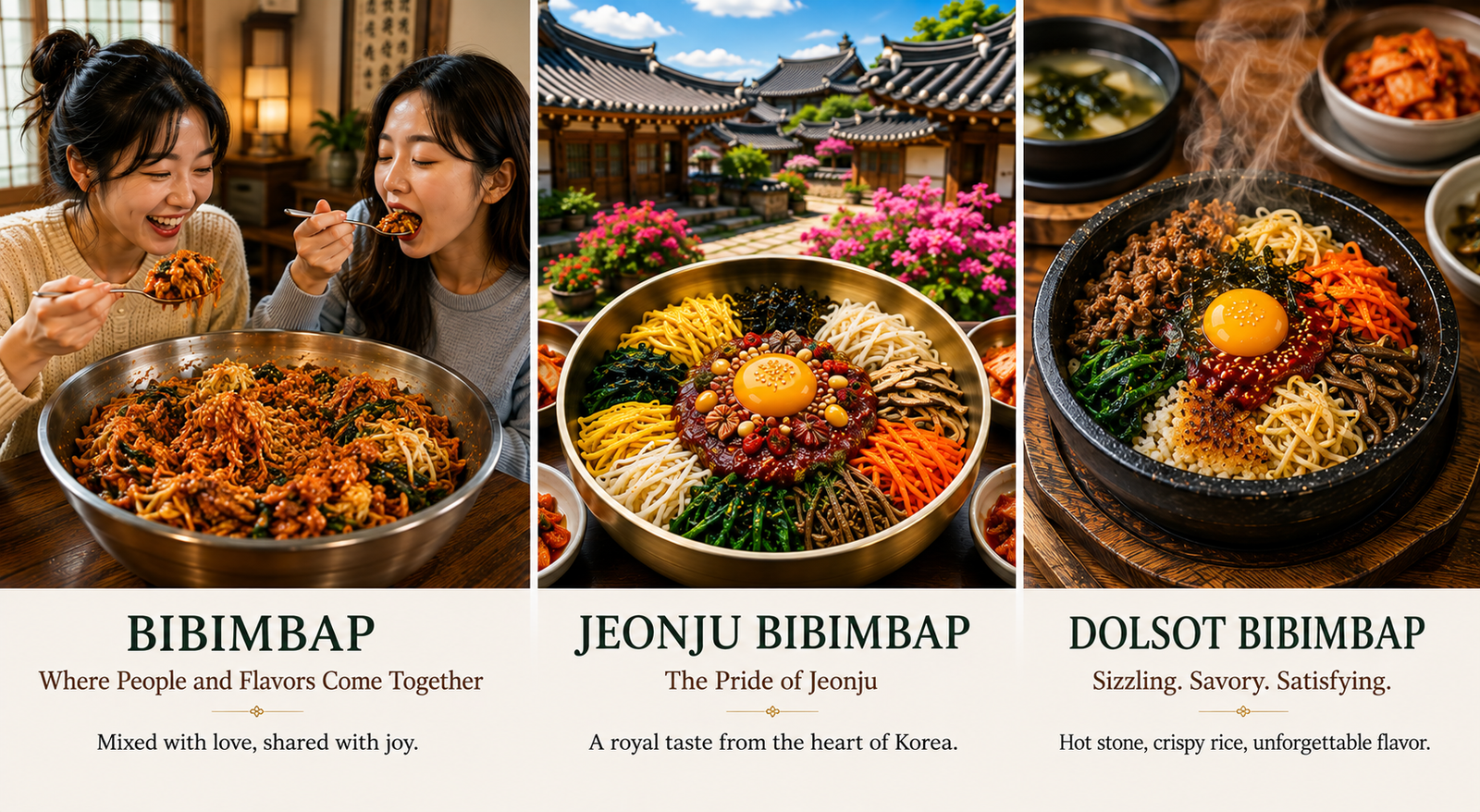
    3. The Big-Bowl Bibimbap: A Different Kind of Korean Meal

    There is another side of bibimbap that visitors may not always encounter in restaurants.

    Sometimes, it begins with an unusually large mixing bowl.

    At home, someone may gather several side dishes from the refrigerator, add rice, vegetables, kimchi, and perhaps leftover meat, then mix everything together in one large container.

    This is not necessarily a formal recipe. It is often an easy and satisfying way to use what is already available.

    In some households and casual meals, people may share this large bowl rather than preparing separate portions. Close friends or family members can sit together, mix the ingredients, and eat while talking about their day.

    The experience is different from ordering individual bowls at a restaurant.

    A restaurant version may emphasize presentation, ingredient selection, and precise seasoning. A homemade large-bowl version may emphasize convenience, abundance, and the comfort of eating together.

    Neither is more authentic than the other.

    They simply show two different ways bibimbap fits into everyday Korean life.

    4. Bibimbap and the Korean Idea of Jeong

    One Korean word that helps explain the emotional side of food culture is jeong (정).

    Jeong is difficult to translate into a single English word. Depending on the situation, it can describe affection, attachment, familiarity, warmth, or the emotional connection that develops between people over time.

    It is often expressed through ordinary actions rather than dramatic gestures.

    Preparing extra food for someone, remembering what another person likes, or inviting a friend to share a meal can all be expressions of jeong.

    A large bowl of bibimbap can fit naturally into this kind of experience.

    One person may prefer more kimchi. Another may want extra meat. Someone else may want a generous amount of gochujang.

    The preferences are different, but everyone can still enjoy the same meal.

    This does not mean bibimbap has a special historical connection to jeong. Rather, the dish provides a useful everyday image for understanding how food can create a sense of closeness.

    Different ingredients do not have to become identical to belong in the same bowl.

    In a small way, that idea also reflects the comfort of sharing food with people whose personalities and preferences are different from our own.

    5. Why Bibimbap Is a Practical Korean Home Meal

    Bibimbap is particularly useful when there is no clear plan for dinner.

    Many Korean meals include several side dishes, known as banchan (반찬). These may be served in small portions alongside rice and soup.

    When some of those side dishes remain after a meal, they can become ingredients for bibimbap.

    Instead of eating the same side dishes in exactly the same way again, you can combine them into something new.

    For example:

    • Leftover spinach and bean sprouts provide vegetables.
    • Kimchi adds acidity and a stronger fermented flavor.
    • Leftover bulgogi provides savory meat.
    • A fried egg adds richness.
    • Gochujang and sesame oil bring everything together.

    This is one reason bibimbap is so useful in a home kitchen.

    It reduces the need to prepare several new dishes and gives leftover ingredients another purpose.

    It also demonstrates a practical feature of Korean food culture: ingredients prepared for one meal can often become part of another.

    6. A Mild Bibimbap Can Help Children Enjoy Vegetables

    Bibimbap can also be adapted for children who are not enthusiastic about eating vegetables.

    When vegetables are served separately, some children may reject them immediately. Mixed with rice, egg, meat, or another familiar ingredient, the same vegetables may become easier to enjoy.

    The sauce can also be adjusted.

    Gochujang is popular in many bibimbap recipes, but it is not essential for every version. For children or anyone who dislikes spicy food, a mild mixture of soy sauce and sesame oil can work well.

    You can also:

    • Chop vegetables into smaller pieces.
    • Use familiar ingredients such as egg or chicken.
    • Add a small amount of cheese if the child enjoys it.
    • Let children choose some of their own toppings.

    The goal is not to force every person to eat the same combination.

    One person may enjoy a spicy beef bibimbap, while another prefers a mild version with egg and vegetables.

    That flexibility is one of the dish’s greatest strengths.

    7. Dolsot Bibimbap: The Pleasure of Crispy Rice

    One of the most satisfying variations is dolsot bibimbap (돌솥비빔밥).

    Unlike ordinary bibimbap, which is served in a regular bowl, dolsot bibimbap arrives in a heated stone bowl.

    The hot bowl keeps the ingredients warm throughout the meal. More importantly, the rice touching the bottom gradually becomes toasted and crispy.

    You may hear a gentle sizzling sound when the dish reaches the table.

    As the rice continues to heat against the stone, it develops a golden crust known as nurungji (누룽지).

    For many people, this crispy layer is the highlight of the meal.

    There is also a difference in how you eat it.

    With ordinary bibimbap, you can mix everything immediately. With dolsot bibimbap, some people prefer to let the rice sit against the hot surface for a little while before mixing, allowing more of the bottom layer to crisp.

    The result is a combination of soft rice, seasoned vegetables, warm toppings, and crunchy rice at the bottom.

    It is particularly comforting during colder weather.

    8. Jeonju: A City Closely Associated With Bibimbap

    If you want to experience bibimbap as part of a regional food culture, Jeonju is one of the most important places to know.

    Located in Jeollabuk-do, Jeonju is widely associated with traditional Korean cuisine, hanok architecture, and its distinctive style of bibimbap.

    Jeonju bibimbap is known for its carefully prepared ingredients and colorful presentation. Depending on the restaurant, the bowl may include seasoned vegetables, beef, egg, and other toppings arranged with particular attention to balance and appearance.

    The city’s food identity is closely connected with its broader culinary traditions.

    For visitors, this makes Jeonju an interesting destination because the experience goes beyond simply ordering a famous dish. You can explore traditional streets, visit the hanok village, and discover how local food contributes to the identity of the city.

    There is a meaningful contrast between the two sides of bibimbap.

    At home, it may be an improvised meal made from whatever remains in the refrigerator.

    In Jeonju, it can be a carefully prepared regional specialty.

    Both versions share the same central idea: bringing different ingredients together in one bowl.

    Bibimbap Beyond the Dinner Table

    Jeonju has also promoted bibimbap through local food events and cultural activities.

    This illustrates how a dish can become part of a city’s identity. A local specialty is not simply something served in restaurants. It can also represent regional pride, culinary traditions, and the way a community introduces itself to visitors.

    True Taste Korea Tip: If you visit Jeonju, consider combining a walk through Jeonju Hanok Village with a traditional bibimbap meal. Pay attention to the variety of ingredients before mixing them. Then mix the bowl thoroughly and experience how the flavors come together.

    9. How to Make Bibimbap at Home

    You do not need a dozen ingredients to make a satisfying bowl of bibimbap.

    The following recipe makes two servings and can be adjusted according to what you have available.

    Ingredients — 2 Servings

    Rice

    • Cooked short-grain rice — 2 bowls

    Vegetables

    • Spinach — 100 g
    • Bean sprouts — 100 g
    • Carrot — 1/2
    • Zucchini — 1/2
    • Mushrooms — 100 g

    Other toppings

    • Beef — 150 g
    • Eggs — 2
    • Sesame oil
    • Toasted sesame seeds

    You can replace the beef with pork, chicken, tuna, tofu, or leftover meat.

    Simple Bibimbap Sauce

    • Gochujang — 2 tablespoons
    • Sesame oil — 1 tablespoon
    • Sugar — 1 teaspoon
    • Rice vinegar — 1 teaspoon
    • Minced garlic — 1/2 teaspoon
    • Sesame seeds — 1 teaspoon

    Mix all the sauce ingredients in a small bowl.

    If you prefer a milder flavor, reduce the gochujang or add a little water to soften the sauce.

    Step-by-Step Preparation

    1. Prepare the vegetables.

    Wash the spinach and bean sprouts. Blanch them briefly in boiling water, drain, and season lightly with salt and sesame oil.

    2. Cook the remaining vegetables.

    Thinly slice the carrot, zucchini, and mushrooms. Sauté each separately with a little oil and a small amount of salt.

    Cooking them separately helps preserve their individual textures and flavors.

    3. Cook the beef.

    Season the beef lightly with soy sauce, garlic, and a little sesame oil if desired. Cook in a pan until browned and fully cooked.

    4. Fry the eggs.

    Prepare one egg for each serving. A slightly runny yolk can add richness when mixed with the rice.

    5. Assemble the bowls.

    Place hot rice in two bowls. Arrange the vegetables and beef over the rice, then place an egg in the center.

    6. Add the sauce and sesame oil.

    Add the bibimbap sauce according to your taste. Finish with a small drizzle of sesame oil and toasted sesame seeds.

    7. Mix everything together.

    This is the most important step.

    Mix the rice, vegetables, meat, egg, and sauce until the ingredients are evenly distributed.

    The original arrangement will disappear, but that is exactly how bibimbap is meant to be enjoyed.

    10. Easy Refrigerator Bibimbap: Use What You Already Have

    If preparing several vegetables feels like too much work, try a simpler version.

    Start with one bowl of hot rice and choose three or four ingredients from your refrigerator.

    Here are a few combinations:

    Kimchi and Pork Bibimbap

    • Kimchi
    • Leftover pork
    • Fried egg
    • Gochujang

    Tuna Bibimbap

    • Canned tuna
    • Cucumber
    • Carrot
    • Fried egg

    Ham and Cheese Bibimbap

    • Ham
    • Kimchi
    • Cheese
    • Sesame oil

    Vegetable Bibimbap

    • Spinach
    • Bean sprouts
    • Mushrooms
    • Carrot

    Add sauce, mix, and enjoy.

    There is no need to reproduce a restaurant photograph at home.

    A simple bowl made with ingredients you already have can be just as satisfying.

    11. A Useful Tip: Turn Yesterday’s Dinner Into Today’s Meal

    One of the easiest ways to make bibimbap is to use leftovers.

    If you had Korean barbecue the previous evening, a little leftover samgyeopsal can become an excellent topping. Cut the pork into small pieces and add it to rice with kimchi and vegetables.

    Leftover bulgogi works particularly well because its sweet and savory seasoning blends naturally with the other ingredients.

    Roasted chicken, tofu, and cooked vegetables can also be reused.

    The important thing is to store leftovers safely and reheat cooked ingredients thoroughly before serving.

    Bibimbap is a reminder that a good meal does not always require starting from scratch.

    Sometimes, yesterday’s dinner is the beginning of something completely different.

    12. Bibimbap FAQ

    Does bibimbap have to contain beef?

    No. Beef is a popular topping, but it is not essential. Pork, chicken, tuna, tofu, ham, and vegetables can all be used.

    Does bibimbap have to be spicy?

    No. Gochujang is a common sauce, but you can reduce it or replace it with a mild soy sauce and sesame oil mixture.

    What is the difference between bibimbap and dolsot bibimbap?

    Regular bibimbap is served in an ordinary bowl. Dolsot bibimbap is served in a heated stone bowl, which keeps the food hot and creates crispy rice at the bottom.

    Do I need all the traditional vegetables?

    No. You can use the vegetables available to you. A simpler combination can still make an excellent meal.

    Can I use leftover rice?

    Yes. Refrigerated rice can be reheated thoroughly before serving. Make sure it is steaming hot, and handle cooked rice safely by refrigerating it promptly after cooking rather than leaving it at room temperature for extended periods.

    Should I mix bibimbap before eating?

    Yes. Mixing is central to the dish. Combine the rice, toppings, sauce, and sesame oil so that the flavors are distributed throughout the bowl.

    Can bibimbap be vegetarian?

    Absolutely. Leave out the meat and use vegetables, mushrooms, tofu, and egg if you eat eggs. For a fully vegan version, omit the egg and check that the gochujang and other seasonings contain no animal-derived ingredients.

    Where People and Flavors Come Together

    Bibimbap can be an elaborate dish with carefully prepared vegetables and beautifully arranged toppings.

    It can also begin with a simple question:

    “What do we have in the refrigerator?”

    It is practical enough for a quick weekday meal, flexible enough to suit different tastes, and special enough to represent a city’s culinary identity.

    It can be enjoyed alone, shared with family, or eaten with friends around a large bowl. It can arrive in a regular dish or in a sizzling stone bowl with crispy rice at the bottom.

    And in Jeonju, it becomes part of a wider experience of Korean food and local culture.

    There is no single perfect combination.

    The vegetables do not have to be identical. The toppings do not have to be elaborate. And the people eating together do not have to like exactly the same things.

    That is the lasting appeal of bibimbap.

    It is not about making everything the same.

    It is about discovering how different things can become better when they come together.