1. What Happens When Two Friends Are Forced to Choose Different Worlds?
What would you do if the person who understood you better than anyone else became the person standing in your way?
Would you protect your friendship, even if it meant losing everything? Or would you sacrifice that relationship to pursue a future you believe is worth fighting for?
These questions lie at the heart of My Country: The New Age, a South Korean historical drama released in 2019.
Set during the final years of the Goryeo Dynasty and the birth of Joseon, the series follows two young men whose friendship is gradually destroyed by political ambition, social inequality, and the struggle for power.
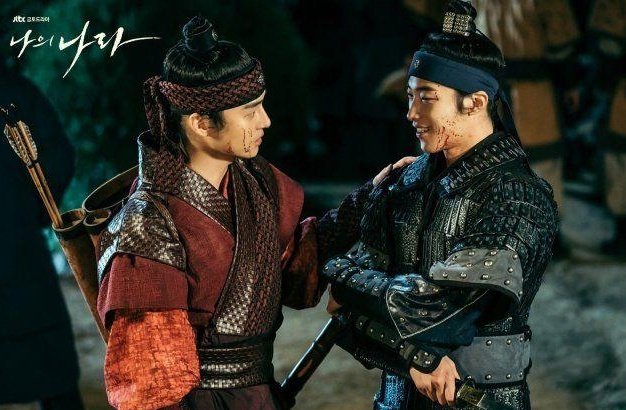
Seo Hwi and Nam Seon-ho begin with a shared past, but they grow into men with very different understandings of justice, loyalty, and survival.
Their conflict is not simply a personal rivalry.
It reflects a period in Korean history when an entire political order was collapsing and a new nation was being built through violence and betrayal.
2. A Nation Is Being Born, but Not Everyone Gets to Choose Its Future
The historical background is essential to understanding this drama.
At the end of the fourteenth century, Goryeo was approaching its final days. Political instability, military conflict, and disputes over authority created an environment in which powerful figures competed to determine the future of the Korean Peninsula.
General Yi Seong-gye eventually established the Joseon Dynasty in 1392.
But the transition was not a peaceful change of government.
The founding of a new dynasty involved political purges, military confrontation, and the elimination of rivals.
For powerful families, the changing political landscape offered opportunities to gain influence.
For ordinary people, it could mean losing their homes, status, or lives.
My Country: The New Age uses this historical transformation as the setting for a deeply personal story.
Rather than focusing exclusively on kings and generals, it asks what happens to people who are caught between competing political forces.
The title itself becomes meaningful: whose country is being created, and who actually gets to call it their own?
3. Seo Hwi: A Man Who Refuses to Abandon His Principles
Yang Se-jong plays Seo Hwi, one of the central characters.
Hwi is the son of a respected military commander, but his family’s position has been damaged by political circumstances.
He is an exceptionally capable swordsman, yet his life is shaped less by ambition than by responsibility and loyalty.
His greatest strength is also his greatest weakness.
He finds it difficult to abandon people he cares about, even when protecting them puts his own life at risk.
Hwi does not begin with a grand political vision.
He wants to survive, protect his loved ones, and maintain the dignity that his family has lost.
But history does not allow him to remain outside politics.
As the struggle for a new dynasty intensifies, his personal choices become connected to events far greater than himself.
Hwi represents people who do not necessarily want power but are forced to confront those who possess it.
4. Nam Seon-ho: The Pain of Being Born on the Wrong Side of Society
Woo Do-hwan plays Nam Seon-ho, a character whose motivations are very different from Hwi’s.
Seon-ho is highly intelligent, ambitious, and determined to escape the social limitations imposed on him by his birth.
His mother was a servant, and his position within society makes it difficult for him to receive the recognition he believes he deserves.
His father is a powerful official, but that connection does not give Seon-ho the security or acceptance he wants.
He grows up understanding that talent alone does not determine a person’s future.
Family background, social hierarchy, and political connections can matter more than ability.
This creates a deep sense of resentment.
Unlike Hwi, who tries to preserve what remains of his family’s dignity, Seon-ho wants to break through the system that has denied him equality.
His ambition is not simply greed.
It is also the result of humiliation and a desire to prove that his birth should not determine his worth.
That makes him one of the drama’s most complicated characters.
5. Why Their Friendship Was Always in Danger
The relationship between Hwi and Seon-ho is the emotional foundation of the entire series.
They share a history, understand each other’s strengths, and initially believe that they can face the world together.
But their different social positions gradually shape their expectations.
Hwi is trying to protect the people he loves.
Seon-ho is trying to escape a world that has repeatedly reminded him that he is considered inferior.
Their friendship is tested by political decisions, family interests, and the ambitions of powerful men.
The tragedy is that neither character begins as a simple villain.
Both have understandable reasons for the decisions they make.
But understanding someone’s reasons does not necessarily mean accepting their actions.
As the story develops, their relationship becomes a painful example of how political systems can turn personal grievances into lasting hatred.
The question is not whether they once cared about each other.
It is whether that bond can survive when the future they want is no longer the same.
6. Yi Bang-won: Was He a Villain or a Necessary Architect of Joseon?
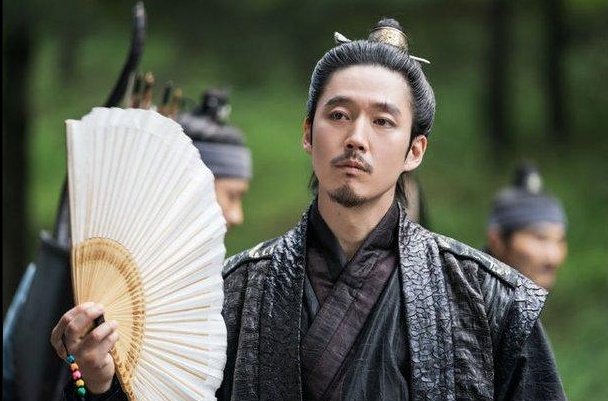
Jang Hyuk’s portrayal of Yi Bang-won is one of the drama’s most memorable elements.
Historically, Yi Bang-won was the fifth son of Yi Seong-gye, the founder of Joseon.
He played a decisive role in the establishment of the dynasty and later became King Taejong.
His rise to power involved ruthless political maneuvering and the violent removal of rivals, including members of his own family.
The historical Yi Bang-won is therefore difficult to describe in simple moral terms.
He helped establish a new political order, but he also used extreme violence to secure his position within it.
The drama captures this contradiction through Jang Hyuk’s performance.
His Yi Bang-won is intelligent, controlled, and dangerous.
He does not need to shout to make other people understand his authority.
His calmness often makes him more intimidating than characters who rely on open aggression.
But the most interesting question is not whether he is frightening.
It is whether the new state could have been created without the kind of political violence he represents.
The series does not provide an easy answer.
7. Jang Hyuk’s Performance Changes the Balance of the Drama
Yi Bang-won is not the only important character, but his presence changes the atmosphere whenever he appears.
Jang Hyuk gives the character a distinctive combination of intelligence, restraint, and explosive violence.
His facial expressions and controlled delivery communicate that he is constantly evaluating the people around him.
This is particularly effective because Yi Bang-won rarely appears to be acting without a purpose.
Even when he seems calm, the audience senses that he is calculating the consequences of every interaction.
His performance also creates an interesting contrast with the younger characters.
Hwi and Seon-ho are still struggling to understand what kind of men they want to become.
Bang-won already knows what he wants from the world.
The difference is that he is willing to pay a price that the younger characters may not fully understand.
Jang Hyuk’s portrayal gives the drama a powerful political dimension beyond its central friendship.
8. Han Hee-jae: A Woman Trying to Find Her Own Position in a Man’s World
Seolhyun plays Han Hee-jae, a woman who operates within the political and social conflicts of the period.
She is intelligent, independent, and determined to pursue her own goals.
Her character offers a different perspective on the changing world.
While the male characters frequently express their conflicts through military strength and political ambition, Hee-jae must navigate a society in which women have fewer opportunities to exercise formal power.
Her relationships with Hwi and the wider political world create another emotional layer in the drama.
However, the character also illustrates one of the series’ weaknesses.
Some viewers felt that her independence and potential were not fully developed as the story progressed.
Her role sometimes becomes secondary to the conflict between the two male leads.
This is an important limitation to acknowledge when evaluating the series.
9. The Historical Events Behind the Fiction
One reason My Country: The New Age is interesting is the way it places fictional characters inside real historical events.
The story draws on the political transformation from Goryeo to Joseon.
Several major historical developments form the background:
- The Wihwado Retreat in 1388, which helped change the balance of power in Goryeo.
- The rise of Yi Seong-gye and the establishment of Joseon in 1392.
- The growing political influence of Yi Bang-won.
- The First Strife of Princes in 1398, when the struggle over succession and political authority turned violently against members of the royal family.
These events were not merely changes in royal leadership.
They represented a fundamental transformation of the state.
The drama uses this historical framework to show how individual lives can become trapped inside decisions made by powerful people.
It is important, however, to distinguish the real historical figures and events from the fictional characters and dramatic relationships created for the series.
The friendship between Hwi and Seon-ho is part of the drama’s fictional narrative, not a documented historical relationship.
10. Why the Action Scenes Feel Personal
The sword fights in My Country: The New Age are not simply decorative action sequences.
They often represent emotional conflicts that the characters cannot resolve through conversation.
A fight between two people who once trusted each other carries a different meaning from a battle between strangers.
Every movement reflects a history of loyalty, disappointment, anger, and regret.
The series combines large-scale military confrontations with smaller personal duels.
This allows the action to function on two levels.
It shows the physical danger of the period while also expressing the emotional distance between the characters.
The result is a historical drama in which violence is closely connected to the relationships driving the story.
11. Why Reddit Viewers Remember the Drama
Discussions among international viewers on Reddit show that My Country: The New Age has left a particularly strong impression on fans of Korean historical dramas.
Several elements repeatedly attract attention.
The relationship between Seo Hwi and Nam Seon-ho
Many viewers are drawn to the emotional complexity of their friendship and rivalry.
Their story is not built around a simple misunderstanding that can be resolved through one conversation.
It develops through repeated choices that gradually make reconciliation more difficult.
Jang Hyuk as Yi Bang-won
His performance is frequently singled out as one of the strongest parts of the series.
Viewers appreciate the character’s commanding presence and the way Jang Hyuk creates tension without relying on exaggerated expressions.
The emotional impact of the ending
The conclusion is another major topic of discussion.
For viewers who become invested in the two main characters, the final episodes can be particularly devastating.
The series does not offer an uncomplicated happy ending in which friendship and love overcome every political conflict.
That emotional commitment is part of why viewers continue discussing the drama after finishing it.
12. The Ending: When the Past Cannot Be Recovered
Spoiler warning: This section discusses the ending of the drama.
The ending of My Country: The New Age is important because it completes the emotional journey of Hwi and Seon-ho.
Their conflict is not resolved by one person simply defeating the other.
Instead, the series brings their relationship back to the choices that shaped it.
The two men have spent years being pushed apart by social inequality, political ambition, and the struggle to survive.
By the time the story reaches its conclusion, the friendship they once shared has become inseparable from the pain they have caused each other.
The tragedy is that they understand each other more deeply than many of the people around them.
Yet understanding is not enough to undo the consequences of their decisions.
The ending leaves viewers with the feeling that something precious has been lost long before the final moments arrive.
It is not simply a story about two friends who become enemies.
It is a story about two people who could not find a way to remain friends in the world they were forced to inhabit.
13. Why the Drama’s Tragedy Works
A tragic ending is not automatically meaningful.
For tragedy to work, the audience must understand what the characters wanted, why they made their choices, and what those choices eventually cost them.
My Country: The New Age builds its emotional impact through the contrast between the characters’ original hopes and their eventual positions.
Hwi wants to protect the people he loves.
Seon-ho wants to escape the social identity imposed on him.
Bang-won wants to secure the future of a new dynasty.
Each character pursues something that makes sense from his own perspective.
But their goals cannot peacefully coexist.
This is what gives the drama its tragic dimension.
The characters are not simply destroyed by bad luck.
They are shaped by the choices they make within a political system that rewards power and punishes weakness.
The result is a story in which personal loyalty and national ambition repeatedly collide.
14. Is My Country: The New Age Worth Watching?
For viewers who enjoy Korean historical dramas, My Country: The New Age is a strong recommendation.
Its greatest strengths include:
- Yang Se-jong’s emotional portrayal of Seo Hwi.
- Woo Do-hwan’s complex performance as Nam Seon-ho.
- Jang Hyuk’s commanding interpretation of Yi Bang-won.
- The historical setting surrounding the fall of Goryeo and the birth of Joseon.
- Sword fights and large-scale action sequences.
- A central friendship that develops into a deeply painful conflict.
The series is especially suitable for viewers who prefer character-driven historical stories rather than dramas focused exclusively on palace politics.
However, it is not without weaknesses.
Some viewers may find the historical timeline complicated, the romantic storyline less convincing, or certain character arcs insufficiently developed.
But the central relationship between Hwi and Seon-ho gives the drama a strong emotional reason to keep watching.
Conclusion: A New Nation Was Built, but What Happened to the People Who Lost Each Other Along the Way?
My Country: The New Age tells a story about the birth of a dynasty, but its most powerful moments are often far removed from the royal throne.
They belong to two young men who once believed they could face the world together.
Seo Hwi and Nam Seon-ho represent different responses to an unequal society.
One tries to protect the people he loves.
The other tries to escape the limitations of his birth.
Their paths eventually become part of a much larger political struggle, one in which Yi Bang-won represents the ruthless logic of building and securing a new state.
The historical transformation from Goryeo to Joseon created a new chapter in Korean history.
But for the characters at the center of this drama, the new age came at an extraordinary personal cost.
Perhaps the saddest question is not which of the two friends was right. It is whether they ever had a real chance to choose a future in which they could remain friends.
That is why My Country: The New Age remains more than a historical action drama.
It is a story about friendship, social inequality, political ambition, and the human cost of creating a new world.
TTK Original — Beyond the Headlines
Looking beyond the historical conflict to explore the friendship, ambition, and sacrifices behind the birth of a nation.