Mouse Control

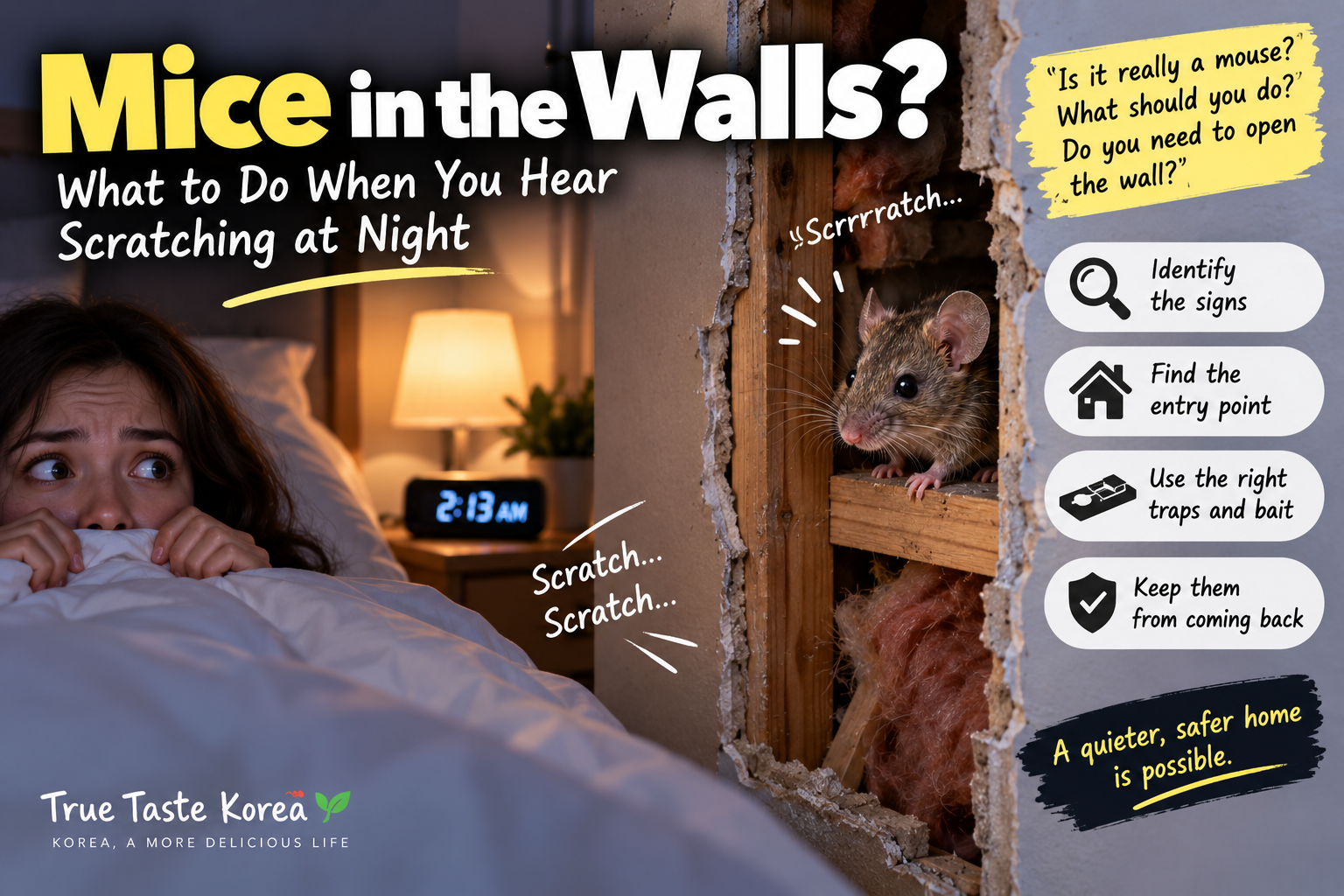
  • Mice in the Walls? What to Do When You Hear Scratching at Night

    Mice in the Walls? What to Do When You Hear Scratching at Night

    It’s 2:13 a.m.

    The house is quiet.

    Then you hear it.

    Scratch. Scratch. Scratch.

    You stop breathing for a second.

    Nothing.

    Then—

    scrrrrch… scurry… scratch.

    And it sounds like it is coming from inside the wall beside your bed.

    You knock on the wall.

    The noise stops.

    Five minutes later?

    It starts again.

    If you have experienced this, you already know why “mice in walls” is such a frustrating household problem.

    You can’t see the animal.

    You don’t know exactly where it is.

    And suddenly every tiny sound inside your house becomes suspicious.

    Reddit is full of homeowners describing almost exactly this experience. One homeowner reported hearing scratching and debris falling through the walls at night despite seeing no mice inside the living space. Another described a rodent scratching for hours near a bedroom wall and repeatedly waking someone around 3 a.m.

    So what should you actually do?

    First:

    Don’t tear open your wall yet.

    And don’t assume every scratching sound is definitely a mouse.

    Let’s investigate properly.


    First Question: Is It Really a Mouse?

    Scratching inside a wall is consistent with mice.

    But sound alone cannot identify the animal.

    Possible causes include:

    • Mice
    • Rats
    • Squirrels
    • Birds
    • Bats
    • Insects
    • Plumbing
    • HVAC ducts
    • Building materials expanding or moving

    This comes up repeatedly in homeowner discussions.

    In one Reddit post, someone was convinced the animal inside a wall sounded far too large to be a mouse. A pest-control professional replied that mice can sound surprisingly loud inside wall cavities and said mice would still be his first suspicion until an inspection showed otherwise.

    Another former pest-control worker warned that scratching noises he had investigated sometimes turned out to be completely different things — including branches, insects or building materials.

    Why is this so confusing?

    Because walls can amplify and transmit sound.

    Something tiny can sound much larger when you’re lying in bed in a silent room.

    So don’t diagnose by sound alone.

    Look for evidence.


    7 Signs That Make Mice More Likely

    If scratching is accompanied by several of these signs, mice become a much stronger possibility.

    1. Mouse droppings

    Check:

    • Under sinks
    • Behind refrigerators
    • Behind stoves
    • Inside lower cabinets
    • Pantries
    • Garages
    • Attics
    • Along baseboards

    Fresh droppings near the wall where you’re hearing noises are an important clue.

    2. Chewed food packaging

    Check cereal boxes, bags of rice, flour, nuts, pet food and other stored foods.

    3. Gnaw marks

    Mice gnaw on materials while exploring and maintaining their teeth.

    4. Nesting material

    Shredded paper, fabric or insulation can indicate nesting activity.

    5. Strange odors

    Persistent rodent activity can produce a musky or unpleasant odor.

    6. Actual sightings

    If you’ve already seen a mouse in the kitchen and now hear scratching in the adjacent wall, the evidence becomes much stronger.

    7. Small openings into the structure

    Look around plumbing, utility penetrations, cabinets and the exterior of the house.

    One Reddit user heard scratching inside a wall, inspected outside and found an opening where a utility line entered the home — and later actually saw a mouse at the hole.

    That’s the kind of evidence we’re looking for.


    Why Do You Hear Mice More at Night?

    Many homeowners first notice the problem when they go to bed.

    There are two reasons.

    First, house mice are often most active when human activity decreases.

    Second, your house becomes quiet.

    During the day, the same faint scratching may be hidden by:

    Television.

    Traffic.

    Conversation.

    Dishwashers.

    Air conditioning.

    Footsteps.

    At 2 a.m., a tiny claw against drywall can suddenly sound enormous.

    That’s why so many Reddit posts about mice in walls begin with some version of:

    “I can’t sleep.”

    One Washington, D.C. resident described rodents apparently using the ceiling as a nighttime “highway” and making enough noise to disturb both the homeowner and their dog.

    Another homeowner reported repeatedly waking around 3 a.m. because of scratching inside a bedroom wall.

    So if you’re losing sleep over this, you’re certainly not the only one.


    How Did a Mouse Get Inside the Wall?

    This is the real question.

    A mouse didn’t magically appear inside your drywall.

    It entered the building somewhere.

    Then it found access to a wall void.

    Common areas worth inspecting include:

    • Gaps around pipes
    • Utility cable penetrations
    • Gaps beneath cabinets
    • Foundation openings
    • Exterior siding gaps
    • Garage-door edges
    • Attic access routes
    • Crawlspaces
    • Openings around vents
    • Damaged building materials

    Older houses can be especially complicated because decades of renovations may leave hidden openings.

    But new houses aren’t automatically mouse-proof either.

    Think of the wall as a highway.

    The mouse may not actually live in the exact spot where you hear it.

    It may simply be traveling through that cavity between:

    Entry point → nest → food → water → nest.

    That’s why finding the route matters more than banging on the wall every night.


    Should You Drill a Hole in the Wall?

    Usually, not as your first move.

    This is one of the most common panic reactions:

    “I can hear it right there. Why don’t I just drill into the wall?”

    Because you may not know what is behind the drywall.

    There could be:

    • Electrical wiring
    • Plumbing
    • Gas lines
    • Structural components

    And even if you open the wall, the animal may no longer be exactly where the sound seemed to originate.

    Wall cavities can distort sound.

    Start with accessible areas first.

    Inspect the rooms on both sides of the wall.

    Look beneath cabinets.

    Check the attic or basement where safely accessible.

    Inspect the exterior.

    Look for droppings and entry points.

    Only consider opening a wall when there is a specific reason and you understand what is behind it — preferably with professional help when necessary.


    Should You Put Poison Inside the Wall?

    This sounds tempting.

    Mouse inside wall.

    Poison inside wall.

    Problem solved.

    Except it can create a second problem:

    The mouse may die somewhere you cannot reach.

    Then you may have to deal with decomposition odor inside the structure.

    Reddit homeowners worry about exactly this scenario. One person hearing a mouse scratching near the bed specifically avoided putting poison into the wall because of concern about the smell if the animal died there.

    There are additional safety issues with rodenticides, particularly around children, pets and wildlife.

    So don’t casually throw poison into an inaccessible wall cavity.

    If rodenticides are needed, use appropriately registered products according to their labels or involve a pest-control professional.

    For many household mouse problems, properly placed snap traps in accessible areas where mice emerge to forage are easier to monitor.


    So Where Do You Put the Traps If the Mouse Is Inside the Wall?

    This is the key.

    You usually don’t need to catch the mouse inside the wall.

    You need to intercept it when it leaves the wall to find food and water.

    That means looking for accessible routes near:

    • Kitchen cabinets
    • Refrigerator
    • Stove
    • Pantry
    • Sink
    • Garage
    • Attic access
    • Known openings
    • Fresh droppings

    This connects directly with our previous guide:

    Where to Place Mouse Traps: 10 Best Spots in Your House

    The principle is simple:

    Find where the mouse comes out.

    Then place the traps on that route.

    One Reddit discussion about mice inside walls similarly recommended putting traps near the accessible opening because the rodents must eventually leave hidden spaces to forage.


    What Bait Should You Use?

    Don’t overthink this part.

    A small amount of peanut butter is an excellent starting point for a snap trap.

    We’ve covered this extensively in:

    Best Mouse Trap Bait: Peanut Butter vs. Other Baits — What Actually Works?

    If mice keep eating the peanut butter without getting caught, also read:

    Mice Keep Stealing the Bait? Why Your Mouse Trap Isn’t Working

    The important thing here is that location often matters more than endlessly changing bait.

    A perfect bait sitting nowhere near the mouse’s route isn’t particularly useful.


    Should You Seal the Hole Immediately?

    This one requires some judgment.

    You’ve found the hole.

    Excellent.

    Your first instinct may be:

    SEAL IT NOW!

    But there is a potential problem.

    If rodents are actively using the opening and some are already inside the structure, sealing an active route without a removal plan can potentially trap animals inside or redirect them deeper into the building.

    A recent 2026 homeowner discussion illustrates the issue: after entry points had apparently been sealed during renovations, gnawing later began behind newly installed drywall, raising concern that rodents were still using or trapped within structural spaces.

    A current pest-control guide similarly cautions against sealing a suspected active route before identifying the animal and establishing a removal plan.

    So think in two stages:

    1. Control the rodents already inside.

    2. Close the entry routes so new ones cannot enter.

    For complicated infestations, a pest-control professional can help coordinate exclusion and removal.


    What If I Hear Scratching but See No Droppings?

    This happens.

    And it’s exactly when you should resist jumping to conclusions.

    One homeowner heard late-night scratching through a townhouse wall but couldn’t find any openings or evidence inside the room.

    Possible explanations include:

    The animal is confined to a wall cavity.

    It’s entering another part of the building.

    It’s in an attic or ceiling.

    The sound is traveling through shared walls.

    Or it isn’t a mouse at all.

    Don’t manufacture evidence because the noise is scary.

    Investigate.

    Look for corroborating signs.

    If necessary, have the structure inspected.


    Could It Be a Squirrel Instead?

    Yes.

    Timing can provide clues, although it isn’t proof.

    Mice and rats commonly create noticeable activity after dark.

    Squirrels are generally more active during daylight.

    But sound alone still isn’t enough.

    One recent Reddit thread about apparent wall gnawing produced a surprising possibility: the noise might actually have been a squirrel chewing something on the roof, with the sound transmitting through the building.

    That’s a good reminder:

    The place where you hear the sound isn’t always the place where the animal is.


    What If You Live in an Apartment or Townhouse?

    This gets more complicated.

    Your wall may be someone else’s wall too.

    Mice can potentially travel through shared structural spaces, utility routes and gaps between units.

    One townhouse resident wondered whether scratching heard through a shared wall could actually be related to a neighbor’s rodent problem.

    If you rent, don’t start cutting holes or making major structural changes yourself.

    Document:

    • When you hear the noise
    • Where it seems strongest
    • Droppings
    • Photos
    • Videos
    • Mouse sightings
    • Damaged food

    Then contact your landlord, property manager or building maintenance according to local requirements.

    Multi-unit buildings often require a broader solution than treating a single apartment.


    Can a Cheap Camera Help?

    Yes — and this is one of my favorite low-tech investigation tricks.

    If you suspect mice emerge from behind a refrigerator, beneath a cabinet or from a particular utility opening, an inexpensive indoor camera can sometimes reveal the route.

    Reddit homeowners report using cameras in active areas to understand where rodents are moving. One homeowner dealing with mice in wall spaces described setting up a camera in the loft after sealing suspected exterior access points.

    You don’t necessarily need expensive pest-control technology.

    Sometimes you just need to see what happens in your kitchen at 2 a.m.


    Don’t Ignore the Kitchen

    If you hear scratching in the bedroom wall, you naturally focus on the bedroom.

    But ask another question:

    Where is the nearest food?

    A wall cavity may connect different floors and rooms.

    The mouse you’re hearing beside your bed could eventually be heading toward:

    The kitchen.

    Pantry.

    Pet food.

    Garbage.

    Or another food source.

    So don’t limit your inspection to the exact wall making noise.

    Think about the entire route through the building.


    Clean Up Food Sources

    Trapping works better when mice aren’t surrounded by easier meals.

    Pay attention to:

    • Pet food left overnight
    • Open cereal bags
    • Rice and grain
    • Crumbs beneath appliances
    • Garbage
    • Bird seed
    • Snacks inside drawers
    • Food stored in garages

    Move vulnerable foods into secure containers.

    Clean beneath appliances where practical.

    And don’t forget pet food.

    If the mouse can eat from a giant dog-food bag every night, your tiny peanut-butter trap isn’t necessarily the most exciting restaurant in town.


    What About Mouse Droppings?

    Be careful cleaning rodent contamination.

    Don’t aggressively sweep or vacuum dry droppings and contaminated nesting material, because that can stir contaminated particles into the air.

    Use current public-health guidance for disinfecting rodent-contaminated areas, and use appropriate protection for larger infestations.

    If contamination is extensive, professional cleanup may be appropriate.


    What If a Mouse Dies Inside the Wall?

    This is one of the biggest fears homeowners have.

    Sometimes an inaccessible rodent dies inside a wall or ceiling.

    The first sign may be odor.

    If you know approximately where the carcass is and the area can be accessed safely, removal may be possible.

    But don’t start randomly cutting drywall based only on smell.

    If the odor is severe, persistent or you can’t determine the source, a pest-control or building professional may be able to locate it more effectively.

    And this is another reason I prefer accessible, monitorable trapping over casually placing poison inside inaccessible voids.


    When Should You Call Pest Control?

    DIY control can work for a small mouse problem.

    But consider professional help if:

    • Scratching continues despite trapping
    • You can’t locate the entry point
    • Activity appears in several parts of the house
    • You suspect rats or wildlife rather than mice
    • The animal is in an inaccessible structural area
    • You have extensive droppings or contamination
    • Electrical wiring appears damaged
    • You live in a multi-unit building with recurring activity
    • Children or pets make trap or bait placement complicated
    • You simply don’t feel safe dealing with it

    There is no prize for turning a manageable mouse problem into a home-renovation project.


    The Reddit Advice I Would NOT Follow Blindly

    Reddit is fantastic for discovering real household problems.

    It is not automatically a pest-control manual.

    People suggest:

    Poison inside walls.

    Glue traps.

    Homemade traps.

    Peppermint oil.

    Ultrasonic devices.

    Sealing every hole immediately.

    Cats.

    And occasionally ideas that sound like they belong in a cartoon.

    One Washington, D.C. thread about mice in the walls even jokingly suggested releasing snakes into the walls.

    Please don’t do that.

    The useful thing about Reddit is seeing what homeowners actually experience.

    Then verify the solution through authoritative pest-control and public-health guidance.


    10 Things to Do Tonight If You Hear Scratching in the Wall

    You don’t have to solve the entire infestation at 2 a.m.

    Do this instead:

    1. Don’t panic or tear open the wall.
    2. Write down where you hear the sound.
    3. Note the time it happens.
    4. Check nearby accessible areas for droppings.
    5. Inspect the kitchen, pantry and under the sink.
    6. Look behind the refrigerator and stove when safe.
    7. Check for visible gaps around pipes and utilities.
    8. Remove accessible food sources.
    9. Place appropriate traps along confirmed mouse routes.
    10. Inspect the exterior in daylight.

    Tomorrow, you can investigate more carefully.

    Tonight, you need information.


    A Simple Investigation Plan

    Here’s how I would approach it.

    Night 1

    Listen.

    Identify the wall or ceiling area.

    Check for accessible evidence.

    Set traps on known routes rather than randomly.

    Morning 1

    Check traps.

    Look for fresh droppings.

    Compare activity with the previous night.

    Day 1

    Inspect the exterior.

    Check plumbing and utility penetrations.

    Look around the garage, foundation and exterior walls.

    Night 2

    If necessary, use a camera in the most suspicious accessible area.

    Following days

    Continue trapping and monitoring.

    Once the infestation and active routes are understood, move toward permanent exclusion.

    This turns:

    “There’s something terrifying in my wall!”

    into:

    “I’m identifying where an animal is entering and traveling.”

    That’s a much easier problem to solve.


    The Biggest Mistake: Solving Only Half the Problem

    Catching mice is satisfying.

    Snap.

    One gone.

    Snap.

    Another gone.

    But if a hole remains open outside?

    Another mouse may eventually take its place.

    This is why our mouse-control series keeps returning to the same principle:

    Trapping removes mice. Exclusion helps solve the infestation.

    And that’s exactly what our next guide will cover:

    How Are Mice Getting Into My House? 10 Entry Points You Need to Check

    Because once you know how to catch the mouse, the next question is obvious:

    How did it get inside in the first place?


    Final Answer: What Should You Do About Mice in the Walls?

    If you hear scratching inside your wall tonight:

    Don’t immediately cut open the drywall.

    First confirm that you’re actually dealing with mice.

    Look for droppings, gnawing, food damage, sightings and entry points.

    Then identify where the mice leave hidden wall spaces to reach food.

    Place traps on those accessible routes.

    Remove competing food sources.

    Find exterior openings.

    And develop a plan to exclude new rodents after dealing with the ones already inside.

    Most importantly:

    Don’t spend all your energy fighting the sound.

    Find the route.

    Find the food.

    Find the hole.

    That’s how a mysterious scratching noise becomes a problem you can actually solve.


    Continue the Mouse Control Series

    This article works best together with our other guides:

    Mouse Trap Not Working? Why Mice Keep Stealing the Bait

    Best Mouse Trap Bait: Peanut Butter vs. Other Baits

    Where to Place Mouse Traps: 10 Best Spots in Your House

    Next:
    How Are Mice Getting Into My House? 10 Entry Points You Need to Check

    That gives the reader a complete path:

    Hear the mouse → catch the mouse → position the trap → stop the next mouse.


    K-Beauty Shopping

    Interested in Korean skincare and beauty products? You can browse K-Beauty products through OLIVE YOUNG Global.

    Shop K-Beauty at OLIVE YOUNG Global

    If you purchase through the link above, the site operator may receive a commission at no additional cost to you.


  • Where to Place Mouse Traps: 10 Best Spots in Your House for Faster Results

    Where to Place Mouse Traps: 10 Best Spots in Your House for Faster Results

    You bought a mouse trap.

    You found the best bait.

    You carefully added a tiny amount of peanut butter.

    Then you waited.

    Nothing.

    The next morning, the trap is untouched.

    But five feet away?

    Fresh mouse droppings.

    At this point, many homeowners blame the trap.

    Or the bait.

    Or perhaps they decide they are dealing with an unusually intelligent mouse.

    But there may be a much simpler explanation:

    Your mouse trap is in the wrong place.

    When it comes to catching mice, where you put the trap can matter just as much as what you put on it.

    In fact, homeowners and pest-control professionals on Reddit repeatedly emphasize the same point: proper placement can be more important than bait.

    So instead of putting traps randomly around the house, let’s think like a mouse.

    Here are 10 of the best places to put mouse traps in your home — and why they work.


    First: Stop Thinking Like a Human

    Imagine your kitchen.

    You probably walk straight across the middle of the floor.

    A mouse often doesn’t.

    Mice tend to use protected routes near walls, cabinets, appliances and other objects rather than spending unnecessary time exposed in open spaces.

    That changes everything about trap placement.

    Suppose you put a trap here:

    Middle of kitchen → ❌

    But the mouse travels like this:

    Behind refrigerator → along cabinet → behind stove → pantry → ✅

    Your trap and the mouse may be living in completely different worlds.

    That’s why your first job isn’t setting the trap.

    It’s discovering the mouse highway.


    How Do You Find a Mouse Highway?

    Look for evidence.

    Common signs include:

    • Fresh droppings
    • Gnaw marks
    • Damaged food packaging
    • Nesting material
    • Scratching noises
    • Greasy or dirty marks along frequently traveled areas
    • Food mysteriously disappearing
    • Holes or gaps near pipes and cabinets

    Don’t just ask:

    “Where did I see the mouse?”

    Ask:

    “Where is it traveling every night?”

    A mouse that suddenly runs across your living room may have been frightened.

    That doesn’t necessarily mean the middle of your living room is its normal route.


    The Most Important Placement Rule: Follow the Wall

    One of the simplest mouse-trapping rules is also one of the most important.

    Put traps along walls and known travel routes.

    This is also one of the strongest themes in homeowner and pest-control discussions online. In one Reddit discussion, a user with professional pest-control experience explained that mice tend to run alongside objects and recommended putting the trap’s snapping side toward the wall. Another commenter summarized the issue even more directly: proper placement is more important than bait.

    This is why a trap sitting randomly in the middle of a room can remain untouched even while mice are active only a few feet away.

    Now let’s find the best places.


    1. Behind the Refrigerator

    ★★★★★ One of the first places I would check

    If you have mice in the kitchen, start here.

    Behind a refrigerator can offer several things mice like:

    Cover. Warmth. Darkness. Crumbs. A protected travel route.

    And because people rarely move their refrigerator, the area can remain undisturbed for long periods.

    Reddit homeowners frequently report activity around refrigerators and ovens. In one pest-control thread, a homeowner described repeatedly finding evidence from a mouse believed to be traveling from underneath the refrigerator to underneath the oven.

    Pull the refrigerator out carefully if it is safe to do so.

    Look for:

    • Droppings
    • Food debris
    • Gnawing
    • Gaps around the wall or floor
    • Evidence of travel along the baseboard

    If you find fresh signs, this may be an excellent trapping location.

    Placement tip

    Don’t simply put the trap somewhere behind the refrigerator.

    Put it on the route where the evidence appears, ideally along the wall while keeping it accessible for inspection.


    2. Behind or Beside the Stove

    ★★★★★ Another kitchen hotspot

    The stove is another area people rarely inspect.

    Food particles can fall beside or underneath it.

    It also provides cover.

    If the mouse can move:

    Refrigerator → wall → stove → cabinets

    you may have found an entire travel corridor.

    That’s far better information than simply knowing, “There’s a mouse in my kitchen.”

    Check along the wall behind and beside the stove where safe and accessible.

    Never place a trap where heat, electrical connections or moving appliances could create a hazard.


    3. Under the Kitchen Sink

    ★★★★★ Check the pipes

    Open the cabinet beneath your sink.

    Now look where the plumbing enters the wall or floor.

    Do you see gaps around the pipes?

    These penetrations deserve attention because they may connect cabinets with hidden wall spaces or other parts of the building.

    One 2026 Reddit homeowner described mice moving through a small opening near the sink and then entering cabinets.

    If you find droppings or other evidence under the sink, placing a trap along an accessible travel edge may be useful.

    But remember:

    Catching the mouse isn’t the final solution if there’s still an entry point behind the cabinet.

    We’ll come back to that.


    4. Along the Pantry Wall

    ★★★★★ Food + cover = investigate here

    If you were a mouse, where would you go?

    Probably somewhere food is stored.

    Check the pantry carefully for:

    • Chewed boxes
    • Damaged bags
    • Droppings
    • Spilled cereal or grains
    • Pet food
    • Nuts
    • Seeds

    Then inspect the wall edges and back corners.

    Don’t put the trap in the middle of the pantry simply because that’s where you can see it easily.

    Follow the evidence.

    And move food into secure containers so your trap isn’t competing with an entire supermarket.


    5. Inside the Back of Lower Cabinets

    ★★★★☆

    Mice don’t care whether a space is convenient for humans.

    A dark cabinet corner can provide a protected route between food, plumbing and wall openings.

    This is particularly worth investigating when you find droppings inside cabinets.

    Look especially at:

    Back corners → pipe openings → gaps between cabinetry and walls.

    If you place a trap inside a cabinet, make sure it remains accessible and cannot be reached accidentally by children or pets.


    6. Along Baseboards Where You Find Droppings

    ★★★★★ Follow the evidence

    This is one of the simplest strategies.

    Fresh droppings can tell you where mouse activity is occurring.

    In one Reddit discussion about mice inside walls, commenters recommended placing traps near the opening and where droppings had been found.

    Don’t obsess over finding the theoretically perfect room.

    If you repeatedly find fresh evidence along one wall, that’s telling you something.

    Mouse droppings are clues.

    Treat your house like a crime scene.

    Where is the evidence concentrated?

    Start there.


    7. Near Suspected Entry Points

    ★★★★★ Critical for understanding the real problem

    Suppose you discover a small gap near a pipe.

    Or beneath a cabinet.

    Or around a utility line.

    And nearby you find fresh droppings.

    You may have found more than a good trap location.

    You may have found part of the reason mice are inside your house.

    A Reddit DIY post showing a gap beneath a cabinet attracted dozens of comments focusing not only on trapping but on eventually closing the opening.

    Another homeowner who discovered where mice were entering the kitchen used traps while waiting for an exterminator, with commenters discussing the importance of dealing with the infestation before permanently repairing the opening.

    This is important:

    Trapping and exclusion are two different jobs.

    The trap deals with mice already inside.

    Exclusion helps stop new mice from entering.


    8. Garage Walls and Corners

    ★★★★☆

    Garages can be mouse-friendly environments.

    Think about what may be stored there:

    Dog food.

    Bird seed.

    Grass seed.

    Cardboard boxes.

    Garbage.

    Camping food.

    Clutter.

    And unlike the main living area, the garage may have larger gaps around doors and utility penetrations.

    Inspect:

    Garage-door edges, wall perimeters, storage areas and the boundary between the garage and the house.

    Again, don’t scatter traps randomly.

    Follow droppings and damage.

    If children, pets or wildlife can access the area, exposed snap traps may not be appropriate; choose a protected setup or seek professional advice.


    9. Attic or Crawlspace Access Areas

    ★★★★☆

    Hearing scratching above your ceiling at night?

    Don’t immediately start cutting holes into your house.

    First investigate safely accessible transition points.

    Look around:

    • Attic access areas
    • Crawlspace entrances
    • Structural edges
    • Utility penetrations
    • Areas with droppings or nesting evidence

    People discussing mice inside walls and ceilings on Reddit often describe how difficult the problem becomes when the animal is inside an inaccessible void.

    If you’re dealing with electrical wiring, unsafe attic conditions, heavy contamination or inaccessible spaces, this is a good point to consider professional pest control rather than improvising.


    10. Behind Furniture Along a Wall

    ★★★☆☆ Often overlooked

    Bedrooms and living rooms aren’t usually the first place people think about mouse traps.

    But if you’ve seen evidence there, investigate.

    Large furniture creates hidden edges.

    A mouse may move behind:

    • Sofas
    • Bookcases
    • Entertainment centers
    • Dressers
    • Storage furniture

    If fresh droppings repeatedly appear behind a sofa, putting a trap ten feet away in the center of the room makes little sense.

    Put it where the activity is.


    Exactly How Should a Snap Trap Face the Wall?

    This small detail matters.

    For a traditional snap trap, a common recommended setup is:

    Wall

    ⬇

    BAIT/TRIGGER END

    TRAP

    ⬆

    Open room

    In other words, position the trap perpendicular to the wall with the bait/trigger side closest to the wall, so a mouse traveling along the wall encounters the trigger area.

    This perpendicular placement also appears repeatedly in experienced Reddit pest-control advice.

    Don’t just place a trap parallel to the wall because it looks neat.

    You’re not decorating.

    You’re intercepting a travel route.


    Should You Put Two Traps Together?

    Sometimes using multiple traps along active routes makes sense.

    If you have clear evidence of repeated activity in a particular area, several properly positioned traps can increase the chances of intercepting the mouse.

    This is particularly useful when you don’t know the exact direction of travel.

    But don’t respond to uncertainty by placing 20 traps randomly around the house.

    More traps in bad locations are still badly placed traps.

    First find the activity.

    Then concentrate your effort.


    Where NOT to Put a Mouse Trap

    This matters just as much.

    ❌ In the middle of an open room

    Unless you have specific evidence mice are repeatedly crossing there.

    ❌ Somewhere you can’t check

    A trap behind an inaccessible wall or permanently beneath built-in furniture creates another problem.

    You should be able to inspect traps regularly.

    ❌ Where children can reach it

    Snap traps can injure fingers.

    ❌ Where pets can reach it

    Dogs and cats may investigate bait.

    ❌ On food-preparation surfaces

    Don’t create unnecessary sanitation problems.

    ❌ Somewhere dangerous to access

    Don’t climb into unsafe attic spaces or reach blindly around electrical wiring just because you heard scratching.

    Safety comes first.


    The Reddit Lesson: Stop Moving the Bait — Move the Trap

    This is one of my favorite lessons from reading mouse discussions online.

    Homeowners often go through this sequence:

    Night 1: Peanut butter.

    Nothing.

    Night 2: Cheese.

    Nothing.

    Night 3: Chocolate.

    Nothing.

    Night 4: Bacon.

    Nothing.

    At some point, the question should stop being:

    “What else will this mouse eat?”

    and become:

    “Is the mouse even walking past this trap?”

    One Reddit discussion involved a mouse that had apparently lived inside a home for around six months despite multiple traps and several baits. The owners were seeing it travel between the refrigerator and oven — valuable information that mattered at least as much as the food placed on the traps.

    Another discussion involving professional pest-control experience summarized it perfectly:

    Proper placement is far more important than bait.

    That’s the principle I would remember.


    What If the Trap Is Still Empty After Several Nights?

    Don’t automatically buy a different trap.

    Reinspect.

    Ask:

    Are the droppings fresh?

    Did new evidence appear somewhere else?

    Is there another food source?

    Did I actually place the trap on a travel route?

    Has the mouse moved to another part of the house?

    A trap isn’t a surveillance camera.

    An empty trap tells you only that it didn’t catch a mouse there.

    It doesn’t necessarily mean there are no mice.


    A Cheap Camera Can Reveal a Lot

    Here’s a clever idea that appears repeatedly in homeowner discussions.

    Some people use inexpensive indoor security cameras to watch mouse activity overnight.

    One Reddit homeowner who had identified a kitchen entry point said a camera helped show when rodents were active and whether the traps were working.

    Another homeowner literally watched a difficult mouse moving around a kitchen while trying different trapping strategies.

    This isn’t necessary for most infestations.

    But when you’ve spent days guessing where the mouse goes, seeing the actual route can change everything.

    You’re essentially doing nighttime reconnaissance.


    What If You Hear Mice Inside the Wall?

    This deserves its own future article because it’s a major search problem.

    If you hear:

    scratch… scratch… scratch…

    inside the wall at 2 a.m., don’t panic.

    The important question becomes:

    Where do they come out to find food?

    In a Reddit pest-control discussion about mice inside walls, one response recommended placing traps near the accessible opening because the mice eventually have to leave the void to forage.

    Don’t blindly put poison inside inaccessible wall spaces or cut into walls without understanding what’s behind them.

    If the infestation is inaccessible, persistent or involves electrical/plumbing hazards, professional help may be appropriate.

    And yes:

    We’re going to make “Mice in the Walls: What to Do When You Hear Scratching at Night” into a separate article later.

    That’s another excellent search keyword.


    Trap Placement Is Only Half the Solution

    Suppose you place the trap perfectly.

    You catch one mouse.

    Then another.

    Then another.

    Congratulations.

    But also:

    Why are there so many mice entering your house?

    At some point trapping becomes a symptom-management strategy.

    The long-term job is finding how rodents are getting inside and preventing continued access.

    Look around:

    • Pipes
    • Utility cables
    • Door gaps
    • Foundation openings
    • Cabinet penetrations
    • Garage entrances
    • Exterior vents
    • Damaged building materials

    That’s why the next stage after successful trapping is mouse-proofing your home.


    The 10 Best Mouse Trap Locations — Quick Guide

    LocationPriorityWhat to Look For
    Behind refrigerator★★★★★Droppings, crumbs, wall routes
    Behind/beside stove★★★★★Food debris, protected edges
    Under kitchen sink★★★★★Pipe gaps, droppings
    Pantry wall★★★★★Chewed food packages
    Lower cabinets★★★★☆Droppings, plumbing gaps
    Active baseboards★★★★★Fresh droppings/gnawing
    Near entry points★★★★★Holes and utility gaps
    Garage perimeter★★★★☆Food storage, door gaps
    Attic/crawlspace access★★★★☆Nesting/activity signs
    Behind furniture★★★☆☆Protected wall routes

    The ratings are practical editorial priorities, not a scientific ranking.


    My Simple Mouse Trap Placement Strategy

    If I discovered mice in my kitchen tonight, I wouldn’t begin by putting traps everywhere.

    I’d do this:

    Step 1 — Find fresh droppings and damage.

    Step 2 — Check behind the refrigerator and stove.

    Step 3 — Inspect beneath the sink and around pipes.

    Step 4 — Identify the wall route connecting those areas.

    Step 5 — Put traps directly on that route.

    Step 6 — Remove accessible competing food.

    Step 7 — Check the traps regularly.

    Step 8 — Identify and eventually seal the entry points.

    That’s a much better strategy than randomly putting traps around the house and hoping a mouse eventually finds one.


    Best Bait + Best Location = Much Better Odds

    This article connects directly with the previous two guides in our mouse-control series.

    If your mouse is eating the bait without getting caught, read:

    Mice Keep Stealing the Bait? Why Your Mouse Trap Isn’t Working

    If you’re still deciding what food to use, read:

    Best Mouse Trap Bait: Peanut Butter vs. Other Baits — What Actually Works?

    And remember:

    You don’t necessarily need increasingly exotic bait.

    Sometimes the solution is moving the trap three feet closer to the wall where the mouse actually runs.


    Final Answer: Where Should You Place Mouse Traps?

    If you remember only three things from this article, remember these:

    1. Follow the evidence.

    Fresh droppings, gnawing and damaged food tell you where activity is occurring.

    2. Follow the walls.

    Mice commonly use protected edges and routes rather than crossing exposed spaces unnecessarily.

    3. Find the entrance.

    Catching the mouse already inside is useful.

    Preventing the next mouse from entering is better.

    The best mouse trap isn’t necessarily the expensive one.

    And the best bait isn’t necessarily something exotic.

    Sometimes the biggest improvement you can make costs absolutely nothing.

    Move the trap to where the mouse actually is.


    Next Guide in This Series

    Mice in the Walls: What to Do When You Hear Scratching at Night

    This is the next one I would write.

    It has a completely different search intent from mouse trap bait and where to place mouse traps, while naturally connecting to both.

    After that:

    How Are Mice Getting Into My House? 10 Entry Points to Check

    That would give us a very strong problem-solving cluster.


    K-Beauty Shopping

    Interested in Korean skincare and beauty products? You can browse K-Beauty products through OLIVE YOUNG Global.

    Shop K-Beauty at OLIVE YOUNG Global

    If you purchase through the link above, the site operator may receive a commission at no additional cost to you.

  • Best Mouse Trap Bait: Peanut Butter vs. Other Baits — What Actually Works?

    Best Mouse Trap Bait: Peanut Butter vs. Other Baits — What Actually Works?

    You hear a noise in the kitchen at night.

    The next morning, you find a few tiny droppings behind the refrigerator.

    So you buy a mouse trap.

    Then comes the surprisingly difficult question:

    What should you put on it?

    Cheese?

    Peanut butter?

    Chocolate?

    Bacon?

    Pet food?

    Search online and you’ll find dozens of answers.

    Search Reddit and things get even more interesting.

    One person swears by peanut butter. Another says the mouse licked every bit of peanut butter off the trap without getting caught. Someone else recommends chocolate, pet kibble, jerky, cereal — or combinations that sound more like a snack recipe than pest control.

    So what is actually the best mouse trap bait?

    The short answer is:

    Peanut butter is still one of the best places to start.

    But the longer answer is more useful.

    Because successful mouse trapping isn’t only about what you put on the trap.

    It’s also about how much you use, how securely the bait sits on the trigger, and where you put the trap.

    Let’s separate official guidance from internet folklore.


    Is Peanut Butter Really the Best Mouse Trap Bait?

    There’s a reason peanut butter appears in almost every discussion about catching mice.

    It’s aromatic.

    It’s calorie-dense.

    It’s easy to put on a trap.

    And unlike a loose piece of food, it sticks to the trigger.

    More importantly, peanut butter isn’t just a Reddit recommendation.

    The U.S. Centers for Disease Control and Prevention specifically recommends putting a small amount of bait such as chunky peanut butter on the bait pan of a traditional snap trap.

    Older CDC technical guidance has also described a mixture of peanut butter and rolled oats as suitable snap-trap bait.

    So if you’re standing in your kitchen wondering what to try first:

    Start with peanut butter.

    But there is a catch.


    The Biggest Peanut Butter Mistake: Using Too Much

    This sounds backwards.

    If mice like peanut butter, shouldn’t more peanut butter attract them better?

    Not necessarily.

    Your goal isn’t to feed the mouse.

    Your goal is to make the mouse interact with the trap’s trigger.

    The CDC recommends only a small amount of bait.

    And this matches one of the most common complaints from homeowners online:

    “The peanut butter disappeared, but the trap didn’t go off.”

    In a popular Reddit discussion asking for the best mouse-trap bait, peanut butter received more than 150 upvotes.

    But buried underneath were frustrated replies from people saying mice had managed to remove tiny amounts of peanut butter from multiple traps without triggering them.

    That’s the key lesson.

    More bait isn’t necessarily better bait.

    Use enough to attract the mouse, but not so much that it can enjoy dinner without properly contacting the trigger.


    Why Does Peanut Butter Work So Well?

    There are several practical advantages.

    1. It sticks

    A mouse can’t simply pick up a dab of peanut butter and run away with it like a piece of cheese.

    2. It has a strong food odor

    This makes it useful in places where mice are already traveling.

    3. It can be worked into the bait area

    That can force the mouse to spend more time interacting with the trigger.

    4. It’s inexpensive and easy to find

    You probably already have some.

    That makes peanut butter a very good first bait.

    But “good first bait” isn’t the same as “the only bait that ever works.”


    What Does Reddit Say Is the Best Mouse Trap Bait?

    This is where things become entertaining.

    A long-running r/homestead discussion asked one simple question:

    What is the best bait for a mouse trap?

    Peanut butter dominated the discussion, but users also reported success with:

    • Chocolate
    • Chocolate chips
    • Pet kibble
    • Beef jerky
    • Dog treats
    • Sweet corn
    • Cereal
    • Sticky candy
    • Nuts

    Some commenters described combining a solid food with peanut butter so that the mouse had to chew or pull at the bait rather than simply lick it away.

    Another recent r/pestcontrol question came from someone who didn’t have peanut butter or chocolate spread and wondered whether cheese, jam, salami, cereal bars or other foods would work.

    Even there, the discussion quickly turned toward a second issue:

    How securely is the bait attached to the trigger?

    This is useful information.

    But remember:

    Reddit anecdotes are not controlled scientific experiments.

    A bait that caught six mice in someone’s garage isn’t automatically the world’s best mouse bait.

    So let’s compare the major options more carefully.


    1. Peanut Butter — Best Overall Starting Point

    Verdict: ★★★★★

    If you have no idea what to use, start here.

    CDC guidance specifically recommends a small amount of chunky peanut butter as snap-trap bait.

    Advantages

    • Strong smell
    • Sticky
    • Cheap
    • Easy to apply
    • Officially recommended
    • Widely reported to work

    Disadvantage

    A clever or very small mouse may sometimes lick accessible bait without triggering the trap.

    That’s why quantity and placement matter.


    2. Peanut Butter + Oats — An Interesting Upgrade

    Verdict: ★★★★★

    This combination deserves more attention.

    CDC technical material has recommended a mixture of peanut butter and rolled oats because the sticky mixture adheres to the trigger.

    It also makes intuitive sense.

    Instead of a smooth dab that can potentially be licked away, the oats give the bait texture.

    For someone repeatedly losing plain peanut butter from a trap, this is one of the first alternatives I would consider.


    3. Chocolate — The Reddit Favorite Alternative

    Verdict: ★★★★☆

    Chocolate appears surprisingly often in Reddit mouse-control discussions.

    Several users report success with chocolate chips or chocolate-based candy, particularly when peanut butter hasn’t worked.

    Older public pest-management guidance has also listed chocolate candy among foods attractive to rodents.

    The problem

    A loose chocolate chip can potentially be removed.

    If you’re using a solid bait, the way it is secured to the trap becomes important.

    Follow the trap manufacturer’s instructions and avoid modifications that interfere with its safe operation.


    4. Pet Food — Convenient If You Already Have It

    Verdict: ★★★☆☆

    Dog and cat kibble appears regularly in homeowner discussions.

    And it makes sense.

    If mice are already stealing your pet’s food, you have evidence that the food is attractive to the mice in your house.

    Public pest-control guidance has also listed dog or cat kibble among foods that can attract rodents.

    But there’s a practical drawback.

    A dry piece of kibble can be easier to remove than a sticky bait.

    That brings us back to the same principle:

    Attraction isn’t everything.

    The mouse needs to interact with the trigger.


    5. Bacon, Sausage and Meat — Do They Work?

    Verdict: ★★★☆☆

    Forget the cartoon stereotype that mice only want cheese.

    Rodents can be attracted to many calorie-rich foods.

    Older pest-management guidance lists foods including bacon and sausage among possible rodent baits.

    Reddit users also occasionally report success with jerky and meat-based pet treats.

    But these foods have disadvantages.

    They can spoil.

    They can smell.

    And they may attract insects.

    For a normal household snap trap, I would still start with peanut butter before opening the bacon package.


    6. Cheese — Is the Cartoon Actually Right?

    Verdict: ★★☆☆☆

    Mice can certainly eat cheese.

    The problem is that the question isn’t:

    “Will a mouse eat this?”

    The question is:

    “Is this the most practical bait for this trap?”

    A loose piece of cheese can potentially be removed.

    Some pest-control guidance recommends securing non-sticky bait to the trigger so rodents can’t simply steal it.

    So cheese isn’t useless.

    It’s just not automatically superior because cartoons have spent a century telling us mice love it.

    If peanut butter is available, that’s still where I’d begin.


    7. Nuts and Seeds — Worth Trying in the Right Situation

    Verdict: ★★★☆☆

    Mice naturally consume grains, seeds and other foods.

    Nuts and seeds also appear repeatedly in trapping discussions.

    Some Reddit users describe pressing nuts into bait mechanisms or combining seeds with peanut butter.

    Again, don’t overcomplicate it.

    If peanut butter is working, there is no reason to create an elaborate mouse tasting menu.

    But if the mice are ignoring your bait and you know they have been eating bird seed, cereal or nuts elsewhere in the house, that information is useful.


    8. What About Nesting Material Instead of Food?

    Here’s something many homeowners don’t consider.

    Food isn’t the only thing a mouse may want.

    Some pest-management guidance suggests that nesting material such as cotton can sometimes be attached to a trap trigger instead of food.

    This can be especially interesting when food bait isn’t attracting attention.

    But for the average homeowner beginning with a normal mouse problem, I’d still keep things simple:

    Start with a properly positioned snap trap and a small amount of peanut butter.


    The Best Bait May Be the Food Your Mice Are Already Eating

    This is one of the smartest practical ideas.

    Suppose you discover a cereal package with chew marks.

    Or your dog food keeps disappearing overnight.

    Or you find evidence that something has been eating bird seed in the garage.

    That tells you something.

    The mouse has already revealed a food preference.

    So instead of searching endlessly for the internet’s universal “best mouse bait,” look at the evidence inside your own home.

    What are your mice already stealing?

    That can sometimes be more useful than another top-ten list.


    The Secret Isn’t Always Better Bait — It’s Better Placement

    This is probably the most important section of the article.

    You could have the most irresistible mouse bait ever invented.

    It won’t help much if the trap is sitting in the middle of a room the mouse never crosses.

    The CDC recommends placing snap traps on the floor against a wall, with the baited end beside the wall so the trap forms a T shape with it.

    Why?

    Rodents tend to travel next to walls and objects for protection.

    Look for:

    • Droppings
    • Gnaw marks
    • Damaged food packages
    • Nesting material
    • Urine evidence
    • Activity behind appliances
    • Activity beneath sinks
    • Activity inside cabinets

    The EPA also lists droppings, nesting material, chewed food packaging, holes and stale odors among common signs of rodent infestation.

    Find the mouse highway first.

    Then put your bait there.


    Peanut Butter vs. Chocolate vs. Cheese: Quick Comparison

    BaitMy RatingBiggest AdvantageBiggest Problem
    Peanut butter★★★★★Sticky, aromatic, CDC-recommendedCan sometimes be licked off
    Peanut butter + oats★★★★★Sticky with added textureRequires mixing
    Chocolate★★★★☆Frequently reported by homeownersSolid pieces can be stolen
    Pet kibble★★★☆☆Familiar household foodEasy to carry away
    Nuts/seeds★★★☆☆Natural food sourceMay be removable
    Meat/jerky★★★☆☆Strong odorCan spoil
    Cheese★★☆☆☆Mice may eat itOften less practical than sticky bait
    Nesting materialSpecial useDoesn’t rely on hungerSituation-dependent

    Important: These ratings are a practical editorial comparison, not a CDC ranking.


    What If the Mouse Eats the Bait but Never Gets Caught?

    This is exactly the problem we covered in our previous guide.

    If bait keeps disappearing:

    First, use less.

    Then check whether the bait is properly positioned on the trigger.

    Next, move the trap onto an actual travel route.

    And consider whether you need more than one trap.

    If you’re experiencing this exact problem, read:

    Mice Keep Stealing the Bait? Why Your Mouse Trap Isn’t Working

    That guide explains why mice can sometimes eat the bait without triggering the trap and how trap placement changes the odds.


    What If Nothing Touches the Bait?

    Different problem.

    If the peanut butter remains untouched night after night, consider three possibilities:

    The trap is in the wrong place.

    The mice have another food source.

    There may not currently be mouse activity at that location.

    Don’t automatically keep changing foods.

    Look for fresh evidence.

    The EPA recommends removing accessible food and water sources, keeping garbage tightly contained and eliminating potential nesting sites as part of rodent control.

    Your trap shouldn’t have to compete with an open bag of dog food ten feet away.


    How Long Should You Keep Trapping?

    Don’t stop simply because you caught one mouse.

    The CDC recommends continuing to trap until rodent activity has stopped.

    If there are no captures and no new signs such as droppings, urine spots or gnawing for a week, that is a useful indication that the rodents may be gone.

    But if fresh evidence keeps appearing, trapping alone may not solve the problem.

    Which brings us to the part that matters more than any bait.


    The Best Mouse Bait Won’t Fix a Hole in Your House

    This is where people can waste weeks.

    Catch mouse.

    Reset trap.

    Catch another mouse.

    Reset trap.

    Catch another.

    At some point, you need to ask:

    How are they getting inside?

    The EPA says some of the most important steps for eliminating and preventing rodent infestations are keeping living areas clean, preventing rodent access and eliminating nesting opportunities.

    It specifically recommends sealing holes inside and outside the home and removing food, water and shelter sources.

    This is the real long-term solution.

    A trap removes the mouse already inside.

    Sealing the entry point helps stop the next one.


    What About Poison Bait?

    Don’t confuse food used on a snap trap with commercial rodenticide bait.

    They’re very different things.

    If an infestation persists, EPA-registered rodenticide bait stations are another control option, but they must be used exactly according to label instructions.

    The EPA emphasizes keeping rodenticides away from children and pets and using the bait station supplied with consumer rodenticide products.

    The CDC similarly recommends traditional snap traps first and says poison or bait stations may be considered for persistent infestations.

    Don’t improvise with poison.


    One More Important Safety Tip

    Whatever bait you choose:

    Keep traps away from children and pets.

    Both CDC and EPA guidance emphasize this.

    And if you catch a mouse, don’t handle the rodent casually with bare hands.

    The CDC provides specific guidance for disinfecting and disposing of trapped rodents safely.


    So, What Is the Best Mouse Trap Bait?

    If you want one simple answer:

    Start with a small amount of peanut butter.

    That’s supported by current CDC guidance.

    If that isn’t working, don’t immediately assume the mouse dislikes peanut butter.

    Check:

    How much bait are you using?

    Can the mouse remove it without triggering the trap?

    Is the trap actually on the mouse’s travel route?

    Is another food source more attractive?

    Then experiment.

    Peanut butter with oats can be worth trying.

    Chocolate, kibble, nuts and other foods have worked for homeowners in different circumstances.

    Reddit is full of creative experiments.

    But the biggest lesson from both official guidance and homeowner experiences is surprisingly simple:

    The best bait on a badly placed trap is still a badly placed trap.

    Find where the mouse travels.

    Use a small amount of attractive bait.

    Set the trap correctly.

    Remove other food sources.

    And seal the holes that allowed the mice inside.

    Because the ultimate goal isn’t finding the perfect mouse snack.

    It’s reaching the point where you don’t need a mouse trap at all.


    Next Guide in This Series

    Where to Place Mouse Traps: 10 Best Spots in Your House

    That’s the logical next question.

    Because once you’ve chosen the bait, location may matter even more.


    K-Beauty Shopping

    Interested in Korean skincare and beauty products? You can browse K-Beauty products through OLIVE YOUNG Global.

    Shop K-Beauty at OLIVE YOUNG Global

    If you purchase through the link above, the site operator may receive a commission at no additional cost to you.