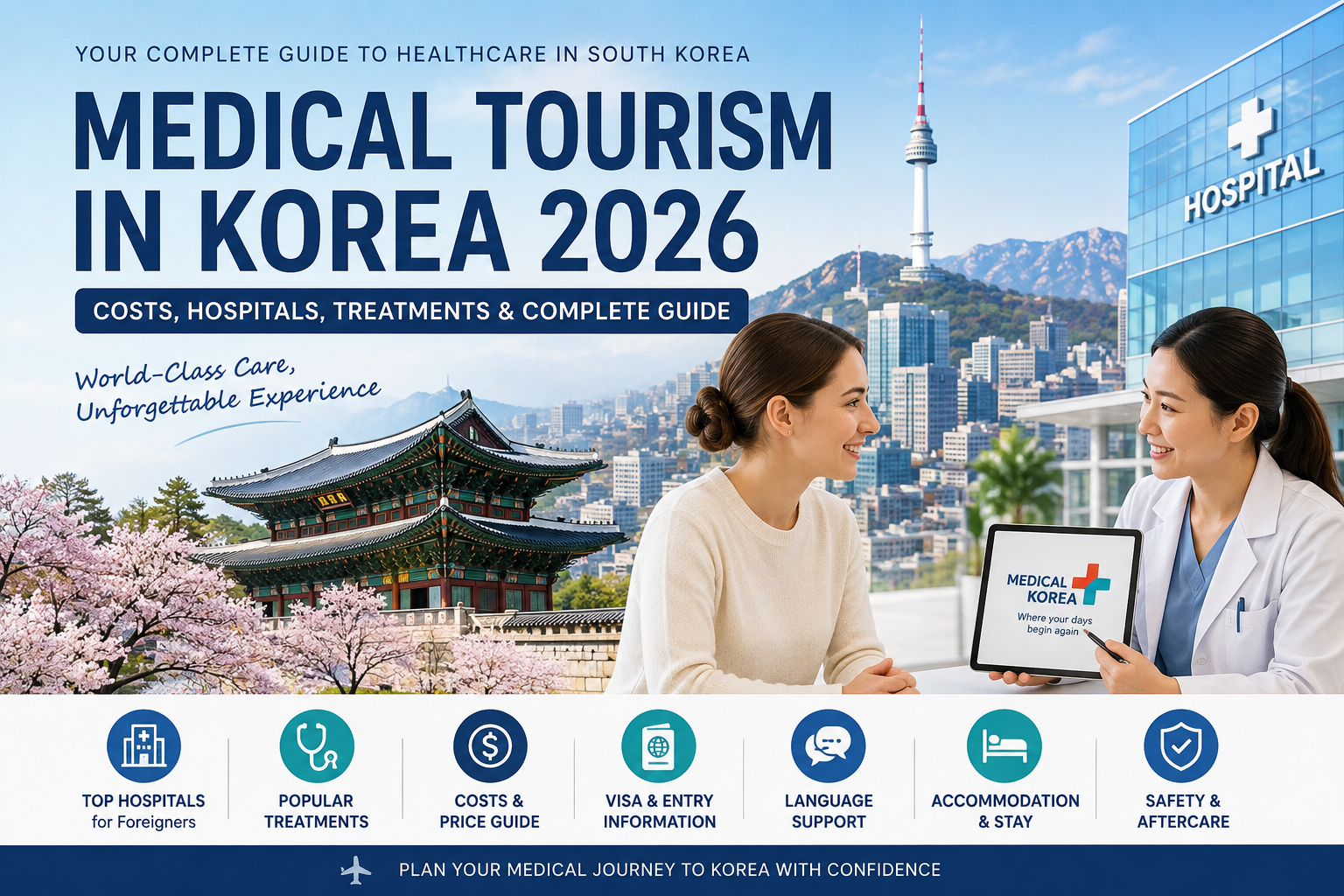
South Korea is famous around the world for K-pop, Korean food and K-beauty. But there is another reason why a rapidly growing number of international visitors are traveling to Korea: medical treatment.
In 2025, 2,011,822 foreign patients from 201 countries received medical care in Korea, according to Korea’s Ministry of Health and Welfare. That was a 71.9% increase from 2024 and the first time the annual number exceeded two million.
From dermatology and plastic surgery to comprehensive health checkups, dentistry and advanced hospital care, Korea now has a large medical system serving international patients.
But planning medical treatment in another country can be confusing.
How do you find a reliable hospital? How much will treatment cost? Can you communicate in English? Do you need a medical visa? And what should you prepare before flying to Korea?
This 2026 medical tourism in Korea guide explains the process from planning your treatment abroad to returning home.
Important: This guide provides general travel and medical-tourism information. Treatment suitability, risks, recovery time and costs vary by patient and medical institution. Always consult a qualified medical professional before making treatment decisions.
Why Are Foreign Patients Traveling to Korea?
Medical tourism in Korea has grown rapidly.
Official government figures show that Korea received approximately 610,000 foreign patients in 2023, 1.17 million in 2024 and 2.01 million in 2025. The cumulative number of foreign patients since statistics began in 2009 has reached approximately 7.06 million.
In 2025, the largest groups came from:
- China — 618,973
- Japan — 600,009
- Taiwan — 185,715
- United States — 173,363
- Thailand — 58,124
China and Japan alone represented more than 60% of foreign patients.
One major reason is the international popularity of Korean dermatology, cosmetic procedures and K-beauty.
But Korea’s medical tourism industry extends beyond cosmetic treatment.
International patients also visit Korea for health screenings, dentistry, ophthalmology, rehabilitation, fertility treatment and treatment at major hospitals.
What Medical Treatments Are Popular in Korea?
The type of treatment you choose will determine almost everything about your trip: where you stay, how long you remain in Korea, whether you need someone to accompany you and how much the trip will cost.
1. Dermatology and Skin Treatments
Dermatology is currently one of the biggest drivers of Korean medical tourism.
Government data show that dermatology accounted for the majority of foreign-patient treatment in 2025.
Foreign visitors commonly search for Korean clinics offering treatments related to acne, pigmentation, scars, skin texture, lasers and cosmetic skin care.
Because procedures, devices and medical suitability vary considerably, don’t choose a clinic based only on social-media photos or the lowest advertised price.
A detailed Dermatology in Korea for Foreigners guide will cover treatment types, costs, booking and clinic-selection tips separately.
2. Plastic Surgery
South Korea is internationally known for cosmetic and reconstructive surgery.
Foreign patients may travel for procedures involving the eyes, nose, face or body, among others.
Surgery requires substantially more planning than a simple outpatient procedure. Consider consultation, anesthesia, recovery time, follow-up visits and the possibility of complications before booking flights.
3. Comprehensive Health Checkups
Another reason foreigners seek medical treatment in Korea is comprehensive health screening.
Some Korean hospitals and health-screening centers provide packages that combine multiple examinations during a scheduled visit.
For an international traveler, this can be attractive because several tests may be completed during one trip.
However, what is included varies considerably between packages, so compare the actual examinations rather than simply comparing package prices.
4. Dentistry
Foreign visitors also use Korean dental clinics for checkups and treatments.
If your treatment requires multiple stages, ask the clinic before traveling how many visits will be required and how much time should be left between appointments.
This is especially important when planning flights and accommodation.
5. Major Hospital Treatment
Korea’s international medical services are not limited to beauty treatment.
The government’s Medical Korea platform provides information relating to areas including cancer, heart disease, transplantation, spinal treatment, infertility treatment, rehabilitation, dentistry and reconstructive surgery.
Patients considering treatment for a serious medical condition should contact the hospital’s international patient center well before traveling and provide the requested medical records.
How to Find a Hospital in Korea for Foreigners
This may be the most important part of planning your trip.
Do not choose a hospital simply because it appears frequently on social media.
Korea operates an official registration system for medical institutions that serve foreign patients.
Registered institutions are subject to requirements designed to protect international patients, including medical malpractice liability insurance.
The Korean government also operates the Korean Accreditation Program for Hospitals Serving Foreign Patients (KAHF), which evaluates participating institutions in areas including services for foreign patients and patient safety.
Before booking, check whether the hospital or clinic is registered to serve foreign patients.
Search Medical Korea’s official hospital information
This is a much safer starting point than choosing solely from an advertisement or influencer recommendation.
Can Foreign Patients Receive Help in English?
Many institutions serving international patients offer foreign-language assistance, although the languages available vary by hospital.
International patient centers may help with appointments, medical interpretation and other arrangements.
The Korea Tourism Organization also provides medical-tourism information and multilingual consultation resources for foreign visitors.
Before booking, ask the hospital specifically:
- Is an English-speaking coordinator available?
- Is medical interpretation included or charged separately?
- Will an interpreter be present during consultation and treatment?
- Can follow-up communication be provided in English after returning home?
Don’t assume that every member of the medical staff speaks English simply because a hospital treats international patients.
How Much Does Medical Treatment in Korea Cost?
This is one of the most important questions — and one of the easiest areas to misunderstand.
There is no single “Korea medical tourism price.”
The cost depends on the hospital, doctor, diagnosis, procedure, medical device or technique used, anesthesia, medication, tests and follow-up care.
Therefore, before flying to Korea, request a written estimate directly from the medical institution whenever possible.
Ask whether the quoted price includes:
consultation + examinations + procedure + anesthesia + medication + follow-up treatment.
A cheap headline price can become much more expensive when additional services are added.
You should also calculate the total cost of your medical trip, not only the treatment price.
That means:
Treatment + Flights + Hotel + Local Transportation + Meals + Interpretation + Recovery Expenses + Travel Insurance
For major treatment, keeping an additional emergency budget is sensible.
How Do I Book Medical Treatment Before Traveling to Korea?
For planned treatment, start the process before buying your flight.
A practical sequence is:
Step 1 — Decide what treatment you need
Research the treatment itself before comparing hospitals.
Step 2 — Find registered medical institutions
Use official resources such as Medical Korea to create a shortlist.
Step 3 — Contact international patient centers
Send inquiries directly to several hospitals or clinics.
Step 4 — Provide medical information
Depending on the treatment, the institution may request previous diagnoses, scans, laboratory results, prescriptions or other records.
Step 5 — Request a treatment plan and estimated cost
Ask what is included and whether additional examinations may change the final price.
Step 6 — Confirm recovery time
Ask how long you should remain in Korea before flying home.
Step 7 — Only then arrange your trip
Once the treatment schedule is sufficiently clear, plan flights and accommodation around your medical appointments.
Do I Need a Medical Visa for Korea?
Visa requirements depend on your nationality, purpose of visit and expected length of stay.
Korea has medical-tourism visa categories including C-3-3 for shorter stays and G-1-10 for longer-term treatment, according to Medical Korea.
Medical Korea states that the application process can require documents such as a passport, medical diagnosis, confirmation of a treatment appointment and evidence of the ability to pay for treatment and living expenses, depending on the circumstances.
However, entry requirements vary by nationality and can change.
Always check the requirements that apply to your passport and circumstances with the Korean embassy, consulate or official immigration resources before booking.
Where Should Medical Tourists Stay?
For many foreign patients, Seoul will be the main destination.
In fact, approximately 87% of foreign patients in 2025 received treatment in Seoul, according to government statistics reported in 2026.
But don’t automatically choose a hotel in a famous tourist neighborhood.
For medical travel, the best accommodation is often the one that makes treatment and recovery easiest.
Consider:
Distance to the hospital
Repeated taxi or subway journeys can become uncomfortable after treatment.
Elevator access
This may matter after surgery or when mobility is limited.
Kitchen and laundry facilities
Useful for longer stays.
Nearby pharmacy and convenience stores
Small conveniences become important during recovery.
Easy airport transportation
Especially useful on your departure day.
For procedures requiring several follow-up appointments, staying close to the hospital can be more valuable than staying next to a tourist attraction.
What Should You Prepare Before Leaving Home?
Create a medical travel folder before departure.
Include copies of your passport, appointment confirmation, medical records, prescriptions, medication list, allergies, emergency contacts, travel insurance documents and your hospital’s international center contact information.
If you regularly take medication, ask your doctor whether anything needs to change before treatment.
Also ask the Korean medical institution whether you need to stop eating, drinking, taking supplements or using particular medications before your procedure.
Never make those changes on your own without appropriate medical guidance.
What Happens After Treatment?
Recovery planning is just as important as booking treatment.
Before leaving the hospital or clinic, make sure you understand:
- What medications should I take?
- What symptoms are normal?
- What symptoms require urgent medical attention?
- When is my follow-up appointment?
- When can I fly?
- Who should I contact after returning home?
For significant surgery or treatment, ask whether you will need a companion during the first stage of recovery.
Most importantly, don’t schedule an aggressive sightseeing itinerary immediately after a procedure simply because you are visiting Korea.
Treatment comes first. Tourism comes second.
What If Something Goes Wrong?
This is something every medical tourist should think about before traveling.
Ask the institution how complications are handled and what aftercare is available once you return to your country.
Korea’s Medical Korea system also provides information and support resources for international patients, including information related to medical disputes.
The Medical Korea Support Center provides services including counseling, interpretation and legal support for foreign patients.
Knowing where to ask for help before treatment is much better than searching for assistance after a problem occurs.
Is Medical Tourism in Korea Worth It?
There isn’t one answer that applies to everyone.
Korea can be an attractive destination for patients interested in areas where the country has developed substantial international-patient infrastructure, particularly dermatology, cosmetic procedures and health screening.
But traveling abroad for medical treatment also adds costs and risks that do not exist when receiving treatment close to home.
The right question isn’t simply:
“Is treatment cheaper in Korea?”
A better question is:
“Does the quality, treatment option, total cost, travel burden and follow-up plan make Korea the right choice for my particular situation?”
Compare several medical institutions, understand the complete price and recovery requirements, and make your decision based on medical suitability rather than advertising alone.
Medical Tourism in Korea: Quick Checklist
Before booking your trip, confirm:
✓ The hospital or clinic is appropriately registered
✓ You understand the proposed treatment
✓ You received an estimated total price
✓ You know what the price includes
✓ Language support is confirmed
✓ Your visa or entry requirements are checked
✓ Accommodation is suitable for recovery
✓ You know how long to remain in Korea
✓ You understand follow-up care
✓ You have an emergency plan
Final Thoughts
More than two million foreign patients chose Korea for medical care in 2025, showing just how quickly the country’s international medical sector is growing.
But successful medical travel requires more than finding a famous clinic and buying a plane ticket.
Research the treatment first, verify the medical institution, compare costs carefully, confirm language support and plan enough time for recovery.
True Taste Korea will continue building practical guides for international visitors considering medical treatment in Korea — from dermatology and health checkups to hospitals, costs, accommodation and what to do if you need medical help while traveling.
You can also search for registered medical institutions through the Medical Korea official website.