• Blind (2011): When the Eyes Cannot See, Can the Mind Discover the Truth?

    Blind (2011): When the Eyes Cannot See, Can the Mind Discover the Truth?

    TTK Original โ€” Beyond the Headlines

    1. A Witness Nobody Wants to Believe

    Most crime thrillers begin with a question: Who committed the crime?

    Blind (2011), directed by Ahn Sang-hoon, introduces a more complicated question before the investigation can even begin: What happens when the person who knows something important is someone society does not consider a reliable witness?

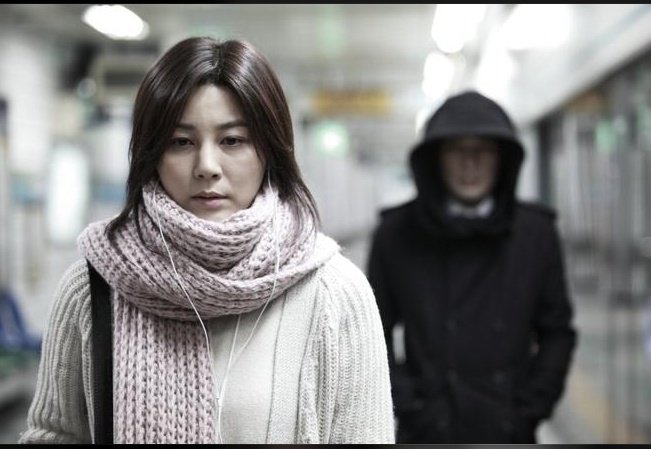
    Min Soo-ah, played by Kim Ha-neul, is a former police academy student who lost her eyesight in a tragic accident. One rainy night, she experiences a suspicious incident involving a vehicle and reports what she believes happened.

    But the police initially struggle to accept her account.

    The problem is not simply that Soo-ah cannot see. It is that the people listening to her have already decided what a credible witness should look like.

    Her testimony does not fit their expectations.

    The film builds its central conflict around this contradiction. A person who cannot visually identify everything at the scene may nevertheless possess important information through sound, movement, touch, memory, and spatial awareness.

    The investigation gradually reveals that the ability to witness an event cannot be reduced to the ability to see it.

    This is what makes Blind more interesting than a conventional serial-killer thriller.

    Its mystery concerns not only the identity of a criminal, but also the social assumptions that determine whose version of reality is taken seriously.

    2. Soo-ah: A Police Cadet Whose Future Was Taken Away

    Soo-ah’s past is essential to understanding her character.

    Before losing her eyesight, she was a promising police academy student. Her accident not only changed her physical abilities but also destroyed the professional future she had been preparing for.

    This loss creates two layers of conflict.

    The first is practical. She must learn to navigate a world that has been designed primarily around sight.

    The second is psychological. She has to confront the disappearance of an identity that once gave her direction.

    Soo-ah was not simply someone who wanted to become a police officer. Her training had taught her to observe, analyze, remember, and respond to danger.

    After the accident, those abilities do not disappear completely. Some must be adapted to a different way of experiencing the world.

    This distinction matters.

    Her competence does not come from blindness magically giving her extraordinary powers. It comes from the combination of previous training, accumulated experience, careful attention, and the ability to interpret information through other senses.

    The film’s most interesting idea is that losing one ability does not necessarily erase every skill developed before that loss.

    Soo-ah’s former identity as a police cadet remains part of the person she has become.

    3. The Difference Between Seeing and Witnessing

    One of the film’s strongest narrative decisions is to introduce two witnesses whose accounts initially contradict each other.

    Soo-ah describes what she experienced through sound and other sensory information. Kwon Gi-seob, played by Yoo Seung-ho, claims to have witnessed the incident visually.

    The audience is therefore placed in an unusual position.

    Which witness should be trusted?

    Ordinarily, people tend to assume that someone who saw an event with their own eyes possesses the most reliable information.

    But eyewitness testimony is not automatically accurate.

    A person may see only part of an incident. Their attention may be distracted. Darkness, distance, speed, fear, and unexpected movement can all influence what they remember.

    Soo-ah’s testimony is limited in one way, but Gi-seob’s is not necessarily complete simply because he has eyesight.

    The film uses this conflict to challenge the assumption that visual observation is equivalent to objective truth.

    It also introduces an important distinction between witnessing and interpreting.

    Two people can experience the same event and remember different details. The task of an investigation is not to select the witness who appears more convincing, but to examine how each piece of information fits the available evidence.

    This is where Blind moves beyond its basic premise and becomes a story about the reliability of human perception.

    4. The Police Station: When Authority Mistakes Appearance for Credibility

    The police response to Soo-ah exposes one of the film’s most important social criticisms.

    Her testimony is initially treated with skepticism because she is blind.

    This reaction reveals how easily institutional authority can reproduce everyday prejudice.

    The police are supposed to investigate evidence without allowing irrelevant assumptions to determine the outcome. Yet Soo-ah’s physical condition becomes a reason to question her credibility before her information has been properly examined.

    The problem is not that investigators should accept every witness statement without verification.

    They should not.

    The problem is that a witness’s disability should not automatically disqualify their testimony.

    A responsible investigation would examine what the witness could hear, where they were positioned, what physical information they could detect, and whether their account is consistent with other evidence.

    Soo-ah’s experience illustrates the danger of confusing a person’s limitations with the limits of their knowledge.

    The film’s criticism also extends beyond individual prejudice.

    Institutions often rely on familiar procedures and assumptions because they are convenient. When someone does not fit the expected model, the institution may treat that person as a complication rather than an information source.

    Soo-ah’s struggle is therefore not simply against a criminal.

    She must also overcome the assumptions of the people who are supposed to help her.

    5. Sound as Evidence: How the Film Reconstructs an Invisible World

    The sound design is central to the identity of Blind.

    For a sighted audience, visual information usually dominates the experience of a thriller. We follow characters through their movements, observe the location of danger, and identify objects through the camera.

    But the film repeatedly asks viewers to consider what information might remain available when visual observation is limited.

    A vehicle approaching from behind, a change in engine noise, the movement of an object, a person’s footsteps, or the sound of a door can all become meaningful clues.

    These details do not automatically reveal the entire truth.

    They provide fragments that must be interpreted.

    That process is important because it prevents the film’s central concept from becoming a simplistic claim that hearing is always superior to sight.

    Soo-ah’s advantage is not that sound gives her perfect knowledge. Her strength lies in the way she pays attention to information that other people may overlook.

    The film also encourages viewers to listen more carefully.

    When the usual visual hierarchy is disturbed, ordinary sounds become more noticeable. A seemingly insignificant noise can create suspense because the audience is unsure what it means.

    This is one of the film’s most effective cinematic strategies.

    Instead of merely telling viewers that Soo-ah experiences the world differently, the film attempts to make them participate in that difference.

    6. The Rainy Taxi Ride: An Ordinary Journey Becomes a Crime Scene

    The suspicious taxi ride is the event that sets the investigation in motion.

    It is an effective opening because the danger does not initially appear as a dramatic confrontation.

    Soo-ah enters a vehicle expecting ordinary transportation. Gradually, however, small details begin to suggest that something is wrong.

    The driver behaves suspiciously, and an unusual incident makes her question what has happened outside the vehicle.

    The sequence works because the audience is placed in a position similar to Soo-ah’s.

    We cannot immediately confirm everything she suspects. We must consider the sounds, movements, and limited information available to her.

    This creates uncertainty without relying entirely on visual shock.

    The taxi also represents an important problem in everyday life.

    Passengers generally place a degree of trust in drivers. They assume that the person controlling the vehicle understands the destination and has no intention of harming them.

    For Soo-ah, that ordinary trust becomes dangerous.

    The vehicle is enclosed, movement is controlled by another person, and the passenger has limited ability to determine what is happening outside.

    The film transforms a familiar urban experience into a psychological trap.

    Its effectiveness comes from making an ordinary situation feel unsafe before the audience fully understands why.

    7. Gi-seob: The Second Witness Who Challenges Soo-ah’s Account

    Gi-seob initially appears to be an inconvenience to Soo-ah’s investigation.

    He claims to have witnessed the incident, but his account differs from hers. Their disagreement creates another obstacle in a case that is already difficult to prove.

    However, the relationship between these two characters becomes one of the film’s most important elements.

    Soo-ah possesses experience, discipline, and an ability to analyze information through senses other than sight.

    Gi-seob has visual access to the incident, but he is young, impulsive, and not particularly interested in becoming involved in a dangerous investigation.

    Neither character possesses everything required to understand the case.

    Their cooperation becomes possible when they recognize that their different experiences can complement one another.

    This is an important alternative to the familiar action-film structure in which one exceptional hero solves every problem alone.

    Soo-ah needs information that Gi-seob can provide. Gi-seob needs the judgment and persistence that Soo-ah brings to the investigation.

    Their relationship develops through disagreement rather than instant trust.

    The film suggests that reliable knowledge is often produced through cooperation between people who do not experience the world in exactly the same way.

    8. Technology and the Subway Sequence: A Camera That Becomes a Lifeline

    The subway sequence is among the film’s most memorable scenes.

    It combines a public transportation environment, an approaching threat, a mobile phone, and the need to communicate information quickly.

    The use of video communication is particularly significant.

    A camera normally functions as a tool for recording or displaying visual information. In this scene, however, the phone becomes a way for another person to help Soo-ah understand her immediate surroundings.

    Gi-seob can observe what is happening and guide her through the phone.

    The technology creates a temporary connection between two different ways of experiencing the same environment.

    This is an interesting reversal.

    Soo-ah’s inability to see makes the camera seem essential, but the camera alone cannot solve the problem. It needs someone who understands what Soo-ah is experiencing and can communicate useful information clearly.

    Technology becomes effective because of human cooperation.

    The scene also demonstrates how the meaning of a familiar device can change depending on the situation.

    A smartphone is usually associated with entertainment, communication, or personal convenience. Here, it becomes an emergency navigation tool.

    The suspense comes from the fact that communication is not instantaneous in a psychological sense. Information must be seen, interpreted, explained, and acted upon before the danger reaches Soo-ah.

    The sequence remains one of the clearest examples of the film translating its central theme into physical action.

    9. Seul-gi: The Guide Dog Is More Than an Emotional Symbol

    Soo-ah’s guide dog, Seul-gi, has an important place in the film.

    A guide dog is not simply a companion that provides comfort. It performs a practical role in helping a visually impaired person navigate their surroundings.

    The relationship between a handler and a guide dog depends on training, communication, consistency, and trust.

    This is why Seul-gi’s presence matters beyond the emotional dimension of the story.

    The dog represents a form of independence that is made possible through cooperation between two living beings.

    Soo-ah is not helpless without Seul-gi, but the dog’s assistance expands the ways in which she can move through the world.

    The film also uses the relationship to reveal a more vulnerable side of Soo-ah.

    Her connection with Seul-gi is based on daily dependence and mutual trust rather than social judgment.

    The tragedy involving the dog later in the film is especially painful because it attacks one of the few relationships that provide Soo-ah with a sense of safety.

    However, it is important not to reduce guide dogs to sentimental devices whose only purpose is to make an audience cry.

    Their real-world role is practical and highly trained.

    The emotional impact of Seul-gi’s presence is strongest when viewers recognize that the dog represents both companionship and an essential part of Soo-ah’s everyday independence.

    10. The Killer: A Predator Who Exploits the Vulnerability of Others

    The antagonist, played by Yang Young-jo, represents a form of violence that is particularly frightening because it is calculated.

    He does not simply create danger through sudden aggression. He exploits the vulnerabilities of people who have limited ability to protect themselves.

    The criminal’s pursuit of witnesses reveals another important aspect of the story.

    The investigation is no longer just about identifying what happened. It becomes a struggle to prevent the people who know something from being silenced.

    This changes the meaning of being a witness.

    A witness is often imagined as someone who observes an event and later provides information to the authorities.

    But in a dangerous criminal investigation, being a witness can make someone a target.

    Soo-ah and Gi-seob discover that knowledge carries risks when the person responsible for a crime is willing to eliminate anyone who can expose the truth.

    The antagonist also creates a disturbing contrast with Soo-ah.

    She uses her attention and intelligence to understand the world around her. He uses his ability to observe other people’s weaknesses to control and threaten them.

    The difference is not simply between sight and blindness.

    It is between two different uses of human awareness.

    One seeks to understand and protect. The other seeks to exploit and dominate.

    11. The Camera’s Perspective: Making the Audience Experience Limited Vision

    A thriller about a blind protagonist faces a difficult cinematic problem.

    Film is a visual medium. The audience normally receives information through images, camera movement, and editing.

    How can a filmmaker communicate the experience of a character who cannot rely on sight in the same way?

    Blind attempts to answer this through subjective framing, changes in sound emphasis, and sequences in which visual information is incomplete or deliberately confusing.

    The purpose is not necessarily to reproduce blindness accurately in every technical detail.

    Rather, the film uses cinematic language to create uncertainty about what is happening and how much information the protagonist can access.

    This approach is especially useful during moments of danger.

    The audience may see the environment but still lack the information needed to understand the threat. At other moments, the sound design becomes more important than the image.

    This creates a useful distinction between seeing something and understanding it.

    A person may be looking directly at an event without recognizing its significance. Another person may receive less visual information but notice details that change the interpretation of the situation.

    The film’s strongest sequences emerge from this tension.

    Its weakness is that the subjective representation of blindness can occasionally become a conventional suspense device.

    The audience should remember that Soo-ah is an individual character with particular abilities and experiences, not a universal representation of every blind person’s daily life.

    12. The Film’s Strengths and Weaknesses: An Effective Thriller With Uneven Development

    Blind has several clear strengths.

    Kim Ha-neul’s performance gives Soo-ah an emotional foundation. She must communicate intelligence, frustration, fear, determination, and vulnerability without relying on ordinary visual interaction.

    Her portrayal is central to the film’s success.

    The central concept is also effective. The conflict between two witnesses with different forms of perception provides a distinctive foundation for a crime thriller.

    The subway sequence demonstrates how technology and cooperation can be integrated into suspense rather than used as simple plot decoration.

    The film also received significant recognition in South Korea. Kim Ha-neul won major acting awards for her performance, and the film attracted more than two million admissions domestically.

    Nevertheless, the film is not without problems.

    Some sections shift between thriller, comedy, and melodrama in ways that can interrupt the tension. The supporting characters do not always receive enough development, and the antagonist sometimes feels closer to a familiar thriller villain than a fully explored human being.

    The police investigation also relies on certain dramatic conveniences.

    These weaknesses do not erase the film’s distinctive premise, but they limit how consistently it develops that premise.

    A strong concept is not automatically a complete story.

    The film is most successful when it explores Soo-ah’s perception and the relationship between different witnesses. It is less distinctive when it returns to familiar serial-killer conventions.

    13. Beyond the Thriller: What the Film Says About Disability and Social Recognition

    The deeper social question in Blind concerns the way society evaluates people whose abilities do not match conventional expectations.

    Soo-ah’s testimony is initially doubted because she cannot see.

    This reflects a broader tendency to define people by what they are assumed to lack rather than by what they can actually contribute.

    The same problem appears in workplaces, public institutions, education, and everyday social interactions.

    People with disabilities may be excluded from opportunities not because they lack the necessary knowledge or judgment, but because systems are designed around assumptions that do not account for different ways of functioning.

    The film does not provide a complete account of disability rights or accessibility. Its primary objective is to create a suspenseful crime story.

    However, its central conflict allows viewers to recognize a meaningful social contradiction.

    Soo-ah is treated as an unreliable witness before her information is properly evaluated. Yet her observations eventually become essential to understanding the case.

    This does not mean that every person with a disability possesses extraordinary abilities.

    That would simply replace one stereotype with another.

    The more important point is that a person’s disability should not determine the credibility of their knowledge before the evidence has been examined.

    The film’s most valuable social message is therefore not that blind people can be heroes too.

    It is that society should stop assuming that one particular way of experiencing the world is the only reliable way to understand it.

    14. The Final Question: How Much Truth Do We Miss Because We Refuse to Listen?

    The ending of Blind brings Soo-ah’s struggle to its most dangerous point.

    Her ability to survive depends not only on her own determination but also on the information and assistance available to her.

    The story ultimately returns to the relationship between perception, trust, and cooperation.

    Soo-ah cannot rely on sight to navigate every situation. Gi-seob cannot solve the case simply by looking at the evidence. The police cannot complete their work by relying on institutional authority alone.

    Each person has limitations.

    The truth emerges only when different kinds of information are brought together and examined.

    This is the film’s most meaningful idea.

    We often assume that the person who sees the most must understand the most. But perception is not the same as knowledge, and knowledge is not the same as wisdom.

    A witness can overlook something obvious. An investigator can dismiss an important clue. An institution can fail because it trusts its assumptions more than the evidence.

    Soo-ah’s story challenges that hierarchy.

    Her blindness does not make her automatically wiser, but it exposes how narrow the definition of reliable perception can become when society depends too heavily on appearances.

    The title Blind therefore carries a meaning beyond physical vision.

    Sometimes the people who cannot see are not the ones who misunderstand the truth.

    Sometimes the real blindness belongs to those who refuse to listen.


    TTK Final Perspective

    Blind is remembered as a suspenseful Korean thriller, but its most interesting achievement is the way it challenges the relationship between physical perception and social credibility.

    Soo-ah’s journey is not about proving that blindness gives someone extraordinary powers. It is about demonstrating that human knowledge can come from different forms of experience, and that those experiences deserve to be examined rather than dismissed.

    The film has familiar thriller conventions and some uneven character development. Yet its central premise remains powerful.

    In a world where people are often judged by what they appear to lack, Blind asks viewers to reconsider what it actually means to see.

    Perhaps the greatest form of blindness is not the inability to perceive an image.

    It is the refusal to recognize the truth when it comes from someone we have already decided not to believe.

    TTK Original โ€” Beyond the Headlines

  • Missing You (2016): When Waiting for Justice Becomes an Obsession

    Missing You (2016): When Waiting for Justice Becomes an Obsession

    Some people spend their lives waiting for a better future. Others spend their lives waiting for the past to return so they can finally confront it.

    Missing You (2016), directed by Mo Hong-jin, explores the second kind of waiting. At first glance, the film appears to be a familiar revenge thriller about a young woman seeking justice against the man who murdered her father. But beneath its crime narrative lies a more unsettling question: What happens when revenge becomes the organizing principle of an entire life?

    Starring Shim Eun-kyung as Hee-joo, Kim Sung-oh as Ki-bum, and Yoon Je-moon as Detective Dae-young, the film examines the psychological consequences of unresolved trauma and the uneasy relationship between personal vengeance and institutional justice.

    Its most interesting idea is not simply that a victim may become consumed by revenge. It is that the passage of time does not necessarily heal a wound. Sometimes, it gives that wound an identity, a purpose, and a future.

    1. Waiting Is Not the Same as Healing

    The Korean title, Neol Gidarimyeo, can be understood as “Waiting for You.” The English title, Missing You, places greater emphasis on absence and longing.

    These two meanings create an important emotional distinction. Waiting suggests an expectation that something will eventually happen. Missing someone suggests that a person remains emotionally present even when physically absent.

    For Hee-joo, these feelings are inseparable. Her father’s death is not simply a tragic event in her childhood. It becomes the defining absence around which her later life develops.

    The passage of fifteen years might ordinarily represent recovery, maturity, and the possibility of a new beginning. Yet Hee-joo’s waiting has a different purpose. She is not waiting for the pain to disappear. She is waiting for the opportunity to confront the person responsible.

    This distinction changes how we understand her character. She has survived the past, but survival does not mean that she has escaped it.

    The film therefore introduces a disturbing possibility: time can make trauma easier to conceal without making it any less powerful.

    2. Hee-joo: A Life Organized Around One Unfinished Event

    Hee-joo is compelling because her motivation is understandable, but the life built around that motivation is deeply troubling.

    She has a clear emotional destination. She wants the man who destroyed her family to face the consequences of his actions. Yet this objective has occupied such a large part of her existence that it raises a difficult question: What remains of a person when revenge becomes the central purpose of living?

    Her identity is shaped by an event that happened when she was young. Instead of allowing the past to become one part of her personal history, she remains psychologically connected to it.

    This does not mean that she is simply incapable of moving forward. Her behavior suggests something more complicated. She has learned to live with the past by keeping her attention fixed on a future confrontation.

    That is the paradox of Hee-joo. She appears to be moving toward a goal, but emotionally she remains attached to the moment that damaged her life.

    Her story is therefore not only about revenge. It is about the difficulty of developing an identity beyond victimhood.

    3. Ki-bum: The Criminal Who Returns to an Unfinished Past

    Kim Sung-oh’s Ki-bum represents the physical return of Hee-joo’s traumatic past.

    His release after fifteen years is more than a plot development. It brings together two different experiences of time.

    For Hee-joo, those fifteen years have been shaped by the memory of what happened. For Ki-bum, the period has been spent inside the criminal justice system, but his return raises the question of whether imprisonment has actually resolved anything.

    The film creates tension through the contrast between these two characters. One has waited for the opportunity to confront the past; the other re-enters the world after serving a sentence for a violent crime.

    Their relationship is unequal. Hee-joo carries the emotional consequences of the murder, while Ki-bum has already passed through the formal punishment imposed by the legal system.

    This difference exposes a limitation of criminal justice. A prison sentence can be measured in years, but the consequences of a violent crime cannot be contained within the same timetable.

    The victim’s suffering does not automatically end when the offender’s sentence is completed.

    4. The Difference Between Legal Punishment and Emotional Justice

    One of the film’s strongest underlying questions concerns the gap between what the law can deliver and what victims may continue to need.

    The criminal justice system operates through procedures, evidence, sentencing, and release. It must establish responsibility and impose punishment according to legal standards.

    But emotional justice is less predictable.

    A victim’s family may continue to experience grief, anger, fear, and a sense of unfinished responsibility long after a criminal case has been closed.

    Hee-joo’s situation emerges from this gap.

    The fact that Ki-bum has served his sentence does not mean that Hee-joo has received emotional closure. From her perspective, the legal conclusion of the case and the personal conclusion of her suffering are two different things.

    This is where the film becomes more than a conventional revenge story.

    It asks whether society mistakes the completion of a legal process for the resolution of human suffering.

    The answer is uncomfortable. A legal system may complete its work while the emotional consequences of a crime remain unresolved for years.

    5. Detective Dae-young and the Limits of Institutional Responsibility

    Yoon Je-moon’s Detective Dae-young introduces another perspective on justice.

    Unlike Hee-joo, who experiences the crime through personal loss, Dae-young approaches it through the responsibilities of law enforcement.

    His position is complicated because police work is not simply about identifying a criminal. It involves gathering evidence, understanding patterns, investigating new crimes, and operating within legal boundaries.

    The detective represents the institutional effort to control violence through established procedures.

    But the film places that effort alongside Hee-joo’s personal pursuit. These two approaches do not necessarily move at the same speed or respond to the same emotional needs.

    For a victim, waiting for official action can feel unbearable. For an investigator, acting without sufficient evidence can undermine the very justice the system is supposed to protect.

    Dae-young therefore occupies an important position in the film’s moral structure.

    He reminds the audience that justice cannot be reduced to the satisfaction of one person’s anger. At the same time, his presence invites us to question whether institutions understand the emotional reality of the people they are supposed to protect.

    6. Fifteen Years: The Psychological Weight of Time

    The fifteen-year interval is one of the film’s most meaningful structural elements.

    It creates the impression that the original crime belongs to the past. Yet the story demonstrates that the past has never truly disappeared.

    For Hee-joo, time becomes a form of psychological imprisonment. Her life continues, but its direction remains tied to an event she cannot change.

    This is different from ordinary remembrance.

    Memory allows people to recognize that something happened and gradually incorporate it into their understanding of themselves. Obsession repeatedly returns to the same event, searching for a different ending.

    Hee-joo’s waiting resembles the second process.

    The passage of time does not necessarily bring her closer to freedom. Instead, it brings her closer to the confrontation she has imagined for years.

    The film’s use of this long interval also creates a moral question for the audience: If someone spends fifteen years preparing to confront a criminal, should that preparation be understood as strength, desperation, or evidence of an unresolved wound?

    The answer may be all three.

    7. Revenge as a Substitute for Control

    Traumatic events often create a profound feeling of powerlessness.

    A person cannot reverse a murder, restore a lost family member, or return to the moment before everything changed. The past is fixed, and that lack of control can become unbearable.

    Revenge offers an apparent solution.

    It promises that the victim can finally become an active participant rather than someone who simply suffers the consequences of another person’s actions.

    For Hee-joo, confronting Ki-bum may represent the possibility of reclaiming control over a life that was once violently disrupted.

    But this promise contains a contradiction.

    If her sense of control depends entirely on what Ki-bum does, where he goes, and whether she can confront him, then her life is still organized around him.

    Revenge may appear to reverse the relationship between victim and perpetrator, but it can also preserve the psychological connection that the victim desperately wants to escape.

    This is one of the film’s most important insights: revenge can become another form of dependence.

    8. The Danger of Defining a Person Only Through Their Trauma

    Hee-joo deserves sympathy because of what happened to her. But sympathy should not require us to treat her as nothing more than a victim.

    This distinction matters.

    When a character is defined exclusively by suffering, the audience may begin to understand every decision through the original tragedy. Her present identity becomes secondary to her past.

    The film invites us to examine that process.

    What would Hee-joo want if Ki-bum were no longer part of her future? What kind of life could she build if she were not required to keep proving that the past still matters?

    These questions are not easy to answer because the film’s dramatic structure is built around her pursuit.

    Nevertheless, they reveal an important human issue. A traumatic experience can explain a person’s behavior without completely defining who that person is.

    Recognizing the damage caused by violence should also mean recognizing the victim’s right to have a future beyond that violence.

    9. The Moral Difference Between Understanding and Justifying Revenge

    A revenge thriller often places the audience in an uncomfortable position.

    We understand why the protagonist wants revenge. We may even feel that the legal system has failed to provide sufficient justice.

    But understanding a motive is not the same as approving every action that follows from it.

    This distinction is essential to reading Missing You.

    Hee-joo’s anger is emotionally understandable. The murder of her father has consequences that cannot be dismissed simply because a sentence has been served.

    Yet the moral legitimacy of her feelings does not automatically determine the legitimacy of revenge.

    If personal suffering becomes the only standard for deciding what punishment is appropriate, justice risks becoming another contest of power.

    The film’s tension comes partly from this conflict. The audience is encouraged to empathize with Hee-joo while also considering the danger of allowing personal vengeance to replace public justice.

    That tension makes her story more interesting than a straightforward narrative in which the victim is always morally right.

    10. Shim Eun-kyung’s Performance and the Distance Between Appearance and Emotion

    Shim Eun-kyung brings a restrained quality to Hee-joo, which is particularly important for a character whose emotional life is dominated by an old wound.

    The performance works through the contrast between outward behavior and inner tension.

    Hee-joo is not simply a character who expresses anger continuously. Her emotional state is connected to a long period of waiting, preparation, and controlled anticipation.

    That restraint helps create an unsettling atmosphere. The audience is left to consider how much of her behavior is shaped by what she reveals and how much remains hidden.

    A revenge story can easily become dependent on dramatic outbursts. But a character who has carried anger for fifteen years presents a different challenge.

    Her emotional condition must feel accumulated rather than temporary.

    Shim Eun-kyung’s interpretation gives the character a sense of vulnerability beneath her determination. This matters because Hee-joo’s pursuit is not simply an expression of strength. It is also evidence of how deeply her life has been affected.

    11. Kim Sung-oh’s Ki-bum and the Performance of Threat

    Ki-bum functions as the source of danger in the film, but the character’s importance extends beyond the immediate threat he represents.

    Kim Sung-oh gives the role an unsettling presence that supports the film’s atmosphere of psychological tension.

    A convincing criminal antagonist does not need to be understood or admired. What matters is whether the character creates a credible sense of danger and forces other characters to reveal their fears.

    Ki-bum’s return places Hee-joo in direct contact with the person around whom her life has been organized.

    The threat is therefore both physical and psychological.

    His presence brings back the original crime, but it also challenges the future Hee-joo has imagined for herself.

    This is an important feature of the film’s antagonist. Ki-bum is not simply someone the protagonist must defeat. He is the person whose existence has shaped the protagonist’s understanding of time, justice, and personal identity.

    12. The Revenge Thriller Formula and Its Narrative Limitations

    Although Missing You has a strong central premise, its execution can be understood as a mixture of psychological drama and familiar revenge-thriller conventions.

    The fifteen-year waiting period offers an opportunity for a deeply developed character study. It could have explored in greater detail how Hee-joo’s relationships, daily habits, and sense of identity were transformed by her long-term fixation.

    However, the demands of the crime-thriller structure also push the narrative toward suspense, confrontation, and escalating danger.

    This creates a tension between two different storytelling ambitions.

    The first is psychological: to understand what prolonged trauma does to a person.

    The second is narrative: to keep the audience engaged through crime-related developments and dramatic revelations.

    When the second ambition becomes dominant, the first can lose some of its depth.

    This helps explain why the film’s premise may feel more powerful than certain parts of its execution. Its central idea has the potential to support a more sustained exploration of grief and obsession than a conventional thriller structure always allows.

    That limitation does not erase the value of the premise. Instead, it identifies the area in which the film’s psychological possibilities are most compelling.

    13. What Does the Title Really Mean?

    The difference between Missing You and the Korean title, which emphasizes waiting, is worth examining.

    The English title highlights absence. It suggests that someone remains emotionally important because they are no longer present.

    The Korean title emphasizes the act of waiting for someone to return.

    In Hee-joo’s story, both meanings are relevant, but neither is entirely romantic or comforting.

    She is connected to her father through loss, and to Ki-bum through the expectation of confrontation. The two relationships are fundamentally different, yet both shape the emotional structure of her life.

    The title can therefore be understood as carrying two opposing forms of attachment.

    One is the longing for someone who has been taken away. The other is the anticipation of facing someone who should never have been allowed to define the future.

    This creates an unsettling emotional contrast.

    The person Hee-joo truly misses cannot return. The person she has been waiting for can.

    That difference lies at the heart of the film’s tragedy.

    14. The Most Difficult Question: What Happens After Revenge?

    The ultimate question raised by Missing You is not simply whether Hee-joo can confront Ki-bum.

    It is what happens to her life when the confrontation she has anticipated for so long is no longer a future possibility.

    Revenge often appears to offer a clear destination. It gives suffering a direction and transforms an uncertain emotional struggle into a specific objective.

    But achieving an objective does not necessarily resolve the pain that created it.

    If revenge becomes the defining purpose of a person’s life, its completion may leave behind a new kind of emptiness.

    The victim may discover that the past cannot be repaired, even when the person responsible is finally confronted.

    This is why the film’s most important subject is not the mechanics of revenge. It is the cost of allowing revenge to occupy the space where a future should have been.

    Hee-joo’s tragedy is not only that her father was taken from her. It is also that the event continued to shape her life long after the original violence ended.

    Missing You ultimately asks viewers to consider a difficult distinction: justice may require remembering what happened, but healing may require building a life that is no longer controlled by it.

    The past deserves to be confronted. It does not deserve to own every day that comes afterward.


    TTK Original โ€” Beyond the Headlines

    This analysis explores the psychological and moral themes of Missing You (2016), focusing on trauma, revenge, institutional justice, and the cost of living for a long time in anticipation of the past.

  • Christmas Carol (2022): When Society Fails Its Most Vulnerable, Revenge Becomes the Only Answer

    Christmas Carol (2022): When Society Fails Its Most Vulnerable, Revenge Becomes the Only Answer

    If a society cannot protect a vulnerable child, who is responsible for the violence that follows?

    Christmas is traditionally associated with kindness, forgiveness, family, and the promise of peace. Kim Sung-soo’s Christmas Carol (2022) deliberately places its story against that emotional background and then dismantles almost everything the holiday represents.

    The film begins with a devastating discovery. Wol-woo, a teenage boy, is found dead on Christmas Eve. His death is treated as an accident, but his twin brother, Joo Il-woo, refuses to accept that explanation. Convinced that people inside a juvenile detention center are responsible, Il-woo deliberately gets himself incarcerated to find the truth and take revenge.

    Starring Park Jinyoung in the dual roles of Il-woo and Wol-woo, alongside Kim Young-min, Kim Dong-hwi, Song Geon-hee, and Heo Dong-won, the film is an adaptation of Joo Won-gyu’s novel of the same name.

    At first, it appears to be a brutal revenge thriller. But beneath its violence is a more disturbing question: how does a society create the conditions in which a vulnerable child can be abused, ignored, and ultimately abandoned?

    The film’s most important conflict is not simply between a victim and his attackers. It is between people who possess power and people who have almost none.

    1. Christmas Is the Film’s Most Deliberate Irony

    The title Christmas Carol creates an expectation of warmth.

    Christmas stories traditionally bring people together. They often involve reconciliation, generosity, and the possibility that even deeply flawed people can change.

    This film takes the opposite direction.

    Wol-woo’s death is discovered during a season associated with family and protection. Instead of finding comfort, his brother encounters a world in which cruelty has become ordinary and the people who should offer protection are either powerless or unwilling to intervene.

    The contrast is not merely decorative.

    By choosing Christmas as the setting, the film makes the absence of compassion more visible. The holiday becomes a reminder of everything the characters have been denied.

    The title also creates an uncomfortable question: what kind of society celebrates kindness while allowing its most vulnerable members to suffer?

    The film does not offer a sentimental answer. Its Christmas is not a magical moment of redemption. It is a setting in which the distance between social ideals and actual behavior becomes impossible to ignore.

    2. Two Identical Faces Represent Two Different Experiences of the World

    Park Jinyoung’s dual performance is the film’s central artistic challenge.

    Il-woo and Wol-woo have the same face, but they experience the world differently.

    Il-woo is angry, confrontational, and determined to act. Wol-woo is vulnerable and struggles to protect himself in an environment that repeatedly misunderstands or mistreats him.

    The contrast is more significant than simply playing two different personalities.

    Their identical appearance creates an uncomfortable visual question: why does one boy appear ready to fight the world while the other seems unable to defend himself against it?

    The answer is not that one is naturally stronger or more deserving.

    Their circumstances have shaped the ways they respond to the same hostile environment.

    Through the two brothers, the film examines how people can experience radically different levels of safety and freedom even when they share the same family background.

    The faces are identical, but the protection available to each brother is not.

    3. Wol-woo’s Vulnerability Is Not a Personal Failure

    Wol-woo’s character is essential to understanding the film’s social criticism.

    He has a cognitive disability and faces difficulties navigating relationships and protecting himself. This makes him particularly vulnerable to people who recognize that he cannot easily defend his position or communicate what has happened to him.

    The film’s tragedy is not simply that a vulnerable boy encounters cruel individuals.

    It is that his vulnerability becomes something others can exploit.

    This distinction matters.

    A person’s disability does not make violence inevitable. The danger comes from an environment that treats a person’s limitations as an opportunity for domination rather than a reason to provide additional protection.

    Wol-woo should not have to become physically stronger, more aggressive, or more articulate to deserve safety.

    His right to be protected should exist independently of his ability to defend himself.

    The film’s most painful scenes force the audience to confront how easily society can confuse a person’s difficulty in expressing suffering with an absence of suffering.

    4. Il-woo’s Revenge Begins Where the Official Explanation Ends

    When Wol-woo’s death is treated as an accident, Il-woo refuses to accept the conclusion.

    His decision to investigate is driven by more than anger. He believes that the official explanation has failed to account for what happened to his brother.

    The last phone call becomes a crucial part of his suspicion. He believes he heard people beating Wol-woo and follows the clues toward the juvenile detention center.

    His decision to enter the institution himself is extreme, but it has a clear psychological logic.

    He does not trust the system to investigate the truth or protect his brother’s memory.

    Instead, he decides that he must enter the environment where the violence occurred.

    This is the moment when the film changes from a conventional investigation into a revenge narrative.

    Il-woo is no longer waiting for someone else to act. He is prepared to become part of the violence in order to expose it.

    His determination is understandable, but it also raises the film’s central moral problem: when institutions fail, can private revenge ever become a reliable substitute for justice?

    5. The Juvenile Detention Center Becomes a World of Its Own

    The juvenile detention center is supposed to represent correction and rehabilitation.

    Its purpose should be to prevent further harm, encourage responsibility, and help young people return to society.

    The film presents a much darker environment.

    Inside the institution, authority is distributed through fear, intimidation, and the ability to inflict pain. The people who should be subject to supervision are able to exercise power over others, while the people responsible for maintaining order do not consistently provide protection.

    This reverses the institution’s intended purpose.

    A place designed to correct harmful behavior becomes a place where violence can be reproduced.

    The setting is particularly effective because the characters are young. They are not presented as fully formed adults whose identities and choices are beyond change.

    They are still at an age when intervention, education, and protection could make a difference.

    The institution’s failure therefore carries a larger meaning. It is not only failing to control violence. It is failing to prevent young people from becoming trapped in the very behavior it is supposed to correct.

    6. Violence Is a Form of Social Currency Inside the Institution

    The film’s juvenile detention center operates through an informal hierarchy.

    Physical strength, intimidation, and the ability to make other people afraid determine who can move freely and who must obey.

    Violence becomes a kind of currency.

    Those who possess it gain influence. Those who lack it are forced to calculate every action according to the possibility of punishment.

    This is why the conflict between Il-woo and the other boys is not simply a sequence of personal fights.

    Every confrontation is also a struggle over position.

    Who can refuse an order? Who can speak without being punished? Who can make another person back down?

    These questions reveal the social structure beneath the violence.

    The film suggests that brutality becomes especially destructive when it is rewarded with status.

    A person who learns that cruelty produces obedience has little reason to abandon it unless the surrounding system changes the incentives.

    The institution is therefore not merely a background for the action. It is part of the machinery that allows the violence to continue.

    7. The Adults’ Failure Is More Important Than the Boys’ Cruelty Alone

    It is easy to focus entirely on the young perpetrators.

    Their actions are shocking, and the film deliberately makes the audience feel anger toward them.

    But focusing only on the boys risks overlooking the larger question.

    How did the environment become one in which such behavior could continue?

    The presence of adults and institutional authority makes this question unavoidable.

    A juvenile detention center is not an uncontrolled street. It is an institution with rules, employees, responsibilities, and an official purpose.

    When violence becomes a regular part of daily life, the responsibility cannot be limited to the individuals who physically carry it out.

    The adults who fail to recognize warning signs, intervene effectively, or protect vulnerable residents also become part of the problem.

    This does not mean every adult character has the same degree of responsibility. The film presents different relationships to the violence, including people who attempt to help and people who exercise authority through intimidation.

    The important distinction is between having a position of responsibility and actually fulfilling it.

    The film asks whether institutional authority means anything if the people who need protection cannot rely on it.

    8. Cho Soon-woo Represents the Limits of Individual Compassion

    Kim Young-min’s Cho Soon-woo offers an important contrast to the violent environment.

    As Wol-woo’s counselor, he is connected to the institutional world that failed the boy, but he also represents the possibility of individual concern.

    His relationship with Il-woo is complicated because he recognizes the danger of the revenge plan while understanding the pain behind it.

    This makes him more than a simple helper.

    He occupies an uncomfortable position between sympathy and responsibility.

    He may understand why Il-woo wants revenge, but understanding does not automatically mean that he should support it.

    His character raises a difficult question: what can one compassionate person accomplish inside a system that is already failing?

    Individual kindness matters, but it cannot replace institutional protection.

    A vulnerable person should not have to depend on finding one unusually sympathetic adult in order to survive.

    The film’s treatment of Cho Soon-woo therefore points toward a distinction between personal morality and structural responsibility.

    Good intentions can make a difference, but they cannot repair an entire institution by themselves.

    9. The Perpetrators Are Not All Equally Powerful

    The film introduces several figures connected to the violence, including Son Hwan, Moon Ja-hoon, and the correctional authority figure Han Hui-sang.

    Their positions are not identical.

    Some exercise influence through intimidation among the boys. Others possess authority that comes from their institutional role.

    This difference matters because power is not limited to physical strength.

    A teenager may control another resident through threats, but an adult employee can influence the entire environment through access, authority, and the ability to decide what is permitted.

    The film’s violence operates across these different levels.

    It would be too simple to treat every character as equally responsible or equally powerful.

    The person who commits an act of violence has direct responsibility for that act. The person who enables it through authority or deliberate inaction may carry a different but still significant responsibility.

    This distinction makes the film’s social criticism more meaningful.

    The real question is not merely who is cruel. It is who has the power to stop cruelty and what they choose to do with that power.

    10. Il-woo’s Transformation Creates the Film’s Moral Contradiction

    Il-woo enters the detention center because he wants to punish the people responsible for his brother’s suffering.

    His anger is understandable.

    But as the story progresses, the methods he chooses bring him closer to the violence he wants to destroy.

    This creates the film’s central contradiction.

    He is trying to defend the memory of a vulnerable person while adopting a form of behavior that makes the environment more violent.

    Revenge gives him a sense of purpose. It also gives him a temporary feeling of control in a world where he previously had very little.

    But control is not the same as justice.

    The ability to hurt someone does not prove that the underlying injustice has been corrected.

    Il-woo’s transformation forces the audience to consider how easily grief can become a justification for actions that would otherwise be condemned.

    The film does not ask us to dismiss his pain. It asks us to examine what happens when pain becomes the only authority guiding a person’s decisions.

    11. Park Jinyoung’s Dual Performance Is the Film’s Emotional Foundation

    Playing twins requires more than changing facial expressions or vocal delivery.

    The actor must create two distinct emotional identities while maintaining the physical resemblance that makes the characters believable as brothers.

    Park Jinyoung approaches the challenge through differences in posture, expression, movement, and emotional intensity.

    Il-woo’s physical presence communicates resistance. His movements often suggest someone preparing for confrontation.

    Wol-woo’s behavior communicates a different relationship with the world. His expressions and physical responses suggest vulnerability and a need for reassurance.

    The contrast allows the audience to recognize the brothers as separate individuals even though they share the same face.

    More importantly, the dual performance supports the film’s central idea.

    The audience sees how two people can occupy different positions in the same society despite their physical similarity.

    Park’s performance is not simply a technical demonstration of playing two roles. It gives the film a visual way to express its argument about vulnerability, anger, and unequal experiences.

    This is also consistent with director Kim Sung-soo’s stated interest in the contrasting expressions of the two boys: one marked by anger, the other by a forced smile.

    12. The Film’s Extreme Violence Is Both Its Strength and Its Risk

    Christmas Carol does not make its subject comfortable.

    Its violence is designed to create anger, distress, and a sense of helplessness.

    That intensity can be effective because the film is dealing with a world in which polite language and ordinary institutional procedures have failed to protect the victim.

    The audience is forced to experience the emotional weight of that failure.

    However, there is a risk when violence becomes the dominant language of a story about abuse.

    If every major revelation is delivered through another disturbing confrontation, the audience may become emotionally exhausted before it has enough space to understand the people involved.

    Some viewers may find the film powerful precisely because it refuses to soften its subject. Others may feel that its brutality overwhelms the social message.

    Both reactions are understandable.

    The important question is whether the violence reveals something about the characters and the institution, or whether it merely intensifies the spectacle.

    The film is at its strongest when brutality exposes the unequal distribution of power. It is less persuasive when intensity alone is expected to carry the emotional meaning.

    13. The Film Challenges the Idea That Revenge Can Restore What Was Lost

    Spoiler warning: This section discusses the film’s central conflict and later developments.

    A conventional revenge thriller often offers a clear emotional promise.

    The protagonist identifies the people responsible, confronts them, and achieves a form of satisfaction through punishment.

    Christmas Carol makes that promise much less comfortable.

    Il-woo’s revenge cannot return Wol-woo to life. It cannot restore the time they lost together, undo the suffering his brother experienced, or create the protection that was absent when it mattered most.

    Even if those responsible are confronted, the original failure remains.

    This is why the film’s revenge narrative carries a sense of tragedy beyond the immediate violence.

    The audience may understand Il-woo’s desire to punish the perpetrators, but the film does not make punishment equivalent to healing.

    There is also a broader social implication.

    If justice only becomes possible after a family member takes matters into their own hands, then the system has already failed in a fundamental way.

    A society should not require grieving relatives to become investigators, protectors, and executioners.

    The film’s most disturbing implication is that revenge may feel like the only available response precisely because the proper response was absent.

    14. Christmas Carol Is Ultimately About the People Society Chooses Not to See

    The film’s deepest subject is not revenge alone.

    It is invisibility.

    Wol-woo is vulnerable in ways that make it difficult for him to defend himself. His suffering can be ignored or misunderstood. His death risks being reduced to an official explanation that does not satisfy the person who knew him best.

    Il-woo refuses to accept that disappearance.

    His actions are extreme, but they emerge from the conviction that his brother’s life deserves to be taken seriously.

    This is where the film’s title becomes especially meaningful.

    A Christmas carol is traditionally a song associated with warmth, memory, and shared human feeling. In this film, the idea of a carol becomes almost an accusation.

    What does a society’s celebration of kindness mean if it cannot protect a child who needs it?

    The film does not offer an easy solution. It does not pretend that one act of revenge can repair a broken institution.

    Instead, it forces the audience to look at the people who are usually pushed outside the frame: vulnerable children, neglected victims, and those whose suffering is treated as an inconvenience.

    Christmas Carol is ultimately a film about the consequences of looking away.

    Its most important question is not whether Il-woo can punish the people who hurt his brother.

    It is why a society allowed his brother to become so defenseless in the first place.


    TTK Original โ€” Beyond the Headlines

    Christmas Carol (2022) is more than a revenge thriller. Through Park Jinyoung’s dual performance, it examines how institutional neglect, unequal power, and the failure to protect vulnerable children can turn grief into violence. Its most unsettling message is that the damage begins long before someone decides to take revenge.

  • The Childe (2023): Why the Most Dangerous Character Is Also the Most Fascinating

    The Childe (2023): Why the Most Dangerous Character Is Also the Most Fascinating

    What happens when the person hunting you seems to enjoy the chase more than you enjoy staying alive?

    At first glance, The Childe (2023) appears to be a straightforward action thriller. A young boxer travels from the Philippines to South Korea in search of his wealthy father. Before he can reach the life he imagines, however, he becomes the target of several dangerous people, including a mysterious professional killer who introduces himself as the Childe.

    Directed by Park Hoon-jung and starring Kim Seon-ho, Kang Tae-ju, Kim Kang-woo, and Go Ara, the film builds its tension around a deceptively simple question: who wants Marco alive, and who wants him dead?

    But the most interesting question is not simply who is pursuing Marco. It is why one pursuer becomes so much more fascinating than the person being pursued.

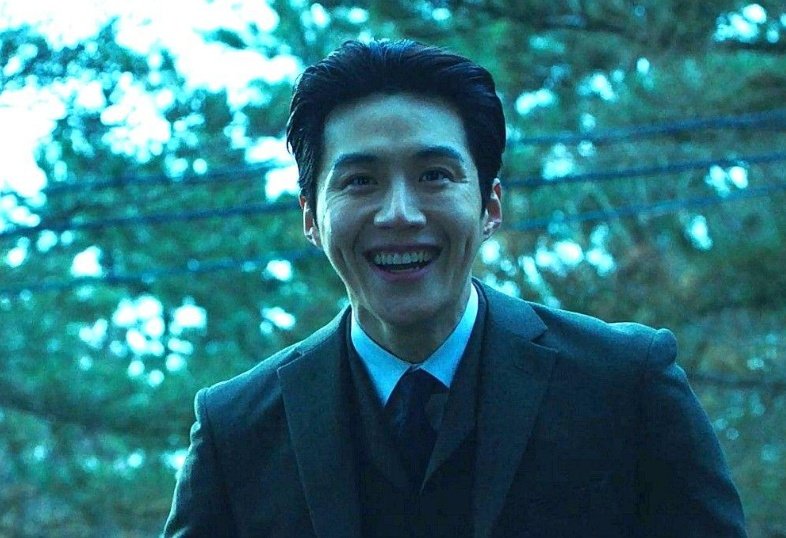
    The Childe is memorable because its central assassin does not behave like a conventional villain. He smiles, jokes, speaks politely, and appears almost friendly while committing extraordinary acts of violence. His manners make him unsettling, while his unpredictability gives the film much of its personality.

    Beneath the action, the film also explores a darker subject: the difference between being born into a powerful family and being treated as someone who belongs to it.

    This analysis looks beyond the plot to examine the film’s unusual character dynamics, its treatment of identity, and the uncomfortable relationship between privilege and human value.

    1. The Film’s Real Center Is Not Necessarily Its Main Character

    Marco initially appears to be the natural center of the story.

    He is a young Korean-Filipino boxer living in the Philippines. He struggles financially while caring for his sick mother, and the possibility of meeting his wealthy Korean father offers what seems like an escape from an increasingly desperate situation.

    His journey gives the audience a familiar emotional entry point. We understand his financial difficulties, his concern for his mother, and his hope that discovering his father might change his circumstances.

    Yet once Marco arrives in Korea, the film begins to shift its attention.

    The mysterious Childe dominates the atmosphere whenever he appears. Even when Marco is physically present, the audience often finds itself waiting for the next appearance of the man pursuing him.

    This creates an unusual imbalance between the protagonist and the most compelling character.

    Rather than treating this imbalance as a simple casting issue, it is worth considering what it does to the audience. Marco represents the person whose life is being disrupted. The Childe represents the force that makes the disruption entertaining, frightening, and impossible to predict.

    The film’s emotional entry point and its dramatic engine are therefore two different people.

    2. The Childe’s Smile Is More Disturbing Than His Violence

    Many movie assassins are frightening because they appear emotionless.

    The Childe takes the opposite approach.

    He smiles frequently, speaks with casual confidence, and sometimes behaves as though he is enjoying an ordinary social encounter. His friendliness is not a sign of compassion. It is part of the unsettling gap between his outward personality and his actions.

    This contrast changes the way violence feels.

    When a character is openly angry, an audience can recognize the emotional source of the threat. Anger has a visible direction. It tells us something about what the person wants.

    The Childe’s cheerful manner provides no such reassurance.

    His smile does not reveal whether he is amused, confident, mocking, or simply treating another person’s fear as entertainment. The audience cannot easily predict what will make him stop.

    That uncertainty becomes a psychological weapon.

    Kim Seon-ho’s performance is particularly effective because he does not need to make every moment physically intimidating. His controlled expressions and conversational delivery create a character whose danger seems to exist beneath the surface.

    The result is a villain whose politeness makes his cruelty feel even more unnatural.

    3. Professionalism Becomes a Distorted Moral Code

    The Childe repeatedly presents himself as a professional.

    This detail is more important than it initially appears.

    Professionalism usually suggests discipline, competence, reliability, and responsibility. In ordinary life, these qualities are associated with people who understand the consequences of their work.

    The Childe applies similar language to killing.

    He approaches violence as a job that requires preparation, precision, and a clear understanding of the assignment. His professional identity separates the task from the moral consequences of carrying it out.

    This is one of the film’s darkest sources of humor.

    He can behave courteously because he does not need to treat the person in front of him as a human being with equal claims to dignity. The job defines the relationship.

    His language makes killing sound like a service.

    The film does not suggest that professionalism itself is dangerous. Instead, it shows what happens when technical competence becomes completely detached from moral responsibility.

    A person can be extraordinarily skilled at something and still be ethically empty.

    The Childe’s confidence comes partly from this separation. He does not appear to struggle with the contradictions that would disturb an ordinary person.

    4. Why the Killer Calls His Target a Friend

    One of the character’s strangest habits is his willingness to describe himself as Marco’s friend.

    Under normal circumstances, friendship implies mutual recognition, trust, and some degree of shared interest.

    None of those conditions exists here.

    The Childe knows that Marco is terrified of him. He also knows that Marco does not want his company. Yet he continues to use the language of friendship.

    This creates an uncomfortable form of intimacy.

    The Childe behaves as though he has the right to define the relationship, regardless of how Marco feels about it. His words become another way of controlling the situation.

    There is also a theatrical quality to this behavior.

    He does not simply chase Marco. He creates a performance around the chase, turning their encounters into something resembling an ongoing conversation between two people who know each other.

    But the relationship is entirely unequal.

    One person controls the pace of the encounter. The other is struggling to survive it.

    The word friendship becomes disturbing because it is being used without the mutual consent that gives friendship its meaning.

    5. Marco’s Search for His Father Is a Search for Recognition

    Marco’s journey begins with a practical need: money for his mother’s medical treatment.

    But the search for his father carries a deeper emotional possibility.

    He has lived without a relationship with the wealthy Korean man who fathered him. Meeting that person could provide financial assistance, but it might also answer questions about his own identity.

    Who is he in relation to his father’s family?

    Does he have a place in the world from which he has been separated?

    Can the person who was absent from his childhood suddenly become someone who protects him?

    These questions make Marco’s journey more complicated than a simple attempt to obtain money.

    His father represents a missing connection between his past and a possible future. The journey to Korea therefore becomes an attempt to discover whether that connection has any real value.

    The tragedy is that Marco enters a world where family relationships are not necessarily built around affection.

    They can also be defined by inheritance, competition, and the distribution of power.

    6. The Body Becomes a Form of Property

    The film’s central family conflict introduces an especially disturbing idea: Marco’s body has value to other people for reasons that have little to do with his own wishes.

    His connection to the wealthy family is not treated simply as an emotional relationship. It becomes part of a calculation involving the family’s future and its internal power struggle.

    This changes the meaning of inheritance.

    Normally, inheritance suggests that a child receives something from a parent. In The Childe, the direction of value becomes more disturbing. Marco himself can be treated as something the family wants to use.

    His biological connection becomes a resource.

    The contrast is particularly sharp because Marco has spent much of his life struggling to survive through physical labor and underground boxing. His body has already been a means of earning money.

    In Korea, that same body becomes valuable for a different reason.

    The film thus connects economic vulnerability with the loss of control over one’s own physical existence.

    Marco may have traveled to Korea hoping to gain something from his father. Instead, he discovers that other people have already assigned a price to his existence.

    7. The Family’s Wealth Does Not Create a Sense of Belonging

    The wealthy family in The Childe appears to possess everything that Marco lacks.

    Money, influence, property, and access to powerful people surround its members. From the outside, their position seems secure.

    But the family’s internal relationships are deeply unstable.

    Its members are not simply trying to preserve a shared family identity. They are competing over who will control the family’s future.

    This reveals a contradiction in inherited privilege.

    A powerful family can provide material security while creating an environment in which every relationship becomes conditional.

    Being related to someone does not guarantee acceptance. Sharing blood does not automatically create trust. Being born into a family does not mean that the family considers you an equal.

    Marco’s arrival exposes this weakness.

    He is connected to the family biologically, but he has not been raised within its rules. He does not possess the same social position or understanding of its internal politics.

    His existence challenges a structure that has been organized around established expectations.

    The family does not necessarily see him as a person who deserves a place. It sees him as a problem that must be managed.

    8. Director Han Represents the Violence Hidden Inside Respectability

    Kim Kang-woo’s Director Han offers a different kind of threat from the Childe.

    The Childe is unpredictable and openly violent. Director Han represents the authority of wealth, family position, and institutional influence.

    His danger comes from his ability to make decisions that affect other people’s lives while remaining within the world of privilege.

    This contrast is important.

    The Childe can kill with his own hands. Director Han can exercise power through a larger structure of money, relationships, and family control.

    One represents immediate physical danger. The other represents the social conditions that make such danger possible.

    The film does not present wealth as automatically evil. Instead, it examines a particular environment in which power is protected by status and family interests.

    Director Han’s position reveals how violence can exist behind respectable appearances.

    The most frightening person is not always the one holding a weapon. Sometimes it is the person who has enough influence to decide who will be placed in danger.

    9. Yoon-ju Adds Another Layer of Uncertainty to Marco’s Identity

    Go Ara’s Yoon-ju is another important source of uncertainty.

    Her connection to Marco complicates the idea that he can understand his new environment simply by identifying who is chasing him.

    She introduces a different kind of relationship: one in which familiarity and hidden motives coexist.

    The film uses her presence to remind the audience that Marco’s past is not as simple as he might believe.

    A person who appears familiar may possess information that changes the meaning of an entire relationship.

    This is particularly relevant to a story about identity.

    Marco arrives in Korea believing that finding his father will explain something important about himself. But every new encounter makes his understanding of his own history less secure.

    Yoon-ju contributes to this instability.

    She is not merely another obstacle in a chase. Her presence reinforces the film’s central question: how much can a person really know about the people who claim to be connected to him?

    10. The Film Uses Black Comedy to Make Violence Uncomfortable

    The Childe frequently mixes brutal action with humor.

    This is a risky creative choice because comedy can weaken the emotional seriousness of violence if it is used carelessly.

    Here, however, the humor often comes directly from the Childe’s personality.

    His calm voice, casual remarks, and almost playful attitude create a strange contrast with the danger surrounding him.

    The audience may laugh at the absurdity of a situation while remaining aware that the violence is real within the story.

    This creates an unstable emotional response.

    Are we enjoying the character because he is funny, or are we uncomfortable because we find a killer entertaining?

    That question is central to the film’s appeal.

    The humor does not make the violence harmless. It exposes how easily a charismatic personality can change the audience’s relationship with a dangerous character.

    The Childe can be entertaining without becoming morally admirable.

    That distinction is important when discussing the film’s success as a character-driven thriller.

    11. Marco’s Boxing Background Creates an Unfulfilled Promise

    Marco’s background as a boxer initially suggests that he will be able to defend himself.

    Boxing is not simply a physical skill. It is a discipline based on timing, observation, endurance, and the ability to respond under pressure.

    These qualities could have provided a compelling contrast with the Childe’s professional approach to violence.

    Marco knows how to fight inside a ring. But the world he enters does not operate according to the rules of a sporting contest.

    There is no referee, no agreed weight category, and no guarantee that a fight will end when one participant can no longer continue.

    The film uses this difference to show how quickly a familiar form of strength can become insufficient.

    However, this is also one of the film’s most noticeable missed opportunities.

    Marco’s boxing identity could have played a larger role in the final conflict. His physical discipline and ability to read an opponent might have given him more agency.

    Some viewers on Reddit similarly questioned why Marco’s boxing background was not used more extensively and felt that he became too passive during parts of the climax.

    The criticism is understandable because the film establishes a skill set that it does not fully develop.

    12. The Film’s Most Interesting Conflict Is Between Control and Powerlessness

    The Childe and Marco occupy opposite psychological positions.

    The Childe controls the encounters. He appears to know more than Marco, moves with confidence, and rarely seems surprised by the situation.

    Marco is constantly reacting.

    He does not know who to trust, why he is being pursued, or what his family connection actually means. Information arrives in fragments, often after he has already made a decision.

    This difference creates the film’s central tension.

    Control is not simply about physical strength. It is also about possessing information and understanding the rules of the environment.

    The Childe appears powerful because he knows the assignment and understands the people involved.

    Marco is vulnerable because he is entering a system whose rules were established before he arrived.

    This makes the chase more than a sequence of action scenes.

    It becomes a struggle between someone who understands the game and someone who has only just discovered that he is playing it.

    13. The Ending Reframes Marco’s Place in the Story

    Spoiler warning: This section discusses the film’s major revelation and ending.

    The film’s late revelation changes how the audience understands Marco’s journey.

    For much of the story, viewers are encouraged to believe that his connection to the wealthy family is the central reason behind the pursuit.

    The final developments complicate that assumption.

    Marco’s role in the larger operation is not what he initially believes. The people around him have been operating with information that he does not possess, and his journey has been shaped by a plan whose full purpose remains hidden from him.

    This twist is important because it changes the meaning of the chase.

    Marco is not simply a young man who has entered a dangerous family dispute. He is also someone whose limited understanding has made him vulnerable to other people’s decisions.

    The revelation can be entertaining because it forces the audience to reconsider earlier scenes.

    At the same time, it creates a narrative cost.

    When the protagonist’s agency is reduced by the larger plan, the audience may feel that the character has been carried through the story rather than actively shaping it.

    This explains why some viewers found the twist entertaining but still wanted Marco to play a more decisive role.

    The ending is effective as a reversal of expectations, even if it leaves questions about how much control Marco ever possessed.

    14. Why The Childe Remains More Than a Standard Action Thriller

    The Childe is not a perfectly balanced film.

    Its action sequences are often more memorable than its character development, and its central protagonist does not always receive the dramatic agency that the premise seems to promise.

    Yet the film has a distinctive identity.

    Its most successful decision is the creation of a character who combines elegance, humor, professionalism, and extreme violence. Kim Seon-ho’s performance gives the Childe a personality that can dominate a scene without relying on conventional villain behavior.

    But the film’s deeper interest lies in the world surrounding him.

    Marco’s journey reveals how family identity can become a question of economic value. His wealthy relatives demonstrate that privilege does not necessarily create affection or belonging. The Childe shows how violence can become detached from ordinary moral language when it is treated as professional work.

    Together, these elements create a story about people who are valued for what they can provide rather than who they are.

    The Childe is fascinating because he seems to control every situation, but his confidence also exposes the emptiness of a life organized around assignments and violence.

    Marco, meanwhile, begins as someone searching for recognition and ends up confronting the possibility that the family he hoped would accept him may never have intended to treat him as a person.

    That is the film’s most uncomfortable idea.

    The greatest danger in The Childe is not simply that powerful people can hurt you. It is that they can decide what you are worth before you have the chance to decide who you want to be.


    TTK Original โ€” Beyond the Headlines

    The Childe is remembered for its stylish violence and Kim Seon-ho’s unusual assassin. But beneath its dark humor lies a more unsettling story about identity, inherited power, and the human cost of being treated as a useful object rather than an individual.

  • Time to Hunt (2020): When Escaping Poverty Becomes a Fight for Survival

    Time to Hunt (2020): When Escaping Poverty Becomes a Fight for Survival

    TTK Original โ€” Beyond the Headlines

    Spoiler Warning: This article discusses major plot developments and the ending.

    What would you do if the money you had worked so hard to obtain suddenly became worthless?

    In Yoon Sung-hyun’s Time to Hunt (2020), this is not an abstract economic question. It is the condition that shapes the lives of a group of young men who have lost confidence in their future.

    Jun-seok has just been released from prison. He wants to leave behind a devastated South Korea and start again somewhere else with his friends. His plan is ambitious, dangerous, and built around one final robbery.

    At first, the film resembles a conventional heist thriller. A group of young criminals identifies a target, gathers weapons, and prepares to steal enough money to escape their circumstances.

    But the robbery changes everything.

    The money is not the end of their problems. It becomes the beginning of a nightmare in which they are hunted by Han, a terrifying professional killer who seems almost impossible to escape.

    The film’s central question gradually changes.

    It is no longer about whether these young men can obtain enough money to leave the country. It becomes a question of whether they can survive the consequences of trying to escape.

    Beneath its gunfights and extended chase sequences, Time to Hunt examines economic desperation, the limits of friendship, the psychology of fear, and the difference between physically escaping a place and becoming free.

    1. The Dystopian Setting Is a Society That Has Lost Its Promise

    The world of Time to Hunt is not presented as a distant science-fiction civilization filled with futuristic technology.

    Its dystopia is more recognizable and therefore more disturbing.

    The economy has deteriorated, the currency has lost much of its value, and the environment around the characters feels industrial, exhausted, and unstable.

    The film does not spend much time explaining the political or economic history behind this collapse.

    Instead, it allows the audience to understand the situation through the characters’ everyday experiences.

    People are not discussing an exciting future.

    They are trying to survive a present that offers very little hope.

    This is an important distinction.

    Traditional dystopian stories often focus on governments, dictatorships, or advanced systems of social control. Time to Hunt focuses on something more immediate: the disappearance of a believable future.

    The characters do not need to be physically imprisoned by a government to feel trapped.

    Their economic circumstances have already limited their choices.

    The devastated setting is therefore more than visual decoration. It represents a society in which the promise of upward mobility has become difficult to believe.

    The film’s most frightening possibility is that the characters are not escaping an unusual disaster.

    They are escaping a world that has already abandoned them.

    2. The Collapsing Currency Changes the Meaning of Work and Security

    One of the most important details in the film is the collapse in the value of money.

    Jun-seok and his friends have previously committed a robbery, but the money they obtained has lost much of its practical value.

    This creates a particular kind of desperation.

    Their problem is not simply that they lack money.

    It is that the financial system no longer provides the security they expected money to offer.

    In ordinary circumstances, saving money can represent progress.

    It can help people secure housing, build a career, support family members, or prepare for a different future.

    But when the currency becomes unreliable, those assumptions collapse.

    The characters discover that past effort does not necessarily guarantee future security.

    This is why their next robbery becomes so important.

    They are not merely trying to become wealthy.

    They are trying to obtain something they believe can still function as a way out.

    The film uses this economic instability to challenge the idea that money automatically produces freedom.

    Money has value only within a system that recognizes and protects that value.

    When the system becomes unstable, even a large amount of cash may not be enough to provide a secure future.

    3. Jun-seok’s Dream of Hawaii Is More Than a Criminal’s Fantasy

    Jun-seok, played by Lee Je-hoon, is the person who gives the group its direction.

    He wants to leave the country and begin again somewhere far away.

    Hawaii represents warmth, distance, and the possibility of a different life.

    The dream is deliberately simple.

    He does not describe an elaborate career plan or a sophisticated vision of personal success.

    He wants to escape.

    This simplicity reveals how limited his expectations have become.

    For someone who believes that the society around him has no future, a different country can appear to offer a complete solution.

    But the dream also contains a psychological weakness.

    Jun-seok imagines that changing location will resolve problems that may be connected to his own past, decisions, and emotional condition.

    He is not simply looking for a new address.

    He is searching for a life in which the experiences that have damaged him no longer matter.

    That is an understandable desire, but it is not necessarily realistic.

    The film gradually tests the difference between escaping a place and escaping oneself.

    4. The Casino Robbery Is a Desperate Attempt to Purchase Freedom

    The robbery is the event that transforms the group’s hopes into a crisis.

    The target is an illegal gambling establishment, a place where large amounts of cash and sensitive information are kept.

    The friends believe that the operation will provide the resources they need to leave their current lives behind.

    But the plan carries a risk they do not fully understand.

    They are entering a criminal environment in which money is connected to powerful people, hidden relationships, and information that can be more valuable than the cash itself.

    The group succeeds in stealing money and surveillance hard drives.

    That second item becomes especially important.

    The robbery is no longer just a theft.

    By taking the hard drives, the young men have acquired material that can expose the gambling operation’s connections with other powerful criminals.

    Their original calculation was based on the visible value of the money.

    They did not understand the invisible value of the information.

    This is the central mistake of their plan.

    They think they are stealing an opportunity to escape.

    In reality, they have entered a conflict whose scale is far beyond their understanding.

    5. The Hard Drives Reveal the Difference Between Money and Information

    The stolen surveillance hard drives are among the most important objects in the story.

    At first, they appear to be additional property taken during the robbery.

    But their contents connect the gambling business to influential criminal interests.

    This changes the nature of the danger.

    The money is replaceable.

    The information is potentially damaging.

    For the young men, the hard drives are not the main objective. They are simply part of the stolen material.

    For the people whose activities may be exposed, however, the drives represent a threat that cannot be ignored.

    This distinction explains why the pursuit becomes so relentless.

    The film introduces a familiar imbalance between inexperienced criminals and powerful organizations.

    The young men understand the immediate mechanics of robbery, but they do not understand the wider network surrounding their target.

    They can enter a building, take cash, and escape.

    They cannot easily predict the consequences of interfering with people who possess far more resources and influence.

    The hard drives therefore symbolize something larger than evidence.

    They represent the hidden structure of power that the characters never considered before carrying out their plan.

    6. Han Is More Than a Killer: He Is the Embodiment of Their Worst Possible Future

    Han, played by Park Hae-soo, is the film’s most frightening presence.

    He is not introduced as an ordinary opponent who can be defeated through courage or clever planning.

    His calmness, patience, and professional approach make him especially disturbing.

    The young men are emotional and inexperienced.

    They make mistakes, argue, panic, and struggle to understand what is happening.

    Han appears to operate according to a different set of rules.

    He observes, waits, and pursues.

    His presence changes the emotional structure of the film.

    Before Han enters their lives, the friends believe that danger is something they can manage through planning.

    Afterward, danger becomes something that follows them regardless of what they do.

    The Busan International Film Festival’s program note describes Han as a figure who symbolizes a hellish future from which the young men cannot escape.

    That interpretation captures the character’s deeper function.

    Han is not merely a physical obstacle.

    He represents the future the friends were trying to avoid: a world in which power belongs to those who can inflict fear without needing to explain themselves.

    7. The Chase Reverses the Meaning of the Film’s Title

    The title Time to Hunt initially suggests that the young criminals are preparing to hunt for money and opportunity.

    But after the robbery, the meaning reverses.

    They become the hunted.

    This reversal is central to the film’s structure.

    The friends begin with a plan that gives them a sense of control.

    They choose the target, prepare the operation, and decide when to act.

    Once Han begins pursuing them, their ability to control events disappears.

    They are forced to react rather than make decisions.

    The title therefore describes two different psychological conditions.

    Hunting requires initiative, preparation, and the belief that the target can be controlled.

    Being hunted produces uncertainty, exhaustion, and the constant expectation of danger.

    The film gradually strips the characters of the confidence they possessed at the beginning.

    Their original plan was built around the idea that they could take control of their future.

    The chase reveals how quickly that confidence can collapse when they encounter an opponent who possesses greater power and experience.

    8. Friendship Is Tested When Survival Becomes More Important Than Loyalty

    The four young men are connected by friendship and a shared desire to escape.

    Their relationship gives the early part of the film emotional warmth.

    They joke, argue, make plans, and imagine a future together.

    But the crisis exposes the limits of their unity.

    Friendship is easier when people face similar risks and believe that they are moving toward the same goal.

    It becomes more complicated when each person must decide how much danger they are willing to accept for someone else.

    The characters do not all respond to fear in the same way.

    Some want to keep moving.

    Others become increasingly concerned about family, personal safety, and the possibility that the original plan was a mistake.

    These differences do not necessarily mean that their friendship was false.

    They reveal that loyalty is not an unlimited resource.

    When people face extreme danger, the instinct to survive can become stronger than the desire to remain together.

    The film’s emotional tragedy comes from watching a group that once imagined a shared future become separated by the very danger they hoped to escape.

    9. Ki-hoon’s Return Home Reveals the Conflict Between Friendship and Family

    Ki-hoon, played by Choi Woo-shik, provides one of the film’s most important emotional decisions.

    When the group begins to understand the danger surrounding them, he becomes increasingly concerned about his parents.

    He knows that the people connected to the gambling operation may retaliate.

    His decision to return home is understandable.

    He is not simply abandoning his friends.

    He is trying to protect the people who have a direct emotional claim on his life.

    This moment exposes an important difference between the characters.

    Jun-seok is focused on the escape plan.

    Ki-hoon is forced to confront a responsibility that exists outside the friendship.

    The two priorities cannot easily be reconciled.

    The tragedy is that Ki-hoon’s attempt to protect his family does not guarantee their safety.

    His return places him in greater danger.

    The film uses this decision to show that loyalty is complicated when people have multiple relationships and responsibilities.

    A person may genuinely care about their friends while still feeling that family must come first.

    The film does not offer an easy moral judgment.

    It shows the terrible consequences of trying to protect everyone in a situation where almost no one has enough power to do so.

    10. Jang-ho and Sang-soo Represent Different Responses to Desperation

    Jang-ho and Sang-soo are important because they prevent the group from becoming a single character divided among four actors.

    Jang-ho, played by Ahn Jae-hong, shares the central plan and remains closely connected to Jun-seok.

    His presence gives the friendship a practical and emotional dimension.

    He is part of the group that believes escape is still possible.

    Sang-soo, played by Park Jeong-min, has a different position because he works at the gambling establishment.

    His connection to the target makes the robbery possible, but it also complicates his relationship with the people involved.

    He is not simply an outsider who joins an adventure.

    He already understands part of the criminal environment the others are entering.

    Yet that familiarity does not make him safe.

    The film demonstrates that being close to a dangerous system is not the same as having power within it.

    Both characters reveal different sides of the group’s vulnerability.

    One is tied to friendship and shared plans.

    The other is connected to the environment they are attempting to exploit.

    Neither position guarantees survival.

    11. The Industrial Landscape Turns the City Into a Psychological Prison

    The visual world of Time to Hunt is essential to its atmosphere.

    The film frequently uses industrial spaces, abandoned-looking buildings, dark corridors, parking structures, and empty streets.

    These locations create a sense of physical isolation.

    Even when the characters are inside a city, they often seem cut off from ordinary social life.

    The environment does not offer comfort or protection.

    Instead, it becomes a network of spaces in which danger can appear unexpectedly.

    The visual design also supports the psychological development of the story.

    At the beginning, the city is a place the characters want to leave.

    During the chase, it becomes a maze they cannot escape.

    The surroundings increasingly reflect their emotional condition.

    They are moving constantly, but movement does not produce progress.

    They run from one location to another without gaining meaningful security.

    The film’s industrial landscape therefore functions as a physical expression of entrapment.

    The characters are not simply lost in a city.

    They are trapped in a society that has given them no convincing destination.

    12. Color and Sound Make Fear Feel Almost Physical

    The director’s use of visual and sound design is one of the film’s most distinctive qualities.

    In an interview with The Korea Times, Yoon Sung-hyun discussed using facial expressions, atmosphere, sound effects, and imagery to intensify the audience’s experience.

    He also explained the deliberate use of color.

    Red was frequently associated with a hellish reality, while other colors helped establish the emotional atmosphere of particular scenes.

    This approach matters because Time to Hunt does not rely exclusively on dialogue to communicate fear.

    The audience often understands the characters’ emotional condition through the environment.

    A sudden sound can create anxiety before the source becomes visible.

    A dark space can make an ordinary movement feel dangerous.

    A particular color can establish a mood before the characters explain what they are experiencing.

    The film’s extended pursuit sequences also use sound to create physical tension.

    Gunshots, footsteps, breathing, and environmental noise become part of the emotional experience.

    Fear is no longer simply an idea.

    It becomes something the audience feels through the film’s audiovisual design.

    13. The Ending Suggests That Running Away Cannot Create Freedom

    The ending is one of the most debated parts of Time to Hunt.

    After the violence and losses, Jun-seok reaches Taiwan.

    For a moment, it appears that the original dream has finally been achieved.

    He has crossed the border and reached a different environment.

    But the information he receives changes the meaning of his escape.

    Han has survived.

    Jun-seok also understands that the people he left behind may not have survived the pursuit.

    His physical escape has not delivered emotional freedom.

    The final decision to return and confront Han is therefore crucial.

    Jun-seok no longer believes that distance alone can solve the problem.

    He has moved from the desire to disappear into another life toward the decision to face the person who destroyed his previous one.

    This does not necessarily mean that he has become free.

    It may mean that he has become trapped in a new purpose.

    His decision can be interpreted as courage, revenge, or the beginning of another cycle of violence.

    The film deliberately leaves room for these different readings.

    The ending is powerful because it does not present survival as a simple victory.

    Jun-seok is alive, but the life he originally wanted has been destroyed.

    14. What Time to Hunt Ultimately Says About Survival

    At its core, Time to Hunt is about young people who believe that they must escape their society before they can build a meaningful future.

    Their desperation leads them to commit a crime.

    The crime gives them money, but it also exposes them to a level of power they cannot control.

    Their friendship is tested, their plans collapse, and their understanding of survival changes.

    The film does not suggest that poverty automatically produces criminal behavior.

    Nor does it excuse the choices the characters make.

    Instead, it examines a more difficult relationship between social conditions and personal decisions.

    When people lose confidence in the future, risky choices can begin to look like their only remaining opportunities.

    But an escape plan built on desperation may simply replace one form of danger with another.

    The friends want to leave the country because they believe their present world offers no future.

    Yet the chase reveals that changing location cannot automatically erase the consequences of their actions.

    The film’s most important insight is that survival and freedom are not identical.

    A person may remain alive without recovering the life they originally wanted.

    And someone who escapes physically may still be controlled by fear, memory, and the desire for revenge.


    Final Verdict: They Escaped the City, but Not the Consequences of Their Choices

    Time to Hunt is a visually distinctive Korean dystopian thriller that combines a crime story with the tension of a relentless pursuit.

    Its strongest elements are the oppressive atmosphere, the performances of its ensemble cast, and Park Hae-soo’s unsettling portrayal of Han.

    The film’s extended chase sequences create a powerful sense of danger, although some viewers may find the pacing and unresolved ending frustrating.

    Its greatest strength, however, lies in the contrast between the characters’ original dream and the reality they eventually face.

    They wanted money because they believed money could purchase freedom.

    They wanted to leave because they believed another place would offer a better future.

    But their experience reveals that freedom cannot be secured simply by crossing a border.

    The most painful part of the story is not that their plan fails.

    It is that the dream that brought them together becomes the reason they lose one another.

    TTK Original โ€” Beyond the Headlines

    They thought the robbery would give them a future. Instead, it forced them to confront the terrifying possibility that they had never been in control of their lives.

  • Office (2015): When the Workplace Becomes a Nightmare of Survival

    Office (2015): When the Workplace Becomes a Nightmare of Survival

    TTK Original โ€” Beyond the Headlines

    Spoiler Warning: This article discusses major plot developments and the film’s ending.

    A workplace is supposed to be a place where people build careers, earn a living, and establish their position in society. It has rules, schedules, supervisors, performance evaluations, and expectations about professional behavior.

    In Hong Won-chan’s Office (2015), however, the workplace becomes something far more disturbing.

    The film begins with a shocking family murder involving Kim Byung-gook, an ordinary office employee. After the incident, his colleagues are forced to confront the possibility that someone they considered a familiar and dependable coworker may be connected to something terrifying.

    At the same time, Lee Mi-rae, an intern struggling to secure a permanent position, experiences the office as a place where every mistake can threaten her future.

    These two situations gradually become connected through the atmosphere of fear surrounding the company.

    What makes Office interesting is not simply the presence of a mysterious killer. It is the environment in which that violence becomes possible.

    The employees are surrounded by people, yet increasingly isolated. They work together, but their relationships are shaped by competition. They depend on the company for survival, even as the company offers little emotional security in return.

    The film transforms an ordinary office into a psychological pressure chamber.

    Its most unsettling question is not who is responsible for the violence.

    It is what happens when people begin to believe that their place in the world depends entirely on their ability to survive inside an organization that does not truly care about them.

    1. The Office Is a Familiar Place That Becomes Unrecognizable

    The horror of Office begins with an environment that most viewers immediately recognize.

    There are desks, computers, meeting rooms, corridors, elevators, and supervisors. Nothing about the setting initially suggests a supernatural or extraordinary world.

    This familiarity is essential.

    The audience does not need to imagine a distant haunted house or an isolated location. The danger exists in a place associated with everyday responsibilities.

    The office is supposed to be predictable.

    Employees arrive at work, perform their duties, communicate with colleagues, and return home. Even when conflicts occur, the structure of the workplace creates an impression of order.

    Hong Won-chan gradually undermines that sense of security.

    The same corridors that normally connect departments become spaces of uncertainty. Familiar coworkers become potential threats. Routine movements acquire a disturbing atmosphere.

    The film understands that fear becomes especially effective when it invades a place people cannot easily avoid.

    For many employees, leaving the workplace is not a simple decision.

    Their income, career prospects, and social stability may depend on remaining there.

    The office therefore becomes frightening not only because something dangerous is happening inside it, but because the characters have strong reasons to keep coming back.

    2. Kim Byung-gook’s Crime Destroys the Illusion of an Ordinary Employee

    Kim Byung-gook is introduced through the familiar identity of an office worker.

    He is part of an organization where people evaluate one another according to professional behavior, reliability, and workplace relationships.

    The revelation that he is connected to a horrifying family crime immediately challenges this ordinary image.

    The contrast is important.

    The company has established procedures for measuring an employee’s performance, but those procedures cannot explain the psychological condition of the person sitting at the next desk.

    A person may appear professionally functional while experiencing an internal crisis that colleagues never recognize.

    The film uses Byung-gook to expose the limitations of workplace familiarity.

    Working beside someone does not necessarily mean understanding that person.

    Employees often know one another through narrow professional identities: the quiet colleague, the dependable worker, the difficult manager, or the ambitious subordinate.

    These labels create an impression of knowledge without necessarily providing genuine understanding.

    Byung-gook’s case turns this limitation into a source of fear.

    The people around him must reconsider how little they actually knew about someone who shared their everyday environment.

    3. Mi-rae Represents the Insecurity of People Who Have Not Yet Been Accepted

    Lee Mi-rae, played by Ko Ah-sung, occupies a different position within the company.

    She is an intern who wants to become a permanent employee.

    Her situation makes her vulnerable in ways that established workers may not fully experience.

    Permanent employees already possess a certain degree of institutional recognition. They have a position, responsibilities, and a defined relationship with the organization.

    Mi-rae has not secured that status.

    Her future depends partly on how others evaluate her.

    This creates an imbalance of power.

    She must demonstrate competence while remaining conscious of the possibility that one mistake could damage her chances of employment.

    The film uses her position to examine a particularly modern form of workplace anxiety.

    The fear of unemployment is not always expressed through dramatic confrontation. Sometimes it appears as excessive politeness, hesitation, self-censorship, and the constant effort to avoid disappointing someone with authority.

    Mi-rae’s insecurity is therefore more than a personal weakness.

    It is produced by the structure of the workplace around her.

    She is expected to behave like a fully integrated employee while being reminded that she has not yet earned the security of one.

    4. The Promise of Permanent Employment Becomes a Form of Psychological Control

    The possibility of becoming a permanent employee appears to offer Mi-rae a path toward stability.

    But that promise also gives the company influence over her behavior.

    When employment security is uncertain, workers may become more willing to tolerate unfair treatment.

    They may avoid questioning supervisors, accept unreasonable expectations, and suppress disagreements because they fear damaging their future prospects.

    The company does not need to threaten them constantly.

    The uncertainty itself can become a powerful form of pressure.

    This is one of the film’s most effective social observations.

    Control does not always operate through direct punishment. It can also operate through the possibility of reward.

    A permanent position becomes something employees must continually prove themselves worthy of receiving.

    The problem is that the criteria for success may not always feel transparent.

    When workers cannot clearly understand how decisions are made, they may begin to interpret every interaction as an informal evaluation.

    A casual comment from a manager can feel important. A colleague’s mistake can become an opportunity to demonstrate one’s own value.

    The result is a workplace where cooperation becomes increasingly difficult.

    The promise of stability begins to produce instability in human relationships.

    5. The Company Measures Performance but Cannot Measure Human Distress

    One of the film’s central ironies is that the organization appears capable of managing almost everything except the emotional condition of its employees.

    Companies develop systems to evaluate productivity, attendance, efficiency, and professional conduct.

    These systems can provide useful information about work.

    But they do not necessarily reveal whether an employee is experiencing severe psychological distress.

    A person can arrive on time, complete assignments, attend meetings, and still be struggling internally.

    The office may interpret silence as professionalism, obedience as reliability, and emotional restraint as maturity.

    Such assumptions can hide problems rather than solve them.

    Office pushes this contradiction into the horror genre.

    The characters are surrounded by an organizational structure that appears orderly, but that structure cannot guarantee the emotional safety of the people inside it.

    This does not mean that every company is responsible for every personal crisis experienced by an employee.

    The more precise criticism is that organizations can become dangerously blind when they recognize workers only through their professional functions.

    The film’s horror emerges from the distance between what the company can observe and what its employees are actually experiencing.

    6. Workplace Competition Weakens the Possibility of Solidarity

    In a healthy working environment, employees can share information, support one another, and recognize that their interests are not always opposed.

    But competition changes the meaning of cooperation.

    When promotion, recognition, and continued employment appear limited, colleagues may begin to see one another as obstacles.

    This is particularly relevant to Mi-rae’s situation.

    She needs support from people who already belong to the organization, but she also knows that those same people may influence how she is evaluated.

    That creates a difficult psychological position.

    She must build relationships without becoming too dependent on them.

    She must demonstrate confidence without appearing arrogant.

    She must be cooperative without losing sight of her own future.

    The workplace gradually becomes a social environment in which trust is difficult to establish.

    The film’s violent atmosphere intensifies this problem.

    When fear spreads through the office, employees have even fewer reasons to assume that others will protect them.

    The result is not merely a group of frightened people.

    It is a community whose ability to act collectively has been weakened by the same competitive pressures that existed before the crisis.

    7. The Office’s Silence Is Almost as Disturbing as the Violence

    One of the most important elements of Office is the reaction of the organization to the crisis.

    The company must continue operating even as its employees confront an extraordinary situation.

    This creates a conflict between institutional continuity and individual fear.

    Organizations generally prefer problems that can be classified, investigated, and resolved through established procedures.

    But psychological crises and unpredictable violence do not always fit neatly into administrative categories.

    The employees are left trying to interpret events while also considering what their reactions might mean for their professional lives.

    Silence becomes a form of self-protection.

    People may avoid asking questions because they do not want to become involved. Others may prefer to wait for someone with greater authority to explain what is happening.

    This response is understandable, but it can also become dangerous.

    When everyone waits for someone else to take responsibility, important warning signs may remain unaddressed.

    The film’s criticism is not simply that the company fails to communicate.

    It is that an organization can create an environment where employees feel safer remaining silent than speaking honestly.

    8. Managerial Authority Does Not Necessarily Produce Trust

    The workplace is built around differences in authority.

    Managers evaluate employees, assign tasks, and make decisions that can influence careers.

    This hierarchy can help organizations function.

    But authority and trust are not the same thing.

    An employee may obey a supervisor without believing that the supervisor genuinely understands their situation.

    Similarly, a manager may have formal responsibility without possessing the emotional intelligence needed to recognize distress.

    Office examines the uneasy relationship between authority and insecurity.

    Employees are expected to respect the organizational hierarchy, but they may not feel protected by it.

    This distinction becomes especially important when something goes wrong.

    The people with the greatest formal authority may not necessarily be the people who understand the danger most clearly.

    The film uses the thriller structure to question the assumption that institutions automatically become reliable during emergencies.

    A hierarchy can distribute responsibility, but it can also create confusion about who should act.

    In the end, an organization is only as effective as the people willing to recognize problems and take responsibility for them.

    9. The Horror Comes From the Collapse of Professional Identity

    Employees often construct a version of themselves that fits the workplace.

    They learn how to speak, how to behave during meetings, how to respond to criticism, and how to present themselves to supervisors.

    This professional identity can be useful.

    It helps people function within a shared environment.

    But it can also become a mask.

    A person may separate their private emotions from their professional behavior because the workplace does not always provide room for vulnerability.

    The result is a division between the person who exists at work and the person who exists outside it.

    In Office, that division becomes increasingly unstable.

    The characters are forced to confront the possibility that the familiar identities they rely on may not reveal the full truth about themselves or their colleagues.

    The horror is intensified because the office has no obvious boundary separating ordinary behavior from psychological danger.

    The same person who participates in a routine meeting may be experiencing an internal reality that others cannot see.

    The film suggests that professional identity can conceal distress, but it cannot eliminate it.

    10. The Film Turns Repetition Into a Source of Anxiety

    Office life is structured around repetition.

    Employees sit at similar desks, perform familiar tasks, follow regular schedules, and move through the same corridors.

    This repetition normally creates efficiency.

    It allows workers to anticipate what will happen next.

    In a thriller, however, predictable routines can become unsettling.

    Once the audience knows that something dangerous has entered the workplace, ordinary movements begin to carry new meanings.

    A person walking through a corridor is no longer simply going somewhere.

    A familiar room may become a place where something unexpected could happen.

    A routine interaction can suddenly appear suspicious.

    This is one reason the film’s setting works so well.

    The horror does not require the company to transform into an entirely different location.

    Instead, the audience’s perception of the existing environment changes.

    The office remains physically familiar while becoming psychologically unfamiliar.

    This transformation makes the danger feel closer to everyday life.

    11. The Film’s Social Criticism Is Stronger Than a Simple Anti-Corporate Message

    It would be easy to interpret Office as a straightforward criticism of corporate culture.

    But that reading would be too limited.

    The film does not argue that every manager is cruel or every employee is a victim.

    Its more interesting concern is the way institutional pressures can shape human behavior.

    A workplace can encourage people to prioritize performance over relationships.

    Economic insecurity can make employees afraid to challenge unfair treatment.

    Competition can turn cooperation into a strategic calculation.

    And professional expectations can discourage people from showing vulnerability.

    These conditions do not automatically create violence.

    It would be inaccurate to suggest that job insecurity makes people violent or that a stressful workplace explains away a crime.

    The film’s argument is more subtle.

    An organization may become a place where emotional suffering is difficult to recognize and where people increasingly feel alone.

    That atmosphere provides the psychological background for the thriller.

    The social criticism works best when understood as an examination of vulnerability rather than a claim that corporations directly manufacture criminals.

    12. Ko Ah-sung’s Mi-rae Provides an Emotional Counterpoint to the Mystery

    Ko Ah-sung’s performance gives the film an important emotional perspective.

    The mystery surrounding Byung-gook creates suspense, but Mi-rae’s situation gives the audience a character whose everyday vulnerability is easier to understand.

    She wants to succeed.

    She wants recognition.

    She wants to secure a future in a workplace that has not fully accepted her.

    These are ordinary desires.

    That ordinariness is important because it prevents the film from becoming only a puzzle about a mysterious crime.

    Mi-rae’s experiences connect the thriller to the anxieties of people who have faced uncertain employment.

    Her struggle is not necessarily about a single dramatic injustice.

    It is about the accumulation of small pressures that influence how a person sees themselves.

    Ko Ah-sung’s portrayal helps establish the emotional difference between someone who already belongs to the organization and someone who is still trying to earn a place inside it.

    The audience can therefore experience the office not only as a location where a mystery unfolds, but also as a system that determines how secure a person feels about their future.

    13. The Ending Forces the Audience to Reconsider What It Means to Survive

    The final developments of Office bring the film’s different forms of fear together.

    The mystery surrounding the violence reaches its resolution, but the workplace itself remains a troubling environment.

    This is significant.

    A conventional thriller often restores order once the central threat has been identified.

    But identifying the immediate danger does not necessarily solve the social problems that made the characters vulnerable.

    The need for employment remains.

    The pressure to perform remains.

    The unequal distribution of authority remains.

    The fear of losing one’s position remains.

    The ending therefore leaves the audience with a broader question.

    If an employee survives a crisis but returns to the same conditions of insecurity, has anything truly changed?

    The film does not offer a complete institutional solution.

    Instead, it emphasizes how fragile the distinction between ordinary life and horror can become when people are trapped in an environment they cannot easily leave.

    The ending is unsettling because the office does not need to become a literal haunted house to remain frightening.

    Its everyday pressures are enough to make the audience reconsider the meaning of security.

    14. What Office Ultimately Reveals About the Workplace

    Office is more than a mystery about a disturbing crime.

    It is a psychological thriller about people who depend on an institution that may not understand their emotional needs.

    Kim Byung-gook represents the frightening gap between professional appearance and private reality.

    Mi-rae represents the insecurity of people whose futures depend on organizational approval.

    The other employees reveal how fear and competition can weaken relationships that might otherwise provide support.

    Together, these characters create a picture of a workplace where people are physically close but emotionally distant.

    The film’s strongest idea is that a workplace can become psychologically dangerous without changing its appearance.

    The desks remain in place.

    The computers continue operating.

    The employees still have assignments to complete.

    But the meaning of the environment has changed.

    People no longer experience the office simply as a place to work. They experience it as a place where their position, identity, and sense of security are constantly under pressure.

    This is why the film’s horror extends beyond the mystery.

    It asks whether an organization can truly be called a community when its members are afraid to reveal their weaknesses to one another.

    And it asks whether professional success has any real meaning when the people pursuing it gradually lose their ability to trust.


    Final Verdict: The Most Frightening Workplace Is the One You Cannot Afford to Leave

    Office uses the conventions of a Korean psychological thriller to examine a familiar source of modern anxiety: the need to survive economically and professionally.

    Its central mystery provides suspense, but the workplace setting gives that suspense a deeper social meaning.

    The film’s strongest moments emerge when ordinary professional routines begin to feel threatening.

    Its social criticism is not always subtle, and some of its narrative developments may feel more conventional than its premise initially promises.

    Nevertheless, the combination of Ko Ah-sung’s performance, the unsettling office environment, and the film’s examination of employment insecurity makes it an interesting entry in Korean workplace thrillers.

    The office is frightening because the characters cannot simply walk away from it.

    They need the income, the recognition, and the possibility of a better future.

    That dependence is what makes the setting so effective.

    The real nightmare is not simply having a dangerous person sitting beside you. It is living in a place where everyone is afraid to admit that something is wrong.

    TTK Original โ€” Beyond the Headlines

  • Fabricated City (2017): How Power Can Manufacture a Criminal Without Committing the Crime

    Fabricated City (2017): How Power Can Manufacture a Criminal Without Committing the Crime

    What if someone could destroy your life without ever touching you?

    Imagine waking up one morning to discover that your identity has been transformed into evidence of a crime. Your movements have been recorded, suspicious objects have appeared where they should not be, and people who have never met you are already convinced that you are guilty.

    You insist that none of it happened.

    But the evidence says otherwise.

    This is the disturbing premise behind Fabricated City (2017), directed by Park Kwang-hyun and starring Ji Chang-wook, Shim Eun-kyung, and Ahn Jae-hong.

    The film follows Kwon-yu, an unemployed gamer who is framed for a brutal crime and forced to fight against a system designed to make his guilt appear unquestionable.

    At first, the movie looks like an energetic action thriller built around prison escapes, computer technology, and revenge.

    But beneath its action sequences lies a much more interesting question.

    If someone has enough power to manufacture evidence, manipulate information, and influence public perception, how can an ordinary person prove that reality has been falsified?

    The film becomes especially relevant when examined through the relationship between technology, institutional authority, and the destruction of personal identity.

    1. The Most Dangerous Part of the Crime Is That It Never Happened

    The central injustice in Fabricated City is not simply that Kwon-yu is accused of a crime he did not commit.

    It is that the accusation is supported by an apparently coherent collection of evidence.

    This distinction changes the entire structure of the story.

    In a conventional crime thriller, the protagonist usually needs to discover the truth and identify the person responsible.

    Here, the protagonist faces a more difficult problem.

    He must convince the world that the version of reality presented to it is false.

    The difference is enormous.

    When someone commits a crime, investigators can search for evidence that connects the person to the event.

    But when someone manufactures an entire criminal narrative, even genuine investigative procedures can produce a false conclusion.

    The film exposes a frightening weakness in systems that depend heavily on recorded information.

    Evidence is supposed to describe what happened.

    But if evidence itself can be manipulated, the process of discovering truth becomes vulnerable to whoever controls its creation.

    Kwon-yu is not simply fighting an accusation.

    He is fighting a reality that has been constructed around him.

    2. Kwon-yu’s Identity Is Destroyed Before His Freedom Is Taken

    Kwon-yu begins as someone who has little social influence.

    He is unemployed, spends much of his time gaming, and does not appear to possess the conventional qualities associated with professional success.

    Yet in the virtual world, he is a respected leader.

    His online teammates recognize his abilities and trust his decisions.

    This contrast is important.

    In the real world, Kwon-yu is treated as an insignificant individual.

    Inside the game, however, he possesses authority, competence, and a recognizable identity.

    The false accusation destroys the fragile connection between these two worlds.

    Once the criminal allegation becomes public, his previous identity is replaced by a new one: that of a dangerous suspect.

    This raises an important psychological question.

    How much of a person’s identity depends on what others believe about them?

    Kwon-yu knows who he is.

    But his personal knowledge is no longer sufficient to protect him.

    His mother, his social relationships, and his future are all affected by an accusation that he cannot immediately disprove.

    The film suggests that destroying someone’s identity can be more devastating than physically restricting their movement.

    A prison takes away freedom.

    A manufactured identity can take away the social conditions necessary to regain it.

    3. The Real Villain Understands That Information Is More Powerful Than Violence

    The antagonist’s greatest advantage is not simply financial resources or physical strength.

    It is the ability to control information.

    He can manipulate the circumstances surrounding a crime, influence what investigators discover, and use technology to create an appearance of certainty.

    This is a different kind of power from the traditional criminal who relies on weapons, intimidation, or direct violence.

    Physical violence can leave visible evidence.

    Information manipulation can make the victim appear responsible for the violence itself.

    That is why the antagonist’s method is so disturbing.

    He does not need to defeat every opponent personally.

    He can arrange circumstances so that other people unknowingly participate in his plan.

    Investigators follow the evidence.

    Institutions respond to the accusation.

    The public forms an opinion.

    Each person may believe that they are making an independent decision.

    Yet the information available to them has already been shaped.

    The antagonist’s greatest achievement is therefore not controlling every person.

    It is controlling the conditions under which those people make decisions.

    4. Surveillance Becomes Dangerous When Observation Turns Into Control

    Surveillance is often presented as a way to improve public safety.

    Cameras can help identify suspects, establish timelines, and reconstruct events.

    Digital records can make investigations more efficient.

    But Fabricated City explores the darker possibility that surveillance can become a tool for controlling people.

    The distinction between observing an event and controlling its interpretation is essential.

    A camera records something that happens within its field of view.

    However, it does not automatically explain what happened before the recording began, what occurred outside the frame, or whether the recorded material has been altered.

    The film’s antagonist understands the gap between recording information and establishing truth.

    A collection of images may look convincing without providing a complete explanation.

    This is particularly dangerous when investigators assume that technological evidence is automatically objective.

    Technology can increase the amount of available information.

    It cannot independently guarantee that the information has been interpreted correctly.

    The film’s surveillance system therefore represents more than an impressive technological weapon.

    It represents the danger of allowing the ability to observe people to become the ability to define them.

    5. Why an Innocent Person Can Lose Even When the Truth Is on His Side

    One of the most frustrating aspects of Kwon-yu’s situation is that innocence alone cannot protect him.

    He knows that he did not commit the crime.

    But knowledge and proof are different things.

    This distinction is central to the film.

    A person can possess the truth without possessing the resources needed to demonstrate it.

    Kwon-yu does not control the investigation, the available evidence, or the institutions deciding his fate.

    His opponent has an overwhelming advantage in the production and distribution of information.

    The imbalance creates a situation in which the innocent person must continuously react to decisions made by someone else.

    This is a form of structural disadvantage.

    The person controlling the accusation determines what must be explained.

    The accused person must then spend enormous effort disproving claims that were never true in the first place.

    This is why the film’s central conflict feels more complicated than an ordinary revenge story.

    Kwon-yu is not simply trying to defeat a powerful enemy.

    He is trying to recover the right to have his own account of reality taken seriously.

    6. The Online Gaming Team Reveals an Alternative Form of Social Power

    The members of Kwon-yu’s gaming team are among the most important elements of the story.

    They are not traditional professional investigators.

    They do not possess the institutional authority of the police or the financial resources of the antagonist.

    Their abilities are specialized, and their social positions are far from powerful.

    Yet they possess something that the antagonist’s system cannot easily reproduce: trust between individuals who have learned to cooperate.

    The gaming environment becomes more than a visual gimmick.

    It provides a model of collective intelligence.

    Each member has different strengths.

    One person understands technical systems, another contributes practical skills, and others provide support through coordination.

    Their combined abilities create opportunities that no individual member could achieve alone.

    This is an interesting contrast with the antagonist.

    His power depends on concentrating information and resources.

    Kwon-yu’s team succeeds through distributing knowledge and combining individual capabilities.

    The film suggests that concentrated power is not always stronger than cooperation.

    A network built on mutual trust can challenge an opponent who assumes that everyone can be controlled through hierarchy and fear.

    7. Yeo-wool Represents the Difference Between Intelligence and Social Recognition

    Shim Eun-kyung’s character, Yeo-wool, introduces another important dimension.

    Her technical abilities are extraordinary, but her communication style and social behavior make her different from conventional protagonists.

    This creates an interesting contrast.

    People often judge intelligence through familiar social signals.

    Confidence, verbal fluency, professional status, and conventional behavior influence how others perceive someone’s competence.

    But these characteristics do not necessarily determine actual ability.

    Yeo-wool demonstrates that someone who does not communicate in a conventional way can possess knowledge that becomes essential in a crisis.

    Her character also challenges the assumption that technological expertise must belong to powerful institutions.

    A skilled individual outside the official system can sometimes understand its weaknesses better than the people operating it.

    However, the film also uses her character within a highly commercial action structure.

    Her technical contribution is significant, but the story does not always give her the same psychological depth as the central male characters.

    This creates an interesting tension between the character’s importance to the plot and the limited space given to exploring her individual perspective.

    8. The Prison Is More Than a Physical Location

    The prison sequences are among the film’s most recognizable action elements.

    But their narrative purpose goes beyond creating opportunities for fights and escape scenes.

    Prison represents the point at which the manufactured identity becomes physically enforced.

    Before his imprisonment, Kwon-yu is socially condemned.

    Inside prison, that condemnation becomes an everyday reality.

    He is surrounded by people who have little reason to believe his explanation.

    His physical survival becomes dependent on understanding a new environment and responding to threats.

    The prison therefore represents the complete transition from social exclusion to physical confinement.

    There is also a deeper irony.

    Kwon-yu is imprisoned because the system believes that he is dangerous.

    Yet the audience knows that the system itself has been manipulated.

    The institution that is supposed to separate dangerous individuals from society becomes an instrument for punishing an innocent person.

    This does not mean that prisons or criminal justice institutions are inherently illegitimate.

    Rather, the film exposes what happens when institutional procedures are fed false information and are unable to recognize their own mistakes.

    The greatest danger is not simply imprisonment.

    It is the possibility that an institution can enforce a false conclusion with complete confidence.

    9. The Antagonist’s Greatest Advantage Is Making Other People Believe They Are Acting Independently

    The villain’s strategy is particularly effective because he does not need to personally control every participant.

    He manipulates the circumstances surrounding them.

    Investigators respond to evidence.

    Ordinary citizens respond to public information.

    Institutions respond to formal accusations.

    The antagonist benefits from the fact that each person makes decisions based on what appears to be reliable information.

    This is more sophisticated than direct intimidation.

    Fear can make people obey.

    But manufactured certainty can make people cooperate willingly.

    The distinction is important.

    A person who knows they are being forced may eventually resist.

    A person who believes they are acting rationally may never recognize that their judgment has been manipulated.

    The film’s antagonist exploits this weakness.

    He does not merely attack Kwon-yu.

    He creates an environment in which other people become part of the mechanism that destroys him.

    This is why information control can be more effective than traditional physical coercion.

    The victim may not even know where the real source of the attack is located.

    10. The Film’s Greatest Weakness Is Also an Opportunity for Deeper Analysis

    Not every element of Fabricated City is equally convincing.

    Some developments depend on highly convenient circumstances, and the film occasionally prioritizes action spectacle over careful exploration of its technological premise.

    This criticism appears in international reviews as well.

    The Los Angeles Times questioned the film’s rapid shifts between genres and its limited character development.

    The South China Morning Post also criticized its mixture of cyber thriller, prison drama, and corporate corruption for lacking a consistent overall direction.

    These criticisms should not simply be dismissed.

    They reveal an important difference between an interesting premise and a fully developed story.

    The film introduces questions about surveillance, digital evidence, institutional corruption, and personal identity.

    However, it does not always explore the consequences of these ideas as deeply as it could.

    That limitation creates a useful distinction for viewers.

    The film may be less convincing as a realistic investigation of technological crime than as a stylized thriller about the vulnerability of ordinary people.

    Its conceptual ambition is sometimes greater than its narrative execution.

    Recognizing this weakness makes the analysis more credible rather than less appreciative.

    11. The Most Interesting Conflict Is Between Centralized Power and Distributed Cooperation

    The antagonist controls a highly organized system.

    He possesses resources, information, and the ability to influence the circumstances surrounding criminal investigations.

    Kwon-yu, by contrast, depends on a small group of people who possess different technical and practical abilities.

    This creates a conflict between two models of power.

    The first is centralized.

    Information is gathered, controlled, and used by a powerful individual.

    The second is distributed.

    Different people contribute separate pieces of knowledge, and the group becomes stronger through cooperation.

    These models are not simply good versus evil.

    Centralized systems can be efficient.

    Distributed systems can be disorganized.

    But the film demonstrates that centralized power becomes particularly dangerous when there is no meaningful accountability.

    The antagonist’s control is not balanced by an institution capable of independently checking his actions.

    Kwon-yu’s group succeeds because its members are willing to share information and trust one another.

    This is an unexpectedly modern theme.

    In an environment where information is increasingly valuable, the ability to cooperate may become as important as the ability to control technology.

    12. Fabricated City Is Really About the Fragility of Reputation

    A person’s reputation is often treated as something built over years.

    It develops through relationships, professional achievements, personal behavior, and social recognition.

    But the film shows how quickly that reputation can collapse.

    Kwon-yu does not have to spend years establishing a criminal identity.

    A single accusation, supported by convincing evidence, is enough to transform how society sees him.

    This is particularly disturbing because reputation is not entirely controlled by the individual.

    People depend on others to recognize their identity.

    A person may know their own intentions, but society judges what it can see and verify.

    The antagonist exploits this gap.

    He understands that destroying Kwon-yu’s reputation is an effective way to isolate him.

    Once people believe that someone is guilty, they may become less willing to listen to explanations.

    The accused person is then forced into a defensive position in which every statement can be interpreted as an attempt to escape responsibility.

    The film’s deeper message is that reputation is vulnerable when the mechanisms that establish public trust are vulnerable.

    13. The Ending Is More Than a Personal Victory

    The conclusion of Fabricated City delivers the action and revenge elements that the genre promises.

    However, the larger significance of Kwon-yu’s struggle should not be reduced to whether he defeats the person responsible.

    His victory is also about recovering his identity.

    Throughout the film, other people attempt to define who he is.

    The accusation defines him as a criminal.

    The prison treats him as a dangerous inmate.

    The public sees him through the information available to it.

    His fight is therefore an attempt to regain control over the story of his own life.

    This makes the ending more meaningful than a conventional revenge conclusion.

    Still, one important question remains.

    If the individual responsible is defeated, does that automatically eliminate the vulnerabilities that made the entire scheme possible?

    The film does not fully resolve every institutional problem raised by its premise.

    That is understandable within an action thriller, but it also leaves room for a more critical interpretation.

    Defeating one powerful individual is not the same as repairing a system that allowed that individual to exercise so much control.

    This is perhaps the most important distinction viewers can take away from the ending.

    14. The Real Danger Is a Society That Confuses Digital Evidence With Absolute Truth

    Ultimately, Fabricated City is more than a story about a gamer who is falsely accused of murder.

    It is a film about the vulnerability of truth when information can be manipulated by people with sufficient power and resources.

    Its most interesting idea is not that technology is inherently evil.

    Technology can help identify criminals, protect innocent people, and improve investigations.

    The danger emerges when technological capabilities are concentrated in the hands of individuals who are not meaningfully accountable.

    A camera recording, a digital record, or a collection of suspicious circumstances may appear objective.

    But evidence still requires verification, context, and independent examination.

    Without those safeguards, information can become an instrument of control rather than a means of discovering truth.

    This is why the film’s premise remains worth examining.

    Kwon-yu’s greatest disadvantage is not that he lacks innocence.

    It is that innocence alone cannot compete with a system that has already decided what everyone should believe.

    The most frightening question is therefore not whether someone can fabricate evidence.

    It is whether society has the ability to recognize fabricated evidence before an innocent person loses everything.


    Final Thoughts: Who Controls the Truth Controls the Fate of Others

    Fabricated City may not be a perfectly constructed thriller, and some of its narrative choices are more spectacular than realistic.

    Nevertheless, its central premise offers a powerful subject for reflection.

    The film asks us to consider what happens when the production of evidence becomes more powerful than the search for truth.

    It also reveals the importance of independent verification, collective knowledge, and institutional accountability.

    Kwon-yu’s struggle is ultimately a struggle against a world in which someone else has written his identity for him.

    That is what makes the title particularly meaningful.

    The city is fabricated not because every building or street is artificial, but because the reality presented to its inhabitants can be constructed by someone who controls the information.

    And perhaps the most dangerous form of power is not the ability to force people to believe a lie.

    It is the ability to make that lie look so convincing that nobody thinks to question it.

    TTK Original โ€” Beyond the Headlines

    When evidence can be manufactured, the ability to question it becomes a matter of survival.

  • Happy End (1999) Explained: Was It Really About Infidelity, or the Collapse of a Man’s Identity?

    Happy End (1999) Explained: Was It Really About Infidelity, or the Collapse of a Man’s Identity?

    A Deep Analysis of Marriage, Unemployment, Female Desire, Masculinity, and the Disturbing Meaning of the Ending

    Released in 1999, Jung Ji-woo’s Happy End is often remembered as a provocative Korean film about adultery, jealousy, and murder. Starring Jeon Do-yeon, Choi Min-sik, and Joo Jin-mo, the film appears to tell a familiar story: a married woman has an affair, her husband discovers the betrayal, and a private relationship ends in tragedy.

    But that description misses the most unsettling dimension of the film.

    What happens when a man loses his economic position, his traditional role within the family, and eventually his confidence in his own identity? What happens when a woman gains financial independence but discovers that economic success does not necessarily give her freedom in her private life?

    And perhaps the most uncomfortable question of all: Why does a woman’s sexual independence become a death sentence, while the husband’s violence risks being interpreted as an understandable response to humiliation?

    Happy End is not simply a film about an unfaithful wife. It is a story about a family whose traditional foundations have already begun to collapse, even before the affair is discovered.

    More than twenty-five years after its release, the film remains relevant because its central conflict has never completely disappeared: people may accept changes in economic roles more easily than changes in emotional power.

    This analysis contains major spoilers, including the ending.

    1. The Real Story Begins Before the Affair Is Discovered

    The easiest way to understand Happy End is to begin with the affair. But the more revealing approach is to begin with the family before its secrets become visible.

    Seo Min-ki, played by Choi Min-sik, has lost his banking job after six years of employment. His wife, Choi Bo-ra, played by Jeon Do-yeon, operates a successful English-language institute and has become the family’s principal economic provider.

    Meanwhile, Bo-ra continues an affair with her former university boyfriend, Kim Il-beom, played by Joo Jin-mo.

    These circumstances create an unusual domestic arrangement.

    Min-ki takes care of their baby daughter, performs household responsibilities, and spends time reading. Bo-ra continues working and maintains a separate emotional and sexual relationship.

    The arrangement is not automatically unhappy.

    In fact, Min-ki initially experiences something resembling relief from the pressures of conventional employment. His new routine offers time and a different relationship with his child.

    This detail is important because the film does not immediately portray unemployment as complete personal destruction.

    Instead, it introduces an ambiguity: Min-ki has lost his former position, but he has also discovered a different way of living.

    The tragedy develops when this new arrangement becomes impossible to reconcile with his expectations of marriage, masculinity, and personal dignity.

    2. Why Is Min-ki’s Unemployment More Than a Financial Problem?

    Min-ki’s unemployment is not simply a background detail designed to make the affair more dramatic.

    It changes the balance of power inside his household.

    For years, employment would have given him more than a salary. It would have provided a recognizable social identity, a sense of usefulness, and a familiar position within the family.

    After losing his job, those sources of identity become uncertain.

    The problem is not necessarily that Min-ki cannot accept household responsibilities. He appears capable of performing them.

    The deeper problem is that society has not necessarily provided him with a new definition of what a successful husband or father should be.

    He can become a caring father, but does that make him feel equally valued?

    He can manage the household, but does he believe that this role gives him the same social recognition as his former occupation?

    The film leaves room for these questions without offering easy answers.

    This distinction matters because economic insecurity and emotional insecurity are not identical. A person can receive practical support while still feeling that an essential part of their identity has disappeared.

    Min-ki’s crisis becomes dangerous when he begins to treat the restoration of his former identity as more important than understanding the people around him.

    3. The Most Interesting Contradiction: Min-ki Is Not Entirely Miserable at Home

    One of the film’s most revealing choices is its refusal to portray Min-ki’s domestic life as nothing but humiliation.

    He spends time with his daughter. He reads. He performs ordinary household activities.

    There are moments when this life appears relatively peaceful.

    That makes his character more complicated than a conventional story about a man who loses his job and becomes angry.

    If he were visibly suffering every moment, the audience could easily explain his later behavior as the predictable result of constant misery.

    But the film introduces something more uncomfortable.

    Min-ki may have discovered that life outside the workplace can be pleasant. Yet he has not necessarily accepted that this life can become a permanent and legitimate identity.

    There is a difference between enjoying a temporary break from work and accepting a fundamental change in one’s social position.

    His domestic routine exposes that difference.

    The house becomes both a place of comfort and a place where his uncertainty about himself cannot be ignored.

    In this sense, the household is not merely the setting of the tragedy. It is the space where Min-ki’s unresolved identity becomes visible.

    4. Bo-ra Is Not Simply a Woman Who Wants Two Men

    Bo-ra is often reduced to the familiar image of an unfaithful wife.

    That interpretation is convenient, but it does not explain the character’s contradictions.

    She has a successful professional life, a husband, a young child, and an ongoing relationship with Il-beom.

    She appears to value different things in these relationships.

    Her marriage represents an established family and a shared life. Her relationship with Il-beom reconnects her with an earlier emotional world and a different experience of romantic desire.

    She does not seem willing to abandon either.

    This does not make her behavior morally uncomplicated. She is deceiving her husband and avoiding an honest confrontation with the consequences of her decisions.

    However, the film becomes more interesting when we recognize that Bo-ra’s problem is not simply sexual appetite.

    She wants to preserve the security of one relationship while continuing to experience the emotional intensity of another.

    Her desire is expansive, but her willingness to accept its consequences is limited.

    This is one of the central contradictions of the film: Bo-ra wants freedom without fully confronting the responsibilities that freedom creates.

    5. Why Does Economic Independence Not Give Bo-ra Complete Freedom?

    Bo-ra has achieved something that Min-ki has lost: professional and economic independence.

    She operates a business and contributes substantially to the family’s financial stability.

    In a conventional patriarchal household, this reversal would already represent a significant change.

    But economic power does not automatically transform every other relationship.

    Bo-ra can support the household, yet she cannot easily create a marriage in which all three people accept her desired arrangement.

    Her economic success gives her choices, but it does not eliminate the emotional and social structures surrounding marriage.

    This is where the film moves beyond a simple comparison between an independent woman and an unemployed man.

    Neither character is completely free.

    Min-ki is trapped by his expectations of masculinity.

    Bo-ra is trapped by her desire to preserve incompatible forms of happiness.

    The difference is that their limitations eventually produce radically different consequences.

    Bo-ra’s desire is exposed and judged. Min-ki’s response becomes physically destructive.

    The film asks us to examine not only what the characters want, but also how their society determines which desires are acceptable and which forms of behavior become understandable.

    6. Il-beom: Is He Really the Alternative to Min-ki?

    Il-beom represents another kind of masculinity.

    He is Bo-ra’s former university boyfriend and the person with whom she maintains an intimate relationship.

    His connection to Bo-ra carries the emotional weight of their earlier history.

    Compared with Min-ki, Il-beom appears to offer a different romantic experience.

    But it would be a mistake to treat him as the obvious solution to Bo-ra’s unhappiness.

    He is not simply a symbol of freedom.

    His relationship with Bo-ra also depends on an arrangement that cannot easily exist in the open. He occupies a position that gives him emotional intimacy without the full responsibilities of her household.

    The question is not whether Il-beom is better than Min-ki.

    It is whether he represents a genuinely sustainable alternative or another form of escape from the difficult decisions that Bo-ra refuses to make.

    This creates an important triangular structure.

    Min-ki wants the security and recognition of his former family position.

    Bo-ra wants to preserve her marriage while maintaining her relationship with Il-beom.

    Il-beom wants the woman he loves, but that desire exists inside a complicated reality involving another man and a child.

    All three characters want happiness, but none has found a way to reconcile personal desire with the consequences of their choices.

    7. The Affair Is a Symptom of a Marriage That Has Stopped Communicating

    Director Jung Ji-woo explained that he wanted to explore the changing consciousness of women, changing gender roles, and the difficulty of finding alternative values while society remained attached to patriarchal expectations.

    He also emphasized the inability of the husband and wife to communicate and the divisions created by that failure.

    This is an important distinction.

    The affair is not the entire problem. It is the most visible expression of a much deeper breakdown.

    A marriage can continue functioning as a practical arrangement even when its emotional foundation has weakened.

    The couple may share a home, a child, and financial responsibilities without sharing the same understanding of what their relationship means.

    In Happy End, the characters appear to inhabit one family, but they increasingly live inside separate emotional worlds.

    That separation becomes particularly significant because each person seems to have a different definition of happiness.

    The tragedy is not simply that they disagree.

    It is that they cannot create an honest conversation in which those disagreements can be confronted before they become destructive.

    8. Why Does the Film Make Household Labor So Important?

    Household work is one of the film’s most revealing details.

    Min-ki’s domestic responsibilities are not presented as inherently shameful. Taking care of a child and maintaining a household are legitimate forms of work.

    Yet the social meaning of these activities changes when the person performing them is a man who previously occupied a conventional professional role.

    This raises an uncomfortable question.

    Would Min-ki’s domestic life be interpreted differently if he had voluntarily chosen to become a full-time caregiver rather than being pushed into that position by unemployment?

    The practical work might be identical, but the emotional meaning could be completely different.

    That difference exposes how much personal identity depends on social recognition.

    A society may praise fathers for being involved in childcare while still treating a man who has lost his professional position as someone who has fallen behind.

    The contradiction is not unique to Min-ki.

    It reflects a broader problem in which people are encouraged to accept changing gender roles without always being given the cultural language or emotional support necessary to live comfortably within them.

    9. The 1997 Asian Financial Crisis Is an Essential Part of the Film’s Background

    Although Happy End was released in December 1999, its social atmosphere cannot be separated from the economic shock of the late 1990s.

    South Korea experienced the Asian financial crisis in 1997, a period that brought widespread uncertainty, restructuring, and employment insecurity.

    Min-ki’s job loss therefore carries a historical meaning beyond the private misfortune of one fictional banker.

    He represents a generation that had been encouraged to associate economic stability with personal achievement and family responsibility.

    When employment disappeared, the consequences extended beyond income.

    Professional status, confidence, and the familiar organization of family life could all become unstable.

    The film does not turn into a direct political examination of the financial crisis.

    Instead, it brings the economic shock into an ordinary household.

    That is one reason the story remains effective.

    A national economic crisis becomes visible through the private behavior of a husband, a wife, and their child.

    The collapse of financial certainty and the collapse of marital certainty begin to echo one another.

    10. Is Min-ki’s Anger Really About Betrayal?

    At first glance, Min-ki’s anger appears to be a direct response to adultery.

    His wife has betrayed him, and he discovers that another man has occupied an intimate place in their marriage.

    His emotional reaction is understandable as an experience of betrayal.

    But understanding an emotion is not the same as justifying the actions that follow it.

    The film invites us to look at the layers beneath his anger.

    There is the pain of discovering the affair.

    There is the humiliation of losing his former position.

    There is the uncertainty of his role in the household.

    There is the possibility that he feels his wife no longer sees him as the person he once believed himself to be.

    These feelings overlap.

    The affair becomes the event through which all his unresolved insecurities acquire a visible target.

    This is where the film becomes psychologically disturbing.

    Min-ki’s emotional crisis is not created by a single discovery. It is the accumulation of losses that he has not learned to process.

    However, none of those losses gives him ownership over Bo-ra’s life.

    His suffering may help explain the intensity of his response, but it cannot transform violence into justice.

    11. The Film’s Most Dangerous Idea: Masculinity as Something That Must Be Recovered

    A particularly powerful way to read Happy End is to examine masculinity as a position that Min-ki believes he has lost.

    His employment once supported a recognizable identity.

    His role in the household has changed.

    His wife has become economically successful.

    His discovery of the affair further damages his sense of authority and emotional security.

    These events create a situation in which he may begin to see himself not merely as a husband who has been betrayed, but as a man who has been displaced.

    The distinction is important.

    A person who sees betrayal as a painful event may seek an explanation, separation, or some form of emotional resolution.

    A person who sees betrayal as proof that his entire identity has been destroyed may become obsessed with restoring the status he believes has been taken away.

    In that psychological framework, violence can become an imagined method of reclaiming power.

    But it is an illusion.

    Destroying another person’s freedom does not restore the identity that was lost.

    It only reveals how completely the person has confused dignity with control.

    12. Bo-ra’s Sexual Independence and the Problem of Punishment

    One of the most controversial dimensions of Happy End is the way the film’s narrative ends.

    Bo-ra is represented as a woman with professional success and sexual desire.

    She is not simply waiting to be chosen by a man. She makes decisions, pursues pleasure, and attempts to maintain relationships according to her own wishes.

    That representation was significant in the context of Korean cinema in the late 1990s.

    However, the narrative ultimately subjects her to extreme violence.

    This creates a contradiction between the film’s representation of female desire and the consequences imposed on the woman who exercises it.

    A woman can be represented as an active sexual subject, but does the story ultimately allow her that freedom?

    Or does the ending restore a traditional moral order in which female sexual independence must be punished?

    This is not an insignificant criticism.

    Academic discussions of the film have specifically examined the tension between its portrayal of female desire and its reinforcement of patriarchal ideology through the ending.

    The question is whether the film exposes this contradiction or unintentionally reproduces it.

    Both interpretations deserve serious consideration.

    13. Why Does the Audience Risk Understanding the Husband More Than the Wife?

    This is perhaps the most uncomfortable question for contemporary viewers.

    Min-ki is a man who has lost his job, experienced emotional humiliation, and discovered his wife’s affair.

    The audience can easily recognize his pain.

    Bo-ra, meanwhile, is a woman who has maintained a secret relationship while continuing her marriage.

    Her behavior can generate immediate moral disapproval.

    The problem emerges when these judgments begin to influence how viewers interpret the ending.

    If the audience spends more time thinking about Min-ki’s humiliation than Bo-ra’s right to live, it may begin to treat his violence as the emotional climax of an understandable tragedy.

    But this is precisely where interpretation must become more careful.

    Bo-ra’s dishonesty does not make her deserving of murder.

    Min-ki’s suffering does not create a moral right to punish her physically.

    The film’s emotional power partly comes from placing the audience inside an increasingly uncomfortable conflict.

    But viewers must distinguish between understanding a character’s psychological condition and accepting that character’s actions.

    A person can be deeply wounded and still be responsible for what they do next.

    14. Is Happy End a Criticism of Patriarchy or a Film That Reproduces It?

    There are two major ways to approach this question.

    The first interpretation sees the film as an exposure of patriarchal anxiety.

    Min-ki loses his traditional position, struggles with a changing family structure, and responds to his insecurity with violence.

    From this perspective, the ending reveals the destructive consequences of a social order that ties male identity to economic power and control over women.

    The second interpretation is more critical of the film itself.

    Bo-ra is introduced as a woman who exercises sexual independence, but her story ends in murder. The narrative risks making her freedom appear inseparable from punishment.

    In this reading, the film may challenge traditional gender roles in its earlier sections while returning to a deeply conservative structure at the end.

    These interpretations are not mutually exclusive.

    A film can reveal the violence of patriarchal expectations while also reproducing some of the assumptions that make those expectations powerful.

    That contradiction may be one of the reasons Happy End continues to invite debate.

    Its significance does not depend on proving that the film has one perfectly consistent political message.

    Sometimes a film becomes more revealing precisely because its own ideas are in conflict.

    15. The Ending: Does Min-ki Regain His Identity, or Lose It Completely?

    The ending is not a conventional resolution to a love triangle.

    It is the final collapse of the relationships that have sustained the story.

    Min-ki murders Bo-ra.

    This act can be interpreted as the extreme outcome of his accumulated humiliation, jealousy, and traumatized sense of masculinity.

    But there is another way to understand it.

    Min-ki has reached a point where he can no longer distinguish between losing control over his marriage and losing control over his own existence.

    Instead of accepting that the relationship has changed beyond repair, he attempts to impose an irreversible answer.

    The act does not restore his family.

    It does not bring back his former employment.

    It does not repair his damaged self-image.

    It destroys the possibility of any future in which the characters might confront their failures and make different choices.

    The ending therefore represents something more than revenge.

    It is the destruction of the very future that Min-ki may once have wanted to protect.

    The title Happy End becomes especially cruel when placed beside this outcome.

    16. What Does the Title Happy End Really Mean?

    The title is one of the film’s most effective elements.

    Each character has a different idea of happiness.

    Min-ki wants to recover a stable family and the identity associated with his former position.

    Bo-ra wants to maintain her family while continuing a relationship that gives her a different form of emotional fulfillment.

    Il-beom wants to remain connected to the woman he loves.

    Their desires are understandable as individual wishes, but they cannot all be fulfilled within the arrangement they have created.

    This creates the central irony of the title.

    A happy ending is usually understood as a conclusion in which conflict is resolved and the characters find some form of peace.

    But Happy End presents happiness as a deeply contested concept.

    What one person wants may destroy what another person needs.

    The film’s title therefore functions almost like a question directed at the audience.

    Whose happiness are we talking about?

    And who has the power to decide what the ending should be?

    The answer is not comforting.

    The tragedy is that the characters pursue personal happiness without establishing the conditions under which other people can remain free.

    17. Why the Film Still Matters More Than Twenty-Five Years Later

    The world of 1999 is different from the world of 2026.

    Women have gained greater professional opportunities in many areas. Family structures have diversified. Men’s roles in childcare and household responsibilities have become more openly discussed.

    Yet the underlying tensions explored by the film have not disappeared.

    Economic insecurity still affects personal identity.

    Unemployment can still damage confidence and relationships.

    Professional success does not guarantee emotional satisfaction.

    Marriage still involves negotiations between individual desire and shared responsibility.

    And people continue to struggle when their expectations of relationships change faster than their ability to communicate.

    What makes Happy End relevant is not that every contemporary marriage resembles the one in the film.

    It is that the film identifies a recurring problem: people may demand freedom for themselves while expecting others to remain within familiar roles.

    Bo-ra wants to preserve incompatible relationships.

    Min-ki wants to recover a position that he believes belongs to him.

    Il-beom wants a romantic relationship without being able to separate it from the existing family structure.

    Their tragedy emerges from the collision between desire and responsibility.

    18. The Film’s Greatest Achievement Is Also Its Greatest Limitation

    Happy End is powerful because it refuses to present its characters as simple moral categories.

    Min-ki is not merely an unemployed husband.

    Bo-ra is not merely an unfaithful wife.

    Il-beom is not merely a romantic rival.

    Each character embodies a different response to changing social expectations.

    But the film also creates a difficult interpretive problem.

    By giving considerable emotional attention to Min-ki’s humiliation and ending Bo-ra’s story with murder, it risks allowing the husband’s psychological crisis to dominate the moral meaning of the film.

    That is a serious limitation, particularly when viewed through contemporary discussions of gender and violence.

    The film may want audiences to examine the destructive consequences of a collapsing masculine identity.

    But it must also be examined for how easily a woman’s freedom becomes associated with punishment.

    A strong reading should not ignore either side.

    The film deserves attention not because every aspect of its worldview is progressive, but because its contradictions expose the unresolved tensions of the society in which it was made.

    19. The Real Tragedy Is Not That the Marriage Ends

    A marriage can end.

    An affair can be discovered.

    People can separate, make mistakes, experience betrayal, and find that the relationships they once trusted no longer work.

    These are painful realities, but they are not necessarily tragedies in themselves.

    The deeper tragedy of Happy End is the characters’ inability to recognize that a relationship cannot survive through possession alone.

    Min-ki cannot accept that Bo-ra is a person whose choices exist independently of his expectations.

    Bo-ra cannot fully confront the consequences of maintaining two incompatible relationships.

    Il-beom cannot turn his emotional attachment into a relationship free from the existing deception.

    All three characters confuse what they want with what they are entitled to receive.

    That confusion becomes fatal.

    The film suggests that love without honest communication can become a form of self-deception.

    And when personal desire is treated as more important than another person’s freedom, intimacy can turn into a struggle for control.

    20. The Most Important Question: Who Gets to Have a Happy Ending?

    Perhaps the most original way to understand Happy End is to stop asking which character is right and begin asking who is allowed to imagine a future.

    Min-ki wants a future in which his former identity can be restored.

    Bo-ra wants a future in which she does not have to surrender either her family or her personal desire.

    Il-beom wants a future in which his relationship with Bo-ra can become something more than a secret.

    But the film’s ending eliminates the possibility of negotiating those futures.

    The person who exercises the most destructive power determines the outcome.

    That is why the title feels so deeply ironic.

    A happy ending should mean that people can move beyond conflict without destroying one another.

    In Happy End, however, the pursuit of happiness becomes inseparable from the desire to control another person’s life.

    The film’s darkest insight is not that love can lead to violence.

    It is that people who believe they have lost everything may begin to mistake another person’s freedom for the source of their suffering.

    And once that mistake becomes a justification for violence, there is no happy ending left to find.


    Final Thoughts: A Happy Ending for Whom?

    Jung Ji-woo’s Happy End is more than a provocative story about adultery.

    It is a portrait of a society experiencing economic uncertainty and changing gender expectations without having fully developed a new understanding of marriage, masculinity, and personal freedom.

    Min-ki’s unemployment exposes the fragility of an identity built around economic status. Bo-ra’s independence challenges traditional expectations, but her inability to confront the consequences of her choices complicates her freedom. Il-beom represents the possibility of another emotional life, yet he is also part of a relationship built on secrecy.

    Their individual desires collide because none of them can create a future that respects the freedom and responsibilities of everyone involved.

    The most important distinction, however, must remain clear: betrayal can cause profound suffering, but it never justifies murder.

    More than twenty-five years after its release, the film leaves us with a question that is still uncomfortable:

    If a person’s happiness requires taking away another person’s freedom, was it ever really happiness in the first place?

  • White Blast (2026) Explained: Why Are We So Quick to Trust the Wrong Person?

    White Blast (2026) Explained: Why Are We So Quick to Trust the Wrong Person?

    True Taste Korea โ€” Beyond the Headlines

    A remote railway station disappears beneath heavy snow. A veteran stationmaster is preparing for retirement. His replacement arrives later than expected, and their first meeting feels strangely uncomfortable. Then a mysterious body is discovered.

    At first glance, White Blast appears to be a contained mystery thriller built around a familiar question: Who is responsible for the crime?

    But the film’s more interesting tension comes from another question: Why do we become so certain about someone’s guilt before we actually know what happened?

    Directed by Hong Eui-jeong and Park Sun-woo, the 2026 Korean mystery drama brings Kim Yoon-seok and Koo Kyo-hwan together in a story where isolation, suspicion, and incomplete information gradually undermine the characters’ judgment.

    Rather than treating the snowy railway station as a simple crime scene, the film turns it into a psychological space in which every conversation can change the balance of trust.

    1. A Railway Station That Becomes a World of Its Own

    The setting of White Blast is more than a convenient location for a thriller.

    Seol-o Station is a remote railway station that has been protected by stationmaster Jeong Gap-su for most of his working life. On the eve of his retirement, he is preparing to leave the place that has defined his daily existence.

    Then heavy snowfall disrupts the handover.

    The replacement employee, Lee Hyeon-taek, arrives under unusual circumstances, and the station becomes increasingly isolated from the outside world. A mysterious body is discovered, turning what should have been an ordinary final shift into a dangerous situation.

    The limited setting creates a natural pressure chamber. There are few places to escape, limited information to rely on, and no easy way to separate the characters from one another.

    The audience is forced to observe the same restricted environment as the people inside it.

    This is one of the film’s strongest structural choices: the station does not simply contain the mystery. It intensifies it.

    2. Why Retirement Is an Important Starting Point

    Gap-su’s approaching retirement gives the story an additional psychological dimension.

    He is not merely an employee waiting for someone to take over his position. He is a man preparing to leave a place that has shaped his identity.

    A railway station is defined by routine. Trains arrive, passengers depart, schedules are followed, and responsibilities are repeated. For someone who has spent years maintaining that system, the station can become an extension of his personal order.

    Retirement threatens that order.

    The arrival of a younger replacement therefore represents more than a change of personnel. It signals the end of Gap-su’s authority and the beginning of a new period in which he will no longer control the place in the same way.

    This background makes his relationship with Hyeon-taek especially important.

    The tension between the two men can be read not only as suspicion between strangers, but also as a confrontation between someone reluctant to surrender control and someone who has arrived to take his place.

    3. Gap-su: The Man Who Knows the Station Too Well

    Kim Yoon-seok plays Jeong Gap-su, the veteran stationmaster.

    His greatest advantage should be experience. He knows the station, its routines, and the responsibilities attached to his position.

    But experience can also become a weakness.

    A person who has spent decades in the same environment may begin to believe that familiarity gives him the right to interpret everything that happens there. He may trust his instincts more than new information, especially when the situation challenges his established understanding.

    This is an important way to approach Gap-su.

    The question is not simply whether he is telling the truth. It is whether his confidence in his own judgment makes him more reliable or more dangerous.

    In a mystery, the character who appears most knowledgeable can easily become the person the audience watches most carefully.

    Gap-su’s long history at Seol-o Station gives him authority, but it does not automatically give him moral credibility.

    4. Hyeon-taek: The Stranger Who Arrives With Too Many Questions

    Koo Kyo-hwan plays Lee Hyeon-taek, the replacement who arrives to take over Gap-su’s position.

    His entrance immediately changes the atmosphere.

    He is supposed to be there for a routine handover, yet his arrival does not feel entirely ordinary. Gap-su notices details that make him uncomfortable, and the relationship between the two men becomes tense before the central mystery has even been resolved.

    Hyeon-taek occupies a difficult position.

    He is the newcomer, which means he lacks the local knowledge and authority that Gap-su possesses. At the same time, his unfamiliarity allows him to question routines and assumptions that the older man may take for granted.

    The audience faces the same problem.

    Should Hyeon-taek be treated as an outsider who deserves suspicion, or as someone whose different perspective may reveal what the familiar characters have overlooked?

    The film uses this uncertainty to prevent the audience from settling into a comfortable judgment too early.

    5. The Mysterious Body Changes the Meaning of the Handover

    Before the discovery of the body, the central conflict appears to concern the transfer of responsibility between two railway workers.

    After the discovery, that ordinary process becomes something much more threatening.

    The two men are no longer simply discussing work. They must decide what to do with information that could expose someone to serious consequences.

    Their reactions matter as much as the discovery itself.

    One character’s insistence on reporting the incident may appear responsible. Another character’s resistance may look suspicious. But the audience cannot safely assume that the most reasonable-sounding response is necessarily the most honest one.

    This is where the film’s mystery becomes psychological.

    A crime scene creates questions about evidence. Human behavior creates questions about motive.

    White Blast places both kinds of uncertainty in the same confined space.

    6. The Snowstorm as a Psychological Barrier

    Snow is central to the film’s atmosphere, but its significance extends beyond visual beauty.

    A heavy snowstorm reduces visibility, slows movement, and makes familiar routes difficult to recognize. It also creates a physical barrier between the station and the outside world.

    These conditions have direct psychological consequences.

    When people cannot leave a place easily, small disagreements become harder to escape. When visibility is limited, incomplete information becomes more powerful. When outside help is delayed, characters begin to depend on their own interpretations.

    The storm therefore operates on two levels.

    Physically, it isolates the station.

    Psychologically, it isolates the characters inside their own assumptions.

    The more difficult it becomes to see what is happening outside, the more tempting it becomes to believe that one’s own explanation must be correct.

    That is an especially effective foundation for a mystery thriller.

    7. Why the Audience Is Encouraged to Suspect Both Men

    A conventional mystery often gives viewers a relatively stable point of identification. One character appears trustworthy, another appears suspicious, and the story gradually reveals whether those impressions were correct.

    White Blast deliberately destabilizes that process.

    Director Hong Eui-jeong has explained that she wanted the audience to remain uncertain about Gap-su and Hyeon-taek, initially weighing their possible guilt almost equally.

    That balance is important.

    If one character appears obviously innocent, the mystery loses much of its tension. If one appears obviously guilty, the audience begins waiting for confirmation rather than actively interpreting the story.

    By keeping both men within the range of suspicion, the film turns spectators into participants in the investigation.

    Every new clue can change the balance.

    The audience is not simply watching the characters distrust one another. It is experiencing the same uncertainty itself.

    8. The Difference Between Suspicion and Evidence

    One of the most interesting questions raised by the film concerns the way people confuse suspicion with proof.

    A suspicious expression is not evidence of a crime. An unusual explanation is not automatically a lie. A person who refuses to cooperate may have something to hide, but there may also be another reason for that behavior.

    In everyday life, people often make decisions with incomplete information.

    We notice a detail, connect it to something we already believe, and construct a story that appears convincing. Once that story feels coherent, we begin interpreting later information through the same assumption.

    This is confirmation bias.

    A mystery thriller can exploit that tendency by presenting details that support more than one explanation.

    The audience may feel that it is solving the puzzle when it is actually reinforcing an early judgment.

    The film’s structure invites viewers to examine not only the characters’ behavior, but also their own reasoning.

    9. The Police Officers Introduce Another Layer of Uncertainty

    The arrival of Lieutenant Choi, played by Park Soo-young, and Officer Yang, played by Roh Yoon-seo, expands the conflict beyond the two men at the station.

    They are connected to the official response to the incident, but the snowstorm places them in the same difficult environment.

    Their presence introduces another question: Can an investigation remain objective when the people responsible for establishing the facts are also affected by the circumstances?

    Police officers are expected to distinguish evidence from personal impressions. Yet they are still human beings who must interpret incomplete information under pressure.

    The film’s situation makes that responsibility especially difficult.

    The police characters do not simply provide an outside perspective. Their own reactions become part of the larger atmosphere of suspicion.

    The mystery grows because more people are involved, but certainty does not necessarily grow with them.

    10. The Real Conflict Is About Control

    The surface conflict concerns a mysterious body and the question of responsibility.

    Underneath it, however, the film can be read as a struggle over control.

    Gap-su has spent years maintaining the station. Hyeon-taek has arrived to take over. The police officers enter a situation in which they are expected to establish order.

    Each person has a different relationship with authority.

    Gap-su’s authority comes from experience. Hyeon-taek’s position comes from his new assignment. The police officers represent institutional authority.

    But the discovery of the body disrupts all three forms of control.

    Nobody possesses complete information, and nobody can guarantee that the situation will develop according to their expectations.

    This is what makes the setting so effective.

    The station is normally a place governed by schedules and procedures. Under the pressure of the mystery, those systems become insufficient.

    The characters must confront a situation that cannot be controlled simply by repeating familiar routines.

    11. Why the Film’s Two-Hander Structure Matters

    Although the story includes several characters, its central dramatic tension rests heavily on the relationship between Gap-su and Hyeon-taek.

    This creates a form of dramatic concentration.

    Rather than constantly moving between many locations and unrelated storylines, the film keeps returning to the psychological distance between two men.

    Their conversations become confrontations. Ordinary questions acquire hidden meanings. Even moments of silence can make the audience wonder what one character is refusing to say.

    This structure also places considerable responsibility on the performances.

    Kim Yoon-seok and Koo Kyo-hwan must communicate uncertainty through small changes in expression, tone, and timing. The audience needs to feel that either man could be hiding something without being given an obvious signal that reveals the answer too early.

    The film’s suspense depends on that delicate balance.

    12. A Mystery That Challenges the Audience’s Moral Confidence

    There is a difference between discovering who committed a crime and understanding why we believed someone was guilty.

    The first is a question about the story.

    The second is a question about the viewer.

    Director Hong Eui-jeong has emphasized her interest in the moment when audiences realize they may have judged a character too quickly. She also described the importance of maintaining suspense even after the film’s middle reversal.

    That intention gives the story a wider meaning.

    The audience may enter the theater believing that careful observation will produce a reliable answer. But observation is not the same as understanding.

    A person can notice every visible detail and still misunderstand what those details mean.

    This is why the film’s shifting suspicions matter. They expose the gap between what viewers see and what they think they know.

    13. The Ending: Why the Director Says It Is Not Open-Ended

    The ending of White Blast has attracted attention because some viewers may initially interpret its final moments as ambiguous.

    However, Hong Eui-jeong has directly rejected the idea that the film has an open ending. She stated that the identity of the culprit is clearly established and encouraged viewers who leave uncertain to watch the film again.

    This comment is important because it changes how the ending should be approached.

    The question is not necessarily whether the film refuses to provide an answer. It may instead be whether the audience has correctly interpreted the clues that were presented earlier.

    A second viewing can therefore become a different experience.

    Once viewers know the final answer, earlier expressions, reactions, and conversations may take on a new meaning. Details that seemed insignificant can become more revealing.

    For that reason, the most responsible way to discuss the ending is to distinguish the director’s stated intention from the audience’s initial impression.

    The film is designed to create uncertainty, but that uncertainty should not automatically be confused with an absence of resolution.

    14. Why a Second Viewing May Change the Entire Film

    A well-constructed mystery often changes after the solution becomes known.

    The first viewing is dominated by questions.

    Who is lying? Which character is hiding something? Why did that person react in that particular way?

    The second viewing begins with knowledge of the outcome. This changes the audience’s attention.

    Instead of asking what will happen, viewers begin examining how the film guided them toward particular assumptions.

    A seemingly ordinary line of dialogue may become suspicious. A character’s silence may feel more deliberate. A small reaction may reveal how carefully the story has distributed information.

    Hong’s comments about the importance of repeated viewing suggest that this reversal of perspective is central to the film’s design.

    The second viewing is not simply an opportunity to confirm the answer. It is an opportunity to examine the process through which the audience reached the wrong conclusion.

    15. What White Blast Ultimately Reveals About Human Judgment

    White Blast begins with a railway station isolated by snow and a mysterious body discovered under unusual circumstances.

    But its strongest idea reaches beyond the mechanics of a crime investigation.

    The film explores how quickly people build explanations when they are uncomfortable with uncertainty.

    We prefer a clear suspect to an unresolved question. We trust familiar people because they feel predictable. We distrust strangers because we lack the information needed to understand them.

    Yet familiarity is not proof of honesty, and unfamiliarity is not proof of guilt.

    That distinction gives the film its psychological weight.

    The snowstorm creates the physical conditions for isolation, but the characters’ assumptions create a second kind of isolation. Each person risks becoming trapped inside a private version of events.

    The audience is not exempt from this problem.

    By encouraging viewers to suspect both central characters and then reconsider their judgments, the film turns the mystery into a test of perception.

    Perhaps the most revealing question is not simply who committed the crime.

    It is this:

    How much of what we believe about another person comes from evidence, and how much comes from the story we have already decided to believe?

    That question is what makes White Blast worth examining beyond its central mystery.


    True Taste Korea โ€” Beyond the Headlines

    White Blast is a 2026 South Korean mystery drama directed by Hong Eui-jeong and Park Sun-woo, starring Kim Yoon-seok, Koo Kyo-hwan, Park Soo-young, and Roh Yoon-seo. The film was released in South Korea on November 18, 2026.

  • The Big Swindle (2004): The Korean Crime Masterpiece That Deserves More International Attention

    The Big Swindle (2004): The Korean Crime Masterpiece That Deserves More International Attention

    TTK Original โ€” Beyond the Headlines

    What makes a great con artist? The ability to steal money, or the ability to make everyone believe a different version of the truth?

    Some crime films are remembered for their violence. Others are remembered for their suspense, unforgettable villains, or spectacular escapes.

    But The Big Swindle (2004), directed and written by Choi Dong-hoon, offers something different. It turns deception itself into the main attraction.

    At first, the premise sounds familiar: a group of professional criminals comes together to steal an enormous amount of money from the Bank of Korea. Each person has a specialized skill, and the plan appears almost impossible to execute.

    But the real question is not whether they can steal the money.

    It is whether anyone can trust the story being told about what happened afterward.

    More than twenty years after its release, The Big Swindle remains an especially entertaining example of Korean crime filmmaking. Its greatest strength is not simply its collection of twists. It is the way the film makes viewers constantly reconsider what they think they know.

    For international audiences who enjoy intelligent heist films, this is a Korean movie worth rediscovering.

    Spoiler Warning: This article discusses the film’s narrative structure, character motivations, and major revelations.

    1. A Perfect Crime Begins with an Imperfect Team

    The central plan is ambitious: steal five billion won from the Bank of Korea.

    The people assembled for the operation are not ordinary criminals. Each brings a different ability to the table.

    Choi Chang-hyuk, played by Park Shin-yang, is the strategic mind behind the operation. Mr. Kim, played by Baek Yoon-sik, is an experienced figure in the world of professional swindlers. Eol-mae, played by Lee Moon-sik, is a persuasive talker. Other members contribute their own specialized talents, including seduction and counterfeiting.

    On paper, this looks like an ideal criminal team.

    In reality, it is a collection of people who have every reason to distrust one another.

    This contradiction is the film’s first important idea.

    A successful heist requires cooperation, but the people involved are not united by loyalty, friendship, or a shared moral purpose. They are united by the possibility of getting rich.

    That means every member has an incentive to cooperate until cooperation is no longer profitable.

    The team is therefore structurally unstable from the beginning.

    This is more interesting than simply creating a group of colorful criminals. The film builds its tension into the relationships themselves. The danger does not come only from the police or the difficulty of entering a bank. It comes from the possibility that the people executing the plan may be preparing to deceive one another.

    The operation has one common objective, but the people behind it have different definitions of success.

    That difference becomes the foundation of the entire story.

    2. The Real Weapon Is Not Intelligence. It Is Information.

    Many heist films emphasize technical preparation.

    The audience watches characters study security systems, identify weaknesses, prepare disguises, and calculate escape routes. The pleasure comes from seeing a complicated plan executed with precision.

    The Big Swindle uses that familiar attraction, but it adds another layer.

    Information itself becomes a weapon.

    The film does not present the entire crime as one uninterrupted sequence. Instead, it reconstructs events through different accounts, investigations, and pieces of evidence.

    The viewer receives information gradually.

    But receiving information is not the same as understanding it.

    A witness may tell the truth about one part of an event while concealing another. A character may describe something accurately while leaving out the detail that would change its meaning. Even a seemingly convincing explanation can become questionable when a new piece of information appears.

    This is an important distinction between a conventional mystery and a film built around deception.

    In a straightforward mystery, the audience is waiting for the missing information.

    In The Big Swindle, the audience must also question the information it has already received.

    That changes the viewing experience.

    Instead of simply asking, “What happened?”, we begin asking:

    “Who wants me to believe this version?”

    “Why is this person telling the story now?”

    “What would happen if the information were presented in a different order?”

    The film effectively turns the audience into investigators who cannot fully trust their own evidence.

    That is a much more sophisticated source of suspense than merely hiding the identity of a criminal.

    3. Why Greed Makes the Perfect Target

    The five-billion-won figure is important because it gives the characters a common destination.

    But money is not simply a prize in this film. It is also a test of character.

    Each person approaches the operation with personal expectations. The possibility of enormous wealth makes cooperation attractive, but it also makes betrayal increasingly tempting.

    This is where the film’s psychological dimension becomes important.

    People often imagine that professional criminals are united by an unusual level of intelligence. They are supposed to be more calculating than ordinary people.

    Yet intelligence does not eliminate self-interest.

    In fact, a clever person may be especially skilled at explaining why breaking an agreement is justified.

    A criminal can tell himself that he deserves a larger share because he contributed more. Another can believe that betrayal is necessary because everyone else is probably planning the same thing.

    Once this logic begins, trust becomes almost impossible.

    The more valuable the prize becomes, the less secure the relationships become.

    The film’s deeper irony is that the characters need one another to complete the operation, but their individual ambitions threaten the very cooperation that makes the operation possible.

    The money creates the team, but the desire to possess the money threatens to destroy it.

    This is not a uniquely Korean problem. It is a universal weakness that makes the film understandable to audiences from very different cultures.

    4. The Audience Becomes Part of the Con

    Here is where The Big Swindle becomes particularly interesting.

    A successful con artist does not necessarily need to make a victim believe something completely unreasonable.

    A more effective strategy is to offer a believable explanation that the victim already wants to accept.

    The same psychological mechanism can operate in the cinema.

    When viewers encounter a complicated crime, they naturally search for a coherent explanation. They want to understand the characters, identify the important clues, and predict the outcome.

    The film takes advantage of this desire.

    We make assumptions because we want the story to make sense. We accept certain explanations because they fit the picture we have constructed in our minds.

    Then the picture changes.

    A new piece of information forces us to reconsider the earlier interpretation. What seemed obvious becomes questionable. A character’s apparent position in the story may no longer be reliable.

    The pleasure comes from recognizing that our own reasoning has been manipulated.

    This is why the film’s twists work best when considered as part of a larger structure rather than isolated surprises.

    A twist is not automatically intelligent just because it is unexpected.

    A truly satisfying revelation changes the meaning of what came before.

    That is the distinction worth examining in The Big Swindle.

    The film does not merely ask viewers to guess the answer. It encourages them to examine the assumptions that produced their guesses.

    In that sense, the audience becomes an unwitting participant in the deception.

    We are not stealing the money, but we are helping construct the story that makes the theft difficult to understand.

    5. Why the Reconstruction Matters More Than the Robbery

    The English title, The Big Swindle, emphasizes the scale of the deception.

    The Korean title, Beomjoe-ui Jaeguseong (๋ฒ”์ฃ„์˜ ์žฌ๊ตฌ์„ฑ), can be understood as “the reconstruction of a crime.”

    That difference in emphasis is worth considering.

    The robbery is the event that attracts attention. But reconstruction is the process that gives the film its distinctive narrative identity.

    The investigation attempts to put the pieces together after the apparent success of the crime and the disappearance of the money.

    Yet reconstruction is never as simple as collecting facts.

    Evidence must be interpreted. Testimony must be evaluated. Relationships must be understood. The investigator must determine not only what happened, but why people are presenting events in particular ways.

    This creates an interesting relationship between the police investigation and the criminals’ own strategies.

    Both sides are trying to control information.

    The criminals want to conceal the truth or direct attention elsewhere. The investigator wants to recover the sequence of events from incomplete and potentially misleading accounts.

    One side constructs deception.

    The other attempts to reconstruct reality.

    The film’s suspense emerges from the distance between those two activities.

    There is also a broader implication here: the truth of an event does not automatically become clear just because the event is over.

    Sometimes the most difficult part of a crime is not committing it, but establishing what actually happened.

    6. Choi Dong-hoon’s Early Signature: Entertainment Built on Structure

    It is tempting to look at The Big Swindle only through the lens of Choi Dong-hoon’s later successes, particularly The Thieves (2012) and Assassination (2015).

    But doing so can obscure what makes his debut feature interesting in its own right.

    Released in 2004, The Big Swindle was an early demonstration of his interest in crime stories driven by complicated relationships, competing interests, and carefully arranged information.

    The Korean Film Council identifies the film as his directorial work and records its 2004 release, 116-minute running time, and ensemble cast.

    The film also received recognition for its screenplay and direction at several Korean awards ceremonies.

    What matters creatively is the relationship between complexity and accessibility.

    A complicated story can easily become exhausting. If every character is hiding something and every scene introduces another piece of information, viewers may eventually stop caring about the outcome.

    The challenge is to make complexity entertaining.

    The Big Swindle approaches that challenge through character types, brisk narrative movement, and the friction between the members of the team.

    The audience does not need to understand every detail of the operation immediately. It needs to remain interested in the people whose decisions keep changing the situation.

    That is a crucial difference.

    The film’s appeal is not dependent on the robbery being technically perfect. It depends on the characters making the operation unpredictable.

    This is also one reason the film can be viewed as an early foundation for the kind of ensemble crime entertainment Choi Dong-hoon would continue exploring in later works.

    It is not simply a smaller version of The Thieves.

    It is a film that establishes its own interest in deception, personality, and the unstable relationship between cooperation and betrayal.

    7. What Makes This a Distinctively Korean Crime Film?

    A film about professional criminals stealing money from a bank could have been made in many countries.

    So what makes The Big Swindle particularly interesting as a Korean film?

    The answer is not that greed, betrayal, or clever criminals are uniquely Korean. They are universal.

    The more useful point is how the film places its crime story inside recognizable Korean institutions and social settings.

    The Bank of Korea is not just a generic vault. It represents an institution associated with national financial authority and public trust.

    The criminals’ target therefore carries a symbolic weight beyond the amount of money involved.

    There is also a contrast between institutional authority and individual ingenuity. The criminals are attempting to exploit a system that appears stable, organized, and difficult to penetrate.

    That contrast gives the premise its appeal.

    The film also reflects a particular period in Korean commercial cinema, when genre filmmaking was increasingly willing to experiment with complex plotting and morally ambiguous characters.

    It does not ask viewers to admire crime as a moral achievement.

    Instead, it invites them to enjoy the ingenuity of the storytelling while remaining aware of the self-interest and manipulation driving the characters.

    That distinction matters when recommending the film internationally.

    The strongest way to introduce Korean cinema is not to claim that every Korean film is culturally unique or automatically superior to Hollywood.

    It is to show how a particular film uses familiar genre conventions in a memorable way.

    The Big Swindle is a good example.

    It takes the recognizable heist-film framework and makes the instability of trust its central attraction.

    8. Does the Film Still Work More Than Twenty Years Later?

    A film released in 2004 inevitably carries the visual and cultural atmosphere of its period.

    Some aspects of its presentation may feel different to viewers accustomed to contemporary crime thrillers.

    But the central idea has not aged.

    People still manipulate information. They still use trust as a tool. They still convince themselves that a risky decision is reasonable when the possible reward is large enough.

    And audiences still enjoy stories in which the apparent truth changes before their eyes.

    In fact, the film’s subject may feel particularly relevant in an age when people encounter conflicting accounts of events every day.

    We are constantly asked to decide which explanation to believe, which source to trust, and which pieces of information deserve attention.

    The film offers a fictional version of that problem.

    It reminds us that information can be accurate in isolation and misleading in combination.

    It also demonstrates why a compelling story can be more persuasive than a collection of facts.

    That is not a reason to treat the film as a direct commentary on modern digital misinformation. Such a comparison would be too broad.

    But it does reveal why the psychological mechanism at the heart of the story remains recognizable.

    The technology changes.

    The human desire to believe a convincing story does not.

    9. Why International Audiences Should Discover The Big Swindle

    For viewers who enjoy Ocean’s Eleven, The Sting, or other intelligent crime and heist films, The Big Swindle offers a rewarding alternative.

    It has an ensemble of specialized criminals, an ambitious operation, competing agendas, and a narrative that continually invites viewers to reconsider what they know.

    But its appeal is not simply that it resembles successful international crime films.

    Its strongest identity comes from the way it combines the heist with the reconstruction of the crime.

    The audience is not just waiting to see whether the criminals succeed.

    It is trying to understand what success actually means when nobody can trust anyone else.

    The performances also deserve attention. Park Shin-yang, Baek Yoon-sik, Yeom Jung-ah, Lee Moon-sik, and the supporting cast give the film a distinctive ensemble character.

    Baek Yoon-sik’s Mr. Kim is especially memorable as a figure whose experience and authority make him difficult to read.

    The film’s appeal is therefore not limited to its plot mechanics.

    It is also about watching different personalities compete inside a situation where everyone believes they are clever enough to outsmart everyone else.

    That is an endlessly entertaining premise.

    Final Verdict: The Best Swindle Is the Story We Choose to Believe

    The easiest way to describe The Big Swindle is as a Korean heist thriller about a group of criminals attempting to steal five billion won.

    But that description misses its most interesting achievement.

    The film is really about the unstable relationship between information, trust, and self-interest.

    The criminals deceive one another because they want different outcomes. The investigator tries to reconstruct the truth from incomplete accounts. And the audience follows the same uncertain path, repeatedly revising its understanding of the events.

    That is why the film’s entertainment value goes beyond the mechanics of a bank robbery.

    A good heist film makes us admire the plan.

    A better one makes us question the people executing it.

    And a truly memorable one makes us question our own judgment.

    The Big Swindle does all three.

    For international viewers who have not discovered it, this 2004 Korean film deserves a place on the watchlistโ€”not because it is a forgotten masterpiece that everyone must agree to love, but because it offers a clever, energetic, and distinctly rewarding experience for anyone who enjoys crime stories built on deception.

    Sometimes, the greatest trick is not making someone believe a lie.

    It is making them believe they have figured out the truth.


    Film Information

    • Title: The Big Swindle
    • Original Korean Title: ๋ฒ”์ฃ„์˜ ์žฌ๊ตฌ์„ฑ
    • Release Date: April 15, 2004
    • Director and Screenwriter: Choi Dong-hoon
    • Main Cast: Park Shin-yang, Yeom Jung-ah, Baek Yoon-sik, Lee Moon-sik, Kim Yun-seok
    • Genre: Crime, Thriller
    • Runtime: 116 minutes
    • Country: South Korea

    Sources and Further Reading

    True Taste Korea’s interpretation of the film’s narrative structure, character motivations, and audience psychology is original editorial analysis. The film facts and production information are drawn from the sources above.


    True Taste Korea โ€” Beyond the Headlines

    We don’t just revisit Korean films. We explore the ideas, storytelling, and human behavior that make them worth remembering.