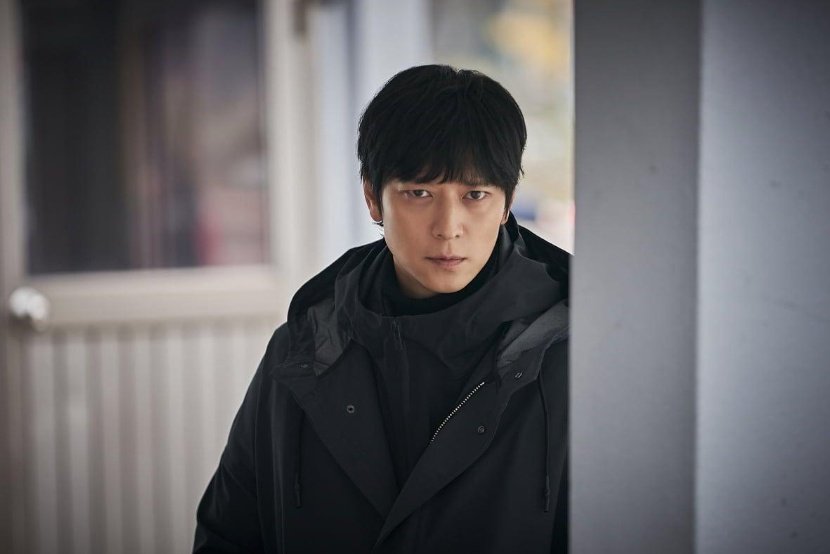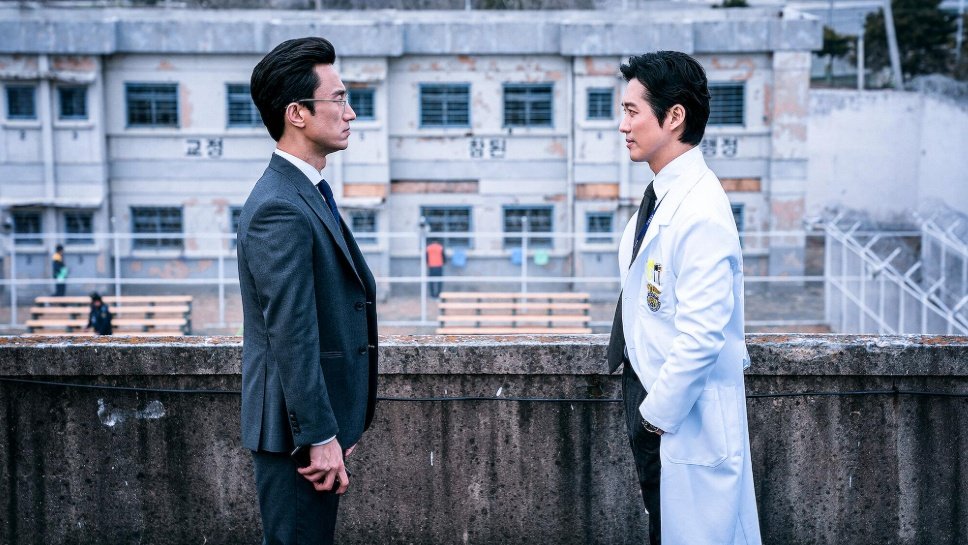
What happens when a doctor discovers that the people controlling a hospital are more dangerous than the patients he is supposed to save?
In the Korean drama Doctor Prisoner, medical knowledge becomes a weapon, prison becomes a battlefield, and the people who appear to hold the most power are not necessarily the ones controlling the game.
At the center of the story is Na Yi-je, played by Namgoong Min. Once a talented doctor, he becomes entangled in a system where wealth, influence, and connections can determine who receives justice and who escapes it.
But this is not a conventional medical drama.
There are no endless hospital emergencies designed to create excitement. Instead, the tension comes from conversations, carefully calculated decisions, hidden motives, and the constant possibility that one character is several steps ahead of another.
The central question is not simply whether Na Yi-je can defeat his enemies.
How far can a good doctor go when the people he is fighting have already learned how to manipulate the system?
1. A Medical Drama That Plays Like a Psychological Thriller
Most medical dramas build their excitement around saving lives.
Doctors face emergencies, make difficult decisions, and struggle against time. The tension usually comes from whether a patient will survive.
Doctor Prisoner uses a very different approach.
Its central conflicts take place within the prison system and the powerful networks surrounding it. Medical knowledge is still important, but it is also connected to influence, privilege, and control.
The result is a drama that feels closer to a psychological chess match than a traditional hospital series.
Every conversation can contain a hidden intention. Every medical decision can have consequences beyond the patient. Even a seemingly ordinary encounter may become part of a much larger plan.
The setting gives the story a distinctive identity, but its real strength comes from the people who understand how to use that setting to their advantage.
2. Na Yi-je Is Not a Conventional Hero
Na Yi-je is not introduced as a flawless hero who simply wants to do the right thing.
He is intelligent, observant, ambitious, and capable of making calculated decisions. He understands that the people he is confronting cannot necessarily be defeated through honesty or professional excellence alone.
This makes him a more complicated protagonist.
He knows how the medical system works, but he also recognizes how powerful individuals can exploit it.
Instead of confronting every enemy directly, he studies their weaknesses and waits for opportunities.
His greatest weapon is not physical strength.
It is his ability to understand what other people want and anticipate what they might do next.
That is why his character is so compelling. He does not win every confrontation through superior authority. He often wins by understanding the rules of a game that his opponents believe they control.
3. Why Is the Prison Setting So Important?
The prison is more than a dramatic location.
It is a place where the difference between ordinary people and powerful people becomes especially visible.
Some prisoners have very little influence over their own futures. Others retain access to money, connections, and privileges even behind bars.
The contrast exposes an uncomfortable reality.
A prison sentence does not necessarily mean that everyone is treated equally.
In this world, medical decisions can become connected to legal consequences, personal relationships, and the interests of influential families.
Na Yi-je understands that the prison environment is not simply a place where people serve their sentences.
It is also a system that can be manipulated.
By learning how that system operates, he finds opportunities to challenge people who previously seemed untouchable.
4. The Real Conflict Is About Who Controls the Rules
The most interesting battles in Doctor Prisoner are not always between people who openly hate each other.
They are between people who believe they understand the system better than everyone else.
Powerful characters use their influence to protect their interests. They assume that money and connections will allow them to control the outcome of almost any situation.
Na Yi-je challenges that assumption.
He does not necessarily have the same resources as his enemies, but he understands how their power operates.
He looks for weaknesses in their arrangements, identifies the people they depend on, and uses information to change the balance.
This is what makes the drama’s confrontations so satisfying.
The question is rarely just who is stronger.
It is who understands the situation more accurately.
5. Namgoong Min Makes Intelligence Feel Dangerous
Namgoong Min’s performance is one of the drama’s greatest strengths.
He plays Na Yi-je with a combination of confidence, restraint, and calculated intensity.
The character does not need to shout constantly or physically intimidate everyone around him.
Sometimes a brief expression or a carefully delivered sentence is enough to suggest that he knows something the other person does not.
That restraint is important.
A character who is always visibly angry can become predictable. Na Yi-je is more difficult to read because his emotions are often hidden behind his strategic thinking.
Namgoong Min gives the character a strong presence without relying on exaggerated physical action.
His performance makes the psychological confrontations believable, and it gives the audience a reason to remain interested even when the scene consists of little more than two people talking.
6. Sun Min-sik Is More Than an Ordinary Opponent
Kim Byung-chul’s portrayal of Sun Min-sik provides an important counterweight to Na Yi-je.
A strategic protagonist needs an opponent who can challenge his intelligence.
If every enemy were careless or easily manipulated, the victories would have little meaning.
Sun Min-sik is dangerous because he understands the environment and has his own methods of maintaining control.
His presence creates uncertainty.
The audience cannot simply assume that Na Yi-je will succeed because he is the main character.
The conflict becomes more engaging when both sides have the ability to anticipate, deceive, and respond.
This is one of the reasons the drama’s confrontations work so well.
The protagonist needs a worthy opponent, and Sun Min-sik helps create that tension.
7. Why Do the Supporting Characters Matter So Much?
A psychological thriller becomes weak when every supporting character exists only to help the protagonist.
Doctor Prisoner benefits from a cast whose members have their own interests, loyalties, and ambitions.
The conflicts are not simply a straight line between Na Yi-je and one villain.
Different characters influence the balance of power, and their relationships create opportunities for unexpected changes.
The performances of actors including Choi Won-young and Kim Byung-chul help give these confrontations weight.
Their characters are not just obstacles waiting to be defeated.
They are part of a larger environment in which everyone has something to protect.
This makes the story feel more like a struggle among competing interests than a simple revenge narrative.
8. The Writer Deserves Credit for the Tension
One of the most impressive qualities of Doctor Prisoner is how much tension it creates without relying on action.
The drama repeatedly builds suspense through information.
A character knows something that another character does not. A decision appears to have one purpose but later reveals another. An alliance that seems secure can suddenly become a source of danger.
The audience is encouraged to keep reconsidering what it has just watched.
This kind of storytelling requires careful construction.
A psychological thriller cannot survive on clever dialogue alone. Its twists must connect to the characters’ motivations and the larger structure of the story.
The writing is especially effective when it allows a seemingly minor detail to become important later.
That is why the drama can remain engaging even during scenes without physical confrontation.
The writer understands that suspense is not always about what is happening.
Sometimes it is about what the audience suspects might happen next.
9. How Does the Drama Keep Viewers Tense Without Action Scenes?
This is one of the reasons I find Doctor Prisoner particularly memorable.
Many thrillers depend on physical action to create excitement. Car chases, fights, explosions, and sudden danger provide immediate stimulation.
But Doctor Prisoner often creates tension through much quieter moments.
A conversation can feel like a confrontation. A medical decision can become a strategic move. A character’s silence can be more unsettling than an argument.
The audience begins to watch for small details.
Who is telling the truth? Who is hiding information? Has someone already anticipated the next move?
This approach gives the drama a different rhythm.
It does not need to make every scene louder or faster to maintain interest.
Instead, it makes the viewer think.
That is a particularly difficult achievement for a long television drama.
10. Is Na Yi-je Fighting for Justice or Revenge?
The distinction between justice and revenge is one of the most interesting questions raised by the series.
Na Yi-je’s actions are connected to a deeply personal conflict, but his methods also involve manipulating the systems and people around him.
This creates an uncomfortable moral question.
If someone uses deception to defeat people who have abused their power, does the result make those methods acceptable?
The drama does not make this question entirely simple.
Na Yi-je is not presented as someone who can remain untouched by the struggle. His choices involve compromises, risks, and calculated actions.
The audience may support his objectives while still questioning the methods he uses.
That tension gives the protagonist more depth than a straightforward hero who always knows the right thing to do.
11. The Medical System Becomes a Weapon of Power
The medical setting gives the drama an especially distinctive source of conflict.
Medicine is supposed to protect human life, and doctors are expected to make decisions based on professional responsibility.
But what happens when medical authority becomes connected to wealth and influence?
The series explores how medical decisions can be manipulated when powerful individuals have something to gain.
The possibility of exploiting medical procedures and the prison system creates a disturbing connection between professional knowledge and personal power.
This is not a documentary about the Korean medical or prison systems.
It is a fictional thriller that uses those institutions to explore privilege and corruption.
That distinction matters.
The drama’s strongest ideas are not about teaching viewers how the systems work in real life. They are about showing how dangerous those systems can become when people with influence believe ordinary rules do not apply to them.
12. Why Does the Drama Remain So Watchable Despite Its Length?
Long dramas face a particular challenge.
They must keep developing their central conflict without exhausting the audience.
Doctor Prisoner does this by repeatedly changing the balance between its characters.
A plan that appears successful can create a new problem. A person who seems to be an ally may have a different objective. A moment of apparent victory can reveal a more complicated conflict.
These shifts encourage viewers to keep watching.
There is also an important emotional element.
The audience becomes invested in the characters’ intelligence and decisions. It is not only waiting to see who wins, but also trying to understand how the next confrontation will unfold.
The drama is not perfect, and some viewers may find the repeated twists or later developments excessive.
Nevertheless, its central combination of strategy, acting, and psychological tension gives it a distinctive appeal.
13. What Could Have Been Better?
A strong recommendation should not pretend that a drama has no weaknesses.
Some of the later developments can feel overly complicated. The repeated reversals and strategic confrontations may become tiring for viewers who prefer a more realistic or straightforward story.
Some characters and subplots also receive less development than they deserve.
And because the drama prioritizes psychological conflict over romance, viewers looking for a romantic Korean series may not find what they expect.
Its medical and prison-related elements should also be understood as part of a fictional thriller rather than a realistic representation of every aspect of those institutions.
These limitations are worth acknowledging.
But they do not erase the qualities that make the series memorable.
For viewers who enjoy intelligent protagonists, strong performances, and stories in which dialogue can be as tense as action, Doctor Prisoner offers a great deal.
14. A Personal Recommendation from the Owner of True Taste Korea
I want to make something clear.
Among all the Korean dramas I would recommend to international viewers, Doctor Prisoner is my number one personal recommendation.
It is a drama I genuinely want people outside Korea to discover. And if you decide to watch it, I hope you will understand why I feel so strongly about it.
What makes this series extraordinary to me is that it does not need spectacular action scenes to keep you on the edge of your seat.
Even with its long episodes, the tension rarely disappears. Every conversation, every decision, and every carefully calculated move can change the direction of the story.
I have watched this drama more than once, and it still manages to make me feel tense, wondering what will happen next.
That is a remarkable achievement.
The writer deserves enormous credit for constructing such an engaging story. The way the characters’ plans intersect, the conflicts develop, and the balance of power repeatedly shifts is one of the drama’s greatest strengths.
And the performances are just as impressive.
Namgoong Min is outstanding as Na Yi-je, but the strength of the supporting cast is equally important. The actors make the confrontations believable, giving every major character a presence that makes the psychological battles even more compelling.
I am not claiming that this drama is perfect, or that everyone will have exactly the same reaction I did.
But as the owner of True Taste Korea, I want to say this sincerely:
If you are looking for one Korean drama that I would personally urge you not to miss, it is Doctor Prisoner.
It may not be the first Korean drama that international audiences think of. But I believe it deserves to be discovered, discussed, and remembered.
This is not just another Korean drama I enjoyed.
It is the Korean drama I most want to introduce to you.
Conclusion: The Most Powerful Weapon Is Sometimes Intelligence
Doctor Prisoner demonstrates that a thriller does not need constant physical action to remain exciting.
Its strongest moments come from the interaction between intelligent characters, the hidden motives behind their decisions, and the uncertainty surrounding who will control the next move.
Na Yi-je is compelling because he understands that power is not always about having the greatest resources.
Sometimes it is about knowing how to use information, timing, and an opponent’s weaknesses.
The drama’s writer builds a world in which even a quiet conversation can change the direction of the story. The actors bring that world to life through performances that make the psychological battles convincing.
For me, that combination makes Doctor Prisoner much more than an entertaining revenge thriller.
It is a Korean drama I can revisit and still feel the tension.
And if I could introduce just one Korean drama to an international viewer who wants to experience a truly gripping psychological thriller, this would be my choice.