• Revenger (2018) Explained: Why Does This Korean Movie Feel Like an Indonesian Martial Arts Film?

    Revenger (2018) Explained: Why Does This Korean Movie Feel Like an Indonesian Martial Arts Film?

    At first glance, Revenger looks like an unusual entry in Netflix’s Korean movie collection. It has a Korean cast and Korean dialogue, but its tropical island setting, brutal hand-to-hand combat, and survival-style atmosphere make it feel very different from the Korean crime thrillers most international viewers are familiar with.

    That impression is not entirely wrong.

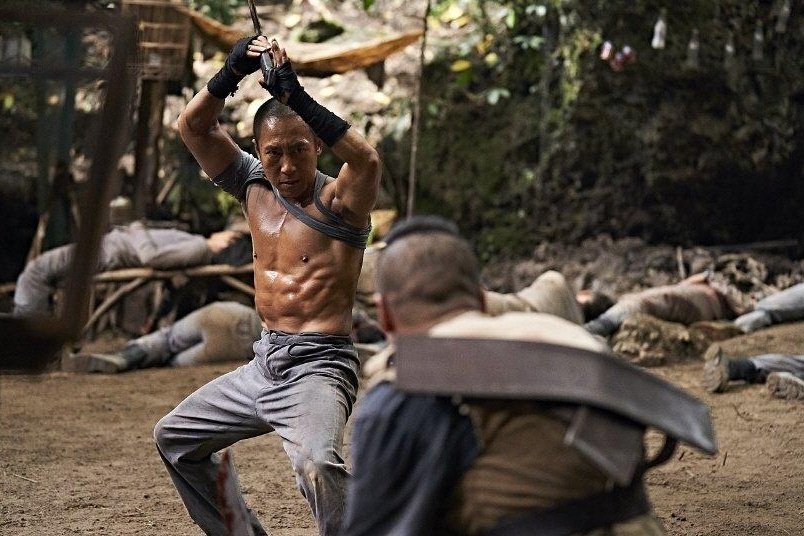
    Released in 2018, Revenger is a South Korean action film directed by Lee Seung-won and starring Bruce Khan, Park Hee-soon, and Yoon Jin-seo. But unlike a conventional Korean gangster movie, it places martial arts and physical combat at the center of almost everything.

    So why does it feel so different? And what is really happening on the mysterious island of Soorado?

    1. What Is Revenger (2018) About?

    Revenger follows Kim Yool, a former police officer whose family was murdered by a ruthless criminal named Carlos Kun.

    Consumed by revenge, Yool deliberately enters Soorado Island, a remote prison where some of the most dangerous death-row criminals are held.

    The island has its own brutal order. There is no meaningful law, and the prisoners live under the power of whoever is strong enough to control them.

    Yool has one objective: find Carlos Kun and make him pay.

    But reaching his enemy means surviving an entire island filled with violent criminals.

    2. Why Does Revenger Feel Different from Other Korean Movies?

    The biggest difference is its genre identity.

    Many internationally recognized Korean crime films build tension through investigation, character relationships, social conflict, or psychological suspense.

    Revenger takes a much simpler route.

    Its central attraction is the physical ability of its leading character. The film repeatedly places Yool in situations where he must fight his way through groups of armed opponents.

    The tropical environment, isolated prison community, and relentless combat make the movie feel closer to an international martial arts survival film than a typical Korean crime thriller.

    3. Is Revenger Actually a Korean Movie?

    Yes.

    Revenger is officially a South Korean film, directed by Lee Seung-won and released in Korean theaters on December 6, 2018.

    Netflix also classifies it as a Korean movie and lists Korean as its original audio language.

    However, the film’s visual atmosphere can create a different impression.

    Parts of the production were filmed in Indonesia, and the Indonesian locations contribute to the tropical island environment that dominates the story.

    The important distinction is that filming in Indonesia does not make the movie an Indonesian production. Its official film identity remains South Korean.

    4. The Bruce Khan Factor

    The most important reason Revenger feels unusual is Bruce Khan.

    He plays Kim Yool, but his contribution goes beyond acting. He is also credited as a screenwriter and action director.

    That matters because the film is built around the physical abilities of its leading performer.

    Yool is not presented as a detective who happens to know how to fight. He is closer to a one-man fighting force who can take on multiple opponents through speed, technique, and physical power.

    The result is a movie where the action performer becomes the center of the entire production.

    5. Soorado Island: A Prison Without Real Rules

    Soorado is not presented as an ordinary prison.

    It is an isolated place where dangerous criminals have created their own hierarchy. Carlos Kun sits at the top, exercising control through fear and violence.

    The island functions almost like a small lawless society.

    For Yool, entering Soorado is not simply a prison transfer. It is a deliberate move into enemy territory.

    He knows that the normal rules of policing no longer apply there.

    6. Who Is Carlos Kun?

    Carlos Kun, played by Park Hee-soon, is the central antagonist.

    He is responsible for the tragedy that drives Yool’s revenge mission. His power on Soorado comes from his ability to control other prisoners and eliminate anyone who challenges him.

    Kun is more than a criminal waiting to serve a sentence.

    He has turned the island into his territory.

    His confrontation with Yool is therefore not just a personal revenge story. It is also a struggle over who gets to control the island.

    7. Why Does Yool Enter the Island?

    Yool’s decision is driven by revenge.

    Rather than waiting for an opportunity to reach Kun from outside, he deliberately places himself inside the same prison environment.

    This creates the film’s central contradiction.

    Yool was once a law enforcement officer, but to reach the man he wants to kill, he must enter a world where law has almost disappeared.

    He is willing to sacrifice his former identity to get close to his enemy.

    8. The Complication: Mali and Jin

    Yool’s mission becomes more complicated when he encounters Mali, played by Yoon Jin-seo, and her daughter Jin.

    Mali has a personal reason to distrust him. Yool was the police officer who sent her to the island while she was pregnant.

    This creates an uncomfortable relationship between the characters.

    Yool may be seeking revenge against Kun, but he is not an innocent outsider in the lives of everyone trapped on Soorado.

    His previous actions have consequences.

    9. Why Does Mali Distrust Yool?

    Mali’s anger comes from her past.

    She sees Yool as someone connected to the system that placed her and her daughter in this dangerous environment.

    Even if Yool has his own tragic history, that does not automatically erase what Mali has suffered.

    This relationship gives the film a small emotional conflict beyond the main revenge plot.

    It also reminds viewers that Yool’s mission affects people who have their own reasons to survive.

    10. Bau and the Island’s Other Survivors

    Kim In-kwon plays Bau, one of the figures connected to the group of survivors living away from Kun’s direct control.

    Bau provides a different energy from the film’s darker characters.

    His presence introduces moments of humor and a more communal side to the island’s population.

    The survivors are not simply waiting for a hero to rescue them. They have developed their own ways of living under the threat of Kun’s power.

    Yool’s arrival changes the balance of that fragile community.

    11. Why Does the Action Feel So Different?

    The film’s fighting style is one of its defining characteristics.

    Instead of relying mainly on gun battles or elaborate crime investigations, Revenger emphasizes kicks, throws, close-range combat, and physical confrontations.

    Bruce Khan’s martial arts background is central to this approach.

    The camera often stays close enough to show the movements and impacts of the fights.

    This gives the action a more direct, physical quality than the heavily edited action sequences found in many contemporary thrillers.

    12. Is Revenger Similar to The Raid?

    The comparison is understandable.

    Both films use confined or isolated environments, dangerous opponents, and intense physical combat.

    However, they are not connected productions, and they have different storytelling approaches.

    The Raid is built around a tightly structured assault on a criminal building. Revenger uses a remote prison island as the setting for a revenge story.

    The comparison is useful for describing the kind of action experience viewers might expect, but it should not be mistaken for a production relationship.

    13. Why Does the Story Feel Simpler Than the Action?

    This is one of the film’s most noticeable weaknesses.

    The central plot is easy to understand: Yool wants revenge, Kun controls the island, and the two men are moving toward a final confrontation.

    But some supporting characters and subplots receive less development than their roles seem to promise.

    The movie often feels more interested in moving from one action location to another than in exploring the emotional consequences of every event.

    That is why viewers who expect a complex Korean crime thriller may find the story surprisingly thin.

    14. What Happens at the End of Revenger?

    Spoilers ahead.

    The final conflict brings Yool face to face with Carlos Kun.

    By this point, the revenge mission has become a direct assault on Kun’s power structure. Yool fights through the remaining opposition and finally confronts the man responsible for destroying his family.

    Yool defeats and kills Kun.

    The ending completes the central revenge objective, but it does not transform Soorado into a conventional, orderly place overnight.

    The survivors’ future is tied to what remains after Kun’s control is broken.

    Jin is reunited with her mother, and the surviving islanders have a chance to move forward without Kun’s immediate domination.

    Yool, having completed his personal mission, leaves the island.

    15. Does Revenger Have a Post-Credit Scene?

    There is an interesting detail in the discussion of the film’s ending.

    AsianWiki viewer comments mention a brief image of Yool in a robe in a dusty, windswept location after the main credits begin. One viewer wondered whether it showed his life after leaving the island or another destination.

    However, the available descriptions do not establish a definitive explanation for that image.

    It is safest to treat it as an ambiguous closing image or possible epilogue rather than claim that it confirms a sequel.

    If you watch the film on Netflix, pay attention to the very end rather than stopping as soon as the main story finishes.

    16. Final Verdict: A Korean Movie with an Unusual Martial Arts Identity

    Revenger is a Korean film, but it does not feel like the Korean crime movies that international audiences usually associate with the industry.

    Its tropical locations, isolated prison setting, and Bruce Khan’s action-centered performance give it a distinct identity.

    The movie’s story is relatively straightforward, and some supporting characters could have been developed further. But its purpose is clear: deliver a physical martial arts revenge film.

    That is why the comparison with Indonesian-style action cinema can make sense, even though Revenger remains a South Korean production.

    The real question is not whether Revenger is Korean. It is why Korean cinema has produced so few action films that look and feel quite like this one.

    For viewers who enjoy martial arts movies more than complicated crime plots, Revenger is an unusual title worth discovering.

  • The Villainess (2017) Ending Explained: Why Did Sook-hee Smile After Getting Her Revenge?

    The Villainess (2017) Ending Explained: Why Did Sook-hee Smile After Getting Her Revenge?

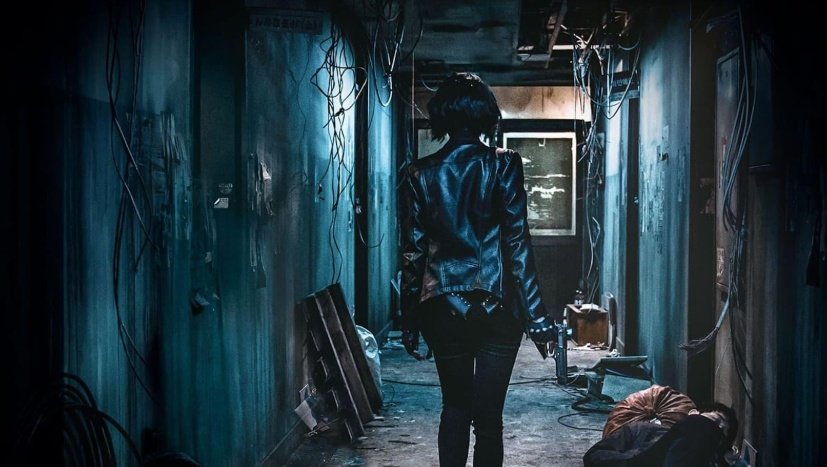
    The Villainess (2017) is remembered for its brutal action sequences, breathtaking camera movements, and Kim Ok-bin’s unforgettable performance as a trained assassin. But beneath the bloodshed is a much sadder story: a woman whose entire life has been controlled by people who claimed to love, protect, or employ her.

    Sook-hee spends years believing she understands who betrayed her and who deserves her revenge. Then, just when she thinks she has discovered the truth, the people closest to her are taken away.

    The film ends with her killing the man responsible for much of her suffering. Yet instead of crying or celebrating, she smiles and laughs.

    Why?

    Was it the satisfaction of revenge, a complete mental breakdown, or the realization that she had finally escaped the people who controlled her?

    Let’s examine the story, the betrayals, and the meaning behind that final expression.

    Warning: Major spoilers ahead.

    1. Who Is Sook-hee in The Villainess?

    Sook-hee, played by Kim Ok-bin, is a woman trained from childhood to become a professional killer.

    She does not grow up with the freedom to choose an ordinary life. Violence becomes her education, survival becomes her instinct, and killing becomes the only skill she knows.

    After a bloody confrontation with a group of criminals, she is captured by South Korea’s intelligence agency.

    Instead of simply imprisoning her, the agency offers her a deal: work as an undercover assassin for ten years, and she can eventually earn her freedom.

    Her new identity is Chae Yeon-soo.

    But changing her name does not erase the past that created her.

    2. Why Does the Film Begin with Such a Brutal Action Scene?

    The opening sequence places the audience inside Sook-hee’s perspective.

    The camera moves through corridors and rooms as she eliminates one enemy after another. Guns, knives, and hand-to-hand combat follow in rapid succession.

    It feels less like watching a traditional action movie and more like controlling a character in a first-person shooter game.

    This is not just a way to show how dangerous Sook-hee is. It also places viewers inside her experience.

    We see the world as she sees it: a collection of threats, targets, weapons, and obstacles.

    The film deliberately makes the audience experience her violent instincts before explaining how she became this person.

    3. How Were the Motorcycle Action Scenes Filmed?

    The motorcycle sequence is one of the film’s most memorable scenes.

    The camera seems to travel beneath moving motorcycles, move between riders, and follow the action from angles that appear almost impossible.

    Director Jung Byung-gil explained that he experimented with smaller cameras and unusual camera placements to create perspectives that conventional action films had not explored.

    He also discussed using pre-visualization for the motorcycle sequence, planning the action before filming it.

    The result is not simply a conventional chase with fast editing. It is a carefully designed combination of stunt performance, camera movement, and editing.

    Kim Ok-bin also performed more than 90 percent of her action scenes without a stunt double, according to contemporary reporting.

    The important point is that the camera does not merely observe Sook-hee fighting. It makes the audience feel as if it is fighting alongside her.

    4. Who Was Lee Joong-sang, and Why Did Sook-hee Trust Him?

    Lee Joong-sang, played by Shin Ha-kyun, enters Sook-hee’s life when she is still young and vulnerable.

    After she experiences extreme violence and exploitation, Joong-sang rescues her and takes her under his protection.

    He trains her to become an assassin.

    For Sook-hee, he becomes more than a teacher. He is the person who gives her a place to belong, a purpose, and eventually the possibility of romantic love.

    But there is a terrible contradiction in their relationship.

    The man who appears to have saved her is also connected to the violence that destroyed her childhood.

    Sook-hee does not know the full truth about him.

    5. Why Does Sook-hee Agree to Marry Joong-sang?

    Sook-hee’s feelings for Joong-sang grow beyond gratitude.

    She wants a different life with him. She even suggests that she could abandon revenge if they were able to build a future together.

    For someone who has spent her entire life surrounded by violence, marriage represents something she has rarely experienced: the possibility of being loved as an ordinary person.

    Joong-sang eventually agrees.

    However, their honeymoon becomes the beginning of another tragedy.

    Joong-sang stages his own death, leaving Sook-hee believing that he has been murdered.

    She is devastated, and her grief becomes the fuel for another wave of violence.

    The person she wanted to spend her life with has seemingly been taken away from her.

    6. Why Does Sook-hee Join the Intelligence Agency?

    After her capture, the agency recognizes that Sook-hee’s abilities could be useful.

    Chief Kwon offers her a new identity and a deal: ten years of service in exchange for freedom.

    Sook-hee initially resists, but she eventually accepts.

    The agency also understands that she needs something beyond professional work. She needs a reason to believe that an ordinary life is still possible.

    Her new identity allows her to live as Yeon-soo, an actress, and eventually to form a relationship with her neighbor, Jung Hyun-soo.

    But the arrangement has an uncomfortable similarity to her earlier life.

    Once again, someone else decides what she must do, where she must go, and what kind of future she is allowed to have.

    7. Is Jung Hyun-soo Really in Love with Sook-hee?

    Hyun-soo initially approaches Yeon-soo as part of an assignment.

    He is an agent placed near her to observe her and develop a relationship with her.

    That makes their romance appear dishonest from the beginning.

    However, the film eventually reveals something important: his feelings become genuine.

    Hyun-soo wants to marry Yeon-soo for real. A recording played by Chief Kwon confirms that he had asked for permission to make their marriage genuine rather than simply continuing the assignment.

    This distinction matters.

    Unlike Joong-sang, whose relationship with Sook-hee is inseparable from manipulation and hidden violence, Hyun-soo eventually wants a life with her that is not defined by her usefulness as a killer.

    He may have entered her life under false pretenses, but his love becomes real.

    8. Why Does Sook-hee Have a Daughter?

    Sook-hee’s daughter, Eun-hye, represents the future she has been trying to create.

    The child is connected to her earlier relationship with Joong-sang, but Sook-hee is now raising her while trying to build a different life with Hyun-soo.

    Eun-hye is especially important because she gives Sook-hee a reason to imagine a future beyond revenge.

    For the first time, Sook-hee is not simply trying to survive for herself.

    She wants to protect someone who should never have to experience the world she grew up in.

    This is why the film’s later tragedy is so devastating.

    The loss of Eun-hye is not just the death of a loved one. It destroys the possibility that Sook-hee could escape her past through motherhood.

    9. Why Does Sook-hee Discover That Her Husband Is Still Alive?

    During her wedding ceremony with Hyun-soo, Sook-hee receives another assignment from the agency.

    She looks toward the designated target and recognizes a familiar face.

    It is Joong-sang.

    The man she believed had died years earlier is alive.

    This revelation changes the meaning of everything that happened after his supposed death.

    Her revenge against the men she believed had killed him may have been based on a lie.

    More importantly, the person she once loved has returned as someone she may have to kill.

    The wedding, which should have represented a new beginning, becomes the place where her old life crashes back into the present.

    10. Was Joong-sang Manipulating Sook-hee from the Beginning?

    The film gradually reveals that Joong-sang’s role in Sook-hee’s life was far more sinister than she understood.

    He was not simply the man who rescued her and taught her how to survive.

    He was connected to the murder of her father, the very event that shaped her desire for revenge.

    The revelation transforms their relationship.

    Sook-hee believed Joong-sang had helped her pursue justice. In reality, he had been part of the secret she was trying to uncover.

    His protection also gave him control over her.

    He knew her weaknesses, understood her emotional attachment, and used her need for belonging to shape her life.

    The most disturbing part is that the person who appeared to give Sook-hee a future had helped create the trauma from which she could never escape.

    11. Was Hyun-soo’s Love Real or Just Another Mission?

    When Joong-sang sends information exposing Hyun-soo’s original assignment, Sook-hee has every reason to question her relationship.

    She has been deceived by almost everyone around her.

    However, Chief Kwon later plays a recording of Hyun-soo asking to marry Sook-hee genuinely.

    That recording changes the emotional meaning of his actions.

    Hyun-soo was originally assigned to approach her, but he eventually developed real feelings.

    He wanted to become her husband, not simply complete an intelligence operation.

    This is one of the film’s cruelest contrasts.

    Sook-hee has spent much of her life unable to distinguish genuine affection from manipulation. When she finally finds someone whose love appears sincere, the opportunity to live with him is taken away.

    12. Who Kills Hyun-soo and Eun-hye?

    While Sook-hee is being held by the agency, Joong-sang’s men attack Hyun-soo and Eun-hye.

    Hyun-soo tries to stop the violence by revealing that Eun-hye is Joong-sang’s own daughter.

    He hopes that the truth will make Joong-sang reconsider.

    But Joong-sang shows no mercy.

    His gang leaves Hyun-soo and Eun-hye in an apartment with an explosive device. The explosion kills them both.

    Sook-hee initially believes the agency is responsible.

    Only after Chief Kwon shows her the recordings does she understand what actually happened.

    The people she wanted to protect are dead, and the man responsible is the person she once loved.

    At this point, revenge is no longer simply about her father’s death.

    It is about everything Joong-sang has taken from her.

    13. Why Does Sook-hee Turn Against the Agency?

    The agency has never been an entirely benevolent organization.

    It recruited Sook-hee because of her abilities and promised her freedom after ten years of service.

    Even her new identity was part of a controlled arrangement.

    But the agency is not responsible for the deaths of Hyun-soo and Eun-hye.

    The recordings reveal that Joong-sang’s gang carried out the attack.

    Sook-hee now understands that both sides have used her in different ways.

    Joong-sang manipulated her emotional past, while the agency turned her skills into an intelligence asset.

    The difference is that the agency’s recordings also reveal Hyun-soo’s genuine feelings.

    Sook-hee is left with a terrible realization: almost everyone has lied to her, but not every relationship was false.

    14. Why Does Joong-sang Whistle Before He Dies?

    The final confrontation takes place after Sook-hee tracks down Joong-sang and destroys his remaining gang.

    The pursuit ends with a violent bus crash.

    Wounded and exhausted, Sook-hee stands over Joong-sang with an axe.

    Then he begins to whistle.

    The tune is familiar.

    It is the same melody associated with the murder of her father when she was a child.

    Suddenly, the final piece of her past becomes clear.

    Joong-sang was not simply the man who rescued her after her father’s death. He was the man responsible for it.

    The whistle confirms the truth that had remained hidden throughout her life.

    This moment is more important than the physical confrontation itself.

    Sook-hee finally understands that the person who shaped her entire existence was also the person who destroyed the family she once had.

    She kills him with the axe.

    15. Why Does Sook-hee Smile and Laugh at the End?

    This is the most interesting question in the film.

    After killing Joong-sang, Sook-hee walks out of the wreckage and finds herself surrounded by police.

    She does not look like someone who has won.

    Her father is dead. Joong-sang is dead. Hyun-soo and Eun-hye are gone.

    The life she tried to build has completely collapsed.

    So why does she smile?

    There are several possible interpretations.

    First, the smile represents the release of revenge.

    For years, Sook-hee has been controlled by the desire to find the person responsible for her father’s death. She finally discovers the truth and kills him.

    The mission that shaped her entire life is over.

    Second, it may be a sign of psychological collapse.

    She has experienced so much violence and betrayal that ordinary emotional responses no longer seem possible. Her laughter could be the final expression of a mind pushed beyond its limits.

    Third, the smile may represent freedom.

    Joong-sang no longer controls her. The agency no longer has a useful assassin to command. The people who shaped her life are gone.

    But this freedom comes at an unbearable price.

    The film does not provide a definitive explanation. That ambiguity is what makes the ending memorable.

    Sook-hee has won the revenge she spent her life pursuing, but she has lost almost everything that could have made that victory meaningful.

    16. What Does the Ending of The Villainess Really Mean?

    The title The Villainess encourages viewers to see Sook-hee as a dangerous woman.

    But the film repeatedly asks us to consider how she became that person.

    She was trained to kill, manipulated by people she trusted, and repeatedly denied the opportunity to choose her own future.

    Her violence is real, and the film does not pretend that she is innocent.

    Yet it also refuses to present her as someone who was simply born evil.

    Joong-sang made her into a weapon. The agency tried to use that weapon for its own purposes. Even the possibility of a normal family life was shaped by secrets and deception.

    In the end, Sook-hee kills the man who destroyed her childhood and her future.

    But the victory is empty.

    The final smile is not necessarily happiness. It may be the expression of someone who has finally finished fighting, only to discover that there is almost nothing left to return to.

    Perhaps the saddest thing about The Villainess is not that Sook-hee became a killer. It is that, after everything she endured, she never truly received the chance to become anything else.

    Is There a Post-Credit Scene in The Villainess?

    There is no confirmed additional narrative scene after the theatrical ending that changes the story.

    The film’s final image is Sook-hee smiling and laughing as the police surround her.

    The ending deliberately leaves her future unresolved. Whether she survives, faces imprisonment, or escapes is not established by the film itself.

    Any continuation beyond that point should be treated as speculation rather than confirmed story.

    Final Thought

    The action in The Villainess may be what makes people discover the film, but its ending is what gives the violence a deeper meaning.

    Sook-hee spends her life being told who she is and what she must do. By the time she finally understands the truth, nearly everyone she loves is gone.

    Her final smile leaves us with one uncomfortable question:

    If revenge is the only thing left in your life, what happens when you finally get it?

  • Secretly, Greatly (2013): Why Did Three North Korean Spies Long for an Ordinary Life?

    Secretly, Greatly (2013): Why Did Three North Korean Spies Long for an Ordinary Life?

    What if the people you were trained to consider enemies became the people you cared about most?

    And what if the country you had devoted your entire life to suddenly decided that you were no longer worth protecting?

    Secretly, Greatly (2013), directed by Jang Cheol-soo and starring Kim Soo-hyun, Park Ki-woong, and Lee Hyun-woo, begins with an unusual premise. Three highly trained North Korean spies are sent to South Korea and ordered to live among ordinary people under carefully constructed identities.

    One pretends to be intellectually disabled. Another dreams of becoming a singer. The youngest lives as an ordinary high school student.

    Their daily lives initially look like a comedy built around the absurdity of elite military operatives performing ordinary social roles.

    But something unexpected happens.

    The longer they remain in their adopted neighborhood, the more their supposedly artificial lives begin to feel real.

    They develop relationships. They experience affection. They discover interests that have nothing to do with their military training.

    Eventually, the distinction between their assigned identities and their actual feelings becomes increasingly difficult to maintain.

    The film then shifts dramatically from comedy to action and tragedy.

    Yet the most important question is not simply why three spies are forced into a dangerous situation.

    It is this:

    What happens when people trained to sacrifice everything for their country discover that they also want the freedom to live ordinary lives?

    1. Why Were Three Elite Spies Given Such Ridiculous Identities?

    The central characters are introduced through an unusual contrast between their abilities and their public identities.

    Won Ryu-hwan, played by Kim Soo-hyun, is an exceptionally capable North Korean operative. However, his assignment in South Korea requires him to pretend to be Bang Dong-gu, a seemingly foolish young man living in a neighborhood.

    Lee Hae-rang, played by Park Ki-woong, is another highly trained operative who adopts the identity of an aspiring singer.

    Lee Hae-jin, played by Lee Hyun-woo, is the youngest member of the group and poses as an ordinary student.

    The humor comes from watching people with extraordinary military training perform roles that appear completely incompatible with their abilities.

    But there is another reason these identities matter.

    Their assignments require them to disappear into everyday society.

    A highly trained spy cannot attract attention by behaving like a highly trained spy.

    He must become someone ordinary enough that nobody has a reason to question his presence.

    This creates the film’s central irony.

    The three men are trained to become exceptional soldiers, but their survival depends on convincing everyone that they are unremarkable.

    The identities that initially appear ridiculous eventually become the means through which they experience something they have never truly known.

    2. Why Does Ryu-hwan’s Life as Bang Dong-gu Become So Important?

    Ryu-hwan is the emotional center of the film.

    His military training has shaped almost every aspect of his identity. He is disciplined, physically capable, and accustomed to following orders.

    But his identity as Bang Dong-gu forces him into an entirely different environment.

    He interacts with neighbors who do not know his background.

    They do not evaluate him according to his military achievements or political loyalty.

    They see an unusual young man who lives among them.

    This is a significant change.

    For perhaps the first time, Ryu-hwan is not being judged according to his usefulness to the state.

    He becomes part of a community simply by existing within it.

    The neighborhood’s affection gradually challenges the assumptions that have shaped his life.

    His relationships are not based on military rank, ideological loyalty, or operational performance.

    They develop through everyday interactions.

    That is why his transformation matters.

    Ryu-hwan does not suddenly become a different person.

    Instead, he begins discovering parts of himself that his previous life never allowed him to express.

    3. Why Does the Film Use Comedy to Introduce Such a Serious Story?

    <AsyncImage query=”Secretly Greatly 2013 Kim Soo hyun Bang Dong gu funny village scene” aspectRatio=”16:9″ width=”100%”/>

    The first half of Secretly, Greatly relies heavily on comedy.

    The audience watches elite operatives struggle with ordinary situations, and much of the humor comes from the distance between their actual abilities and the identities they must maintain.

    But the comedy performs an important narrative function.

    It allows viewers to become emotionally attached to the characters before the story becomes tragic.

    If the film had introduced Ryu-hwan, Hae-rang, and Hae-jin only as professional soldiers, their later suffering might have felt like a conventional action-film tragedy.

    Instead, the audience first sees them as people.

    They experience embarrassment, friendship, ambition, and affection.

    The comedy makes their lives familiar.

    It gives the audience a reason to care about what happens to them beyond their military assignments.

    This is why the transition to the second half can be so emotionally powerful.

    The audience is not simply watching three spies face danger.

    It is watching three people lose a life that viewers have already learned to appreciate.

    4. When Does an Assigned Identity Become a Real Identity?

    The three spies initially regard their South Korean identities as operational tools.

    Bang Dong-gu, the aspiring singer, and the high school student are not supposed to represent their true selves.

    They are covers designed to help them complete their mission.

    However, human identity is not always as easy to separate from experience as the characters might expect.

    A person may begin performing a role for practical reasons and eventually develop genuine feelings within that role.

    Ryu-hwan’s relationships with the neighborhood residents are an example.

    His identity as Bang Dong-gu requires him to behave in a particular way.

    But the emotional connections he develops are not necessarily artificial.

    He may have arrived in South Korea as a soldier pretending to be someone else.

    Yet the experiences he accumulates become part of his actual life.

    This creates a fascinating psychological contradiction.

    If the emotions are real, can the identity still be considered entirely false?

    The film suggests that the answer is complicated.

    The name may be fabricated, but the experiences are genuine.

    5. Why Do the Three Men Begin to Want Different Things?

    <AsyncImage query=”Secretly Greatly 2013 Park Ki woong Lee Hyun woo Kim Soo hyun three characters together” aspectRatio=”16:9″ width=”100%”/>

    Although the three characters share a military background, they are not identical.

    Their different personalities become increasingly visible through their civilian lives.

    Hae-rang’s interest in music introduces a desire that has little connection to military duty.

    Hae-jin’s youth makes his situation particularly painful. He is still at an age when ordinary experiences, friendships, and personal ambitions should be central to his development.

    Ryu-hwan occupies a different position because of his responsibility and the depth of his attachment to the neighborhood.

    Their experiences suggest that individuals can share the same institutional identity without sharing the same personal desires.

    The military has trained them to serve a common purpose.

    But living among ordinary people allows their individual personalities to emerge.

    This is important because the film does not present them merely as interchangeable instruments of the state.

    They are three young men with different dreams, fears, and emotional needs.

    Their shared tragedy becomes more powerful precisely because their personal identities are different.

    6. Why Does the Neighborhood Become More Important Than Their Mission?

    The neighborhood is more than a convenient setting for comedy.

    It represents a social environment in which the three men can experience relationships outside the political and military structures that define their original lives.

    Their neighbors do not know that they are elite operatives.

    They do not demand ideological loyalty.

    They do not measure the three men according to their usefulness in a national conflict.

    They interact with them through ordinary human expectations.

    This is a subtle but important contrast.

    In their previous world, identity is connected to service and obedience.

    In the neighborhood, identity develops through daily relationships.

    A person becomes familiar because they are present.

    Trust grows through repeated interactions.

    Affection develops through small acts of consideration.

    The neighborhood therefore becomes a kind of alternative world for the three spies.

    It does not necessarily offer them a perfect life.

    But it gives them a glimpse of a society in which they can be valued for reasons unrelated to their military usefulness.

    That experience gradually changes what they want.

    7. Is the Real Conflict Between North Korea and South Korea?

    It would be easy to interpret the film as a straightforward story about the conflict between North and South Korea.

    The political division of the peninsula is essential to the plot.

    The characters’ military backgrounds and missions cannot be understood without that historical context.

    However, the deeper conflict is more personal.

    The film increasingly focuses on the relationship between individuals and the institutions that claim authority over them.

    The three spies have been trained to believe that their lives belong to a larger national purpose.

    Their personal desires are secondary.

    But their experiences in South Korea reveal a contradiction.

    They are capable of developing attachments that do not fit neatly into the political categories they have been taught to accept.

    The people they were supposed to regard as enemies can become friends.

    The society they were trained to infiltrate can become a place where they feel unexpectedly comfortable.

    The conflict is therefore not simply between two countries.

    It is between an individual’s lived experience and the ideology that has defined that individual’s identity.

    8. Why Is Loyalty So Central to the Tragedy?

    For Ryu-hwan and the other operatives, loyalty is not merely a professional requirement.

    It is connected to their entire understanding of themselves.

    They have invested years of training and sacrifice in becoming useful to their country.

    Their military identity provides them with purpose.

    It also gives meaning to the hardships they have endured.

    Questioning that loyalty would mean questioning much of what they have been taught to believe.

    This makes their situation more complicated than a simple decision to change sides.

    People do not easily abandon the beliefs that have shaped their entire lives.

    Even when they encounter evidence that challenges those beliefs, they may continue to feel responsible for the institution that raised them.

    This psychological conflict gives the characters emotional depth.

    Their tragedy is not simply that they cannot choose another country.

    It is that they have difficulty imagining a life in which they are not required to serve one.

    9. Why Does the Story Become So Much Darker in the Second Half?

    <AsyncImage query=”Secretly Greatly 2013 Kim Soo hyun dramatic action scene” aspectRatio=”16:9″ width=”100%”/>

    The transition from comedy to tragedy is one of the most discussed aspects of the film.

    The early story encourages viewers to enjoy the contrast between military competence and civilian awkwardness.

    The later story reveals the danger behind the characters’ assignments.

    Their peaceful routine is disrupted by decisions made far beyond their control.

    The film’s tone changes because the characters’ situation changes.

    The identities that once protected them become increasingly fragile.

    The relationships they developed are no longer simply amusing complications.

    They become things that can be taken away.

    Some viewers criticize the transition as too abrupt, arguing that the film feels like two different movies joined together.

    That criticism is understandable.

    The first half has the rhythm of a character comedy, while the second half becomes an action tragedy.

    But there is also a thematic interpretation worth considering.

    The sudden change in tone mirrors the instability of the lives the characters have built.

    Their ordinary happiness exists within a world where decisions made by powerful institutions can suddenly destroy everything.

    The abruptness may weaken the film’s structural consistency, but it also reinforces the fragility of the characters’ civilian lives.

    10. Who Is the Real Enemy of the Three Spies?

    At the beginning, the audience may expect the central conflict to involve the three operatives confronting South Korean authorities.

    But as the story progresses, the source of their greatest danger becomes more complicated.

    The institution they have served becomes capable of threatening their existence.

    This changes the meaning of the entire story.

    The three men have been trained to believe that their country gives their lives purpose.

    Yet the decisions made by the organization can treat them as expendable.

    This creates a disturbing contradiction.

    The state demands loyalty from individuals, but the individuals may have very little influence over how that loyalty is rewarded or punished.

    The film therefore raises a question about the relationship between power and responsibility.

    If an institution expects people to sacrifice their lives for its objectives, does it also have an obligation to protect them?

    Or can it simply abandon them when their existence becomes inconvenient?

    The tragedy becomes more powerful when the audience realizes that the characters’ military abilities cannot protect them from the political system to which they belong.

    11. Why Does the Ending Feel Like the Destruction of an Ordinary Life?

    The ending is emotionally devastating because the audience has already seen what the characters could have had.

    They have experienced friendship.

    They have discovered personal interests.

    They have begun to form relationships that are independent of their original mission.

    The tragedy is therefore not limited to the loss of three trained operatives.

    It is the destruction of three possible futures.

    Ryu-hwan could have continued living among people who cared about him.

    Hae-rang could have pursued his interest in music.

    Hae-jin could have experienced more of the ordinary youth that had been denied to him.

    These possibilities are important because they reveal what the characters have gradually come to value.

    The film makes the audience imagine a future that the characters themselves may have started to desire.

    Then it removes that future.

    This is why the ending can feel more painful than a conventional action-film sacrifice.

    The characters are not simply losing a battle.

    They are losing the opportunity to become ordinary people.

    12. Does the Film Romanticize Sacrifice?

    The film’s emotional power also creates an important question about its treatment of sacrifice.

    The three operatives are portrayed as disciplined, courageous, and deeply loyal.

    Their willingness to face danger gives the story its heroic dimension.

    But there is a difference between voluntarily accepting responsibility and being placed in a situation where there is no meaningful alternative.

    A sacrifice can be admirable when an individual freely chooses it for a cause they believe in.

    It becomes more troubling when an institution makes that sacrifice unavoidable while refusing to accept responsibility for the consequences.

    This distinction matters when interpreting the characters’ fate.

    The audience may admire their courage.

    But admiration should not prevent us from questioning the system that places them in such a situation.

    The film’s tragedy is strongest when viewers can feel both emotions at once.

    They can respect the characters’ loyalty while recognizing the injustice of a world that gives them so little control over their own futures.

    13. Why Does Kim Soo-hyun’s Performance Matter So Much?

    Kim Soo-hyun’s performance is central to the film’s emotional effectiveness.

    He must portray two seemingly incompatible versions of the same character.

    As Bang Dong-gu, he behaves awkwardly and sometimes foolishly.

    As Won Ryu-hwan, he reveals the discipline, intelligence, and physical ability of a highly trained operative.

    The challenge is not simply switching between comedy and action.

    It is making both identities believable as expressions of the same person.

    The strongest moments occur when traces of Ryu-hwan’s true personality appear beneath Bang Dong-gu’s performance.

    These moments remind the audience that the character is not merely pretending to be someone else.

    He is struggling to reconcile two different versions of his life.

    The contrast also makes the character’s emotional development easier to understand.

    The audience gradually sees that the apparently foolish young man is capable of extraordinary discipline, but also that the disciplined soldier has emotional needs that cannot be satisfied through military service alone.

    The performances of Park Ki-woong and Lee Hyun-woo also help establish the individuality of the three operatives.

    Their relationships give the story more emotional weight than a film focused on one central hero could easily achieve.

    14. Why Did Some Viewers Find the Film’s Genre Shift Difficult?

    The film’s structure is one of its most divisive features.

    Some viewers appreciate the combination of comedy, friendship, action, and tragedy.

    Others feel that the transition is too sudden and that the second half does not develop the emotional relationships established earlier with enough time.

    These reactions point to a genuine storytelling challenge.

    The first half encourages the audience to become comfortable with the characters’ ordinary lives.

    The second half asks the audience to accept a much darker political and emotional reality.

    The transition could have been more gradual.

    More time spent exploring the characters’ changing feelings might have made the final conflict feel even more inevitable.

    Nevertheless, the contrast has a particular strength.

    The first half shows what the characters have discovered.

    The second half shows what they stand to lose.

    The difference between these two emotional worlds is central to the film’s lasting impact.

    15. Why Did Three North Korean Spies Long for an Ordinary Life?

    The deepest tragedy of Secretly, Greatly is not that three spies fail to complete their mission.

    It is that they discover the value of an ordinary life only after spending most of their existence preparing to serve a different purpose.

    They were trained to be exceptional.

    They were taught to follow orders, endure hardship, and place national objectives above personal desires.

    But living among ordinary people reveals something their training could never fully provide.

    A meaningful life does not always require a grand mission.

    Sometimes it means having neighbors who recognize you.

    Sometimes it means being able to pursue a personal dream.

    Sometimes it means caring about someone without having to justify that feeling through political loyalty.

    The film’s final tragedy emerges from the distance between what the characters were created to do and what they eventually wanted to become.

    They were prepared to die for their country.

    But what they gradually discovered was the desire to live for themselves.

    That is the contradiction at the heart of the film.

    A nation may demand extraordinary sacrifice from its citizens, but does that give it the right to take away their chance to live ordinary lives?

    Secretly, Greatly leaves this question behind long after its final scenes.

    And perhaps that is why the story hurts.

    The three men did not simply lose their lives.

    They lost the possibility of discovering who they might have become if they had been free to choose their own futures.

  • Badland Hunters (2024): Why Did the World of Concrete Utopia Lose Its Human Story?

    Badland Hunters (2024): Why Did the World of Concrete Utopia Lose Its Human Story?

    What happens when civilization collapses and the rules that once held society together disappear?

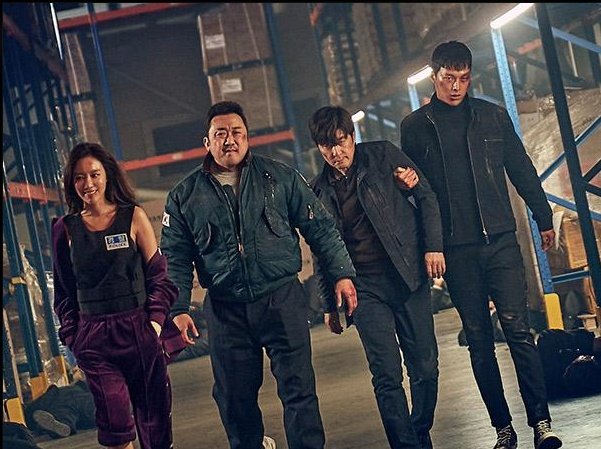
    In Badland Hunters (2024), Seoul has been transformed by a catastrophic earthquake. Buildings have collapsed, familiar institutions have vanished, and survivors struggle to find food, shelter, and protection. In this world, physical strength can mean the difference between life and death.

    The film places Ma Dong-seok’s Nam-san at the center of this brutal landscape. He is a hunter who understands the rules of survival better than most people. When a teenage girl named Su-na becomes involved in a dangerous medical experiment, he sets out to rescue her.

    The premise offers considerable possibilities. A destroyed city, a society without functioning institutions, and a scientific experiment that challenges the boundaries of human life could support a complex story about power, morality, and survival.

    Yet Badland Hunters takes a noticeably different direction from Concrete Utopia, the earlier film set in the same post-earthquake world.

    Where Concrete Utopia examined how ordinary people behave when survival becomes more important than morality, Badland Hunters focuses primarily on physical confrontation and heroic action.

    That difference is not necessarily a flaw. The two films have different storytelling ambitions.

    But it raises an important question: did Badland Hunters sacrifice the most interesting part of its world in order to deliver a more straightforward action experience?

    1. A World After the Collapse of Civilization

    The first striking feature of Badland Hunters is its setting.

    Seoul is no longer recognizable as the modern city viewers know. The earthquake has destroyed much of its infrastructure, leaving behind abandoned buildings, makeshift settlements, and dangerous territories controlled by different groups.

    This is more than a visual background.

    A city is not simply a collection of buildings. It is a system of relationships, institutions, transportation, communication, law, and economic exchange.

    When those systems disappear, people must find new ways to organize their lives.

    Who controls food supplies? Who protects residential areas? Who decides what is legal? What happens when someone has enough weapons and manpower to impose their own rules?

    These are the questions that make post-apocalyptic stories interesting.

    Badland Hunters establishes this environment effectively through its images of a ruined Seoul. However, it spends less time examining how the new society actually functions.

    The audience sees the consequences of collapse, but receives a more limited understanding of the social structures that have replaced the old world.

    2. Why Is Nam-san the Perfect Hero for This World?

    Nam-san, played by Ma Dong-seok, is introduced as a practical survivor.

    He is not a politician, scientist, or military commander. He is a hunter who understands the immediate realities of life after the disaster.

    He knows how to fight, how to move through dangerous territory, and how to protect the people around him.

    This makes him a natural protagonist for an action film.

    Ma Dong-seok’s physical presence also gives the character an immediate identity. Viewers understand that Nam-san is someone who can confront threats that would overwhelm ordinary survivors.

    But there is a deeper question about his role.

    In a society without functioning institutions, a person with exceptional physical strength can become a source of order.

    Nam-san does not need an official position to protect people. His actions give him authority.

    That creates an interesting contrast with the world before the earthquake, where power was supposed to come from established institutions.

    In the new world, the person who can defend others may become more important than the person who once held a title.

    Nam-san represents a form of leadership based on practical protection rather than formal authority.

    3. When Strength Becomes a Substitute for Law

    One of the central ideas of post-apocalyptic fiction is that the disappearance of law does not necessarily mean the disappearance of power.

    Power simply changes its form.

    Before the disaster, people depended on police, courts, government agencies, and established economic systems.

    After the collapse, those structures become unreliable or disappear entirely.

    Physical force begins to determine who can control resources and who must obey.

    This is the environment in which Nam-san operates.

    His strength gives him an advantage, but it also reveals a problem within the new society.

    If the only reliable form of protection is an individual strong enough to defeat everyone else, what happens when that person is absent?

    A functioning society cannot depend entirely on the existence of one powerful protector.

    It needs rules, trust, cooperation, and institutions that continue to operate even when individual heroes are not present.

    Badland Hunters uses physical strength as its central action language, but the larger political implications of that choice remain relatively unexplored.

    4. The Connection to Concrete Utopia: Two Different Questions About the Same Disaster

    The comparison with Concrete Utopia is one of the most productive ways to understand Badland Hunters.

    Both films explore a world transformed by the same catastrophic earthquake.

    However, their central questions are different.

    Concrete Utopia concentrates on the people who survive inside the remaining apartment complex. It examines how a community creates rules, defines membership, distributes resources, and decides who deserves protection.

    Its central conflict is social.

    Who belongs inside the apartment? Who must remain outside? How far can people go to protect their own families?

    Badland Hunters moves toward a more direct survival narrative.

    Its attention shifts to dangerous individuals, violent confrontations, and the effort to rescue someone from an oppressive situation.

    The difference can be summarized simply:

    Concrete Utopia asks what happens when people attempt to rebuild society.

    Badland Hunters asks how people survive when society has already collapsed.

    These are not competing interpretations of the same story. They are different perspectives on the same devastated world.

    Nevertheless, the contrast reveals how much narrative potential exists beyond the action itself.

    5. Why the Apartment Community Was So Important in Concrete Utopia

    The apartment complex in Concrete Utopia functions almost like a miniature country.

    It has a territory, a leadership structure, membership rules, resource allocation, and a system for enforcing decisions.

    The residents initially organize themselves because cooperation is necessary for survival.

    But as resources become scarce, the community begins to distinguish between people who belong and people who do not.

    This creates a disturbing transformation.

    A system designed to protect the residents gradually becomes a mechanism for excluding others.

    The apartment becomes more than a shelter. It becomes a symbol of political power.

    This is why the film’s social commentary feels so central to its identity.

    The earthquake destroys the physical city, but the surviving people begin recreating familiar patterns of hierarchy and exclusion.

    Badland Hunters inherits the devastated landscape but does not build its story around a comparable social experiment.

    Its focus is more immediate: danger, rescue, and combat.

    That makes the film easier to approach as an action experience, but it also means that the political potential of the setting receives less attention.

    6. Dr. Yang: A Scientist Who Wants to Defeat Human Limitations

    Dr. Yang, played by Lee Hee-joon, is one of the most important figures in the film.

    He represents a different kind of power from Nam-san.

    Nam-san relies on physical strength and practical experience. Yang relies on scientific knowledge, medical authority, and control over other people’s bodies.

    His experiments are connected to the possibility of overcoming human physical limitations.

    In a world where ordinary civilization has collapsed, this ambition can initially appear almost reasonable.

    If humanity has become vulnerable to disease, violence, and environmental destruction, perhaps scientific advancement could offer a path toward survival.

    But Yang’s research raises a fundamental ethical question.

    Does the possibility of improving human beings justify experimenting on them?

    The distinction between healing and exploitation becomes increasingly important.

    A scientist may claim to be working for humanity, but the people subjected to experiments are not abstract scientific problems. They are individuals with their own lives and rights.

    Yang’s character becomes especially disturbing because his scientific ambition is not separated from his personal desires.

    The film suggests that his research is driven by more than the neutral pursuit of knowledge.

    7. Is Dr. Yang Trying to Save Humanity or Control It?

    The most interesting aspect of Yang’s character is the gap between scientific ambition and personal motivation.

    His research involves the possibility of changing human biology and overcoming the limits of ordinary physical existence.

    But scientific progress does not automatically create moral progress.

    A person can possess extraordinary technical knowledge while remaining deeply selfish.

    This distinction is essential to the film’s conflict.

    Yang has access to resources, facilities, and knowledge that ordinary survivors cannot obtain. That gives him an unusual degree of authority.

    He can decide who enters his laboratory, who becomes part of an experiment, and who is treated as expendable.

    In a world without effective public oversight, scientific power becomes another form of political power.

    The film could have explored this issue more deeply.

    What happens when a scientist becomes the only person capable of controlling a technology that could alter human life?

    Who has the authority to decide whether such research should continue?

    And if the government no longer exists, who can hold the scientist accountable?

    These questions are suggested by the story, even though the film does not develop them into a sustained ethical debate.

    8. Why Is Su-na More Than a Girl Who Needs to Be Rescued?

    Su-na, played by Roh Jeong-eui, initially appears to occupy a familiar role in an action film.

    She is a young person whose safety becomes the reason for the protagonist’s journey.

    But her importance is greater than that.

    Her connection to Yang’s experiment makes her central to the film’s larger questions about human biology and scientific ambition.

    She is not simply someone caught in the middle of a conflict between powerful men.

    Her body and identity become part of a scientific project that raises questions about the limits of human life.

    This creates a potentially powerful contrast.

    Nam-san represents the strength of the human body as it exists naturally. Yang represents the attempt to manipulate and redesign that body through science.

    Su-na stands between these two forces.

    Her situation forces the audience to consider whether scientific advancement is still progress when the person being experimented on has little control over what happens to her.

    The film could have given her more opportunities to influence the central conflict.

    Instead, her role is often defined by the danger surrounding her and the efforts of others to protect her.

    That is one of the story’s missed opportunities.

    9. The Female Soldier and the Possibility of a Larger Story

    Lee Eun-ho, played by Ahn Ji-hye, introduces another interesting dimension.

    She is a soldier connected to the military facility and the events surrounding the experiments.

    Her background offers a different perspective on the destroyed world.

    Unlike Nam-san, who has learned to survive through experience, Eun-ho has military training and knowledge of organized operations.

    She represents a world in which discipline, hierarchy, and institutional responsibility once mattered.

    But those structures have also been damaged by the disaster.

    Her character could have served as a bridge between the old world and the new one.

    What remains of military authority after the government collapses? Can a soldier still follow orders when the institutions that issued them no longer exist? What responsibility does someone have when a scientific operation becomes morally unacceptable?

    These questions could have expanded the film beyond its central rescue narrative.

    Eun-ho’s presence suggests a larger story about the remains of institutional power, but the film does not fully explore that possibility.

    10. Why the Action Works Even When the Story Becomes Predictable

    One reason Badland Hunters remains entertaining is its understanding of its central action attraction.

    Ma Dong-seok has a recognizable screen persona.

    He does not need to move like a conventional martial arts specialist to create impact. His strength comes from the impression that every punch carries substantial physical weight.

    The film uses that quality effectively.

    Its fights are designed around direct confrontation, physical dominance, and the pleasure of watching a powerful protagonist overcome increasingly dangerous opponents.

    This is an important distinction.

    The film is not primarily trying to make viewers wonder whether Nam-san can survive every encounter.

    It is inviting them to enjoy how he handles those encounters.

    That approach can be satisfying in its own right.

    However, action becomes less compelling when the outcome feels disconnected from character development.

    A fight is more meaningful when it changes the relationships between characters, reveals a hidden motivation, or forces the protagonist to make a difficult decision.

    When action exists mainly to demonstrate strength, it can become repetitive even when the choreography is entertaining.

    11. Why the Villains Need More Than Physical Power

    A strong action film needs opponents who challenge the protagonist in meaningful ways.

    That challenge does not always have to come from greater physical strength.

    A villain can threaten a hero through intelligence, political influence, manipulation, or moral compromise.

    In Badland Hunters, Yang is potentially the most interesting source of opposition because his power comes from knowledge and control rather than physical ability.

    He can create situations in which ordinary strength is not enough.

    But his character could have been developed further as a representative of a new scientific hierarchy.

    Imagine a world in which the strongest person is not necessarily the person who can defeat everyone in a fight, but the person who controls the knowledge required to change human biology.

    That would create a more complex conflict between Nam-san and Yang.

    Nam-san can defeat physical threats. But how does he defeat a system built around scientific experimentation, secrecy, and control?

    The film touches on this conflict without fully turning it into its central dramatic engine.

    12. The Wasteland Is a Visual World, but Is It a Fully Developed Society?

    The ruined landscape is one of the film’s strongest visual features.

    Abandoned buildings and devastated streets create an immediate sense of danger.

    The setting also communicates the scale of the disaster without requiring lengthy explanations.

    But a convincing post-apocalyptic world needs more than destroyed architecture.

    It needs to show how people adapt.

    How do settlements trade with each other? How are disputes resolved? What happens to people who cannot defend themselves? Are there communities that still attempt to maintain education, medicine, or public order?

    These details do not necessarily require long scenes.

    Even small observations can make a fictional society feel real.

    For example, a settlement with strict rules about water distribution immediately tells viewers something about its leadership and priorities.

    A group that protects medical supplies suggests a different set of values from a group that controls weapons.

    Such details can make the world feel larger than the immediate conflict.

    Badland Hunters provides a striking visual environment, but its social structure remains less developed than its physical landscape.

    13. Why International Viewers Compare It to Other Post-Apocalyptic Action Films

    Some online viewers have described the film through comparisons with familiar post-apocalyptic action experiences.

    The devastated environment, armed groups, brutal confrontations, and survival-focused narrative can remind audiences of other action franchises.

    These comparisons are understandable.

    Post-apocalyptic fiction has developed a recognizable visual language: abandoned cities, makeshift weapons, desperate settlements, and powerful individuals fighting for control.

    The challenge for a new film is to give those familiar elements a distinctive purpose.

    A ruined city can be visually impressive, but the audience needs a reason to care about the particular society living inside it.

    This is where the comparison with Concrete Utopia becomes valuable again.

    The two films share a recognizable disaster setting, but the earlier film gives the surviving community a more central role in the story.

    That difference makes Concrete Utopia feel more like a social experiment, while Badland Hunters feels closer to a direct action adventure.

    Neither approach is inherently superior.

    The question is whether the chosen approach makes the most effective use of the story’s setting and characters.

    14. What Reddit Viewers Reveal About the Film’s Strengths and Weaknesses

    Online discussion surrounding Badland Hunters reflects the division between its action appeal and its narrative limitations.

    Some viewers appreciated Ma Dong-seok’s physical performance and the straightforward entertainment value of the fights.

    Others felt that the story did not make enough use of the world introduced by the film.

    Comparisons with Concrete Utopia were particularly revealing because they highlighted two different expectations.

    Viewers who wanted an intense action film could find the experience satisfying.

    Viewers who expected a deeper exploration of the post-earthquake society could find the narrative underdeveloped.

    There were also questions about the scientific experiments and the logic behind the characters’ unusual abilities.

    These reactions should not be treated as a universal audience consensus. Reddit discussions represent a limited group of viewers, not every person who watched the film.

    Nevertheless, they point toward a useful distinction.

    The film’s most recognizable strength is also its clearest limitation: it knows how to deliver physical action, but it does not always give its larger ideas the same level of attention.

    15. Did Badland Hunters Lose the Human Story?

    The most interesting question about Badland Hunters is not whether it is better or worse than Concrete Utopia.

    The two films pursue different goals.

    One examines how people create a new society after disaster. The other follows a survivor who confronts violence and scientific abuse in a ruined world.

    But the contrast reveals something important about the possibilities of the post-apocalyptic setting.

    When civilization disappears, the story does not have to become only a battle between strong people.

    It can also become a story about who controls resources, who creates rules, who defines human worth, and who has the authority to decide what kind of humanity should survive.

    Badland Hunters briefly opens the door to these questions through its ruined Seoul, its scientific experiments, and its characters.

    Yet it repeatedly returns to the more immediate satisfaction of action.

    That choice gives the film a clear identity as an action spectacle, but it leaves some of its most interesting ideas underdeveloped.

    Perhaps this is the central difference between the two films.

    In Concrete Utopia, the earthquake destroys the city, but the real story is about the society people build afterward.

    In Badland Hunters, the earthquake destroys the city, and the story becomes about the people strong enough to survive within its ruins.

    Both perspectives are valid.

    But a destroyed world is most fascinating when we ask not only who can survive it, but what kind of society will emerge from it.

    And that is the human story that Badland Hunters could have explored much further.

  • Cold Eyes (2013): How a Police Team Turns Watching Into a Weapon

    Cold Eyes (2013): How a Police Team Turns Watching Into a Weapon

    Most crime films are built around the moment when police confront criminals. There is usually a chase, a confrontation, or a dramatic arrest.

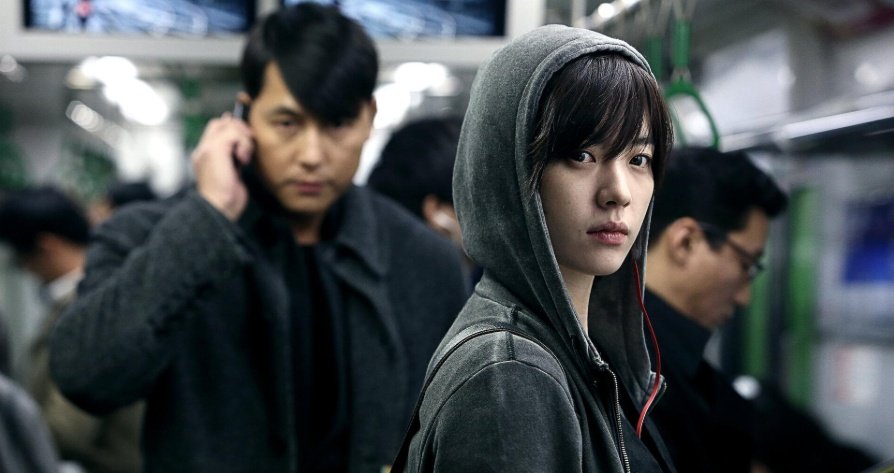
    Cold Eyes (2013) takes a different approach. Its most important weapon is not a gun, a badge, or physical strength. It is the ability to observe without being noticed.

    The film follows Ha Yoon-ju, a gifted newcomer who joins a specialized police surveillance unit led by veteran detective Hwang Sang-jun. Their mission is to track James, the intelligent and ruthless leader of a criminal organization whose operations are carefully planned to avoid detection.

    As the investigation develops, the film becomes a contest between two groups with very different objectives. The police must discover patterns without revealing their presence. The criminals must complete their operations while identifying and avoiding the people watching them.

    Directed by Cho Ui-seok and Kim Byeong-seo, and starring Han Hyo-joo, Sol Kyung-gu, and Jung Woo-sung, Cold Eyes transforms observation into the central action of a crime thriller.

    But its most interesting question goes beyond whether the police can catch a criminal.

    What happens when the people doing the watching become targets of observation themselves?

    1. A Crime Thriller Where Watching Comes Before Fighting

    The most unusual decision in Cold Eyes is its emphasis on surveillance.

    In many police films, investigators gather evidence before eventually confronting suspects. The investigation often functions as a bridge between action sequences.

    Here, observation is the action.

    A person walking through a crowded street can become a crucial piece of evidence. A vehicle stopping for a few seconds may reveal a connection between two suspects. Even a seemingly ordinary movement can become meaningful when viewed as part of a larger pattern.

    The surveillance team must remain close enough to understand its targets but far enough away to avoid detection.

    That creates a different kind of suspense.

    The audience is encouraged to pay attention to details that might otherwise appear unimportant. A change in direction, an unfamiliar face, or a brief exchange can alter the meaning of an entire sequence.

    The film demonstrates that watching carefully can be just as dramatic as fighting aggressively.

    2. Ha Yoon-ju: The Power of Remembering What Others Overlook

    Ha Yoon-ju enters the surveillance unit with unusual observational abilities and a remarkable memory.

    Her talent is not simply about remembering faces. She notices details, connects separate observations, and reconstructs situations from fragments of information.

    This makes her particularly valuable in a profession where a missed detail can destroy an entire operation.

    However, the film does not present her ability as an instant solution to every problem.

    Observation requires discipline. A person must know what to remember, what to ignore, and how to distinguish meaningful information from coincidence.

    Yoon-ju’s development is therefore more than a story about a gifted young detective discovering her abilities.

    She must learn how to turn individual observations into reliable investigative judgment.

    That distinction gives her character a meaningful progression.

    3. Hwang Sang-jun Understands That Surveillance Is a Team Sport

    Hwang Sang-jun, played by Sol Kyung-gu, is the experienced leader of the surveillance unit.

    His approach differs from Yoon-ju’s.

    Where she initially relies heavily on concentration and memory, Hwang combines instinct, experience, and an understanding of human behavior.

    He knows that surveillance is not simply about looking at someone for a long time. It is about anticipating movement, recognizing unusual behavior, and coordinating people who must work without attracting attention.

    His leadership is also deliberately informal.

    The team needs to respond quickly to changing circumstances, and excessive rigidity could make its members predictable.

    Hwang’s personality brings warmth and humor into an otherwise tense environment. Yet beneath that casual exterior is a professional who understands how easily a surveillance operation can fail.

    His greatest contribution is not merely teaching Yoon-ju how to observe.

    It is teaching her how to think as part of a team.

    4. James: A Criminal Who Understands the Value of Not Being Seen

    James, played by Jung Woo-sung, is not an ordinary criminal antagonist.

    He is an organized and calculating leader who treats criminal operations as carefully managed projects.

    His strength comes from preparation, discipline, and the ability to anticipate problems before they occur.

    He understands that successful criminal activity depends on more than executing a plan. It also requires controlling the information available to the police.

    The less investigators know about the organization, the more freedom the group has to operate.

    This creates an interesting contrast with the surveillance team.

    The police attempt to discover patterns through observation. James attempts to eliminate the patterns that could expose his organization.

    Both sides understand that information creates power.

    Their conflict is therefore not simply between law enforcement and criminals. It is between two competing systems of observation and control.

    5. Seoul Becomes a Giant Surveillance Maze

    The city is not just a background for the story.

    Seoul’s crowded streets, buildings, public spaces, and constant movement create opportunities for both sides.

    A criminal can disappear into the crowd because thousands of people are moving through the same environment. At the same time, that crowd gives surveillance officers countless opportunities to observe without appearing suspicious.

    This creates a visual contradiction.

    The city is full of people, yet finding one particular person can be extraordinarily difficult.

    The film uses urban geography to make the investigation feel physically complicated. The surveillance team must understand where a target can move, where it might stop, and which locations offer useful visibility.

    A familiar street can become a completely different place when viewed from the perspective of an investigator.

    The city becomes both the hiding place and the hunting ground.

    6. Surveillance Requires More Than Following Someone

    Following a suspect sounds simple until the practical problems become clear.

    A surveillance officer must maintain an appropriate distance, avoid repeated patterns, communicate with colleagues, and make sure that the target does not notice anything unusual.

    Following too closely can expose the operation.

    Following too far away can mean losing the suspect.

    A surveillance team also needs to coordinate multiple observers. If one person loses visual contact, another must be ready to continue the pursuit.

    This makes the work a combination of individual awareness and collective discipline.

    Cold Eyes finds much of its suspense in these small operational decisions.

    The audience sees that a successful investigation depends on dozens of details being handled correctly, often without any single officer receiving recognition for the result.

    The most effective surveillance operation is frequently the one that leaves no obvious sign that it ever happened.

    7. The Criminal Organization Has Its Own System of Observation

    The film becomes more interesting when the audience recognizes that surveillance is not an exclusive advantage of the police.

    Criminals also observe.

    They monitor their surroundings, evaluate possible threats, and look for signs that someone may be following them.

    James understands that a police team cannot operate invisibly forever if it becomes careless.

    The more sophisticated the surveillance operation becomes, the more important it is to anticipate the target’s response.

    This creates a contest in which both sides are trying to understand what the other side knows.

    The police watch the criminals.

    The criminals search for the watchers.

    And once either side realizes that it is being observed, the meaning of every movement changes.

    8. Why Small Mistakes Can Destroy an Entire Operation

    Surveillance depends on consistency.

    A single suspicious movement may attract attention. A repeated appearance in the same location can reveal a pattern. An incorrect assumption can send an entire team in the wrong direction.

    This is one of the film’s most effective sources of tension.

    The audience is not waiting only for a dramatic mistake. It is watching for the small errors that could eventually become impossible to correct.

    The pressure is especially high because surveillance officers often have incomplete information.

    They must make decisions before they know the entire situation.

    That is what makes experience important. A skilled investigator understands that not every unusual detail is meaningful, but also knows that apparently insignificant information can become important later.

    The film presents professional observation as a combination of patience, caution, and judgment.

    9. The Rookie’s Growth Is About Judgment, Not Just Talent

    Yoon-ju’s remarkable memory gives her an advantage, but talent alone cannot make her an effective investigator.

    At the beginning, she must learn the difference between noticing something and understanding what it means.

    A person may remember every detail of a scene and still misunderstand the situation.

    Professional surveillance requires interpretation.

    Why did the suspect stop there? Was that movement accidental? Is the person acting independently, or following instructions from someone else?

    These questions cannot always be answered through memory.

    Yoon-ju’s development is compelling because she gradually moves from being an observer with exceptional abilities toward becoming an investigator who understands the responsibility attached to those abilities.

    Her growth also reinforces one of the film’s broader ideas: information becomes valuable only when someone knows how to interpret it correctly.

    10. The Remake That Reimagines Its Source

    Cold Eyes is based on the 2007 Hong Kong film Eye in the Sky, directed by Yau Nai-hoi.

    The two films share the central idea of a surveillance unit pursuing sophisticated criminals. However, the Korean production gives the concept its own dramatic identity.

    The Korean version places particular emphasis on the relationships and tensions within the police team, especially the partnership between the veteran leader and the new recruit.

    It also expands the scale of the chase through Seoul’s urban environment.

    This matters because a remake does not become distinctive simply by changing the actors or location.

    It needs to find a different emotional and dramatic focus within the original concept.

    Cold Eyes uses the surveillance premise to explore professional discipline, teamwork, and the personal pressure of working in a field where mistakes can have serious consequences.

    It respects the central idea of the original while developing its own rhythm and character dynamics.

    11. Jung Woo-sung Changes the Usual Image of a Leading Man

    Jung Woo-sung is often associated with charismatic protagonists and heroic roles.

    In Cold Eyes, he takes on a very different character.

    James is controlled, calculating, and emotionally restrained. His authority comes less from dramatic speeches than from the precision with which he manages his organization.

    This creates an interesting contrast with Hwang Sang-jun.

    Hwang is expressive and instinctive, while James appears measured and disciplined. One leads a police team through experience and cooperation; the other commands a criminal organization through control and fear.

    Jung Woo-sung’s performance gives the film an antagonist who can feel dangerous without constantly displaying aggression.

    The character’s composure is part of his threat.

    12. The Editing Makes Observation Feel Like Action

    A surveillance thriller depends heavily on visual information.

    The audience must understand where the target is, who is following whom, and how separate observations connect.

    If the editing becomes confusing, the suspense disappears.

    Cold Eyes uses its visual structure to make the audience experience the process of tracking a target.

    The camera moves between observers, suspects, and surrounding spaces. The editing connects small details and changes the audience’s understanding of a situation as new information appears.

    This is particularly important in a story where a person can disappear into an ordinary crowd.

    The film’s visual rhythm makes the act of looking feel active.

    Instead of simply watching characters perform an investigation, viewers are encouraged to participate in the process of noticing.

    13. Trust Is Essential When No One Can Watch Everything

    A surveillance unit cannot depend on one person’s eyes.

    Different officers observe different locations, gather different pieces of information, and communicate their findings to the team.

    This creates a problem of trust.

    An officer must believe that a colleague has correctly identified a target. The team must decide whether an observation is reliable enough to change its strategy.

    The information may be incomplete, and the situation may change before everyone has the same understanding.

    That makes communication as important as individual ability.

    The film’s team structure demonstrates that surveillance is not a competition to find the smartest person in the room.

    It is a collective process in which the quality of the final decision depends on how well separate observations are combined.

    14. The Ethical Question Behind Watching Everyone

    The film is primarily a crime thriller, but its central subject has a wider significance.

    Surveillance creates a relationship between people who know they are watching and people who may not know they are being watched.

    In the film, the police use observation to prevent crime and identify dangerous criminals. That purpose gives their work a clear narrative justification.

    Real-world surveillance, however, raises more complicated questions.

    Who has the authority to observe someone? What limits should exist? How should information be collected, stored, and used? What happens when observation moves beyond its original purpose?

    The film does not attempt to answer every question about privacy and policing.

    Nevertheless, its premise naturally invites viewers to think about the power that comes from seeing information others cannot see.

    The ability to observe can protect people, but it also creates responsibility.

    15. The Real Weapon in Cold Eyes Is Knowing What Others Miss

    By the end, the central conflict of Cold Eyes becomes much clearer.

    The police and the criminals are not simply competing over physical strength or speed. They are competing over awareness.

    The surveillance team must notice what the criminal organization wants to hide. James must recognize the people trying to understand his operations. Each side attempts to predict the next move before it happens.

    That is why the film’s title is so effective.

    Cold eyes are not necessarily emotionless eyes. They are eyes trained to remain focused when pressure, distraction, and uncertainty threaten judgment.

    The film also shows the limits of individual brilliance. Yoon-ju needs experience and teamwork. Hwang needs reliable colleagues. James needs an organization capable of following his plans.

    Observation becomes powerful when it is combined with discipline, interpretation, and cooperation.

    Ultimately, Cold Eyes turns an ordinary human activity into the foundation of an exciting crime thriller.

    It reminds us that the person who sees the most is not always the person who understands the most.

    The real advantage belongs to the person who can recognize what everyone else has overlooked.

    TTK Original โ€” Beyond the Headlines

    In a world where people are constantly watching one another, the most important question is not simply who is being observed. It is who understands what they are seeing. Cold Eyes transforms surveillance into a battle of intelligence, showing that the smallest detail can become the difference between exposing a criminal and disappearing into the crowd.

  • The Bad Guys: Reign of Chaos (2019): When Criminals Become the Police’s Last Weapon

    The Bad Guys: Reign of Chaos (2019): When Criminals Become the Police’s Last Weapon

    What happens when the police can no longer rely on ordinary law enforcement to catch dangerous criminals?

    In The Bad Guys: Reign of Chaos (2019), the answer is both entertaining and unsettling. Instead of assembling a conventional police task force, the authorities bring together people who have already crossed the boundaries of the law.

    Directed by Son Yong-ho, the film stars Ma Dong-seok as Park Woong-cheol, alongside Kim Sang-joong, Kim Ah-joong, and Jang Ki-yong. The story follows an unusual team assembled after a prison transport vehicle overturns and dangerous inmates escape.

    At first glance, this looks like a straightforward action film built around powerful punches, comic exchanges, and spectacular confrontations. But its central idea is more interesting: if the system needs criminals to restore order, what does that say about the system itself?

    The film is not a philosophical courtroom drama. It prefers momentum and action. Nevertheless, its unusual team provides a useful way to examine justice, institutional power, loyalty, and the complicated relationship between good and evil.

    1. The Central Paradox: Why Do the Police Need Criminals?

    The most interesting idea in the film is built into its premise.

    The police are supposed to protect society by enforcing the law. Yet, when a dangerous group of prisoners escapes, the authorities turn to people who have criminal records of their own.

    This creates an immediate contradiction.

    The people recruited to restore public order are not examples of conventional law-abiding citizens. They are individuals whose abilities developed outside the boundaries of ordinary society.

    The film uses this contradiction as its starting point. Rather than asking whether criminals can become heroes, it asks whether the existing system can solve every problem using only its officially approved methods.

    The answer is not particularly reassuring.

    The police need extraordinary results, and they are willing to use extraordinary people to obtain them. The arrangement is effective for an action story, but it also raises an uncomfortable question: does the system value justice, or does it simply value successful outcomes?

    2. Park Woong-cheol: A Man Whose Violence Has a Code

    Park Woong-cheol, played by Ma Dong-seok, is the team’s most immediately recognizable figure.

    His physical strength is almost absurd. He can face groups of opponents without appearing particularly concerned about the numerical disadvantage.

    But reducing him to a powerful fighter would miss an important part of his character.

    Woong-cheol operates according to a personal code. His history, relationships, and sense of loyalty matter to him. He may have lived as a gangster, but he does not behave as though every human relationship is simply another transaction.

    That distinction makes him interesting.

    The film does not pretend that personal loyalty erases criminal responsibility. Instead, it presents a character whose moral instincts do not fit neatly into the categories assigned by the legal system.

    Woong-cheol is dangerous, but he is not portrayed as emotionally empty.

    His strength attracts attention. His loyalty gives the character a reason to remain memorable.

    3. Oh Gu-tak: The Police Officer Who Understands Unconventional People

    Kim Sang-joong plays Oh Gu-tak, the experienced detective responsible for assembling the new team.

    Unlike the others, Gu-tak represents the official institution. Yet he understands that conventional procedures may not be enough to deal with the situation.

    He knows the personalities and capabilities of the people he recruits. More importantly, he understands that managing this group requires something different from simply issuing orders.

    His authority is not based only on his position as a police officer. It also comes from his ability to read people who do not easily accept authority.

    This creates an unusual relationship between the detective and his team.

    Gu-tak needs their abilities, but he cannot treat them like ordinary subordinates. He must negotiate with their individual motives, personal histories, and unpredictable behavior.

    In that sense, he is not merely the team’s leader. He is the person trying to hold together a temporary alliance between people who would normally stand on opposite sides of the law.

    4. Kwak No-soon: Intelligence Can Be More Dangerous Than Strength

    Kim Ah-joong plays Kwak No-soon, a skilled con artist who brings a different kind of intelligence to the team.

    Her presence is important because the film does not make physical power the only useful form of ability.

    Woong-cheol can overwhelm an opponent. No-soon can understand situations, recognize opportunities, and manipulate circumstances.

    These are different forms of power.

    A criminal organization is not defeated simply because someone can punch harder than its members. It must also be understood. Its relationships, weaknesses, financial interests, and internal structures have to be exposed.

    No-soon’s contribution highlights this difference.

    She also changes the team’s dynamic. The group is no longer simply a collection of tough men confronting other tough men. It becomes a combination of physical force, deception, experience, and strategic thinking.

    The film’s action works better when these abilities complement one another.

    5. Ko Yoo-sung: The Complicated Position of a Former Police Officer

    Jang Ki-yong plays Ko Yoo-sung, a former police officer who has ended up in prison.

    His presence creates another layer of contradiction.

    Unlike Woong-cheol, Yoo-sung has direct experience inside the police institution. He understands the expectations placed on officers, but he is no longer standing comfortably within that world.

    He occupies an uncomfortable middle position.

    He is connected to law enforcement by his past, yet his current circumstances place him among people whom the police normally regard as threats.

    This makes him a useful character for examining the difference between professional identity and personal responsibility.

    A person can once have represented the law and still become someone the system punishes. At the same time, a criminal record does not automatically explain everything about a person’s character.

    Yoo-sung’s role helps the film move beyond a simple division between policemen and criminals.

    6. The Prison Transport Escape: A Crisis That Exposes the System

    The story begins when a vehicle transporting dangerous prisoners overturns and several inmates escape.

    This is more than a convenient action-movie opening.

    The incident creates a public security crisis that demands an immediate response. It also exposes the limits of the authorities’ existing arrangements.

    The police must capture the escapees, but the situation is complicated by the people and organizations connected to them.

    The authorities need a team capable of operating in a dangerous environment. That requirement leads them back to Gu-tak and his unconventional methods.

    The opening therefore establishes the film’s central mechanism: a crisis makes an otherwise unacceptable solution appear necessary.

    The more dangerous the situation becomes, the easier it is for the system to justify extraordinary measures.

    That is where the film’s moral tension begins.

    7. The Criminal Organization: The Real Enemy Is Bigger Than One Escape

    The escaped prisoners are only the beginning of the investigation.

    As the team follows the trail, it becomes clear that the case is connected to a much larger criminal organization.

    This shift is important because it changes the scale of the conflict.

    At first, the mission appears to be about finding individual fugitives. But the deeper the investigation goes, the more the team encounters a network of power that cannot be understood through isolated arrests.

    The film uses this expansion to move from a simple pursuit story toward a broader confrontation.

    A criminal organization is dangerous not merely because individual members are violent. Its strength comes from coordination, hierarchy, money, and the ability to influence events beyond the immediate crime scene.

    This also explains why the authorities need a team with unusual capabilities.

    The enemy is not simply a collection of people waiting to be punched. It is a structure that must be uncovered and dismantled.

    8. Why the Team Works: Different Forms of Power

    The team is entertaining because its members do not solve problems in the same way.

    Woong-cheol represents physical force. No-soon represents deception and tactical intelligence. Yoo-sung brings police experience and determination. Gu-tak provides leadership and institutional knowledge.

    Their abilities are not interchangeable.

    If the team consisted entirely of fighters, it would have difficulty uncovering the larger organization. If it consisted only of investigators, it might struggle when the investigation turned violent.

    The combination gives the story its momentum.

    There is also a useful lesson in the team’s structure: people who are very different can become effective partners when their abilities serve a shared objective.

    That does not mean they suddenly become friends or agree on everything.

    Their cooperation is based on necessity, not perfect harmony. This makes the group more convincing as an action-movie team.

    9. Justice Versus Results: Does Catching the Criminal Make Everything Acceptable?

    The film’s premise creates an uncomfortable ethical question.

    If the authorities use criminals to catch other criminals, what limits should govern that decision?

    A successful arrest may look like a victory. But success alone cannot answer whether the method was justified.

    This distinction matters because justice is not simply the achievement of a desirable outcome.

    The process also matters.

    A system that ignores its own rules whenever it faces a difficult problem risks weakening the very principles it claims to defend.

    The film does not spend much time developing this issue into a detailed political argument. Its priority remains action and entertainment.

    Still, the premise invites the audience to think about a familiar dilemma: should exceptional circumstances allow exceptional methods?

    And if so, who decides when the exception ends?

    10. Loyalty: The Emotional Force Behind Woong-cheol

    For Woong-cheol, personal loyalty is more than a decorative character trait.

    His relationships give his actions emotional meaning. His past is not simply background information; it influences the way he responds to the people around him.

    This is one reason Ma Dong-seok’s character works so well in the film.

    The audience does not need to agree with Woong-cheol’s history to understand his emotional motivations.

    His sense of loyalty creates a contrast between the violent world he comes from and the personal values he continues to hold.

    That contrast is familiar in crime cinema, but it remains effective when the character is written and performed with enough conviction.

    The film’s emotional center is not the idea that violence makes someone good.

    It is the idea that even a person with a violent past can have relationships and loyalties that matter deeply to him.

    11. Ma Dong-seok’s Action Style: Why His Presence Changes the Film

    Ma Dong-seok has a distinctive screen presence.

    His physical appearance, movement, and fighting style create an immediate expectation: when Woong-cheol enters a confrontation, the balance of physical power is about to change.

    The appeal is not simply that he hits hard.

    His action scenes often work through contrast. Opponents move quickly, surround him, and attempt to overwhelm him. Woong-cheol responds with direct, heavy movements that make the physical impact easy to understand.

    This creates a clear visual rhythm.

    The audience does not need complicated choreography to understand who has the advantage.

    His performance also provides comic relief. The contrast between his intimidating appearance and his reactions to certain situations helps the film avoid becoming relentlessly grim.

    This combination of action and humor is an important part of the movie’s identity.

    12. The Film’s Weakness: A Strong Premise Needs More Than Action

    The film has an attractive central concept, but its execution is not equally strong in every area.

    The ensemble is entertaining, and the action sequences provide energy. However, the larger conspiracy can feel more complicated than the emotional and investigative development needed to make it fully convincing.

    Some characters receive less development than their potential deserves.

    The story also relies heavily on the familiar structure of a team gathering, pursuing enemies, discovering a larger conspiracy, and confronting the main antagonists.

    This is not necessarily a fatal problem for an action film. Audiences often watch this kind of movie for its characters, pacing, and confrontations.

    But it does limit how deeply the film can explore its most interesting question.

    The premise suggests a complicated examination of law and criminality. The final experience leans more toward energetic action entertainment.

    That difference is worth recognizing rather than ignoring.

    13. The Connection to the Original Bad Guys Series

    The 2019 film is a cinematic spin-off of the OCN television series Bad Guys, which began in 2014.

    That connection matters because the original series established the central attraction of the concept: a group of dangerous or unconventional individuals brought together to pursue criminals.

    The film carries that idea into a larger cinematic setting.

    For viewers familiar with the original series, the return of Park Woong-cheol and Oh Gu-tak offers a sense of continuity.

    For newcomers, however, the movie can still be approached as a self-contained action story.

    The important point is that the film does not invent its central idea from nothing. It expands an existing television concept by introducing a new team dynamic and a larger criminal case.

    This background helps explain why the story places so much emphasis on assembling an unusual group rather than following a conventional police investigation.

    14. Why the Story Still Appeals to International Audiences

    The central idea is easy to understand even without detailed knowledge of Korean police dramas.

    A group of criminals is recruited to catch other criminals. Their abilities are unusual, their personalities clash, and their leader must keep them working toward a common objective.

    This is a recognizable action-team formula.

    But the Korean film adds a particular mixture of physical comedy, crime drama, and character relationships.

    Ma Dong-seok’s international recognition also gives the movie an accessible entry point for viewers who have enjoyed his other action roles.

    The film may not offer a completely new interpretation of crime cinema. Its strength is the combination of a simple hook, distinctive personalities, and energetic action.

    For international viewers exploring Korean action films, it provides another example of how Korean genre cinema can mix humor, violence, and questions about social order.

    15. The Final Question: Who Are the Real Bad Guys?

    The title The Bad Guys seems straightforward. It suggests that the audience already knows who deserves to be feared.

    But the premise makes that certainty less comfortable.

    The people recruited by the police are criminals. They have histories that cannot simply be erased because they are now working on the side of the authorities.

    At the same time, the people who represent official power are not automatically beyond criticism.

    The film’s most interesting question is therefore not whether bad people can do good things.

    It is whether society can maintain a meaningful distinction between justice and power when the system itself begins using morally questionable methods.

    The movie does not fully resolve that question. It is more interested in delivering an entertaining action experience than in developing a complete theory of justice.

    Nevertheless, the contradiction remains at the heart of its appeal.

    The Bad Guys: Reign of Chaos is not just about criminals chasing criminals. It is about a system willing to make an unusual bargain when ordinary methods are no longer enough.

    And that leads to the question worth remembering after the action ends:

    If the police need bad guys to catch bad guys, who is responsible for making sure the good guys remain good?

  • The Killer: A Girl Who Deserves to Die (2022): Can a Professional Killer Become a Protector?

    The Killer: A Girl Who Deserves to Die (2022): Can a Professional Killer Become a Protector?

    TTK Original โ€” Beyond the Headlines

    1. A Retired Killer Who Has Nothing Left to Prove

    In The Killer: A Girl Who Deserves to Die, Bang Ui-gang appears to have achieved something that most professional killers could never imagine: a peaceful retirement.

    Played by Jang Hyuk, Ui-gang has accumulated enough money to enjoy a comfortable life. He has a beautiful home, financial security, and a wife who knows little about his violent professional past.

    He no longer needs to accept dangerous assignments or prove his abilities to anyone.

    Yet his retirement does not necessarily mean that he has changed as a person.

    His physical skills remain intact. His instincts are still those of someone trained to recognize danger and eliminate threats. Even his leisure activities suggest that the world of violence has not completely disappeared from his identity.

    The arrival of Yoon-ji, a teenage girl temporarily placed under his care, disrupts this comfortable arrangement.

    Initially, Ui-gang sees the responsibility as an inconvenience. He is not particularly interested in becoming a guardian, and he expects the arrangement to end without creating serious problems.

    But when Yoon-ji becomes involved with dangerous people and is eventually kidnapped, his retirement comes to an abrupt end.

    The film’s central question emerges from this situation.

    Has Ui-gang genuinely left his violent past behind, or has he simply been waiting for a reason to use those abilities again?

    His decision to rescue Yoon-ji creates the appearance of a moral transformation. However, the film deliberately leaves room for a more complicated interpretation.

    Perhaps he has not become a different person.

    Perhaps he has finally found something worth using his old abilities to protect.

    2. Ui-gang: The Difference Between Abandoning Violence and Controlling It

    A conventional redemption story usually requires a character to recognize the wrongfulness of their past and attempt to become a better person.

    Ui-gang’s development is different.

    He does not suddenly become uncomfortable with violence. He does not reject his physical abilities or develop a completely new philosophy of life.

    Instead, he changes the purpose for which he uses them.

    This distinction is important.

    The film does not present a retired killer who has become harmless. It presents a dangerous individual whose capacity for violence remains almost entirely intact.

    What changes is the target of that violence.

    Before the kidnapping, Ui-gang’s abilities belong to a professional identity that he has supposedly left behind. After the kidnapping, those abilities become instruments of protection.

    This creates an unusual moral contradiction.

    Can a person become better without abandoning the methods that once made them dangerous?

    Ui-gang’s answer appears to be that violence can serve a protective purpose when directed against people who threaten the innocent.

    But that answer is not entirely comfortable.

    A person who believes that their violence is justified may become increasingly confident in their own ability to decide who deserves punishment.

    The film largely avoids examining this contradiction through philosophical dialogue. Instead, it expresses the idea through action.

    Ui-gang does not explain his moral position at length.

    He demonstrates it through the decisions he makes and the people he chooses to confront.

    3. Yoon-ji: A Teenager Who Becomes More Than a Rescue Objective

    Yoon-ji is initially introduced as a teenager whose behavior creates problems for the adults around her.

    She is placed under Ui-gang’s temporary supervision while her mother and Ui-gang’s wife are away.

    Their relationship begins with distance and inconvenience.

    Ui-gang does not understand her world, and Yoon-ji has little reason to trust a man who appears to have no interest in understanding her.

    This is an important starting point.

    The film does not immediately create a sentimental relationship between an older protector and a vulnerable child.

    Instead, it begins with two people who have very different expectations.

    Yoon-ji’s decisions bring her into contact with dangerous individuals, and her kidnapping turns what appeared to be a temporary guardianship arrangement into a life-threatening situation.

    From this point onward, the story becomes a rescue mission.

    However, Yoon-ji should not be understood only as a device that allows Ui-gang to demonstrate his fighting skills.

    Her vulnerability exposes a larger problem: a young person can become trapped in a criminal environment before fully understanding the danger surrounding her.

    The people exploiting that vulnerability do not necessarily see her as an individual with a future.

    They see an opportunity.

    That is what makes her situation morally significant.

    The central issue is not whether Yoon-ji is perfectly innocent or whether every decision she makes is sensible.

    It is whether her mistakes justify the exploitation and violence directed against her.

    The answer should be obvious.

    A teenager’s poor judgment does not make her disposable.

    4. The Title’s Moral Paradox: Does Anyone Deserve to Die?

    The English title, The Killer: A Girl Who Deserves to Die, creates an immediate contradiction.

    It sounds like a judgment.

    It appears to suggest that there is a category of child whose life has so little value that death could be considered deserved.

    But the film’s emotional direction challenges that assumption.

    The title becomes more interesting when considered alongside the idea that no child should be treated as someone whose life can simply be discarded.

    This contradiction changes how the audience understands the rescue.

    The question is not whether Yoon-ji is a perfect victim.

    She is not presented as a flawless person who always makes the correct decisions.

    The question is whether an individual’s mistakes can ever justify treating that person as an object without rights or dignity.

    The answer is no.

    This is where the title becomes more than an aggressive action-film slogan.

    It invites the audience to examine the language used to justify violence against vulnerable people.

    Criminal organizations often operate by dividing people into categories: useful, profitable, troublesome, disposable.

    Once a person is placed in the final category, their humanity becomes easier to ignore.

    The film’s title can be read as a challenge to that way of thinking.

    The real question is not whether a child deserves to die.

    It is why anyone would believe that a child’s life can be judged in those terms.

    5. The Criminal Organization: When Human Beings Become Merchandise

    The criminal network in the film gives the rescue mission its underlying moral urgency.

    Yoon-ji becomes caught in a dangerous organization involved in exploiting young people.

    This moves the story beyond a conventional disagreement between a teenager and the adults responsible for her.

    The real danger comes from people who recognize vulnerability as an opportunity for profit.

    In such an environment, the victim’s personal history, feelings, and future become secondary.

    What matters is what can be extracted from them.

    This is one of the darkest ideas beneath the film’s fast-moving action.

    The criminal organization does not need to understand Yoon-ji as a person.

    It only needs to recognize that she can be used.

    That is a particularly disturbing form of dehumanization.

    Violence is not always motivated by personal hatred. Sometimes it is carried out because another person has been reduced to an economic resource.

    The film does not provide a comprehensive investigation of human trafficking or the social systems that allow exploitation to continue.

    Its focus remains on Ui-gang’s rescue mission.

    Nevertheless, the criminal background gives the violence a clear moral context.

    The people Ui-gang confronts are not merely opponents who happen to stand in his way.

    They represent a system in which vulnerable individuals can be treated as disposable commodities.

    6. Protection and Possession: Does Saving Someone Mean Taking Responsibility for Them?

    Ui-gang’s relationship with Yoon-ji raises an important distinction between protecting another person and controlling them.

    At the beginning, he is assigned a temporary guardian role.

    He does not actively seek this responsibility, and he appears to regard it as an obligation imposed by his wife’s request.

    His initial attitude is therefore closer to inconvenience than affection.

    The kidnapping changes his priorities.

    He becomes determined to bring Yoon-ji home safely, even when doing so requires returning to the violent world he had supposedly abandoned.

    But protection can have different meanings.

    A person may protect someone because they genuinely respect their safety and future.

    Another person may protect someone because they believe they have the right to control every decision that person makes.

    These are not the same thing.

    The film is primarily interested in the physical dimension of protection: preventing kidnappers from harming Yoon-ji.

    It spends less time examining the long-term psychological questions that would follow such an experience.

    What happens after she is rescued?

    Can she recover her independence?

    Does Ui-gang’s protection help her regain control of her life, or does it simply replace one form of authority with another?

    These questions remain largely outside the film’s action-oriented structure.

    However, they are worth considering because genuine protection should ultimately restore another person’s ability to live freely.

    Saving someone is an immediate achievement.

    Respecting their future is a longer responsibility.

    7. The Wife’s Request: How an Ordinary Relationship Reconnects Ui-gang With Humanity

    Ui-gang’s wife plays an important role even though she is not the central action character.

    Her request that he look after her friend’s daughter creates the situation that brings Yoon-ji into his life.

    The request is ordinary.

    It does not involve a dangerous mission, a criminal investigation, or a moral dilemma.

    It is simply an act of trust between people who know one another.

    That ordinary beginning matters because it contrasts sharply with Ui-gang’s past.

    He has spent much of his life in a world where relationships can be based on contracts, objectives, and survival.

    Now he is being asked to accept a responsibility that has no obvious financial reward.

    He is not being paid to protect Yoon-ji.

    He is not receiving a professional assignment.

    He is helping because someone close to him has asked him to take care of another person’s child.

    This gives the rescue a different emotional foundation from the work of a conventional action hero.

    Ui-gang’s involvement begins through an ordinary relationship rather than a grand moral decision.

    The film suggests that a person’s return to human connection does not always begin with a dramatic declaration.

    Sometimes it begins with a small obligation that becomes much more important than expected.

    8. Jang Hyuk’s Physical Performance: Action as a Character Language

    One of the film’s strongest elements is Jang Hyuk’s physical performance.

    His character is not simply described as a legendary killer. The audience is shown why other people would fear him.

    His movements are controlled, direct, and efficient.

    He rarely appears to waste energy.

    The action is designed around the idea that Ui-gang has spent years developing the ability to neutralize threats as quickly as possible.

    The film also makes use of different weapons and fighting styles.

    Hand-to-hand combat, firearms, knives, and improvised violence become parts of the protagonist’s practical vocabulary.

    This is particularly effective because Jang Hyuk has an established background in martial arts and action performances.

    According to the Korean Film Council, he also participated in the film’s action design.

    That involvement helps explain why the choreography places such emphasis on physical execution rather than relying entirely on editing and visual effects.

    The action does not merely decorate the story.

    It communicates Ui-gang’s professional identity.

    The audience understands his past through the precision of his movements.

    His body remembers a profession that his ordinary life is supposed to have left behind.

    9. The Coffee Cup: An Ordinary Habit in the Middle of Extraordinary Violence

    One of the film’s most memorable visual ideas is Ui-gang’s seemingly casual relationship with violence.

    He can appear calm even while confronting extremely dangerous opponents.

    The image of him holding or drinking coffee amid violent situations creates a striking contrast.

    Coffee normally represents routine, relaxation, and an ordinary daily rhythm.

    Violence represents disruption, danger, and the collapse of normal life.

    Placing these two elements together gives the character a distinctive visual identity.

    Ui-gang behaves as though the situations around him are less extraordinary than they appear to everyone else.

    This is not necessarily evidence of emotional superiority.

    It is also a sign of how deeply violence has become normalized within his professional identity.

    For an ordinary person, a confrontation with armed criminals would be terrifying.

    For Ui-gang, it is a problem that can be handled through familiar procedures.

    The contrast is entertaining, but it also raises a darker question.

    What happens to a person when extraordinary violence becomes ordinary work?

    The coffee cup becomes a visual reminder that Ui-gang’s relationship with danger is fundamentally different from that of the people he encounters.

    He has not simply learned how to fight.

    He has learned to function in situations that most people would find psychologically overwhelming.

    10. The John Wick Comparison: Spectacle, Precision, and the Limits of Imitation

    International viewers frequently compare The Killer to John Wick and The Man from Nowhere.

    The comparison is understandable.

    Both films feature highly capable protagonists who confront criminal organizations through increasingly elaborate action sequences.

    They also share an interest in the contrast between an apparently controlled individual and a violent world that refuses to leave him alone.

    However, comparison should not replace analysis.

    John Wick builds an elaborate criminal mythology around its protagonist.

    Its world has its own institutions, rules, professional codes, and symbolic locations.

    The Man from Nowhere places greater emphasis on emotional isolation and the relationship between a dangerous adult and a vulnerable child.

    The Killer combines elements of both approaches.

    It uses the retired professional killer as its action foundation while placing the rescue of a teenage girl at the center of the emotional conflict.

    The result is a film that prioritizes physical spectacle.

    Its greatest achievement is the execution of the action itself rather than the creation of an especially complicated fictional world.

    This is not necessarily a weakness.

    An action film does not need to imitate the narrative complexity of a crime saga to succeed.

    But the comparison reveals what the film chooses to emphasize.

    It wants the audience to experience the pleasure of watching a highly trained fighter overcome overwhelming opposition.

    The moral relationship between Ui-gang and Yoon-ji provides the reason for that spectacle.

    11. The Long Takes: Why Seeing the Action Matters

    Action filmmaking depends on more than the number of punches, bullets, or opponents shown on screen.

    The audience must understand the physical geography of a confrontation.

    Where is the protagonist?

    Where are the threats?

    How does one movement create the next opportunity?

    Long takes can help answer these questions.

    When the camera remains with an action sequence for an extended period, viewers have more opportunity to appreciate the choreography and the physical work performed by the actors and stunt teams.

    The Korean Film Council highlighted the film’s use of long takes and the straightforward movements in Jang Hyuk’s action scenes.

    This approach is important because excessive cutting can sometimes hide the actual mechanics of a fight.

    Instead of showing how an actor performs a movement, rapid editing can create the impression of action without allowing the audience to fully understand it.

    The Killer attempts to make the physical execution itself part of the entertainment.

    The result is particularly noticeable in the film’s major confrontations.

    The audience is not simply watching a character defeat opponents.

    It is watching a sequence of decisions, movements, and reactions that reveal the protagonist’s training.

    This is one reason the film attracted attention at international genre festivals.

    12. Bruce Khan and the Final Confrontation: Two Different Forms of Physical Threat

    The presence of Bruce Khan gives the film a particularly important action counterpart to Jang Hyuk.

    A strong action protagonist needs more than a large number of opponents.

    The audience also needs to believe that the central character may eventually encounter someone capable of challenging him.

    A final confrontation becomes more satisfying when the opponent represents a genuine physical threat.

    Bruce Khan’s presence helps create that expectation.

    The contrast between the two performers gives the film an opportunity to move beyond the repeated pattern of one-sided confrontations.

    The film’s action design reaches its most concentrated form when the two characters finally face each other.

    This is important for the overall structure.

    For much of the story, Ui-gang appears almost impossibly capable.

    If every opponent is defeated with the same degree of ease, the action can gradually lose its tension.

    A formidable rival provides a different kind of challenge.

    The final confrontation becomes a test of physical ability and action choreography rather than simply another demonstration of the protagonist’s superiority.

    The Korean Film Council also identified the Jang Hyukโ€“Bruce Khan confrontation as one of the film’s major action attractions.

    Their encounter gives the action structure a clear focal point.

    13. What Reddit Viewers Appreciated โ€” and What They Questioned

    Reddit discussions reveal that viewers were divided less over the existence of action and more over how effectively the film used it.

    In r/Koreanfilm, viewers discussed Jang Hyuk’s action performance and the film’s physical choreography.

    Some reactions were strongly positive.

    One viewer who watched the film at the Udine Far East Film Festival praised the action, particularly the major confrontation involving Jang Hyuk and Bruce Khan.

    Other viewers appreciated the film’s willingness to move quickly into action rather than spending too much time establishing a complicated premise.

    However, not every response was enthusiastic.

    In another discussion, viewers criticized the protagonist’s apparent invulnerability.

    If Ui-gang rarely seems to face a genuine possibility of defeat, the action can become impressive without remaining suspenseful.

    Other comments questioned whether the story and characters offered enough emotional depth to balance the violence.

    These reactions point to an important distinction.

    A film can be technically impressive without creating a strong emotional connection.

    The choreography may be excellent, the camera work may be effective, and the performances may be convincing.

    But viewers still need a reason to care about what happens beyond the next confrontation.

    This is where The Killer receives its most interesting criticism.

    Its action is often more developed than its exploration of character psychology.

    The film is at its strongest when it allows physical performance to carry the story.

    It is less successful when the audience expects a deeper examination of the emotional consequences of violence.

    14. The Final Question: Can Violence Become an Act of Protection?

    The central contradiction of The Killer: A Girl Who Deserves to Die is that its protagonist protects a vulnerable teenager through the same abilities that once made him a professional killer.

    This is the film’s most compelling idea.

    Ui-gang’s transformation is not a complete rejection of his past.

    He does not become an ordinary man who has forgotten how to fight.

    Instead, he discovers a reason to use his abilities in a way that appears morally different from his former profession.

    But the film leaves an important question unresolved.

    Does using violence to protect someone automatically make that violence morally acceptable?

    The answer is more complicated than the action genre usually allows.

    Protecting a person from immediate danger can justify necessary defensive force.

    But that does not mean every act of retaliation becomes morally innocent.

    The distinction between protection and revenge matters.

    Protection aims to prevent harm and restore safety.

    Revenge seeks to punish someone for what has already happened.

    The two motivations can overlap, particularly when a loved one has been threatened or harmed.

    Ui-gang’s journey is compelling because it sits precisely at that intersection.

    He is not simply rescuing Yoon-ji.

    He is returning to a world of violence and discovering that the purpose of his actions has changed.

    The film does not demand that viewers believe he has become a completely different human being.

    It asks them to consider whether a person with a violent past can still make a meaningful choice to protect someone else.

    That is a more interesting question than whether he can defeat every opponent.

    TTK Final Perspective

    The Killer: A Girl Who Deserves to Die is a direct and energetic action thriller built around Jang Hyuk’s physical performance.

    Its greatest strength is the choreography, the use of long takes, and the contrast between a retired professional killer and a teenager whose safety becomes his responsibility.

    Its limitations are also visible.

    Ui-gang can appear almost invulnerable, and the film spends more time developing action spectacle than exploring the psychological consequences of its characters’ experiences.

    Yet beneath the violence lies a meaningful contradiction.

    A man who once used violence as a profession now uses the same abilities to protect someone who cannot protect herself.

    His past does not disappear.

    His skills do not become harmless.

    But the purpose behind his actions changes.

    The film’s most important question is therefore not whether a killer can become a hero.

    It is whether a person can choose to use the abilities shaped by a violent past for a purpose that protects another human being.

    TTK Original โ€” Beyond the Headlines

  • Special Delivery (2022): When a Woman With Nothing to Lose Chooses to Protect a Child

    Special Delivery (2022): When a Woman With Nothing to Lose Chooses to Protect a Child

    TTK Original โ€” Beyond the Headlines

    1. A Delivery Driver Who Never Asks Questions

    At first, Eun-ha appears to be a professional who has reduced her life to one simple principle: complete the delivery and get paid.

    She does not need to know why a client is being transported, what the passengers have done, or where they intend to go. Her job is to drive. Her responsibility ends when the assignment is completed.

    This arrangement is more than a convenient criminal occupation. It reflects a person who has learned to avoid emotional involvement.

    Eun-ha works at a junkyard during the day and secretly takes special delivery assignments. Her driving ability makes her valuable in a business that handles people and objects ordinary transportation companies would never accept.

    Her professional identity depends on efficiency, not morality.

    That distinction becomes the foundation of the entire film.

    When a delivery goes wrong and a young boy named Seo-won ends up in her vehicle, Eun-ha faces a choice she has never needed to make before. She can treat him as another problem to be transferred, or she can recognize that he is a frightened child whose life is in immediate danger.

    The important transformation is not that she suddenly becomes a hero.

    It is that she stops treating the completion of a job as the only thing that matters.

    2. Eun-ha: A Woman Who Has Turned Survival Into a Profession

    Eun-ha is not introduced as a conventional action heroine with a clear desire to fight injustice.

    She is practical, guarded, and emotionally distant. Her skills are developed around the demands of survival rather than the pursuit of recognition.

    Her driving is precise because mistakes have consequences. Her communication is limited because personal involvement can become a liability. Her professional reputation matters because it provides the income and security she needs.

    This is a different kind of character construction from the familiar action hero.

    Many action protagonists begin with a strong personal mission and use their physical abilities to achieve it. Eun-ha begins with a professional routine and discovers that the routine cannot protect her from a moral decision.

    Her emotional restraint is especially important.

    She does not immediately become affectionate toward Seo-won. She does not suddenly forget the risks of protecting him. Her hesitation makes her decision more convincing because the audience can see what she is sacrificing.

    Eun-ha’s strength is therefore not simply her ability to control a vehicle or defeat an opponent.

    It is her ability to change the rules by which she has been living.

    3. The North Korean Defector Background: A Life Defined by Displacement

    Eun-ha’s background as a North Korean defector gives her character an additional layer of meaning.

    She is someone who has already experienced the disruption of leaving one society and attempting to establish a life in another. Her present occupation suggests a person who has found a way to survive outside conventional social structures.

    However, the film does not turn her background into a comprehensive examination of North Korean defectors’ experiences in South Korea.

    Instead, it uses this history as part of Eun-ha’s personal identity and emotional distance.

    That limitation matters.

    It would be inaccurate to claim that the film fully explores employment discrimination, institutional difficulties, or the everyday experiences of all defectors. Its main interest remains the action thriller and Eun-ha’s individual journey.

    Nevertheless, her background adds a meaningful dimension to the story.

    She is not simply a skilled driver who happens to work for criminals. She is a woman whose life has already involved separation, adaptation, and the difficult task of finding a place in an unfamiliar environment.

    This makes her eventual decision to protect Seo-won more interesting.

    She recognizes something familiar in a child whose world has suddenly collapsed.

    4. The Car Is More Than a Vehicle: It Is Eun-ha’s Territory

    In most action films, a car is a tool for movement, escape, or destruction.

    In Special Delivery, the vehicle is almost an extension of Eun-ha’s identity.

    Inside the car, she controls the speed, the direction, and the distance between herself and danger. She knows how to read the road and anticipate the movements of other drivers.

    The outside world may be unpredictable, but the driver’s seat gives her a limited form of control.

    This is particularly significant because Eun-ha’s life is otherwise shaped by circumstances she cannot completely control.

    Her past cannot be erased. Her work exposes her to dangerous people. Her position in the criminal delivery business is dependent on relationships and arrangements that could collapse at any time.

    The car provides a temporary space in which her skills determine the outcome.

    Once Seo-won enters that space, however, the meaning of the vehicle changes.

    It is no longer just a machine that transports a client. It becomes a moving shelter for someone who has nowhere safe to go.

    The same vehicle that once carried people for money becomes an instrument of protection.

    5. Seo-won: The Child Who Turns a Professional Assignment Into a Moral Crisis

    Seo-won is not merely a convenient character used to create emotional tension.

    His presence forces Eun-ha to confront the human consequences of the world in which she works.

    Before meeting him, she can maintain a psychological distance from her clients. Their criminal activities belong to their lives, not hers.

    But a child cannot be treated in exactly the same way as another passenger.

    Seo-won is frightened, vulnerable, and unable to understand the full scale of the danger surrounding him. His father’s involvement in a criminal gambling operation has placed him in a situation he did not choose.

    The security key connected to a large sum of money makes him valuable to the people chasing him, but that value is entirely imposed by adults.

    This creates a disturbing contrast.

    The criminals see Seo-won as a means of obtaining money. Eun-ha gradually begins to see him as a person whose safety matters independently of his usefulness.

    The film’s emotional conflict develops from this difference.

    Seo-won does not need to prove that he deserves protection. The fact that he is a child in danger should be enough.

    6. From Transaction to Responsibility: The Most Important Change in the Story

    The central transformation in Special Delivery is the movement from a commercial relationship to a moral one.

    Eun-ha’s original job is transactional. She provides a service, receives payment, and avoids unnecessary involvement.

    Her relationship with Seo-won gradually breaks that arrangement.

    Once she decides to protect him, the logic of the job no longer applies. She cannot simply transfer responsibility to another person and walk away.

    This is a major change because protecting Seo-won creates additional danger for her.

    She becomes a target. Her professional relationships are threatened. Her carefully maintained distance from other people’s problems disappears.

    In economic terms, she accepts a responsibility that provides no obvious financial reward and creates enormous personal risk.

    That is precisely why the decision matters.

    The film suggests that moral responsibility often begins when a person chooses to do something that cannot be justified by immediate self-interest.

    Eun-ha does not become a different person overnight. She discovers that the survival strategy she has relied on is no longer sufficient to explain what she should do.

    7. Baek Gang-cheol: The Difference Between a Boss and a Father Figure

    Kim Eui-sung’s Baek Gang-cheol is an important part of Eun-ha’s emotional world.

    He is her employer and the person who manages the special delivery business. But their relationship also carries the characteristics of a family connection.

    He provides her with work, a place in the organization, and a degree of stability that she might not otherwise have.

    This relationship complicates the usual distinction between criminal organizations and family structures.

    A criminal business can still provide emotional belonging. A person can find care and protection in an environment that is morally compromised.

    That does not make the criminal activity acceptable.

    Rather, it reveals that human relationships are often more complicated than the institutions surrounding them.

    Gang-cheol’s role is significant because he understands Eun-ha as more than a driver. He knows her abilities and recognizes her place in the organization.

    His relationship with her also helps explain why Eun-ha’s world is not simply divided into good people and bad people.

    She has built attachments in a place that exists outside conventional social rules.

    When those relationships are threatened, the danger becomes personal.

    8. Jo Kyeong-pil: When the Law Becomes Another Criminal Organization

    Song Sae-byeok’s Jo Kyeong-pil is one of the film’s most disturbing characters.

    He occupies a position of legal authority, yet he is deeply involved in the criminal operation that drives the story.

    This creates the film’s most direct conflict between public responsibility and private greed.

    A police officer is supposed to protect people, investigate wrongdoing, and enforce the law. Kyeong-pil uses the authority associated with his position to pursue his own interests.

    The problem is therefore larger than the existence of one corrupt individual.

    The uniform and institutional authority that should make citizens feel protected become tools of intimidation.

    This reverses the expected relationship between law and crime.

    Eun-ha is involved in illegal transportation, but she gradually takes responsibility for a vulnerable child. Kyeong-pil is officially a law enforcement officer, yet his actions place the child in danger.

    The contrast challenges the assumption that legal status automatically reflects moral character.

    The film’s most important moral distinction is not between someone who works inside the law and someone who operates outside it.

    It is between those who use power to protect others and those who use power to exploit them.

    9. A Female Action Hero Who Does Not Need to Become Someone Else

    One of the film’s strongest features is its decision to place a woman at the center of a high-speed action thriller.

    Eun-ha is not written as a character whose physical abilities are constantly explained or justified through another person’s approval.

    She is simply good at her job.

    Her driving skills are established through action rather than lengthy speeches. Her competence is visible in the way she handles difficult situations.

    This makes Park So-dam’s performance particularly important.

    Her character does not depend on exaggerated confidence or constant verbal aggression. Eun-ha’s coolness comes from concentration and experience.

    She can be physically capable without losing her emotional complexity.

    The film also avoids making romance the central explanation for her actions. Her most important relationship is with Seo-won, and the emotional foundation of that relationship is protection rather than romantic attraction.

    This matters because female action characters are often placed inside familiar narrative expectations.

    They may be defined by romantic relationships, family obligations, or the need to prove that they can perform traditionally masculine roles.

    Eun-ha’s story is not entirely free from familiar action-film conventions, but it gives her a clear identity as a professional and a protector.

    10. The Chase Sequences: Action as a Form of Character Development

    The car chases are not simply decorative scenes inserted to maintain excitement.

    They demonstrate how Eun-ha thinks.

    She reads traffic, calculates distance, uses the environment, and responds to danger with a combination of experience and improvisation.

    The action sequences establish her professional identity before the film asks the audience to care about her emotional transformation.

    This is an effective narrative choice.

    Instead of telling viewers that Eun-ha is an exceptional driver, the film allows them to experience her abilities directly.

    The chase scenes also change in meaning as the story develops.

    Initially, driving is her method of completing a job. Later, every maneuver becomes part of her attempt to keep Seo-won alive.

    The same skill serves a different purpose.

    This transformation gives the action a dramatic function beyond spectacle.

    The Guardian’s review highlighted the film’s energetic driving sequences and Park So-dam’s distinctive presence, while Sight and Sound praised the variety and physical impact of its action scenes. Both reviews also recognized the importance of the relationship between Eun-ha and the child.

    The film’s strongest action therefore comes from the connection between physical movement and emotional responsibility.

    11. The Found Family Theme: Can People Become Family Without Blood Relations?

    The relationship between Eun-ha and Seo-won raises a familiar but important question: What makes people a family?

    Traditional definitions emphasize biological relationships, legal guardianship, or marriage.

    But the film presents a different possibility.

    Eun-ha and Seo-won are not connected by blood. Their relationship begins through an assignment that neither of them expected to become emotionally significant.

    Their bond develops because Eun-ha takes responsibility for a child who has lost his protection.

    This is not a simple replacement of one family with another.

    The film does not suggest that a few days of danger can erase the psychological consequences of losing a parent. Nor does it claim that protection automatically creates a perfect family.

    Instead, it emphasizes the importance of action.

    Family can begin when someone chooses not to abandon another person.

    This idea is particularly meaningful because the story’s criminal world is full of relationships based on money, power, and convenience.

    Against that background, Eun-ha’s decision to protect Seo-won creates a different kind of bond.

    It is not based on what the child can provide for her.

    It is based on what she is willing to do for him.

    12. The Ending: Survival Does Not Always Mean Returning to an Ordinary Life

    Spoilers: This section discusses the film’s final events.

    The final confrontation brings Eun-ha’s transformation to its most extreme point.

    Her conflict with Kyeong-pil becomes a physical struggle over Seo-won’s survival. The corrupt officer’s authority and criminal power are no longer enough to control the situation once Eun-ha decides to fight back.

    The confrontation at sea creates an apparent conclusion to her journey.

    Eun-ha is believed to have died, while Seo-won survives and is eventually placed in a safer environment.

    But the later reunion changes the emotional meaning of the ending.

    Eun-ha has survived and returned to Seo-won’s life, yet she has not abandoned the world of special deliveries.

    This is an interesting choice because the film does not conclude by transforming her into a completely conventional person.

    She does not suddenly become a different professional, adopt an ordinary lifestyle, or abandon every part of her former identity.

    Instead, her relationship with Seo-won has changed the meaning of the life she already knows.

    She remains a driver, but the audience now understands that her identity cannot be reduced to her occupation.

    The ending is therefore less about escaping one’s past than about discovering a different way to live with it.

    13. What Reddit Viewers Appreciated โ€” and What They Found Frustrating

    Reddit discussions provide a useful indication of how audiences responded to the film.

    In a 2025 Movie of the Day discussion on r/Koreanfilm, several viewers praised Park So-dam’s performance, the action scenes, and the car chases. Some particularly enjoyed her portrayal of a confident female action protagonist.

    Song Sae-byeok’s villainous performance also received positive comments.

    However, the reactions were not universally enthusiastic.

    Some viewers felt that Seo-won’s character was irritating and that his behavior weakened the emotional experience. Others wanted more background information and a stronger story.

    A separate discussion from February 2022 described the film as fast-paced and entertaining, while also criticizing the child’s performance and wishing for more character development.

    These reactions reveal an important distinction.

    The film succeeds more consistently as an action thriller than as a fully developed character drama.

    Its action sequences provide immediate excitement, but some emotional developments are presented quickly. The relationship between Eun-ha and Seo-won is central to the story, yet not every viewer will find its progression equally convincing.

    This criticism should not be ignored.

    A film can have an interesting emotional premise and still struggle to give every character enough depth.

    The value of Special Delivery lies partly in the fact that its strengths and weaknesses are clearly visible.

    14. The Real Meaning of Special Delivery: What Do We Choose to Carry?

    The title initially sounds like a description of Eun-ha’s profession.

    She delivers things that ordinary transportation companies refuse to handle. Her business exists because there are clients who need a service that cannot be provided through conventional channels.

    But the title acquires another meaning as the story develops.

    Eun-ha begins by transporting people for money. Eventually, she accepts the responsibility of carrying a child’s fear, vulnerability, and future.

    The physical delivery becomes an emotional journey.

    This change is the reason the film works beyond its action sequences.

    Eun-ha is not transformed because she suddenly discovers that the world is fair. The corrupt officer remains dangerous, the criminal environment remains violent, and her past does not disappear.

    What changes is her decision about what she is willing to protect.

    The film also raises a broader question about people who live outside conventional social structures.

    Are they automatically incapable of acting morally? Does a person’s occupation determine their character? Can someone who has survived through questionable choices still make a meaningful decision to protect another human being?

    Eun-ha’s story suggests that moral identity is not permanently fixed by a person’s past.

    People are also defined by the choices they make when circumstances force them to confront what truly matters.

    That is the deeper meaning of her final delivery.

    She is no longer simply transporting a passenger to a destination.

    She is helping another person reach a future that might otherwise have been taken away.


    TTK Final Perspective

    Special Delivery is an energetic Korean action thriller, but its most interesting element is not the speed of its cars or the violence of its confrontations.

    It is the transformation of a woman who has learned to survive by avoiding emotional responsibility.

    Eun-ha begins as a professional driver who believes that every assignment has a beginning and an end. Her encounter with Seo-won forces her to recognize that some responsibilities cannot be abandoned simply because the job is over.

    The film does not fully explore every dimension of its characters, and its familiar action conventions sometimes limit its originality. Nevertheless, Park So-dam’s performance and the relationship at the center of the story give it an emotional foundation.

    In the end, Special Delivery asks a question that reaches beyond the criminal world of the film:

    When another person’s life depends on our decision, do we continue driving away, or do we finally choose to stop?

    TTK Original โ€” Beyond the Headlines

  • The City of Violence (2006): When Money Destroys the Brotherhood We Thought Would Last Forever

    The City of Violence (2006): When Money Destroys the Brotherhood We Thought Would Last Forever

    How Ryoo Seung-wan’s Korean Action Film Explores Friendship, Betrayal, and the Price of Growing Up

    TTK Original โ€” Beyond the Headlines

    There is a particular kind of friendship that seems impossible to destroy.

    It is formed when people are young, when they share the same streets, the same jokes, the same troubles, and the same dreams. They fight together, protect one another, and believe that nothing will ever come between them.

    At that age, money seems unimportant. Social status has little meaning. The future is something everyone imagines together.

    But time changes people.

    Some become successful. Others remain trapped in the circumstances they once hoped to escape. Ambitions grow in different directions, and the friends who once stood shoulder to shoulder gradually begin to see the world differently.

    Eventually, a question emerges that is far more painful than any physical confrontation:

    Were we really friends for life, or were we simply people who had not yet been tested by the realities of life?

    This is the emotional question at the heart of The City of Violence (2006), known in Korea as Jjak-pae (์งํŒจ).

    Directed by Ryoo Seung-wan and starring Jung Doo-hong, Ryoo Seung-wan, and Lee Beom-soo, the film is remembered for its spectacular hand-to-hand combat and energetic action sequences.

    But beneath the violence is a more melancholy story: the destruction of a brotherhood that once appeared unbreakable.

    The film is not simply about old friends becoming enemies. It is about what happens when the people who shared your youth begin to value completely different things.

    1. The Friendship We Believe Will Last Forever

    The story begins with a death.

    Tae-su, a detective working in Seoul, returns to his hometown after hearing that his old friend Wang-jae has been killed. At the funeral, he reunites with people from his youth, including Seok-hwan, Pil-ho, and Dong-hwan.

    Their reunion brings back memories of the past.

    They were once young men who shared a common world. Their friendship was built through experiences that outsiders could never fully understand.

    This is an important emotional foundation.

    When people grow up together, they do not simply remember the same events. They remember who they were before the world began assigning them different identities.

    A childhood friend remembers your failures before you became successful. He knows the embarrassing stories, the foolish dreams, and the person you were before you learned how to present yourself to society.

    That kind of familiarity can create extraordinary loyalty.

    But it can also become uncomfortable.

    As people change, an old friend can become a reminder of a past they would rather leave behind.

    The City of Violence begins with nostalgia, but nostalgia is not necessarily comforting. Sometimes remembering the past makes the present even more painful.

    2. Time Does Not Change Everyone in the Same Direction

    The old friends have not simply grown older. They have entered different worlds.

    Tae-su has become a police detective. Seok-hwan remains closely connected to the rough environment of their hometown. Pil-ho has accumulated influence and become involved in a major local development project.

    Their differences are not merely professional.

    They represent different relationships with power, ambition, and the future.

    When they were young, their friendship existed on relatively equal terms. None of them had yet become powerful enough to dictate the conditions of the others’ lives.

    But adulthood changes that balance.

    Money creates opportunities. Opportunities create influence. Influence changes how people are treated.

    A person who once stood beside his friends may eventually become someone they must negotiate with, depend on, or fear.

    This is one of the film’s most revealing ideas.

    Friendship may begin between equals, but what happens when life makes those friends unequal?

    The film does not suggest that success automatically destroys loyalty. Nor does it claim that people who become wealthy must betray their past.

    Instead, it presents a more uncomfortable possibility: when people acquire different amounts of power, the old rules of their relationships may no longer apply.

    The friendship remains in memory, but its original conditions have disappeared.

    3. Money Is Not the Only Villain. The Desire for Power Is More Dangerous.

    It would be too simple to say that money alone destroys the friendship in The City of Violence.

    Money is a tool. What matters is what people are willing to do to obtain it and what they believe they deserve once they have it.

    The land development project connected to Pil-ho’s growing influence gives the conflict a larger meaning.

    The hometown that once represented shared memories has become a place of business, competition, and control.

    Land is no longer just the place where the friends grew up. It has become an economic asset.

    The transformation is symbolic.

    The same streets that once belonged to their youth now belong to a different set of interests. The people who once shared the town as friends are no longer standing on equal ground.

    Development promises a better future, but the question is: a better future for whom?

    When economic opportunity becomes connected to local power, relationships can become instruments. People are no longer valued only for who they are. They may also be judged by what they can provide, protect, or obstruct.

    Pil-ho’s position illustrates this transformation.

    He is not simply an old friend who has become wealthy. He represents a person whose relationship with power has changed the meaning of the past.

    This is where the film’s title and its emotional conflict meet.

    A brotherhood that once seemed permanent is now vulnerable to the interests that divide its members.

    4. The Most Painful Betrayal Comes from Someone Who Knows You

    A betrayal by a stranger is relatively easy to understand.

    There is no shared history to protect and no childhood memory to complicate the judgment.

    But betrayal by an old friend is different.

    The person who hurts you is someone who once knew what mattered to you. He remembers the promises, the jokes, the struggles, and the moments when you trusted each other without hesitation.

    That history makes the betrayal heavier.

    In The City of Violence, the conflict is not simply between good people and bad people. It is between people whose shared past has become increasingly difficult to reconcile with their present choices.

    This distinction matters.

    If the characters had never been friends, their confrontation would be an ordinary crime story. Their shared history transforms it into something more personal.

    Every fight carries an additional question:

    How did we become people who could do this to each other?

    The physical violence becomes an expression of a much older emotional wound.

    The film’s action is therefore not separate from its drama. It is the physical language through which a broken relationship becomes visible.

    5. Why the Film’s Action Feels Like a Story About Friendship

    The City of Violence is famous for its elaborate fight sequences, but the action has a purpose beyond spectacle.

    Ryoo Seung-wan and martial arts director Jung Doo-hong bring a physical intensity that makes the film feel almost like a celebration of action cinema itself.

    The film draws on the traditions of Hong Kong martial arts movies and classic genre filmmaking. Its choreography, rhythm, and deliberately theatrical confrontations are central to its identity.

    The result is energetic and sometimes playful.

    Yet the emotional context changes how we experience those scenes.

    At the beginning of a friendship, physical closeness can mean protection. Friends stand together, fight together, and take risks for one another.

    By the end of this story, physical confrontation has become the opposite.

    The same human bodies that once represented solidarity now become instruments of separation.

    This creates an interesting contrast between the film’s style and its emotional meaning.

    The action is exciting, but the relationships behind it are tragic.

    The audience may enjoy the choreography while simultaneously recognizing that the characters have lost something that cannot easily be recovered.

    That contradiction is one of the film’s most effective qualities.

    6. The Dance Between Action and Performance

    One of the film’s memorable stylistic features is its willingness to treat action as performance.

    The choreography is not always presented as a realistic record of how an ordinary street fight would unfold. It often has the rhythm and visual design of a staged martial arts spectacle.

    This is particularly important when considering the film’s broader relationship with genre cinema.

    Ryoo Seung-wan does not hide his affection for older action traditions. He embraces their theatricality, their exaggerated confrontations, and their pleasure in carefully constructed physical movement.

    For international viewers familiar with Hong Kong action cinema, the film offers recognizable influences while maintaining its own Korean setting and character relationships.

    But there is a deeper reason this style works.

    The characters are fighting over more than immediate survival. They are confronting the distance between who they once were and who they have become.

    The choreography turns that emotional conflict into something visible.

    A conversation might explain the betrayal. A fight allows the audience to feel its consequences.

    The film’s action is therefore not merely an attraction added to the story. It is one of the ways the story communicates.

    7. Was Their Friendship Ever as Strong as They Remembered?

    This is perhaps the most uncomfortable question the film leaves behind.

    When people look back on their youth, they often remember friendship as something pure.

    They remember loyalty, shared hardship, and promises that seemed permanent.

    But memory can simplify the past.

    Perhaps the friends were never as united as they now believe. Perhaps their differences existed even when they were young, but those differences had not yet become important.

    When everyone has similar circumstances, it is easier to believe that everyone shares the same values.

    The real test arrives when the rewards become unequal.

    One person wants money. Another wants loyalty. Someone else wants power, recognition, or simply a way to escape the life he once had.

    At that point, the old friendship faces a difficult question: can it survive when the friends no longer want the same things?

    The City of Violence does not offer a comfortable answer.

    It suggests that shared memories can remain powerful even when shared values disappear.

    That is why the story feels sadder than a conventional revenge thriller.

    The characters are not simply losing a fight. They are losing the possibility of returning to a world in which they understood one another.

    8. What Makes The City of Violence Distinctly Korean?

    Although the film draws inspiration from international action traditions, its emotional foundation is rooted in a familiar Korean experience: the importance of school friendships and hometown relationships.

    In Korean culture, the language of friendship often carries a strong sense of loyalty, shared history, and personal obligation.

    The people who knew you before adulthood occupy a special position. They have memories that cannot be recreated through later relationships.

    This does not mean that every Korean friendship follows the same pattern. But the cultural importance of long-standing personal relationships gives the film’s conflict a particular emotional resonance.

    The hometown is also significant.

    Returning to the place where one grew up can create the illusion that the past is still waiting.

    The streets are familiar. The names are familiar. The people remember the same stories.

    But the town itself has changed.

    Economic development, criminal influence, and the pursuit of power have transformed the environment in which the friendships were formed.

    The hometown becomes a metaphor for memory itself: familiar on the surface, but no longer the place it once was.

    International viewers may recognize this feeling even if they have never lived in Korea.

    Almost everyone knows the experience of returning to an old neighborhood and realizing that the place, the people, and perhaps even oneself have changed.

    9. The Film’s Limitation Is Also Part of Its Identity

    The City of Violence is not a film that spends equal time developing every emotional possibility.

    Its narrative is compact, and its action sequences frequently take priority over extended psychological exploration.

    Some viewers may find the characters’ motivations less developed than the film’s physical set pieces. Others may feel that the story relies on familiar crime and revenge conventions.

    These are fair criticisms.

    The film is not a detailed psychological study of every friendship that falls apart under economic pressure.

    Nor should we pretend that every action sequence is a realistic representation of violence.

    Its strength lies elsewhere.

    It uses a recognizable genre framework to explore a familiar human experience: the distance between youthful loyalty and adult ambition.

    The action is the film’s most visible attraction, but the broken friendship gives that action emotional weight.

    Without the shared past, the fights would be entertaining but less meaningful.

    Without the action, the film would lose the distinctive energy through which Ryoo Seung-wan expresses the conflict.

    The two elements work together, even if they are not always perfectly balanced.

    10. What Remains When the Brotherhood Is Gone?

    There is something especially sad about friendships that end after many years.

    A stranger can disappear from your life without leaving much behind.

    An old friend cannot.

    Even after the relationship is destroyed, the memories remain. You remember the person before the betrayal, and that memory makes it difficult to reduce him to the person he has become.

    This is the emotional contradiction at the heart of The City of Violence.

    The characters cannot simply forget their past. Yet they cannot return to it either.

    Their shared youth becomes both a source of attachment and a reminder of what has been lost.

    Perhaps the most painful part of growing older is discovering that people who once promised to stand beside you forever may eventually choose different lives.

    And sometimes the distance between those lives becomes too great to cross.

    Money may accelerate that separation. Power may deepen it. Ambition may make it irreversible.

    But the deepest fracture occurs when people stop recognizing the values that once connected them.

    That is why The City of Violence deserves to be remembered as more than an action film.

    It is a story about the fragility of brotherhood, the changing meaning of loyalty, and the price people sometimes pay for the lives they choose.

    We often believe that the friendships formed in our youth will survive anything. But perhaps we only discover their true strength when life gives us something different to choose.

    And that leaves us with one final question:

    If the friends who once shared everything can become enemies over money, was their friendship truly unbreakableโ€”or had life simply not tested it yet?


    Film Details

    • Title: The City of Violence (์งํŒจ)
    • Year: 2006
    • Director: Ryoo Seung-wan
    • Main Cast: Jung Doo-hong, Ryoo Seung-wan, Lee Beom-soo
    • Genre: Action, Crime, Drama
    • Runtime: 92 minutes
    • Release Date: May 25, 2006
    • Country: South Korea

    Sources and Further Reading

    1. Korean Film Council (KOFIC) โ€” The City of Violence (2006)
    2. Cine21 โ€” The City of Violence (2006)
    3. Busan International Film Festival โ€” The City of Violence Archive
    4. Bucheon International Fantastic Film Festival โ€” The City of Violence

    Editorial Note: This article offers an interpretation of the film’s themes. The connection between money, ambition, and the breakdown of friendship is an analytical reading of the story, not a claim that the film explicitly states that money alone caused every character’s choices.

  • The Man from Nowhere (2010) Ending Explained: Why Did Tae-sik Save So-mi?

    TTK Original โ€” Beyond the Headlines

    Spoiler Warning: This article contains major spoilers for The Man from Nowhere (2010), including its final confrontation and ending.

    Why would a man risk his life for a little girl who is not his daughter?

    That question drives The Man from Nowhere, the 2010 Korean action thriller directed by Lee Jeong-beom and starring Won Bin as Cha Tae-sik.

    On the surface, the answer seems straightforward. Tae-sik is a former special operative whose young neighbor, Jeong So-mi (Kim Sae-ron), is kidnapped by a ruthless criminal organization. He uses his extraordinary combat skills to rescue her.

    But that explanation leaves out the most important part of the story.

    Tae-sik is not simply a dangerous man protecting an innocent child.

    He is someone who has already lost his family, abandoned ordinary life, and stopped believing that his future matters.

    So-mi enters his world at a time when he has almost nothing left to live for.

    By the end of the film, he has saved her from the criminals who threatened her life.

    But something equally important has happened.

    So-mi has given Tae-sik a reason to return to the world.

    That is the emotional secret behind one of Korean cinema’s most memorable action films.


    What Happens at the End of The Man from Nowhere?

    In the final act, Tae-sik tracks down the criminal organization responsible for kidnapping So-mi and killing her mother.

    The organization operates through drug trafficking, the exploitation of vulnerable children, and organ trafficking.

    Tae-sik confronts the criminals, including the brothers Man-seok and Jong-seok, who have treated human beings as disposable commodities.

    By this point, Tae-sik has already demonstrated that he possesses extraordinary fighting abilities.

    But his motivation is not professional duty.

    He is not acting on behalf of the government.

    He is not carrying out a military assignment.

    He is searching for one child.

    During the final confrontation, Man-seok leads Tae-sik to believe that So-mi has been killed and that her eyes have been removed.

    The revelation pushes Tae-sik toward the edge of despair.

    He unleashes his full combat abilities against the criminals, defeating their armed men and confronting the skilled assassin Ramrowan.

    After the violence ends, Tae-sik believes he has failed to protect So-mi.

    He turns his gun on himself.

    Then he hears her voice.

    So-mi is alive.

    Ramrowan, despite working for the criminal organization, had spared her.

    The moment transforms the ending.

    Tae-sik has survived the confrontation, but he was prepared to abandon his life because he believed the child was dead.

    Her appearance gives him a reason to live.

    Later, as the police take Tae-sik into custody, he asks for a brief moment with So-mi.

    He embraces her and cries.

    The film that has spent so much time demonstrating his physical strength ends by revealing his emotional vulnerability.

    Why Did Tae-sik Save So-mi?

    Tae-sik saves So-mi because she has become the only person capable of reaching the part of him that he has tried to bury.

    At the beginning of the film, Tae-sik lives in isolation.

    He operates a small pawnshop, avoids unnecessary conversation, and maintains almost no meaningful relationships.

    The neighborhood knows him as a strange, withdrawn man.

    His life appears to have stopped moving forward.

    Then there is So-mi.

    She visits his pawnshop, talks to him, shares small moments with him, and treats him as someone worth knowing.

    She does not know his military background.

    She does not know the extent of his fighting abilities.

    She does not approach him because he can protect her.

    She approaches him because she is lonely.

    And because, beneath his silence, she senses someone who might understand that loneliness.

    This is the foundation of their relationship.

    They do not begin as a hero and someone waiting to be rescued.

    They begin as two isolated people who find companionship in each other.

    So-mi needs an adult who will not reject her.

    Tae-sik needs a reason to care about another person again.

    Neither initially understands how important that connection will become.

    Tae-sik’s Past: Why Does He Live Like a Ghost?

    Tae-sik’s extraordinary combat skills come from his former life as a highly trained operative.

    He once belonged to a world defined by violence, secrecy, and dangerous assignments.

    But his withdrawal from society is not simply the result of military experience.

    It is rooted in personal tragedy.

    His pregnant wife was killed in a violent incident, and he lost the child they were expecting.

    The loss destroyed the future he had imagined.

    He did not merely lose his wife.

    He lost the possibility of becoming the father he had hoped to be.

    This is essential to understanding his relationship with So-mi.

    A child of approximately her age represents a life that might have existed if his family had survived.

    That does not mean Tae-sik mistakes So-mi for his own daughter.

    Nor does the film suggest that one child can simply replace another.

    Rather, So-mi awakens a part of his identity that grief has left dormant.

    He once expected to protect a family.

    Now he lives as though he has no family, no purpose, and no future.

    So-mi’s presence reminds him that he is still capable of caring for someone.

    And caring for someone means accepting the possibility of being hurt again.

    Why Does Tae-sik Ignore So-mi When She Needs Him?

    One of the film’s most revealing moments occurs before the kidnapping.

    So-mi gets into trouble after being accused of stealing a bag.

    She notices Tae-sik nearby and looks to him for help.

    But he refuses to acknowledge their relationship.

    He distances himself from her in front of other people.

    For So-mi, the rejection is devastating.

    She already feels unwanted by much of the world around her.

    Her family situation is unstable, and other people frequently treat her as a nuisance.

    Tae-sik is one of the few people she trusts.

    When he turns away, she experiences his silence as another rejection.

    Later, she tells him that she knows he was ashamed of her.

    Yet she does not want to hate him.

    Why?

    Because she feels that if she hated him too, there would be nobody left for her to love.

    That moment is more important to the film than almost any action sequence.

    So-mi has just explained the emotional stakes of their relationship.

    For Tae-sik, keeping people at a distance feels like protection.

    For So-mi, that distance feels like abandonment.

    His silence is not emotionally neutral.

    It hurts someone who has already been hurt repeatedly.

    And for the first time, Tae-sik must confront the consequences of his withdrawal from the world.

    So-mi’s Words Are the Turning Point

    So-mi’s expression of loneliness changes the meaning of everything that follows.

    She does not demand that Tae-sik become a hero.

    She does not ask him to defeat criminals or rescue her from extraordinary danger.

    She asks, in effect, not to be treated as someone unworthy of acknowledgment.

    That is a much smaller request.

    And a much more human one.

    Tae-sik has built his life around avoiding emotional attachment.

    He seems to believe that if he does not become close to anyone, he cannot experience another devastating loss.

    But So-mi reveals the cruelty hidden inside that strategy.

    Protecting himself from pain means refusing to respond to someone else’s pain.

    His emotional withdrawal may be understandable.

    It is not harmless.

    This is the first important transformation in his character.

    Before he becomes the man who fights an entire criminal organization, he must become the man who recognizes that his indifference has hurt a child.

    His journey begins not with violence, but with the realization that refusing to care is also a choice.

    Is Tae-sik Saving So-mi Because She Reminds Him of His Lost Child?

    Partly, but that explanation is incomplete.

    The resemblance between So-mi and the child Tae-sik never had is an important emotional connection.

    His past makes her vulnerability especially painful.

    He knows what it means to lose a family.

    He knows what it means to be unable to protect someone he loves.

    And he cannot bear the thought of experiencing that failure again.

    But So-mi is more than a substitute for his lost child.

    The film gives her a distinct personality.

    She is playful, outspoken, affectionate, and surprisingly perceptive.

    She paints his fingernails.

    She talks to him without the fear or suspicion that other people show.

    She notices his kindness even when he tries to hide it.

    These details matter because they establish a relationship based on actual shared experiences.

    Tae-sik does not suddenly decide to save a random child because she resembles someone from his past.

    He saves someone who has already become important to him.

    His grief explains why the bond is so powerful.

    It does not fully explain why the bond exists.

    So-mi earns her place in his life simply by treating him as a person.

    Why Does the Pawnshop Matter?

    The pawnshop is one of the film’s most meaningful settings.

    A pawnshop is a place where people exchange personal possessions for money.

    Objects with emotional value are reduced to financial value.

    A watch, a camera, or a treasured belonging becomes something that can be assessed, stored, and redeemed.

    Tae-sik has chosen to live in this environment.

    He spends his days surrounded by things that other people have temporarily surrendered.

    In a symbolic sense, he has done the same with his own life.

    He has placed his emotions in storage.

    He has withdrawn from relationships.

    He has reduced his existence to routine and survival.

    The shop becomes a refuge, but also a prison.

    So-mi repeatedly crosses that boundary.

    She enters the space not because she wants to make a financial transaction, but because she wants companionship.

    She treats the isolated man behind the counter as someone who can be a friend.

    This makes her presence quietly disruptive.

    She introduces affection into a place organized around exchange.

    She brings human connection into a life organized around withdrawal.

    And when she disappears, Tae-sik can no longer remain safely inside that small world.

    He must leave the pawnshop and confront the society he has abandoned.

    Why Does Tae-sik Become So Violent?

    The action in The Man from Nowhere is exceptionally intense.

    Tae-sik defeats trained criminals, survives dangerous confrontations, and demonstrates the skills of a man whose body has been conditioned for violence.

    But the film’s action is not simply designed to prove that he is stronger than his enemies.

    Its emotional power comes from the contrast between what Tae-sik can do and what he cannot do.

    He can defeat armed men.

    He can escape police custody.

    He can track down dangerous criminals.

    Yet he cannot undo the death of his wife.

    He cannot recover the child he lost.

    And he cannot guarantee that So-mi will survive.

    His physical abilities are extraordinary.

    His emotional power is limited.

    This creates the central tension of the story.

    The more powerful Tae-sik appears in combat, the more painful his helplessness becomes whenever So-mi’s life is threatened.

    He is a man trained to destroy enemies, but what he desperately wants is to preserve one innocent life.

    The film transforms his violent skills into an expression of a protective impulse.

    That does not make every act of violence morally simple.

    It does explain why the action carries such emotional force.

    For Tae-sik, every confrontation is connected to the possibility of losing someone again.

    โ€œI Only Live for Todayโ€: What Does Tae-sik’s Famous Line Mean?

    One of the film’s most memorable exchanges contrasts people who live for tomorrow with someone who lives only for today.

    The line sounds like a threat.

    In the immediate scene, it certainly functions as one.

    Tae-sik is warning criminals that a person with nothing to lose can be more dangerous than someone trying to preserve a future.

    But the statement also reveals something deeply tragic about him.

    Tae-sik no longer believes in tomorrow.

    After losing his family, he has stopped imagining a meaningful future.

    He lives from one day to the next.

    His life has become an extended aftermath.

    That makes him terrifying in combat.

    But it also makes him profoundly lonely.

    The criminals fear death because they still have things they want.

    Tae-sik appears almost indifferent to his own survival.

    His willingness to risk everything is therefore both his greatest tactical advantage and evidence of how damaged he has become.

    And this is why So-mi matters so much.

    She offers him something he has lost.

    Not merely another person to protect.

    A reason to believe that tomorrow might matter again.

    Why Is the Final Battle So Emotionally Powerful?

    The final confrontation brings together the film’s two major conflicts.

    The external conflict is straightforward.

    Tae-sik must defeat the organization that has kidnapped and exploited So-mi.

    The internal conflict is more complicated.

    He must confront the possibility that he has failed to protect another person he loves.

    When he is led to believe that So-mi has been killed, his worst fear appears to have become reality.

    The violence that follows is not only anger directed at the criminals.

    It is also the eruption of grief that has defined his life.

    He has already lost one family.

    Now he believes he has lost the child who helped him reconnect with the world.

    This gives the action a tragic dimension.

    Tae-sik may be winning the physical battle while losing the emotional reason for fighting it.

    That is why the revelation that So-mi is alive matters more than the defeat of the villains.

    The criminals can be destroyed.

    But their destruction cannot restore Tae-sik’s lost family.

    Only the discovery that So-mi has survived can change what the ending means for him.

    Why Does Tae-sik Point the Gun at Himself?

    After the final confrontation, Tae-sik believes that So-mi is dead.

    He has defeated his enemies, but he thinks he has failed in the one task that mattered.

    His decision to turn the gun on himself reveals how little his own survival means to him in that moment.

    The film does not present this as a triumphant act.

    It is the culmination of his despair.

    Tae-sik has spent years living without a future.

    Saving So-mi briefly gave him a purpose.

    Believing that she has died makes him feel that the purpose has disappeared.

    Then So-mi returns.

    Her survival interrupts that despair.

    This is the precise moment when the story changes from revenge to rescue.

    Until then, Tae-sik has been the person trying to save So-mi.

    Now So-mi’s presence prevents him from abandoning his own life.

    She does not save him through physical strength.

    She does not defeat the criminals.

    She simply appears alive.

    And that is enough to change everything.

    The person Tae-sik came to rescue becomes the person who brings him back from the edge.

    Why Did Ramrowan Save So-mi?

    One of the film’s most intriguing revelations is that So-mi survives because Ramrowan, the skilled assassin working with the criminals, chooses not to kill her.

    The decision is significant because Ramrowan has otherwise been presented as a formidable and dangerous opponent.

    He is not an openly sentimental character.

    He does not explain his moral philosophy in a lengthy speech.

    Yet his treatment of So-mi reveals a limit to his brutality.

    He is capable of violence, but he does not simply accept every act of cruelty demanded by the organization.

    His choice also creates an unexpected connection between two highly trained killers.

    Tae-sik and Ramrowan operate on opposite sides of the conflict.

    But the film suggests that even a man immersed in violence may retain the capacity to recognize innocence.

    Ramrowan’s decision does not erase his other actions.

    It complicates them.

    And it provides the final twist that makes Tae-sik’s emotional rescue possible.

    This question deserves its own deeper examination, because the film offers a fascinating contrast between professional violence and personal moral choice.

    Why Does Tae-sik Cry When He Hugs So-mi?

    The final embrace is the emotional climax of the film.

    For much of the story, Tae-sik has been defined by restraint.

    He rarely explains his feelings.

    He avoids intimacy.

    Even his expressions of care are indirect.

    He provides food, tolerates So-mi’s visits, and quietly looks after her without openly acknowledging the importance of their relationship.

    Then comes the final embrace.

    He asks to hold So-mi.

    And he cries.

    The tears are not simply relief that she survived.

    They represent the collapse of the emotional barriers he has maintained since losing his family.

    For the first time in the film, he allows himself to express openly how much another person means to him.

    This is especially important because So-mi has already shown him how painful rejection can be.

    Earlier, he refused to acknowledge her in public.

    Now, in front of others, he openly embraces her.

    The contrast is deliberate and emotionally powerful.

    At the beginning, he hides their connection.

    At the end, he no longer hides it.

    The man who once protected himself by pretending not to care finally accepts the vulnerability of caring.

    Why Does Tae-sik Apologize to So-mi?

    The emotional meaning of the ending also depends on Tae-sik’s earlier behavior.

    He has saved So-mi from extraordinary danger.

    But he knows that he hurt her before the kidnapping.

    He remembers that he ignored her when she needed someone to stand beside her.

    The final encounter allows him to acknowledge what he could not express earlier.

    His apology is not about failing to defeat the criminals quickly enough.

    It is about the smaller, more ordinary failure that preceded the violence.

    He was ashamed to admit that he cared.

    He allowed a lonely child to believe that she was unwanted.

    That makes the ending more meaningful than a conventional heroic rescue.

    Tae-sik is not only restoring So-mi’s safety.

    He is repairing the emotional harm he caused.

    The film understands that protecting someone does not begin with defeating their enemies.

    Sometimes it begins with refusing to turn away from them.

    Did So-mi Save Tae-sik Too?

    Yesโ€”and this is the film’s most important reversal.

    Tae-sik rescues So-mi physically.

    He finds her, defeats the criminals threatening her, and ensures that she survives.

    But So-mi rescues Tae-sik emotionally.

    She reaches him when he has withdrawn from everyone else.

    She gives him companionship without demanding an explanation for his past.

    She makes him feel responsible for someone again.

    And her survival gives him a reason not to surrender his own life.

    Their relationship is therefore not a simple arrangement between a powerful protector and a helpless child.

    It is a story of mutual rescue.

    Each possesses something the other desperately needs.

    Tae-sik has the strength and determination to protect So-mi from external danger.

    So-mi has the openness and affection to reach Tae-sik through his grief.

    The film’s action may be one-sided.

    Its emotional transformation is not.

    This explains why the final hug is so much more powerful than the final fight.

    The fight proves that Tae-sik can still defeat his enemies.

    The hug proves that he can still love.

    Why Is the Ending Both Happy and Sad?

    So-mi survives.

    The criminals are defeated.

    Tae-sik finally expresses his affection.

    In the basic structure of an action thriller, these events could produce a straightforward happy ending.

    But The Man from Nowhere is more complicated.

    So-mi has lost her mother.

    Tae-sik has not recovered his wife or unborn child.

    His actions have consequences, and the final sequence does not promise that he and So-mi will simply live together as a family.

    Their immediate danger has ended, but their losses remain.

    This is why the final embrace feels bittersweet.

    The characters have found something precious.

    They have not escaped the reality of what they have suffered.

    The film does not suggest that love can erase grief.

    It suggests that love can make life possible even after grief has changed it forever.

    That is a quieter and more enduring form of hope.

    What Does the Title The Man from Nowhere Really Mean?

    The original Korean title, Ajeossi (์•„์ €์”จ), is a familiar form of address used for an adult man.

    In the film, it is what So-mi calls Tae-sik.

    She does not know him primarily as a former operative or a legendary fighter.

    He is simply the man next door.

    The English title, The Man from Nowhere, emphasizes his mysterious background and apparent lack of connection to ordinary society.

    Together, the two titles illuminate the story.

    To the criminal organization, Tae-sik seems to emerge from nowhere.

    To the police, he is a man with a hidden history.

    To So-mi, he is someone familiar.

    Someone nearby.

    Someone she wants to trust.

    This contrast reveals the film’s emotional center.

    The world may define Tae-sik by his dangerous past.

    So-mi defines him through their relationship.

    She gives him an identity that does not depend on violence.

    He does not have to be a weapon.

    He does not have to be a ghost.

    He can simply be her ajeossi.

    And that ordinary human connection becomes more meaningful than all his extraordinary abilities.


    The Man from Nowhere Ending Explained: The Real Meaning of Tae-sik’s Rescue

    The ending of The Man from Nowhere is not ultimately about whether a former special operative can defeat a criminal organization.

    The film establishes early on that Tae-sik is capable of extraordinary violence.

    The more important question is whether a man who has lost everything can learn to care about life again.

    At first, Tae-sik believes that isolation will protect him from further suffering.

    He lives behind the walls of his pawnshop, surrounded by objects that belong to other people but emotionally disconnected from the world outside.

    So-mi breaks through that isolation.

    She offers friendship.

    He initially resists it.

    Then her disappearance forces him to confront what she has come to mean to him.

    By the end, Tae-sik has defeated the criminals.

    But his greatest transformation happens after the fighting stops.

    When he sees So-mi alive, he discovers that his future has not disappeared.

    When he embraces her, he finally allows himself to feel the love and grief he has spent years suppressing.

    The film’s final emotional reversal is beautifully simple.

    Tae-sik saves So-mi because she has become someone he cannot bear to lose.

    So-mi saves Tae-sik because she reminds him that he is still someone capable of lovingโ€”and therefore capable of living.

    That is why the ending remains powerful long after the action sequences are over.

    The man from nowhere has finally found a connection to somewhere.

    And it begins with a little girl who simply called him Ajeossi.


    Frequently Asked Questions

    Does So-mi die in The Man from Nowhere?

    No. So-mi survives. The criminals deceive Tae-sik into believing she has been killed, but she appears alive after the final confrontation.

    Why does Tae-sik save So-mi?

    Tae-sik has formed an emotional bond with So-mi, who reminds him of the family life he lost and gives him a reason to care about another person again. His rescue is motivated by affection, guilt, and a desire to prevent another devastating loss.

    Is So-mi Tae-sik’s daughter?

    No. So-mi is his young neighbor. Their relationship develops through shared loneliness and companionship, not biological family ties.

    What happened to Tae-sik’s wife?

    Tae-sik’s pregnant wife died in a violent incident connected to his past. The tragedy left him emotionally isolated and deeply affected his relationship with So-mi.

    Why did Ramrowan let So-mi live?

    Ramrowan chooses to spare her rather than carry out the organization’s cruelty. The film does not provide a lengthy explanation, leaving viewers to interpret his decision as evidence of a remaining moral boundary.

    Why does Tae-sik try to shoot himself?

    He believes So-mi has been killed and feels that he has failed to protect another person he loves. Her sudden appearance interrupts his despair.

    Why does Tae-sik cry at the end?

    His tears express relief, grief, guilt, and the emotional vulnerability he has suppressed since losing his family. The final hug marks his return to human connection.

    Do Tae-sik and So-mi become a family after the ending?

    The film does not show them beginning a new life together. Their reunion is emotionally meaningful, but Tae-sik remains in police custody, and their long-term future is not established.

    Is The Man from Nowhere connected to John Wick?

    The films share elements of the highly skilled, grief-stricken action protagonist, but The Man from Nowhere was released in 2010, four years before the first John Wick film. A direct creative influence should not be assumed without reliable evidence.


    Related Korean Movie Analysis

    Mother (2009) Ending Explained: Why Does She Dance on the Bus?

    Before The Man from Nowhere, Won Bin appeared in Bong Joon-ho’s Mother, another Korean thriller about the extreme lengths people may go to protect someone they love.

    Explore the ending of Mother (2009)

    Memories of Murder Ending Explained: Why Does Song Kang-ho Stare at the Camera?

    Explore another Korean thriller in which violence, unresolved questions, and emotional consequences linger long after the investigation.

    Read our Memories of Murder analysis


    TTK Original โ€” Beyond the Headlines

    We explore not only what happens in a film, but why its story stays with us after the final scene.