K-POP

  • Karina, Winter, Giselle and Ningning All Went Solo—So What’s Happening With aespa?

    Four members.

    Four solo songs.

    One aespa.

    Karina, Winter, Giselle and Ningning have each officially released new solo tracks through aespa’s special digital single “SYNK: COMPLaeXITY.”

    And if you only saw four solo releases appearing at the same time, you might wonder:

    Is aespa suddenly going solo?

    Not exactly.

    The more interesting story is that aespa is showing how different its four members can sound while remaining one group.

    Four Members, Four Completely Different Songs

    The special single includes:

    Karina — “16 Bit”
    Winter — “Saddle Up”
    Giselle — “ByeB4Hello”
    Ningning — “I Love You But I Gotta Let You Go”

    The songs were first performed during aespa’s concerts at Seoul’s Gocheok Sky Dome on August 7 and 8 before receiving their official digital release.

    That’s what makes the project fun.

    This isn’t one aespa song divided into four versions.

    Each member gets her own musical identity.

    Why Release All Four at Once?

    Solo tracks aren’t completely new territory for aespa.

    But releasing four individual songs together creates a different experience for fans.

    Instead of asking:

    “Do you like aespa’s new song?”

    Fans can now ask:

    “Which aespa member’s solo fits your taste?”

    Karina can sound like Karina.

    Winter doesn’t have to sound like Karina.

    Giselle can explore her own direction.

    And Ningning can lean into the vocal style that suits her best.

    The result is almost like getting four mini versions of aespa at once.

    And No, aespa Isn’t Breaking Up

    The timing makes that especially clear.

    aespa is currently in the middle of its fourth world tour, scheduled to visit 25 regions around the world.

    So these solo releases aren’t replacing aespa.

    They’re happening inside aespa’s continuing group activities.

    That’s an important distinction.

    K-pop fans often become nervous when several members of a successful group suddenly begin individual projects.

    But this release turns that idea around.

    What if solo music doesn’t have to mean moving away from the group?

    What if it simply gives fans four more reasons to follow it?

    Four Soloists—or Four Pieces of aespa?

    That might be the most interesting question behind “SYNK: COMPLaeXITY.”

    aespa has always been built around four distinct personalities.

    Now listeners can hear those differences much more clearly.

    And once all four songs are sitting next to each other, the inevitable fan debate begins:

    Karina, Winter, Giselle or Ningning—which solo song wins your playlist?

    Maybe that’s exactly the point.

    aespa didn’t release one song and ask fans to choose whether they liked it.

    They released four.

    Now everyone gets to choose their aespa.

  • SEVENTEEN Made $88 Million From Touring—Just How Big Have They Become?

    SEVENTEEN just put up a touring number that is hard to ignore.

    According to Billboard’s 2026 Midyear touring data, the K-pop group grossed an estimated $88.1 million from just 25 shows, drawing approximately 574,000 fans.

    That was enough to place SEVENTEEN at No. 7 among the world’s highest-grossing tours for the first half of 2026.

    For a K-pop group already more than a decade into its career, those numbers raise an interesting question:

    Just how big has SEVENTEEN become?

    25 Shows, 574,000 Fans, $88.1 Million

    The numbers tell the story quickly.

    SEVENTEEN’s “NEW_” world tour generated $88.1 million, with 574,000 attendees across 25 concerts counted in Billboard’s midyear report.

    That works out to roughly 23,000 attendees per show on average.

    And the tour wasn’t competing only against other K-pop acts.

    Billboard’s global list included some of the biggest touring names in music, with Lady Gaga, Bad Bunny and Paul McCartney occupying the top three positions.

    SEVENTEEN landed at No. 7.

    SEVENTEEN Was K-Pop’s Highest-Ranked Tour

    There was another notable detail.

    Three K-pop acts made Billboard’s global Top 15 for the period.

    SEVENTEEN ranked No. 7 with $88.1 million, TWICE came in at No. 12 with $58.3 million, and TOMORROW X TOGETHER ranked No. 15 with $53 million.

    That put SEVENTEEN at the top among the K-pop tours included in the ranking.

    On Billboard’s separate Top Ticket Sales ranking, SEVENTEEN placed No. 9.

    For a group that debuted back in 2015, that longevity may be just as interesting as the dollar figure.

    The Reddit Reaction Says Something Interesting

    SEVENTEEN fans have been watching this touring growth for several years.

    When Billboard’s 2025 midyear numbers were discussed on the SEVENTEEN subreddit, fans were already surprised by the scale of the group’s touring business. Some celebrated the fact that the group was still expanding roughly a decade after debut, while others immediately began wondering how much bigger a future tour could become.

    That enthusiasm matters because SEVENTEEN’s story doesn’t look like the typical pop-group cycle of debut, rapid peak and decline.

    Their touring power has remained substantial deep into their career.

    At the same time, not every online discussion has been uniformly positive. Other Reddit conversations in 2026 have questioned the strength of K-pop touring demand in parts of the U.S. and debated SEVENTEEN’s performance in that market specifically. Those discussions are fan interpretations rather than Billboard’s global Boxscore results, but they show that regional demand and worldwide touring scale are not necessarily the same thing.

    So, How Big Is SEVENTEEN Now?

    Maybe $88.1 million is the simplest answer.

    But the more interesting number might be 574,000.

    That’s more than half a million people attending SEVENTEEN concerts during the period counted by Billboard.

    And this isn’t a newly debuted group riding its first viral hit.

    SEVENTEEN debuted more than a decade ago.

    Yet in Billboard’s 2026 midyear touring report, they were still sitting among the world’s major touring acts.

    K-pop conversations often revolve around streams, album sales and chart positions.

    SEVENTEEN’s latest numbers offer another measurement:

    How many people will actually buy a ticket and show up?

    For SEVENTEEN, the answer in Billboard’s midyear data was 574,000 fans — and $88.1 million in ticket revenue.

    That’s a difficult number to overlook.

  • ROSÉ Shot Her New Music Video on an iPhone—Can You Actually Tell?

    ROSÉ has a “new trick.”

    And this time, the title might describe more than just her new song.

    The BLACKPINK star has released “new trick,” accompanied by a music video filmed on Apple’s new iPhone 18 Pro.

    Yes, an iPhone.

    But watch the video without knowing that first, and there is a good chance you might never guess.

    Wait, This Was Really Shot on an iPhone?

    The “new trick” video is part of Apple’s latest Shot on iPhone campaign.

    It wasn’t simply a casual phone video, though.

    The project was directed by Dave Meyers, the veteran music-video director who has worked with some of the biggest names in pop music.

    Apple says the iPhone 18 Pro’s 48MP main camera and new variable-aperture system helped capture improved low-light footage and create cinematic depth of field.

    That combination makes the project interesting.

    It’s a smartphone camera — but in the hands of a professional production team.

    And that raises a fun question:

    How much of what looks “cinematic” comes from the camera, and how much comes from the people behind it?

    ROSÉ Also Sounds Different

    The phone isn’t the only reason “new trick” feels fresh.

    The track pushes ROSÉ toward an energetic alt-pop and pop-rock sound, with distorted guitars and a playful edge.

    According to her agency, the song is about overcoming difficult moments and moving forward with a new approach. Amy Allen, who previously worked on ROSÉ and Bruno Mars’ “APT.,” is among the producers.

    That makes “new trick” feel less like a simple tech advertisement and more like another experiment in ROSÉ’s solo identity.

    Reddit Fans Immediately Noticed the Apple Connection

    The collaboration had fans talking even before the full video arrived.

    When the teaser appeared on Reddit’s BLACKPINK community, fans reacted enthusiastically to the unexpected new music, with several immediately noticing the pop-rock direction. Others joked about the Apple partnership itself.

    One particularly good joke appeared when fans wondered whether there would be physical merchandise for the release.

    Another fan effectively answered:

    The new iPhone is the merch. 😄

    That might be the most expensive piece of ROSÉ “merch” yet.

    There was also some amusement over ROSÉ’s promotional image with the phone. Several Reddit users thought the iPhone looked almost as if it had been digitally inserted into the picture.

    An Apple Commercial—or a ROSÉ Music Video?

    Maybe the answer is: both.

    Apple gets one of the world’s most recognizable K-pop stars demonstrating its newest camera.

    ROSÉ gets a major global campaign built around a new song.

    And fans get something more interesting than a conventional phone commercial.

    The collaboration also comes at an ideal moment for Apple: the iPhone 18 Pro began reaching stores and customers on September 18.

    But there is an even simpler reason this campaign works.

    People are going to watch the video and ask:

    “Seriously? They shot that on a phone?”

    And that question may be exactly what Apple wanted.

    So watch “new trick” once without thinking about the camera.

    Then watch it again knowing it was filmed on an iPhone 18 Pro.

    Can you actually tell?

  • BTS on Day 1, LE SSERAFIM on Day 2—Is K-Pop Taking Over iHeartRadio?

    Las Vegas is getting two nights of K-pop star power.

    BTS took the stage on the first day of the 2026 iHeartRadio Music Festival, and LE SSERAFIM followed on the second.

    But there was another moment that caught fans’ attention: LE SSERAFIM and BTS met during the festival.

    For K-pop fans, it felt like more than a simple backstage encounter.

    It looked like a symbolic passing of the baton.

    BTS First, LE SSERAFIM Next

    The 2026 iHeartRadio Music Festival is being held in Las Vegas on September 18 and 19.

    BTS performed on the first night, marking their return to the festival after six years.

    Then came LE SSERAFIM.

    The five-member girl group was scheduled to perform on the following day, creating an unusual K-pop relay at one of America’s major music festivals.

    Day 1: BTS.
    Day 2: LE SSERAFIM.

    That alone shows how visible K-pop has become on major U.S. festival lineups.

    BTS and LE SSERAFIM Meet in Las Vegas

    The timing also created a moment many fans wanted to see.

    LE SSERAFIM met BTS while both groups were in Las Vegas for the festival.

    There is an obvious senior-junior connection between the two acts. BTS helped open doors for K-pop on the global stage, while LE SSERAFIM belongs to a newer generation increasingly building its own presence overseas.

    So the encounter naturally carried some symbolism.

    It wasn’t literally BTS handing LE SSERAFIM the keys to America.

    But with BTS performing one night and LE SSERAFIM taking the stage the next, it certainly looked like a K-pop baton pass in Las Vegas.

    Why LE SSERAFIM’s Appearance Matters

    LE SSERAFIM is no stranger to major American stages.

    The group has steadily expanded its international profile, and appearing at the iHeartRadio Music Festival puts them in front of an audience that extends beyond dedicated K-pop fans.

    That distinction matters.

    K-pop’s next stage of growth in the U.S. isn’t simply about having passionate fandoms. It’s also about becoming a normal part of mainstream American pop events.

    Seeing BTS and LE SSERAFIM on consecutive nights is another example of that shift.

    From BTS to LE SSERAFIM

    Six years ago, seeing a Korean group at a major American music event could itself become the headline.

    Now the picture looks different.

    BTS can close one night, and another K-pop act can appear the next.

    Perhaps that is the most interesting part of this year’s festival.

    The story isn’t simply that BTS met LE SSERAFIM.

    It’s that two generations of K-pop artists arrived in Las Vegas at the same festival — one after another.

    And for fans watching the two groups meet, the image almost wrote its own caption:

    BTS performed first.
    LE SSERAFIM followed.
    The K-pop baton keeps moving forward.

    What did you think of the BTS and LE SSERAFIM moment in Las Vegas?

  • Did KPop Demon Hunters Change Netflix? Its New Movie Strategy Has Fans Asking Questions

    For years, Netflix treated movie theaters as a side business.

    Its priority was simple: get movies onto Netflix and keep subscribers watching at home.

    Now something is changing.

    Netflix plans to publicly report box-office grosses for six upcoming movies — a notable shift for a company that has traditionally kept theatrical revenue in the background.

    And on Reddit, movie fans immediately asked one question:

    Did KPop Demon Hunters change Netflix’s mind about theaters?

    The answer isn’t quite that simple.

    But the timing makes the question surprisingly interesting.

    What Is Netflix Changing?

    Netflix plans to report theatrical box-office results for six upcoming films.

    The titles include:

    • Narnia
    • Charlie and the Chocolate Factory
    • La Bola Negra
    • David Fincher’s The Further Mis-Adventures of Cliff Booth
    • The Mosquito Bowl
    • Ink

    That may sound like a small change.

    For Netflix, however, it matters.

    Traditional Hollywood studios routinely report weekend box-office grosses. Netflix has historically resisted making theatrical performance a central measure of success.

    Publishing those numbers makes its theatrical releases more transparent — and potentially more important.

    Reddit Immediately Pointed to KPop Demon Hunters

    The reaction on Reddit was revealing.

    When the news reached r/movies, one highly upvoted response essentially argued that KPop Demon Hunters had changed Netflix.

    Other users disagreed.

    Some suggested Netflix’s changing strategy may have more to do with business pressure and the opportunity to develop another revenue stream.

    That disagreement leads to a much better question:

    How much did KPop Demon Hunters actually influence Netflix’s thinking?

    KPop Demon Hunters Became Too Big to Ignore

    The scale of the movie’s success helps explain why fans are making the connection.

    Netflix says KPop Demon Hunters has accumulated more than 600 million views since its June 2025 debut, making it the most popular original title in the company’s history.

    It also became the first Netflix title to spend 52 consecutive weeks in the Global Top 10.

    In the United States alone, Netflix says the movie generated 20.5 billion viewing minutes during 2025.

    But something else happened.

    A movie built for streaming proved that Netflix could also get fans into movie theaters.

    The Sing-Along Release Was the Surprise

    KPop Demon Hunters was initially a streaming phenomenon.

    Netflix later gave the movie a limited theatrical sing-along release.

    That experiment became significant enough to fuel a larger conversation about whether Netflix was leaving money on the table by avoiding traditional theatrical releases.

    The unusual part is how the movie became successful.

    It wasn’t a typical Hollywood blockbuster that exploded during opening weekend.

    Netflix co-CEO Ted Sarandos previously argued that the Netflix platform itself helped build the phenomenon.

    The film started relatively modestly and then exploded through repeat viewing, social media and word of mouth.

    In other words:

    Netflix created the streaming phenomenon first — and theaters benefited afterward.

    So Did KPop Demon Hunters Really Change Netflix?

    Not necessarily by itself.

    Netflix has not said that KPop Demon Hunters caused its decision to report box-office results for upcoming movies.

    And there are other obvious reasons for experimenting with theaters.

    A successful theatrical window creates additional revenue.

    It can turn a Netflix movie into a larger cultural event.

    And major filmmakers have long pushed for meaningful theatrical releases before their films arrive on streaming.

    So the safer conclusion is that KPop Demon Hunters demonstrated something Netflix could no longer easily ignore:

    A Netflix movie can dominate streaming and still have theatrical value.

    That is different from saying one movie completely changed the company’s strategy.

    There Is an Interesting Irony Here

    The story gets even stranger.

    Sony Pictures CEO Ravi Ahuja recently argued that KPop Demon Hunters probably would not have achieved the same success if it had started as a traditional theatrical release.

    His reasoning was straightforward.

    The movie grew slowly.

    It debuted with a relatively modest Netflix audience before word of mouth turned it into a global phenomenon.

    A traditional movie depends heavily on its opening weekend.

    KPop Demon Hunters had something theaters rarely give a movie:

    time.

    Netflix allowed audiences to discover it gradually, watch it repeatedly and spread it through social media.

    Only after that happened did theatrical demand become obvious.

    Netflix May Be Creating a Third Model

    That may ultimately be the biggest lesson.

    The debate is usually framed as:

    Streaming or theaters?

    KPop Demon Hunters suggests there may be another option.

    A movie could become a streaming phenomenon first, build an enormous fan base, and then create theatrical events for those fans.

    For musicals, animation, franchise movies and fandom-driven releases, that model could be particularly powerful.

    It doesn’t replace traditional theatrical distribution.

    But it gives Netflix another way to monetize a hit.

    Six Movies Will Be the Real Test

    That’s why Netflix’s decision to report box-office results for six upcoming movies is worth watching.

    For the first time, audiences and Hollywood will get a clearer look at how some of Netflix’s theatrical experiments actually perform.

    If those movies generate meaningful box-office revenue, the conversation around Netflix and theaters could change quickly.

    And if that happens, movie fans may look back at one unexpected animated K-pop phenomenon as an important part of the story.

    Reddit users are already asking the question.

    Did KPop Demon Hunters change Netflix?

    Maybe not by itself.

    But it certainly showed Netflix that a streaming hit can have a second life on the big screen.


  • BTSは兵役後さらに強くなった?「SWIM」が証明した2026年の驚異的な人気

    BTSが7人で戻ってきた2026年。

    カムバック直後、大きな話題になることは誰もが予想していたでしょう。

    しかし、本当に驚くべきなのはそこではありません。

    カムバックから数カ月が経過した今も、BTSの勢いが止まっていないのです。

    その象徴となっているのが、5thアルバム『ARIRANG』のリードシングル、

    「SWIM」

    です。

    「SWIM」はBillboardの2026年夏のグローバルランキングで、

    Global Excl. U.S. 2位
    Global 200 6位

    を記録しました。

    つまり、一瞬だけ爆発的に売れた「復帰記念ヒット」ではありません。

    世界中で何カ月にもわたって聴かれ続けた曲なのです。

    では、兵役による長い空白期間を経たBTSは、本当に以前より強くなったのでしょうか?

    数字を見てみると、非常に興味深い結果が見えてきます。

    「SWIM」は一瞬のヒットではなかった

    世界的な人気アーティストが数年ぶりに戻ってくれば、カムバック直後に大きな数字が出るのは不思議ではありません。

    待っていたファンが一斉にストリーミングする。

    アルバムを購入する。

    SNSでは関連ワードが急上昇する。

    しかし、本当の勝負はその後です。

    3カ月後も、その曲は聴かれているのか?

    ここで「SWIM」の強さが際立ちます。

    Billboardの2026年夏のグローバルランキングで、「SWIM」はGlobal Excl. U.S.で2位、Global 200で6位を記録しました。

    このランキングは一週間だけの爆発力ではなく、夏の期間を通じたストリーミングやセールスを反映しています。

    つまり重要なのは、

    BTSが復帰した瞬間だけ盛り上がったわけではない

    ということです。

    Global Excl. U.S.で8週1位

    さらに数字を詳しく見ると、「SWIM」のロングヒットぶりが分かります。

    「SWIM」はBillboardのGlobal Excl. U.S.で8週にわたり1位を獲得。

    さらに23週連続でTOP5に入りました。

    Global 200でも4週1位を記録し、19週連続TOP10を維持しています。

    ここには大きな意味があります。

    巨大なファンダムがあれば、発売直後に爆発的な数字を作ることは可能です。

    しかし何カ月にもわたり世界ランキングの上位に残るためには、

    その後も人々が曲を聴き続けなければなりません。

    だからこそ「SWIM」の長期的なチャート成績は、BTSの現在の人気を判断するうえで重要な数字なのです。

    Billboard Hot 100では初登場1位

    「SWIM」の快進撃は、リリース直後から始まっていました。

    同曲はアメリカの主要シングルチャートであるBillboard Hot 100で初登場1位を獲得。

    BTSにとって7曲目となるHot 100 No.1となりました。

    これまでBTSは、

    「Dynamite」
    「Life Goes On」
    「Butter」
    「Permission to Dance」
    Coldplayとの「My Universe」

    などでHot 100の1位を獲得してきました。

    そこに2026年、「SWIM」が加わったのです。

    ただし今回注目したいのは、初登場1位そのものだけではありません。

    その後もヒットが続いたことです。

    カムバック直後の熱狂が落ち着いた後も、「SWIM」は世界の音楽チャート上位に残り続けました。

    アルバム『ARIRANG』も24週連続チャートイン

    長期的な人気は「SWIM」だけではありません。

    BTSの5thアルバム**『ARIRANG』**も、Billboard 200で長期間チャートインしています。

    9月12日付のチャートでは29位となり、24週連続チャートインを記録しました。

    ここでも重要なのは「長さ」です。

    アルバムが発売直後に1位になることは、BTSほどの巨大ファンダムを持つグループなら驚くことではないかもしれません。

    しかし半年近く経ってもランキングに残っているとなれば、意味は違います。

    待っていた人が買っただけではなく、その後も音楽が聴かれ続けている。

    そう見ることができます。

    兵役前、一番心配されていたこと

    BTSがメンバーの兵役によって完全体での活動を休止した時、一つの疑問がありました。

    「数年間離れても、BTSの人気は維持できるのか?」

    音楽業界において数年という時間は非常に長いものです。

    新しいK-POPグループが次々とデビューします。

    新しい世界的スターも登場します。

    TikTokやショート動画によって、ヒット曲の生まれ方そのものも変わりました。

    流行の速度は以前よりさらに速くなっています。

    そんな市場にBTSは戻ってきました。

    そして「SWIM」はHot 100で初登場1位。

    さらに数カ月後も世界ランキングの上位に残っています。

    少なくとも数字を見る限り、

    長い空白期間によってBTSの存在感が消えたとは言えません。

    スタジアムでも同じ現象が起きている

    そして、この現象は音源チャートだけではありません。

    2026年の**BTS WORLD TOUR ‘ARIRANG’**北米公演では、

    12都市・31公演をすべて完売。

    約192万人を動員しました。

    音源とコンサートは、人気を測る方法として性質がまったく違います。

    スマートフォンなら数秒で曲を再生できます。

    しかしコンサートに行くためにはチケットを購入し、時間を作り、場合によっては飛行機やホテルまで予約しなければなりません。

    それでもスタジアムに人が集まった。

    そして音源も世界中で聴かれ続けている。

    二つの数字が同じ方向を示しているのです。

    もしかすると「空白」がBTSをさらに強くした?

    普通に考えれば、長い活動休止は人気グループにとってマイナスです。

    ところがBTSの場合、少し違いました。

    完全体としての活動が止まっている間も、7人のメンバーはそれぞれの音楽や個性を見せてきました。

    RM、JIN、SUGA、J-HOPE、JIMIN、V、JUNG KOOK。

    ソロ活動を通じて、それぞれ異なるファン層に届いた可能性があります。

    中にはソロ曲をきっかけにメンバーを知り、そこからBTSそのものに興味を持った人もいるでしょう。

    そしてもう一つ。

    完全体BTSを見ることができない時間が長くなるほど、

    「7人が再び集まる瞬間」への期待も大きくなりました。

    結果として2026年のカムバックは、単なるニューアルバム発売ではなく、世界的なイベントになったのです。

    「SWIM」が示した本当の強さ

    カムバック初週の売上は、待っていたファンの力で大きく伸びることがあります。

    発売直後のストリーミングも同じです。

    SNSのトレンドも数日で消えることがあります。

    しかし数カ月にわたって世界チャート上位に残り続けるのは簡単ではありません。

    「SWIM」は、

    Global Excl. U.S.で8週1位。
    23週連続TOP5。
    Global 200で4週1位。
    19週連続TOP10。

    そして夏の総合ランキングでも世界トップクラスに入りました。

    これはBTSの2026年のカムバックが、単なる「懐かしさ」だけで動いているわけではないことを示す数字と言えるでしょう。

    BTSはもう「K-POPが世界で通用するか」を証明する存在ではない

    かつてBTSについて語られる時、よくこんな質問がありました。

    「韓国のグループは欧米でどこまで成功できるのか?」

    しかし2026年、その質問自体が古くなりつつあります。

    BTSはすでにBillboard Hot 100で何度も1位を獲得しました。

    アメリカの巨大スタジアムを満員にしました。

    そして数年間の完全体活動休止を経ても、世界規模のファンダムを維持しています。

    今のBTSについて問うべきなのは、

    「世界で通用するのか?」

    ではありません。

    むしろ、

    「この世界的人気はどこまで続くのか?」

    ではないでしょうか。

    まとめ

    「SWIM」の成績を見ると、BTSの2026年カムバックについて一つのことが見えてきます。

    復帰直後が強かっただけではありません。

    Hot 100初登場1位。
    Global Excl. U.S.で8週1位。
    23週連続TOP5。
    Global 200で19週連続TOP10。
    夏のGlobal Excl. U.S.ランキング2位。
    Global 200夏ランキング6位。

    さらにアルバム『ARIRANG』もBillboard 200に24週連続でチャートイン。

    そして北米ツアーには約192万人が集まりました。

    だから今は、

    「BTSは兵役による空白期間を乗り越えられたのか?」

    と聞く段階ではないのかもしれません。

    むしろ新しい疑問が生まれています。

    「長い空白期間があったからこそ、BTSの完全体復帰は以前より大きなものになったのではないか?」

    2026年の「SWIM」の数字を見る限り、その可能性は十分にありそうです。

  • BTS Is Bigger Than Ever in 2026? “SWIM” Just Became One of the World’s Biggest Songs of the Summer

    BTS returned as a full group in 2026 with enormous expectations.

    But months after their comeback, an even more important question is emerging:

    Was the comeback simply driven by hype — or is BTS actually bigger than ever?

    The latest Billboard numbers offer a powerful answer.

    BTS’s “SWIM,” the lead single from their fifth studio album ARIRANG, has ranked No. 2 on Billboard’s 2026 Global Songs of the Summer chart excluding the United States and No. 6 on the Global 200 summer ranking.

    And this was not the result of one explosive week.

    “SWIM” has remained near the top of the global charts for months.

    That may be the most impressive part of BTS’s 2026 comeback.

    “SWIM” Didn’t Just Go Viral — It Stayed

    There is a huge difference between a comeback hit and a lasting global hit.

    When one of the world’s biggest groups returns after a long break, enormous first-week numbers are almost expected.

    Fans stream the song.

    Albums sell.

    Social media explodes.

    But then comes the difficult part:

    What happens three months later?

    “SWIM” has passed that test.

    According to the 2026 Global Songs of the Summer results, the song ranked:

    No. 2 — Global Excl. U.S.
    No. 6 — Global 200

    The seasonal ranking is based on streaming and sales data from more than 200 territories during the summer tracking period.

    In other words, this isn’t simply a ranking of songs that had one huge moment.

    It measures sustained performance across the summer.

    And BTS remained near the very top.

    Eight Weeks at No. 1

    The numbers become even more striking when you look deeper.

    “SWIM” reached No. 1 on Billboard’s Global Excl. U.S. chart eight times and remained inside the Top 5 for 23 consecutive weeks.

    On the Global 200, it spent four weeks at No. 1 and remained inside the Top 10 for 19 consecutive weeks.

    That’s important.

    A massive fandom can create an extraordinary debut.

    Maintaining a song near the top of worldwide charts for months requires something else:

    continued listening.

    That is why “SWIM” may tell us more about the real strength of BTS in 2026 than their comeback-week numbers alone.

    It Started With a No. 1 Debut on the Hot 100

    The story began months earlier.

    “SWIM” debuted at No. 1 on the Billboard Hot 100, becoming BTS’s seventh No. 1 song on America’s main singles chart.

    Their previous Hot 100 No. 1 songs include “Dynamite,” “Life Goes On,” “Butter,” “Permission to Dance,” “My Universe” with Coldplay, and the BTS remix of “Savage Love.”

    “SWIM” therefore wasn’t simply a successful reunion single.

    It immediately joined some of the biggest hits of BTS’s career.

    But what happened afterward may be even more meaningful.

    The song didn’t disappear.

    Months later, it was still strong enough to finish among Billboard’s biggest global songs of the entire summer.

    ARIRANG Is Showing Staying Power Too

    The success isn’t limited to one song.

    BTS’s fifth studio album, ARIRANG, has also shown remarkable longevity.

    On the Billboard 200 chart dated September 12, the album climbed two places to No. 29 and extended its run on the chart to 24 consecutive weeks.

    Again, longevity matters.

    A No. 1 debut shows how many people were waiting.

    Twenty-four weeks on the chart shows that people are still listening.

    That distinction becomes especially important when evaluating BTS after their long period without normal full-group activities.

    The Biggest Question Before BTS Returned

    For years, BTS faced a question that almost every enormously successful pop act eventually faces:

    Can they maintain their popularity after a long break?

    Military service made that question even more significant.

    All seven members pursued individual paths while full-group activities were suspended.

    Meanwhile, the global music industry continued moving.

    New K-pop groups emerged.

    New pop stars appeared.

    Music discovery became even more dominated by short-form video and algorithmic recommendations.

    A few years can feel like a generation in pop music.

    Yet BTS returned to a market that had changed — and immediately sent “SWIM” to No. 1 on the Hot 100.

    Months later, the song was still one of the biggest global tracks of the summer.

    The Tour Numbers Tell the Same Story

    And then there is the live audience.

    The North American leg of BTS’s ARIRANG World Tour sold out all 31 concerts across 12 cities and attracted approximately 1.92 million fans.

    That is important because streaming charts and concert tickets measure different kinds of demand.

    A person can stream a song in seconds.

    Attending a stadium concert requires money, time and travel.

    Yet both indicators are pointing in the same direction:

    BTS’s audience is still enormous.

    The combination of sustained chart performance and stadium demand makes the 2026 comeback particularly significant.

    Did the Hiatus Actually Make BTS Stronger?

    It sounds counterintuitive.

    Normally, a long break hurts a pop group.

    But BTS had an unusual advantage.

    During the group’s hiatus, the seven members did not simply disappear.

    Their solo careers allowed fans to see different musical identities and personalities.

    Some listeners may even have discovered individual members first — and then entered the wider BTS fandom.

    At the same time, the absence of full-group BTS created something increasingly rare in modern entertainment:

    anticipation.

    Fans knew the group would eventually return.

    They just had to wait.

    When all seven members finally came back together, the reunion became more than another album release.

    It became a global event.

    “SWIM” May Be the Best Evidence Yet

    First-week sales can be driven by anticipation.

    Opening-week streams can be driven by curiosity.

    Social media trends can disappear within days.

    But remaining near the top of global charts for months is harder to explain away.

    “SWIM” reached No. 1 on the Global Excl. U.S. chart eight times.

    It spent 23 consecutive weeks in that chart’s Top 5.

    It also spent 19 consecutive weeks inside the Global 200 Top 10.

    Those numbers suggest that BTS’s comeback is not simply running on nostalgia.

    People are continuing to listen.

    BTS Is No Longer Just a K-Pop Success Story

    There was a time when every major BTS achievement was framed around one question:

    How far can a Korean group go in the Western music industry?

    That question increasingly feels outdated.

    BTS has already topped the Billboard Hot 100 multiple times.

    They have filled major American stadiums.

    They have built a global fandom that survived years without normal group activities.

    The more interesting question in 2026 is no longer whether BTS can compete with Western pop stars.

    They already are one of the world’s major pop acts.

    The question is how long this level of global demand can continue.

    Final Thoughts

    “SWIM” gives us one of the clearest answers yet to the question surrounding BTS’s return.

    The comeback was huge.

    But the months after the comeback may be even more impressive.

    Hot 100 No. 1 debut.
    Eight weeks at No. 1 on Global Excl. U.S.
    23 consecutive weeks in its Top 5.
    19 consecutive weeks in the Global 200 Top 10.
    No. 2 on the Global Excl. U.S. summer ranking.
    No. 6 on the Global 200 summer ranking.

    Meanwhile, ARIRANG has remained on the Billboard 200 for 24 consecutive weeks.

    So perhaps the question shouldn’t be:

    “Did BTS survive the hiatus?”

    The better question may now be:

    “Did the years apart actually make the return of BTS even bigger?”

    And judging by what “SWIM” has done throughout 2026, the answer is becoming increasingly difficult to ignore.

  • BTSは兵役後、むしろ人気が上がった?北米192万人・31公演完売が示した驚異の数字

    「兵役による空白期間を経て、BTSの人気は以前と同じなのか?」

    BTSが7人での本格的な活動を再開した時、多くの人が気になっていたのはこの点だったのではないでしょうか。

    その答えを示すような数字が、2026年の**BTS WORLD TOUR ‘ARIRANG’**北米公演から出てきました。

    12都市。
    31公演。
    全31公演が完売。
    そして観客動員数は約192万人。

    さらにロサンゼルスのSoFi Stadiumでは、新たな記録まで生まれています。

    これは単なる「BTS復活」のニュースではありません。

    むしろ今、こんな疑問が浮かんできます。

    BTSは兵役による空白期間を経て、以前よりさらに大きな存在になったのでしょうか?

    北米だけで192万人、31公演すべて完売

    BIGHIT MUSICによると、BTSは今回の北米ツアーで12都市を回り、合計31公演を開催。

    その全31公演が完売し、約192万人を動員しました。

    これは単に「人気K-POPグループのツアーが成功した」というレベルの話ではありません。

    約192万人という数字は、BTSが世界最大級のライブ市場で依然として巨大な集客力を持っていることを示しています。

    そして重要なのは、BTSが数年間にわたり通常の7人でのグループ活動を行えなかった後に、この数字を記録したことです。

    ポップミュージックの世界では数年という時間は非常に長いものです。

    新しいアーティストが登場し、流行も変わります。

    それでもBTSを待っていた観客は消えていませんでした。

    むしろ今回の数字を見る限り、その熱量はさらに大きくなったようにも見えます。

    SoFi Stadiumだけで4公演、約28万2000人

    北米ツアーのフィナーレとなったのが、ロサンゼルスのSoFi Stadiumです。

    BTSは9月1日、2日、5日、6日の4日間にわたって公演を開催。

    この4公演だけで、約28万2000人を動員しました。

    BTSは2021年にも「BTS PERMISSION TO DANCE ON STAGE – LA」でSoFi Stadiumにて4公演を開催しています。

    つまり2021年と2026年を合わせると、

    SoFi Stadiumで合計8公演。

    累計観客数は約49万6000人に達しました。

    BIGHIT MUSICによると、BTSはSoFi Stadiumで最も多く公演を行ったアーティストとなり、グループとしての累計観客動員でも記録を樹立しました。

    SoFi Stadiumは小さなコンサート会場ではありません。

    NFLのロサンゼルス・ラムズとロサンゼルス・チャージャーズが本拠地とする、アメリカを代表する巨大スタジアムです。

    そこで一度満員にするだけでも簡単ではありません。

    BTSはそれを繰り返しています。

    ロサンゼルスが「BTS WEEK」を宣言

    BTSの影響はスタジアムの中だけではありませんでした。

    ロサンゼルス市は**9月1日から8日までを「BTS WEEK」**と宣言。

    市庁舎もBTSを歓迎するため赤くライトアップされました。

    北米のほかの地域でも同様の動きが起きています。

    トロントではコンサート開催週末が「BTS Weekend」とされ、Yonge Streetの一部が一時的に**「BTS Boulevard」**と呼ばれました。

    イリノイ州でも8月27日と28日が**「BTS Day in Illinois」**と宣言されています。

    これはBTSのコンサートが単なる音楽イベントではなくなっていることを示しています。

    数万人のファンが一つの都市に集まれば、ホテル、飲食店、交通、ショッピングなど地域経済にも大きな人の流れが生まれます。

    BTSのツアーそのものが、一つの都市イベントになりつつあるのです。

    なぜ兵役後も人気が落ちなかったのか?

    ここが今回の数字で最も興味深い部分です。

    一般的なポップグループにとって、数年間にわたる活動の空白は大きなリスクになります。

    ファンの関心が薄れる可能性もあります。

    新しいスターも次々と登場します。

    しかしBTSの場合、7人での活動が止まっている間も、メンバーそれぞれがソロ活動を展開しました。

    RM、JIN、SUGA、J-HOPE、JIMIN、V、JUNG KOOK。

    それぞれが自分の音楽や個性を見せながら、BTSという名前そのものは世界の音楽市場から消えませんでした。

    そして「7人が再び揃う日」を待つ時間が長くなればなるほど、完全体BTSへの期待も大きくなっていきました。

    今回のARIRANGツアーは、その蓄積された期待が一気に爆発した結果とも考えられます。

    「復活」ではなく「第2章」の始まり?

    だから今回のBTSを単純に「復活」と表現するだけでは足りないのかもしれません。

    北米だけで、

    192万人。
    31公演。
    31公演すべて完売。

    そしてSoFi Stadiumでは累計8公演、約49万6000人。

    これらの数字を見ると、BTSは空白期間から以前の位置に「戻った」のではなく、新しい段階に入ったと見ることもできます。

    特に興味深いのは、BTSのファン層が単純な若年層だけに限定されていないことです。

    長期間BTSを応援してきたARMYに加え、メンバーのソロ活動をきっかけにBTSを知った新しいファンも存在します。

    7人の個人活動が、結果的にBTS全体への入口を増やした可能性もあるでしょう。

    「ARIRANG」という名前にも意味がある

    今回のツアータイトルが**「ARIRANG」**であることも象徴的です。

    「アリラン」は韓国を代表する伝統民謡の一つです。

    ロサンゼルス公演では、BTSの5枚目のスタジオアルバム『ARIRANG』に収録された「Body to Body」で、伝統民謡「アリラン」のメロディーが取り入れられました。

    その瞬間、SoFi Stadiumでは韓国国旗を掲げるファンの姿も見られました。

    アメリカの巨大スタジアムで、世界各国から集まったファンが韓国の伝統的な旋律を聴く。

    これは現在のK-POPの立ち位置を象徴する光景だったのかもしれません。

    BTSは韓国的なものを隠して世界市場に進出したのではありません。

    むしろ韓国的な要素そのものを世界的なポップカルチャーの中に持ち込んできました。

    ARIRANGワールドツアーはまだ終わっていない

    そして重要なのは、約192万人という数字が北米公演だけの数字だということです。

    ARIRANGワールドツアーそのものはまだ続きます。

    BTSは10月2日のコロンビア・ボゴタ公演を皮切りに、リマ、サンティアゴ、ブエノスアイレス、サンパウロなど南米各地を巡る予定です。

    特にコロンビア、ペルー、アルゼンチンでは、7人完全体のBTSとして初めて公演を行います。

    つまり、ARIRANGワールドツアー全体の最終的な観客動員数はさらに大きくなる可能性があります。

    BTSは本当に以前より大きくなったのか?

    もちろん、人気を一つの数字だけで判断することはできません。

    ストリーミング、アルバム、SNS、チャート、ツアー収益など、評価する方法はいくつもあります。

    しかしライブ市場には非常に分かりやすい指標があります。

    実際に何人がチケットを買って会場まで来たのか。

    その答えが北米だけで約192万人でした。

    兵役による空白期間を経て、BTSの人気が落ちたのではないか――。

    少なくとも今回の北米ツアーを見る限り、その心配とは逆の現象が起きています。

    BTSはアリーナに戻ってきたのではありません。

    スタジアムに戻ってきました。

    そして31公演すべてを完売させました。

    だから今、問うべきなのは、

    「BTSは兵役前の人気を取り戻せるのか?」

    ではないのかもしれません。

    むしろ、

    「7人が戻ったBTSは、これからどこまで大きくなるのか?」

    その答えを探す段階に入ったのではないでしょうか。

  • BTS Just Broke U.S. Stadium Records — How Big Is the ARIRANG Tour Really?

    BTS is back — and the numbers suggest their global power may be bigger than ever.

    The North American leg of the BTS WORLD TOUR ‘ARIRANG’ has officially ended, and the scale is staggering:

    1.92 million fans.
    12 cities.
    31 concerts.
    31 sold-out shows.

    The tour concluded with four massive concerts at SoFi Stadium in Los Angeles on September 1, 2, 5 and 6, 2026.

    Those four Los Angeles shows alone attracted approximately 282,000 fans.

    But there is an even bigger story behind those numbers.

    BTS didn’t simply return after years of individual activities and military service.

    They returned to a North American stadium market that had changed dramatically during their absence — and immediately proved that the demand for the seven-member group had not disappeared.

    1.92 Million Fans Across North America

    According to BigHit Music, BTS performed 31 sold-out concerts across 12 North American cities, drawing approximately 1.92 million concertgoers during the ARIRANG tour’s North American leg.

    Think about that number for a moment.

    1.92 million people is not simply a successful K-pop tour.

    It puts the scale of BTS’s live audience into the territory occupied by the world’s biggest touring artists.

    And every one of those 31 shows was sold out.

    That matters because the biggest question surrounding BTS’s full-group return was never whether their fans still existed.

    The real question was:

    Would BTS still command the same enormous live demand after years away from full-group touring?

    The answer from North America appears emphatic.

    BTS Just Made More History at SoFi Stadium

    The final four concerts in Los Angeles were especially significant.

    Approximately 282,000 people attended the four SoFi Stadium shows.

    BTS had already performed four concerts at SoFi Stadium in 2021 during BTS PERMISSION TO DANCE ON STAGE – LA.

    Add the four 2026 ARIRANG concerts, and BTS has now performed at SoFi Stadium eight times.

    That is more concerts at the venue than any other act, according to BigHit Music.

    Their cumulative attendance from those eight shows has reached approximately 496,000 people, also setting a stadium record for cumulative attendance by a group since SoFi opened.

    This is particularly remarkable because SoFi Stadium is not a small concert venue.

    It is one of America’s premier NFL stadiums and the home of the Los Angeles Rams and Los Angeles Chargers.

    Selling it out once is an achievement.

    BTS has now filled it again and again.

    Four Los Angeles Shows — 282,000 Fans

    The Los Angeles finale demonstrates the sheer scale of modern BTS concerts.

    Across four nights:

    about 282,000 people attended in person.

    And the audience went far beyond the people inside the stadium.

    The concerts were livestreamed through Weverse and viewed by fans in 177 countries and regions.

    That combination is important.

    BTS is no longer operating purely as a touring artist that moves from city to city.

    A single stadium concert can simultaneously become a global digital event.

    Los Angeles Even Declared “BTS Week”

    The impact also spread beyond SoFi Stadium.

    The City of Los Angeles proclaimed September 1–8 as “BTS Week,” while Los Angeles City Hall was illuminated in red to mark the group’s arrival.

    Other North American cities and regions also created special events or official proclamations around the tour.

    Toronto designated the group’s concert weekend as “BTS Weekend,” while part of Yonge Street was temporarily renamed “BTS Boulevard.”

    Illinois proclaimed August 27–28 “BTS Day in Illinois.”

    That shows something concert attendance alone cannot measure.

    BTS tours increasingly function as major city events, bringing together concerts, tourism, local businesses and fan communities.

    Why the ARIRANG Tour Matters

    There is another reason these numbers matter.

    BTS spent years without normal full-group activities while the members completed their military service and pursued solo projects.

    During that time, K-pop continued expanding.

    New groups emerged.

    Streaming habits changed.

    TikTok became even more influential.

    The global pop market moved on.

    In theory, BTS could have returned to a completely different competitive environment.

    Instead, their first major full-group world tour has produced enormous stadium crowds.

    That suggests something important:

    BTS may no longer depend on the normal life cycle of a pop group.

    They have built a global fan ecosystem large enough to survive a lengthy group hiatus.

    Is BTS Bigger After the Hiatus?

    That may be the most interesting question.

    Normally, disappearing from group activities for several years is dangerous in pop music.

    Fans move on.

    Trends change.

    New stars appear.

    But BTS had something unusual during their hiatus.

    The seven members remained visible through individual music, performances and other activities, while the idea of a full BTS reunion became increasingly valuable precisely because it was unavailable.

    When all seven finally returned, the comeback was not simply another album cycle.

    It became an event.

    The ARIRANG tour numbers show the result.

    31 shows.
    31 sellouts.
    1.92 million North American fans.

    Rather than starting over, BTS appears to have returned to an audience that had been waiting.

    ARIRANG Is Bigger Than Just a Concert Name

    There is also cultural symbolism behind the tour.

    “Arirang” is one of Korea’s best-known traditional folk songs and one of the country’s most recognizable cultural symbols.

    During the Los Angeles concerts, BTS performed “Body to Body,” a track from the group’s fifth studio album ARIRANG, which incorporates the melody of the traditional song.

    Fans inside SoFi Stadium raised Korean flags as the melody played.

    It was a striking image:

    One of America’s largest stadiums filled with fans from different backgrounds, listening to a Korean pop group incorporate one of Korea’s oldest and most recognizable melodies into a modern stadium performance.

    For anyone trying to understand how far Korean popular culture has traveled, that moment may say as much as the ticket numbers.

    And the World Tour Isn’t Finished

    The North American leg is over.

    The ARIRANG tour is not.

    BTS is scheduled to begin the South American leg on October 2 in Bogotá, Colombia, before continuing through Lima, Santiago, Buenos Aires and São Paulo.

    For Colombia, Peru and Argentina, the shows will mark BTS’s first visits as a complete seven-member group.

    That means the final scale of the ARIRANG world tour will be considerably larger than the 1.92 million fans counted in North America.

    Final Thoughts

    For years, one question followed BTS through their military-service hiatus:

    Would they still be as big when all seven members returned?

    North America has now given us the first serious answer.

    BTS didn’t return to arenas.

    They returned to stadiums.

    They didn’t sell out a handful of concerts.

    They sold out 31 consecutive North American shows.

    And they didn’t simply revisit SoFi Stadium.

    They extended their record there to eight concerts and roughly 496,000 cumulative attendees.

    The most interesting question may therefore no longer be whether BTS survived their hiatus.

    It may be this:

    How much bigger can BTS become now that all seven members are back?

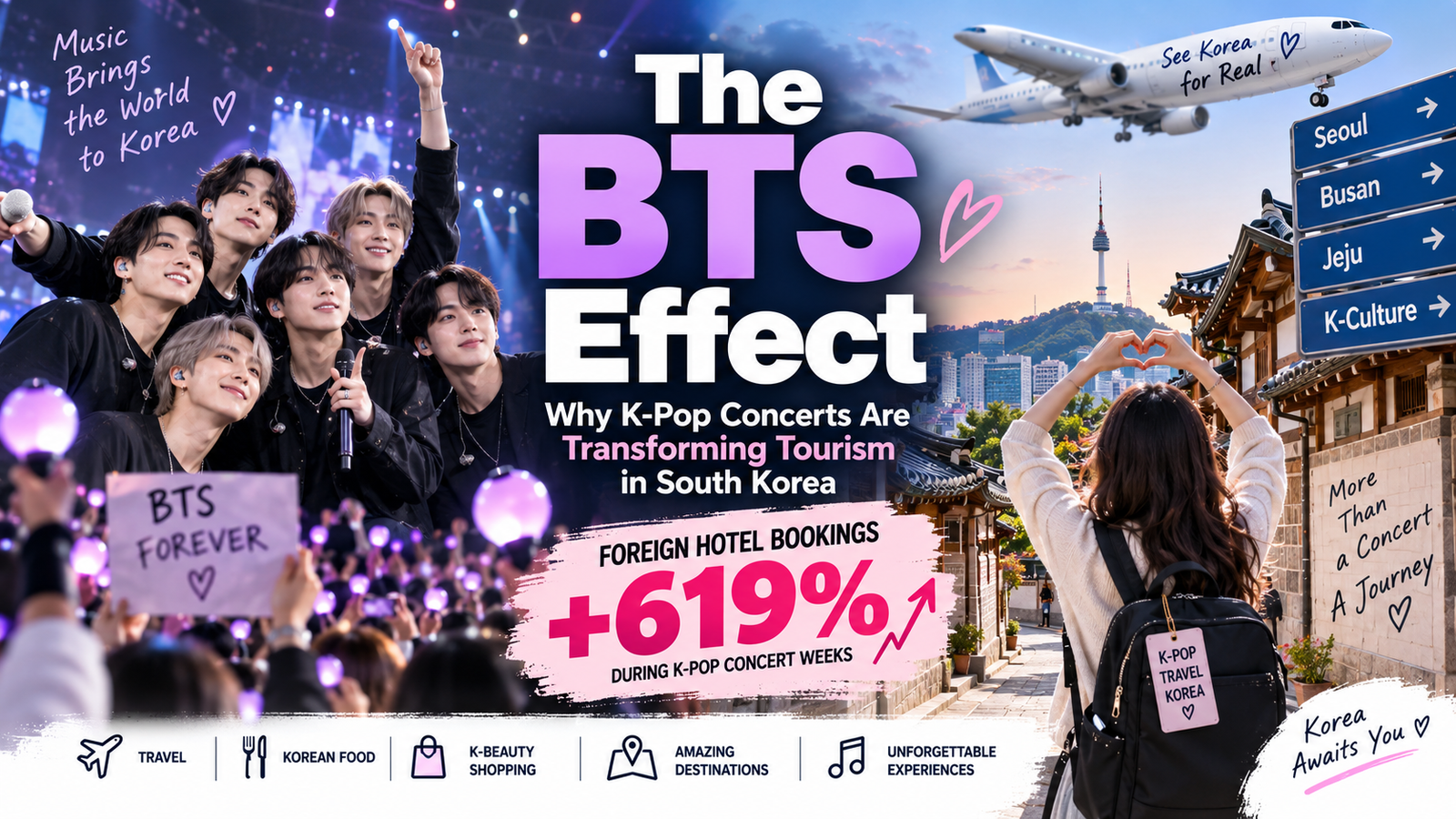
  • The BTS Effect: Why K-Pop Concerts Are Transforming Tourism in South Korea

    The BTS Effect: Why K-Pop Concerts Are Transforming Tourism in South Korea

    For millions of international travelers, a trip to South Korea once began with a familiar checklist:

    Seoul.

    Gyeongbokgung Palace.

    Myeongdong.

    Korean barbecue.

    Maybe Jeju Island or Busan.

    But a new kind of traveler is changing Korean tourism.

    Their trip may begin with something completely different:

    A concert ticket.

    A BTS performance.
    A BLACKPINK concert.
    A Stray Kids show.

    Fans fly thousands of miles to Korea for a few hours of music — but they rarely leave after the concert.

    They stay in hotels.

    They eat Korean food.

    They shop.

    They visit neighborhoods connected to their favorite artists.

    They travel to other cities.

    And increasingly, K-pop is becoming not simply something tourists enjoy while visiting Korea.

    K-pop is becoming the reason they visit Korea in the first place.

    New tourism data shows just how powerful this phenomenon has become.

    According to an analysis by the Korea Tourism Organization, accommodation bookings by foreign visitors surged 619.2% during weeks featuring concerts by three major K-pop acts compared with non-concert weeks in the dataset.

    And BTS provides perhaps the clearest example yet of what happens when global fandom turns into actual travel.

    Welcome to the new era of K-pop tourism in South Korea.


    The BTS Effect Is Bigger Than a Concert

    When BTS returned to the stage in South Korea in 2026, thousands of international ARMYs traveled to the country.

    But Korea’s Ministry of Culture, Sports and Tourism wanted to know something beyond concert attendance:

    What did those fans do after they arrived?

    Together with the Korea Culture & Tourism Institute and Korea Tourism Organization, the ministry surveyed concertgoers and analyzed mobile-network and credit-card data surrounding BTS performances in Seoul and Goyang.

    The results were remarkable.

    Foreign visitors who attended BTS’s March 21 Gwanghwamun performance stayed in South Korea for an average of:

    8.7 days

    and spent approximately:

    KRW 3.53 million per person.

    By comparison, the average international visitor during the first quarter of 2026 stayed 6.1 days and spent approximately KRW 2.45 million.

    In other words, BTS concert visitors stayed about 2.6 days longer and spent roughly KRW 1.08 million more per person than the average international tourist.

    That changes the way we should think about a K-pop concert.

    It is not simply a three-hour entertainment event.

    For international fans, it can become the anchor around which an entire Korean vacation is built.


    73.6% Came to Korea Primarily Because of BTS

    There is an even more important number.

    Among foreign visitors surveyed around BTS’s Gwanghwamun performance:

    73.6% said the BTS event was their primary reason for visiting South Korea.

    Another 17.4% were already visiting Korea for another purpose and added the event to their trip.

    Think about what that means.

    Without the concert, many of those international visitors might not have booked:

    a flight to Korea,

    a hotel room,

    airport transportation,

    restaurant meals,

    shopping trips,

    or visits to Korean attractions.

    The concert created the trip.

    This is why the phrase “BTS Effect” is more than fan language.

    It increasingly describes a measurable tourism phenomenon.


    BTS Fans Didn’t Just Attend the Concert and Go Home

    The Goyang concerts provide an even clearer picture.

    International fans attending BTS’s Goyang shows stayed in Korea for an average of 7.4 days and spent approximately KRW 2.91 million per person.

    And they traveled well beyond the stadium.

    Visitors connected their concert trips with places such as:

    Yongsan

    Myeongdong

    Dongdaemun Design Plaza (DDP)

    and the National Museum of Modern and Contemporary Art.

    These destinations were linked to the broader “BTS THE CITY Seoul” experience surrounding the performances.

    This is exactly why K-pop matters so much to tourism.

    A concert may last several hours.

    But the trip surrounding it can last more than a week.


    One BTS Concert Area Saw Foreign Spending Jump 38-Fold

    Perhaps the most dramatic evidence comes from the neighborhood surrounding the Goyang concert venue.

    The Korea Tourism Organization compared mobile and card data around Daehwa-dong, where the concerts took place, with the same period a year earlier.

    During the three BTS concert days, foreign visitors increased from 1,397 to 48,581.

    That’s approximately:

    35 times more foreign visitors.

    Foreign card spending in the area increased from approximately KRW 8.9 million to KRW 337.8 million.

    That’s roughly:

    38 times more spending.

    These numbers show why cities around the world compete aggressively to host major concerts.

    The economic impact does not stop at the ticket booth.

    It reaches:

    hotels,

    restaurants,

    cafés,

    convenience stores,

    taxis,

    subways,

    shopping centers,

    tourist attractions

    and local businesses.


    Then Came an Even Bigger Number: 619%

    BTS is not an isolated case.

    A newer Korea Tourism Organization analysis examined accommodation behavior surrounding major events.

    The results suggest that the concert-tourism effect extends across K-pop.

    During weeks featuring concerts by BTS, BLACKPINK and Stray Kids in the analyzed data, accommodation bookings increased dramatically.

    Domestic bookings rose around 99.4%.

    But bookings by foreign visitors increased by approximately:

    619%

    compared with non-concert periods in the analysis.

    That number deserves attention.

    Fans are not merely streaming Korean music from Los Angeles, Tokyo, Paris, Bangkok or London.

    Increasingly, they are getting on airplanes.


    K-Pop Has Changed the Meaning of a “Tourist Attraction”

    Traditionally, tourism promotion centered around physical landmarks.

    For Korea, that meant places such as:

    Gyeongbokgung Palace,

    Bukchon Hanok Village,

    N Seoul Tower,

    Jeju Island,

    or Haeundae Beach.

    Those places remain important.

    But younger international travelers increasingly build trips around something less traditional.

    They want to visit places connected to Korean culture they already love.

    A café visited by an idol.

    A music-video filming location.

    A neighborhood featured in Korean entertainment.

    A pop-up store.

    A concert venue.

    A K-pop agency district.

    A restaurant associated with an artist.

    A beauty store selling products used by Korean celebrities.

    The tourist attraction is no longer always a monument.

    Sometimes the attraction is a connection to a story, artist or fandom.


    Why K-Pop Fans Often Stay Longer

    Traditional sightseeing trips can be surprisingly short.

    A visitor might spend three or four days checking off famous attractions and then leave.

    Fandom tourism works differently.

    Imagine flying to Seoul for a Saturday concert.

    You may arrive several days early because international travel is expensive and you don’t want to risk missing the event.

    Then you discover that your favorite group has:

    a pop-up event,

    a merchandise store,

    a themed café,

    a photo exhibition,

    or related attractions elsewhere in the city.

    After the concert, you might add another few days for Korean food, shopping and sightseeing.

    Suddenly, a concert weekend becomes:

    a seven- or eight-day Korea vacation.

    The BTS data shows exactly this pattern.


    Where Do K-Pop Fans Go in Korea Beyond the Concert?

    This is where K-pop tourism becomes particularly interesting for first-time visitors.

    You don’t have to spend your entire vacation searching for idol-related locations.

    The best K-pop trip combines fandom with Korea itself.

    Here are several places that fit naturally into that itinerary.

    1. Hongdae

    Hongdae is one of Seoul’s most energetic neighborhoods.

    Street performances, cafés, fashion, nightlife and music culture make it especially popular with younger travelers.

    For a K-pop fan visiting Korea for the first time, Hongdae is one of the easiest places to experience contemporary Seoul.


    2. Myeongdong

    Myeongdong remains one of the most convenient areas for international visitors.

    You can combine:

    K-beauty shopping,

    Korean street food,

    restaurants,

    fashion

    and easy transportation.

    BTS concert visitors were also observed traveling to Myeongdong during their wider Korea itinerary.


    3. Yongsan

    Yongsan has become increasingly relevant to K-pop travelers.

    The area combines major transportation connections, shopping and proximity to entertainment-related destinations.

    It also appeared among locations visited by international BTS concertgoers.


    4. Dongdaemun Design Plaza

    DDP is one of Seoul’s most recognizable modern landmarks.

    It frequently hosts exhibitions, pop-ups, fashion events and cultural programs.

    Its late-night surroundings also make it easy to combine sightseeing with shopping and food.


    5. Seongsu

    If you want to understand modern Korean pop culture beyond music, visit Seongsu.

    The neighborhood has become known for:

    brand pop-ups,

    fashion,

    cafés,

    beauty launches

    and collaborations involving celebrities and entertainment brands.

    It represents another important part of contemporary Korean youth culture.


    6. The Han River

    Not everything needs to be a paid attraction.

    One of the simplest Seoul experiences is spending an evening along the Han River.

    Buy convenience-store food, order Korean fried chicken, sit by the river and watch Seoul slow down after sunset.

    For international visitors who first discovered Korea through highly produced music videos and dramas, ordinary experiences like this often become some of the most memorable moments of the trip.


    And K-Pop Tourism Is Moving Beyond Seoul

    This may ultimately be the most important change.

    Historically, international tourism to Korea has been heavily concentrated in Seoul.

    But recent tourism data shows foreign travelers are increasingly exploring other regions.

    The share of international visitors staying outside the greater Seoul region rose from 39.5% to 43%, according to the recent tourism analysis.

    Growth was particularly notable in destinations including:

    Busan

    Jeju

    Andong

    and Gyeongju.

    K-pop can accelerate that trend.

    If a major concert takes place outside central Seoul, thousands of international fans suddenly need:

    accommodation,

    transportation,

    food,

    shopping

    and things to do nearby.

    A concert can therefore become a gateway to regional Korea.


    Busan May Be the Perfect Example

    For many international visitors, Busan is already Korea’s obvious second destination after Seoul.

    It offers something completely different:

    beaches,

    seafood,

    traditional markets,

    mountains,

    coastal temples,

    night views

    and a more relaxed atmosphere.

    K-pop events can give travelers the initial reason to visit.

    But once they arrive, places such as:

    Haeundae,

    Gwangalli,

    Jagalchi Market,

    Gamcheon Culture Village

    and Haedong Yonggungsa Temple

    turn a concert trip into a broader Korean travel experience.

    This is the real tourism value of K-pop.

    Music gets people onto the plane.

    Korea gives them reasons to stay.


    K-Pop Is Also Selling Korean Food

    There is another powerful effect that tourism statistics alone don’t fully capture.

    Fans often arrive in Korea already familiar with Korean food.

    They have seen idols eating:

    tteokbokki,

    ramyeon,

    samgyeopsal,

    fried chicken,

    gimbap,

    kimchi jjigae

    and Korean convenience-store food.

    So when they finally visit Korea, eating those foods can feel like participating in the culture they have followed from abroad.

    This is one reason K-pop tourism connects naturally with food tourism.

    A fan who travels to Korea for BTS may return home remembering the concert.

    But they may also remember:

    their first Korean barbecue dinner,

    late-night fried chicken,

    tteokbokki from a street stall,

    or convenience-store ramyeon eaten beside the Han River.

    That emotional connection is extremely powerful.


    K-Pop Also Leads Travelers Into K-Beauty

    The same phenomenon occurs with Korean beauty.

    K-pop fans are constantly exposed to:

    Korean skincare,

    makeup,

    fashion,

    hairstyles

    and beauty trends.

    Once they arrive in Korea, stores in Myeongdong, Hongdae, Gangnam and Seongsu become part of the tourism experience.

    This is why the economic value of Korean popular culture extends far beyond music sales.

    One song can eventually influence spending on:

    travel,

    hotels,

    restaurants,

    beauty,

    fashion,

    transportation

    and entertainment.

    That is the larger K-Culture economy.


    K-Pop Tourism Is Different From Ordinary Celebrity Tourism

    Celebrity tourism is not new.

    People have always traveled to see musicians.

    But K-pop has several characteristics that make the effect unusually powerful.

    First, K-pop fandoms are highly organized internationally.

    Fans communicate through social media and online communities across national borders.

    When a concert is announced, information about:

    tickets,

    flights,

    hotels,

    transportation,

    restaurants

    and fan events

    can spread globally within hours.

    Second, K-pop provides a constant stream of content between concerts.

    Music videos, livestreams, variety shows, social media, documentaries and fan platforms create continuous engagement.

    For many international fans, Korea does not feel like a completely unfamiliar country by the time they arrive.

    They have already been experiencing parts of Korean culture digitally for years.

    The physical trip becomes the final step of a relationship that began online.


    From “Korean Wave” to “Travel to Korea”

    For years, people talked about the Korean Wave — Hallyu — primarily in terms of exports.

    Korean music was exported.

    Korean dramas were exported.

    Korean movies were exported.

    Korean beauty products were exported.

    But something more interesting is now happening.

    Instead of Korean culture only traveling overseas, overseas consumers are traveling to Korea.

    That represents a major change.

    A Spotify stream generates one type of economic value.

    A tourist who flies to Korea and stays for eight days generates something completely different.

    They may buy:

    airfare,

    accommodation,

    concert tickets,

    food,

    transportation,

    cosmetics,

    fashion,

    souvenirs

    and additional travel experiences.

    The BTS tourism data makes this difference visible.


    What This Means for Someone Planning a Korea Trip

    If you are considering traveling to Korea for a K-pop concert, there is one piece of advice worth remembering:

    Don’t make the concert your entire trip.

    Make it the beginning.

    If your concert is in Seoul or Goyang, consider spending several days exploring Seoul before or after the event.

    Then add another destination.

    For example:

    Days 1–4: Seoul
    Day 5: K-pop concert
    Days 6–7: Seoul neighborhoods and shopping
    Days 8–9: Busan or Gyeongju

    Even a shorter trip can combine K-pop with Korean food, history and everyday culture.

    And that is often where the best memories happen.


    The BTS Effect May Be Showing Us the Future of Korean Tourism

    The most interesting thing about the BTS tourism data isn’t simply that BTS is popular.

    We already knew that.

    What matters is what fans do because of that popularity.

    They cross borders.

    They stay longer.

    They spend more.

    They explore neighborhoods.

    They eat Korean food.

    They shop for Korean products.

    And increasingly, they travel beyond Seoul.

    Government data showed foreign visitors around BTS’s Goyang concert increased about 35-fold, while their card spending increased about 38-fold compared with the same period a year earlier.

    More recent tourism data found foreign accommodation bookings surging roughly 619% during selected major K-pop concert weeks.

    Those aren’t streaming numbers.

    They represent people physically moving around Korea.


    Final Thoughts: They Come for BTS — But They Discover Korea

    Perhaps the simplest way to understand K-pop tourism is this:

    Fans may buy the plane ticket because of BTS.

    But BTS isn’t necessarily what they remember most about every day of the trip.

    They may remember eating grilled pork with friends in Seoul.

    Getting lost on the subway.

    Walking along the Han River at night.

    Buying skincare in Myeongdong.

    Discovering a tiny restaurant they had never seen on TikTok.

    Taking the KTX to Busan.

    Seeing the Korean coastline for the first time.

    That is where K-pop’s tourism power becomes much larger than music.

    K-pop gives millions of people a reason to become curious about Korea.

    And once they arrive, Korea itself becomes the experience.

    That may be the real BTS Effect — not simply selling more concert tickets, but turning global music fans into travelers who want to experience the country behind the music.


    Official & Useful Korea Travel Resources

    For official travel planning, destinations, festivals and practical information, visit VisitKorea — Korea Tourism Organization.

    The Korean government’s analysis of BTS concert tourism is also available directly from the Ministry of Culture, Sports and Tourism.


    K-Beauty Shopping

    If your Korea trip includes K-beauty — or you want to shop Korean skincare and cosmetics from overseas — explore OLIVE YOUNG Global.

    Shop K-Beauty at OLIVE YOUNG Global

    If you purchase through the link above, the site operator may receive a commission at no additional cost to you.