What happens when a detective becomes almost as frightening as the criminals he hunts?
In the 2008 Korean crime-action film Public Enemy Returns, Detective Kang Chul-jung is not a polished law enforcement officer. He is loud, aggressive, frequently reckless, and willing to bend the rules whenever he believes it will help him catch a criminal.
After 15 years on the force, he is also exhausted. He has little money, no comfortable financial future, and growing doubts about whether being a police officer was worth the sacrifice.
Just when he decides to resign, a high school murder case pulls him into a confrontation with Lee Won-sul, a wealthy businessman who secretly operates a criminal organization.
But Won-sul is not an ordinary gangster. He uses young students to commit crimes and makes them take responsibility when things go wrong.
The real conflict is therefore not simply between a detective and a criminal.
It is between two men who use power in completely different ways.
Why does Kang behave like a gangster? Why does Won-sul hide behind the image of a respectable businessman? And how does their final confrontation expose the difference between them?
Here is the ending of Public Enemy Returns explained.
1. Why Does Kang Chul-jung Want to Quit the Police?
When we meet Kang Chul-jung, he is already tired of his profession.
He has spent approximately 15 years fighting crime, but his financial situation remains frustrating.
The men he has arrested have sometimes gone on to make more money than he has. Meanwhile, Kang struggles with ordinary expenses and even finds it difficult to secure the financial stability he wants for his family.
He begins to question the value of his career.
This is an important detail because Kang is not considering resignation because he has become afraid of criminals.
He is frustrated because the sacrifices of his profession have not given him the life he expected.
His problem is painfully ordinary: he wants a decent home and a more secure future for his daughter.
The film introduces its hero not as someone eager to save the world, but as a man wondering whether his work has been worth it.
2. Why Does One More Murder Case Change Everything?
Just as Kang submits his resignation, a murder investigation delays his departure.
A businessman is murdered, and the investigation eventually leads to a high school student who has been killed.
At first, the cases appear to be separate incidents.
However, forensic evidence connects them.
Kang discovers that a fingerprint associated with the student is linked to a knife involved in the earlier murder.
This connection gives him a reason to investigate the student’s friends and the people surrounding them.
The investigation gradually reveals a much larger criminal network.
Kang may have wanted to leave the police, but he cannot ignore a case that appears to involve the exploitation of young people.
3. Who Is Lee Won-sul?
Lee Won-sul, played by Jung Jae-young, is the central antagonist.
Unlike a traditional gangster who openly displays his criminal identity, Won-sul presents himself as a successful businessman.
He controls a network of businesses and has enough money and influence to maintain a respectable public image.
He also uses charitable activities, including a scholarship foundation, to strengthen that image.
But behind the respectable appearance is a criminal organization.
Won-sul understands that money, business connections, and social status can protect him in ways that ordinary street violence cannot.
This makes him a particularly interesting opponent for Kang.
Kang is an unpleasant detective who looks like trouble.
Won-sul is a criminal who looks like a successful member of society.
The film repeatedly plays with this contrast.
4. Why Does Won-sul Recruit High School Students?
One of the most disturbing elements of the film is Won-sul’s use of young boys.
He brings troubled students into his organization and gradually turns them into tools for his criminal activities.
They are useful because they are vulnerable, inexperienced, and easier to manipulate.
Won-sul gives them the impression that they are becoming part of something powerful.
But the relationship is never equal.
When a serious crime occurs, he can force one of the young people to confess or take the blame.
In effect, he uses their youth and desperation as protection for himself.
The students believe they are gaining status and opportunity.
In reality, they are being trained to become disposable criminals.
This is one of the film’s strongest criticisms of organized crime: the powerful rarely accept the same risks they impose on the powerless.
5. Why Is Kang So Different From Other Detectives?
Kang does not behave like a conventional movie detective.
He is loud, impatient, physically aggressive, and frequently embarrassing.
He does not always respect professional boundaries.
He may insult people, provoke suspects, or create a disturbance simply to get the reaction he wants.
Even his personal behavior is far from ideal.
His relationship with his family also reveals that he is not a heroic figure who has successfully balanced his work and private life.
He is flawed.
But these flaws are precisely what make the character distinctive.
Kang does not approach criminals with polished speeches about justice.
He approaches them with anger, stubbornness, and an almost unreasonable determination to win.
6. Is Kang Actually Better Than the Criminals?
This is the question that gives the film its title character much of his complexity.
Kang uses violence.
He intimidates people.
He sometimes behaves in ways that would be difficult to defend as proper police procedure.
The Busan International Film Festival’s program note specifically highlights this contradiction: Kang can appear more gangster-like than the gangsters he is pursuing.
The film’s action-comedy style depends heavily on that reversal.
But there is an important distinction between Kang and Won-sul.
Kang’s aggression is directed toward stopping criminal activity, even when his methods are questionable.
Won-sul’s violence exists to protect his power and personal interests.
That difference does not make every action Kang takes morally acceptable.
It does, however, explain why the film positions them on opposite sides of the conflict.
7. Why Does Won-sul Look More Respectable Than Kang?
Won-sul understands something Kang does not care about: appearances can be a form of power.
He wears expensive suits, operates legitimate-looking businesses, and maintains a public identity as a successful executive.
He can enter respectable places without attracting the suspicion that follows an ordinary gangster.
Kang, by contrast, often looks like someone who has just walked out of a street fight.
The irony is deliberate.
The detective looks dangerous, while the criminal looks respectable.
The film asks viewers to look beyond appearances.
A person does not become honest simply because he owns a company, supports a charitable foundation, or wears an expensive suit.
Sometimes the most dangerous criminal is the one who has successfully convinced society that he is not a criminal at all.
8. Why Does Kang Keep Going After Won-sul?
Kang gradually realizes that Won-sul is not simply connected to the crimes.
He is the person directing the system that allows them to happen.
The young students are being used to carry out his orders, and some are forced to accept responsibility when the organization needs protection.
Kang becomes increasingly angry as he uncovers the extent of the exploitation.
This is more than another opportunity to arrest a criminal.
Won-sul represents the kind of person who profits from other people’s vulnerability while avoiding the consequences himself.
Kang may be tired of police work, but he cannot accept a situation in which a powerful man uses children as disposable shields.
His resignation begins to feel less important than finishing the investigation.
9. Why Does Won-sul Underestimate Kang?
Won-sul has money, employees, influence, and a network of people who can do his dirty work.
He is accustomed to controlling situations.
Kang, however, is difficult to predict.
He does not behave like someone who is worried about protecting his reputation or maintaining a comfortable relationship with powerful people.
He is willing to appear at Won-sul’s businesses, provoke confrontations, and create public disturbances.
The more Won-sul tries to maintain control, the more Kang disrupts his carefully constructed image.
This is an unusual kind of detective strategy.
Instead of quietly following the criminal’s movements, Kang attacks the criminal’s sense of security.
He makes himself impossible to ignore.
10. Why Does the Investigation Become Personal?
As Kang uncovers the relationship between Won-sul and the students, he becomes increasingly determined to expose him.
Won-sul, meanwhile, recognizes that Kang is becoming a genuine threat.
The conflict escalates from an investigation into a personal battle.
Won-sul uses his influence and the students under his control to target Kang.
The detective is eventually attacked and stabbed.
This moment is significant because it demonstrates how far Won-sul is willing to go to protect himself.
He does not simply want to escape prosecution.
He wants to remove the person who is threatening his entire operation.
But Kang survives.
And rather than backing away, he uses the attack to push the investigation forward.
11. How Does Kang Get Evidence Against Won-sul?
Kang understands that simply confronting Won-sul is not enough.
He needs evidence connecting the criminal organization to the young people carrying out its orders.
He uses the students’ involvement and their statements to build a case.
A particularly important piece of evidence is a recording that reveals Won-sul’s attempt to make someone else take responsibility for his crimes.
This exposes the structure of the organization.
Won-sul is not merely a businessman whose employees happen to commit crimes.
He is the person directing the operation while trying to keep himself away from the consequences.
The recording gives Kang something more valuable than another confrontation.
It gives him a way to challenge Won-sul’s carefully protected position.
12. Why Does Won-sul Try to Escape?
As the investigation closes in, Won-sul recognizes that his usual methods may no longer be enough.
He has relied on money, influence, and other people to protect himself.
But the evidence and the investigation threaten to connect him directly to the crimes.
He therefore begins preparing to escape.
This is another revealing detail about his character.
For all his confidence and public respectability, Won-sul is not willing to accept responsibility for what he has done.
He wants to preserve his wealth and freedom, even if the people who worked for him are left behind.
The contrast with the young students is especially striking.
They have been made to take the blame for him.
Now, when his own position becomes dangerous, he is prepared to abandon the entire operation.
13. The Final Confrontation: Kang vs. Won-sul
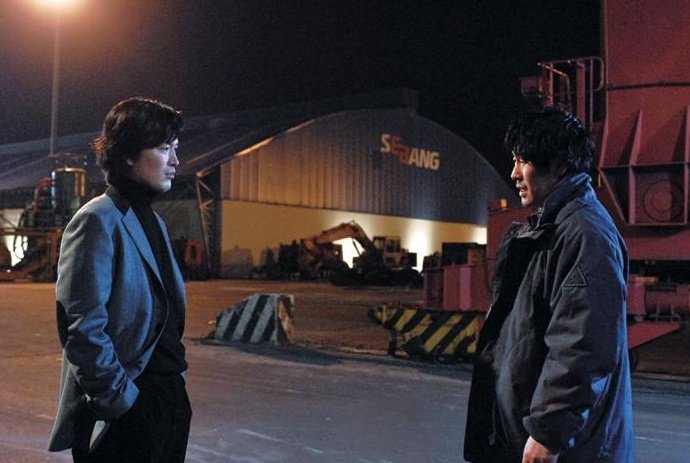
The story eventually leads to a final confrontation at the port.
Won-sul is attempting to escape, while Kang is determined to stop him.
The two men fight directly.
Won-sul manages to exploit Kang’s earlier stabbing injury, putting the detective at a disadvantage.
For a moment, it looks as if Won-sul may win.
But Kang has one final move.
He pulls out a gun.
Won-sul initially believes the weapon is loaded with blanks and does not take the threat seriously.
Kang fires.
The shot allows him to overpower Won-sul and bring the confrontation to an end.
The moment is important because Won-sul has spent the entire film believing that he can control every situation.
At the port, that confidence finally fails him.
The criminal who used other people as shields is no longer able to hide behind them.
14. The Ending Explained: Why Does Kang Reunite Tae-jun With His Friends?
After the confrontation, the film shifts away from the violence and returns to the young people who became trapped in Won-sul’s organization.
Kang brings Tae-jun to San-su’s shop.
There, Tae-jun discovers that his friends are alive.
Kang has hidden them and helped protect them from the consequences of the criminal organization.
This is an important detail in the ending.
Kang’s objective was never simply to defeat Won-sul.
He also wanted to stop the criminal system that was consuming the students.
The reunion shows that at least some of the young people have been given another chance.
Their lives do not have to end as criminals or victims of Won-sul’s organization.
The ending therefore provides a small but meaningful victory beyond the arrest or defeat of the antagonist.
Kang has not just stopped a powerful criminal.
He has helped prevent a group of young people from being permanently swallowed by that criminal’s world.
15. Does Kang Finally Become a Successful Detective?
The ending does not transform Kang into a polished or financially successful man.
He remains the same stubborn, difficult detective.
Even in the final scene, he asks San-su to lend him some money again.
This small moment is deliberately funny.
The major criminal has been defeated, but Kang’s everyday financial problems have not magically disappeared.
It is an effective way to return the character to the ordinary world.
He has done something important, but he is still Kang Chul-jung.
He is not a glamorous action hero who receives a perfect reward for his efforts.
He is a man who continues doing a difficult job, even when that job does not make his personal life easier.
That is part of what makes the character memorable.
16. What Is the Real Meaning of Public Enemy Returns?
The central conflict in Public Enemy Returns is not simply about whether a detective can defeat a gangster.
It is about the difference between looking powerful and actually having moral responsibility.
Won-sul has wealth, status, businesses, and a public image that makes him appear respectable.
But he uses young people as tools and abandons them when they become inconvenient.
Kang has almost none of those advantages.
He is financially insecure, socially awkward, and often behaves in ways that make him look more like a criminal than a police officer.
Yet he refuses to abandon the people being exploited.
The film does not ask viewers to accept all of Kang’s methods as examples of good policing.
Instead, it uses his exaggerated behavior to create a provocative question:
If a detective uses the same violence as a criminal, what actually separates him from the people he arrests?
The answer is not simply his uniform.
It is the purpose behind his actions, the people he chooses to protect, and whether he accepts responsibility for the consequences.
Won-sul uses people to preserve himself.
Kang risks himself to stop that exploitation.
That is the difference the film ultimately wants us to recognize.
Public Enemy Returns is therefore more than a story about a rough detective beating up criminals.
It is a dark comedy about power, social respectability, corruption, and the uncomfortable distance between justice and violence.
And perhaps its most memorable irony is this:
The man who looks like a gangster is the one trying to protect the law. The man who looks like a respectable businessman is the one destroying it.