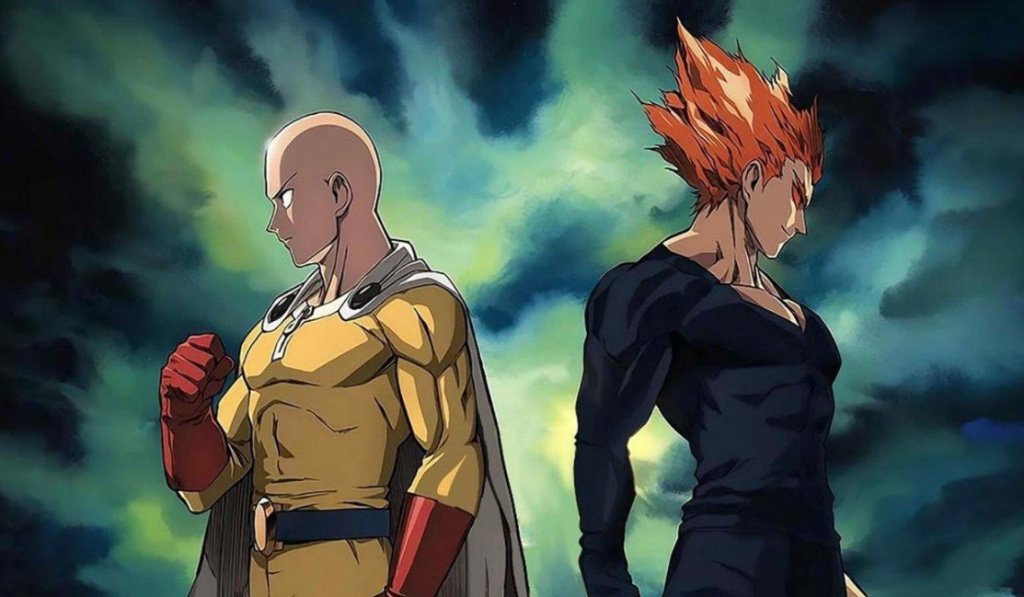
One-Punch Man was never supposed to be an ordinary superhero anime.
Its central joke was beautifully simple: what happens when a hero becomes so powerful that every battle ends before it becomes interesting?
Saitama could defeat almost any enemy with a single punch. Yet the series never depended on that joke alone. It combined spectacular action, absurd comedy, unexpected emotional moments, and a clever understanding of superhero clichés.
That combination made the first season memorable.
But Season 3 created a different kind of conversation. Instead of discussing Saitama’s overwhelming strength or the strange world of professional heroes, many viewers began discussing still frames, awkward movement, rushed scenes, and disappointing comedy.
Is animation really the biggest problem?
Or has the adaptation lost something more important about what made One-Punch Man special?
1. The Original Appeal Was Never Just Animation
It is easy to remember One-Punch Man as an anime famous for extraordinary fight scenes.
The first season certainly delivered spectacular action. But impressive animation was only one part of its appeal.
The series also understood how to make an ordinary moment funny.
Saitama could defeat a terrifying monster and then become irritated because he had missed a supermarket discount. He could save an entire city without receiving the recognition he expected. His greatest frustration was often not a powerful enemy but the inconvenience of everyday life.
This contrast created the identity of the series.
The world treated heroism as something dramatic and prestigious. Saitama treated it as a hobby.
That difference was the real source of its comedy.
2. Why Saitama’s Strength Created a Storytelling Problem
Most action stories become more exciting when the protagonist faces a stronger opponent.
The hero struggles, suffers, trains, and eventually discovers a way to win.
One-Punch Man deliberately removes that structure.
Saitama has already reached the destination that most protagonists spend an entire series trying to reach. His strength is not a reward waiting at the end of his journey. It is the problem with which the story begins.
This creates an unusual question:
If nobody can challenge the hero physically, what can challenge him emotionally?
Saitama’s real conflict is not about winning battles. It is about finding meaning in a life where victory has become automatic.
That idea gives the series more depth than its ridiculous premise initially suggests.
3. The Difference Between Spectacle and Storytelling
A beautifully animated fight can make an episode exciting.
But animation alone cannot create a meaningful story.
A fight needs rhythm. The audience needs to understand what the characters want, what is at stake, and why each movement matters.
A pause can communicate fear. A sudden movement can reveal determination. A character’s expression can make a seemingly ordinary exchange emotionally powerful.
When these elements disappear, even a technically impressive image can feel empty.
This is why criticism of Season 3 cannot be reduced to the number of moving frames.
The problem becomes more serious when the direction fails to create a natural connection between one moment and the next.
4. Why Season 3’s Pacing Became a Bigger Issue
One recurring criticism in Reddit discussions concerns the speed at which scenes move.
Some viewers felt that important transitions were missing. Characters appeared, exchanged information, and moved into the next event before the previous moment had time to develop.
This matters because storytelling is not simply a sequence of events.
The audience needs time to understand the relationships between those events.
A scene can be short without feeling rushed. But when the emotional or narrative transition is missing, the viewer may feel as though they are watching a summary rather than an episode.
That distinction is important.
The problem is not necessarily that the story contains too much material. It is that the adaptation must decide which moments deserve time.
5. Garou Is More Than Another Powerful Enemy
Garou is one of the most important reasons the Monster Association storyline deserves attention.
He is introduced as a character who hunts heroes. Yet his motivation is more complicated than simple hatred.
Garou is fascinated by monsters and rejects the way society defines heroes and villains.
He sees the world as a place where popularity and social approval often determine who is considered righteous.
In his eyes, heroes are celebrated because society has chosen to celebrate them. Monsters are hated because society has decided they must be hated.
His answer is extreme: he wants to become an absolute evil that everyone can recognize.
This makes Garou more interesting than a conventional villain.
He is not simply trying to defeat the heroes. He is challenging the system that gives them their identities.
6. The Monster Association Story Is About More Than Fighting
The Monster Association arc expands the world beyond Saitama’s personal experiences.
It introduces multiple heroes, monsters, rivalries, conflicting beliefs, and different ideas about strength.
The Hero Association is not a perfect organization. Its members have different personalities, abilities, ambitions, and levels of responsibility.
Some heroes are genuinely courageous. Others are concerned with status or recognition.
The monsters are also not all identical. Their motivations and relationships create a larger conflict than a simple battle between good and evil.
This broader structure is one of the story’s greatest strengths.
But it also creates a challenge for the anime adaptation: every character interaction contributes to the larger picture.
When those interactions are shortened or removed, the conflict can become less meaningful.
7. Why the Supporting Heroes Matter
One-Punch Man works because its world does not revolve entirely around Saitama.
Characters such as Genos, King, Bang, Tatsumaki, and the other professional heroes provide different perspectives on strength and responsibility.
King is particularly important because he represents the difference between reputation and actual ability.
He is treated as one of the world’s greatest heroes, even though his public image does not reflect his real capabilities.
His presence creates a different kind of comedy from Saitama’s overwhelming power.
Genos, meanwhile, takes heroism extremely seriously. His dedication contrasts with Saitama’s casual attitude.
These characters make the world feel alive.
If an adaptation focuses too heavily on moving the plot from one battle to another, it risks losing the relationships that make the world worth watching.
8. The Comedy Was Part of the Action
One of the recurring criticisms of Season 3 concerns its comedy.
For many viewers, the humor in One-Punch Man was never an optional extra.
It was part of the storytelling structure.
A dramatic battle could suddenly become ridiculous. A terrifying villain could be interrupted by an ordinary inconvenience. A character who expected a heroic confrontation might discover that Saitama was more interested in something completely unrelated.
These moments created contrast.
Without them, the series can become a more conventional action anime.
That is a significant loss because One-Punch Man was originally interesting precisely because it refused to behave like a conventional action anime.
The jokes did not simply interrupt the action. They gave the action its distinctive personality.
9. Why Saitama’s Limited Presence Can Hurt the Experience
Season 3 spends considerable attention on the larger conflict involving the heroes and monsters.
That material is important to the story.
However, Saitama remains the character who gives the series its unique perspective.
When he disappears for long stretches, viewers may feel that they are watching a different kind of show.
This does not mean every episode must revolve around him.
In fact, the supporting characters need room to develop.
But the story must preserve the contrast between the enormous seriousness of the world and Saitama’s almost ridiculous indifference to it.
That contrast is the foundation of the series.
Without it, the audience may begin to wonder what makes this particular superhero story different from dozens of others.
10. What Reddit Viewers Are Actually Complaining About
Reddit discussions reveal several overlapping criticisms of Season 3.
First, viewers have criticized the limited movement and visual presentation in several episodes.
Second, some have complained about rushed transitions and scenes that feel incomplete.
Third, others have argued that the comedy and sound design do not have the same impact as earlier seasons.
There are also viewers who believe the underlying story remains interesting despite the adaptation problems.
That distinction matters.
Not every negative reaction means the source material has failed. Some viewers are frustrated because they believe the anime is not doing justice to the material.
In other words, the criticism often comes from people who still care about the series.
They are not necessarily rejecting the world of One-Punch Man. They are disappointed by how that world has been presented.
11. Is Season 1 an Impossible Standard to Follow?
The first season established an unusually high standard.
Its action sequences, visual direction, comedic timing, and overall presentation created an experience that was difficult to reproduce.
That success became both an advantage and a burden.
Every later season would inevitably be compared with the original.
But the comparison should not be limited to animation quality.
Season 1 understood how to balance its different elements. It could move from a ridiculous joke to a serious emotional moment without losing its identity.
A later season does not need to reproduce every visual achievement of Season 1.
It does, however, need to understand why those achievements mattered.
The real standard is not simply better animation.
It is the ability to make the audience feel the same excitement, surprise, and humor through a coherent storytelling experience.
12. The Difference Between a Weak Adaptation and a Weak Story
This distinction may be the most important one when evaluating Season 3.
A weak adaptation can make a strong story feel ordinary.
A rushed conversation can remove the tension between characters. A poorly directed fight can make an important victory feel unremarkable. A missing comedic pause can change the entire tone of a scene.
The source material may still contain the ideas that originally made the story compelling.
But viewers experience the anime through what appears on screen, not through the potential of the original manga.
This is why telling disappointed viewers to simply read the manga does not completely answer their criticism.
They wanted to experience the story as an anime.
And an adaptation must succeed on its own terms.
13. What Season 3 Part 2 Needs to Recover
The second part of Season 3 is scheduled for January 2027.
That gives the production another opportunity to restore audience confidence.
The challenge is not merely to produce a few impressive fight scenes.
A better result would require several elements working together:
- More deliberate pacing between important scenes.
- Stronger visual storytelling during battles.
- Better use of character expressions and reactions.
- Comedy that feels natural rather than mechanically inserted.
- Enough attention to supporting characters without losing Saitama’s distinctive perspective.
The story already has major conflicts and characters capable of attracting attention.
What matters now is how effectively the anime presents them.
A spectacular fight might create a memorable moment.
But consistent direction is what makes an entire season satisfying.
14. The Real Strength of One-Punch Man Is the Question It Asks
At first glance, One-Punch Man is a story about a man who can defeat anyone with one punch.
But its deeper question is more interesting:
What happens when you achieve everything you thought you wanted, and discover that it no longer makes you happy?
Saitama has unlimited strength but struggles to find excitement.
Garou wants to become an absolute monster because he believes the world is fundamentally unfair.
The professional heroes seek recognition, responsibility, or a sense of purpose.
Each character approaches strength differently.
That is what makes the world interesting.
Season 3’s controversy is therefore about more than animation quality. It has reminded viewers that the series needs more than powerful characters and large-scale battles to remain compelling.
It needs timing, personality, humor, and emotional contrast.
The greatest strength of One-Punch Man was never simply that Saitama could defeat every enemy with one punch.
It was that the series could make us laugh at the idea of absolute strength while quietly asking what strength is actually worth.
And that is the part the anime must never lose.