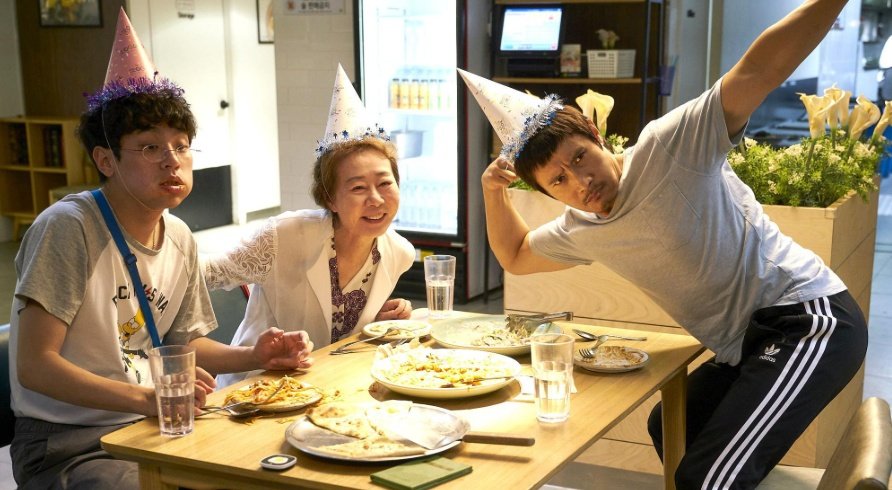
At first glance, Keys to the Heart appears to be a familiar family drama about two brothers who gradually discover the meaning of love. One is a struggling former boxer who has learned to survive by keeping people at a distance. The other is a young man with autism who possesses an extraordinary gift for playing the piano.
Their mother brings them together after years of separation, but the reunion is far from comfortable. The older brother, Jo-ha, does not know how to live with someone whose needs and behavior are so different from his own. Jin-tae, meanwhile, has spent much of his life in a world that other people struggle to understand.
The film eventually becomes an emotional story about family, forgiveness, and responsibility. Yet there is a more difficult question beneath its sentimental surface:
Was Jin-tae loved for who he was, or did people learn to love him because of what he could do?
That question changes how we understand the film. It invites us to look beyond the piano performances and emotional reconciliation and consider whether a person can be fully accepted without having to prove that they are special.
1. A Family That Was Broken Before the Story Began
The central conflict in Keys to the Heart begins long before Jo-ha and Jin-tae meet again.
Their mother, In-sook, has been separated from Jo-ha for years. Her decision to leave created a wound that time did not heal. Jo-ha grew up without the stable family relationship he needed, and his adult life reflects the emotional distance that followed.
He has become a man who relies on himself. His boxing background has taught him how to endure physical punishment, but it has not taught him how to deal with emotional vulnerability.
The important point is that Jo-ha’s anger is not simply bad behavior. It is also a defense mechanism.
He has learned that depending on someone can lead to disappointment. By refusing to expect much from others, he protects himself from being hurt again.
When In-sook reappears, she is not simply bringing two brothers together. She is asking Jo-ha to confront a past he has spent years trying to escape.
2. Jo-ha: A Man Who Understands Fighting Better Than Caring
Jo-ha is introduced as someone whose physical strength contrasts sharply with his unstable circumstances.
He has experience as a boxer, but his career has not provided him with the security or dignity he expected. He struggles financially and moves through life with little confidence that things will improve.
His attitude toward Jin-tae initially reflects this frustration.
Jin-tae has routines and behaviors that Jo-ha does not understand. Living together requires patience, adjustment, and emotional attention. These are precisely the things Jo-ha has difficulty offering.
It would be easy to describe him as selfish. But that interpretation misses something important.
Jo-ha has never developed the emotional habits required to care for another person. He knows how to defend himself, how to fight, and how to survive. He does not know how to become responsible for someone else’s daily life.
The film’s real transformation is not about making Jo-ha stronger. It is about teaching him that strength can also mean staying when leaving would be easier.
3. Jin-tae Is More Than a Musical Genius
Jin-tae’s piano ability is one of the film’s most memorable elements.
His musical talent gives him a way to communicate that does not depend entirely on ordinary conversation. When he plays, the audience sees a remarkable ability that contrasts with the difficulties he experiences in everyday social situations.
But there is a danger in focusing too heavily on this talent.
When a character with autism is portrayed as a musical genius, audiences may begin to associate that person’s value with an exceptional ability.
This creates an uncomfortable question: What if Jin-tae were not an extraordinary pianist? Would the people around him still make the same effort to understand him?
The film invites sympathy for Jin-tae, but its deeper significance emerges when we stop treating his musical ability as the reason he deserves affection.
He does not need to be a genius to deserve patience. He does not need to perform beautifully to deserve a place in his family.
His worth exists before the piano begins to play.
4. The Piano: A Language, but Not the Whole Person
Music plays a central role in the relationship between Jin-tae and the people around him.
The piano allows him to express something that ordinary conversation may not always communicate. It becomes a bridge between his internal world and the people trying to understand him.
For the audience, these performances also provide emotional release.
However, the piano can become a double-edged symbol.
On one hand, it gives Jin-tae an opportunity to be recognized for his ability. On the other, it risks reducing his identity to the one thing that makes him impressive to others.
A person is not the sum of their most marketable talent.
Jin-tae has preferences, habits, frustrations, and emotional needs that exist outside music. His daily life matters just as much as his performances.
This distinction is essential to understanding the film beyond its most touching scenes.
The real test of acceptance is not whether someone applauds Jin-tae when he plays. It is whether they respect him when he is not performing.
5. Why Jo-ha Initially Struggles to Accept His Brother
Jo-ha’s difficulty with Jin-tae is not simply caused by a lack of affection.
He has no established relationship with his younger brother. They have different experiences, different habits, and different ways of responding to the world.
Jo-ha expects communication to work according to familiar social rules. Jin-tae does not always respond in the way Jo-ha anticipates.
This creates misunderstandings.
Jo-ha initially approaches their relationship as a practical inconvenience. He is concerned with his own survival and does not immediately recognize how much his behavior affects Jin-tae.
But their relationship gradually changes through ordinary experiences.
They share space. They spend time together. They encounter situations that require cooperation. Jo-ha begins to notice Jin-tae as a person rather than merely as a responsibility placed on him.
That change is more meaningful than a sudden declaration of brotherly love.
Affection becomes believable when it develops through repeated acts of attention.
6. In-sook: A Mother Who Cannot Escape Her Past
In-sook is one of the most complicated characters in the story.
Her relationship with Jo-ha is burdened by abandonment and unresolved resentment. She wants to rebuild a connection, but she cannot simply return to the past and expect everything to be forgiven.
Her situation raises an important moral question.
Can a parent who leaves a child later ask that child to understand the circumstances behind the decision?
The film does not make this question easy.
In-sook may have had reasons for leaving, and her circumstances deserve consideration. But understanding her situation does not erase the consequences of her absence.
This distinction matters.
A person’s suffering can explain a decision without automatically making that decision harmless.
In-sook is not simply a villain who abandoned her child, nor is she a completely innocent mother whose actions should be excused. She is a person whose choices created lasting consequences.
That complexity gives the family conflict much of its emotional weight.
7. Can a Mother Be Forgiven Without Forgetting?
Forgiveness is often presented in films as a moment of emotional release.
A character apologizes, another character cries, and the relationship begins again.
Real forgiveness is rarely so simple.
Jo-ha’s anger has developed over years. It is connected not only to what happened but also to the life he had to build afterward.
Even if he understands his mother’s reasons, he cannot recover the childhood he lost.
This is why forgiveness should not be confused with forgetting.
Jo-ha does not need to pretend that his mother never hurt him. He needs to decide whether the past will continue to determine every relationship he has in the present.
The film’s emotional power comes from the possibility that people can move forward without rewriting their history.
Forgiveness is not proof that the damage was insignificant. Sometimes it is a decision to stop allowing that damage to control the future.
8. The Difference Between Protecting Someone and Controlling Them
Jin-tae needs support in situations that other people may find ordinary.
But support can become problematic when the person providing it assumes that they should make every decision.
This is an important issue in families caring for people with disabilities.
There is a difference between helping someone navigate a difficult situation and deciding that they cannot have preferences of their own.
The first recognizes a person’s individuality. The second can unintentionally erase it.
Jo-ha’s relationship with Jin-tae gradually forces him to reconsider what responsibility means.
Being a brother does not mean treating Jin-tae as someone who exists only to be protected. It means learning how to recognize his needs while respecting his personality.
The film does not explore every aspect of this issue in depth, but the question remains important beyond the story itself.
True care should make room for another person’s independence whenever possible.
9. The Family Is Not Repaired by One Emotional Moment
The film uses several emotional situations to bring its characters closer together.
These scenes are effective because they reveal how much the family has been missing from one another’s lives.
Yet the idea of a family being repaired through a single revelation is misleading.
A damaged relationship cannot be restored simply because people finally understand why something happened.
Trust requires repeated behavior.
Jo-ha must learn to respond differently to Jin-tae. In-sook must face the consequences of her past. Jin-tae must be recognized as a member of the family rather than a problem that others need to solve.
The emotional reconciliation matters, but it is not a complete solution to every difficulty.
The most convincing form of family love is not a dramatic promise. It is the willingness to continue showing up after the emotional scene has ended.
10. The Film’s Most Interesting Contradiction
Keys to the Heart wants audiences to see Jin-tae as someone who deserves love and respect.
At the same time, much of the film’s emotional structure depends on his extraordinary musical ability.
This creates a contradiction.
The story asks viewers to accept Jin-tae, but it also uses his talent to make him especially moving to the audience.
His piano performances help transform Jo-ha. They reveal beauty in a person whom others may initially misunderstand.
But what happens when the performance ends?
Does Jin-tae receive the same attention when he is frustrated, confused, repetitive, or simply having an ordinary day?
This is where the film becomes more interesting than a conventional inspirational drama.
It exposes a tendency in society to celebrate people with disabilities when they display something exceptional while paying less attention to their ordinary needs.
A person should not have to become extraordinary to be treated with dignity.
11. Why the Film’s Sentimentality Both Works and Limits It
The movie relies heavily on familiar emotional storytelling.
Family separation, regret, illness, reconciliation, and sacrifice are all established elements of melodrama.
For many viewers, these elements make the film accessible and moving. The performances also help create emotional connections that might otherwise feel predictable.
However, the same approach limits the story.
Some conflicts are resolved through emotional developments rather than extended examination of the difficult realities behind them.
The relationship between family members becomes increasingly warm, but the film does not always explore what long-term support, independence, or responsibility would look like after the emotional climax.
This is why the movie can be both touching and frustrating.
Its emotional message is sincere, but its treatment of complex family and disability issues is sometimes simplified.
Recognizing that limitation does not mean rejecting the film’s warmth. It means taking its subject matter seriously enough to ask more difficult questions.
12. In-sook’s Illness Changes the Meaning of Time
In-sook’s illness adds urgency to the family’s reunion.
The possibility of losing her makes the characters confront feelings that might otherwise remain unspoken.
Her condition also changes how the audience interprets her actions.
The family does not have unlimited time to resolve its disagreements. Regret becomes more immediate because the opportunity to make things right may disappear.
This is a powerful dramatic device.
But it also raises a difficult question: Why does a family sometimes need the possibility of death before its members begin to communicate honestly?
In real life, reconciliation should not depend on a crisis.
The film’s illness storyline creates emotional intensity, but its deeper lesson is about the cost of postponing important conversations.
People often assume there will be another opportunity to apologize, explain, or spend time together.
Sometimes there is not.
13. Jo-ha’s Growth Is Not About Becoming a Hero
Jo-ha begins as a man whose life is defined by disappointment.
His relationship with Jin-tae gradually gives him a reason to look beyond his own frustrations.
However, it would be too simple to say that Jin-tae saves him.
That interpretation would turn Jin-tae into a tool for Jo-ha’s personal development.
A more meaningful reading is that both brothers are forced to recognize each other as individuals.
Jo-ha discovers that responsibility does not necessarily mean losing his freedom. It can also give his life a new direction.
Jin-tae, meanwhile, becomes part of a relationship in which someone is willing to learn his habits and understand his needs.
The transformation is not one-sided.
Jo-ha does not become a better person simply because he meets someone who needs help. He changes because he begins to understand that another person’s life has value independent of what that person can give him.
14. What Does the Title Really Mean?
The English title, Keys to the Heart, suggests that emotional understanding is something that can be unlocked.
The piano provides an obvious connection to this idea.
Music opens a path between Jin-tae and the people around him. It gives Jo-ha an opportunity to see his brother differently and helps the audience experience Jin-tae’s inner world through performance.
But the title can also be understood more broadly.
The key to another person’s heart is not necessarily a special talent, a perfect apology, or a dramatic sacrifice.
Sometimes it is the willingness to stop assuming that we already understand someone.
Jo-ha initially sees Jin-tae through his own expectations. In-sook sees her sons through the burden of her past decisions. The family begins to change when these assumptions are challenged.
Understanding another person requires more than emotion.
It requires attention, patience, and respect for the parts of their lives that we cannot fully understand.
15. The Most Important Question: Would Jin-tae Still Be Loved Without His Talent?
This is the question that remains after the film ends.
Jin-tae’s piano ability makes him memorable. It gives the story some of its most beautiful moments and provides a powerful way to connect the characters.
But his talent should not be the condition of his acceptance.
Imagine a different version of the story.
What if Jin-tae had no exceptional musical ability? What if he could not impress strangers, perform on a stage, or make people emotional through music?
Would Jo-ha still learn to understand him?
Would his family still make room for his needs?
Would the audience still consider his life meaningful?
These questions reveal the difference between admiration and acceptance.
Admiration is often conditional. People admire someone because that person possesses a quality they find impressive.
Acceptance is more demanding. It means recognizing someone’s dignity even when there is nothing extraordinary to celebrate.
Jin-tae deserves both, but he should never need the first to receive the second.
That is the most important idea the film leaves behind.
Conclusion: Love Should Not Depend on Being Extraordinary
Keys to the Heart is a family drama about two brothers, an estranged mother, and the possibility of rebuilding relationships after years of separation.
Its emotional appeal comes from the performances and the gradual transformation of a family that has struggled to understand itself.
But its most valuable question goes beyond reconciliation.
The film asks us to reconsider how we judge people whose lives and communication styles differ from our own. It also reminds us that family responsibility is not simply about protecting someone. It is about recognizing that person’s individuality.
Jin-tae’s piano playing is beautiful, but his value does not come from his music.
Jo-ha’s growth is moving, but it does not make Jin-tae’s life meaningful.
And In-sook’s regret may explain her desire to bring the family together, but it does not erase the pain caused by her absence.
Perhaps the real key to the heart is much simpler than the film’s emotional performances suggest.
It is the ability to love someone without first asking them to prove why they deserve it.