
INDIA

Explore Indian movies, Bollywood, Netflix series, entertainment, and culture through ending explanations, character analysis, hidden meanings, fan theories, and the questions viewers are asking.

  • Is Vaibhav Sooryavanshi Really Ready for India at Just 15?

    Is Vaibhav Sooryavanshi Really Ready for India at Just 15?

    Imagine being 15 years old.

    Most teenagers your age are still in school.

    Vaibhav Sooryavanshi is preparing to face international fast bowlers for India.

    The teenage batter has been named in India’s 15-player squad for the three-match T20I series against Afghanistan in Delhi, beginning on September 13, 2026.

    And this is no longer just an IPL hype story.

    Sooryavanshi has already played international cricket.

    He has struggled.

    He has been dropped.

    He has come back.

    He has scored heavily again.

    And now India are taking him into another international series — followed by the Asian Games in Japan.

    That raises one of the most fascinating questions in Indian cricket:

    Is a 15-year-old really ready for this?

    Or is India pushing a once-in-a-generation talent too quickly?


    How Old Is Vaibhav Sooryavanshi?

    Yes, the number you’ve seen is real.

    He is 15.

    Sooryavanshi became the youngest male cricketer to represent India when he made his senior international debut in 2026, surpassing the age mark associated with Sachin Tendulkar’s India debut.

    That alone makes almost everything about his career unusual.

    When an established 25-year-old has two poor international matches, it may barely attract attention.

    When a 15-year-old does it, people immediately ask:

    Was he selected too early?

    And when he starts smashing runs again:

    Why isn’t India playing him?

    That is exactly the debate now surrounding Sooryavanshi.


    Why Did India Select Vaibhav Sooryavanshi So Young?

    The simplest answer is:

    His performances became extremely difficult to ignore.

    Sooryavanshi exploded during IPL 2026 and forced himself into the senior India conversation.

    But what happened afterward is even more important.

    His first experiences at international level were not simply one uninterrupted success story.

    Reuters reports that he had a difficult debut series in England.

    Then came Zimbabwe.

    And the story changed.


    What Happened to Vaibhav in Zimbabwe?

    This may be the strongest argument for people who believe he belongs in the Indian team.

    During India’s 3-0 T20I series victory over Zimbabwe in July, Sooryavanshi was India’s leading run scorer.

    He made:

    151 runs in three matches

    at an average of:

    50.33

    and a strike rate of:

    196.10.

    He scored 50 from just 19 balls in the opening match.

    Then he produced a career-best 81 from 49 balls in the third T20I.

    He finished with two half-centuries and was named Player of the Series.

    That’s important.

    The argument is no longer:

    “He scored lots of runs in the IPL, so let’s see what happens internationally.”

    He has now produced international runs too.


    Then Why Are Some Indian Fans Still Worried?

    Because talent isn’t the only issue.

    The real question is:

    How fast should India develop him?

    After one of Sooryavanshi’s international dismissals in July, a discussion on r/IndiaCricket received more than 1,000 votes.

    Some commenters argued that he had been promoted too early and needed more India A-level cricket before being exposed to senior international competition. Others defended the decision and his potential.

    The debate became even louder when he was later dropped from the fifth T20I.

    That Reddit discussion received more than 1,100 votes.

    Another large discussion criticized the way India had handled his selection, with some fans arguing that overseas conditions were a difficult place to introduce a 15-year-old and that he should have been eased into international cricket more carefully.

    So the disagreement isn’t necessarily:

    “Vaibhav is good”

    versus

    “Vaibhav is bad.”

    It’s much more interesting:

    Everyone can see the talent.

    They disagree about how quickly India should use it.


    Is India Putting Too Much Pressure on a 15-Year-Old?

    This may ultimately be the biggest issue.

    Sooryavanshi isn’t just being asked to play cricket.

    Every innings becomes news.

    Every failure becomes a debate.

    Every selection becomes controversial.

    Even when he was named vice-captain of East Zone for the Duleep Trophy, fans questioned whether too much responsibility was being placed on him too soon.

    That creates a problem India rarely faces at this scale.

    How do you develop a teenager whose ability has already made it almost impossible for him to develop quietly?

    You cannot pretend he is an ordinary 15-year-old cricketer.

    But you also cannot pretend that being exceptionally talented suddenly makes him 25.


    What Does the BCCI Think?

    This is where the story becomes particularly interesting.

    The BCCI appears to be thinking much further ahead than the next Afghanistan match.

    According to Indian Express, BCCI secretary Devajit Saikia said the board has discussed Sooryavanshi’s development and wants to manage him with a long-term perspective.

    The comparison being discussed is extraordinary:

    Sachin Tendulkar.

    The intention isn’t to claim Sooryavanshi will become another Tendulkar.

    Rather, the idea is longevity — developing the teenager in a way that could allow him to serve Indian cricket for many years rather than treating him as a short-term sensation.

    That’s an important distinction.

    A 15-year-old star generates clicks today.

    India’s real challenge is whether he can still be an elite cricketer 10, 15 or even 20 years from now.


    Is Vaibhav Only a T20 Hitter?

    This is another interesting misconception.

    His reputation was built largely around explosive batting.

    But his recent domestic performances suggest India is testing whether there is much more to his game.

    In the Duleep Trophy semi-final against Central Zone, Sooryavanshi scored:

    92 from 81 balls.

    At 15 years and 157 days, he became the youngest player to score a half-century in Duleep Trophy history, breaking a record that had stood for 57 years.

    He followed that with 40 in the second innings as East Zone chased down 159 to reach the final.

    Across the match he scored 132 runs.

    That’s useful evidence because red-ball cricket asks different questions of a young batter than an IPL innings does.


    Wait — Vaibhav Sooryavanshi Bowls Too?

    Apparently India may have another option to explore.

    Sooryavanshi has been developing his left-arm spin.

    Against North East Zone in the Duleep Trophy, he recorded first-class figures of:

    2/11.

    In one spell he took two wickets in four balls.

    Nobody should suddenly redefine him as an all-rounder on the basis of a tiny bowling sample.

    But at 15, adding another skill makes his development even more interesting.


    Will Vaibhav Play Against Afghanistan?

    Being selected doesn’t guarantee he will start every match.

    India’s squad contains several top-order options:

    Abhishek Sharma

    Vaibhav Sooryavanshi

    Sanju Samson

    Ishan Kishan

    along with a strong middle order.

    This creates a genuine selection problem.

    India can continue giving Vaibhav international experience.

    Or it can use established players and make him wait.

    We’ve already seen this debate.

    Earlier in the year, assistant coach Ryan ten Doeschate said Sooryavanshi was ready but indicated that established players such as Sanju Samson deserved a longer run.

    That comment alone generated a Reddit discussion with more than 500 votes.

    So if Vaibhav is left out against Afghanistan, expect another argument.

    And if he plays, expect enormous attention on every innings.


    Why Is the Afghanistan Series So Important for Him?

    Because it comes at a fascinating point in his development.

    The three T20Is will be played in Delhi on:

    September 13

    September 15

    September 17.

    And India have selected the same 15-man group for Afghanistan that will travel to Japan for the 2026 Asian Games later in the month.

    So this isn’t just another bilateral series.

    For Sooryavanshi, it can become another step in establishing himself as a regular part of India’s T20 setup.

    The sequence is:

    England struggles

    ↓

    Zimbabwe comeback

    ↓

    Strong Duleep Trophy

    ↓

    Afghanistan

    ↓

    Asian Games

    That’s a remarkable amount of high-level cricket for someone who is still 15.


    Could Vaibhav Play in the 2027 ODI World Cup?

    Now we’re entering speculation territory.

    He has not been guaranteed an ODI World Cup place.

    But people are already discussing it.

    Former India player Robin Uthappa recently included Sooryavanshi in his proposed India squad for the 2027 ODI World Cup.

    Indian cricket fans are debating the same question.

    A Reddit discussion asking whether India could afford not to test Sooryavanshi in ODIs before the World Cup attracted more than 600 votes.

    Some users wanted him fast-tracked.

    Others argued that he first needs to prove himself on tougher pitches and across more formats.

    Again, this perfectly captures the Vaibhav problem.

    One side says:

    Don’t waste time. He’s special.

    The other says:

    Exactly because he’s special, don’t rush him.

    Both arguments are ultimately trying to protect India’s future.

    They just disagree about how.


    Does Vaibhav Want to Play Test Cricket?

    Yes.

    And this may be one of the most encouraging parts of the story for Indian fans.

    Despite becoming famous through explosive limited-overs batting, Sooryavanshi has spoken about wanting to play Test cricket and about practicing with the red ball.

    In comments discussed by cricket fans earlier this year, he described Test cricket as the ultimate format and said he wanted to continue developing that part of his game.

    His recent Duleep Trophy performances therefore matter.

    If he can develop beyond ultra-aggressive T20 batting, the ceiling becomes much higher.


    Could the Hype Actually Hurt Him?

    Absolutely.

    This is the danger worth remembering.

    India has produced countless talented teenage cricketers.

    Very few become Sachin Tendulkar.

    Comparisons with legends can create unrealistic expectations.

    So can social media.

    If Vaibhav scores 80:

    Future GOAT!

    If he gets out for 10:

    Overhyped!

    Neither reaction is particularly useful for evaluating a 15-year-old.

    The better questions are:

    Is his technique developing?

    Can he adapt to different pitches?

    Can he handle international pace and spin?

    Can he play longer innings?

    Can he respond after failure?

    Can his body handle a senior international workload?

    And perhaps most importantly:

    Is India giving him enough time to learn?


    So, Is Vaibhav Sooryavanshi Really Ready for India at 15?

    There’s no simple yes-or-no answer.

    But there is considerably more evidence now than there was when the hype first exploded.

    He struggled in England.

    Then he responded.

    He became India’s leading scorer in the Zimbabwe T20I series with 151 runs and two half-centuries.

    He then moved into red-ball cricket and scored 92 in a Duleep Trophy semi-final, becoming the tournament’s youngest half-centurion.

    Now he’s back in India’s squad for Afghanistan and is also part of the Asian Games group.

    So the question has changed.

    Earlier it was:

    “Is this IPL kid really ready for India?”

    Now it’s becoming:

    “How should India manage a 15-year-old who keeps producing senior-level performances?”

    That’s a much more interesting problem.

    Because India may have found an extraordinary talent.

    The challenge now isn’t simply discovering him.
    It’s making sure they don’t waste him.

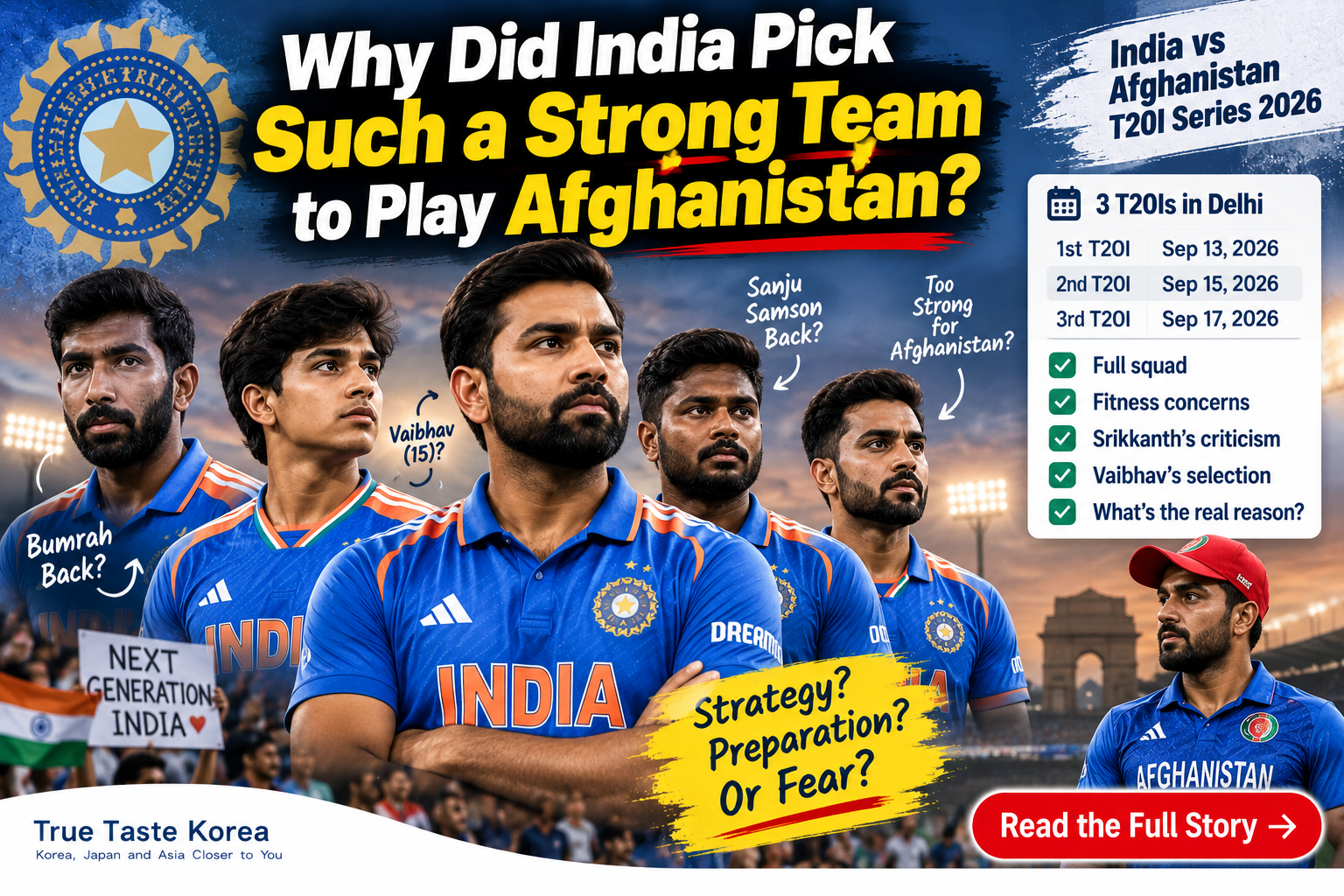
  • Why Did India Pick Such a Strong Team to Play Afghanistan?

    Why Did India Pick Such a Strong Team to Play Afghanistan?

    India are about to play Afghanistan in a three-match T20I series.

    On paper, that doesn’t sound unusual.

    But when the BCCI announced India’s squad, one question immediately stood out:

    Why is India taking such a strong team against Afghanistan?

    Jasprit Bumrah is there.

    Shreyas Iyer is captain.

    Tilak Varma is vice-captain.

    Abhishek Sharma, Sanju Samson, Ishan Kishan, Axar Patel, Varun Chakaravarthy and Arshdeep Singh are all included.

    And 15-year-old sensation Vaibhav Sooryavanshi is in the squad too.

    Even more surprisingly, four players — Jasprit Bumrah, Nitish Kumar Reddy, Washington Sundar and Harshit Rana — were selected subject to fitness clearance.

    That has led to a bigger debate in Indian cricket.

    If some important players are still working their way back to full fitness, why risk them in this series?

    And why not use Afghanistan to test more young players before the Asian Games?

    Here’s what is going on.


    When Is India vs Afghanistan T20I Series 2026?

    The three matches are scheduled for:

    1st T20I — September 13, 2026

    2nd T20I — September 15, 2026

    3rd T20I — September 17, 2026

    All three will be played at the Arun Jaitley Cricket Stadium in Delhi.

    There’s an unusual detail here too.

    Afghanistan are technically the hosts of the series, even though all three games are being played in India. Afghanistan has used venues in India for home fixtures in the past.


    Who Is in India’s Squad Against Afghanistan?

    The BCCI’s official 15-player squad is:

    Shreyas Iyer (Captain)
    Abhishek Sharma
    Vaibhav Sooryavanshi
    Sanju Samson (WK)
    Ishan Kishan (WK)
    Tilak Varma (Vice-Captain)
    Shivam Dube
    Nitish Kumar Reddy*
    Axar Patel
    Washington Sundar*
    Varun Chakaravarthy
    Ravi Bishnoi
    Jasprit Bumrah*
    Arshdeep Singh
    Harshit Rana*

    The four players marked with an asterisk are subject to fitness clearance, according to the BCCI.

    That’s an extremely experienced T20 squad.

    And that’s exactly why the selection has attracted attention.


    Why Are People Questioning India’s Team Selection?

    One of the strongest criticisms has come from former India captain Krishnamachari Srikkanth.

    His basic argument is simple:

    Why select such a strong team against Afghanistan when India could use the series to test younger players?

    The criticism becomes more interesting because several selected players are not yet guaranteed to be fully fit.

    Srikkanth questioned why players such as Washington Sundar were being brought back rather than giving opportunities to other young players.

    He also suggested India’s recent poor T20I results may have influenced the selectors’ thinking.

    So there are really two competing philosophies here.

    Option A

    Use Afghanistan as a development series.

    Rest major players.

    Test youngsters.

    Prepare the next generation.

    Option B

    Stop experimenting.

    Play a strong team.

    Get India winning again.

    Build momentum before the Asian Games.

    The selectors appear to be leaning much closer to Option B.


    Is India Trying to Get Back to Winning?

    This is probably the most important context behind the squad.

    India’s recent T20I results have not been good.

    Indian Express notes that India came into this selection after unsuccessful tours of Ireland and England, while a second-string Indian side subsequently swept Zimbabwe 3-0.

    That changes how the Afghanistan series looks.

    If India had been dominating every recent series, selectors might have felt more comfortable resting established players.

    Instead, Afghanistan represents an opportunity to:

    rebuild confidence

    settle combinations

    restore winning momentum

    and

    prepare players for what comes next.

    That’s one plausible explanation for why the squad looks stronger than some fans expected.


    But Is Afghanistan Really an Easy Opponent?

    This is another mistake worth avoiding.

    Calling Afghanistan an automatic win in T20 cricket is increasingly dangerous.

    Afghanistan have developed into a serious international cricket side, particularly in limited-overs cricket.

    So India’s selectors cannot simply assume:

    “We’ll send anyone and win.”

    And that makes the selection debate more complicated.

    There’s a difference between asking:

    “Why isn’t India resting everyone?”

    and assuming:

    “Afghanistan can’t beat India.”

    Those are not the same claim.


    Then Why Select Players Who Aren’t Fully Cleared for Fitness?

    This is probably the most controversial part.

    The BCCI didn’t simply announce Bumrah, Washington Sundar, Nitish Kumar Reddy and Harshit Rana as unconditional selections.

    It specifically marked all four:

    Subject to fitness clearance.

    That means being named in the squad does not automatically guarantee participation.

    But it still raises the question:

    If their fitness needs monitoring, is Afghanistan the right series to bring them back?

    Srikkanth’s criticism focuses partly on this issue, particularly with the Asian Games approaching later in September.

    From the selectors’ perspective, however, this series can also provide competitive match time before that tournament.

    So the exact same fact can support two arguments:

    Critics: Don’t risk important players.

    Selectors: They need matches before the next major assignment.


    Why Is Jasprit Bumrah in the Squad?

    Bumrah’s inclusion is particularly eye-catching.

    He remains one of India’s most important fast bowlers, and the BCCI has explicitly made his Afghanistan participation dependent on fitness clearance.

    There’s another reason his return matters.

    Bumrah is also part of India’s squad for the 2026 Asian Games.

    So Afghanistan can potentially function as preparation rather than merely an isolated three-match series.

    The sequence is:

    Afghanistan T20Is: September 13–17

    ↓

    Asian Games cricket later in September

    That makes the squad selection easier to understand.


    Why Is Vaibhav Sooryavanshi Still in India’s Squad at Just 15?

    And now we get to perhaps the most fascinating player in the entire squad.

    Vaibhav Sooryavanshi.

    He is still only 15.

    His selection for India’s senior T20I squads earlier this year made him the youngest player ever selected for the Indian men’s senior team, according to Rajasthan Royals.

    His rise has been extraordinary.

    His IPL 2026 campaign included:

    776 runs in 16 innings

    a strike rate of 237.30

    72 sixes

    and the Orange Cap.

    He also produced a 36-ball century during the season.

    When he originally received his India call-up, chairman of selectors Ajit Agarkar essentially argued that Sooryavanshi’s performances had made him impossible to ignore.

    But his international journey hasn’t been completely smooth.

    Reuters reported this week that after a difficult debut series in England, he responded with two half-centuries in Zimbabwe. He has now retained his place for Afghanistan.

    That makes this series another important test.


    Will Vaibhav Sooryavanshi Actually Play Against Afghanistan?

    That’s a much harder question.

    India have several players who can occupy the top order.

    The squad includes:

    Abhishek Sharma

    Vaibhav Sooryavanshi

    Sanju Samson

    Ishan Kishan

    among others.

    So simply being in the squad does not guarantee Vaibhav a starting position.

    This debate isn’t new either.

    When Sooryavanshi was waiting for opportunities earlier this year, Indian cricket fans were already arguing over whether a 15-year-old should be pushed immediately or allowed more time to develop.

    One Reddit discussion about his dismissal attracted more than 1,000 upvotes, with commenters debating whether he had been promoted to the senior level too early.

    Another discussion about whether India should put him into the ODI setup drew more than 600 upvotes, showing just how much attention his development is generating.

    So Vaibhav himself is becoming a search topic independent of the Afghanistan series.


    Is Sanju Samson Back?

    Yes.

    Sanju Samson has returned to the squad as one of India’s two designated wicketkeepers, alongside Ishan Kishan.

    His presence creates another selection question.

    If Samson plays near the top of the order, and India also wants Abhishek Sharma and Vaibhav Sooryavanshi involved, somebody has to miss out or move.

    That’s why the Afghanistan series isn’t simply:

    India vs Afghanistan.

    For Indian fans, it’s also about:

    Who gets India’s batting spots?

    The competition inside the Indian XI may be nearly as interesting as the opposition.


    Why Not Send the Team That Beat Zimbabwe 3-0?

    That’s essentially part of Srikkanth’s criticism.

    A less experienced Indian side had success in Zimbabwe.

    So his argument is that those players could have been rewarded with another opportunity rather than immediately returning to a more established squad.

    This is one of Indian cricket’s recurring problems — although it’s a very good problem to have.

    India has an enormous player pool.

    When a young player performs well, selectors must decide:

    Reward him immediately?

    or

    Bring back the established international player?

    There aren’t enough positions for everyone.

    Afghanistan has simply brought that old debate back again.


    Is India “Afraid” of Losing to Afghanistan?

    This needs some context because it’s easy to turn a provocative comment into a misleading headline.

    Srikkanth used strong language while criticizing the selection and suggested recent defeats had made India reluctant to experiment again.

    But that is Srikkanth’s interpretation of the selection, not an official BCCI explanation.

    The BCCI’s official squad announcement lists the players and fitness conditions but does not say:

    “We selected this team because we’re afraid of Afghanistan.”

    That distinction matters.

    So the accurate way to frame the controversy is:

    Srikkanth believes India’s recent results may have made the selectors more cautious.

    Not:

    BCCI says India is afraid of Afghanistan.


    Could the Asian Games Be the Real Reason?

    It may be an important part of the explanation.

    Several of the players in this Afghanistan squad are also involved in India’s Asian Games plans.

    The Asian Games therefore change the purpose of these three T20Is.

    Instead of thinking:

    “Why waste Bumrah against Afghanistan?”

    another way of looking at it is:

    “Can Afghanistan provide competitive preparation before the Asian Games?”

    That doesn’t settle the debate.

    But it explains why India might want important players playing competitive cricket rather than simply resting.


    So Why Did India Pick Such a Strong Team Against Afghanistan?

    There probably isn’t one single reason.

    Instead, several things are happening at once.

    India have recently suffered disappointing T20I results.

    The selectors may want the team to rediscover winning momentum.

    The Asian Games are approaching.

    Some important players need competitive cricket if they receive fitness clearance.

    Afghanistan should not automatically be treated as an easy T20 opponent.

    And India still has selection questions to answer around players such as:

    Sanju Samson

    Ishan Kishan

    Vaibhav Sooryavanshi

    and its returning bowlers.

    That explains why India’s squad looks much stronger than a developmental team.

    But the criticism isn’t unreasonable either.

    India has an enormous pool of young talent, and a three-match Afghanistan series could have been used to give more of those players international experience.

    That’s the real debate:

    Should India use this series to rebuild its strongest T20 team?

    or

    Should India use it to discover the next one?

    We’ll start getting the answer when the first T20I begins in Delhi on September 13.

  • Why Didn’t India and Pakistan Shake Hands at the Women’s Asia Cup 2026?

    Why Didn’t India and Pakistan Shake Hands at the Women’s Asia Cup 2026?

    If you watched India vs Pakistan at the Women’s Asia Cup 2026 on September 5, you may have noticed something unusual before the match even began.

    India captain Harmanpreet Kaur and Pakistan captain Fatima Sana came together for the toss at Dubai International Cricket Stadium.

    The coin was tossed.

    Fatima Sana won the toss.

    The captains spoke with the presenter.

    But one familiar cricket gesture was missing:

    They didn’t shake hands.

    It wasn’t an accidental omission.

    And it wasn’t the first time.

    The absence of handshakes has now become a recurring feature of India-Pakistan cricket matches, involving men’s, women’s and even youth teams.

    So why aren’t India and Pakistan shaking hands in cricket?

    Here’s what happened.


    Did Harmanpreet Kaur and Fatima Sana Really Not Shake Hands?

    Yes.

    At the toss before the September 5 Women’s Asia Cup match in Dubai, Harmanpreet Kaur and Fatima Sana went through the toss without shaking hands.

    The Indian Express reported that the two teams skipped the customary pre-toss greeting, continuing a pattern that has been developing in India-Pakistan cricket for nearly a year.

    It wasn’t entirely unexpected either.

    Even before the match, India’s head coach Amol Muzumdar had been asked whether the women’s team would follow the no-handshake approach against Pakistan.

    He declined to focus on the issue, saying the team was concentrating on playing its cricket.

    Then came the toss.

    No handshake.


    Why Didn’t India and Pakistan Shake Hands?

    The short answer is:

    The practice traces back to the deterioration in India-Pakistan sporting relations following the 2025 Pahalgam attack.

    The current sequence began during the men’s Asia Cup on September 14, 2025, also in Dubai.

    That match was played after the April 22, 2025 Pahalgam attack.

    During the men’s India-Pakistan match, then-India T20I captain Suryakumar Yadav did not shake hands with Pakistan captain Salman Ali Agha.

    India also did not exchange handshakes with Pakistan after the match.

    The Indian Express reports that the two sides met twice more during that tournament and handshakes were skipped on those occasions as well.

    What initially looked like a single controversial moment therefore developed into a recurring pattern.


    Is This Only Happening in Men’s Cricket?

    No.

    That’s what makes the 2026 Women’s Asia Cup incident particularly significant.

    The practice moved beyond the men’s senior team.

    In October 2025, the Indian and Pakistani women’s teams also did not exchange the customary gesture during their Women’s World Cup meeting in Colombo.

    It happened again when Harmanpreet Kaur and Fatima Sana met at the Women’s T20 World Cup in June 2026.

    The Indian Express reported at the time that it was the second consecutive ICC tournament meeting between the women’s teams in which the two captains did not shake hands at the toss.

    Then, on September 5:

    Women’s Asia Cup 2026 → no handshake again.

    So this is no longer something limited to one captain or one match.


    Has It Reached India’s Younger Cricket Teams Too?

    Yes.

    The pattern has extended beyond the senior men’s and women’s sides.

    The Indian Express reports that handshakes have also been absent from India-Pakistan meetings involving the Under-19 World Cup and Asia Cup Rising Stars.

    That gives us a much clearer picture.

    This isn’t simply:

    “Harmanpreet Kaur didn’t shake Fatima Sana’s hand.”

    The broader pattern is:

    Men’s cricket

    ↓

    Women’s cricket

    ↓

    Youth cricket

    ↓

    Repeated India-Pakistan matches without the customary handshake

    That distinction matters.


    Is Shaking Hands Mandatory in Cricket?

    This is where viewers can easily misunderstand what they are seeing.

    A handshake is a deeply established sporting custom, but the controversy is not the same thing as an unusual cricket dismissal or an illegal delivery that can be resolved simply by looking up a playing-law penalty.

    The match itself proceeded normally.

    Pakistan won the toss and chose to bat.

    The teams played the game.

    India eventually won by seven wickets.

    So the no-handshake moment should be understood primarily in the context of the relationship between the two cricket teams rather than as something that stopped the match from being played.


    Why Are India and Pakistan Still Playing Each Other Then?

    This is probably the next question many international viewers have.

    If relations are tense enough for handshakes to disappear, why play the match at all?

    Because playing a scheduled tournament match and exchanging customary sporting gestures are separate issues.

    India and Pakistan continue to meet in multinational cricket tournaments.

    The September 5 game was part of the Women’s Asia Cup in Dubai.

    The match went ahead as scheduled even though the customary handshake did not take place.

    That produces the unusual scene viewers now see:

    They compete against each other — but don’t necessarily exchange the traditional greeting.


    Did the No-Handshake Situation Affect the Match?

    Not in terms of the match being played.

    And once the cricket began, India dominated.

    Pakistan chose to bat first but were bowled out for:

    55

    It was Pakistan’s lowest-ever total in Women’s T20 Internationals.

    India’s spinners overwhelmed the Pakistan batting lineup, with Sree Charani taking 3/6 and Prema Rawat 3/9.

    India then chased the target and won by seven wickets with 11.2 overs remaining.

    So ironically, the handshake wasn’t the only extraordinary thing viewers saw that day.

    Pakistan’s 55 created another piece of history.


    Was 55 Really Pakistan Women’s Lowest T20I Score Ever?

    Yes.

    According to the ICC, Pakistan’s previous lowest Women’s T20I totals included:

    56 vs New Zealand — 2025

    60 vs England — 2009

    63 vs India — 2012

    But on September 5, 2026:

    55 vs India

    became the new low.

    Pakistan lost six wickets for just 12 runs during the collapse.

    This gives the match two very different talking points:

    Before the match → no handshake

    During the match → Pakistan’s historic batting collapse


    Did Anything Historic Happen for India Too?

    Yes.

    Actually, several things did.

    Harmanpreet Kaur was playing her 150th T20I as captain.

    And during India’s chase, Shafali Verma crossed 3,000 T20I runs.

    She did it almost immediately, hitting the first ball of India’s chase for six before passing the milestone in the opening over.

    India had also entered the match with Smriti Mandhana in remarkable form.

    In the previous game against Hong Kong, China, Mandhana scored 124 and became the leading run-scorer in women’s international cricket, moving past Mithali Raj.

    So the India-Pakistan match arrived in the middle of a tournament already producing significant records.


    Is the No-Handshake Approach Used Against Pakistan in Every Sport?

    Here’s one of the most interesting details.

    Apparently not.

    The Indian Express notes that the freeze appears to be confined to cricket, pointing out that the two countries’ hockey teams exchanged a high-five gesture during their FIH Men’s Hockey World Cup fixture.

    That is important because it prevents an overly broad conclusion.

    It would be inaccurate to simply say:

    “Indian and Pakistani athletes never greet each other anymore.”

    The evidence is more specific.

    The repeated no-handshake pattern has become particularly visible in:

    India-Pakistan cricket.


    Was the Women’s Asia Cup Handshake Decision a Surprise?

    Not really.

    By September 2026, there was already a history behind it.

    Before the Women’s Asia Cup match, reporters were asking India coach Amol Muzumdar about the handshake issue.

    His response was essentially to keep the team’s attention on cricket rather than off-field matters.

    And when the two captains finally came together at the toss:

    Harmanpreet Kaur → no handshake

    Fatima Sana → no handshake

    The existing pattern continued.


    So Why Didn’t India and Pakistan Shake Hands at the Women’s Asia Cup 2026?

    If you only saw the few seconds around the toss, the moment can look confusing.

    But it wasn’t an isolated personal disagreement between:

    Harmanpreet Kaur and Fatima Sana.

    It belongs to a much longer sequence.

    The current pattern began with India-Pakistan men’s cricket during the 2025 Asia Cup, following heightened tensions after the Pahalgam attack.

    It subsequently appeared in women’s cricket and youth cricket as well.

    By the time India and Pakistan met at the Women’s Asia Cup in Dubai on September 5, 2026, another no-handshake moment was therefore not unprecedented.

    It was the continuation of a pattern that had been developing for almost a year.

    And that’s why millions of viewers could watch something that initially seems contradictory:

    India and Pakistan still play cricket against each other.

    But the customary handshake between the teams has disappeared from their recent cricket meetings.

  • My UPI Payment Failed but Money Was Debited. When Will I Get My Refund?

    My UPI Payment Failed but Money Was Debited. When Will I Get My Refund?

    You scan a QR code.

    Enter ₹5,000.

    Type your UPI PIN.

    Then something goes wrong.

    Your UPI app says:

    “Transaction Failed.”

    But when you check your bank account, ₹5,000 has already been debited.

    Now the real panic begins.

    “If the payment failed, where did my money go?”

    “Will I get it back?”

    “Should I pay the merchant again?”

    “How long does a UPI refund take?”

    First, don’t assume that your money is permanently lost.

    NPCI’s UPI Help guidance says that in the case of a wrong debit on a pending or failed transaction, the money is credited back to the account, and users can raise the issue through UPI Help.

    But there is something many UPI users don’t know:

    The official refund timeline can be different depending on what kind of UPI transaction failed.

    For some failed transfers, the RBI framework specifies T+1 day.

    For certain failed merchant payments, it specifies T+5 days.

    And if the reversal takes longer than the applicable timeline, the RBI framework provides for compensation of:

    ₹100 per day of delay.

    Here’s how it works.


    First: Is My Money Lost If UPI Failed but My Account Was Debited?

    Usually, a failed transaction and a debit from your bank account do not automatically mean the money has disappeared permanently.

    A UPI transaction involves multiple systems.

    Your bank account may have been debited, but something can go wrong before the beneficiary receives the money or before the merchant receives confirmation.

    That creates the frightening situation where:

    Your bank: Money debited.

    UPI app: Transaction failed.

    Receiver: No money received.

    NPCI’s UPI Help documentation specifically addresses wrong debits on pending or failed transactions and says the money will be credited back to the user’s account.

    The important question then becomes:

    When?

    And that’s where you need to know whether this was a fund transfer or a merchant payment.


    UPI Refund: T+1 or T+5?

    This is probably the most important part of this article.

    People often hear conflicting advice online:

    “Wait one day.”

    or:

    “UPI refunds can take five days.”

    Both statements can make sense because RBI’s framework distinguishes between different failed UPI transactions.


    Case 1: You Sent Money to Someone, but They Didn’t Receive It

    Suppose you send:

    ₹10,000

    to a friend or family member.

    Your account is debited.

    But the beneficiary’s account is not credited.

    Under the RBI framework for a failed UPI transfer of funds, if the beneficiary cannot be credited, the transaction should be auto-reversed by the beneficiary bank no later than:

    T+1 day.

    If the reversal is delayed beyond T+1, the prescribed compensation is:

    ₹100 per day of delay.

    So the basic rule is:

    Account debited

    ↓

    Beneficiary not credited

    ↓

    Auto-reversal: T+1

    ↓

    Beyond T+1: ₹100/day compensation


    Case 2: You Paid a Merchant, but the Merchant Didn’t Receive Confirmation

    Now imagine a different situation.

    You are at a restaurant.

    Your bill is ₹2,000.

    You scan the restaurant’s UPI QR code.

    ₹2,000 leaves your bank account.

    But the restaurant’s payment system doesn’t receive confirmation.

    The cashier says:

    “Payment failed. Please pay again.”

    This falls under a different part of the RBI framework.

    For a UPI payment where the account is debited but transaction confirmation is not received at the merchant location, RBI specifies:

    Auto-reversal within T+5 days.

    If the reversal is delayed beyond T+5 days, the compensation specified is:

    ₹100 per day of delay.

    So:

    Account debited

    ↓

    Merchant confirmation not received

    ↓

    Auto-reversal: T+5

    ↓

    Beyond T+5: ₹100/day compensation

    That’s why you should not assume that every failed UPI transaction has exactly the same refund deadline.


    What Does “T” Mean?

    In RBI’s framework:

    T is the calendar date of the transaction.

    So if the applicable rule is T+1, it means the timeline is calculated from the transaction date according to the framework.

    This is different from vaguely being told:

    “Wait a few working days.”

    The RBI framework establishes specific outer limits for the categories of failed transactions it covers.


    Can I Really Get ₹100 Per Day If My UPI Refund Is Late?

    Yes—under the circumstances covered by RBI’s failed-transaction framework.

    For UPI:

    Failed fund transfer

    Account debited but beneficiary not credited:

    Auto-reversal: T+1

    Delay beyond T+1: ₹100 per day.

    Failed merchant payment

    Account debited but transaction confirmation not received at merchant:

    Auto-reversal: T+5

    Delay beyond T+5: ₹100 per day.

    And there’s another important point.

    RBI’s circular states that the compensation should be credited to the customer’s account suo moto—in other words, without waiting for the customer to lodge a complaint or claim.

    That’s a useful consumer right to know.


    Does ₹100 Per Day Mean I Get My Money Back Plus ₹100?

    If your situation qualifies and the reversal is delayed beyond the applicable RBI timeline, the compensation is separate from reversing the failed transaction amount.

    For example, the underlying issue might involve ₹5,000 being wrongly debited.

    The first objective is getting the ₹5,000 reversed.

    The ₹100/day provision addresses delay beyond the applicable outer limit.

    However, don’t assume every UPI dispute automatically qualifies.

    The precise transaction status and failure category matter.


    My UPI App Says “Pending,” Not “Failed.” What Should I Do?

    This is another common source of confusion.

    Pending and Failed are not necessarily the same thing.

    A pending transaction means the system may not yet have determined the final status.

    NPCI’s UPI Help guidance says users can check the current status of a transaction and raise complaints on eligible debit transactions. It also notes that the refresh function can retrieve the present status of a pending transaction.

    So if you see:

    Pending

    don’t automatically treat it as a confirmed failure.

    Check the transaction status again before taking another action.


    Should I Pay the Merchant Again?

    This is where you need to be careful.

    Imagine:

    Restaurant bill: ₹1,500

    You pay using UPI.

    Your bank account is debited.

    The restaurant says:

    “We haven’t received the payment.”

    The worst thing you can do is panic and lose track of both transactions.

    Before paying again, check:

    Your UPI transaction status

    Your bank-account debit

    The UPI transaction/reference ID

    Whether the merchant can verify the payment again

    If you do need to make another payment because the first transaction genuinely failed, keep evidence of both payments.

    Why?

    Because the first ₹1,500 may later be automatically reversed.

    You need to be able to distinguish:

    First failed transaction

    from

    Second successful transaction.


    What Should I Save After a Failed UPI Transaction?

    Do not rely on memory.

    Save the details immediately.

    Keep:

    Transaction date and time

    Amount

    UPI transaction ID/reference number

    Recipient or merchant details

    Screenshot of transaction status

    Screenshot or record showing the bank debit

    Any complaint/reference number

    If you later need to escalate the matter, these details make it much easier to identify the transaction.


    Should I Raise a Complaint Immediately?

    You don’t necessarily have to sit and do nothing.

    NPCI’s UPI Help guidance says a complaint can be raised on supported debit transactions after five minutes from the transaction.

    UPI Help supports complaints for issues including money not being credited to the beneficiary and merchant transactions.

    If you use BHIM, NPCI also states that declined transactions can be reported from the transaction history through the Report Issue option.

    Other UPI apps may present their support options differently.

    The important point is:

    Start with the transaction itself.

    Don’t search random phone numbers online and hand over your banking information to someone claiming to be “UPI customer care.”


    Who Should I Contact: My UPI App or My Bank?

    Start with the complaint/support process available for the transaction in your UPI app.

    Keep the complaint number.

    If the problem remains unresolved, you may also need to contact the bank linked to the debited account.

    The key is to provide the exact transaction information rather than simply saying:

    “My UPI money is missing.”

    Give them:

    Amount

    Date/time

    Transaction/reference ID

    Status shown

    and the fact that:

    Account was debited but the beneficiary/merchant did not receive the payment.

    That description matters because it identifies the type of failed transaction.


    What If My UPI App and Bank Show Different Statuses?

    This can happen.

    For example:

    Bank: ₹4,000 debited.

    UPI app: Pending.

    Merchant: Payment not received.

    Don’t rely on just one screen.

    Check the transaction again in the UPI app and keep the bank debit record.

    NPCI’s UPI Help system was designed in part to let users check pending transaction status and raise complaints when transactions have not been processed or the beneficiary has not received the money.

    If the status does not resolve, use the complaint mechanism rather than repeatedly making the same payment.


    What If the Refund Doesn’t Arrive After T+1 or T+5?

    Now the issue becomes more serious.

    First confirm which RBI category applies.

    Money transfer

    Your account debited but beneficiary not credited:

    T+1

    Merchant payment

    Your account debited but confirmation not received at merchant:

    T+5.

    If you’re beyond the applicable timeline:

    1. Check whether the reversal has actually reached your bank account.
    2. Check the current transaction status.
    3. Use the UPI app’s complaint mechanism.
    4. Contact your bank if necessary.
    5. Keep the complaint/reference number.
    6. Mention the RBI failed-transaction TAT framework if your case falls within it.

    And remember the compensation provision:

    ₹100 per day beyond the applicable timeline.


    What If My Bank Doesn’t Resolve the Complaint?

    Keep your complaint records.

    RBI’s framework also says that customers can approach the Reserve Bank – Integrated Ombudsman Scheme for grievances under the framework.

    That does not mean you should jump immediately to the Ombudsman for every five-minute UPI delay.

    Use the normal complaint process first and preserve the evidence.

    If the regulated entity does not resolve the grievance through the applicable process, escalation options become relevant.


    Be Careful: A Failed UPI Payment Is Also a Scam Opportunity

    This deserves special attention.

    Imagine you’ve just lost sight of ₹10,000.

    You’re worried.

    You Google:

    “UPI refund customer care number.”

    A scammer knows you’re desperate to get the money back.

    Never share your:

    UPI PIN

    OTP

    Debit-card PIN

    or other sensitive banking credentials with someone claiming they need them to “process your refund.”

    Also remember:

    You do not need to enter your UPI PIN to receive money.

    Use support channels inside your legitimate UPI app or the official channels of your bank.

    NPCI provides official UPI consumer support and educational resources rather than requiring users to rely on random numbers found through search results.


    Quick Answer: When Will I Get My UPI Refund?

    Here’s the part worth remembering.

    What happened?RBI auto-reversal timelineCompensation after deadline
    Account debited, beneficiary not credited — UPI fund transferT+1 day₹100/day
    Account debited, merchant doesn’t receive transaction confirmationT+5 days₹100/day

    These are the RBI framework timelines for the specified failed-transaction categories.

    So when someone tells you:

    “Every UPI refund takes one day.”

    that’s too simplistic.

    And:

    “Every UPI refund takes five days.”

    is also too simplistic.

    The type of failed transaction matters.


    What Should I Do Right Now?

    If your UPI payment failed but money was debited:

    1. Check the transaction status

    Is it Failed, Pending, or Successful?

    2. Check whether the receiver actually received the money

    Don’t rely only on what one screen says.

    3. Identify the transaction type

    Was this a transfer to another person/account or a payment to a merchant?

    4. Save the transaction ID and screenshots

    Do this before anything changes.

    5. Use your UPI app’s complaint/support function

    NPCI’s UPI Help framework supports complaints for relevant debit transactions.

    6. Know the applicable RBI timeline

    T+1 for the specified failed fund transfer.

    T+5 for the specified failed merchant payment.

    7. Escalate if the problem remains unresolved

    Keep all complaint/reference numbers.

    8. Know your compensation rights

    The RBI framework specifies ₹100 per day when reversal exceeds the applicable outer limit in these UPI categories.


    So, Where Did My Money Go?

    If your UPI transaction failed after your bank account was debited, the most important thing is not to assume:

    “My money is gone forever.”

    Instead ask:

    Was this a failed transfer or a failed merchant payment?

    That determines which timeline may apply.

    For the failed UPI categories covered by RBI’s framework:

    Transfer to beneficiary → T+1

    Merchant payment → T+5

    and delays beyond the applicable timeline carry a prescribed ₹100-per-day compensation.

    Meanwhile, NPCI’s UPI Help guidance says that for a wrong debit in a pending/failed transaction, the money will be credited back and a concern can be raised through UPI Help.

    So don’t just wait nervously while refreshing your bank balance.

    Check the status.

    Save the transaction ID.

    Know whether T+1 or T+5 applies.

    And if the money doesn’t return within the applicable period, raise and preserve a formal complaint.