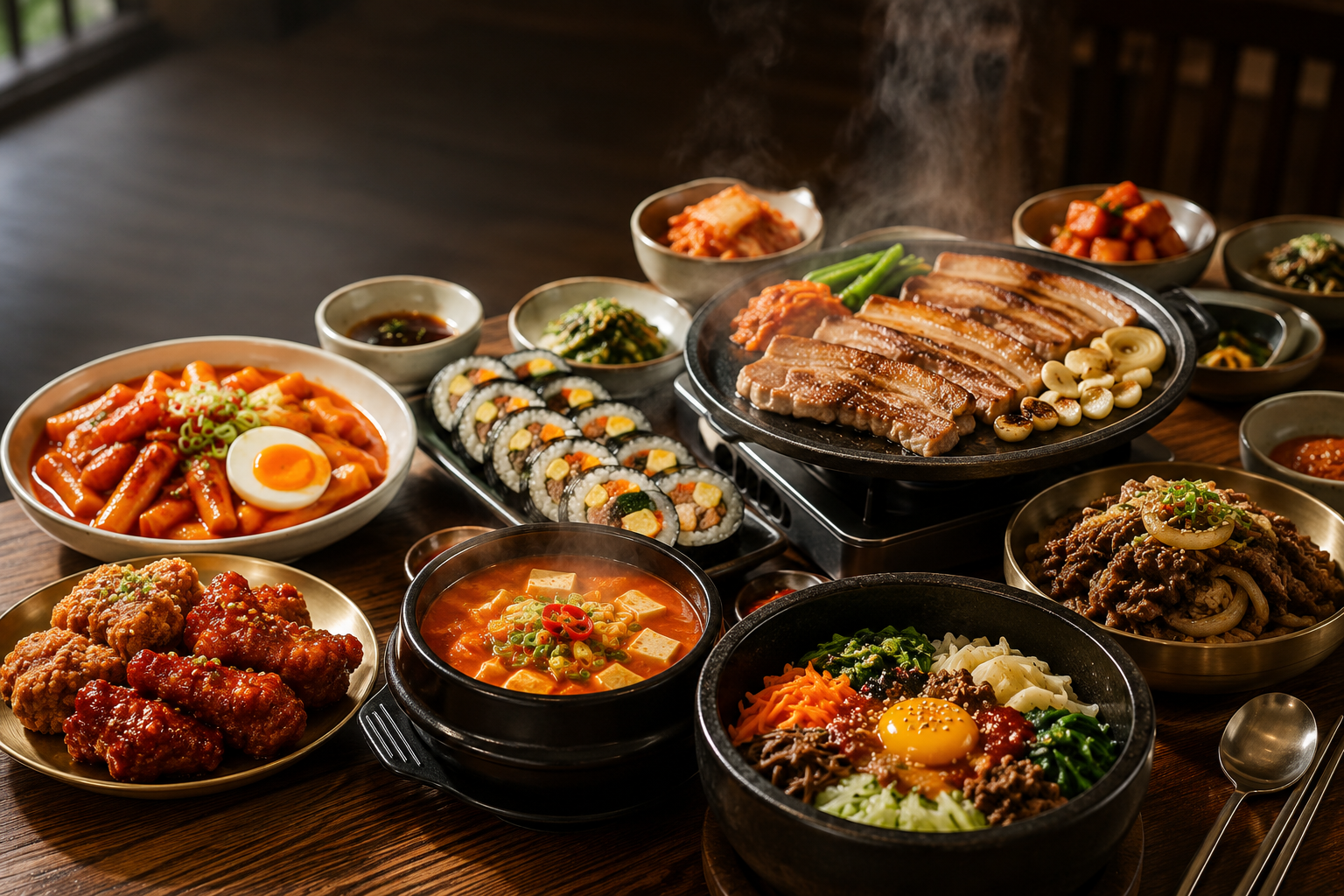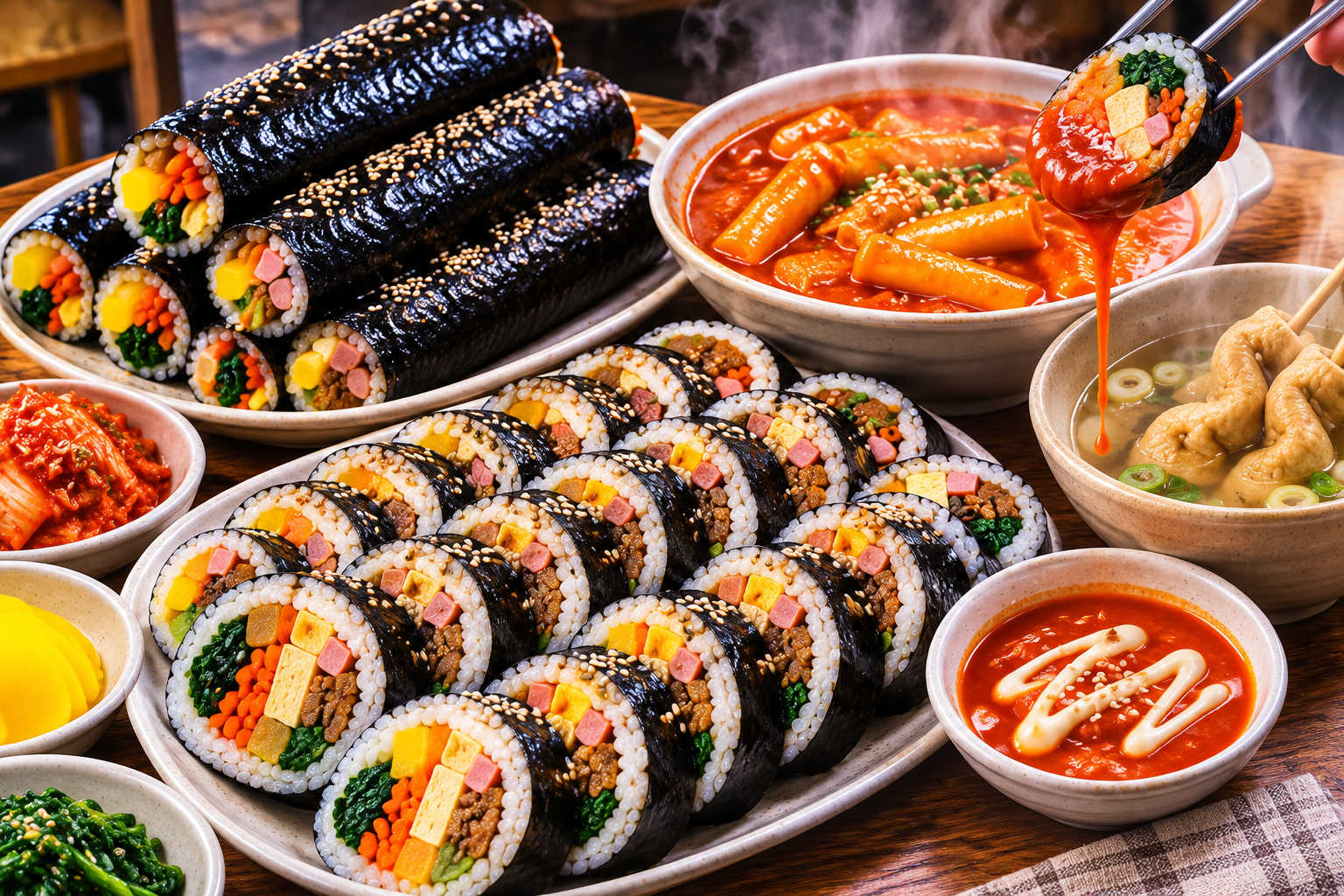
I used to tell my girlfriend that I knew the best way in the world to eat gimbap.
The secret?
Don’t slice it.
Pick up the whole roll with both hands and start eating from one end.
Of course, sliced gimbap tastes great too. But somehow, eating a whole roll this way makes it feel different — more casual, more fun, and somehow even more delicious.
There was another way we used to enjoy gimbap together.
We would slice one roll, put the pieces between us, and play rock-paper-scissors.
The winner got to eat one piece.
Then we played again.
Was this really the best way in the world to eat gimbap? Maybe not.
But food often tastes better when there’s a good memory attached to it.
That’s one of the things I want to share through True Taste Korea. Korean food isn’t only about recipes. Sometimes, how you eat it — and who you eat it with — makes it taste even better.
What Is Gimbap?
Gimbap (김밥) is one of Korea’s most familiar and loved foods.
“Gim” means dried seaweed, and “bap” means rice.
Rice and various ingredients are placed on a sheet of seaweed, rolled tightly, and usually sliced into bite-sized pieces.
You can find gimbap almost everywhere in Korea — at small neighborhood restaurants, convenience stores, markets, train stations, and picnic tables.
It’s simple, portable, affordable, and endlessly customizable.
Although gimbap may look similar to Japanese sushi rolls, the flavor is quite different. Gimbap rice is usually seasoned with sesame oil and salt rather than sushi vinegar, and the fillings often include cooked and seasoned ingredients.
Classic Korean Gimbap Ingredients
For about 4 rolls of classic gimbap, prepare:
- 4 sheets of dried seaweed (gim)
- 3 cups cooked Korean short-grain rice
- 4 strips of yellow pickled radish (danmuji)
- 1 medium carrot
- 1 small bunch of spinach
- 2 eggs
- 4 strips of ham
- 4 strips of fish cake (eomuk)
- Sesame oil
- Salt
- Sesame seeds
- A little cooking oil
These are common ingredients for a classic Korean gimbap, but there is no single filling combination you have to follow.
Once you know the basic method, you can make many different versions with ingredients such as beef, tuna, cheese, kimchi, or spicy pork.
How to Make Gimbap
1. Season the Rice
Cook Korean short-grain rice and let it cool slightly.
While the rice is still warm, gently mix it with a little sesame oil and salt.
Don’t use too much sesame oil. You want its aroma without making the rice greasy.
2. Prepare the Vegetables
Cut the carrot into thin strips and lightly stir-fry it with a small amount of cooking oil and salt.
Blanch the spinach briefly, squeeze out the excess water, and season it lightly with salt and sesame oil.
3. Cook the Eggs
Beat the eggs with a small pinch of salt.
Cook them in a thin layer, let them cool, and cut them into long strips.
4. Prepare the Ham and Fish Cake
Cut the ham and fish cake into long strips and lightly pan-fry them.
5. Roll the Gimbap
Place one sheet of dried seaweed on a bamboo rolling mat with the rough side facing upward.
Spread a thin, even layer of rice over the seaweed, leaving a small empty strip at the top.
Arrange the fillings horizontally across the rice.
Roll firmly from the bottom while keeping the ingredients together. Don’t squeeze so hard that the fillings come out.
6. The Final Touch
Lightly brush the outside of the finished roll with sesame oil and sprinkle sesame seeds on top.
Now you have a choice.
You can slice it into bite-sized pieces…
or try eating the whole roll first.
3 Fun Ways to Enjoy Gimbap
Making gimbap is only half the story.
Now let’s enjoy it.
1. Eat the Whole Roll
Before slicing your gimbap, try picking up the whole roll with both hands and eating it from one end.
No knife. No perfectly arranged little pieces.
Just one whole gimbap.
It’s simple, casual, and surprisingly fun.
2. Play Rock-Paper-Scissors Gimbap
This one is much better with someone else.
Slice one roll of gimbap and put the pieces between you.
Play rock-paper-scissors.
The winner gets one piece.
Then play again for the next piece.
This isn’t a traditional Korean custom. It’s simply a fun way I used to enjoy gimbap with someone special.
Try it with your partner, family, or friends. Sometimes a little competition makes food taste even better.
3. Dip Your Gimbap
Gimbap is delicious on its own, but dipping it into a sauce can create a completely different experience.
One of the best combinations to try is gimbap dipped in tteokbokki sauce.
The spicy-sweet sauce coats the mild rice and savory fillings, creating a combination that many people find hard to stop eating.
And don’t stop there.
Try different sauces and discover your own favorite way to eat gimbap.
Sometimes the best food combinations are the ones you discover yourself.
What Soup Goes Best With Gimbap?
Gimbap is delicious on its own, but a warm bowl of soup can turn it into a much more satisfying meal.
Here are three combinations worth trying.
1. Eomuk Soup (Korean Fish Cake Soup)
My first recommendation is eomuk soup (어묵국).
Its light, savory broth goes perfectly with gimbap without overpowering its flavor.
Gimbap with hot eomuk soup also gives you the feeling of eating at a Korean bunsik restaurant — a casual Korean eatery known for foods such as gimbap, tteokbokki, eomuk, and noodles.
2. Korean Ramyeon
Gimbap and hot Korean ramyeon make another great combination.
Take a bite of gimbap, then eat some spicy noodles or have a spoonful of the hot broth.
The mild gimbap and spicy ramyeon balance each other beautifully.
3. Udon
If you want something milder, try gimbap with a bowl of hot udon.
The warm, light broth makes this an especially comforting combination on a cold day.
Try This Korean-Style Combination
Want to enjoy gimbap like a full Korean bunsik meal?
Try:
Gimbap + Tteokbokki + Eomuk Soup
First, enjoy a piece of gimbap on its own.
Then dip the next piece into the spicy-sweet tteokbokki sauce.
Finally, have a spoonful of warm eomuk broth.
Three simple foods come together to create one of the most enjoyable ways to experience Korean bunsik.
The True Taste Korea Secret
Recipes matter. Ingredients matter.
But sometimes, the best part of food isn’t written in the recipe.
Try eating a whole roll of gimbap without slicing it.
Dip another piece into tteokbokki sauce.
Or put one roll between two people and decide who gets each bite with rock-paper-scissors.
Food doesn’t always have to be serious.
Sometimes the secret to making something taste better is simply finding a more enjoyable way to eat it — and sharing that experience with someone you care about.
That’s the kind of Korean food experience we want to share at True Taste Korea.