Korean beauty is famous around the world for one particular look:
healthy-looking radiance.
For years, the focus was on skin.
The global K-Beauty boom introduced millions of people to concepts such as glass skin, double cleansing, sheet masks and lightweight hydration.
But increasingly, that same beauty ideal is moving upward — to the hair.
Smooth strands. Minimal frizz. A soft texture. And most importantly, an almost reflective shine.
Welcome to the world of:
Korean Glass Hair.
But getting glossy-looking hair is not simply about applying oil before leaving the house.
In Korea, hair beauty is increasingly connected to an entire routine involving the scalp, cleansing, damage care, conditioning and finishing products.
Here’s how it works.
What Is Korean Glass Hair?
Glass hair describes hair that looks exceptionally:
smooth, soft, sleek and glossy.
The name comes from the reflective appearance of the hair under light.
Think of it as the hair equivalent of Korean glass skin.
But there is an important difference between simply having shiny hair and achieving the glass-hair aesthetic.
Glass hair should not look excessively greasy or weighed down.
Instead, the ideal is:
healthy-looking shine + smooth texture + controlled frizz + movement.
That’s why the products used throughout the routine matter just as much as the final hair serum.
Why Is Shiny Hair So Important in Korean Beauty?
Hair plays an enormous role in how a person’s overall appearance is perceived.
Beautiful skin paired with extremely damaged hair can completely change an otherwise polished look.
In Korea, frequent coloring, bleaching, heat styling and perms can also leave hair dry or damaged.
That has helped create strong demand for products designed around:
- damaged hair
- moisture
- protein care
- hair masks
- leave-in treatments
- hair oils
- hair serums
- scalp care
The result is a hair-care market that increasingly resembles skincare.
Instead of relying on one miracle product, people combine several steps depending on the condition of their hair.
Glass Skin vs Glass Hair
The philosophies are surprisingly similar.
Glass skin does not normally come from applying one product.
It comes from layers of care:
Cleanse → Hydrate → Treat → Moisturize → Protect
Glass hair can follow a similar logic:
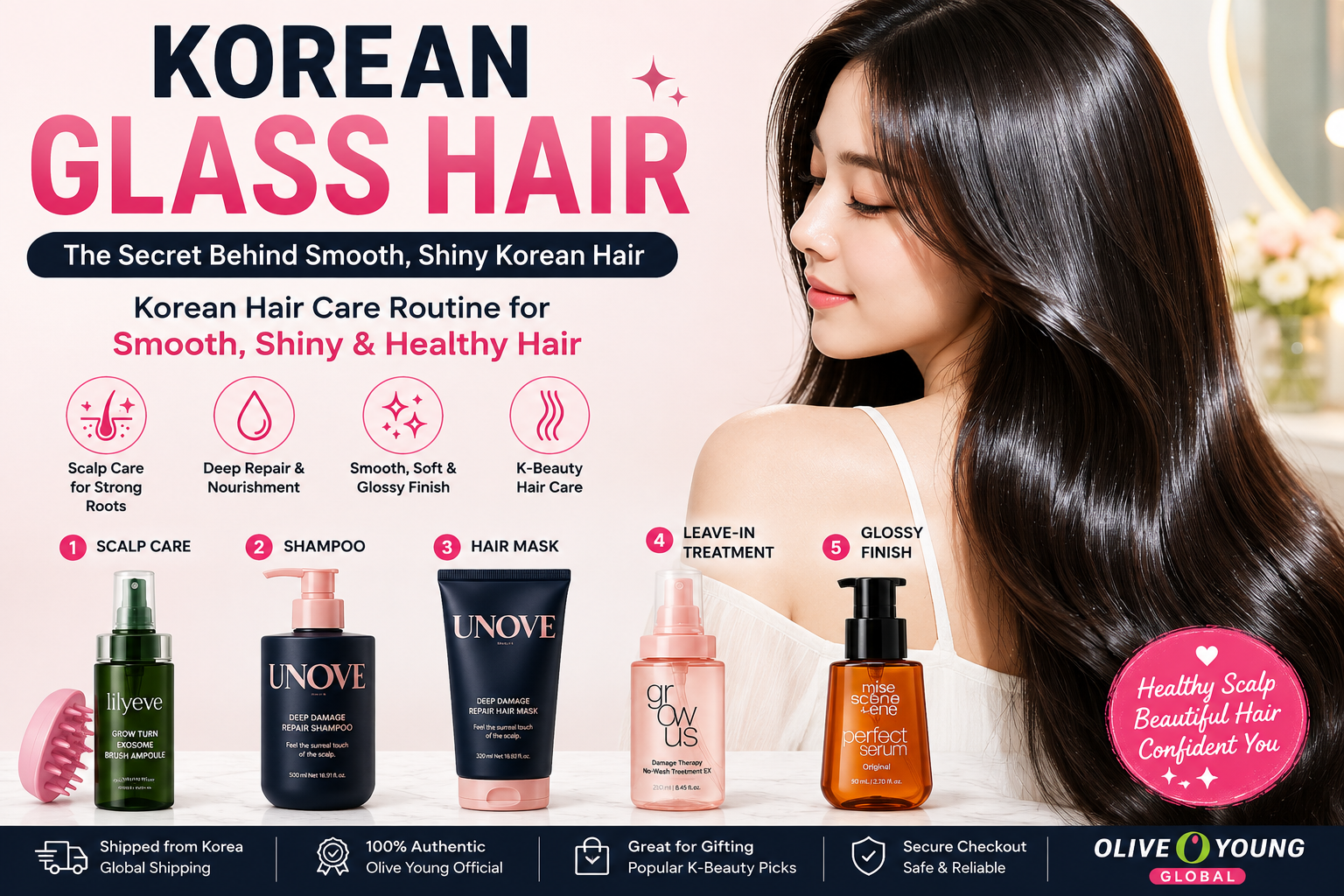
Scalp Care → Shampoo → Treatment → Leave-In Care → Serum/Oil
That is one of the reasons Korean hair care fits so naturally into the wider K-Beauty movement.
The goal is not simply to cover up damage.
The routine attempts to improve how the hair feels and looks at each stage.
Step 1: Start With the Scalp
This is the step many people outside Korea overlook.
Hair care does not necessarily begin with the ends of your hair.
It begins at the scalp.
Korean beauty consumers increasingly use products such as scalp shampoos, scalp scalers, tonics and scalp ampoules as part of their routines.
Some Korean head spas even examine the scalp with magnifying cameras before treatment.
If you’re interested in this side of Korean beauty, read our full guide:
Korean Scalp Care: Why Everyone Is Talking About Korean Head Spas
Scalp care should not be confused with medical treatment for hair loss, but it has become an increasingly visible part of Korean hair and beauty culture.
Step 2: Choose Shampoo Based on Your Hair
Not everyone needs the same shampoo.
Someone with heavily damaged, bleached hair may want something different from a person primarily concerned about an oily scalp.
Korean hair-care products are commonly marketed around concerns such as:
damage, moisture, scalp condition, volume and softness.
For damaged hair, products emphasizing protein or conditioning ingredients are particularly common.
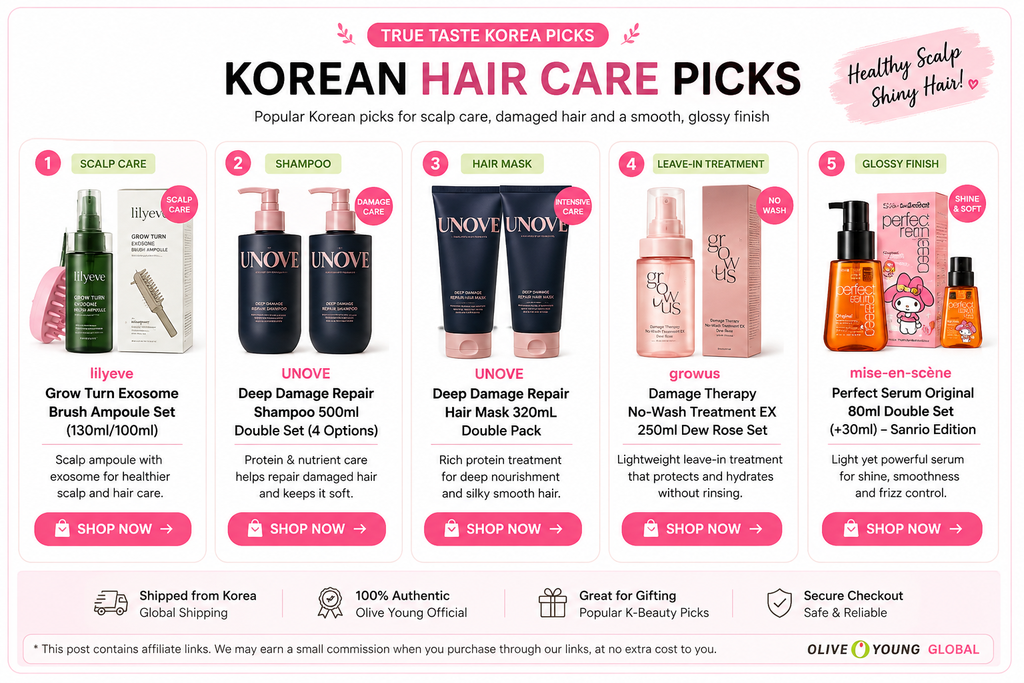
One popular example available through Olive Young Global is:
UNOVE Deep Damage Repair Shampoo
UNOVE has become particularly visible in Korea’s damaged-hair category.
The Deep Damage Repair line is designed around intensive care for hair affected by styling and damage.
Shop UNOVE Deep Damage Repair Shampoo:
Olive Young Global – UNOVE Shampoo
Affiliate link included.
Step 3: Don’t Skip the Hair Mask
If there’s one step that can dramatically change how damaged hair feels immediately after washing, it’s a good conditioning treatment.
Hair masks are generally richer than everyday conditioners.
They are particularly popular among people whose hair has been exposed to:
coloring, bleaching, perms or frequent heat styling.
UNOVE Deep Damage Repair Hair Mask
This is another popular product in the UNOVE line and works naturally as the intensive-care step after shampoo.
Shop UNOVE Deep Damage Repair Hair Mask:
Olive Young Global – UNOVE Hair Mask
Again, the goal here isn’t magically repairing every form of hair damage.
Think of hair masks primarily as a way to improve conditioning, manageability and appearance.
Step 4: Leave-In Treatment
Here’s where the Korean routine becomes particularly interesting.
Hair care doesn’t necessarily stop when you leave the shower.
Leave-in products add another conditioning layer without requiring rinsing.
They can be especially useful for dry lengths and ends.
One product we’ve selected from Olive Young is:
growus Damage Therapy No-Wash Treatment EX
As the name suggests, this is designed to remain on the hair rather than being rinsed away.
Shop growus No-Wash Treatment:
Olive Young Global – growus Treatment
For people chasing the glass-hair appearance, this middle step can help prepare the hair before the final finishing product.
Step 5: The Glossy Finish
Now we reach the part everyone notices.
Shine.
Hair serum or oil is often applied primarily through the mid-lengths and ends rather than heavily at the roots.
The purpose is to help create a smoother-looking finish and reduce the appearance of dry, frizzy ends.
And one Korean product has been around for years:
mise-en-scène Perfect Serum
Perfect Serum is one of the recognizable names in Korean hair care and is widely associated with finishing and damaged-hair routines.
Shop mise-en-scène Perfect Serum:
Olive Young Global – mise-en-scène Perfect Serum
Use only as much as your hair needs.
Too much oil or serum can turn:
glass hair → greasy hair.
The goal is reflection, not heaviness.
The Simple Korean Glass Hair Routine
You don’t need a complicated ten-step routine.
A practical version can be:
1. Scalp care when needed
↓
2. Shampoo
↓
3. Conditioner or hair mask
↓
4. Leave-in treatment
↓
5. Hair serum or oil
People with fine hair may need much less product.
Thick, curly, bleached or extremely dry hair may need more conditioning.
The routine should always be adjusted to your own hair.
What About Heat Styling?
Products are only part of the equation.
Excessive heat can work against the smooth, healthy-looking appearance you’re trying to create.
If you regularly use a dryer, curling iron or straightener, reducing unnecessary heat exposure and using an appropriate heat-protection product can be useful.
Another small detail matters:
How you dry your hair.
Aggressively rubbing wet hair with a towel can create tangling and friction.
Gentler drying and careful detangling can help preserve a smoother appearance.
Can Damaged Hair Really Be “Repaired”?
This is where beauty marketing can become confusing.
Hair outside the scalp is made primarily of dead keratinized cells.
Cosmetic products can make damaged hair look and feel dramatically better by coating, conditioning and temporarily improving smoothness and manageability.
But that isn’t the same thing as biologically healing a hair fiber like living skin heals a wound.
That’s why preventing unnecessary damage remains important.
Good hair care can improve appearance.
It cannot make every form of structural damage disappear permanently.
Korean Glass Hair Doesn’t Require Straight Hair
Another misconception:
Glass hair does not have to mean pin-straight hair.
Curly and wavy hair can also look glossy and healthy.
The underlying idea is:
smoothness + definition + shine appropriate to your natural texture.
Trying to force every hair type into exactly the same straight style can actually require more heat and potentially create additional damage.
Glass hair should work with your hair, not against it.
Korean Hair Care Products at Olive Young
If you visit Korea, one of the easiest places to explore Korean hair care is Olive Young.
You’ll find products for different concerns including:
shampoo, scalp care, damaged hair, hair masks, leave-in treatments, serums and oils.
International shoppers can also find many Korean hair products through Olive Young Global.
Product availability and prices can change, so check the current product page before purchasing.
Is Korean Glass Hair the Next Glass Skin?
Possibly.
Glass skin became powerful because the phrase communicated an entire beauty ideal with just two words.
Glass Hair may do something similar.
And it fits perfectly with where K-Beauty is moving.
Beauty is expanding beyond facial skincare into:
scalp care → hair care → body care → beauty wellness.
The Korean beauty routine is becoming less about one part of the body and more about the overall appearance of health and care.
Final Thoughts
The secret behind Korean glass hair isn’t really a secret.
It’s a routine.
Start with the scalp.
Cleanse according to your hair type.
Condition damaged areas.
Use leave-in care when necessary.
Then add just enough serum or oil to create that final glossy finish.
The result you’re chasing isn’t simply shiny hair.
It’s hair that looks:
smooth, soft, healthy and beautifully reflective.
And just as glass skin became one of Korea’s most recognizable beauty exports, Korean glass hair could be the next K-Beauty phrase the rest of the world starts searching for.