• Why Do People Still Return to BIGBANG? The 150 Million Views That Tell a Bigger Story

    Why Do People Still Return to BIGBANG? The 150 Million Views That Tell a Bigger Story

    TTK Original | Beyond the Headlines

    Twenty years after BIGBANG’s debut, the group’s music is still filling stadiums. But one of the most revealing examples of its staying power is not a stadium concert. It is a duet filmed ten years ago, featuring TAEYANG and a young woman who was not yet a famous singer.

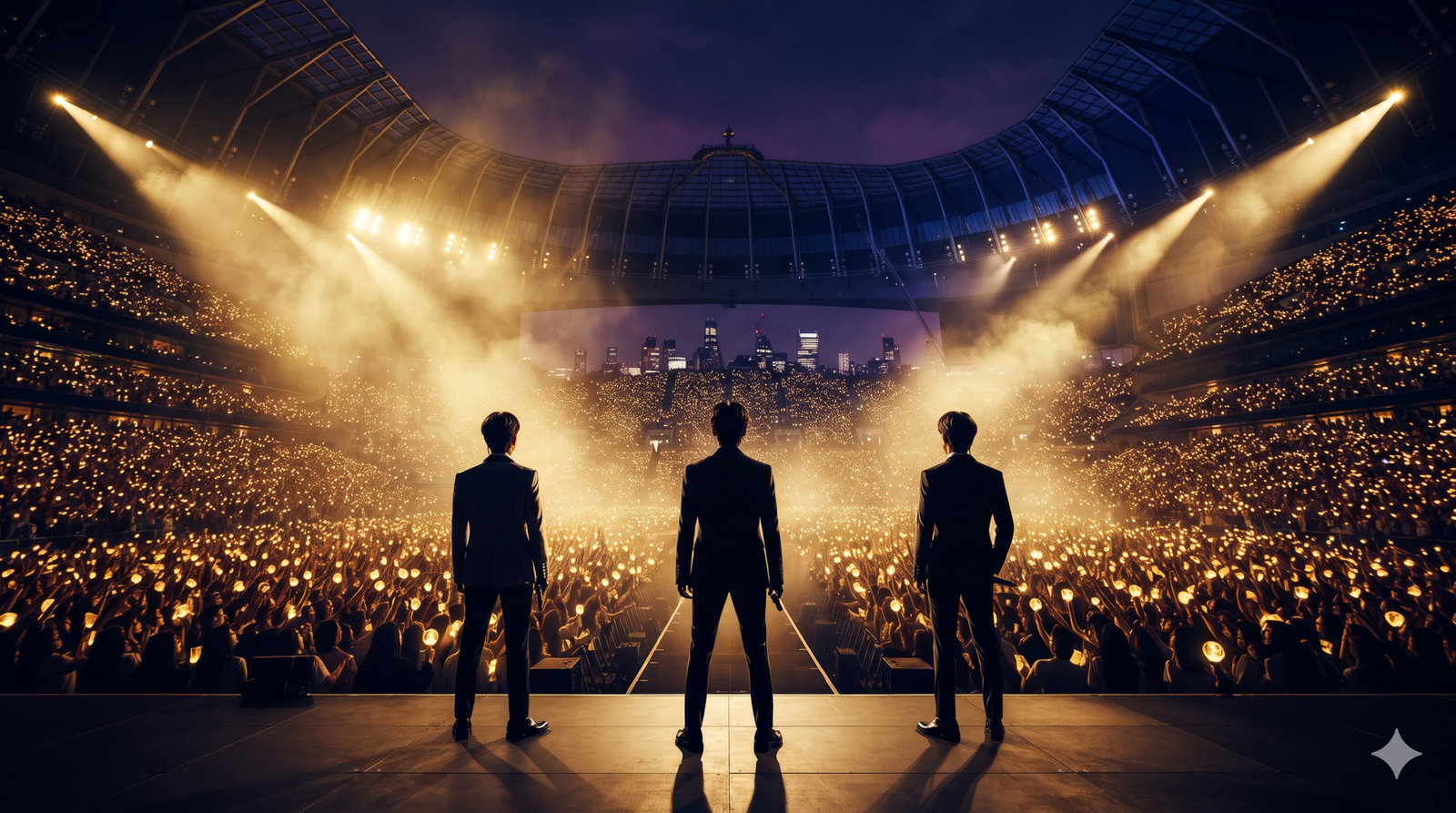
    On October 17, 2026, G-DRAGON, TAEYANG, and DAESUNG performed at Singapore’s National Stadium as part of BIGBANG’s 20th-anniversary XX: COSMOS world tour.

    The concert brought together old hits, solo performances, humor, and a powerful sense of reunion.

    For longtime fans, it was another reminder of what made BIGBANG special.

    But there is a more interesting question.

    Why do people continue returning to BIGBANG’s music, even when the K-pop industry offers an endless supply of new songs, new stars, and new performances?

    The answer may lie in a performance that has accumulated more than 150 million YouTube views.

    Not a spectacular music video.

    Not an elaborate stadium production.

    Just two people standing together, singing a song about heartbreak.

    1.A Ten-Year-Old Duet That People Still Cannot Forget

    On April 24, 2016, TAEYANG appeared on the SBS music program Fantastic Duo and performed his solo hit Eyes, Nose, Lips with a young female participant known as the “Daejeon Rhythm Gangster.”

    The premise was simple: a professional artist would share the stage with an exceptionally talented member of the public.

    But something remarkable happened.

    Rather than feeling like a celebrity singing alongside a contestant, the performance began to resemble a conversation between two people who had once loved each other.

    Their voices moved together, separated, and met again.

    The original song was already emotionally powerful. Yet the duet introduced a second perspective.

    Suddenly, the listener could imagine two people experiencing the same breakup differently.

    The performance became more than a demonstration of vocal ability.

    It became a miniature drama.

    SBS later ranked the duet first among the program’s five standout final performances, highlighting the emotional intensity that brought the audience and panelists to their feet.

    And the performance continued finding viewers long after the television broadcast ended.

    As of October 2026, the official BIGBANG YouTube upload had accumulated approximately 157 million views.

    Watch the original performance:

    TAEYANG โ€” Eyes, Nose, Lips | Fantastic Duo (April 24, 2016)

    2.The Most Interesting Part Is Not the View Count

    A video can accumulate enormous numbers for many reasons.

    A major artist may have a devoted fanbase. An algorithm may repeatedly recommend a performance. A song may benefit from playlists, nostalgia, or renewed publicity.

    Therefore, 150 million views alone cannot explain why a performance matters.

    The more revealing evidence comes from what viewers say about it.

    In the comments beneath the video, people are not simply praising TAEYANG’s fame.

    They are describing an experience they want to repeat.

    One English-language comment, with roughly 19,000 likes in the supplied October 2026 snapshot, jokes that viewers have almost certainly watched the performance before.

    Another viewer, writing years after the original broadcast, says the duet remains unforgettable.

    A Korean commenter who returned in 2026 describes the performance as one of the finest duets they have ever heard.

    These are individual reactions, not a representative survey of every viewer.

    Still, taken together, they reveal something that a view counter cannot.

    For some listeners, this performance has become a place they return to, rather than a video they watch once and forget.

    That distinction is essential to understanding musical longevity.

    3.How One Female Voice Changed the Meaning of the Song

    Perhaps the most insightful response comes from an English-speaking viewer who offered a detailed interpretation of the duet.

    The commenter suggested that adding a female voice transformed the emotional meaning of Eyes, Nose, Lips.

    In its familiar solo version, the song can be understood as one person’s painful recollection of a lost relationship.

    But when two people sing it together, the emotional landscape changes.

    Now the listener can imagine both sides of a separation.

    One person may still be holding on.

    The other may be struggling to leave.

    Both may be hurt, yet neither may know how to end the pain.

    This is not an official explanation of the song, nor proof of what the performers intended.

    It is a listener’s interpretation.

    But that is precisely why it matters.

    A memorable song does not always have one fixed emotional meaning.

    Sometimes, a powerful performance gives the audience enough space to discover a story of their own.

    In this duet, the female participant did not simply reproduce the original melody.

    Her presence made it possible to hear the song as an exchange between two people.

    And TAEYANG’s performance made that interpretation believable.

    The song did not change its fundamental identity. The listener’s relationship with the song changed.

    That is one reason music can remain meaningful long after its original release.

    4.TAEYANG’s Most Important Contribution May Have Been His Restraint

    There is another recurring observation in the comments.

    Viewers noticed how TAEYANG interacted with his duet partner.

    One Korean commenter pointed out that he frequently directed his attention toward the woman rather than the camera.

    Another English-speaking viewer praised the way he encouraged her instead of treating the performance as a vocal competition.

    This is a subtle but important distinction.

    An established superstar can dominate a stage simply by being present.

    The audience already knows the famous performer. The cameras naturally follow that person. Expectations are already shaped by celebrity status.

    But a duet requires something different.

    The performers must listen to each other.

    They must make space for one another.

    They must create the impression that the song belongs to both of them.

    In this performance, viewers responded to the sense of partnership.

    TAEYANG did not need to diminish his partner to demonstrate his own ability.

    The stronger their shared performance became, the more impressive both singers appeared.

    This offers a different way to understand star power.

    Sometimes, the mark of a great performer is not how completely they command attention, but how effectively they make another performer shine.

    That is a quality that remains visible even when trends in choreography, fashion, and production change.

    5.From One Intimate Duet to a Singapore Stadium

    Ten years after that television performance, BIGBANG’s music was once again being sung by thousands of people.

    At the group’s October 17, 2026 Singapore concert, G-DRAGON, TAEYANG, and DAESUNG performed as a trio.

    Contemporary reviews described a three-hour show filled with recognizable hits, humor, and strong audience participation.

    Songs such as Fantastic Baby encouraged the crowd to sing along, turning the stadium into something resembling an enormous shared karaoke session.

    The scale could hardly have been more different from the Fantastic Duo stage.

    One featured two singers creating an intimate emotional exchange.

    The other featured three stars and a vast crowd celebrating twenty years of music.

    Yet they shared an important characteristic.

    The audience was not merely watching BIGBANG’s music being performed. The audience was participating in it.

    At the duet, viewers imagined themselves inside the emotional story.

    At the stadium, fans supplied their own voices to songs that had accompanied different periods of their lives.

    The setting changed.

    The relationship between music and listener remained.

    This may be a more useful measure of a group’s enduring influence than any single chart position.

    6.Why BIGBANG’s Three Members Still Feel Distinct

    Another explanation for BIGBANG’s longevity is the group’s unusually recognizable individual identities.

    G-DRAGON, TAEYANG, and DAESUNG do not offer three interchangeable versions of the same performer.

    Their strengths are different.

    G-DRAGON brings a distinctive musical and visual identity, combining rap, style, and an unpredictable stage persona.

    TAEYANG contributes an immediately recognizable vocal style and an ability to communicate emotion through live performance.

    DAESUNG brings powerful vocals, humor, and a relaxed relationship with the audience.

    Reviews of the Singapore concert highlighted those contrasts.

    DAESUNG’s playful interaction with the crowd was not the same experience as G-DRAGON’s theatrical presence.

    TAEYANG’s vocal moments provided another dimension entirely.

    Rather than weakening the group’s identity, those differences helped define it.

    BIGBANG’s appeal has never depended solely on making every member appear identical.

    Its music often gains energy from the tension between contrasting personalities.

    For a group with a long history, that distinction becomes especially valuable.

    Fans can recognize individual performers while still feeling that the group creates something none of them could reproduce alone.

    7.But Can We Separate BIGBANG’s Music From Its Complicated History?

    A serious discussion of BIGBANG’s legacy cannot ignore how much the group has changed.

    The original five-member lineup is no longer the lineup performing in 2026.

    Former members SEUNGRI and T.O.P are no longer part of the current trio, and the group’s history includes controversies that have shaped public perceptions.

    Not every listener views BIGBANG’s legacy in the same way.

    Some celebrate the music while remaining critical of parts of the group’s history.

    Others associate particular songs with a time when the original lineup was still together.

    Younger listeners may discover the group without having experienced its earliest years.

    These different perspectives should not be erased.

    Musical influence does not require pretending that every part of an artist’s history is uncomplicated.

    Nor does recognizing controversy automatically explain away the emotional importance that songs hold for listeners.

    One particularly symbolic moment came during the Singapore concert’s performance of Still Life.

    A review in The Straits Times reported that the song included recorded vocals by former member T.O.P.

    That detail reflects the complicated relationship between BIGBANG’s past and present.

    The current group moves forward as three performers.

    But the music still carries traces of an earlier era.

    For longtime listeners, those traces may be inseparable from their memories.

    The challenge for BIGBANG is not simply to reproduce the past.

    It is to create a meaningful present without denying that the past existed.

    8.Nostalgia Explains Part of the Story โ€” But Not All of It

    It would be easy to conclude that BIGBANG survives because its fans are nostalgic.

    Certainly, nostalgia matters.

    A song heard during school years, a first relationship, or an important personal turning point can retain emotional power for decades.

    When that song returns, the listener may remember not only the artist but also an earlier version of themselves.

    Yet nostalgia alone does not fully explain the Fantastic Duo performance.

    Many viewers praise the vocal chemistry, emotional interpretation, and sense of spontaneity.

    Those qualities can be appreciated even by someone who was not a BIGBANG fan in 2016.

    The performance does not require knowledge of every group member or every chapter of the band’s career.

    A viewer can simply encounter two singers, hear the tension between their voices, and feel something.

    That accessibility is important.

    Nostalgia brings longtime fans back. A compelling performance gives new listeners a reason to stay.

    The strongest musical legacies can do both.

    9.What the 150 Million Views Really Tell Us

    The enduring popularity of TAEYANG’s Eyes, Nose, Lips duet does not prove that BIGBANG is better than every newer K-pop group.

    That would be an impossible conclusion to draw from one video.

    Nor does a large view count establish how many unique individuals watched it or why each person clicked.

    What the video does demonstrate is more specific โ€” and perhaps more meaningful.

    A performance recorded in 2016 continued attracting substantial attention a decade later.

    The available comments show viewers discussing not only the song but also its emotional interpretation, vocal chemistry, and the desire to hear it again.

    Meanwhile, BIGBANG’s 2026 concert demonstrates that the group’s catalog remains powerful in a very different environment: a major stadium filled with singing fans.

    Together, these examples suggest a larger explanation for BIGBANG’s staying power.

    The group’s most durable asset may not be its ability to dominate every new trend.

    It may be the capacity of its music to become part of other people’s lives.

    10.The Real Reason People Keep Returning to BIGBANG

    Twenty years is an extraordinary amount of time in pop music.

    Audiences change.

    Technology changes.

    The ways people discover, consume, and share music change.

    And K-pop itself has transformed dramatically since BIGBANG debuted.

    But the most memorable songs are not preserved only by the companies that release them.

    They are preserved by listeners.

    By someone singing along in a stadium.

    By someone returning to an old duet after a difficult breakup.

    By someone discovering a performance for the first time and wondering why it feels so personal.

    And by people who hear a familiar melody and remember a moment in their own lives.

    That may be the real answer to why people still return to BIGBANG.

    Not because the industry has stopped producing talented artists.

    Not because the past was necessarily better than the present.

    But because certain songs continue to create emotional experiences that newer music does not automatically replace.

    BIGBANG’s legacy is not simply the music the group made. It is the music that listeners have continued to make their own.

    And perhaps that is why a ten-year-old duet can still matter in the same year that BIGBANG celebrates its twentieth anniversary on a stadium stage.


    11.Watch the Performance and Explore the Sources

    Original performance

    TAEYANG โ€” Eyes, Nose, Lips (Fantastic Duo, April 24, 2016)

    Background and reporting

    Editorial note: The audience-comment analysis is based on selected comments visible in an October 2026 snapshot of the official YouTube video. Comments are individual opinions and should not be interpreted as representative audience research. View counts are approximate and change over time.

    TTK Original โ€” Beyond the Headlines | True Taste Korea
  • Why Does BIGBANG Have Only Three Members on Their 2026 World Tour?

    BIGBANG are back on a world tour in 2026.

    But for anyone who remembers the group from โ€œFantastic Baby,โ€ โ€œHaru Haruโ€ or โ€œBang Bang Bang,โ€ the first look at the current lineup may raise an obvious question:

    Why are there only three members of BIGBANG now?

    The group currently performing on the 2026 world tour consists of:

    G-DRAGON, TAEYANG and DAESUNG.

    BIGBANG originally debuted as a five-member group in 2006.

    So what happened to the other two members?

    BIGBANG Originally Had Five Members

    The original BIGBANG lineup was:

    G-DRAGON
    TAEYANG
    T.O.P
    DAESUNG
    SEUNGRI

    Together, they became one of the most influential groups of K-popโ€™s second generation.

    But BIGBANGโ€™s lineup changed dramatically during the long period between their peak touring years and their current 20th-anniversary era.

    The first major change involved Seungri.

    Why Isnโ€™t Seungri in BIGBANG?

    Seungri retired from the entertainment industry in 2019 amid the Burning Sun scandal and related criminal investigations.

    He was later convicted of multiple offenses, including arranging prostitution for investors, embezzlement and illegal gambling.

    He is no longer a member of BIGBANG.

    That leaves four members from the groupโ€™s classic lineup.

    But there is another name longtime fans will immediately notice is missing from the 2026 tour.

    T.O.P.

    What Happened to T.O.P?

    T.O.P participated in BIGBANGโ€™s 2022 single โ€œStill Life,โ€ which marked the groupโ€™s first new song in four years.

    But his relationship with BIGBANG changed afterward.

    He left YG Entertainment in 2022 and later publicly indicated that he had left BIGBANG as well.

    T.O.P subsequently focused on his own projects, including acting and other creative work.

    That means the BIGBANG performing today is not the same five-member lineup that dominated K-pop during the 2000s and 2010s.

    It is a three-member group:

    G-DRAGON, TAEYANG and DAESUNG.

    So Is BIGBANG Officially a Three-Member Group?

    For practical purposes in the current era, those are the three members performing together as BIGBANG.

    That became especially visible during their reunion performances and has continued into the 2026 world tour.

    The official tour is built around G-DRAGON, TAEYANG and DAESUNG.

    And this is not a small reunion performance.

    BIGBANGโ€™s 2026 tour includes 31 stadium shows across 18 cities in Asia, North America, Europe and Australia.

    That makes the current lineup particularly significant.

    Rather than attempting to recreate BIGBANG exactly as the group existed 10 or 15 years ago, the three members are taking the BIGBANG name into a new era.

    Can Three Members Still Perform BIGBANGโ€™s Old Songs?

    This is where the reunion becomes especially interesting for longtime fans.

    BIGBANGโ€™s catalog was originally created around several very distinctive voices.

    G-DRAGONโ€™s rap and unusual vocal color, TAEYANGโ€™s R&B-influenced singing, DAESUNGโ€™s powerful vocals and the parts originally performed by T.O.P and Seungri all contributed to the groupโ€™s sound.

    Performing those songs with three members therefore requires changes.

    Lines have to be redistributed.

    Arrangements can change.

    And familiar songs can sound different from the versions fans have known for years.

    For some VIPs, that inevitably brings back memories of the original lineup.

    For others, seeing G-DRAGON, TAEYANG and DAESUNG together again is more important than trying to reproduce the past exactly.

    London Shows How Much Has Changed

    That contrast is particularly striking at BIGBANGโ€™s September 26 London concert.

    When BIGBANG last performed in the UK nearly 14 years ago, they were still known globally as a five-member group.

    Now they are returning to London as three.

    The venue is bigger.

    K-pop is bigger.

    The members are older.

    And BIGBANG itself has changed.

    Yet songs created during a completely different chapter of the groupโ€™s history are still bringing fans into a stadium in 2026.

    Perhaps that is the most interesting part of BIGBANGโ€™s comeback.

    This is not five members trying to recreate 2012.

    It is three members asking whether BIGBANG can have another chapter.

    And judging by the scale of their 20th-anniversary world tour, they clearly intend to find out.

  • BIGBANG Sold Out London โ€” But Why Were Fans Still Selling Tickets for Less?

    BIGBANG Sold Out London โ€” But Why Were Fans Still Selling Tickets for Less?

    After 14 years away from the UK, BIGBANG returned to Tottenham Hotspur Stadium. The official tour page says sold out. Yet resale posts and discounted offers told a more complicated story.

    For BIGBANG, London was supposed to be a historic return.

    On September 26, 2026, G-Dragon, Taeyang, and Daesung brought their 20th-anniversary world tour to Tottenham Hotspur Stadium. It was their first solo concert in London since December 2012.

    Fourteen years is a long time in the music industry.

    The group that once helped introduce a generation of international listeners to K-pop was returning to a British audience that had changed dramatically.

    But there was an unexpected detail surrounding the concert.

    In the days leading up to the show, fans were still posting tickets for resale. Some were offering seats at prices substantially below what they had originally paid.

    One Reddit seller advertised a ticket purchased for ยฃ230 for just ยฃ130. Another offered a ticket for ยฃ95 shortly before the concert.

    At first glance, this looked like a sign that demand was weaker than expected.

    But the full story is more complicated.

    YG’s official tour page now lists the London concert as sold out. Meanwhile, individual resale offers continued to appear close to showtime. And the concert itself was subsequently described by NME as taking place in a stadium that was almost filled with longtime fans and curious newcomers.

    So what actually happened in London?

    The answer reveals something interesting about the difference between selling out a stadium, filling its seats, and measuring the commercial strength of a legendary K-pop group in 2026.

    1. Fourteen Years Is a Long Time to Stay Away From London

    BIGBANG last performed in London in December 2012.

    Their two Wembley Arena concerts attracted approximately 24,000 people, and the first performance reportedly sold out quickly enough to require an additional date.

    That was a very different period for K-pop.

    BTS had not yet become a global stadium phenomenon. BLACKPINK had not debuted. The international K-pop market was still developing, and BIGBANG were among the artists helping establish the genre’s presence outside Asia.

    Their 2026 return therefore carried more than ordinary concert significance.

    The audience included longtime VIP fans who had waited years for another opportunity to see the group.

    But it also included people who discovered BIGBANG much later.

    Some had grown up listening to “Fantastic Baby,” “Bang Bang Bang,” and “Haru Haru.” Others had become familiar with the members through their individual careers, particularly G-Dragon’s influence on music and fashion.

    The London concert was not simply a reunion with an old audience.

    It was an opportunity to find out whether the group’s legacy could attract a new generation as well.

    2. Tottenham Hotspur Stadium Raised the Commercial Challenge

    The venue matters.

    BIGBANG did not return to London with a small theater performance or a conventional indoor arena show.

    They chose Tottenham Hotspur Stadium, a major football venue with a concert configuration capable of accommodating a very large audience.

    That decision made the event more ambitious.

    A group can remain culturally influential without necessarily having enough immediate demand to fill every large venue it chooses.

    Stadium concerts also involve a different financial calculation.

    Promoters must consider production costs, stage construction, staffing, venue operations, ticket pricing, and the number of seats that can actually be made available for a particular configuration.

    The challenge is not simply whether people recognize the group’s name.

    It is whether enough people are prepared to spend money and travel to attend one specific performance.

    For BIGBANG, London was particularly interesting because it was the group’s only European stop on this leg of the tour.

    That created an opportunity to attract fans from outside the UK.

    But it also meant that international fans had to consider the additional costs of reaching London.

    3. The Official Sold-Out Label and Resale Market Told Different Stories

    This is the most important distinction in the entire story.

    YG’s official world-tour page currently lists London as SOLD OUT, alongside Goyang, Oakland, East Rutherford, Paris, Taipei, Singapore, and several other stops.

    That is the official ticketing status.

    However, the resale market was telling a different story in the days immediately before the performance.

    On September 19, one Reddit seller advertised a ticket originally purchased for ยฃ230 at ยฃ130.

    Another listing on September 25 offered a seat for ยฃ95.

    These were not official announcements that the concert had failed to sell.

    They were individual resale offers from people who apparently wanted to recover some of the money they had spent.

    That distinction matters.

    A concert can officially sell out while individual ticket holders still struggle to find buyers for their seats.

    The original purchaser may have changed plans, bought tickets for friends who can no longer attend, or discovered that attending the event is more expensive than expected.

    A ticket being offered below face value does not automatically mean the promoter has unsold inventory.

    It means that at least some ticket holders were willing to accept a loss rather than keep their seats.

    For an article about concert demand, confusing these two markets would lead to the wrong conclusion.

    4. Why Would Someone Sell a ยฃ230 Ticket for ยฃ130?

    The resale discounts raise another question.

    Why would someone accept a loss of ยฃ100 on a concert ticket?

    There are several possible explanations.

    A change in personal circumstances

    Concert plans are not always predictable. Work commitments, illness, family responsibilities, and travel problems can force fans to cancel.

    The cost of attending

    The ticket price is only one part of the total expense.

    A fan traveling from another city or country may also need to pay for trains, accommodation, food, and local transportation.

    The difficulty of finding a buyer

    A resale seller has a deadline.

    Once the concert begins, an unused ticket has no practical value. Someone trying to recover part of the original cost may have to lower the price quickly.

    The difference between emotional demand and purchasing power

    A person can genuinely love BIGBANG without being able to afford a particular ticket at its original price.

    These are possible explanations, not verified reasons for every resale listing.

    But they illustrate an important point: the existence of discounted resale tickets does not provide a reliable measurement of the entire audience’s demand.

    5. The UK K-Pop Audience Has Changed Since BIGBANG Last Played London

    There is another important factor.

    The British K-pop market in 2026 is not the same market BIGBANG encountered in 2012.

    Over the past decade, international audiences have become familiar with a much wider range of Korean artists.

    BTS and BLACKPINK helped make K-pop a mainstream global phenomenon. Groups such as Stray Kids and SEVENTEEN have also built substantial international fanbases.

    That means BIGBANG returned to a more developed market.

    This creates both an advantage and a challenge.

    The advantage is that there are now more people in the UK who understand K-pop, recognize Korean artists, and are willing to attend large-scale concerts.

    The challenge is that BIGBANG are no longer introducing an unfamiliar musical phenomenon to the same audience they encountered in 2012.

    They are competing for attention in a much more crowded entertainment market.

    Their historical influence remains significant.

    But historical influence and present-day purchasing decisions are not identical.

    A listener may respect BIGBANG’s contribution to K-pop without necessarily purchasing an expensive stadium ticket.

    That is the commercial reality every legacy act eventually faces.

    6. The London Audience Was Not Made Up Only of Nostalgic Fans

    Despite the questions surrounding resale prices, the actual concert received a much more positive assessment of its attendance.

    NME’s review described Tottenham Hotspur Stadium as almost filled with longtime fans and curious newcomers.

    That detail is important.

    It suggests that the audience was not simply a collection of people reliving their teenage years.

    There were also listeners who had discovered BIGBANG after the group’s original period of peak popularity.

    The concert opened with “Fantastic Baby” and moved through familiar songs including “Haru Haru,” “Lies,” “Bang Bang Bang,” “Bad Boy,” and “Sober.”

    The setlist offered a reminder of why BIGBANG became so influential.

    Their music combined hip-hop, pop, electronic production, distinctive individual personalities, and a performance style that helped shape the identity of second-generation K-pop.

    For longtime fans, these songs represented memories.

    For newer listeners, they were an opportunity to experience the original group behind music they may have encountered through later K-pop artists.

    The two audiences were meeting in the same stadium.

    7. The Three-Member BIGBANG Was Also Part of the Story

    There was another difference between the BIGBANG of 2012 and the group that appeared in London in 2026.

    The London performance featured G-Dragon, Taeyang, and Daesung.

    T.O.P. did not perform on stage.

    That absence matters when discussing the group’s return.

    BIGBANG’s identity was built around five members, and the songs that made them famous are closely associated with the different personalities and musical contributions of the original lineup.

    The 2026 tour therefore presented a particular version of BIGBANG: three members celebrating the group’s twentieth anniversary while acknowledging a complicated history.

    The closing performance of “Still Life” included T.O.P.’s recorded verse.

    According to NME’s review, this became one of the emotional moments of the evening.

    It was a reminder that the group’s legacy cannot be separated from its past, even as its current performances move forward with a different lineup.

    This is an important distinction.

    The 2026 tour was not a complete recreation of the BIGBANG that performed in London fourteen years earlier.

    It was a new chapter built around the surviving musical identity of the group.

    8. A Sold-Out Label Does Not Automatically Mean a Perfect Concert

    The London concert also revealed that commercial success and performance quality are separate questions.

    NME praised the group’s ability to deliver a stadium-scale celebration of its twenty-year career.

    However, the review also identified problems with the sound mix during the opening section, with vocals occasionally buried beneath the live band.

    Crowd energy was also described as more muted than expected in some moments.

    That is worth mentioning because it prevents the story from becoming a simple celebration of ticket sales.

    A sold-out concert is a commercial achievement.

    But audiences also judge the experience they receive.

    For a group whose identity is closely connected to live performance, vocal delivery, and stage charisma, sound quality matters.

    The strongest parts of the show came when the members had room to demonstrate their individual styles.

    The solo sections allowed G-Dragon, Taeyang, and Daesung to move through different musical territories rather than relying entirely on the group’s familiar anthems.

    This helped the concert feel like more than a nostalgia package.

    9. What London Actually Revealed About BIGBANG in 2026

    The most useful conclusion is not that BIGBANG struggled to sell tickets.

    The official tour page lists the London concert as sold out, and NME described the stadium as almost filled.

    At the same time, resale posts showed that some individual ticket holders were willing to sell below their original purchase prices.

    Both facts can be true.

    The resale market reflects the circumstances of individual buyers and sellers. The official sold-out label reflects the promoter’s ticketing status. Neither alone tells us everything about the financial performance of the event.

    What the London concert demonstrated more clearly was that BIGBANG still had the ability to attract a large audience in a major European city after fourteen years away.

    It also showed that the group’s legacy now operates across generations.

    Some people came because they had followed BIGBANG since the beginning.

    Others came because the group’s music had become part of the history of K-pop they were discovering later.

    That is a meaningful achievement for a group approaching its twentieth anniversary.

    TTK Original Perspective: The Real Test Was Never Just Selling Every Seat

    It is tempting to judge a legendary group’s return by one question:

    Did they sell out the stadium?

    But that question is too narrow.

    The more interesting test is whether an artist can turn historical influence into a meaningful live audience many years later.

    BIGBANG had to do that in a market that was very different from the one they left in 2012.

    The group succeeded in bringing a large audience to Tottenham Hotspur Stadium. The official tour page lists the show as sold out, and the concert review described a venue that was almost full.

    Yet the resale listings also remind us that ticket demand is not a simple number.

    A fan’s enthusiasm, the original ticket price, the cost of travel, and the difficulty of attending a particular date all influence what happens in the secondary market.

    Perhaps the most important achievement of the London concert was not the sold-out label.

    It was the fact that fourteen years after their last London performance, BIGBANG could still bring longtime fans and newer listeners together in a major stadium.

    Twenty years after their debut, the group is no longer trying to prove that it helped shape K-pop.

    That part of its history is already established.

    The question now is whether its music can continue to create new experiences for people who were not even old enough to remember the group’s first global rise.

    London provided a strong answer.

    BIGBANG’s past still matters.

    But its audience is not living entirely in the past.

  • Why Is BIGBANGโ€™s London Concert Such a Big Deal? Their 14-Year Wait Is Finally Over

    BIGBANG are performing at Londonโ€™s Tottenham Hotspur Stadium on September 26, 2026.

    For newer K-pop fans, that might sound like another stop on a major world tour.

    For longtime VIPs in the UK, it is something very different.

    They have waited almost 14 years for this.

    BIGBANGโ€™s last UK performance dates back to 2012. Now G-DRAGON, TAEYANG and DAESUNG are returning to London as part of the groupโ€™s 20th-anniversary world tour.

    And they are not returning to a small theater.

    They are returning to a stadium.

    BIGBANG Havenโ€™t Played in the UK Since 2012

    Think about how much K-pop has changed since BIGBANG last performed in London.

    In 2012, the global K-pop landscape looked completely different.

    Spotify had not yet become available in South Korea. TikTok did not exist. Many of the K-pop groups now filling stadiums around the world had not even debuted.

    BIGBANG were already taking Korean pop music overseas.

    Fourteen years later, the group returns to a country where an entirely new generation has grown up with K-pop.

    That alone makes the London concert unusual.

    Some fans attending tonight may have followed BIGBANG since โ€œFantastic Baby.โ€

    Others may have discovered G-DRAGON, TAEYANG and DAESUNG through their solo careers, the 2024 MAMA reunion or BIGBANGโ€™s 2026 Coachella performances.

    They are arriving at the same stadium from very different generations of K-pop fandom.

    It Is Also BIGBANGโ€™s First Tour Since 2017

    The London gap is only part of the story.

    BIGBANGโ€™s 2026 world tour is the groupโ€™s first tour since 2017.

    That means this is not simply an anniversary concert series built around nostalgia.

    It is the return of BIGBANG as a touring act after almost a decade.

    The current tour brings together G-DRAGON, TAEYANG and DAESUNG for stadium dates across Asia, North America, Europe and Australia.

    The scale matters.

    BIGBANG could have celebrated 20 years with a handful of special concerts in Korea or Japan.

    Instead, they chose a global stadium tour.

    For a group whose history stretches back to 2006, that sends a very different message:

    BIGBANG are not only looking backward.

    They are testing how large their audience still is in 2026.

    Why Tottenham Hotspur Stadium Matters

    Then there is the venue.

    Tottenham Hotspur Stadium is not a symbolic reunion venue or an intimate hall designed mainly for longtime fans.

    It is one of Londonโ€™s major stadium concert venues.

    That changes the meaning of the comeback.

    Fourteen years after BIGBANG last played in the UK, they are returning on a scale associated with some of the worldโ€™s biggest touring artists.

    The group that helped push K-pop beyond Korea during an earlier generation is now performing in a market where K-pop itself has become mainstream global entertainment.

    There is something almost circular about that.

    BIGBANG helped open a door.

    They disappeared from UK stages for nearly 14 years.

    And when they returned, the world on the other side of that door had completely changed.

    The 20th Anniversary Makes It Even Bigger

    BIGBANG debuted in 2006.

    That means the London show arrives during the groupโ€™s 20th anniversary year.

    Twenty years is an extraordinary lifespan for any pop group.

    It is even more striking considering how dramatically BIGBANGโ€™s career has changed over those two decades.

    The members built successful solo careers.

    The group went through long periods without touring.

    K-pop expanded into stadiums and global charts while BIGBANG were largely absent as a touring group.

    Yet songs such as โ€œHaru Haru,โ€ โ€œFantastic Babyโ€ and โ€œBang Bang Bangโ€ remained familiar to successive generations of listeners.

    Now the artists who helped define an earlier era of K-pop are stepping back onto a London stage in a completely different era.

    Tonight Will Tell Us Something Important

    That may be the most interesting reason to watch what happens at Tottenham.

    This concert is not simply about whether BIGBANG can perform their old hits.

    We already know those songs have survived.

    The bigger question is what a BIGBANG audience looks like in London in 2026.

    How many are VIPs who waited since 2012?

    How many discovered the group years later?

    And what happens when those generations sing the same songs together?

    We should start getting those answers tonight.

    For UK fans who have waited almost 14 years, however, one answer is already clear.

    BIGBANG are finally back in London.