• The Unforgivable: Can a Lie Told to Protect Someone Destroy Their Life?

    The Unforgivable: Can a Lie Told to Protect Someone Destroy Their Life?

    1. A Woman Who Has Already Served Her Sentence

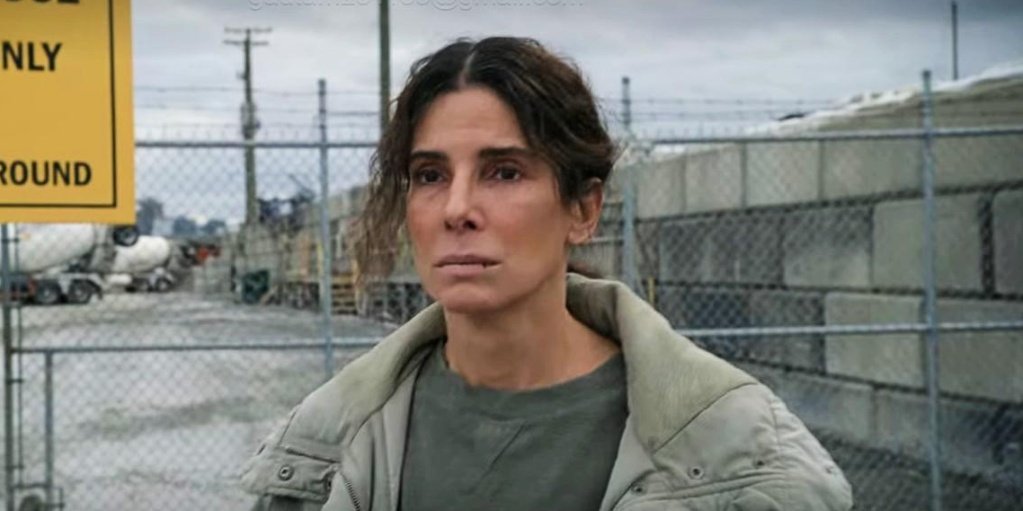
    When Ruth Slater walks out of prison in The Unforgivable, she has already spent twenty years paying for a crime that destroyed her life.

    She does not return to a welcoming world.

    People see her criminal record before they see her face. Her attempts to find work are met with suspicion. Her presence makes others uncomfortable, and even ordinary conversations remind her that society has not forgotten what she supposedly did.

    Ruth wants one thing more than anything else: to find her younger sister, Katie.

    But the film gradually reveals that her search is not simply about family reunion. It is connected to a secret that has shaped both sisters’ lives.

    The central question is not whether Ruth deserves sympathy.

    It is whether a person can spend twenty years protecting someone and still have the right to decide what that person should know.

    2. The Meaning of the Title: The Unforgivable

    The title The Unforgivable initially seems to describe Ruth.

    She is introduced as a woman convicted of killing a police officer. To the people around her, that crime is enough to define her entire identity.

    But the title becomes more complicated as the story unfolds.

    Is the unforgivable act the death of the police officer? Is it the lie Ruth tells to protect her sister? Or is it the way society continues to punish someone long after the legal sentence has ended?

    The film deliberately places several kinds of wrongdoing next to one another.

    There is the original tragedy, the deception that follows, the suffering caused by silence, and the judgment imposed by people who do not know the whole story.

    The title therefore raises a question that has no simple answer: who gets to decide what is unforgivable, and what would it take to change that judgment?

    3. Ruth’s Life After Prison Is Another Kind of Punishment

    Ruth has technically completed her sentence, but freedom does not mean that her life returns to normal.

    Her criminal record follows her into job interviews, relationships, and everyday encounters.

    People do not need to know the circumstances of her case. The word “murder” is enough.

    This is one of the film’s most important social observations.

    A prison sentence is supposed to establish a legal boundary between punishment and life afterward. Yet Ruth discovers that the end of incarceration does not necessarily end the punishment imposed by society.

    Of course, people affected by violent crime may have legitimate reasons to fear or distrust someone convicted of such an offense. The film does not make every negative reaction unreasonable.

    But it asks whether permanent rejection can ever become a substitute for justice.

    If a person is never allowed to rebuild a life, what does rehabilitation actually mean?

    4. The Secret Behind Ruth’s Twenty Years

    The story’s emotional foundation lies in what happened on the night of the shooting.

    Ruth and her younger sister Katie were living together after the loss of their parents. Their home was already a fragile place, and the arrival of police officers turned that instability into tragedy.

    During the confrontation, five-year-old Katie fired the gun that killed a police officer.

    Ruth took responsibility.

    She allowed the world to believe that she had committed the killing, protecting a child who was too young to understand the full consequences of what had happened.

    That decision became the defining event of Ruth’s adult life.

    For twenty years, she carried the guilt, punishment, and public condemnation associated with a crime her sister had committed.

    But the film’s most interesting question is not whether Ruth’s sacrifice was noble.

    It is whether a sacrifice made on someone else’s behalf can become a burden that the other person never gets the chance to understand.

    5. Was Ruth’s Lie an Act of Love?

    Ruth’s decision is easy to understand emotionally.

    Katie was only five. She had already experienced the loss of her parents and was suddenly involved in a death that would have been impossible for a child to process.

    Ruth believed that taking responsibility could protect her sister from a lifetime of trauma and punishment.

    There is genuine love in that decision.

    But love does not automatically make every decision correct.

    Ruth chose what she believed was best for Katie without giving Katie the opportunity to know the truth or understand the consequences.

    That choice protected Katie in one sense, but it also created a separate life built around a false version of the past.

    The film therefore presents sacrifice as something more complicated than selflessness.

    Sometimes a person gives up everything for someone else. But that does not necessarily mean the person being protected has received what they needed.

    6. Katie Lost More Than Her Memory of Ruth

    Katie grows up under the care of another family.

    Her childhood is no longer the childhood she shared with Ruth. She develops relationships, memories, and a sense of identity without knowing the full story of her sister’s disappearance.

    This creates an unusual form of separation.

    Ruth remembers Katie and organizes her future around finding her. Katie, meanwhile, has been given a different life.

    The sisters have not simply been separated by distance. Their understanding of their shared past has been divided.

    Ruth knows why she disappeared.

    Katie does not know what happened.

    This imbalance is central to the emotional tension of the film. One sister has spent years carrying the truth, while the other has grown up without knowing that the truth exists.

    The question becomes whether protecting a person from painful knowledge can also deprive them of their own history.

    7. Did Ruth Have the Right to Decide What Katie Should Know?

    This is perhaps the most uncomfortable moral question in the film.

    Ruth’s decision was made when Katie was a very young child. At that age, Katie could not have understood the legal or emotional consequences of the shooting.

    But twenty years later, the situation is different.

    Katie is an adult. She has the right to understand her own past, even if the truth is painful.

    Ruth’s silence began as an act of protection, but it continued long after the immediate danger had passed.

    That does not mean Ruth’s choice was selfish. Her fear and guilt are understandable.

    However, the film invites us to distinguish between protecting someone and controlling the information that shapes their life.

    A loving decision can become restrictive when it removes another person’s ability to make their own choices.

    8. The Adoptive Parents and the Fear of Losing a Family

    Katie’s adoptive parents introduce another layer of conflict.

    They have raised her and built a life with her. Their relationship is not automatically less meaningful because they are not her biological family.

    When Ruth appears, they face the possibility that the past could disrupt the family they have created.

    Their fear is understandable.

    They may believe that allowing Ruth into Katie’s life could expose Katie to emotional instability or reopen a traumatic history.

    But their position also raises an important question.

    Does protecting a family mean keeping its members away from the truth?

    The film does not present the adoptive parents as simple villains. Their concerns come from their attachment to Katie.

    Yet their desire to protect the life they have built conflicts with Katie’s right to know where she came from.

    The tragedy is that several people claim to be acting out of love, but their definitions of protection are not the same.

    9. Why the Past Refuses to Stay Buried

    Ruth’s return does not affect only Katie.

    It also brings old pain back into the lives of people connected to the dead police officer.

    This matters because the film does not treat the consequences of the shooting as belonging exclusively to the two sisters.

    A police officer died. His family and loved ones had to live with that loss. The legal case created a lasting wound that cannot simply disappear when Ruth finds Katie.

    The film’s moral conflict becomes more difficult when we recognize that every character has a history of pain.

    Ruth has suffered. Katie has lost her original family history. The police officer’s family has suffered a devastating loss. The adoptive parents fear losing the daughter they raised.

    There is no single person whose emotions can erase everyone else’s.

    This is why the film’s idea of forgiveness is more complicated than a reunion between two sisters.

    10. Sandra Bullock’s Performance: The Weight of Silence

    Sandra Bullock plays Ruth with a restrained emotional style.

    Rather than constantly explaining her suffering, she often communicates through small reactions, pauses, and expressions.

    Ruth does not behave like someone who expects the world to forgive her. She appears to have accepted that most people will never understand her.

    This makes her relationship with Katie particularly important.

    Katie represents the one connection that Ruth believes can give meaning to the years she has lost.

    Bullock’s performance is strongest when Ruth is forced to confront the possibility that the person she sacrificed everything for may not remember her in the way she remembers Katie.

    The emotional power comes from the distance between what Ruth has carried and what Katie has been allowed to know.

    11. Why Some Viewers Found the Film Frustrating

    Despite its strong central premise, The Unforgivable received mixed reactions.

    Some viewers appreciated its emotional story and Bullock’s performance. Others felt that the film relied too heavily on familiar melodramatic devices.

    The supporting characters, including the people connected to the original shooting, sometimes seem to exist mainly to increase tension around Ruth.

    Several subplots also compete for attention.

    The result is that the film occasionally feels like multiple stories compressed into one feature.

    The final revelation is emotionally effective, but some viewers felt that the reconciliation moved too quickly after such a long separation.

    These criticisms are worth considering because the film’s central moral question is stronger than some of the storytelling choices used to deliver it.

    A more patient narrative might have explored the sisters’ emotional differences in greater depth.

    12. Is Forgiveness the Same as Understanding?

    One of the film’s biggest questions concerns the meaning of forgiveness.

    Forgiveness is often treated as a final emotional destination. Someone reveals the truth, another person understands, and the relationship begins to heal.

    Real life is rarely that simple.

    Katie may understand why Ruth made her decision, but understanding does not automatically erase the consequences.

    Ruth may have sacrificed her freedom, but that does not mean Katie must immediately respond with gratitude.

    The people affected by the police officer’s death may never forgive Ruth, even after learning the full story.

    These reactions can coexist.

    The film becomes more interesting when
  • The Blind Side (2009): When an Inspiring True Story Loses Its Truth

    The Blind Side (2009): When an Inspiring True Story Loses Its Truth

    The Blind Side (2009) was presented as an inspiring story about a homeless teenager who found a family, discovered his potential, and eventually became an NFL player. Its emotional appeal was powerful, and Sandra Bullock’s performance as Leigh Anne Tuohy helped turn the film into a major commercial and awards success.

    But the story became much more complicated when Michael Oher, the real person portrayed in the film, publicly challenged how his life had been represented.

    The controversy raises a question that goes beyond the accuracy of individual scenes: What happens when a film about someone’s extraordinary life becomes more famous than the person whose life it claims to tell?

    The issue is not simply whether Hollywood changed a few details. It is whether the film’s inspirational message depended on presenting Michael Oher as someone who needed to be rescued, rather than recognizing him as an individual who had already been fighting for his own future.

    1. The Movie That Turned a Football Player into an Inspirational Symbol

    Directed by John Lee Hancock, The Blind Side follows Michael Oher, a teenager who experiences instability and hardship before entering the home of Sean and Leigh Anne Tuohy.

    The film focuses on the family’s decision to welcome him, their support for his education, and his development as a football player.

    For many viewers, the appeal was straightforward. A young person facing enormous obstacles receives an opportunity, finds a place where he belongs, and eventually succeeds.

    It was an emotionally satisfying story about generosity, family, and second chances.

    Yet the film’s structure also created an imbalance. Michael’s journey was frequently presented through the actions and decisions of the people who helped him. The audience was encouraged to admire the family that changed his circumstances.

    That distinction would become central to the later controversy.

    2. Who Is the Real Main Character?

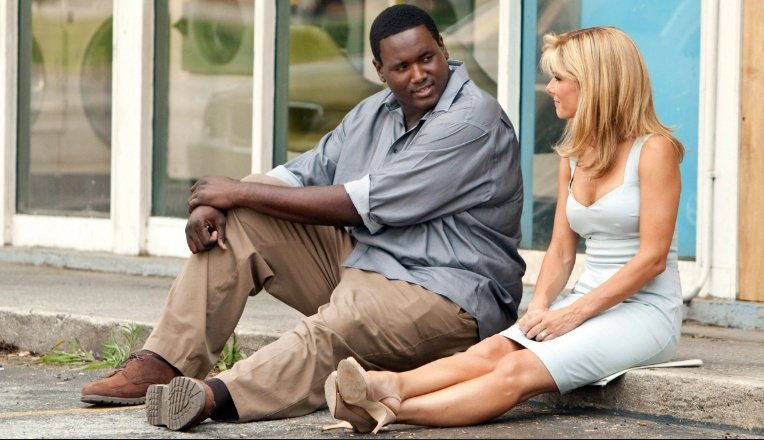
    Although Michael Oher is the person whose life inspired the film, Leigh Anne Tuohy often functions as its emotional center.

    She recognizes Michael’s situation, challenges the people around him, protects him, and pushes him toward opportunities that might otherwise have remained inaccessible.

    Sandra Bullock’s performance gives Leigh Anne a strong personality and a clear dramatic journey.

    Michael, meanwhile, is often quieter and less expressive. His character is defined by what he lacks, what he struggles to understand, and what other people do for him.

    This creates an unusual storytelling problem.

    The film is ostensibly about Michael overcoming adversity, but much of its emotional momentum comes from watching Leigh Anne discover her capacity to help him.

    The question is not whether Leigh Anne matters. She clearly does. The question is why Michael’s own perspective receives comparatively less attention in a film about his life.

    3. The White Savior Narrative Behind the Emotional Story

    One of the most persistent criticisms of The Blind Side concerns the white savior narrative.

    This is a storytelling pattern in which a white character helps a person of color overcome difficult circumstances, while the helper becomes the central figure through whom the audience understands the experience.

    The criticism does not mean that helping someone across racial or economic boundaries is inherently wrong.

    It concerns the way the story distributes agency.

    In The Blind Side, the wealthy white family has the resources, knowledge, and authority to change Michael’s life. Michael is frequently positioned as the recipient of their decisions.

    The result is a familiar emotional structure: the audience watches the helper become heroic, while the person being helped becomes the evidence of that heroism.

    This is why some critics argued that the film’s message of kindness was not as simple as it first appeared.

    4. Michael Oher Was Not a Blank Slate Before Meeting the Tuohys

    One of Oher’s most significant objections involved the way the film portrayed his knowledge of football.

    In the movie, Michael appears unfamiliar with the sport’s basic strategies. Scenes involving Leigh Anne and her young son explaining football concepts help establish his need for guidance.

    Oher disputed this portrayal.

    In his 2011 memoir, I Beat the Odds: From Homelessness to the Blind Side and Beyond, he explained that he had already studied football and understood the game before the Tuohys became part of his life.

    He also objected to the suggestion that his success was primarily the result of someone else teaching him how to play.

    This matters because football was not simply an activity that appeared in his life after he entered the Tuohy household.

    It was already part of his ambition and his path toward a different future.

    The film’s version makes his development easier to understand dramatically, but it also reduces the amount of credit given to his own preparation.

    5. The Difference Between Poor Education and Low Intelligence

    Another major criticism concerned Michael’s intellectual portrayal.

    The film emphasizes his academic difficulties and presents him as someone who struggles to understand instructions and express himself.

    Oher argued that this portrayal confused a lack of consistent educational opportunity with a lack of intelligence.

    His childhood involved instability, interrupted schooling, and significant disadvantages. Those circumstances affected his education, but they did not define his intellectual capacity.

    In his memoir, Oher said he felt the film portrayed him as unintelligent rather than as a student who had not received consistent academic instruction.

    The distinction is important.

    A person who has missed educational opportunities is not necessarily incapable of learning. A person who needs support is not automatically without ability.

    By simplifying this difference, the movie risked reinforcing the very assumptions that its inspirational message seemed intended to challenge.

    6. The Problem with Making a Real Person Too Simple

    Movies often simplify real people.

    A feature film has limited time, and complicated experiences must be organized into scenes, conflicts, and character arcs.

    But simplification becomes more troubling when it changes the audience’s understanding of the person at the center of the story.

    Michael Oher was a highly recruited football prospect before reaching the NFL. His journey involved athletic discipline, personal ambition, and years of effort.

    The film’s portrayal gives more weight to his vulnerability than to the work he had already done.

    That creates a contradiction.

    The audience is told to celebrate Michael’s achievements, yet the film sometimes presents him as though he could not have reached those achievements without someone else first explaining his own potential to him.

    An inspirational story should not need to make its central character less capable in order to make the supporting characters appear more generous.

    7. What the Film Got Right About the Importance of Support

    It would also be unfair to conclude that everything in the movie was false.

    Oher has acknowledged that the Tuohys provided meaningful support during an important period of his life. They offered him a place to stay and helped him with aspects of his education and daily circumstances.

    The relationship was not simply invented for Hollywood.

    The problem is that a real relationship can contain genuine generosity and still be represented inaccurately on screen.

    Two things can be true at the same time:

    • The Tuohy family may have made a meaningful difference in Oher’s life.
    • The film may still have distorted important parts of his personality, knowledge, and personal history.

    Recognizing one does not require denying the other.

    This distinction is essential if the film is to be examined fairly rather than turned into a simple story of heroes and villains.

    8. The Adoption Story That Became a Legal Controversy

    One of the most consequential differences between the film and the real-life events concerned the nature of Oher’s legal relationship with the Tuohys.

    The movie presents the family as adopting Michael.

    However, Oher’s 2023 court petition stated that he had not been legally adopted. Instead, after he turned 18, he entered into a conservatorship arrangement with Sean and Leigh Anne Tuohy.

    Oher alleged that he had been led to believe the arrangement was effectively an adoption, while the documents gave the couple legal authority over certain aspects of his affairs.

    The distinction is significant because adoption and conservatorship are not interchangeable legal arrangements.

    A conservatorship does not create the same parent-child legal relationship as adoption.

    In September 2023, a Tennessee judge terminated the conservatorship. The judge also expressed concern about how the arrangement had been established.

    However, the termination itself did not prove every allegation Oher had made about the family’s intentions or the film’s financial arrangements.

    The legal controversy therefore needs to be understood through the distinction between documented events, Oher’s allegations, and the Tuohys’ responses.

    9. The Dispute Over Money and the Film’s Success

    The financial questions added another layer to the controversy.

    Oher alleged that the Tuohys used their position as conservators to negotiate arrangements connected to the book and film based on his life, while he was not properly compensated.

    The Tuohy family disputed his accusations.

    In November 2023, documents reported by ABC News indicated that the family had paid Oher approximately $138,311 in proceeds connected to the book and film.

    The Tuohys also maintained that the proceeds were intended to be shared among the five members of the family.

    These competing accounts illustrate why the financial dispute cannot be reduced to a single headline.

    The central questions concern what agreements were made, what each person understood, what payments were received, and whether the relevant legal obligations were fulfilled.

    For the film’s legacy, however, there is a broader issue.

    When a movie earns enormous commercial success from a real person’s life, the person whose experience made the story possible should not become an afterthought in discussions about recognition, ownership, and compensation.

    10. Why the Controversy Changed the Meaning of the Film

    Before the controversy, many viewers could watch The Blind Side as a story about generosity overcoming social barriers.

    After Oher publicly challenged the portrayal, familiar scenes began to look different.

    The football lessons, the family’s interventions, and Michael’s quiet acceptance of help no longer functioned only as inspirational moments.

    They also raised questions about who had the authority to define his life.

    A scene that once seemed touching could now appear to reinforce a version of Michael that he himself rejected.

    This is an important difference between a fictional character and a real person.

    A fictional character cannot publicly disagree with the filmmaker’s interpretation. A real person can.

    When the real person challenges the story, the audience must reconsider whether the film’s emotional truth is consistent with the individual’s actual experience.

    11. Reddit’s Reaction: Sympathy, Anger, and Skepticism

    Discussions on Reddit following Oher’s 2023 allegations showed how quickly the film’s reputation became contested.

    In a widely discussed r/entertainment thread, some users expressed anger at the possibility that Oher had been misled or financially disadvantaged.

    Others focused on the white savior narrative, arguing that the film had already presented a version of events in which a wealthy white family received much of the emotional credit for a Black athlete’s success.

    However, not every reaction was supportive of Oher.

    A later discussion in r/TrueUnpopularOpinion included users who questioned his account and argued that the Tuohys had provided important opportunities.

    These discussions should not be mistaken for a representative survey of all viewers. They are examples of the conflicting reactions the controversy generated.

    Still, the disagreement reveals something important.

    The film’s legacy is no longer just about whether viewers found it moving. It is also about whether they believe the story treated its central real-life subject fairly.

    12. The Film’s Biggest Contradiction: Celebrating Achievement While Reducing Agency

    The most interesting criticism of The Blind Side is not that it depicts a family helping a disadvantaged teenager.

    It is that the film’s emotional structure can make the teenager’s own achievements seem secondary to the family’s intervention.

    Michael Oher did not become an NFL player simply because someone gave him a home.

    He had athletic ability, worked to improve, competed for opportunities, and continued developing his career.

    Support mattered, but so did his own decisions and effort.

    A more balanced version of the story could have explored both sides.

    It could have shown how the Tuohys contributed to his life while also giving greater attention to the determination and preparation that existed before their involvement.

    Instead, the movie often makes the family’s generosity the central explanation for Michael’s transformation.

    That is a powerful cinematic choice, but it is also the source of one of the film’s deepest weaknesses.

    13. Does a Good Intention Excuse an Inaccurate Story?

    Filmmakers often defend dramatization by arguing that a movie must work as entertainment.

    That is understandable.

    A film based on real events is not a court transcript or a documentary. Characters may be combined, events rearranged, and scenes created to communicate a larger theme.

    But there is a difference between compressing events and changing the central identity of a real person.

    If a film presents someone as intellectually limited when that person believes the portrayal is inaccurate, the issue is not merely artistic license.

    It becomes a question of representation.

    The same applies when a story emphasizes the generosity of supporting characters while minimizing the work and independence of the person whose life is being depicted.

    Good intentions may explain why a filmmaker wanted to tell a story.

    They do not automatically settle whether the story was told responsibly.

    14. What Makes a True Story Worth Telling?

    The best true-story films do more than create an emotional reaction.

    They help audiences understand the complicated forces behind a person’s life.

    In Oher’s case, those forces included poverty, unstable childhood circumstances, educational barriers, athletic opportunity, personal determination, and the support of people who entered his life at important moments.

    None of these elements needs to cancel out the others.

    A more complete story would not have to turn the Tuohys into villains or deny the support they provided.

    It would simply give Michael Oher the same complexity that the film gave Leigh Anne Tuohy.

    He could be vulnerable without being helpless.

    He could receive support without losing his independence.

    And he could appreciate the people who helped him without having his entire success explained through their actions.

    That is what a genuinely balanced inspirational story should allow.

    15. Why The Blind Side Still Matters

    Despite the controversy, The Blind Side remains an important example of how popular cinema can shape public understanding of real people.

    The film reached millions of viewers and introduced many of them to Oher’s story.

    It also brought attention to children who experience foster care, unstable homes, and limited educational opportunities.

    Those positive effects should not be ignored.

    But the film also demonstrates how easily a powerful emotional narrative can become the dominant version of someone’s identity.

    For years, Oher’s name was closely associated with a movie that many people had watched but that he later said did not accurately represent him.

    The film gave him visibility, but it also helped create a public image he struggled to control.

    That tension is more complicated than a simple argument about whether the movie is good or bad.

    16. The Person Must Matter More Than the Inspirational Story

    The greatest lesson of The Blind Side may be that an inspirational story can become unfair when it takes ownership of the person it is supposed to celebrate.

    Michael Oher’s life did include hardship. It also included ambition, preparation, athletic intelligence, and personal determination.

    The Tuohy family may have provided meaningful support. That support does not mean the film had the right to define every part of Oher’s identity for him.

    The controversy forces viewers to reconsider what they were actually celebrating.

    Was it Michael Oher’s ability to build a future despite difficult circumstances?

    Was it the generosity of a family willing to help someone in need?

    Or was it a Hollywood version of events that made one family’s kindness easier to celebrate by making the person they helped appear less independent?

    Perhaps the most responsible way to watch The Blind Side today is to hold these questions together.

    A true story should not become less truthful simply because the truth is more complicated than the movie’s happy ending.

    And when the person behind the story says, “That is not entirely my story,” the audience should be willing to listen.

  • Practical Magic 2 Was No. 1 at the Box Office—So Why Is Everyone Calling It a Disappointment?

    Sandra Bullock and Nicole Kidman returned for Practical Magic 2, more than two decades after the original movie became a cult favorite.

    And the sequel did something that sounds like an obvious success:

    It opened at No. 1 at the domestic box office.

    So why are some people in Hollywood already using the word “disappointing”?

    The answer reveals something strange about modern box-office success.

    Being No. 1 Doesn’t Always Mean You Had a Huge Weekend

    Practical Magic 2 topped the domestic box office, but its opening landed around the lower end of industry expectations.

    That creates the apparent contradiction.

    A movie can beat every other film playing that weekend and still perform below what a studio, theater owners or analysts expected from it.

    No. 1 measures who won the weekend.

    Expectations measure how much money people thought the winner should make.

    Those are two very different things.

    The Original Practical Magic Wasn’t a Giant Hit Either

    There is another reason the early verdict may be worth treating cautiously.

    The original Practical Magic, released in 1998, wasn’t initially remembered as a massive theatrical blockbuster.

    Its reputation grew later.

    The combination of Sandra Bullock, Nicole Kidman, witchcraft, romance and the relationship between the Owens sisters helped the movie develop a loyal following long after its theatrical run.

    That following is a major reason a sequel exists decades later.

    In other words, Practical Magic has already demonstrated that opening-weekend numbers don’t necessarily tell its entire story.

    So Is Practical Magic 2 Actually a Flop?

    Not based simply on the fact that its opening was below some expectations.

    The more important questions come next.

    Does the audience keep showing up after opening weekend?

    Does nostalgia bring older fans back while attracting younger viewers who discovered the original through streaming?

    And does the movie perform strongly enough internationally and later on digital and streaming platforms?

    Those answers will matter more than one weekend.

    For now, Practical Magic 2 has landed in an unusual position:

    It won the box office — while still being asked why it didn’t win by more.

    And maybe that’s the more interesting question.

    If finishing No. 1 can still be called disappointing, what does “box-office success” actually mean anymore?