TTK Original — Beyond the Headlines
What if the most frightening thing about losing your memory is not forgetting who you are, but eventually remembering what you have done?
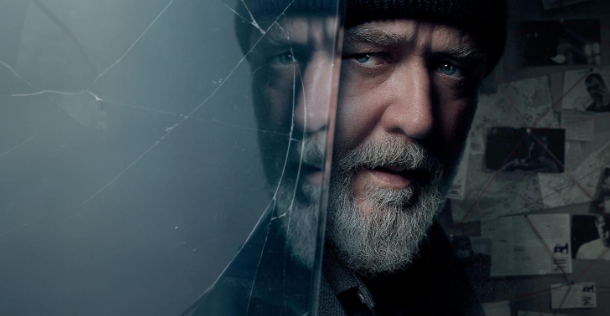
At first glance, Sleeping Dogs (2024), starring Russell Crowe, appears to be a familiar crime thriller. A retired detective suffering from Alzheimer’s disease reopens an old murder investigation, questions the people involved, and gradually uncovers a conspiracy that was never properly resolved.
But the film’s most disturbing revelation is not simply the identity of the murderer.
It is the discovery that Roy Freeman, the man searching for the truth, is the very person he has been trying to find.
And once that truth returns, the film leaves us with a question that is considerably more painful than the mystery itself: If forgetting allowed Roy to continue living, what happens when he can no longer forget?
1. A Detective Who Cannot Remember His Own Past
Roy Freeman lives in a world that is slowly disappearing.
His home is covered with handwritten reminders. Ordinary routines require instructions, familiar faces become uncertain, and even his own identity needs to be reinforced through notes.
His memory is no longer something he can trust.
This condition makes him an unusual detective. Most investigators reconstruct the past by examining evidence, comparing testimony, and identifying contradictions. Roy must do all of that while questioning the reliability of his own mind.
When Isaac Samuel, the man convicted of murdering Professor Joseph Wieder, asks Roy to reconsider the case before his execution, the detective begins an investigation that seems to offer him a reason to return to the world.
There is something almost comforting about this new purpose.
For the first time in a long while, Roy is not simply trying to remember how to live. He has something meaningful to investigate.
But the investigation is also leading him toward a part of his identity that he may have spent years trying to escape.
The film quietly establishes an uncomfortable possibility: Roy’s memory problems do not merely prevent him from understanding the case. They also prevent him from understanding himself.
2. The Real Mystery Is Not Who Killed Wieder
As Roy follows the evidence, the investigation moves through several suspicious figures.
Richard Finn’s manuscript introduces a complicated relationship involving Wieder and Laura Baines. Laura later appears under a different identity as Dr. Elizabeth Westlake. Wayne Devereaux, another person connected to Wieder, provides further clues about the professor’s disturbing activities.
Roy’s former partner, Jimmy Remis, also becomes increasingly important.
Each character appears to possess only part of the truth. Some are hiding their involvement, others are protecting themselves, and some may be manipulating Roy’s damaged memory.
The structure encourages viewers to do what Roy is doing: construct a version of events from incomplete information.
Yet there is a deeper problem with this approach.
A murder investigation normally assumes that the detective stands outside the crime. The investigator may have made mistakes, missed evidence, or trusted the wrong witness, but the basic moral distinction remains clear.
There is a victim, a suspect, and a detective searching for justice.
Sleeping Dogs eventually destroys that comfortable arrangement.
Roy is not merely an investigator who failed to solve a case correctly. He is connected to the original crime in a far more personal way.
The mystery is therefore not simply about identifying a murderer. It is about discovering whether the person conducting the investigation can still recognize the moral meaning of his own actions.
3. The Most Important Victim Is Not the Person Who Died
The film’s central twist reveals that Roy killed Professor Wieder.
The circumstances are deeply personal. Roy discovers that Wieder had exploited Diane, Roy’s former wife, during treatment intended to help her confront painful memories. The professor had recorded the encounter.
When Roy learned what had happened, his anger overwhelmed him. He went to Wieder’s house and killed him with a baseball bat.
Jimmy subsequently helped cover up the crime, allowing Isaac Samuel to take the blame.
This revelation changes the meaning of almost every earlier scene.
Roy believed he was correcting an injustice by reopening Isaac’s case. In reality, he was approaching the truth of an injustice that he himself had helped create.
Isaac lost ten years of his life because the real killer was protected.
That is the film’s most uncomfortable moral reversal.
Roy’s anger may have originated in a desire to protect someone he loved. Wieder’s conduct was reprehensible, and the suffering inflicted on Diane was real. But Roy’s decision to kill him did not restore justice.
Instead, it created another victim.
The film asks us to distinguish between understanding a person’s motive and excusing the consequences of their actions.
Roy may have acted out of emotional devastation. He may have believed that he was responding to something unforgivable.
But Isaac still paid for a crime he did not commit.
And that is where Roy’s story becomes tragic rather than merely shocking.
4. Was Forgetting the Truth Roy’s Only Way to Survive?
This is where the film becomes more interesting than a conventional murder mystery.
Roy’s memory loss is presented through Alzheimer’s disease and experimental treatment. The film also connects memory suppression to Wieder’s work with patients who wanted relief from traumatic experiences.
The important distinction is that the movie does not establish that Roy deliberately chose to forget his crime.
Nor does it prove that his medical condition was secretly created as a cover-up for the murder.
Those are tempting interpretations, but they go beyond what the film firmly establishes.
What the story does establish is more subtle: Roy’s damaged memory has separated him from the person who committed the murder.
He can investigate the crime because he no longer consciously recognizes himself as its perpetrator.
This creates a strange psychological paradox.
The man who once committed the crime and the man who now investigates it are technically the same person. Yet, in Roy’s experience, they seem almost like strangers.
His present self wants justice. His past self helped prevent it.
His present self is horrified by the idea that an innocent man might die. His past actions helped put that innocent man behind bars.
The question is not whether Roy has become a completely different person.
It is whether a person can remain morally responsible for an action that he can no longer remember.
The law, memory, and personal identity do not necessarily answer that question in the same way.
And the film wisely leaves some of that discomfort unresolved.
5. Jimmy’s Loyalty Was Also a Form of Betrayal
Jimmy Remis is one of the film’s most complicated characters.
For much of the story, he appears to be an obstacle to Roy’s investigation. He discourages him from reopening the case and seems determined to keep the past undisturbed.
Eventually, however, we discover that Jimmy helped Roy after the murder.
His loyalty was real, but its consequences were devastating.
He protected his partner by allowing an innocent man to suffer.
This is an important distinction because Jimmy’s actions can initially look like friendship. He may have believed that he was saving Roy from prison, public disgrace, and the destruction of his life.
But loyalty becomes morally dangerous when it requires the sacrifice of someone else’s life.
Jimmy did not simply hide a mistake.
He helped preserve a false version of reality for ten years.
His final actions, when he shoots Laura after she attacks him and Roy, add another layer to his character. He still attempts to protect Roy, even as the truth becomes impossible to contain.
His last words reveal the emotional foundation of the cover-up: he did what he did for his partner.
But the film leaves us with a difficult question.
How much harm can a person justify in the name of protecting someone they love?
Jimmy’s loyalty may have been sincere. It was not innocent.
6. The Final Scene: Why Does Roy Walk Away With a Gun?
The final moments are arguably the most haunting part of Sleeping Dogs.
After the confrontation at Wieder’s house, Roy begins to recover the memories that explain his involvement in the murder. The truth is no longer a distant possibility. It is something he must recognize as his own.
He takes a gun and walks out of the frame.
The film ends without showing what he does next.
This is a deliberate emotional gap, and it is worth resisting the temptation to turn it into a definite answer.
One possible interpretation is that Roy intends to take his own life. The realization that he killed Wieder, helped condemn Isaac to prison, and allowed the truth to remain buried may be more than he can bear.
Some viewers have also questioned whether the final walk suggests suicide, while others have speculated about the circumstances surrounding Diane’s death. These discussions show how effectively the ending leaves unresolved emotional questions, but they do not establish what happens after the screen goes dark.
There is another interpretation worth considering.
Perhaps the gun represents Roy’s inability to return to the identity he had constructed during his investigation.
Until that moment, he could still imagine himself as a detective pursuing justice. He had a mission, a purpose, and a version of himself that made sense.
Now that version has collapsed.
He is no longer simply the retired officer trying to correct an old mistake. He is the man whose actions helped create it.
The gun may suggest self-destruction, but it also represents the danger of a man who has finally recovered the truth without knowing how to live with it.
The director does not provide a reassuring resolution.
Instead, the audience is left alone with Roy’s realization.
That silence is arguably more disturbing than showing the next event.
7. The Cruelest Part of Memory Is That It Does Not Return What It Takes Away
There is a particular sadness in the way Sleeping Dogs handles memory.
When Roy begins the investigation, remembering seems like a gift. Each recovered detail brings him closer to the person he once was.
But the film gradually reverses that expectation.
Memory does not simply restore lost knowledge. It also restores responsibility.
Roy cannot recover the past and keep only the parts that make him feel better. He cannot remember the investigation without remembering the murder. He cannot remember his anger without remembering what that anger caused.
And he cannot recover his identity without confronting the damage attached to it.
This is why the film’s central tragedy is not Alzheimer’s itself.
The deeper tragedy is that Roy discovers the truth at a point when he may no longer have the emotional or personal resources to repair what he has done.
Isaac has already lost ten years. Jimmy is dead. Laura is dead. Diane is gone.
Remembering cannot bring any of them back.
The truth arrives, but it arrives too late to undo the consequences.
8. Why Sleeping Dogs Is More Than a Whodunit
The title refers to the familiar expression, “Let sleeping dogs lie.”
It suggests that disturbing an old problem may create consequences that are worse than leaving it alone.
But the film gives that phrase a darker meaning.
The sleeping dog is not simply an old murder case. It is the buried truth inside Roy himself.
For ten years, that truth remained hidden beneath a combination of loyalty, deception, and failing memory. Once Roy begins digging, the past does not stay neatly contained in the files.
It returns as a threat to the identity he has built in the present.
Director Adam Cooper has described the story as an exploration of how memory shapes identity and how the truth is experienced through an individual’s point of view. That creative intention helps explain why the film places the audience so closely alongside Roy: we are meant to discover the truth as he does, rather than stand safely outside his experience.
The film’s greatest irony is that Roy begins by trying to save an innocent man from a false memory of history.
In the process, he uncovers the truth about himself.
But truth and redemption are not the same thing.
Discovering what happened does not automatically repair the damage. Remembering a crime does not erase it. And feeling remorse does not return ten years to a man who lost them behind prison walls.
Perhaps that is why the ending refuses to tell us exactly what Roy does next.
The more important question is not whether he survives the final scene.
It is whether he can continue living with the person he now remembers being.
Sometimes, the truth does not set a person free. Sometimes, it simply takes away the last place where they could hide.
TTK Original — Beyond the Headlines
Sleeping Dogs (2024) is directed by Adam Cooper and stars Russell Crowe as Roy Freeman, alongside Karen Gillan, Marton Csokas, Tommy Flanagan, and Pacharo Mzembe. The film is adapted from E. O. Chirovici’s novel The Book of Mirrors.