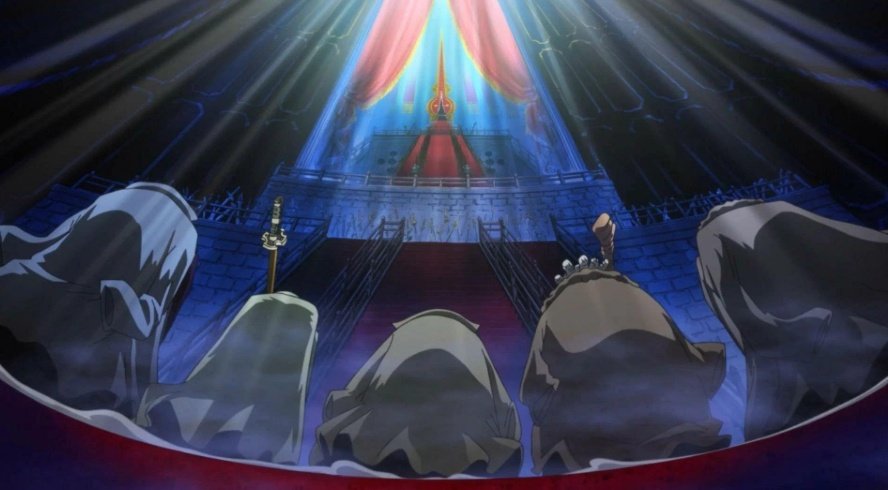
• One Piece: What Is the World Government Really Trying to Protect?

    One Piece: What Is the World Government Really Trying to Protect?

    TTK Original — Beyond the Headlines

    Spoiler Warning: This analysis discusses the World Government, the Celestial Dragons, the Empty Throne, the Five Elders, and major political revelations from the series. It avoids detailed spoilers from the latest manga developments.

    The World Government claims to maintain peace.

    It presents itself as the institution responsible for preventing chaos, protecting nations, and preserving order across the seas.

    It has the Marines, a vast political structure, intelligence organizations, and the authority to intervene in the affairs of countries around the world.

    At first glance, this appears to be the foundation of a functioning global government.

    But the longer we follow the story of One Piece, the more difficult it becomes to accept the official explanation.

    Why does a government that claims to protect the world tolerate the extraordinary privileges of the Celestial Dragons?

    Why does it destroy entire islands when their inhabitants discover forbidden historical information?

    Why does its supposedly empty throne conceal a secret ruler?

    And why does an institution that speaks so confidently about order react so violently whenever its authority is questioned?

    These contradictions point toward a deeper interpretation.

    The World Government is not simply trying to preserve peace.

    It is protecting a political structure in which a small group possesses the right to decide what peace means, who deserves protection, and whose lives can be sacrificed to preserve the existing order.

    This is the real question behind its power.

    Does the World Government exist to protect the world, or does the world exist to protect the World Government?

    1. The Difference Between Governing the World and Owning It

    The World Government is one of the most powerful political institutions in the world of One Piece.

    Its influence extends across numerous nations, and its authority is supported by military force, intelligence networks, and political agreements.

    But the structure of that authority raises an important question.

    What is the purpose of governing?

    In a legitimate political system, authority should exist to protect the people who live under it.

    Institutions should provide security, establish rules, resolve conflicts, and create conditions in which ordinary people can live without fear.

    The World Government often presents itself in these terms.

    Yet its behavior suggests that protecting the institution and protecting the population are not always the same priority.

    When the interests of the ruling class conflict with the interests of ordinary people, the government repeatedly demonstrates whose interests matter more.

    This is the first major contradiction in its political identity.

    It claims to govern the world, but it behaves as though the world belongs to those who control the government.

    2. The Celestial Dragons: When Privilege Becomes a Political System

    The Celestial Dragons represent the most visible expression of inequality in One Piece.

    They are descendants of the royal families associated with the founding of the World Government.

    Their inherited status places them above ordinary people in ways that go far beyond wealth or social prestige.

    They possess extraordinary privileges and can demand the use of government resources to satisfy their desires.

    Their treatment of ordinary people exposes the moral weakness at the center of the political system.

    The problem is not simply that some individuals are wealthy.

    Wealth alone does not necessarily create an unjust political order.

    The deeper problem is that their inherited position gives them a different relationship with the law itself.

    Ordinary people are expected to obey.

    The Celestial Dragons can behave as though the rules were created for everyone else.

    This is not equality with a few exceptions.

    It is a system in which inequality has become an official principle.

    The Celestial Dragons therefore reveal what the World Government protects at its highest level.

    It protects a hierarchy in which birth determines whose interests receive priority.

    3. The Empty Throne: The Most Important Symbol of a Political Lie

    One of the most revealing political symbols in One Piece is the Empty Throne.

    The throne is presented as a declaration that no single person rules the world.

    According to the official explanation, the founders of the World Government agreed that none of them would claim absolute authority.

    The empty seat represents their supposed commitment to equality among the founding kingdoms.

    It is an elegant political symbol.

    No individual king stands above the others.

    The system appears to be based on shared authority rather than personal domination.

    But the revelation surrounding the throne transforms its meaning.

    The seat is not truly empty.

    Its apparent neutrality conceals the existence of a secret ruler.

    This changes the way we understand the World Government’s entire political structure.

    The institution presents collective leadership to the public while concealing a superior authority from the world.

    The Empty Throne is therefore more than a symbol of hypocrisy.

    It represents a system in which the appearance of equality is used to conceal the reality of absolute power.

    The most revealing feature of this deception is that the government does not merely hide its ruler.

    It turns the absence of a ruler into part of its official identity.

    4. Imu: The Power That Exists Outside Public Accountability

    The existence of Imu introduces another layer to the political structure.

    The Five Elders are publicly regarded as the highest authorities of the World Government.

    They represent the institution’s senior leadership and oversee its major political and administrative functions.

    Yet their relationship with Imu reveals that even these powerful figures answer to someone above them.

    This creates a striking contradiction.

    The people who appear to represent the highest authority in the world are themselves subordinate to a ruler whose existence is hidden from ordinary citizens.

    The political implications are significant.

    How can the public hold an institution accountable when it does not know who ultimately controls it?

    How can nations understand the source of major decisions when the real authority is concealed?

    And how can the principle of shared political power be taken seriously when an undisclosed individual can override the entire structure?

    Imu makes the World Government’s problem more fundamental.

    Its political system is not simply unequal.

    Its highest level of authority is hidden from the people who are supposedly governed by it.

    5. The Marines: Protectors of Justice or Defenders of the System?

    The Marines are essential to understanding the complexity of the World Government.

    They are the most visible military force responsible for maintaining order across the seas.

    Many Marines genuinely believe in justice.

    Characters such as Smoker, Fujitora, and Koby demonstrate that the organization contains individuals who struggle with the moral consequences of their duties.

    This is important because it prevents the story from becoming a simplistic conflict between pirates and heroes.

    The Marines are not all motivated by the same values.

    Some prioritize obedience.

    Others believe in protecting ordinary people.

    Some question the actions of their superiors.

    Their internal differences reveal a conflict between two ideas of justice.

    The first defines justice through institutional authority.

    If an order comes from the government, obedience becomes the primary responsibility.

    The second defines justice through moral responsibility.

    An action does not become right simply because a powerful institution authorizes it.

    This distinction is central to the political world of One Piece.

    The Marines may protect ordinary people from pirates, but they can also become instruments through which the ruling class protects itself.

    The question is not whether the Marines are necessary.

    The question is whether an institution can remain just when its loyalty to authority becomes more important than its responsibility to people.

    6. Absolute Justice: When a Good Principle Becomes Dangerous

    The concept of Absolute Justice, strongly associated with Akainu, provides one of the clearest examples of the dangers of institutional thinking.

    At first glance, absolute justice appears to be an admirable principle.

    It suggests that evil should never be tolerated and that dangerous criminals must be eliminated.

    But the problem emerges when justice becomes so rigid that individual circumstances no longer matter.

    When an institution believes its mission is unquestionably correct, it can begin to justify almost any action in the name of that mission.

    The destruction of Ohara demonstrates the extreme consequences of this thinking.

    The government treats the island’s scholars as an unacceptable threat, and the military operation does not distinguish between the intellectual work of researchers and the lives of ordinary inhabitants.

    The result is catastrophic.

    The principle of justice becomes a justification for collective destruction.

    This is one of Oda’s most important political observations.

    A system can use morally attractive language while carrying out profoundly immoral actions.

    The danger is greatest when those enforcing the system stop asking whether their methods are compatible with the values they claim to defend.

    7. The World Government Needs Enemies to Justify Its Authority

    Every powerful institution needs some explanation for why its authority is necessary.

    In the case of the World Government, piracy provides a convenient and very real source of danger.

    The seas are filled with violent criminals, destructive pirate crews, and individuals capable of threatening entire nations.

    The government can therefore present itself as the force preventing the world from descending into chaos.

    There is truth in this argument.

    Pirates can cause enormous suffering, and ordinary people need protection from violence.

    But the existence of real threats does not automatically make every action taken by the government legitimate.

    This is where the political structure becomes more complicated.

    If the government can define every challenge to its authority as a threat to global stability, it gains the ability to blur the distinction between criminal activity and political opposition.

    A person who attacks civilians may be a criminal.

    A person who questions the government may be a dissenter.

    A person who investigates forbidden history may be a scholar.

    Treating all three as the same kind of enemy is not the protection of justice.

    It is the expansion of political control.

    The World Government’s greatest advantage is that it can use genuine dangers to make its own abuses appear necessary.

    8. The World Government’s Greatest Resource Is Not Its Military

    Military strength is important, but it is not enough to explain how the World Government maintains its influence.

    It also depends on information.

    The government has the ability to restrict historical research, manipulate public narratives, and control how certain events are presented to the world.

    The destruction of Ohara illustrates this strategy.

    The government does not merely eliminate the scholars.

    It also creates a public explanation that presents their research as a threat to humanity.

    This is a much more sophisticated form of power than simple military occupation.

    If people accept the official explanation, the government does not need to explain every action in detail.

    Its enemies become dangerous by definition.

    Its decisions become necessary by default.

    Its authority begins to appear natural.

    This is why historical censorship is so central to the story.

    A government that controls information can influence not only what people believe happened, but also what they think is possible in the future.

    For a deeper examination of this issue, see our third analysis, Why the World Government Fears the Truth of History.

    9. The World Government Does Not Need Everyone to Love It

    Another interesting feature of the World Government is that it does not necessarily need universal admiration.

    Political systems can survive even when large numbers of people are dissatisfied.

    What matters is whether those people possess the ability to organize, communicate, and challenge the structure of authority.

    The World Government has several advantages.

    It has military power.

    It has political influence over member nations.

    It has intelligence organizations.

    It also has the ability to make examples of people who challenge its authority.

    These mechanisms create a system in which fear can sometimes be more effective than genuine loyalty.

    People may obey because they believe the government is legitimate.

    Others may obey because they have no realistic alternative.

    Still others may disagree privately while continuing to cooperate publicly.

    This distinction is important.

    Visible obedience does not necessarily prove that a government has earned the trust of its population.

    Sometimes it simply demonstrates that the cost of resistance is too high.

    10. The Revolutionary Army: Challenging the Structure Rather Than One Enemy

    The Revolutionary Army introduces a different kind of challenge to the World Government.

    Unlike individual pirate crews, its conflict is fundamentally political.

    It seeks to confront the structure of authority that allows the World Government and the Celestial Dragons to dominate other nations.

    This distinction changes the scale of the conflict.

    A pirate crew may defeat a powerful enemy and liberate a particular island.

    A revolutionary movement questions the political system that makes similar oppression possible across multiple countries.

    The Revolutionary Army therefore represents a challenge to the government as an institution.

    Its existence raises a difficult question.

    If the World Government claims to protect the world, why do so many people see the existing system as something that must be fundamentally changed?

    The answer cannot be reduced to the ambition of one pirate or the hatred of one enemy.

    It reflects a much wider conflict over who has the right to determine the future of the world.

    This is also why the Revolutionary Army and the Straw Hat Pirates should not be treated as interchangeable forces.

    They may challenge the same political structure, but their motivations and methods are different.

    11. Why Some Kings Cooperate With an Unjust System

    The World Government is not sustained by the Celestial Dragons alone.

    Its political structure also depends on the participation of member nations.

    Kings and political leaders attend the Reverie, negotiate with one another, and participate in the international order.

    This creates an interesting contradiction.

    Some nations may benefit from the protection and stability provided by the government.

    Others may cooperate because they fear the consequences of opposition.

    Some rulers may prioritize their own position over the interests of their citizens.

    The result is a political structure that does not require every participant to share the same ideology.

    It only requires enough people to find cooperation more beneficial than resistance.

    This is a realistic dimension of Oda’s political storytelling.

    Unjust systems are rarely maintained by one individual acting alone.

    They survive through networks of people and institutions whose interests become connected to the continuation of the system.

    The World Government is powerful not only because it has rulers.

    It is powerful because numerous political actors have reasons to remain inside its structure.

    12. The Cost of Preserving the Existing Order

    One of the most disturbing aspects of the World Government is how easily the lives of ordinary people can become secondary to the protection of its political structure.

    Ohara is a clear example.

    The island’s destruction demonstrates that the government is willing to sacrifice an entire community when it believes that its authority is threatened.

    Other events throughout the story reinforce this pattern.

    The suffering of ordinary people is repeatedly connected to decisions made by powerful individuals who are protected from the consequences of those decisions.

    This raises an important distinction between stability and justice.

    Stability means that the existing arrangement continues.

    Justice means that people are treated according to principles that recognize their dignity and rights.

    These two things can sometimes support each other.

    But they can also conflict.

    A political system may remain stable precisely because those who suffer under it have no effective way to challenge it.

    In that situation, stability becomes an excuse for preserving injustice.

    The World Government repeatedly exposes this danger.

    Its greatest priority appears to be preventing the structure from changing, even when maintaining that structure creates enormous suffering.

    13. The One Piece World Is Not Divided Into Simple Heroes and Villains

    Despite its political criticism, One Piece does not present every conflict through a simple division between good pirates and evil government officials.

    The Marines contain people with different moral beliefs.

    Some pirates are cruel and destructive.

    Some kingdoms cooperate with the World Government for reasons that cannot be reduced to greed.

    Even within powerful institutions, individuals can question the actions of their superiors.

    This complexity is important.

    It allows the story to distinguish between an individual person’s moral character and the political system in which that person operates.

    A Marine may genuinely want to protect civilians while serving an institution that commits injustice.

    A king may care about his people while cooperating with a deeply unequal international structure.

    A pirate may oppose the government without necessarily representing a better political future.

    The story becomes more interesting when we recognize that defeating a villain does not automatically solve the problems that allowed that villain to gain power.

    This is one of the reasons the World Government remains such a compelling antagonist.

    Its danger lies not only in the personalities of its leaders, but in the institutions and assumptions that protect their authority.

    14. What Would Happen If the World Government Lost Its Power?

    This is one of the most important questions that the story invites readers to consider.

    If the World Government were defeated, would the world automatically become peaceful?

    Not necessarily.

    The seas would still contain dangerous pirates.

    Individual kingdoms would still have competing interests.

    Political ambition, greed, and violence would not disappear simply because one institution had collapsed.

    A different political structure would still need to address these problems.

    This is an important distinction between destroying an unjust system and building a better one.

    The first requires resistance.

    The second requires responsibility.

    Oda has not presented the final political arrangement of the world as a completed answer, and it would be premature to claim that the story has already revealed exactly what should replace the World Government.

    But the distinction matters.

    The central question is not simply whether the existing rulers should fall.

    It is whether the people of the world can build an order in which authority exists to serve them rather than to preserve itself.

    This is where the political meaning of the series extends beyond its immediate conflicts.

    A revolution is not complete simply because the old rulers have disappeared.

    Its real success depends on what happens afterward.

    15. Final Reflection: The World Government Is Afraid of Losing the Right to Decide

    The World Government presents itself as the guardian of global peace.

    But its treatment of the Celestial Dragons, its concealment of the Empty Throne, its suppression of historical research, and its willingness to sacrifice ordinary people reveal a different priority.

    It is protecting a structure in which authority is concentrated at the top and accountability becomes increasingly difficult as power increases.

    The Celestial Dragons represent inherited privilege.

    The Empty Throne represents the illusion of shared authority.

    Imu represents power concealed from public accountability.

    The Five Elders represent the political machinery that maintains the system.

    The Marines represent the complicated relationship between justice and obedience.

    Together, these elements reveal a government whose greatest fear may not be disorder itself.

    It may be the loss of its exclusive right to define order.

    That is what makes the conflict in One Piece so much larger than a battle between pirates and the government.

    The real struggle concerns who gets to decide how the world should be organized, whose lives matter, and whether the people who hold power must answer to anyone.

    Luffy does not set out to become the ruler of the world.

    That is precisely what makes his journey so different from the ambitions of those who occupy the highest levels of the World Government.

    He wants to reach the end of the sea without becoming another person who decides how everyone else must live.

    And perhaps that is the most important contrast in the entire series.

    The World Government wants to preserve a world in which a few people determine the limits of everyone else’s lives.

    The Straw Hats represent the possibility of a world in which people can pursue their own dreams.

    The ultimate question of One Piece may not be who deserves to rule the world. It may be whether the world needs someone to rule it in the first place.

    TTK Original — Beyond the Headlines

  • One Piece: How Inherited Will Survives Even After Death

    One Piece: How Inherited Will Survives Even After Death

    TTK Original — Beyond the Headlines

    Spoiler Warning: This analysis discusses major developments involving Dr. Hiriluk, Gol D. Roger, Portgas D. Ace, Sabo, Whitebeard, and Kozuki Oden. It includes significant story events from several major arcs.

    What happens to a dream when the person who created it dies?

    In many adventure stories, death marks the end of a character’s journey. The survivors remember the person, mourn the loss, and eventually continue with their own lives.

    One Piece approaches this idea differently.

    In Eiichiro Oda’s world, a person’s death does not necessarily mean that their purpose has disappeared. A dream can survive its creator. An unfinished promise can influence someone who never knew the original dreamer. Even an idea that powerful people attempt to eliminate can reappear through another generation.

    This concept is known as Inherited Will.

    It is one of the most important ideas in One Piece, but it is also one of the easiest to misunderstand.

    Inherited will does not simply mean that a younger character copies an older character. It does not require a blood relationship, an identical personality, or even a direct promise.

    Sometimes a person inherits a dream without realizing it.

    Sometimes they consciously choose to continue someone else’s work.

    And sometimes they inherit an idea but transform it into something entirely different.

    Through Roger, Hiriluk, Ace, Sabo, Oden, and Luffy, Oda explores a question that reaches beyond the world of pirates:

    Can something a person believes in become more powerful after that person is gone?

    1. Roger’s Words Introduce a Different Understanding of Death

    One of the earliest and most important expressions of inherited will appears in the story’s opening journey.

    Gol D. Roger is executed, apparently bringing the life of the Pirate King to an end.

    Yet his death does not produce the silence that the authorities might have expected.

    Instead, his final words ignite the Great Pirate Era.

    People from different backgrounds begin searching for the treasure he left behind.

    Some want wealth. Others want fame, adventure, or power. Many simply want to test themselves against the unknown.

    Roger’s death therefore creates an unexpected result.

    The execution of one man becomes the beginning of countless other journeys.

    This is the first major paradox of One Piece.

    The government can kill Roger, but it cannot control what his words inspire in other people.

    His physical life ends.

    His influence expands.

    The difference between those two outcomes is the foundation of inherited will.

    2. Inherited Will Is Not the Same as Inheriting a Bloodline

    One of the most important distinctions in One Piece is that dreams are not limited to biological families.

    A person may inherit a name, a family position, or a physical characteristic through birth.

    But inherited will operates differently.

    Someone can continue another person’s dream without being related to them.

    This is particularly important because the World Government places enormous significance on bloodlines and inherited identities.

    The story repeatedly challenges the assumption that a person’s family determines their moral value or future.

    The relationship between Luffy, Ace, and Sabo is an especially clear example.

    They are not biological brothers.

    They choose to become brothers through shared experiences, promises, and mutual loyalty.

    Their bond shows that a meaningful legacy can be created through relationships that people choose.

    The most important inheritance is not necessarily the one written in a family record.

    It can be the one a person accepts in their heart.

    3. Dr. Hiriluk: A Dream Does Not Have to Be Completed During One Lifetime

    Dr. Hiriluk’s story offers one of the clearest explanations of inherited will.

    He is a flawed doctor with an unusual philosophy.

    His medical knowledge is limited, and his methods are often questionable. Yet he believes that a person’s spirit can survive through the dreams they leave behind.

    His famous declaration about death gives the idea a powerful emotional foundation.

    For Hiriluk, a person truly disappears when they are forgotten.

    His dream is connected to the transformation of Drum Island and the belief that people can be healed beyond the limitations of ordinary medicine.

    But he does not live long enough to witness the future he imagines.

    The important point is that his failure to complete the dream does not make the dream meaningless.

    Chopper carries his influence forward.

    The young reindeer does not simply become a copy of Hiriluk. He develops his own identity as a doctor, using his experiences and abilities to pursue a much larger ambition.

    Hiriluk gives him something more valuable than a medical textbook.

    He gives him a reason to believe that becoming a doctor can be an act of love.

    The dream survives because someone else discovers its meaning.

    4. Chopper Inherits a Responsibility, Not Just a Memory

    It would be easy to interpret Chopper’s development as a simple tribute to his teacher.

    But the relationship between Chopper and Hiriluk is more complicated.

    Chopper carries both the warmth of Hiriluk’s acceptance and the pain of losing him.

    These experiences shape his understanding of medicine.

    He does not want to become a doctor merely because it is a respected profession.

    He wants to become someone capable of saving people who have been abandoned, rejected, or considered impossible to cure.

    This is how inherited will becomes personal.

    Chopper takes an idea from another person and transforms it through his own experience.

    He does not need to repeat Hiriluk’s mistakes or adopt every part of his personality.

    He needs to preserve the part of Hiriluk’s dream that gave his life meaning.

    This is an important distinction.

    Inheritance is not imitation.

    It is the process of discovering which part of another person’s legacy deserves to continue.

    5. Whitebeard Understands That Killing a Person Cannot Guarantee the End of Their Dream

    The Marineford War brings inherited will into one of the series’ most dramatic conflicts.

    The World Government wants to eliminate Portgas D. Ace, partly because of his connection to Gol D. Roger.

    The logic behind the decision is disturbing.

    If Roger’s biological son is removed, perhaps the threat associated with his bloodline can also be eliminated.

    But Whitebeard challenges this assumption.

    He understands that a person’s dream is not automatically destroyed when their body dies.

    His final words emphasize that even if bloodlines can be severed, the flames of human ambition can continue through others.

    This is not merely an emotional statement from a dying pirate.

    It directly challenges the idea that political authority can control the future by eliminating selected individuals.

    The government may be able to kill a person.

    It cannot guarantee that nobody will continue what that person believed in.

    Whitebeard’s final declaration turns Marineford into more than a battle over Ace’s survival.

    It becomes a conflict over whether the next generation will be allowed to inherit the dreams of the previous one.

    6. Ace: The Tragedy of a Man Who Questioned Whether He Deserved to Exist

    Ace’s story is particularly important because his relationship with inherited will is emotionally complicated.

    He is the biological son of Gol D. Roger.

    But rather than experiencing that identity as a source of pride, Ace grows up burdened by the question of whether he deserved to be born.

    The world sees him through his father’s name.

    He is judged before people understand his own character.

    This creates a painful contradiction.

    Ace wants to know whether his existence has value, but the world repeatedly reminds him of an identity he never chose.

    His relationship with Whitebeard provides an alternative.

    Whitebeard offers him a place where he is not defined solely by his father’s reputation.

    Ace chooses to accept Whitebeard as his father.

    This decision is essential to understanding his character.

    His emotional identity is not determined by biological inheritance alone.

    He finds a family through the people who accept him.

    His life becomes a struggle between the past he inherited without consent and the relationships he chooses for himself.

    That is why his final realization carries so much emotional weight.

    The question is no longer whether he deserved to be born as Roger’s son.

    It is whether he was loved by the people whose opinions mattered to him.

    7. Ace’s Death Does Not End His Story

    Ace’s death is one of the most devastating moments in One Piece.

    It is also a major turning point for the series.

    Until Marineford, Luffy’s journey is driven by enormous ambition and confidence.

    He wants to become Pirate King, and he repeatedly demonstrates an extraordinary ability to overcome obstacles.

    But Marineford confronts him with something he cannot simply defeat through determination.

    He cannot save everyone.

    He cannot reverse death.

    And he cannot protect his brother merely because he wants to.

    Ace’s death breaks Luffy’s confidence in his own strength.

    Yet the story does not treat Ace’s death as the disappearance of everything he represented.

    His influence continues through the people who loved him.

    Luffy carries the emotional memory of his brother.

    Sabo eventually returns and accepts the responsibility of remembering Ace.

    Even the fire associated with Ace becomes part of a later story.

    Ace’s physical absence therefore becomes the starting point for another form of presence.

    His life continues to matter because the people who knew him are changed by it.

    8. Sabo: The Most Literal Example of Inherited Will

    Sabo provides one of the clearest examples of inheritance in the entire series.

    He is Ace and Luffy’s sworn brother, and his relationship with them is built on the idea that family is created through commitment rather than blood.

    After Ace dies, Sabo eventually recovers his memories and learns what happened.

    His grief is deeply connected to the fact that he was unable to protect his brother.

    When he later obtains the Mera Mera no Mi, the inheritance becomes visible in a physical form.

    The flame associated with Ace is now carried by Sabo.

    But the deeper significance is not simply that one Devil Fruit has passed from one person to another.

    Sabo has chosen to carry a part of his brother’s legacy.

    He does not become Ace.

    He remains Sabo, with his own personality, political commitments, and responsibilities.

    The flame becomes a symbol of remembrance rather than a replacement for the person who died.

    This distinction matters.

    If Sabo merely copied Ace, his development would be limited to imitation.

    Instead, he carries Ace’s memory while continuing his own life.

    That is a more meaningful form of inheritance.

    9. Luffy: The Person Who Inherits Dreams Without Needing to Understand Everything

    Luffy’s relationship with inherited will is especially interesting because he rarely approaches it through intellectual explanations.

    He does not spend his time analyzing the philosophical meaning of his journey.

    He wants to become Pirate King.

    He wants his friends to be safe.

    He wants to travel, eat, laugh, and experience the world.

    Yet his actions repeatedly place him in situations where he continues the dreams and hopes of people who came before him.

    This creates a contrast between the simplicity of Luffy’s personal motivations and the enormous historical significance of his journey.

    He does not need to consciously announce that he is carrying Roger’s will.

    The similarities between their dreams, the straw hat, and the reactions of people who understand the larger history suggest a connection that the story gradually develops.

    However, it is important not to reduce Luffy to a character who merely repeats Roger’s journey.

    Luffy is not interesting because he is someone else’s successor.

    He is interesting because he remains himself while becoming connected to something much larger.

    His inherited significance does not erase his individual personality.

    It expands the meaning of his choices.

    10. Oden: A Dream That Requires Someone Else to Finish the Journey

    Kozuki Oden’s story introduces another form of inherited will.

    Oden is connected to Wano’s history, the Poneglyphs, and the wider journey toward the final island.

    His experiences with Whitebeard and Roger give him knowledge of a world far beyond the borders of his homeland.

    But his return to Wano brings him into conflict with Kaido and Orochi.

    Oden wants to open Wano’s borders and change the country’s future.

    He is unable to complete that goal during his lifetime.

    His death becomes one of the most important events in the country’s history.

    Yet his dream continues to influence the people who survive him.

    His followers preserve his memory.

    His family remains connected to the future he imagined.

    And the next generation eventually confronts the political order that prevented him from fulfilling his ambition.

    Oden’s story demonstrates that a dream may require more than one lifetime.

    Sometimes the person who begins a transformation cannot be the person who completes it.

    11. Tama and Yamato: Two Different Ways of Remembering Ace and Oden

    The stories of Tama and Yamato reveal that inherited will is not always expressed in the same way.

    Tama remembers Ace through a personal promise and the hope of meeting him again.

    For her, Ace is not simply a legendary pirate.

    He is someone who made an impression on her life and gave her something to look forward to.

    When she learns of his death, the emotional impact is enormous.

    Her relationship with Luffy also becomes connected to the memory of Ace.

    Yamato’s relationship with Oden is different.

    Yamato admires Oden so deeply that the desire to carry on his will becomes central to their identity.

    This raises a more complicated question.

    Can someone inherit another person’s will without becoming trapped by the image of that person?

    Yamato’s admiration is powerful, but inherited will should ultimately allow a person to develop their own future.

    Tama and Yamato therefore illustrate two different forms of inheritance.

    One is based on a personal memory and a promise.

    The other is based on admiration for a historical figure and the desire to continue an unfinished mission.

    Both demonstrate how the past can shape the choices of people who come after it.

    12. Pedro: A Sacrifice That Gives the Future a Direction

    Pedro’s story adds another dimension to the theme.

    His relationship with the Straw Hats is connected to a belief that their journey may lead to a new dawn for the world.

    He recognizes the importance of the crew’s mission and is willing to make an enormous sacrifice to help them escape.

    His death is not presented as a simple heroic victory.

    It creates grief and responsibility for the people who survive.

    Carrot, in particular, is affected by the meaning of Pedro’s sacrifice.

    The idea of a new dawn becomes part of the emotional legacy he leaves behind.

    This is a different kind of inheritance from the one associated with Ace or Oden.

    Pedro does not pass down a famous title or a physical symbol.

    He leaves behind a belief about the future.

    The people who survive him must decide what to do with that belief.

    And that decision is what allows his influence to continue.

    13. Inherited Will Can Be Distorted When People Copy Hatred Instead of Understanding Its Origins

    There is an important danger hidden inside the idea of inherited will.

    Not every inherited belief is noble.

    A person can inherit hatred just as easily as hope.

    The story of Hody Jones and the New Fish-Man Pirates offers a powerful example.

    Hody’s hatred of humans is not simply the result of a personal experience of discrimination.

    His ideology is shaped by an environment in which historical hatred has been passed from one generation to another.

    He absorbs the anger of the past without necessarily understanding the individual experiences that created it.

    This is an important contrast with characters such as Otohime and Fisher Tiger.

    Their experiences reveal the complexity of prejudice, suffering, and the possibility of reconciliation.

    Otohime understands that teaching the next generation to hate will only reproduce the conflict.

    Her message is not that historical suffering should be forgotten.

    It is that people should not automatically inherit the hatred produced by that suffering.

    This is one of the most sophisticated aspects of Oda’s treatment of legacy.

    The past can inspire people to build a better future.

    But it can also trap them in a cycle of resentment.

    Inherited will is therefore not automatically virtuous.

    Its moral value depends on what people choose to preserve.

    14. Why Inherited Will Is More Important Than Simple Revenge

    Many stories use the death of an important character to motivate revenge.

    The survivor becomes stronger, defeats the person responsible, and restores a sense of justice.

    One Piece sometimes uses revenge as part of its conflicts, but inherited will offers a broader possibility.

    Instead of asking only how the dead can be avenged, the story asks what should continue after they are gone.

    This is a much more difficult question.

    Revenge focuses on the person responsible for the loss.

    Inherited will focuses on the future that the loss should not be allowed to destroy.

    That does not mean revenge is always portrayed as meaningless or that justice should be abandoned.

    It means that a person’s legacy should not be reduced to the identity of their killer.

    Ace should not be remembered only because of the person who killed him.

    Oden should not be remembered only because of Kaido and Orochi.

    Hiriluk should not be remembered only because of the circumstances of his death.

    Their lives contained dreams, relationships, and beliefs that deserve to exist independently of the people who ended their lives.

    This is why inherited will is more than a narrative device for making tragic deaths emotionally satisfying.

    It is a way of giving the future a purpose beyond revenge.

    For a related examination of loyalty, personal responsibility, and the difference between obedience and genuine belief, see TTK’s analysis of Faith.

    15. Final Reflection: The Future Belongs to Those Who Decide What Deserves to Survive

    The idea of inherited will connects many seemingly separate stories in One Piece.

    Roger’s execution creates a new era.

    Hiriluk’s dream influences Chopper.

    Whitebeard refuses to believe that Ace’s death can eliminate his legacy.

    Sabo carries the memory of his brother through the flame.

    Oden’s unfinished ambition becomes part of Wano’s future.

    Pedro’s belief in a new dawn continues through those who survive him.

    These stories are different, but they share an important principle.

    A person does not need to remain alive for their choices to continue influencing the world.

    However, inherited will is not automatic.

    The next generation must decide what to preserve.

    They can continue a dream, reinterpret it, or reject the hatred that has become attached to it.

    This is what makes the concept so powerful.

    It is not simply about the past controlling the future.

    It is about the future deciding what deserves to be carried forward.

    Perhaps that is why One Piece repeatedly connects dreams with death.

    The story is not suggesting that death is unimportant or that loss can easily be overcome.

    It is suggesting that the meaning of a person’s life cannot be measured only by how long that person survives.

    A dream may begin with one individual.

    It may be interrupted by war, betrayal, or death.

    But if another person understands why that dream mattered, its journey can continue.

    And sometimes, the person who carries it forward can take it somewhere the original dreamer never imagined.

    The most powerful inheritance is not the life someone leaves behind. It is the future that another person chooses to build because that life once existed.

    TTK Original — Beyond the Headlines
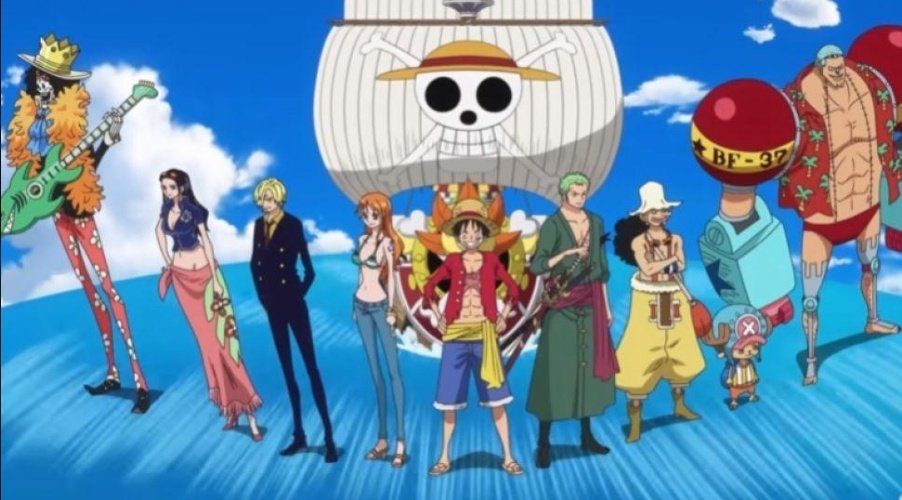
  • One Piece: Why the World Government Fears the Truth of History

    One Piece: Why the World Government Fears the Truth of History

    TTK Original — Beyond the Headlines
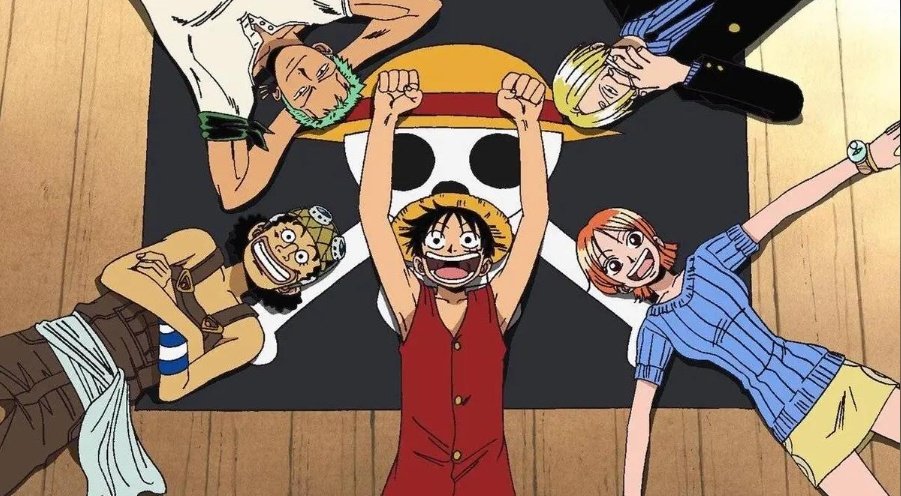
    Spoiler Warning: This analysis discusses major revelations surrounding Ohara, Nico Robin, the Poneglyphs, and the World Government. It focuses on established story material and avoids revealing the latest manga developments.

    What makes a government powerful?

    Its military strength? Its wealth? Its ability to control territory?

    In One Piece, Eiichiro Oda introduces a more unsettling possibility.

    A government becomes almost impossible to challenge when it can control not only what people do, but also what they are allowed to know about the past.

    The World Government does not merely rule the seas. It determines which historical questions are acceptable, which records must remain inaccessible, and which people become enemies simply because they want to understand what happened centuries ago.

    This is why the Void Century is so important.

    The mystery is not simply that one hundred years of history have disappeared. The more disturbing question is why studying that period is treated as a crime serious enough to justify the destruction of an entire island.

    Through Ohara, Nico Robin, and the Poneglyphs, One Piece explores a political idea that reaches far beyond its fictional world:

    When those in power are afraid of history, the past becomes a threat to the present.

    1. The Most Dangerous Enemy of Power May Be a Question

    The World Government possesses extraordinary military and political authority.

    It has the Marines, Cipher Pol, the World Nobles, and an international system of influence that reaches across numerous nations.

    Yet one of its greatest anxieties is not simply an armed rebellion.

    It is historical research.

    This is an unusual choice for a story about pirates and adventure.

    A government with overwhelming military resources should theoretically have little reason to fear scholars who study ancient writing.

    But the World Government reacts to certain historical questions with extreme violence.

    That reaction tells us something important.

    The danger is not necessarily the act of reading an ancient inscription.

    The danger is what people might discover after reading it.

    A question can become politically threatening when its answer challenges the legitimacy of the existing order.

    This is the first clue that the mystery of the Void Century is not merely an archaeological puzzle.

    It is a question about the foundations of political authority.

    2. The Void Century Is More Than a Missing Chapter in History

    The Void Century refers to a hundred-year period between approximately 900 and 800 years before the present timeline.

    For ordinary people in the world of One Piece, this period is largely inaccessible.

    The historical record is incomplete, and research into the era is forbidden by the World Government.

    However, the Poneglyphs preserve information that survived the disappearance of conventional historical records.

    The important point is that the Void Century is not simply a period that nobody remembers.

    It is a period whose investigation has been deliberately restricted.

    There is a major difference between losing historical documents through time and making the search for those documents a criminal offense.

    The first is a problem of preservation.

    The second is a problem of power.

    Oda uses this distinction to transform an ancient mystery into a political conflict.

    The reader is not only encouraged to wonder what happened.

    The reader is also encouraged to wonder who benefits from preventing anyone from finding out.

    3. The Poneglyphs: History That Refuses to Disappear

    The Poneglyphs are among the most important objects in the entire series.

    They are massive stone inscriptions written in an ancient script.

    Unlike ordinary documents, they cannot easily be destroyed or rewritten.

    Their existence creates a fascinating contradiction.

    The World Government has enormous influence over the modern world, but it cannot completely eliminate the surviving physical evidence of the past.

    The stones remain.

    They are fragments of a historical record that refuses to disappear.

    This gives the Poneglyphs a meaning beyond their role as clues in an adventure.

    They represent the limits of political control.

    A government may control schools, institutions, public information, and official narratives.

    But it cannot guarantee that every trace of the past will vanish.

    The Poneglyphs are especially powerful because they are not simply rumors passed between generations.

    They are material evidence that something was recorded and deliberately preserved.

    Their existence means that the official version of history is not necessarily the only version.

    4. Ohara: When Scholarship Becomes a Crime

    Ohara is where the political implications of the mystery become impossible to ignore.

    The island is known for its scholars and archaeologists, particularly those who devote their lives to studying ancient civilizations.

    Professor Clover and the researchers of Ohara are not trying to conquer the world.

    They are trying to understand it.

    Their work eventually leads them toward the Void Century and the ancient civilization associated with that period.

    The World Government responds by treating their research as a threat.

    The scholars are not simply ordered to stop publishing their findings.

    The island is subjected to a Buster Call.

    This is one of the most disturbing decisions in the series.

    The government does not merely punish individuals who might possess dangerous information.

    It destroys the intellectual community capable of investigating that information.

    Ohara reveals the extreme consequences of a system in which knowledge itself can become illegal.

    The island’s destruction is therefore more than a tragic backstory.

    It is a warning about what happens when political authority decides that certain questions must never be asked.

    5. The Government Does Not Need to Convince Everyone of the Truth

    There is another important dimension to the destruction of Ohara.

    The World Government does not simply erase the scholars.

    It also creates a public explanation for why they deserved to be destroyed.

    The researchers are portrayed as dangerous people whose forbidden knowledge could threaten the world.

    This is a crucial part of the government’s strategy.

    Destroying evidence is one thing.

    Controlling the public interpretation of that destruction is another.

    If people believe that the scholars were responsible for a catastrophic threat, the government’s actions can appear justified.

    The victims become villains.

    The authorities become protectors.

    And the original question disappears beneath a manufactured explanation.

    This is one of the most sophisticated aspects of Oda’s political storytelling.

    Power does not always need to make people believe a detailed lie.

    Sometimes it only needs to make them afraid of investigating the truth.

    6. Nico Robin: The Child Punished for Knowing Too Much

    Nico Robin is one of the most important characters in the entire historical mystery.

    Her childhood is shaped by the destruction of Ohara and the persecution that follows.

    She survives, but survival does not mean freedom.

    The World Government places a bounty on her and presents her as a dangerous criminal.

    Her crime is not that she has led an army or attempted to overthrow a government.

    It is that she can read the Poneglyphs.

    This gives Robin a unique position in the story.

    She possesses an ability that could help uncover the past, but that same ability makes her a target.

    Her life demonstrates the human cost of historical censorship.

    The government does not need to prove that she has committed an ordinary crime.

    Her knowledge alone is enough to make her dangerous in the eyes of the authorities.

    Robin therefore represents something larger than an individual survivor.

    She represents the possibility that suppressed knowledge can survive through a single person.

    As long as someone can still read the stones, the story of the past is not completely lost.

    7. Why the World Government Fears Historians More Than Ordinary Criminals

    This is one of the most revealing contradictions in the series.

    Pirates steal, fight, attack ships, and challenge the authority of the Marines.

    Yet the World Government’s treatment of historical researchers suggests that certain kinds of knowledge can be more threatening than ordinary criminal activity.

    Why?

    Because a pirate may challenge the government’s control over a particular territory.

    A historian may challenge the explanation for why that government has the right to rule in the first place.

    These are two very different threats.

    An armed enemy can be defeated through military force.

    But a historical discovery can change how people understand their own society.

    It can challenge national myths, expose hidden relationships, and create questions about the legitimacy of institutions that have existed for generations.

    The danger is not necessarily that every person who learns the truth will become a revolutionary.

    The danger is that the government loses its ability to decide what the truth means.

    8. The Ancient Kingdom: The Question the Government Cannot Allow

    The research conducted by Ohara brings the scholars toward the existence of an ancient kingdom associated with the Void Century.

    This discovery is significant because it challenges the idea that the current political order is simply the natural and permanent structure of the world.

    If a major civilization existed before the formation of the World Government, then the history of the present world becomes much more complicated.

    The government may have inherited its authority from a conflict that ordinary people know almost nothing about.

    The political system may have been created through events that its rulers have a strong interest in keeping hidden.

    This does not mean that every unanswered question about the ancient kingdom has already been resolved.

    The exact history remains incomplete.

    But even the possibility of a different political order in the past creates a serious problem for those who claim permanent authority over the present.

    The ancient kingdom matters not only because of what it was.

    It matters because its existence raises questions about what came after it.

    9. The World Government’s Greatest Fear May Be Losing Its Historical Legitimacy

    A government can survive criticism of individual leaders.

    It can replace officials, change policies, and even acknowledge certain mistakes.

    But what happens when the historical foundation of the entire political system is questioned?

    That is a much more difficult problem.

    If the origins of the World Government are connected to events that have been deliberately concealed, then the issue extends beyond individual misconduct.

    It becomes a question about the legitimacy of the system itself.

    This is why the Void Century has such enormous narrative importance.

    The mystery potentially reaches the foundation of the modern world.

    The government is not simply protecting a secret about a forgotten civilization.

    It appears to be protecting the historical explanation on which its authority depends.

    This is also why the story’s conflict cannot be resolved by defeating one powerful Marine or exposing one corrupt official.

    The problem is much deeper than the behavior of a few individuals.

    10. Cipher Pol: The Machinery That Protects the Official Story

    The World Government’s control is not maintained by military strength alone.

    Organizations such as Cipher Pol operate through intelligence gathering, surveillance, infiltration, and the elimination of perceived threats.

    Their presence shows that political power in One Piece has multiple layers.

    The Marines provide visible military authority.

    Cipher Pol operates in the less visible world of information and enforcement.

    This distinction matters.

    A government does not need to use open violence every time it encounters a threat.

    It can monitor individuals, collect information, intimidate witnesses, and remove people before their discoveries become public.

    The result is a system in which censorship is not merely an official announcement.

    It becomes an active process.

    The government’s power extends into the lives of people who may never directly encounter a Marine battlefield.

    In this sense, the World Government is frightening not only because of the strength it possesses, but also because of the reach of its institutions.

    11. Robin’s Dream Is More Political Than It First Appears

    Robin’s dream is often described as discovering the true history of the world.

    At first, this can sound like a personal intellectual ambition.

    But her dream has much wider consequences.

    To uncover the past, she must challenge the restrictions imposed by the most powerful political organization in the world.

    Her work is therefore not politically neutral.

    Even if she does not seek to rule anyone, her research threatens the government’s control over historical knowledge.

    This creates an interesting contrast with Luffy.

    Luffy challenges oppression through direct action.

    Robin challenges it through historical understanding.

    One fights against the forces that restrict people’s lives.

    The other searches for the knowledge that may explain why those forces exist.

    Their methods are different, but their journeys are connected.

    For readers interested in how One Piece approaches freedom as more than a pirate’s ambition, see our first analysis: Why Freedom Matters More Than Becoming Pirate King.

    12. The Straw Hats Become More Dangerous When They Protect Knowledge

    The Straw Hat Pirates are not originally formed as an organization dedicated to historical research.

    Their journey begins with personal dreams, adventure, and the search for the One Piece.

    But Robin’s presence changes the larger meaning of their journey.

    By protecting her, the crew becomes connected to a conflict that extends far beyond ordinary pirate rivalries.

    They are not simply protecting a crewmate from an enemy.

    They are protecting her right to exist, think, and pursue knowledge.

    This is an important development in the story.

    The crew’s loyalty becomes connected to a wider political question.

    What happens when an individual is treated as a criminal simply because powerful people are afraid of what that individual might discover?

    The Straw Hats do not need to understand every detail of the Void Century to recognize that Robin deserves to live.

    Their response is personal before it becomes political.

    And that is precisely what makes it powerful.

    13. Historical Censorship Is More Effective When People Begin to Police Themselves

    The World Government’s control over history is not limited to destroying documents or arresting scholars.

    It also creates a world in which people learn to avoid certain questions.

    When a subject becomes associated with death, danger, or public disgrace, many people will stop investigating it even without direct orders.

    This is an important distinction between force and internalized control.

    Force requires continuous intervention.

    Fear can continue operating even when the authorities are not physically present.

    The destruction of Ohara sends a message to scholars throughout the world.

    The message is simple: there are subjects that should not be studied if you want to remain alive.

    Over time, this kind of warning can create silence.

    The absence of public debate may then appear to prove that the forbidden subject is unimportant.

    But silence is not evidence that a question has no value.

    Sometimes it is evidence that asking the question has become too dangerous.

    This is one reason the Ohara incident has such lasting importance.

    The destruction of the island is not only an attack on its inhabitants.

    It is an attempt to influence the behavior of everyone who might follow their example.

    14. Why This Mystery Makes One Piece More Than an Adventure Story

    The historical mystery of One Piece changes how we understand the entire world.

    At the beginning, the Grand Line appears to be a vast adventure landscape filled with unusual islands, strange cultures, dangerous enemies, and extraordinary treasure.

    But the deeper the story develops, the more these separate locations become connected to a larger political structure.

    The World Government is not simply another powerful enemy waiting at the end of the journey.

    It is an institution that influences how the world understands itself.

    The Void Century gives the story a historical dimension.

    The Poneglyphs give it an archaeological dimension.

    Robin gives it a personal dimension.

    And the World Government gives it a political dimension.

    Together, these elements transform the search for the truth into something much larger than solving a mystery.

    The story asks whether people can understand their world when the most powerful institution has an interest in controlling what they know about it.

    For a different examination of how powerful institutions protect themselves, TTK’s analysis of Stranger explores the relationship between institutional authority, corruption, and accountability.

    15. Final Reflection: A Government That Fears the Past Cannot Fully Control the Future

    The World Government has survived for centuries.

    It possesses military power, political influence, and institutions capable of enforcing its authority across the world.

    Yet it remains threatened by something that happened hundreds of years ago.

    That contradiction is the central mystery of the Void Century.

    Why would a government with such extraordinary power be so afraid of historians, ancient inscriptions, and the memories of a civilization that no longer exists?

    The answer has not been completely revealed.

    But the story has already established an important principle.

    The government’s reaction is itself evidence that the missing history matters.

    Ohara was destroyed.

    Its scholars were silenced.

    Robin was hunted.

    The Poneglyphs were forbidden.

    And yet the past continues to survive through the very things the government failed to eliminate.

    That is what makes the mystery so compelling.

    The World Government may control much of the present, but it cannot guarantee that the past will remain buried forever.

    Perhaps the greatest threat to an unjust system is not simply an army powerful enough to defeat it.

    It is the return of a truth that the system was built to suppress.

    And when that truth finally becomes understandable, the world may discover that the history it was taught was never the whole story.

    In One Piece, the most dangerous revolution may begin not with a weapon, but with the recovery of a memory.

    TTK Original — Beyond the Headlines

  • One Piece: Why the Straw Hat Pirates Are More Than a Crew

    One Piece: Why the Straw Hat Pirates Are More Than a Crew

    TTK Original — Beyond the Headlines

    Spoiler Warning: This analysis discusses major character moments and story arcs, including Arlong Park, Enies Lobby, and the separation at Sabaody. It does not reveal the latest manga developments.

    A pirate crew is usually defined by its captain, its ship, and the treasure it hopes to obtain.

    In One Piece, however, the Straw Hat Pirates are held together by something much more complicated.

    They do not share the same background. They do not have identical ambitions. They do not even approach danger in the same way.

    Some are courageous, others are frightened. Some are serious, others are ridiculous. Some carry extraordinary confidence, while others struggle to believe in themselves.

    Yet they continue sailing together.

    At first glance, this may look like a familiar adventure story about friendship. But Eiichiro Oda builds something more interesting beneath that familiar idea.

    The Straw Hats are not a family because they have become similar.

    They become a family because they learn to protect one another without demanding that everyone become the same person.

    That distinction is the heart of One Piece.

    The Japanese word nakama is often translated as friend, companion, or comrade. But within the world of the Straw Hats, it carries a deeper emotional meaning: someone whose life matters to you even when their dreams, personality, and choices are different from your own.

    The central question is not simply why the crew loves Luffy.

    It is why these independent individuals choose to keep sailing together.

    1. A Crew Built From People Who Had Nowhere to Belong

    The Straw Hat Pirates do not begin as a traditional family.

    They begin as a collection of individuals who have experienced different forms of isolation.

    Zoro is a swordsman whose ambition is connected to a promise from his childhood. Nami has spent years living under the shadow of Arlong’s control. Usopp hides his insecurity behind exaggerated stories. Sanji carries the memory of hunger and the sacrifice that shaped his relationship with food.

    Their circumstances are different, but they share one important characteristic.

    Each has a life that cannot be understood simply by looking at their occupation.

    They are not merely a swordsman, navigator, sniper, and cook.

    They are people with unfinished emotional histories.

    This is important because Luffy does not recruit them by offering a perfect future.

    He offers them an opportunity to continue living as themselves.

    He does not ask Zoro to abandon his ambition. He does not demand that Nami stop wanting to draw a map of the world. He does not tell Sanji that his dream is less important than finding the One Piece.

    The crew is formed around individual lives rather than a single collective identity.

    That is why the Straw Hats feel different from a conventional military unit or an organization built around obedience.

    Their shared journey does not erase their separate reasons for living.

    2. Luffy Does Not Create People Who Need Him to Exist

    A conventional leader often measures loyalty by how much influence they have over their followers.

    The more dependent the followers become, the more powerful the leader appears.

    Luffy operates differently.

    He rarely attempts to control the personal lives of his crewmates. He does not constantly remind them that he is the captain. Nor does he demand that they express gratitude for being invited aboard.

    Instead, he recognizes something essential about them.

    They already have their own reasons to live.

    Zoro wants to become the world’s greatest swordsman. Nami wants to create a map of the entire world. Usopp wants to become a brave warrior of the sea. Sanji wants to find the All Blue.

    Luffy’s dream does not replace these ambitions.

    His crew members are not supporting characters whose only purpose is to help the protagonist succeed.

    They are protagonists of their own lives.

    This is one of the most important differences between leadership based on possession and leadership based on trust.

    Luffy wants them beside him, but he does not need them to become extensions of himself.

    The crew’s independence is not a weakness that must be corrected.

    It is the reason the crew works.

    3. Zoro: Loyalty Without Losing His Own Ambition

    Zoro is one of the clearest examples of the relationship between loyalty and independence.

    He becomes Luffy’s first major crewmate, but his personal ambition remains extremely specific.

    He wants to become the world’s greatest swordsman.

    That goal existed before he met Luffy, and it continues after he joins the crew.

    His loyalty to the captain does not require him to abandon his identity as a swordsman.

    In fact, his ambition becomes one of the foundations of his loyalty.

    Zoro understands that Luffy is pursuing an extraordinary goal. If he wants to stand beside the future Pirate King, he must become strong enough to deserve that position.

    This creates a relationship that is not based on emotional dependence.

    Zoro can disagree with Luffy. He can criticize him. He can challenge the captain’s judgment when he believes the crew’s dignity is at stake.

    His loyalty is serious precisely because it is not blind.

    He has chosen to follow Luffy, but he has not surrendered his ability to think independently.

    That distinction becomes especially important when the crew faces decisions that could destroy its internal order.

    Zoro demonstrates that a strong second-in-command does not need to imitate the captain.

    Sometimes the best way to support a leader is to recognize when the leader is wrong.

    4. Nami: Trust Is More Powerful When It Is Freely Given

    Nami’s relationship with the crew is one of the most emotionally significant examples of what One Piece means by nakama.

    Her early life has taught her that trust can be dangerous.

    Under Arlong’s control, she is forced to work toward a goal that appears to offer freedom but is ultimately designed to keep her trapped.

    Money becomes more than a practical necessity.

    It becomes the symbol of her hope that she can eventually save the people she loves.

    But when that hope collapses, Nami reaches a point where she cannot solve the problem alone.

    Her request for help becomes one of the defining moments of the series.

    Luffy does not respond with a lecture about friendship. He does not ask her to explain why she failed or why she did not trust him earlier.

    He gives her the opportunity to stop carrying everything by herself.

    The importance of this moment is not that Nami becomes dependent on Luffy.

    It is that she finally chooses to trust someone without having to purchase that trust or earn it through suffering.

    This is a crucial difference.

    Trust is not meaningful when someone has no alternative.

    It becomes meaningful when a person who has learned to survive alone decides that sharing the burden is no longer a threat.

    Nami does not lose her independence by accepting help.

    She gains the freedom to use her abilities for something beyond survival.

    5. Usopp: A Family That Does Not Require Everyone to Be Brave

    Usopp introduces a different kind of vulnerability.

    He is often frightened. He exaggerates his achievements. He sometimes wants to run away when the danger becomes overwhelming.

    It would be easy to interpret these characteristics as simple comic relief.

    But Usopp’s fear reveals something important about the crew.

    Not everyone experiences courage in the same way.

    Zoro can face danger with extraordinary confidence. Luffy often moves forward without fully considering the consequences. Usopp, by contrast, understands how terrifying danger can be.

    His fear does not mean that he has no value.

    His imagination, technical skills, creativity, and ability to improvise make him an important member of the crew.

    More importantly, his development is not about becoming a completely different person.

    He does not need to become another Zoro.

    He needs to discover that courage can exist alongside fear.

    This is one of the more generous ideas in One Piece.

    A genuine community should not demand that every member display the same personality or emotional strength.

    Some people lead through confidence. Others contribute through caution, creativity, or the ability to recognize risks that more impulsive individuals overlook.

    Usopp reminds us that being afraid does not automatically make someone unworthy of belonging.

    6. Sanji: The Person Who Feeds Everyone Also Needs to Be Cared For

    Sanji’s role as the cook gives him a practical responsibility that extends beyond combat.

    He feeds the crew.

    But his relationship with food is connected to a much deeper history.

    His childhood experience of hunger and Zeff’s sacrifice shape his belief that no person should be left starving.

    This is not merely a professional philosophy.

    It is an emotional principle.

    Sanji understands what it means to be powerless and dependent on another person’s generosity. As a result, feeding someone becomes one of the most natural expressions of care available to him.

    Yet this also creates a contradiction.

    People who are skilled at caring for others can become uncomfortable when they themselves need help.

    Sanji often attempts to carry difficult emotional burdens alone. His instinct is to protect others by removing himself from the situation.

    This is not always the same as genuine selflessness.

    Sometimes it is another form of isolation.

    His place among the Straw Hats becomes meaningful because the crew does not value him only for his cooking or fighting ability.

    He is not simply useful because he keeps everyone alive.

    He matters even when he cannot solve everything.

    That distinction is important in any relationship where one person is constantly expected to provide care.

    A community should not measure someone’s worth only by what they can do for everyone else.

    7. Chopper: The Right to Be Accepted Without Being Normal

    Chopper’s story brings another dimension to the meaning of belonging.

    His appearance and unusual abilities have made him an outsider.

    Before joining the Straw Hats, he experiences rejection from both humans and reindeer.

    He is caught between two worlds without feeling fully accepted by either.

    His relationship with Dr. Hiriluk gives him a different understanding of what it means to be human, while Dr. Kureha helps him develop his medical abilities.

    When he meets Luffy, he encounters a group of people who do not treat his unusual appearance as a reason to exclude him.

    This acceptance is not based on Chopper proving that he is ordinary.

    He is allowed to remain extraordinary.

    His dream of becoming a doctor capable of curing every disease also shows that his identity is not defined by his physical appearance.

    He wants to become someone who can save lives.

    The Straw Hats provide him with a place where that ambition can grow.

    This is a subtle but important idea.

    Belonging does not always mean finding people who resemble us.

    Sometimes it means finding people who do not require us to hide the parts of ourselves that made other people reject us.

    8. Robin: The Crew Gives Her a Reason to Say She Wants to Live

    Robin’s story is perhaps the clearest example of the emotional transformation that nakama can create.

    For much of her life, she has survived by remaining useful to powerful people.

    Her ability to read Poneglyphs makes her valuable, but it also makes her dangerous to institutions that want certain historical truths to remain hidden.

    She learns that trusting others can lead to betrayal, imprisonment, and death.

    As a result, she becomes highly skilled at protecting herself emotionally.

    Even when she travels with the Straw Hats, she does not immediately allow herself to believe that she has found a permanent home.

    The events of Enies Lobby force this conflict into the open.

    Robin has spent years believing that her existence is a burden to the people around her. She considers disappearing from their lives a way to protect them.

    But the crew refuses to accept that her survival is something she must apologize for.

    Her declaration that she wants to live is powerful because it is not simply a request to be rescued.

    It is the recovery of a desire she had gradually learned to suppress.

    For the first time, Robin openly expresses that her own future matters.

    This changes the meaning of the crew’s loyalty.

    They are not protecting her because she is useful.

    They are protecting her because she is Robin.

    And that is enough.

    9. Franky and Brook: It Is Never Too Late to Find a Place

    Franky and Brook expand the idea of belonging beyond childhood and early adulthood.

    Franky’s identity is shaped by his inventions, his past, and the guilt surrounding the loss of his mentor.

    He has built a life around engineering and self-expression, but his history also contains deep emotional wounds.

    Brook has experienced a different kind of isolation.

    He has survived for decades without the companions who once gave meaning to his life.

    Their arrival in the crew reinforces the idea that family is not restricted to people who have shared the same history from the beginning.

    A person does not need to have a conventional past or a conventional future to become part of a community.

    Franky brings technical creativity and an unusual sense of pride.

    Brook brings music, humor, memory, and the emotional weight of a life marked by loss.

    Neither character is required to erase their past before joining the crew.

    Instead, the crew becomes part of the next chapter of their lives.

    This is an important distinction.

    A found family does not need to replace someone’s previous relationships or experiences.

    It can offer a new place in which those experiences are allowed to remain meaningful.

    10. Jinbe: Belonging Must Be Built on Respect, Not Convenience

    Jinbe introduces another dimension to the crew’s development.

    His history is connected to the wider conflict between humans and fish-men, as well as the complicated legacy of discrimination, violence, and political inequality.

    He is not simply another powerful fighter joining a pirate crew.

    He brings a different understanding of responsibility and the consequences of historical conflict.

    His relationship with Luffy is also built on mutual respect.

    Jinbe recognizes Luffy’s character, but he does not become important merely because he possesses strength.

    His judgment, experience, and sense of responsibility contribute something the younger members do not always possess.

    His presence also demonstrates that the Straw Hat crew is not a group of people who must share the same cultural background or history.

    Their differences are real.

    But those differences do not automatically prevent cooperation.

    A meaningful community does not require everyone to agree about everything.

    It requires enough mutual respect to recognize that another person’s life and experiences have value.

    11. The Straw Hats Do Not Need to Be Together Every Second

    One of the most interesting aspects of the crew is that its members are allowed to have separate lives and responsibilities.

    They do not spend every moment expressing affection.

    They argue, tease each other, compete, and sometimes become frustrated with one another.

    Their relationship is not based on constant emotional reassurance.

    This makes their bond feel more convincing.

    A family is not necessarily healthy because its members never disagree.

    It becomes meaningful when disagreements do not automatically destroy the relationship.

    The Straw Hats can argue because they have developed enough trust to remain individuals.

    They can criticize Luffy without immediately being treated as enemies. They can pursue their own interests without being accused of abandoning the group.

    This is a different model of togetherness.

    It does not require permanent agreement.

    It requires a foundation strong enough to survive disagreement.

    For another perspective on how loyalty can become complicated when people have different expectations, see TTK’s analysis of Faith and the difference between obedience and genuine trust.

    12. Sabaody: Separation Reveals the Real Strength of the Bond

    The separation at Sabaody is one of the most revealing moments in the crew’s history.

    The Straw Hats are suddenly separated, and each member faces a future without the familiar presence of the others.

    At first glance, this appears to be a devastating defeat.

    The crew has been physically broken apart.

    But the emotional meaning is more complicated.

    Their separation does not erase their shared identity.

    Instead, it reveals how deeply the crew has influenced each member’s sense of purpose.

    They do not simply wait passively for someone to rescue them.

    They continue developing their abilities and preparing for the possibility of meeting again.

    Their individual growth becomes connected to a shared future.

    This is one of the most important tests of nakama.

    If the Straw Hats were held together only by convenience, separation might have ended their relationship.

    But their bond has become part of their individual identities.

    They can be apart without becoming strangers.

    The crew’s unity is no longer dependent on physical proximity.

    It exists in the decisions each member makes when the others are not present.

    13. The Going Merry: When a Ship Becomes Part of a Family

    The Going Merry is more than a vehicle.

    It is the physical space in which the crew’s relationships develop.

    The ship carries their arguments, celebrations, injuries, dreams, and memories.

    It becomes a witness to the transformation of a group of strangers into a community.

    This is why the conflict surrounding the Going Merry is so emotionally difficult.

    A ship can be replaced in practical terms.

    A new vessel can carry the crew across the sea.

    But the Going Merry is connected to experiences that cannot be reproduced.

    Its importance is not simply its ability to sail.

    It represents the life the crew has built together.

    The emotional farewell to the ship therefore becomes a question about the nature of memory.

    When something has accompanied us through an important period of life, can we simply replace it because it is no longer useful?

    The answer is complicated.

    The crew must eventually accept that the ship cannot continue.

    But accepting its limits does not mean that its place in their history disappears.

    The Going Merry reminds us that a community is built not only through the people who belong to it, but also through the shared experiences and places that give those relationships meaning.

    14. Is the Straw Hat Crew Really a Family, or Is It Something Different?

    Calling the Straw Hats a family is understandable.

    They protect one another, share hardship, celebrate victories, and continue supporting each other’s dreams.

    But the word family can sometimes hide an important distinction.

    Traditional family relationships are often connected to birth, inheritance, and obligations that exist before individuals can choose them.

    The Straw Hats are different.

    They come together through decisions.

    Each person has the opportunity to accept or reject the journey. Their place in the crew is not determined by blood or social status.

    This makes their relationship closer to a chosen family.

    However, chosen family does not mean a relationship without responsibility.

    The crew’s freedom depends on mutual consideration.

    Each member has a role, and each person’s decisions can affect the others.

    The important point is that responsibility is not imposed simply because someone possesses authority.

    It develops through trust.

    This distinction also appears in other stories about relationships and emotional responsibility.

    For example, TTK’s analysis of It’s Okay to Not Be Okay explores the difference between caring for someone and losing the right to live one’s own life.

    The Straw Hats offer a different but related perspective.

    They demonstrate that people can accept responsibility for one another without giving up their individual identities.

    15. Final Reflection: The Strongest Crew Is One That Allows Everyone to Dream

    The Straw Hat Pirates are often celebrated for their loyalty.

    They are willing to fight powerful enemies, challenge entire institutions, and risk their lives when one of their own is threatened.

    But their greatest strength is not simply their willingness to fight.

    It is the fact that they do not demand that everyone share the same dream.

    Zoro can pursue his ambition while supporting Luffy. Nami can continue drawing her map. Sanji can search for the All Blue. Robin can pursue the truth of history. Chopper can continue developing as a doctor.

    Their individual goals remain important.

    The crew does not become stronger by making these dreams identical.

    It becomes stronger by creating a place where they can exist together.

    That is what makes nakama different from ordinary friendship.

    A true companion does not need to live your life for you.

    They do not need to become your copy, share every opinion, or abandon their own future.

    They simply recognize that your life matters—and that your dream deserves the opportunity to exist.

    Perhaps this is why the Straw Hats feel so emotionally convincing.

    They are not a perfect family.

    They are a group of imperfect people who have learned that they do not have to face the world alone.

    And that may be the most powerful form of loyalty imaginable.

    The greatest gift a crew can offer is not a promise that no one will ever be hurt. It is the certainty that no one has to abandon who they are in order to belong.

    TTK Original — Beyond the Headlines

  • One Piece: Why Freedom Matters More Than Becoming Pirate King

    One Piece: Why Freedom Matters More Than Becoming Pirate King

    Spoiler Warning: This analysis discusses major themes and selected events from the One Piece manga and anime, including Alabasta and Enies Lobby. It does not attempt to reveal the latest manga developments.

    At first glance, One Piece appears to be a story about a young pirate searching for the greatest treasure in the world.

    Monkey D. Luffy wants to become King of the Pirates. He gathers a crew, travels across dangerous seas, fights powerful enemies, and moves closer to the legendary treasure left behind by Gol D. Roger.

    But there is something unusual about Luffy’s ambition.

    He does not want to become Pirate King so that he can rule the world. He does not dream of controlling the seas, commanding every pirate, or forcing others to recognize his authority.

    His understanding of the title is almost the opposite.

    To Luffy, the Pirate King is the person who enjoys the greatest freedom in the world.

    That distinction changes how we should understand the entire series.

    One Piece is not simply a story about acquiring power. It is a story about what power means when it allows someone to live freely—and what happens when powerful institutions attempt to take that freedom away from everyone else.

    The treasure is the destination of the adventure, but freedom is the idea that gives the journey its meaning.

    This is why Luffy’s dream remains compelling even when the story introduces increasingly powerful enemies, political conflicts, and complicated histories.

    He does not want to stand above everyone. He wants to live in a world where nobody can decide how he must live.

    1. The Pirate King Is Not the King of the World

    The title of Pirate King sounds like a declaration of domination.

    In a conventional adventure story, becoming king usually means gaining territory, authority, wealth, or the right to command others.

    Luffy’s ambition is different.

    He does not spend his journey building an empire. He does not attempt to establish a government. He does not demand that every pirate acknowledge his leadership.

    He wants to reach the end of the Grand Line and become the person who has achieved the greatest freedom.

    This is a crucial distinction.

    A person who wants to rule others measures success through control. A person who wants freedom measures success through the ability to make choices without being controlled.

    Luffy’s dream therefore challenges the conventional meaning of greatness.

    He wants the title, but he does not want the responsibilities of a ruler.

    That contradiction is not a weakness in his ambition. It is the central idea behind it.

    2. Why Luffy Does Not Want to Control Other People

    Luffy is not particularly interested in political authority.

    He does not spend much time explaining how a country should be governed or how a society should organize its economy.

    Yet his actions repeatedly reveal a consistent instinct.

    He dislikes people who use their strength to make others suffer.

    When someone controls an entire community through fear, Luffy often responds by confronting that person directly.

    He does not necessarily arrive with a detailed political program. He sees people who cannot live normally because someone powerful has taken away their choices.

    His response is usually immediate.

    This makes him different from many traditional heroic leaders.

    A conventional ruler might defeat a tyrant and replace the existing authority with a new administration. Luffy is generally more interested in removing the person who is preventing others from living freely.

    He does not need to become the new ruler to consider the situation resolved.

    That is why his victories often leave the future of a country in the hands of its own people.

    The distinction matters.

    Defeating an oppressor and becoming the next oppressor are not the same thing.

    3. The Difference Between Freedom and Doing Whatever You Want

    Freedom in One Piece is not simply the absence of rules.

    Luffy does not behave as though his choices have no consequences.

    His decisions affect the people around him. His battles can place entire communities at risk. His determination can create serious problems for those who travel with him.

    Yet the story does not present freedom as permission to ignore everyone else.

    Luffy’s behavior reveals another possibility.

    A person can refuse to surrender their own freedom while recognizing that other people deserve the same right.

    This distinction separates freedom from selfishness.

    Selfishness demands that one’s desires take priority over everyone else’s. Freedom rejects the idea that another person should possess absolute control over one’s life.

    Luffy is often impulsive, but he does not believe that his dream gives him the right to own other people’s futures.

    He wants to choose his own path.

    He also repeatedly helps people who have lost the ability to choose theirs.

    That relationship between personal independence and concern for others gives the series much of its emotional strength.

    4. The World of One Piece Is Built on Unequal Freedom

    The world of One Piece is not a place where everyone enjoys the same opportunities.

    Some people possess extraordinary wealth, military power, political influence, or inherited status.

    Others struggle simply to protect their homes and families.

    The World Government presents itself as the institution responsible for maintaining global order. The Marines enforce that order across the seas.

    But the existence of an organized system does not automatically mean that the system is fair.

    The series repeatedly introduces situations in which people with little influence are forced to accept decisions made by powerful authorities.

    Some communities suffer under local rulers. Others face the consequences of military intervention, exploitation, or political manipulation.

    The important point is that the world contains different levels of freedom.

    A powerful person may have the ability to travel, command, and make decisions without meaningful consequences.

    An ordinary citizen may have to obey simply because resistance would be dangerous.

    This is where the adventure becomes more than a sequence of battles.

    The question is no longer only who possesses the strongest ability.

    It becomes who has the right to decide how other people should live.

    5. Alabasta: When a Nation Loses the Right to Choose Its Future

    The Alabasta storyline provides one of the clearest examples of freedom being taken away through political manipulation.

    The country faces a growing crisis involving drought, distrust, and conflict between the monarchy and its people.

    Crocodile presents himself as a powerful figure who can protect the country and restore stability.

    But his influence depends on a hidden strategy that turns the population against its own government.

    The people of Alabasta are not simply fighting over political opinions.

    They are living inside a crisis in which information, trust, and public perception have been manipulated.

    This creates an important distinction between genuine political freedom and the appearance of freedom.

    A population may believe it is making independent choices while the conditions surrounding those choices have been deliberately distorted.

    Luffy does not defeat Crocodile by presenting a new political ideology.

    He confronts the person whose actions are destroying the country’s ability to determine its own future.

    The resolution matters because Alabasta is not supposed to become Luffy’s kingdom.

    The country belongs to its people.

    His intervention helps create the possibility that they can decide what happens next.

    6. Enies Lobby: The Right to Exist Without Asking Permission

    The Enies Lobby storyline explores freedom from a more personal perspective.

    Nico Robin has spent much of her life being treated as a dangerous person because of what she knows and what she represents.

    Her connection to Ohara and its forbidden historical research makes her a target of the World Government.

    The official explanation is that she represents a threat.

    But the emotional reality is much more complicated.

    Robin has been deprived of a normal life, forced to survive through concealment, and taught that her existence creates danger for everyone who approaches her.

    The conflict is not simply about whether she deserves protection.

    It is about whether a person should have to justify their right to live.

    When Robin finally expresses her desire to survive, the moment carries a meaning beyond the immediate rescue.

    It represents a rejection of the idea that her life must remain subject to the judgment of an institution that has already decided she should disappear.

    Luffy and his crew do not demand that Robin prove her usefulness before helping her.

    They recognize her right to exist.

    This is one of the strongest expressions of freedom in the series.

    A person cannot be truly free if the first condition of survival is convincing powerful people that they deserve to remain alive.

    7. Luffy’s Strength Is Not Measured Only by His Ability to Win

    Shonen stories naturally place great emphasis on strength.

    Characters train, discover new abilities, overcome powerful opponents, and move toward increasingly difficult battles.

    One Piece uses this familiar structure, but it also gives strength a broader meaning.

    Luffy’s victories matter because of what they allow other people to do afterward.

    When he defeats an oppressor, the most important result is often not his own reputation.

    It is the possibility that people who were previously afraid can begin making their own decisions again.

    This is why some of his most meaningful victories are connected to communities rather than personal rewards.

    Strength becomes valuable when it removes the conditions that prevent others from living freely.

    This interpretation also explains why Luffy does not behave like someone who wants to collect political authority.

    His power is a means of resistance, not a reason to demand obedience.

    8. Why Luffy Is Not a Traditional Political Leader

    Luffy is not a conventional revolutionary thinker.

    He does not usually explain the historical causes of oppression or propose detailed institutional reforms.

    He is not interested in becoming the leader of a movement simply because he has defeated its enemy.

    This can make his behavior appear politically simple.

    But there is a difference between lacking a formal political program and having no political significance.

    Luffy repeatedly challenges systems of domination through direct action.

    He does not necessarily understand every institutional detail, but he recognizes when people are being treated as possessions or when fear is being used to control them.

    His instinctive rejection of domination becomes a recurring challenge to powerful authorities.

    The result is an unusual kind of protagonist.

    He is not trying to replace the existing system with a government of his own.

    He is trying to reach a point where he can live without anyone claiming ownership over his choices.

    That is a different kind of ambition from traditional political leadership.

    9. Freedom Requires the Ability to Choose Your Own Dream

    One of the most important recurring ideas in One Piece is that different characters possess different dreams.

    Some want to become the greatest swordsman. Others want to map the world, discover the truth about history, become a great doctor, or achieve a personal ambition that has defined their lives for years.

    These dreams are not identical.

    They do not need to be.

    The series does not suggest that everyone should want what Luffy wants.

    Instead, the crew’s different ambitions demonstrate why freedom matters.

    A world in which everyone is forced to pursue the same goal would be fundamentally different from the world Luffy imagines.

    Freedom includes the right to decide what makes life meaningful.

    It also includes the possibility of failure, disagreement, and personal growth.

    The importance of Luffy’s dream is therefore not that everyone should become like him.

    It is that everyone should have the opportunity to pursue a dream of their own.

    10. Why the Sea Represents More Than Adventure

    The sea is one of the most recognizable visual elements of One Piece.

    It represents danger, discovery, distance, and the possibility of reaching places that ordinary people may never see.

    But its symbolic importance goes further.

    The sea is a space that resists complete ownership.

    There are routes to explore, islands to discover, and dangers that cannot be eliminated simply through political authority.

    The Grand Line is particularly important because it transforms travel into a test of independence.

    Characters cannot rely entirely on familiar rules or predictable environments.

    They must adapt, make decisions, and accept uncertainty.

    The sea therefore becomes a natural setting for a story about freedom.

    On land, a person may be trapped within a ruler’s territory, a social hierarchy, or a political structure.

    At sea, the possibility of choosing another direction remains open.

    That does not mean the ocean is free from danger or domination.

    It means that the journey itself represents the refusal to accept a life whose boundaries have been decided by someone else.

    11. Why the World Government Fears More Than Powerful Pirates

    The World Government’s relationship with pirates is complicated.

    Some pirates are violent criminals who threaten ordinary people. Others become powerful figures whose influence extends across entire regions.

    The Government’s concern is not limited to the existence of people who break the law.

    The series also suggests that certain forms of knowledge and historical memory can threaten the legitimacy of the established order.

    The history surrounding Ohara and the prohibition against studying the Poneglyphs illustrate this problem.

    A government that controls public information can influence how people understand their own world.

    If important historical knowledge disappears, the population may lose the ability to question the foundations of the existing system.

    This creates a connection between freedom and knowledge.

    A person may have the physical ability to move freely but still live within a world where the information needed to understand their circumstances has been restricted.

    Freedom is therefore not only about movement.

    It also involves the ability to ask questions, examine evidence, and form an independent understanding of reality.

    The detailed political and historical implications of this idea will be examined more closely in the third article of this series.

    12. The Paradox of a Pirate Who Helps Other People

    There is an apparent contradiction at the center of Luffy’s character.

    He wants to become a pirate, yet he repeatedly helps people who are suffering.

    Pirates are traditionally associated with lawlessness, violence, and taking what belongs to others.

    Luffy does not fit neatly into that image.

    He does not define himself through public approval or official recognition.

    He is willing to be considered a criminal by authorities if that is the consequence of helping someone in need.

    This creates an important distinction between legality and morality.

    An action can be illegal without automatically being unjust.

    Likewise, an institution can claim to represent order without always acting in the interests of the people it governs.

    The series does not suggest that every pirate is noble or that every authority is corrupt.

    Instead, it challenges the assumption that official labels are sufficient to determine who is right.

    Luffy’s behavior forces viewers to judge actions by their consequences rather than accepting the identity assigned to someone by a powerful institution.

    13. The Difference Between Freedom and Power

    A recurring temptation in stories about adventure is to treat greater power as the ultimate solution.

    If a character becomes strong enough, the argument seems to go, nobody will be able to control them.

    But One Piece complicates this idea.

    A powerful individual can still be trapped by ambition, fear, inherited obligations, or the desire to dominate others.

    Strength does not automatically produce freedom.

    A person may possess enormous physical power and still be controlled by their own obsession.

    Another person may have very little power but retain the ability to make independent moral decisions.

    This distinction is essential to understanding Luffy.

    His goal is not simply to become strong enough to defeat every opponent.

    He wants the freedom to live according to his own choices.

    Strength helps him pursue that goal, but it is not the goal itself.

    A 2025 academic study of One Piece examines freedom across moral, sociopolitical, and natural dimensions. Its analysis supports the idea that freedom in the series is not one simple condition but a theme developed through different characters, conflicts, and narrative situations.

    The distinction between power and freedom is one reason the series can support analysis beyond its action sequences.

    14. Why Eiichiro Oda’s Hero Refuses to Make the World Completely Bleak

    Luffy’s optimism is sometimes mistaken for a lack of awareness.

    He laughs, eats, makes impulsive decisions, and frequently approaches serious situations with an almost childlike confidence.

    But this personality has an important narrative function.

    In an interview with Netflix Tudum, Eiichiro Oda explained that he did not want the world of One Piece to become too bleak. He described Luffy as a protagonist who allows serious situations to retain an element of fun.

    This helps explain why the series can move between tragedy and comedy without abandoning its central identity.

    The world contains slavery, discrimination, political manipulation, and personal loss.

    Yet the story does not allow those conditions to become the only possible definition of life.

    Luffy’s optimism is not proof that the world is harmless.

    It is a refusal to let suffering determine everything that can happen next.

    That is an important difference.

    A completely pessimistic story might suggest that powerful institutions always win and that ordinary people have no meaningful ability to change their circumstances.

    One Piece repeatedly challenges that conclusion.

    The world can be cruel, but it is not necessarily beyond change.

    15. The Real Meaning of Becoming Pirate King

    The title of Pirate King is often treated as the final reward waiting at the end of Luffy’s journey.

    But the more interesting question is what the title represents.

    If becoming Pirate King meant simply acquiring the greatest amount of treasure, the story would be a conventional competition for wealth.

    If it meant controlling the world’s pirates, it would be a story about political domination.

    But Luffy’s understanding is different.

    He wants to reach a point where nobody can claim the right to decide how he must live.

    This does not mean that he wants to escape every responsibility or avoid every consequence.

    His journey repeatedly shows that freedom and responsibility can exist together.

    He chooses to help people. He chooses to protect his friends. He chooses to confront powerful enemies.

    Those decisions matter precisely because they are choices.

    He is not helping people because an institution ordered him to do so. He is not protecting someone because he expects political rewards.

    He acts because he wants to.

    That is the central difference between freedom and obedience.

    Becoming Pirate King is not about gaining the authority to command the world.

    It is about reaching the highest possible expression of personal freedom.

    Final Thoughts: The Greatest Freedom Is the Right to Choose Your Own Life

    One Piece has continued for decades because its adventure can be enjoyed on many different levels.

    It offers comedy, battles, strange islands, unforgettable characters, emotional stories, and a mystery that continues to expand.

    But beneath those elements is a remarkably consistent idea.

    People should not have to surrender their identities, dreams, or right to exist simply because someone more powerful demands it.

    Luffy’s dream of becoming Pirate King gives this idea a simple expression.

    He does not want to become the person who controls everyone else.

    He wants to become the person who is free.

    That distinction explains why his journey repeatedly brings him into conflict with people who use authority, fear, and inherited status to control others.

    It also explains why his victories are often meaningful beyond the moment of battle.

    When an oppressive ruler falls, people can begin making their own decisions. When someone who has been rejected is accepted, that person can imagine a different future. When a community is no longer controlled by fear, it can decide what kind of life it wants.

    The greatest achievement of freedom is not simply escaping control.

    It is creating the possibility that other people can live freely too.

    Perhaps that is why the search for the One Piece treasure has become such a powerful story.

    The destination remains mysterious, but the dream driving the journey is already clear.

    Luffy does not want to own the world. He wants a world in which nobody owns him.

    And that may be the most important reason he wants to become Pirate King.