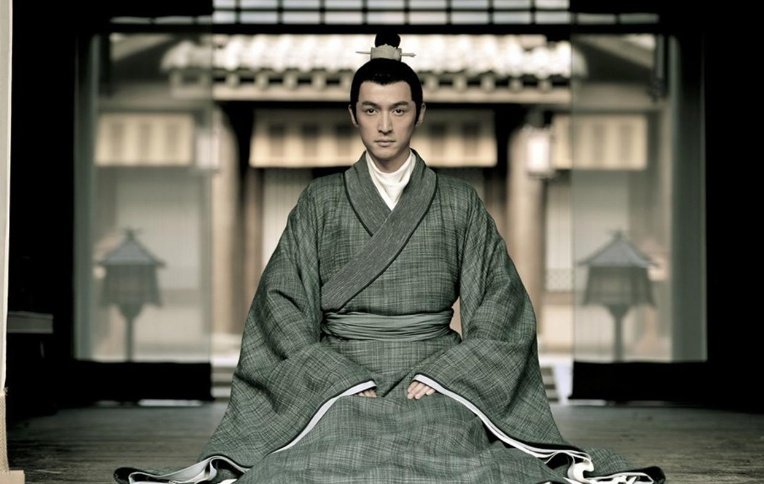
Nirvana in Fire (2015), also known as Lang Ya Bang, is often remembered as one of China’s most accomplished historical political dramas. Starring Hu Ge as Mei Changsu, Wang Kai as Prince Jing, and Liu Tao as Princess Nihuang, the 54-episode series follows a brilliant strategist who returns to the imperial capital after twelve years to clear the name of a family and an army destroyed by political conspiracy.
At first glance, it appears to be a revenge story. A young general survives a massacre, changes his identity, and patiently dismantles the people responsible.
But that description misses the drama’s most important question.
If justice can only be restored through political manipulation, personal sacrifice, and the destruction of one’s remaining life, has justice truly been achieved?
Mei Changsu does not simply want his enemies defeated. He wants the truth officially acknowledged by the very institution that buried it. That distinction transforms Nirvana in Fire from a conventional revenge drama into a story about political legitimacy, institutional responsibility, loyalty, and the terrible cost of repairing the past.
1. The Chiyan Army Massacre Was More Than a Military Tragedy
Twelve years before the main story, the Chiyan Army was accused of treason. Marshal Lin Xie and thousands of soldiers were destroyed after political forces portrayed their military loyalty as a threat to the throne.
The accusation also brought down Prince Qi, whose relationship with the army became part of the alleged conspiracy. Lin Shu, Lin Xie’s son, survived the massacre but was left physically transformed by the poison that nearly killed him.
The important detail is that this disaster was not caused by one isolated act of betrayal.
It required an entire political environment in which suspicion could become evidence, accusations could become official truth, and the emperor’s authority could turn a fabricated narrative into a national judgment.
The massacre therefore represents something larger than the destruction of one family. It shows what happens when political institutions stop distinguishing between protecting the state and protecting the ruler.
The soldiers were condemned not because their loyalty had been conclusively disproved, but because powerful people found it useful to make them appear disloyal.
2. The Emperor’s Greatest Crime Was Allowing Suspicion to Become Justice
The Emperor of Liang is not portrayed as an ordinary villain who simply enjoys cruelty.
His more disturbing characteristic is his insecurity.
He has built his reign around the preservation of authority. A successful general with a powerful army becomes a potential rival. A capable prince with public support becomes a possible threat. Even loyal relationships can become dangerous when the ruler begins to interpret independence as disobedience.
The emperor’s decision to accept the conspiracy against the Chiyan Army reveals the weakness at the center of his rule.
He does not need to personally invent every accusation. He only needs to create an environment in which ambitious officials understand that accusations against inconvenient people may be rewarded.
This is one of the drama’s strongest political observations: corruption does not always begin with a ruler ordering every crime. Sometimes it begins when the ruler makes honesty dangerous and obedience more valuable than truth.
3. Mei Changsu’s Revenge Is Actually a Campaign to Restore Public Memory
When Lin Shu returns as Mei Changsu, he has already lost much of what once defined him.
His appearance has changed. His body is weak. His former identity is no longer something he can openly reclaim.
Yet he possesses something his enemies underestimate: time, information, and an understanding of how political factions destroy themselves.
He does not march into the palace demanding justice. He enters the political system as a strategist and allows its competing interests to expose their own weaknesses.
His objective is not simply to kill the people responsible.
He wants the Chiyan Army’s name cleared, Prince Qi’s innocence recognized, and the official record corrected.
That distinction matters.
An enemy’s death can satisfy revenge, but it cannot necessarily restore the reputation of the dead. Mei Changsu needs the state itself to acknowledge that it committed an injustice.
His campaign is therefore aimed at the machinery of legitimacy, not merely at individual opponents.
4. Why Mei Changsu Chooses Prince Jing
Mei Changsu could have supported Prince Yu or another ambitious claimant to the throne. Instead, he chooses Prince Jing, a prince who has little political influence and almost no established faction.
This choice is central to the entire story.
Prince Jing is not the most politically sophisticated candidate. He is often blunt, difficult to manage, and unwilling to flatter the emperor. His position has been weakened by years of suspicion and by his connection to Prince Qi and the Chiyan Army.
But he possesses something Mei Changsu cannot manufacture through strategy: a genuine belief that the dead were wronged.
Prince Jing never completely accepts the official version of the massacre. His loyalty to the memory of Lin Shu and the fallen soldiers survives even when that loyalty brings him no advantage.
Mei Changsu needs more than a prince who can win the throne.
He needs someone whose accession can give the restoration of justice a legitimate foundation.
Prince Jing is not simply a useful political instrument. He represents the possibility that power might finally serve a principle beyond its own preservation.
5. Prince Jing Is the Moral Limit of Mei Changsu’s Strategy
The relationship between Mei Changsu and Prince Jing is more complicated than that of a clever adviser and an inexperienced prince.
Mei Changsu thinks several moves ahead. He understands ambition, fear, resentment, and the political value of information. He is willing to manipulate opponents and arrange situations in which their own decisions lead to their downfall.
Prince Jing, however, does not naturally think this way.
He wants to act openly and believes that people should be judged by their conduct rather than by their political usefulness.
This difference creates the drama’s most important tension.
If Prince Jing were as calculating as Mei Changsu, he might become another version of the rulers and princes he opposes. If Mei Changsu possessed Prince Jing’s moral simplicity, he might never succeed in reopening the case.
They need each other precisely because they are different.
Prince Jing gives the strategy a moral destination. Mei Changsu gives that destination a realistic political route.
The question is whether the two can remain together without allowing the strategy to corrupt the principle.
6. The Crown Prince and Prince Yu Represent Two Forms of Political Ambition
The succession struggle is not merely a competition between two brothers.
The Crown Prince and Prince Yu reveal different ways political ambition can become destructive.
The Crown Prince relies heavily on inherited status and the emperor’s favor. Prince Yu is more actively strategic, building alliances and using influential officials to undermine his rivals.
Yet neither is capable of establishing a stable political order based on trust.
Their rivalry makes the imperial court vulnerable to manipulation because both men treat political relationships as temporary arrangements of convenience.
Mei Changsu understands this weakness.
He does not need to defeat every faction through direct confrontation. He can allow their ambitions to create conflicts that gradually expose their crimes.
The political contest becomes a chain reaction: one faction’s attempt to eliminate another reveals evidence that eventually threatens the entire structure.
The drama’s political intelligence lies in showing that ambition can become self-destructive when every participant assumes that power is the only thing worth protecting.
7. The Real Enemy Is Not Just a Corrupt Official
Xie Yu and Xia Jiang are important figures in the conspiracy, but the drama does not reduce the entire tragedy to two evil men.
Their actions were possible because they operated within a system that rewarded political usefulness and protected those who served the ruler’s interests.
Xie Yu uses military and aristocratic influence. Xia Jiang controls an investigative institution with the power to define suspicion and produce official conclusions.
Together, they demonstrate how different branches of authority can reinforce one another.
One creates the political accusation; another gives it the appearance of institutional credibility.
This is why exposing individual conspirators is not enough. The Chiyan case must be reopened through a process that challenges the original judgment itself.
The series asks an uncomfortable question: when institutions have participated in an injustice, can the same institutions be trusted to correct it?
8. Why the Emperor Is More Dangerous Than Prince Yu
Prince Yu is openly ambitious, but the emperor possesses something more powerful: the authority to decide what counts as legitimate.
Prince Yu wants the throne. The emperor already has it.
The difference is crucial.
A prince who conspires against the state can be accused of rebellion. But what happens when the ruler himself has enabled a political crime?
The emperor’s authority makes it difficult for others to challenge him, even when they possess evidence of his wrongdoing.
He can punish officials, silence witnesses, and change the direction of an investigation. Yet his own decisions created the conditions that allowed the conspiracy to succeed.
This is where the drama moves beyond the usual palace intrigue.
It suggests that political authority cannot be considered legitimate simply because it has successfully retained power.
A ruler’s responsibility must also be measured by the consequences of his decisions.
9. Princess Nihuang Represents the Human Cost of Political Identity
Princess Nihuang’s relationship with Lin Shu adds another dimension to the story.
She remembers the person he was before the massacre. When she begins to recognize the man behind Mei Changsu’s new identity, she must confront the distance between memory and reality.
The person she loved has survived, but he cannot simply return to his former life.
His body has changed, his position has changed, and his remaining time is limited.
Nihuang’s response is not merely a romantic reaction. It is an acknowledgment that political violence does not end when a conspiracy is exposed.
It continues through the lives of those who must live with the consequences.
Her character reminds the audience that behind every political strategy are people who have lost family, relationships, and the possibility of an ordinary future.
10. Mei Changsu’s Body Makes Every Political Victory More Expensive
One of the most effective elements of Nirvana in Fire is the contrast between Mei Changsu’s extraordinary intelligence and his deteriorating physical condition.
He can anticipate political moves that others cannot even recognize, but he cannot restore his former strength.
His body carries the consequences of the massacre in a way that no political victory can completely erase.
This changes how we understand his strategy.
He is not a healthy young man with decades ahead of him, patiently building a career in politics. He is someone whose remaining life has already been shortened by the events he is trying to correct.
Every success brings him closer to the end of his personal journey.
His intelligence is impressive, but it is also a reminder of how much of his life has been consumed by the past.
11. Is Mei Changsu Manipulating People for Justice?
The drama does not present Mei Changsu as a morally uncomplicated hero.
He withholds information, directs political relationships, and allows opponents to act within carefully constructed situations.
His methods are often manipulative.
This creates a difficult ethical question: can someone use deception and political manipulation to achieve a just outcome without becoming part of the problem?
Mei Changsu believes his objective justifies the complexity of his methods. But the series also gives us Prince Jing, whose discomfort with political deception prevents the audience from accepting every strategy without question.
Their relationship creates a productive tension between two ideas of justice.
One believes that justice must survive contact with political reality. The other insists that the pursuit of justice must not abandon the principles that make it worthwhile.
The drama does not offer an easy answer.
Instead, it asks viewers to consider how much moral compromise a person can accept before the original purpose begins to disappear.
12. The Reopening of the Chiyan Case Is the Real Climax
The final confrontation over the Chiyan case is more important than the defeat of Prince Yu.
By this point, several political enemies have already fallen. But those victories alone cannot complete Mei Changsu’s mission.
The decisive moment comes when the evidence is presented before the emperor and the court.
The issue is no longer whether Mei Changsu can outmaneuver another rival. It is whether the state will officially acknowledge that its previous judgment was wrong.
The emperor is forced to confront the consequences of the old decision.
The Chiyan Army is finally declared innocent, and the names of Lin Xie, Lin Shu, and Prince Qi are cleared.
This is the victory Mei Changsu has pursued for twelve years.
Yet the scene is not presented as a simple celebration.
The truth has returned, but the people who should have received justice are largely gone.
The official record can be corrected. The lives destroyed by the original decision cannot be restored.
13. Why Prince Jing’s Victory Is Not a Conventional Political Triumph
Prince Jing eventually rises to become the emperor.
In a conventional succession drama, this would be the natural ending: the righteous prince defeats corrupt rivals and inherits the throne.
But Nirvana in Fire makes the transition more complicated.
Prince Jing’s victory is meaningful because he has not pursued power in the same way as his brothers.
He wants to restore the truth about Prince Qi and the Chiyan Army. His political rise is connected to a responsibility that predates his own ambition.
However, becoming emperor does not automatically guarantee that the political system will remain just.
The drama does not provide a detailed account of every reform Prince Jing might introduce. It leaves the audience with the significance of his character and the memory of what he promised to protect.
His accession offers hope, but it is not proof that history can never repeat itself.
14. The Ending: Did Mei Changsu Win?
After the Chiyan case is reopened, the northern border faces a new military threat.
Mei Changsu chooses to return to the battlefield.
He takes medicine that temporarily restores his ability to fight, knowing that the decision will consume what remains of his life. He leaves to lead the campaign and does not return to the capital.
Prince Jing eventually becomes emperor, and the army is given a name that honors Lin Shu and Mei Changsu.
The ending is bittersweet because Mei Changsu achieves his public objective but loses the possibility of sharing the future he helped create.
He restores his family’s honor. He helps Prince Jing reach the throne. He ensures that the Chiyan Army is no longer remembered as a group of traitors.
But he cannot return to the life that was taken from him.
Was this a victory?
Politically, yes. Personally, the cost is devastating.
The ending refuses to treat the restoration of justice as a magical cure for everything that happened before it.
15. Why Reddit Viewers Continue to Revisit the Series
Discussions on Reddit show that Nirvana in Fire continues to attract viewers years after its original release.
In viewer discussions, recurring points of appreciation include its political strategy, the relationships between characters, the performances, and the emotional weight of its conclusion.
Some viewers emphasize that the series remains compelling without depending on a dominant romance storyline or spectacular visual effects. Others describe the ending as sorrowful but consistent with the choices Mei Changsu made.
There are also viewers who find the early political relationships difficult to follow or need time to adjust to the production style of a 2015 drama.
These reactions are not universal, and Reddit discussions should not be mistaken for a representative survey of all viewers. But they reveal why the series continues to generate conversation: its central conflicts do not end when the villains are defeated.
Viewers continue to debate the meaning of Mei Changsu’s sacrifice, the nature of Prince Jing’s loyalty, and whether the restoration of the truth can compensate for the lives lost.
That is a stronger foundation for lasting discussion than simple nostalgia.
16. The Question That Makes Nirvana in Fire More Than a Revenge Drama
The most important achievement of Nirvana in Fire is not that Mei Changsu defeats powerful enemies.
It is that the series makes us question what victory actually means.
He returns to the capital to restore the truth. He succeeds in forcing the state to acknowledge its wrongdoing. But the price is a life that can never be returned to him.
Prince Jing receives the throne, but the person who made that outcome possible cannot remain beside him.
The Chiyan Army receives its honor, but the soldiers cannot come back.
The official history is corrected, but the years of suffering cannot be undone.
This is why the drama’s political story remains emotionally powerful.
Mei Changsu does not simply defeat the people who destroyed his past. He forces the political system to admit that it was wrong. But he cannot make that system return what it took from him.
Perhaps the most difficult question the series leaves behind is not whether justice was achieved.
It is whether a society should require one person to sacrifice his entire future just to make the truth officially recognized.
That is the difference between a revenge story and Nirvana in Fire.
Revenge ends when an enemy falls.
The struggle for justice ends only when the truth is finally allowed to stand.