• Was Sentinel Prime Really a Villain? The Dark Truth Behind Transformers: Dark of the Moon

    Was Sentinel Prime Really a Villain? The Dark Truth Behind Transformers: Dark of the Moon

    Transformers: Dark of the Moon (2011) presents one of the most disturbing betrayals in the live-action Transformers series. Sentinel Prime, the former leader of the Autobots and Optimus Prime’s mentor, returns from apparent death only to become the central threat to Earth.

    At first glance, his motivation seems understandable. Cybertron has been devastated by war. Its people have lost their home, and Sentinel believes that restoring their civilization is worth almost any sacrifice.

    But there is a question the film leaves behind: When does the desire to save your own people become an excuse to destroy someone else’s world?

    Sentinel is not simply a villain who wants power for its own sake. He is a leader who has decided that the survival of his civilization matters more than the freedom and lives of everyone standing in his way.

    That distinction makes his betrayal more interesting—and more dangerous.

    1. Sentinel Prime Was Not a Stranger to Optimus

    Sentinel’s return matters because he is not introduced as an ordinary enemy.

    Before the events of the film, Sentinel was the leader of the Autobots. Optimus respected him, trusted him, and regarded him as a mentor. His revival is therefore more than the recovery of a powerful Transformer. It represents the return of a figure from Optimus’s past.

    The emotional structure of this relationship is important.

    Optimus does not approach Sentinel with suspicion. He approaches him with relief and respect. He believes that the return of his former leader could restore something that the war has taken away.

    That trust creates the conditions for the betrayal to hurt.

    A stranger can attack your body. A mentor can destroy your understanding of the values you were taught to defend.

    Sentinel’s betrayal forces Optimus to question not only his former leader, but also the history and ideals that shaped him.

    2. Cybertron’s Destruction Explains Sentinel’s Desperation

    To understand Sentinel, we must first understand the situation he believes he is facing.

    Cybertron has been devastated by the Autobot-Decepticon war. Its civilization is collapsing, and its people have lost the world that once sustained them.

    For Sentinel, this is not an abstract political problem. It is an existential crisis.

    He sees a civilization approaching extinction and believes that conventional solutions are no longer sufficient.

    This is where his reasoning begins to become dangerous.

    When leaders believe that their people have reached the edge of survival, they can start treating ordinary moral limits as luxuries. Decisions that would once have been unacceptable become necessary in their minds.

    Sentinel’s tragedy is that he appears to have accepted this logic completely.

    He does not ask whether his plan is morally legitimate. He asks whether it can work.

    That is the first major warning sign.

    3. The Pillars Turn a Rescue Mission Into a Conquest

    The discovery of the Ark and its Pillars initially appears to offer hope.

    The Pillars can create a Space Bridge, allowing matter to be transported across enormous distances. Sentinel designed the technology, and he understands its potential better than anyone.

    But the technology is not simply a tool for rebuilding Cybertron.

    Sentinel and Megatron intend to use it to bring Cybertron into Earth’s vicinity and exploit Earth’s resources. Humanity would be forced into servitude to support the reconstruction of their homeworld.

    The distinction between rescue and conquest becomes impossible to ignore.

    A technology that could help refugees escape destruction becomes an instrument of domination.

    This is one of the film’s strongest ideas: technology itself does not determine whether an action is moral. The purpose and the people who control it matter.

    Sentinel’s plan is not wrong merely because it is technologically extreme. It is wrong because it treats an entire living civilization as an available resource.

    4. Sentinel’s Deal With Megatron Reveals His Priorities

    Sentinel’s alliance with Megatron is one of the most revealing parts of the story.

    The Autobots and Decepticons have been fighting a devastating war. Their ideological and military conflict has destroyed Cybertron.

    Yet Sentinel is willing to cooperate with the enemy he once opposed.

    Why?

    Because his priorities have changed.

    He no longer sees the preservation of the Autobot cause as the most important objective. He sees the restoration of Cybertron as the ultimate goal.

    This creates an uncomfortable possibility: Sentinel may have come to believe that the war itself was less important than the survival of the civilization behind it.

    But there is a fundamental problem with that reasoning.

    If the survival of Cybertron requires the enslavement of humanity, then Sentinel has not abandoned the logic of war. He has simply transferred its costs to another population.

    His agreement with Megatron is not a genuine reconciliation. It is a strategic partnership built around a shared willingness to sacrifice others.

    5. Sentinel Does Not Want to Save Everyone—He Wants to Save His Own Civilization

    This is the most important distinction in understanding Sentinel Prime.

    He speaks and acts in the name of Cybertron’s survival. That sounds noble until we examine who is excluded from his definition of survival.

    Humanity is not treated as a civilization with its own rights, history, and future.

    Humans are treated as workers, resources, and obstacles.

    Sentinel’s plan effectively says that Cybertron deserves another chance, even if Earth loses the right to determine its own future.

    This exposes the weakness in his moral argument.

    He believes his people deserve to survive because their suffering is real. But he refuses to recognize that humanity’s suffering would be equally real.

    His empathy has become selective.

    That is what separates a leader trying to save a civilization from a ruler willing to sacrifice any civilization other than his own.

    6. The Murder of Ironhide Makes the Betrayal Personal

    Sentinel’s betrayal becomes unmistakable when he attacks the Autobots and kills Ironhide.

    Until this point, there is still room to consider whether Sentinel might be persuaded to abandon his plan.

    Ironhide’s death changes the emotional stakes.

    This is no longer a disagreement between former allies about how to rebuild Cybertron. Sentinel is prepared to murder those who oppose him, including the very Autobots who trusted and revived him.

    The killing also has a specific meaning for Optimus.

    Ironhide is not an anonymous soldier. He is one of Optimus’s closest comrades and a long-standing member of the Autobot group.

    Sentinel’s decision destroys the possibility of treating the conflict as a purely political disagreement.

    The betrayal now has victims, names, and personal consequences.

    It also explains why Optimus’s eventual response cannot be understood only as a debate about abstract leadership principles.

    7. Why Does Sentinel Believe He Is Still the Good Guy?

    One of the most interesting aspects of Sentinel’s character is that he does not behave like someone who believes he has become evil.

    He believes he is making the decision that history demands.

    His actions suggest a worldview in which the survival of Cybertron justifies the suffering of Earth.

    This is a familiar pattern in political and historical conflicts. Leaders often describe extreme actions as temporary necessities. They argue that the future will justify the present sacrifice.

    But the people being sacrificed rarely have the opportunity to agree.

    Sentinel’s confidence is part of the danger.

    He does not appear to recognize humanity as an equal party whose consent matters. He has already decided that Cybertron’s needs take priority.

    His moral failure is therefore not simply cruelty. It is the belief that his position gives him the authority to decide the fate of others.

    8. The Exile of the Autobots Shows How Power Controls the Story

    Sentinel’s plan does not rely on military force alone.

    He also uses political pressure.

    Humanity is ordered to expel the Autobots from Earth. The Autobots, who have defended the planet, are suddenly presented as a problem that humans must remove.

    This is an important reversal.

    The Autobots are not defeated because their values have been disproved. They are placed in a position where the people they protected are pressured into rejecting them.

    Sentinel understands that controlling the political environment can be as important as controlling the battlefield.

    He creates a situation in which humanity is forced to choose between accepting his demands and facing an overwhelming invasion.

    The apparent decision is not truly free.

    This is why the exile sequence matters. It shows that Sentinel’s power is not only destructive. It is also coercive.

    He wants the appearance of human cooperation without accepting humanity’s right to refuse.

    9. The Destruction of the Autobot Ship Is More Than a Military Setback

    When the Autobots leave Earth, the film creates the impression that they have been removed from the conflict.

    The destruction of their ship makes the situation appear even more hopeless.

    For the humans, the Autobots seem to have abandoned them. For the Autobots, the departure is a painful consequence of a political decision they cannot control.

    But the scene also exposes the weakness of Sentinel’s understanding of loyalty.

    He assumes that eliminating the Autobots’ visible presence will eliminate the resistance they represent.

    He mistakes physical removal for ideological defeat.

    The Autobots survive, and their return demonstrates that loyalty is not created by a command or destroyed by exile.

    Sentinel can manipulate governments and threaten populations, but he cannot fully control the convictions of those who refuse to accept his authority.

    10. Is Sentinel More Dangerous Than Megatron?

    Megatron is the obvious enemy throughout much of the series.

    He seeks domination, commands the Decepticons, and wages war against the Autobots.

    Sentinel is different.

    He comes from the side that traditionally represents freedom and resistance. He has the reputation of a respected leader. He possesses the language of responsibility and the authority of experience.

    That makes his betrayal especially dangerous.

    Megatron’s hostility is visible. Sentinel’s authority initially comes with trust.

    The film creates an unsettling contrast: Megatron is willing to work with Sentinel because their immediate goals overlap, but Sentinel does not intend to become Megatron’s subordinate.

    He wants to restore Cybertron on his own terms.

    In other words, the difference between the two is not that one believes in domination and the other does not. Their disagreement is also about who will control the domination.

    Sentinel may have a more understandable motivation than Megatron, but understandable motivation does not make his actions less oppressive.

    11. Optimus Prime’s Greatest Conflict Is Not the Battle—It Is the Betrayal

    The final confrontation between Optimus and Sentinel carries a personal weight that a normal battle would not have.

    Optimus is fighting the person who once led him and helped shape his understanding of leadership.

    He is not simply defeating an enemy commander.

    He is confronting the collapse of a relationship built on respect.

    That emotional conflict helps explain why the final battle feels different from many of Optimus’s other fights.

    Sentinel represents a version of leadership that Optimus once trusted. Now Optimus must reject it.

    The challenge is not only to stop Sentinel’s plan. It is to decide what remains of the values that Sentinel once represented.

    Optimus cannot restore the old relationship. He can only decide whether he will continue to defend the principles that made that relationship meaningful in the first place.

    12. Why Does Optimus Kill Sentinel Instead of Showing Mercy?

    The ending is one of the film’s most debated moral moments.

    After Megatron intervenes and Sentinel is defeated, Optimus kills Megatron and then executes Sentinel.

    The scene invites a difficult question: is Optimus delivering justice, taking revenge, or simply ending a threat?

    There are strong arguments for understanding his decision as a response to an ongoing danger.

    Sentinel has betrayed the Autobots, killed Ironhide, helped unleash an invasion, and attempted to enslave humanity. He has also shown little willingness to abandon his justification for those actions.

    Optimus has reason to believe that allowing Sentinel to remain alive could leave a dangerous enemy capable of causing further harm.

    But the scene is not a simple legal judgment.

    Sentinel is defeated and no longer poses the same immediate physical threat. Optimus’s decision is final, personal, and delivered in the aftermath of an enormous battle.

    The film does not give us a trial or a public process through which Sentinel’s fate is determined.

    That absence matters.

    Optimus may have legitimate reasons to stop Sentinel permanently, but the film leaves room to question whether execution is the only possible answer.

    The most interesting interpretation is not that Optimus is suddenly identical to Sentinel. It is that the film places him in a moment where the responsibility to protect others and the emotional weight of betrayal become difficult to separate.

    13. The Reddit Debate: Why Sentinel’s Death Is Judged Differently From D-16’s

    A comparison with Transformers One reveals an interesting difference in how audiences discuss the execution of Sentinel Prime.

    In a Reddit discussion comparing the two films, commenters pointed out that Optimus’s killing of Sentinel in Dark of the Moon is often treated differently from D-16’s killing of Sentinel in Transformers One.

    The distinction is not simply whether Sentinel deserves punishment.

    The circumstances are different.

    In Dark of the Moon, Sentinel has participated in an invasion that threatens humanity and has killed Ironhide. Optimus has also just fought him in a battle where the fate of Earth is at stake.

    In Transformers One, D-16’s execution of Sentinel occurs within a political and ideological turning point. The act is tied to D-16’s transformation into Megatron and his rejection of Orion’s alternative vision for Cybertron.

    One Reddit commenter summarized the difference by emphasizing the context: Optimus is stopping a continuing threat after a war, while D-16’s action helps establish the kind of ruler he is becoming.

    This is a useful audience interpretation, not proof of a universal fan consensus. But it reveals a meaningful question:

    Do viewers judge an act of violence by the act itself, or by the political and emotional circumstances surrounding it?

    The two films offer different answers because their characters are at different stages of their journeys.

    Source: Reddit discussion comparing the two Sentinel Prime executions.

    14. Sentinel Prime’s Real Failure Was Believing Survival Justified Everything

    Was Sentinel Prime really a villain?

    Yes—but not because he wanted to save Cybertron.

    Wanting to rescue a dying civilization is not inherently evil. His desperation is understandable, and the destruction of his homeworld gives his motivation emotional weight.

    His failure comes from the conclusion he draws from that suffering.

    He decides that Cybertron’s survival gives him the right to take Earth’s resources, enslave its population, and destroy the freedom of another civilization.

    He treats the suffering of his own people as a moral priority while treating the suffering of others as an acceptable cost.

    That is the central contradiction of his leadership.

    Sentinel does not lose his moral standing because he loves Cybertron too much. He loses it because he believes that love gives him permission to deny everyone else the same right to protect their home.

    This is also why his story connects so strongly with Transformers One.

    D-16 and Sentinel are not identical characters, and their paths to betrayal are different. But both stories ask what happens when a character begins to believe that the future of their people justifies extreme violence.

    The most important question is not whether a leader is willing to sacrifice.

    It is whether that leader has the right to decide who must be sacrificed.

    A leader who saves one civilization by turning another into slaves has not defeated oppression. He has simply chosen a new group of victims.
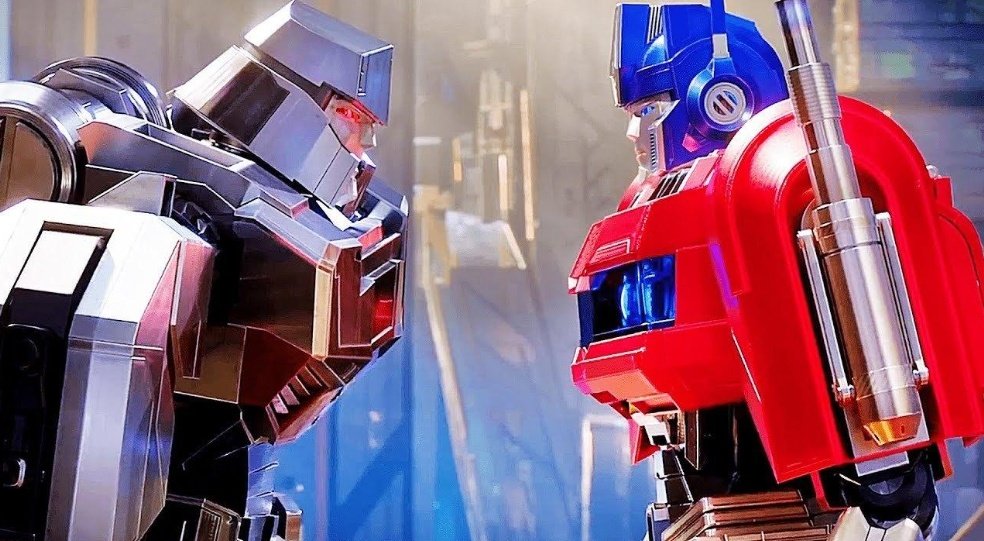
  • Why Did D-16 Become Megatron? The Tragedy Behind Transformers One

    Why Did D-16 Become Megatron? The Tragedy Behind Transformers One

    Transformers One (2024) begins with a relationship that longtime fans already know will end in war.

    Before Optimus Prime and Megatron became the legendary enemies of the Transformers universe, they were Orion Pax and D-16: two ordinary miners living on Cybertron, sharing dreams, taking risks, and believing that their friendship could survive almost anything.

    But something unusual happens in this origin story.

    The two characters discover exactly the same terrible truth about their civilization. They learn that their society is built on deception, that their leader has betrayed their people, and that the workers they know have been deliberately deprived of their freedom.

    Yet the discovery does not unite them.

    Orion Pax becomes Optimus Prime. D-16 becomes Megatron.

    Why?

    It is tempting to explain their separation as the difference between a hero who chooses peace and a villain who chooses violence. But that interpretation misses the more interesting conflict beneath the film.

    D-16 is not wrong to demand justice. His anger is not created from nothing, and his distrust of Cybertron’s leadership is entirely justified.

    Orion, meanwhile, is not automatically right simply because he becomes Optimus Prime. His determination to avoid revenge creates a moral position, but it also raises difficult questions about accountability and the practical limits of peaceful change.

    The tragedy of Transformers One is that two friends recognize the same injustice but reach different conclusions about what justice requires.

    Their friendship does not collapse because one discovers the truth and the other refuses to see it.

    It collapses because they can no longer agree on what should happen after the truth is revealed.

    1. Two Miners, Two Different Relationships With the Same System

    At the beginning of the film, Orion Pax and D-16 occupy the same position in Cybertronian society.

    Both work in the Energon mines. Neither possesses a transformation cog, and both belong to a population that has been denied the abilities enjoyed by the ruling class.

    However, their attitudes toward this situation are remarkably different.

    Orion is dissatisfied with the limitations imposed on him. He constantly looks for opportunities to challenge the system, whether by entering restricted archives or attempting to prove himself in public competitions.

    D-16 is more cautious.

    He respects established rules, believes in the importance of discipline, and places considerable trust in Sentinel Prime.

    This difference is important because it challenges a familiar assumption about the two future leaders.

    The character who eventually becomes Megatron is initially the more disciplined believer in authority.

    The character who becomes Optimus Prime is the rule-breaker.

    Their eventual political positions are not simply extensions of their original personalities. They emerge through experiences that gradually transform what each character believes about authority, responsibility, and freedom.

    The film therefore begins with an important distinction: Orion questions the system before he understands it, while D-16 trusts the system before he discovers what it has done to him.

    2. Sentinel Prime’s Greatest Achievement Was Making Oppression Look Normal

    Sentinel Prime is not merely a corrupt ruler who steals resources.

    His greatest achievement is creating a society in which exploitation appears natural.

    Cybertron’s miners are born without transformation cogs because Sentinel has secretly removed them before activation.

    This means the miners are not naturally inferior, nor are they incapable of transforming.

    Their limitations are deliberately imposed.

    The distinction completely changes the meaning of Cybertron’s social structure.

    The miners believe that their position reflects their natural place in society. They have been taught to accept dangerous labor as their purpose.

    Meanwhile, the ruling class enjoys privileges that depend on the continued exploitation of the very population it considers inferior.

    Sentinel does not maintain his power through physical force alone.

    He controls the information that determines how Cybertronians understand themselves.

    This is more sophisticated than an ordinary dictatorship.

    If a population believes its limitations are natural, it may never recognize that those limitations were politically created.

    The real foundation of Sentinel’s authority is therefore not simply his military strength. It is the population’s acceptance of a false explanation for its own condition.

    3. D-16’s Admiration for Megatronus Prime Reveals His Hidden Motivation

    One of the most important details in D-16’s early characterization is his admiration for Megatronus Prime.

    He does not simply collect historical information about the Primes. He specifically idolizes Megatronus, whom he considers the strongest of them.

    This detail becomes much more meaningful later.

    D-16 begins the film as someone who believes in strength, discipline, and the authority of respected leaders.

    His admiration for Megatronus gives him a model of greatness that exists outside his miserable life as a miner.

    He wants to believe that a Cybertronian can become something extraordinary.

    When he discovers that Sentinel stole Megatronus’s transformation cog, his reaction is more complicated than ordinary anger.

    Sentinel has not only exploited the miners.

    He has stolen the identity of the very figure D-16 admired.

    This discovery attacks one of D-16’s deepest sources of belief.

    The symbol he once associated with greatness has become evidence of deception.

    Later, when D-16 takes Megatronus’s cog and adopts the name Megatron, the decision is not random.

    He is reclaiming the identity that Sentinel appropriated.

    But there is an important contradiction.

    D-16 believes he is restoring the dignity of Megatronus Prime while gradually abandoning the moral restraint that made that figure worthy of admiration.

    He takes the symbol of strength but begins to define strength through domination.

    4. The Discovery of the Truth Does Not Liberate D-16 Emotionally

    When Alpha Trion reveals Sentinel’s betrayal, both Orion and D-16 discover that their entire understanding of Cybertron has been manipulated.

    The Primes were murdered. Sentinel collaborated with the Quintessons. Energon was being extracted and transferred to Cybertron’s enemies.

    Most importantly, the transformation cogs were deliberately removed from the miners.

    For D-16, this revelation creates a personal crisis.

    He has spent his life believing that his place in society is legitimate. He respected Sentinel and accepted the hierarchy that kept him powerless.

    Now he discovers that the system was designed to deceive him from the beginning.

    This is not merely political disappointment.

    It is the destruction of his understanding of his own life.

    His suffering was unnecessary. His limitations were artificial. His trust was exploited.

    Orion responds by seeing the possibility of liberation.

    D-16 responds by seeing the scale of the betrayal.

    Both reactions are understandable.

    However, they produce different emotional consequences.

    Orion begins asking how Cybertron can change.

    D-16 begins asking who deserves to suffer for what happened.

    That difference will eventually become more important than the original injustice itself.

    5. Why Orion Wants Justice While D-16 Wants Revenge

    After learning the truth, the two friends begin moving in opposite directions.

    Orion wants to expose Sentinel and free Cybertron.

    D-16 wants to punish the person responsible.

    At first, these goals do not necessarily contradict each other. Sentinel deserves accountability, and the people he exploited deserve freedom.

    The conflict develops because D-16 becomes increasingly focused on personal punishment.

    He no longer wants simply to remove a corrupt leader.

    He wants Sentinel to experience the suffering that he believes Sentinel inflicted on everyone else.

    Orion, by contrast, increasingly treats the future of Cybertron as more important than the satisfaction of punishing its former ruler.

    This creates two competing definitions of justice.

    For D-16, justice requires the guilty to suffer.

    For Orion, justice requires the system that created the suffering to end.

    Neither position is completely meaningless.

    A society that removes a dictator without holding him accountable may preserve the conditions that allowed the dictatorship to exist.

    But a revolution that makes revenge its central objective can reproduce the same cruelty it claims to oppose.

    This is the philosophical conflict at the heart of Transformers One.

    6. The High Guard Gives D-16 Something Orion Cannot

    When the group encounters the High Guard, D-16 finds something he has not previously experienced.

    He finds a community that understands his anger.

    The High Guard consists of former warriors who have been pushed into opposition against Sentinel’s regime. They have their own history of betrayal and no longer believe in the official story of Cybertron.

    Their distrust of authority matches D-16’s newly discovered worldview.

    More importantly, they respond to strength.

    D-16 defeats Starscream and takes command of the group.

    This moment represents a major psychological turning point.

    Until then, D-16 has been one of the oppressed miners.

    Now he has power, followers, and the ability to influence events.

    For the first time, he does not need to ask permission.

    His authority is earned through direct confrontation rather than granted by an established hierarchy.

    But there is a dangerous contradiction.

    D-16 begins opposing a system in which power is concentrated at the top, yet he increasingly relies on personal dominance to establish his own leadership.

    He has escaped the position of the powerless, but he has not necessarily escaped the political logic of the system that oppressed him.

    The High Guard gives him an army. It also gives his anger a structure.

    7. Orion’s Greatest Strength Is Also His Political Weakness

    Orion is often presented as the idealistic alternative to D-16.

    He believes that Cybertron can become a better society without simply replacing one tyrant with another.

    However, his idealism creates a difficult practical problem.

    How does someone transform a deeply corrupt political system without exercising force against the people who control it?

    Orion’s determination to expose Sentinel is morally understandable.

    But exposing wrongdoing is not always enough to dismantle an oppressive structure.

    Sentinel has soldiers, political influence, control over information, and a population that has been conditioned to accept his authority.

    Orion must eventually recognize that the system will not surrender simply because people learn the truth.

    His development becomes interesting when he moves beyond individual rebellion and starts organizing collective resistance.

    He convinces the miners that they are not naturally inferior and that they have the right to challenge their conditions.

    This is arguably his most important leadership achievement.

    He does not simply defeat a powerful enemy.

    He helps ordinary Cybertronians recognize their own political power.

    Yet the film does not fully examine whether his preference for moral restraint could become an obstacle when dealing with leaders who refuse to surrender voluntarily.

    That tension makes his eventual position more interesting than a simple contrast between good and evil.

    8. The Destruction of Their Friendship Begins Before the Final Fight

    A common interpretation is that Orion and D-16 become enemies only when D-16 refuses to spare Sentinel.

    But their relationship begins breaking much earlier.

    The discovery of the truth changes what each character expects from the other.

    Orion wants D-16 to remain the friend who can distinguish right from wrong even when he is angry.

    D-16 wants Orion to recognize that the old rules have become meaningless.

    Each begins to see the other as someone who does not understand the seriousness of the situation.

    Orion increasingly worries about D-16’s aggression.

    D-16 increasingly sees Orion’s restraint as weakness.

    The most tragic part is that neither is completely blind to the other’s intentions.

    Orion understands that D-16 has been deeply betrayed.

    D-16 understands that Orion wants a better future for Cybertron.

    But understanding someone’s motivation is not the same as accepting their methods.

    Their friendship once allowed them to compensate for each other’s weaknesses.

    Orion’s impulsiveness was balanced by D-16’s discipline.

    D-16’s caution was challenged by Orion’s willingness to take risks.

    As their political beliefs become more extreme, those differences stop being complementary.

    They become sources of distrust.

    9. Sentinel’s Branding of D-16 Turns Humiliation Into an Identity

    One of the most revealing moments occurs when Sentinel brands D-16 with the symbol of Megatronus Prime.

    Sentinel has stolen the transformation cog of the figure D-16 admires.

    He then uses that same symbol to humiliate him.

    This is not simply an act of physical cruelty.

    It is an attempt to define D-16 through the very symbol he once respected.

    Sentinel believes he can turn a political prisoner into an example of what happens to those who challenge his authority.

    But the branding produces an unexpected consequence.

    D-16 eventually embraces the symbol.

    He takes the cog and adopts the name Megatron.

    What Sentinel intended as humiliation becomes the foundation of a new identity.

    This is a powerful transformation because D-16 does not merely reject his old identity.

    He constructs a new one from the remains of his admiration, suffering, and anger.

    However, the name also carries a warning.

    D-16 believes he is reclaiming something that was stolen from him.

    But he increasingly defines himself through the struggle against the person who humiliated him.

    His identity is no longer built around what he wants Cybertron to become.

    It is increasingly built around what he wants to destroy.

    10. Why D-16 Cannot Accept Orion’s Refusal to Execute Sentinel

    The final confrontation between the two friends brings their philosophical disagreement into the open.

    D-16 defeats Sentinel and finally has the opportunity to punish the person responsible for so much suffering.

    Orion intervenes.

    He argues that rebuilding Cybertron cannot begin with an execution.

    At first glance, this appears to be a straightforward moral disagreement.

    But the emotional context makes it much more complicated.

    For D-16, Sentinel represents the entire history of his exploitation.

    He represents stolen freedom, stolen identity, stolen history, and the destruction of the Primes.

    Allowing Sentinel to live may feel like leaving the old injustice unresolved.

    For Orion, executing Sentinel risks establishing a new political order based on the same principle that defined the previous one: the strongest individual decides who deserves to live.

    Both characters are responding to the same historical trauma.

    But they disagree about what must be prevented first.

    D-16 fears the survival of the old injustice.

    Orion fears the birth of a new one.

    This is why the argument is more important than the physical fight that follows.

    They are no longer arguing about Sentinel alone.

    They are arguing about the future moral identity of Cybertron.

    11. The Moment Orion Falls Is the Moment D-16 Loses His Last Restraint

    When D-16 fires at Sentinel, Orion intervenes and is struck by the blast.

    D-16 catches his friend as he falls.

    For a brief moment, their relationship returns to the center of the story.

    The person D-16 has spent his life trusting is once again physically within his reach.

    He could save him.

    Instead, he lets go.

    The importance of this decision goes beyond the immediate tragedy.

    Until this point, D-16 has repeatedly justified his aggression through the injustice inflicted upon him.

    Sentinel betrayed him. The system exploited him. The Primes were murdered.

    But Orion is not Sentinel.

    He is not the ruling class.

    He is not responsible for D-16’s suffering.

    He is the person who shared that suffering and continued to believe that another future was possible.

    By letting Orion fall, D-16 crosses a moral boundary that cannot be explained simply through revenge against Sentinel.

    He rejects the last person who could challenge his interpretation of justice without being an enemy of his people.

    The moment is especially tragic because D-16 does not lose Orion in a battle between two armies.

    He loses him through a decision made in the middle of an argument between friends.

    12. Megatron Is Born When D-16 Confuses the Destruction of a Tyrant With the Destruction of Tyranny

    After Orion falls, D-16 kills Sentinel and takes Megatronus Prime’s cog.

    He then declares himself Megatron.

    This is the moment when his transformation becomes complete.

    But the deeper question is whether he has actually solved the problem that created his suffering.

    Sentinel’s system was based on concentrated power, control over information, and the exploitation of a population that had been denied its freedom.

    Megatron now possesses an army and commands obedience through strength.

    He has destroyed the person who represented the old system, but he is beginning to establish a new form of authority around himself.

    This is the central contradiction of his revolution.

    He wants to destroy tyranny, but he increasingly believes that only overwhelming personal power can guarantee victory.

    The distinction between changing the ruler and changing the political structure is crucial.

    Removing a dictator does not automatically create a free society.

    A revolution can reproduce the same patterns of domination if its leader becomes convinced that his own judgment must never be questioned.

    D-16’s transformation into Megatron is therefore not simply the result of anger.

    It is the moment when his understanding of justice becomes inseparable from his belief in his own authority.

    13. Optimus Prime and Megatron Represent Two Different Answers to the Same Historical Crime

    The film gives Orion and D-16 different outcomes.

    Orion sacrifices himself while trying to prevent another execution.

    Primus grants him the Matrix of Leadership, and he returns as Optimus Prime.

    Megatron, meanwhile, takes command of the High Guard and begins establishing the Decepticons.

    The contrast is deliberately symbolic.

    Optimus receives the Matrix after demonstrating a willingness to sacrifice himself for another person.

    Megatron takes the power associated with Megatronus Prime after killing Sentinel.

    One receives authority through an act of self-sacrifice.

    The other claims authority through an act of domination.

    But there is another important distinction.

    Optimus’s leadership is built around the belief that Cybertron belongs to all its people.

    Megatron’s leadership increasingly becomes centered on the idea that Cybertron must be rebuilt through force.

    This does not mean Optimus has all the answers.

    The film leaves difficult questions about how the new leadership will deal with former collaborators, the surviving High Guard, and the external threat of the Quintessons.

    Nor does Megatron’s initial anger become meaningless simply because his eventual actions are destructive.

    The two characters represent competing answers to the same historical crime.

    Their conflict is not simply between good and evil.

    It is between two different ideas of what a liberated society should look like.

    14. The Real Tragedy of Transformers One Is That Both Friends Lost the Person Who Balanced Them

    The most important relationship in Transformers One is not the conflict between Optimus Prime and Megatron.

    It is the friendship between Orion Pax and D-16 before either became a symbol.

    They were different from the beginning.

    Orion was impulsive, optimistic, and willing to challenge authority.

    D-16 was disciplined, cautious, and more comfortable with established rules.

    Their differences initially made them stronger together.

    Orion could imagine possibilities that D-16 would never consider.

    D-16 could recognize risks that Orion often ignored.

    Neither needed to become exactly like the other.

    They needed each other because their weaknesses were different.

    But when Cybertron’s political system collapsed, they stopped treating those differences as complementary.

    Orion began seeing D-16’s anger as a threat to the future.

    D-16 began seeing Orion’s restraint as an obstacle to justice.

    Eventually, each became convinced that the other was preventing Cybertron from becoming what it needed to be.

    This is what makes their separation more tragic than an ordinary hero-versus-villain origin story.

    They did not begin as enemies who were destined to fight.

    They began as friends who could once imagine a shared future.

    The world they wanted to change eventually became the reason they could no longer agree on how to live in it.

    The greatest tragedy of Transformers One is not that D-16 became Megatron and Orion Pax became Optimus Prime. It is that each lost the one friend who could have challenged the worst parts of his own beliefs.

    And perhaps that is the most important question the film leaves behind:

    If Orion and D-16 had remained together, could they have changed Cybertron without creating another war?