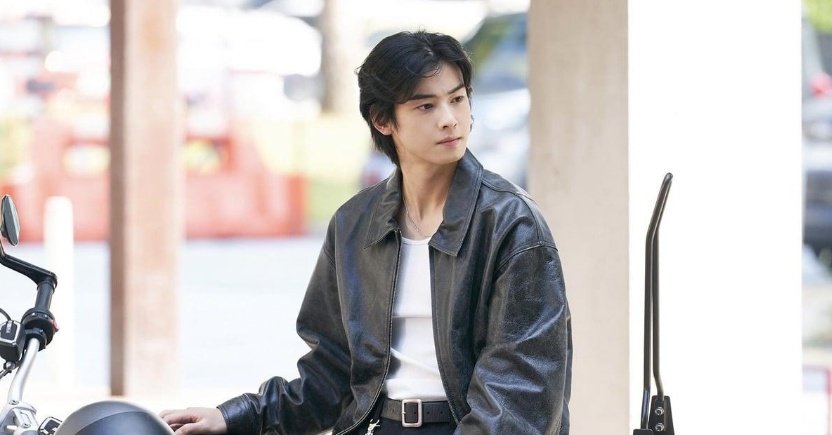
• Wonderful World: Can You Forgive Someone Who Destroyed Your Life While You Were Destroying Theirs?

    Wonderful World: Can You Forgive Someone Who Destroyed Your Life While You Were Destroying Theirs?

    What happens when the person you want to hate most is also someone who has suffered?

    And what if your own attempt to find justice has destroyed that person’s life?

    The 2024 Korean drama Wonderful World, starring Kim Nam-joo and Cha Eun-woo, begins with a devastating tragedy: a mother loses her young son after a terrible crime, and the justice system fails to give her the answer she desperately needs.

    Eun Soo-hyun is a respected psychology professor and successful writer. Before her son’s death, she appears to have a stable family and a fulfilling life. But after the tragedy, her world collapses.

    When the man responsible for her son’s death escapes meaningful punishment, Soo-hyun makes a decision that changes everything.

    She takes justice into her own hands.

    However, her revenge creates another victim: Kwon Seon-yul, a young man whose life has been shattered by the consequences of her actions.

    As their paths become increasingly connected, the drama moves beyond the familiar question of whether revenge is justified.

    It asks something much more uncomfortable.

    Can two people recognize each other’s suffering when one has become the cause of the other’s pain?

    And can forgiveness exist without pretending that the past never happened?

    Wonderful World is a revenge mystery, but its most compelling subject is the complicated relationship between guilt, responsibility, grief, and the possibility of healing.

    1. A Mother Who Lost Everything

    Eun Soo-hyun’s tragedy is the emotional foundation of the series.

    She is not introduced as someone seeking revenge. She is a mother who believes she has a future with her family.

    Her professional success and personal happiness appear secure until the death of her son destroys the life she knows.

    The loss is not simply a painful event.

    It changes how she understands the world.

    People who once seemed trustworthy become suspicious. Institutions that were supposed to protect innocent people appear powerless. The future she imagined for her child disappears.

    Soo-hyun’s grief is particularly powerful because it is not presented as something that can be resolved through a few emotional conversations.

    She becomes a person whose entire identity has been reorganized around an absence.

    Her son is no longer physically present, but everything she does is connected to him.

    This is where the drama establishes its strongest emotional foundation.

    It does not ask the audience to understand revenge immediately.

    First, it asks us to understand the unbearable experience that makes revenge seem like the only remaining choice.

    2. When Justice Fails, Does Revenge Become Justice?

    The central moral question of Wonderful World emerges when Soo-hyun loses faith in the legal system.

    The man responsible for her son’s death does not receive the punishment she believes he deserves.

    For her, this is more than a disappointing legal outcome.

    It feels like a second injustice.

    The first injustice was the death of her child.

    The second is the realization that the person responsible may continue living while her family must endure the consequences.

    This situation creates a familiar but difficult question.

    If the law cannot provide justice, does an individual have the right to create justice independently?

    The drama does not offer an easy answer.

    Soo-hyun’s anger is understandable. Her decision, however, cannot be separated from its consequences.

    The moment she chooses revenge, she becomes responsible for another human tragedy.

    This distinction is essential.

    Understanding why someone commits an act does not automatically make that act morally acceptable.

    The series is strongest when it allows both ideas to exist at the same time.

    3. Eun Soo-hyun: The Victim Who Became an Avenger

    Kim Nam-joo’s performance gives Soo-hyun a particular emotional intensity.

    She is a woman who understands human psychology professionally, yet cannot protect herself from the psychological destruction caused by personal loss.

    That contradiction makes her character interesting.

    She understands that violence has consequences.

    She knows that revenge cannot restore what has been taken from her.

    But knowledge and emotional control are not the same thing.

    Soo-hyun’s transformation is not simply a movement from innocence to anger.

    It is the collapse of the principles that once allowed her to believe in the world.

    Her actions force the audience to confront an uncomfortable distinction between sympathy and justification.

    We can understand her desperation without agreeing with what she does.

    In fact, the drama becomes more meaningful when viewers refuse to reduce her to either a completely innocent mother or a completely unforgivable criminal.

    She is both a victim of terrible circumstances and a person responsible for the consequences of her choices.

    4. Kwon Seon-yul: The Son Who Inherited Someone Else’s Crime

    Kwon Seon-yul is the character who transforms the story from a conventional revenge drama into a moral dilemma.

    His life is connected to the consequences of Soo-hyun’s revenge.

    He carries a personal history of suffering, loss, and anger.

    For him, Soo-hyun is not simply another person who experienced tragedy.

    She is connected to the destruction of his own family.

    This creates a powerful reversal.

    The audience initially follows Soo-hyun’s perspective and understands her pain.

    But Seon-yul forces us to look at the same events from another direction.

    What does justice mean to someone whose life has been damaged by another person’s attempt to obtain justice?

    What happens when the person who believes they are correcting an injustice becomes responsible for someone else’s suffering?

    Seon-yul’s character is important because he prevents the audience from remaining emotionally comfortable.

    We cannot simply support Soo-hyun’s revenge without considering the person who pays its price.

    5. Two Victims Standing on Opposite Sides

    The relationship between Soo-hyun and Seon-yul is the strongest conceptual element of the series.

    They are connected by tragedy, but their positions are different.

    Soo-hyun wants justice for her son.

    Seon-yul has his own reasons to seek answers and confront the person responsible for his suffering.

    Both have experienced loss.

    Both have been shaped by events they cannot reverse.

    But neither person’s pain cancels out the other’s.

    This is where Wonderful World moves beyond a simple revenge narrative.

    A conventional revenge story often creates a clear division between the innocent protagonist and the guilty antagonist.

    Here, the moral positions are much more complicated.

    Soo-hyun’s suffering does not erase Seon-yul’s suffering.

    Seon-yul’s anger does not erase the circumstances that led Soo-hyun to act.

    Their relationship becomes a confrontation between two different experiences of injustice.

    The most interesting question is not which person deserves more sympathy.

    It is whether either of them can recognize the other as a human being rather than merely as the source of their pain.

    6. Can You Hate Someone and Still Understand Their Pain?

    This is arguably the most important emotional question in the entire drama.

    Hatred becomes easier when the person we blame appears completely different from ourselves.

    We can tell ourselves that the other person is cruel, selfish, or incapable of understanding suffering.

    But that emotional distance becomes difficult to maintain when we discover that the person we hate has also experienced genuine loss.

    Soo-hyun and Seon-yul are forced into this uncomfortable position.

    Their connection challenges the idea that understanding someone requires approving of their actions.

    It is possible to recognize another person’s suffering without accepting what they have done.

    It is also possible to acknowledge someone’s wrongdoing without denying their humanity.

    This distinction is essential to the drama’s emotional development.

    The story suggests that healing may begin when people stop viewing one another exclusively through the roles of victim and perpetrator.

    However, understanding is not the same as reconciliation.

    And reconciliation is not automatically the same as forgiveness.

    7. Cha Eun-woo’s Transformation Into a Broken Man

    Cha Eun-woo’s performance as Seon-yul attracted considerable attention from international viewers.

    The role differs from the romantic and youthful characters that helped establish his public image.

    Seon-yul is emotionally guarded, physically worn down by his circumstances, and often unable to express what he feels directly.

    His appearance and behavior communicate a person who has become disconnected from the ordinary expectations of life.

    The character’s emotional difficulty is not simply that he is angry.

    He has built his identity around surviving a past that he cannot escape.

    This gives Cha Eun-woo an opportunity to explore a different kind of performance.

    Instead of relying primarily on romantic charm, he must communicate pain, resentment, and internal conflict.

    Some Reddit viewers specifically praised his emotional development and considered the drama one of his stronger performances.

    The appreciation is particularly meaningful because Seon-yul requires the audience to recognize emotional damage beneath an initially distant exterior.

    His character demonstrates that a person’s silence does not necessarily mean that they feel nothing.

    Sometimes silence is what remains when expressing pain no longer seems useful.

    8. Kim Nam-joo and the Power of Restrained Grief

    Kim Nam-joo’s portrayal of Soo-hyun provides the emotional counterweight to Seon-yul.

    The character experiences enormous pain, but the performance does not depend entirely on constant emotional outbursts.

    There are moments when Soo-hyun’s expression communicates more than dialogue.

    Her grief is present even when she is attempting to function normally.

    This is particularly important for a character who must continue living in a world where everyone else expects ordinary behavior.

    The tragedy has changed her, but society has not stopped moving.

    She must still interact with people, make decisions, and confront situations that have nothing to do with her personal loss.

    The contrast between her public identity and private suffering creates much of the character’s emotional power.

    Reddit discussions included praise for Kim Nam-joo’s acting, especially her ability to portray grief and emotional restraint.

    Her performance gives the series a center of gravity even when the surrounding mystery becomes increasingly complicated.

    9. When Revenge Becomes the Only Reason to Live

    Revenge initially gives both characters a clear purpose.

    It provides direction to people whose previous lives have been destroyed.

    For Soo-hyun, revenge is connected to the belief that her son’s death cannot simply be accepted.

    For Seon-yul, anger becomes a way of responding to the consequences of his own suffering.

    But revenge has a dangerous psychological characteristic.

    It keeps the person emotionally attached to the event that destroyed them.

    Every decision becomes connected to the person they blame.

    Every new piece of information becomes another reason to remain trapped in the past.

    The original desire for justice can gradually become an identity.

    When that happens, giving up revenge may feel like giving up the only remaining connection to the person who was lost.

    This is why healing is so difficult for both characters.

    They must consider what their lives could mean after revenge is no longer the central purpose.

    The question is no longer simply whether they can punish the guilty.

    It is whether they can imagine a future that does not revolve around the past.

    10. Kang Soo-ho and Han Yu-ri: The Damage of Betrayal

    The story of Kang Soo-ho and Han Yu-ri adds another dimension to the drama’s examination of trust.

    Their relationship reveals how personal betrayal can deepen an already existing tragedy.

    The people closest to us occupy a special position in our lives.

    We share information with them, depend on them, and assume that they will protect the emotional foundations of our relationships.

    When that trust is broken, the damage is not limited to the immediate betrayal.

    It can change how we understand our previous experiences.

    Were the happy moments genuine?

    Were the promises sincere?

    Did we misunderstand the person we thought we knew?

    Soo-hyun’s personal suffering becomes even more complicated as the truth surrounding her marriage and friendships develops.

    This storyline is important because it shows that loss is not always a single event.

    Sometimes, one tragedy exposes several additional forms of emotional damage.

    11. The Difference Between Forgiveness and Forgetting

    One of the biggest mistakes viewers can make when interpreting Wonderful World is to treat forgiveness as a simple emotional solution.

    Forgiveness does not mean that the original wrongdoing becomes acceptable.

    It does not mean that the victim must forget what happened.

    And it does not automatically restore the relationship that existed before the harm.

    These distinctions matter.

    A person can choose not to seek revenge while still believing that an injustice occurred.

    Someone can understand the circumstances behind another person’s actions without removing their responsibility.

    And a victim can decide to continue living without being required to declare that everything has been forgiven.

    The drama’s most valuable emotional territory exists inside these distinctions.

    Soo-hyun and Seon-yul do not need to erase the past to move forward.

    They need to find a way to prevent the past from controlling every remaining part of their lives.

    That is a much more meaningful idea of healing than simply forgetting.

    12. Did the Final Villain Make the Story Less Complicated?

    One of the most interesting criticisms of Wonderful World concerns its later narrative direction.

    The early episodes establish a morally complicated relationship between Soo-hyun and Seon-yul.

    Both characters have legitimate reasons to feel betrayed.

    Both have caused suffering.

    And neither can be understood without considering the full history of events.

    However, the later story places increasing emphasis on a larger antagonist and a wider conspiracy.

    This gives the drama a more conventional structure.

    The audience receives a clearer target for its anger.

    The problem is that this development can reduce the complexity established earlier.

    If a powerful villain becomes the central source of the tragedy, the difficult moral relationship between the two main characters risks becoming secondary.

    The original question was whether two people who had hurt each other could understand their shared suffering.

    The later conflict sometimes shifts attention toward defeating the larger enemy.

    That change makes the story easier to follow in one sense, but it also weakens some of its most distinctive ideas.

    13. Why Reddit Viewers Disagreed About the Ending

    Reddit reactions to the drama were not entirely uniform.

    Some viewers appreciated the emotional resolution and the performances, especially the work of Kim Nam-joo and Cha Eun-woo.

    Others were more critical of the latter part of the series.

    One detailed Reddit review praised much of the first eight to ten episodes but argued that the introduction and emphasis of a larger villain weakened the original moral conflict.

    The concern was that the drama had built an unusually interesting relationship between two people who were simultaneously connected through suffering and responsibility.

    The later developments, in this viewer’s interpretation, made the conflict more conventional.

    Other viewers found the final episodes emotionally satisfying, even if the story became more dramatic and complicated.

    This disagreement is worth preserving rather than reducing to a simple verdict.

    The ending works differently depending on what the audience valued most.

    Those who wanted emotional closure could appreciate its resolution.

    Those who were most interested in the difficult moral questions of the early episodes could feel that the series had moved away from its strongest premise.

    14. Healing Without Erasing the Past

    The most meaningful interpretation of Wonderful World is that healing does not require the past to disappear.

    Soo-hyun cannot bring her son back.

    Seon-yul cannot recover the life he might have lived without the tragedy.

    Their losses remain real regardless of what they eventually decide.

    This is an important distinction between revenge and healing.

    Revenge looks backward.

    It seeks to impose a consequence on the person responsible for the pain.

    Healing looks toward the possibility of a life that can continue despite the pain.

    Neither process is easy, and one does not automatically produce the other.

    The series is most effective when it recognizes that people can change without becoming free of their history.

    The past remains part of them.

    But it does not have to determine every decision they make in the future.

    That is the emotional possibility behind the relationship between Soo-hyun and Seon-yul.

    15. Can You Forgive Someone Who Destroyed Your Life While You Were Destroying Theirs?

    Wonderful World begins with a mother’s unbearable loss and develops into a story about two people connected by a chain of suffering.

    Soo-hyun believes she is seeking justice for her son.

    Seon-yul has his own reasons to resent the person whose actions changed his life.

    Their relationship exposes the limits of simple moral judgments.

    A victim can become responsible for another person’s suffering.

    A person who commits a terrible act may still be capable of understanding another human being.

    And forgiveness can exist without making the past disappear.

    Kim Nam-joo gives the drama its emotional foundation through a portrayal of grief that is both intense and restrained.

    Cha Eun-woo offers a different side of himself through Seon-yul, a character whose anger conceals a profound sense of loss.

    The series does not maintain the same narrative strength throughout its entire run. Its later emphasis on a larger villain and increasingly dramatic revelations can weaken the moral complexity that makes its opening episodes compelling.

    Yet its central question remains powerful.

    Can you forgive someone who destroyed your life while you were destroying theirs?

    Perhaps the most difficult part of healing is recognizing that another person’s suffering does not cancel out your own.

    And perhaps justice becomes meaningful only when we stop treating pain as something that gives us unlimited permission to hurt someone else.

    In the end, the most important victory is not defeating the person who caused your suffering. It is refusing to let that suffering decide what kind of person you become.

  • Pandora: Beneath the Paradise โ€” If Someone Created Your Perfect Life, Was It Ever Yours?

    Pandora: Beneath the Paradise โ€” If Someone Created Your Perfect Life, Was It Ever Yours?

    Imagine waking up one day and discovering that the life you have always believed was yours had been carefully designed by someone else.

    Your memories may be false.

    Your marriage may have been built on a lie.

    Even the person you believe yourself to be may have been created through someone else’s decisions.

    Would you still recognize yourself?

    This is the disturbing question at the heart of Pandora: Beneath the Paradise, the 2023 Korean revenge thriller starring Lee Ji-ah, Lee Sang-yoon, Jang Hee-jin, Park Ki-woong, and Bong Tae-gyu.

    Hong Tae-ra appears to have everything.

    She has a successful husband, Pyo Jae-hyun, a loving daughter, and a comfortable life that seems almost impossibly perfect.

    But when fragments of her forgotten past begin returning, Tae-ra discovers that her identity is connected to a violent history she cannot remember.

    Her husband is not simply hiding information about her past.

    The life she has been living may be part of a much larger design.

    As Tae-ra searches for the truth, she begins to question the people closest to her and the memories that once gave her a sense of security.

    Pandora initially presents itself as a revenge thriller filled with conspiracies, betrayal, and shocking revelations.

    But its most interesting idea is much more disturbing.

    If someone controls your memories, can they also control who you become?

    And if the happiness you have experienced was built on deception, does that happiness still belong to you?

    1. The Perfect Life That Was Never Really Hers

    Hong Tae-ra’s life initially resembles the kind of happiness that television dramas often present as the ultimate reward.

    She has a successful husband, a beautiful home, and a daughter she loves.

    Her husband, Pyo Jae-hyun, is a respected technology entrepreneur with political ambitions.

    Everything appears stable.

    But this apparent perfection becomes suspicious once Tae-ra begins remembering fragments of a violent past.

    The contrast between her present life and the person she may once have been creates the central tension.

    The question is not simply what happened to her.

    It is why someone needed her to forget.

    A conventional revenge drama usually begins with a protagonist who knows exactly who hurt them.

    Tae-ra begins from a different position.

    She does not fully understand the crime, the people involved, or even the identity she once possessed.

    Her investigation is therefore also an investigation into herself.

    2. Hong Tae-ra: Is the Person You Remember Really You?

    Memory is usually treated as the foundation of personal identity.

    We understand who we are through the experiences we remember.

    Our relationships, mistakes, achievements, and regrets become part of the story we tell ourselves.

    But what happens when those memories are incomplete or deliberately manipulated?

    Tae-ra’s situation challenges the assumption that a person’s identity is always based on reliable personal history.

    If she cannot remember the events that shaped her earlier life, does that make her a different person?

    If her current personality developed inside an environment designed by someone else, how much of her identity can genuinely be considered independent?

    These questions make Tae-ra more interesting than a conventional revenge protagonist.

    She is not merely trying to recover lost information.

    She is trying to determine which parts of herself were real.

    The most frightening possibility is that she may have spent years believing she was making her own decisions while unknowingly living inside someone else’s plan.

    3. Pyo Jae-hyun: Was His Love Actually a Form of Control?

    Lee Sang-yoon’s Pyo Jae-hyun is one of the most important figures in the drama.

    At first, he appears to be the ideal husband.

    He is successful, intelligent, affectionate, and devoted to his family.

    But as the story develops, his relationship with Tae-ra becomes increasingly disturbing.

    His behavior raises a question that is more unsettling than whether he is simply a good or bad husband.

    Does he love Tae-ra as an independent person?

    Or does he love the version of Tae-ra that he has created?

    There is a fundamental difference between loving someone and wanting to control every part of their life.

    Love requires accepting that another person has memories, desires, and decisions that may not align with our own.

    Control begins when one person believes they have the right to decide what another person should remember, know, or become.

    Jae-hyun’s relationship with Tae-ra explores this dangerous boundary.

    The more he attempts to preserve the life he has constructed, the more clearly his affection begins to resemble possession.

    4. The Most Frightening Kind of Villain Is Someone Who Calls Control Love

    Many television villains use violence to demonstrate their power.

    Jae-hyun represents something more psychologically disturbing.

    He wants to control the environment in which other people make decisions.

    A person can be physically free while remaining trapped inside a carefully constructed reality.

    If someone controls the information you receive, the memories you trust, and the relationships you depend on, they can influence your understanding of the world without constantly using physical force.

    This is why Jae-hyun’s relationship with Tae-ra deserves deeper analysis.

    His greatest threat is not simply that he can hurt her.

    It is that he may have shaped the circumstances through which she understands her own life.

    Some Reddit viewers discussing the later episodes reacted strongly to Jae-hyun’s shameless manipulation and the contrast between his public image and private behavior.

    His character works best when the audience realizes that the perfect husband was never necessarily the person Tae-ra believed him to be.

    5. A Marriage Built on a Lie: Can the Past Destroy the Present?

    One of the most emotionally complicated aspects of the story is Tae-ra’s marriage.

    A marriage is not based only on the events that happened between two people.

    It also depends on the stories they tell each other, the promises they make, and the shared memories they believe they possess.

    But what happens when one partner knows the truth and the other does not?

    Can a relationship remain meaningful if one person has been deliberately deprived of essential information?

    Tae-ra’s marriage forces the audience to reconsider the meaning of consent within a relationship.

    People make emotional commitments based on what they believe to be true.

    If those beliefs have been manipulated, the relationship itself becomes morally questionable.

    Even genuine moments of happiness become difficult to interpret.

    Was the affection real?

    Were the promises sincere?

    And can love survive when the foundation on which it was built turns out to be artificial?

    6. Ko Hae-soo: When Revenge Becomes More Important Than Truth

    Jang Hee-jin’s Ko Hae-soo brings another dimension to the story.

    Unlike Tae-ra, Hae-soo has a personal history of loss that fuels her determination to uncover the truth.

    Her father was murdered, and the events surrounding that tragedy remain connected to the larger conspiracy.

    Her anger is understandable.

    She wants accountability for what happened to her family.

    But her desire for revenge also creates a problem.

    She can become so attached to her understanding of the past that she struggles to recognize new information.

    This makes her relationship with Tae-ra especially complicated.

    Tae-ra is searching for answers about an identity she barely remembers.

    Hae-soo is trying to defend the truth she believes she already knows.

    Their different relationships with the past create a conflict that is more interesting than a simple rivalry between two women.

    Both are victims of a larger system.

    But they do not necessarily understand each other as victims.

    7. Can a Victim Become an Obstacle to Another Victim’s Truth?

    Hae-soo’s storyline raises an uncomfortable question.

    Does suffering automatically make someone more capable of recognizing the truth?

    It is tempting to assume that people who have experienced injustice will naturally understand other victims.

    But pain can also create a powerful emotional attachment to a particular explanation.

    When someone has spent years seeking revenge, new information may threaten the meaning they have given to their suffering.

    Accepting that another person has been manipulated or framed may require reconsidering everything they believed.

    That can be emotionally difficult.

    Hae-soo’s anger is therefore understandable, even when her decisions frustrate the audience.

    Her character illustrates how revenge can become a psychological prison.

    The desire for justice begins as a response to injustice.

    But when revenge becomes the central purpose of a person’s life, the search for truth can become secondary to the need to punish someone.

    8. The Daughter: The Most Vulnerable Person Inside the Perfect Family

    Tae-ra’s daughter, Pyo Ji-woo, is more than a symbol of the happy family that Tae-ra believes she has built.

    She represents the future that both parents claim to protect.

    This makes the family conflict especially disturbing.

    Adults can argue about their pasts, ambitions, and personal grievances.

    But a child may have little understanding of the hidden conflicts shaping the environment in which she grows up.

    If the family itself is built on deception, what happens to the child’s understanding of love and trust?

    Tae-ra’s desire to protect her daughter also creates a connection between the past and the present.

    She does not simply want to discover who she used to be.

    She wants to prevent the people who controlled her life from controlling her daughter’s future.

    This gives the revenge narrative a different emotional dimension.

    The question becomes whether breaking the cycle of deception is possible without destroying the family relationships that remain.

    9. Memory Manipulation and the Meaning of Responsibility

    The drama’s use of memory manipulation introduces an important philosophical problem.

    If a person’s memories can be altered, how should responsibility be understood?

    Suppose someone commits an action but later loses the memory of it.

    Does forgetting the action change the moral responsibility attached to it?

    What if the person was manipulated into committing the action?

    And what if another individual deliberately created the conditions that led to it?

    These questions are especially relevant to Tae-ra’s past.

    Memory can influence behavior, but it does not automatically determine moral responsibility.

    A person must still be considered within the circumstances surrounding their actions.

    The series therefore creates an opportunity to distinguish between three different questions:

    What actually happened?

    What does Tae-ra remember?

    And who benefited from making her believe a particular version of events?

    Those questions are not interchangeable.

    The most compelling version of the story is the one that forces the audience to examine all three.

    10. The Hidden Organization Behind the Conspiracy

    As Tae-ra investigates her past, the story expands beyond the private relationship between husband and wife.

    The conspiracy involves powerful people, secret operations, scientific manipulation, and a system that has been able to influence individual lives.

    This expansion changes the scale of the drama.

    What initially appears to be a personal mystery becomes a story about institutional power.

    The question is no longer only why Jae-hyun deceived Tae-ra.

    It is how a larger network could create and maintain such a deception.

    This is a promising direction because it gives the personal tragedy a broader context.

    A single individual may manipulate another person.

    But a powerful institution can make that manipulation appear normal, legitimate, or even invisible.

    The problem is that every additional layer of conspiracy requires explanation.

    The story must make the relationships between its characters and institutions clear enough for the audience to understand why each revelation matters.

    11. When Scientific Progress Becomes a Tool for Controlling Human Beings

    The technological and experimental elements of Pandora introduce a particularly disturbing possibility.

    Scientific knowledge is usually associated with progress.

    It can improve health, expand human understanding, and solve problems that once seemed impossible.

    But scientific ability does not automatically provide moral permission.

    Research involving human beings requires ethical limits, informed consent, and accountability.

    When scientific techniques are used to manipulate memory or identity, the issue becomes even more serious.

    The person being experimented on is no longer simply receiving treatment.

    Their understanding of their own past may be altered.

    This raises questions about autonomy.

    Can someone give meaningful consent if they do not understand what is being done to them?

    Can a person make an independent decision when their memories and perceptions have been manipulated?

    And who should be held responsible when scientific knowledge becomes an instrument of control?

    These are questions that the drama’s premise could have explored even more deeply.

    12. Why the Endless Twists Weakened the Story

    One of the most frequently discussed weaknesses of Pandora concerns its increasingly complicated plot.

    The opening episodes establish a strong mystery.

    Tae-ra has a hidden past.

    Jae-hyun appears to know more than he admits.

    Hae-soo is connected to a tragedy that has not been fully explained.

    The audience has a clear reason to keep watching.

    But as the story progresses, new secrets and revelations arrive with increasing frequency.

    Some Reddit viewers found this entertaining, describing the series as a drama in which almost every development produced another surprising twist.

    Others felt that the number of revelations became excessive and occasionally made the story feel unintentionally exaggerated.

    The problem is not that a thriller contains many twists.

    The problem is whether those twists deepen the central conflict.

    A good revelation changes how the audience understands an earlier event.

    A weaker revelation simply replaces one surprise with another.

    When the story constantly introduces new information, viewers may have little time to process the emotional consequences of what they have already learned.

    13. Why the Second Half Struggled to Maintain Emotional Focus

    The central emotional question of Pandora is relatively simple.

    Can Tae-ra recover control over her own life after discovering that someone else has shaped her identity?

    That question has enormous dramatic potential.

    But the expanding conspiracy introduces several additional conflicts.

    Political ambition, secret organizations, hidden experiments, family histories, and competing revenge plans all demand attention.

    The result is a narrative that sometimes appears to be moving in several directions at once.

    External reviews also criticized the drama’s increasingly convoluted storytelling and its failure to fully develop the strongest elements of its premise.

    This criticism matters because the story’s emotional foundation is stronger than many of its additional plot devices.

    Tae-ra’s struggle to reclaim her identity could have carried the entire series.

    Instead, the later episodes sometimes prioritize the next revelation over the psychological consequences of the previous one.

    The drama becomes bigger, but not necessarily deeper.

    14. The Ending: Can Revenge Restore a Life That Was Stolen?

    The conclusion of Pandora continues the series’ emphasis on sacrifice, revenge, and the consequences of deception.

    But the most interesting way to understand its ending is not simply to ask who defeated whom.

    It is to consider what Tae-ra has actually recovered.

    A person who discovers that their identity was manipulated cannot return to the exact life they had before.

    Even if the truth becomes known, the memories and relationships that shaped their previous existence cannot simply be restored.

    The past has changed the meaning of the present.

    The ending therefore raises a question that is more difficult than the usual revenge drama conclusion.

    Can someone recover their freedom without recovering their former happiness?

    Tae-ra’s struggle is not simply about punishing those responsible.

    It is about finding a way to live without allowing those people to continue defining her identity.

    Some Reddit viewers appreciated the dramatic final developments, while others found the conclusion and the overall character arcs unsatisfying.

    That division reflects the series’ larger problem.

    It created a compelling mystery but did not always give every emotional consequence the space it deserved.

    15. Pandora: If Someone Created Your Perfect Life, Was It Ever Yours?

    Pandora: Beneath the Paradise begins with a fascinating idea.

    A woman appears to have the perfect family and a comfortable life, only to discover that her identity is connected to a past that someone deliberately concealed.

    The story then develops into a complicated conflict involving memory manipulation, revenge, political ambition, and personal betrayal.

    Lee Ji-ah gives Hong Tae-ra a central presence as a woman forced to question the foundations of her existence.

    Lee Sang-yoon makes Pyo Jae-hyun an unsettling figure whose public image and private motives are difficult to reconcile.

    Jang Hee-jin adds another layer through Ko Hae-soo, a woman whose pursuit of justice is complicated by her own desire for revenge.

    The series has weaknesses.

    Its increasingly complicated plot and frequent twists sometimes weaken the emotional impact of its strongest ideas.

    But its central question remains compelling.

    If someone created your perfect life, would you still consider that life yours?

    A home can be comfortable.

    A marriage can appear loving.

    A family can look happy.

    But genuine happiness requires more than favorable circumstances.

    It requires the freedom to know the truth and make meaningful choices.

    The most disturbing form of control is not always the kind that prevents someone from leaving.

    Sometimes, it is the kind that convinces them they never needed to leave in the first place.

    Tae-ra’s greatest victory is not simply discovering who destroyed her past. It is refusing to let the person who designed her life decide who she must become. Because a life without truth may look like paradise, but it is still a prison.

  • Taxi Driver: When the Law Fails, Who Has the Right to Deliver Justice?

    Taxi Driver: When the Law Fails, Who Has the Right to Deliver Justice?

    TTK Original โ€” Beyond the Headlines

    What happens when a victim reports a crime, follows every official procedure, and still receives no protection?

    What happens when the criminal returns to society while the victim is left carrying the consequences? And what happens when the people who are supposed to enforce the law become part of the problem?

    The Korean drama Taxi Driver begins with an extraordinary answer to these questions: a mysterious taxi service that delivers revenge for people who have been failed by the justice system.

    Led by Kim Do-gi, played by Lee Je-hoon, Rainbow Taxi is not an ordinary transportation company. Its members investigate victims’ stories, identify the people responsible, and design elaborate operations to make perpetrators experience consequences they once believed they could escape.

    The premise is undeniably satisfying. Yet the deeper appeal of Taxi Driver is not simply watching criminals get punished.

    It is the uncomfortable question beneath every successful mission:

    If the law cannot protect the innocent, does that give someone else the right to take its place?

    That question transforms Taxi Driver from a conventional revenge thriller into a drama about institutional failure, public frustration, moral responsibility, and the complicated relationship between justice and revenge.

    1. The Taxi Is More Than a Vehicle: It Represents an Alternative Justice System

    The most memorable image in Taxi Driver is not necessarily Kim Do-gi fighting an antagonist. It is the mysterious taxi appearing when someone has nowhere else to turn.

    A taxi normally represents movement. A passenger chooses a destination, enters the vehicle, and expects to arrive somewhere safely.

    Rainbow Taxi changes that familiar relationship.

    Its passengers are not simply traveling from one location to another. They are people whose lives have been redirected by violence, exploitation, fraud, or abuse. They come to Rainbow Taxi because the destination offered by the conventional justice system has not given them what they need.

    The taxi therefore becomes a symbolic alternative to an institution that has failed its customers.

    This is an important distinction. Rainbow Taxi does not initially present itself as a replacement for every government institution. It operates in the gaps between what victims need and what existing systems have managed to provide.

    The fantasy is powerful because it gives helpless people something that reality often denies them: the feeling that somebody has finally listened.

    But the very existence of this alternative service also exposes a disturbing possibility.

    A society may have courts, police officers, prosecutors, and laws, yet people can still lose faith in justice if those institutions repeatedly fail to protect them.

    2. Why Audiences Enjoy Revenge: The Emotional Mathematics of an Unfair World

    Revenge dramas often succeed because they reverse an emotional imbalance.

    In an ordinary crime story, the victim suffers first. The investigation follows, and the audience waits to discover whether the criminal will be caught.

    In Taxi Driver, the audience already knows that the conventional process may not deliver a satisfying result. The story therefore moves toward a different kind of emotional resolution.

    The perpetrator is confronted with consequences. The victim’s suffering is acknowledged. The audience receives the satisfaction of seeing an imbalance corrected.

    This is why the revenge sequences can feel so rewarding.

    The satisfaction does not necessarily come from enjoying violence. It comes from watching someone who abused power finally lose control.

    The criminal who manipulated a system becomes vulnerable to a carefully designed operation. The person who treated others as powerless discovers that their own power has limits.

    However, there is an important psychological distinction between wanting accountability and wanting revenge.

    Accountability asks someone to answer for what they did. Revenge seeks to make that person suffer in return.

    Taxi Driver deliberately brings these two emotions close together. Its dramatic power comes from making the audience feel that they are the same thing, even though they are not.

    3. Kim Do-gi Is Not Just a Fighter: He Is an Interpreter of Victims’ Pain

    Kim Do-gi could easily have been written as a conventional action hero.

    His physical abilities, military background, and ability to confront dangerous criminals make him an intimidating protagonist. But those qualities alone would not explain why he works so effectively as the central character.

    His more important ability is understanding how to enter someone else’s world.

    Every victim has a different problem. A case involving workplace exploitation requires a different approach from one involving financial fraud, institutional corruption, or personal abuse.

    Do-gi must understand the environment before he can act.

    He observes how people behave, identifies the relationships that sustain the wrongdoing, and chooses a role that allows him to enter the situation.

    In this sense, he is not simply a person who punishes criminals. He is an interpreter who converts a victim’s complicated experience into an actionable plan.

    His disguises are therefore more than comic or entertaining character changes.

    They demonstrate that justice in this fictional world requires investigation, adaptation, and an understanding of human behavior.

    The strongest version of Kim Do-gi is not the one who hits hardest. It is the one who understands exactly where a corrupt system is vulnerable.

    4. The Disguises Reveal How Power Depends on Appearance

    One of the show’s distinctive pleasures is watching Lee Je-hoon transform Kim Do-gi into different characters.

    He can become a seemingly harmless employee, a confident businessman, an eccentric customer, or someone who appears completely unrelated to his usual identity.

    These transformations are entertaining, but they also reveal something about the social world of the drama.

    Many people judge others through appearance, professional status, money, and perceived authority.

    A criminal who believes that nobody can challenge their position may become careless when confronted by someone they consider inferior.

    Do-gi exploits that assumption.

    He does not always enter a situation through direct confrontation. Instead, he uses the expectations of the people around him against them.

    The disguises also create a contrast between identity and performance.

    The person a criminal believes they are dealing with is often not the person actually controlling the situation.

    This makes Do-gi a particularly interesting protagonist. His power comes partly from physical strength, but it also comes from understanding how easily people reveal their weaknesses when they think they are in control.

    5. Rainbow Taxi Is a Team, Not a One-Man Revenge Machine

    A weaker version of this drama could have made Kim Do-gi responsible for everything.

    He could investigate alone, defeat every opponent, and rescue every victim without assistance.

    Rainbow Taxi avoids that limitation by building a team with different skills and responsibilities.

    Jang Seong-cheol provides leadership and organizational direction. Ahn Go-eun contributes technological and investigative abilities. Choi Gyeong-gu and Park Jin-eon support the team’s operations through technical expertise and practical execution.

    Their different roles matter because injustice is rarely a problem that can be solved by physical strength alone.

    A successful operation requires information, planning, communication, equipment, timing, and cooperation.

    The team structure also changes the emotional meaning of the story.

    Do-gi is not simply a powerful individual rescuing helpless people. He belongs to a group that has chosen to take responsibility for people who have been abandoned.

    This creates a kind of alternative family.

    Its members are connected not only by professional duties but also by their shared understanding of loss, injustice, and the desire to protect others.

    The emotional center of Rainbow Taxi is therefore not its vehicle or secret organization. It is the decision to stand together when someone else has been left alone.

    6. Jang Seong-cheol Represents the Difference Between Helping and Controlling

    Jang Seong-cheol is one of the most important characters for understanding the moral structure of Rainbow Taxi.

    He is the person who provides the organization with its purpose and direction. His background and personal experience shape his belief that victims deserve help beyond what ordinary institutions have provided.

    But leadership creates a difficult question.

    When someone decides to help a victim, who determines what kind of help that person actually needs?

    A victim may want compensation, protection, an investigation, public recognition, or simply the opportunity to live without fear.

    Revenge is only one possible response.

    If Rainbow Taxi automatically assumes that every victim needs retaliation, it risks replacing the victim’s wishes with the organization’s own moral judgment.

    That is a serious ethical problem.

    Jang’s role is therefore more complicated than simply being the boss who authorizes missions.

    He must balance the organization’s mission against the consequences of its methods. His decisions determine whether Rainbow Taxi remains a service for victims or gradually becomes an institution that exercises power over them.

    The question is not whether he has good intentions.

    It is whether good intentions are enough to justify the authority he has given himself.

    7. Kang Ha-na Challenges the Team’s Most Comfortable Belief

    Kang Ha-na, the prosecutor investigating Rainbow Taxi, is essential because she represents a perspective the team cannot simply dismiss.

    She sees the failures of the justice system, but she also believes that people cannot freely decide who deserves punishment.

    From her position, Rainbow Taxi is not automatically legitimate simply because its targets are criminals.

    The organization investigates, judges, and punishes people without the authority or safeguards of a formal legal process.

    That creates a direct conflict between two different ideas of justice.

    Rainbow Taxi emphasizes the outcome: victims receive help, and perpetrators face consequences.

    Kang Ha-na emphasizes the process: evidence, legal authority, accountability, and the protection of rights.

    The tension between these positions is more interesting than a simple battle between a hero and an obstacle.

    If Kang Ha-na were merely an antagonist, the drama would lose one of its most important moral questions.

    She forces the audience to consider whether a good result can justify an unlawful method.

    Even when viewers sympathize with Rainbow Taxi, her challenge remains valid.

    A society cannot protect justice by abandoning every principle that makes justice different from revenge.

    8. The Criminals Are Frightening Because Their Power Is Often Ordinary

    The antagonists in Taxi Driver are not always frightening because they possess extraordinary abilities.

    Many are disturbing because they operate through familiar structures.

    They may have money, professional status, institutional connections, social influence, or control over people who depend on them.

    Their power often comes from understanding how difficult it is for victims to challenge someone with more resources.

    A worker may fear losing a livelihood. A student may fear retaliation. A victim of fraud may feel ashamed to report what happened. Someone facing an abusive authority figure may believe that nobody will take their side.

    The criminal’s greatest advantage is frequently the victim’s isolation.

    This is why the show’s cases can feel more unsettling than a conventional action thriller.

    The danger is not always a mysterious criminal hiding in the shadows. Sometimes it is a person who appears respectable because their position protects them.

    The drama repeatedly asks viewers to look beyond public reputation and examine how power is actually used.

    Its villains are frightening because they understand that many victims cannot afford to fight back.

    9. The Victim Is Not Merely a Device for Creating Action

    There is a risk in revenge storytelling.

    The victim suffers, the audience becomes angry, and the protagonist receives an opportunity to demonstrate extraordinary abilities.

    If handled carelessly, the victim becomes little more than a narrative device used to justify the hero’s violence.

    Taxi Driver is at its most meaningful when it avoids that limitation.

    The victim’s story should matter independently of the revenge operation.

    What happened before the crime? Why was the victim unable to escape? What did the experience take away? What kind of life might be possible after the immediate danger has passed?

    These questions are more important than the mechanics of punishment.

    A successful revenge mission may stop an abuser, expose a criminal, or create a moment of emotional release. But none of those outcomes automatically restores a victim’s confidence, relationships, financial stability, or sense of safety.

    That distinction matters.

    The end of an injustice is not necessarily the beginning of recovery.

    A drama that understands this can give its victims emotional weight rather than using them simply to produce satisfying action scenes.

    10. Why the Show Uses Comedy Alongside Dark Subject Matter

    The contrast between the show’s serious subject matter and its frequent comedy is one of its defining characteristics.

    Kim Do-gi’s disguises, unexpected behavior, and interactions with his teammates can create genuinely funny moments.

    At first glance, this may seem inconsistent with stories involving severe exploitation and violence.

    But the tonal contrast serves an important purpose.

    Without lighter moments, the repeated presentation of disturbing cases could become emotionally exhausting. Comedy gives viewers room to breathe and allows the characters to develop relationships beyond their work.

    It also makes the team feel more human.

    They are not constantly performing the role of grim avengers. They argue, joke, tease one another, and occasionally behave in ridiculous ways.

    This contrast helps the audience understand what the team is trying to protect.

    Their purpose is not to live permanently inside violence. It is to create a world in which ordinary people can continue living without being controlled by it.

    The humor also highlights the theatrical nature of their operations. Criminals who take themselves too seriously can become ridiculous when their authority is exposed.

    The comedy is therefore not separate from the show’s central idea. It is another way of taking power away from people who believe they are untouchable.

    11. The Season 1 and Season 2 Difference: Darkness Versus Entertainment

    One recurring topic in online viewer discussions is the difference in tone between the seasons.

    Some viewers particularly value the first season because of its darker atmosphere and heavier emotional impact. Others prefer the second season because it develops the team’s chemistry, introduces more playful undercover situations, and offers a different balance between action and humor.

    These preferences reveal an interesting challenge for a continuing revenge series.

    The first season establishes the emotional foundation. Viewers learn why Rainbow Taxi exists and why its mission matters.

    Once that foundation has been established, later seasons face a different problem.

    How can the same basic formula remain exciting without repeating the same emotional experience?

    One answer is to expand the scale of the cases. Another is to deepen the team’s relationships. A third is to allow the characters to become more entertaining and recognizable.

    But there is a trade-off.

    The darker the original premise, the more difficult it becomes to maintain its emotional intensity while increasing entertainment value.

    A lighter tone can make the characters more enjoyable, but it can also reduce the sense of danger that made the original concept compelling.

    There is no single correct preference here.

    The important point is that different seasons can satisfy different expectations. Some viewers want the emotional weight of the first season, while others enjoy the more relaxed team dynamic that develops later.

    12. The Most Important Question: Does Revenge Actually Heal the Victim?

    This is where Taxi Driver becomes more complicated than a simple revenge fantasy.

    Imagine that a criminal is exposed and punished. The victim finally receives the acknowledgment they deserved.

    What happens next?

    The victim still has to return to ordinary life.

    They may continue to struggle with fear, financial problems, damaged relationships, or memories of what happened. They may also find that the world around them has not changed as much as they hoped.

    Punishing the person responsible can be meaningful, but it cannot automatically reverse the harm.

    This is the difference between retribution and recovery.

    Retribution looks backward. It asks what should happen to the person who committed the wrongdoing.

    Recovery looks forward. It asks what the victim needs in order to regain control of their life.

    A complete understanding of justice must consider both.

    The emotional power of Rainbow Taxi comes from giving victims a sense that somebody is finally acting on their behalf. But the deeper measure of success should be whether those victims can eventually live without needing Rainbow Taxi at all.

    That is a more demanding definition of victory.

    13. The Dangerous Side of Vigilante Justice: Who Watches the People Who Punish Others?

    The central fantasy of Taxi Driver is also its greatest ethical risk.

    Rainbow Taxi is effective because its members can act outside ordinary procedures. They can investigate, infiltrate, manipulate, and punish without waiting for the institutions that failed the victim.

    But what happens if the organization makes a mistake?

    What happens if its information is incomplete? What if a target is wrongly identified? What if a member acts out of personal anger rather than the victim’s interests?

    In a formal justice system, procedures are supposed to reduce the possibility of arbitrary punishment.

    Those procedures are imperfect. They can be slow, unequal, and vulnerable to corruption. Yet their purpose is not meaningless.

    Evidence, legal representation, review, and accountability exist partly because punishment is too powerful to be left entirely to individual judgment.

    Rainbow Taxi’s moral authority depends heavily on the audience believing that its members are targeting genuinely guilty people.

    That belief makes the fantasy work.

    But a real society cannot safely operate on the assumption that whoever appears morally convincing must also be correct.

    The more power an organization has, the more important its accountability becomes.

    The show is most intellectually interesting when viewers remember this contradiction instead of ignoring it.

    14. Why International Viewers Can Understand This Korean Drama

    Although Taxi Driver is rooted in Korean society, its central conflict is not limited to Korea.

    People in different countries understand the frustration of watching powerful individuals escape consequences while ordinary victims struggle to be heard.

    The specific institutions, legal procedures, and social circumstances may differ, but the emotional questions are recognizable.

    Why do some people seem protected by their wealth or status?

    Why do victims sometimes feel that reporting a crime creates more trouble than remaining silent?

    Why can an official decision be legally valid but still feel morally inadequate?

    These questions cross national boundaries.

    The drama also introduces international audiences to a Korean storytelling approach that combines social criticism with genre entertainment.

    Rather than presenting institutional problems through a purely realistic courtroom or investigative drama, it turns them into action-driven stories with a recognizable team, recurring structure, and emotionally satisfying confrontations.

    That combination helps explain why the premise can travel beyond its original cultural setting.

    Viewers do not need to know every detail of Korean law to understand the frustration of someone who has been abandoned by a system that was supposed to protect them.

    15. The Real Meaning of Rainbow Taxi: A Society Should Not Need It

    The most important question about Rainbow Taxi is not whether it can defeat another criminal.

    It is why an organization like this needs to exist in the first place.

    A taxi service dedicated to revenge may look like an extraordinary solution, but its existence points toward an ordinary failure.

    Victims should not have to search for secret organizations to receive protection. They should not need a powerful individual to recognize their suffering. They should not have to depend on someone else’s willingness to break the rules before their problems are taken seriously.

    The ideal outcome would be a society in which Rainbow Taxi is unnecessary.

    A society where victims can report wrongdoing without fear, where powerful offenders cannot purchase immunity, where investigations are conducted fairly, and where punishment is accompanied by meaningful support for those who suffered.

    That is the contradiction at the heart of the drama.

    We cheer when Kim Do-gi succeeds because we want to see justice delivered. But the deeper hope behind that satisfaction is that ordinary people should never have to depend on a Kim Do-gi to be protected.

    The taxi is exciting because it arrives when everything else has failed.

    But a better world would be one in which nobody needs to call it.


    Final Thought: The Most Satisfying Revenge Would Be a World Without Revenge

    Taxi Driver understands something important about its audience.

    People do not always want complicated explanations when they watch a criminal escape punishment. Sometimes they want to see someone finally stand up for the person who has been hurt.

    Kim Do-gi gives that feeling a face. Rainbow Taxi gives it an organization. Each mission turns helplessness into action.

    That is why the series can be so entertaining.

    But its strongest message lies beyond the satisfaction of watching a villain lose.

    Justice should not depend on the strength, intelligence, or personal morality of a private individual. It should be something people can expect from the society in which they live.

    The question Taxi Driver leaves behind is therefore larger than whether revenge can be justified.

    Why should victims have to wait for a mysterious taxi to arrive before anyone finally takes their suffering seriously?

    That may be the most powerful criticism hidden inside one of Korea’s most entertaining revenge dramas.

  • Reborn Rich: Why Its Ending Betrayed the Revenge Story It Spent 15 Episodes Building

    Reborn Rich: Why Its Ending Betrayed the Revenge Story It Spent 15 Episodes Building

    Spoilers ahead: This analysis discusses the complete ending of Reborn Rich, including the fate of Jin Do-jun and the return of Yoon Hyun-woo.

    At first glance, Reborn Rich appears to offer a familiar fantasy: an exploited employee is murdered by the powerful family he serves, only to be reborn into that very family with the knowledge of his previous life. This time, he has money, influence, and the advantage of knowing the future. He can challenge the people who once treated him as disposable.

    But the drama gradually becomes more complicated than a conventional revenge story. Its most interesting conflicts concern inheritance, recognition, corporate power, and the moral compromises required to survive inside a wealthy family.

    That complexity is also what makes the finale so controversial.

    For much of the series, viewers follow Jin Do-jun’s rise with the expectation that he will eventually defeat the Soonyang family on its own terms. The final episode, however, redirects the story toward Yoon Hyun-woo’s return and his responsibility for what happened.

    The issue is not simply that the ending differs from the original web novel. It is that the drama changes the meaning of its central character’s journey at the moment when the audience expects that journey to reach its conclusion.

    To understand why this decision divided viewers, we need to examine what the drama promised, what it delivered, and what its final message actually means.

    1. The Revenge Story Was Built on a Promise of Transformation

    Reborn Rich begins with an unusually powerful reversal.

    Yoon Hyun-woo is not an outsider who merely dislikes wealthy people. He is an employee who has devoted his working life to protecting the interests of a powerful family. He understands its internal structure, follows its instructions, and performs tasks that ordinary employees would never be allowed to question.

    His loyalty does not protect him.

    Instead, the organization treats him as someone expendable when his usefulness ends.

    Being reborn as Jin Do-jun gives him something that his former life never provided: the ability to make decisions from inside the system.

    This is the foundation of the show’s emotional appeal. The protagonist is no longer asking powerful people to recognize his value. He has entered their world with the resources to challenge them.

    The audience therefore expects more than personal revenge. It expects a transformation of status.

    The employee who once served the family will eventually become the person the family must answer to.

    That expectation becomes the narrative promise against which the finale is judged.

    2. Jin Do-jun’s Greatest Weapon Is Not Money but Information

    Do-jun’s knowledge of the future initially appears almost magical. He knows which industries will grow, which financial events will reshape the economy, and which investments will become extraordinarily valuable.

    Yet the more interesting question is not how much money he can make.

    It is how information changes the balance of power.

    In ordinary business competition, investors make decisions using incomplete information. They estimate risks, compare opportunities, and attempt to predict what others cannot yet see.

    Do-jun operates under different conditions. He possesses knowledge of events that have not yet occurred in his new timeline.

    This allows him to approach investment as a problem of timing rather than prediction.

    However, knowing that an event will happen does not automatically create success. He still needs capital, credibility, access, and the ability to persuade other people to act.

    His advantage is therefore not simply knowledge. It is the combination of knowledge and execution.

    This distinction makes the drama more interesting than a fantasy about becoming rich through luck. It presents information as a form of economic power.

    But it also introduces an uncomfortable question: if Do-jun knows the future, how much of his success comes from genuine judgment, and how much comes from possessing information that nobody else can access?

    3. Chairman Jin Yang-cheol Sees a Rival Who Understands Him

    The relationship between Jin Do-jun and Chairman Jin Yang-cheol is arguably the most compelling relationship in the drama.

    Their conflict is not simply a contest between a grandfather and his grandson.

    Yang-cheol recognizes qualities in Do-jun that he rarely finds in his other descendants: patience, strategic thinking, ambition, and the willingness to make difficult decisions.

    Do-jun, meanwhile, understands that his grandfather is not a conventional family patriarch. He is a businessman who views relationships through the language of power, ability, and usefulness.

    This creates a strange form of mutual recognition.

    Yang-cheol sees a potential successor who resembles the kind of person he believes should lead Soonyang. Do-jun sees the powerful figure who represents the system that destroyed his previous life.

    Their relationship contains both admiration and hostility.

    That contradiction matters because Do-jun is not merely trying to defeat an enemy. He is competing against a man whose standards he has learned to understand.

    The more Yang-cheol recognizes Do-jun’s ability, the more emotionally complicated the conflict becomes.

    The grandson wants to defeat the grandfather, but he also wants the recognition that the grandfather’s judgment can provide.

    4. The Succession Battle Is Really a Battle for Recognition

    The Soonyang family members are fighting over more than shares, executive positions, and inheritance.

    They are fighting over the right to be considered worthy.

    In a conventional family, recognition may come from affection or shared experiences. In the Soonyang household, recognition is tied to performance.

    The founder evaluates his descendants according to their ability to protect and expand the company. This turns family relationships into an informal competition for corporate approval.

    The children and grandchildren are not simply competing with one another. They are competing for the approval of the person who controls the institution that defines their identities.

    This explains why even wealthy heirs can behave as insecure people.

    Their financial privilege does not eliminate their dependence on the founder’s judgment.

    Do-jun understands this structure and uses it strategically. He does not need to defeat every family member through direct confrontation. He can expose their weaknesses by allowing their ambitions and mistakes to work against them.

    The succession struggle therefore becomes a psychological contest.

    The central question is not merely who deserves to inherit Soonyang.

    It is who can persuade Yang-cheol that they deserve to inherit his legacy.

    5. Soonyang Is More Than a Company: It Is a System of Control

    The drama’s corporate setting is important because Soonyang represents more than a successful business.

    It is a system in which wealth, family status, information, and political influence reinforce one another.

    People inside the organization do not necessarily rise because they are the most capable. Their position may depend on family relationships, loyalty, access to decision-makers, and the ability to protect the interests of the group.

    This creates a hierarchy in which personal judgment can become secondary to institutional survival.

    Hyun-woo’s former life illustrates the cost of that arrangement. He is useful because he can handle problems that the family does not want to confront publicly.

    But usefulness is not the same as protection.

    When the organization decides that he is expendable, years of service offer him no meaningful security.

    Do-jun’s new position gives him the opportunity to challenge that hierarchy. Yet he also learns to operate through its mechanisms.

    This is one of the drama’s most interesting contradictions: the protagonist opposes the system while becoming increasingly skilled at using the same tools that make the system powerful.

    6. The Family’s Wealth Does Not Make Its Members Emotionally Secure

    The Soonyang family possesses extraordinary resources, but its internal relationships are defined by suspicion.

    The heirs monitor one another. Business decisions become personal attacks. Family gatherings can function as political negotiations.

    This creates a striking contrast between external privilege and internal insecurity.

    The family members have access to wealth, influence, and social status, yet they cannot fully trust one another.

    Their relationships are conditional because affection is repeatedly mixed with the question of inheritance.

    The drama suggests that wealth can increase the number of opportunities available to a family without necessarily improving the quality of its relationships.

    In fact, when every family member believes that another person’s success threatens their own position, prosperity can intensify conflict.

    This is why the Soonyang succession battle feels larger than a dispute over money.

    It reveals what happens when a family turns its private relationships into an extension of corporate competition.

    7. Hyun-woo and Do-jun Represent Two Different Relationships With Power

    Although Yoon Hyun-woo and Jin Do-jun are played by the same actor, they represent two very different positions in society.

    Hyun-woo is a person who understands power from below. He knows how decisions are communicated, how problems are hidden, and how ordinary employees are expected to obey.

    Do-jun experiences power from above. He can influence markets, negotiate with influential people, and make decisions that affect the future of a corporation.

    The difference is not simply wealth.

    It is the ability to refuse.

    Hyun-woo’s former position gives him very little freedom to reject the demands of his employers. Do-jun’s position allows him to negotiate from a position of strength.

    This contrast is essential to understanding the drama’s premise.

    The same intelligence can produce very different outcomes depending on the resources and social position available to the person using it.

    However, the two identities also create a moral problem. Do-jun’s actions cannot be separated entirely from Hyun-woo’s previous experiences.

    The protagonist is simultaneously someone who was exploited by the system and someone who learns to exercise power within it.

    8. The Central Moral Question: Is Hyun-woo Only a Victim?

    The drama becomes more complicated when we consider Hyun-woo’s former role.

    He was betrayed and nearly killed by people who possessed far more power than he did. That makes him a victim of an unequal system.

    But he was also an employee who helped protect the family’s interests, including activities that required him to ignore serious ethical questions.

    His loyalty was not entirely innocent.

    This distinction matters because the finale places responsibility at the center of the story.

    If Hyun-woo had simply been an innocent employee who knew nothing about the family’s wrongdoing, his return could have been presented as a straightforward victory over injustice.

    Instead, the story raises a more uncomfortable question.

    What happens when someone who has been harmed by an organization has also helped that organization function?

    Being exploited does not automatically erase every previous decision.

    At the same time, acknowledging responsibility should not mean treating the powerful and the powerless as equally responsible.

    The drama could have explored this moral tension more deeply. It contains the foundation for a compelling story about complicity, but the final episode resolves the conflict too quickly for that theme to reach its full potential.

    9. Why the Original Web Novel Matters to the Ending Debate

    The television drama is based on the web novel The Youngest Son of a Chaebol Family, but the two versions do not deliver the same conclusion.

    In the original story, Jin Do-jun’s journey continues toward victory over Soonyang and the completion of his revenge.

    The television version takes a different route. Do-jun dies, and Hyun-woo returns to his original life.

    This difference is important because it changes the emotional destination of the story.

    The original premise encourages readers to imagine what happens when a person who was once powerless gains the opportunity to control the organization that destroyed him.

    The drama’s finale instead asks what that experience means for the person who returns to reality.

    Neither direction is automatically superior as a theme.

    A story about revenge can become a story about responsibility. A fantasy about gaining power can become a reflection on the cost of participating in an unjust system.

    The difficulty is that the television series spends most of its episodes developing the first expectation before asking viewers to accept the second.

    That structural shift is a major reason the two versions are discussed so differently.

    10. The Final Episode Changes the Meaning of the Previous Episodes

    A finale does more than conclude a story. It changes how viewers interpret everything that came before it.

    This is particularly important in Reborn Rich.

    For much of the series, Do-jun’s investments, strategic decisions, and confrontations with the Soonyang family appear to be steps toward a clear objective.

    Each victory seems to bring him closer to taking control of the organization.

    But once the story returns to Hyun-woo, those victories acquire a different meaning.

    Were they actual events in a second life? Were they experiences through which Hyun-woo came to understand his former choices? How should the audience interpret the knowledge he gained?

    The drama leaves important questions about the relationship between the two identities open to interpretation.

    That ambiguity could have been powerful if it had been carefully developed throughout the series.

    Instead, many viewers experienced it as a sudden change in the rules of the story.

    The issue is therefore not simply that the finale contains a twist.

    It is that the twist changes the framework through which the audience has been understanding the entire narrative.

    11. Why Viewers Felt That the Story Had Broken Its Promise

    The reaction to the finale cannot be explained by saying that audiences dislike sad endings.

    Viewers can accept tragedy when it feels like the natural consequence of a character’s choices.

    They can also accept an unexpected ending when the story has prepared them to understand it.

    The difficulty with Reborn Rich is the distance between its dominant narrative direction and its final resolution.

    For most of the series, the audience is encouraged to invest in Do-jun’s ability to defeat the family from within.

    The business battles are not incidental episodes. They are the main source of tension and satisfaction.

    When the story returns to Hyun-woo’s original identity, viewers may reasonably ask what those fifteen episodes were ultimately building toward.

    Some viewers interpret the ending as an attempt to give the protagonist a moral awakening. Others see it as an unsatisfying reversal that weakens the importance of Do-jun’s journey.

    Both reactions point to the same structural problem: the drama does not sufficiently connect its revenge narrative to its redemption narrative.

    A meaningful message cannot automatically repair a weak transition between two different stories.

    12. The Romance Was Secondary to the Larger Conflict

    The relationship between Jin Do-jun and Seo Min-young provides an emotional counterpoint to the corporate battles.

    However, their romance never becomes as fully developed as the conflict surrounding Soonyang.

    This creates an imbalance.

    The business narrative is built through detailed negotiations, rivalries, investments, and strategic reversals. The romantic narrative receives less space to establish the same level of emotional complexity.

    As a result, the relationship sometimes feels like a secondary element attached to a much larger story.

    This does not mean that romance was unnecessary.

    Min-young represents a different kind of judgment from the people surrounding Do-jun. Her perspective is not defined by the family’s succession competition or the pursuit of corporate dominance.

    She also creates a connection to the world outside Do-jun’s strategic calculations.

    But the series could have used this relationship more effectively to challenge his understanding of power and responsibility.

    A stronger emotional development between the two characters might have helped prepare viewers for the finale’s moral direction.

    13. Revenge and Redemption Are Not the Same Kind of Victory

    The most important distinction in Reborn Rich is the difference between revenge and redemption.

    Revenge looks backward. It asks who caused the harm and what consequences they should face.

    Redemption looks at the person who has committed or enabled wrongdoing. It asks whether that person can acknowledge responsibility and change.

    Do-jun’s journey is primarily organized around the first question.

    Hyun-woo’s return introduces the second.

    These themes can exist in the same story, but they require a meaningful connection.

    For example, a revenge narrative can gradually reveal that defeating an enemy does not automatically resolve the protagonist’s moral problems.

    The protagonist may discover that the methods used to win have made him resemble the people he wanted to defeat.

    That would create a natural transition from revenge to redemption.

    Reborn Rich hints at this possibility, particularly through Hyun-woo’s former service to Soonyang.

    However, it does not spend enough time developing the psychological transformation that would make the ending feel inevitable.

    The result is a potentially interesting moral conclusion that arrives before the story has fully earned it.

    14. The Ending’s Biggest Missed Opportunity Was the Question of Power

    One of the strongest ideas in Reborn Rich is that power is not simply the ability to possess money.

    Power is the ability to influence decisions, control information, determine who receives opportunities, and shape the future of other people.

    Do-jun learns to use these forms of power.

    Hyun-woo originally experiences their consequences.

    The two identities therefore provide an opportunity to explore an important question:

    Can someone who understands the injustice of a system truly change it without becoming part of the same structure?

    The drama could have brought this question to its conclusion by showing Do-jun confronting the moral limits of his own methods.

    Would he build a different Soonyang, or would he simply become a more capable version of the people he defeated?

    Would taking control of the company represent justice, or would it merely replace one powerful family member with another?

    These questions are more interesting than whether the protagonist becomes chairman.

    The final episode moves toward accountability, but it does not fully resolve the larger question of what meaningful change inside a powerful institution would look like.

    That is the ending the series had the potential to deliver.

    15. Reborn Rich Is Most Interesting When It Questions the Meaning of Winning

    Despite the controversy surrounding its conclusion, Reborn Rich remains an ambitious drama because it connects personal revenge with corporate power and family inheritance.

    Its strongest scenes are not simply those in which Do-jun predicts a market event or defeats a rival.

    They are the moments when the audience sees how power changes relationships.

    Jin Yang-cheol wants to build a lasting corporate legacy. His descendants want recognition and control. Do-jun wants to defeat the family that destroyed his former life. Hyun-woo’s final position forces the story to confront the responsibility attached to his previous loyalty.

    These motivations do not fit neatly into a single definition of victory.

    The drama’s central contradiction is that the protagonist spends much of the story learning how to win within a powerful system, only for the ending to suggest that winning may not be the most important question.

    That is a worthwhile idea.

    But an idea can be meaningful while its dramatic execution remains imperfect.

    The finale may have intended to transform a revenge fantasy into a story about moral responsibility. Yet because the transition is so abrupt, many viewers remember the gap between the story they followed and the story they received.

    Perhaps that is the most revealing lesson of Reborn Rich.

    A story does not betray its audience merely by refusing to provide the expected ending. It risks betraying them when it fails to make the unexpected ending feel like the inevitable result of everything that came before.

    And that is why the debate over Reborn Rich continues: not simply because Jin Do-jun did not become the chairman of Soonyang, but because viewers are still asking what his extraordinary journey was ultimately supposed to mean.

  • Again My Life Ending Explained: Why Kim Hee-woo’s Revenge Was Never Really Finished

    Why Cho Tae-sub’s Fall Divided Viewersโ€”and Why Lee Joon-gi’s Political Revenge Drama Is Still Worth Rewatching

    Spoiler Warning: This article contains major spoilers for all 16 episodes of Again My Life (2022).

    What if you could live your life twice?

    What if you remembered every mistake, every betrayal, and every enemy who destroyed you?

    Would knowing the future make victory inevitable?

    That is the fascinating premise of the Korean drama Again My Life, starring Lee Joon-gi as prosecutor Kim Hee-woo.

    Hee-woo is murdered while investigating the powerful politician Cho Tae-sub. But instead of remaining dead, he receives an extraordinary opportunity: he returns to his younger self, carrying memories of the life he has already lived.

    This time, he knows who his enemy is.

    He knows which people will become powerful.

    He knows which mistakes must be avoided.

    And he has years to prepare.

    The story appears to promise the ultimate revenge fantasy.

    Yet the final episode leaves viewers with a surprising contradiction.

    Cho Tae-sub falls. Hee-woo survives. His long campaign succeeds.

    But the corrupt network that supported Cho does not disappear.

    On Reddit, some viewers criticized the ending as rushed or unsatisfying. Others questioned why the final confrontation did not deliver a stronger punishment for a villain who had dominated the story for so long.

    Those criticisms deserve attention.

    But there is another way to understand Again My Life.

    Perhaps the most important victory was never Cho Tae-sub’s death. Perhaps it was the painstaking destruction of the network that made him nearly untouchable.

    And perhaps that is why the drama can remain compelling even when we already know how it ends.

    What Happens at the End of Again My Life?

    In the final episodes, Kim Hee-woo moves toward his long-awaited confrontation with Cho Tae-sub.

    But the path is anything but straightforward.

    Cho still possesses extraordinary influence.

    He can manipulate political relationships, pressure prosecutors, and use loyal associates to strike at Hee-woo’s allies.

    Park Sang-man, one of Hee-woo’s most trusted supporters, becomes a target and is left seriously injured.

    Cho also attempts to isolate Hee-woo by weakening the network of people who support him.

    Hee-woo eventually recognizes that fighting Cho solely from within the prosecution service has reached its limits.

    He resigns as a prosecutor and enters politics.

    He then challenges Cho directly in an election.

    During the public confrontation, damaging information about Cho is exposed, while Han Ji-hyunโ€”one of Cho’s closest aidesโ€”provides crucial testimony against him.

    Cho’s carefully constructed public image collapses.

    His political power disintegrates.

    He disappears, and a body identified as his is subsequently discovered. The drama presents his death as suicide rather than a formal judicial punishment.

    But the story does not end with his disappearance.

    In the closing sequence, figures associated with Cho’s former network gather around another powerful figure connected to a major business group.

    The implication is unmistakable.

    Cho Tae-sub may be gone.

    But the system of influence that supported him is capable of reorganizing itself.

    Hee-woo defeats the man he has spent two lifetimes pursuing, only to discover that the struggle against entrenched power has no simple final chapter.

    Why Were Some Viewers Disappointed With Cho Tae-sub’s Ending?

    Cho Tae-sub is built up as a formidable opponent throughout the series.

    He is not merely a politician who commits crimes.

    He understands institutions.

    He knows how to reward loyalty.

    He knows how to destroy opponents without always acting directly.

    And he surrounds himself with people whose careers and fortunes depend on his continued influence.

    This makes him frightening.

    For much of the drama, Cho appears several moves ahead of everyone else.

    Even Hee-woo, who possesses knowledge of the future, must spend years preparing to confront him.

    Naturally, viewers expect a decisive final reckoning.

    A public trial.

    A complete exposure of his crimes.

    A punishment that matches the suffering he has caused.

    Instead, Cho’s downfall moves quickly once his remaining support collapses.

    He is exposed and politically defeated, but his death prevents the prolonged legal reckoning some viewers anticipated.

    That is a legitimate source of dissatisfaction.

    In the Reddit discussion of episodes 15 and 16, several viewers expressed disappointment with the pacing, unresolved character threads, and the difference between the television ending and the webtoon adaptation.

    The frustration was not simply that Cho lost.

    It was that his defeat did not feel as dramatically complete as the long buildup had promised.

    But this raises a more interesting question.

    Does a revenge drama need its villain to suffer a spectacular punishment for the hero’s victory to matter?

    In Again My Life, the answer may be more complicated than it first appears.

    Why Is Cho Tae-sub So Difficult to Defeat?

    The most important thing about Cho Tae-sub is not his title.

    It is his network.

    His power extends through multiple institutions and relationships.

    He has allies in politics.

    He has influence within the prosecution.

    He maintains connections to powerful business interests.

    He benefits from people who manipulate information, protect one another, and use their positions to secure advantages.

    This is what makes him more dangerous than a conventional villain.

    A conventional villain can sometimes be defeated through a single confrontation.

    Cho cannot.

    If one subordinate falls, another can take his place.

    If one scandal emerges, another institution may help contain the damage.

    If an investigator approaches too closely, professional pressure can be used to isolate that investigator.

    Cho’s authority does not depend entirely on what he personally does.

    It depends on what other people are willing to do for him.

    And those people do not necessarily remain loyal because they admire him.

    Some benefit financially.

    Some seek promotion.

    Some fear retaliation.

    Others believe their own futures are tied to his survival.

    Cho Tae-sub’s greatest weapon is not his personal strength. It is the number of people who believe they have something to lose if he falls.

    That is what makes the drama’s portrayal of entrenched power so compelling.

    It shows how political influence can become a network of mutual dependency.

    Why Isn’t Knowing the Future Enough for Kim Hee-woo?

    Hee-woo’s second life gives him an extraordinary advantage.

    He knows events that have not yet happened.

    He remembers people who will become important.

    He understands mistakes that once led to disaster.

    But knowing the future is not the same as possessing power.

    Hee-woo cannot simply walk into Cho’s office and announce everything he knows.

    He needs evidence.

    He needs trustworthy allies.

    He needs institutional influence.

    And he needs enough time to weaken Cho’s defenses.

    This distinction drives much of the drama.

    Hee-woo uses his knowledge to make better decisions, build relationships, and position himself strategically.

    He invests in people who will later become valuable allies.

    He approaches investigations with a clearer understanding of hidden connections.

    He identifies opportunities that he missed during his first life.

    But he must still earn trust.

    He must still act within institutions that can be manipulated by powerful figures.

    And he must still respond when other people make unexpected choices.

    This is why his second life remains suspenseful.

    The future is not simply a script he can follow.

    It is a collection of advantages that he must convert into real-world influence.

    Hee-woo knows where the enemy’s power will be concentrated. His challenge is building enough power of his own to confront it.

    That is the difference between a simple time-travel fantasy and a political strategy drama.

    The Real Pleasure of Again My Life Is Watching the Network Fall Apart

    Many revenge dramas are built around anticipation.

    We watch because we want to know when the villain will finally be defeated.

    Once we know the ending, some of that suspense disappears.

    But Again My Life offers another kind of satisfaction.

    Its appeal lies in the process.

    Hee-woo does not spend 16 episodes simply waiting for the final confrontation.

    He builds alliances.

    He exposes corruption.

    He identifies weaknesses.

    He separates influential figures from the protection they once enjoyed.

    And he repeatedly turns situations that appear disadvantageous into opportunities.

    The viewer experiences two forms of satisfaction.

    The first is emotional.

    We want Cho Tae-sub to lose.

    The second is strategic.

    We enjoy watching Hee-woo discover how to make that defeat possible.

    This second form of satisfaction is especially important on a rewatch.

    When the ending is already known, the audience can pay closer attention to how each earlier decision contributes to the larger campaign.

    A conversation that initially seems minor may later prove important.

    A relationship that appears ordinary may become essential.

    An investigation that looks unrelated to Cho may expose another part of his network.

    The pleasure of rewatching Again My Life is not merely knowing that Hee-woo will win. It is recognizing how carefully he constructs the conditions for victory.

    This is one reason the drama can remain engaging even when its central mystery has disappeared.

    Why Are Kim Hee-woo’s Allies So Important?

    Hee-woo’s success is often associated with his intelligence and knowledge of the future.

    But his greatest achievement may be his ability to build relationships.

    He does not defeat Cho entirely alone.

    He needs people with different skills, resources, and positions.

    Kim Hee-ah becomes an important ally in the business world.

    Park Sang-man contributes loyalty and financial expertise.

    Hwang Jin-yong provides a political connection outside Cho’s sphere of influence.

    Other prosecutors and associates help challenge corruption from within the legal system.

    These relationships are more than supporting subplots.

    They are the foundation of Hee-woo’s strategy.

    Cho maintains power through a network of dependence and fear.

    Hee-woo develops a competing network built more heavily around shared objectives, personal trust, and opposition to corruption.

    That contrast is central to the drama.

    Cho’s supporters often fear what will happen if they leave him.

    Hee-woo’s allies increasingly understand what they might accomplish by working together.

    Of course, Hee-woo also uses his knowledge strategically and sometimes conceals information.

    He is not an entirely transparent idealist.

    But the drama repeatedly shows that his effectiveness depends on recognizing the value of other people.

    Cho Tae-sub treats relationships as instruments for preserving power. Kim Hee-woo treats relationships as the means through which power can be challenged.

    The distinction is not absolute, but it helps explain why the rivalry is more interesting than a simple battle between good and evil.

    Why Does Han Ji-hyun’s Betrayal Matter So Much?

    Han Ji-hyun is one of the most intriguing figures in Again My Life.

    She works close to Cho Tae-sub.

    She knows his methods.

    She understands his organization.

    And her position makes her dangerous to anyone who wishes to expose him.

    But her loyalty is more complicated than it initially appears.

    Her history is connected to the orphanage fire that shaped her life and her brother’s.

    As the story reveals more about that tragedy, it becomes clear that her relationship with Cho contains fear, obligation, resentment, and painful knowledge.

    When she ultimately helps expose him, her decision is more than a convenient plot twist.

    It demonstrates a fundamental weakness in Cho’s system.

    He believes that people who depend on him can be controlled indefinitely.

    But dependence is not the same as genuine loyalty.

    A person may remain close to a powerful figure because leaving is dangerous.

    That does not mean the person believes in the powerful figure’s cause.

    Han Ji-hyun’s decision exposes the limits of a network held together by fear.

    It also explains why her testimony carries such force.

    An accusation from a known political opponent can be dismissed as partisan conflict.

    Evidence from a trusted insider is harder to explain away.

    Cho Tae-sub spends years protecting his power from external enemies, but one of the most decisive blows comes from someone standing beside him.

    That is an especially revealing detail in a drama about entrenched influence.

    Why Does Hee-woo Leave the Prosecutor’s Office?

    Hee-woo begins his mission as a prosecutor.

    He believes that corruption can be exposed through investigation and legal accountability.

    But Cho’s influence reaches into the very institutions responsible for enforcing the law.

    This creates a structural problem.

    Hee-woo may gather evidence.

    He may identify crimes.

    He may expose corrupt individuals.

    Yet powerful officials can still interfere with assignments, appointments, and investigations.

    The drama does not suggest that every prosecutor is corrupt.

    Indeed, Hee-woo finds allies within the institution.

    Rather, it depicts a system in which individual integrity can be undermined when powerful figures influence institutional decisions.

    By the final episode, Hee-woo recognizes that remaining a prosecutor will not be enough to defeat Cho.

    He enters politics.

    This is a major shift.

    He is no longer simply attempting to investigate political power.

    He is challenging it directly.

    The move carries an important implication.

    Some problems cannot be solved by targeting individual wrongdoing alone.

    They also require changes in who exercises institutional authority.

    Hee-woo begins by trying to use the law against power. He eventually realizes that power can determine how effectively the law is allowed to operate.

    That is one of the drama’s most provocative observations.

    It is also a theme that extends beyond South Korea.

    In many societies, the independence of institutions matters precisely because concentrated political influence can weaken their ability to hold powerful people accountable.

    Why Does Cho Tae-sub’s Defeat Feel Both Satisfying and Incomplete?

    The final confrontation delivers an important victory.

    Cho’s public image collapses.

    His allies begin to abandon him.

    The influence he has carefully accumulated is no longer enough to protect him.

    For Hee-woo, this represents the culmination of years of preparation.

    But Cho’s death creates a problem for the audience.

    The man responsible for so much suffering does not undergo the kind of public legal reckoning that might have provided greater closure.

    He escapes that process through death.

    This can make the ending feel emotionally incomplete.

    However, the drama also shows something important about the nature of his defeat.

    Cho does not fall because Hee-woo suddenly becomes stronger in a physical confrontation.

    He falls because the relationships sustaining his power collapse.

    His public legitimacy is damaged.

    His closest associates are exposed.

    His capacity to control events deteriorates.

    And the people he relied upon can no longer preserve the system he built around himself.

    This is a different kind of victory from a conventional revenge climax.

    It is less spectacular.

    But it is connected to the drama’s central theme.

    Cho Tae-sub loses not when someone becomes powerful enough to attack him directly, but when the machinery that once protected him stops working.

    The weakness of the ending is that this collapse happens more quickly than some viewers expected.

    Its strength is that the collapse follows the strategic logic established throughout the series.

    Both judgments can be true.

    What Does the Final Scene With the New Power Network Mean?

    After Cho Tae-sub’s death, the drama reveals that people connected to his former network are gathering around another powerful figure.

    This is one of the most significant decisions made by the writers.

    A conventional revenge drama might have ended with the villain’s death and the hero’s celebration.

    The world would be restored.

    Justice would be complete.

    The story would close.

    Again My Life refuses to offer that simplicity.

    Cho’s disappearance does not eliminate the ambitions of the people who benefited from his influence.

    The networks of money, politics, and personal advantage remain attractive to others.

    Another powerful actor can attempt to organize them again.

    This ending may frustrate viewers who wanted a complete victory.

    But it also introduces the drama’s most realistic political insight.

    Entrenched power is not always dependent on one individual.

    A particular leader may fall while the incentives that supported that leader remain unchanged.

    The people who once benefited from one patron can search for another.

    A network may weaken, fragment, and eventually reorganize.

    Removing the person at the top does not necessarily remove the reasons others wanted that person at the top in the first place.

    This is an interpretation of the fictional ending, not a claim that the drama proves how any real country’s political institutions operate.

    Nevertheless, it gives the story a relevance that extends beyond its fantasy premise.

    Is Again My Life Really About Revengeโ€”or About Political Power?

    The series begins with revenge.

    Hee-woo is murdered.

    He receives a second life.

    He decides to bring down the man responsible.

    That is the emotional foundation.

    But as the story develops, the central conflict becomes larger.

    Hee-woo must understand how political power is maintained.

    He must discover who benefits from corruption.

    He must identify which relationships are genuine and which are based on fear.

    He must learn when to confront an opponent directly and when to weaken the structures protecting that opponent.

    These are questions about power, not merely revenge.

    Cho Tae-sub represents a particular kind of fictional establishment figure: someone who uses institutional influence and networks of obligation to preserve his position.

    Hee-woo’s struggle illustrates why challenging such power can require more than courage or evidence.

    It requires patience.

    Organization.

    Alliances.

    And an understanding of the incentives that keep powerful networks together.

    That is why the drama’s political dimension can resonate with viewers outside Korea.

    Every society has influential institutions and established interests.

    The degree of corruption, accountability, and institutional independence varies enormously between countries.

    But the broader question remains recognizable.

    How can an individual challenge a network whose members benefit from protecting one another?

    Again My Life turns that question into a fast-moving revenge thriller.

    Why Is Again My Life So Rewatchable?

    A drama that relies entirely on surprise can lose some of its appeal once its secrets are revealed.

    Again My Life has surprises, but its appeal is not limited to them.

    Its structure rewards attention to cause and effect.

    The audience can follow Hee-woo as he makes decisions that influence later events.

    His second life creates opportunities for strategic preparation.

    His alliances develop over time.

    His enemies react to changing circumstances.

    And his victories often depend on several earlier moves coming together.

    On a first viewing, the audience may focus on whether Hee-woo will succeed.

    On a second viewing, the audience can focus on how he succeeds.

    The difference is substantial.

    The drama becomes less about uncertainty and more about appreciating the construction of a strategy.

    Lee Joon-gi’s performance also helps sustain that appeal.

    Hee-woo must be intelligent without becoming emotionally distant.

    He must appear confident while still facing genuine danger.

    And he must remain sympathetic even as he manipulates events using knowledge that other characters do not possess.

    The result is a protagonist whose victories can feel earned despite his extraordinary advantage.

    The best revenge stories make us anticipate the villain’s defeat. The most rewatchable ones make the journey toward that defeat enjoyable even after the outcome is known.

    Again My Life belongs to the second category.

    Was the Ending Actually a Failure?

    The answer depends on what we believe the drama promised.

    If the central promise was that Cho Tae-sub would receive a devastating, fully satisfying punishment, the ending can feel disappointing.

    His death prevents a more extensive judicial reckoning.

    Some character developments are resolved quickly.

    The final appearance of another powerful network can make the victory seem incomplete.

    These are reasonable criticisms.

    But if the drama’s deeper subject is the struggle against entrenched power, the ending becomes more meaningful.

    Hee-woo defeats Cho.

    He demonstrates that a seemingly untouchable figure can be brought down.

    He builds relationships capable of challenging a powerful network.

    And he discovers that the struggle cannot be completed by removing a single person.

    The ending therefore contains both a narrative weakness and a thematic strength.

    The narrative weakness is the speed and limited emotional closure of Cho’s final downfall.

    The thematic strength is the refusal to pretend that corruption disappears when one villain dies.

    Again My Life may not deliver the perfect revenge ending. But its imperfect ending reinforces the idea that political power is larger than the individual who temporarily controls it.

    That contradiction deserves to be examined rather than dismissed.

    Final Analysis: Kim Hee-woo Won the Battle, but the Real Enemy Was Bigger Than Cho Tae-sub

    At the beginning of Again My Life, Kim Hee-woo believes he has been given a second chance to defeat a powerful enemy.

    He knows the future.

    He remembers his mistakes.

    He understands who destroyed him.

    But his second life gradually teaches him something more important.

    Knowledge alone is not power.

    Power must be organized.

    Trust must be earned.

    Institutions must be understood.

    And entrenched networks must be challenged at more than one point.

    Hee-woo’s greatest achievement is not simply surviving long enough to confront Cho Tae-sub.

    It is building the relationships, resources, and strategic position necessary to make that confrontation meaningful.

    Cho eventually falls.

    But the final scene reveals that other powerful interests are ready to occupy the space he leaves behind.

    This does not erase Hee-woo’s victory.

    It changes what that victory means.

    He has demonstrated that a powerful network can be challenged.

    He has not proved that such networks will never return.

    And perhaps that is the most important distinction in the entire drama.

    A villain can be defeated in a single lifetime. The struggle against the conditions that produce powerful villains may require much more.

    That is why Again My Life is more than a story about a prosecutor who returns from the dead.

    It is a story about the patience required to confront entrenched power.

    It is a story about the difference between knowing what is wrong and possessing the means to change it.

    And it is a story that remains compelling even when the ending is already known.

    Because the greatest satisfaction is not simply watching Cho Tae-sub fall.

    It is watching Kim Hee-woo discover, step by step, how someone who once seemed untouchable can finally be brought down.


    Frequently Asked Questions

    How does Again My Life end?

    Kim Hee-woo exposes Cho Tae-sub’s corruption during the final political confrontation. Cho loses his position and is subsequently found dead, with the drama presenting his death as suicide. However, a new power network emerges in the closing scenes.

    Does Cho Tae-sub die in Again My Life?

    Yes. A body identified as Cho Tae-sub is discovered after his political downfall. His death is presented as suicide rather than a punishment imposed through a completed trial.

    Why was the Again My Life ending disappointing to some viewers?

    Some viewers felt that Cho’s downfall was rushed, several character threads lacked closure, and the introduction of another powerful network weakened the sense of final victory.

    Who is Han Ji-hyun in Again My Life?

    Han Ji-hyun is a close aide to Cho Tae-sub whose personal history is connected to the orphanage fire and her brother. She ultimately helps expose Cho’s wrongdoing.

    Why does Kim Hee-woo become a politician?

    Hee-woo concludes that Cho’s political influence cannot be overcome through prosecution alone. He resigns and challenges Cho directly in an election.

    Does Kim Hee-woo defeat Cho Tae-sub?

    Yes. Hee-woo’s campaign exposes Cho and brings about his political downfall. However, the final scene suggests that the broader network of entrenched interests survives.

    Why does a new villain appear at the end of Again My Life?

    The final scene suggests that the corrupt relationships and ambitions surrounding Cho can reorganize under another powerful figure. It also leaves the fictional world open for further conflict.

    Is Again My Life worth rewatching?

    Viewers who enjoy strategic confrontations may find the drama rewarding on a rewatch because the buildup of alliances, investigations, and political maneuvering remains engaging even when the ending is known.


    Sources and Further Reading


    Related Reading on True Taste Korea

    Continue the Again My Life Deep Dive

    Part 2 โ€” Why Couldn’t Kim Hee-woo Defeat Cho Tae-sub Even Though He Knew the Future?

    A deeper analysis of political power, institutional influence, strategic alliances, and the limits of knowing what will happen next.

    Part 2 is planned. Add its live URL here once the article has been scheduled or published.

    More Stories About Justice, Revenge, and Power

    Is Robert McCall a Hero or a Serial Killer? The Equalizer’s Most Uncomfortable Question

    Explore the difference between personal revenge, moral certainty, and justice in Denzel Washington’s action trilogy.

    Why Is Robert McCall So Kindโ€”and So Brutal?

    Another character-driven analysis of what happens when a person believes extraordinary power should be used to protect others.

    War of the Arrows Ending Explained: Why Did Nam-yi Spare Jushinta Before Killing Him?

    A story of personal sacrifice, moral conflict, and the cost of protecting the people who matter most.