
• Kill Boksoon: Did Cha Min-kyu Really Let Her Win?

    Kill Boksoon: Did Cha Min-kyu Really Let Her Win?

    Beyond the Headlines: The Hidden Psychology of Love, Power, Motherhood, and the Final Battle

    1. The World’s Greatest Killer Has One Unsolvable Problem

    At first glance, Kill Boksoon looks like a familiar assassin thriller.

    Gil Bok-soon, played by Jeon Do-yeon, is one of the most accomplished contract killers in the world. She understands weapons, calculates her opponents’ movements, anticipates possible attacks, and knows how to turn an ordinary object into a lethal instrument.

    Her professional life is built around precision.

    Yet there is one area where her intelligence repeatedly fails her: motherhood.

    Her teenage daughter, Jae-young, is becoming increasingly distant. She has secrets, complicated emotions, and a private life that her mother cannot fully understand.

    This contrast is the foundation of the film.

    Bok-soon can predict how an armed opponent will attack her, but she cannot easily predict what her daughter needs from her.

    That contradiction makes the character more interesting than a conventional action heroine.

    The film’s central question is not simply whether Bok-soon can survive the most dangerous assassins.

    It is whether someone who has spent her entire life controlling other people’s deaths can finally learn to accept the parts of life she cannot control.

    2. Why Kill Boksoon Is More Than a Korean Version of John Wick

    The comparison with John Wick is almost unavoidable.

    Both films introduce organized communities of professional killers, strict rules, specialized networks, and an underground economy built around assassination.

    Both also create a world in which violence has its own professional language.

    But their emotional foundations are different.

    John Wick is largely driven by personal loss, revenge, and the destruction of a life that the protagonist once valued.

    Kill Boksoon places a different conflict at its center.

    Bok-soon is not simply trying to avenge someone or defeat a criminal organization. She is trying to preserve two completely incompatible identities.

    At work, she is a highly respected killer whose reputation depends on professional competence.

    At home, she is a mother who struggles to communicate with her daughter.

    The interesting part is that neither identity is entirely false.

    She genuinely loves her daughter, but she is also genuinely comfortable with the violent profession that has defined her life.

    This creates a more complicated character than the familiar action-hero formula.

    Bok-soon’s greatest enemy may not be another assassin.

    It may be the contradiction within herself.

    3. The Three Rules Reveal the Real Nature of the Assassin World

    The organization led by Cha Min-kyu operates under three important rules.

    First, children must not be killed.

    Second, assassins must not undertake unauthorized assignments.

    Third, once an assignment has been officially approved, the killer must complete it.

    These rules appear to establish professional discipline.

    But they also reveal something darker.

    The organization has created a system in which murder can be treated as legitimate work as long as the correct procedures are followed.

    The rules do not eliminate violence.

    They regulate it.

    This distinction matters because the organization is not primarily concerned with morality. It is concerned with maintaining order, protecting its authority, and preventing individuals from acting independently.

    Bok-soon has spent years succeeding within this structure.

    Her reputation is valuable because she understands its rules and consistently delivers results.

    However, the moment she refuses to complete an assignment, her position changes.

    She is no longer a valuable employee.

    She becomes a threat to the system.

    The film therefore uses the assassin organization as a distorted reflection of an ordinary workplace.

    Loyalty is rewarded, but only while it serves the organization.

    Individual judgment is tolerated, but only when it does not challenge the people in power.

    4. The Failed Assignment: When Professional Judgment Becomes Rebellion

    Bok-soon’s refusal to complete her assigned killing is one of the film’s most important turning points.

    The assignment involves a politically sensitive target, and she discovers that the circumstances surrounding the intended murder are morally questionable.

    She chooses not to complete it.

    This decision is significant because it is not simply an emotional reaction.

    For someone like Bok-soon, professional competence means understanding the entire situation before acting.

    She has spent years following the organization’s rules, but now she recognizes that obedience and judgment are not necessarily the same thing.

    Her decision exposes the weakness of Min-kyu’s system.

    An organization that depends on unquestioning obedience cannot comfortably accommodate a highly capable employee who begins making independent moral decisions.

    The consequences are immediate.

    Her former colleagues become potential enemies, and the professional world she once controlled turns against her.

    There is an important irony here.

    Bok-soon has killed countless people while following the organization’s rules.

    Yet the moment she exercises independent judgment, she becomes a target.

    The film asks an uncomfortable question:

    Is someone truly independent if their freedom exists only as long as they obey the person who gives them permission?

    5. Jae-young: The Daughter Who Sees Through Her Mother’s Lies

    Jae-young is not simply a secondary character whose purpose is to give the protagonist an emotional weakness.

    She represents a different kind of independence.

    Unlike her mother, she is not trying to establish authority through professional achievement or physical strength.

    She is trying to understand who she is.

    Her relationship with another girl creates difficulties at school and becomes a source of secrecy and emotional pressure.

    Bok-soon knows that her daughter is hiding something, but she struggles to approach the subject directly.

    This is revealing.

    Bok-soon has no difficulty confronting dangerous adults.

    She can read their expressions, understand their intentions, and anticipate their reactions.

    But she does not possess the same confidence when dealing with her daughter’s emotional world.

    Part of the problem is that she approaches motherhood as though it were another assignment.

    She wants to identify the problem, make a decision, and restore order.

    But adolescence does not work that way.

    Jae-young does not necessarily need her mother to solve every problem.

    She needs someone who can listen without immediately trying to control the situation.

    This difference becomes essential to understanding the ending.

    6. The Mother’s Greatest Failure Is Her Inability to Recognize Her Own Daughter

    One of the film’s most interesting contradictions is that Bok-soon and Jae-young are more alike than either initially understands.

    Both have secrets.

    Both are capable of hiding their emotions.

    Both have learned to behave differently depending on the people around them.

    Bok-soon hides her profession because she believes the truth would destroy her daughter’s ordinary life.

    Jae-young hides parts of her identity because she fears how other people will react.

    Their methods are different, but their underlying motivations are surprisingly similar.

    They both want to protect something important.

    However, protection can become another form of control.

    Bok-soon believes that hiding her true profession is an act of love.

    Yet the secrecy also prevents genuine intimacy.

    She wants her daughter to trust her while withholding the most important truth about herself.

    This is not a simple misunderstanding.

    It is a contradiction built into their relationship.

    The mother wants unconditional trust without offering complete honesty.

    That is why the eventual revelation becomes so important.

    7. Cha Min-kyu: The Man Who Built a System Around His Own Power

    Cha Min-kyu, played by Sol Kyung-gu, is much more than the head of an assassination company.

    He is the person who established the professional environment in which Bok-soon became successful.

    His authority is built on rules, reputation, and the ability to determine which individuals are valuable.

    He understands the organization better than anyone else.

    But his relationship with Bok-soon reveals that his personal emotions are not nearly as controlled as his professional decisions.

    Their history goes back many years.

    When Min-kyu first encounters the young Bok-soon, he recognizes something unusual in her.

    She demonstrates an extraordinary ability to act decisively under extreme circumstances.

    That encounter becomes the beginning of his fascination with her.

    Over time, his admiration develops into an attachment that complicates his position as her superior.

    This is where the character becomes particularly interesting.

    Min-kyu is powerful because he has created a system in which other people depend on his authority.

    But he cannot completely control the one person whose approval appears to matter most to him.

    He can establish rules for an entire organization.

    He cannot establish rules that make Bok-soon love him.

    8. Is Min-kyu’s Love Genuine, or Is It Another Form of Possession?

    The relationship between Min-kyu and Bok-soon is deliberately uncomfortable.

    He has protected her, promoted her, and allowed her considerable freedom within the organization.

    But his protection is not entirely unconditional.

    He expects her to remain within his world.

    When Bok-soon considers renewing her contract, Min-kyu offers a way to protect her from the consequences of the conflict.

    Yet the offer also requires her to remain connected to him.

    This creates an important distinction between affection and possession.

    Min-kyu may genuinely love Bok-soon.

    But his love exists within a relationship shaped by unequal power.

    He is her employer, her protector, and ultimately the person who can decide whether she remains safe inside the organization.

    That makes his feelings difficult to separate from his desire to maintain control.

    A person can sincerely love someone while still refusing to accept that person’s independence.

    This is perhaps Min-kyu’s deepest weakness.

    He wants Bok-soon to remain free enough to be herself, but not so free that she can leave him.

    His tragedy is that these two desires cannot coexist forever.

    9. Why Young-ji’s Death Changes Everything

    Young-ji represents a different possibility for Bok-soon.

    She is a younger assassin who recognizes Bok-soon’s abilities and sees her as someone worth following.

    Their relationship introduces a mentor-and-protรฉgรฉ dynamic into the story.

    Bok-soon has spent much of her career operating within a competitive environment, but with Young-ji she begins to occupy a different role.

    She is no longer simply the most capable person in the room.

    She becomes someone who can influence the future of another person.

    This relationship also exposes the difference between Min-kyu’s worldview and Bok-soon’s.

    For Min-kyu, the organization and its hierarchy must be protected.

    For Bok-soon, individual relationships increasingly matter more than the system.

    When Young-ji is killed after witnessing the conflict, the consequences become personal.

    Bok-soon is no longer dealing with an organizational disagreement.

    She is confronting the destruction of someone she had a responsibility to protect.

    This is a critical escalation.

    The conflict with Min-kyu can no longer be resolved through negotiation or professional compromise.

    Their relationship has crossed a point from which neither can return.

    10. The Final Battle: Bok-soon Calculates Every Possible Outcome

    The final confrontation between Bok-soon and Min-kyu is one of the film’s most revealing sequences.

    Bok-soon uses her extraordinary ability to imagine possible combat scenarios.

    She examines different approaches, anticipates attacks, and considers the consequences of each move.

    But the results are disturbing.

    In her calculations, Min-kyu repeatedly defeats her.

    The sequence is important because it temporarily removes the confidence that has defined her character.

    For most of the film, Bok-soon appears to be someone who can find a solution to almost any physical threat.

    Now she faces an opponent whose ability is beyond what she can comfortably overcome.

    This is not simply a matter of physical strength.

    Min-kyu understands her.

    He knows her habits, her abilities, and her emotional weaknesses.

    He has spent years observing her.

    In a conventional action film, the protagonist might overcome this disadvantage through a hidden weapon or an unexpected technique.

    But Kill Boksoon introduces something more personal.

    Bok-soon’s possible victory depends on understanding an emotion that Min-kyu cannot fully control.

    She realizes that his greatest weakness is not a physical injury.

    It is his attachment to her.

    11. Did Bok-soon Win Because She Was the Better Fighter?

    This is the central question raised in a particularly interesting Reddit discussion in r/Koreanfilm.

    A viewer asked whether Min-kyu actually allowed Bok-soon to win the final battle.

    The question is reasonable.

    Bok-soon’s own calculations suggest that she cannot defeat him through conventional combat.

    Yet she ultimately manages to deliver the fatal attack.

    How?

    One interpretation is that Bok-soon wins because she understands Min-kyu better than he understands himself.

    She knows that his feelings for her create a moment of hesitation.

    She uses that emotional weakness as a tactical advantage.

    From this perspective, the victory is not accidental.

    It is the result of a different kind of intelligence.

    Min-kyu may be physically superior, but Bok-soon understands the one factor that can interrupt his decision-making.

    A second interpretation is more tragic.

    Min-kyu knows that Bok-soon cannot defeat him through ordinary means, but he also knows that killing her would destroy the very person he wants to protect.

    His love becomes an obstacle to his survival.

    The Reddit discussion raises both possibilities, with participants suggesting that Min-kyu may have accepted the outcome rather than risk killing Bok-soon.

    There is no definitive confirmation that he deliberately planned every detail of his own death.

    That ambiguity is precisely what makes the final confrontation worth discussing.

    12. The Real Checkmate: Min-kyu Makes Sure Bok-soon Cannot Escape the Truth

    There is another dimension to the ending that deserves more attention.

    Min-kyu reveals that Jae-young has been watching the confrontation through the video feed.

    This changes the meaning of the final battle.

    Until that moment, Bok-soon’s greatest concern has been defeating Min-kyu and surviving the consequences of the conflict.

    But the revelation introduces a different kind of defeat.

    Her daughter may now know the truth about her mother.

    The professional identity that Bok-soon has hidden for years is no longer a secret.

    This is a devastating emotional consequence.

    Min-kyu has lost his life, but he has also placed Bok-soon in a situation where victory comes with an enormous personal cost.

    He cannot keep her by his side.

    But he can make sure that she leaves the confrontation with a problem she cannot solve through violence.

    This is why the ending can be interpreted as a psychological victory for Min-kyu, even though Bok-soon survives.

    He loses the physical battle, but he changes the conditions under which she must live afterward.

    His final revelation is not simply an act of revenge.

    It is an attempt to make her experience the consequences of the life she has chosen.

    13. The Most Important Question: What Does Jae-young Actually See?

    Jae-young’s reaction is one of the most emotionally significant parts of the ending.

    She has watched her mother kill someone.

    Not an imaginary criminal.

    Not an unknown enemy.

    She has watched the person who raised her participate in a violent confrontation that ends with another person’s death.

    For a moment, the audience expects the relationship to collapse.

    But when Bok-soon returns home, Jae-young does not react in the way we might expect.

    She asks whether her mother has had a long day and tells her to rest.

    This seemingly ordinary exchange carries considerable emotional weight.

    There are several possible interpretations.

    First, Jae-young may already have suspected that her mother was hiding something dangerous.

    She had previously noticed suspicious objects and had developed her own explanation for Bok-soon’s unusual activities.

    Second, she may understand that the truth is more complicated than the image of a mother she has known.

    Third, she may be choosing to preserve their relationship despite what she has witnessed.

    The important point is that Jae-young does not respond by demanding an immediate explanation.

    She allows her mother to return home.

    That small gesture may represent a form of acceptance that Bok-soon has been unable to offer her daughter throughout much of the film.

    The mother has spent years trying to protect the daughter from the truth.

    Now the daughter may be showing that she is capable of facing it.

    14. The Daughter’s Future: Is Jae-young Becoming Another Bok-soon?

    The final scenes suggest that the story’s conflict extends beyond the mother.

    Jae-young’s experiences at school, her emotional development, and her reaction to the revelation all point toward a young person beginning to establish her own identity.

    Her mother has tried to protect her from the violent world that defines her professional life.

    But the ending raises the possibility that the separation between those two worlds was never as complete as Bok-soon believed.

    Jae-young has inherited more than her mother’s appearance or personality.

    She may also have inherited her ability to respond decisively when pushed into difficult situations.

    The final image of Jae-young returning to school with a new sense of confidence can be read in several ways.

    It may suggest that she has finally stopped allowing other people to define her.

    It may also suggest that she has learned something important from watching her mother.

    But the film does not establish that she will become an assassin.

    That distinction matters.

    The ending presents a possibility, not a confirmed destiny.

    The more interesting interpretation is that Jae-young has discovered that her mother is not the ordinary person she imagined.

    And instead of rejecting her completely, she is beginning to understand the complexity of the person who raised her.

    The future of this relationship remains uncertain.

    That uncertainty is part of the film’s emotional strength.

    15. Final Verdict: Min-kyu Lost the Battle, but Did Bok-soon Truly Win?

    The final confrontation between Bok-soon and Min-kyu can be understood through two competing interpretations.

    The first is that Bok-soon won through intelligence.

    She recognized that Min-kyu’s feelings for her created a weakness that could not be overcome through physical strength alone.

    She used that knowledge to defeat an opponent who was otherwise superior.

    The second interpretation is that Min-kyu ultimately chose not to kill her.

    He understood that their relationship had reached an irreversible point, and he could not bring himself to destroy the person he loved.

    Both readings are plausible.

    But there is a third possibility that makes the ending even more interesting.

    Perhaps Min-kyu and Bok-soon both understood that their relationship could no longer continue in its existing form.

    Bok-soon wanted independence.

    Min-kyu wanted to keep her.

    Neither could surrender the thing they valued most.

    Their final confrontation therefore becomes more than a contest between two assassins.

    It is the final expression of a relationship built on admiration, affection, power, and an inability to accept separation.

    Bok-soon survives, but she cannot return to the life she had before.

    Her daughter has seen the truth.

    Her professional world has collapsed.

    And the man who understood her better than almost anyone is gone.

    Yet the most important development may be happening at home.

    For the first time, Bok-soon may have an opportunity to build a relationship with her daughter without hiding behind an invented identity.

    The film begins with a woman who believes that almost every problem can be solved through skill, calculation, and control.

    It ends with a woman who must face something much more difficult.

    She must learn to live with the truth.

    Perhaps Min-kyu was not the only person who lost something in that final battle. Bok-soon won her life, but she also lost the illusion that she could keep every part of it separate.

    And that is why the ending of Kill Boksoon is more interesting than a simple question of who was the better fighter.

  • Ransomed (2023): When Saving One Life Becomes a Test of National Responsibility

    Ransomed (2023): When Saving One Life Becomes a Test of National Responsibility

    TTK Original โ€” Beyond the Headlines

    1. A Rescue Mission That Begins With an Uncomfortable Question

    At first glance, Ransomed looks like a familiar action-comedy about two Korean men trying to survive in a dangerous foreign country.

    Lee Min-jun, played by Ha Jung-woo, is a young diplomat who volunteers for an unofficial mission to rescue a Korean colleague abducted in Lebanon. He travels to Beirut carrying a ransom, expecting to complete a difficult but manageable assignment.

    Instead, the mission quickly collapses.

    He encounters armed groups, unpredictable local circumstances, and political interference from people who are supposed to support the operation. His only practical partner becomes Pan-soo, a Korean taxi driver played by Ju Ji-hoon.

    The two men have very different priorities. Min-jun initially sees the mission as an opportunity to advance his career. Pan-soo is more interested in money and protecting his own interests.

    Yet their journey gradually becomes something larger than the original assignment.

    The film’s most interesting question is not simply whether they can rescue the hostage.

    It is whether a government can genuinely claim to protect its citizens when institutional interests, political calculations, and personal ambitions interfere with that responsibility.

    A rescue mission should begin with the value of a human life.

    But what happens when the people controlling the mission begin to value something else more?

    2. Lee Min-jun: When Personal Ambition Becomes a Public Responsibility

    Lee Min-jun is not introduced as a perfect diplomat or a heroic national figure.

    He is ambitious, career-conscious, and interested in improving his position within the diplomatic service.

    The unofficial rescue mission offers him an opportunity to demonstrate his abilities and secure professional advancement.

    This motivation makes him more interesting than a conventional action hero.

    He does not initially volunteer because he possesses extraordinary courage or an unquestionable sense of sacrifice. His decision is connected to his personal ambitions.

    However, the situation in Beirut gradually changes the meaning of his participation.

    A mission that once looked like a career opportunity becomes a dangerous responsibility involving another person’s survival.

    Min-jun must learn that public service cannot be measured only by professional recognition.

    A diplomat may enter a foreign country with instructions, documents, and an official objective. But when those plans collapse, the person on the ground must decide whether to protect the assignment or protect the human being the assignment was supposed to save.

    This is where Min-jun’s development becomes meaningful.

    His transformation is not simply from an inexperienced office worker into an action hero.

    It is a movement from self-interested ambition toward an understanding of responsibility.

    The film suggests that a person’s character is often revealed not by the position they want to obtain, but by what they are willing to protect when obtaining that position becomes impossible.

    3. Pan-soo: A Taxi Driver Who Understands the Value of Money

    Pan-soo initially appears to be the opposite of Min-jun.

    He is a Korean taxi driver living in Lebanon, familiar with the local environment and more interested in practical survival than diplomatic ideals.

    When he encounters Min-jun, he sees an opportunity to make money.

    His priorities are straightforward.

    He wants financial security, freedom from unnecessary danger, and a chance to improve his circumstances.

    This makes his early behavior appear selfish, especially when compared with the moral importance of rescuing an abducted Korean citizen.

    But Pan-soo is not necessarily less realistic than Min-jun.

    He has learned to survive in an environment where political instability and personal danger are everyday concerns.

    For him, money is not an abstract symbol of greed. It represents choices, protection, and the possibility of leaving an uncertain situation.

    The film gradually challenges his original understanding of value.

    As he becomes more involved in the rescue, he discovers that some decisions cannot be evaluated only through financial reward.

    His relationship with Min-jun is therefore not a simple story of a selfish man becoming generous.

    It is about the limits of a survival strategy built entirely around personal interest.

    Pan-soo learns that helping another person does not always mean sacrificing one’s own life without reason.

    Sometimes it means recognizing that another person’s survival has become part of one’s own responsibility.

    4. Two Koreans With Different Priorities: Why Their Partnership Works

    The relationship between Min-jun and Pan-soo provides the emotional foundation of Ransomed.

    One represents the world of official institutions, diplomatic language, and professional ambition.

    The other represents the world of individual survival, informal connections, and practical calculation.

    Neither man initially understands the other’s priorities.

    Min-jun needs Pan-soo because he knows the local environment and can help him move through dangerous situations.

    Pan-soo needs Min-jun because the rescue operation offers an opportunity to earn money.

    Their partnership begins as a transaction.

    But the longer they remain together, the more difficult it becomes to separate personal interests from shared responsibility.

    This is the central strength of the buddy-film structure.

    The characters do not become allies because they suddenly discover that they have identical values.

    They become allies because their different abilities and motivations make cooperation necessary.

    Min-jun possesses institutional knowledge but lacks local experience.

    Pan-soo has practical knowledge but initially lacks a reason to become involved in a dangerous rescue.

    Each man has something the other needs.

    Their relationship suggests that cooperation does not require people to begin with the same worldview.

    It requires them to recognize that a problem has become too important for either person to solve alone.

    5. The Real Historical Incident: What Happened in Lebanon in 1986?

    One of the most important aspects of Ransomed is its connection to a real kidnapping.

    On January 31, 1986, South Korean diplomat Do Chae-sung was abducted by armed gunmen in West Beirut while traveling to work.

    Contemporary reports described how the attackers stopped the vehicle by shooting its tires before taking the diplomat away.

    Do was eventually released in October 1987.

    The incident occurred during the Lebanese Civil War, a period when kidnapping, armed militias, and the fragmentation of political authority created extraordinary risks for foreign nationals.

    The film changes names and fictionalizes parts of the rescue operation.

    Its kidnapped character is presented under the name Oh Jae-seok, while Lee Min-jun and Pan-soo belong to the film’s dramatic reconstruction.

    This distinction matters.

    The film is not a documentary account of every negotiation or operational decision made by the South Korean government.

    It uses a real diplomatic crisis as the foundation for a fictional rescue adventure.

    The historical facts that can be established are already significant enough: a South Korean diplomat disappeared in Beirut, remained captive for an extended period, and was eventually released.

    The exact details of the negotiations and ransom arrangements have not all been publicly verified.

    According to Yonhap News Agency, related diplomatic documents remained classified when the film was released.

    That uncertainty is not a reason to dismiss the story.

    It is a reason to distinguish documented history from cinematic invention.

    6. Beirut: A City Where Political Power Is Fragmented

    The setting of Ransomed is more than an exotic background for car chases and gunfights.

    Beirut during the Lebanese Civil War was a place where political authority was fragmented among competing armed organizations and local power structures.

    For foreign diplomats, this created a difficult operating environment.

    A government could have diplomatic relationships with Lebanon, but those relationships did not necessarily provide control over every armed group operating in the country.

    The difference between formal authority and actual power is central to the film.

    Min-jun enters Beirut with the assumption that diplomatic channels and official instructions will provide a framework for his mission.

    But the local situation does not follow the logic of an office or ministry.

    He must negotiate with people whose power comes from weapons, territory, personal connections, and immediate control of the surrounding environment.

    This changes the meaning of diplomacy.

    Diplomatic authority is often strongest when institutions recognize common rules and procedures.

    In a fragmented conflict environment, however, the ability to communicate and negotiate with multiple actors can become more important than official status.

    The film uses Beirut to show how quickly an official representative can become vulnerable when the political structure around him stops functioning according to familiar rules.

    The city is not simply dangerous because armed men are everywhere.

    It is dangerous because the meaning of authority changes from one location to another.

    7. The Unofficial Operation: When the Government Cannot Act in Public

    The title Ransomed points toward the money demanded for the hostage’s release, but the phrase also invites a broader interpretation.

    The rescue operation is unofficial.

    That detail is important because governments do not always have the freedom to acknowledge every action they take abroad.

    Diplomatic negotiations, security concerns, international relationships, and domestic political consequences can make a rescue operation extremely sensitive.

    An official operation may create legal and political complications.

    An unofficial operation may provide flexibility, but it can also leave the people carrying it out without clear protection.

    Min-jun’s mission operates in this uncomfortable space.

    He is sent to accomplish something that the government wants completed, but the operation does not possess the full public visibility or institutional support that a conventional mission would require.

    This creates a contradiction.

    The government wants the outcome of a successful rescue without necessarily accepting the political risks associated with every step of the process.

    The film turns this contradiction into a source of tension.

    If the mission succeeds, powerful people can benefit from the result.

    If it fails, responsibility can become difficult to assign.

    This is a familiar problem in political and intelligence operations.

    The more unofficial an operation becomes, the more important accountability becomes.

    A mission can be secret for legitimate reasons.

    But secrecy should not become a permanent excuse for avoiding responsibility when human lives are at stake.

    8. The Intelligence Agency: When Institutional Rivalry Threatens Human Life

    One of the film’s most politically significant elements is the conflict between the diplomatic mission and the intelligence agency.

    The rescue operation becomes entangled in institutional rivalry.

    Instead of every organization working toward the same objective, the film presents officials who are concerned about influence, authority, and the political consequences of being excluded from the operation.

    This is where the story moves beyond a simple rescue thriller.

    The hostage is the person who needs to be saved.

    Yet the institutions surrounding the mission begin to behave as though control of the operation is equally important.

    This creates a dangerous reversal of priorities.

    The mission exists because a Korean citizen is being held captive.

    But institutional competition threatens to make the rescue itself secondary.

    The film’s portrayal should not be treated as a complete historical account of the actual agencies or officials involved. It is part of the screenplay’s dramatic reconstruction.

    Nevertheless, the underlying question is meaningful.

    What happens when government organizations begin to protect their own authority instead of protecting the people they were established to serve?

    Institutional competition is not always harmful. Different organizations may have legitimate reasons to disagree about strategy, security, and diplomatic consequences.

    The problem begins when winning an internal dispute becomes more important than achieving the public purpose of the operation.

    In Ransomed, the greatest danger does not come only from the armed men in Beirut.

    It also comes from decisions made far away by people who are not exposed to the immediate consequences of their choices.

    9. The Ransom Money: Can a Human Life Be Given a Price?

    Money is the physical object that drives much of the film’s action.

    Min-jun carries a ransom intended to secure the hostage’s release.

    Pan-soo becomes involved partly because of the financial opportunity.

    The kidnappers demand money, and the government must consider the cost of recovering its citizen.

    This creates an uncomfortable moral question.

    How much is a human life worth?

    In reality, ransom negotiations are not simple calculations.

    Governments must consider the immediate survival of the hostage, the possibility of encouraging future kidnappings, the safety of other citizens, and the consequences of appearing to reward armed groups.

    Refusing to pay may create serious risks for the person already in captivity.

    Agreeing to pay may create incentives for future kidnappings.

    There is no universally simple answer.

    The film does not fully explore every strategic dimension of hostage policy, but it uses the ransom as a dramatic symbol of the conflict between financial calculation and human responsibility.

    Money becomes the language through which the kidnappers communicate their demands.

    For Min-jun and Pan-soo, it is also a source of danger and temptation.

    Yet the value of the hostage cannot be reduced to the amount placed inside a bag.

    The money may be necessary to complete the exchange, but it cannot explain why the rescue matters.

    The real value of the operation lies in the recognition that a person should not be abandoned simply because saving them is expensive or politically inconvenient.

    10. The Comedy: Why Humor Exists Inside a Story About a Hostage Crisis

    The combination of comedy and a real hostage crisis is one of the film’s most noticeable creative decisions.

    The subject matter is serious.

    A diplomat has been abducted, armed groups control parts of Beirut, and the rescue operation carries the possibility of death.

    Yet the film repeatedly uses humor, misunderstandings, arguments, and the contrasting personalities of its two main characters.

    This approach has advantages.

    The comedy makes the relationship between Min-jun and Pan-soo more accessible.

    It also provides emotional breathing room between intense action sequences.

    Their disagreements help reveal their personalities without relying entirely on exposition.

    However, the tonal balance is not always easy to maintain.

    A story based on a real kidnapping carries historical and human weight.

    If the comedy becomes too dominant, the audience may lose sight of the original tragedy.

    If the film remains serious throughout, it risks losing the energetic buddy-adventure structure that distinguishes it from a conventional political thriller.

    This is one of the film’s central creative compromises.

    The director chooses entertainment as the primary form through which the historical incident reaches a broad audience.

    That decision makes the film accessible, but it also limits how deeply it can examine the experience of the actual hostage and the political circumstances surrounding his captivity.

    The result is a film that is often entertaining while occasionally struggling to reconcile its dramatic and historical responsibilities.

    11. The Two Actors: How Ha Jung-woo and Ju Ji-hoon Create the Film’s Energy

    The chemistry between Ha Jung-woo and Ju Ji-hoon is one of the film’s strongest elements.

    Ha Jung-woo plays Min-jun as a man whose confidence is repeatedly challenged by circumstances beyond his control.

    His character begins with a relatively controlled professional identity, but the rescue mission forces him into situations where diplomatic experience alone is not enough.

    Ju Ji-hoon’s Pan-soo is more impulsive and streetwise.

    He is comfortable improvising, arguing, negotiating, and finding practical ways to escape immediate trouble.

    The contrast between their performances gives the film much of its comic energy.

    Their characters are not simply two versions of the same hero.

    One is learning how to act outside institutional protection.

    The other is learning how to take responsibility beyond his own immediate interests.

    This difference creates a useful dramatic rhythm.

    When Min-jun tries to impose a plan, Pan-soo often challenges it with practical objections.

    When Pan-soo focuses too narrowly on his own advantage, Min-jun’s mission reminds him that the situation involves another human being.

    The actors make this tension entertaining without eliminating the underlying emotional development.

    Their partnership works because neither character completely replaces the other.

    They become effective together precisely because they begin as different people.

    12. The Local Characters: Why the Lebanese Setting Must Be More Than a Backdrop

    An important question for any international film set during a civil war is how it portrays the people who actually live there.

    In Ransomed, the Lebanese environment is presented primarily through the perspective of the Korean protagonists.

    Local armed groups, drivers, intermediaries, and civilians shape the dangers they encounter.

    This perspective is understandable for a story centered on a Korean diplomatic rescue mission.

    But it also creates a limitation.

    The Lebanese characters can sometimes appear mainly as obstacles, helpers, or sources of danger in the journey of the Korean protagonists.

    The historical reality was far more complicated.

    The Lebanese Civil War involved multiple political, religious, regional, and international forces. Ordinary residents experienced the conflict in ways that cannot be reduced to a series of action sequences.

    A film about foreign visitors in a conflict zone has a responsibility to recognize that the setting is not simply a dangerous playground created for the heroes.

    It is a society in which people are living through their own political and personal struggles.

    This does not mean every action film must become a comprehensive history of the country in which it is set.

    It means that viewers should distinguish between the cinematic perspective and the full historical reality.

    The film is primarily a Korean rescue adventure set in Lebanon.

    It is not a complete portrait of Lebanese society or the Lebanese Civil War.

    Recognizing that limitation allows the audience to appreciate the film’s action while remaining aware of what its perspective leaves outside the frame.

    13. What Viewers Appreciated โ€” and Where the Film Faces Criticism

    The available audience and critical responses suggest that Ransomed works best as an entertaining buddy action film.

    In a Reddit discussion in r/Koreanfilm, one viewer recommended the movie and commented that they had enjoyed it considerably despite rarely seeing it mentioned.

    That is a positive but limited reaction, not evidence of a broad Reddit consensus.

    Other reviews provide a clearer picture of the film’s strengths and weaknesses.

    The South China Morning Post praised the film’s pacing and the performances of its two leads, while noting that the comedy and the seriousness of the hostage situation do not always fit together comfortably.

    Rotten Tomatoes’ critics’ reviews also highlight the film’s action, suspense, and entertaining performances, although the sample of professional reviews is relatively small.

    Several recurring strengths emerge:

    • The chemistry between Ha Jung-woo and Ju Ji-hoon.
    • The energetic car chases and action sequences.
    • The contrast between the two protagonists.
    • The unusual setting of Beirut during the Lebanese Civil War.
    • The connection to a real historical incident.

    The main criticisms are also worth considering.

    The 132-minute running time can feel long, and the mixture of political drama, historical tragedy, and buddy comedy is not always perfectly balanced.

    Some viewers may also want a more serious exploration of the real hostage crisis than the film ultimately provides.

    These criticisms do not make the film unsuccessful as entertainment.

    They reveal the difficulty of adapting a sensitive historical incident into a commercially accessible action-comedy.

    14. The Final Question: What Does a Nation Owe to One Citizen?

    The most important question in Ransomed is not how much money the government should pay or how many armed men Min-jun and Pan-soo must overcome.

    It is what a government owes to a citizen whose life is threatened outside the country’s borders.

    A nation cannot guarantee that every citizen will remain safe in every part of the world.

    Diplomacy has limitations. Intelligence operations have risks. Hostage negotiations involve difficult choices with consequences that may extend beyond one individual.

    But these limitations do not eliminate the government’s responsibility.

    The central purpose of public institutions is not to protect their own reputation or preserve the influence of their leaders.

    It is to serve the people whose lives and rights give those institutions their legitimacy.

    The film presents this principle through a relatively simple rescue story.

    Min-jun begins the mission with personal ambition.

    Pan-soo becomes involved for financial reasons.

    Their motivations are imperfect, but the journey gradually changes their understanding of what matters.

    They discover that the value of the operation cannot be measured only by career advancement, financial reward, or institutional prestige.

    A human life has become the reason the entire mission exists.

    That is the point at which the story becomes larger than an action-comedy.

    A government may have to negotiate, compromise, and make difficult strategic decisions to rescue a citizen.

    But it should never forget why those decisions are being made.

    A nation proves its responsibility not only through its power, but through the effort it makes to protect a single human life when that life becomes politically inconvenient.


    TTK Final Perspective

    Ransomed transforms a real diplomatic crisis into a story about two very different men who gradually discover a shared responsibility.

    Its strongest appeal comes from the chemistry between Ha Jung-woo and Ju Ji-hoon, the action sequences, and the unusual setting of 1980s Beirut.

    Its historical value, however, requires a more careful distinction between documented events and fictional storytelling.

    The real kidnapping of South Korean diplomat Do Chae-sung is documented. The film’s characters, dialogue, internal political conflicts, and rescue scenes are part of a dramatized reconstruction.

    The most meaningful theme is not the amount of ransom paid or the success of the mission.

    It is the responsibility that begins when a government recognizes that one of its citizens is in danger.

    A country is not measured only by its military strength, diplomatic influence, or economic power.

    It is also measured by whether it remembers the individual human being behind the national flag.

    TTK Original โ€” Beyond the Headlines

  • The Suspect (2013): When the State Betrays the Soldier Who Served It

    The Suspect (2013): When the State Betrays the Soldier Who Served It

    TTK Original โ€” Beyond the Headlines

    1. A Soldier Who Has Lost Everything but His Skills

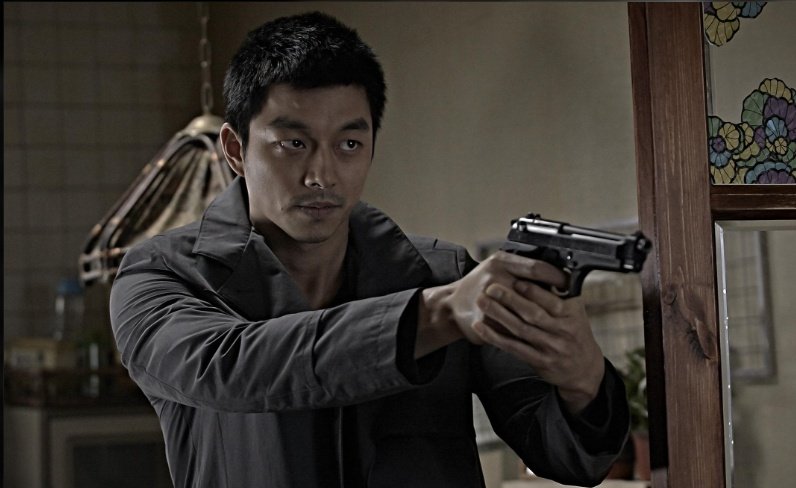
    At first glance, The Suspect appears to be a conventional action thriller about a highly trained North Korean agent who becomes the target of a massive manhunt.

    Ji Dong-chul, played by Gong Yoo, is an exceptionally capable operative. He knows how to fight, drive, investigate, escape surveillance, and survive situations in which ordinary people would have little chance.

    But his abilities are not what make his character interesting.

    His tragedy begins with the collapse of the system to which he devoted his life.

    After being abandoned during a mission, Dong-chul loses his family and discovers that the people who once relied on his loyalty are no longer interested in protecting him.

    His professional identity remains intact, but the foundation on which that identity was built has disappeared.

    This creates the central contradiction of the film.

    Dong-chul has been trained to serve a state, but he has no guarantee that the state will protect him when he becomes inconvenient.

    His physical strength allows him to survive the immediate danger. It cannot answer the more difficult question of what he should live for after losing everything.

    The film’s deeper subject is therefore not simply the survival of a special agent.

    It is the collapse of a person’s belief that loyalty will be rewarded with protection.

    2. The Meaning of Betrayal: When Loyalty Becomes a One-Way Relationship

    Dong-chul’s past reveals a disturbing relationship between an individual and the organization that controls his life.

    A special agent is trained to follow orders, protect operational secrets, and place the mission above personal interests.

    Such a system depends on loyalty.

    But loyalty becomes dangerous when the organization demands absolute commitment from individuals while accepting no comparable responsibility toward them.

    Dong-chul discovers that his service does not guarantee his safety.

    The institution that benefited from his abilities can abandon him when political circumstances change.

    This is more than a personal tragedy. It exposes the imbalance of power between an organization and the people who serve it.

    The individual is expected to sacrifice everything, while the institution retains the authority to decide whether that sacrifice still has value.

    The film does not need to explain every political calculation behind the abandonment. The emotional consequence is already clear.

    Dong-chul has fulfilled the role assigned to him, yet the organization has treated him as disposable.

    His story raises an uncomfortable question:

    If loyalty is demanded without responsibility, is it really loyalty between two sides, or merely obedience from one?

    3. The Loss of His Wife and Daughter: Revenge as a Substitute for a Future

    The murder of Dong-chul’s wife and daughter gives his journey an intensely personal motivation.

    He is not simply trying to clear his name or escape arrest.

    He wants to discover who destroyed his family and why.

    This changes the emotional meaning of his actions.

    A conventional action protagonist often fights to protect something that still exists. Dong-chul fights because the people he wanted to protect have already been taken away.

    Revenge becomes a substitute for a future.

    When someone loses the most important relationships in their life, the desire for justice can become inseparable from the desire to punish the person responsible.

    The film uses this emotional condition to explain Dong-chul’s relentless pursuit.

    He is not interested in returning to an ordinary life because the life he once imagined no longer exists.

    However, revenge also creates a limitation.

    A person who defines every action through the pursuit of an enemy risks allowing that enemy to determine the direction of the rest of their life.

    Dong-chul’s struggle is therefore not only about finding the person responsible for his family’s death.

    It is also about whether he can eventually become something more than the man who was betrayed.

    4. The Glasses: A Small Object Carrying an Enormous Political Secret

    The pair of glasses handed to Dong-chul by Chairman Park is one of the film’s most important narrative devices.

    At first, the object appears almost insignificant compared with the scale of the conspiracy surrounding it.

    But its contents make it valuable enough to place multiple powerful interests in conflict.

    This creates an interesting contrast between appearance and significance.

    An ordinary object can contain information capable of changing political and economic calculations.

    The glasses are not valuable because of their physical construction. Their importance comes from what they reveal.

    This is a familiar theme in political thrillers, but The Suspect uses it to connect the protagonist’s personal survival with a much larger struggle over national interests.

    Dong-chul initially wants to understand why Chairman Park entrusted him with the object.

    As the investigation develops, he realizes that the secret is not simply a piece of evidence that can clear his name.

    Its possession creates a struggle over who has the right to control information that could affect the country’s future.

    The glasses therefore represent more than a plot device.

    They symbolize the power that information gives to whoever controls it.

    5. Intelligence Agencies: When National Security Becomes a Convenient Justification

    The film’s South Korean intelligence organization introduces another layer of betrayal.

    Dong-chul is already a man abandoned by one political system. After arriving in South Korea, he becomes entangled in another system in which powerful officials have their own interests.

    He is framed for Chairman Park’s murder and becomes the target of an extensive pursuit.

    This creates a particularly uncomfortable situation.

    The institutions that are supposed to protect national security are not necessarily acting in the interests of the individual being pursued.

    Some characters use their official positions to control information, protect themselves, or eliminate threats to their own plans.

    The film does not suggest that every intelligence officer is corrupt.

    Instead, it focuses on the danger created when institutional authority is used to serve private or factional interests.

    National security is a powerful justification because ordinary citizens cannot easily examine every operation conducted in its name.

    When information is classified and authority is concentrated, accountability becomes difficult.

    That is why the intelligence conspiracy in The Suspect matters beyond its action scenes.

    It raises a question that applies to many political systems:

    Who investigates the people who possess the power to conduct investigations?

    6. Min Se-hoon: The Soldier Who Must Choose Between Orders and Conscience

    Park Hee-soon’s Min Se-hoon is more than the military figure assigned to hunt Dong-chul.

    His character provides an important contrast to the protagonist.

    Both men have been shaped by military discipline and operational experience. Both understand the demands of duty. Both have learned to function within organizations that value obedience and performance.

    Yet their circumstances are different.

    Min is placed in the position of pursuing a man whom the authorities have identified as a dangerous suspect.

    From an institutional perspective, following the assignment appears to be his responsibility.

    But the more he encounters Dong-chul’s situation, the more complicated that responsibility becomes.

    The conflict is not simply whether he can capture a highly trained fugitive.

    It is whether he can continue treating an official accusation as unquestionable when the evidence and circumstances suggest that something is wrong.

    Min’s character introduces a moral distinction between obeying an order and accepting responsibility for the consequences of carrying it out.

    A soldier may be required to follow a chain of command, but that does not automatically resolve every ethical question.

    The film’s most interesting contrast is therefore not between a good man and a bad man.

    It is between two people shaped by military systems who respond differently when those systems demand something morally questionable.

    7. Two Men on Opposite Sides of the Pursuit

    The relationship between Dong-chul and Min Se-hoon gives the film a stronger emotional structure than a simple fugitive-versus-pursuer story.

    Their conflict is built on a mixture of professional respect, suspicion, and unresolved history.

    Dong-chul sees Min as an immediate threat because he represents the force trying to capture him.

    Min sees Dong-chul as a dangerous target whose exceptional abilities make the mission more difficult.

    But their shared understanding of military discipline creates a connection that ordinary opponents would not necessarily possess.

    Both know what it means to operate under pressure.

    Both understand the difference between an official mission and the complicated reality encountered on the ground.

    This makes their conflict more interesting than a conventional battle between a criminal and a police officer.

    They are not simply fighting over who is physically stronger.

    They are confronting different interpretations of duty.

    Dong-chul has lost faith in the system that once controlled him. Min is still operating within an institutional structure, but he must decide how much trust that structure deserves.

    Their relationship suggests that professional loyalty can survive even when institutional loyalty begins to collapse.

    8. The Defector’s Position: A Man Who Belongs Nowhere

    Dong-chul’s identity as a North Korean defector is central to the film’s emotional structure.

    He has left one political system, but entering another does not automatically provide safety or belonging.

    His skills make him useful to some people and dangerous to others.

    His background makes him an object of suspicion, while his past connections create additional reasons for authorities to monitor him.

    He is physically present in South Korea, but his personal history continues to connect him to the political conflict from which he escaped.

    This creates a form of displacement that is more complicated than simply moving from one country to another.

    A person may cross a border without escaping the institutions, memories, and relationships that shaped their previous life.

    The film uses Dong-chul to explore this condition through the language of an action thriller.

    However, an important distinction must be maintained.

    Dong-chul is an exceptionally trained fictional operative. His experience should not be treated as a representative account of the lives of ordinary North Korean defectors.

    The film’s focus is narrower: it examines a man whose specialized past makes his transition into civilian life almost impossible.

    His story becomes a metaphor for the difficulty of escaping an identity that was imposed and reinforced by a powerful organization.

    9. Choi Kyung-hee: Journalism and the Responsibility to Look Beyond the Official Story

    Yoo Da-in’s Choi Kyung-hee adds another perspective to the story.

    As a documentary producer investigating North Korean defectors, she approaches Dong-chul from a different position than the intelligence officials pursuing him.

    She is interested in the human story behind the political label.

    This creates an important contrast between institutional information and individual testimony.

    The intelligence agency sees Dong-chul as a security problem.

    The media can potentially see him as a subject whose experiences deserve public attention.

    Neither perspective is automatically neutral.

    Intelligence institutions can manipulate information for strategic purposes. Journalists can also turn a complicated human life into a dramatic story that fits the expectations of an audience.

    The film’s use of Kyung-hee is therefore significant because it introduces the possibility of another kind of investigation.

    Instead of asking only whether Dong-chul is dangerous, she is interested in understanding what happened to him.

    Her role is not as fully developed as the central action characters, but she helps connect the story’s political conspiracy to the question of how society receives information about people it does not understand.

    10. Action as Character: Why Dong-chul’s Physical Skills Matter

    One of the most recognizable strengths of The Suspect is its large-scale action design.

    The film features extended car chases, close-quarters combat, escapes, and physical confrontations that emphasize the protagonist’s training.

    But the action has a more important narrative function.

    It shows the audience what kind of life Dong-chul has lived.

    His movements are economical and purposeful. He reacts quickly because hesitation can mean death. He uses his surroundings as resources rather than treating them as passive background.

    His physical abilities are not presented as an unexplained superpower.

    They are the result of a professional history built around combat and survival.

    This is why the action sequences are closely connected to his character.

    Dong-chul does not fight because he enjoys violence. He fights because the world around him has become a series of situations in which survival depends on his ability to respond.

    The film’s action is therefore a physical expression of his past.

    It also explains why an ordinary return to civilian life is so difficult for him.

    The skills that once made him valuable as an agent have become the tools he must use to survive after being abandoned by the system that trained him.

    11. The Camera and Editing: When Intensity Becomes Difficult to Follow

    The film’s action style has also generated criticism.

    In a Reddit discussion about the fight between Won Jin and Gong Yoo, viewers praised the impressive physical movements but criticized the rapid editing and shaky camera work.

    One participant argued that the audience could barely appreciate the stunt performance because the cuts and camera movement made the action difficult to follow.

    This criticism raises an important question about action filmmaking.

    Is an action scene more exciting because it moves faster, or because the audience can clearly understand the physical challenge being performed?

    Fast editing can create urgency, but excessive cutting may hide the very choreography that makes a scene impressive.

    A viewer may recognize that something spectacular is happening without being able to appreciate how it was achieved.

    This is particularly relevant to The Suspect, which places considerable emphasis on realistic physical action and large-scale set pieces.

    The film’s approach is influenced by the international action-thriller style associated with the Bourne films.

    That influence creates momentum and a sense of immediate danger, but it also produces moments when visual intensity competes with clarity.

    The criticism does not erase the scale of the action work.

    It highlights the difference between making an audience feel movement and allowing them to understand the movement itself.

    12. The Political Economy of the Conspiracy: Who Benefits From the Truth?

    The conflict surrounding Chairman Park’s glasses introduces a larger question about the relationship between information, economic interests, and political power.

    The secret is important because powerful people believe that controlling it will produce strategic advantages.

    This means the conspiracy is not simply about hiding a murder.

    It is about controlling something that could influence decisions far beyond the individuals directly involved.

    The film’s political world is therefore built around competing interests.

    Some characters want to preserve their positions. Others want to prevent information from becoming public. Still others see the secret as an opportunity to gain power.

    Dong-chul becomes caught in this struggle because he possesses an object whose importance he does not initially understand.

    This creates an interesting imbalance.

    He is one of the most physically capable people in the film, but he has very little control over the political and economic systems surrounding him.

    His ability to fight does not automatically give him the power to determine what information becomes public.

    The film suggests that physical strength and institutional power operate according to very different rules.

    A man may defeat several armed opponents and still remain powerless against a network of officials who control the evidence, the investigation, and the public narrative.

    13. The Ending: Can a Man Recover His Honor After Losing His Country?

    Spoilers: This section discusses the final developments.

    The final confrontation brings Dong-chul’s personal pursuit and the larger conspiracy together.

    His struggle is no longer limited to escaping arrest or finding the person responsible for his family’s death.

    He must also confront the consequences of the information he has been carrying and the people who have attempted to control it.

    The ending provides a degree of resolution to the immediate conspiracy, but it does not completely erase the tragedy that defines Dong-chul.

    His family cannot be restored. His former life cannot simply be recovered. The institutions that shaped his identity remain part of a complicated political world.

    This is important because the film does not offer a conventional return to normality.

    Dong-chul’s victory is not measured by whether he can resume the life he once had.

    It is measured by whether he can act according to his own understanding of justice rather than remain permanently controlled by the organizations that betrayed him.

    The film’s final emotional meaning lies in this distinction.

    A person can lose their country, family, and professional identity without necessarily losing the ability to decide what is right.

    Dong-chul’s survival becomes an assertion of personal agency.

    He may not be able to undo the past, but he can refuse to let the people who destroyed it determine every decision he makes in the future.

    14. The Final Question: Who Does a Soldier Really Serve?

    The most important question in The Suspect is not whether Dong-chul can defeat the people chasing him.

    It is whether a soldier’s duty belongs to the institution that gives orders or to the human values that the institution is supposed to protect.

    The film presents several versions of loyalty.

    Dong-chul once served a state that abandoned him.

    Min Se-hoon operates within a military structure that demands obedience.

    Other officials use the language of national security while pursuing their own interests.

    These different experiences expose the danger of treating institutional authority as automatically legitimate.

    A government, intelligence agency, or military organization may possess enormous power, but power alone does not establish moral authority.

    The individual who follows an order still has to confront the consequences of that action.

    This does not mean that every soldier can simply ignore commands or that national security responsibilities are unnecessary.

    It means that loyalty without accountability can become a mechanism of exploitation.

    Dong-chul’s tragedy begins when the organization he served decides that his life is expendable.

    His struggle becomes meaningful when he starts making decisions according to something beyond institutional obedience.

    That is the deeper conflict hidden beneath the film’s relentless action.

    A soldier may be trained to serve a nation, but a nation should never treat the people who serve it as disposable objects.


    TTK Final Perspective

    The Suspect is an ambitious Korean action thriller built around the story of a North Korean agent who loses his family, becomes a murder suspect, and is pursued by powerful institutions.

    Its action sequences provide the immediate excitement, but its more interesting subject is the relationship between individual loyalty and institutional power.

    Dong-chul is a man whose abilities were developed in service of a political system that eventually abandoned him. His journey forces him to reconsider what loyalty means when the organization receiving it refuses to accept responsibility.

    The film’s conspiracy plot occasionally becomes complicated, and its rapid editing can make some action sequences difficult to appreciate fully. Yet the central conflict remains compelling.

    The most important question is not whether Dong-chul can survive the people hunting him.

    It is whether a person who has spent his entire life serving an institution can finally learn to live according to his own judgment.

    TTK Original โ€” Beyond the Headlines