Korea Travel Tips

  • Visiting Korea During Chuseok 2026? What Tourists Need to Know

    If you are planning a trip to South Korea in late September 2026, you may have suddenly discovered something that was not in your original itinerary:

    Chuseok.

    Then comes the panic.

    Will everything be closed?

    Will I be able to get a KTX ticket?

    Should I cancel my trip to Busan?

    Will Seoul be empty?

    Can I still find restaurants?

    These questions are appearing repeatedly among travelers planning Korea trips around Chuseok.

    The good news is simple:

    You do not need to cancel your trip to Korea because of Chuseok.

    But you should change the way you travel.

    The biggest mistake is not visiting Korea during Chuseok.

    The biggest mistake is trying to travel around Korea as if Chuseok were an ordinary weekend.


    When Is Chuseok in 2026?

    In 2026, the main Chuseok holiday falls around:

    September 24–26, 2026

    with Chuseok Day on Friday, September 25.

    For tourists, however, it is better to think of the holiday as a wider travel period rather than just one day.

    Millions of Koreans traditionally travel to their hometowns or visit family during Chuseok.

    That creates one enormous problem for visitors:

    intercity transportation.


    The Biggest Problem Is Not Seoul — It Is Moving Between Cities

    This is the most important advice I can give foreign travelers.

    If possible, avoid major intercity travel during the peak Chuseok period.

    A normal Seoul-to-Busan trip is easy.

    During Chuseok, it can become one of the most difficult transportation reservations of your entire Korea trip.

    KTX and other long-distance trains are heavily used by Koreans traveling home for the holiday.

    For 2026, KORAIL introduced a separate Chuseok reservation process for trains operating during the holiday period rather than simply selling them through the normal booking window.

    That is why some travelers checking the KORAIL calendar became confused when trains suddenly appeared unavailable.

    The trains had not disappeared.

    They were being sold through the special holiday reservation system.

    If You Already Have a KTX Ticket

    Great.

    Keep it.

    If You Do Not Have One

    Do not build an important itinerary around the assumption that you will simply arrive at Seoul Station and buy a seat.

    Especially for popular routes such as:

    • Seoul–Busan
    • Seoul–Daegu
    • Seoul–Gyeongju
    • Seoul–Daejeon
    • Seoul–Gwangju
    • Seoul–Jeonju

    availability can become extremely limited.

    If your international flight depends on getting back to Seoul, leave yourself a safety margin.

    Missing one tourist attraction is disappointing.

    Missing your flight home because you could not get transportation back to Seoul is a much bigger problem.


    Should I Stay in Seoul During Chuseok?

    For many first-time international visitors, my answer is:

    Yes.

    If your itinerary allows it, Seoul is one of the easiest places to spend the core Chuseok holiday.

    This may sound strange because many Koreans leave Seoul to visit their hometowns.

    But that can actually work in a tourist’s favor.

    The city does not shut down.

    Major tourist districts remain alive, public transportation continues operating, and cultural events are often organized specifically for the holiday.

    Instead of trying to fight millions of Koreans for long-distance transportation, you can slow down and experience Seoul differently.


    Is Everything Closed During Chuseok?

    No.

    This is probably the biggest misunderstanding among first-time visitors.

    Korea does not completely shut down for three days.

    But neither should you assume that everything operates normally.

    The businesses most likely to close are smaller independent businesses where the owner and family want to spend Chuseok together.

    That can include:

    • small local restaurants
    • traditional markets or individual stalls
    • independent cafés
    • family-run stores
    • neighborhood businesses

    This is especially important on Chuseok Day itself, September 25.

    If there is one restaurant you absolutely want to visit, check its opening hours shortly before going.

    Do not assume Google Maps or an old blog post is correct for a national holiday.


    What About Convenience Stores, Shopping and Tourist Areas?

    In major Seoul tourist districts, you are unlikely to find a completely deserted city.

    Convenience stores are among the easiest places to find open, and many large commercial businesses operate during at least part of the holiday.

    Areas such as:

    Myeongdong, Hongdae, Gangnam, Itaewon and major shopping districts

    are very different from a small neighborhood where many family-run businesses may close.

    Still, individual stores can set their own holiday schedules.

    So think of Chuseok this way:

    The city is open. Every individual business is not guaranteed to be open.

    That distinction will save you a lot of frustration.


    Chuseok Can Actually Be a Great Time to Experience Korean Culture

    There is another side to the holiday that travelers sometimes overlook.

    Chuseok is not merely an inconvenience.

    It is one of Korea’s most important traditional holidays.

    Seoul organizes cultural events around the holiday, including traditional performances, games and hands-on cultural programs.

    For example, Seoul’s official September 2026 cultural calendar includes Chuseok programs at locations such as the Seoul Baekje Museum and Seoul Urban Life Museum, with performances, traditional games and family activities.

    For a foreign visitor, this can be an opportunity rather than a problem.

    Instead of treating Chuseok as a day when your normal itinerary has been ruined, consider making Chuseok itself part of your itinerary.


    Be Careful With Museums and Attractions

    Here is where planning becomes important.

    Do not assume that every museum follows the same holiday schedule.

    Some cultural attractions remain open or organize special programs, while others may close on Chuseok Day.

    That means you should check the official website of each major attraction shortly before visiting.

    This is especially important for museums.

    A traveler can easily make the mistake of thinking:

    “It’s a national holiday, so tourist attractions must be open.”

    Or the opposite:

    “It’s a national holiday, so everything must be closed.”

    Neither assumption is reliable.

    Check individually.


    What About Restaurants?

    You will find food.

    You are not going to starve in Seoul during Chuseok.

    But your carefully planned list of five famous restaurants may not work exactly as planned.

    Small family-run restaurants are the biggest uncertainty.

    This is one reason I recommend having several backup restaurants in the same neighborhood.

    If Restaurant A is closed, do not spend an hour crossing Seoul to reach Restaurant B.

    Open Naver Map or KakaoMap and look nearby.

    Major tourist districts usually provide plenty of alternatives.

    And if everything goes wrong?

    There is one institution that has rescued countless hungry travelers and Koreans alike:

    the Korean convenience store.

    A convenience-store meal may not have been part of your dream Korea vacation, but Korean convenience stores are an experience of their own.


    Should You Visit Busan or Gyeongju During Chuseok?

    You can.

    But I would separate two questions.

    Is Busan worth visiting?

    Absolutely.

    Should you casually travel from Seoul to Busan during peak Chuseok without confirmed transportation?

    No.

    The same principle applies to Gyeongju, Jeonju and other popular destinations.

    If your transportation and accommodation are already confirmed, enjoy your trip.

    If they are not, I would rather reorganize the itinerary than spend an important vacation day fighting for transportation.

    For first-time visitors, there is more than enough to do in Seoul for several days.


    A Simple Chuseok Strategy for Foreign Tourists

    If I were helping a friend from overseas plan a Korea trip during Chuseok 2026, I would keep it simple.

    Before the holiday:
    Do your long-distance travel.

    Visit Busan, Gyeongju, Jeonju or other cities before the peak movement begins if your schedule allows.

    September 24–26:
    Stay primarily in one city.

    For many first-time visitors, Seoul is the easiest choice.

    Explore palaces, parks, neighborhoods and confirmed-open cultural attractions. Look for Chuseok events.

    September 25 — Chuseok Day:
    Make this your most flexible day.

    Do not create an itinerary that depends on six specific restaurants and stores being open.

    Enjoy the city, experience a cultural event, walk along the Han River or explore an area where you have several alternatives.

    After the holiday:
    Resume your normal itinerary, but remember that return traffic can remain heavy around the end of the holiday period.


    What Travelers on Reddit Are Worried About

    Looking at recent Korea travel discussions, the same concerns appear again and again.

    Foreign travelers are asking whether they can get from Busan or Andong back to Seoul during Chuseok, whether KTX reservations will be available to foreigners, whether restaurants will close, and even whether they should change their entire Korea trip.

    Those concerns are understandable.

    But travelers who have previously spent Chuseok in Seoul also describe another experience: a quieter city, cultural events and plenty of things still available to do.

    Both experiences can be true.

    The difference is usually planning.

    Someone trying to cross the country without a train reservation may remember Chuseok as a transportation nightmare.

    Someone already staying in Seoul may remember it as one of the most interesting days of the trip.


    A Korean’s Advice: Don’t Fight Chuseok

    This is the most important point.

    When Koreans know Chuseok is approaching, we change our plans.

    We think about traffic.

    We think about train tickets.

    We check whether businesses will be open.

    We avoid unnecessary long-distance movement.

    Foreign visitors should do the same.

    Do not try to force your normal itinerary through one of the biggest travel periods of the Korean year.

    Travel with the holiday instead of against it.

    Stay in one place.

    Slow down.

    Check opening hours.

    Experience some traditional Korean culture.

    And if you can avoid competing with millions of Koreans for a KTX seat during the busiest period of the year, do it.


    Final Answer: Should You Travel to Korea During Chuseok 2026?

    Yes.

    I would not cancel a Korea vacation simply because it overlaps with Chuseok.

    But I would change the itinerary.

    The safest approach for most foreign tourists is:

    Avoid unnecessary intercity travel during the peak holiday, secure transportation early, stay flexible on Chuseok Day, and check individual businesses before visiting.

    If you do that, Chuseok does not have to ruin your Korea trip.

    It may actually give you something most tourists never experience:

    Korea during one of the most important holidays of the year.
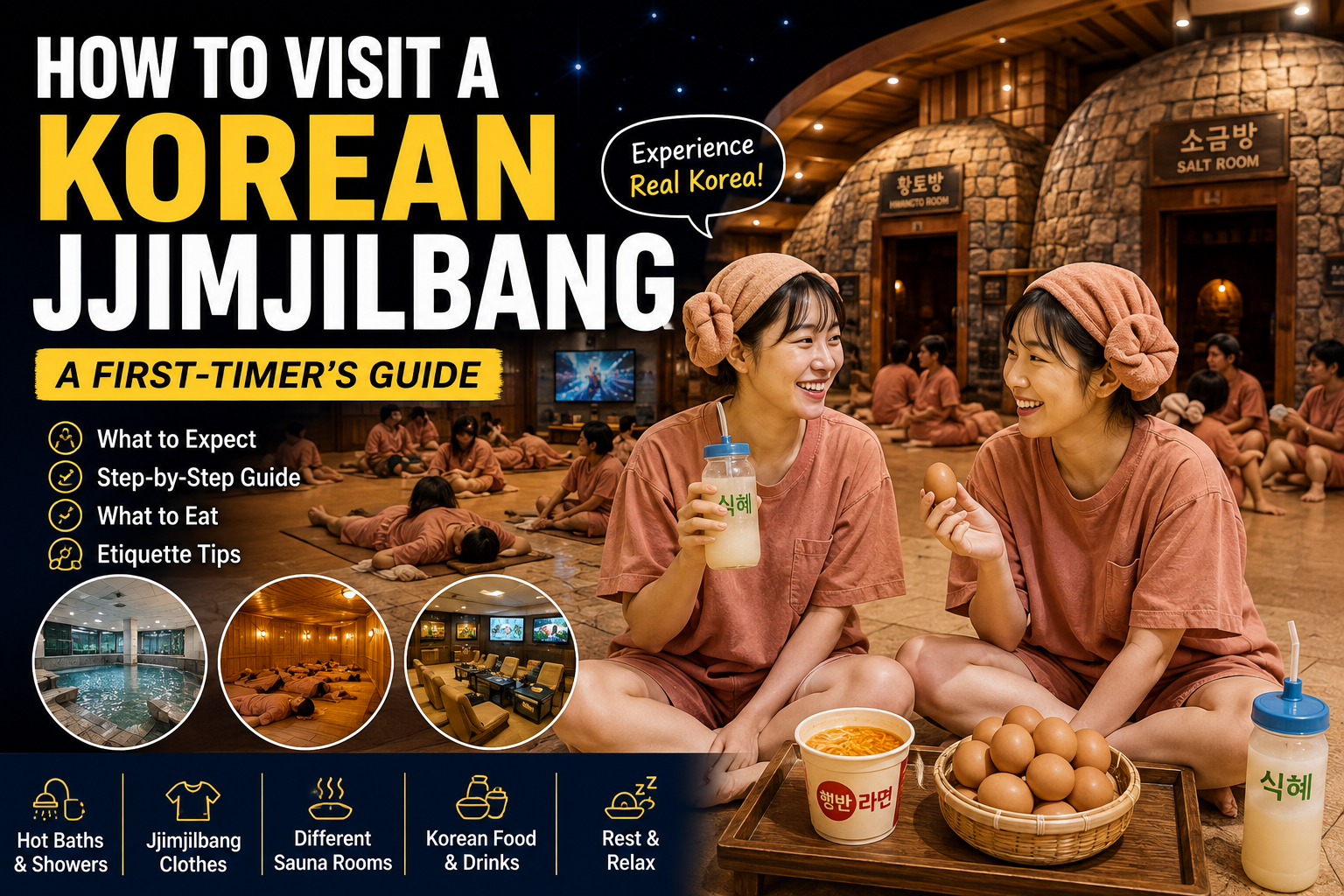
  • How to Visit a Korean Jjimjilbang: A First-Timer’s Guide to Korea’s Unique Sauna Culture

    How to Visit a Korean Jjimjilbang: A First-Timer’s Guide to Korea’s Unique Sauna Culture

    If you are planning a trip to South Korea, there is one experience that can tell you more about everyday Korean culture than another crowded tourist attraction.

    Go to a jjimjilbang (찜질방).

    A jjimjilbang is often translated as a “Korean sauna” or “Korean spa,” but that description does not quite capture it.

    Imagine a place where you can take a hot bath, sweat in heated rooms, lie on the floor watching TV, eat Korean snacks, take a nap, play games, and spend several hours relaxing with friends or family.

    That is much closer to the real jjimjilbang experience.

    Modern Korean jjimjilbangs can include restaurants, game rooms, massage chairs, karaoke, entertainment areas and differently heated sauna rooms. Some facilities operate around the clock, although opening hours and overnight policies vary by location.

    And if you have watched enough Korean dramas or variety shows, there is a good chance you have already seen one without realizing it.

    People wearing matching clothes.

    Towels wrapped around their heads.

    Someone drinking a cold rice beverage.

    Another person cracking an egg.

    Everyone lying comfortably on the heated floor.

    That is jjimjilbang culture.

    So if you want to experience Korea rather than simply photograph it, here is how to do it.


    What Is a Jjimjilbang?

    The word jjimjilbang (찜질방) refers to a Korean-style bathhouse and heated sauna complex.

    However, there are usually two different spaces that first-time visitors need to understand.

    The Bathing Area

    This is normally separated by gender.

    It contains showers and may have hot and cold baths, sauna facilities and other bathing amenities.

    This is the part that surprises some foreign visitors:

    People are normally naked in the bathing area.

    For Koreans, this is simply part of traditional public-bath culture. Seoul’s official tourism guide describes public bathing as an ordinary part of Korean life rather than something unusual.

    The Common Jjimjil Area

    After bathing, visitors put on the clothes provided by the facility.

    This common area can generally be used by men, women, friends, couples and families together.

    Depending on the jjimjilbang, you may find heated rooms, cooling rooms, restaurants, snack bars, massage chairs, arcades, entertainment areas and places to rest.

    That combination is what makes a Korean jjimjilbang quite different from a conventional Western sauna.


    Your First Jjimjilbang Visit: Step by Step

    The first visit can feel confusing because Koreans seem to know exactly what to do.

    Don’t worry.

    Once you understand the basic system, it is surprisingly easy.

    Step 1: Pay at the Entrance

    Go to the reception desk and pay the admission fee.

    The exact price depends on the facility, time of day and services included.

    You will typically receive a locker key or wristband, towels and jjimjilbang clothes.

    The clothes are usually a simple T-shirt and shorts.

    Some modern facilities also use the locker key or wristband for purchases inside. Korea Tourism Organization guidance notes that some facilities let visitors use the key for amenities and then settle additional charges when leaving.

    Keep your key with you.

    Losing it will make your relaxing Korean spa experience considerably less relaxing.


    Step 2: Put Your Shoes in the Shoe Locker

    Korea has a strong shoes-off culture.

    At a jjimjilbang, you will usually encounter a shoe locker near the entrance.

    Take off your shoes and store them where instructed.

    This is not just a jjimjilbang custom. Removing shoes remains common in Korean homes and various traditional indoor spaces.


    Step 3: Enter the Correct Changing and Bathing Area

    Men and women normally enter separate changing and bathing areas.

    Put your belongings in your locker.

    And now comes the moment that makes many first-time foreign visitors nervous.

    You take off your clothes.

    Completely.

    For Koreans around you, this is completely ordinary.

    Nobody is particularly interested in you.

    Once you realize that, the awkwardness usually disappears surprisingly quickly.


    Step 4: Shower Before Entering the Baths

    This is important.

    Wash your body before entering a communal bath.

    Do not treat the bath itself as the place where you wash.

    Shower first and then enter the hot or cold pools.

    The exact facilities vary considerably, so follow the posted rules at the jjimjilbang you visit.


    Step 5: Try the Baths

    Many bathhouses offer pools at different temperatures.

    You may find hot baths, cooler baths and other specialized pools.

    There is no prize for staying in the hottest water.

    Relax.

    This is supposed to be enjoyable.

    And remember that a jjimjilbang is a shared public space, so avoid splashing, swimming or behaving as though you have rented a private swimming pool.


    Step 6: Put on Your Jjimjilbang Clothes

    After bathing, dry yourself and put on the T-shirt and shorts provided by the facility.

    Now you can enter the communal jjimjil area.

    For many travelers, this is where the really interesting Korean cultural experience begins.

    Suddenly you may see children playing, couples talking, friends lying on the floor, people eating noodles and someone sleeping in a corner.

    It can feel less like a spa and more like a giant Korean living room.

    And that is part of its charm.


    Step 7: Try the Heated Rooms

    A large jjimjilbang may have several rooms at different temperatures.

    Some facilities use materials or themes such as charcoal, salt or clay.

    If this is your first time, don’t immediately challenge yourself to the hottest room.

    Korea Tourism Organization recommends that beginners start with cooler rooms around 30–40°C (86–104°F) and gradually move to hotter rooms according to their tolerance. It also advises caution in rooms above 60°C because of the risk of burns and dehydration.

    Drink water and leave immediately if you feel dizzy or unwell.

    This isn’t a competition.


    Step 8: Eat the Classic Jjimjilbang Snacks

    Now we reach one of the best parts.

    Food.

    Two foods are especially associated with jjimjilbang culture.

    Sikhye (식혜)

    Sikhye is a traditional sweet Korean rice drink, usually served cold.

    After sitting in a hot room, a cold cup of sikhye can taste fantastic.

    Korean tourism materials specifically identify sikhye as one of the classic foods associated with jjimjilbang visits.

    Eggs

    Eggs are another iconic jjimjilbang snack.

    You may have seen people eating them in Korean television shows.

    And the menu doesn’t necessarily stop there.

    Depending on the facility, you might find ramen, tteokbokki, fish cake, fried chicken, ice cream and full Korean meals.

    At Seoul’s Supsok Hanbang Land, for example, the official Seoul tourism guide currently lists foods such as sikhye, eggs, roasted rice cakes and sweet potatoes, as well as Korean restaurant options.

    So don’t think of food as something separate from the experience.

    Eating is part of the jjimjilbang experience.


    What Is the Famous Korean “Sheep Head” Towel?

    If you have watched Korean dramas, you may have seen someone wearing a towel twisted into two round shapes on the sides of their head.

    It is commonly called a yangmeori (양머리) — literally, “sheep head.”

    It became a playful visual associated with jjimjilbang scenes in Korean popular culture.

    You don’t have to wear your towel like this.

    But if this is your first trip to Korea?

    Try it once.

    Take the photo.

    You know you want to.


    Can You Sleep in a Korean Jjimjilbang?

    Sometimes — but do not assume every jjimjilbang allows overnight stays.

    Some facilities operate 24 hours and have resting areas, while others have different opening hours or restrictions.

    For example, Korea Tourism Organization currently lists Seoul’s Spa Lei as operating 24 hours, while Taejongdae Spa in Busan lists its jjimjilbang as open 24 hours.

    However, policies can change.

    Always check the current operating hours and overnight rules directly with the facility before planning to use it as overnight accommodation.

    A jjimjilbang can be a memorable late-night Korean experience, but it should not automatically be treated as a substitute for a hotel reservation.


    Jjimjilbang Etiquette Foreign Visitors Should Know

    You don’t need to memorize dozens of Korean rules.

    A few basics will take you a long way:

    Shower before entering communal baths.

    Keep your voice at a reasonable level.

    Do not take photos in changing rooms or bathing areas.

    Respect gender-separated bathing areas.

    Follow each facility’s rules about towels, clothing and food.

    Drink enough water when using heated rooms.

    And perhaps most importantly:

    Don’t panic because you don’t know exactly what everyone else is doing.

    Most people are there to relax, not to evaluate your knowledge of Korean sauna etiquette.


    What Should You Bring?

    One of the advantages of a jjimjilbang is that you usually don’t need much.

    Useful items can include your phone, payment method, basic toiletries and perhaps your preferred skincare products.

    Facilities differ in what toiletries they provide or sell, so check beforehand if you need something specific.

    And after hours of hot baths and dry heated rooms, your skin may feel different from usual.

    A simple moisturizer can be useful afterward.


    Is a Jjimjilbang Worth Visiting During a Korea Trip?

    I think so — especially if your goal is to understand Korea beyond the famous landmarks.

    You can see a palace in photographs.

    You can watch videos of Seoul Tower.

    But a jjimjilbang gives you something different.

    You participate in a piece of everyday Korean culture.

    You change into the same simple clothes as everyone else.

    You sit on a heated floor.

    You drink cold sikhye.

    You eat an egg.

    You watch families and friends spending an ordinary evening together.

    And for a few hours, you aren’t just looking at Korea from the outside.

    You are doing something Koreans themselves have done for generations.

    That is why a jjimjilbang belongs on a Korea itinerary alongside palaces, markets and famous restaurants.


    A Jjimjilbang Can Also Be a Great Bad-Weather Plan

    There is another practical reason travelers should know about jjimjilbangs.

    Korean summers can be hot and humid.

    The monsoon season can bring heavy rain.

    Winters can be bitterly cold.

    If the weather ruins your outdoor itinerary, a jjimjilbang can turn that lost afternoon or evening into a memorable Korean experience.

    Instead of sitting in your hotel room waiting for the rain to stop, you can spend several hours bathing, eating and relaxing.

    That is a pretty good backup plan.


    Where Can I Find a Jjimjilbang in Korea?

    Do not rely entirely on an old travel blog or an old YouTube video.

    Jjimjilbangs can close, change operating hours or change their overnight policies.

    For current information, check the Korea Tourism Organization’s official VISITKOREA website or the Official Seoul Tourism Guide before visiting.

    One currently promoted example is Supsok Hanbang Land, a charcoal-kiln-style jjimjilbang that Seoul’s tourism authority says attracts foreign visitors and offers traditional snacks and additional entertainment facilities.

    Outside Seoul, jjimjilbang culture can also be found in cities such as Busan and elsewhere around Korea.


    One Experience, Many Parts of Korean Culture

    The reason I recommend a jjimjilbang isn’t simply because it is unusual.

    It brings several parts of Korean culture together in one place:

    bathing culture, food, family time, relaxation, entertainment and Korea’s distinctive “bang” culture — spaces built around shared activities.

    That makes it very different from simply visiting another attraction.

    When you return home, you may forget the name of the third palace you visited.

    But you probably won’t forget the night you wore Korean jjimjilbang clothes, drank ice-cold sikhye and ate an egg while sitting on a heated floor.

    And that is exactly the kind of travel memory Korea is good at creating.


    K-Beauty Shopping Before or After Your Korea Trip

    If experiencing Korean spa culture makes you curious about Korean skincare and beauty products, you can also browse Korean beauty products through OLIVE YOUNG Global.

    👉 Shop K-Beauty at OLIVE YOUNG Global

    If you purchase through the link above, the site operator may receive a commission at no additional cost to you.