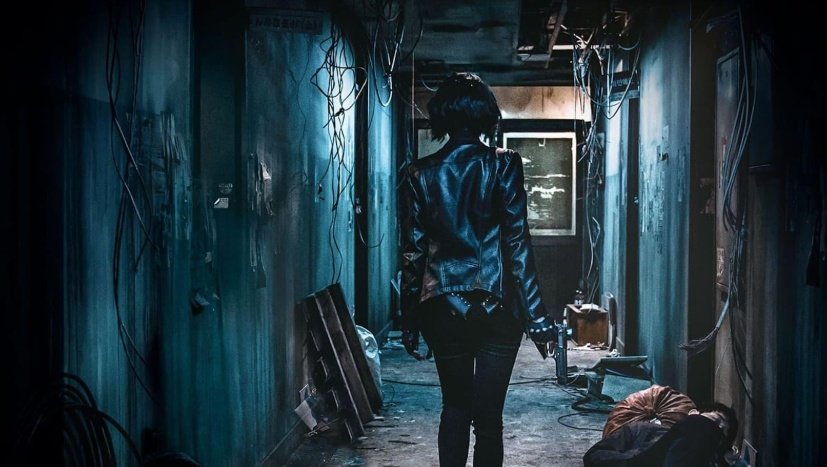
The Villainess (2017) is remembered for its brutal action sequences, breathtaking camera movements, and Kim Ok-bin’s unforgettable performance as a trained assassin. But beneath the bloodshed is a much sadder story: a woman whose entire life has been controlled by people who claimed to love, protect, or employ her.
Sook-hee spends years believing she understands who betrayed her and who deserves her revenge. Then, just when she thinks she has discovered the truth, the people closest to her are taken away.
The film ends with her killing the man responsible for much of her suffering. Yet instead of crying or celebrating, she smiles and laughs.
Why?
Was it the satisfaction of revenge, a complete mental breakdown, or the realization that she had finally escaped the people who controlled her?
Let’s examine the story, the betrayals, and the meaning behind that final expression.
Warning: Major spoilers ahead.
1. Who Is Sook-hee in The Villainess?
Sook-hee, played by Kim Ok-bin, is a woman trained from childhood to become a professional killer.
She does not grow up with the freedom to choose an ordinary life. Violence becomes her education, survival becomes her instinct, and killing becomes the only skill she knows.
After a bloody confrontation with a group of criminals, she is captured by South Korea’s intelligence agency.
Instead of simply imprisoning her, the agency offers her a deal: work as an undercover assassin for ten years, and she can eventually earn her freedom.
Her new identity is Chae Yeon-soo.
But changing her name does not erase the past that created her.
2. Why Does the Film Begin with Such a Brutal Action Scene?
The opening sequence places the audience inside Sook-hee’s perspective.
The camera moves through corridors and rooms as she eliminates one enemy after another. Guns, knives, and hand-to-hand combat follow in rapid succession.
It feels less like watching a traditional action movie and more like controlling a character in a first-person shooter game.
This is not just a way to show how dangerous Sook-hee is. It also places viewers inside her experience.
We see the world as she sees it: a collection of threats, targets, weapons, and obstacles.
The film deliberately makes the audience experience her violent instincts before explaining how she became this person.
3. How Were the Motorcycle Action Scenes Filmed?
The motorcycle sequence is one of the film’s most memorable scenes.
The camera seems to travel beneath moving motorcycles, move between riders, and follow the action from angles that appear almost impossible.
Director Jung Byung-gil explained that he experimented with smaller cameras and unusual camera placements to create perspectives that conventional action films had not explored.
He also discussed using pre-visualization for the motorcycle sequence, planning the action before filming it.
The result is not simply a conventional chase with fast editing. It is a carefully designed combination of stunt performance, camera movement, and editing.
Kim Ok-bin also performed more than 90 percent of her action scenes without a stunt double, according to contemporary reporting.
The important point is that the camera does not merely observe Sook-hee fighting. It makes the audience feel as if it is fighting alongside her.
4. Who Was Lee Joong-sang, and Why Did Sook-hee Trust Him?
Lee Joong-sang, played by Shin Ha-kyun, enters Sook-hee’s life when she is still young and vulnerable.
After she experiences extreme violence and exploitation, Joong-sang rescues her and takes her under his protection.
He trains her to become an assassin.
For Sook-hee, he becomes more than a teacher. He is the person who gives her a place to belong, a purpose, and eventually the possibility of romantic love.
But there is a terrible contradiction in their relationship.
The man who appears to have saved her is also connected to the violence that destroyed her childhood.
Sook-hee does not know the full truth about him.
5. Why Does Sook-hee Agree to Marry Joong-sang?
Sook-hee’s feelings for Joong-sang grow beyond gratitude.
She wants a different life with him. She even suggests that she could abandon revenge if they were able to build a future together.
For someone who has spent her entire life surrounded by violence, marriage represents something she has rarely experienced: the possibility of being loved as an ordinary person.
Joong-sang eventually agrees.
However, their honeymoon becomes the beginning of another tragedy.
Joong-sang stages his own death, leaving Sook-hee believing that he has been murdered.
She is devastated, and her grief becomes the fuel for another wave of violence.
The person she wanted to spend her life with has seemingly been taken away from her.
6. Why Does Sook-hee Join the Intelligence Agency?
After her capture, the agency recognizes that Sook-hee’s abilities could be useful.
Chief Kwon offers her a new identity and a deal: ten years of service in exchange for freedom.
Sook-hee initially resists, but she eventually accepts.
The agency also understands that she needs something beyond professional work. She needs a reason to believe that an ordinary life is still possible.
Her new identity allows her to live as Yeon-soo, an actress, and eventually to form a relationship with her neighbor, Jung Hyun-soo.
But the arrangement has an uncomfortable similarity to her earlier life.
Once again, someone else decides what she must do, where she must go, and what kind of future she is allowed to have.
7. Is Jung Hyun-soo Really in Love with Sook-hee?
Hyun-soo initially approaches Yeon-soo as part of an assignment.
He is an agent placed near her to observe her and develop a relationship with her.
That makes their romance appear dishonest from the beginning.
However, the film eventually reveals something important: his feelings become genuine.
Hyun-soo wants to marry Yeon-soo for real. A recording played by Chief Kwon confirms that he had asked for permission to make their marriage genuine rather than simply continuing the assignment.
This distinction matters.
Unlike Joong-sang, whose relationship with Sook-hee is inseparable from manipulation and hidden violence, Hyun-soo eventually wants a life with her that is not defined by her usefulness as a killer.
He may have entered her life under false pretenses, but his love becomes real.
8. Why Does Sook-hee Have a Daughter?
Sook-hee’s daughter, Eun-hye, represents the future she has been trying to create.
The child is connected to her earlier relationship with Joong-sang, but Sook-hee is now raising her while trying to build a different life with Hyun-soo.
Eun-hye is especially important because she gives Sook-hee a reason to imagine a future beyond revenge.
For the first time, Sook-hee is not simply trying to survive for herself.
She wants to protect someone who should never have to experience the world she grew up in.
This is why the film’s later tragedy is so devastating.
The loss of Eun-hye is not just the death of a loved one. It destroys the possibility that Sook-hee could escape her past through motherhood.
9. Why Does Sook-hee Discover That Her Husband Is Still Alive?
During her wedding ceremony with Hyun-soo, Sook-hee receives another assignment from the agency.
She looks toward the designated target and recognizes a familiar face.
It is Joong-sang.
The man she believed had died years earlier is alive.
This revelation changes the meaning of everything that happened after his supposed death.
Her revenge against the men she believed had killed him may have been based on a lie.
More importantly, the person she once loved has returned as someone she may have to kill.
The wedding, which should have represented a new beginning, becomes the place where her old life crashes back into the present.
10. Was Joong-sang Manipulating Sook-hee from the Beginning?
The film gradually reveals that Joong-sang’s role in Sook-hee’s life was far more sinister than she understood.
He was not simply the man who rescued her and taught her how to survive.
He was connected to the murder of her father, the very event that shaped her desire for revenge.
The revelation transforms their relationship.
Sook-hee believed Joong-sang had helped her pursue justice. In reality, he had been part of the secret she was trying to uncover.
His protection also gave him control over her.
He knew her weaknesses, understood her emotional attachment, and used her need for belonging to shape her life.
The most disturbing part is that the person who appeared to give Sook-hee a future had helped create the trauma from which she could never escape.
11. Was Hyun-soo’s Love Real or Just Another Mission?
When Joong-sang sends information exposing Hyun-soo’s original assignment, Sook-hee has every reason to question her relationship.
She has been deceived by almost everyone around her.
However, Chief Kwon later plays a recording of Hyun-soo asking to marry Sook-hee genuinely.
That recording changes the emotional meaning of his actions.
Hyun-soo was originally assigned to approach her, but he eventually developed real feelings.
He wanted to become her husband, not simply complete an intelligence operation.
This is one of the film’s cruelest contrasts.
Sook-hee has spent much of her life unable to distinguish genuine affection from manipulation. When she finally finds someone whose love appears sincere, the opportunity to live with him is taken away.
12. Who Kills Hyun-soo and Eun-hye?
While Sook-hee is being held by the agency, Joong-sang’s men attack Hyun-soo and Eun-hye.
Hyun-soo tries to stop the violence by revealing that Eun-hye is Joong-sang’s own daughter.
He hopes that the truth will make Joong-sang reconsider.
But Joong-sang shows no mercy.
His gang leaves Hyun-soo and Eun-hye in an apartment with an explosive device. The explosion kills them both.
Sook-hee initially believes the agency is responsible.
Only after Chief Kwon shows her the recordings does she understand what actually happened.
The people she wanted to protect are dead, and the man responsible is the person she once loved.
At this point, revenge is no longer simply about her father’s death.
It is about everything Joong-sang has taken from her.
13. Why Does Sook-hee Turn Against the Agency?
The agency has never been an entirely benevolent organization.
It recruited Sook-hee because of her abilities and promised her freedom after ten years of service.
Even her new identity was part of a controlled arrangement.
But the agency is not responsible for the deaths of Hyun-soo and Eun-hye.
The recordings reveal that Joong-sang’s gang carried out the attack.
Sook-hee now understands that both sides have used her in different ways.
Joong-sang manipulated her emotional past, while the agency turned her skills into an intelligence asset.
The difference is that the agency’s recordings also reveal Hyun-soo’s genuine feelings.
Sook-hee is left with a terrible realization: almost everyone has lied to her, but not every relationship was false.
14. Why Does Joong-sang Whistle Before He Dies?
The final confrontation takes place after Sook-hee tracks down Joong-sang and destroys his remaining gang.
The pursuit ends with a violent bus crash.
Wounded and exhausted, Sook-hee stands over Joong-sang with an axe.
Then he begins to whistle.
The tune is familiar.
It is the same melody associated with the murder of her father when she was a child.
Suddenly, the final piece of her past becomes clear.
Joong-sang was not simply the man who rescued her after her father’s death. He was the man responsible for it.
The whistle confirms the truth that had remained hidden throughout her life.
This moment is more important than the physical confrontation itself.
Sook-hee finally understands that the person who shaped her entire existence was also the person who destroyed the family she once had.
She kills him with the axe.
15. Why Does Sook-hee Smile and Laugh at the End?
This is the most interesting question in the film.
After killing Joong-sang, Sook-hee walks out of the wreckage and finds herself surrounded by police.
She does not look like someone who has won.
Her father is dead. Joong-sang is dead. Hyun-soo and Eun-hye are gone.
The life she tried to build has completely collapsed.
So why does she smile?
There are several possible interpretations.
First, the smile represents the release of revenge.
For years, Sook-hee has been controlled by the desire to find the person responsible for her father’s death. She finally discovers the truth and kills him.
The mission that shaped her entire life is over.
Second, it may be a sign of psychological collapse.
She has experienced so much violence and betrayal that ordinary emotional responses no longer seem possible. Her laughter could be the final expression of a mind pushed beyond its limits.
Third, the smile may represent freedom.
Joong-sang no longer controls her. The agency no longer has a useful assassin to command. The people who shaped her life are gone.
But this freedom comes at an unbearable price.
The film does not provide a definitive explanation. That ambiguity is what makes the ending memorable.
Sook-hee has won the revenge she spent her life pursuing, but she has lost almost everything that could have made that victory meaningful.
16. What Does the Ending of The Villainess Really Mean?
The title The Villainess encourages viewers to see Sook-hee as a dangerous woman.
But the film repeatedly asks us to consider how she became that person.
She was trained to kill, manipulated by people she trusted, and repeatedly denied the opportunity to choose her own future.
Her violence is real, and the film does not pretend that she is innocent.
Yet it also refuses to present her as someone who was simply born evil.
Joong-sang made her into a weapon. The agency tried to use that weapon for its own purposes. Even the possibility of a normal family life was shaped by secrets and deception.
In the end, Sook-hee kills the man who destroyed her childhood and her future.
But the victory is empty.
The final smile is not necessarily happiness. It may be the expression of someone who has finally finished fighting, only to discover that there is almost nothing left to return to.
Perhaps the saddest thing about The Villainess is not that Sook-hee became a killer. It is that, after everything she endured, she never truly received the chance to become anything else.
Is There a Post-Credit Scene in The Villainess?
There is no confirmed additional narrative scene after the theatrical ending that changes the story.
The film’s final image is Sook-hee smiling and laughing as the police surround her.
The ending deliberately leaves her future unresolved. Whether she survives, faces imprisonment, or escapes is not established by the film itself.
Any continuation beyond that point should be treated as speculation rather than confirmed story.
Final Thought
The action in The Villainess may be what makes people discover the film, but its ending is what gives the violence a deeper meaning.
Sook-hee spends her life being told who she is and what she must do. By the time she finally understands the truth, nearly everyone she loves is gone.
Her final smile leaves us with one uncomfortable question:
If revenge is the only thing left in your life, what happens when you finally get it?