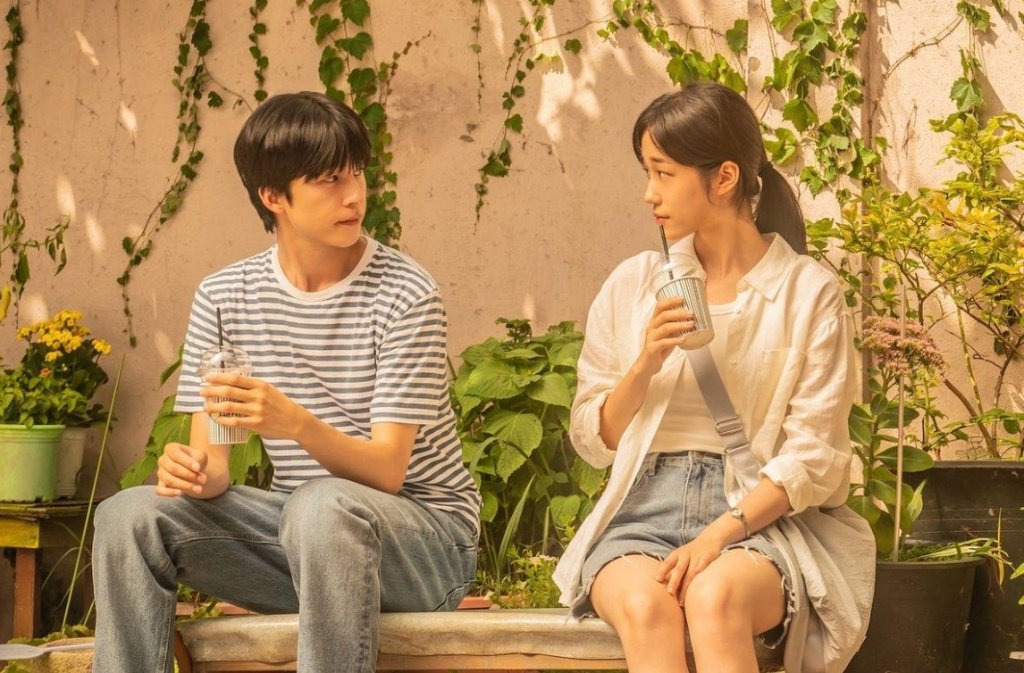
• Hear Me: Our Summer: Is Love About Hearing Someone, or Learning Their Language?

    Hear Me: Our Summer: Is Love About Hearing Someone, or Learning Their Language?

    1. A Love Story That Begins Without Words

    Most romantic films introduce love through conversation.

    Two people meet, exchange words, misunderstand each other, and gradually discover that they have feelings they cannot easily express.

    Hear Me: Our Summer takes a different approach.

    Yong-jun meets Yeo-reum while delivering lunchboxes to a swimming pool. He is immediately attracted to her, but their relationship develops through a language that requires more than listening.

    Yeo-reum communicates with her younger sister Ga-eul through Korean Sign Language. As Yong-jun tries to get closer to Yeo-reum, he also begins learning how to communicate in a different way.

    The film’s central idea is simple but meaningful: understanding someone is not necessarily about hearing their voice.

    It is about paying attention to how they express themselves.

    2. Yong-jun: A Young Man Who Has Not Found His Direction

    Yong-jun is a recent graduate who has not figured out what he wants from life.

    He helps with his parents’ lunchbox business, but his future remains uncertain. He does not have a clear professional ambition or a convincing plan.

    His encounter with Yeo-reum changes his daily routine.

    At first, his attraction is straightforward. He finds her beautiful and wants to know her better. But the relationship gradually asks more of him than simply expressing romantic interest.

    He must learn to communicate in a way that is meaningful to her.

    This is an important part of Yong-jun’s coming-of-age journey.

    He begins as someone who does not know what direction to take. Through his relationship with Yeo-reum, he discovers that growing up sometimes means making an effort to understand a world beyond one’s own experience.

    3. Yeo-reum: The Older Sister Who Has Put Her Own Life Aside

    Yeo-reum’s life revolves around supporting her younger sister.

    Ga-eul is a talented swimmer with hearing impairment, and Yeo-reum is deeply involved in helping her pursue her athletic ambitions.

    Her dedication is admirable, but it also creates an emotional problem.

    Yeo-reum has become so accustomed to putting her sister first that she struggles to recognize her own desires.

    When Yong-jun enters her life, she experiences feelings that do not fit neatly into the responsibilities she has accepted.

    She enjoys his attention, but she also feels guilty about spending time on a relationship when her sister’s future remains her priority.

    Yeo-reum’s conflict is not simply whether she likes Yong-jun.

    It is whether she is allowed to have a life that does not revolve entirely around someone else’s needs.

    4. Ga-eul: A Dream That Belongs to More Than One Person

    Ga-eul is not merely the younger sister who brings the romantic leads together.

    She has her own ambitions.

    Her swimming career represents independence, discipline, and the possibility of building a future through her abilities.

    But her dream is closely connected to Yeo-reum’s sacrifices.

    This creates an important tension between the sisters.

    Yeo-reum wants Ga-eul to succeed, but the more she organizes her life around that goal, the harder it becomes to distinguish her sister’s dream from her own.

    Ga-eul also has to confront the expectations placed on her.

    Being supported by someone does not mean she must remain permanently dependent on that person.

    The film becomes more meaningful when we recognize that both sisters need room to grow.

    5. Why Sign Language Changes the Meaning of Romance

    The most distinctive feature of Hear Me: Our Summer is its use of sign language.

    In conventional romantic films, spoken dialogue often carries the emotional weight of a scene.

    Here, the audience must pay attention to hands, facial expressions, eye contact, and body language.

    A small gesture can communicate affection. A delayed response can express hesitation. Looking away can carry emotional meaning that a spoken explanation might make less powerful.

    Sign language is not simply a substitute for speech.

    It is a complete language with its own grammar and expressive structure. Facial expression and movement are important parts of communication.

    The film uses this visual language to change the audience’s viewing experience.

    Instead of waiting for characters to explain their feelings, we are encouraged to observe how those feelings appear.

    6. Yong-jun Learns That Attraction Is Not the Same as Understanding

    Yong-jun’s initial attraction to Yeo-reum is based on appearance and curiosity.

    That is a familiar beginning for a romance.

    But a relationship cannot remain at that level.

    To communicate with Yeo-reum, he has to make an effort. He cannot assume that his usual way of speaking will be enough.

    This changes the meaning of his pursuit.

    He is not simply trying to persuade someone to like him. He is learning to meet another person in a language that matters to her.

    That distinction is important.

    Romantic stories often celebrate persistence, but persistence alone is not always admirable. What matters is whether someone is willing to respect the other person’s way of communicating.

    Yong-jun’s growth comes from learning that love requires attention, patience, and adaptation.

    7. Silence Does Not Mean the Absence of Emotion

    One of the film’s strengths is its use of quiet scenes.

    Because much of the communication takes place through sign language, the characters do not constantly fill the soundtrack with spoken explanations.

    The audience has to watch more carefully.

    This can make ordinary interactions feel unusually intimate.

    A glance, a smile, or a hesitant movement of the hands can become the emotional center of a scene.

    The quietness also challenges a common assumption about communication.

    People sometimes equate conversation with connection. But talking frequently does not necessarily mean understanding someone.

    Conversely, a person who communicates differently is not necessarily less expressive.

    The film’s best moments demonstrate that emotion does not depend on volume.

    8. When Supporting Someone Becomes a Form of Self-Sacrifice

    Yeo-reum’s relationship with Ga-eul raises a question that extends beyond disability or sport.

    How much should someone sacrifice for a person they love?

    At first, Yeo-reum’s dedication appears unquestionably positive. She helps her sister train, supports her ambitions, and makes practical decisions around Ga-eul’s future.

    But the arrangement becomes complicated when Yeo-reum begins to want something for herself.

    Her romantic feelings create a conflict between personal happiness and family responsibility.

    The film does not suggest that caring for a family member is a mistake.

    Instead, it asks whether love should require one person to put their own life on hold indefinitely.

    A relationship can become unhealthy even when it begins with sincere affection.

    Sometimes the most loving thing a person can do is allow another person to become independent.

    9. Ga-eul Also Needs the Freedom to Choose

    There is another side to the sisters’ relationship.

    Yeo-reum may believe she is protecting Ga-eul, but Ga-eul also has her own ambitions and emotional needs.

    Support can become restrictive when it leaves no room for the person receiving it to make decisions.

    This is particularly important in stories involving disability.

    A disabled character should not exist only to inspire another character or provide a reason for someone else’s sacrifice.

    Ga-eul has her own identity as an athlete, a younger sister, and a young woman with a future she wants to shape.

    Her challenges should not be reduced to the emotional burden they create for Yeo-reum.

    The film is strongest when it treats Ga-eul as a person with her own choices rather than simply the reason her older sister cannot pursue happiness.

    10. The Representation of Hearing Impairment: What the Film Gets Right and What It Risks

    The film deserves attention for placing sign language near the center of a mainstream romance.

    It encourages hearing audiences to pay attention to visual communication and recognize that spoken dialogue is not the only way people build relationships.

    The actors’ performances also require a different kind of concentration. Their expressions and gestures carry much of the emotional information.

    However, the film’s representation is not beyond criticism.

    A review in the South China Morning Post argued that its portrayal of the Deaf community was problematic and objected strongly to the final revelation.

    That criticism matters because representation is not automatically successful simply because a film includes Deaf or hard-of-hearing characters.

    A film must also consider whether those characters are given full identities, realistic experiences, and meaningful agency.

    There is an important distinction between using sign language as a beautiful cinematic device and portraying the actual diversity of Deaf experiences.

    Both deserve attention, but they are not the same achievement.

    11. The Remake Question: Does the Korean Version Have Its Own Identity?

    Hear Me: Our Summer is a Korean remake of the 2009 Taiwanese film Hear Me.

    Remakes face a difficult challenge.

    If they change too much, audiences may question why the original story was remade. If they change too little, the new version may feel unnecessary.

    The Korean adaptation preserves the basic romantic premise while reshaping the family relationships around Yeo-reum and Ga-eul.

    This gives the sisters a stronger presence in the emotional structure of the story.

    The original film is remembered for its gentle romance and use of sign language. The Korean version attempts to preserve that spirit while placing greater emphasis on the responsibilities and sacrifices within a family.

    Some viewers appreciate this approach because it retains the original’s sincerity.

    Others may prefer the original’s pacing and storytelling.

    A remake does not have to replace its source material. But it should offer a reason to experience the story again.

    12. Why the Film’s Final Revelation Divides Viewers

    The film’s later revelation changes how the audience understands some of the characters and their relationships.

    For some viewers, this adds emotional weight to the story.

    For others, the twist feels abrupt and raises questions about the choices the characters have made.

    This division is reflected in the critical response.

    A positive review in ZAPZEE praised the film’s sincerity, performances, and visual storytelling, while also acknowledging that the late twist might feel sudden.

    The South China Morning Post was much harsher, arguing that the revelation undermined the story.

    These contrasting reactions reveal an important weakness in the film’s structure.

    Its emotional power comes from the gradual development of relationships, but a major revelation near the end risks redirecting attention away from that development.

    The question is not simply whether the twist is surprising.

    It is whether the new information deepens the characters or makes the audience reconsider the story in a less satisfying way.

    13. What Reddit Viewers Appreciated About the Film

    The available Reddit discussion is relatively small, so it should not be treated as a representative survey of all international viewers.

    Still, several reactions are worth noting.

    In a discussion in r/Koreanfilm, one viewer described the movie as a warm and healing experience, praising its sincerity and emotional effect. Other commenters expressed affection for the Korean adaptation and compared it with the original Taiwanese film.

    A separate discussion in r/iZone praised Kim Min-ju’s performance as Ga-eul, particularly her ability to communicate emotion through gestures and facial expressions.

    These reactions suggest that the film’s appeal is not limited to the central romance.

    The performances, the relationship between the sisters, and the unusual communication style all contribute to its emotional impact.

    At the same time, some viewers recommended watching the original Taiwanese film, showing that the remake comparison remains part of the audience conversation.

    The broader picture is therefore mixed but interesting: many viewers found the film heartfelt, while comparisons with the original and criticism of the late twist remain relevant.

    14. Is Love About Hearing Someone, or Learning Their Language?

    Hear Me: Our Summer begins with a young man falling in love with a woman he meets while delivering lunchboxes.

    But its deeper subject is the effort required to understand another person.

    Yong-jun has to move beyond attraction. Yeo-reum has to recognize that her own happiness matters. Ga-eul has to be seen as someone with ambitions and choices of her own.

    Their relationships are not solved simply because they care about one another.

    They must learn to communicate, recognize boundaries, and allow each other to grow.

    The film’s use of sign language gives this idea a visual form.

    It reminds us that communication is not merely the exchange of words. It is the willingness to pay attention to someone whose experiences may be different from our own.

    Perhaps the most important lesson is not that love can overcome every barrier.

    It is that love becomes meaningful when people stop expecting others to communicate only in the way they find easiest.

    If loving someone means learning how they communicate, how many of us are truly willing to listen?
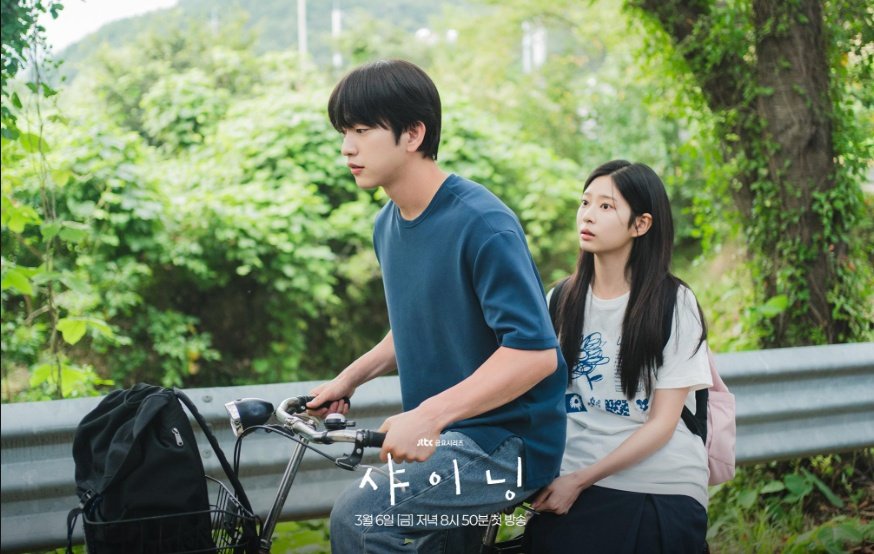
  • Still Shining: When First Love Becomes an Unfinished Emotional Wound

    Still Shining: When First Love Becomes an Unfinished Emotional Wound

    Why can two people love each other for years and still struggle to build a life together?

    Some love stories are remembered because the couple finally finds happiness. Others remain in the mind because they expose a more uncomfortable truth: loving someone and knowing how to maintain a relationship are two entirely different abilities.

    JTBC’s Still Shining (2026), starring Park Jin-young as Yeon Tae-seo and Kim Min-ju as Mo Eun-a, begins with the familiar promise of a first-love romance. Two teenagers meet, become deeply important to each other, separate as life pulls them in different directions, and encounter each other again ten years later.

    It sounds like a story about destiny. But its most interesting question is not whether first love survives time. It is whether the people who once loved each other have actually changed enough to love each other differently.

    The drama received praise for its cinematography, performances, atmosphere, and emotional intimacy. Yet its later episodes also generated criticism over repetitive conflicts, insufficient communication, and the development of its central characters. Discussions on Reddit reveal this divide particularly clearly: some viewers found the relationship frustrating, while others defended the series as an unusually raw portrayal of people carrying unresolved emotional wounds.

    That disagreement points toward the drama’s deeper subject.

    Still Shining is not simply about whether two people can reunite. It is about the difference between remembering a relationship and being capable of rebuilding one.

    1. The First Love That Time Could Not Finish

    The teenage relationship between Tae-seo and Eun-a is presented through small, intimate experiences rather than grand romantic gestures.

    Their shared school environment, conversations, bicycle rides, and moments of quiet understanding create a private emotional world. They become important to each other at a time when both are struggling with circumstances beyond their control.

    This is why their separation matters. They are not simply losing a boyfriend or girlfriend. They are losing someone who helped make a difficult period of life bearable.

    First love often becomes powerful in memory because it is connected to the person we were when we experienced it. We remember not only the other person but also the version of ourselves who existed beside them.

    A reunion ten years later therefore carries two expectations. The characters want to reconnect with each other, but they may also want to recover something they lost within themselves.

    That is a much more complicated emotional task than simply falling in love again.

    2. Are They in Love With Each Other or With Their Memories?

    One of the most important questions in Still Shining is whether Tae-seo and Eun-a truly recognize the people they have become.

    A decade is long enough to change someone’s priorities, personality, relationships, and understanding of responsibility. The person standing in front of you may still have the familiar face and voice, but the life surrounding that person has changed.

    Nostalgia can make this difference difficult to recognize.

    When people reunite with an important former partner, they sometimes approach the relationship through memories rather than present reality. They remember how safe they once felt, how naturally they understood each other, and how meaningful their shared experiences were.

    But memories cannot tell them whether they are compatible today.

    The drama becomes more interesting when viewed through this distinction. The emotional connection between Tae-seo and Eun-a may be genuine, but genuine emotion does not automatically produce a workable partnership.

    The past can explain why they return to each other. It cannot, by itself, explain how they should live together now.

    3. Ten Years Apart Does Not Automatically Mean Ten Years of Growth

    A ten-year time jump is usually expected to demonstrate personal development.

    Characters have experienced new relationships, professional responsibilities, disappointments, and independent lives. Viewers naturally expect them to approach old problems with greater maturity.

    But time and growth are not interchangeable.

    A person can become older without becoming better at expressing difficult emotions. Someone can become financially independent while remaining emotionally avoidant. Another person can learn to endure hardship without learning how to ask for help.

    This distinction is central to the criticism of Still Shining.

    Several Reddit viewers questioned why the characters seemed to repeat the same relationship patterns after such a long separation. Some felt that the adult storyline lacked the development promised by the time jump.

    That criticism deserves serious consideration.

    If the characters return to the same emotional positions they occupied as teenagers, the reunion risks feeling like a repetition rather than a new chapter.

    The more interesting possibility, however, is that the drama is deliberately showing how unresolved pain can survive into adulthood. The problem is not that the characters have failed to age. It is that some of their emotional habits have remained untouched.

    The weakness lies in whether the series makes that distinction sufficiently convincing.

    4. Tae-seo: The Safety of a Life Without Excessive Expectations

    Tae-seo is not presented as someone constantly pursuing an ambitious future.

    As an adult, he works as a subway train operator and appears to value the stability of his immediate life. His attitude toward the present is shaped by a desire to get through each day safely rather than constantly reaching for something uncertain.

    This approach can be understood as a form of self-protection.

    People who have experienced repeated disappointment sometimes reduce their expectations. They do not necessarily stop wanting happiness. Instead, they try to avoid wanting anything so intensely that losing it becomes unbearable.

    Tae-seo’s reserved personality makes this interpretation particularly relevant.

    His emotional attachment to Eun-a suggests that he is capable of deep affection. Yet his difficulty is not simply whether he loves her. It is how much uncertainty he can tolerate when love becomes connected to responsibilities, family problems, and the possibility of another separation.

    The character becomes more compelling when we recognize that emotional restraint can be both a strength and a limitation.

    A person who rarely asks for too much may appear dependable. But a relationship also requires the courage to express needs before silence becomes distance.

    5. Eun-a: Independence and the Fear of Losing Control

    Eun-a’s desire for independence is one of the most important elements of her characterization.

    Her life is shaped by personal loss, family conflict, and the search for a place where she can feel secure. Her work and the guesthouse environment are not merely professional details. They are connected to her ability to make decisions about her own future.

    This matters because independence is often misunderstood in romantic stories.

    A character who wants to make decisions alone can easily be described as selfish or emotionally unavailable. But independence may also be a response to a life in which stability has repeatedly disappeared.

    When someone has experienced the loss of important relationships or a sense of control over their circumstances, relying on another person can feel frightening.

    Eun-a’s choices can therefore be read through two competing possibilities.

    She may be protecting the independence she worked hard to regain. At the same time, she may be avoiding the conversations that a committed relationship requires.

    Understanding her reasons does not mean every decision is justified.

    The more demanding question is whether she can protect her own life while also acknowledging the emotional consequences of her choices for someone else.

    6. Love Is Not the Same as Emotional Availability

    One of the drama’s most uncomfortable ideas is that two people can have genuine feelings and still be emotionally unavailable to each other.

    Romantic storytelling often treats love as the solution to conflict. If the characters love each other enough, the audience is expected to believe that they will eventually overcome their difficulties.

    Real relationships are less convenient.

    Emotional availability requires more than affection. It requires the ability to communicate honestly, listen without immediately becoming defensive, establish boundaries, and remain present when a conversation becomes uncomfortable.

    A person can miss someone intensely while still being unable to offer them consistency.

    A person can want a future together while repeatedly making decisions without considering how those decisions affect the other person.

    This is where Still Shining moves beyond the familiar idea of an enduring first love.

    The important question is not how strongly Tae-seo and Eun-a feel. It is whether their behavior can support the relationship they say they want.

    7. The Problem of Avoidance: When Silence Becomes a Decision

    The repeated communication problems between the main characters became one of the most discussed aspects of the drama.

    Some Reddit viewers expressed frustration that conflicts which could have been addressed through direct conversations instead developed into prolonged misunderstandings and emotional distance.

    Their criticism is not difficult to understand.

    Silence may appear harmless because it avoids immediate confrontation. But in a relationship, silence also communicates something.

    It can suggest uncertainty, disinterest, fear, or an unwillingness to take responsibility. Even when none of those meanings is intended, the other person must still interpret the absence of an explanation.

    This creates a destructive cycle.

    One person avoids a difficult conversation. The other person becomes uncertain. That uncertainty produces emotional reactions, which make the next conversation even more difficult.

    Eventually, the relationship becomes dominated by assumptions rather than shared understanding.

    The drama’s strongest psychological material lies in this cycle. Its weakness is that repeated avoidance can become dramatically exhausting when the characters do not visibly learn from its consequences.

    8. Bae Seong-chan and the Importance of Boundaries

    Bae Seong-chan’s relationship with Eun-a adds another layer to the central romance.

    His presence becomes controversial because viewers disagree about the boundaries Eun-a should establish while rebuilding her relationship with Tae-seo.

    In the Reddit discussions surrounding the later episodes, some viewers were particularly critical of Eun-a’s interactions with Seong-chan. They felt that she did not communicate clearly enough about her relationship with Tae-seo, creating unnecessary uncertainty.

    This criticism raises an important distinction.

    A person does not become responsible for another person’s feelings simply because that person has romantic interest in them. However, once someone knows that a relationship is creating confusion, clear communication becomes an ethical responsibility.

    Boundaries are not punishment. They are a way of making relationships understandable.

    Eun-a’s situation is more complicated than a simple question of choosing one man over another. Her personal circumstances and independence matter. Nevertheless, emotional complexity cannot become an excuse for leaving other people in prolonged uncertainty.

    The drama could have explored this conflict more effectively by showing the characters negotiating boundaries instead of repeatedly allowing ambiguity to determine their behavior.

    9. Why Viewers Became Frustrated With Eun-a

    The reaction to Eun-a reveals something important about audience expectations.

    Some viewers were willing to accept Tae-seo’s quiet personality and the drama’s slow atmosphere. But they became increasingly impatient with Eun-a’s decisions, particularly when they believed she was failing to communicate clearly or recognize Tae-seo’s emotional position.

    This response should not simply be dismissed as hostility toward a complicated female character.

    There is a legitimate question beneath the criticism: does the story give Eun-a enough development to make her decisions understandable?

    A character does not need to be consistently likable. In fact, flawed characters can be more interesting than idealized ones.

    But viewers need to understand the relationship between a character’s history, motivations, decisions, and consequences.

    If the story repeatedly shows a character making painful choices without developing the reasons behind those choices, complexity can begin to look like inconsistency.

    Eun-a deserves more than either unconditional defense or simple condemnation. The stronger analysis examines whether the writing allows the audience to understand her without requiring them to approve of everything she does.

    10. The Supporting Characters Reveal What the Main Couple Lacks

    Im A-sol and the other supporting characters are important because they offer alternative perspectives on emotional responsibility.

    Their presence prevents the drama from becoming only a story about two former lovers.

    A-sol, in particular, creates a contrast with the central relationship. The audience can compare different ways of responding to uncertainty, affection, and personal responsibility.

    This contrast also makes the romantic question more complicated.

    Is the person who creates the strongest emotional reaction necessarily the person with whom we can build the healthiest relationship?

    Romance often privileges intensity. Stability, consistency, and practical compatibility can seem less exciting in comparison.

    Yet a long-term relationship cannot survive on emotional intensity alone.

    The supporting characters help expose this difference, even if the drama does not always develop their stories with the same care as the central romance.

    Their narrative function is valuable, but they also deserve to exist as people with independent emotional lives rather than merely as instruments for the main couple’s development.

    11. Family Trauma Changes the Meaning of Romantic Love

    The relationship between Tae-seo and Eun-a cannot be understood without considering their family circumstances.

    Tae-seo’s grandmother’s medical crisis becomes a significant emotional burden. Eun-a’s complicated relationship with her family, including the loss of her father and conflict involving her stepmother, also influences her choices.

    These events are not simply obstacles designed to delay a romantic reunion.

    They show how people bring existing emotional responsibilities into new relationships.

    When someone is dealing with grief, family conflict, or the fear of losing a loved one, romance does not exist in isolation. Time and attention become limited resources.

    A partner may want to be supportive but may not know how. Another may be overwhelmed and unable to explain what is happening internally.

    This is where emotional maturity becomes more important than romantic attraction.

    A lasting relationship requires people to understand that their partner has a life beyond the relationship itself.

    The drama is strongest when it recognizes that love must coexist with grief, work, family obligations, and individual uncertainty.

    12. The Guesthouse and the Search for a Place to Belong

    Eun-a’s connection to the guesthouse is more than a professional storyline.

    It represents her attempt to build a life with her own decisions and responsibilities. A place can become emotionally important when it offers stability after a period of loss.

    The guesthouse also functions as a symbolic contrast to the relationship.

    A building can be repaired, managed, and maintained through visible actions. Human relationships are more difficult because the people involved do not always explain what they need.

    The guesthouse therefore reflects Eun-a’s desire for a life she can organize and control.

    But independence also carries a difficult question.

    If a person builds an entire identity around never depending on anyone, what happens when genuine intimacy requires vulnerability?

    Independence and commitment do not have to be opposites. A healthy relationship should allow both people to retain their identities while choosing to share parts of their lives.

    The challenge is not to surrender independence. It is to stop treating every form of emotional dependence as a threat.

    13. The Slow Pace: Artistic Choice or Narrative Repetition?

    The drama’s visual style and slow storytelling were among its most recognizable characteristics.

    Some viewers appreciated its quiet atmosphere, gentle cinematography, and emotional restraint. Others felt that the story moved too slowly and repeated conflicts without sufficient development.

    Reddit discussions show both reactions.

    One early discussion praised the acting, visuals, and soundtrack, while other viewers said they struggled to continue because the pacing felt too slow. Later discussions became more critical of the repetitive relationship problems.

    These reactions reveal an important distinction between slow storytelling and stagnant storytelling.

    A slow drama can be powerful when each quiet scene changes the audience’s understanding of a character.

    A long pause can communicate grief. A repeated location can show how a person’s relationship with the past has changed. An ordinary conversation can reveal emotional growth.

    But repetition becomes a problem when the same conflict returns without a meaningful change in perspective.

    The question is not whether a drama moves quickly. It is whether something important changes while the story takes its time.

    Still Shining sometimes creates beautiful emotional spaces, but not every extended moment produces an equally meaningful narrative development.

    14. The Ending: Reunion Is Not the Same as Resolution

    The finale is important because it refuses to provide a completely conventional romantic conclusion.

    After further separation and emotional uncertainty, Tae-seo and Eun-a eventually face the possibility of choosing different paths. Eun-a’s decision to return to Hawaii becomes particularly significant.

    The ending then moves forward by a year. Tae-seo has continued pursuing his ambitions, and his final actions leave room for hope about a possible future reunion.

    The drama does not simply present a perfectly resolved relationship.

    Instead, it leaves the audience to consider whether the two characters might eventually find their way back to each other after gaining more independence.

    Some viewers may find this ending frustrating because they invested in the couple’s reunion and wanted a clearer answer.

    Others may interpret its openness as consistent with the drama’s central idea: a relationship cannot be completed merely because two people still have feelings.

    The ending is not necessarily a rejection of love.

    It can also be understood as a recognition that the right emotional decision is sometimes to allow another person the freedom to grow.

    The important question is whether the characters have finally learned to choose their future rather than simply repeat their past.

    15. Why Reddit’s Divided Reaction Matters

    The Reddit response to Still Shining offers a useful way to understand the difference between emotional atmosphere and narrative satisfaction.

    The early enthusiasm was substantial in one discussion, where viewers praised the visual presentation, acting, soundtrack, and chemistry between the leads.

    As the series progressed, other discussions focused on the main couple’s lack of communication, Eun-a’s decisions, and the feeling that the adult storyline had lost the charm of the teenage chapters.

    One discussion even questioned whether watching the first few episodes was enough to experience essentially the same emotional outcome as watching the entire series.

    However, the negative reaction was not universal.

    A particularly detailed defense argued that the drama should be understood as a portrayal of love shaped by deep trauma. From this perspective, the characters’ emotional difficulties were not accidental flaws but part of the story’s attempt to represent people who struggle to understand what they need from each other.

    This disagreement is more interesting than a simple positive or negative rating.

    It shows that the drama created an emotional experience that some viewers considered honest and others considered frustrating.

    Both reactions can be valid.

    A character can be psychologically complicated while the writing still fails to communicate that complexity effectively. A drama can have a meaningful emotional idea while also suffering from pacing and structural problems.

    The strongest criticism does not require denying the strengths of the work.

    16. The Real Meaning of Still Shining: Love Cannot Replace Personal Growth

    The title Still Shining suggests something that continues to give light despite distance, darkness, and time.

    It is an appropriate image for a story about two people whose memories of each other remain meaningful even after their lives have changed.

    But there is a danger in romanticizing that persistence.

    A relationship does not become healthy simply because it has survived for many years. A memory does not become a promise simply because it remains emotionally powerful.

    People must still learn to communicate, respect boundaries, accept responsibility, and recognize that their partners are not frozen versions of their younger selves.

    Tae-seo and Eun-a’s story is therefore more complicated than a question of whether first love can last.

    It asks whether people can become capable of the relationship they once imagined.

    The drama’s strongest moments emerge when it recognizes that love does not erase grief, repair family wounds, or automatically produce maturity. Its weaker moments appear when emotional repetition replaces visible development.

    Perhaps that is why viewers remain divided.

    Some see the characters as painfully realistic people whose unresolved wounds make love difficult. Others see a romance that repeatedly creates problems without giving its characters enough growth to overcome them.

    The disagreement reflects the central tension of the series itself.

    Love can remain in the heart for ten years. But a lasting relationship requires more than a feeling that refuses to disappear.


    Final Verdict: A Beautifully Intimate Romance With an Unresolved Emotional Problem

    Still Shining deserves attention for its atmosphere, performances, and willingness to explore the difficult relationship between first love and adult responsibility.

    Its greatest strength is the recognition that emotional attachment can survive long after the circumstances that created it have disappeared.

    Its greatest weakness is that the repeated misunderstandings and limited character development can make the journey feel more circular than transformative.

    The series is most rewarding when viewed not as a perfect love story, but as an examination of people who must learn that remembering someone and building a future with that person are two very different things.

    The most important question it leaves behind is not whether Tae-seo and Eun-a will meet again.

    It is this:

    If you meet your first love again after ten years, are you ready to love the person standing in front of youโ€”or are you still trying to recover the person you remember?