• Light Shop: Why Were the Ghosts More Heartbreaking Than the Living?

    Light Shop: Why Were the Ghosts More Heartbreaking Than the Living?

    At the end of a dark alley stands a small shop filled with glowing light bulbs.

    Strange people visit it at night. Some look frightening. Others behave as if they are hiding something. A woman sits at a bus stop, a mysterious figure wanders through the streets, and a shopkeeper watches his customers without offering many explanations.

    At first, Light Shop looks like a supernatural horror series.

    But the longer we watch, the more uncomfortable its central mystery becomes.

    What if the people we fear are not monsters? What if they are simply people who cannot let go of someone they love? And what if the frightening things they do are actually attempts to return to a life they are desperately trying to remember?

    Directed by Kim Hee-won and written by Kang Full, the 2024 Disney+ series brings together a large ensemble of characters whose stories gradually converge around one mysterious shop.

    Starring Ju Ji-hoon, Park Bo-young, Kim Seol-hyun, Uhm Tae-goo, Bae Seong-woo, and Lee Jung-eun, the series uses horror as an entrance into a much more emotional exploration of love, grief, memory, and the boundary between life and death.

    The most interesting transformation in Light Shop is not the revelation of who the ghosts really are.

    It is the moment when we stop being afraid of them.

    1. A Horror Story That Changes Its Meaning

    The first episodes of Light Shop deliberately create distance between the audience and its characters.

    People behave strangely. Their appearances are unsettling. Their movements and conversations suggest that something is wrong, but the series refuses to explain exactly what is happening.

    This approach creates a familiar horror experience: the audience sees something unusual before understanding its meaning.

    However, the series gradually changes the emotional purpose of these scenes.

    What initially appears to be a collection of frightening encounters becomes a connected story about people caught between life and death.

    The change is important because the horror does not simply disappear when the mystery is solved.

    Instead, the audience begins to reinterpret everything it has already seen.

    A frightening face becomes a sign of suffering. A strange habit becomes a clue to someone’s past. A seemingly threatening encounter becomes an attempt to communicate.

    The series uses the audience’s initial fear against it.

    We judge the characters before we understand them, just as people often judge strangers in real life without knowing what they have experienced.

    2. Why the First Four Episodes Feel So Confusing

    One of the most frequently discussed aspects of Light Shop on Reddit is its unusual opening structure.

    Some viewers found the first episodes slow, confusing, or difficult to follow. Others enjoyed the mystery and appreciated that the series did not immediately explain its supernatural rules.

    In a February 2025 discussion, viewers described how the early episodes initially seemed strange and frightening, but became much more meaningful once the pieces began connecting.

    Another discussion from January 2025 included viewers who considered the opening slow, while others recommended continuing because the story became clearer around the fifth episode.

    This division reveals something important about the series.

    Light Shop asks viewers to accept uncertainty for a considerable amount of time.

    Traditional mystery storytelling often gives the audience a clear question and gradually provides clues.

    Here, the audience is not even certain what question it should be asking.

    Who are these people? Why do they behave this way? What is the relationship between the hospital, the alley, and the shop?

    The confusion is part of the experience, but it also creates a risk.

    Some viewers become curious enough to continue. Others may lose patience before the emotional story has a chance to emerge.

    The structure is ambitious, although not every viewer will find it equally rewarding.

    3. The Shopkeeper: A Man Who Keeps the Light On

    Ju Ji-hoon plays Jung Won-young, the mysterious owner of the light shop.

    He does not behave like a conventional supernatural guide.

    He rarely explains everything directly. Instead, he watches the people who enter his shop and allows them to confront the choices that lie before them.

    His shop is located at the end of an alley that seems disconnected from ordinary reality.

    People arrive carrying different kinds of suffering, and the light bulbs inside the shop are connected to their existence.

    At first, Won-young appears to be a guardian of a mysterious place.

    But his own history eventually reveals that he is not simply an observer of other people’s pain.

    He has experienced loss himself.

    His decision to remain in the shop is connected to a desperate attempt to save his daughter, and that sacrifice gives his character a different emotional meaning.

    He is not a man who has escaped grief.

    He is someone whose entire existence has become an expression of it.

    The shopkeeper’s greatest strength is that he understands the cost of holding on to someone.

    4. What Does the Light Actually Represent?

    The light bulbs are the most important visual symbol in the series.

    They represent more than the simple difference between darkness and brightness.

    Each light is connected to a person’s life, and the shop becomes a place where the condition of that life can be confronted.

    But light also has a deeper emotional meaning.

    People turn on lights because they do not want to remain in darkness.

    They search for light when they are lost.

    They leave a light on when they expect someone to return.

    In that sense, the shop is not merely a supernatural location.

    It is a place built around the human refusal to abandon hope.

    The people who arrive there may not understand what has happened to them, but they are still connected to something they cannot easily release.

    A loved one. A promise. A regret. A memory.

    The light becomes a visible expression of that connection.

    Perhaps the most meaningful question is not whether a person’s light is still burning.

    It is what that person is willing to do once they understand what the light means.

    5. The Characters Who Look Like Monsters

    The frightening appearances in Light Shop are not accidental decorations.

    They are part of the series’ storytelling language.

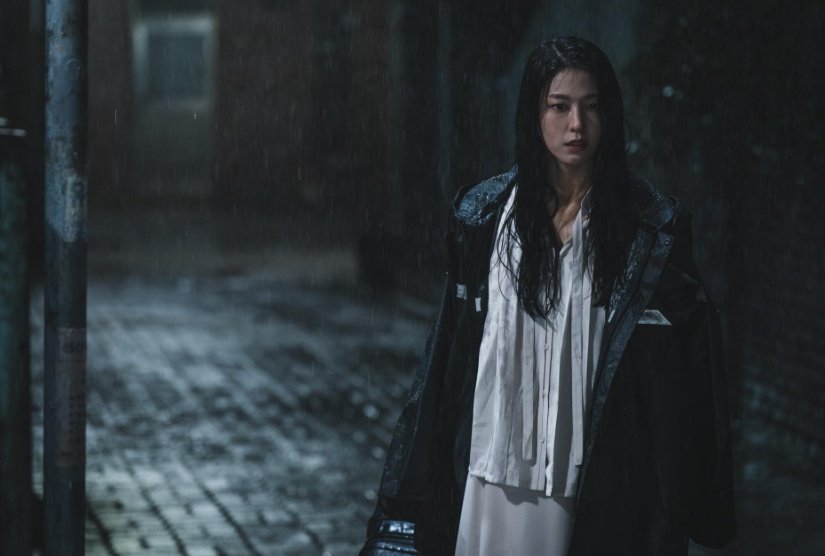
    The wet woman, the unusual figures in the alley, and the people whose physical characteristics seem unnatural all contribute to an atmosphere of danger.

    Yet the series gradually changes the meaning of these images.

    The audience discovers that the characters’ appearances and behavior are connected to their conditions and experiences.

    This creates a powerful contrast.

    At the beginning, viewers ask what these people are.

    Later, they begin asking what happened to them.

    That is a significant emotional shift.

    A monster is something we instinctively want to escape.

    A suffering person is someone whose pain we may want to understand.

    The series does not suggest that every frightening image should automatically be interpreted as harmless.

    Rather, it challenges the audience to look beyond appearances before deciding what someone deserves.

    In a story about the boundary between life and death, the most unsettling figures may be the ones who are still desperately trying to reach someone.

    6. Ji-young and Hyun-min: A Love Story Trapped Between Two Worlds

    Kim Seol-hyun plays Lee Ji-young, while Uhm Tae-goo plays Kim Hyun-min.

    Their relationship becomes one of the most heartbreaking stories in the series.

    At first, Ji-young appears mysterious and frightening.

    Her behavior is difficult to understand, and the audience has little reason to interpret her actions as expressions of love.

    But as the past is revealed, her relationship with Hyun-min changes the meaning of those earlier scenes.

    Ji-young is desperately trying to save the man she loves.

    The tragedy is that the two are no longer experiencing the same reality.

    When Hyun-min returns to the world of the living, he does not remember Ji-young.

    For him, the person who once meant so much has become someone he cannot recognize.

    For Ji-young, however, the emotional connection has not disappeared.

    She remembers the relationship, the promises, and the person she tried so hard to protect.

    The difference between their memories becomes more painful than any supernatural threat.

    A person can survive an accident and still lose the emotional world that made survival meaningful to someone else.

    7. The Cruelest Kind of Forgetting

    The Ji-young and Hyun-min storyline raises a question that goes beyond the usual tragedy of losing a loved one.

    What happens when the person you saved continues living, but no longer remembers that you existed?

    Death is painful because it creates separation.

    Forgetting creates another kind of separation.

    The person is still physically present, but the relationship that once connected you has disappeared from their consciousness.

    This is why Ji-young’s story is so devastating.

    Her sacrifice does not produce the reunion she hoped for.

    She succeeds in helping Hyun-min return, but she cannot recover the relationship in the form she remembers.

    Reddit’s episode discussions highlighted the emotional impact of Hyun-min failing to recognize Ji-young, with viewers particularly moved by the small gestures and private signals that once connected the couple.

    Those details matter because love is often expressed through things that seem insignificant to outsiders.

    A particular sound. A repeated gesture. A shared joke.

    When those memories disappear, the surviving person may be left carrying an entire relationship alone.

    Light Shop turns that invisible loneliness into one of its most painful stories.

    8. Seon-hae and Hye-won: Choosing the Love That Remains

    Kim Min-ha plays Yoon Seon-hae, while Kim Sun-hwa plays Park Hye-won.

    Their relationship offers a different perspective on love and loss.

    Unlike the story of Ji-young and Hyun-min, their emotional conflict is not simply about whether one person remembers another.

    It is also about the possibility of choosing where to remain.

    The series presents a world in which returning to ordinary life is not the only imaginable outcome.

    For some characters, the relationships they have formed and the people they cannot abandon become more important than returning to the world they once knew.

    Seon-hae’s decision to remain with Hye-won challenges the conventional expectation that survival must always be the happiest ending.

    This is not an easy choice to interpret.

    From one perspective, staying behind may look like refusing to move forward.

    From another, it can represent the freedom to choose a relationship that gives meaning to one’s existence.

    The story asks whether a life should be judged only by its physical continuation.

    Perhaps the more important question is whether the person has found a place where they can finally feel at peace.

    9. Young-ji: The Nurse Who Stands Between Life and Death

    Park Bo-young plays Kwon Young-ji, a nurse whose experience connects the hospital with the strange world surrounding the light shop.

    Her role is important because she represents the perspective of someone who continues to believe in the value of saving lives.

    The hospital is a place where medical knowledge, physical treatment, and human determination meet.

    The light shop is a place where the limits of those efforts become visible.

    Young-ji moves between these two environments.

    She understands that not every patient can be saved through ordinary means, but she also refuses to treat people as if their stories have already ended.

    Her character gives the series an important emotional balance.

    Without her, the story could become entirely focused on the mysterious rules of the afterlife.

    Young-ji reminds viewers that the living still have responsibilities.

    Someone must wait.

    Someone must care.

    Someone must continue trying, even when the outcome is uncertain.

    Her role suggests that hope is not always a dramatic act.

    Sometimes it is simply the decision to keep showing up for another person.

    10. The Father and Daughter: Won-young’s Most Painful Secret

    The story of Jung Won-young becomes much more emotional when his past is revealed.

    His connection to Jung Yu-hee and her daughter Hyun-ju changes how we understand his decision to remain in the light shop.

    Won-young’s sacrifice began with his desire to save his daughter.

    He accepted an extraordinary responsibility in exchange for the possibility that she could continue living.

    The later revelation that Yu-hee is his daughter gives the series one of its most important emotional connections.

    The man who has spent so much time helping strangers is also a father who has been separated from his own family.

    His work at the shop is therefore not simply a supernatural duty.

    It is connected to a personal promise that has shaped his existence.

    The story also creates a generational connection.

    Won-young’s love for his daughter becomes connected to Yu-hee’s determination to protect Hyun-ju.

    The same desire to save a child appears in two generations.

    This is one of the series’ strongest ideas.

    Love does not always disappear with the person who first expresses it.

    Sometimes it continues through the choices of the next generation.

    11. Hyun-ju and the Meaning of Being Saved

    Joo Hyun-ju, played by Shin Eun-soo, becomes central to the emotional resolution of the story.

    Her mother, Yu-hee, tries desperately to guide her toward the light shop.

    The situation is especially painful because the mother’s ability to communicate is severely limited.

    She cannot simply explain everything.

    She must find a way to make her daughter understand through whatever means remain available to her.

    This creates a powerful reversal.

    The mother is no longer simply the person who protects the child through ordinary parenting.

    She becomes someone who must depend on a series of small actions and signs to help her daughter survive.

    The story also connects Yu-hee’s determination with Won-young’s earlier sacrifice.

    Both are willing to risk everything for the next generation.

    The emotional force of this storyline comes from the fact that the characters do not need grand speeches to demonstrate their love.

    Their actions are enough.

    A parent may not be able to control what happens to a child.

    But the desire to protect that child can remain powerful even at the edge of death.

    12. Detective Yang: When the Search for the Truth Becomes a New Responsibility

    Bae Seong-woo plays Detective Yang Sung-sik, whose investigation initially appears to belong to a conventional mystery or crime story.

    He is trying to understand events that do not fit ordinary explanations.

    As the series develops, his role becomes connected to the larger supernatural structure.

    His investigation is not simply about discovering what happened to particular people.

    It becomes part of a process through which lost souls are guided and understood.

    This transformation gives his character a different purpose.

    A detective usually searches for evidence, identifies what happened, and establishes responsibility.

    But the world of Light Shop contains situations that cannot be resolved through evidence alone.

    Some people need someone to understand their suffering.

    Others need help accepting what has happened.

    Yang’s story suggests that the desire to solve a mystery can eventually become the desire to help someone find a way forward.

    The difference is subtle but important.

    Not every mystery ends when the truth is discovered.

    Sometimes the truth is only the beginning of healing.

    13. Why the Series Makes Horror Feel So Personal

    A conventional horror story often depends on the threat of something unfamiliar.

    The audience fears what it cannot see, understand, or control.

    Light Shop begins with those same tools.

    It uses dark streets, unsettling figures, strange sounds, and unexplained behavior to create tension.

    But the series gradually redirects that fear toward more familiar human experiences.

    Losing a parent.

    Forgetting someone you love.

    Feeling guilty about an accident.

    Wanting to return to a place that no longer exists.

    Being unable to say goodbye.

    These are not supernatural fears.

    They are ordinary human fears presented through an extraordinary setting.

    That is why the emotional transition works.

    The audience does not stop caring about the horror elements.

    It begins to understand what those elements represent.

    The frightening world becomes more painful because its inhabitants are not distant monsters.

    They are recognizable people whose lives have been interrupted.

    14. The Reddit Debate: A Brilliant Mystery or an Uneven Experience?

    Reddit discussions reveal that Light Shop did not work equally well for everyone.

    Some viewers praised its cinematography, atmosphere, ensemble performances, and emotional storytelling.

    One detailed review highlighted the contrast between the cold, dark streets and the warm light of the shop, describing the visual design as a central part of the experience.

    Other viewers praised the contrast between the first half and the final episodes, saying that the series became much more moving once the mysteries started connecting.

    However, the criticism is worth taking seriously.

    Some viewers found the opening episodes slow or confusing.

    Others preferred the horror elements and felt that the later emotional direction moved away from what initially attracted them.

    This is not necessarily a contradiction.

    The series makes a deliberate choice to change the audience’s expectations.

    For viewers who enjoy slow mysteries and emotional revelations, that choice can be rewarding.

    For viewers who expect a consistent horror experience, the shift may feel less satisfying.

    The important point is that Light Shop is not simply a horror series with a sentimental ending.

    Its entire structure is designed to transform the meaning of the horror.

    15. Light Shop and Moving: Two Different Ways to Explore Human Pain

    Light Shop belongs to the wider creative world associated with Kang Full, the writer of Moving.

    The two series share a broader interest in people whose lives do not fit ordinary expectations.

    But their emotional approaches are different.

    Moving explores people with extraordinary abilities, often focusing on family, sacrifice, social prejudice, and the burden of being different.

    Light Shop turns toward the boundary between life and death.

    Its characters are not defined primarily by supernatural powers.

    They are defined by what they cannot leave behind.

    The connection between the two series gives viewers another reason to pay attention to the shared world, but Light Shop should not be treated merely as an extension of Moving.

    It has its own emotional identity.

    Where Moving asks how people with extraordinary abilities can live in a world that fears them, Light Shop asks how people who have become frightening to others can still be understood.

    The crossover element may excite fans, but the human stories are what make this series stand on its own.

    16. Why Were the Ghosts More Heartbreaking Than the Living?

    By the end of Light Shop, the audience has experienced a remarkable change in perspective.

    The characters who once seemed frightening have become people whose suffering is difficult to forget.

    Their strange behavior begins to make sense.

    Their appearances carry emotional meaning.

    Their decisions reveal how much they are still holding on to.

    The light shop becomes more than a mysterious destination.

    It becomes a place where people must confront the relationships, memories, and regrets that define them.

    Some return to the world of the living.

    Some remain connected to the people they love.

    Some find a new responsibility.

    Others must accept that love does not always produce the reunion they imagined.

    This is why the series’ emotional impact comes from more than its supernatural revelations.

    It understands that the most painful part of losing someone is not always the moment they disappear.

    It is everything that remains afterward.

    The memories that cannot be shared.

    The promises that cannot be fulfilled.

    The small gestures that no one else understands.

    And the desperate hope that someone, somewhere, still remembers.

    Perhaps the ghosts in Light Shop are so heartbreaking because they remind us of something we already know.

    People do not always remain attached to the world because they are afraid of death.

    Sometimes they remain because they are not ready to leave someone behind.

    The real question of Light Shop is not why these ghosts cannot leave the darkness. It is what kind of love could make someone willing to stay there.

  • Dark Figure of Crime (2018): When a Killer Turns the Detective Into His Accomplice

    Dark Figure of Crime (2018): When a Killer Turns the Detective Into His Accomplice

    What happens when a murderer offers to reveal crimes that the police cannot prove?

    At first, the offer sounds like an opportunity. A detective may finally discover the truth about victims whose disappearances have never been properly investigated. But there is a dangerous condition: the information comes from the very person suspected of committing the crimes.

    That is the disturbing psychological foundation of Dark Figure of Crime (2018), a South Korean crime thriller directed by Kim Tae-kyun and starring Kim Yoon-seok and Ju Ji-hoon.

    The film follows Detective Kim Hyung-min, who becomes increasingly involved with Kang Tae-oh, a prisoner claiming responsibility for several additional murders. The detective wants to uncover the truth, but every new piece of information creates another problem. Can a confession be trusted when the person confessing has every reason to manipulate the investigation?

    Rather than presenting a conventional detective story, the film explores the fragile boundary between pursuing justice and becoming trapped inside a criminal’s psychological game.

    1. A Murder Mystery Without the Comfort of a Body

    Many crime thrillers begin with a crime scene. The audience sees the victim, the evidence, and the investigators who must reconstruct what happened.

    Dark Figure of Crime removes much of that certainty.

    The investigation revolves around alleged murders for which the evidence is incomplete or difficult to verify. Without a body, a clear crime scene, or reliable witnesses, the detective cannot simply follow a familiar investigative formula.

    This changes the nature of the mystery.

    The central question is not only who committed the murders. It is whether the murders can be established as crimes at all.

    The absence of physical evidence becomes more than a procedural obstacle. It represents the possibility that victims can disappear twice: first from the world, and then from the official record.

    2. Kang Tae-oh Understands the Power of Information

    Kang Tae-oh does not need to escape from prison to exercise influence over the investigation.

    He has something the detective desperately wants: information.

    But information is not necessarily the same as truth. A criminal can reveal a genuine detail, conceal another, and invent a third. By controlling what he says and when he says it, he can influence the detective’s next move.

    This creates an unusual form of power.

    The detective may have the authority of the law, but the prisoner controls the flow of information. The person behind bars can therefore influence the behavior of the person who is supposed to control him.

    The film’s psychological tension grows from this reversal.

    3. The Detective’s Curiosity Becomes a Vulnerability

    Detective Kim Hyung-min is motivated by a desire to uncover crimes that might otherwise remain unresolved.

    That determination is admirable. Yet the film asks whether even a good motivation can become dangerous when it is not accompanied by sufficient restraint.

    Every new statement from Kang creates another question. Is this information credible? Is there another victim? Where should the detective look next?

    The more the detective wants to know, the more opportunities the prisoner has to direct his attention.

    This is one of the film’s most interesting psychological observations: curiosity can become a vulnerability when another person knows how to manipulate it.

    The detective is not simply investigating a criminal. He is also trying to understand how much of his own judgment has been shaped by that criminal.

    4. Why the Title Matters: The Victims Who Remain Uncounted

    The Korean title, ์•”์ˆ˜์‚ด์ธ, refers to murders that have occurred but have not been officially identified or adequately brought to light.

    This concept gives the film a different emotional weight from an ordinary serial-killer thriller.

    In a conventional crime story, the investigation often focuses on catching the perpetrator. Here, the existence of victims who may never receive public recognition becomes equally important.

    A murder that cannot be established creates a painful contradiction. A person may have been killed, but without sufficient evidence, the legal system cannot confidently establish what happened.

    The film directs attention toward the gap between an event and its recognition.

    A victim does not become less real simply because the evidence is missing. Yet the absence of evidence can make justice extraordinarily difficult.

    5. The Killer’s Confessions Are Not Acts of Remorse

    A confession is often treated as a decisive moment in crime dramas. A suspect finally admits what happened, and the mystery begins to unravel.

    Kang Tae-oh’s statements complicate that expectation.

    His willingness to discuss additional crimes does not automatically mean he feels remorse. Nor does providing information necessarily mean he wants to help the families of victims.

    A confession can serve several purposes. It can establish control, provoke an investigator, create confusion, or make the speaker feel powerful.

    This distinction is crucial to understanding the character.

    The film asks viewers to consider a disturbing possibility: what if the truth is being revealed not because the criminal wants justice, but because he enjoys deciding how much of it another person is allowed to see?

    6. Kim Yoon-seok Plays a Detective Who Cannot Simply Walk Away

    Kim Yoon-seok’s performance is built around restraint and persistence.

    His character does not approach the investigation as a superhero who can solve every problem through instinct. He is a professional who understands that evidence matters, but he also recognizes that unresolved crimes may leave victims without answers.

    That conflict gradually becomes personal.

    The detective’s determination is not presented as uncomplicated heroism. It can make him more vulnerable to pressure, frustration, and emotional exhaustion.

    Kim Yoon-seok gives the character a sense of accumulated responsibility. His performance makes the investigation feel like a burden that becomes heavier with every new revelation.

    7. Ju Ji-hoon Makes Silence as Important as Dialogue

    Ju Ji-hoon’s portrayal of Kang Tae-oh is central to the film’s atmosphere.

    The character’s threat does not depend entirely on physical violence. His power often comes from the uncertainty surrounding his words.

    Is he telling the truth? Is he deliberately withholding information? Is he testing the detective’s reaction?

    The audience must constantly reconsider what it has heard.

    This approach makes the character unsettling without requiring him to behave like an exaggerated movie villain.

    His most disturbing quality is his ability to turn an ordinary conversation into a contest over control.

    8. The Investigation Becomes a Battle Over Trust

    Detective work depends on evaluating information.

    Witnesses can be mistaken. Suspects can lie. Evidence can be incomplete. Even a statement that appears convincing must be checked against independent facts.

    Kang’s behavior places these principles under pressure.

    The detective cannot reject every statement simply because it comes from a criminal. Doing so could mean abandoning the possibility of discovering real victims.

    But accepting every statement would be equally dangerous.

    The investigation therefore becomes a battle over how much trust can reasonably be placed in someone who has a powerful incentive to deceive.

    The film’s tension comes from the fact that neither complete disbelief nor blind acceptance is a safe option.

    9. Why the Film Does Not Feel Like a Typical Serial-Killer Thriller

    Many films in this genre rely on shocking violence, elaborate murder scenes, or the escalating body count of a criminal.

    Dark Figure of Crime takes a different route.

    Its most important scenes frequently revolve around conversations, conflicting accounts, and the detective’s attempts to verify what he has been told.

    The suspense comes from uncertainty rather than spectacle.

    This makes the film less interested in showing how frightening a murderer can be and more interested in examining how difficult it is to establish the truth when the murderer controls part of the available information.

    For viewers who prefer psychological crime stories to action-driven thrillers, this distinction is one of the film’s strongest qualities.

    10. The Real-Life Inspiration Makes the Story More Uncomfortable

    The film was inspired by real cases involving unreported or unresolved murders in South Korea.

    That background changes how its central premise feels.

    The possibility that someone might know about victims whose deaths were never properly investigated is not merely a fictional device. It connects to the broader problems of missing-person investigations, incomplete evidence, and crimes that remain hidden.

    However, the film should not be treated as a documentary.

    Its characters, dialogue, dramatic structure, and individual events are shaped for cinematic storytelling. The real-life inspiration provides context, but it does not mean every scene reproduces an actual investigation.

    The distinction matters because the film’s emotional power should not be confused with documentary accuracy.

    11. The Victims Must Not Become Supporting Characters in a Killer’s Story

    One of the greatest risks in serial-killer narratives is that the perpetrator becomes more memorable than the people who suffered.

    The criminal receives the dramatic personality, the psychological complexity, and the most attention-grabbing dialogue. Victims can become little more than numbers in an investigation.

    Dark Figure of Crime has a more meaningful subject beneath its psychological duel.

    The detective’s pursuit is ultimately connected to people who may have been forgotten or never properly recognized as victims.

    This is why the film’s central conflict matters beyond the rivalry between two men.

    The real objective is not to defeat Kang in a battle of intelligence. It is to establish what happened to people who can no longer speak for themselves.

    12. The Difference Between Knowing the Truth and Proving It

    The film exposes a fundamental distinction in criminal justice.

    A detective may strongly believe that a crime occurred. He may even have a suspect who appears willing to describe it.

    But belief is not proof.

    A confession must be examined. Details must be independently verified. Evidence must withstand legal scrutiny.

    This is where the film’s investigative structure becomes particularly compelling.

    The audience may feel that it understands what Kang is suggesting, but the detective cannot rely on intuition alone. He must turn statements into verifiable facts.

    The distance between suspicion and proof is frustrating, but it is also essential.

    Without that distinction, justice could become another form of personal conviction rather than a process grounded in evidence.

    13. The Psychological Cost of Pursuing Unfinished Cases

    The detective’s determination gradually raises another question: how much of himself can an investigator sacrifice in the pursuit of an unresolved crime?

    When an investigation becomes personal, professional boundaries can become harder to maintain.

    A detective may spend more time thinking about the suspect, revisiting statements, and questioning decisions. Each unanswered question creates pressure to continue.

    This emotional burden is particularly relevant to cases involving unidentified victims.

    There may be no immediate resolution, and the investigator may never receive the certainty he wants.

    The film suggests that the pursuit of justice can be psychologically exhausting precisely because the investigator cannot always control the outcome.

    14. Why the Film’s Quiet Tension Is More Effective Than Shock

    The film does not need constant action to maintain suspense.

    Its most effective moments emerge from the uncertainty of a conversation. A new statement can change the meaning of an earlier scene. A small inconsistency can create doubt about an entire confession.

    This structure encourages the audience to participate in the investigation.

    Instead of simply waiting for the next shocking revelation, viewers are asked to evaluate information and question the motives behind it.

    That is a more demanding kind of suspense.

    The film’s restrained approach also reinforces its central theme: the truth is not always revealed in one dramatic moment. Sometimes it must be reconstructed from incomplete, conflicting, and potentially manipulated information.

    15. When a Detective Risks Becoming Part of the Killer’s Game

    The most disturbing question in Dark Figure of Crime is not whether Kang Tae-oh can manipulate the investigation.

    It is how far Detective Kim Hyung-min can go before the investigation begins to control him.

    The detective enters the relationship believing that he can use the prisoner’s information to uncover the truth. But the prisoner understands that every new revelation can create another demand, another question, and another reason to return.

    This is the film’s central psychological trap.

    A murderer may be physically confined, yet still possess the ability to influence the decisions of someone outside the prison walls.

    Ultimately, Dark Figure of Crime is not simply a story about catching a killer. It is about the difficult responsibility of pursuing victims who have almost disappeared from public memory, and the danger of allowing a criminal to determine the terms of that pursuit.

    The detective must listen without surrendering his judgment. He must remain determined without becoming obsessed. Above all, he must remember that the purpose of the investigation is not to satisfy the killer’s desire for attention.

    It is to find the truth for the people who can no longer ask for it themselves.

    TTK Original โ€” Beyond the Headlines

    A confession is not the same as justice. A story told by a murderer is not automatically the truth. Dark Figure of Crime reminds us that the most important part of an investigation is not how much a criminal reveals, but how carefully society verifies what has been saidโ€”and whether the forgotten victims are finally given the recognition they deserve.

  • Ransomed (2023): When Saving One Life Becomes a Test of National Responsibility

    Ransomed (2023): When Saving One Life Becomes a Test of National Responsibility

    TTK Original โ€” Beyond the Headlines

    1. A Rescue Mission That Begins With an Uncomfortable Question

    At first glance, Ransomed looks like a familiar action-comedy about two Korean men trying to survive in a dangerous foreign country.

    Lee Min-jun, played by Ha Jung-woo, is a young diplomat who volunteers for an unofficial mission to rescue a Korean colleague abducted in Lebanon. He travels to Beirut carrying a ransom, expecting to complete a difficult but manageable assignment.

    Instead, the mission quickly collapses.

    He encounters armed groups, unpredictable local circumstances, and political interference from people who are supposed to support the operation. His only practical partner becomes Pan-soo, a Korean taxi driver played by Ju Ji-hoon.

    The two men have very different priorities. Min-jun initially sees the mission as an opportunity to advance his career. Pan-soo is more interested in money and protecting his own interests.

    Yet their journey gradually becomes something larger than the original assignment.

    The film’s most interesting question is not simply whether they can rescue the hostage.

    It is whether a government can genuinely claim to protect its citizens when institutional interests, political calculations, and personal ambitions interfere with that responsibility.

    A rescue mission should begin with the value of a human life.

    But what happens when the people controlling the mission begin to value something else more?

    2. Lee Min-jun: When Personal Ambition Becomes a Public Responsibility

    Lee Min-jun is not introduced as a perfect diplomat or a heroic national figure.

    He is ambitious, career-conscious, and interested in improving his position within the diplomatic service.

    The unofficial rescue mission offers him an opportunity to demonstrate his abilities and secure professional advancement.

    This motivation makes him more interesting than a conventional action hero.

    He does not initially volunteer because he possesses extraordinary courage or an unquestionable sense of sacrifice. His decision is connected to his personal ambitions.

    However, the situation in Beirut gradually changes the meaning of his participation.

    A mission that once looked like a career opportunity becomes a dangerous responsibility involving another person’s survival.

    Min-jun must learn that public service cannot be measured only by professional recognition.

    A diplomat may enter a foreign country with instructions, documents, and an official objective. But when those plans collapse, the person on the ground must decide whether to protect the assignment or protect the human being the assignment was supposed to save.

    This is where Min-jun’s development becomes meaningful.

    His transformation is not simply from an inexperienced office worker into an action hero.

    It is a movement from self-interested ambition toward an understanding of responsibility.

    The film suggests that a person’s character is often revealed not by the position they want to obtain, but by what they are willing to protect when obtaining that position becomes impossible.

    3. Pan-soo: A Taxi Driver Who Understands the Value of Money

    Pan-soo initially appears to be the opposite of Min-jun.

    He is a Korean taxi driver living in Lebanon, familiar with the local environment and more interested in practical survival than diplomatic ideals.

    When he encounters Min-jun, he sees an opportunity to make money.

    His priorities are straightforward.

    He wants financial security, freedom from unnecessary danger, and a chance to improve his circumstances.

    This makes his early behavior appear selfish, especially when compared with the moral importance of rescuing an abducted Korean citizen.

    But Pan-soo is not necessarily less realistic than Min-jun.

    He has learned to survive in an environment where political instability and personal danger are everyday concerns.

    For him, money is not an abstract symbol of greed. It represents choices, protection, and the possibility of leaving an uncertain situation.

    The film gradually challenges his original understanding of value.

    As he becomes more involved in the rescue, he discovers that some decisions cannot be evaluated only through financial reward.

    His relationship with Min-jun is therefore not a simple story of a selfish man becoming generous.

    It is about the limits of a survival strategy built entirely around personal interest.

    Pan-soo learns that helping another person does not always mean sacrificing one’s own life without reason.

    Sometimes it means recognizing that another person’s survival has become part of one’s own responsibility.

    4. Two Koreans With Different Priorities: Why Their Partnership Works

    The relationship between Min-jun and Pan-soo provides the emotional foundation of Ransomed.

    One represents the world of official institutions, diplomatic language, and professional ambition.

    The other represents the world of individual survival, informal connections, and practical calculation.

    Neither man initially understands the other’s priorities.

    Min-jun needs Pan-soo because he knows the local environment and can help him move through dangerous situations.

    Pan-soo needs Min-jun because the rescue operation offers an opportunity to earn money.

    Their partnership begins as a transaction.

    But the longer they remain together, the more difficult it becomes to separate personal interests from shared responsibility.

    This is the central strength of the buddy-film structure.

    The characters do not become allies because they suddenly discover that they have identical values.

    They become allies because their different abilities and motivations make cooperation necessary.

    Min-jun possesses institutional knowledge but lacks local experience.

    Pan-soo has practical knowledge but initially lacks a reason to become involved in a dangerous rescue.

    Each man has something the other needs.

    Their relationship suggests that cooperation does not require people to begin with the same worldview.

    It requires them to recognize that a problem has become too important for either person to solve alone.

    5. The Real Historical Incident: What Happened in Lebanon in 1986?

    One of the most important aspects of Ransomed is its connection to a real kidnapping.

    On January 31, 1986, South Korean diplomat Do Chae-sung was abducted by armed gunmen in West Beirut while traveling to work.

    Contemporary reports described how the attackers stopped the vehicle by shooting its tires before taking the diplomat away.

    Do was eventually released in October 1987.

    The incident occurred during the Lebanese Civil War, a period when kidnapping, armed militias, and the fragmentation of political authority created extraordinary risks for foreign nationals.

    The film changes names and fictionalizes parts of the rescue operation.

    Its kidnapped character is presented under the name Oh Jae-seok, while Lee Min-jun and Pan-soo belong to the film’s dramatic reconstruction.

    This distinction matters.

    The film is not a documentary account of every negotiation or operational decision made by the South Korean government.

    It uses a real diplomatic crisis as the foundation for a fictional rescue adventure.

    The historical facts that can be established are already significant enough: a South Korean diplomat disappeared in Beirut, remained captive for an extended period, and was eventually released.

    The exact details of the negotiations and ransom arrangements have not all been publicly verified.

    According to Yonhap News Agency, related diplomatic documents remained classified when the film was released.

    That uncertainty is not a reason to dismiss the story.

    It is a reason to distinguish documented history from cinematic invention.

    6. Beirut: A City Where Political Power Is Fragmented

    The setting of Ransomed is more than an exotic background for car chases and gunfights.

    Beirut during the Lebanese Civil War was a place where political authority was fragmented among competing armed organizations and local power structures.

    For foreign diplomats, this created a difficult operating environment.

    A government could have diplomatic relationships with Lebanon, but those relationships did not necessarily provide control over every armed group operating in the country.

    The difference between formal authority and actual power is central to the film.

    Min-jun enters Beirut with the assumption that diplomatic channels and official instructions will provide a framework for his mission.

    But the local situation does not follow the logic of an office or ministry.

    He must negotiate with people whose power comes from weapons, territory, personal connections, and immediate control of the surrounding environment.

    This changes the meaning of diplomacy.

    Diplomatic authority is often strongest when institutions recognize common rules and procedures.

    In a fragmented conflict environment, however, the ability to communicate and negotiate with multiple actors can become more important than official status.

    The film uses Beirut to show how quickly an official representative can become vulnerable when the political structure around him stops functioning according to familiar rules.

    The city is not simply dangerous because armed men are everywhere.

    It is dangerous because the meaning of authority changes from one location to another.

    7. The Unofficial Operation: When the Government Cannot Act in Public

    The title Ransomed points toward the money demanded for the hostage’s release, but the phrase also invites a broader interpretation.

    The rescue operation is unofficial.

    That detail is important because governments do not always have the freedom to acknowledge every action they take abroad.

    Diplomatic negotiations, security concerns, international relationships, and domestic political consequences can make a rescue operation extremely sensitive.

    An official operation may create legal and political complications.

    An unofficial operation may provide flexibility, but it can also leave the people carrying it out without clear protection.

    Min-jun’s mission operates in this uncomfortable space.

    He is sent to accomplish something that the government wants completed, but the operation does not possess the full public visibility or institutional support that a conventional mission would require.

    This creates a contradiction.

    The government wants the outcome of a successful rescue without necessarily accepting the political risks associated with every step of the process.

    The film turns this contradiction into a source of tension.

    If the mission succeeds, powerful people can benefit from the result.

    If it fails, responsibility can become difficult to assign.

    This is a familiar problem in political and intelligence operations.

    The more unofficial an operation becomes, the more important accountability becomes.

    A mission can be secret for legitimate reasons.

    But secrecy should not become a permanent excuse for avoiding responsibility when human lives are at stake.

    8. The Intelligence Agency: When Institutional Rivalry Threatens Human Life

    One of the film’s most politically significant elements is the conflict between the diplomatic mission and the intelligence agency.

    The rescue operation becomes entangled in institutional rivalry.

    Instead of every organization working toward the same objective, the film presents officials who are concerned about influence, authority, and the political consequences of being excluded from the operation.

    This is where the story moves beyond a simple rescue thriller.

    The hostage is the person who needs to be saved.

    Yet the institutions surrounding the mission begin to behave as though control of the operation is equally important.

    This creates a dangerous reversal of priorities.

    The mission exists because a Korean citizen is being held captive.

    But institutional competition threatens to make the rescue itself secondary.

    The film’s portrayal should not be treated as a complete historical account of the actual agencies or officials involved. It is part of the screenplay’s dramatic reconstruction.

    Nevertheless, the underlying question is meaningful.

    What happens when government organizations begin to protect their own authority instead of protecting the people they were established to serve?

    Institutional competition is not always harmful. Different organizations may have legitimate reasons to disagree about strategy, security, and diplomatic consequences.

    The problem begins when winning an internal dispute becomes more important than achieving the public purpose of the operation.

    In Ransomed, the greatest danger does not come only from the armed men in Beirut.

    It also comes from decisions made far away by people who are not exposed to the immediate consequences of their choices.

    9. The Ransom Money: Can a Human Life Be Given a Price?

    Money is the physical object that drives much of the film’s action.

    Min-jun carries a ransom intended to secure the hostage’s release.

    Pan-soo becomes involved partly because of the financial opportunity.

    The kidnappers demand money, and the government must consider the cost of recovering its citizen.

    This creates an uncomfortable moral question.

    How much is a human life worth?

    In reality, ransom negotiations are not simple calculations.

    Governments must consider the immediate survival of the hostage, the possibility of encouraging future kidnappings, the safety of other citizens, and the consequences of appearing to reward armed groups.

    Refusing to pay may create serious risks for the person already in captivity.

    Agreeing to pay may create incentives for future kidnappings.

    There is no universally simple answer.

    The film does not fully explore every strategic dimension of hostage policy, but it uses the ransom as a dramatic symbol of the conflict between financial calculation and human responsibility.

    Money becomes the language through which the kidnappers communicate their demands.

    For Min-jun and Pan-soo, it is also a source of danger and temptation.

    Yet the value of the hostage cannot be reduced to the amount placed inside a bag.

    The money may be necessary to complete the exchange, but it cannot explain why the rescue matters.

    The real value of the operation lies in the recognition that a person should not be abandoned simply because saving them is expensive or politically inconvenient.

    10. The Comedy: Why Humor Exists Inside a Story About a Hostage Crisis

    The combination of comedy and a real hostage crisis is one of the film’s most noticeable creative decisions.

    The subject matter is serious.

    A diplomat has been abducted, armed groups control parts of Beirut, and the rescue operation carries the possibility of death.

    Yet the film repeatedly uses humor, misunderstandings, arguments, and the contrasting personalities of its two main characters.

    This approach has advantages.

    The comedy makes the relationship between Min-jun and Pan-soo more accessible.

    It also provides emotional breathing room between intense action sequences.

    Their disagreements help reveal their personalities without relying entirely on exposition.

    However, the tonal balance is not always easy to maintain.

    A story based on a real kidnapping carries historical and human weight.

    If the comedy becomes too dominant, the audience may lose sight of the original tragedy.

    If the film remains serious throughout, it risks losing the energetic buddy-adventure structure that distinguishes it from a conventional political thriller.

    This is one of the film’s central creative compromises.

    The director chooses entertainment as the primary form through which the historical incident reaches a broad audience.

    That decision makes the film accessible, but it also limits how deeply it can examine the experience of the actual hostage and the political circumstances surrounding his captivity.

    The result is a film that is often entertaining while occasionally struggling to reconcile its dramatic and historical responsibilities.

    11. The Two Actors: How Ha Jung-woo and Ju Ji-hoon Create the Film’s Energy

    The chemistry between Ha Jung-woo and Ju Ji-hoon is one of the film’s strongest elements.

    Ha Jung-woo plays Min-jun as a man whose confidence is repeatedly challenged by circumstances beyond his control.

    His character begins with a relatively controlled professional identity, but the rescue mission forces him into situations where diplomatic experience alone is not enough.

    Ju Ji-hoon’s Pan-soo is more impulsive and streetwise.

    He is comfortable improvising, arguing, negotiating, and finding practical ways to escape immediate trouble.

    The contrast between their performances gives the film much of its comic energy.

    Their characters are not simply two versions of the same hero.

    One is learning how to act outside institutional protection.

    The other is learning how to take responsibility beyond his own immediate interests.

    This difference creates a useful dramatic rhythm.

    When Min-jun tries to impose a plan, Pan-soo often challenges it with practical objections.

    When Pan-soo focuses too narrowly on his own advantage, Min-jun’s mission reminds him that the situation involves another human being.

    The actors make this tension entertaining without eliminating the underlying emotional development.

    Their partnership works because neither character completely replaces the other.

    They become effective together precisely because they begin as different people.

    12. The Local Characters: Why the Lebanese Setting Must Be More Than a Backdrop

    An important question for any international film set during a civil war is how it portrays the people who actually live there.

    In Ransomed, the Lebanese environment is presented primarily through the perspective of the Korean protagonists.

    Local armed groups, drivers, intermediaries, and civilians shape the dangers they encounter.

    This perspective is understandable for a story centered on a Korean diplomatic rescue mission.

    But it also creates a limitation.

    The Lebanese characters can sometimes appear mainly as obstacles, helpers, or sources of danger in the journey of the Korean protagonists.

    The historical reality was far more complicated.

    The Lebanese Civil War involved multiple political, religious, regional, and international forces. Ordinary residents experienced the conflict in ways that cannot be reduced to a series of action sequences.

    A film about foreign visitors in a conflict zone has a responsibility to recognize that the setting is not simply a dangerous playground created for the heroes.

    It is a society in which people are living through their own political and personal struggles.

    This does not mean every action film must become a comprehensive history of the country in which it is set.

    It means that viewers should distinguish between the cinematic perspective and the full historical reality.

    The film is primarily a Korean rescue adventure set in Lebanon.

    It is not a complete portrait of Lebanese society or the Lebanese Civil War.

    Recognizing that limitation allows the audience to appreciate the film’s action while remaining aware of what its perspective leaves outside the frame.

    13. What Viewers Appreciated โ€” and Where the Film Faces Criticism

    The available audience and critical responses suggest that Ransomed works best as an entertaining buddy action film.

    In a Reddit discussion in r/Koreanfilm, one viewer recommended the movie and commented that they had enjoyed it considerably despite rarely seeing it mentioned.

    That is a positive but limited reaction, not evidence of a broad Reddit consensus.

    Other reviews provide a clearer picture of the film’s strengths and weaknesses.

    The South China Morning Post praised the film’s pacing and the performances of its two leads, while noting that the comedy and the seriousness of the hostage situation do not always fit together comfortably.

    Rotten Tomatoes’ critics’ reviews also highlight the film’s action, suspense, and entertaining performances, although the sample of professional reviews is relatively small.

    Several recurring strengths emerge:

    • The chemistry between Ha Jung-woo and Ju Ji-hoon.
    • The energetic car chases and action sequences.
    • The contrast between the two protagonists.
    • The unusual setting of Beirut during the Lebanese Civil War.
    • The connection to a real historical incident.

    The main criticisms are also worth considering.

    The 132-minute running time can feel long, and the mixture of political drama, historical tragedy, and buddy comedy is not always perfectly balanced.

    Some viewers may also want a more serious exploration of the real hostage crisis than the film ultimately provides.

    These criticisms do not make the film unsuccessful as entertainment.

    They reveal the difficulty of adapting a sensitive historical incident into a commercially accessible action-comedy.

    14. The Final Question: What Does a Nation Owe to One Citizen?

    The most important question in Ransomed is not how much money the government should pay or how many armed men Min-jun and Pan-soo must overcome.

    It is what a government owes to a citizen whose life is threatened outside the country’s borders.

    A nation cannot guarantee that every citizen will remain safe in every part of the world.

    Diplomacy has limitations. Intelligence operations have risks. Hostage negotiations involve difficult choices with consequences that may extend beyond one individual.

    But these limitations do not eliminate the government’s responsibility.

    The central purpose of public institutions is not to protect their own reputation or preserve the influence of their leaders.

    It is to serve the people whose lives and rights give those institutions their legitimacy.

    The film presents this principle through a relatively simple rescue story.

    Min-jun begins the mission with personal ambition.

    Pan-soo becomes involved for financial reasons.

    Their motivations are imperfect, but the journey gradually changes their understanding of what matters.

    They discover that the value of the operation cannot be measured only by career advancement, financial reward, or institutional prestige.

    A human life has become the reason the entire mission exists.

    That is the point at which the story becomes larger than an action-comedy.

    A government may have to negotiate, compromise, and make difficult strategic decisions to rescue a citizen.

    But it should never forget why those decisions are being made.

    A nation proves its responsibility not only through its power, but through the effort it makes to protect a single human life when that life becomes politically inconvenient.


    TTK Final Perspective

    Ransomed transforms a real diplomatic crisis into a story about two very different men who gradually discover a shared responsibility.

    Its strongest appeal comes from the chemistry between Ha Jung-woo and Ju Ji-hoon, the action sequences, and the unusual setting of 1980s Beirut.

    Its historical value, however, requires a more careful distinction between documented events and fictional storytelling.

    The real kidnapping of South Korean diplomat Do Chae-sung is documented. The film’s characters, dialogue, internal political conflicts, and rescue scenes are part of a dramatized reconstruction.

    The most meaningful theme is not the amount of ransom paid or the success of the mission.

    It is the responsibility that begins when a government recognizes that one of its citizens is in danger.

    A country is not measured only by its military strength, diplomatic influence, or economic power.

    It is also measured by whether it remembers the individual human being behind the national flag.

    TTK Original โ€” Beyond the Headlines

  • Why Does The Trauma Code Work So Well Without Romance?

    A handsome genius doctor.

    A young nurse who works closely beside him.

    A talented junior doctor who follows him everywhere.

    A hospital full of exhausted people working together through life-and-death situations.

    If this were many other K-dramas, you might already be waiting for the romance to begin.

    But in The Trauma Code: Heroes on Call, it basically never does.

    And something strange happens.

    You donโ€™t miss it.

    For some viewers, the absence of romance actually became one of the reasons the drama was so addictive.

    So how did an eight-episode K-drama remove one of the genreโ€™s most familiar ingredients โ€” and still make its characters so much fun to watch?

    Viewers Kept Waiting for a Romance That Never Came

    The setup almost invites viewers to expect one.

    Baek Kang-hyuk and trauma nurse Cheon Jang-mi work closely together.

    Yang Jae-won spends more and more time beside Kang-hyuk.

    The team shares dangerous situations, emotional moments and long hours at the hospital.

    Normally, those are perfect conditions for a romantic subplot.

    Reddit viewers noticed it too.

    In one discussion, a viewer asked before starting the drama:

    โ€œIs there romance?โ€

    The answer was simple:

    โ€œThere is no romance.โ€

    Another viewer pointed out something even more interesting: there are moments when you might expect the writers to begin a romance โ€” but they simply don’t.

    The characters remain colleagues.

    And instead of feeling empty, those relationships become the heart of the show.

    The Real Love Story Is Baek Kang-hyuk and His Trauma Team

    Not literally, of course.

    But structurally, the drama gives the emotional space normally occupied by romance to something else:

    the creation of a team.

    At the beginning, Baek Kang-hyuk is almost a one-man army.

    He is brilliant.

    He is arrogant.

    He is ridiculously confident.

    And almost nobody around him can keep up.

    Then comes Yang Jae-won.

    At first, Jae-won looks less like Baekโ€™s future partner and more like someone desperately trying not to die while following a madman.

    But slowly, something changes.

    Baek teaches him.

    Jae-won begins making decisions for himself.

    He becomes more courageous.

    Eventually, the student Baek once dragged behind him becomes someone Baek can trust with a patient.

    That development provides exactly the kind of emotional payoff another drama might get from romance.

    Yang Jae-won Is Basically the Relationship Arc

    Look at the episode titles.

    Episode 2 is โ€œThe Birth of Protรฉgรฉ No. 1.โ€

    By the finale, the relationship has completely reversed.

    Baek Kang-hyuk โ€” the man who always saves everyone else โ€” becomes the patient.

    And now his protรฉgรฉs must save him.

    That is not accidental.

    The entire eight-episode story has quietly been preparing for that moment.

    At first:

    Baek saves everyone.

    Then:

    Baek teaches the team.

    Finally:

    the team saves Baek.

    That is the emotional arc.

    The drama doesn’t need a confession scene.

    It already has one.

    It just happens in an operating room.

    Cheon Jang-mi Doesn’t Need to Become โ€œThe Love Interestโ€

    Cheon Jang-mi is another reason the lack of romance works.

    She could easily have been written as Baek Kang-hyukโ€™s romantic interest.

    Instead, she is allowed to remain something surprisingly refreshing:

    a highly capable member of the trauma team.

    She understands Baek.

    She challenges situations around him.

    She supports Jae-won.

    And most importantly, her importance to the story does not depend on whether Baek falls in love with her.

    That changes the chemistry of the entire group.

    Baek, Jae-won and Jang-mi don’t have to form a love triangle.

    They form a unit.

    And that makes every emergency more enjoyable because their relationship develops through action rather than romantic misunderstanding.

    Removing Romance Also Makes The Trauma Code Faster

    There is another very practical reason this works.

    The Trauma Code has only eight episodes.

    And those episodes have a lot to do.

    A stabbing.

    A mountain rescue.

    A helicopter emergency.

    A multi-car accident.

    Organ transplantation.

    A bridge disaster.

    Hospital politics.

    A malpractice investigation.

    South Sudan.

    Gunfire.

    And eventually Baek Kang-hyuk himself becoming the patient.

    There simply isn’t much empty space.

    A conventional romance would need time.

    Two characters meet.

    They become interested.

    They misunderstand each other.

    Someone becomes jealous.

    They separate.

    They reconcile.

    That can be wonderful when romance is the point of the drama.

    But here?

    It would interrupt the engine.

    The Trauma Code has somewhere else to go.

    Usually very quickly.

    Reddit Viewers Noticed Exactly This

    This is where the audience reaction becomes interesting.

    One Reddit discussion praised the drama for balancing humor, seriousness and emotion without adding โ€œcheesyโ€ romantic elements.

    Another viewer said that adding romance probably would have made the series longer โ€” but that the story simply didn’t need it.

    Even months later, viewers searching for another drama like The Trauma Code were asking for the same combination:

    fast-paced, funny, intense โ€” and little or no romance.

    That tells us something.

    The absence of romance wasn’t merely something viewers tolerated.

    For part of the audience, it became part of the show’s identity.

    The Chemistry Didn’t Disappear โ€” It Moved Somewhere Else

    This may be the most important point.

    A drama without romance still needs relationships.

    Otherwise, all you have is a sequence of medical emergencies.

    The Trauma Code solves that problem by putting chemistry everywhere else.

    Baek and Jae-won have mentor-and-student chemistry.

    Baek and Jang-mi have professional trust.

    Jae-won and Jang-mi have teammate chemistry.

    Baek and Han Yu-rim turn conflict into comedy.

    And gradually, the trauma center itself begins to feel like a strange family.

    Netflix’s own description of the series emphasizes exactly this: the chemistry and teamwork of the characters are central to the show.

    The writers didn’t remove relationships.

    They removed romantic relationships and made the other relationships stronger.

    That is a very different thing.

    It Also Changes What We Fear Losing

    Romance dramas usually create tension with a question like:

    Will these two people end up together?

    The Trauma Code replaces that with something much more immediate:

    Will this patient survive?

    And later:

    Can this team survive?

    Then finally:

    Can they save the man who taught them how to save everyone else?

    That progression gives the story emotional stakes without requiring romantic stakes.

    The clock is always ticking.

    Someone is always bleeding.

    The helicopter needs to leave.

    The operating room needs to be ready.

    The hospital administration is pushing back.

    Baek is yelling.

    Jae-won is running.

    There is barely enough time to breathe.

    Maybe that’s why nobody has time to fall in love.

    And That May Be Why Eight Episodes Feel So Satisfying

    There is a funny contradiction surrounding The Trauma Code.

    Viewers complain that eight episodes are too few.

    But the short length may also be one reason the drama works.

    Almost everything pushes the same story forward.

    Baek Kang-hyuk arrives.

    He disrupts the hospital.

    He finds people willing to follow him.

    Those people become stronger.

    The trauma center becomes a real team.

    And eventually that team proves it can function even when its seemingly invincible leader is the one lying on the operating table.

    That’s a complete emotional journey.

    No dating montage required.

    So Why Does The Trauma Code Work Without Romance?

    Because it didn’t actually remove the thing people love about romance.

    It kept the important part:

    watching relationships change.

    Yang Jae-won changes because of Baek Kang-hyuk.

    Baek slowly begins trusting the people around him.

    Cheon Jang-mi becomes essential to the team.

    Even Han Yu-rim’s relationship with Baek changes as the story progresses.

    The pleasure comes from watching people who were once disconnected become people willing to run into chaos together.

    And that is probably why The Trauma Code never feels emotionally empty.

    There may be no central romance.

    But there is affection.

    Loyalty.

    Trust.

    Admiration.

    Conflict.

    Sacrifice.

    And one very dysfunctional trauma-team family.

    Maybe The Trauma Code didn’t need a love story.

    The trauma team was the love story all along.

    The Trauma Code shows how a medical K-drama can create powerful emotional stakes without relying on a conventional love story. That raises an interesting question for another medical drama: should romance play a role in Kim Ji-won’s Doctor X, or would it distract from the heroine’s professional independence? Explore the debate over whether Kim Ji-won’s Doctor X needs romance to see why this creative choice matters to viewers.

  • Is Baek Kang-hyuk Based on a Real Doctor? The True Story Behind The Trauma Code

    If you watched The Trauma Code: Heroes on Call, you may have wondered:

    Is Baek Kang-hyuk based on a real doctor?

    It is an understandable question.

    Baek doesnโ€™t feel like a normal K-drama doctor.

    He has worked in war zones. He treats patients under extreme conditions. He fights hospital bureaucracy as aggressively as he fights death itself.

    He is so extraordinary that he almost feels impossible.

    But when The Trauma Code became popular, many Korean viewers kept mentioning one real name:

    Lee Guk-jong.

    So is Baek Kang-hyuk secretly a dramatized version of Koreaโ€™s famous trauma surgeon?

    The answer is more interesting than a simple yes or no.

    Who Is Lee Guk-jong?

    Lee Guk-jong is one of South Koreaโ€™s best-known trauma surgeons.

    For many Koreans, his name became closely associated with severe trauma care, the โ€œgolden hour,โ€ emergency helicopter transport and the struggle to improve Koreaโ€™s trauma-care system.

    He also became widely known through several high-profile emergency cases.

    One of the most famous occurred in 2011, when South Korean ship captain Seok Hae-gyun was seriously wounded during a rescue operation against Somali pirates.

    Lee participated in the captainโ€™s treatment after he was brought back to Korea.

    Years later, Lee again attracted enormous public attention after treating a North Korean soldier who was shot multiple times while defecting across the Joint Security Area in 2017.

    These were not K-drama plots.

    They actually happened.

    And if you have already watched Baek Kang-hyuk running toward danger instead of away from it, you can probably understand why Korean viewers started making comparisons.

    Korean Viewers Immediately Thought of Him

    The connection appears repeatedly in Korean reactions to The Trauma Code.

    Under reaction videos, viewers suggested that international fans should watch documentaries about Lee Guk-jong after finishing the drama.

    Others wondered whether foreign viewers knew about the real history behind Koreaโ€™s trauma-care struggles.

    One viewer summarized the feeling especially well:

    After enjoying the dramaโ€™s satisfying ending, what would international viewers think if they learned that reality was much more difficult?

    That contrast is important.

    For many international viewers, The Trauma Code begins as the story of a fictional genius doctor.

    For many Korean viewers, however, parts of the story can trigger memories of real news reports and public debates they have seen for years.

    Ju Ji-hoon Watched Lee Guk-jong While Preparing for Baek

    There is another reason the comparison is worth discussing.

    Ju Ji-hoon, who plays Baek Kang-hyuk, has said that he watched documentaries about Lee Guk-jong while preparing for the role.

    But he was not simply trying to imitate him.

    What affected Ju was the dedication required of doctors who repeatedly place themselves in exhausting situations to save critically injured patients.

    That distinction matters.

    Ju Ji-hoon could take inspiration from a real trauma surgeon without Baek Kang-hyuk becoming a biographical portrayal of that surgeon.

    And Baek is definitely not written like an ordinary real-world doctor.

    Baek Kang-hyuk Is Deliberately Larger Than Life

    Baek can operate almost anywhere.

    He makes decisions almost instantly.

    He ignores hierarchy when it gets in his way.

    He seems equally comfortable inside an operating room, inside a helicopter and in places most doctors would never encounter during an entire career.

    That is intentional.

    The original story was written by doctor and novelist Lee Nak-joon, known by the pen name Hansanleega.

    Lee has explained that a trauma-center story needed an extraordinary protagonist.

    In other words, Baek Kang-hyuk was never designed as a documentary recreation of one doctor.

    He was designed as a medical hero.

    That is why saying:

    โ€œBaek Kang-hyuk is Lee Guk-jong.โ€

    goes too far.

    A better description would be:

    Baek Kang-hyuk is a fictional medical superhero living in a world influenced by real Korean trauma medicine.

    But Then the Similarities Become Hard to Ignore

    This is where The Trauma Code becomes fascinating.

    Baek is fictional.

    Yet look at what surrounds him.

    A trauma doctor obsessed with saving patients during the golden hour.

    Helicopters used to reach critically injured patients.

    A hospital worried about costs.

    A trauma team struggling for personnel and resources.

    Conflict between the needs of critically injured patients and the realities of running a hospital.

    A doctor willing to fight the system because he believes delay can mean death.

    None of those themes appeared out of nowhere.

    Korea has spent years debating many of the same issues surrounding severe trauma care.

    That is why Baek can simultaneously feel completely ridiculous and strangely familiar.

    Even the Helicopter Conflict Has a Real Korean Echo

    One of the most memorable symbols in The Trauma Code is the helicopter.

    For Baek Kang-hyuk, it means speed.

    If a patient is dying far away, the doctor must reach that patient โ€” or bring the patient to the trauma center โ€” as quickly as possible.

    But helicopters also became an important part of Lee Guk-jongโ€™s public story.

    Lee was a major advocate for faster emergency transport and trauma-care infrastructure in Korea.

    The operation of medical helicopters was not simply a glamorous image of doctors flying through the sky.

    It involved questions of cost, staffing, landing locations, noise and public acceptance.

    That makes the helicopter scenes in The Trauma Code more interesting for Korean viewers.

    International viewers can see:

    โ€œCool. Baek Kang-hyuk is flying in again.โ€

    A Korean viewer familiar with the history may see another layer:

    โ€œWe actually argued about this.โ€

    The Real Story Is Less Satisfying Than the Drama

    This may be the biggest difference between Baek Kang-hyuk and the real world.

    Baek fights.

    Baek wins.

    The trauma team grows.

    People begin to believe in him.

    The system starts changing around him.

    That is enormously satisfying television.

    Reality is slower.

    Building a trauma-care system requires money, specialists, nurses, transportation networks, hospital cooperation and government support.

    One brilliant surgeon cannot simply walk into a hospital and fix everything.

    That is precisely where The Trauma Code turns reality into fantasy.

    It takes a complicated structural problem and gives us someone powerful enough to punch through it.

    Baek Kang-hyuk becomes the doctor viewers wish could exist whenever a system moves too slowly.

    So, Is Baek Kang-hyuk Based on Lee Guk-jong?

    Not in the simple sense.

    The Trauma Code is not a Lee Guk-jong biopic, and Baek Kang-hyuk should not be treated as a one-to-one portrayal of him.

    Baek is a fictional character created for a web novel and transformed into an intentionally larger-than-life K-drama hero.

    But the connection is not meaningless either.

    Ju Ji-hoon studied Lee Guk-jong while preparing for the role.

    The drama deals with real issues that have surrounded Korean trauma medicine.

    And Korean viewers repeatedly saw enough echoes of Leeโ€™s story to bring his name into conversations about the show.

    Perhaps the best answer is this:

    Baek Kang-hyuk is not Lee Guk-jong.

    But without Koreaโ€™s real trauma doctors โ€” and the battles they fought โ€” Baek Kang-hyuk might not feel nearly as real.

    That is why learning the real story after watching The Trauma Code doesnโ€™t ruin the fantasy.

    It makes the drama hit harder.

  • The Trauma Code Feels Surprisingly Real โ€” So Whatโ€™s Actually Fake?

    Dr. Baek Kang-hyuk is ridiculous.

    He rides through war zones, performs emergency procedures in places where no sane doctor would want to operate, jumps into helicopters, ignores hospital politics, and somehow seems capable of handling almost any medical crisis thrown at him.

    In Episode 2 of Netflixโ€™s The Trauma Code: Heroes on Call, Baek Kang-hyuk and Yang Jae-won even attempt an emergency procedure during a helicopter rescue. By the final episode, Kang-hyuk is back in a place where bullets are flying.

    At times, he feels less like a trauma surgeon and more like the main character of an action movie.

    And that is exactly why the drama creates such an interesting question:

    How much of The Trauma Code is actually realistic?

    The surprising answer is that the show deliberately mixes medical reality with fantasy.

    Some of Baek Kang-hyukโ€™s abilities are clearly exaggerated.

    But the world surrounding him may be closer to reality than international viewers expect.

    First: Baek Kang-hyuk Is Not a Normal Doctor

    Letโ€™s get the obvious part out of the way.

    A real trauma surgeon is not likely to function like Baek Kang-hyuk.

    He appears capable of solving almost every surgical problem himself. He makes decisions at incredible speed, takes enormous risks and sometimes behaves as if hospital rules exist mainly to slow him down.

    Real trauma medicine does not work around one superhero.

    It depends on teams.

    Surgeons, emergency physicians, anesthesiologists, nurses, radiologists and many other specialists may all be involved in keeping one severely injured patient alive.

    A Korean trauma surgeon interviewed after the drama became a hit made this distinction very clearly: the idea of one doctor essentially functioning as an entire trauma unit is fiction.

    But interestingly, the same doctor said the drama gets something else much closer to reality โ€” the constant struggle over resources, staffing and whether hospitals can continue accepting difficult trauma patients.

    So Baek Kang-hyuk may be fantasy.

    The problems he is fighting are not necessarily fantasy.

    What About That Crazy Helicopter Scene?

    One of the moments that tells you exactly what kind of drama you are watching comes early in the series.

    A patient needs urgent treatment.

    There is a helicopter.

    And Baek Kang-hyuk does what Baek Kang-hyuk does.

    Instead of waiting for the perfect hospital environment, he starts treating the patient under extreme conditions.

    It looks insane.

    Even the production team knew it.

    Director Lee Do-yun acknowledged that some moments โ€” including the helicopter procedure โ€” could make viewers question the realism.

    But the drama had medical consultants, and the director said the goal was to maintain realism inside the operating room while still allowing the series to become an action-packed story.

    That distinction is important.

    The Trauma Code isn’t trying to say:

    โ€œEvery doctor does this.โ€

    It is asking:

    โ€œWhat would the most extreme doctor imaginable do when every second matters?โ€

    That is why the scene works.

    The Writer Is Actually a Doctor

    Here is another reason the drama can feel strangely authentic even when the action becomes absurd.

    The original web novel, Trauma Center: Golden Hour, was written by Lee Nak-joon under the pen name Hansanleega.

    Lee is a doctor himself โ€” an otolaryngology specialist.

    That does not mean every medical event in the story should be treated as a textbook example of real medicine.

    In fact, Lee has said almost the opposite.

    He deliberately did not want medical accuracy to turn his story into a documentary.

    For him, entertainment came first.

    He has described the outrageous nature of the medical drama as part of its appeal and explained that genre fiction needs an element of fantasy because fantasy is fun.

    That may be the best way to understand The Trauma Code.

    The medical knowledge gives the story a realistic foundation.

    Then the drama puts a superhero on top of it.

    So Is Baek Kang-hyuk Based on a Real Korean Doctor?

    This is where things get even more interesting.

    Many Korean viewers immediately thought of renowned trauma surgeon Lee Guk-jong while watching the drama.

    That connection is not completely imaginary.

    Ju Ji-hoon has said that he watched documentaries about Professor Lee while preparing to play Baek Kang-hyuk.

    What impressed him was the extraordinary dedication required to devote your life to saving critically injured patients.

    But that does not mean Baek Kang-hyuk should simply be read as โ€œLee Guk-jong with a different name.โ€

    Baek is a fictional, intentionally superhuman character.

    Even the original author explained that he needed an almost superhuman protagonist because of the extreme environment of a trauma center.

    So it is better to think of the relationship this way:

    Baek Kang-hyuk is fantasy.
    The dedication behind him has a real-world reference point.

    That may explain why Korean viewers often react differently to the character.

    International viewers may see an outrageous medical superhero.

    Some Korean viewers see echoes of a very real debate they have watched for years.

    The Hospitalโ€™s Money Problem Is Less Fictional Than It Looks

    This may be the strangest part for international viewers.

    Throughout the drama, saving patients and protecting the hospitalโ€™s finances seem to be pulling in opposite directions.

    At first, that can look like a convenient K-drama villain setup.

    Surely a major hospital would want its trauma center to save as many critically injured people as possible.

    The reality is more complicated.

    Koreaโ€™s trauma-care system has faced long-running problems involving funding, staffing and the financial burden placed on hospitals treating severe trauma patients.

    The original author himself has discussed the difficulty of sustaining trauma centers and the shortage of specialists.

    Director Lee Do-yun also said that severe trauma care is an area where profitability and the public need for lifesaving treatment can collide.

    So when Baek Kang-hyuk fights hospital administrators over money, the drama exaggerates the characters and confrontation.

    But the conflict underneath it is real enough to be recognizable to Korean audiences.

    And that makes the drama much more interesting.

    The villain is not simply โ€œthe evil hospital director.โ€

    The real enemy is a system in which someone must pay for expensive, labor-intensive treatment that cannot be judged only by profit.

    Why Does the Drama Still Feel Like an Action Movie?

    Because it was supposed to.

    Netflix itself describes The Trauma Code as a mix of action, drama and humor.

    Director Lee Do-yun has also explained that he intentionally blended fantasy and reality when adapting the webtoon.

    That decision explains almost everything about the show.

    Baek Kang-hyuk rides into danger like an action hero.

    Yang Jae-won runs after him like a terrified sidekick.

    The trauma team slowly becomes a squad.

    The operating room becomes a battlefield.

    And hospital bureaucracy becomes another enemy that has to be defeated.

    The medical setting gives the danger real stakes.

    The fantasy makes those stakes fun to watch.

    Remove the reality, and The Trauma Code becomes a superhero story in scrubs.

    Remove the fantasy, and it risks becoming a documentary about an exhausted medical system.

    The show succeeds because it refuses to choose between the two.

    So, What Is Actually Fake?

    Baek Kang-hyuk himself is the biggest fantasy.

    One doctor cannot realistically become an all-purpose trauma superhero who solves every crisis through skill, courage and sheer force of personality.

    Some emergency procedures and dramatic situations are also deliberately pushed beyond ordinary medical practice.

    But look underneath Baek Kang-hyuk and something changes.

    Trauma helicopters are real.

    Trauma teams racing against the golden hour are real.

    Doctors working under enormous pressure are real.

    Hospitals struggling with the cost of severe trauma care are real.

    And the idea that a doctor might devote his life to building a better trauma system is not something Korean viewers had to imagine from nothing.

    Perhaps that is the real trick behind The Trauma Code.

    The hero is exaggerated enough to be fun.

    The world he is fighting is real enough to make us care.

    And once you realize that, Baek Kang-hyuk somehow becomes even more entertaining.

  • Why Is Ha Young Leaving The Trauma Code Season 2? Her Great-Grandfather Controversy Explained

    Ha Young will not return as Cheon Jang-mi in the follow-up to Netflixโ€™s hit Korean medical drama The Trauma Code: Heroes on Call.

    For international viewers, the news may be especially confusing.

    Why would an actress leave one of her biggest roles because of a controversy involving her great-grandfather and events that took place during Koreaโ€™s Japanese colonial period more than a century ago?

    The answer requires more than a simple celebrity-news explanation.

    It involves Koreaโ€™s painful colonial history, the continuing sensitivity surrounding people who collaborated with Imperial Japan, and the way Ha Young originally spoke about her family history before learning more about it.

    Here is what happened โ€” and what it could mean for The Trauma Code Season 2.


    Is Ha Young Leaving The Trauma Code Season 2?

    Yes.

    Netflix confirmed on September 1, 2026 that Ha Young will not appear in the follow-up installments of The Trauma Code: Heroes on Call.

    Ha Young played Cheon Jang-mi, the trauma center nurse who became an important member of Baek Kang-hyukโ€™s team in Season 1.

    She had been expected to return alongside major cast members including Ju Ji-hoon and Choo Young-woo.

    That is why the announcement immediately raised another question among fans:

    What happened?


    Why Is Ha Young Leaving The Trauma Code?

    Her departure came after a controversy involving her great-grandfather, An Sang-ho, a doctor who lived during Japanโ€™s colonial rule of Korea.

    The controversy began after Ha Young appeared on the Korean television program Problem Child in House.

    While discussing her family background, she explained that medicine had been practiced in her family for four generations and mentioned that her great-grandfather had studied Western medicine in Japan.

    The timing was particularly sensitive.

    Her comments came shortly before August 15, Koreaโ€™s National Liberation Day, which commemorates the end of Japanese colonial rule in 1945.

    Korean internet users subsequently began examining historical records concerning her great-grandfather.

    This led to allegations concerning his pro-Japanese activities during the colonial period.


    What Did Ha Young Say About Her Great-Grandfather?

    The controversy became more serious because Ha Young had initially spoken about her family’s medical history with pride.

    Her representatives first rejected the allegations surrounding her great-grandfather as groundless.

    However, Ha Young later said that after personally examining relevant historical records, she learned about her great-grandfatherโ€™s pro-Japanese activities.

    She apologized for speaking about her family history without fully understanding that part of Koreaโ€™s past.

    She also expressed regret and said she took her ancestorโ€™s wrongdoing seriously.

    This distinction is important.

    The controversy was not simply:

    โ€œAn actress has a controversial ancestor.โ€

    Part of the public reaction came from the fact that the family history had initially been presented positively, followed by an initial denial of the allegations before Ha Young later acknowledged what she had learned from the historical records.


    Why Is This Such a Sensitive Issue in South Korea?

    This is probably the most difficult part for international viewers to understand.

    Korea was under Japanese colonial rule from 1910 to 1945.

    During this period, Koreans experienced political repression, forced assimilation policies, exploitation and other abuses.

    But another issue continued after liberation.

    Many Koreans believe that people who collaborated with the Japanese colonial authorities were never adequately held accountable after 1945.

    Some collaborators and their descendants were perceived as having retained property, wealth or social privilege acquired during the colonial period.

    Because of this history, the Korean term often translated as โ€œpro-Japanese collaboratorโ€ carries much heavier historical and emotional meaning than simply describing someone who liked Japan or Japanese culture.

    It refers to collaboration with the colonial system that ruled Korea.

    That distinction is essential for international readers.

    The controversy surrounding Ha Young therefore touched a historical wound that remains sensitive in Korean society today.


    Was Ha Young Fired by Netflix?

    There is an important distinction here.

    Netflix has not publicly said that it fired Ha Young.

    Netflix said it was respecting the actorโ€™s position and confirmed that she would not participate in the follow-up installments.

    Reports also indicate that Ha Young communicated her decision to the production side.

    Therefore, headlines claiming that Netflix simply โ€œfiredโ€ her because of her ancestor would go beyond what has officially been confirmed.

    What is confirmed is:

    Ha Young is leaving The Trauma Code follow-up after the controversy, and Netflix has accepted her decision.


    What Happens to Cheon Jang-mi in Season 2?

    This is now the biggest question for The Trauma Code fans.

    Cheon Jang-mi was not just a background nurse in Season 1.

    She became one of the recognizable members of the trauma team and developed strong chemistry with Baek Kang-hyuk, Yang Jae-won and the rest of the hospital staff.

    Her absence therefore creates a real casting and storytelling problem for the next installment.

    There are several possibilities.

    The production could:

    • recast Cheon Jang-mi with another actress,
    • write the character out of the story,
    • or introduce a new character who performs a similar role within the trauma team.

    For now, however, Netflix has not officially announced who will replace Ha Young or how Cheon Jang-miโ€™s absence will be handled.


    Who Will Replace Ha Young in The Trauma Code Season 2?

    There is currently no confirmed replacement actress.

    Fans online have already begun suggesting actresses they would like to see join the series.

    Reddit discussions, for example, have quickly turned toward possible replacements and whether Cheon Jang-mi should be recast at all.

    But these names should be treated as fan casting only.

    Until Netflix or the production team announces a replacement, claims that a specific actress has been chosen should be treated with caution.


    Is The Trauma Code Season 2 Still Happening?

    Ha Youngโ€™s departure does not mean the series itself has been canceled.

    Interest in a follow-up has remained high after the success of the first season, and preparations for the next installment have been reported to be underway.

    The original drama follows genius trauma surgeon Baek Kang-hyuk, played by Ju Ji-hoon, as he attempts to rebuild a struggling trauma center with an unconventional team.

    Season 1 consists of eight episodes and became a significant international Netflix K-drama hit.

    Ha Youngโ€™s departure changes an important part of that ensemble, but there has been no announcement that the entire follow-up project has been canceled because of her exit.


    Why International Fans May See This Differently From Korean Viewers

    The reaction to this controversy may look unusual from outside Korea.

    Some international viewers may ask:

    Why should someone today be held responsible for something their great-grandfather did?

    That is a reasonable question.

    At the same time, the Korean reaction cannot be understood simply as people blaming a descendant for an ancestorโ€™s actions.

    The controversy also involved how the family history was publicly presented, the initial response to the allegations, the timing around Liberation Day, and a much larger unresolved historical debate over colonial collaboration.

    Understanding that context does not require every reader to agree with every reaction.

    But it does explain why the story became much larger in Korea than an ordinary celebrity family-history controversy.


    Final Thoughts

    Ha Youngโ€™s departure creates one of the biggest changes facing The Trauma Code: Heroes on Call as it prepares for its next chapter.

    Netflix has confirmed that she will not return, meaning viewers should not expect to see Ha Young playing Cheon Jang-mi in the follow-up under the current plan.

    But another mystery remains unresolved:

    What happens to Cheon Jang-mi now?

    Will Netflix recast the character?

    Will Jang-mi disappear from the story?

    Or will a completely new trauma-center nurse join Baek Kang-hyukโ€™s team?

    For The Trauma Code fans, that may now be the next major announcement to watch.

    This article will be updated if Netflix announces a replacement for Cheon Jang-mi or releases additional information about the next season.